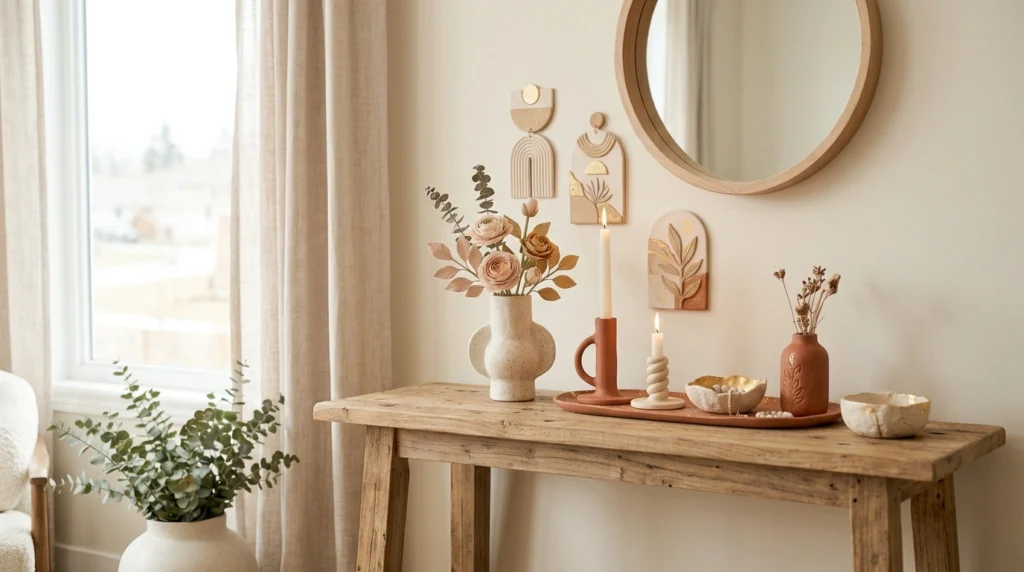
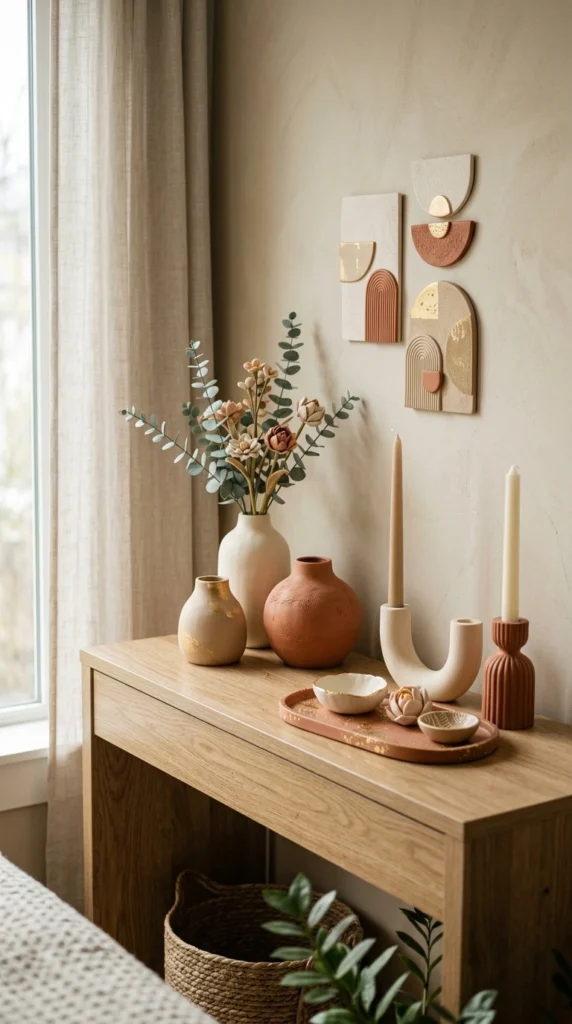
Polymer clay can turn inexpensive craft supplies into home accents that look far more expensive than they are. With simple shapes, restrained colors, and careful finishing, you can create pieces that fit beautifully into modern, minimalist, vintage, or organic interiors. These 27 ideas range from tiny decorative objects to statement pieces for shelves, tables, walls, and entryways. Pick one project for a weekend afternoon, or combine several in the same color palette for a coordinated room.
1. Sculptural Polymer Clay Candle Holders
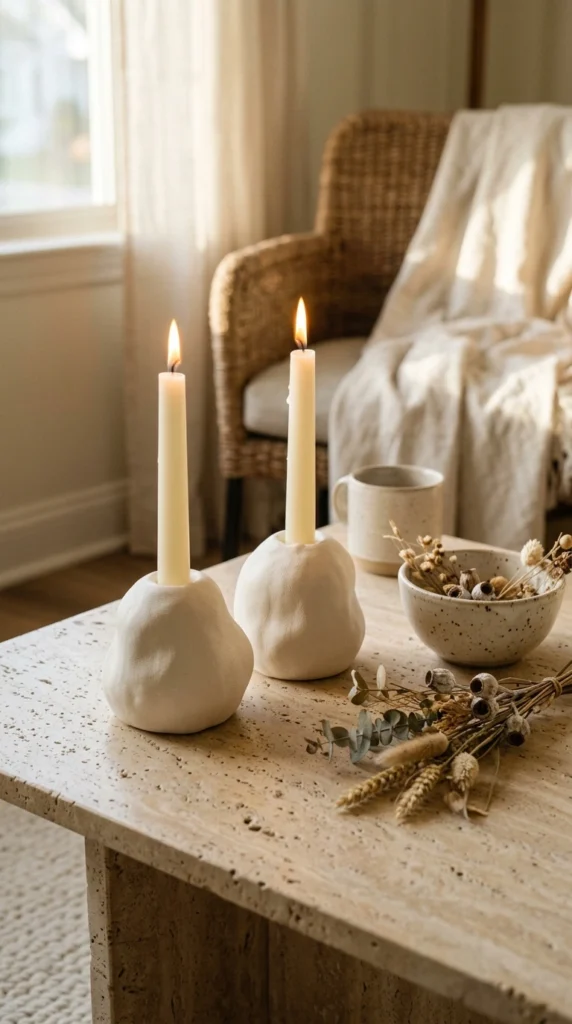
Give ordinary candles a designer-style base with sculptural clay candle holders. Shape the clay into rounded arches, stacked forms, or softly curved columns, then create an opening sized for your candle before baking. Keep the surface smooth for a polished appearance, or leave gentle handmade marks for a more artistic finish.
Cream, stone, beige, and muted brown work especially well for this project. Display two or three holders together at different heights to create a small arrangement without spending much on accessories.
For safety, use the holder with candles only when the clay and candle setup are appropriate for heat exposure. Battery-operated taper candles are an easy choice for a decorative display.
2. Minimalist Clay Trinket Dish
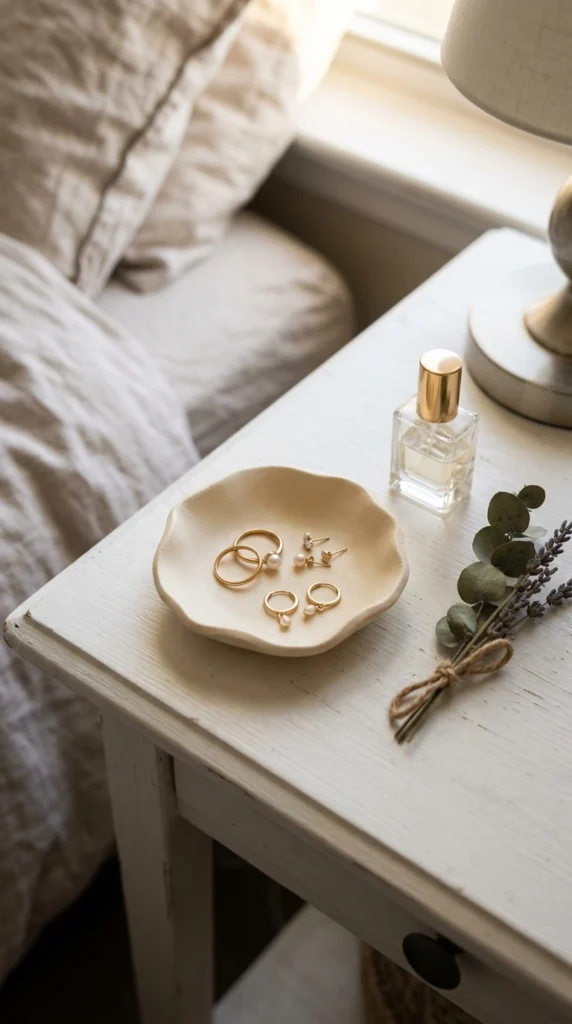
A tiny dish can make a bedside table or dresser feel instantly more organized. Roll out polymer clay, cut a simple circle or oval, then gently press the edges upward to form a shallow bowl. Small imperfections can give it the appearance of a handmade ceramic piece.
Try ivory with a thin brown rim, pale blush with a cream center, or matte white with a subtle marbled pattern. Keep the shape simple so the jewelry remains the focus.
These dishes also work beautifully on an entryway console for keys, coins, or other small everyday items.
3. Faux Ceramic Clay Vase
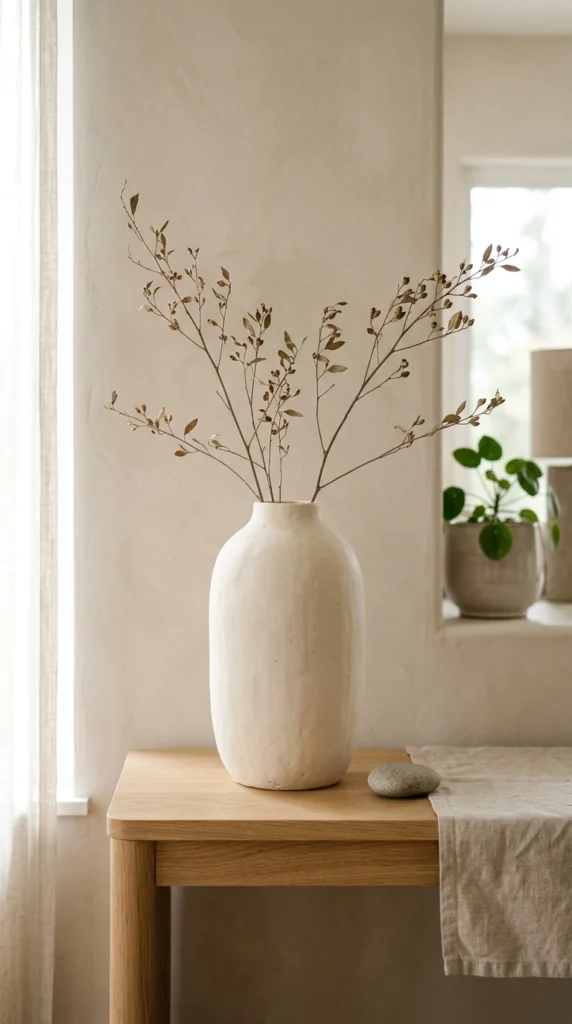
Create the look of a ceramic vase without investing in expensive pottery equipment. Build a simple hollow form from polymer clay, keeping the walls reasonably even and the base stable. A narrow opening gives the finished piece a refined silhouette.
Matte cream and warm white are excellent choices for a high-end interior. You can also press subtle vertical lines into the surface before baking for a handmade pottery effect.
Use the finished vase for dried grasses, faux stems, or other decorative materials. If you plan to use real water, check that your clay and finish are suitable for that purpose.
4. Organic Clay Catch-All Tray
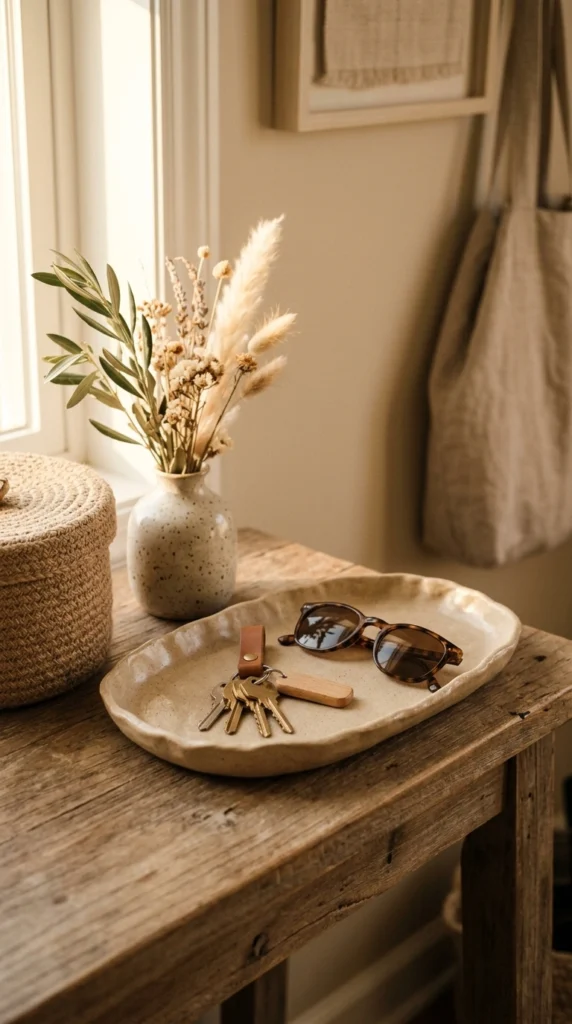
An organic catch-all tray is one of the easiest ways to make a practical object look decorative. Cut an oval, rectangle, or freeform shape from rolled clay and gently curve the edges upward. A slightly uneven outline can give the piece a handmade pottery feel.
Try adding a thin contrasting border around the edge. Terracotta and cream, chocolate brown and ivory, or taupe and sand can all create a sophisticated combination.
Place the tray near your front door, on a dresser, or beside your bed. It gives small everyday objects a designated spot while adding a decorative layer to the room.
5. Polymer Clay Flower Wall Art
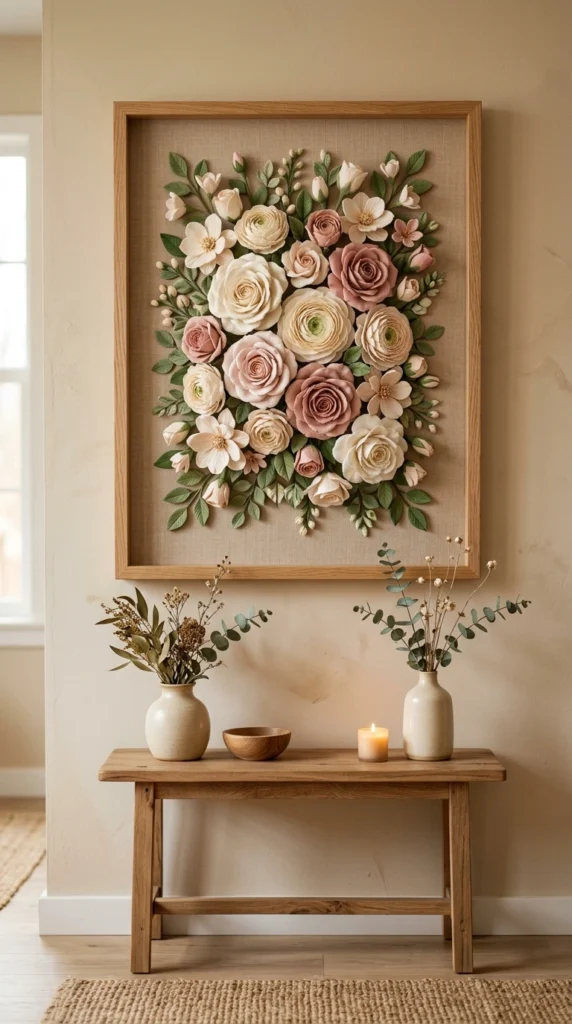
Turn tiny clay flowers into artwork by arranging them inside a shallow frame. Make several flowers in different sizes, flatten the backs slightly, and attach them to a firm backing once completely finished.
A monochromatic arrangement can look especially sophisticated. Use several shades of cream, or combine dusty rose, beige, and muted peach for a softer appearance.
For a gallery-style wall, make three related pieces with slightly different flower arrangements. Keeping the frame style and color palette consistent will make the collection feel intentional.
6. Decorative Clay Bowls
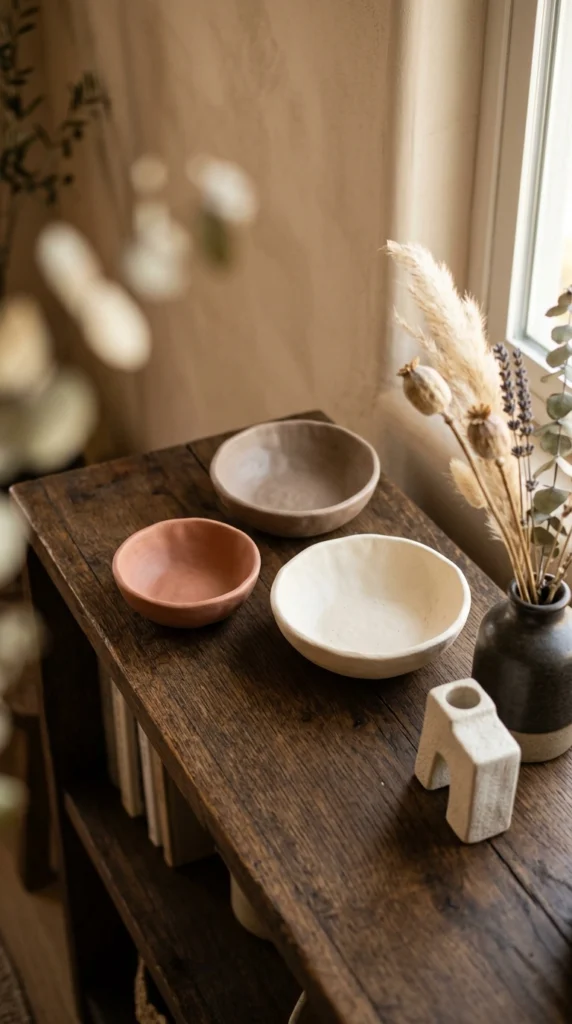
Small decorative bowls can fill empty shelves without making them feel cluttered. Form shallow bowls by shaping clay over a smooth oven-safe mold or creating the shape by hand. Keep the walls fairly thin and the rim smooth.
Experiment with different diameters while keeping the colors related. Three bowls in cream, sand, and terracotta can create a simple earthy display.
Use these pieces for decorative objects rather than food unless the clay manufacturer specifically states that the material is suitable for food contact.
7. Textured Polymer Clay Coasters
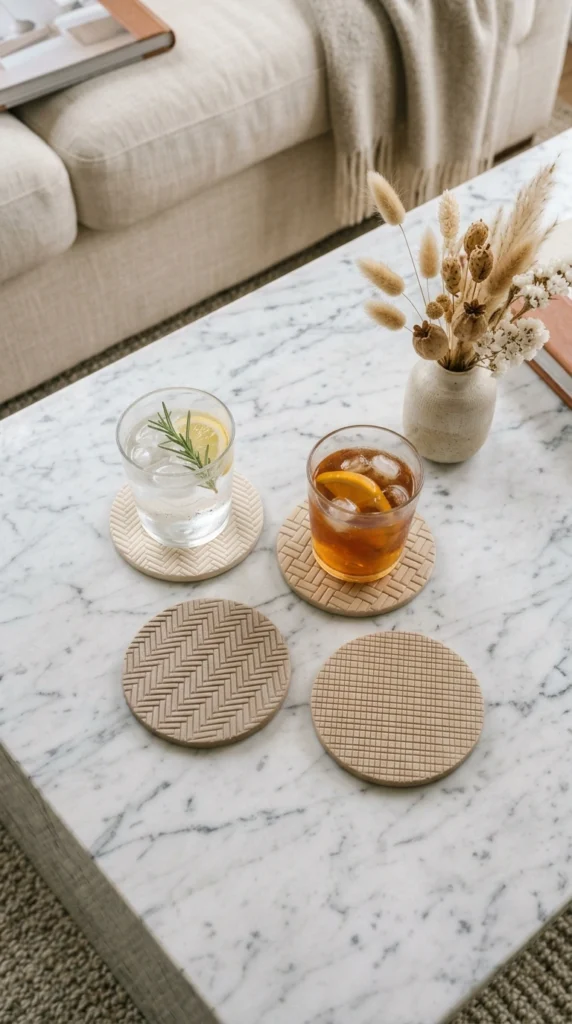
Coasters are practical, but they can also become part of your room styling. Roll clay evenly and cut four matching shapes, then press a textured fabric, lace, stamp, or simple geometric tool into the surface.
Round, square, scalloped, and irregular shapes all work well. A simple embossed pattern looks especially polished when paired with a restrained color.
If you plan to use them under hot drinks, check your clay manufacturer’s temperature guidance before putting the finished pieces into service.
8. Mini Clay Mushroom Decor
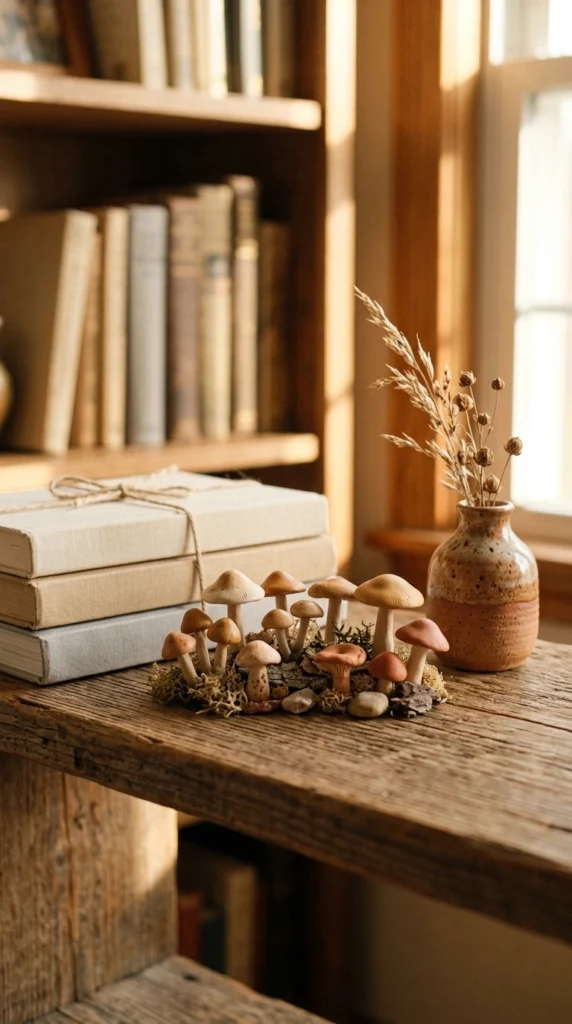
Miniature mushrooms can add a playful touch without making a room feel childish. Create simple rounded caps and narrow stems, then vary their heights for a natural little cluster.
For an elegant version, skip bright colors and use cream, mushroom brown, caramel, and muted rust. A matte finish gives them the appearance of small ceramic sculptures.
Arrange several on a bookshelf, mantel, or plant shelf. They work particularly well alongside natural wood and woven textures.
9. Clay Incense Holder
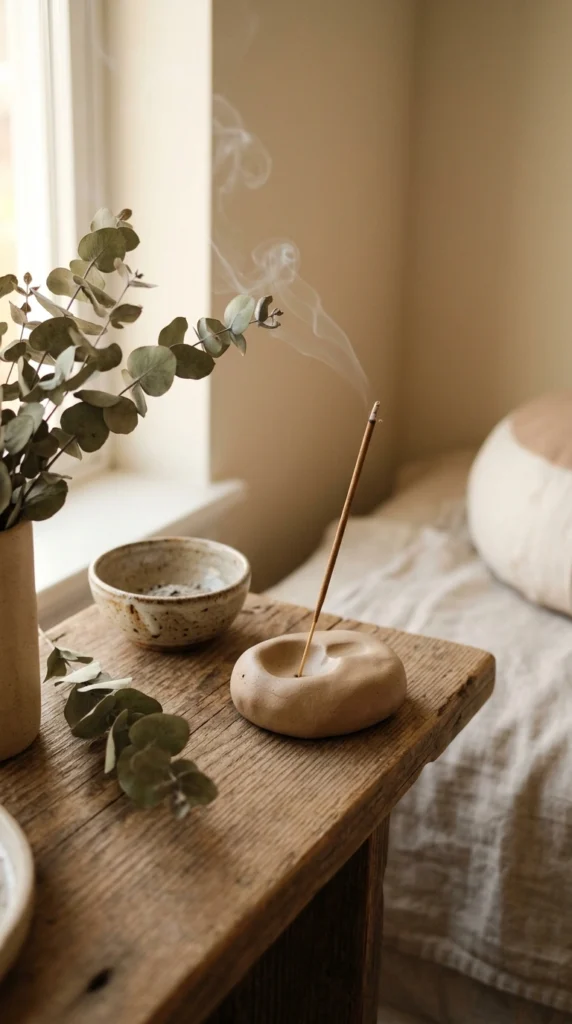
A small incense holder can be both useful and decorative. Shape a compact base from polymer clay and create a small hole at one end for the incense stick.
Try an elongated oval, pebble shape, or simple rectangular form. A few shallow grooves can catch ash and add visual interest.
Place it on a small tray with other decorative objects so it feels like part of the room rather than an isolated accessory. Follow the incense manufacturer’s safety instructions and keep burning incense away from flammable materials.
10. Sculpted Clay Bookends
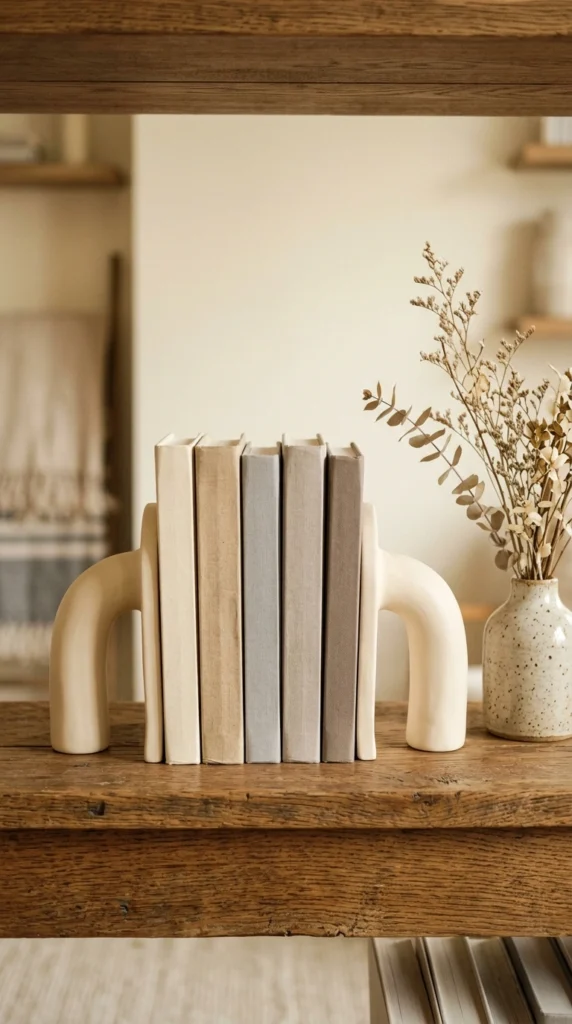
Give a bookshelf a custom look with handmade bookends. Polymer clay can form the visible outer shape, while a sturdy internal support can provide extra stability for heavier books.
Arches, rounded blocks, waves, and simple geometric shapes are easy starting points. Keep both pieces similar but not perfectly identical for a handmade appearance.
Use colors that repeat elsewhere in your room. If your shelves already feature cream, walnut, and black, for example, a warm ivory pair can tie everything together without adding visual clutter.
11. Polymer Clay Leaf Garland
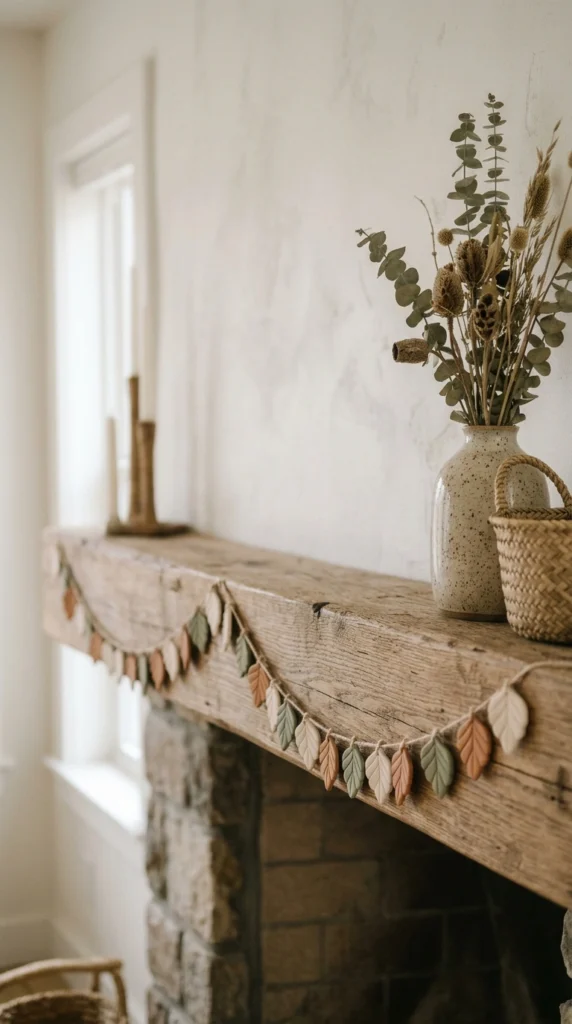
Make a delicate garland from individually shaped clay leaves. Flatten small pieces of green, cream, or earthy-colored clay and press a central vein into each leaf before baking.
Once cooled, connect the pieces with thin cord or another suitable material. Vary the leaf sizes so the garland looks relaxed rather than mechanically repeated.
Drape it across a mantel, shelf, console, or headboard. It can add a botanical detail without requiring real plants or regular watering.
12. Minimal Clay Wall Hooks
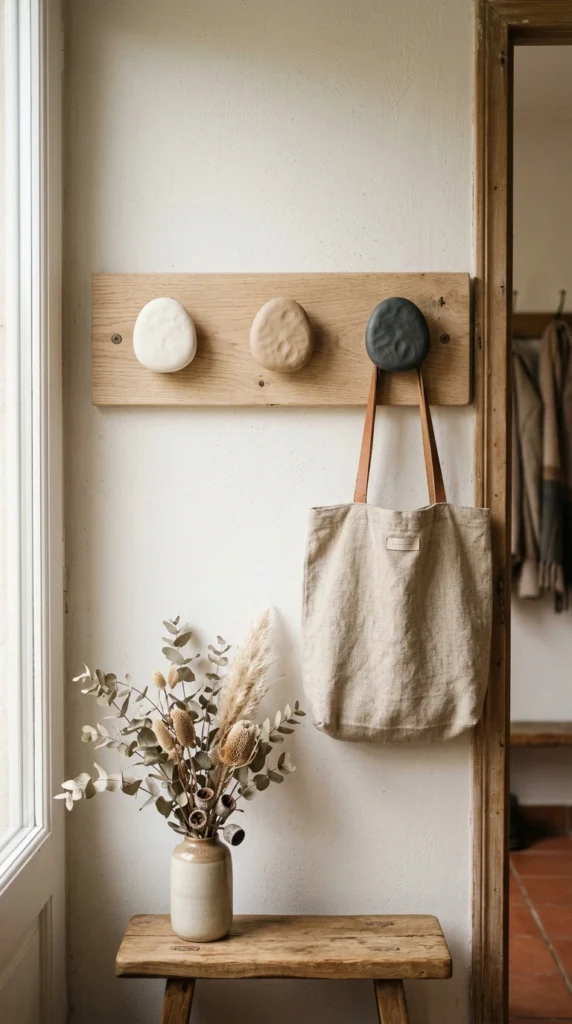
Decorative wall hooks can combine storage with handmade style. Create clay covers or decorative fronts for sturdy hook hardware, using rounded shapes that complement your room.
Neutral colors keep the result refined, while one darker accent can give the arrangement more definition. Group three hooks together at equal or varied heights depending on what they will hold.
Use strong mounting hardware appropriate for the wall and intended load. The clay should serve as the decorative element rather than carrying more weight than its construction allows.
13. Clay Bead Curtain Tiebacks
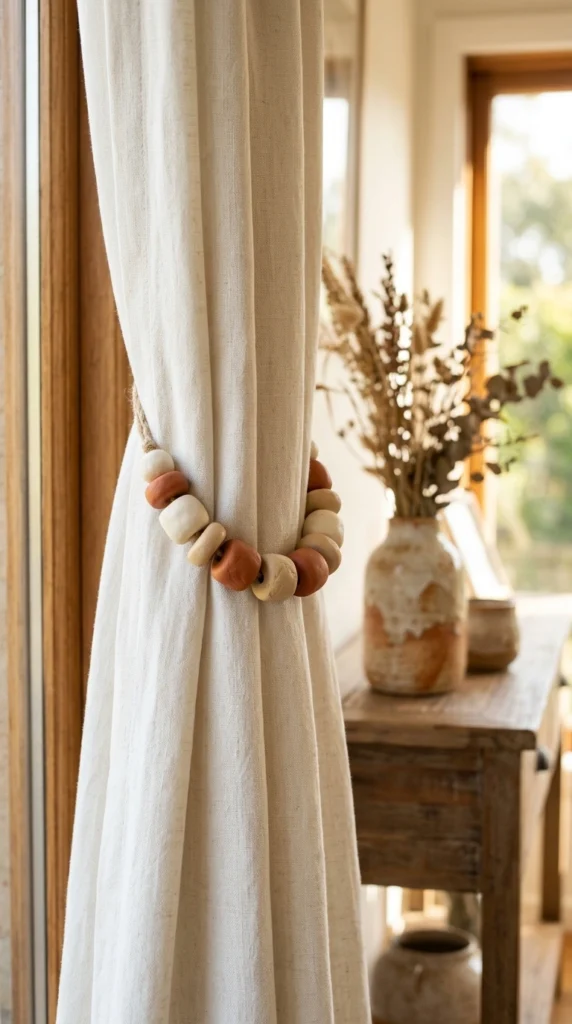
Large handmade beads can become beautiful curtain accessories. Shape several beads from polymer clay, adding subtle ridges, grooves, or smooth organic surfaces.
String them onto strong cord and create a simple loop or tie that works with your curtains. Keep the palette close to your existing textiles for a coordinated room.
This is a useful way to add personality to plain linen or cotton curtains without replacing the entire window treatment.
14. Sculptural Clay Ring Cone
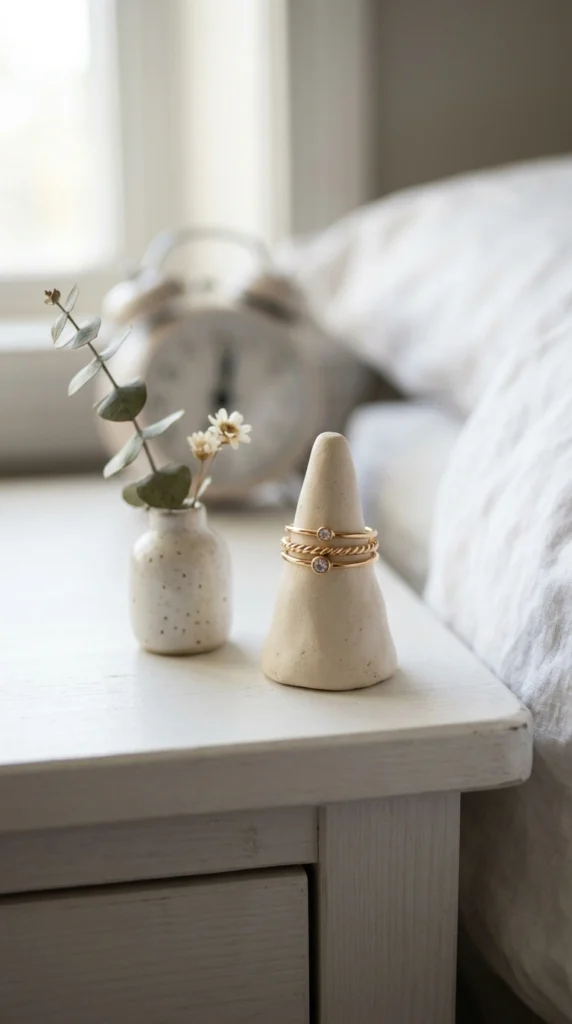
A ring cone is tiny, but it can make a dresser or vanity feel carefully styled. Form a tapered cone with a stable base, then smooth the surface before baking.
Try cream, pale pink, stone, or muted brown. You can also add a tiny contrasting stripe around the base for extra character.
Keep one beside your jewelry dish so rings have an easy place to rest at the end of the day. Several small handmade accessories together can create a cohesive display.
15. Clay Chain Wall Sculpture
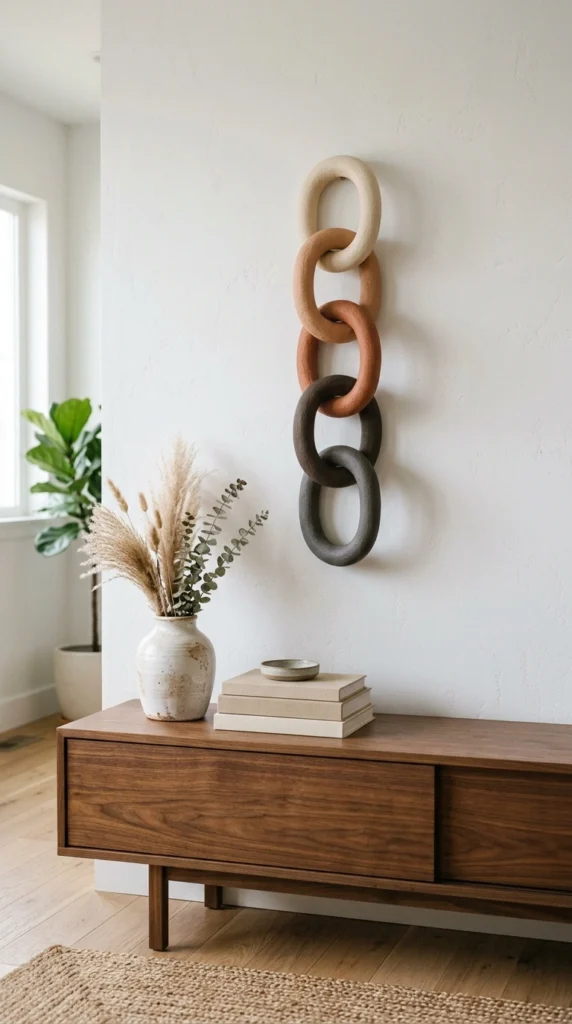
Oversized chain links have become a popular sculptural shape for modern interiors. Create large hollow clay links rather than making them completely solid, which can reduce weight and material use.
Use one color for a minimalist appearance or alternate cream and beige links. Let the forms remain smooth and simple so the sculpture feels like an intentional design object.
Display a small chain on a shelf or create a larger wall piece above a console. Test the attachment method carefully before placing a heavier sculpture on the wall.
16. Polymer Clay Photo Frame Accents
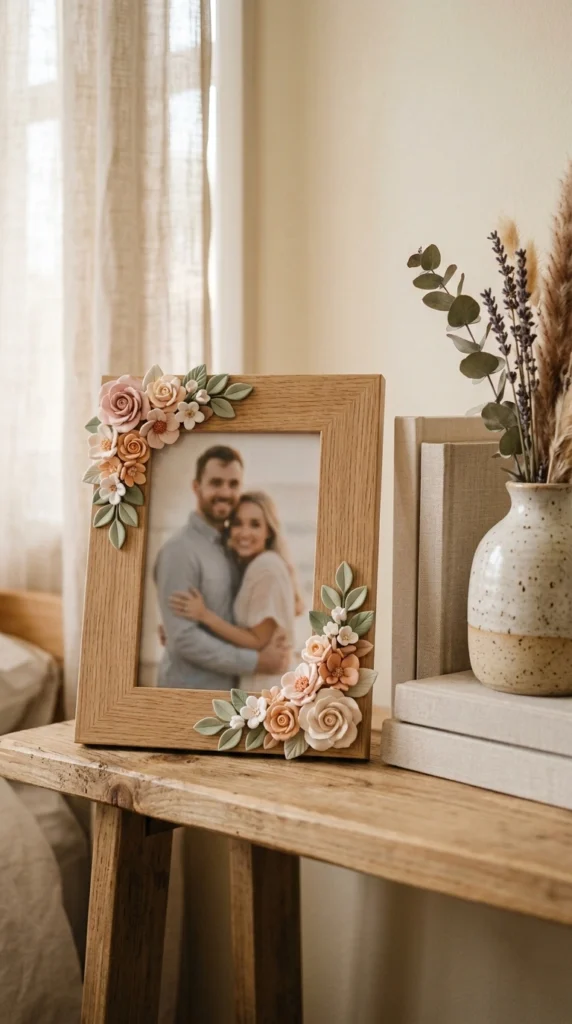
Give a plain photo frame a handmade makeover with small clay flowers, leaves, arches, or dots. Keep the decorations concentrated in one or two corners instead of covering the entire frame.
Cream flowers on natural wood create a subtle look, while dusty pink and peach can add a softer accent. Let the original frame material remain visible so the finished piece does not feel overly busy.
This project works particularly well for small frames on bedside tables, bookshelves, and office desks.
17. Clay Pebble Sculptures
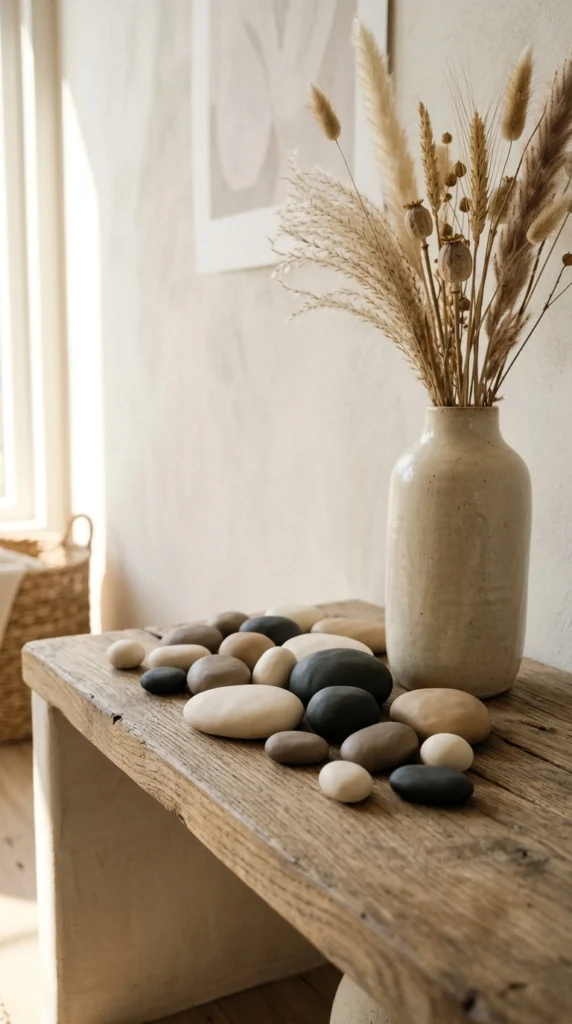
Sometimes the simplest decor has the strongest visual effect. Shape polymer clay into smooth pebble-like forms and arrange them in groups of three or five.
Vary the size and silhouette while keeping the colors connected. A combination of warm white, beige, and charcoal can work with many interior styles.
Place the sculptures in a shallow bowl, on a tray, or directly on a shelf. Their simple shapes make them easy to move around when you change your room arrangement.
18. Handmade Clay Wall Medallions
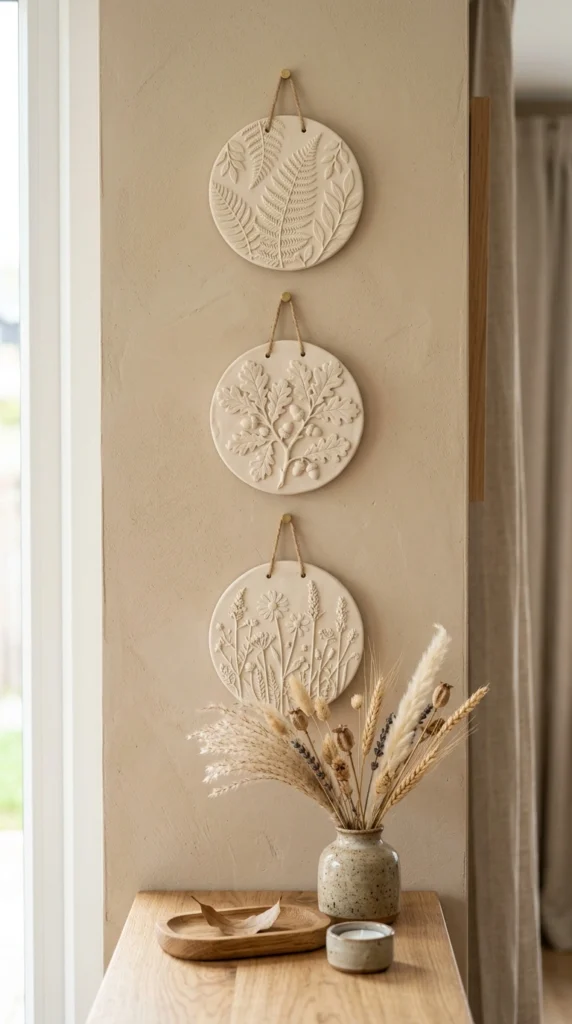
Create decorative wall medallions by rolling clay into circles and pressing botanical stamps, leaves, or geometric tools into the surface. Keep the designs shallow and evenly spaced.
A set of three can fill a narrow wall without requiring a large artwork purchase. Matching ivory pieces create a quiet gallery effect, while subtle differences keep them handmade.
Before mounting them, allow the pieces to cool fully and choose an attachment method suitable for both the finished weight and your wall surface.
19. Polymer Clay Candle Plate
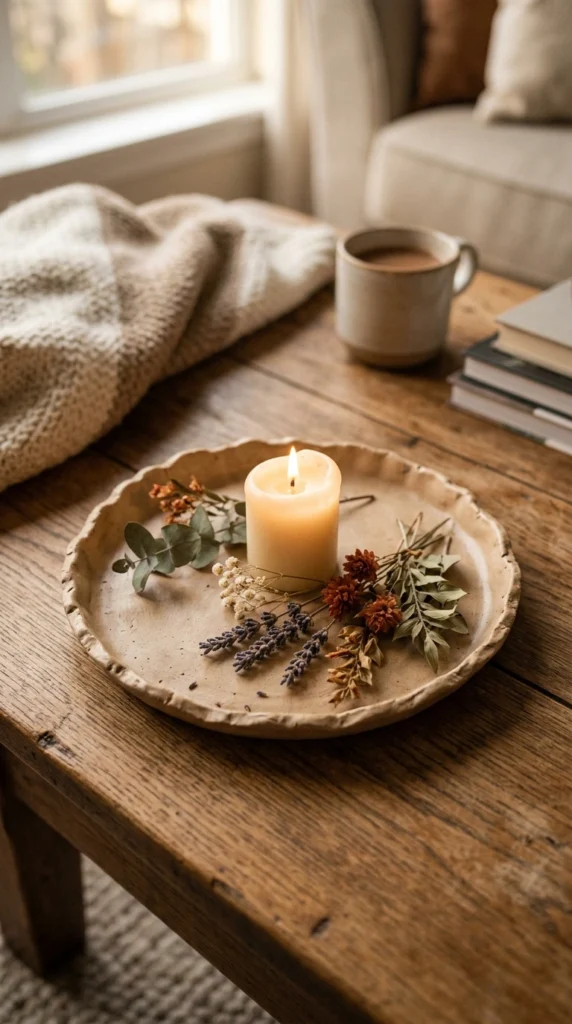
A candle plate creates a dedicated little stage for a pillar candle. Make a shallow round base with a slightly raised edge, then smooth the surface with your fingers or a suitable tool.
A warm neutral clay color works beautifully with ivory candles. Add a few pressed lines around the edge if you want a subtle handmade pattern.
For actual candle use, follow the clay manufacturer’s guidance about heat and placement. A flameless candle gives you an easy decorative alternative.
20. Clay Floral Branches
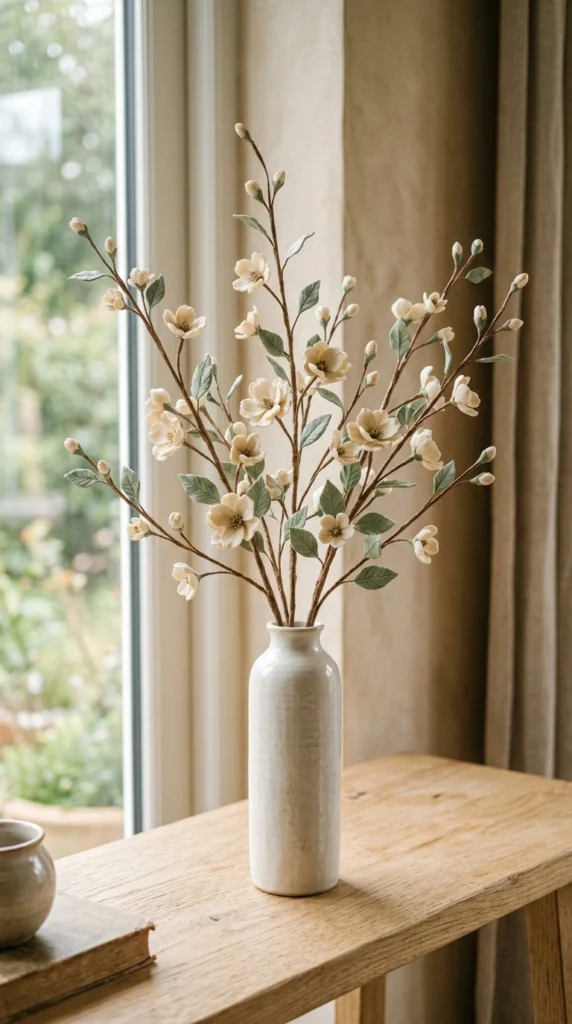
Instead of making individual flowers, build a few clay branches with blossoms attached along the stems. Use different flower sizes so the arrangement feels more natural.
White, cream, pale peach, and dusty pink blossoms pair nicely with muted green leaves. Keep the stems slender and slightly varied rather than perfectly straight.
A tall branch arrangement can fill an empty corner of a console or shelf while using only a modest amount of clay.
21. Minimal Clay Clock Face
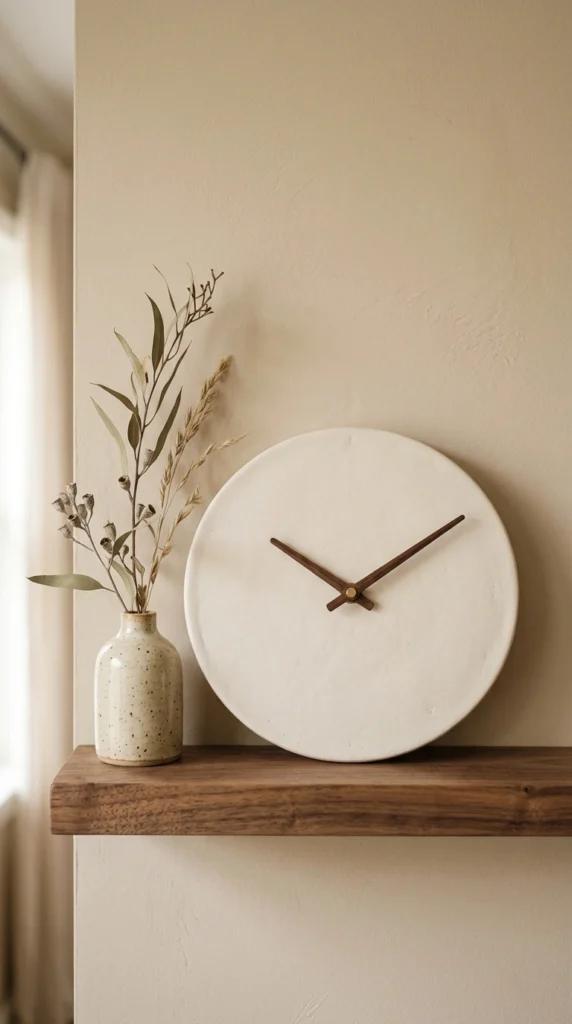
A handmade clay clock can become a functional piece of wall or shelf decor. Create a smooth clay face and combine it with a compatible clock mechanism and hands.
Keep the design clean with simple hour markers or no visible numbers. A neutral face paired with dark hands creates a classic appearance.
Because clock mechanisms can vary, build the clay housing around the specific mechanism you plan to use. Test the fit before baking whenever possible.
22. Clay Plant Pot Covers
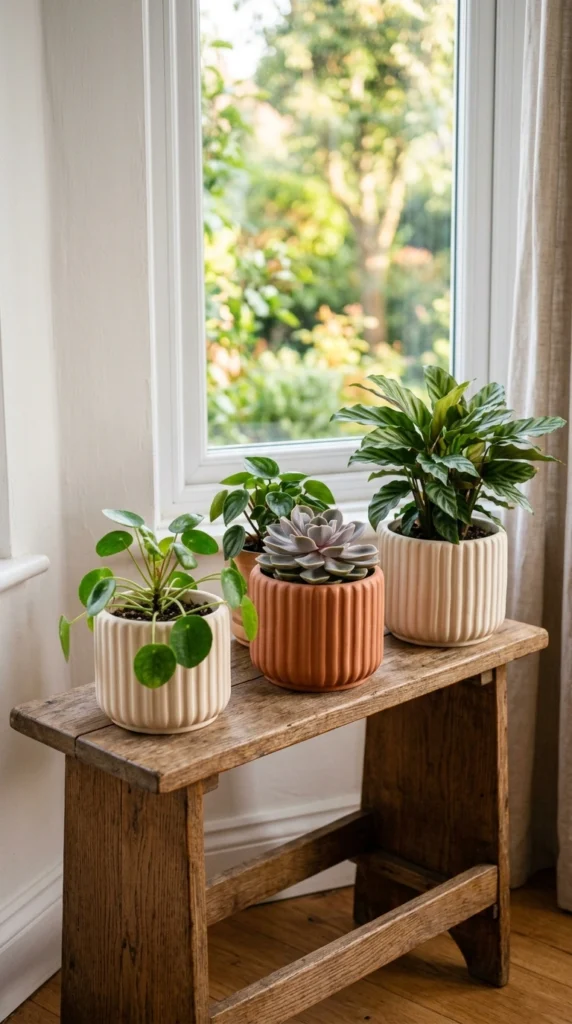
Dress up inexpensive plant pots with handmade clay covers. Rather than replacing the actual planter, create a decorative outer sleeve sized to fit around it.
Ribbed surfaces, arches, and simple vertical grooves can make plain pots look custom-made. Pair terracotta-colored clay with green foliage for an earthy arrangement.
Keep the plant’s water container separate from the clay whenever possible. This helps protect the decorative piece from excess moisture.
23. Sculptural Clay Arch Decor
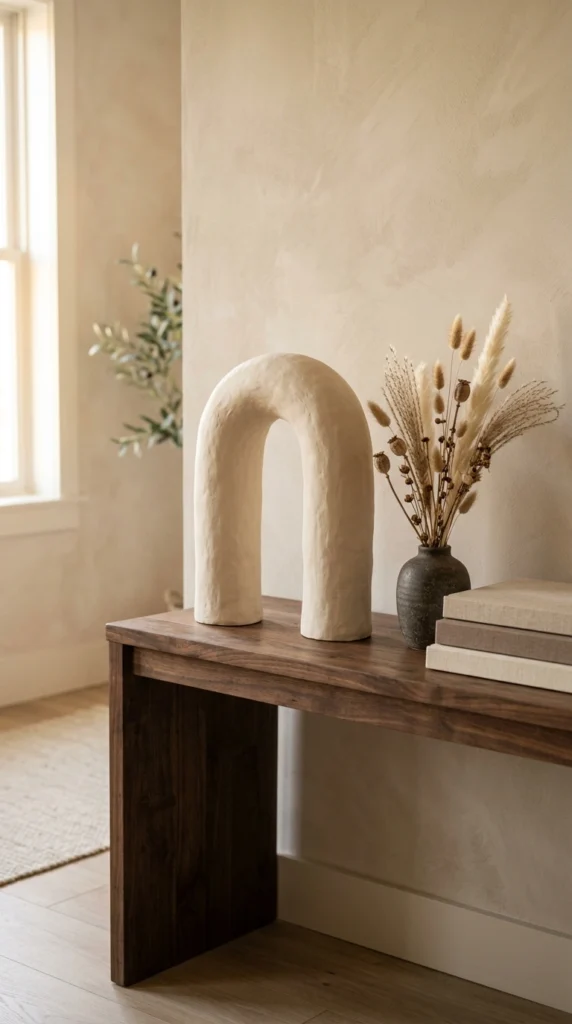
Arches are easy to recognize and surprisingly simple to turn into decor. Create a freestanding arch from clay with a broad enough base to keep it stable, or build the shape around a lightweight internal support when making a larger piece.
A single ivory arch looks clean and modern. For more contrast, place a smaller taupe arch beside it.
Use different heights to create a small sculptural arrangement on a console or bookshelf. Keep the surrounding accessories simple so the arch remains the main feature.
24. Polymer Clay Mini Picture Ledges
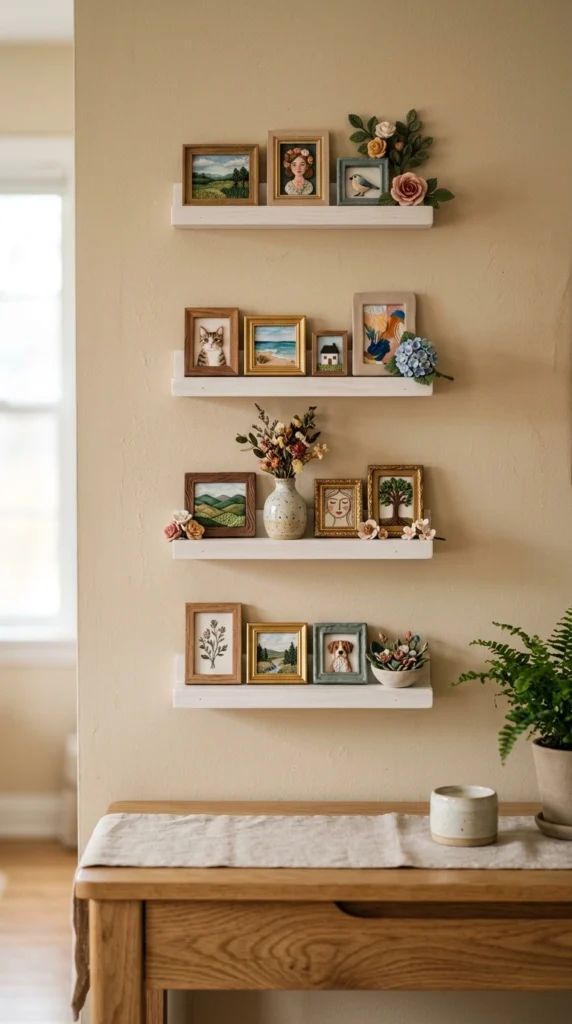
Small clay ledges can provide a decorative platform for tiny objects. For a safer and sturdier design, use polymer clay as the visible decorative covering or front detail rather than relying on clay alone to support heavy items.
Create a narrow curved front or decorative trim and attach it to a suitable lightweight backing. Keep the finished ledge shallow and use lightweight decor.
This idea works well for bedrooms, offices, and small corners where a full-size shelf would feel too large.
25. Clay Pendant Light Accents
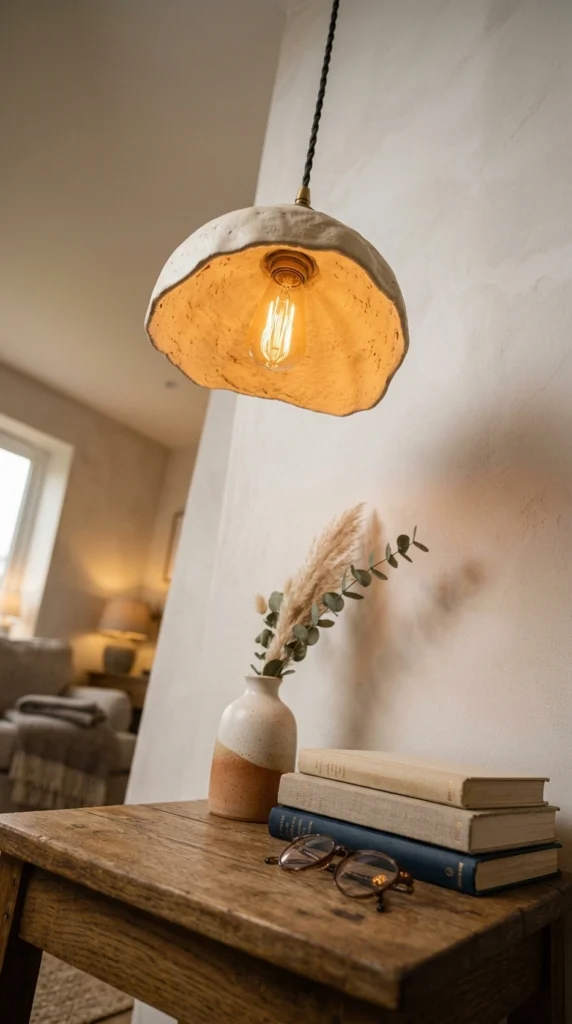
Small clay elements can add personality to a pendant light, but this project requires extra care. Polymer clay should not be used close to a hot bulb unless the material and complete fixture are specifically rated for that application.
A safer decorative approach is to create a clay accent around a low-heat lighting setup or use the clay piece as a non-electrical decorative shade component designed for suitable hardware.
Choose simple rounded shapes and a warm ivory color for a refined look. Always follow the lighting component manufacturer’s temperature and installation requirements.
26. Handmade Clay Drawer Knobs
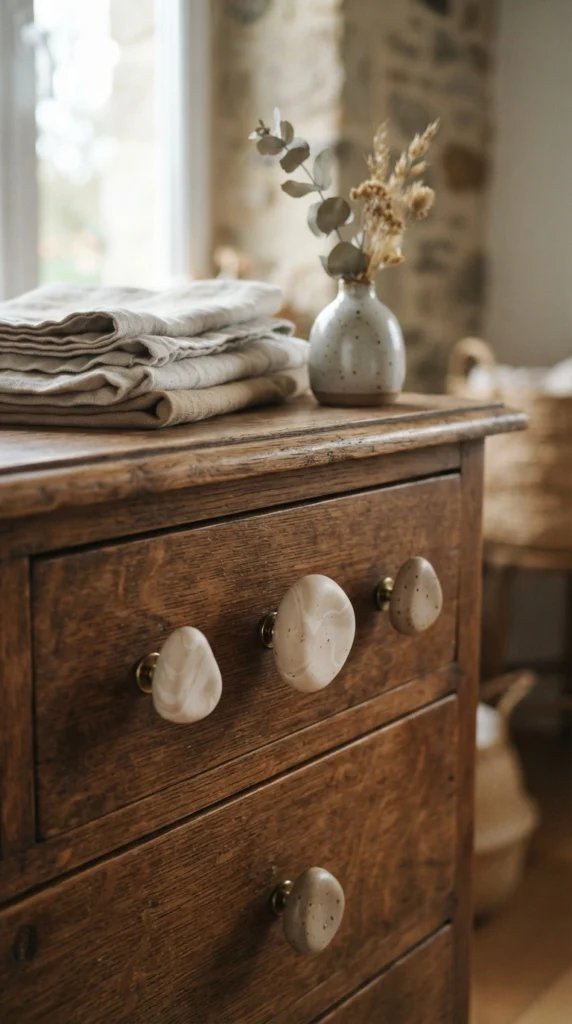
Changing drawer knobs can make an old dresser or bedside table feel completely different. Form small rounded clay shapes around suitable knob hardware, then bake according to the clay manufacturer’s instructions.
Keep the knobs close in size while allowing slight differences in their surface shape. Neutral colors can give old furniture a calm modern appearance.
Make sure the hardware is securely fitted and strong enough for regular use. The clay should complement the knob structure rather than replace a sturdy fastening system.
27. Polymer Clay Decorative Wall Flowers
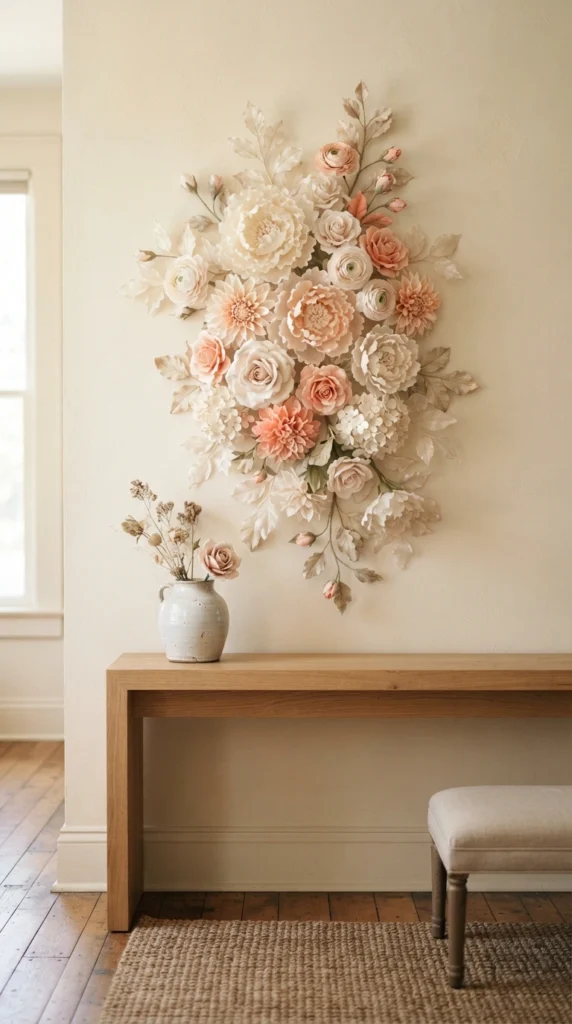
Finish your decor collection with oversized clay flowers arranged directly on a wall. Make petals in several sizes and layer them from the center outward to create dimensional blooms.
Use a restrained palette such as ivory, blush, peach, and muted green. Arrange the flowers in an asymmetrical cluster instead of creating a rigid grid, especially if you want a softer botanical effect.
This project can become a focal point above a console, bed, or reading nook. For larger installations, plan the arrangement on the floor first so you can adjust spacing before attaching anything to the wall.
Final Thoughts
Polymer clay gives you plenty of ways to create elegant home decor without buying expensive designer accessories. Simple trays, flowers, candle holders, sculptures, vases, and small functional pieces can all look polished when you keep the shapes clean and the color palette restrained. Start with one small project, such as a trinket dish or decorative bowl, before moving toward larger pieces. Save this list for your next polymer clay session and choose one idea to make this weekend.

Lily Summers is a digital artist and creative storyteller who loves bringing colorful characters to life. With a passion for cartoons, fan art, and playful sketches, she inspires others to explore their imagination through art. When she’s not sketching, you’ll find her dreaming up new ideas for CraftedWizard.com to spark creativity in every artist. 🌈✨