Simple foot mehndi designs are perfect when you want something graceful, modern, and easy to wear without covering the entire foot. A minimal look can still feel festive, bridal, or dressy when the pattern placement is smart and the lines stay clean. Small florals, anklet-style bands, toe trails, side vines, and spaced motifs often create the best balance because they keep the foot looking neat while still giving that classic mehndi charm. These ideas are great for brides, bridesmaids, wedding guests, Eid looks, and anyone who wants light coverage with strong visual impact. They also work well for people who want quicker application time, less smudging, and a design that pairs easily with sandals, heels, and open footwear. The design directions below follow the simple, elegant, minimal style reflected in the brief you shared.
1. Delicate Anklet Band
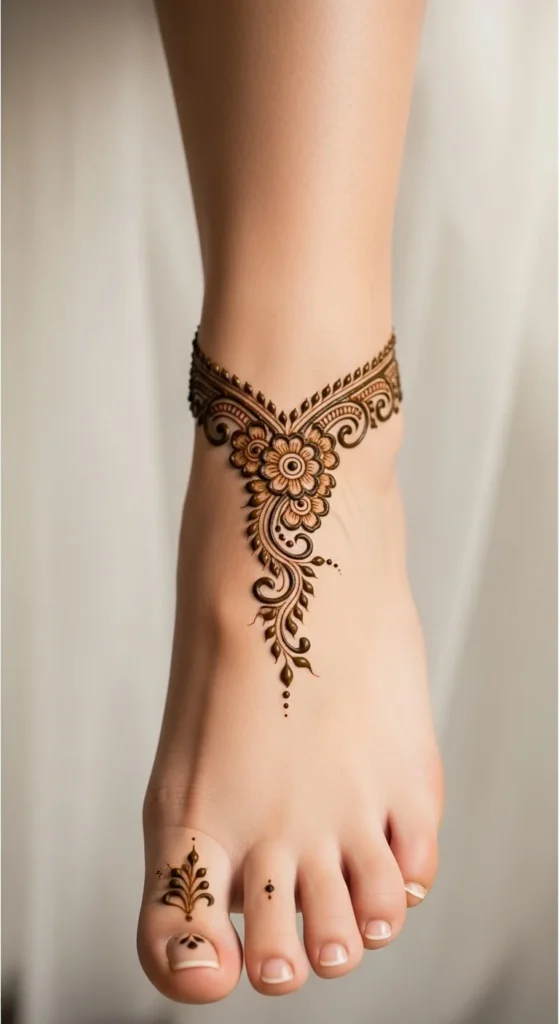
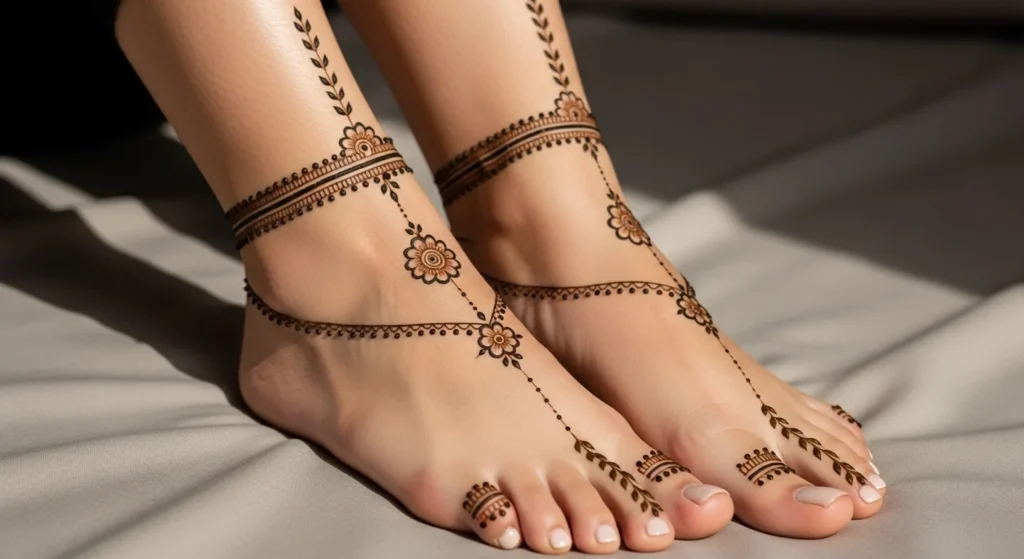
A delicate anklet band is one of the easiest ways to get an elegant foot mehndi look without filling too much space. The design usually wraps around the ankle like jewelry, using tiny petals, dots, chain links, or scalloped curves. This style works well because it gives a polished finish while keeping the rest of the foot mostly open. That empty space is what makes the design feel modern and light. If you are doing mehndi at home, this is a budget-friendly option because it uses less cone work and takes less time than a full-foot design. You can keep it very simple with one thin band and a few hanging drops, or add tiny toe dots to connect the look. It pairs beautifully with sandals and heels since the ankle becomes the focus. Brides can make it slightly fuller, while guests can keep it thin and neat. This design is also practical if you do not want too much henna touching the sole or upper center of the foot. It feels stylish, balanced, and very wearable for weddings, dinners, or festive events.
2. Tiny Floral Toes
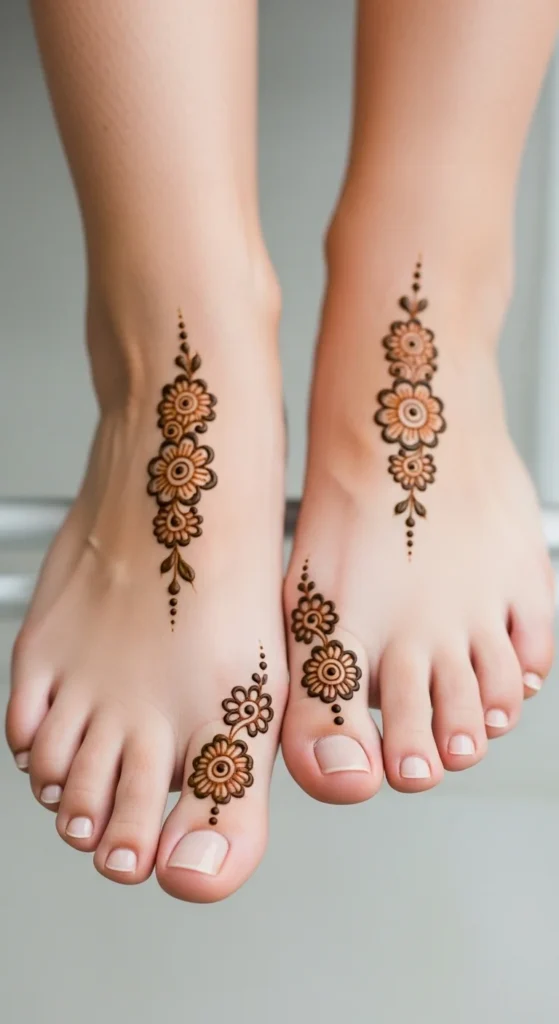
Tiny floral toes are perfect for anyone who wants a soft mehndi look with very little coverage. The idea is simple: place small flower motifs on one or more toes, then connect them with tiny leaves, dots, or curved lines. Because the design stays close to the toes, it looks neat and does not overwhelm the foot. This makes it a lovely choice for bridesmaids, sisters, and wedding guests who want something graceful but not heavy. It is also very practical for home application because you can work one toe at a time and keep the flowers small and even. A basic cone and a steady hand are enough. If you are a beginner, start with one central flower on the big toe and add two tiny buds on the next toes. That alone can look complete. This design also works well with open-toe footwear because the mehndi shows clearly without going across the full top of the foot. If you want a slightly richer version, add a thin line from the big toe toward the center. The final look stays pretty, clean, and very easy to wear.
3. Small Center Mandala
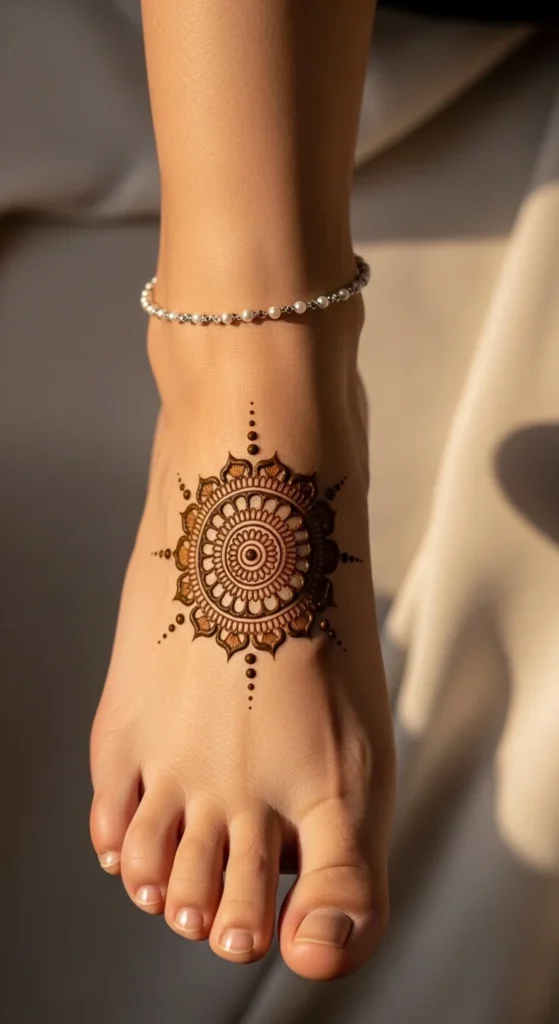
A small center mandala is a classic foot mehndi design that feels elegant without looking crowded. The pattern sits in the middle of the foot and uses a circular flower, petal ring, or dotted wheel shape to draw attention to that area. Since the design stays compact, it gives a refined look that works for bridal events, Eid, or family functions. The best part is that a single mandala can look complete on its own. You do not need to fill every corner of the foot to make it stand out. This makes it a smart low-effort option if you want something graceful with shorter sitting time. At home, you can make it with one flower center, a ring of petals, and a few dots around the edges. If you want a little more drama, add one short vine running toward the ankle. A small center mandala also photographs beautifully because the pattern looks balanced from a top view. If your outfit is already heavy, this mehndi style keeps things calm and polished. It gives that minimal but dressed-up effect that so many people want for modern festive styling.
4. Side Vine Trail
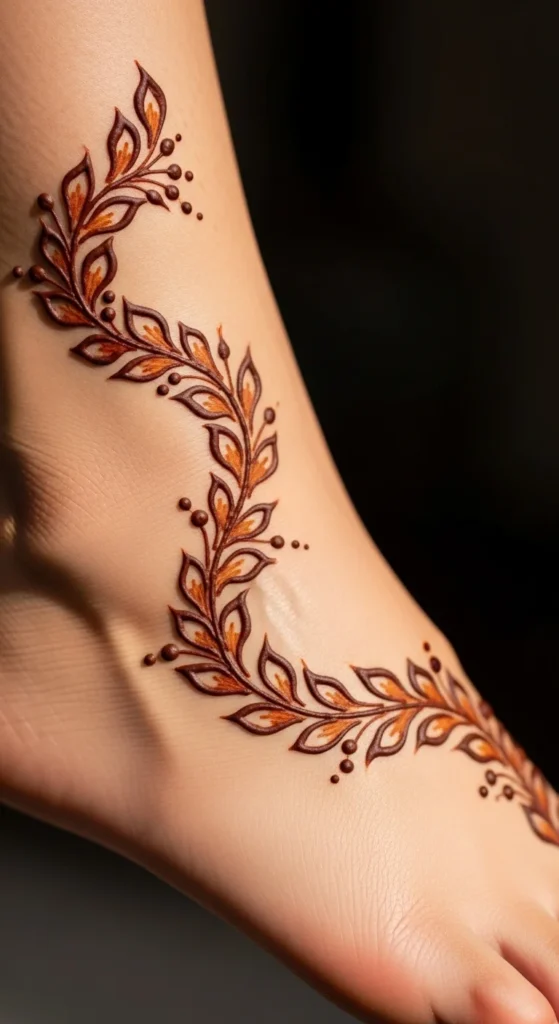
A side vine trail is ideal if you want foot mehndi that feels soft, stylish, and easy to carry. Instead of covering the top center, the design runs along one side of the foot with leaves, buds, dots, or tiny floral turns. This placement is very flattering because it creates movement while still leaving lots of clean skin visible. That contrast gives the design a light, elegant finish. It is also one of the easiest styles to adapt for brides, guests, or casual festive looks. Keep the vine thin for a simple version, or make the flowers slightly larger if you want more detail. For a DIY approach, start near the ankle or little toe side and draw one gentle curving line first. Then build leaves and small buds around it. This helps the layout stay neat. Side mehndi also works well with many shoe styles because it avoids heavy coverage in the middle. If you want extra charm, add tiny toe accents on the same side. The result feels modern, feminine, and less messy than full-foot patterns, which makes it a favorite for people who want something attractive but not too time-consuming.
5. Toe Ring Chain Pattern
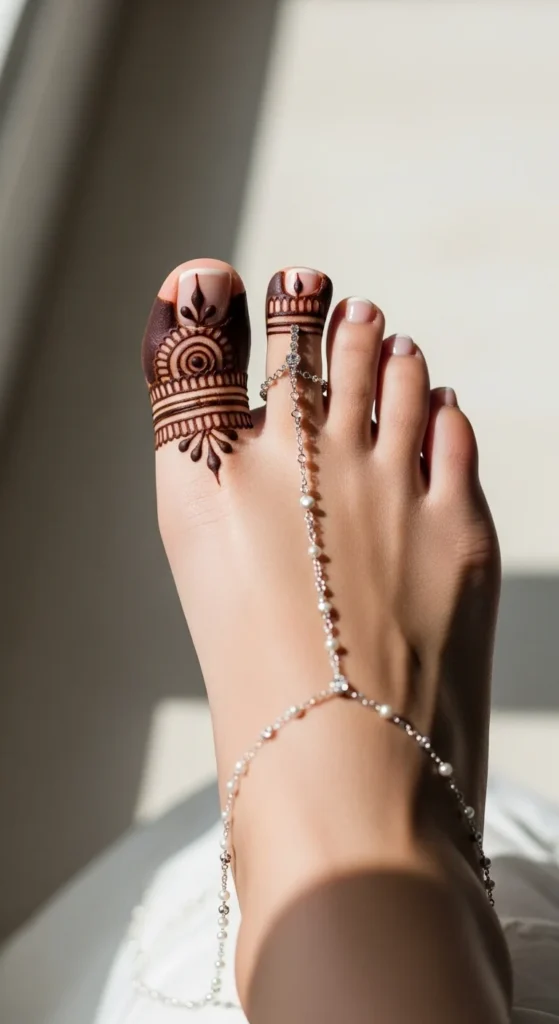
The toe ring chain pattern gives the look of jewelry made with mehndi, which is why it works so well for an elegant minimal style. The design usually starts with a ring-like motif around the big toe or second toe, then extends with a thin chain or dotted line toward the top of the foot or ankle. This creates a delicate decorative effect without covering much space. It is especially beautiful for brides who want a stylish foot design that still feels airy. It also suits people who love barefoot jewelry and want the same visual vibe in henna form. At home, this pattern is budget-friendly because it requires fine lines rather than dense filling. You can make a small toe band with petals or loops, then link it with dots and tiny leaves. Keep the chain narrow so the design stays graceful. This style pairs beautifully with sandals and open bridal footwear because the toe area becomes the highlight. If you want more balance, mirror the chain on both feet in the same direction. The finished look feels polished, dainty, and fashion-forward while still staying rooted in traditional mehndi charm.
6. Single Lotus Accent
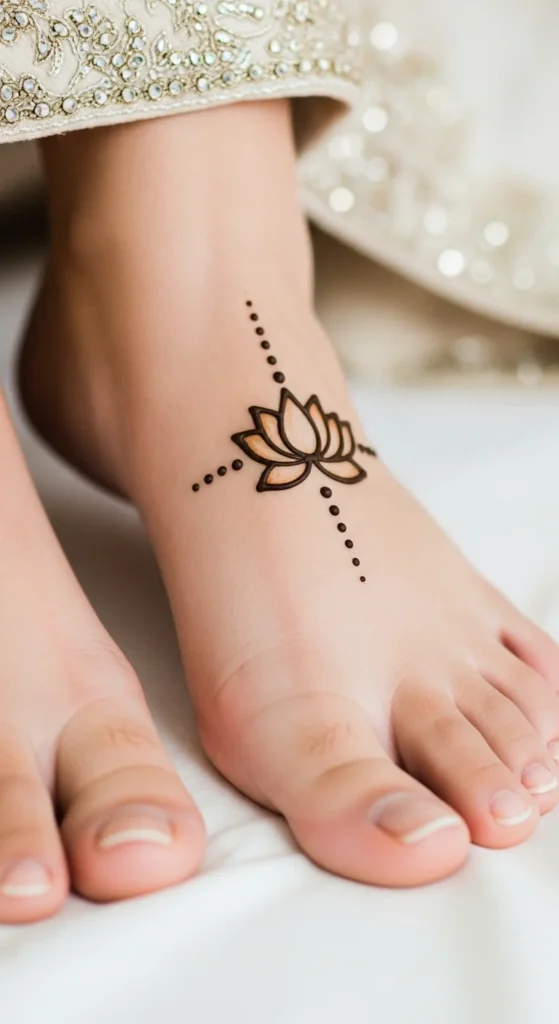
A single lotus accent is a beautiful option when you want something symbolic, graceful, and very clean. The lotus can be placed near the ankle, on the upper side of the foot, or at the center if you want a stronger focal point. Because the flower shape already has presence, you do not need much else around it. A few dots, tiny leaves, or a small curved base line are enough to complete the design. This makes it perfect for people who like spiritual or floral motifs but still want a minimal finish. It is also easy to adapt based on skill level. A beginner can draw a basic lotus with layered petals, while someone more experienced can add fine line shading or small side buds. This design saves time, uses less mehndi, and still looks thoughtful in photos. It works especially well with ethnic outfits that already have detail, since the mehndi stays simple and does not compete. If you want a bridal version, add a light anklet band above the lotus. If you want something more casual, keep the flower alone. The result is calm, pretty, and very easy to wear.
7. Half Mandala Curve
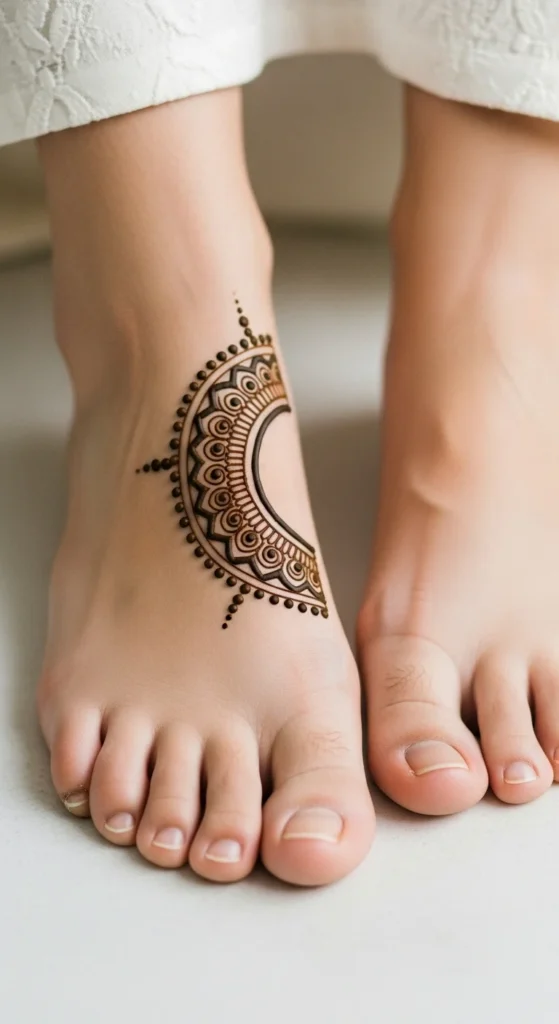
A half mandala curve is a smart design when you want the beauty of a mandala without the fullness of a center circle. Instead of placing the pattern in the middle, the half shape sits on one side of the foot and opens outward with petals, scallops, and dots. This makes the layout look airy and stylish. It also helps the foot appear longer because the lines follow the natural shape instead of stopping it visually. This style is a good pick for modern brides, sisters, or guests who want something more artistic than a plain floral vine. At home, the easiest method is to start with a semicircle and build petals outward in layers. Leave some gaps between shapes so the pattern does not feel heavy. That spacing is what gives the design its clean elegance. You can pair this with plain toes or add one tiny motif on the big toe for balance. The design also works well for people who do not want too much henna in the center where footwear straps may sit. It looks refined, fashionable, and easy to adapt for both weddings and smaller festive events.
8. Diagonal Leaf Trail
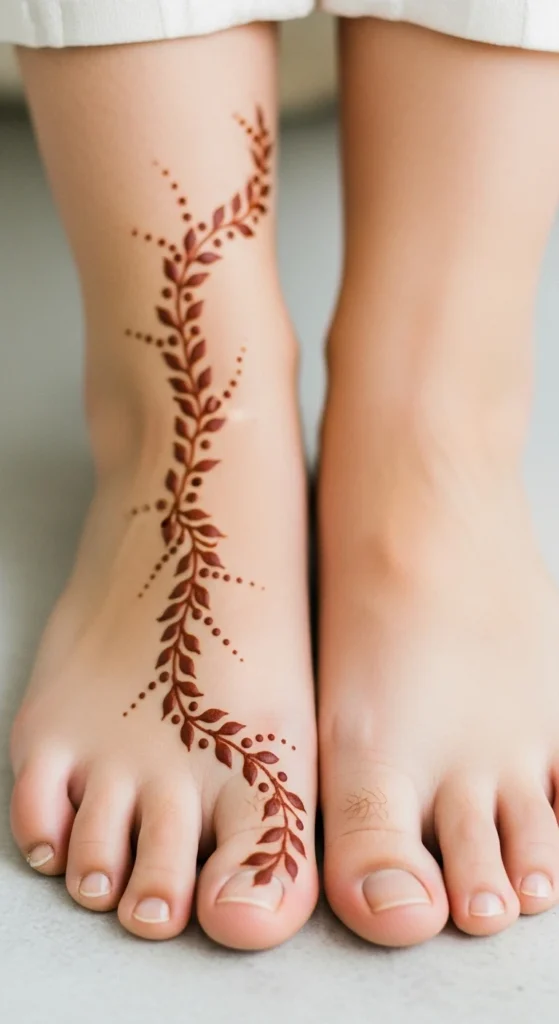
A diagonal leaf trail creates a graceful line across the foot and is one of the easiest ways to make a minimal mehndi design look intentional. The pattern begins near the big toe or toe base and moves upward diagonally with tiny leaves, buds, and dotted turns. Since the design follows a clear path, it looks neat and balanced even when the elements stay simple. This is also a very friendly style for beginners because you can draw one guide line first and build along it slowly. Use small leaves for a softer look or mix one or two mini flowers for more detail. The open areas around the trail help the mehndi stand out without making the foot look crowded. That is what gives it a clean, elegant finish. A diagonal trail is a lovely choice for bridesmaids and younger girls because it feels pretty without looking too formal. It also works well if you want something quick for a last-minute event. Pair it with matching toe dots or leave the toes plain for an even more modern result. The final look feels delicate, smart, and easy to style with both flats and heels.
9. Simple Arabic Side Design
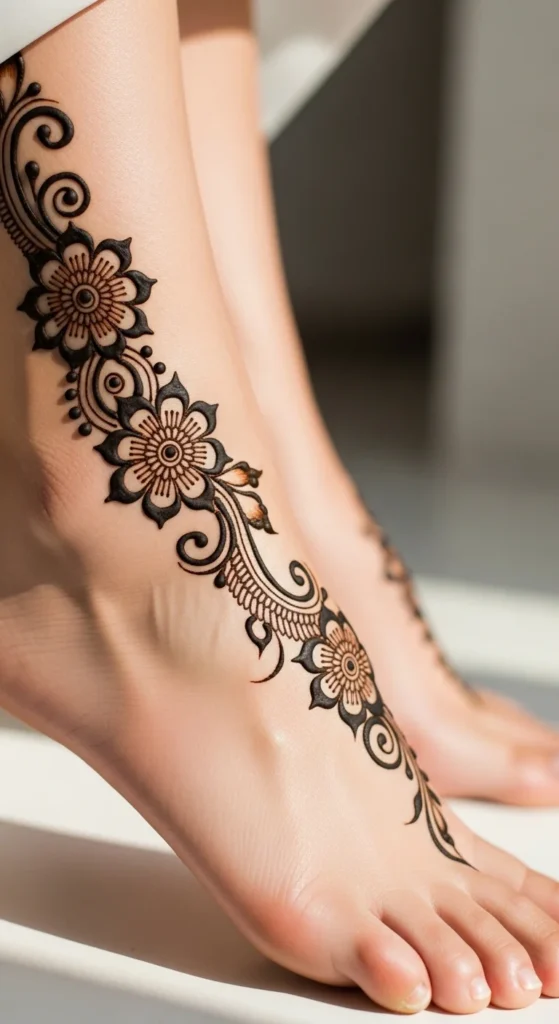
A simple Arabic side design is perfect for those who want bold lines with less coverage. Arabic mehndi often works through flowing flowers, leaf trails, and strong outlines separated by empty space. On the foot, this style looks especially good when placed on one side instead of spreading everywhere. That makes the pattern feel dramatic and minimal at the same time. This is a great option for weddings and festive events because it looks rich in photos without taking as long as dense Indian-style filling. If you are doing it yourself, start with one medium flower and let it flow into leaves and dots. Keep the shapes open and avoid packing them too closely. That balance is what makes Arabic mehndi look clean. This design pairs beautifully with statement sandals because it leaves enough skin visible around the pattern. Brides can scale it up slightly by extending the trail toward the ankle, while guests can keep it shorter. The finished look has that bold yet airy quality many people want now. It feels traditional enough for celebrations but modern enough to match a minimal fashion style.
10. Toe Jaali With Flower
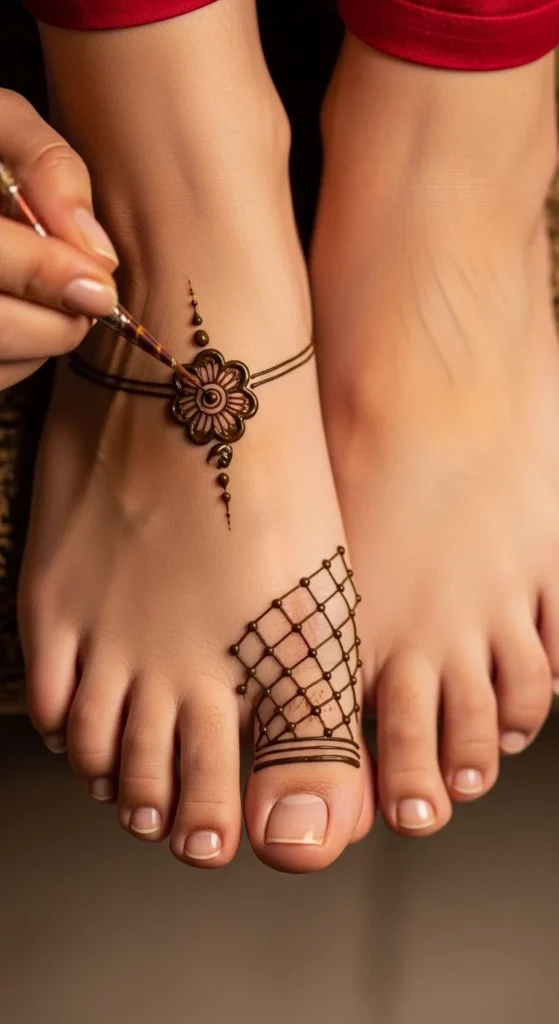
Toe jaali with a flower is a lovely design when you want something slightly detailed but still light overall. The main idea is to decorate the toes with a fine net-like pattern while keeping the rest of the foot clean except for one small flower or motif near the center or side. This combination gives the design structure without making it feel heavy. The jaali on the toes looks elegant and dressy, especially in close-up photos, while the single flower keeps the overall layout connected. At home, you can simplify the jaali by making diagonal lines and tiny dots instead of very tight netting. That saves time and still gives a neat effect. This style is also practical because the coverage stays limited to the toes and one small area above. It works well for brides who want more than just a vine but still prefer a minimal finish. It also suits festive guests when done in a lighter version. With polished toenails and open footwear, this pattern looks especially chic. The result is tidy, feminine, and slightly ornate without crossing into full heavy bridal mehndi.
11. Rose and Short Trail
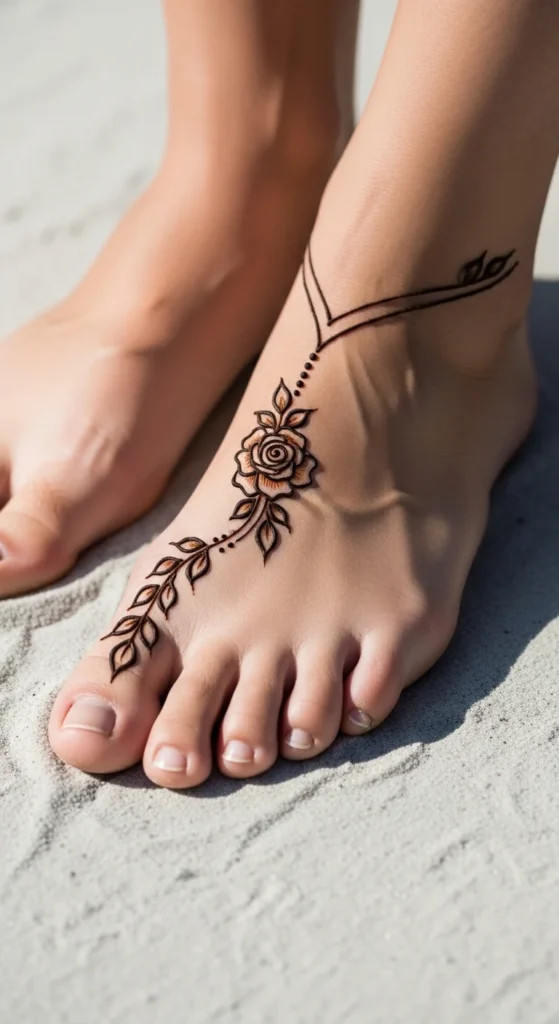
A rose and short trail design is charming, classic, and very easy to adapt for a minimal look. The rose can sit near the big toe base or side of the foot, with a short trail of leaves or dots moving upward. This layout keeps the design focused in one area, which makes it look clean and balanced. Roses work well in mehndi because their layered petal shape already feels decorative, so even one flower can make a strong impression. This is a nice budget-friendly option for DIY mehndi at home because you can build the flower with simple curved petals and avoid fine filling work. If you want a softer version, make the rose small and keep the trail delicate. If you want a bridal effect, add two tiny buds and a few drop shapes near the ankle. This design is very wearable with lehengas, shararas, sarees, and even simpler festive outfits. It adds just enough detail without making the foot look busy. Since the pattern is compact, drying and moving around also becomes easier. The final effect is sweet, polished, and timeless in a way that always looks graceful.
12. Dotted Anklet Charm
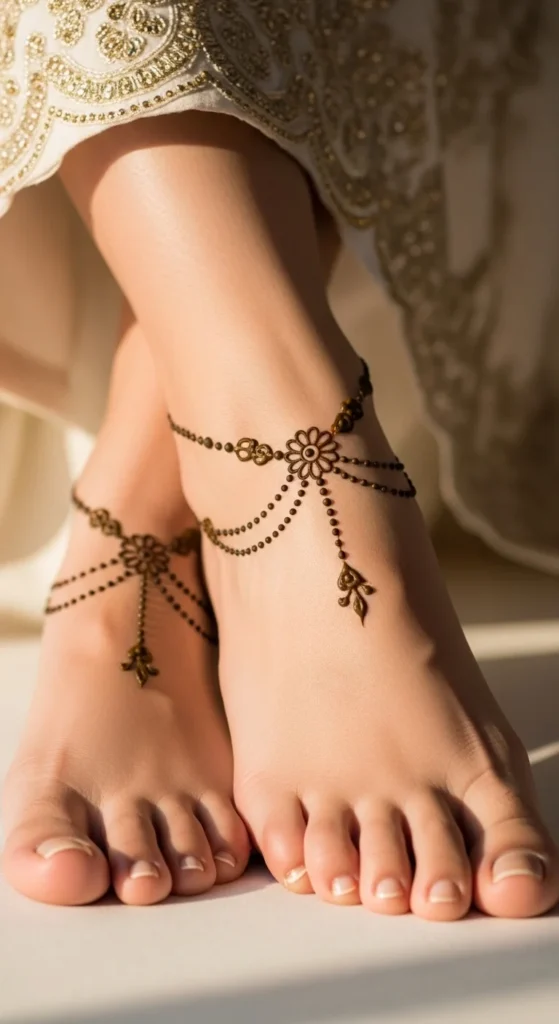
The dotted anklet charm design is a softer version of the full anklet band and works beautifully for people who prefer very fine mehndi. Instead of a thick bracelet-like strip, this style uses dotted chains, tiny petals, droplet motifs, and little hanging accents to create the look of a delicate ornament around the ankle. It feels dressy without taking over the whole foot. This design is especially good for bridesmaids, sisters, and wedding guests who want something refined and comfortable. It also works for casual festive days because the layout stays light and easy. If you are applying it yourself, start with one curved chain line and add a second lighter dotted line above or below it. Then place one or two small charm-like motifs hanging down. That is often enough. You can keep the toes fully plain or add a tiny big-toe accent for balance. The beauty of this style lies in the spacing. Too much detail can make it lose that jewelry-like effect, so keeping it delicate matters. The finished pattern looks elegant, modern, and very pretty with anklets, payals, or open footwear.
13. Tiny Peacock Accent
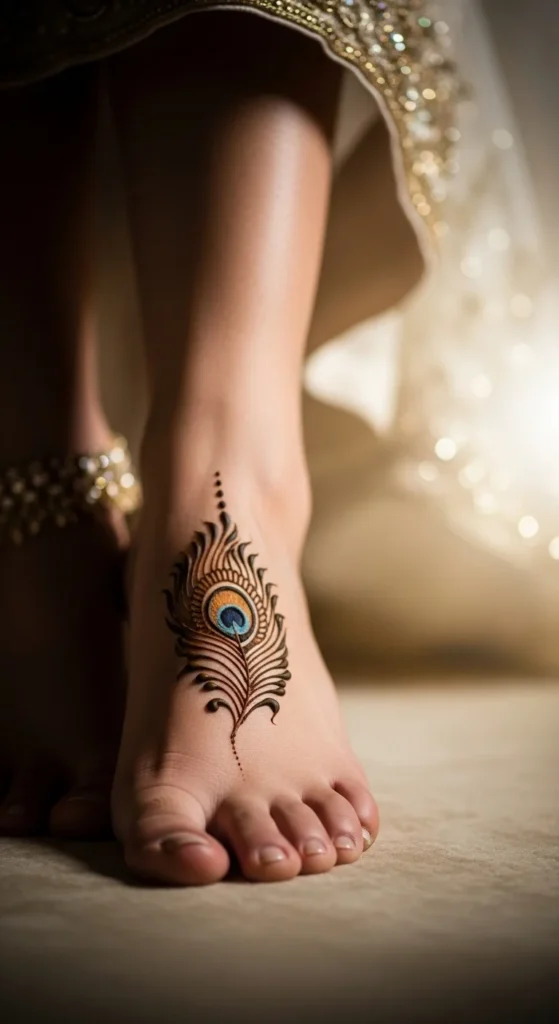
A tiny peacock accent is a nice choice for someone who wants a slightly traditional motif without going for a full heavy design. The peacock can be kept very small and placed near the side of the foot, ankle, or upper corner so it feels like an accent rather than the whole story. You can simplify it by focusing on the curved neck, feather eye, and a few elegant lines instead of a fully detailed bird. This makes it much easier for home application and helps the design stay minimal. A tiny peacock works well for weddings because it still carries that classic festive feel, but it also suits smaller family functions when done lightly. Pair it with a few dots or one leaf spray so it does not look isolated. Since the shape already has personality, you do not need much around it. This also helps if you want faster drying and less chance of smudging. The pattern looks lovely from side angles and works especially well with traditional outfits. The overall feel is graceful and a little regal, while still staying neat enough for someone who prefers lighter mehndi on the feet.
14. Barefoot Sandal Mehndi
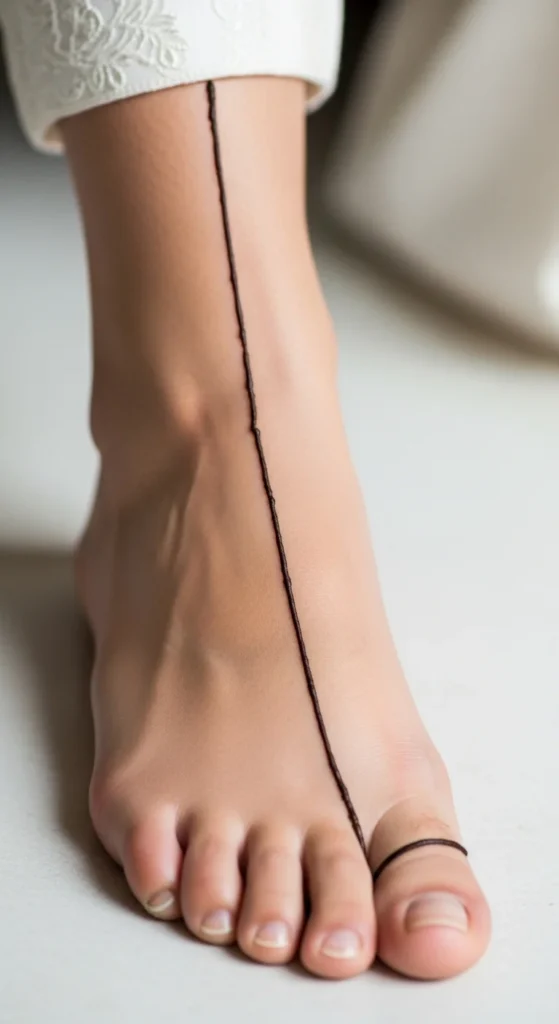
Barefoot sandal mehndi is one of the most stylish minimal foot designs because it copies the look of decorative foot jewelry. The pattern usually starts as an anklet near the ankle, then connects down the center of the foot with a thin line or chain to a toe ring motif. This creates a beautiful balanced layout that feels special without requiring full coverage. It is a great pick for brides who want something elegant and modern, especially for haldi, mehndi, or nikah events where open footwear is part of the look. At home, you can keep it simple with dots, tiny petals, and one straight or gently curved line. Avoid making the center chain too thick, since the beauty comes from the delicate proportion. This style also works well because it leaves the sides of the foot open, which keeps the design airy and easier to manage. If you want a slightly more festive version, add little hanging charms near the ankle. The final look pairs beautifully with sandals, barefoot shoots, and floor-seated ceremony photos. It feels graceful, structured, and fashion-led while still staying true to traditional mehndi artistry.
15. Scattered Leaf Sprigs
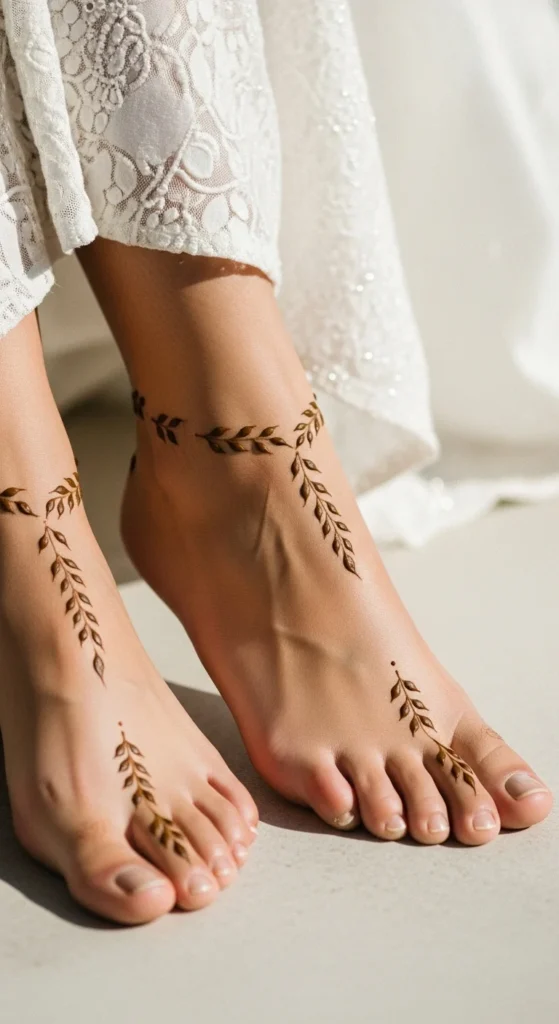
Scattered leaf sprigs are perfect when you want mehndi that feels soft, organic, and not too formal. Instead of one connected design, the pattern uses a few small leaf clusters placed across the ankle, toe side, or upper foot with space between them. This gives the foot a very airy and balanced appearance. It is one of the easiest styles to do at home because each sprig can be drawn separately, which means you do not have to worry too much about perfect flow. A few small leaves, short stems, and tiny dots are enough to create a pretty result. This design is very budget-friendly and quick, making it a good option for casual festive days or last-minute plans. It also works nicely for people who do not like heavy symmetry. Since the placement is light, it pairs well with printed outfits, embroidered footwear, or existing jewelry. Brides can make the sprigs slightly denser near the ankle, while guests can keep them sparse and tiny. The final look feels natural, elegant, and very wearable. It is proof that simple mehndi can still look thoughtfully styled without needing dense fills or long sitting time.
16. Matching Ankle and Big Toe
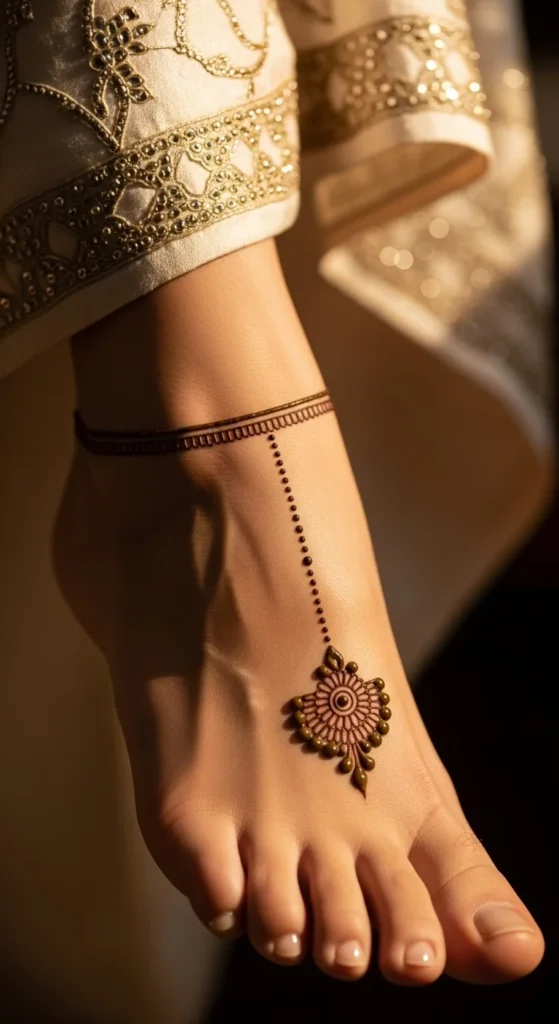
A matching ankle and big toe design is a smart way to make a small mehndi pattern feel complete. The ankle gets a simple bracelet-style band or floral strip, while the big toe gets a similar motif in smaller form. This visual connection ties the whole foot together without needing extra filling in the middle. It is a great option if you like balance and neatness in your mehndi but still want a light look overall. This style is also easy for DIY use because it breaks the design into two small sections. You can focus on the ankle first, let the pattern settle, then add the toe detail. Use similar petals, loops, or dots in both places so the design feels intentional. This pattern looks especially pretty with sandals since both the ankle and toe remain visible. It also helps reduce smudging because the center of the foot stays mostly clear. Brides can add tiny chains between the two areas if they want a slightly richer version, but it looks lovely even without them. The end result is clean, elegant, and nicely structured without becoming complicated or crowded.
17. Outer Edge Linear Design
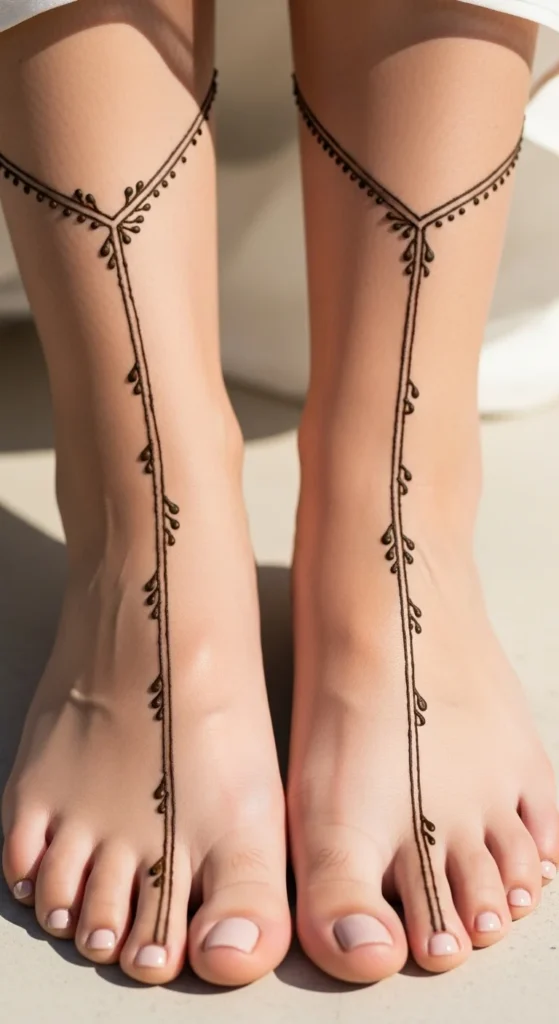
An outer edge linear design is ideal for people who want foot mehndi that feels modern and fashion-forward. The pattern follows the outer border of the foot using a slim line of buds, petals, geometric turns, or dotted links. Because the design stays at the edge, it creates a graceful frame without taking over the entire surface. This makes it especially good for minimal bridal styling and for people who want something that works well with footwear. At home, you can draw a smooth guiding line first and then build small motifs along it. Keeping everything narrow helps the design stay elegant. This style is also useful if you want a short mehndi session because the pattern area is limited and easy to control. It looks lovely when paired with plain toes, though a single big-toe dot cluster can add more finish if you want it. The outer edge placement also gives a flattering silhouette in side photos. Overall, this mehndi idea feels sleek, airy, and refined. It has that less-is-more effect that makes simple designs look expensive and stylish without needing a lot of cone work.
18. Ankle Bone Flower Cluster
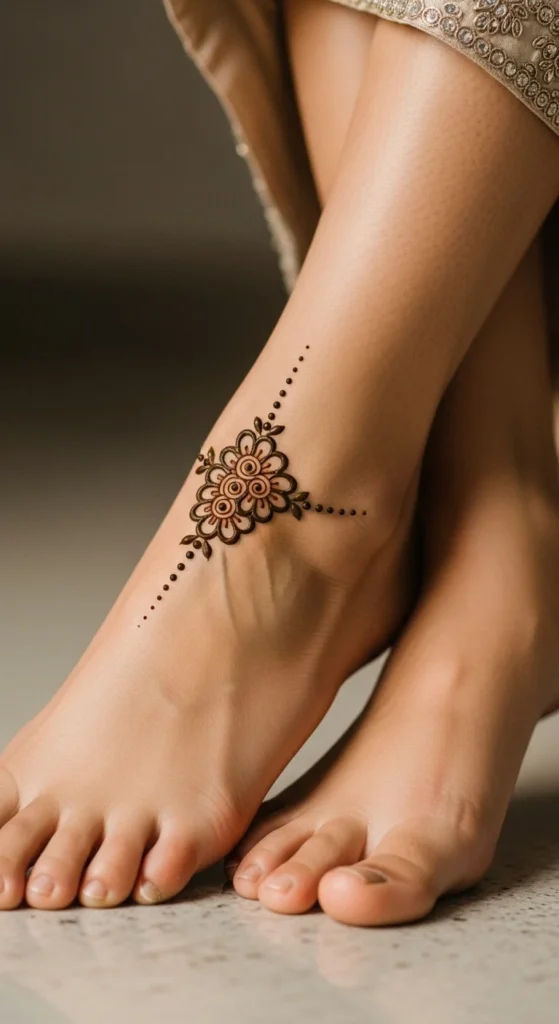
An ankle bone flower cluster is a lovely detail if you want your mehndi to feel delicate and placed like a natural accessory. The cluster sits near the ankle bone and can be made with two or three tiny flowers, leaves, and a few dots. Because the pattern stays in one compact area, it feels elegant and very easy to wear. This is also a smart design for people who do not want henna across the center of the foot, whether for comfort, footwear reasons, or just personal style. It is easy to do at home with a basic cone because the motifs are small and close together. Keep the flowers simple and let the dot details do the finishing work. This style suits both festive wear and wedding events, especially if you already plan to wear jewelry or embroidered sandals. It also looks pretty in close-up photos where subtle detailing matters more than full coverage. Brides can pair the cluster with tiny toe lines, while guests can leave it as is. The finished look feels soft, feminine, and polished in a way that never seems too much.
19. Curved Swirl with Dots
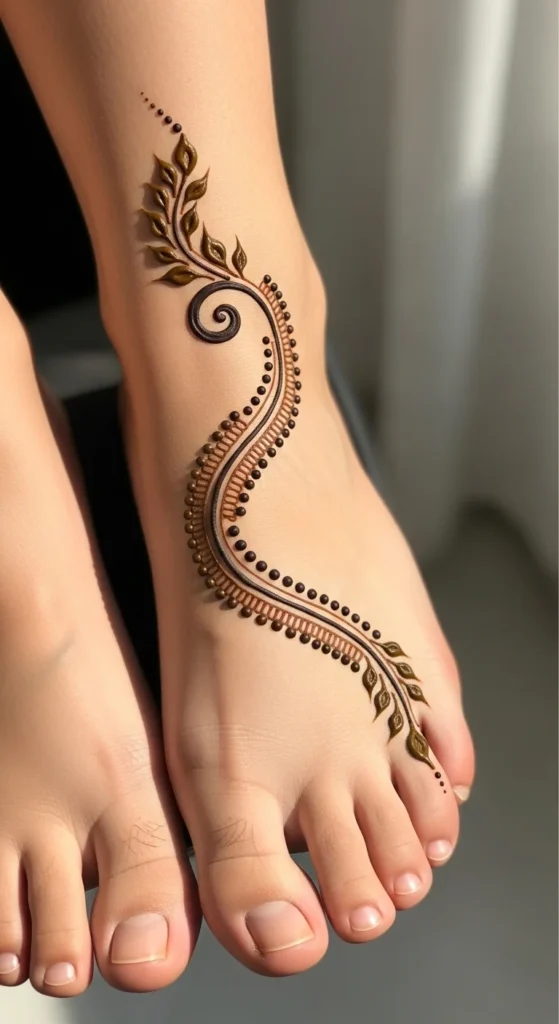
A curved swirl with dots is one of the simplest mehndi ideas you can try, yet it can still look very graceful when placed well. The design starts as one flowing curve from the toe base, side of the foot, or ankle and then gets finished with dot trails, tiny leaf tips, or miniature petal shapes. Since the main line does most of the visual work, the rest can stay very light. This is a great choice for beginners because it does not require full motif building or dense detailing. You only need one confident curve and a few neat finishing touches. It is also very budget-friendly and fast, which makes it suitable for small events, last-minute plans, or anyone testing mehndi at home for the first time. If you want a modern look, keep the swirl long and clean with minimal extras. If you want something a little softer, add two tiny buds near the end. This design pairs well with plain toes and open sandals. The final effect is graceful and understated, proving that a small amount of mehndi can still make the foot look dressed and festive.
20. Geometric Panel Accent
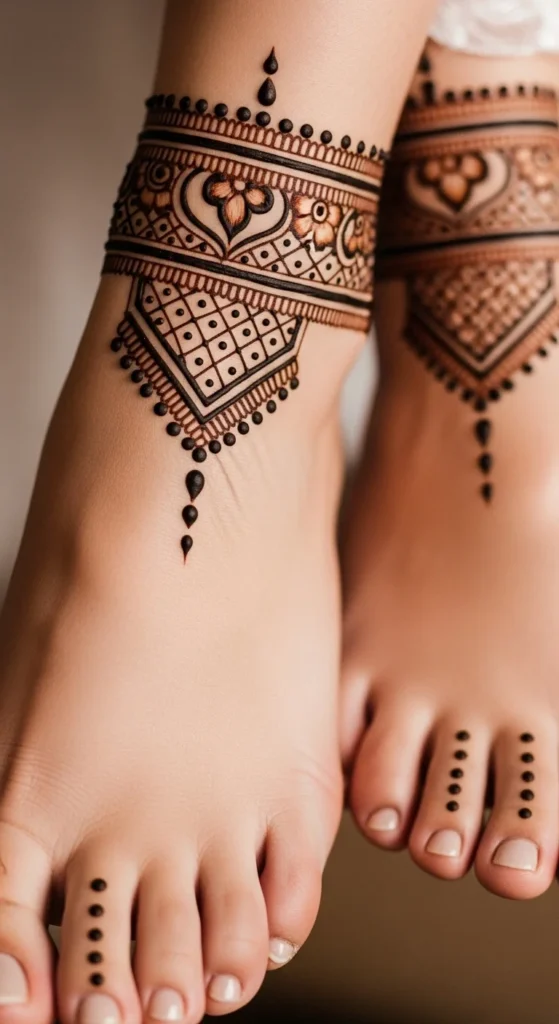
A geometric panel accent is a great way to bring a modern touch into foot mehndi while keeping the overall look minimal. The design uses small sections of clean lines, angled shapes, net details, or repeating curves arranged in a narrow panel near the ankle or upper side of the foot. This style feels neat and fashion-forward because the geometry keeps the layout controlled. It is especially nice for people who want something different from florals but still want the design to feel festive. At home, you can simplify the panel by using a few straight bands, tiny diamonds, and dot borders. There is no need to make it very dense. The empty spaces between shapes are what keep it elegant. This pattern works well with plain toes or one small matching toe detail. It is also a good option for events where you want a stylish mehndi look that feels more modern than traditional. Brides can make the panel slightly longer for more impact, while guests can keep it short and tidy. The result looks sharp, clean, and very current without being loud or difficult to wear.
21. Jhumka-Inspired Anklet
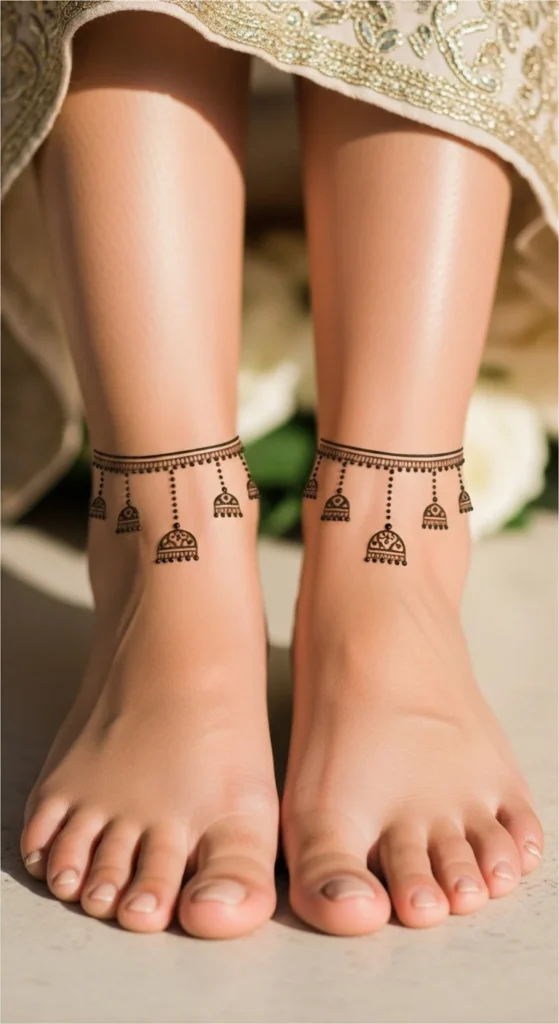
A jhumka-inspired anklet design adds a festive twist to minimal foot mehndi by making the pattern look like tiny hanging earrings or charms around the ankle. The base stays light, usually as a thin curved band, while the charm details hang below in droplet, bell, or petal forms. This gives the design movement and a jewelry-like finish without needing to cover much of the foot. It is a lovely option for wedding events because it feels dressy but still airy. At home, you can start with one slim band and then add two or three hanging motifs spaced apart. That is often enough to create the effect. Keep the hanging details small so the pattern does not become too heavy. This style works beautifully with lehengas and traditional sandals, especially when the ankle area is visible. It also suits bridesmaids who want something slightly more special than a plain band. Since the top center of the foot stays open, the mehndi remains comfortable and less messy. The final look is elegant, festive, and very pretty in motion, especially when walking or posing with slightly lifted heels.
22. Hidden Initial Detail
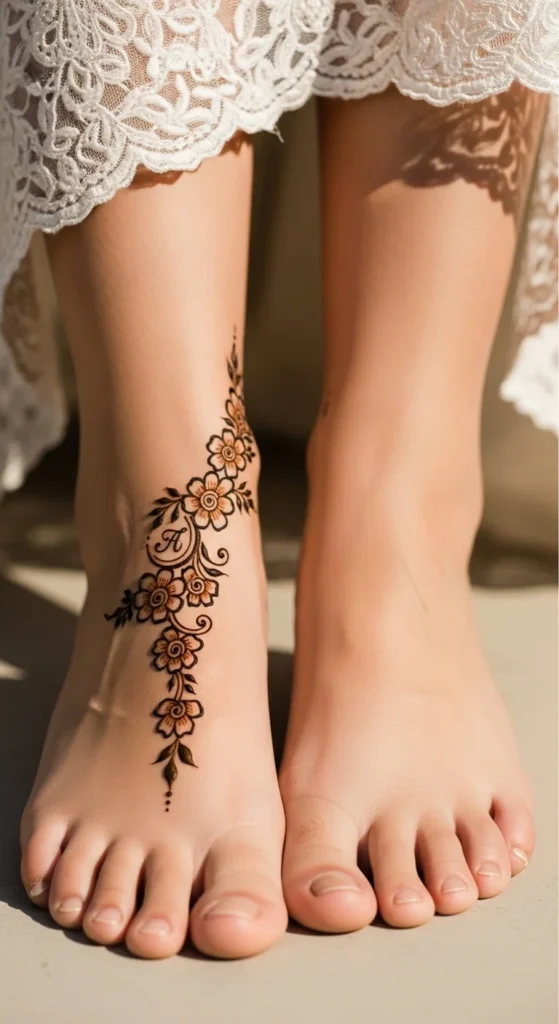
A hidden initial detail is perfect for brides or anyone who wants a personal touch without changing the simple look of the mehndi. The idea is to place a tiny letter inside a floral motif, anklet band, or leaf trail so it stays subtle and blends into the pattern. This makes the design feel intimate and unique without becoming visually heavy. It is especially nice for bridal mehndi where small personal details matter. The overall design can remain minimal, such as a side vine or a tiny ankle cluster, while the initial stays tucked into one corner. At home, this can be done easily if you plan the letter early and keep it very small. Use a clear block or curved form that fits naturally into the petals or lines. This style is also budget-friendly because it does not add much time or coverage. It simply adds meaning. Guests can even use their own initials for a personalized festive look. The finished result stays elegant and light, but with an extra layer of thought behind it. It is a simple way to make minimal mehndi feel more special without filling more space.
23. Toe Base Arch Pattern
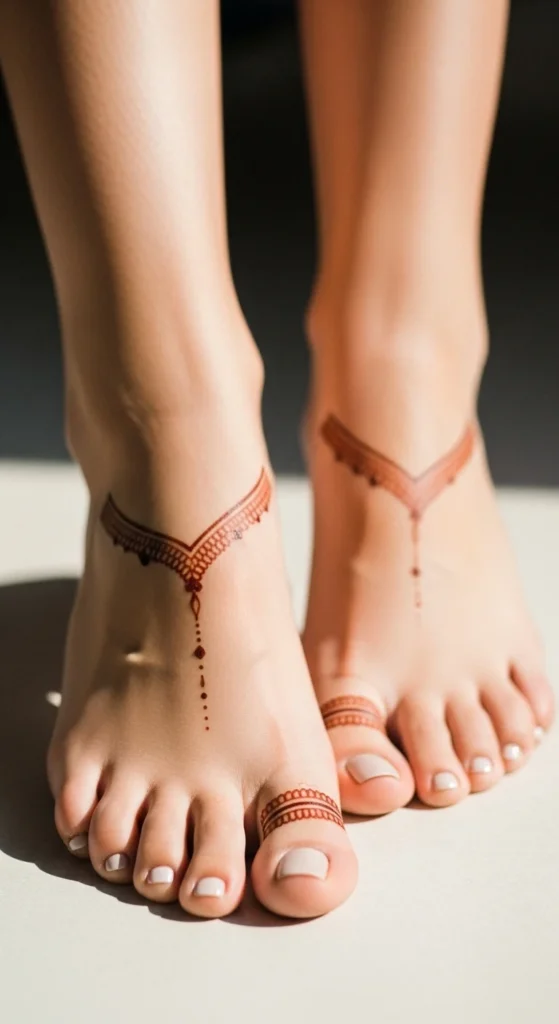
A toe base arch pattern is a clean and elegant way to decorate the front of the foot without moving too far upward. The design sits right where the toes begin and uses arches, scallops, petals, or tiny dot chains to create a soft border across that area. It almost looks like a decorative front sandal strap made with mehndi. This is a very good option if you want a design that shows beautifully with open footwear while still staying minimal and practical. It is also easy for home use because the layout is narrow and follows a natural line. You can make the arches very simple or alternate them with little flowers for a sweeter finish. Since the rest of the foot stays open, the final look remains airy and modern. This design suits wedding guests, sisters, and brides who like understated styling. It also pairs well with toe ring motifs or plain ankles. Because the placement is compact, drying time feels easier to manage too. The result is neat, feminine, and very wearable. It gives the foot a dressed-up look with only a small amount of mehndi work.
24. Three-Point Balanced Layout
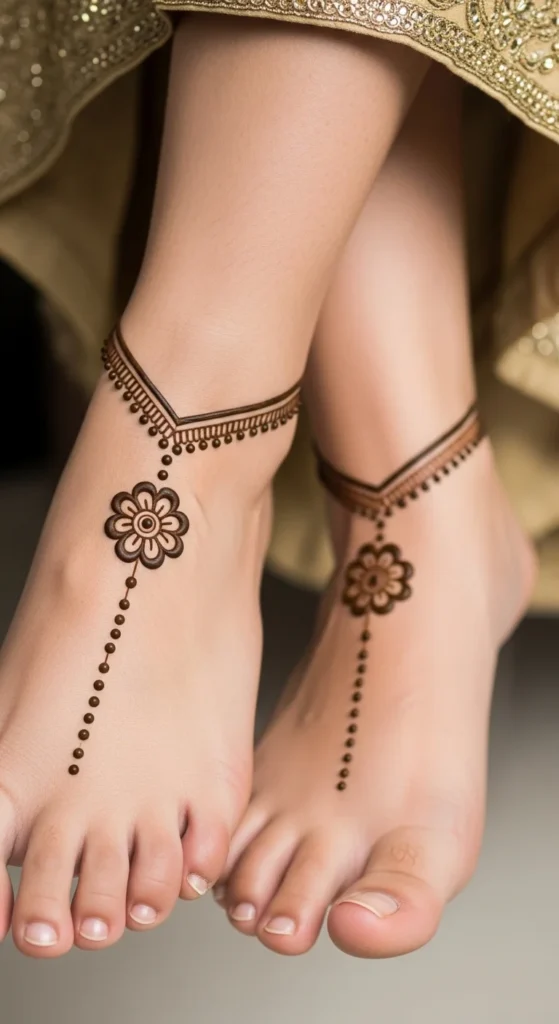
A three-point balanced layout is ideal if you want a simple mehndi design that still feels complete from every angle. The pattern uses three small focus areas, usually a slim anklet line, one tiny center or side motif, and a small toe detail. Because the design is broken into separate points, the foot looks styled without becoming crowded. This makes it one of the smartest options for people who want light coverage with a polished finish. It also gives you a lot of flexibility. You can use flowers in all three sections, or mix an anklet band with dots and a tiny mandala. At home, this layout is easier than a full connected pattern because you can work in sections and stop once the balance looks right. That also makes it budget-friendly and less stressful. Brides can use slightly richer motifs in each point, while guests can keep the shapes tiny and airy. This design works beautifully with most outfits and shoes because no single section is too heavy. The final result feels thoughtful, elegant, and modern. It is a great last design idea because it shows how minimal mehndi can still look complete with the right placement.
Conclusion
Simple foot mehndi designs can look elegant, festive, and very stylish without covering the full foot. Small florals, anklet bands, toe details, side vines, and airy layouts often create the best minimal effect because they leave room for the design to breathe. That open space is what gives the mehndi a modern polished finish. Pick a style based on your event, your footwear, and how much time you want to spend sitting. A bride can scale these patterns up slightly, while guests can keep them light and quick. Start with one clean focal idea, keep the lines neat, and let the placement do the work. That is often all it takes to create a foot mehndi look that feels graceful and memorable.

Lily Summers is a digital artist and creative storyteller who loves bringing colorful characters to life. With a passion for cartoons, fan art, and playful sketches, she inspires others to explore their imagination through art. When she’s not sketching, you’ll find her dreaming up new ideas for CraftedWizard.com to spark creativity in every artist. 🌈✨