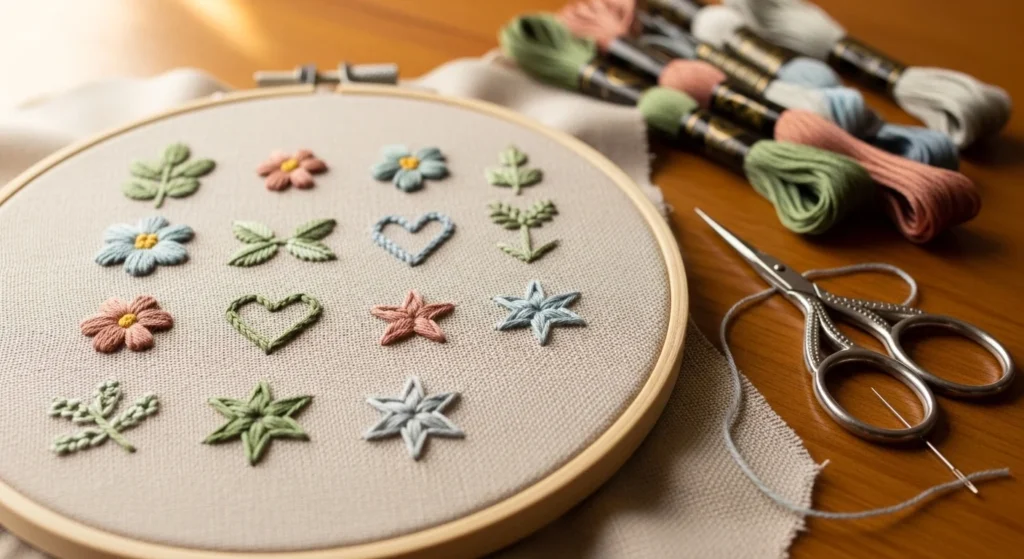
Hand embroidery is one of the easiest crafts to start when you want something calming, affordable, and quick to learn at home. With a small hoop, a needle, a few thread colors, and plain cotton or linen fabric, you can stitch simple designs that look charming without taking days to finish. These easy hand embroidery designs for beginners are meant to help you practice basic stitches, build confidence, and make useful handmade pieces like hoops, bookmarks, tote bags, napkins, and gifts. Many of these ideas work well with just backstitch, running stitch, satin stitch, or lazy daisy stitch, so you do not need a large skill set to begin. The goal is to keep things simple, pretty, and realistic for new stitchers.
1. Simple Daisy Flower
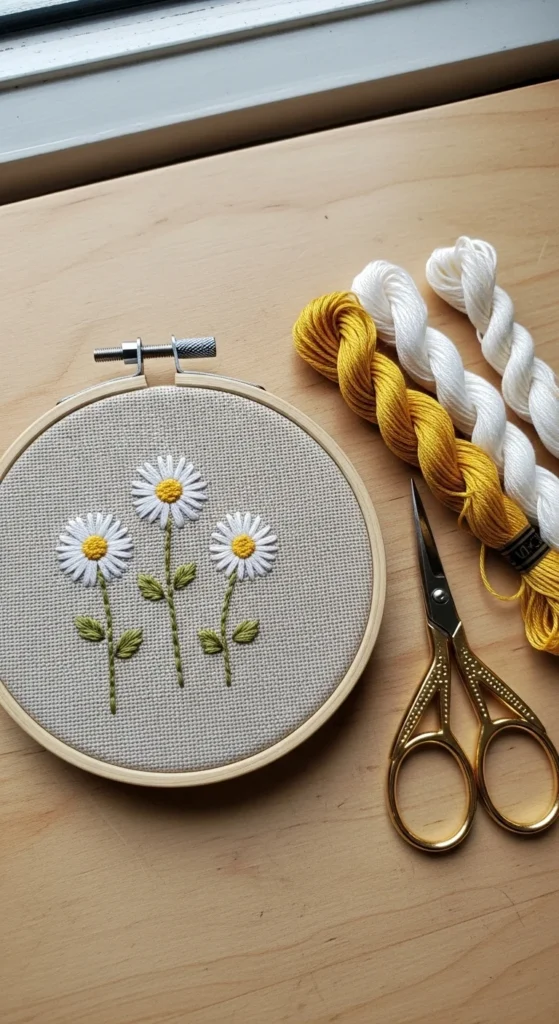
A simple daisy flower is one of the best first embroidery designs because it teaches shape, spacing, and control without feeling hard. Each petal can be made with lazy daisy stitch, and the center can be a small group of knots or satin stitches. That means you can make a full floral design with only a few repeated moves. Use white petals, a yellow center, and green stems for a classic look, or switch to pink and peach if you want something softer. This design is budget-friendly because you only need three thread colors and a scrap of plain fabric. It also works on small hoops, tote bags, handkerchiefs, or even a shirt pocket. If you are nervous, start with one single flower before making a group. A daisy still looks cute even if the petals are slightly uneven, so it is forgiving for beginners. You can place one flower in the center of a hoop or stitch a row of small daisies across a bookmark. This kind of design helps your hands get used to stitching rhythm, and the result feels cheerful, simple, and easy to finish in one relaxed sitting.
2. Single Leaf Branch
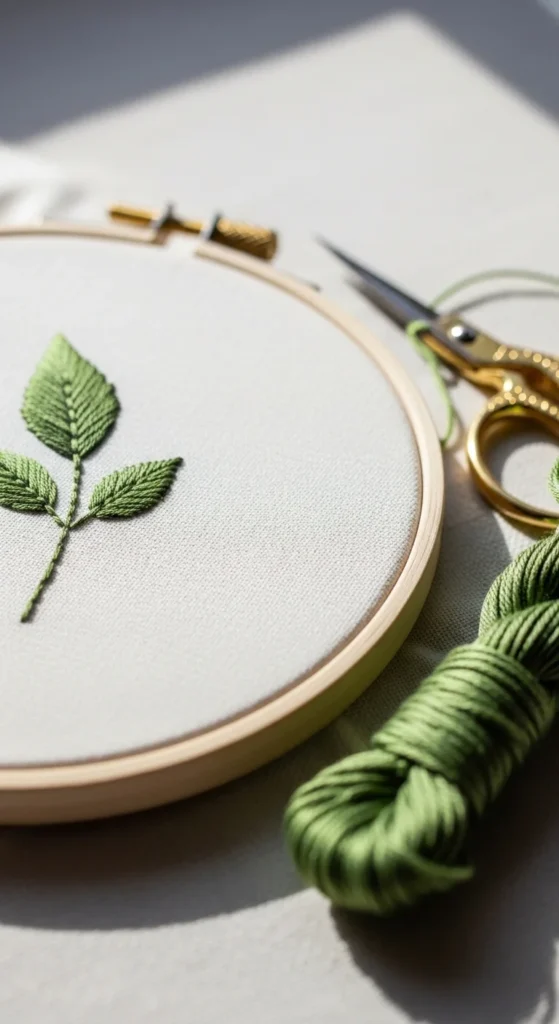
A single leaf branch is a calm and easy project that looks clean and stylish with very little stitching. It usually uses one curved stem and a row of small leaves, which makes it perfect for practicing backstitch and lazy daisy stitch or simple satin stitch. Because the shape is so basic, you do not need to worry about tiny details. Even a loose branch can still look beautiful once it is stitched. This is a smart low-cost design because one or two shades of green are enough to make it work. You can stitch it on a hoop for wall decor, on a napkin corner, or on the edge of a tote bag for a handmade detail that feels soft and modern. If you want to make it even easier, draw one curved line on the fabric and place five to seven leaves along it. That is enough to create a finished look. If you want more interest, add tiny dots or little buds between the leaves. A leaf branch is also a good project for people who like minimal decor and do not want a very busy pattern. It feels peaceful, quick, and very beginner-friendly.
3. Tiny Heart Motif
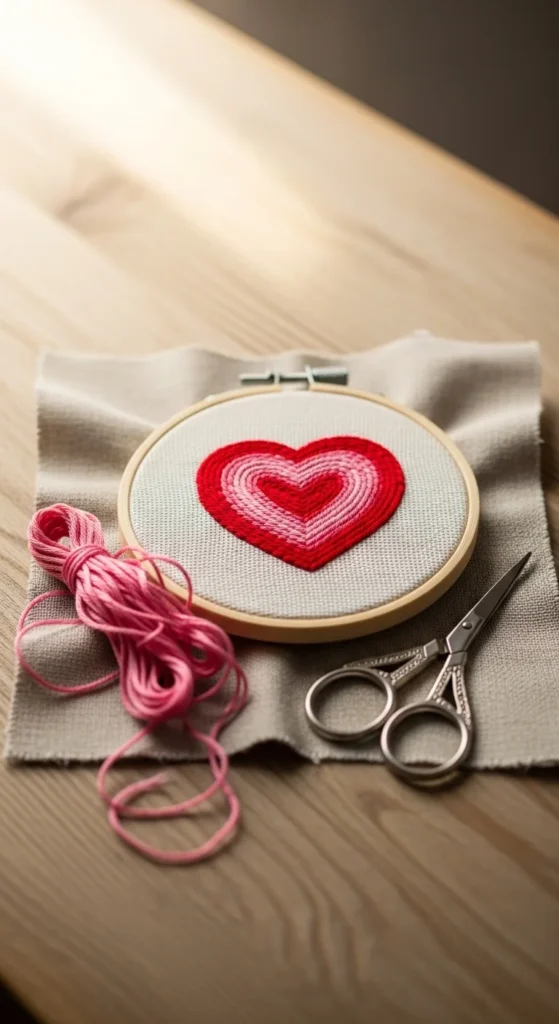
A tiny heart motif is one of the easiest hand embroidery designs for beginners because the shape is familiar and fast to stitch. You can outline it with backstitch, fill it with satin stitch, or keep it simple with just a running stitch border. The design is small, which means you can finish it quickly and feel that early success that keeps a new hobby fun. It is also very affordable because you only need a small amount of fabric and one thread color if you want to keep it basic. A red or pink heart is classic, but black, mustard, blue, or green can look lovely too. This motif works well on gift tags, small hoops, denim pockets, baby items, or friendship gifts. You can stitch one large heart in the center or scatter several tiny hearts across a fabric surface for a playful pattern. If the curves are not perfectly even, that is completely fine. Handmade embroidery often looks sweeter when it has a little character. This project helps you practice turning stitches around a curved shape, which is useful later when you move on to flowers, leaves, or lettering. It is simple, cute, and very easy to repeat.
4. Little Star Outline
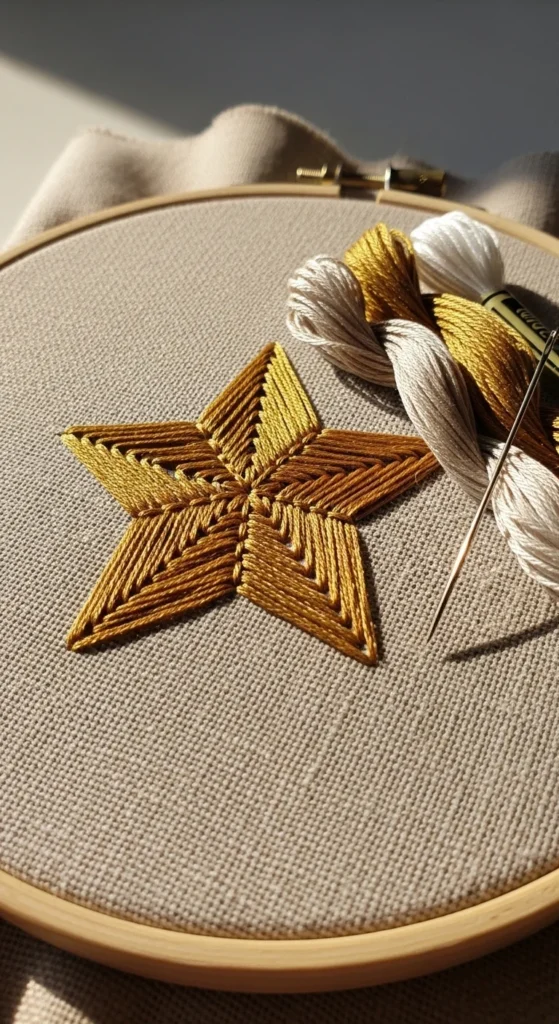
A little star outline is a great practice design if you want something quick that still looks neat and decorative. The shape is made from straight lines, so it feels less tricky than rounded flowers or letters. You can stitch the star with backstitch for a clear outline or use running stitch if you want a softer handmade look. This is a good project for beginners because it teaches line control and corner turns without requiring a filled design. It is also very cheap to make since a single color works well. Gold, white, navy, or soft yellow all look pretty on plain fabric. One small star can make a cute ornament-style hoop, while several stars can be scattered across a pillow cover, pouch, or fabric bookmark. If you want to make the design feel more magical, add a crescent moon or a few tiny dots around it. If you want something very minimal, stitch one star only and leave lots of open fabric around it. That empty space makes the shape stand out. This is the kind of project that finishes fast, helps your hand get steady, and gives you a clean result without asking for much thread, time, or planning.
5. Easy Rainbow Arches
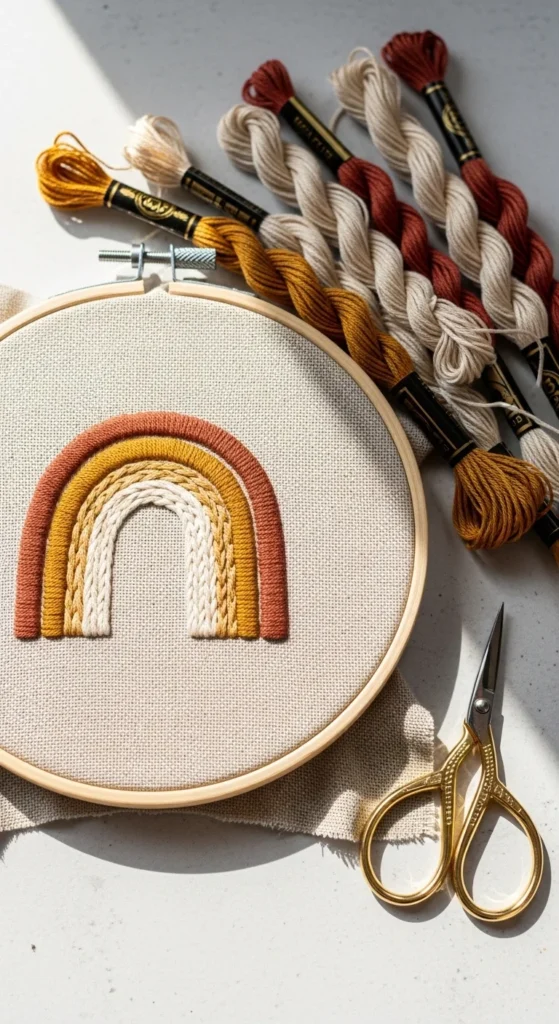
Easy rainbow arches are perfect for beginners because the design is made from repeated curved lines, which helps you practice neat spacing without making the project feel too hard. Each arch can be stitched with backstitch, split stitch, or even running stitch if you want a softer look. You only need three or four colors, and muted shades like terracotta, mustard, blush, and cream make the design look modern and cozy. This project is budget-friendly because it uses simple lines instead of complex fills, so thread lasts longer and the design finishes faster. A rainbow arch looks lovely in a small hoop for wall decor, but it also works well on baby gifts, notebook covers, or small pouches. If you want to make it even easier, draw the arches lightly with pencil first so you have a guide. If your curves are not perfectly smooth, the finished piece will still look sweet because the repeated lines create a pattern that pulls the design together. You can add tiny dots below the rainbow or keep it plain. This is a cheerful project that helps build stitching rhythm while giving you something bright and handmade to enjoy right away.
6. Minimal Mountain Peaks
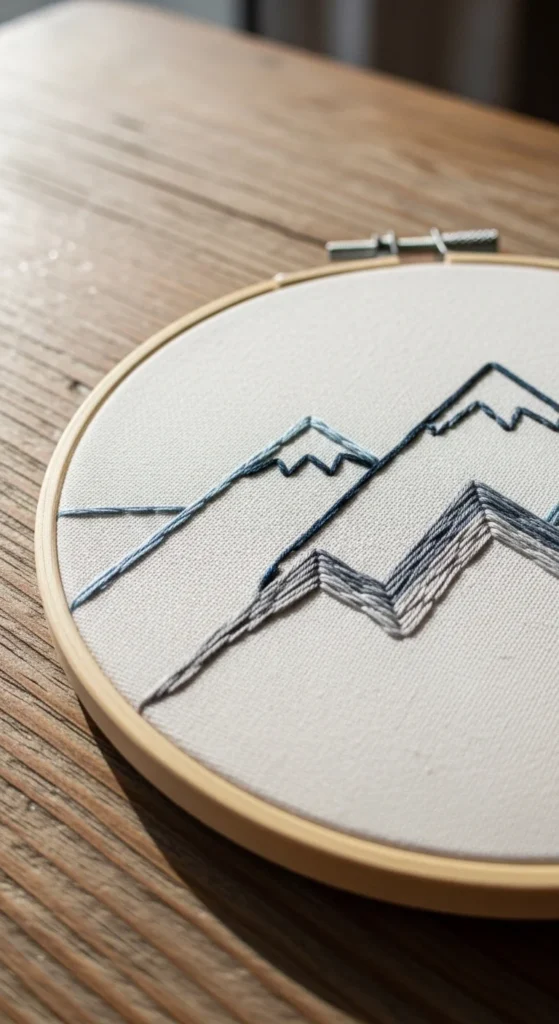
Minimal mountain peaks are a smart choice if you like clean designs and want a project that uses mostly straight lines. This kind of pattern is ideal for practicing backstitch because the mountain edges can be drawn as simple angled shapes. You can stitch one peak, three peaks, or a small range with a sun above it. Gray, blue, brown, or dark green all work well, especially on neutral fabric. This design is great for beginners because it avoids tiny details and still looks finished very quickly. It is also low-cost because one or two thread colors can carry the whole piece. Mountain embroidery looks nice in a hoop, but it also works well on a canvas pouch, tote bag, or journal cover. If you want a little extra detail, add a tiny line of snow on the peaks using white thread. If you want to keep the project very basic, make the mountains outline-only and stop there. That clean style can look very modern. This project helps you learn how to keep stitches even along long lines, and it gives a simple handmade result that feels calm, outdoorsy, and easy to complete in one cozy craft session.
7. Crescent Moon and Dots
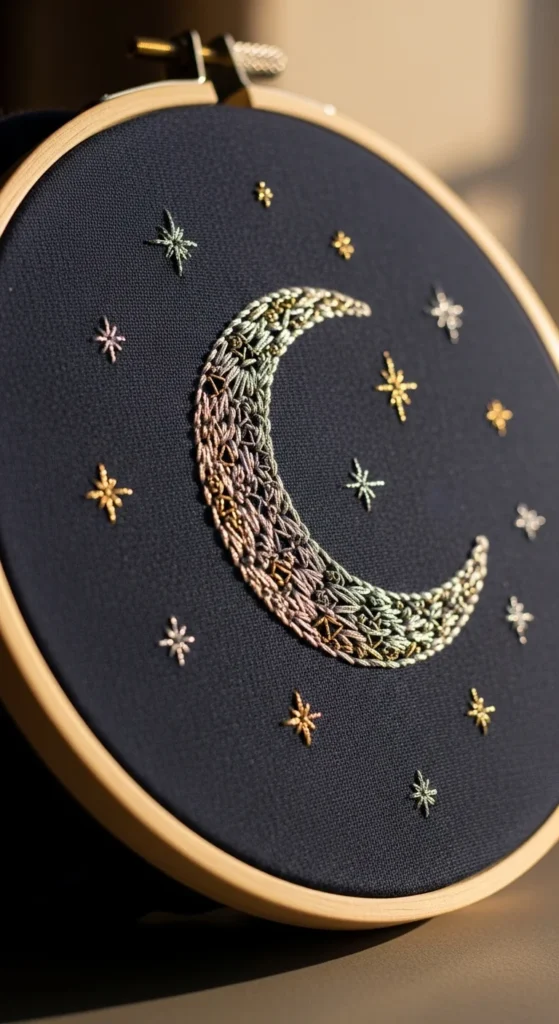
A crescent moon and dots design feels dreamy and simple at the same time, which makes it a lovely beginner project. The moon shape can be outlined with backstitch or filled with satin stitch if you want a fuller look, and the surrounding dots can be made with tiny straight stitches or French knots. This is an easy way to practice both curved lines and small accent details in one design. It also stays affordable because you only need one main color and maybe one lighter accent. White or gold-look thread on dark fabric creates a nice night-sky effect, while navy or mustard on cream fabric gives a softer style. This pattern works well in a small hoop, on a pouch, or on the corner of a pillowcase. If you are just starting, keep the moon medium-sized and place only a few dots around it. That way the design stays clean and easy to manage. If you want more interest later, add a few tiny stars or a second small moon. This embroidery idea feels peaceful, personal, and fast to finish. It gives you a pretty result without asking for many materials, and it helps you build confidence with curved stitching.
8. Repeating Border Bookmark
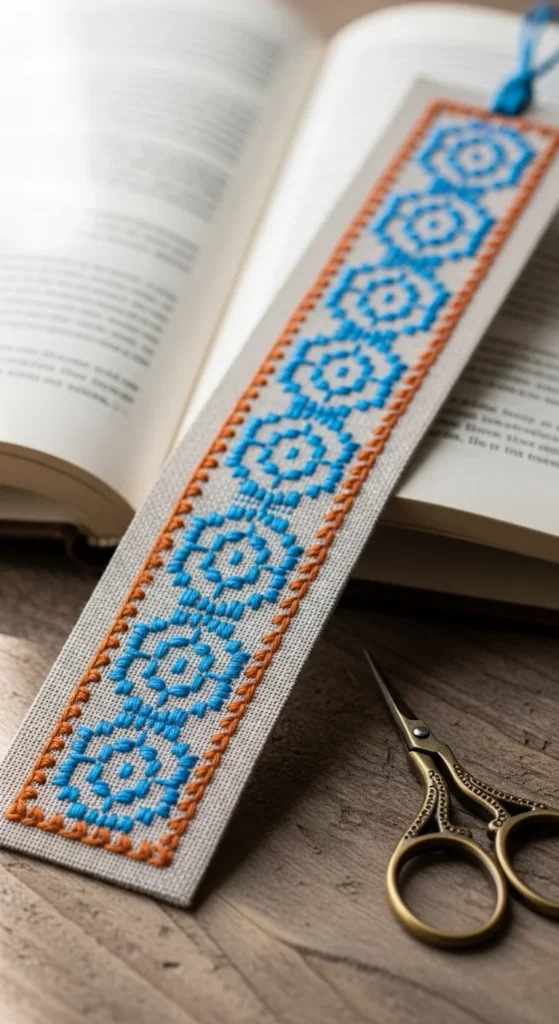
A repeating border bookmark is an excellent project for beginners because it teaches steady stitching through small repeated shapes. You can make the border with little triangles, dots, dashes, or tiny leaves, using running stitch and backstitch for most of the work. The beauty of this idea is that it turns a simple strip of fabric into something useful without needing a large or detailed pattern. It is also one of the most budget-friendly options on this list because you can use leftover thread and small fabric scraps. This makes it a good practice piece when you do not want to commit to a full hoop design. Use one color for a neat look or two colors if you want more contrast. A handmade bookmark also makes a lovely gift, especially when paired with a notebook or novel. If you want to keep it extra easy, stitch one border line on each side and leave the center plain. If you want more detail, add a tiny initial or heart in the middle. This project is helpful because it builds muscle memory through repetition, and it gives you something practical at the end. Simple repeated stitches can teach a lot while still feeling calm and enjoyable.
9. Lavender Stem Sprig
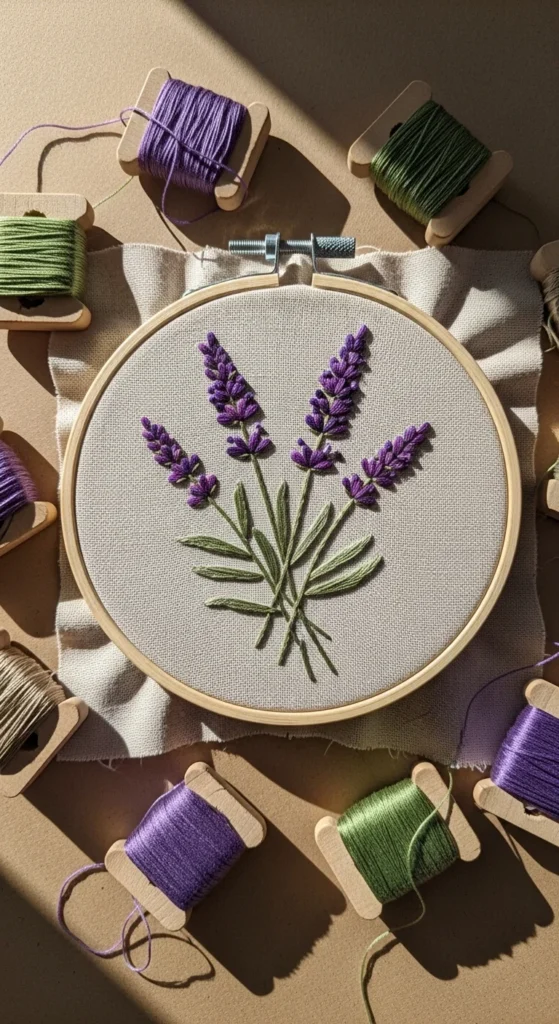
A lavender stem sprig is a beautiful beginner embroidery design because it looks delicate but uses very simple repeated stitches. The stem can be worked in backstitch, while the little purple buds can be stitched as short straight stitches or tiny lazy daisy loops. Once you repeat the buds along the line, the design starts to look polished very quickly. This is a nice low-cost project because you only need two or three thread colors, and it works beautifully on plain cotton or linen. Lavender also suits many handmade items, from wall hoops to hand towels and little fabric pouches. If you want a clean modern look, stitch one small sprig in the center of the fabric. If you want something fuller, create three stems tied together like a mini bouquet. The shape is forgiving, so even if the buds are not perfectly even, the final piece still feels charming and soft. This design is helpful for beginners because it teaches how to place small stitches close together without becoming overwhelming. It is also a relaxing project for evenings when you want something pretty and easy that can be finished without much setup or stress.
10. Monogram Letter Hoop
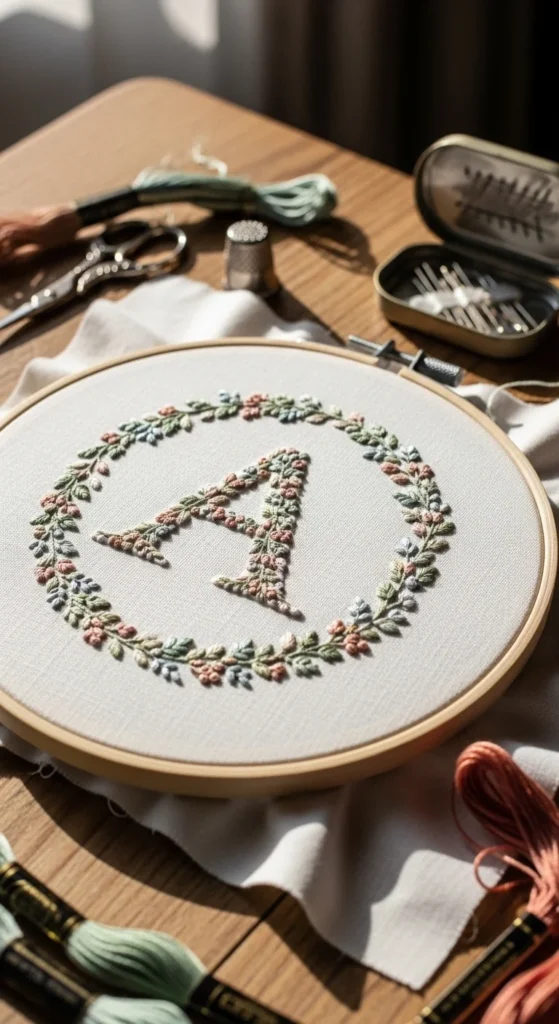
A monogram letter hoop is a great starter project because it feels personal and giftable while still being simple enough for beginners. Choose one large letter, trace it lightly onto the fabric, and stitch it with backstitch, stem stitch, or split stitch. If you want extra decoration, add a few tiny leaves, dots, or flowers around the letter, but keep the design open so it does not feel crowded. This project stays affordable because it uses limited thread and can be made on a small hoop with scrap fabric. A monogram hoop makes a sweet gift for birthdays, baby rooms, desks, or gallery walls, and it is also a nice way to practice stitching around curves and corners. If you are just starting, use a block-style letter instead of a cursive one. Straight edges are easier to manage. You can stitch the letter in one color or use a second shade for the small accents. This design is useful because it helps you work with a traced guide and gives you a finished piece that feels custom. Even simple initials can look thoughtful and polished when stitched neatly on clean fabric with a little space around them.
11. Sunny Little Sun
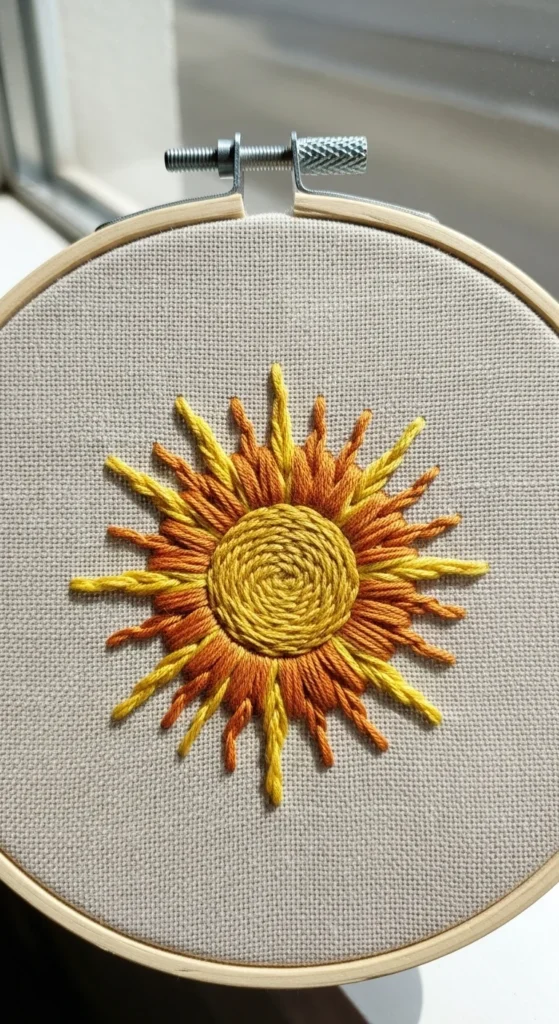
A sunny little sun is a cheerful embroidery design that is easy to stitch and great for beginners who want something quick. The center can be a simple circle outlined with backstitch or filled with satin stitch, and the rays can be made with short straight stitches coming out from the edge. That means the project uses only a few basic moves, which helps you learn without feeling stuck. This is also a budget-friendly idea because yellow and orange thread are often enough to complete the whole design. A sun motif works well in a hoop, on a pocket, or in the corner of a tote bag where a small pop of color feels fun and bright. If you want a softer style, use mustard and cream instead of strong yellow. If you want it more playful, add a tiny cloud or two nearby. The shape is forgiving, so slight differences in the rays will not harm the design. This kind of motif is good for building confidence because it finishes fast and looks happy right away. A small embroidered sun can make your fabric feel handmade and warm without asking for complicated stitching or a big time commitment.
12. Cloud With Raindrops
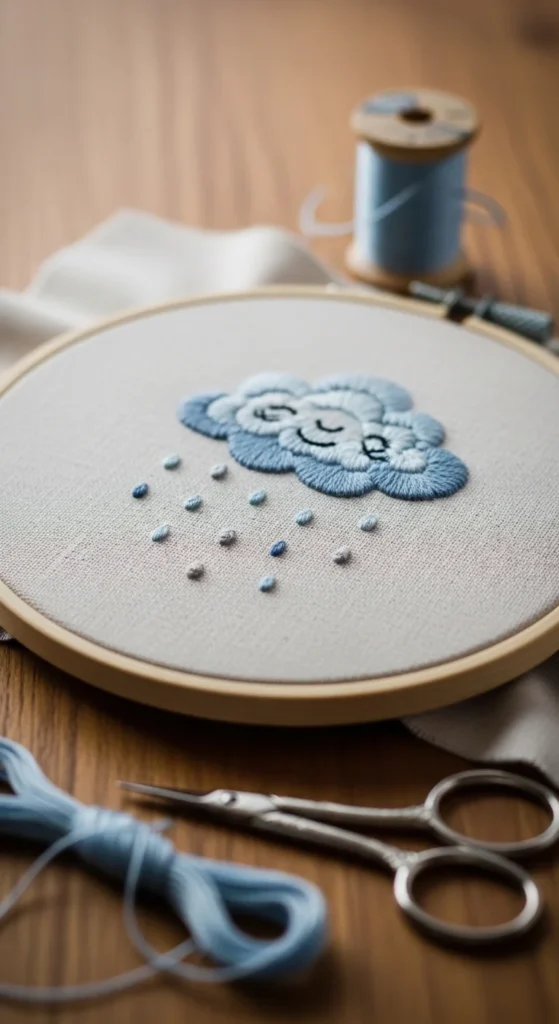
A cloud with raindrops is a fun and simple design that helps beginners practice rounded outlines and small straight stitches in one easy project. The cloud shape can be stitched with backstitch or split stitch, and the raindrops can be little satin stitch drops or quick straight stitches hanging below the cloud. Because the shapes are basic, this pattern feels approachable even if you are very new to embroidery. It is also low-cost because you only need two or three thread colors, and it works well on tiny pieces of fabric. This design looks cute in a nursery hoop, on a notebook sleeve, or on a small zip pouch. If you want a sweet soft version, use pale blue and gray. If you want a brighter style, try yellow rain or a rainbow cloud setup. You can keep the design very minimal with one cloud and three drops, or add extra dots and stars around it. This is a useful beginner project because it helps you manage both curves and short repeating stitches without needing dense fill work. The result feels playful and handmade, and it is easy enough to finish in one sitting while still giving you good practice.
13. Single Tulip Bloom
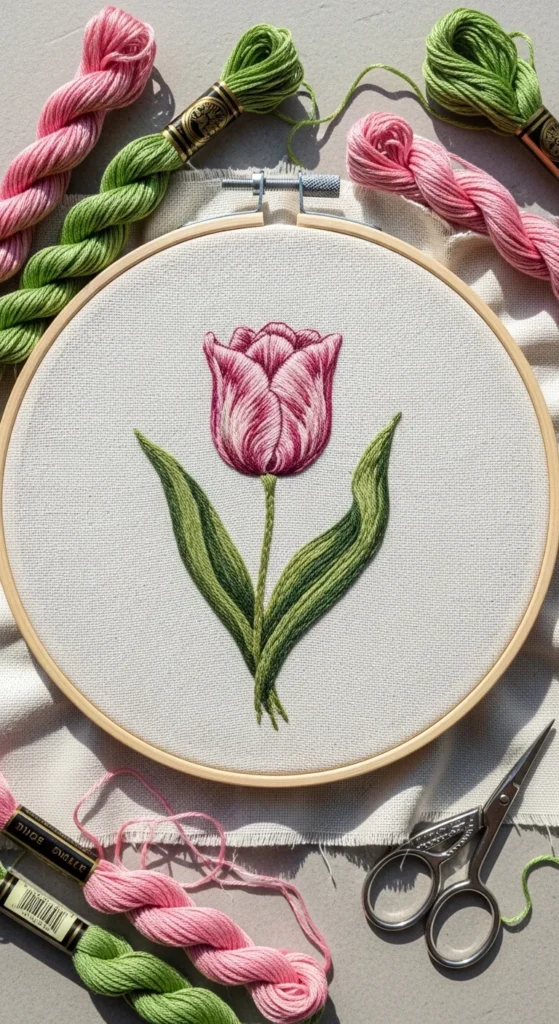
A single tulip bloom is a lovely embroidery design for beginners because it uses only a few shapes but still looks elegant and complete. The flower head can be stitched with satin stitch or outlined and lightly filled, while the stem and leaf can be done in backstitch and simple long stitches. Tulips are easier than many other flowers because the petals are broad and clear, so you do not need to manage lots of tiny details. This is a good low-cost project since three thread colors are usually enough. Pink, red, yellow, or purple all work well, and green for the leaves ties everything together. A tulip bloom fits nicely in a small hoop or on the corner of a tea towel or tote bag. If you are nervous about filling the petals, keep the flower as an outline-only design. It will still look graceful. If you want a little extra interest, stitch two small tulips side by side. This kind of project is helpful because it teaches basic floral structure without becoming too busy. It gives you a finished design that feels classic, giftable, and simple enough to complete during a quiet evening at home.
14. Geometric Triangle Row
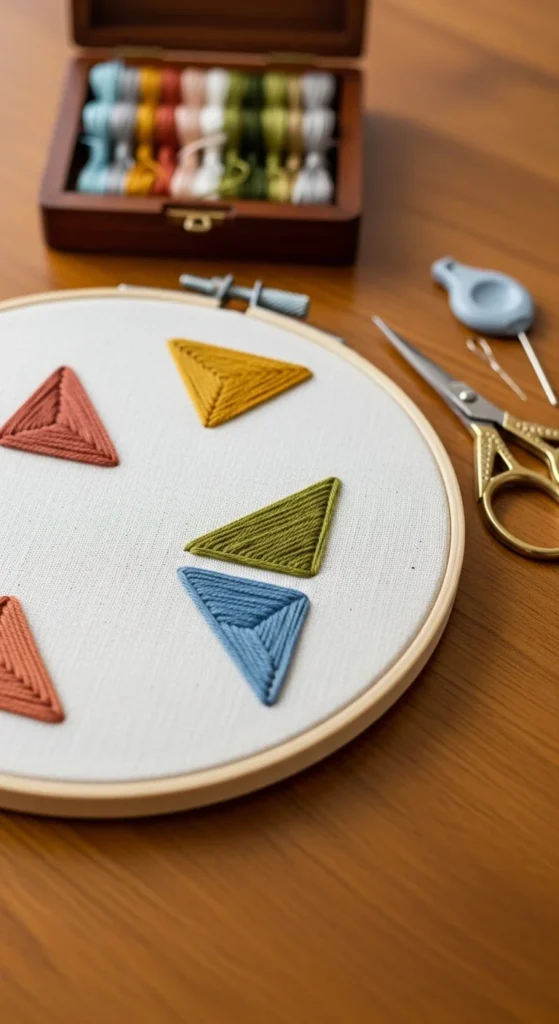
A geometric triangle row is one of the easiest embroidery patterns for beginners because the design relies on straight lines and repetition instead of detailed shapes. Draw a row of small connected or spaced triangles across the fabric, then stitch the outlines with backstitch. You can keep all the triangles the same size for a neat look or vary them slightly for a more relaxed handmade feel. This is a very budget-friendly project because it uses little thread and works perfectly on fabric scraps. It also makes a great practice design for building stitch control and spacing. You can use one color for a modern minimal look or alternate two or three earthy shades like rust, mustard, and dark green. A triangle row works well on bookmarks, pouches, napkins, and even shirt pockets if you want a subtle stitched detail. If you want more interest, fill every second triangle with satin stitch or add tiny dots between the shapes. This project is useful for new stitchers because it teaches steady lines and repeated motion, which helps your hands get more comfortable with the needle. The final result feels simple, neat, and easy to match with many handmade items.
15. Butterfly Outline
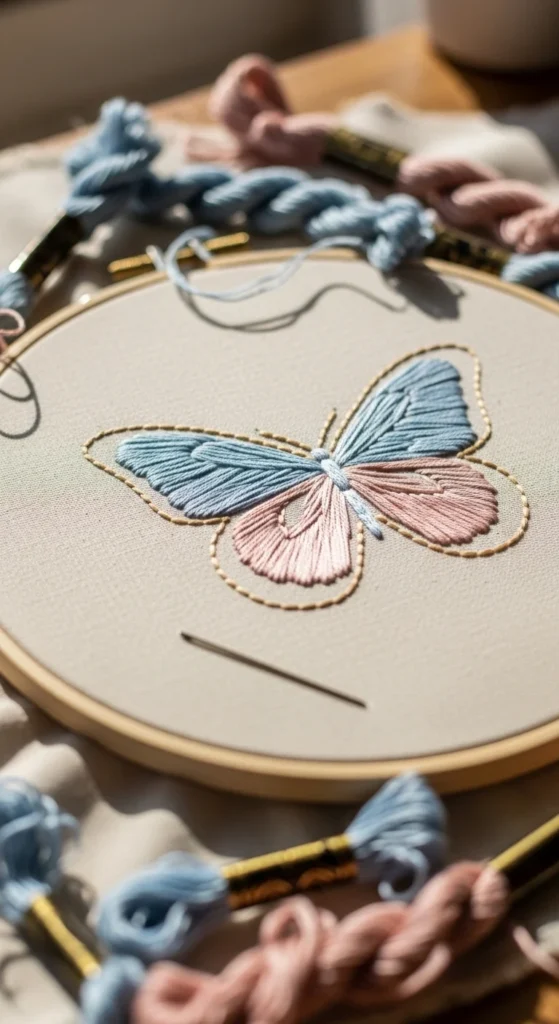
A butterfly outline is a sweet beginner design because it combines soft curves with a shape that still feels familiar and easy to draw. Start by tracing a very simple butterfly with rounded wings and a small body, then stitch the outline with backstitch. You can leave it as an outline-only piece or add a little satin stitch inside the wings if you want light color. This design stays affordable because it looks good even with just one or two thread colors. Black or dark brown thread gives a minimal look, while pink, blue, lavender, or yellow can make it feel softer and more decorative. A butterfly works well in a hoop, on a child’s item, or on a light canvas pouch where a small handmade detail adds charm. If you are brand new, keep the wing shapes broad and avoid tiny inner sections. Bigger spaces are easier to stitch neatly. This project is helpful because it teaches turning around curves and keeping both sides of a shape balanced. Even if the wings are not exactly the same, the final butterfly still looks lovely. That makes it a gentle way to practice shape control without pressure.
16. Cute Cherry Pair
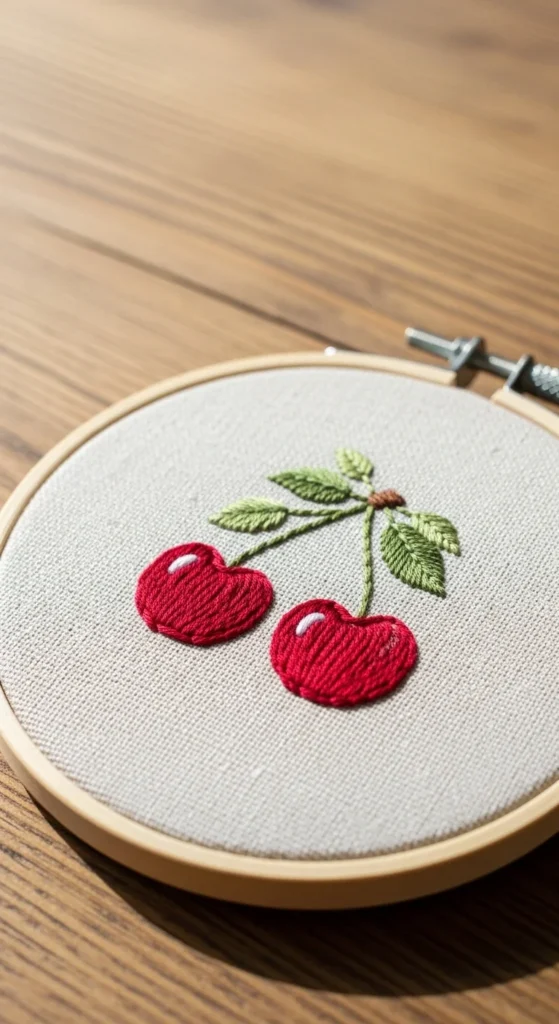
A cute cherry pair is a fast and playful project that works really well for beginners. The cherries can be made as two small red circles, either outlined or lightly filled, with simple green stems joining at the top. Because the shapes are so basic, the design feels easy to map out and stitch, even if you have very little experience. It is also a low-cost idea because red and green thread are enough for the main look, and a tiny piece of fabric is all you need. Cherries look adorable on bookmarks, tote bags, pocket corners, and mini hoops. They also fit nicely into retro or cottage-style handmade gifts. If you do not want to fill the circles fully, use small running stitches in a spiral or back-and-forth pattern so the fruit still looks solid without taking too long. If you want extra charm, add a tiny leaf at the top. This project is useful because it teaches how to stitch simple round shapes and connect them with clean lines. It feels cheerful, quick, and very forgiving, which makes it a great option when you want a design that looks cute without needing much time or technical skill.
17. Fern Frond Pattern
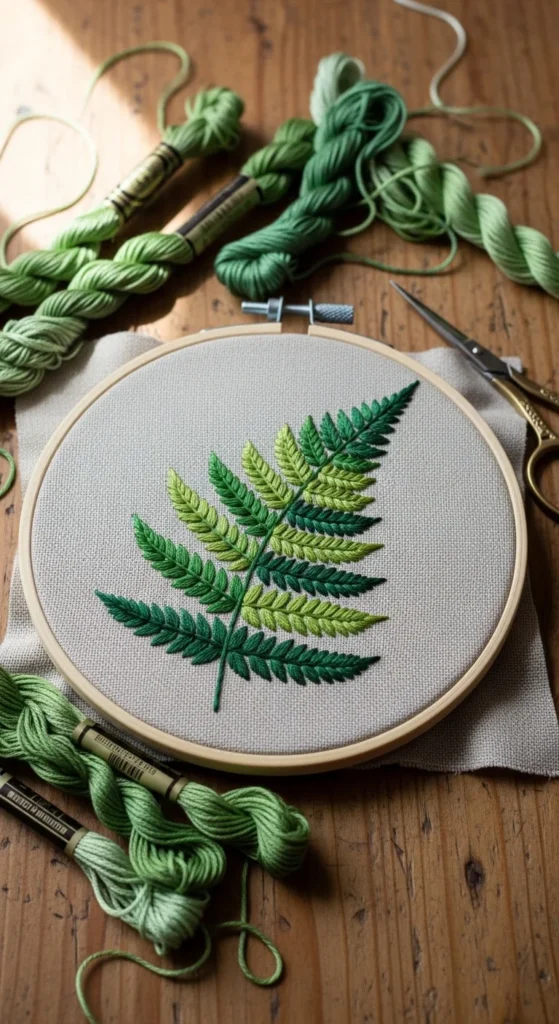
A fern frond pattern is a beautiful beginner-friendly design because it relies on one central line and many small side stitches that repeat in a calm rhythm. Start with the main stem in backstitch, then add short angled stitches along both sides to create that classic fern look. This makes the project feel organized and easy to follow, which is helpful if you are new to embroidery. It is also a budget-friendly pattern because you can complete it with just one green thread color, though two shades can add extra depth if you want. A fern looks elegant in a hoop and also works nicely on tea towels, tote bags, or journal covers. If you are just starting, keep the frond medium-sized and do not add extra leaves. One clean shape is enough. If you want more interest, stitch two fern stems crossing slightly at the base. This design helps beginners practice even spacing and repeated line work without the pressure of filling large areas. The result feels soft, natural, and polished. It is the kind of project that looks more detailed than it really is, which makes it very satisfying for someone who wants a pretty finish without a hard process.
18. Smiley Face Stitch
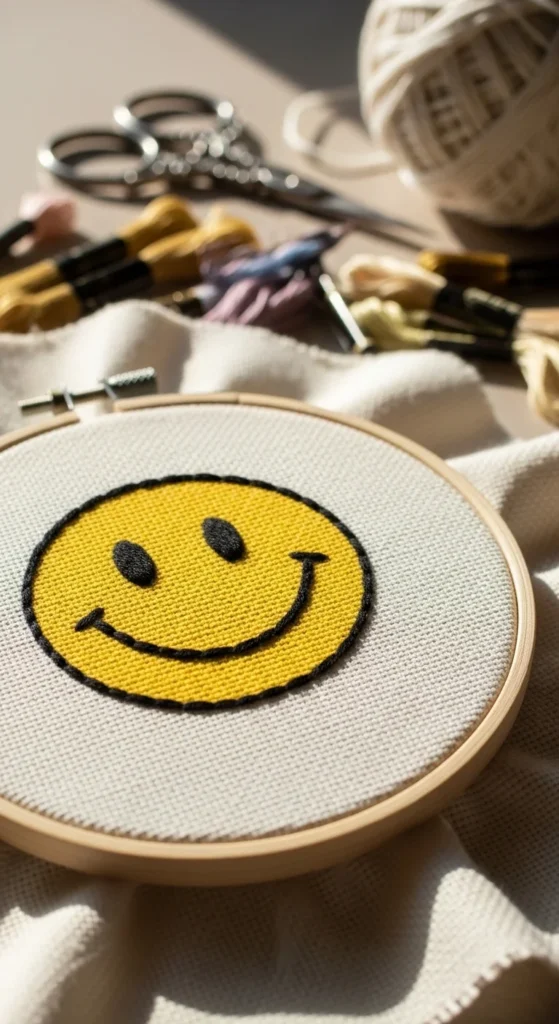
A smiley face stitch project is a fun way to start embroidery because the design is instantly recognizable and only uses a few shapes. You can outline the round face, add two small eyes, and stitch a curved smile with backstitch or split stitch. If you want a fuller look, lightly fill the circle with yellow satin stitch or spaced long stitches. This is one of the easiest beginner ideas because there are no complicated details, and the result feels playful right away. It is also very affordable since the design is small and can be made with one or two colors. A stitched smiley face works well on tote bags, pouches, denim, and simple fabric patches. If you want to keep it extra fast, stitch only the face outline and features. If you want a little more style, add tiny sparkles or dots around it. This project is helpful because it lets you practice curved lines and small facial details without dealing with complex outlines. It also gives a handmade result that feels cheerful and light. Sometimes the best early projects are the ones that make you smile while also helping your hands get used to the process.
19. Olive Branch Corner Design
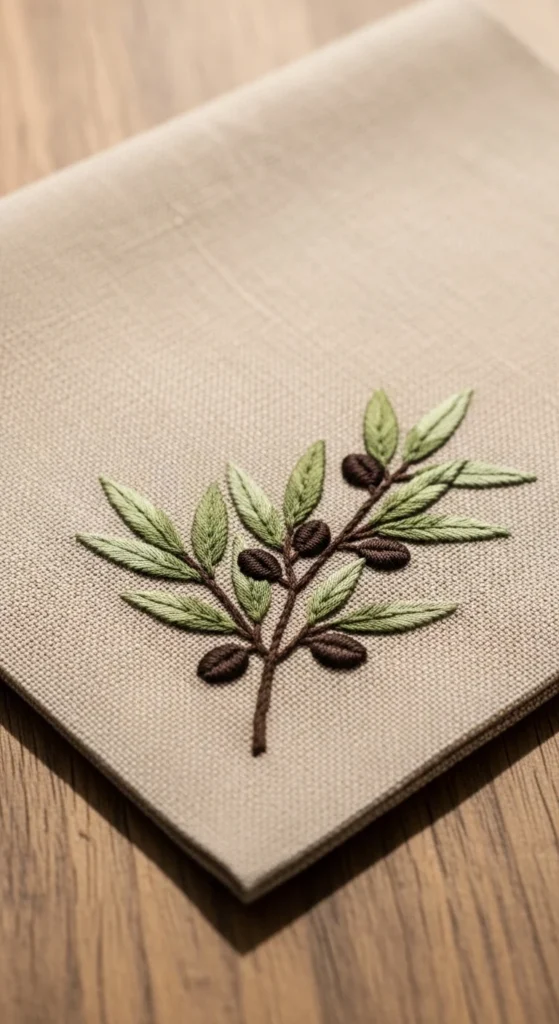
An olive branch corner design is a smart beginner project because it uses a very simple structure but looks polished on household items. The branch can be stitched into one corner of a napkin, tea towel, or placemat using a thin stem and small angled leaves. That corner placement makes the design feel neat and keeps the stitching area small, which is less overwhelming for new stitchers. This is also a low-cost project because you can work on inexpensive cotton napkins or fabric squares and use only two or three thread colors. Green and brown are the natural choices, but sage and gray can look lovely too. If you want a very minimal look, stitch only the stem and leaves. If you want more detail, add a few tiny olive shapes or dots. This kind of design is practical because it turns everyday linens into handmade pieces without asking for a large time investment. It also makes a thoughtful gift when stitched on a simple kitchen cloth. The repeated leaf shape helps you practice consistency, and the small project size makes it easy to finish. That mix of usefulness and simplicity makes this design very beginner-friendly.
20. Wildflower Stem Trio
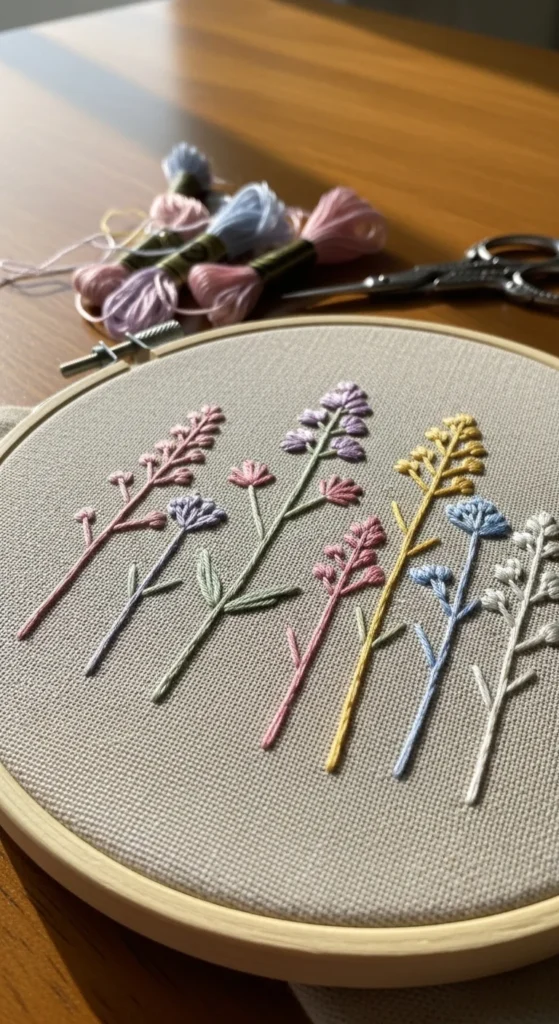
A wildflower stem trio is a lovely way to practice beginner embroidery while creating something that looks soft and detailed. The design is made from three simple stems, each with different small flowers or buds at the top. You can use backstitch for the stems, lazy daisy for petals, and tiny straight stitches for buds or grass-like accents. That means one small hoop can help you practice several basic stitches without turning into a difficult project. This design is budget-friendly because it works beautifully with leftover thread in soft colors like pink, lavender, yellow, green, and blue. It is also flexible. You can make the flowers bright and cheerful or muted and calm depending on your taste. A wildflower trio looks nice in a hoop, on a pocket, or on the front of a notebook cover. If you are just starting, keep each flower very simple and avoid thick filling. The design still looks beautiful because the stems create movement and balance. This project is helpful because it teaches variety while staying manageable. By the time you finish, you will have practiced lines, petals, and tiny accents, all inside one pretty beginner-friendly embroidery piece.
21. Tiny House Outline
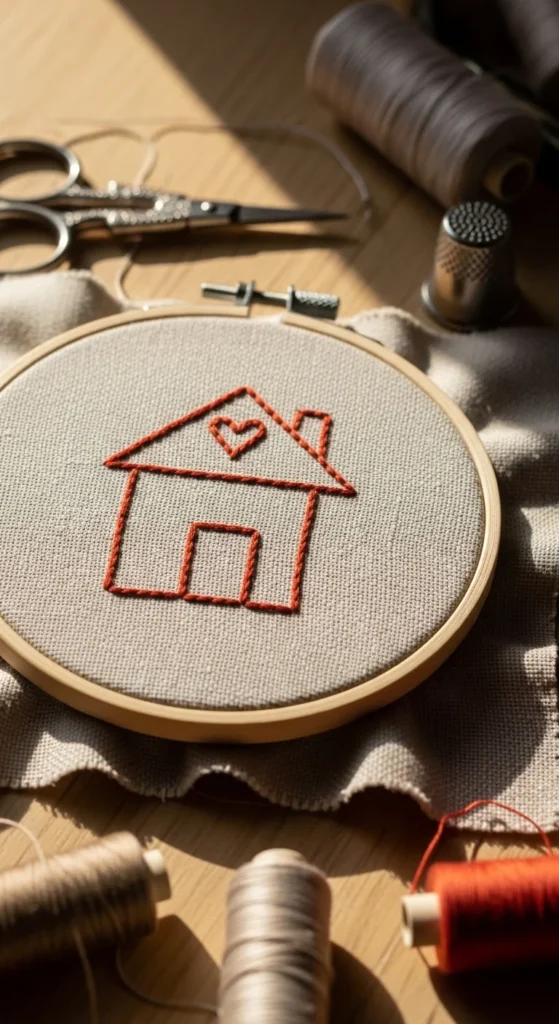
A tiny house outline is a charming beginner design that works especially well if you like simple line art. The basic shape is just a square or rectangle with a triangle roof, door, and little windows, which makes it easy to draw and stitch. Use backstitch for the outline and add one or two small details like a heart, flower pot, or smoke curl if you want extra personality. This design stays low-cost because you can finish it with one main thread color and maybe one tiny accent shade. It looks lovely in a hoop for home decor, and it also works well on a gift pouch or as part of a housewarming card. If you are brand new, keep the shape bold and simple. Tiny window grids can wait until later if you want to avoid extra detail. This project is useful for practicing straight lines, corners, and shape balance, which are all helpful basic skills. It also gives a cozy handmade result that feels meaningful without taking a long time. A stitched little house has a warm personal feeling, and that makes it a nice beginner piece when you want something simple but not plain.
22. Simple Ocean Waves
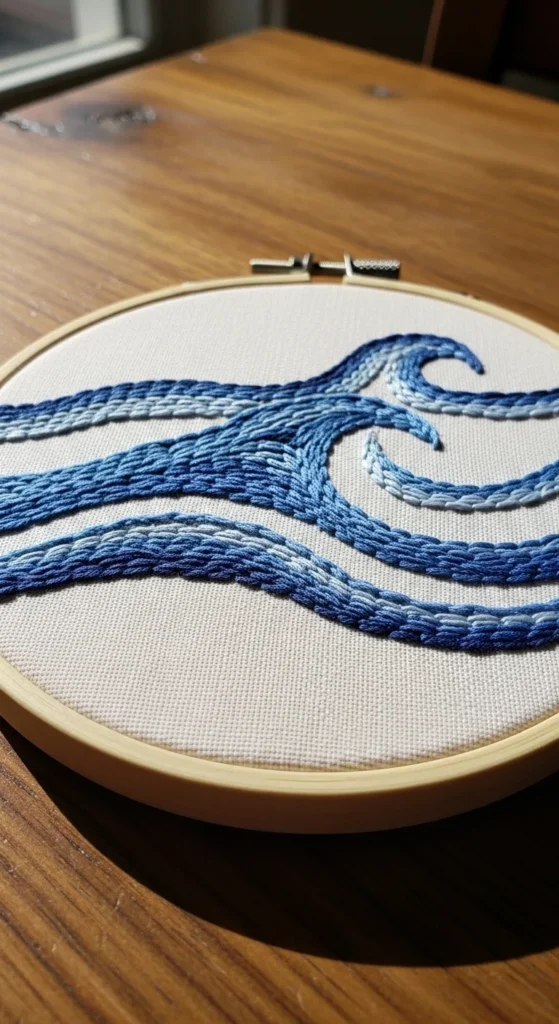
Simple ocean waves are a relaxing embroidery design for beginners because the pattern is built from repeating curved lines. You can stitch one row of waves or several stacked lines using blue thread in different shades. Backstitch and split stitch both work well for this design, and the repeated curves help your hands settle into a steady rhythm. This is an affordable project because it uses little thread, and even one blue shade can still create a beautiful result. Wave lines look nice in small hoops, on pouches, or on the corner of a beach tote or travel bag. If you want a calm minimal look, use one dark blue line across plain fabric. If you want more movement, add two or three rows in different blue tones. You can even stitch a tiny sun above the waves for a fuller scene. This project is helpful because it lets you practice smooth curved stitching without the pressure of fine details. The design feels peaceful and modern, and it finishes fairly quickly, which is perfect when you want a beginner project that looks clean and handmade without taking up an entire weekend.
23. Short Word Lettering
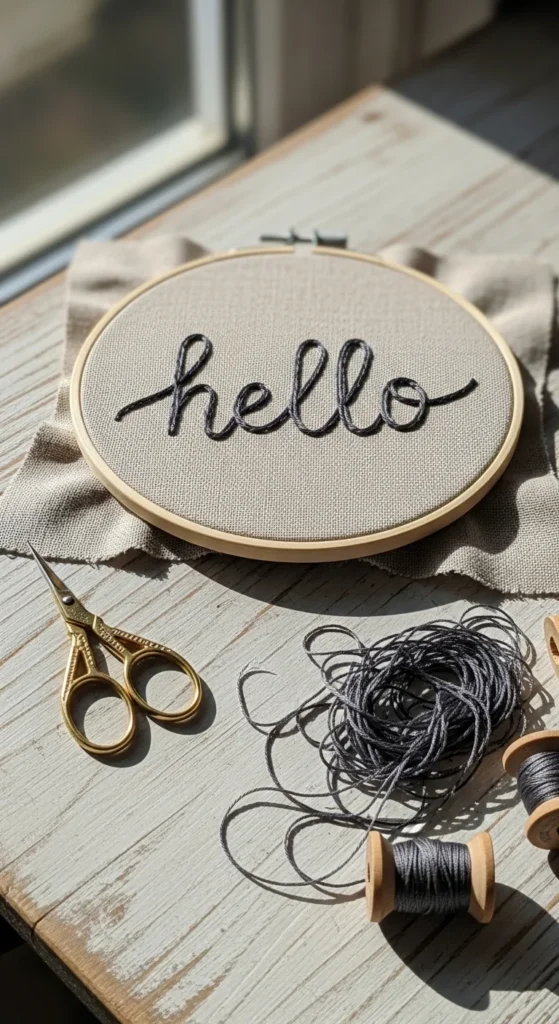
Short word lettering is a useful beginner embroidery project when you want to practice writing with thread in a very manageable way. Instead of stitching a whole quote, choose one short word like hello, joy, calm, or home, then trace it in a simple script or neat print style. Stitch over the guide using stem stitch, split stitch, or backstitch, depending on the look you like. This project is low-cost because one word uses little thread and fits on a small hoop or fabric scrap. It is also personal, which makes it nice for gifts, desk decor, pouches, or journal covers. If cursive feels hard, use block letters instead. Straight shapes are easier to keep neat. You can add a tiny dot, leaf, or heart near the word if you want a little decoration, but the lettering alone can still look beautiful. This design helps beginners learn how to move the needle along curves and sharp turns in a controlled way. It also gives a result that feels custom and handmade without needing a large pattern. A single embroidered word can say a lot while still being simple enough to finish in a short stitching session.
24. Sweet Strawberry Motif
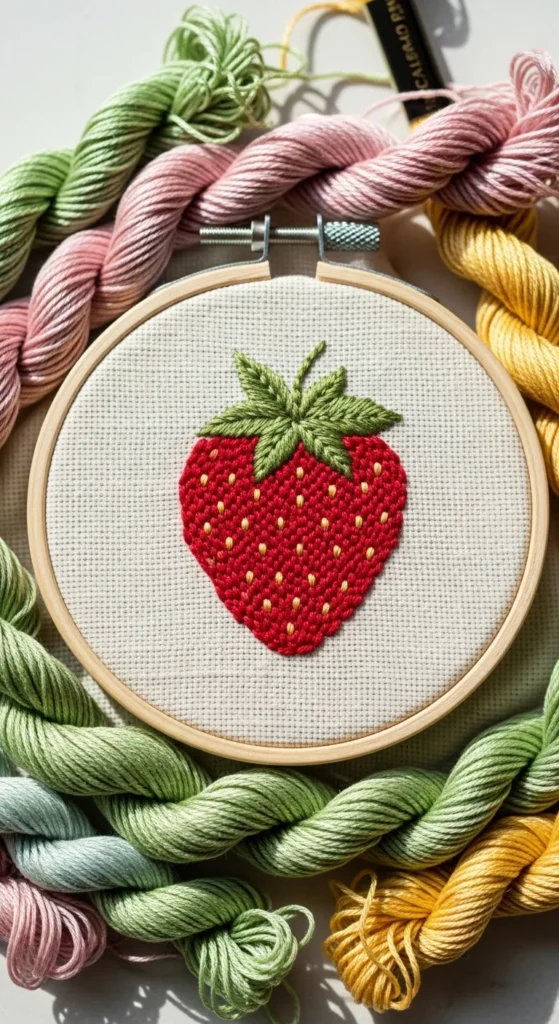
A sweet strawberry motif is a perfect beginner design because it combines a simple fruit shape with tiny details that are still easy to manage. The strawberry body can be outlined and lightly filled in red or pink thread, while the top leaves can be stitched in green using small satin stitches or straight stitches. Tiny seed marks can be added with short yellow or white stitches if you want more texture. This is a budget-friendly project because the motif is small and works well with just three thread colors. It looks adorable on bookmarks, napkins, pouches, children’s items, or mini hoops. If you are just starting, keep the strawberry shape broad and avoid making the seeds too tiny. A few marks are enough to suggest the texture. If you want a fuller composition, add one little flower or leaf next to the fruit. This project is helpful because it teaches you how to combine outline, light fill, and accent details in one small design. The result feels cheerful, handmade, and easy to show off. A stitched strawberry has a cozy homemade charm that makes it a fun final project for beginners who want something cute and simple.
Conclusion
Easy hand embroidery designs help beginners learn through small wins instead of hard projects that feel frustrating too early. When you start with simple flowers, leaves, hearts, shapes, and short words, you can practice core stitches while making pieces that already look lovely and useful. Pick one design, keep your thread colors limited, and work on a small hoop or scrap of fabric so the project stays light and enjoyable. The more you stitch, the more natural the motion feels, and even very basic patterns can turn into thoughtful handmade gifts or decor.

Lily Summers is a digital artist and creative storyteller who loves bringing colorful characters to life. With a passion for cartoons, fan art, and playful sketches, she inspires others to explore their imagination through art. When she’s not sketching, you’ll find her dreaming up new ideas for CraftedWizard.com to spark creativity in every artist. 🌈✨