Every crochet project you will ever make starts with a chain. Scarves, blankets, beanies, tote bags — all of them begin with that same row of little loops. Which is exactly why a wobbly, uneven chain quietly ruins so many beginner projects before they even get going.
The good news? The chain stitch takes about ten minutes to learn and a single afternoon to master. Here’s how to make yours even, stretchy, and countable every single time.
Why the Chain Stitch Matters More Than You Think
Your chain is the foundation row. If it’s too tight, the bottom of your blanket will pull in like a smile. If it’s too loose, the edge will flare out and look sloppy no matter how perfect the rest of your stitches are.
A good chain does three things:
- Keeps the same width from end to end
- Stretches gently without snapping back
- Lets you clearly see and count each “V” shape
Get those three right and everything you build on top sits flat.
What You Need to Get Started
You only need two things, but the pairing matters:
- Worsted weight yarn in a light, solid color — cream, tan, or pale grey. Dark or fuzzy yarn hides your stitches and makes learning harder than it should be.
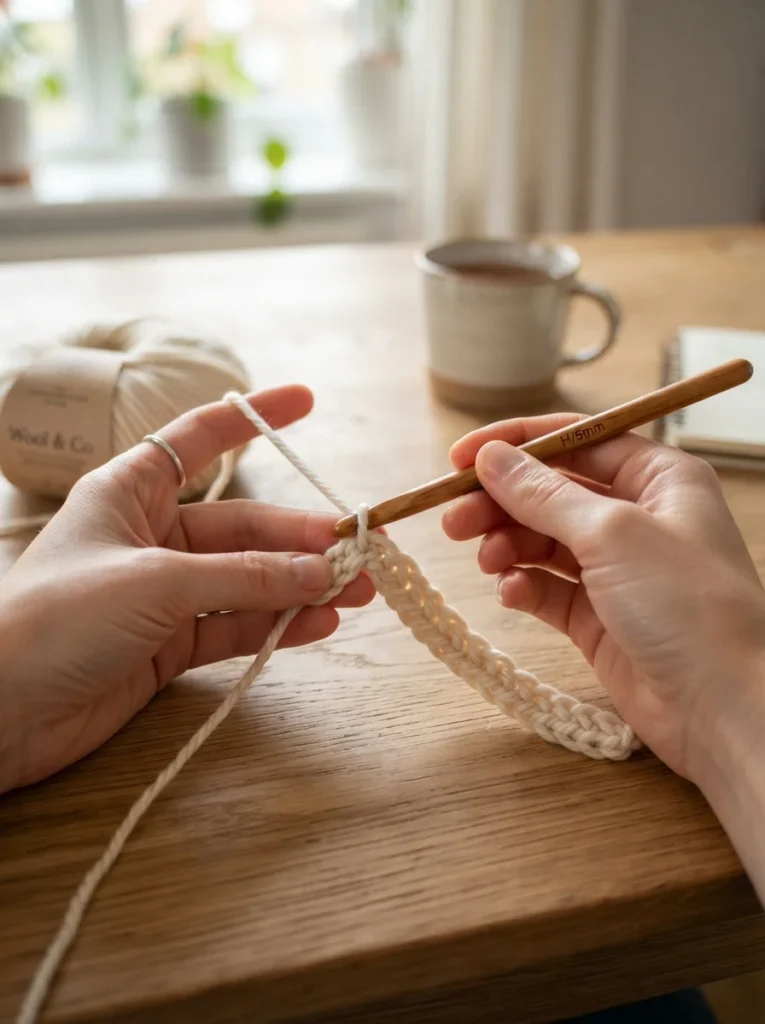
- A 5mm (H-8) hook with a comfortable grip. Metal hooks glide, wooden hooks grab. Beginners usually find metal easier.
Skip the novelty yarn for now. Save the sparkly stuff for when your hands already know what they’re doing.
Step-by-Step: How to Crochet a Chain Stitch
1. Make a slip knot. Loop the yarn into a pretzel shape, pull the working end through, and slide it onto your hook. Tug gently to snug it — the loop should slide along the hook, not choke it.
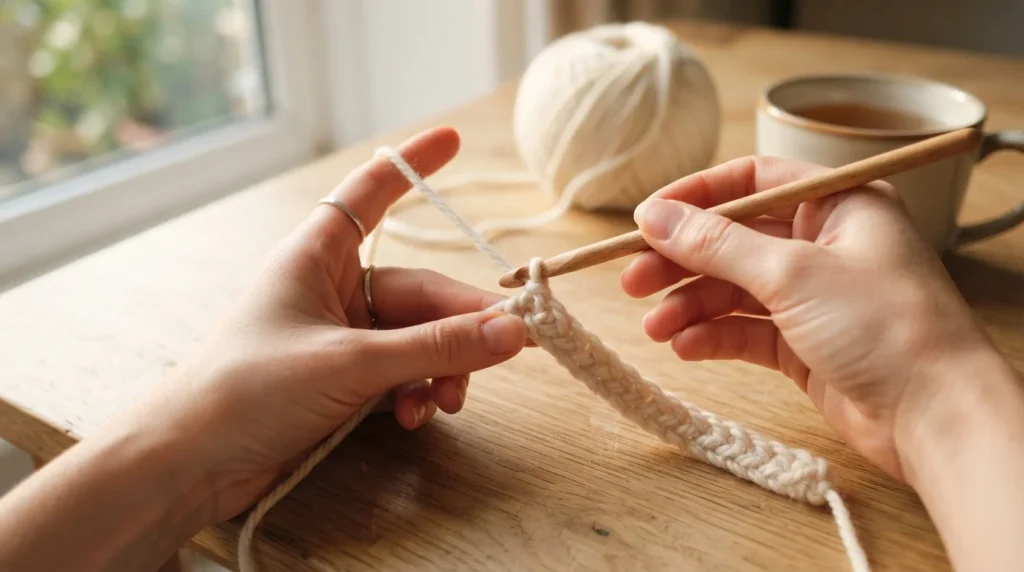
2. Hold your yarn. Drape the working yarn over your index finger and pinch the slip knot between your thumb and middle finger. That pinch is what gives you tension control.
3. Yarn over. Pass the hook under and over the working yarn so the yarn sits in the hook’s throat.
4. Pull through. Draw that yarn back through the loop already on your hook. You now have one chain stitch and one fresh loop.
5. Repeat. Yarn over, pull through. Yarn over, pull through. That’s the whole stitch.
How to Count Your Chains Correctly
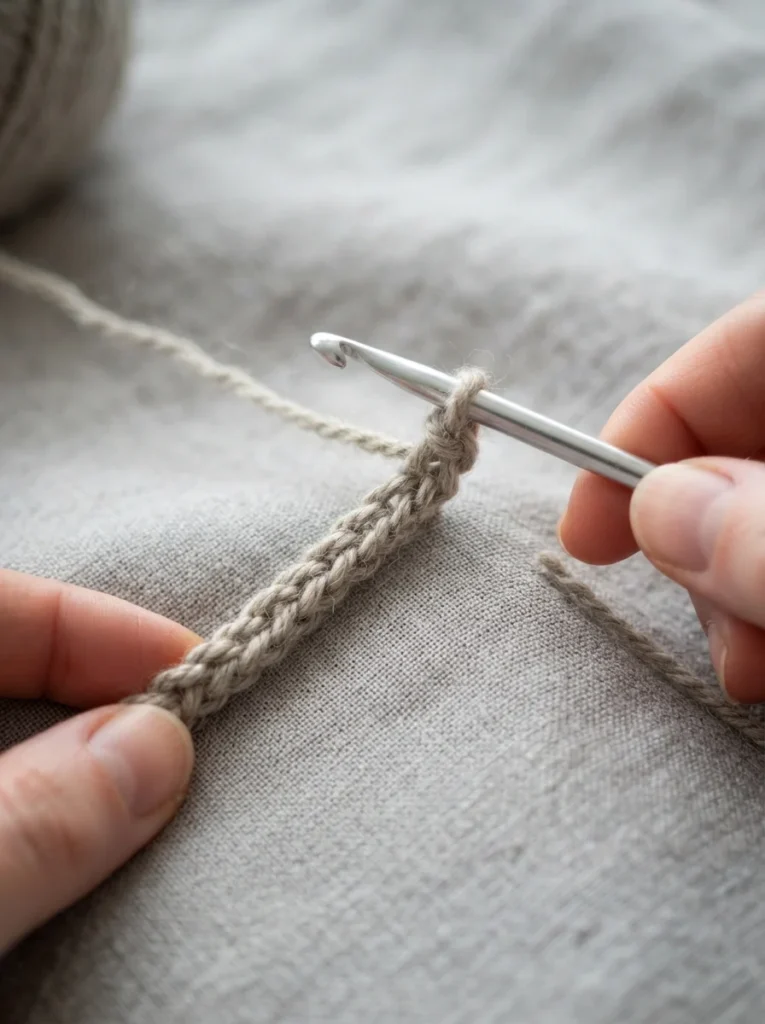
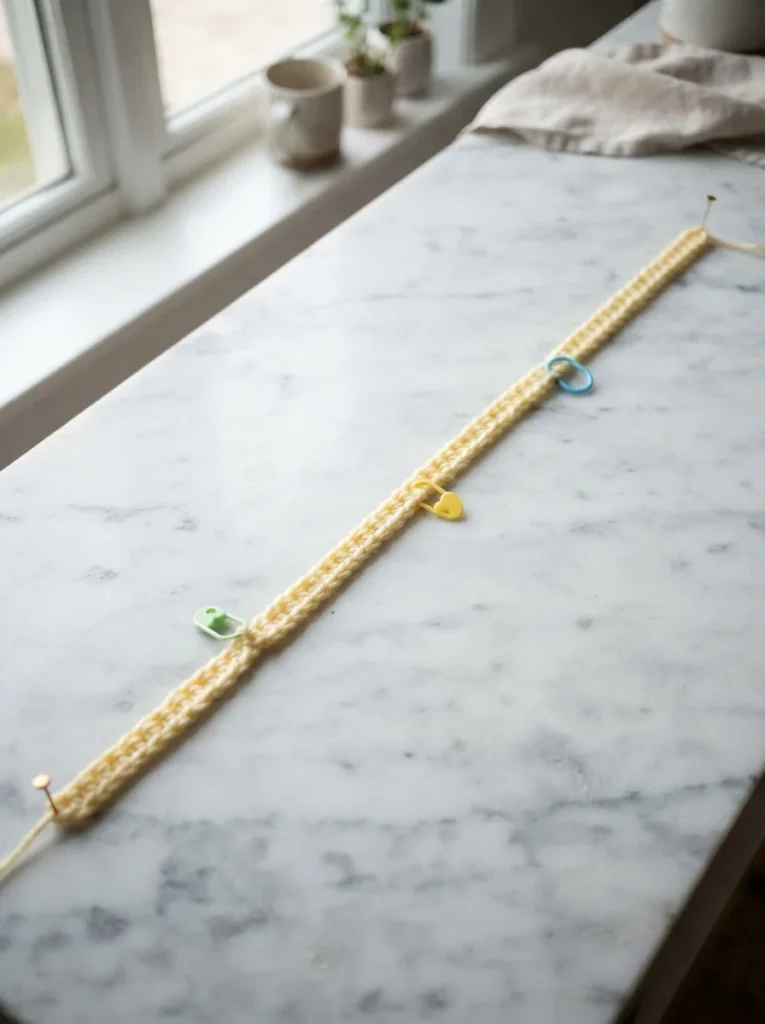
This trips up almost everyone. Lay your chain flat with the front facing you and you’ll see a row of little sideways V shapes.
- Count the Vs, not the loops on your hook. The loop currently on your hook never counts.
- The slip knot never counts either. It’s an anchor, not a stitch.
- Count in groups of ten and drop a stitch marker every twenty. Recounting a chain of 180 from scratch is nobody’s idea of fun.
If your pattern says “chain 41,” you should see 41 clear Vs sitting in front of you.
5 Mistakes That Ruin a Chain
- Yanking after every stitch. Tightening as you go creates a chain you physically cannot get your hook back into.
- Twisting the chain. Keep the flat side facing you as you work so it doesn’t spiral.
- Chaining while distracted. Long foundation chains are where miscounts happen. Count as you go, not at the end.
- Working the first row too fast. Slow down on row one and check that each stitch lands in a real V.
- Changing your grip halfway. Shifting hand position mid-chain changes your tension and the width with it.
Quick Fixes for Tight and Loose Chains
If your chain feels like a piece of string you can’t get a hook into, go up one hook size for the foundation chain only, then switch back to your regular hook for row one. This is the single best trick for beginners, and experienced crocheters use it too.
If your chain looks loopy and gappy, try the opposite — drop down a hook size, or focus on keeping your pinched fingers closer to the hook. The shorter that distance, the more control you have.
The 10-Minute Practice Drill
[Image Prompt] A cozy scene of a person sitting cross-legged on a linen sofa with a basket of pastel yarn, practicing a long chain across their lap, soft evening lamplight and a mug of tea on the side table.
Do this before starting any real project:
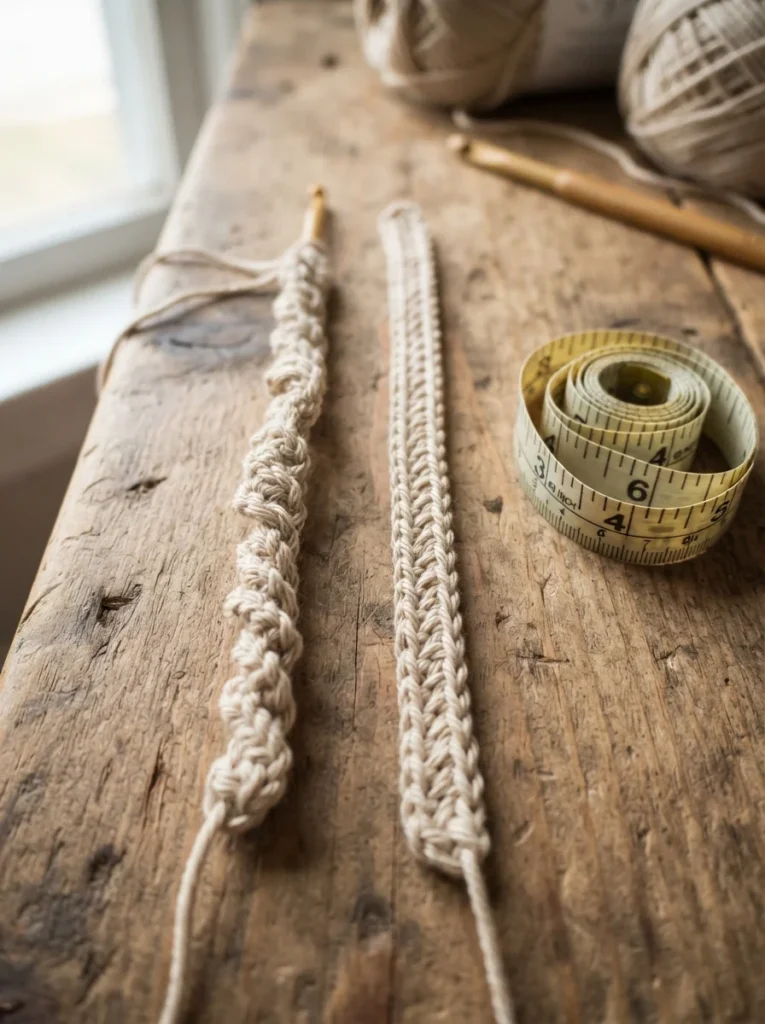
- Chain 30, then lay it flat and check the width
- Look for any stitch noticeably bigger or smaller than its neighbors
- Pull it all out and do it again
Three rounds of this and your hands will settle into a rhythm. Muscle memory does the rest.
Final Thoughts
The chain stitch is the smallest thing in crochet and quietly the most important. Ten minutes of practice today saves you from a lopsided blanket next month.
Grab a light-colored skein, sit down with one episode of something, and chain until it feels boring. That’s the moment you’ve got it.
Save this guide to your crochet board so you can come back to it on your next project!

Lily Summers is a digital artist and creative storyteller who loves bringing colorful characters to life. With a passion for cartoons, fan art, and playful sketches, she inspires others to explore their imagination through art. When she’s not sketching, you’ll find her dreaming up new ideas for CraftedWizard.com to spark creativity in every artist. 🌈✨