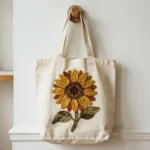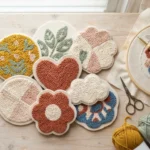


A handmade home feels different. The pillows, napkins, and baskets carry a bit of your own time and care, and guests notice. You do not need advanced skills or a studio to start. These 25 projects use simple straight seams, small amounts of fabric, and basic tools, so you can finish most of them in an afternoon.
1. Envelope Pillow Covers

Envelope pillow covers are the best first project for a new sewer. There is no zipper and no buttonholes. You sew two overlapping panels to a back piece, turn it right side out, and slide in a pillow form.
Cut your front piece the same size as the pillow, then cut two back pieces that each cover about two thirds of it. Hem one long edge of each back piece before you sew everything together. The overlap holds the pillow in place without any closure.
Pick a medium-weight cotton, linen, or canvas so the cover keeps its shape. Making covers in a few colors lets you change your living room with the seasons. Cut the front panel exactly the pillow size for a snug, plump fit.
2. Simple Linen Napkins

Cloth napkins make an everyday meal feel nicer, and they are very quick to sew. Cut squares about 16 to 18 inches wide, fold each edge in a half inch, press, then fold again and stitch. The whole napkin takes about ten minutes once you get going.
Mitered corners look polished, but a simple folded corner works too. If you want to practice, sew a few in cotton scraps before you cut your good linen.
Fabric remnants and old tablecloths are easy sources of material. Wash and dry your fabric before cutting so the napkins do not shrink after you finish them. A set of six in a matching color looks beautiful on any table.
3. Drawstring Bags
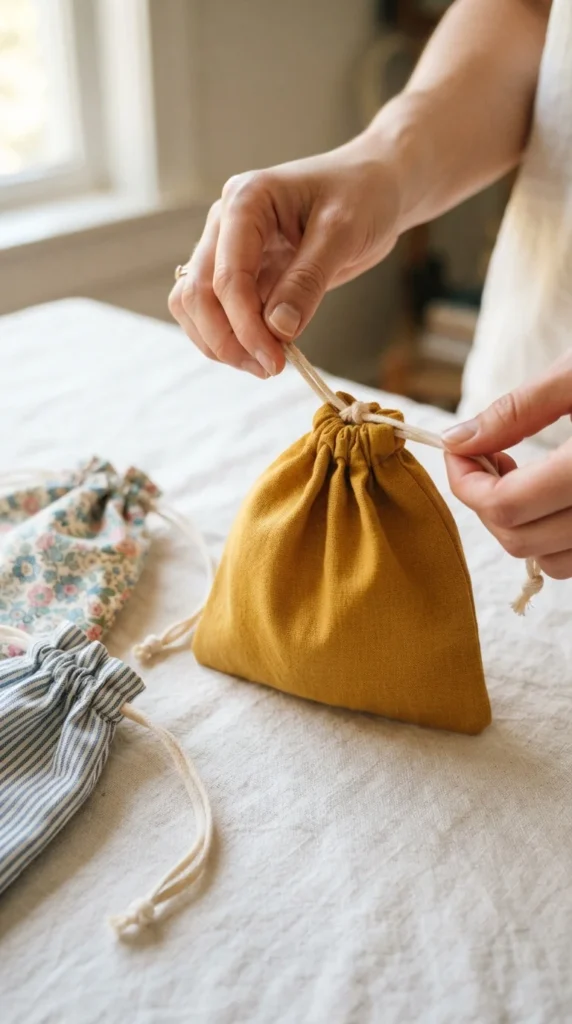
Drawstring bags are handy for laundry, shoes, toys, or gift wrapping. You sew a rectangle into a tube, stitch a channel at the top, and thread a cord through. That is the whole pattern.
Leave a small gap in the side seam at the channel so the cord can slip out. Use a safety pin on the cord end to guide it through the tunnel. Knot both ends so they will not pull back inside.
Pick a sturdy cotton canvas for bags that will carry weight. Lighter prints work well for small gift bags and keepsakes. Make a few in different sizes and keep them in a closet drawer.
4. Fabric Storage Baskets
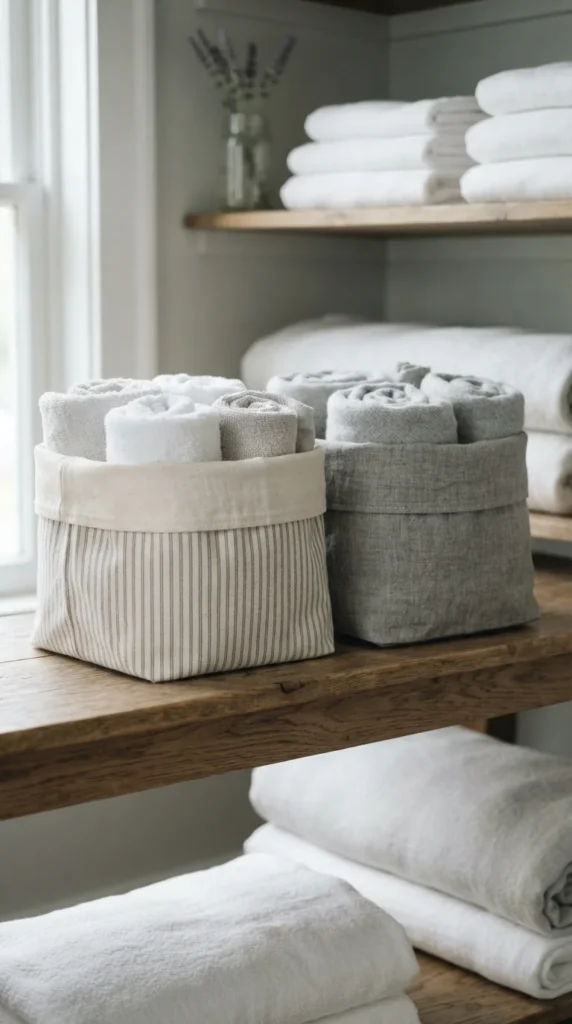
A fabric basket keeps clutter out of sight and adds softness to a shelf. Sew two rectangles into a box shape by stitching and boxing the bottom corners. Then fold down the top edge for a cuffed look.
Use a layer of fusible interfacing inside the fabric so the basket stands up on its own. Choose an outer fabric and a contrasting lining so the cuff shows two patterns.
Make a set in graduated sizes for the bathroom, bedroom, and living room. Scrap fabric works well here, so you can use leftover pieces from other projects. A small basket is an easy way to practice boxed corners.
5. Patchwork Throw Pillow

Patchwork is a great way to use up fabric scraps. Cut squares of the same size, lay them out in a grid, and sew them into rows. Then join the rows to form a pillow front.
Press every seam as you go so the squares sit flat. Use a quarter-inch seam allowance and keep it steady for neat corners.
Pick colors that suit your room so the pillow looks planned rather than random. A limited palette of three or four tones feels cohesive. This project teaches basic quilting skills with very little risk.
6. Quilted Table Runner

A quilted runner dresses up a table and protects the wood. Cut strips of fabric, sew them together in a simple pattern, then layer them over batting and a backing piece. Quilt it with straight lines about an inch apart.
Bind the edges with a strip of contrasting fabric to give a clean finish. If binding feels like too much, you can sew the layers right sides together, turn them out, and topstitch around the edge.
Make it a seasonal piece by choosing colors that fit the time of year. A runner in muted tones works all year long. Plan on a weekend for this one.
7. Oven Mitts and Pot Holders
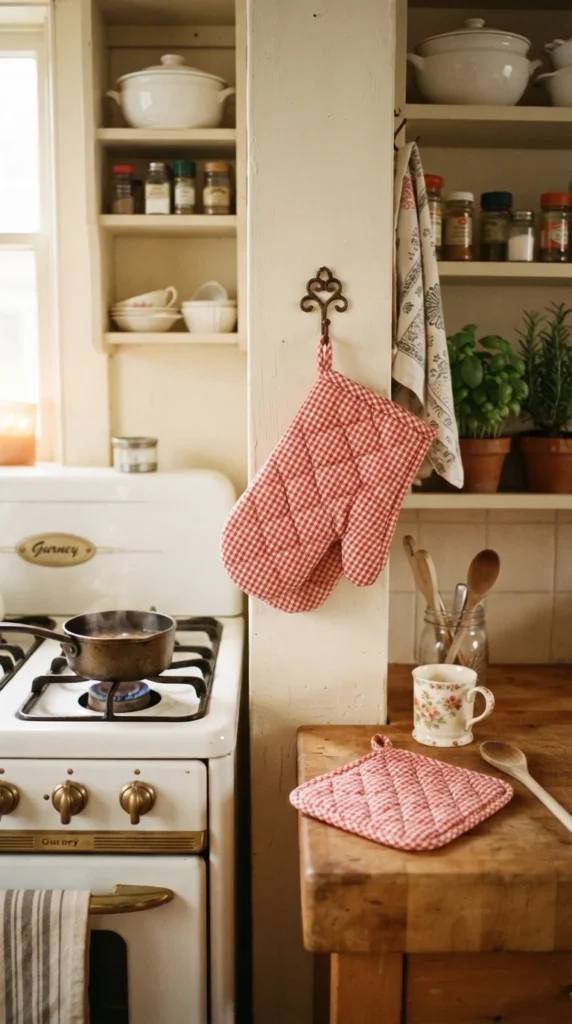
Handmade pot holders are useful and look sweet in a kitchen. Layer cotton fabric over heat-resistant batting, quilt the layers together, and bind the edges. A square is easiest for a first try.
Insulated batting made for heat is a must, so do not use regular quilt batting. It will not protect your hands from hot pans. Check the label before you buy.
Sew a loop into one corner so you can hang each holder from a hook. Make a matching set for gifts and tuck in a wooden spoon for a quick present.
8. Reusable Produce Bags
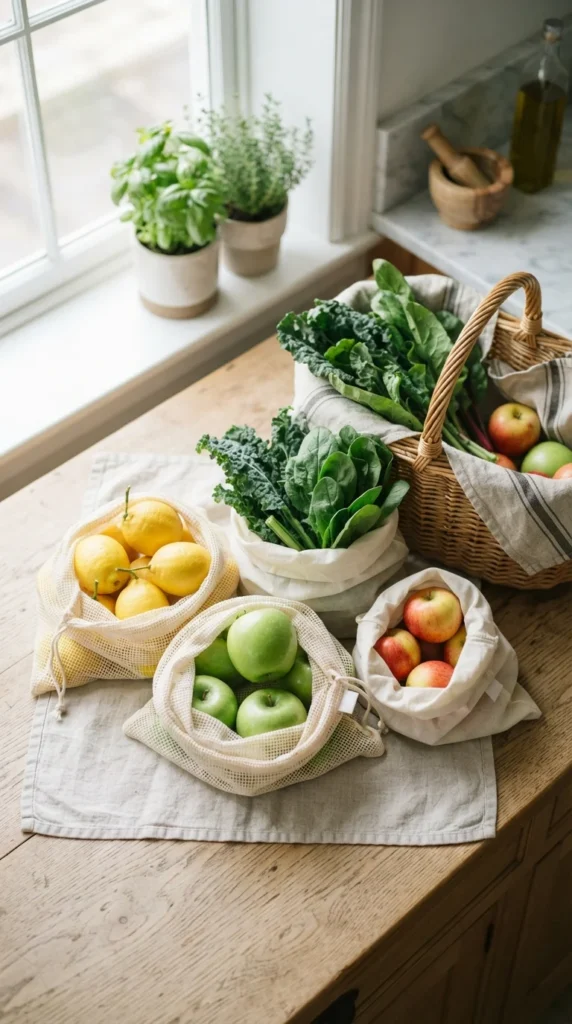
Reusable produce bags save plastic and look good doing it. Sew drawstring pouches from lightweight cotton or mesh. A stretch of tulle or voile also works.
Make a few in different sizes for fruits, vegetables, and bulk goods. Add a small tag on each one with the weight so the cashier can skip the tare step.
Wash them regularly, and use a light fabric that dries fast. They fold small and fit in a purse or tote. You can keep them near the front door so you remember them.
9. Cozy Flannel Pajama Pants

Pajama pants are one of the easiest garments to sew. You cut two leg pieces, sew the inseams and crotch, and add an elastic waistband. A basic pattern is all you need.
Flannel feels warm and cozy, and it is forgiving for beginners. Prewash it first to remove sizing and to stop shrinking later. Try a holiday print for a quick gift.
Measure the person before you cut so the fit is right. Buy a bit of extra fabric in case you need to adjust the length. Once you make one pair, you can make a dozen.
10. Padded Coasters

Fabric coasters take almost no material and finish in minutes. Layer two circles or squares of cotton with a bit of batting between, then stitch around the edge. A turned-out version gives clean edges with no raw fabric.
Sew a set of four or six in matching prints. Use leftover fabric from other projects, so the coasters cost next to nothing.
Choose absorbent cotton or linen on top so they catch condensation. They are easy to wash and toss in the dryer. A set makes a good housewarming present.
11. Fabric Bookmarks and Book Sleeves

A padded book sleeve protects a paperback or an e-reader in a bag. Cut two panels that fit your book, add batting, and sew them into a pouch. A snap or button closes the top.
Pick a soft cotton print with a cozy feel. You can use quilting stitches in straight lines for added texture.
Add a ribbon sewn inside to act as a bookmark. Make one for each reader in your family so everyone has their own.
12. Curtain Panels
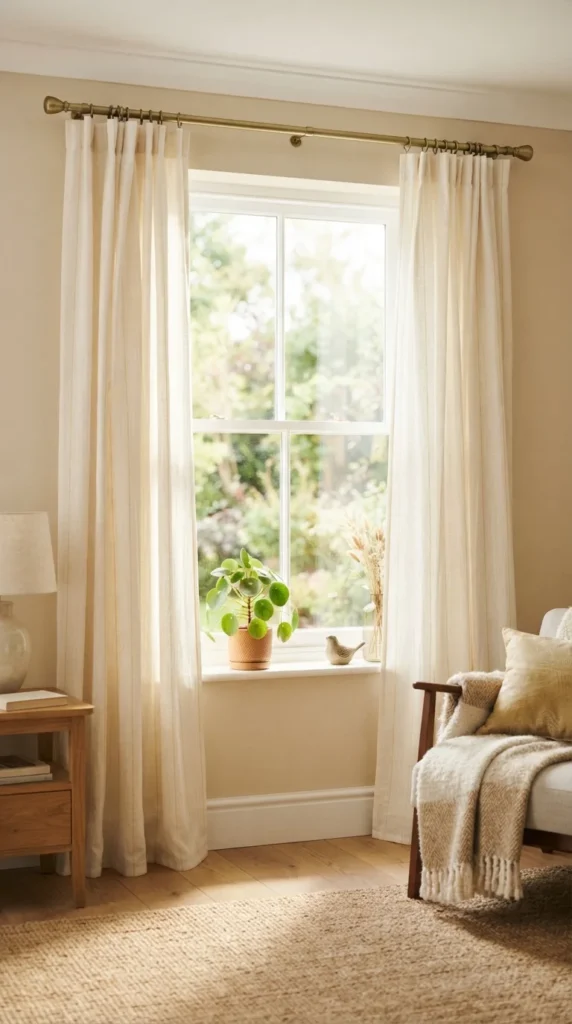
Curtains are mostly long straight seams, so they suit beginners well. Measure the window, add allowance for hems and a rod pocket, and cut your panels. Hem the sides and bottom, then fold and stitch the top.
Use a light cotton or linen for a breezy look. Heavier fabrics offer more privacy and block drafts.
Press every hem before stitching so the lines are crisp. Hang the panels higher than the window frame to make the ceiling look taller. A tension rod works fine if you rent.
13. Cozy Fleece Blanket

A fleece blanket needs almost no skill. Cut two layers of fleece to the same size and sew them together with a wide seam, leaving a gap. Turn the blanket right side out and topstitch the edge.
For a no-sew version, cut fringe around the edges and tie the layers together. It still makes a cute gift.
Buy fleece with a pattern or a solid and a contrasting back. Wash it in cold water and dry on low to avoid pilling. A blanket in a child-friendly print makes a lovely baby shower gift.
14. Tea Towels with Hand-Sewn Hems

Tea towels need nothing but rectangles and a neat hem. Cut a piece of cotton or linen, fold each edge, and stitch around. Add a loop of twine if you want to hang them.
Absorbent fabrics work best, so look for linen, waffle weave, or flour sack cotton. Flour sack cloth is cheap and widely sold.
Stitch a ribbon trim along the bottom edge for a pretty detail. Make a set of four and give them as a gift with a bar of soap.
15. Zippered Pouches
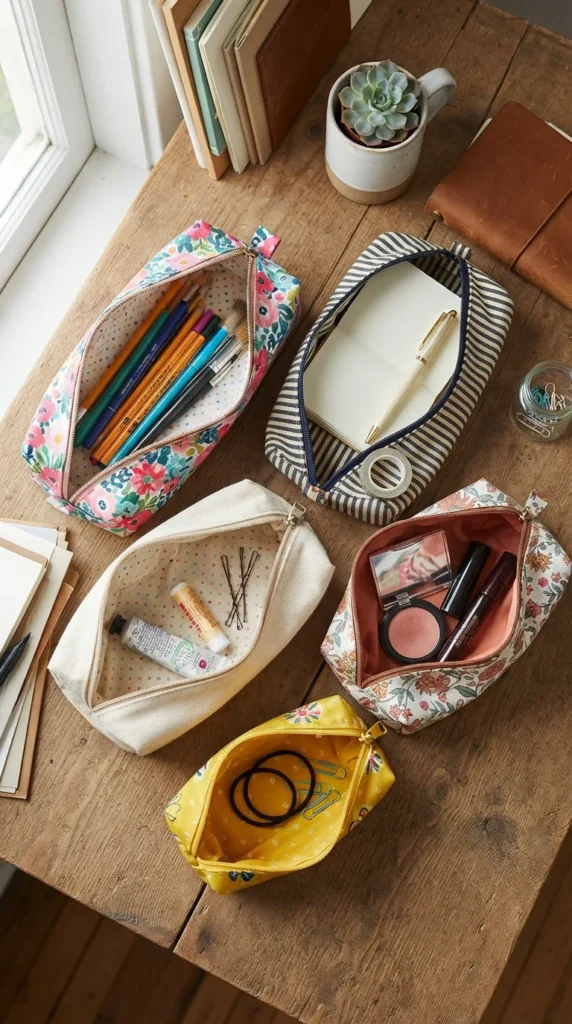
A zippered pouch is a classic beginner sewing project. You attach a zipper between two layers, sew the sides, and box the corners. They hold makeup, pencils, or chargers.
Use a medium zipper and a sturdy cotton. A zipper foot makes the sewing much easier.
Sew a small pouch first to practice. Once you have the steps down, you can make larger ones for travel. These sell well at craft fairs.
16. Reversible Placemats
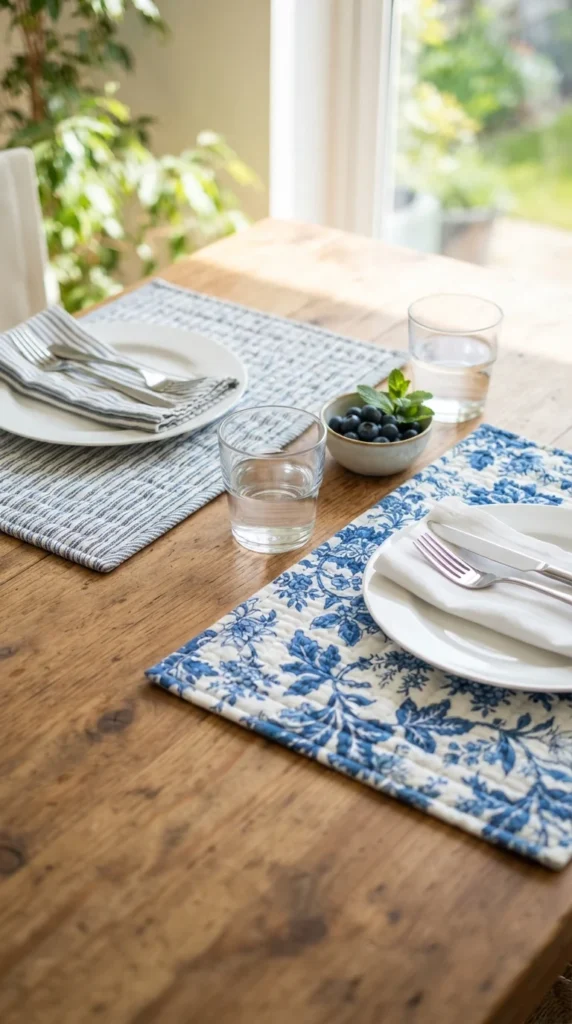
Reversible placemats give you two looks in one. Sew two fabrics right sides together over a thin layer of batting. Turn them out and topstitch around the edge.
Pick a patterned fabric for one side and a solid for the other. Choose a washable cotton that holds up in the laundry.
Make them in a standard size of 12 by 18 inches. Four to six placemats are enough for most tables. Switch sides with the seasons.
17. Draft Stopper

A draft stopper keeps cold air out and saves energy. Sew a long, narrow tube of fabric and fill it with rice, dried beans, or poly-fill. Sew the ends closed.
Use a heavy fabric such as canvas or denim so it holds up on the floor. Fill it about three quarters full so it can drape and mold along the door.
Make it a little longer than your door width. You can also make one for a window sill. Cats may love the new addition.
18. Hanging Wall Organizer
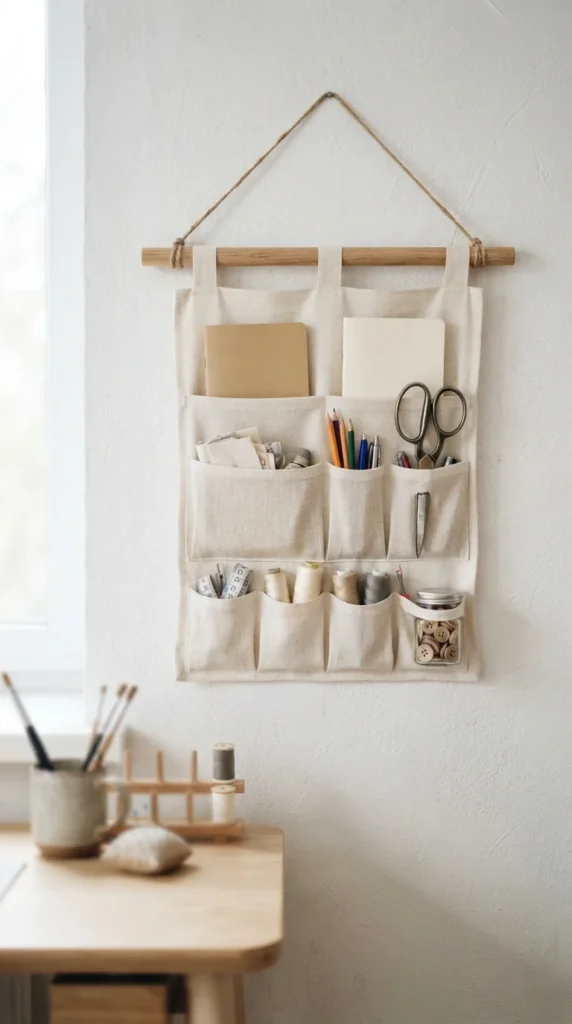
A hanging organizer clears a desk or entryway. Sew a row of pockets onto a large panel of canvas and attach it to a dowel. Hang it on a wall with a pair of hooks.
Make pockets in different widths for different items. Use a sturdy fabric so the weight does not stretch the seams.
Hang one in your craft room for scissors and thread. Another one by the door can hold mail and keys.
19. Fabric-Covered Journals
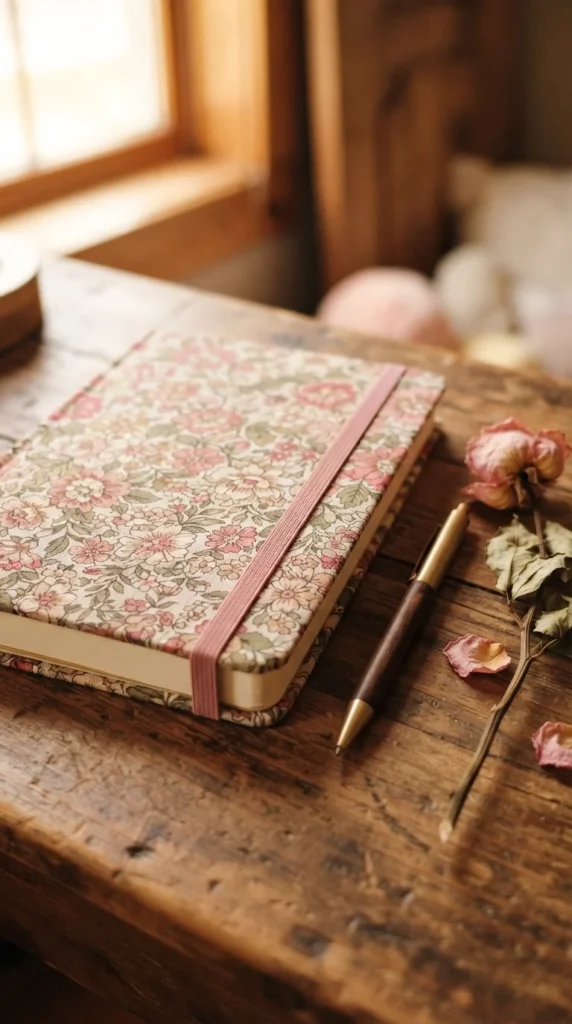
A fabric cover gives a plain notebook a personal look. Cut a piece of fabric larger than the open cover and glue it down with fabric glue. Fold the corners in and secure them.
Stitch a ribbon or elastic closure for extra style. A thin batting layer under the fabric makes it softer.
Pick a pretty print that suits the owner. These make quick gifts for coworkers and teachers.
20. Cozy Pet Bed

A pet bed is a simple pillow with sides. Sew a rectangular cover, fill it with stuffing, and stitch the opening. A round shape is also easy.
Use soft, washable fabric like fleece or cotton flannel. Add a zipper so you can remove the cover for washing.
Measure your pet while curled up so the bed fits. Old pillows and blankets can provide the filling. Your pet will thank you.
21. Appliance Covers
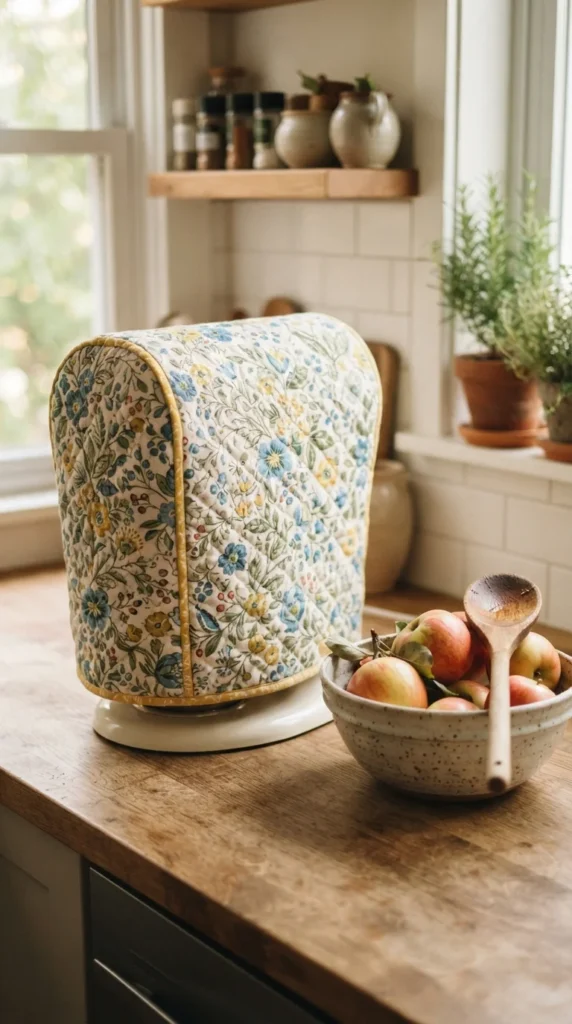
Covers protect your appliances from dust and add a pretty touch. Measure your mixer or toaster and cut fabric to fit. Sew a box shape with boxed corners.
Pick a cotton print that matches your kitchen. A light layer of batting makes the cover look plump.
Press the seams to get a smooth shape. Make them a bit loose so they slip on and off without a fight.
22. Fabric Gift Bags
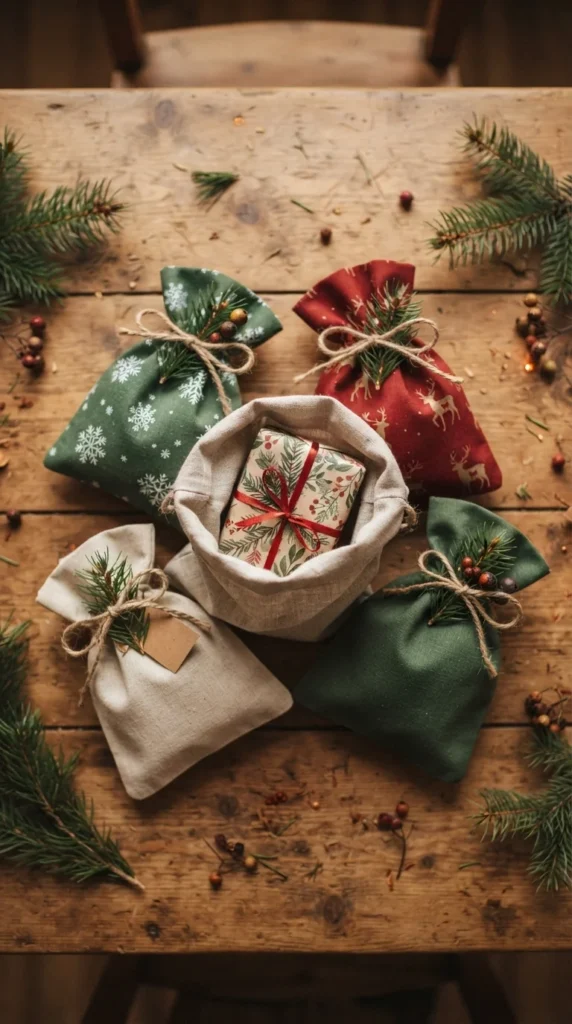
Fabric gift bags are a reusable alternative to wrapping paper. Sew a simple bag with a drawstring or ribbon tie. Pick a print for the occasion.
Make a few in standard sizes so you can use them for many gifts. Recipients can reuse them again and again.
Use holiday fabric from a clearance bin to save money. Wash and iron them before wrapping so they look crisp.
23. Window Seat Cushion
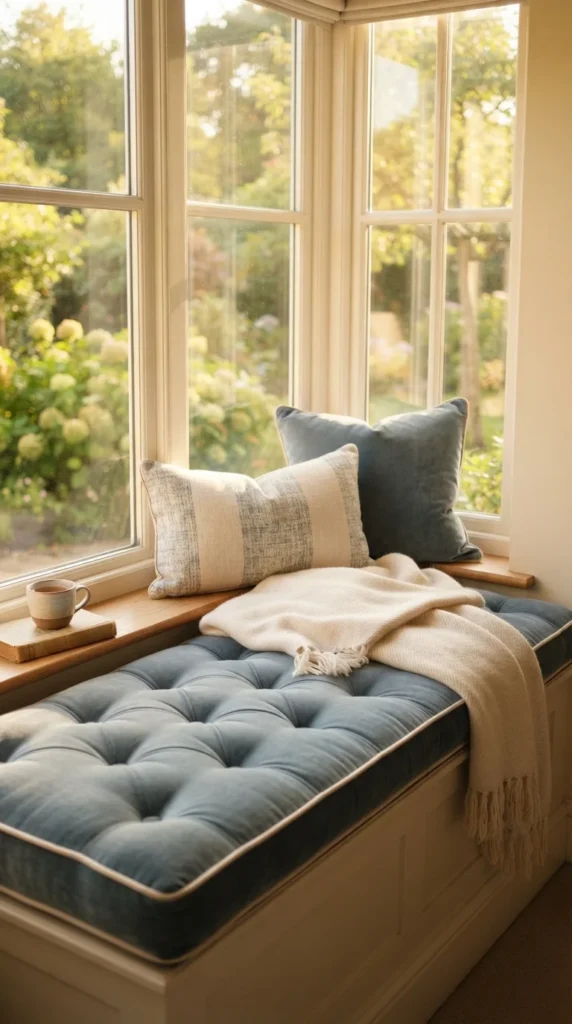
A custom cushion turns a window ledge into a reading nook. Cut a foam pad to size, then sew a cover with a zipper or an envelope back. Piping adds a polished edge.
Use a sturdy fabric such as upholstery cotton or velvet. Add ties at the back to keep it from sliding.
Measure carefully and add a little seam allowance. A cushion of this size will take an afternoon.
24. Kids’ Play Tent Cover

A play tent makes a cozy hideaway for kids. Sew triangular panels together, add a door flap, and attach them to wooden poles. A cotton canvas works well.
Choose a washable fabric since little hands will be all over it. Reinforce the seams so the tent can handle rough play.
Add a pillow or blanket inside. Kids will use it for naps and reading.
25. Scrap Fabric Bunting

Bunting is the perfect scrap buster. Cut triangles from leftover fabric and sew them onto a long strip of bias tape. Space them evenly along the length.
Use any prints you like. A mix of patterns looks cheerful, while a single color scheme feels calm.
Hang it across a mantel, a doorway, or a nursery wall. You can change the look for each season.
Final Thoughts
Handmade pieces make a home feel warm and personal, and most of these projects only call for basic straight stitching. Start with one simple project, such as pillow covers or napkins, and build your skills from there. Pick one idea from this list, grab a fabric scrap, and sew it this weekend.

Lily Summers is a digital artist and creative storyteller who loves bringing colorful characters to life. With a passion for cartoons, fan art, and playful sketches, she inspires others to explore their imagination through art. When she’s not sketching, you’ll find her dreaming up new ideas for CraftedWizard.com to spark creativity in every artist. 🌈✨