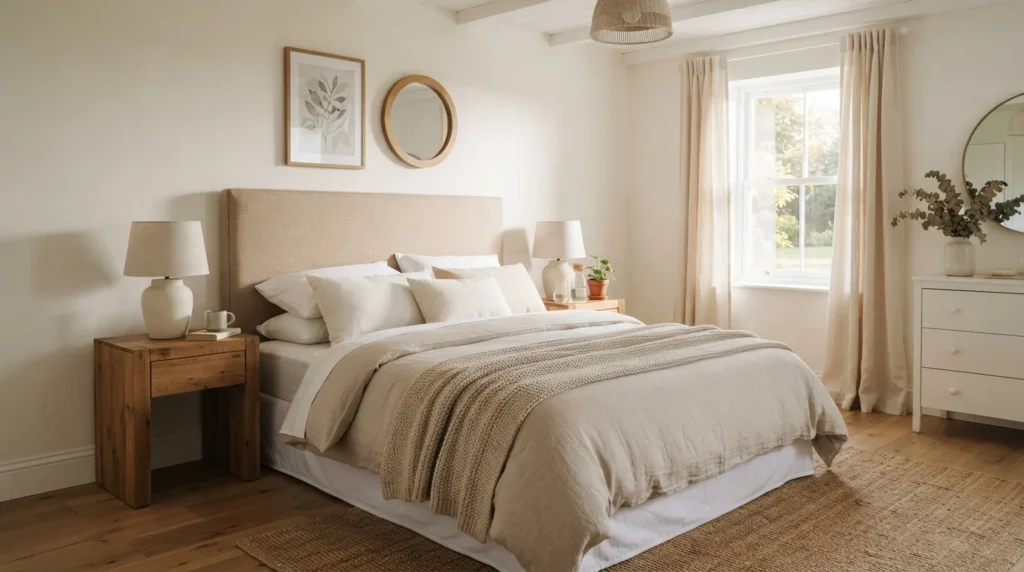
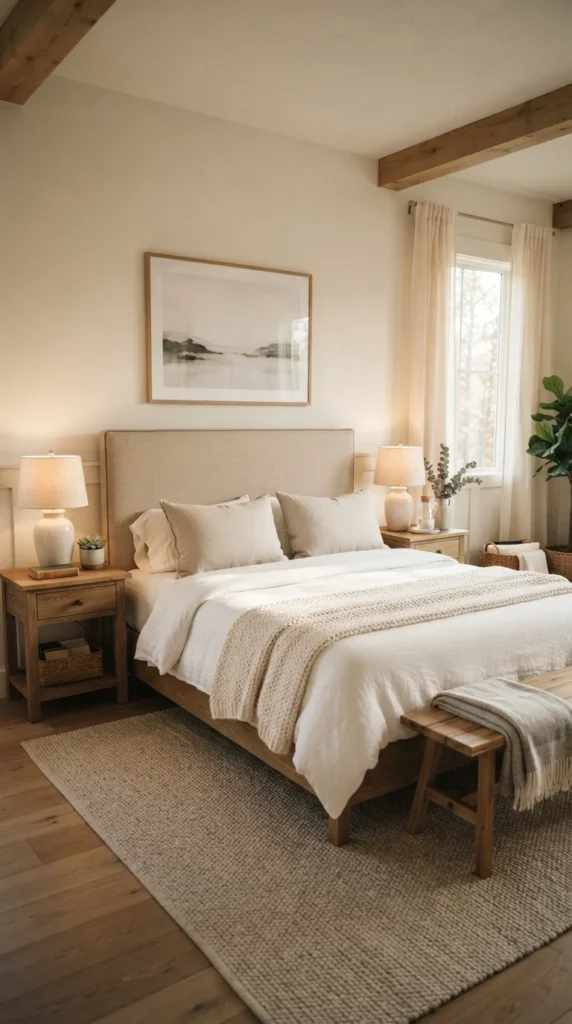
A beautiful headboard can change the entire look of your bedroom without replacing your bed or buying expensive furniture. With a few basic materials, a little creativity, and a free afternoon, you can create a focal point that suits your style. From soft upholstered panels to rustic wood designs and colorful painted shapes, these DIY headboard ideas work for different budgets, room sizes, and skill levels. Whether you’re decorating a rental, updating an old bedroom, or creating a cozy retreat, there’s an idea here you can make your own.
1. Upholstered Plywood Headboard
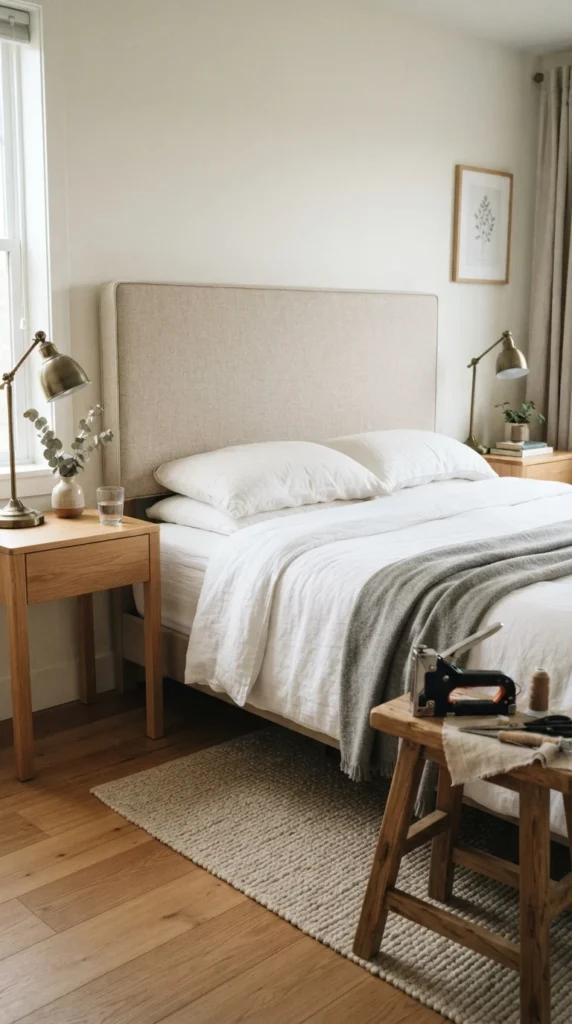
An upholstered plywood headboard gives your bedroom the comfortable, finished look of a hotel room. Start with a plywood sheet cut to your preferred width and height. Add a layer of foam padding, wrap it with batting, and cover everything with upholstery fabric.
Pull the fabric tightly around the back and secure it with a staple gun. Choose linen for a relaxed appearance, velvet for a rich finish, or cotton canvas for a simple everyday look. Make sure the edges are smooth and the corners are neatly folded.
This project works well for beginners who can use basic tools. Attach the finished panel securely to the wall or bed frame using appropriate hardware. You can also add extra padding if you enjoy sitting up in bed to read or watch television.
2. Rustic Reclaimed Wood Headboard
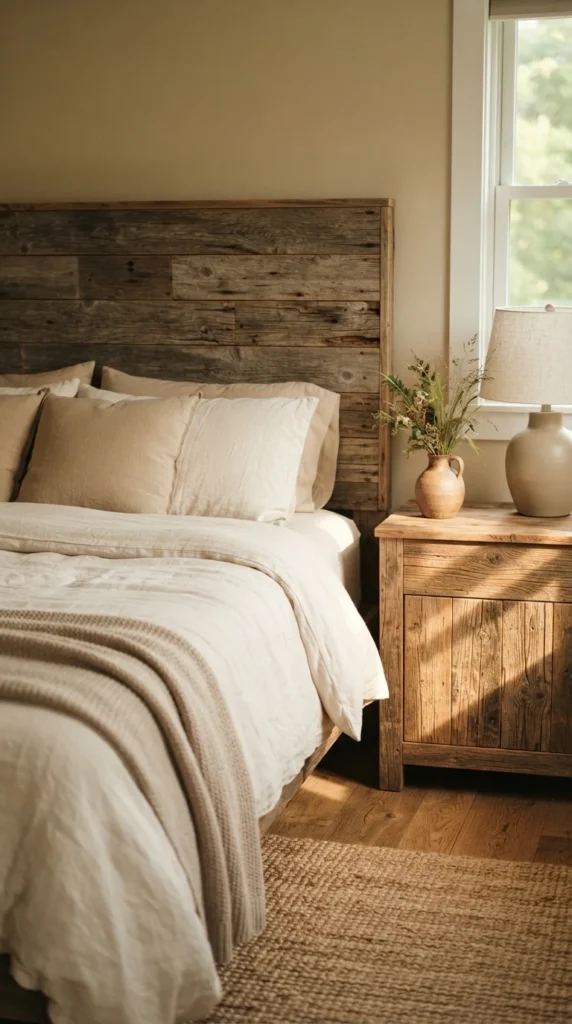
Reclaimed wood brings warmth, texture, and character to a bedroom. Look for old floorboards, salvaged timber, or leftover wooden planks with interesting grain patterns. Different shades of brown create a natural, lived-in appearance without requiring decorative accessories.
Clean the wood thoroughly, remove protruding nails, and sand rough edges. Arrange the boards horizontally or vertically on a sturdy backing panel, then secure them with suitable screws. A clear protective finish can preserve the natural color, while a light stain creates a more consistent appearance.
Pair this headboard with white bedding, black metal lighting, or simple cotton curtains. Before using reclaimed timber indoors, check for pests, mold, and unsafe finishes. Properly prepared wood can give your bedroom a rustic focal point that lasts for years.
3. Painted Arch Headboard
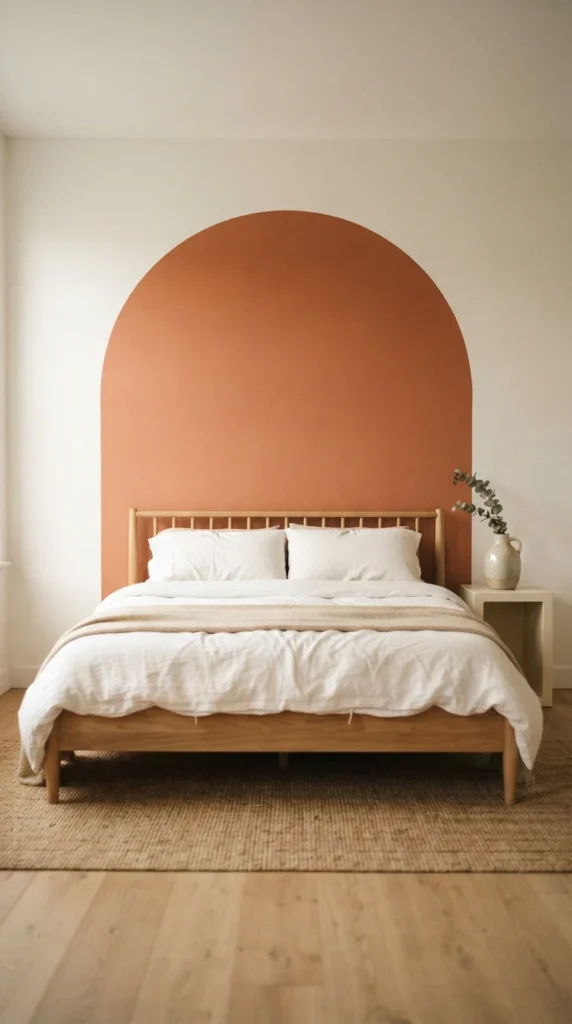
A painted arch creates the appearance of a custom headboard without taking up any floor space. It’s an excellent option for small bedrooms, renters who can repaint before moving, and anyone who enjoys simple DIY projects.
Choose a color that complements your bedding, such as dusty pink, sage green, muted terracotta, or deep blue. Mark the desired width and height on the wall, then use a pencil, string, and pin to trace a curved top. Apply painter’s tape along the straight edges and use a suitable wall paint to fill the shape.
Allow the paint to dry before placing the bed in position. For a more decorative result, paint the arch slightly wider than the mattress and add matching bedside accessories. This idea costs relatively little and gives a plain wall a carefully planned look.
4. Floor-to-Ceiling Wood Slat Headboard
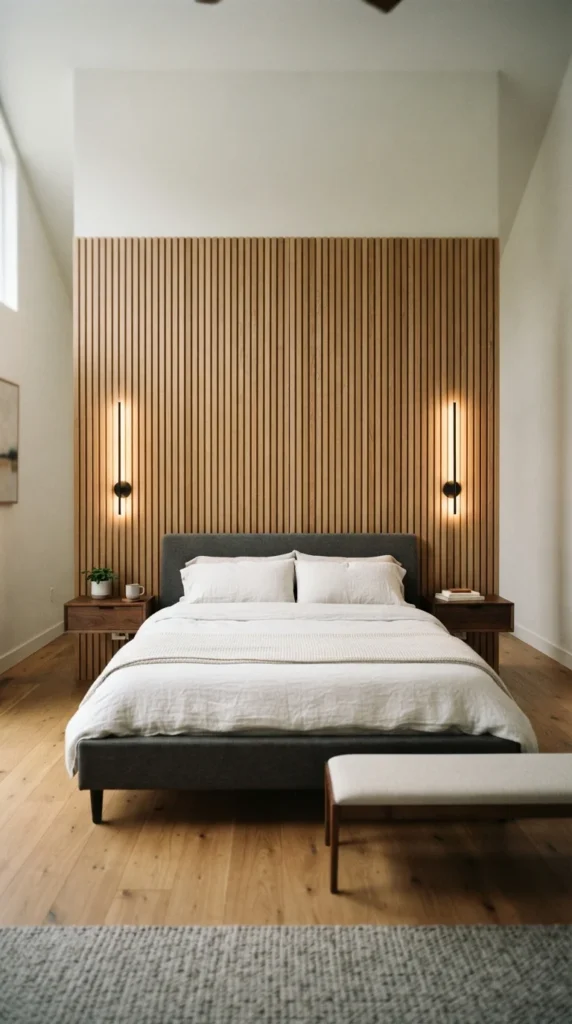
Vertical wood slats make a bedroom feel taller and give the wall a modern architectural feature. You can cover the entire wall behind the bed or create a narrower panel that extends a little beyond the mattress on each side.
Measure the wall carefully before cutting the slats. Attach them to a prepared backing panel or suitable wall battens, keeping the spacing consistent with small spacers. Natural oak, walnut stain, or painted black wood can each create a different effect.
This design pairs well with simple bedding because the wall itself provides plenty of visual interest. For a rental, consider a freestanding slatted panel rather than permanently fixing individual pieces to the wall. Secure tall panels properly to prevent tipping.
5. DIY Tufted Headboard
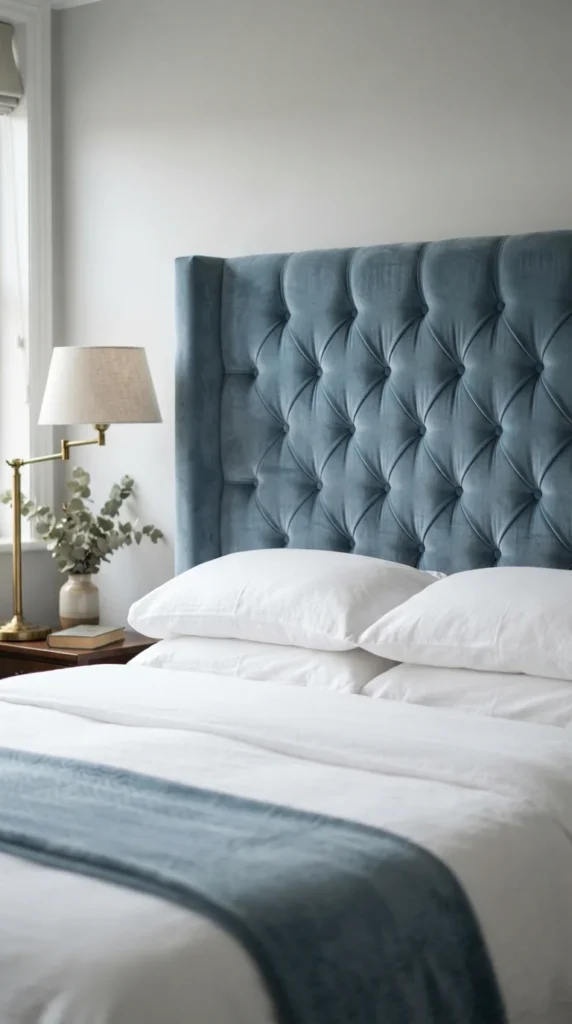
A tufted headboard adds a classic upholstered look with soft folds and decorative buttons. Velvet in navy, emerald, or dusty blue works beautifully in traditional bedrooms, while beige fabric suits a quieter modern style.
Begin with a plywood backing, thick foam, and batting. Mark a symmetrical pattern for the buttons, then create holes through the backing and use strong upholstery thread to pull each button into the padding. Cover the panel with fabric, tightening it gradually to form neat indentations.
This project takes more patience than a flat upholstered headboard, but the result looks polished and comfortable. If you’re new to upholstery, start with a small number of buttons rather than a complicated diamond pattern. Keep the button placement even so the finished surface looks balanced.
6. Woven Rattan Headboard
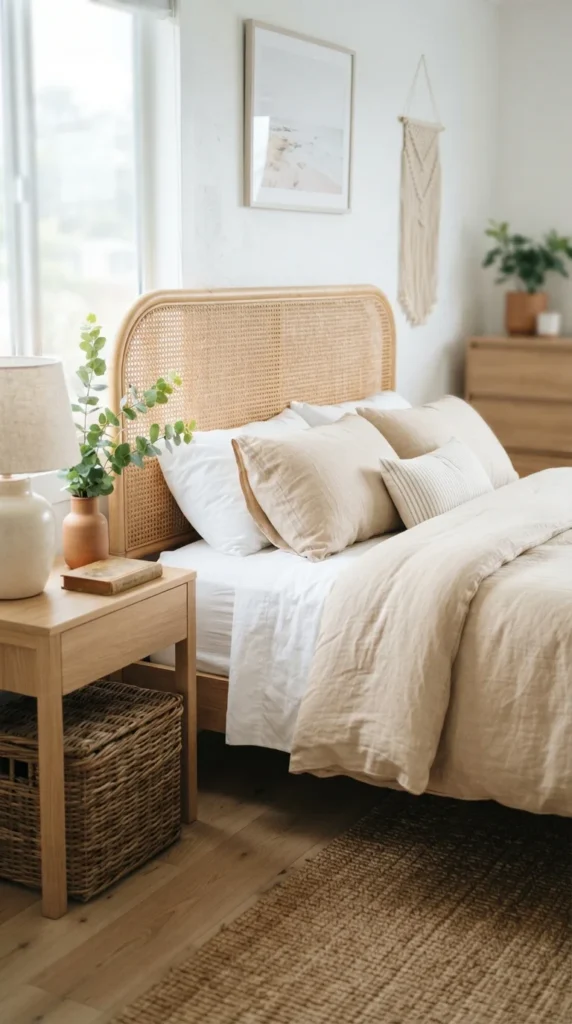
Rattan brings a relaxed, airy quality to a bedroom and suits coastal, bohemian, and Scandinavian interiors. For an easier DIY version, use a sturdy frame and a sheet of decorative cane webbing rather than weaving every strand yourself.
Cut the frame pieces to your preferred size and assemble them securely. Soak cane webbing according to the supplier’s directions if required, position it inside the frame, and attach it evenly. Trim excess material and cover the edges with a narrow wooden strip for a tidy finish.
A natural rattan panel looks especially attractive with cream bedding and warm wood furniture. You can leave the material unfinished or apply a compatible protective coating. Avoid placing the headboard where it will be exposed to persistent dampness, as natural cane can deteriorate in unsuitable conditions.
7. Shiplap Wooden Headboard
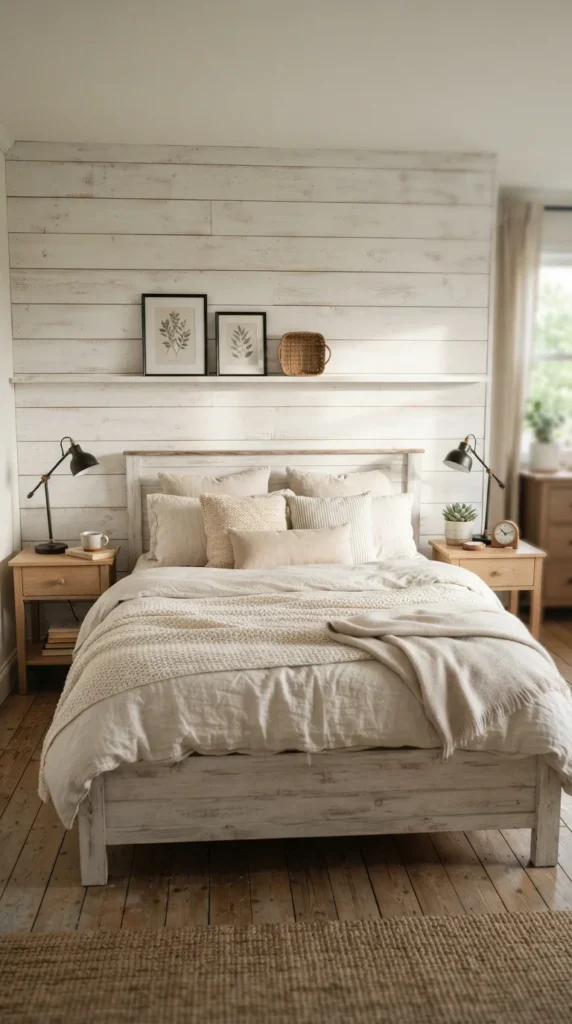
Shiplap boards create a clean farmhouse look with subtle horizontal lines. This style works especially well in bedrooms with white walls, natural fabrics, and simple wooden furniture.
Cut thin boards to the desired width and arrange them horizontally across a backing panel. Use small spacers to keep the gaps even, then secure each board. Paint the surface white for a bright appearance or use a pale wood stain to retain its natural grain.
You can build the panel just above mattress height or extend it farther up the wall for a stronger visual feature. Sand the edges before painting, and allow each coat to dry completely. A shiplap headboard is also easy to customize later with a different paint color.
8. Macrame Wall Hanging Headboard
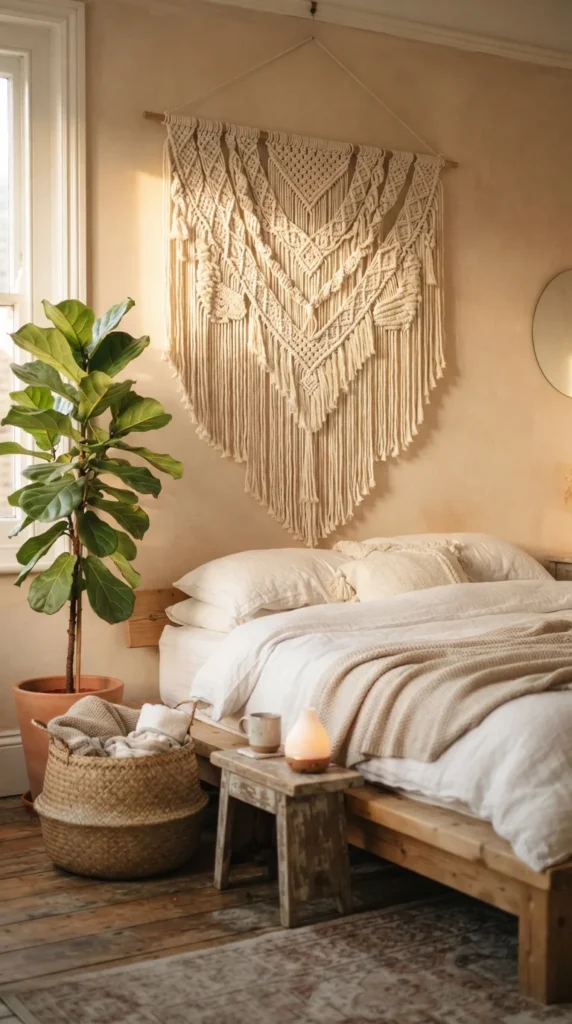
A macrame wall hanging makes a lovely headboard alternative for bohemian and relaxed bedrooms. Its knotted patterns add texture without the weight or bulk of a traditional furniture panel.
You can buy a simple cotton cord kit or use cord you already have. Attach the cords to a smooth wooden dowel and create a pattern using square knots, half knots, and simple fringe. Keep the finished width slightly narrower than the bed or match it to the mattress width for a balanced appearance.
Hang the piece high enough that pillows won’t constantly rub against it. Natural cotton looks beautiful against warm white walls, while dark green or rust-colored cords can add personality. If you prefer not to knot the design yourself, a ready-made wall hanging can be mounted on a wooden support for a similar effect.
9. Old Door Headboard
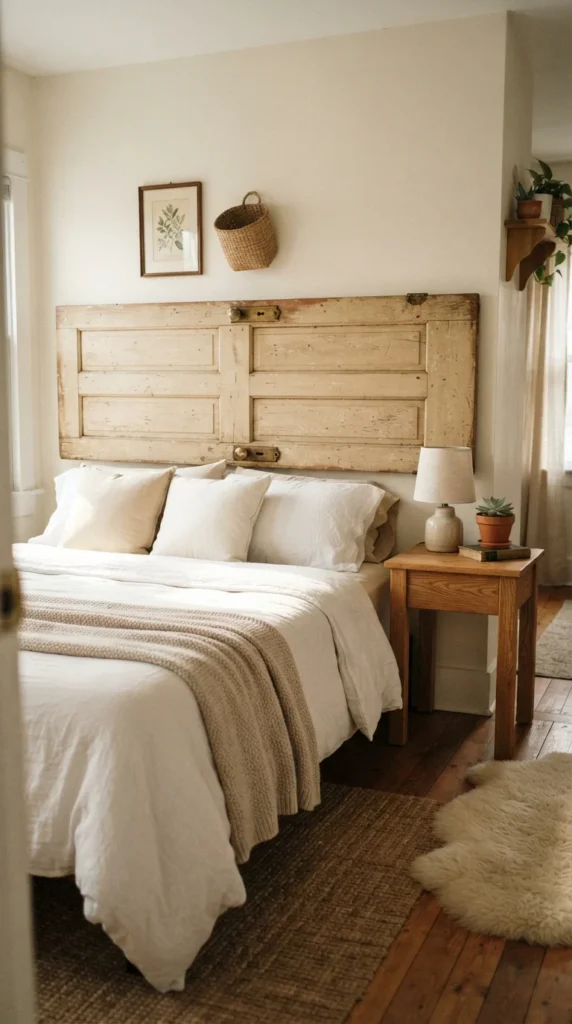
An old door can become a distinctive headboard with very little decorative work. Paneled doors offer built-in detail, while simple wooden doors create a more understated rustic finish.
Choose a door that fits the bed’s width and inspect it for damage, loose hardware, and old coatings that may contain hazardous materials. Clean the surface and sand or refinish it using appropriate precautions. You can preserve its worn appearance or paint it in a color that matches your bedroom.
Mount the door securely to the wall or a suitable support structure. Check that it is stable and does not lean against the bed where it could fall. This project is particularly attractive in farmhouse, cottage, and vintage-inspired rooms.
10. Plywood Headboard With Built-In Shelves
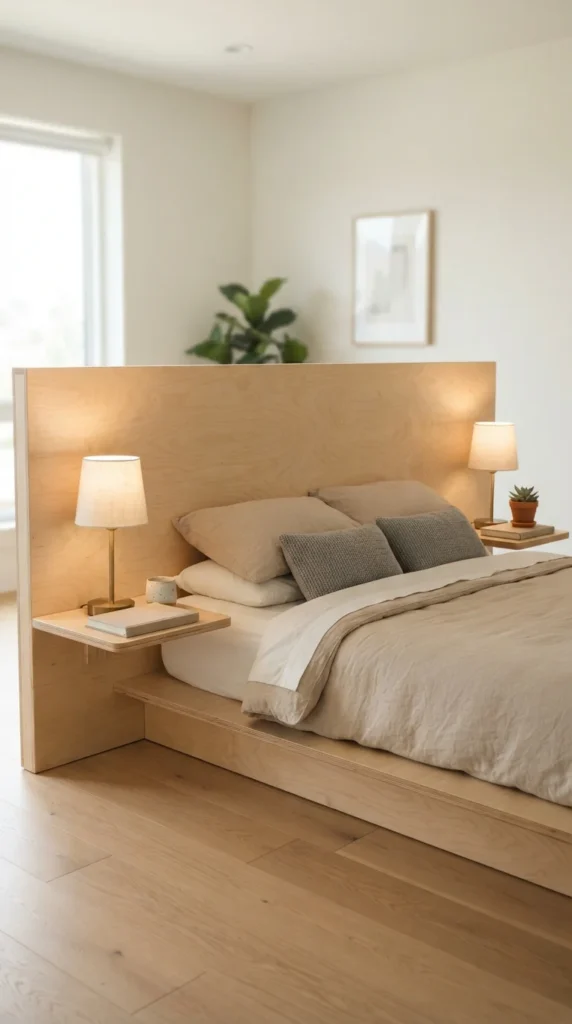
If your bedroom has limited space for nightstands, a plywood headboard with small shelves can combine decoration and storage. The shelves provide room for a phone, glasses, a small lamp, or other lightweight bedtime essentials.
Plan the layout before cutting the plywood. Mark the shelf positions and attach them with appropriate supports or joinery. Sand all surfaces carefully, finish the wood with a compatible sealant, and secure the whole structure to the wall or bed frame.
Keep shelves shallow so they don’t interfere with pillows or your head while sitting up. Heavy objects should not be stored overhead, and electrical cables should be kept tidy. This design works particularly well in compact bedrooms where every inch of floor space counts.
11. Fabric-Covered Foam Panel Headboard
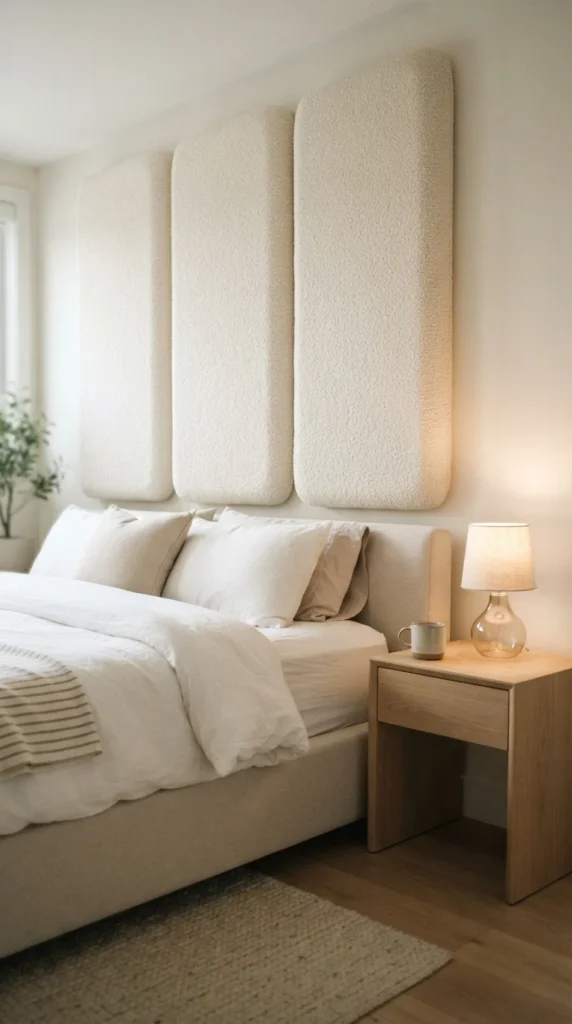
Individual padded panels create a modern headboard with clean lines and a soft surface. This design is easier to customize than a single large upholstered board because each section can be made separately.
Cut equal-sized backing panels from lightweight suitable board, attach foam and batting, and wrap each piece with fabric. Secure the material at the back with upholstery staples. Arrange the panels in a straight row, leaving small, even gaps between them if you prefer a modular appearance.
Boucle, linen, and cotton canvas are all good fabric choices. You can use matching panels for a minimalist look or alternate two complementary colors for a little contrast. Mount the panels securely using appropriate hardware, particularly if the backing material is heavy.
12. Painted Geometric Headboard
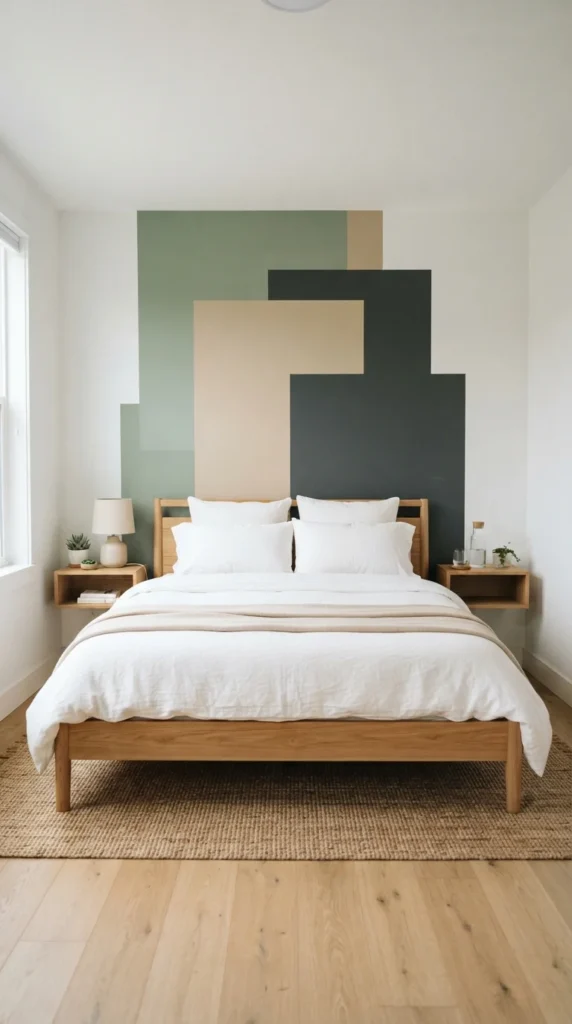
Geometric paint shapes offer an easy way to bring color into a plain bedroom. You can create overlapping rectangles, angled sections, or a large abstract composition that frames the bed.
Choose two or three colors that work with your bedding and flooring. Use a measuring tape, pencil, and painter’s tape to map the shapes before painting. Apply thin coats and remove the tape carefully while the paint is drying according to the product instructions.
This project gives you plenty of creative freedom without requiring carpentry skills. Keep the shapes centered around the mattress so the bed remains the main focus. If you’re uncertain about bold colors, start with muted tones and add stronger accents through cushions or bedside accessories.
13. Upholstered Headboard With Nailhead Trim
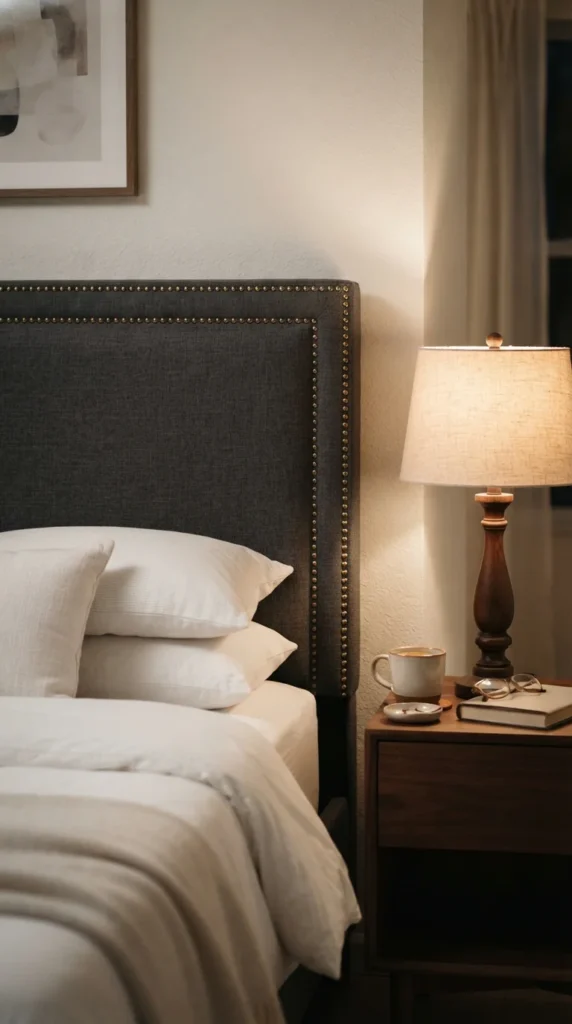
Nailhead trim gives a plain upholstered headboard a tailored appearance. The small metallic details create a border that works well with traditional, transitional, and contemporary bedroom styles.
Make a padded headboard using plywood, foam, batting, and your chosen fabric. Once the fabric is smooth, mark the trim placement with a pencil or removable fabric marker. Apply upholstery nailheads or decorative trim along the outline, spacing each piece evenly.
Brass works beautifully with navy, charcoal, and cream fabrics, while black trim creates a more modern appearance. Take your time around the corners so the pattern stays consistent. Choose upholstery fasteners intended for your materials rather than ordinary decorative nails that may not hold securely.
14. Vintage Window Frame Headboard
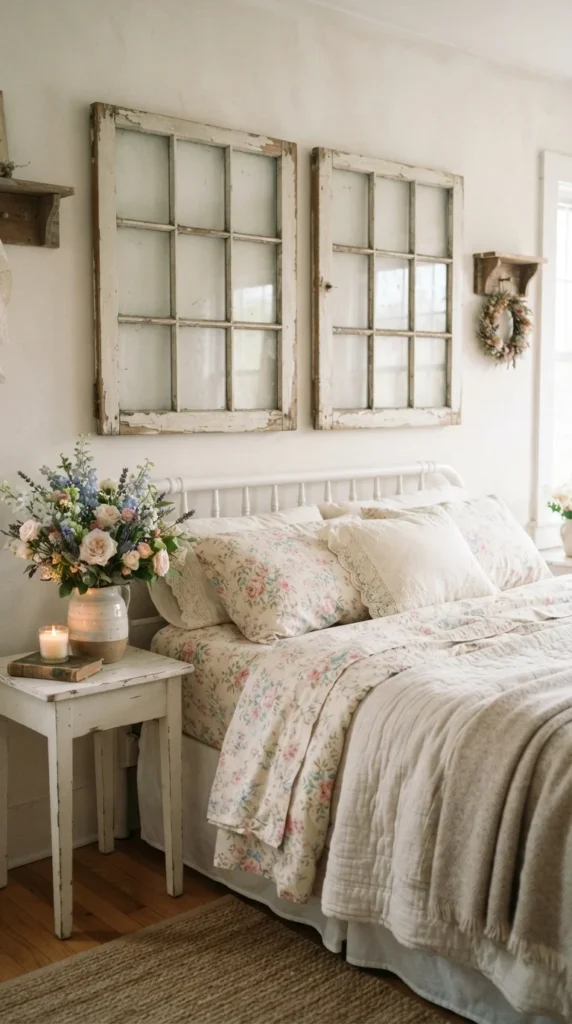
Old window frames can create an unusual decorative feature behind a bed. Their divided sections add architectural detail and suit cottage, farmhouse, and vintage-inspired interiors.
Find frames with sturdy wood and remove loose glass or unstable pieces before bringing them into the bedroom. Sand rough edges, clean the surfaces, and repaint them if you prefer a more polished look. You can mount one large frame or arrange two smaller frames side by side.
Make sure the frames are securely fixed to the wall and cannot fall onto the bed. Avoid using frames with cracked glass or flaking hazardous paint. Pair the finished feature with simple bedding so the old wood remains the main attraction.
15. Padded Velvet Headboard
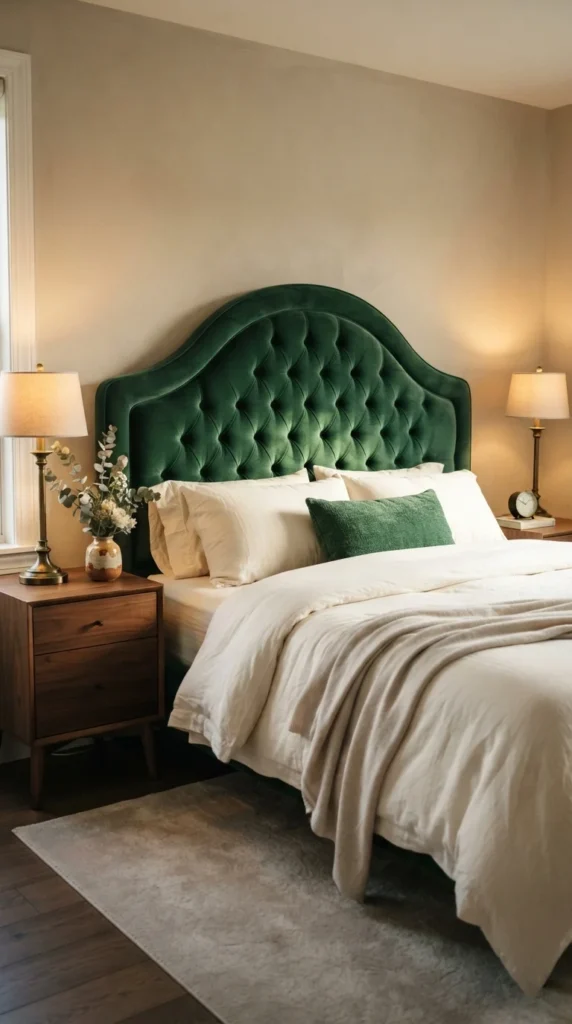
Velvet can make a bedroom feel rich and comfortable, even when the headboard itself is homemade. Emerald green, burgundy, navy, and dusty rose are attractive options, while taupe velvet creates a quieter finish.
Cut your backing board into a rectangle or draw a gentle curve along the top. Attach foam and batting, wrap the board with velvet, and staple the fabric neatly on the reverse. Smooth the material as you work to avoid unwanted creases and uneven folds.
Pair a colorful velvet headboard with plain sheets and a few matching cushions. Velvet can show pressure marks and collect dust, so check the fabric’s care instructions before cleaning. A simple silhouette lets the material provide most of the decoration.
16. Bamboo Headboard
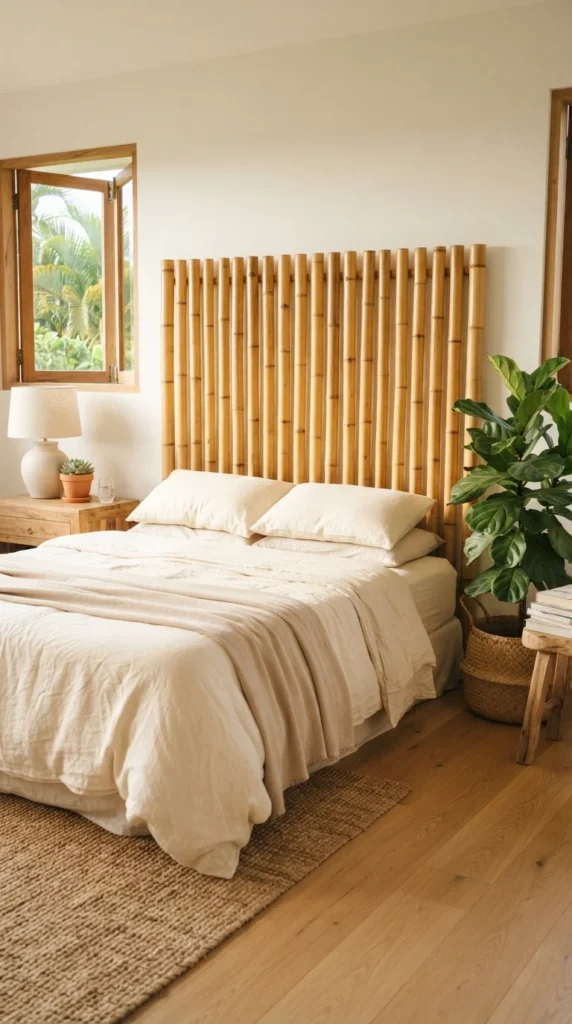
Bamboo creates a natural headboard that feels light and relaxed. It suits tropical, coastal, and nature-inspired bedrooms, especially when paired with linen bedding and green plants.
Choose straight bamboo canes of similar thickness and cut them to a consistent height. Arrange them vertically or horizontally against a sturdy frame, then secure them with suitable clamps, screws, or bindings designed for the structure. Sand any sharp edges and inspect the canes for splits before assembly.
Leave the bamboo in its natural shade or apply a compatible clear finish. A framed panel is usually easier to mount than individual canes, and it keeps the overall design neat. Use appropriate wall anchors and avoid placing the structure in a damp area where the material could deteriorate.
17. DIY Bookcase Headboard
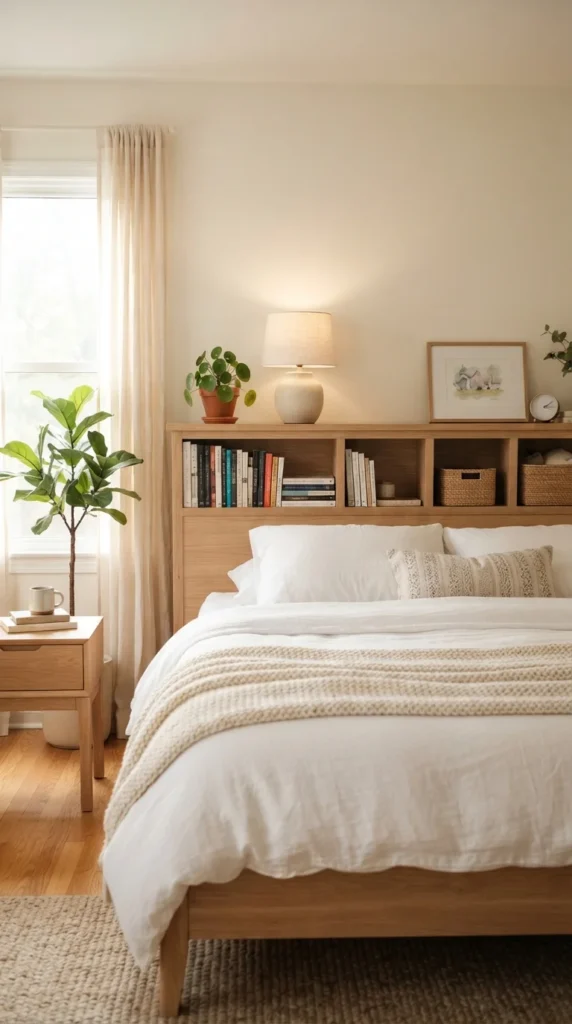
A bookcase headboard is a practical choice for readers and anyone short on storage. It provides a place for books, small decorative objects, and bedtime essentials without requiring separate wall shelves.
Choose a low, sturdy bookcase that matches the width of your bed. Position it carefully behind the mattress and secure it to the wall using the manufacturer’s recommended anti-tip hardware. If you’re building one yourself, sand the edges and use strong joinery to keep the shelves stable.
Keep heavy books on lower shelves and avoid placing breakable objects directly above your pillow. Leave enough clearance for your mattress and bedding. For a cohesive look, arrange books with a few plants or storage baskets rather than filling every shelf with decorative pieces.
18. Plywood Headboard With LED Lighting
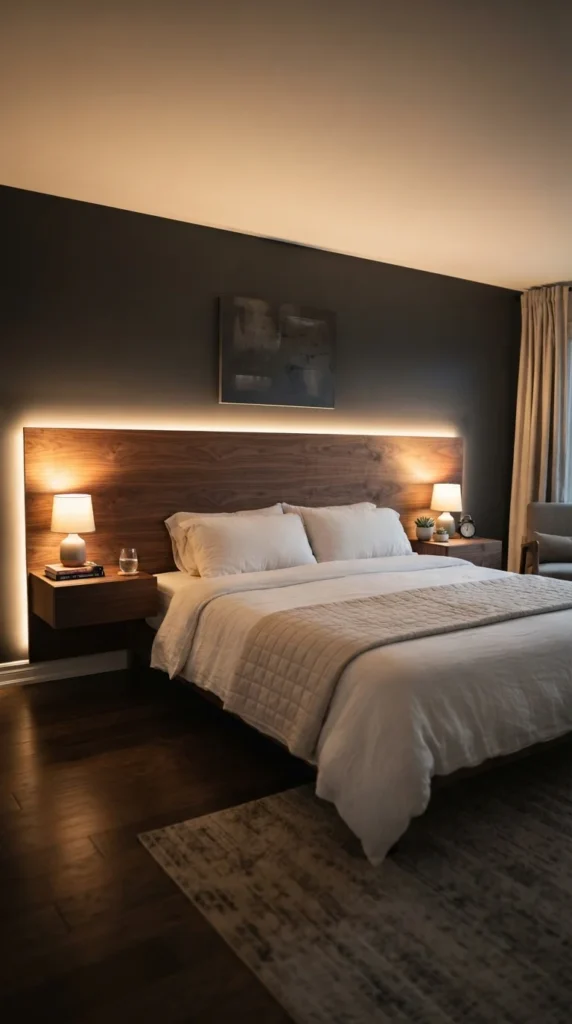
Concealed LED lighting can turn a simple wooden headboard into a comfortable reading and evening feature. Warm white light creates a softer atmosphere than bright cool lighting, and the glow can make the wall behind the bed feel more layered.
Cut a plywood panel to your preferred dimensions and sand the surface before applying stain or paint. Install a compatible LED strip along the rear edge or inside a shallow channel designed to hide the light source. Follow the lighting manufacturer’s instructions and keep the power supply accessible.
Avoid covering the strip with fabric or materials that can trap heat. Choose low-voltage lighting designed for indoor use and keep all electrical connections properly protected. This design looks especially attractive with walnut finishes, neutral bedding, and simple bedside furniture.
19. Cane Webbing Headboard With a Wooden Frame
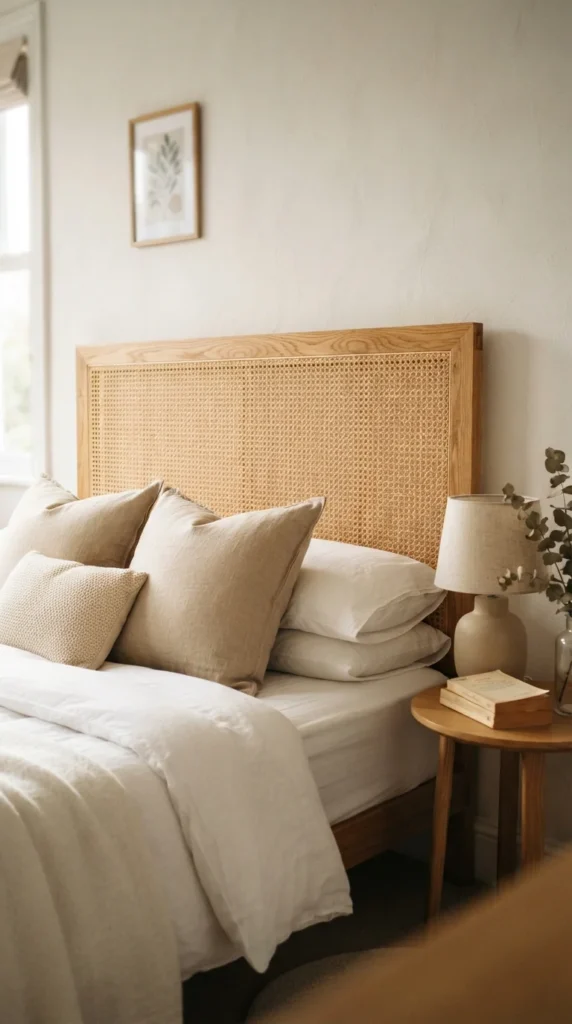
A cane webbing headboard combines the warmth of wood with an airy woven center. It has a handcrafted look that suits contemporary, Scandinavian, and relaxed bohemian bedrooms.
Build a rectangular wooden frame with clean, joined corners. Cut the cane webbing slightly larger than the opening, prepare it according to its manufacturer’s directions, and fasten it evenly to the rear of the frame. Cover the attachment points with narrow trim if you want a smooth, furniture-like finish.
Choose a pale wood frame for a light appearance or a darker stain for contrast. This design works well with cotton bedding, woven baskets, and small ceramic accessories. Make sure the webbing is taut and the frame is sturdy before mounting it above the bed.
20. Fabric Curtain Headboard
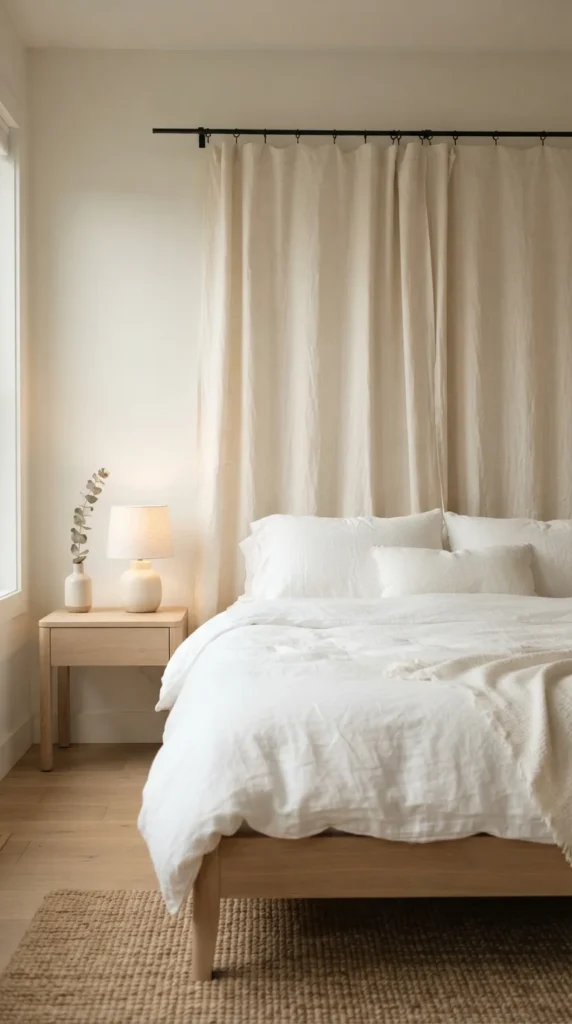
A curtain headboard is one of the simplest ways to soften a bedroom. It works especially well for renters, small rooms, or anyone who wants to avoid building a heavy wooden structure.
Install a sturdy curtain rod behind the bed and hang a fabric panel wide enough to extend beyond the mattress. Linen and cotton create a relaxed appearance, while velvet offers a fuller, more dramatic finish. Choose a curtain length that stops just above the floor or mattress level to keep the fabric tidy.
You can change the look whenever you update your bedding or color scheme. Washable fabric is particularly useful in bedrooms that collect dust. Check the wall anchors and rod’s weight rating before hanging heavy curtains, especially if you select thick upholstery fabric.
21. Painted Floral Headboard
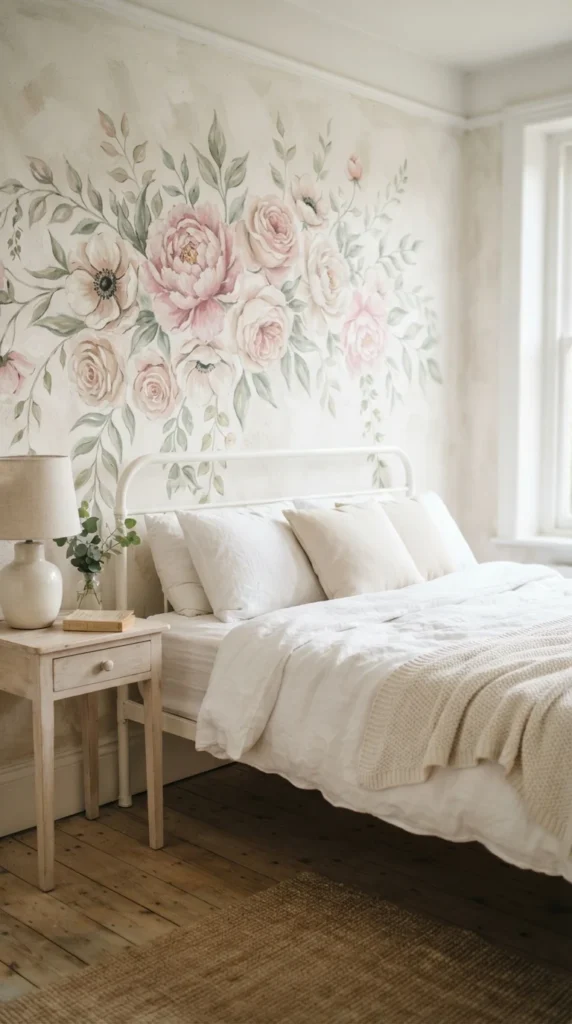
A floral headboard brings color and personality into a bedroom without adding furniture. You can create oversized flowers for a modern look or paint small botanical branches for a cottage-inspired design.
Sketch the composition lightly before applying paint. Use a limited palette that complements your curtains and bedding, and start with larger shapes before adding smaller details. If painting freehand feels difficult, use a reusable stencil to help keep the flowers consistent.
Keep the design concentrated around the bed so it acts as a visual frame rather than covering every wall. A few matching cushions can connect the mural colors to the rest of the room. If you prefer an easier update, paint the design on a removable backing panel instead of directly on the wall.
22. Picket Fence Headboard
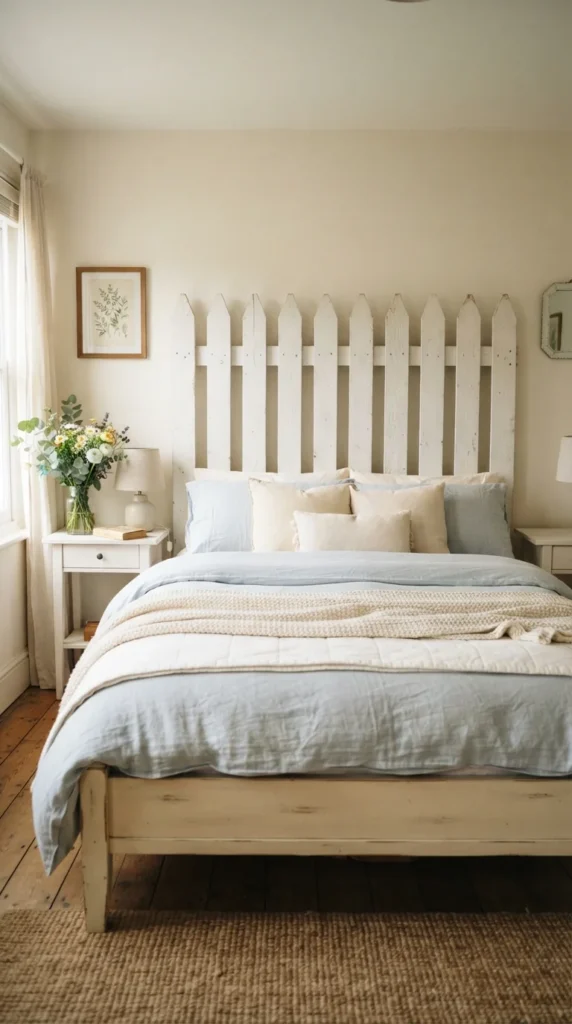
A picket fence headboard adds a playful cottage look and gives plain wooden slats a distinctive silhouette. You can repurpose a suitable fence panel or build one from individual boards.
Cut the slats to matching lengths and shape their upper ends into simple points or rounded tops. Attach them to two horizontal support rails, sand the surface, and apply a suitable primer and paint. White is a classic choice, but sage green or pale blue can give the design a more personal finish.
Check that the finished panel has no splinters, protruding fasteners, or sharp edges. Mount it securely behind the bed and leave enough room for pillows. Pair it with floral bedding, natural wood, or simple cotton sheets for a cozy country-inspired bedroom.
23. Leather or Faux Leather Headboard
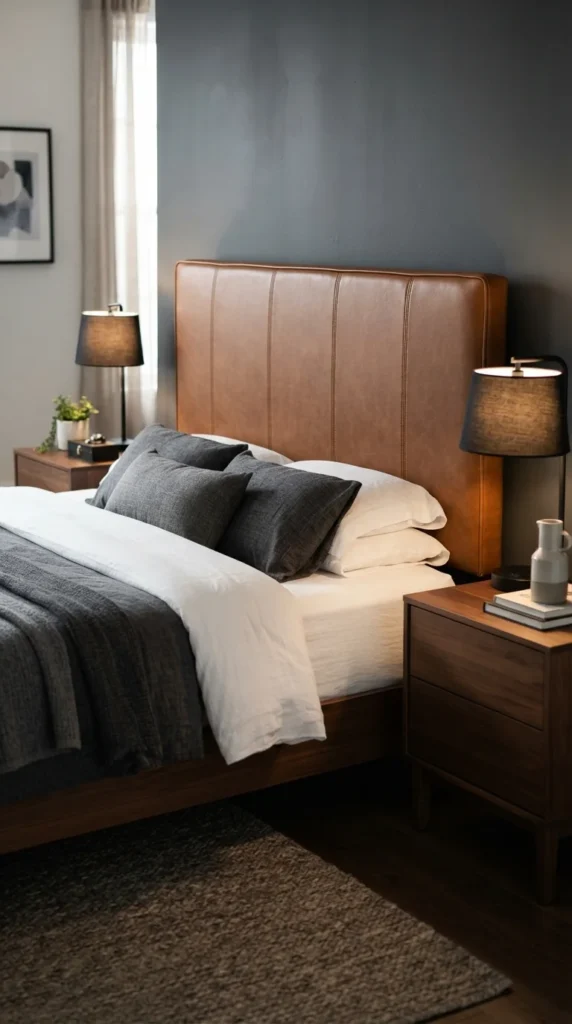
Leather or faux leather gives a headboard a smooth, tailored appearance. Caramel and cognac shades work well with warm wood, while black or dark brown suits a more dramatic bedroom.
Cut a backing board to the desired size and add a thin layer of foam if you want a padded finish. Wrap the surface with upholstery-grade leather or faux leather, pulling the material evenly around the edges. Staple it securely at the back and fold the corners neatly to prevent bulky sections.
Faux leather is often easier to clean and may cost less than genuine leather. Use a soft cloth and cleaning products approved for the material to protect its surface. Pair the headboard with plain bedding and understated furniture so the rich texture stands out.
24. Shaped Scalloped Headboard
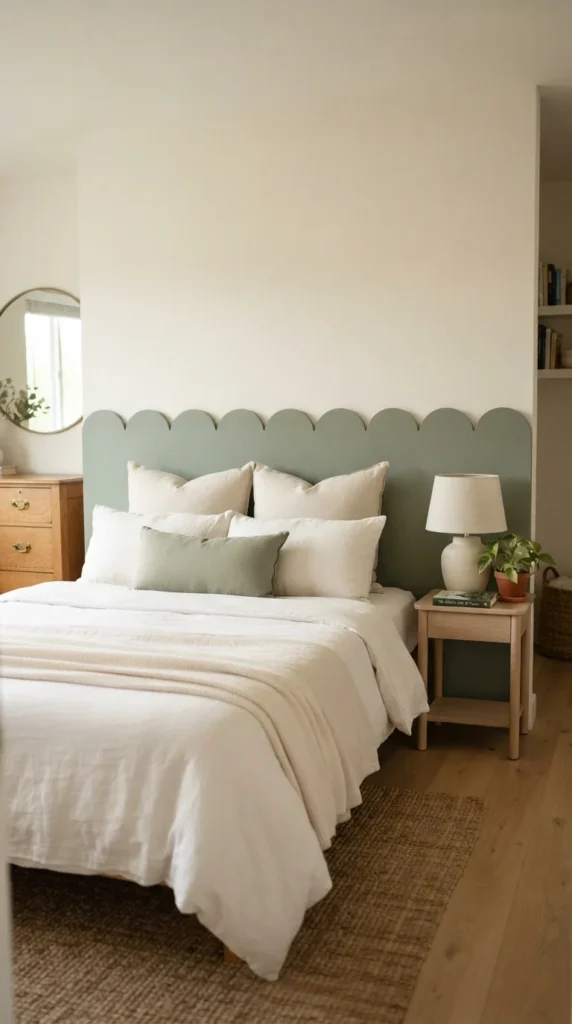
A scalloped headboard gives a bedroom a soft, playful look. Its rounded outline suits children’s rooms, guest bedrooms, and adult spaces decorated with pastel colors or modern cottage furniture.
Draw a series of matching curves along the top of a plywood or MDF panel. Cut the shape with an appropriate saw, sand the edges until smooth, and apply primer followed by your chosen paint. If you prefer upholstery, use the shaped panel as a backing and cover it with foam, batting, and fabric.
Choose a single color for a clean appearance or add contrasting piping around an upholstered version. Make sure the curved edges are smooth and the board is properly supported. Pair it with simple bedding to let the silhouette stand out.
25. Pallet Wood Headboard
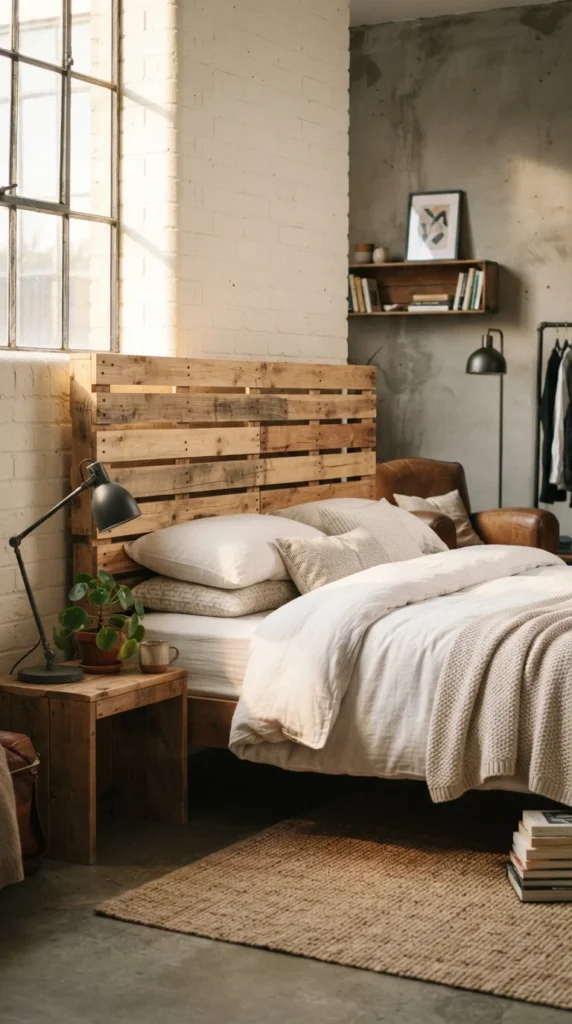
Pallet wood can be a useful material for a rustic headboard if you select suitable boards and prepare them carefully. The natural variations in grain and color create a textured appearance that works with farmhouse and industrial interiors.
Use pallets with known, safe origins and inspect every board for chemical contamination, mold, insects, and structural damage. Remove the boards, pull out nails, and sand the surfaces thoroughly. Arrange the planks on a sturdy backing frame and secure them with suitable fasteners.
A clear finish preserves the natural wood look, while a light stain can bring the colors closer together. Avoid using damaged or chemically treated pallets indoors. Because pallet boards can be uneven, take extra care to eliminate splinters and secure the finished panel firmly before placing the bed against it.
26. Upholstered Headboard With Storage Pockets
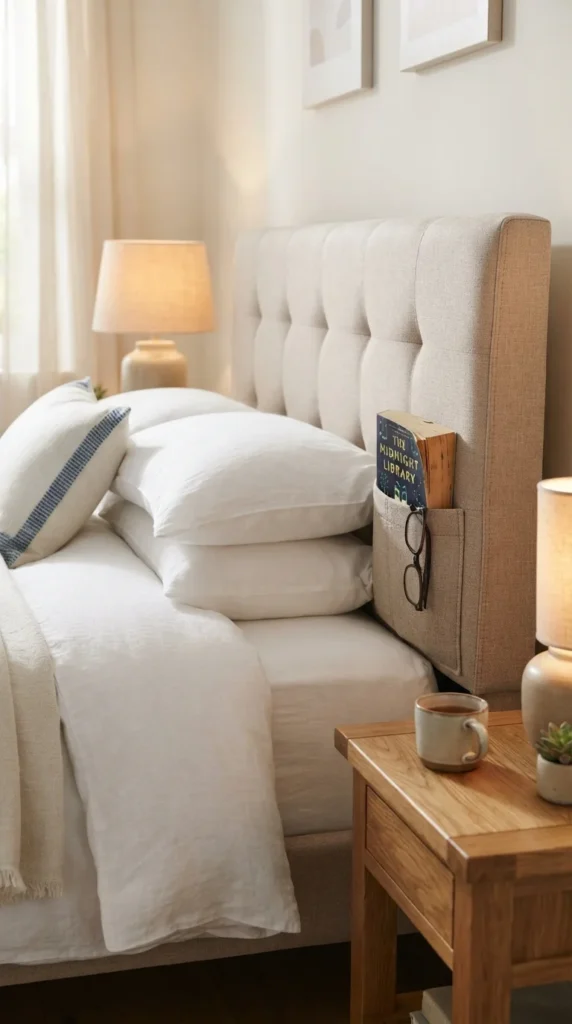
Storage pockets make an upholstered headboard useful in a small bedroom where bedside tables are limited. They provide a handy place for lightweight items such as reading glasses, a remote control, or a paperback book.
Create a padded backing panel using plywood, foam, batting, and sturdy fabric. Sew simple pockets from matching material, reinforce the upper edges, and attach them to the front or sides before finishing the upholstery. Keep the pocket openings easy to reach when you’re lying in bed.
Avoid placing heavy objects in the pockets, as their weight can pull on the fabric. Position them away from areas where your shoulders or head rest. This design is particularly useful in guest rooms, dorm-style spaces, and compact apartments where keeping small essentials within reach makes the room easier to use.
27. Mirror Panel Headboard
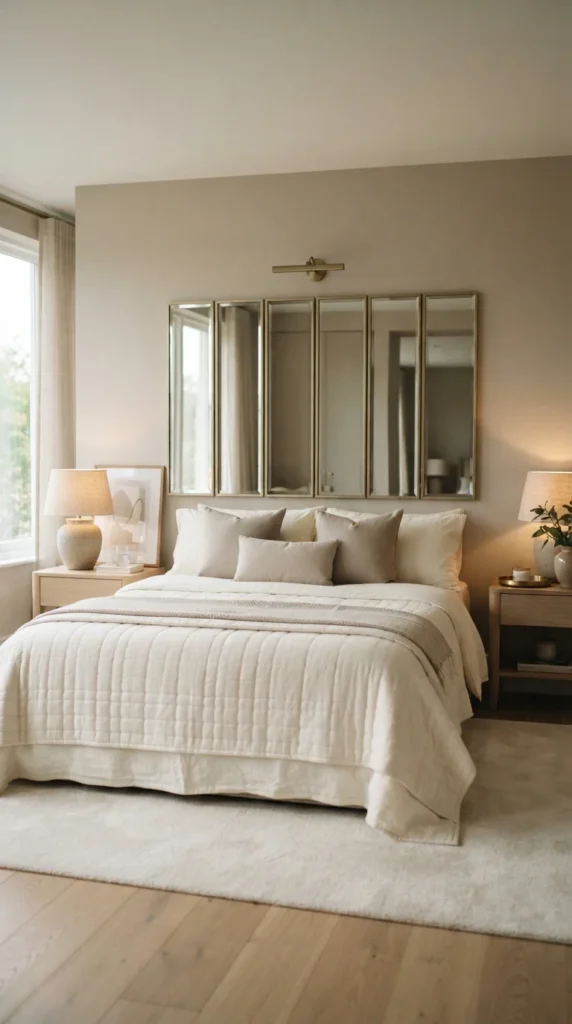
A mirrored headboard adds shine and can make a small bedroom feel brighter. Slim framed panels create a more structured appearance than one oversized mirror, and metallic edges can coordinate with bedside lamps or drawer handles.
Measure the wall and plan the panel arrangement before purchasing the mirrors. Choose products suitable for wall mounting and use the specified brackets, anchors, or mounting system. For a lighter and safer DIY alternative, consider acrylic mirror panels attached to a stable backing board.
Avoid mounting heavy mirrors where they could fall onto the bed. Check every fixing carefully and follow the manufacturer’s installation guidance. Keep the bedding and surrounding decor simple so the reflective surface doesn’t make the room feel cluttered.
Final Thoughts
A DIY headboard can give your bedroom a whole new look without the expense of replacing your furniture. Whether you prefer painted arches, reclaimed wood, soft upholstery, woven textures, or practical storage, the right design can match your room and your skill level. Start by measuring your bed, choosing a style that works with your existing decor, and gathering the materials for one manageable project. Pick your favorite idea and start creating your own headboard this weekend.

Lily Summers is a digital artist and creative storyteller who loves bringing colorful characters to life. With a passion for cartoons, fan art, and playful sketches, she inspires others to explore their imagination through art. When she’s not sketching, you’ll find her dreaming up new ideas for CraftedWizard.com to spark creativity in every artist. 🌈✨