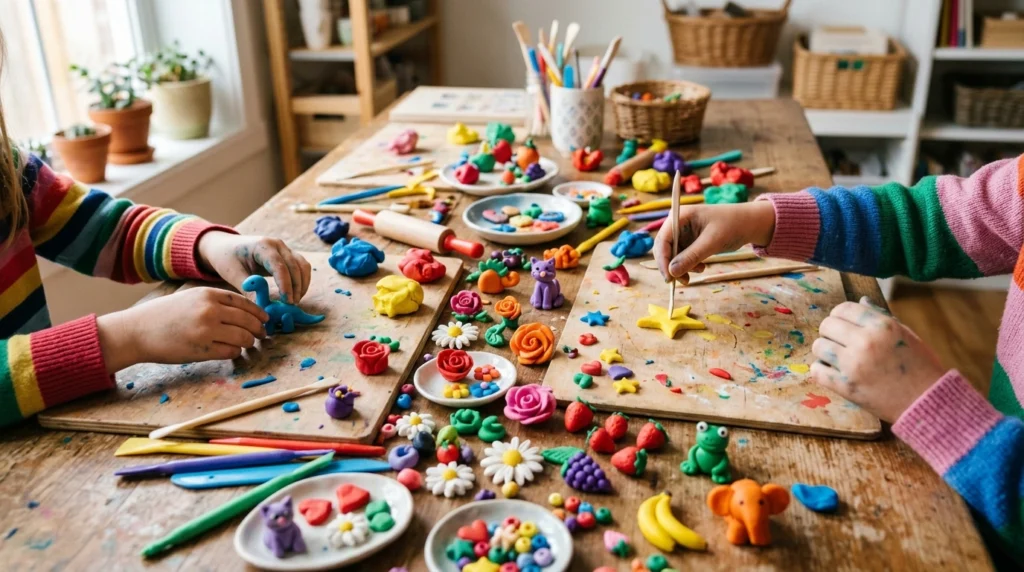
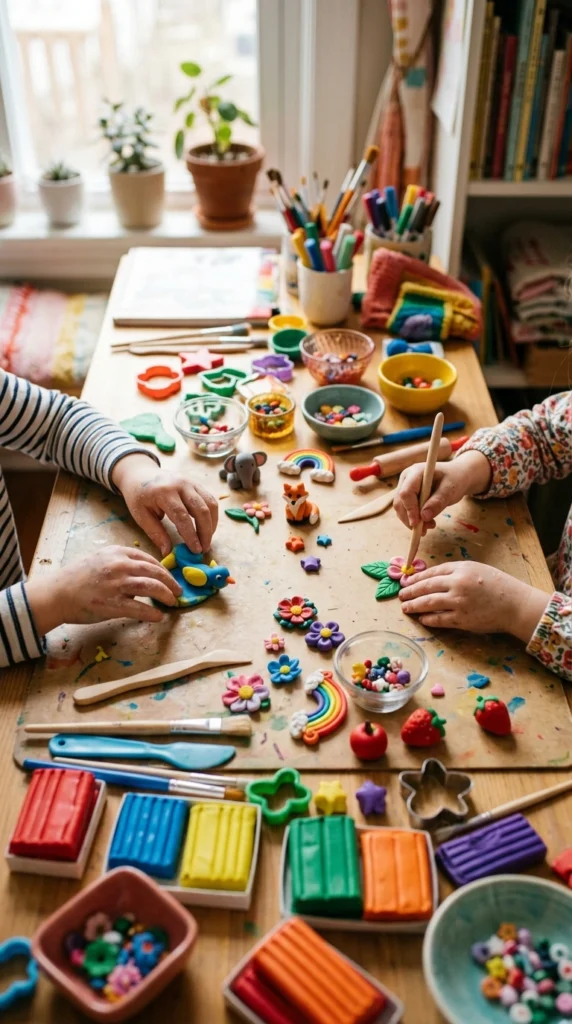
Polymer clay gives kids a fun way to make things they can actually hold, use, and display. The soft clay is easy to shape into animals, food, flowers, jewelry, and tiny decorations, so there is always another project to try. These ideas use simple shapes and colorful designs that work well for craft afternoons, rainy days, playdates, and school-break activities. Younger children should work with an adult, especially when using clay tools, ovens, or other equipment.
1. Colorful Polymer Clay Beads
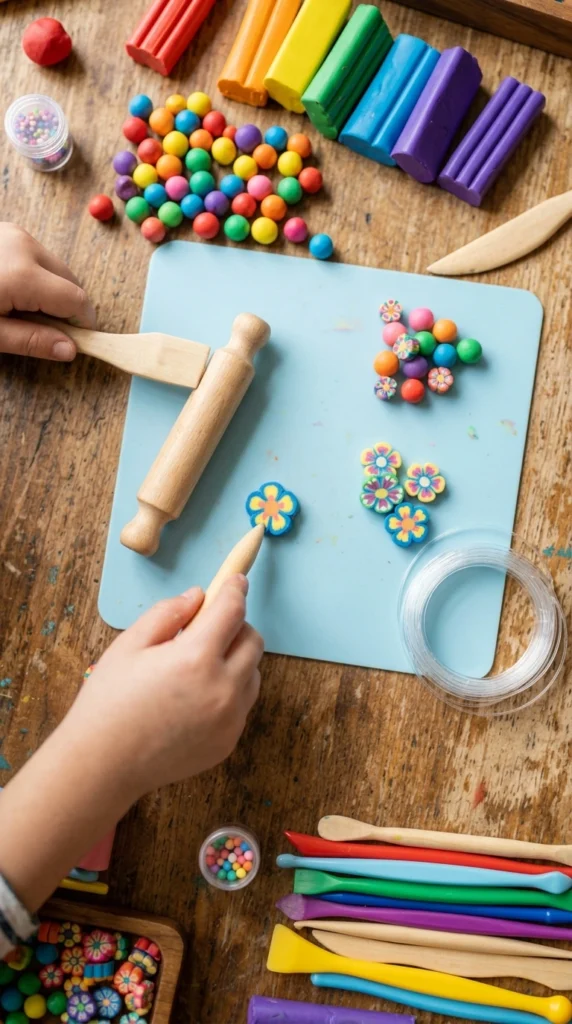
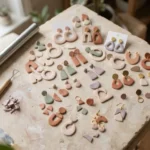
Making beads is one of the easiest ways for kids to learn how clay changes shape. Let them roll small balls, flatten some into discs, or create simple flower and cube shapes. A blunt tool or straw can make the center holes before the clay goes into the oven.
Kids can choose their own color combinations and make beads in different sizes. There is no need for every bead to match, which makes this project great for experimenting with patterns and shapes. Put a tray nearby where they can sort the finished pieces by color.
After baking and cooling, adults can help string the beads onto elastic cord to make bracelets or necklaces. For younger children, larger beads are easier to handle. Store leftover beads in small containers so they can become part of another project later.
2. Mini Polymer Clay Animals
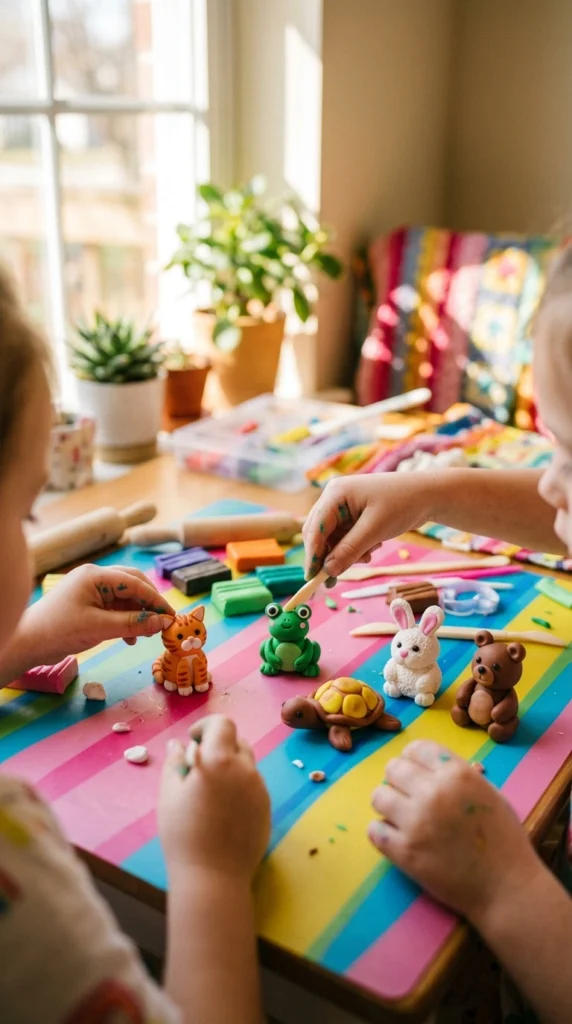
Animal figures give kids plenty of freedom because simple shapes can become almost any creature. Start with a basic body made from an oval, then add ears, legs, tails, or tiny noses. Kids can make realistic animals or invent creatures with unusual colors and funny features.
Try setting up an animal challenge. Ask them to make a favorite pet, a farm animal, a jungle creature, and then one animal that does not exist. This keeps the activity going long after the first figure is finished.
Keep the figures small and fairly sturdy so they are easier to handle. An adult should handle baking according to the clay manufacturer’s instructions. Once cooled, the animals can become shelf decorations, pretend-play characters, or parts of a miniature scene.
3. Polymer Clay Flower Garden
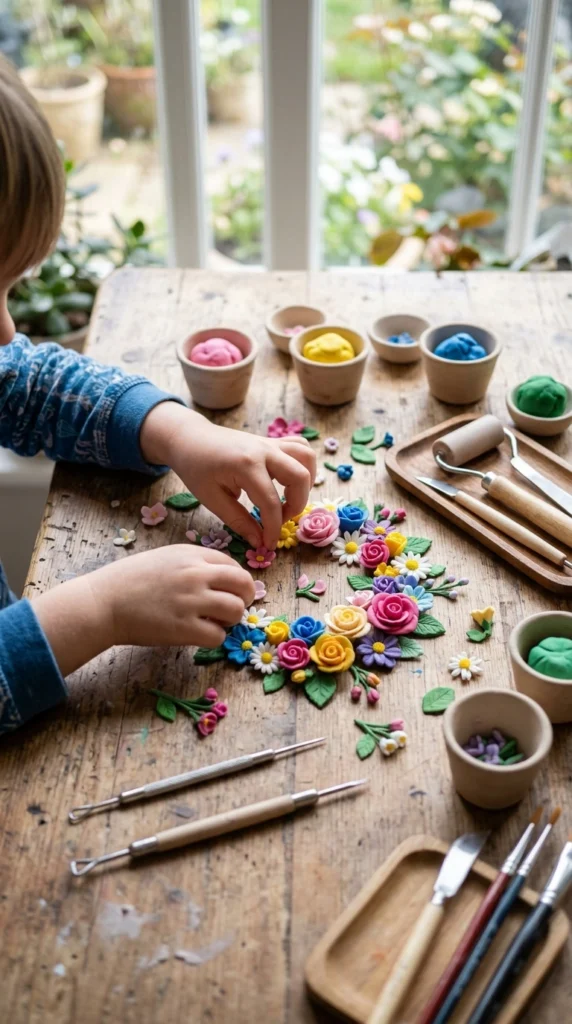
A clay flower garden lets kids make lots of tiny pieces without following one strict design. They can flatten small clay balls into petals, add round centers, and shape green leaves with their fingers. Daisies, tulips, roses, and imaginary flowers can all be made from simple pieces.
Give children several colors and let them create their own garden arrangement. Some flowers can have five petals while others have six or eight. Tiny leaves can fill spaces between the flowers and add another activity to the project.
The finished flowers can sit in a miniature clay pot or be used to decorate another project. Older kids may enjoy making an entire flower bed with different heights and colors. For younger children, focus on large, simple flowers that are easier to shape.
4. Tiny Fruit Collection
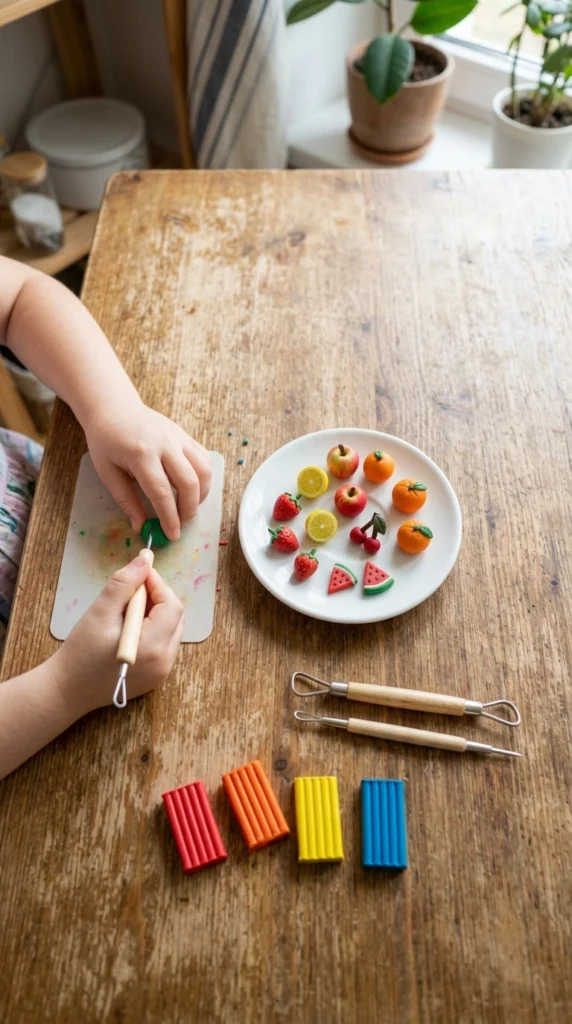
Miniature fruit is a great project for kids who enjoy tiny objects. Start with simple shapes such as round apples, oval lemons, small strawberries, and tiny cherries. Add leaves or simple surface marks to help each piece look different.
Make the activity into a pretend fruit market. Kids can create several fruits, place them in a small bowl, and invent a pretend shop using toy plates or baskets. They can also sort their clay fruit by color, size, or type.
Watermelon slices, oranges, peaches, and blueberries can expand the collection. Once the pieces are baked, they can become pretend-play food or decorations. Avoid making very tiny pieces for younger children, as small parts can be a choking hazard.
5. Polymer Clay Rainbow Magnets
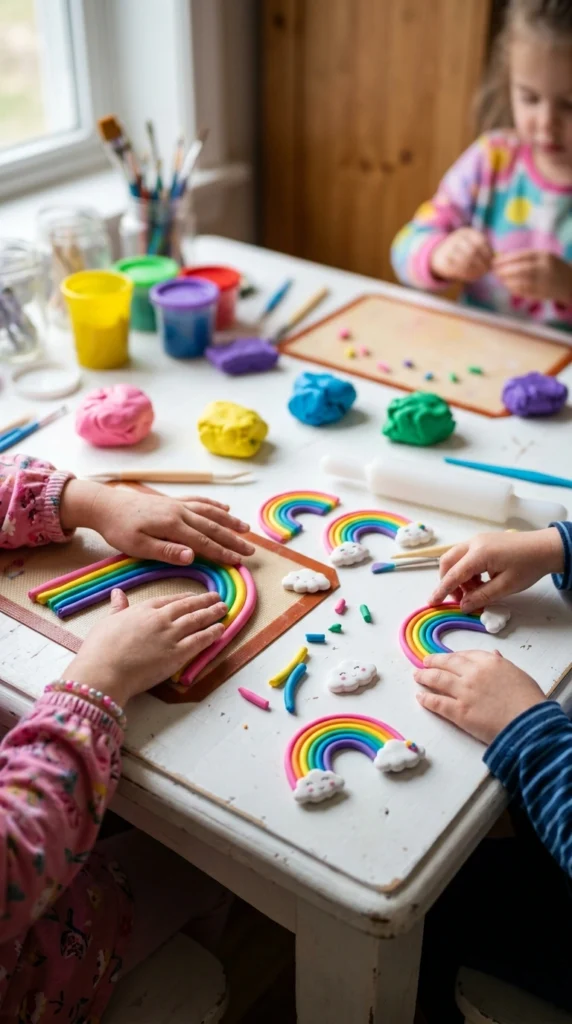
Rainbow magnets are colorful enough to keep kids interested while using simple shapes. Roll thin clay ropes in several colors and curve them into arches, then press the layers together gently. A small cloud on each side can complete the design.
Kids can make every rainbow different. One might have pastel colors while another uses bright shades. They can also make tiny rainbow pairs or larger pieces for the refrigerator.
After baking, an adult can attach suitable craft magnets to the back with appropriate adhesive. Keep the magnets away from very young children because loose magnets can be dangerous if swallowed. The finished pieces can decorate a magnetic board or refrigerator.
6. Cute Polymer Clay Mushrooms
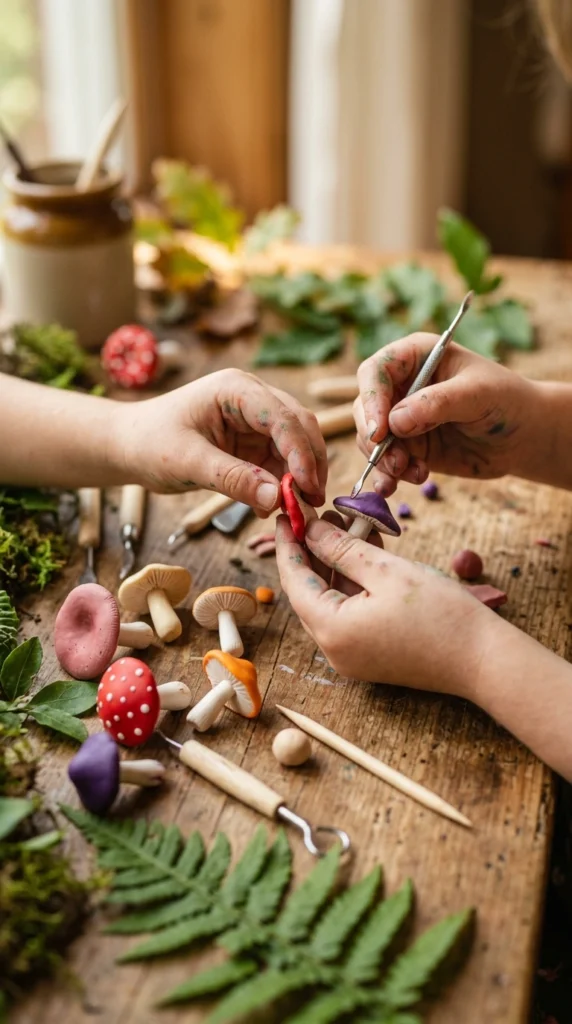
Mushrooms are made from two basic shapes: a rounded cap and a small stem. Kids can make the cap from a flattened ball and the stem from a short clay cylinder. Small dots can be added to the cap for a playful finish.
Let them experiment with unusual mushroom colors. Purple caps, blue stems, pink spots, and yellow details can turn a simple project into an imaginary forest collection. They can also create large mushrooms for pretend play and smaller ones for decoration.
Once several mushrooms are complete, arrange them with clay leaves, flowers, and stones to create a miniature woodland scene. A shallow tray works well as the base. Children can keep adding pieces to the scene over several craft sessions.
7. Polymer Clay Pencil Toppers
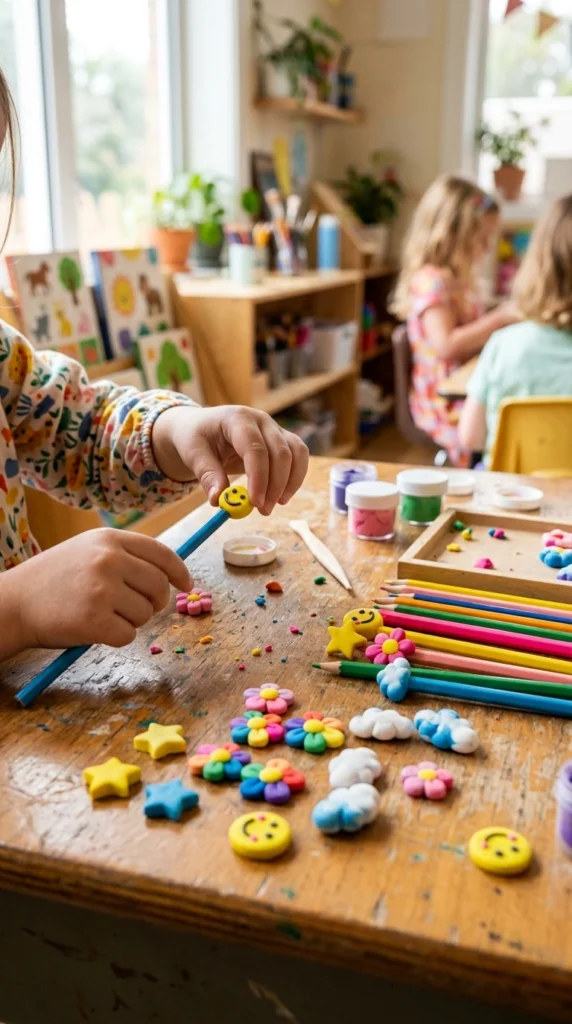
Pencil toppers turn a simple craft session into something kids can use afterward. Small stars, flowers, hearts, fruits, and animal faces can be shaped around the top of a pencil. Keep the clay decoration light so it does not make the pencil awkward to hold.
Make sure the clay does not cover the writing end or create a sharp edge. An adult should handle the baking stage and check the finished pieces before children use them.
Kids can create a whole pencil collection with different colors and characters. They can make one for school, one for drawing, and another for a friend. This also gives them a reason to practice making the same shape several times.
8. Mini Ice Cream Charms
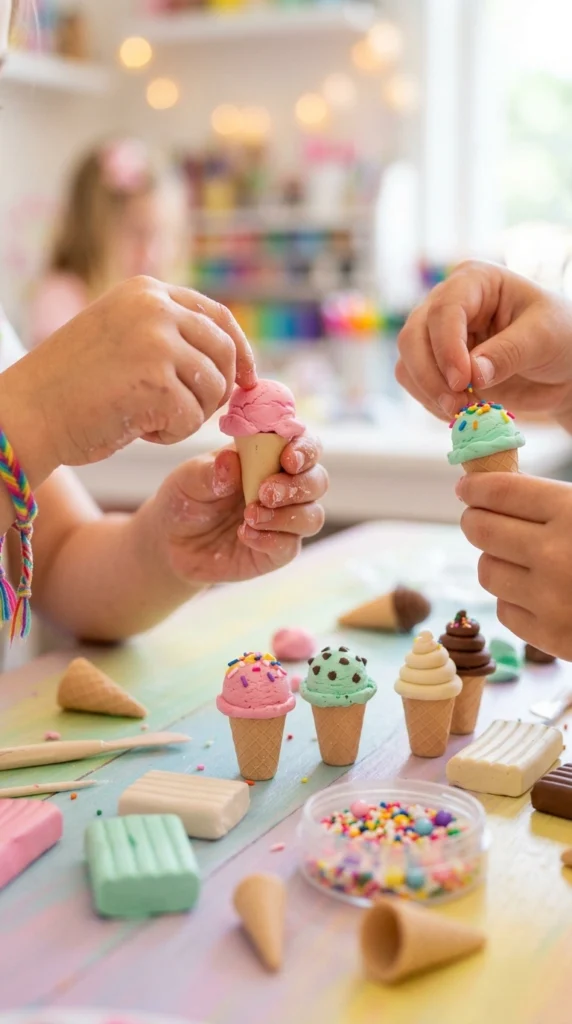
Ice cream cones are fun because kids can make different flavors from the same basic shapes. Create a small cone from tan clay and place a rounded scoop on top. Tiny clay sprinkles can add color without requiring complicated tools.
Let each child invent a flavor. Strawberry can be pink, mint can be green, and an imaginary galaxy flavor can use several colors. They can also stack two or three scoops for larger pretend-play pieces.
The finished ice creams can become part of a miniature dessert shop. Add tiny cupcakes, donuts, cookies, or fruit to the scene. Keep small pieces away from toddlers and younger children who may put craft objects in their mouths.
9. Polymer Clay Name Letters
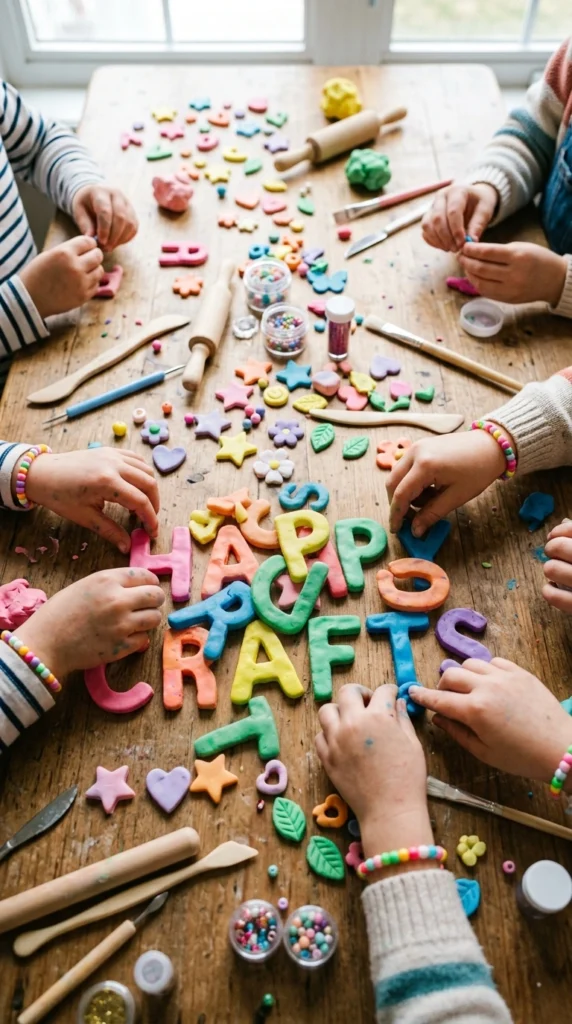
Making clay letters is a simple way to combine crafting with spelling practice. Kids can form the first letter of their name or make several letters to create a short word. Younger children can use chunky shapes, while older kids can try thinner letters.
Add tiny flowers, stars, hearts, or dots around the letters for decoration. Kids can also choose a color theme instead of making every letter the same. The activity becomes more engaging when they have control over the design.
The finished letters can become decorations for a bedroom shelf, craft board, or pencil box. Adults can help attach them to a suitable surface after baking. For very young children, keep the letters large enough to handle safely.
10. Tiny Polymer Clay Donuts

Donuts are easy for kids to recognize and make. Shape a small clay ring, then add a thin layer of icing in another color. Tiny clay sprinkles can turn every donut into a different creation.
Set up a pretend bakery activity where children make several flavors. They can create chocolate, strawberry, vanilla, blueberry, or completely imaginary donuts. A small plate or toy bakery counter can become part of the game after the pieces are baked.
The activity can also teach simple counting. Ask kids to make six donuts, three pink ones, or two with sprinkles. Older children can experiment with consistent sizing while younger children can simply enjoy making colorful shapes.
11. Polymer Clay Butterflies
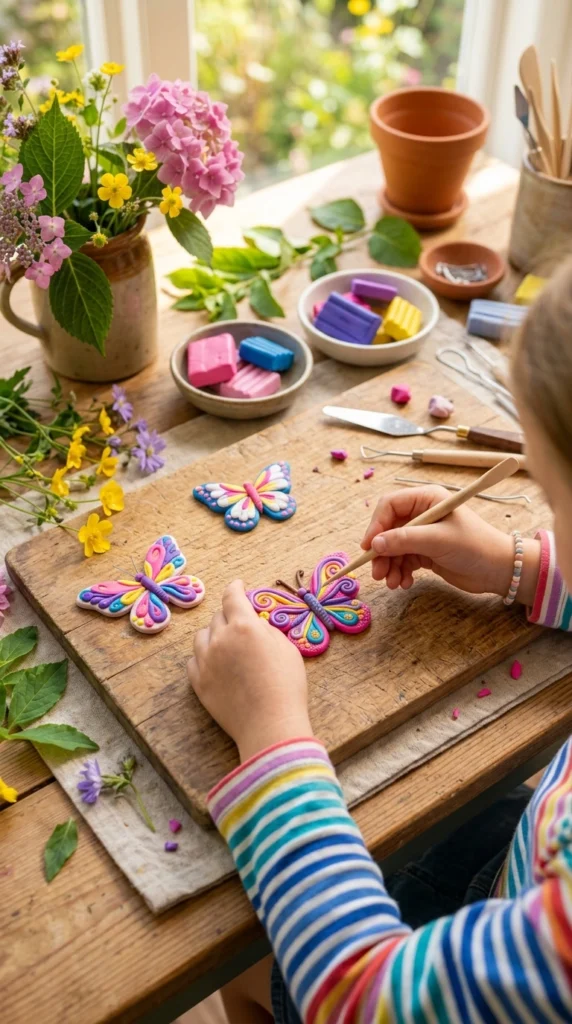
Butterflies are easy to customize because their wings can have almost any pattern. Start with a simple butterfly outline or make two pairs of rounded wings and join them with a small body. Add dots, stripes, or tiny clay circles to the wings.
Encourage kids to make a whole butterfly family. Each one can have a different color scheme and wing pattern. They can name their creations and arrange them around the clay flowers from another project.
The finished butterflies can decorate a small clay garden, picture frame, or craft board. Make the wings thick enough to reduce breakage during handling. Younger kids can work with larger butterflies that are easier to shape.
12. Mini Polymer Clay Bowls
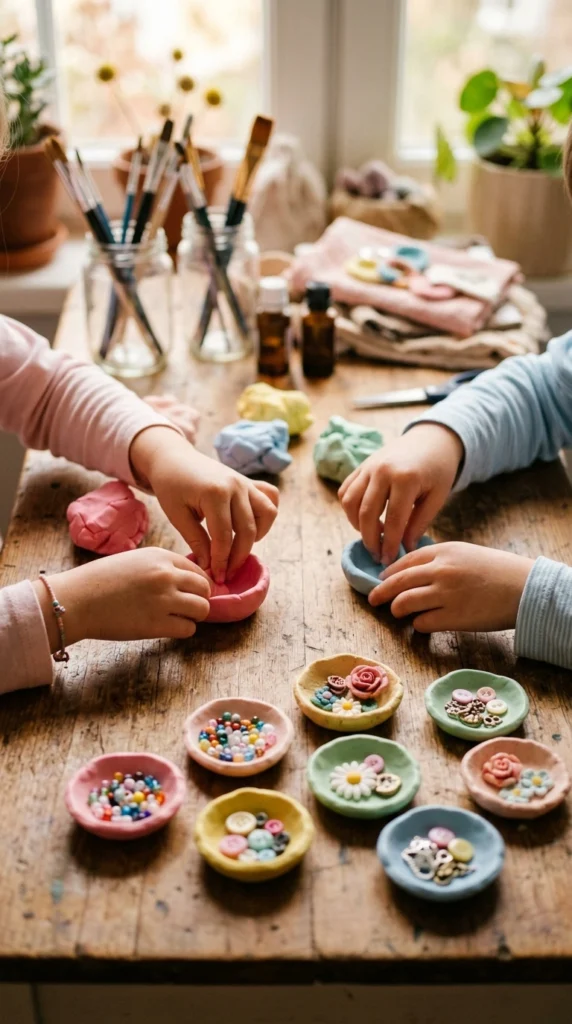
Small clay bowls are a good project for kids who enjoy working with their hands. Roll a ball of clay, press a thumb into the center, and gently widen the opening until a small bowl forms. Kids can create smooth edges or add simple scallops.
Decorate the bowls with dots, stripes, flowers, or tiny shapes. Keep the decorations pressed firmly into the clay before baking. A simple two-color pattern can be just as fun as a detailed design.
After baking, these little bowls can hold beads, paper clips, hair clips, or other small craft supplies. They are decorative rather than food-safe unless the specific clay and finish are approved for food contact. Let children choose what their bowl will hold before they start decorating it.
13. Polymer Clay Caterpillars
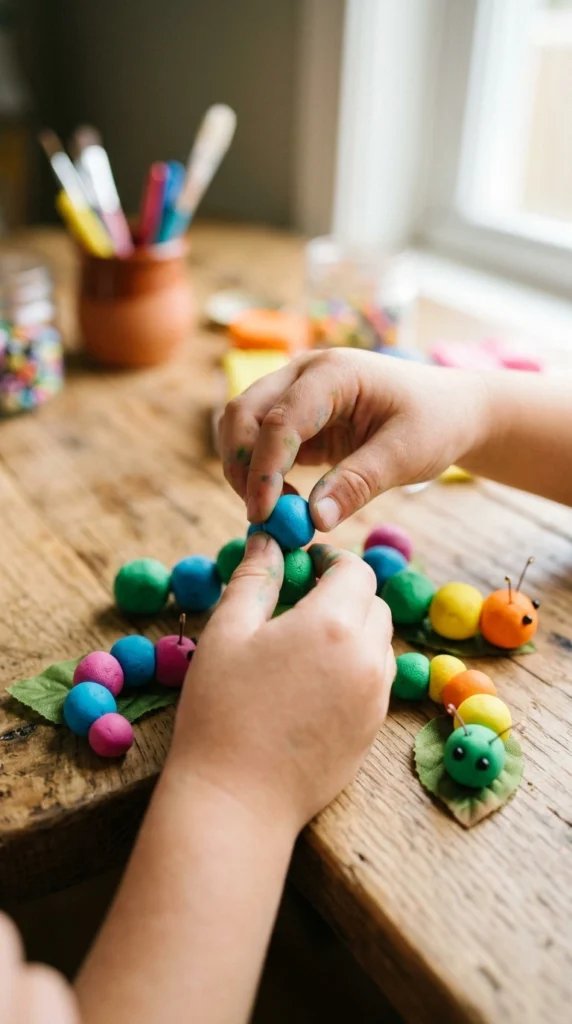
Caterpillars are perfect for kids because the body is made from several simple round pieces. Roll small balls and place them in a row, then add a larger head at the front. Tiny eyes and antennae can finish the character.
Try making caterpillars in unusual color combinations. One can be rainbow-colored while another uses only shades of green. Kids can also make a matching clay leaf for each caterpillar.
Turn the finished pieces into a miniature garden story. Add flowers, mushrooms, butterflies, and ladybugs from other clay projects. This gives children something to play with after the craft session rather than simply putting the finished pieces away.
14. Tiny Polymer Clay Ladybugs
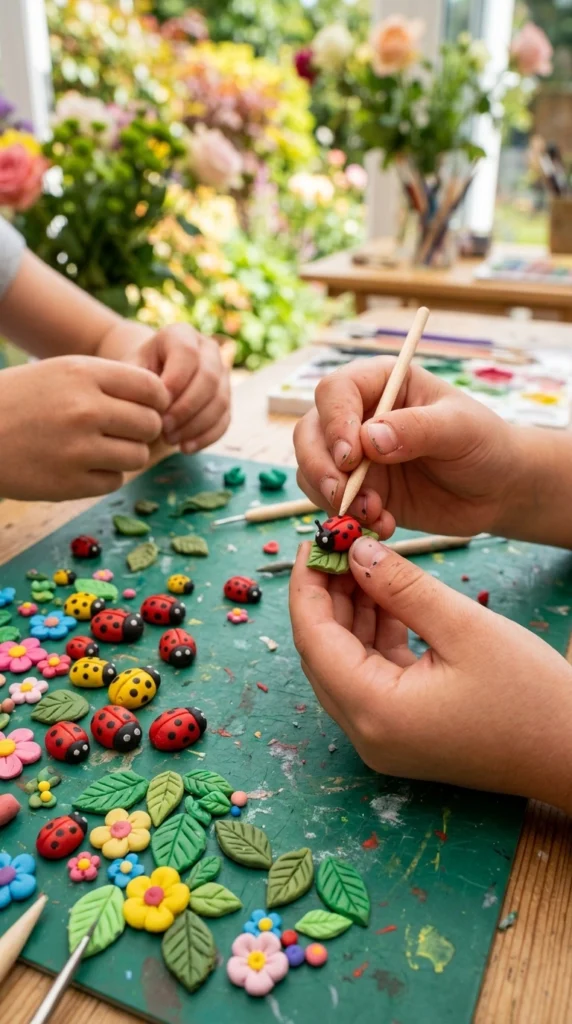
Ladybugs start with one simple oval body. Flatten a small red clay ball, add a black head, and place tiny black dots on the wings. Kids can choose how many dots each ladybug gets.
Make several ladybugs in different sizes and colors. Red and black can create a classic look, while pink, yellow, orange, or blue can turn the project into an imaginary insect collection.
Combine the ladybugs with clay flowers and leaves to make a tiny garden. Older kids can create a larger scene with several insects, while younger children can focus on making one large ladybug. The simple shapes make this activity easy to repeat.
15. Polymer Clay Fruit Pizza
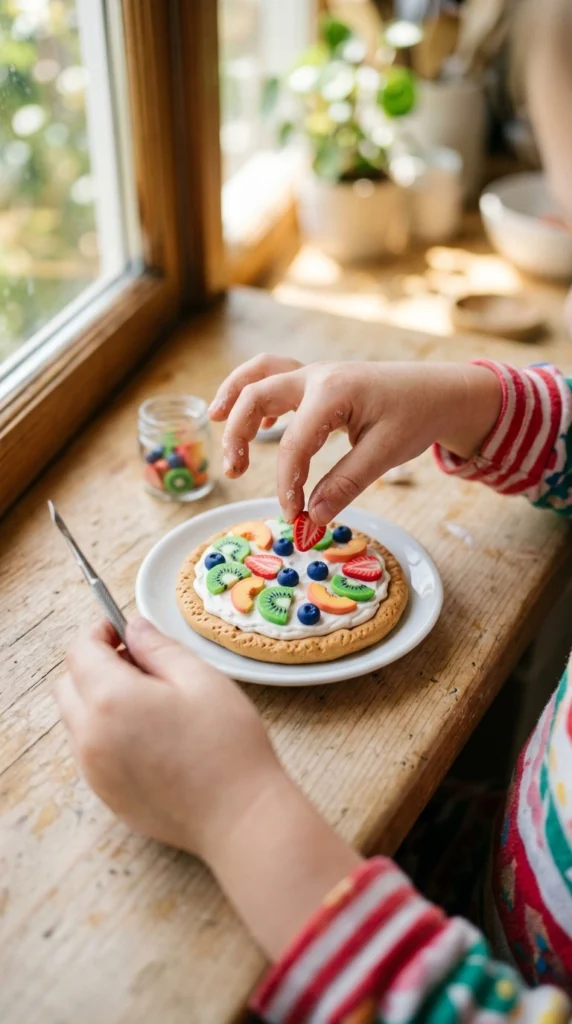
Fruit pizza is a fun pretend-food project because kids can decorate one base in many ways. Make a flat round crust from tan clay, add a cream-colored topping, then place tiny fruit pieces on top.
Children can choose their own toppings and create different patterns. One pizza might have strawberries around the edge, while another uses blueberries and tiny yellow fruit pieces. This makes the project feel more like decorating than following a fixed recipe.
After baking, the pieces can join a pretend bakery or play kitchen collection. Make several mini pizzas for a pretend party. Keep the finished pieces clearly separated from real food and store them in a labeled craft container.
16. Cute Polymer Clay Monsters
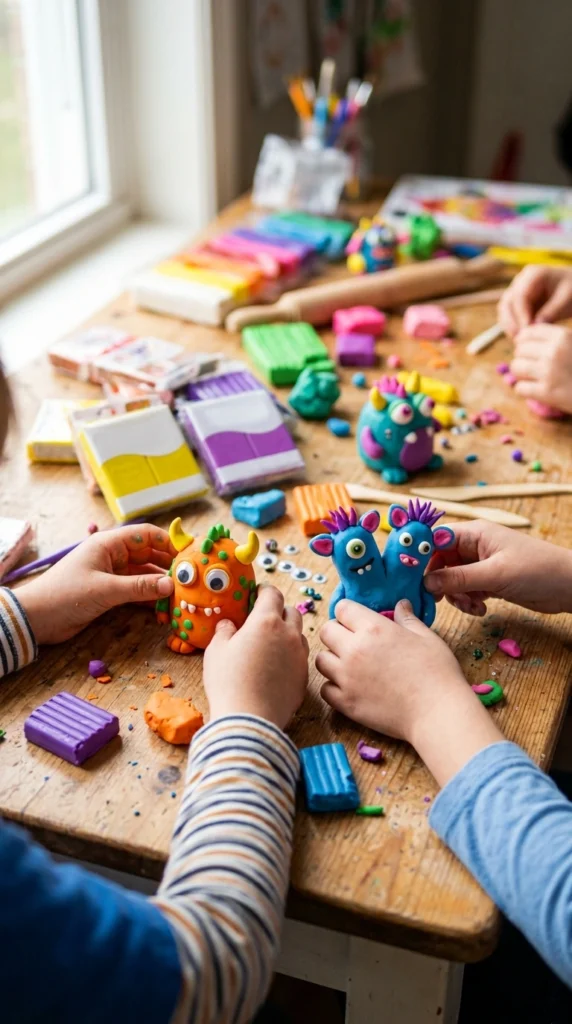
Monster figures give kids almost complete creative freedom. Start with a simple body and let them decide whether their monster has one eye, three eyes, huge ears, tiny feet, horns, wings, or a funny tail.
This is a great activity for kids who enjoy making up stories. After creating the monsters, ask them to invent names, homes, favorite foods, and silly abilities. The clay project can naturally turn into pretend play.
Use sturdy shapes for small details so they remain attached after baking. An adult should handle the oven and allow the figures to cool fully. Once ready, the monsters can become characters in a homemade miniature world.
17. Polymer Clay Pencil Pots
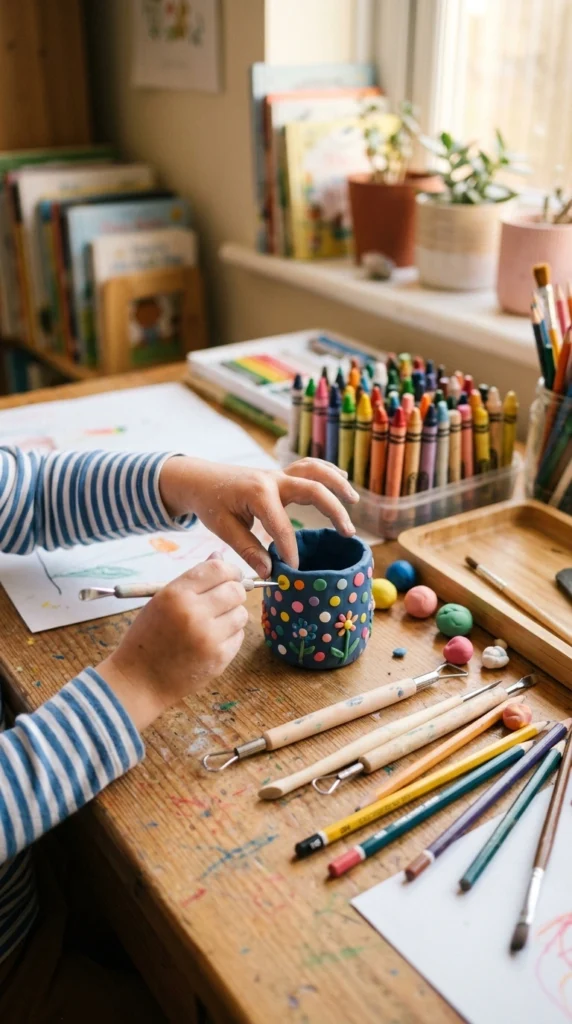
A small pencil pot gives kids a larger surface to decorate. Use a suitable container or clay construction method according to the clay manufacturer’s instructions, then let children cover the outside with simple dots, stripes, flowers, or shapes.
Instead of asking kids to make a perfect pattern, let them create a random collection of their favorite colors. They can press small clay shapes onto the surface or create raised decorations before baking when the chosen clay method allows it.
Once finished and cooled, the pot can hold pencils, crayons, paintbrushes, or craft tools. Check that the final piece is stable before putting supplies inside. This project is especially useful for kids who enjoy crafts that have a practical purpose.
18. Tiny Polymer Clay Rainbows
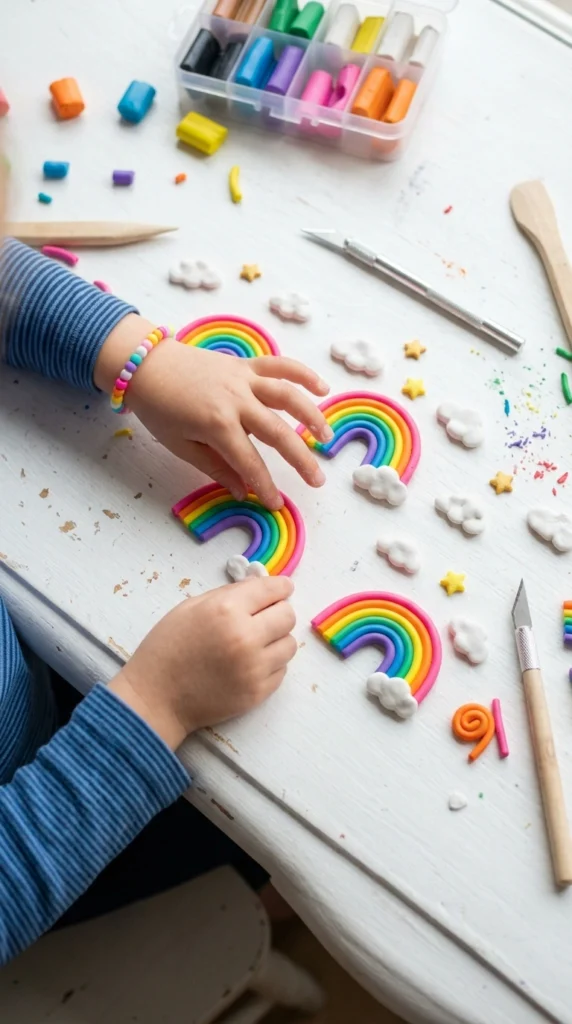
Tiny rainbows are simple enough for kids to repeat several times. Make thin clay ropes in different colors, curve them into arches, and press the layers together gently. A tiny cloud can be added at each end.
Older children may enjoy making color patterns, while younger children can work with three or four colors instead of a full rainbow. Let them create large and small versions so the collection has different sizes.
The finished rainbows can decorate a craft board, miniature room, or clay garden. They can also become part of a pretend weather scene with clouds, suns, and raindrops. Several completed pieces can keep a child occupied while they experiment with different color arrangements.
19. Polymer Clay Friendship Bracelets
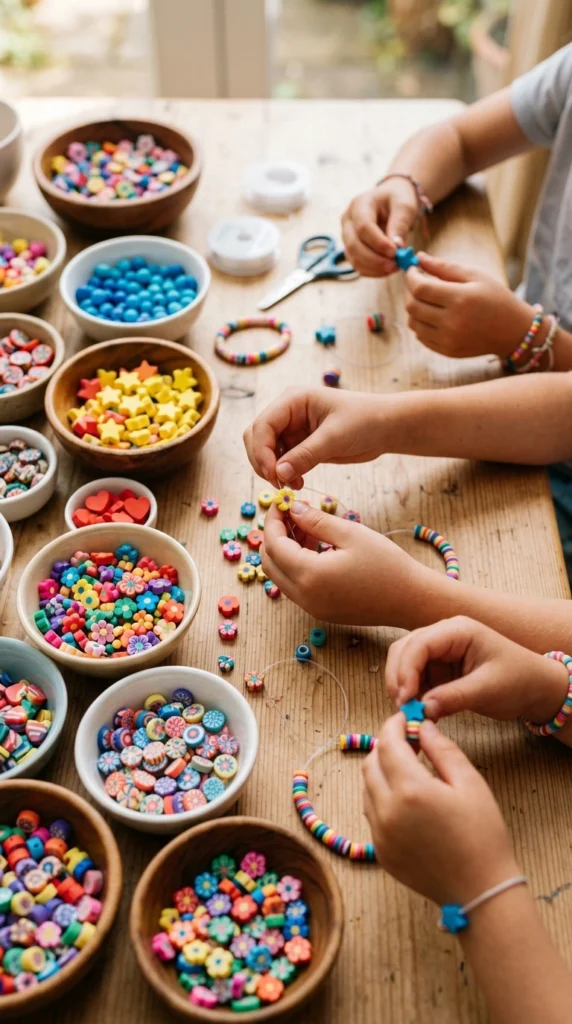
After kids have made clay beads, turn them into friendship bracelets. They can choose a color theme, alternate shapes, or create a completely random pattern. Large beads and simple shapes are easier for younger children to handle.
Make matching bracelets for siblings, friends, or parents. Each bracelet can use the same colors while having a different arrangement. This adds a social element to the activity and gives children something meaningful to take home.
Adults can help with measuring the cord, threading beads, and tying secure knots. Check the finished bracelet for loose pieces before wearing it. Store leftover beads in small containers for another bracelet-making session.
20. Polymer Clay Miniature Garden Scene
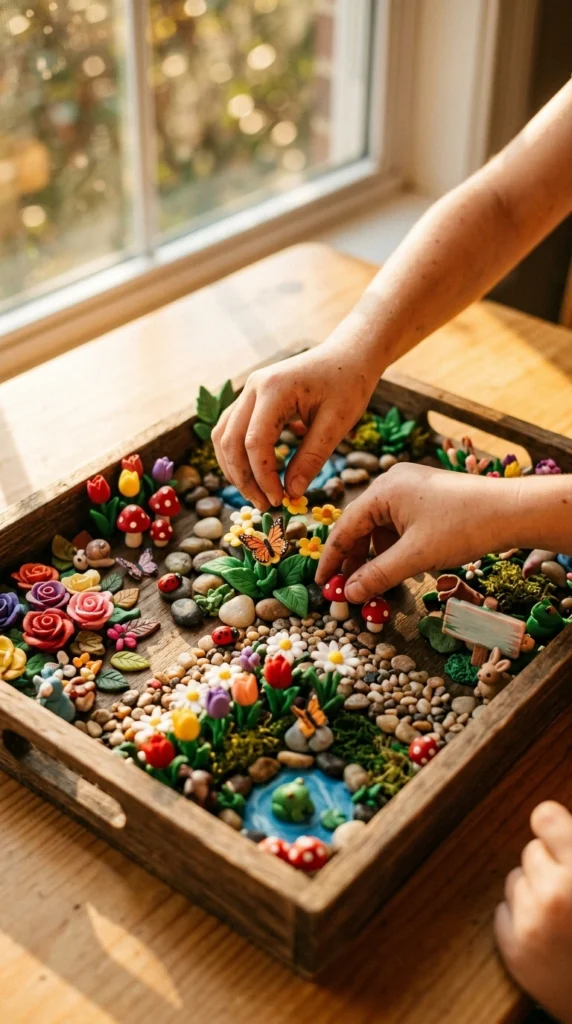
A miniature garden can combine several of the projects from this list into one long craft session. Kids can make flowers, mushrooms, leaves, insects, animals, and tiny garden decorations, then arrange everything inside a shallow tray.
There is no single right way to build the scene. One child might create a wild garden filled with bright flowers, while another makes a quiet woodland with mushrooms and animals. Encourage them to move pieces around until they like the arrangement.
This project can last for several hours because the garden can keep growing. Add a tiny pond, fence, bench, stones, or garden path using suitable craft materials. Make and bake pieces in stages so children have another small project waiting while earlier pieces cool.
Final Thoughts
Polymer clay can turn an ordinary afternoon into hours of hands-on creative play. From tiny animals and fruit to bracelets, flowers, monsters, and miniature gardens, kids can make simple shapes while practicing colors, patterns, counting, and imaginative storytelling. Choose one project with your child, gather a few bright clay colors, and set up a small craft station where they can work safely. Start with the mini animal project today and let the next creation grow from their imagination.

Lily Summers is a digital artist and creative storyteller who loves bringing colorful characters to life. With a passion for cartoons, fan art, and playful sketches, she inspires others to explore their imagination through art. When she’s not sketching, you’ll find her dreaming up new ideas for CraftedWizard.com to spark creativity in every artist. 🌈✨