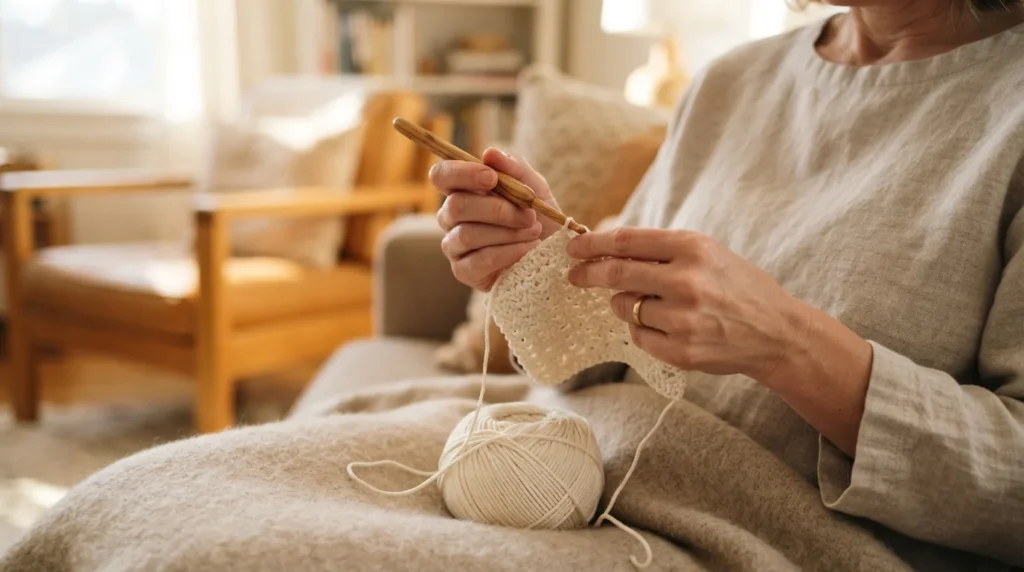
You sit down to crochet for what feels like fifteen minutes, and somewhere around row six your thumb starts to ache, your fingers stiffen, and you set the whole thing down. It’s the most common reason beginners quit — not the stitches, not the pattern, but the hand pain that shows up before the project does.
Here’s the part nobody mentions in tutorials: the pain almost never comes from crocheting. It comes from gripping. Most beginners hold the hook like it’s trying to escape, and that white-knuckle squeeze is what turns a relaxing hobby into forty-five minutes of hand cramps.
Why Your Hand Actually Hurts
Three habits cause nearly all beginner hand pain, and all three are fixable in an afternoon.
- Over-gripping the hook. Tension in your shoulders travels straight down to your fingers. If your knuckles go pale, you’re squeezing far harder than the job requires.
- Strangling the yarn. Wrapping yarn tightly around your pinky cuts circulation and forces your hook hand to yank every stitch through.
- Working stitches too tight. If you have to force the hook into a loop, you’ll compensate with your grip on every single stitch.
Notice that only one of those involves the hook itself. Loosen the other two and your hand relaxes on its own.
The Two Grips Worth Learning
There’s no single correct way to hold a crochet hook. There are two standard grips, and the right one is whichever your hand stops complaining about.
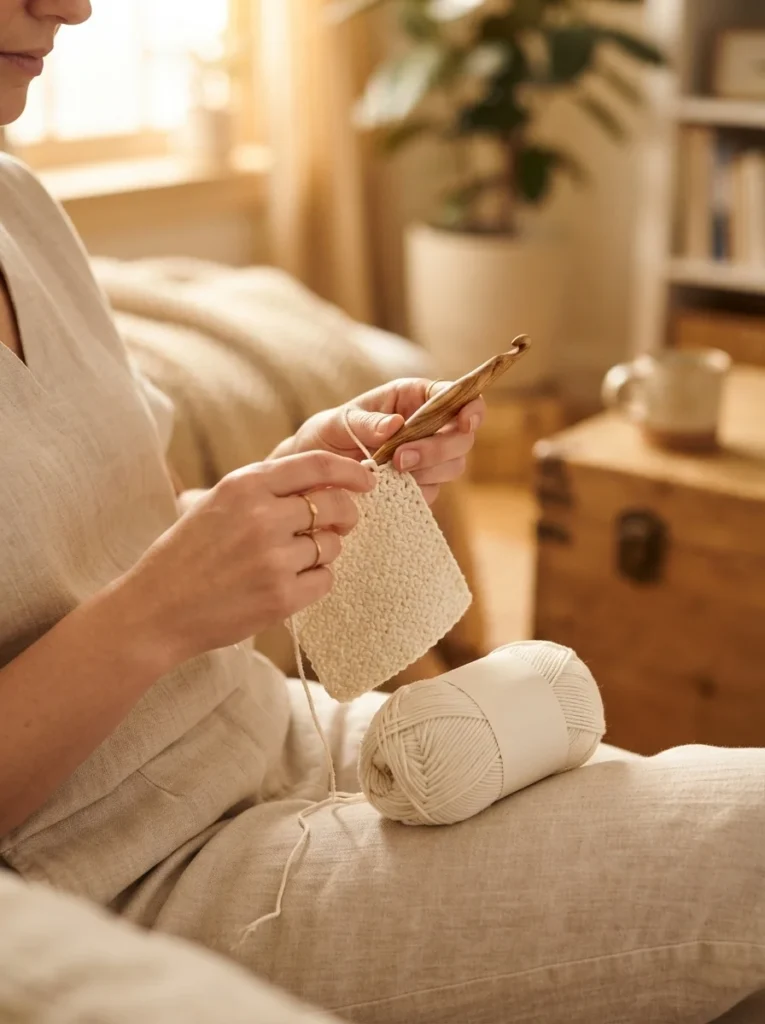
The knife grip is exactly what it sounds like — you hold the hook overhand, the way you’d hold a knife cutting steak. The shaft rests under your palm, your thumb and index finger sit on the flat thumb rest, and the motion comes from your wrist and forearm rather than your fingers. Larger muscles do the work, which is why most people with joint pain land here.
The pencil grip holds the hook between the thumb and index finger with the shaft resting in the web of your hand, like writing. It gives finer control for delicate stitches and thin yarn, but it does load more of the work onto small finger muscles.
Try both for ten minutes each. Your hand will tell you within a row or two.
Fix Your Yarn Hand Too
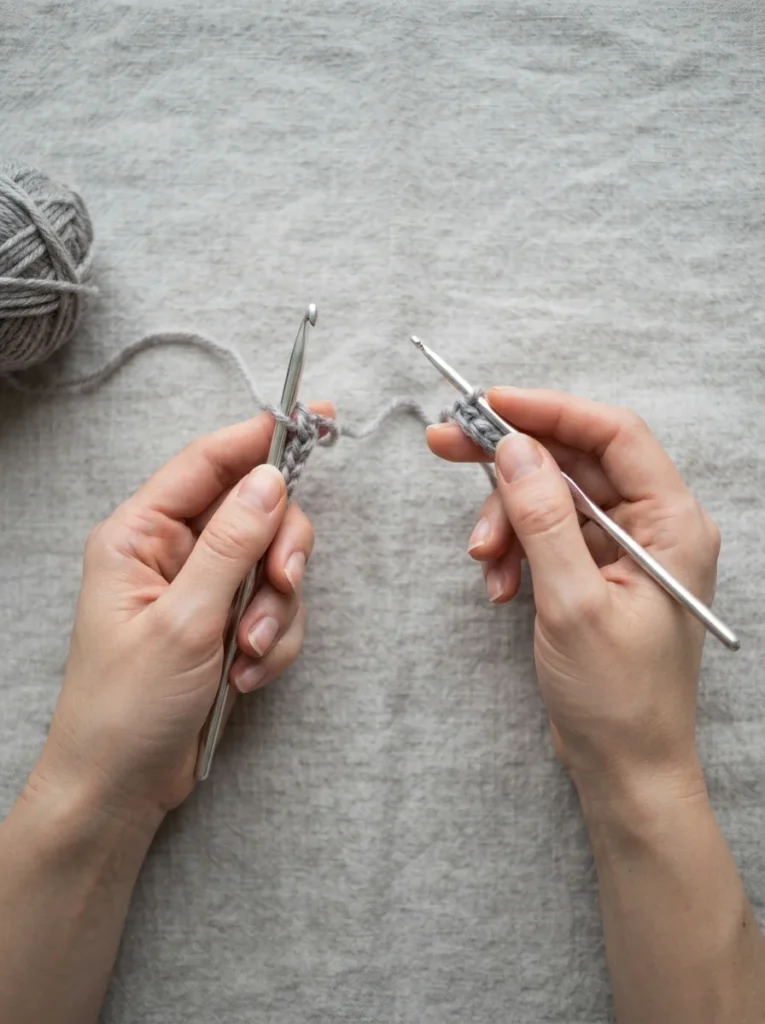
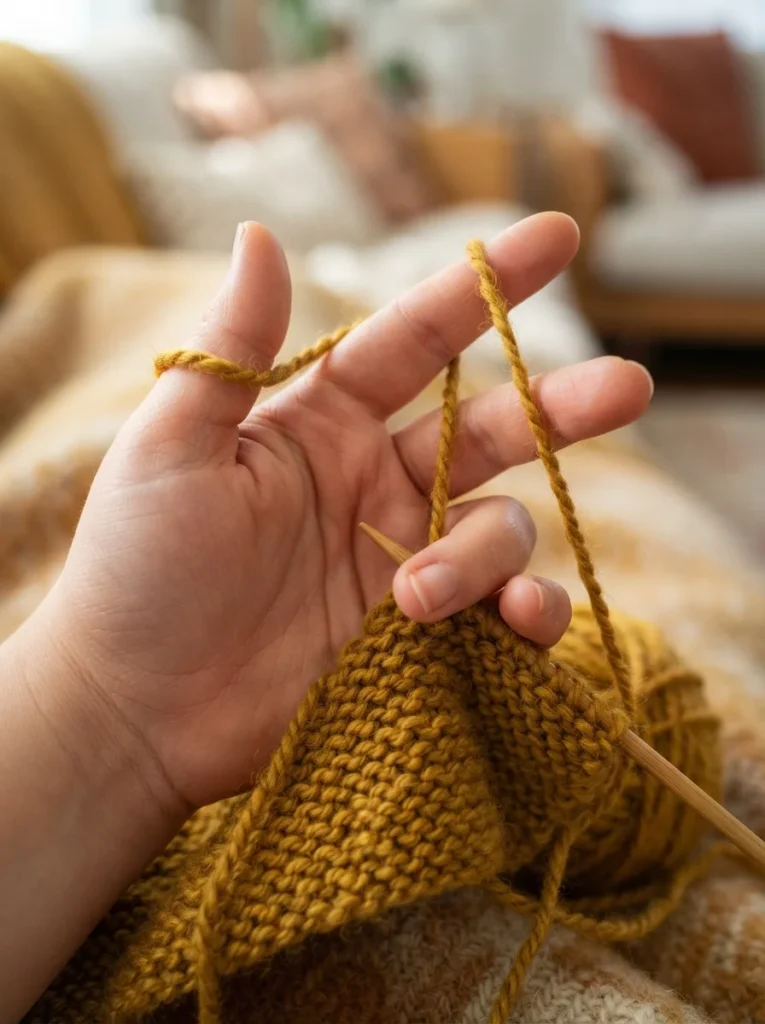
Your non-hook hand matters just as much, and it’s usually the one doing the damage.
Instead of winding yarn tightly around your pinky, let it run loosely over the back of your index finger and rest between your other fingers. You want just enough friction to feel the yarn, not enough to leave a red mark.
Your index finger should be able to lift and lower to adjust tension without your whole hand clenching. If your pinky goes numb, that’s the problem, not your hook.
Set Yourself Up So You Grip Less
Small equipment changes remove the reason to squeeze in the first place.
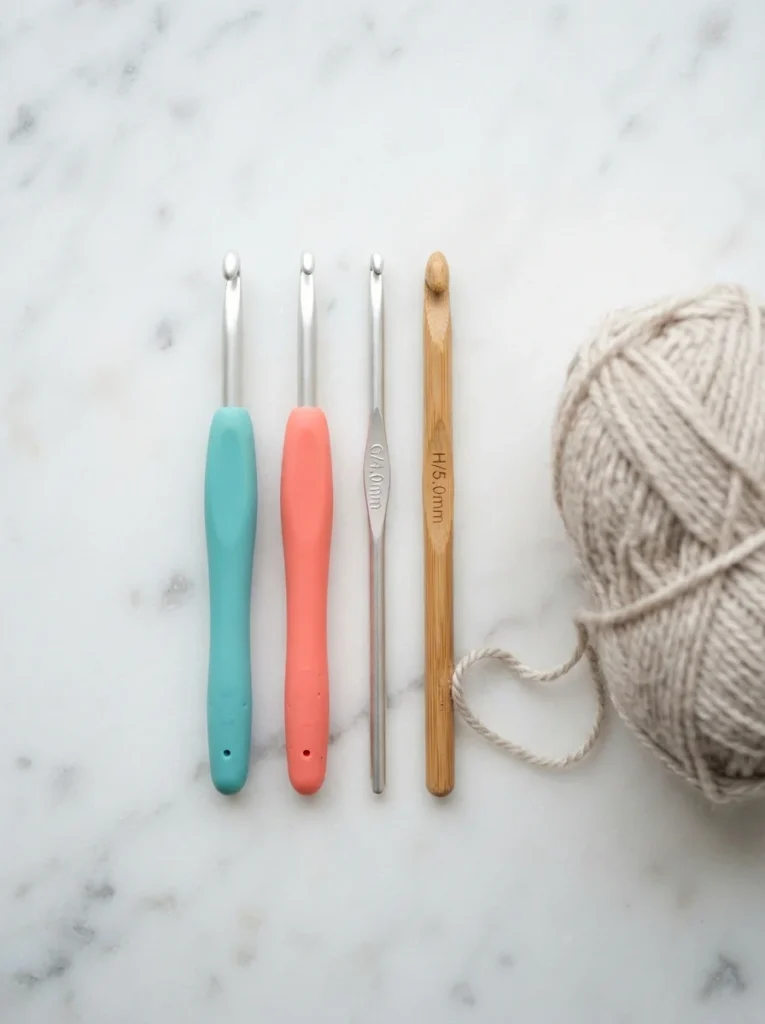
- Use a larger hook than the label suggests. Going up half a size loosens your stitches and stops you forcing the hook through tight loops.
- Choose a smooth aluminum hook for practice. Wooden and bamboo hooks catch on yarn, and every catch makes you tighten up.
- Try a padded handle. Ergonomic hooks with thick rubber grips cost a few dollars more and spread pressure across your palm. A foam pencil grip slid onto a regular hook does nearly the same thing.
- Pick forgiving yarn. A smooth worsted-weight acrylic in a light color glides easily and lets you see your stitches without squinting.
Build Better Habits Before They Become Injuries
Grip technique keeps your hand comfortable for an hour. Habits keep it comfortable for years.
Set a timer for twenty minutes and stretch when it goes off. Roll your wrists in slow circles, spread your fingers wide, then press your palms together in front of your chest and lower them until you feel a gentle pull through the forearms.
Sit with your elbows supported and your work at roughly chest height. Hunching over a project in your lap tightens your shoulders, and tight shoulders always show up as sore hands eventually.
When to Put the Hook Down
Aching muscles after a long session are normal and fade with rest. Numbness, tingling, sharp pain, or discomfort that lingers into the next day is different — that’s worth mentioning to a doctor or hand therapist rather than working through. Crochet will still be there next week.
Save This for Your First Project
Comfortable crochet comes down to three things: a relaxed grip, loose yarn tension, and regular breaks. Practice the knife grip for a few rows tonight, then switch to the pencil grip and see which one your hand prefers.
Pin this guide so it’s waiting the next time your hands start aching mid-row — and start your first real project with a chunky yarn and a big hook, where mistakes are easy to spot and easy to pull out.

Lily Summers is a digital artist and creative storyteller who loves bringing colorful characters to life. With a passion for cartoons, fan art, and playful sketches, she inspires others to explore their imagination through art. When she’s not sketching, you’ll find her dreaming up new ideas for CraftedWizard.com to spark creativity in every artist. 🌈✨