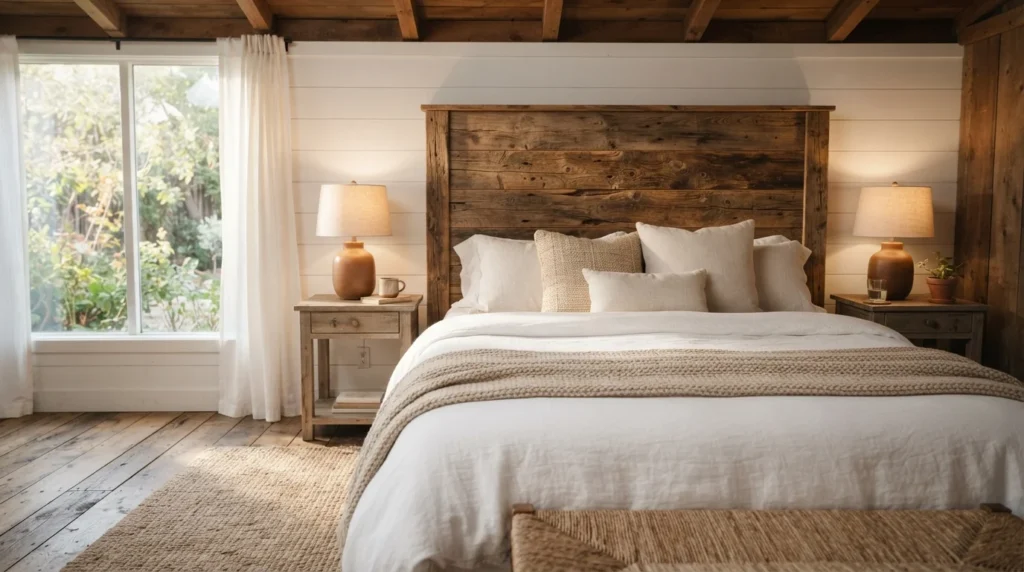
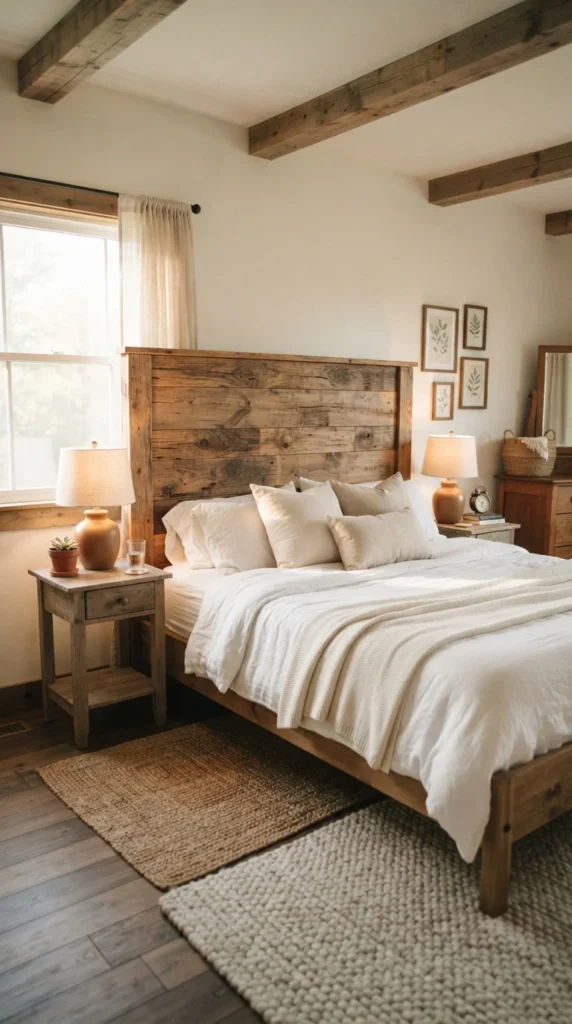
A rustic wood headboard can change the entire feel of your bedroom without requiring a full renovation. Natural grain, weathered finishes, reclaimed boards, and warm wood tones bring character to both modern homes and traditional spaces. You can build a simple headboard with basic lumber, repurpose old timber, or create a polished statement piece with carefully arranged wooden panels. These 24 rustic wood headboard ideas offer options for different bedroom sizes, decorating styles, and DIY skill levels, so you can find a design that suits your home.
1. Reclaimed Barn Wood Headboard
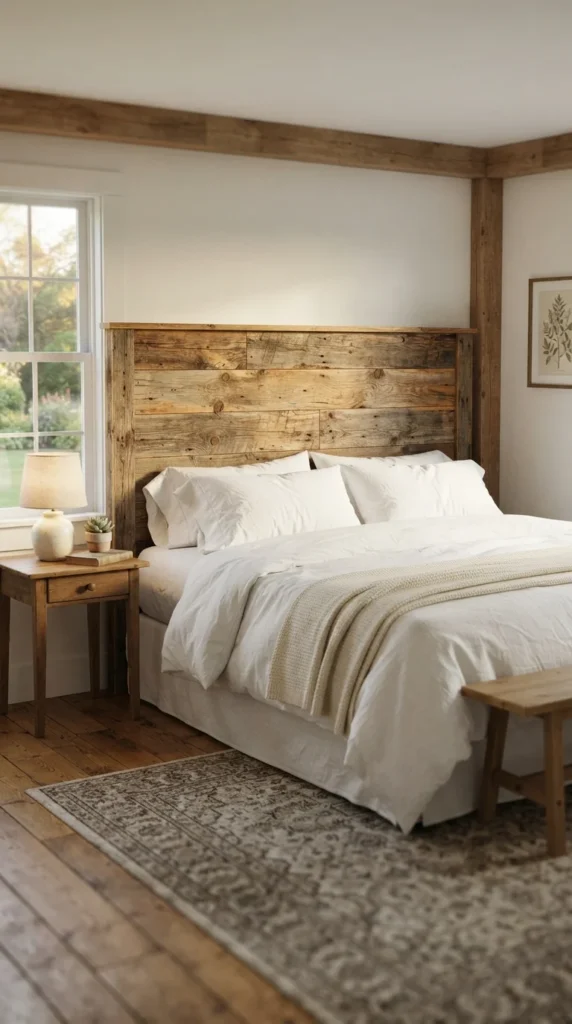
Reclaimed barn wood gives a bedroom the character of an old farmhouse. Each plank has its own grain, marks, and color variations, creating a headboard that feels authentic rather than mass-produced. Arrange the boards horizontally for a traditional appearance, or mix different widths for a more relaxed finish.
Before installation, check every piece for loose nails, splinters, and signs of insects. Clean the wood thoroughly and secure it to a sturdy backing or wall-mounted frame. A clear matte finish preserves the weathered appearance without making the surface look overly glossy.
Pair the headboard with white bedding, woven baskets, and simple iron lighting. The natural imperfections become the main decorative feature, so you can keep the rest of the room relatively uncluttered.
2. Horizontal Wood Plank Headboard
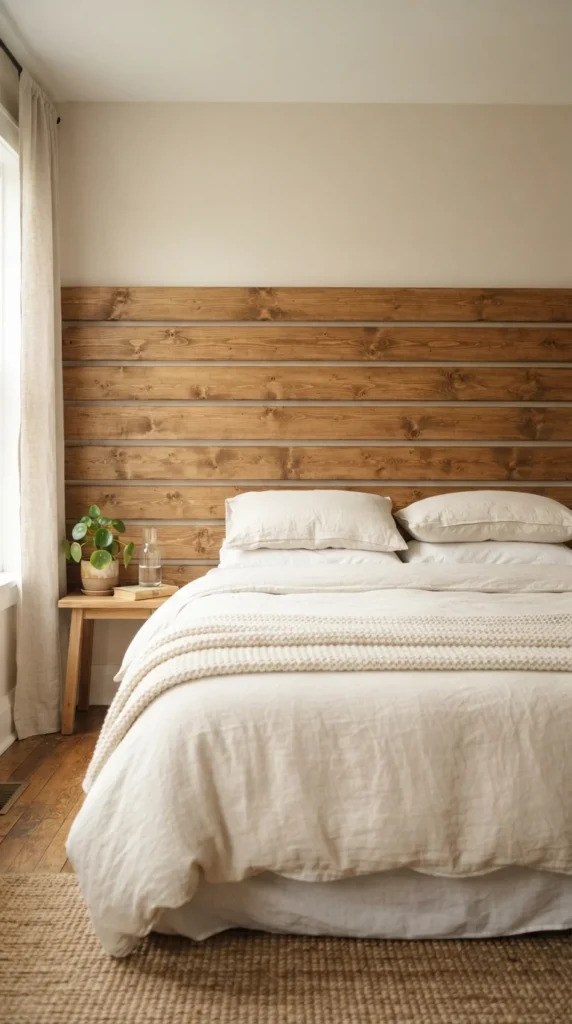
Horizontal planks are a practical choice when you want a rustic look with clean lines. The boards stretch across the wall, making the bed feel grounded and giving the room a wider appearance. Pine, cedar, and reclaimed timber all work well for this design.
Choose boards with similar thicknesses, then decide whether you prefer a consistent finish or a mix of light and dark shades. Small gaps between planks create definition, while tightly fitted boards offer a smoother appearance. Sand the edges before attaching the wood to a frame.
This design works particularly well in narrow bedrooms. Add cream bedding, charcoal cushions, and a simple pendant light to balance the natural texture without crowding the space.
3. Distressed Whitewashed Wood Headboard
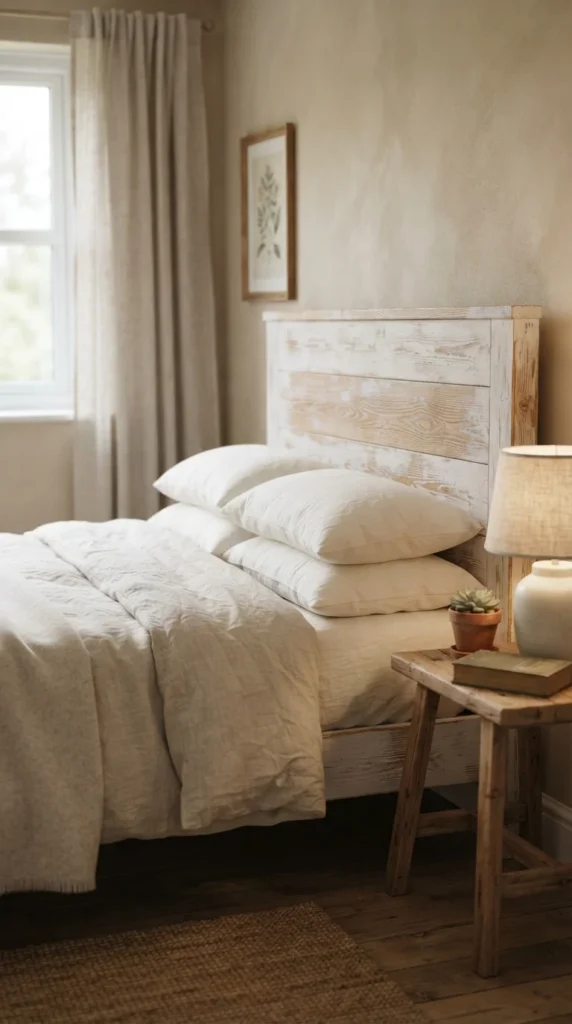
A whitewashed headboard combines rustic texture with a lighter, airier appearance. The thin layer of white paint allows the natural grain to remain visible, giving the wood a softly aged finish. It is especially attractive in cottage bedrooms, coastal homes, and rooms with neutral decor.
Start with clean, sanded timber and apply a thin coat of white paint diluted according to the product directions. Wipe selected areas with a cloth to reveal some of the wood beneath. Once dry, protect the surface with a compatible matte clear coat.
Use beige bedding, woven lampshades, and soft cotton curtains to complement the pale finish. This style is a good option if you enjoy rustic decor but want to avoid dark furniture making the bedroom feel smaller.
4. Reclaimed Wood Pallet Headboard
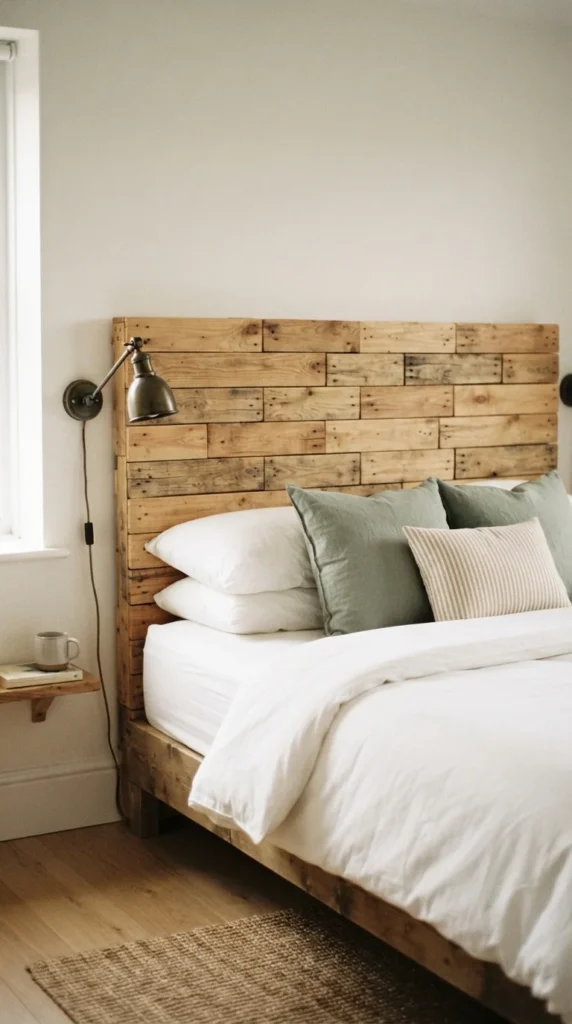
A pallet wood headboard can be an affordable weekend project when suitable materials are available. The individual boards create an informal rustic pattern, and their varied tones add visual interest without requiring decorative carving.
Use only pallets with a known, suitable history and check their treatment markings where applicable. Avoid wood with chemical spills, strong odors, mold, or unknown contamination. Remove nails, sand rough edges, and attach the finished boards securely to a stable backing.
Keep the design simple with a clear protective finish or a light wood stain. Pair it with plain bedding and a small bedside shelf so the reclaimed timber remains the focus. If the pallets are damaged or difficult to clean, ordinary new lumber can achieve a similar appearance.
5. Live-Edge Wood Slab Headboard
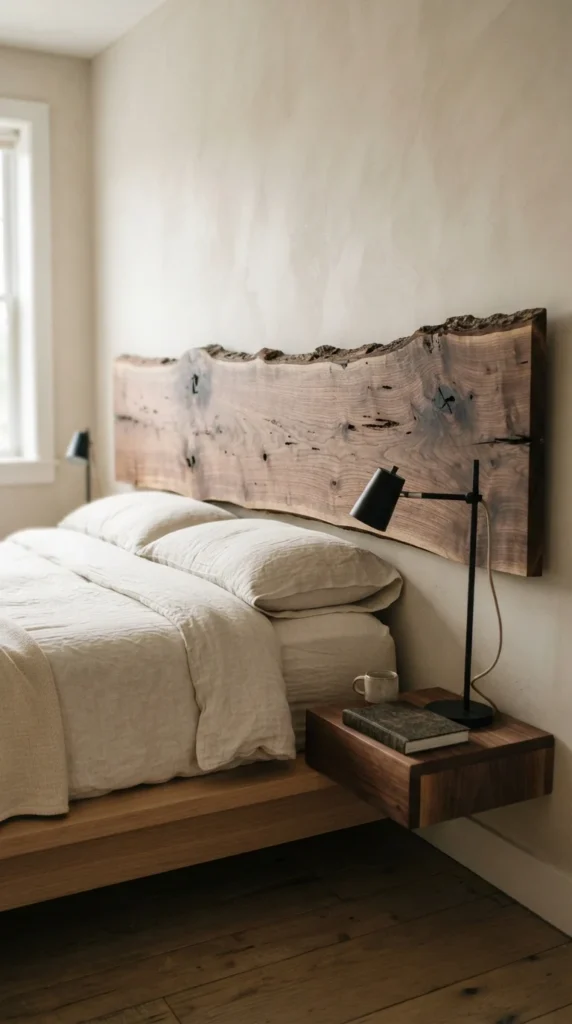
A live-edge slab turns the headboard into a natural work of art. Instead of straight, uniform borders, the wood retains some of its original outer shape. Walnut, oak, and maple can all create striking results, depending on their grain and color.
Choose a slab that has been properly dried and is stable enough for indoor use. Check for cracks, loose bark, and sharp edges, and have a heavy slab mounted with appropriate hardware. Because natural wood pieces can be heavy, wall anchors and mounting points should suit the wall structure and the slab’s weight.
Let the wood stand out against plain bedding and an understated wall color. A single slab usually makes a stronger statement than several competing rustic accessories.
6. Rustic Wood Headboard With Built-In Nightstands
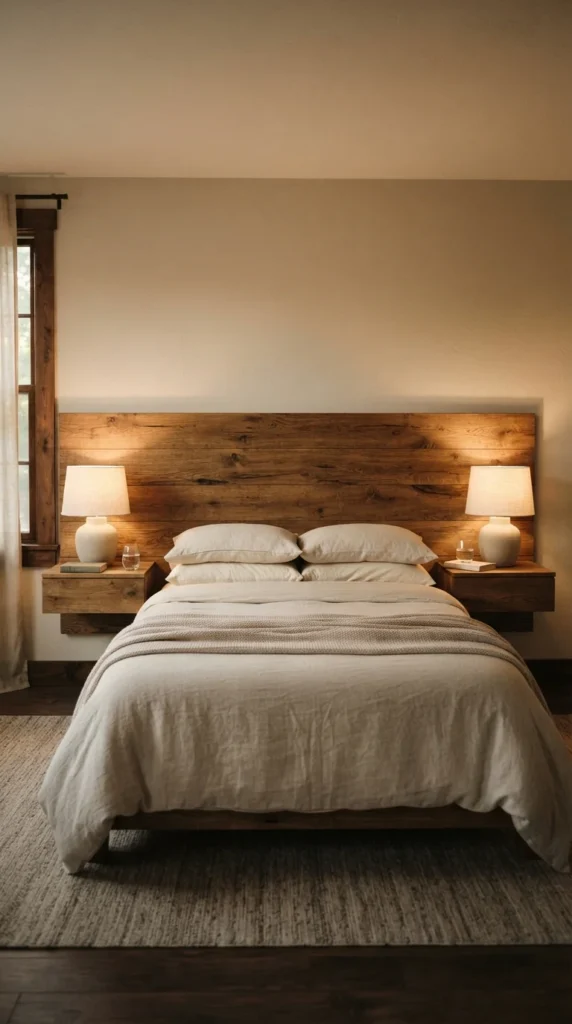
Combining a headboard with built-in nightstands creates a coordinated bedroom arrangement. The wood runs behind the bed and continues into small side shelves or box-style tables, creating a unified appearance without requiring matching furniture pieces.
Measure the bed, mattress height, and available wall width before planning the layout. Keep shelves at a comfortable reach from the pillows, and make sure the mounting system can handle the weight of lamps, books, and other everyday items. A simple plywood carcass faced with solid wood boards can make construction easier.
This design suits rooms where separate nightstands take up too much floor space. Finish the wood in a medium oak or walnut tone, then use compact lamps and minimal accessories to keep the arrangement practical.
7. Vertical Wood Slat Headboard
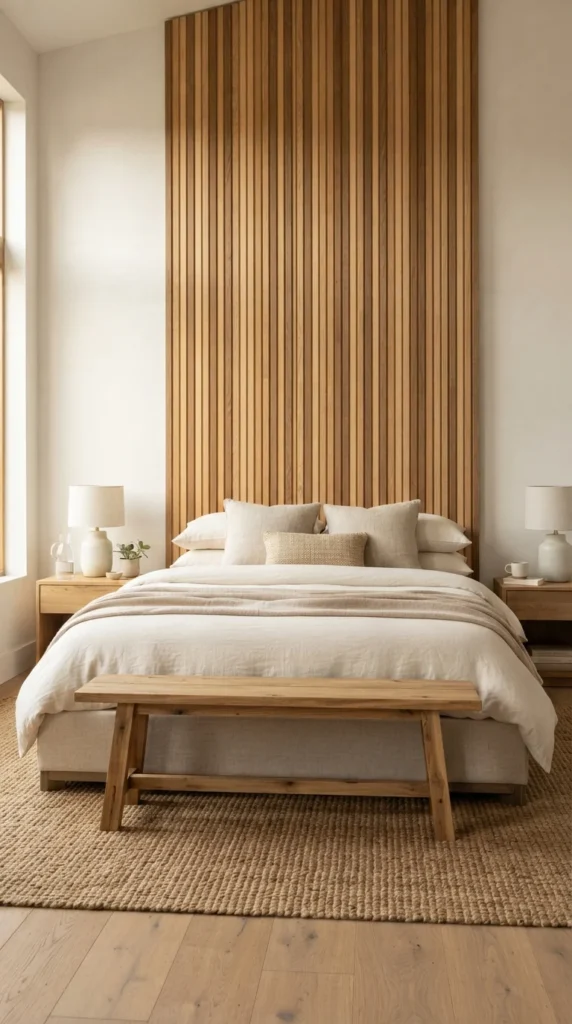
Vertical slats offer a more structured take on rustic bedroom decor. The repeated lines draw the eye upward, making the wall appear taller and giving the bed a custom-built look. Natural oak, pine, or stained fir can all work well.
Cut the slats to equal lengths and space them evenly across a backing panel. Use a spacer block during installation to maintain consistent gaps, and sand each piece before mounting. A clear finish keeps the wood grain visible, while a medium-brown stain creates a richer, more traditional appearance.
This style pairs well with low-profile furniture, simple bedding, and restrained decor. For a softer effect, choose rounded slat edges and warm wood tones rather than sharp black-and-brown contrasts.
8. Rustic Wood Headboard With Reclaimed Beams
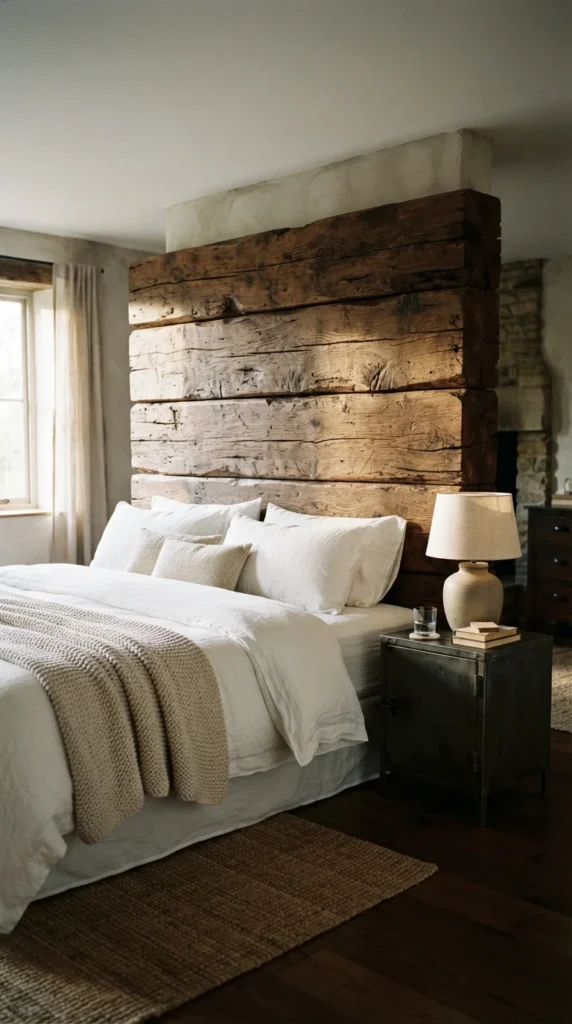
Reclaimed beams create a bold, architectural headboard with plenty of texture. Their thick profiles add depth and make the bed feel substantial, particularly in bedrooms with high ceilings or exposed wooden features.
Select beams that are dry, stable, and free from active insect damage. Since solid timber can weigh considerably more than standard boards, plan a secure mounting system before installation. If the original beams are too heavy, hollow box beams made from lighter lumber can provide a similar visual effect.
Keep the surrounding furniture understated so the heavy timber does not overwhelm the room. Neutral walls, simple linen bedding, and small metal accents help the headboard feel intentional rather than bulky.
9. Chevron Wood Headboard
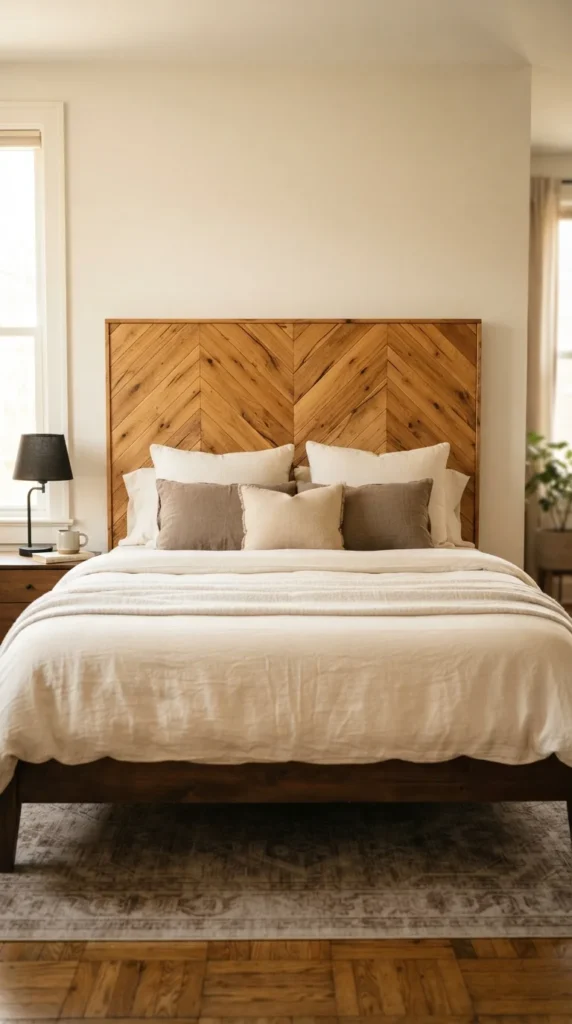
A chevron pattern adds movement to rustic wood without relying on decorative accessories. Short boards meet at repeating angles, creating a V-shaped design that highlights the grain and color differences between pieces.
Plan the pattern on paper before cutting the wood. A miter saw helps create matching angles, while a backing panel keeps the finished arrangement aligned. Dry-fit the pieces first, since small measurement errors can become obvious when the pattern repeats across the entire headboard.
Use two or three related wood tones for a natural appearance. Too many contrasting shades can make the pattern feel busy, especially in a small bedroom. Simple bedding gives the geometric design room to stand out.
10. Rustic Wood Headboard With Integrated Shelves
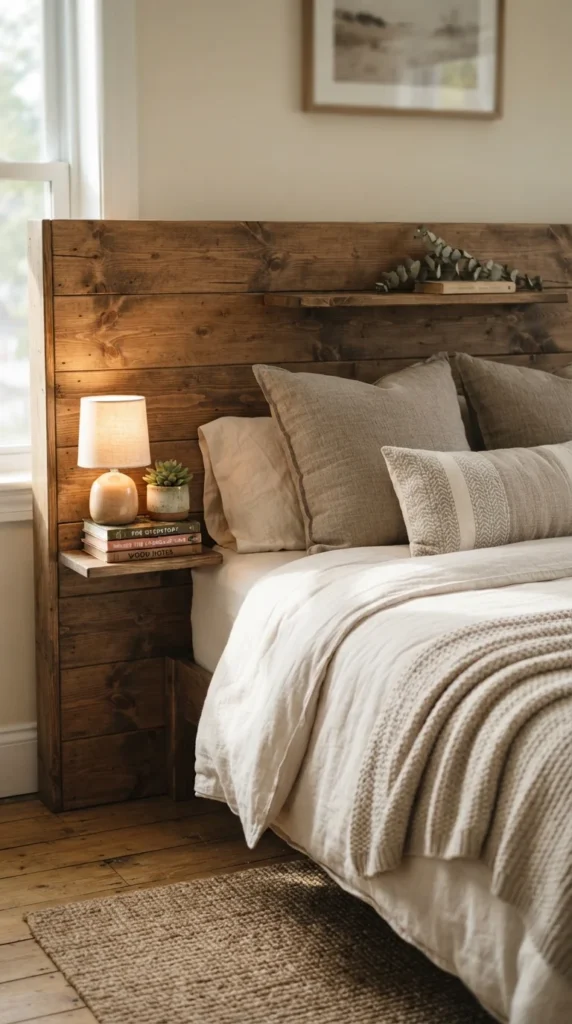
A headboard with integrated shelves offers a handy place for books, glasses, and small decorative objects. The shelves can sit along the top edge or be fitted into selected sections of a wider wooden panel.
Decide what you plan to store before choosing shelf depth. A shallow ledge works for small accessories, while a deeper shelf can hold books or a compact lamp. Secure every shelf to a suitable frame or wall support, and avoid placing heavy objects directly above the pillows.
This design is useful in bedrooms without much room for side tables. Keep the shelf arrangement restrained, using only a few items at a time so the wood remains the main feature.
11. Rustic Wood Headboard With Metal Accents
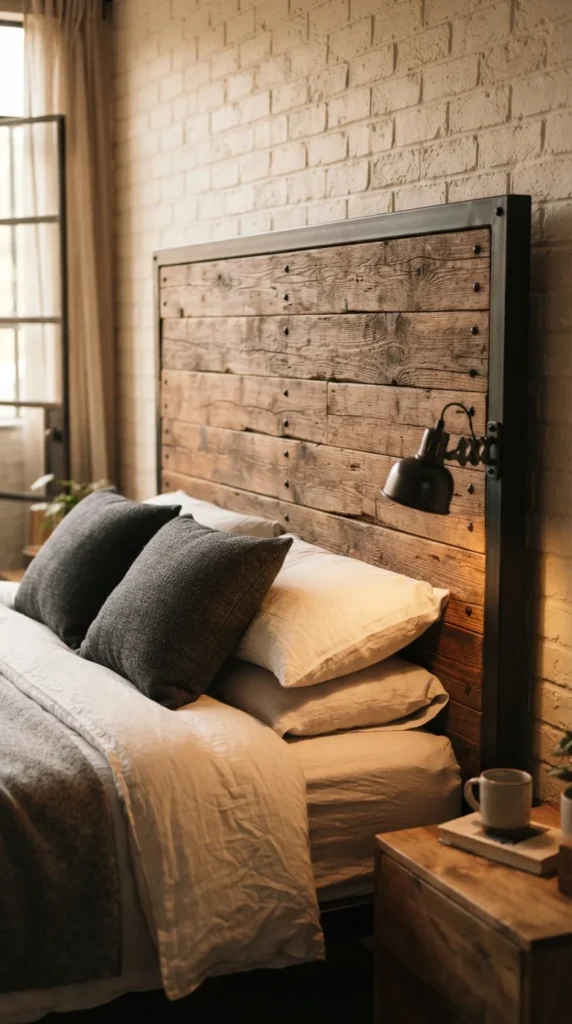
Black metal accents add an industrial touch to rustic wood. Slim brackets, dark corner plates, or carefully placed fasteners create contrast without covering the natural grain of the boards.
Choose hardware designed for the intended structural purpose rather than relying on decorative screws alone. Lay out the frame and boards before installation to keep the metal details balanced. A matte black finish generally works well with medium and dark timber.
Finish the room with neutral bedding, a simple metal lamp, and perhaps one leather cushion. The mix of wood and metal works especially well in loft bedrooms, modern farmhouses, and spaces with exposed brick or concrete details.
12. Rustic Wood Headboard With a Natural Branch Design
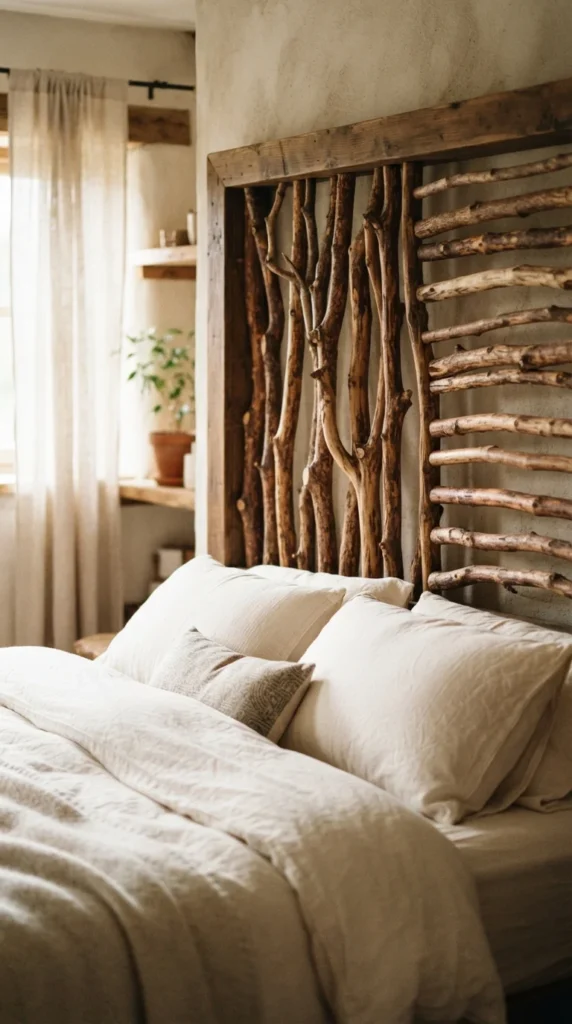
A branch headboard brings woodland character into the bedroom. The irregular shapes create a softer, less formal appearance than standard planks, making the design suitable for cabins, cottages, or nature-inspired rooms.
Collect only fallen wood where permitted, and avoid branches that are damp, rotten, insect-damaged, or shedding loose bark. Dry and clean the material thoroughly before bringing it indoors. Attach every branch firmly to a stable frame, removing sharp points and splinters along the way.
Keep the bedding plain so the irregular forms remain visible. Natural linen, wool throws, and muted green accents support the woodland look without turning the room into a themed display.
13. Rustic Wood Headboard With a Chevron-and-Frame Design
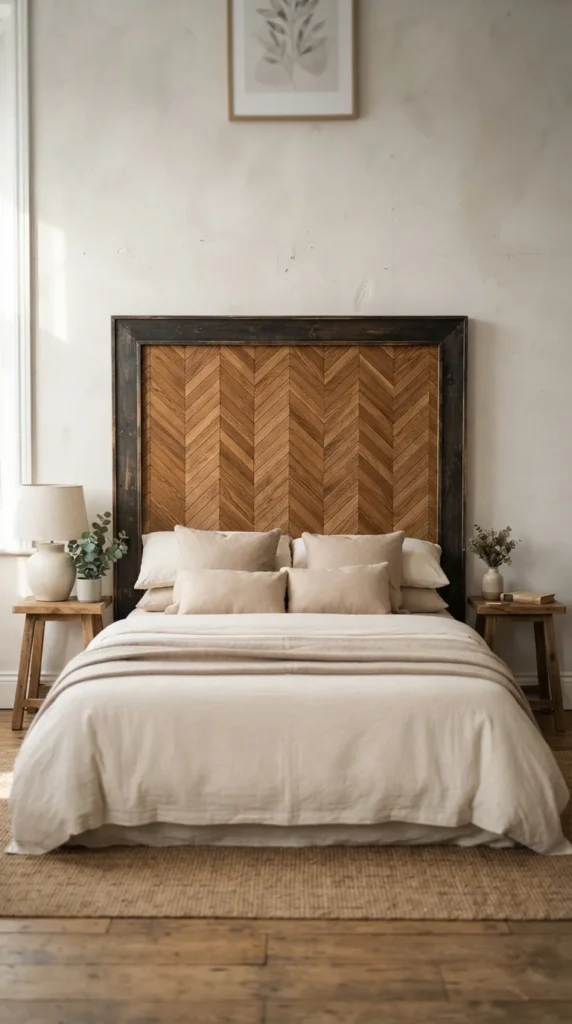
A framed chevron headboard combines geometric detail with the clean outline of a traditional panel. The border gives the design a finished appearance, while the angled center adds texture and direction.
Build the outer frame first, checking that the corners meet neatly. Then cut and arrange the smaller wood pieces within the frame, using a consistent pattern across the center. A plywood backing makes the assembly easier to handle and helps hold the pieces in place.
For a subtle result, use similar tones for the center and border. A slightly darker frame can define the shape without making the design feel too formal. This headboard works well as a handmade focal point in an otherwise simple bedroom.
14. Dark Walnut Rustic Headboard
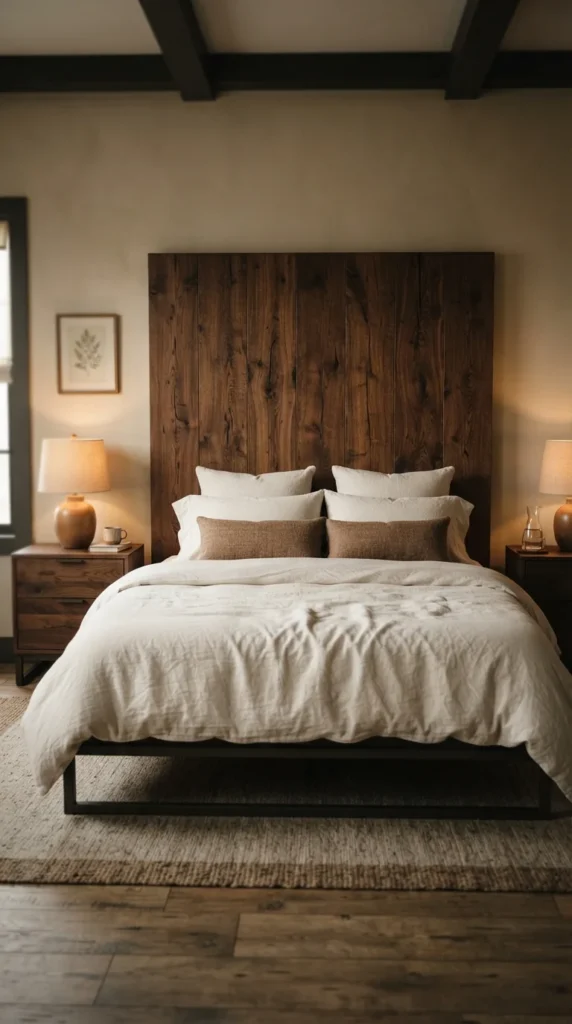
Dark walnut gives a rustic bedroom a richer, more dramatic appearance. Its deep brown color and varied grain pair well with pale bedding, warm metals, and natural textiles.
You can use walnut boards or apply a compatible dark stain to a less expensive wood species. Test the finish on a scrap piece first, because different woods absorb stain differently. Apply thin, even coats and follow the manufacturer’s drying and sealing instructions.
Use lighter colors around the bed to balance the darker headboard. Ivory sheets, sand-colored cushions, and warm lighting prevent the space from feeling too heavy. This option suits rooms where you want rustic materials with a refined, understated finish.
15. Rustic Wood Headboard With a Floating Shelf
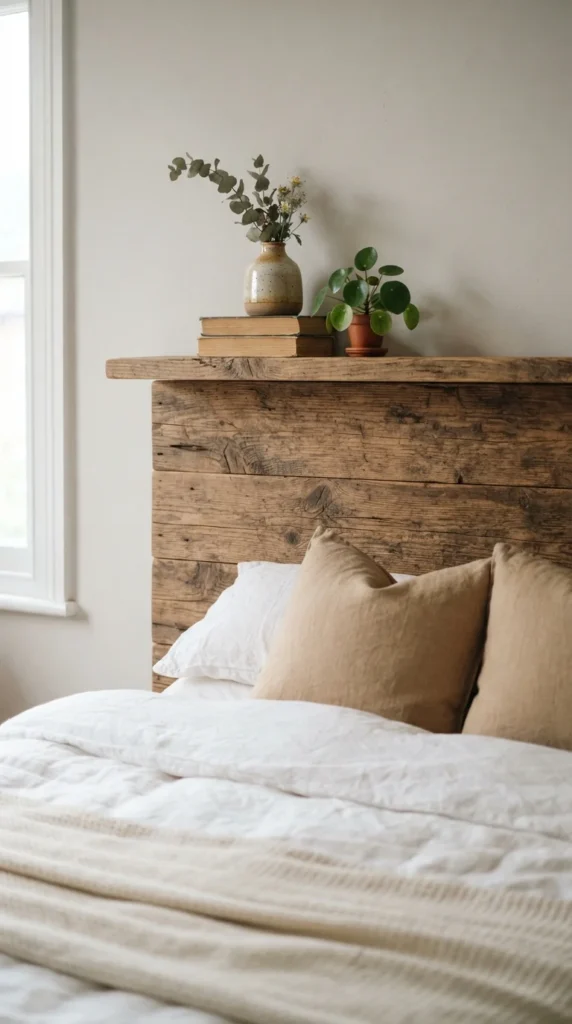
A floating shelf above a wood headboard adds a useful display area without requiring a large piece of furniture. It creates a horizontal line that visually connects the bed with the rest of the wall.
Choose a shelf depth that allows small objects to sit securely without projecting too far over the sleeping area. Mount it to wall studs or use hardware rated for the wall type and expected load. Keep breakable objects and heavy decorations away from the edge above the bed.
A simple timber shelf looks particularly good with a reclaimed wood panel beneath it. Repeat one or two colors from the bedding in the shelf accessories for a coordinated finish.
16. Rustic Wood Headboard With a Natural Edge Top
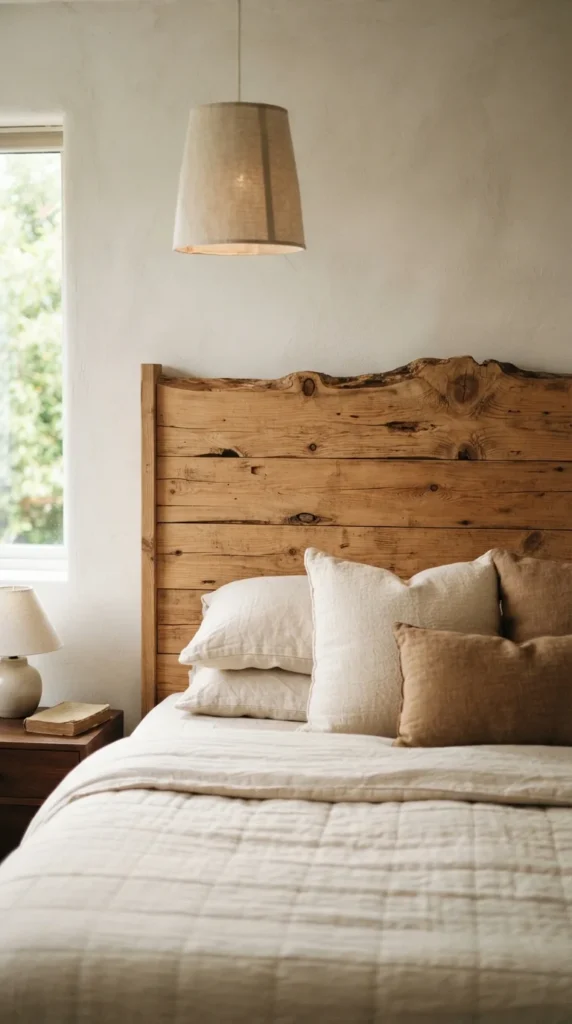
An irregular top edge gives an ordinary plank headboard a more organic appearance. The boards can remain straight along the bottom while the upper edge follows a gentle natural contour.
Sketch the outline before cutting and keep the highest points away from anything that might interfere with wall fixtures. Use a jigsaw for controlled curves, then sand the cut edge until it feels smooth to the touch. A clear finish allows the natural shape and grain to remain the main features.
This style works well in cottages and relaxed country bedrooms. Pair it with soft bedding, natural rugs, and uncomplicated furniture so the uneven edge feels like a deliberate design choice.
17. Rustic Wood Headboard With Mixed Wood Tones
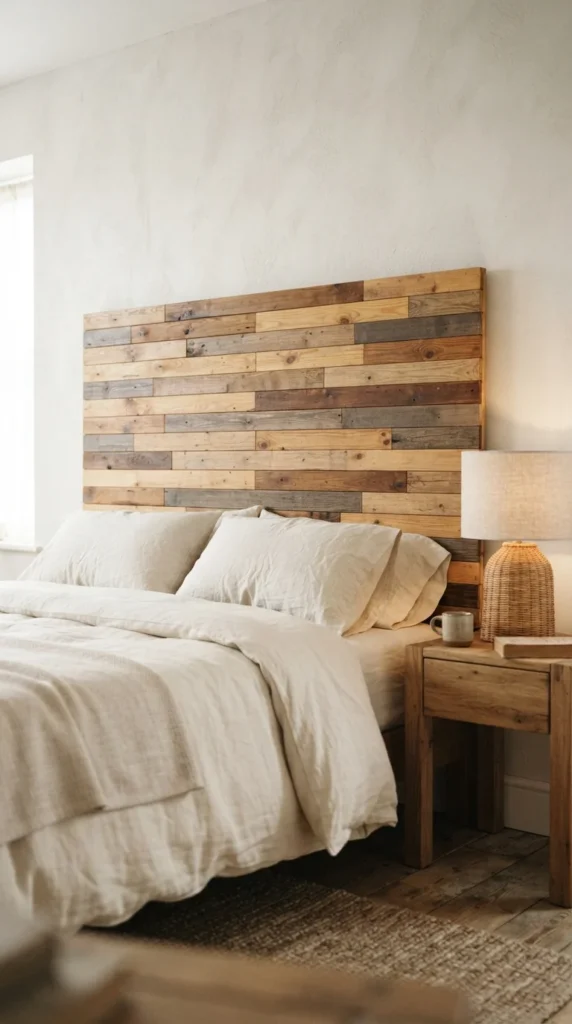
Mixed wood tones create a layered rustic look without needing elaborate shapes or carving. Different shades bring out the grain and make reclaimed boards feel more expressive, especially when their widths vary slightly.
Collect a small selection of boards and arrange them on the floor before attaching anything. Move the light and dark pieces around until the pattern feels balanced. If some boards are very different in color, a light sanding or compatible stain can help bring the overall appearance together.
Keep the rest of the room relatively quiet. Solid-color bedding and simple furniture prevent the headboard from competing with too many other patterns. This is a useful approach when working with leftover lumber from several projects.
18. Rustic Wood Headboard With Carved Details
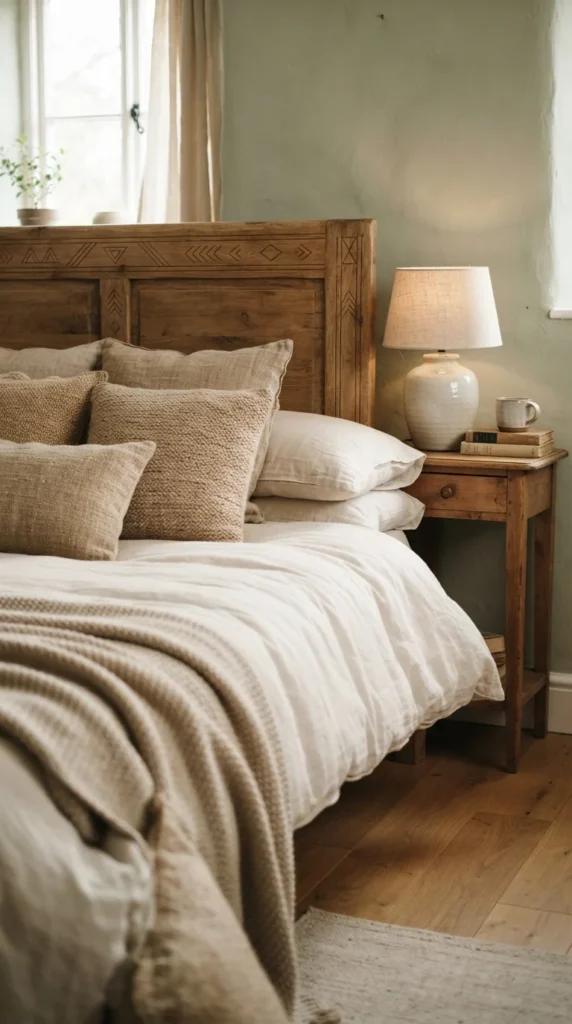
Carved details add a personal touch to a rustic headboard. Simple grooves, repeated lines, or small geometric patterns can give plain boards a custom appearance without covering the wood with paint.
If you are new to carving, start with shallow lines on a scrap piece of pine or another easy-to-work wood. Mark the pattern lightly with a pencil, use suitable carving tools, and work slowly away from your hands. Sand the finished details carefully and apply a finish that suits the wood.
Limit the carving to the top border or outer corners if you prefer a restrained look. A few well-spaced details often work better than a complicated pattern across the entire headboard.
19. Rustic Wood Headboard for a Small Bedroom
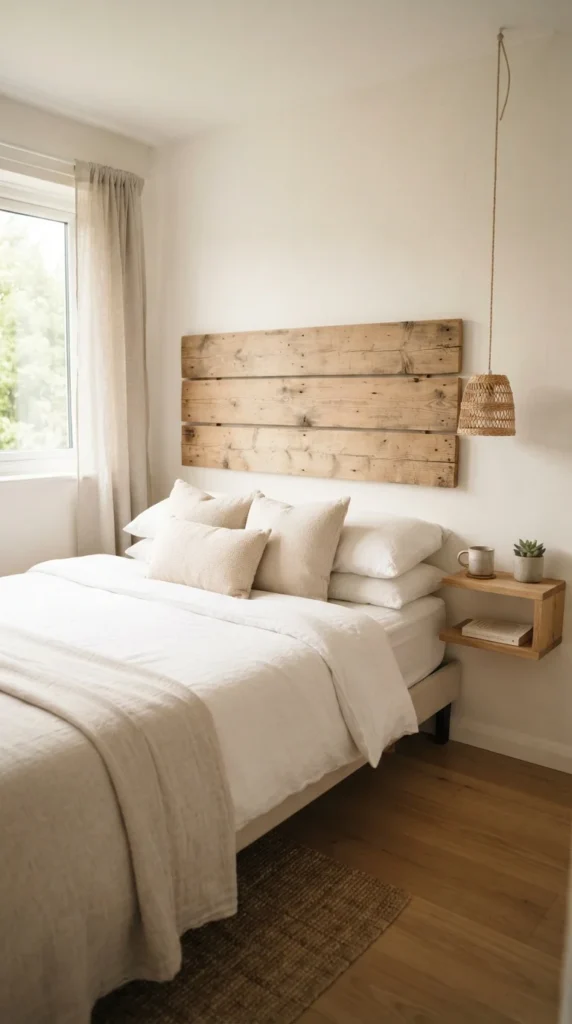
A small bedroom can still have a rustic focal point without a massive wooden structure. A headboard made from a few horizontal boards provides warmth while leaving more wall space visible.
Measure the width of the bed and decide how far the headboard should extend on either side. A panel that matches the mattress width creates a neat appearance, while a slightly wider version can visually frame the bed. Choose slim boards rather than thick beams to avoid adding unnecessary bulk.
Use pale wood, white bedding, and wall-mounted lighting to maintain an open feel. If floor space is limited, a simple shelf can replace one or both bedside tables.
20. Rustic Wood Headboard With a Built-In Reading Light
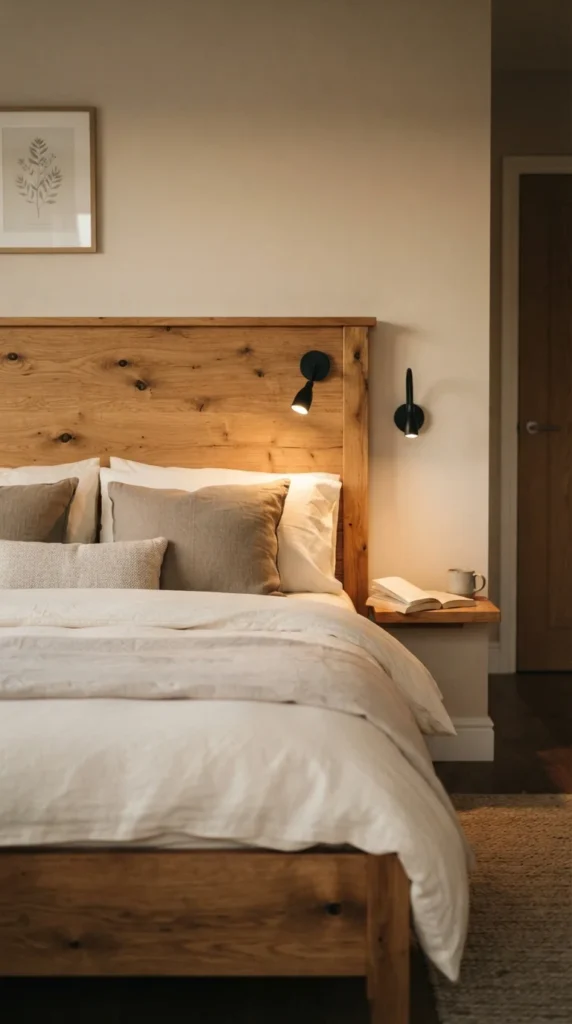
Built-in reading lights make a rustic headboard practical as well as decorative. Small black or bronze fixtures contrast with the wood and provide focused light for reading without requiring large bedside lamps.
Plan the light positions before building the panel, allowing enough space for pillows and adjustable lamp arms. Use fixtures and electrical components rated for indoor installation, and have fixed wiring installed by a qualified electrician. Plug-in lights can be an easier option when permanent wiring is not practical.
Choose warm-white bulbs for a relaxed nighttime atmosphere. The combination of natural wood and focused lighting suits bedrooms where reading in bed is part of the daily routine.
21. Rustic Wood Headboard With a Painted Accent
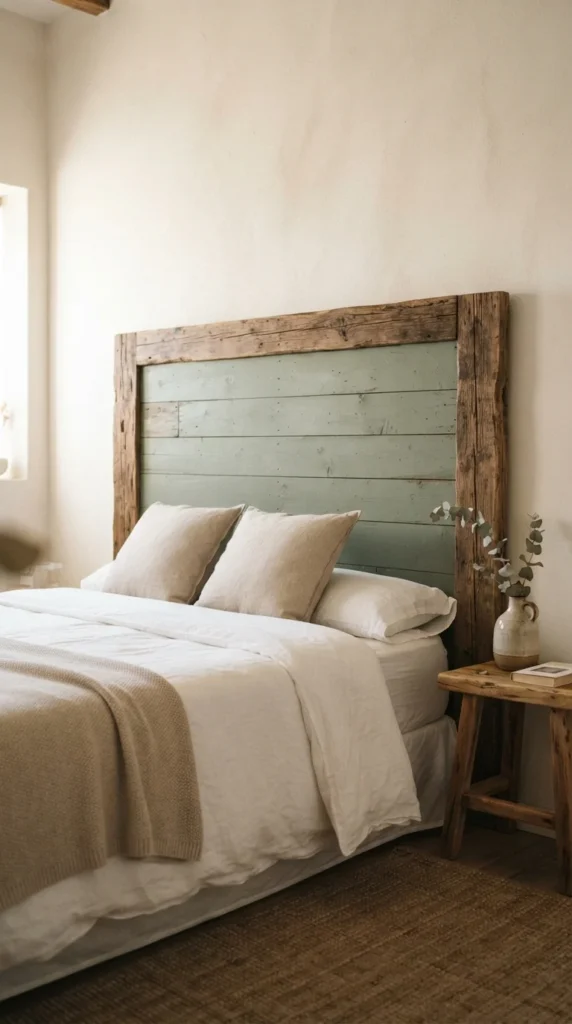
A painted accent can give a rustic headboard a distinctive look while retaining the warmth of natural wood. Sage green, muted blue, warm gray, or dusty cream can work well with exposed wooden edges.
Decide which sections should remain natural before painting. Sand and clean the surfaces, then use a primer and paint suitable for the material. Mask the natural wood carefully if you want crisp borders, or lightly distress the painted areas after drying for a worn appearance.
Keep the accent color connected to something else in the room, such as a cushion, throw, or rug. That small repetition helps the headboard feel like part of the overall design instead of an isolated feature.
22. Rustic Wood Headboard With a Reclaimed Door
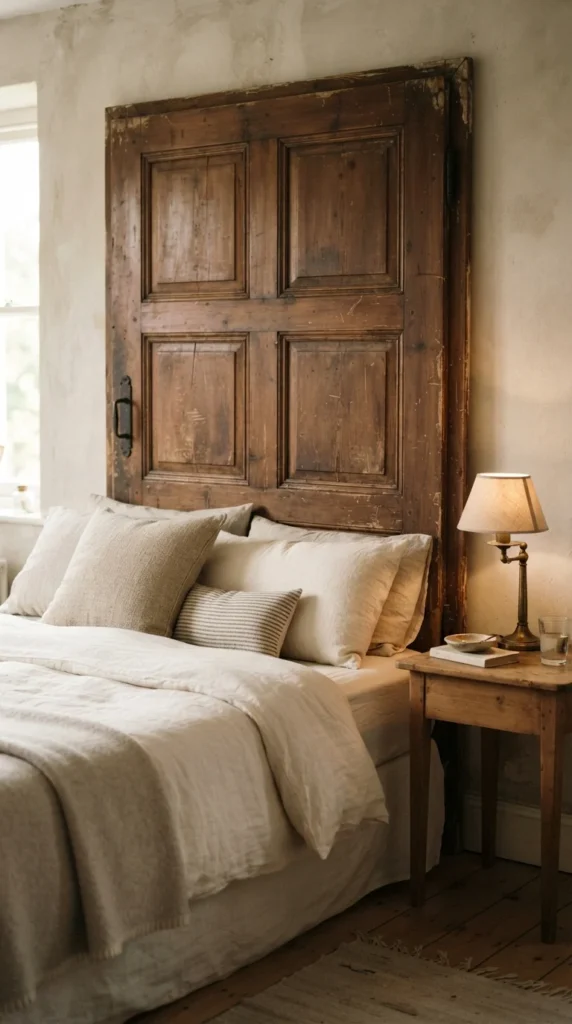
An old wooden door can become an unusual headboard with very little alteration. Its original panels and trim add structure, while worn paint or natural wood grain creates a sense of age.
Choose a door that is clean, stable, and free from harmful old coatings that may require specialist handling. Remove the hardware if it interferes with the design, sand only where appropriate, and secure the door so it cannot tip forward. A heavy door should be mounted using hardware suited to its weight and the wall structure.
A single door often works well behind a double bed, while a pair of matching doors can create a wider feature for a larger bed. Keep the surrounding decor simple to let the original details stand out.
23. Rustic Wood Headboard With a Matching Canopy Frame
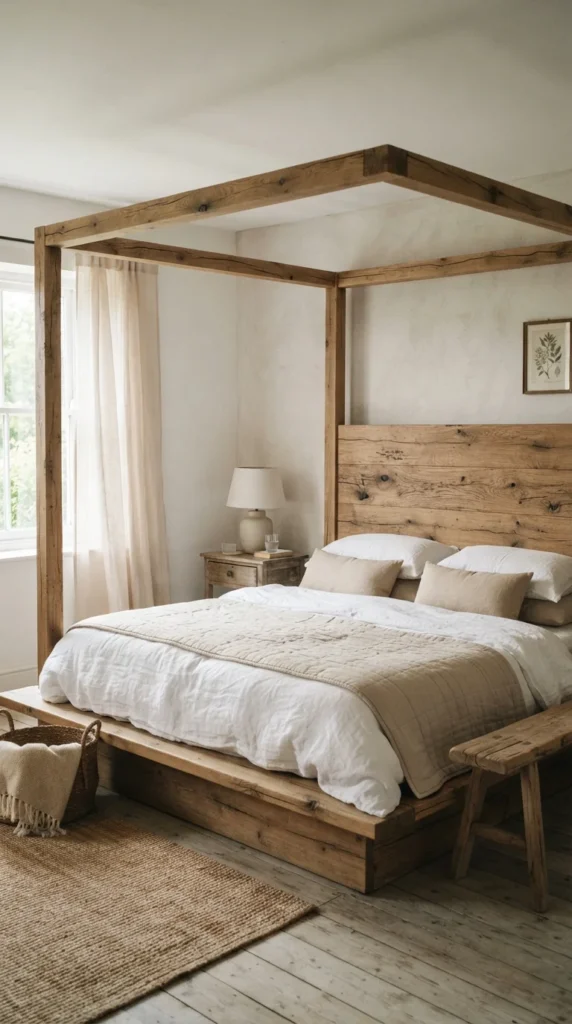
A matching canopy frame turns a rustic headboard into part of a larger bedroom feature. The overhead structure creates a defined sleeping area, while the natural wood ties the headboard and bed frame together.
Measure the ceiling height and bed footprint before planning the frame. Use properly sized structural timber and secure the joints with appropriate hardware. If you are renting or have a low ceiling, a freestanding bed frame with a simpler headboard may be more practical than a full canopy.
Keep the frame visually light by using slim posts and avoiding heavy decorative elements. Plain bedding and minimal curtains help the wood remain the focus without making the room feel enclosed.
24. Rustic Wood Headboard With a Modern Farmhouse Finish
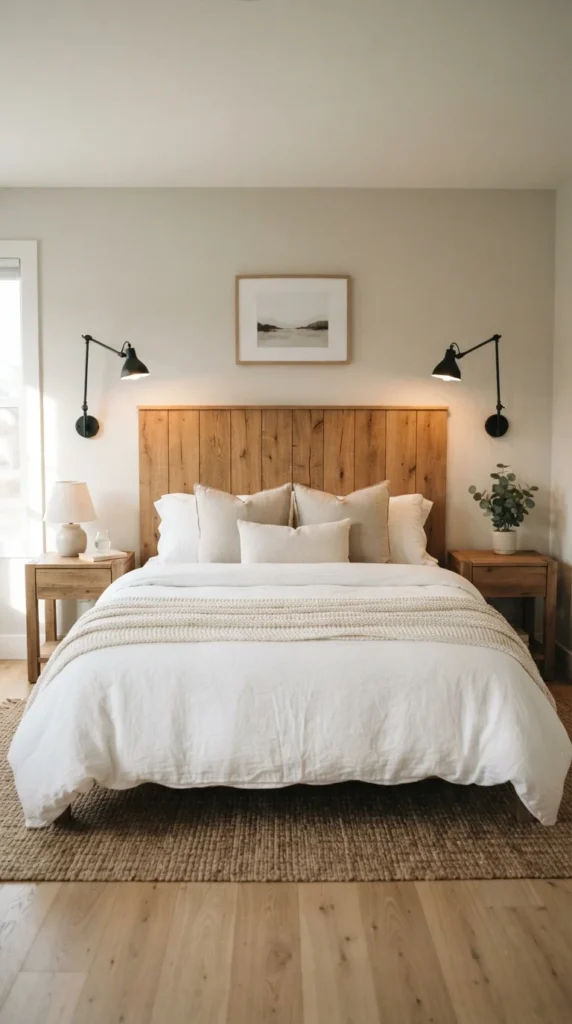
A modern farmhouse headboard combines natural wood with a cleaner, more coordinated finish. The boards retain their rustic grain and knots, but the overall shape is symmetrical and the edges are neatly finished.
Choose timber with similar thicknesses and arrange the boards in a straightforward horizontal pattern. Sand the surfaces evenly, soften sharp corners, and apply a matte clear coat or a natural-looking stain. A simple rectangular outline gives the design a custom appearance without requiring advanced woodworking skills.
Complete the bedroom with white bedding, neutral cushions, matte black lighting, and matching bedside tables. The result feels warm and lived-in while still working with contemporary furniture and a tidy layout.
Final Thoughts
Rustic wood headboards offer plenty of ways to add warmth, texture, and personality to your bedroom, whether you prefer reclaimed barn boards, a live-edge slab, painted accents, or a clean modern farmhouse design. Start by measuring your bed and wall, then choose a style that suits your space, available materials, and DIY experience. If you are building your own headboard, take time to prepare the wood and plan a secure mounting method before assembly. Choose your favorite idea and start gathering materials for a bedroom project you can enjoy for years.

Lily Summers is a digital artist and creative storyteller who loves bringing colorful characters to life. With a passion for cartoons, fan art, and playful sketches, she inspires others to explore their imagination through art. When she’s not sketching, you’ll find her dreaming up new ideas for CraftedWizard.com to spark creativity in every artist. 🌈✨