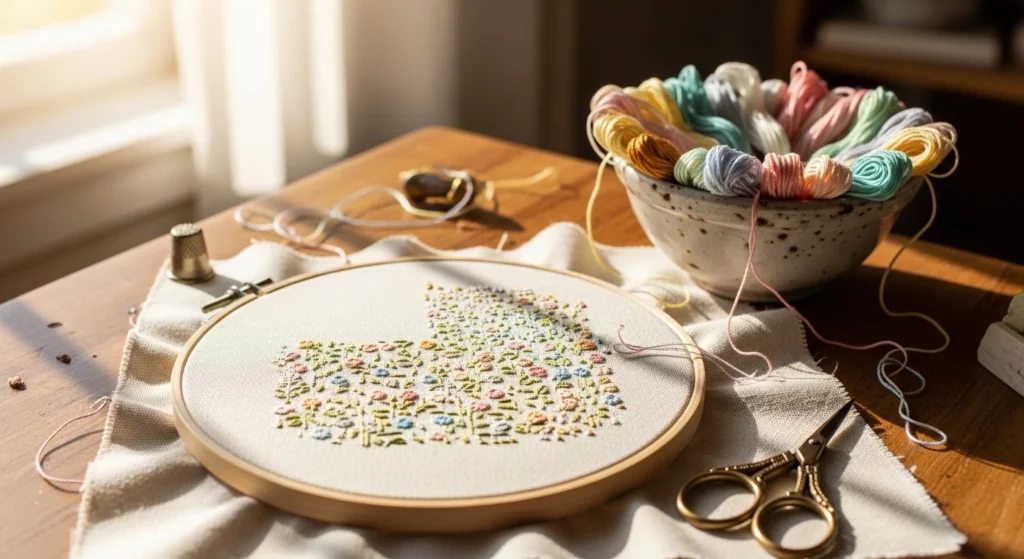
Easy embroidery projects are such a good fit for slow evenings, quiet weekends, and anyone who wants a creative hobby that feels calm instead of stressful. With just a hoop, fabric, floss, and a needle, you can make pretty little pieces that teach useful stitches without needing a huge budget or a big crafting setup. That is why beginner-friendly embroidery stays popular for people who want simple handmade projects that look charming, feel relaxing, and give quick progress. The ideas below focus on small, approachable designs that work well for practice, gifts, home decor, and everyday items like totes, bookmarks, and pockets. Each one keeps the process simple while helping you build confidence stitch by stitch.
1. Simple Daisy Hoop
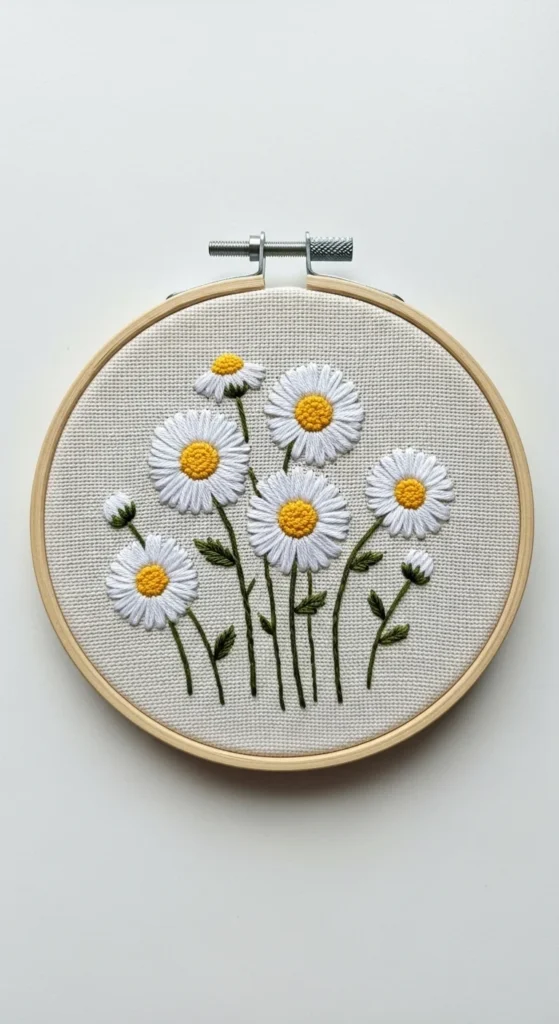
A simple daisy hoop is one of the best first embroidery projects because it teaches a lot without feeling hard. The petals can be made with lazy daisy stitches, the centers can be little knots or short filled stitches, and the stems can be straight or backstitch. That means you get to practice a few basics in one neat project. Use cream or pale beige fabric for a soft look, then pick white, butter yellow, and sage green thread. A small hoop is enough, which keeps the cost low and makes the project feel easier to finish. If you want to save even more, use fabric scraps from an old cotton pillowcase or a thrifted shirt. This project looks pretty on the wall, but it also works as a gift because flowers always feel friendly and handmade. Keep the design loose rather than trying to make every petal perfect. Small differences actually make it look more natural. A daisy hoop is cheerful, quick to stitch, and a lovely way to start learning embroidery without getting overwhelmed by a large or detailed pattern.
2. Tiny Heart Corner Stitch
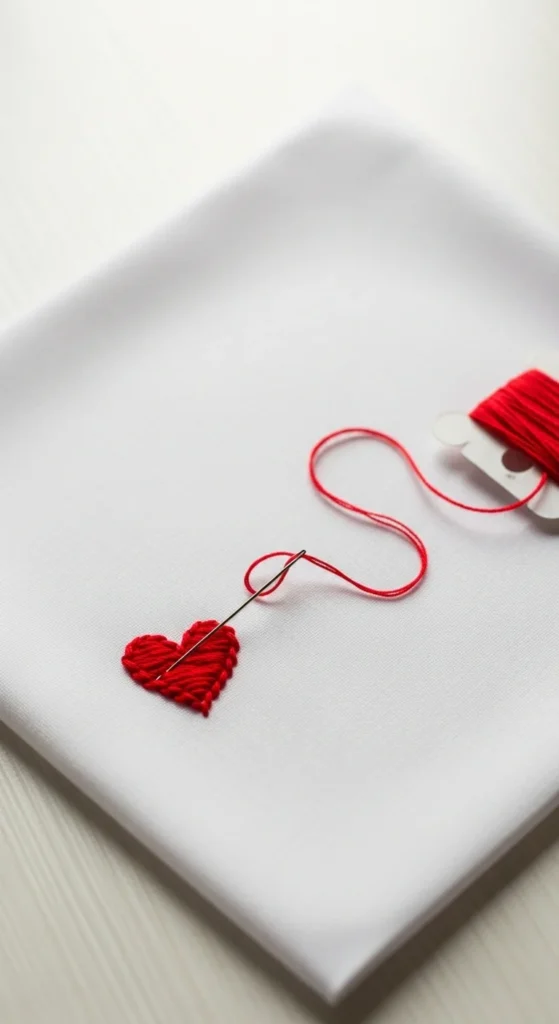
A tiny heart stitched into the corner of fabric is a very easy project, but it still feels cute and useful when finished. You can add it to a handkerchief, cloth napkin, tote bag, pocket tee, or even a pillow cover. The shape is small, so it does not take long, and you only need one or two thread colors. A heart can be outlined with backstitch or filled with satin stitch if you want a smoother look. Beginners often like this kind of project because it is low pressure. If one side of the heart is a little uneven, it still looks sweet. It is also a smart way to practice keeping your stitches consistent without having to work on a whole large piece. Red, blush pink, soft coral, or even mustard can look lovely. If you want to make it more personal, stitch a few tiny hearts in a row or place one near the hem of a gift item. This project is budget friendly, quick to finish, and a nice reminder that even the smallest embroidery can make ordinary fabric feel more thoughtful and special.
3. Beginner Leaf Sampler
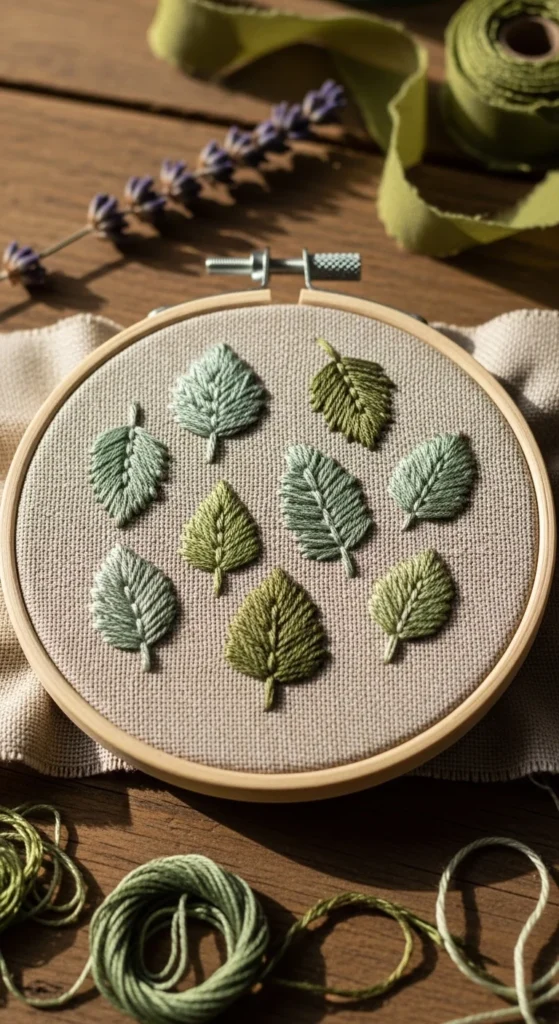
A leaf sampler is perfect for beginners because leaves are forgiving and there are so many easy ways to stitch them. You can make long simple leaves with satin stitch, tiny angled leaves with fishbone-style lines, or soft leafy stems with just straight stitches on each side. Put several leaf styles in one hoop and you instantly have a project that is both pretty and useful for practice. Green thread shades work best here, but you do not need a big collection. Two or three tones are enough. This makes the project affordable while still giving it some depth. Use linen or cotton fabric in a neutral tone so the leaves stand out softly. A leaf sampler looks lovely on the wall in a kitchen, bedroom, or craft corner, and it also helps you build confidence for future floral designs. If you are nervous about spacing, sketch a few simple stems in pencil first. This project is calm, repetitive, and relaxing in the best way. It lets you practice without needing a perfect final picture, which is exactly what many beginners want.
4. Backstitch Cat Outline
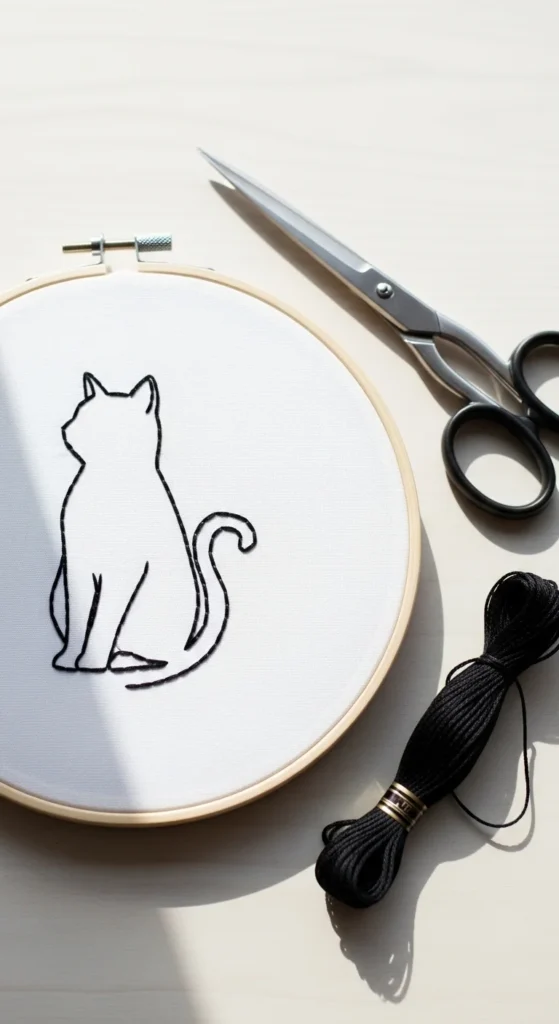
A backstitch cat outline is a fun starter project because it proves you can make something charming with just one stitch. The whole design can be done using black or dark brown thread on white or cream fabric. A sitting cat, curled cat, or simple cat face all work well. Because the design is only an outline, it stays light and clean rather than crowded. That makes it easier to manage if you are still learning how to keep your stitches even. This project also works beyond a hoop. You can stitch the same little cat onto a tote, shirt pocket, zipper pouch, or cloth bookmark. That makes it a good value project because one design idea can be reused in different ways. If you are tracing the pattern, keep the lines smooth and simple. Avoid tiny fussy details. The real charm comes from the clean silhouette. This project is especially nice for pet lovers or anyone who likes minimal handmade decor. It is affordable, quick to finish, and a great way to practice backstitch while making something that still feels stylish and giftable.
5. Lazy Daisy Flower Cluster
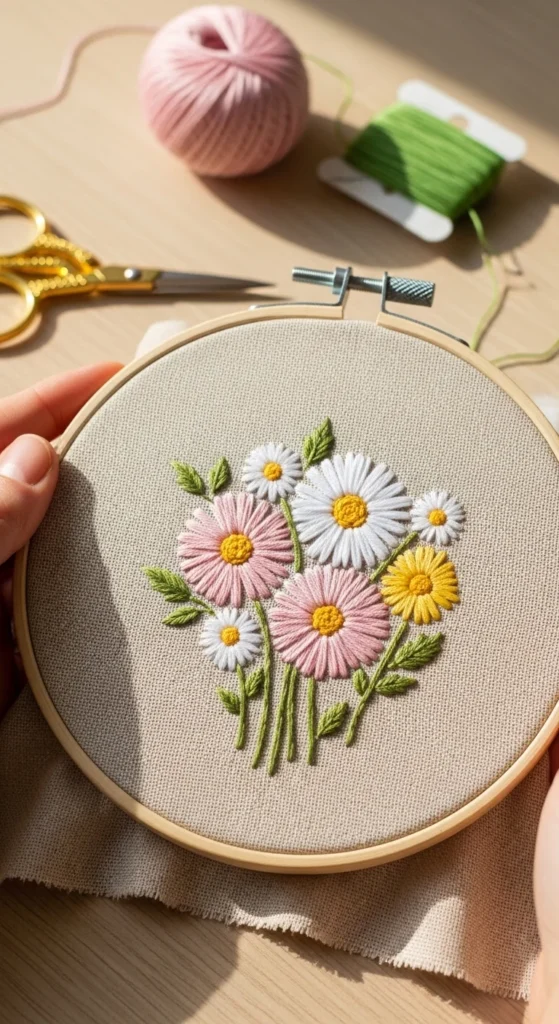
A lazy daisy flower cluster is a wonderful practice project because the stitch itself is simple and the result looks sweet very quickly. Each petal is made one at a time, which keeps the work manageable, and you can fill a hoop with tiny flowers without needing complicated shapes. Start with just three or five little blooms in one corner of the hoop so the design feels airy. Add thin green stems and a few tiny leaves, and the piece already looks complete. This is a great project for using leftover thread because small flowers do not use much floss. Soft pink, pale yellow, white, lavender, and sage all look pretty together. If you want to keep it even simpler, use only one flower color and one leaf color. This kind of hoop works nicely as wall art, but it can also be sewn onto a pouch front or framed in a small hoop as a handmade gift. The repeated petals make it very calming to stitch. It is one of those projects where you can sit down for a short crafting session and still feel like you made real progress by the end.
6. Mountain and Sun Mini Hoop
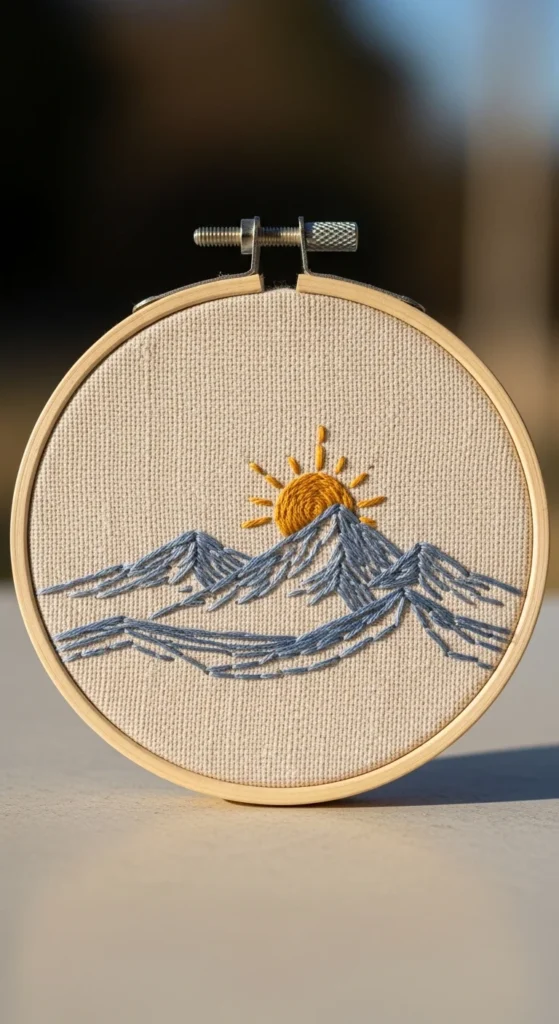
A mountain and sun mini hoop is a great project for beginners who want something modern and simple rather than floral. The shapes are easy. A few angled lines make the mountains, a half circle makes the sun, and a couple of straight stitches can suggest ground or sky. Because the design is minimal, it looks clean even if your stitches are not perfect yet. This is a good project for practicing straight stitch and backstitch without too much pressure. It also works well on tote bags or pockets if you want something functional instead of wall art. Use muted blue, gray, sand, mustard, or rust thread for a soft outdoor look. A small hoop keeps the project quick and inexpensive. You can also make a set with different landscapes, like hills, moon, or desert arches, using the same basic idea. This project feels peaceful and current, and it is nice for people who love nature-inspired decor but want something less detailed. A tiny landscape can do a lot with just a few lines and colors.
7. Embroidered Bookmark Strip
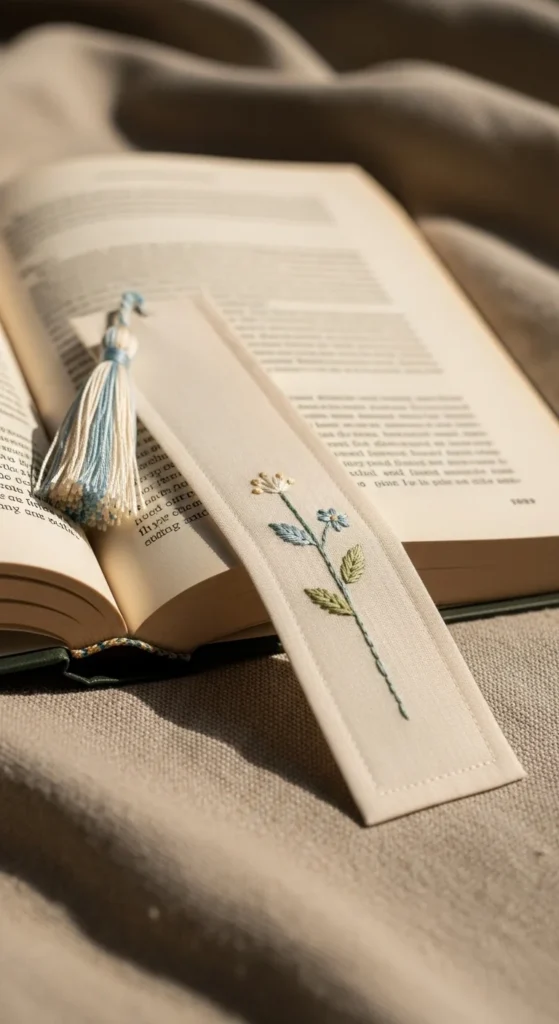
An embroidered bookmark strip is one of the most useful beginner projects because you end up with something pretty that you can actually use every day. Start with a strip of cotton or linen, then stitch a tiny flower, a leaf sprig, a star, or even a small heart near one end. Keep the design narrow so it fits neatly inside a book. You can leave the fabric plain, back it with another strip for extra strength, or even add a tassel if you want a more finished look. This project is low cost because it uses small scraps of fabric and very little thread. It is also nice for practicing clean stitching on a small scale. If you make a mistake, it is easy to start again without losing much material. Bookmarks also make lovely gifts, especially if you pair one with a book or journal. The project feels calm, practical, and easy to finish in one sitting. For beginners, that quick win matters. It helps you enjoy embroidery as a relaxing habit rather than feeling like every project has to become a large wall piece.
8. Personalized Initial Hoop
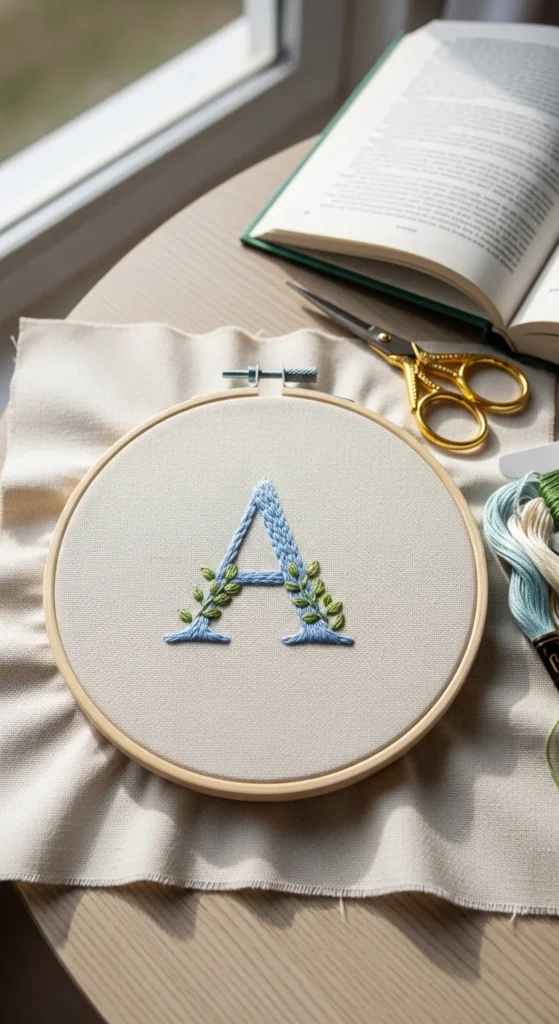
A personalized initial hoop is a smart beginner project because one letter gives the design structure without making it too complicated. Choose a block letter or a simple script style, then stitch it in the center of a small hoop. You can leave it plain for a clean look or add tiny leaf sprigs, dots, or flowers around the edges. This project feels special because it can be made for yourself, a child’s room, or a handmade gift. It also helps you practice following curved and straight lines, which is useful for almost every future embroidery pattern. If you are worried about lettering, lightly trace the letter first using pencil or a water-erasable pen. Stick with one main thread color and maybe one accent color to keep the project affordable. Initial hoops look lovely in bedrooms, nurseries, or gallery walls with other handmade decor. Because the design stays small and focused, it is easy to finish without losing momentum. It is a nice example of how beginner embroidery can still feel polished and personal with only a few materials.
9. Simple Bumblebee Patch
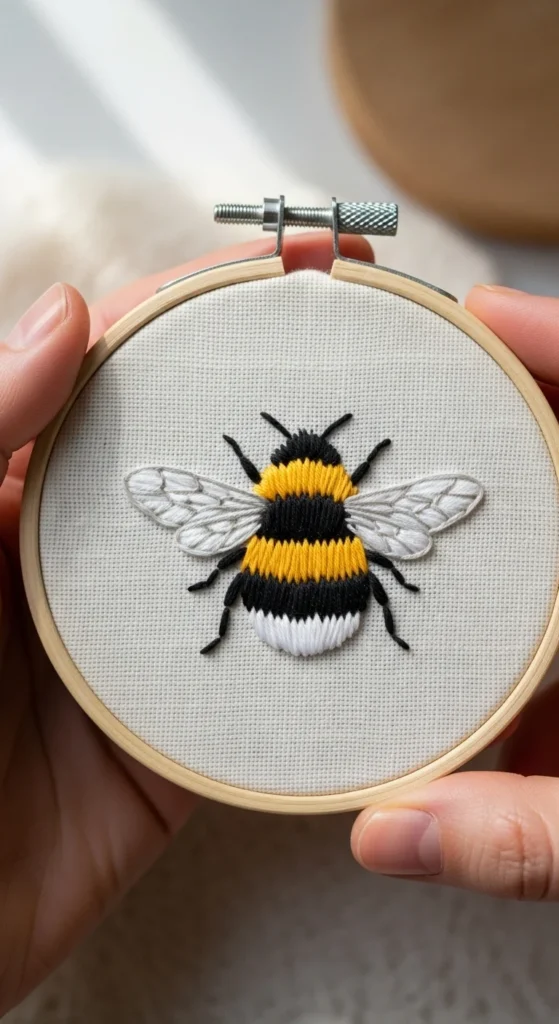
A simple bumblebee patch is cute, cheerful, and easy to stitch with just a few colors. You only need yellow, black, white, and maybe a soft blue or green if you want a tiny floral accent nearby. The bee body can be built from small rounded sections, while the wings stay very light and simple. This project is a good beginner challenge because it mixes outline and filled areas without becoming too detailed. You can stitch the design in a hoop, but it also works beautifully as a patch for a tote bag, denim pocket, or zip pouch. That makes it a fun practical project instead of something that only hangs on the wall. If you want to save money, use fabric scraps and leftover thread from other projects. The bee is small enough that a little floss goes a long way. This project feels friendly and playful, and it teaches control in a very approachable way. Tiny motifs like this are often the best kind of beginner embroidery because they finish quickly and still leave you with something charming at the end.
10. Cloud and Raindrop Hoop
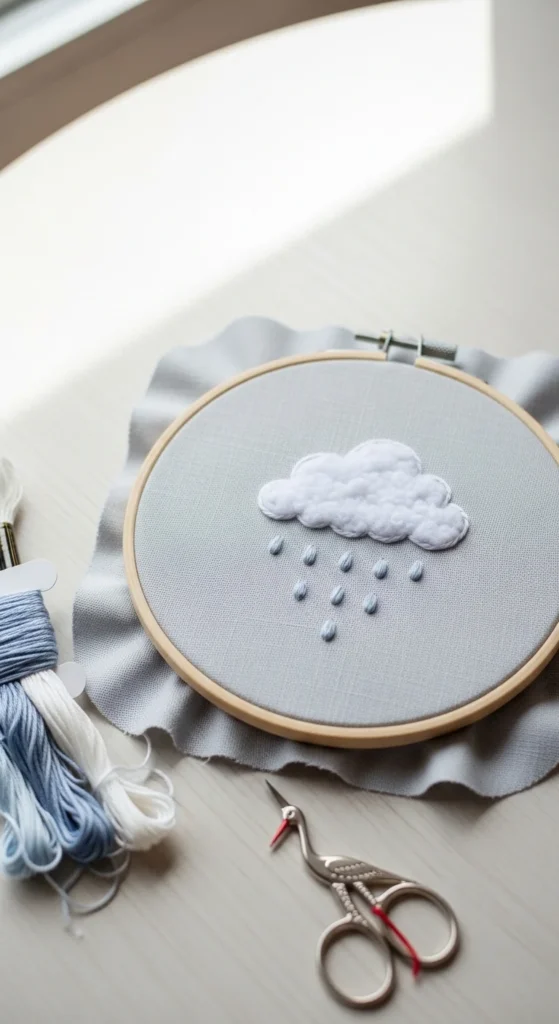
A cloud and raindrop hoop is simple, relaxing, and perfect for anyone who likes soft minimal decor. The cloud shape can be outlined with backstitch or lightly filled with satin stitch, while the raindrops can be little straight stitches or tiny teardrop shapes underneath. This kind of design works especially well in nurseries, bedrooms, or calm reading corners because the whole mood feels gentle and light. It is a good beginner project because the shapes are basic and forgiving. You do not need detailed petals, lettering, or fancy stitch combinations. White, pale blue, gray, and soft lavender all suit the theme nicely. If you want to make it feel a bit warmer, use cream fabric and muted thread colors. This is also a good project for trying different stitch lengths and seeing how texture changes the final look. A small hoop is enough, so it stays budget friendly. Sometimes the best beginner projects are the ones that keep everything simple. A soft cloud with a few raindrops can feel surprisingly pretty when you let the clean lines and gentle color palette carry the design.
11. Tiny Strawberry Motif
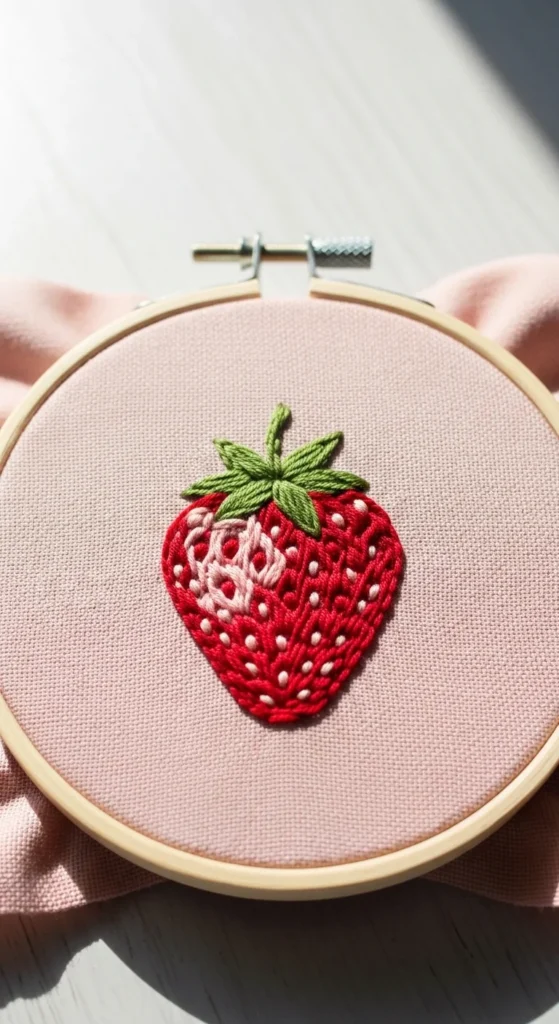
A tiny strawberry motif is one of those beginner projects that feels adorable without taking much time. The berry shape is simple, the leaves are easy, and the little seed dots give you a chance to practice tiny details without overwhelming the whole project. You can make one strawberry in the center of a hoop, stitch a few in a small cluster, or use the design on a bookmark, tote, or napkin corner. This flexibility makes it a very practical pattern to learn. Red and green thread are classic, but soft coral and sage can also look beautiful if you want a more muted style. A strawberry works especially well on pale pink, cream, or natural linen fabric. Because the motif is small, it is very budget friendly and a great use for thread leftovers. It also gives that satisfying feeling of finishing something cute in one short crafting session. Beginner-friendly embroidery does not have to be plain. A small fruit design like this feels fun, handmade, and cheerful while still staying simple enough for someone just learning the basics.
12. Rosebud Stem Practice Piece
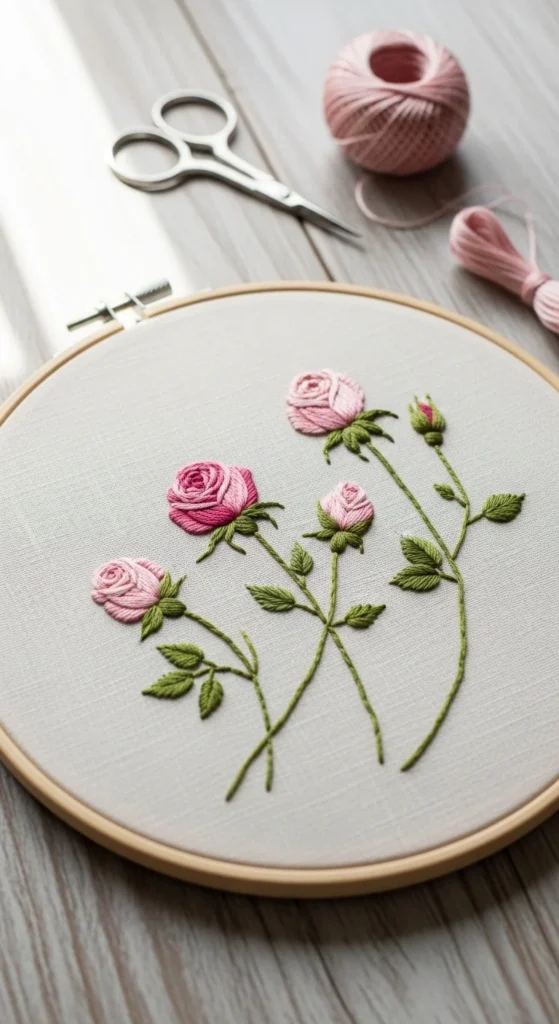
A rosebud stem practice piece is a nice way to try floral embroidery without jumping into large layered roses. Instead of making full blooms, stitch a few little buds on thin stems with small leaves. This keeps the design light and much easier to manage. Rosebuds also look beautiful when they are slightly imperfect, which makes them ideal for beginners. Use blush, dusty rose, cream, or soft berry tones for the buds, then pair them with sage or olive green stems. You can arrange the buds in a loose spray across one side of the hoop, or make a vertical stem cluster for a bookmark or pouch front. This project helps you practice neat curves, small satin stitches, and balanced spacing without needing a complicated floral composition. It also feels very relaxing because the repeated little buds are easy to build one by one. If you want to save money, use just two or three thread colors and simple cotton fabric. The finished piece feels delicate and pretty, but the actual process stays very approachable. It is a strong choice for beginners who want something floral without feeling overwhelmed.
13. Pocket Tee Flower Stitch
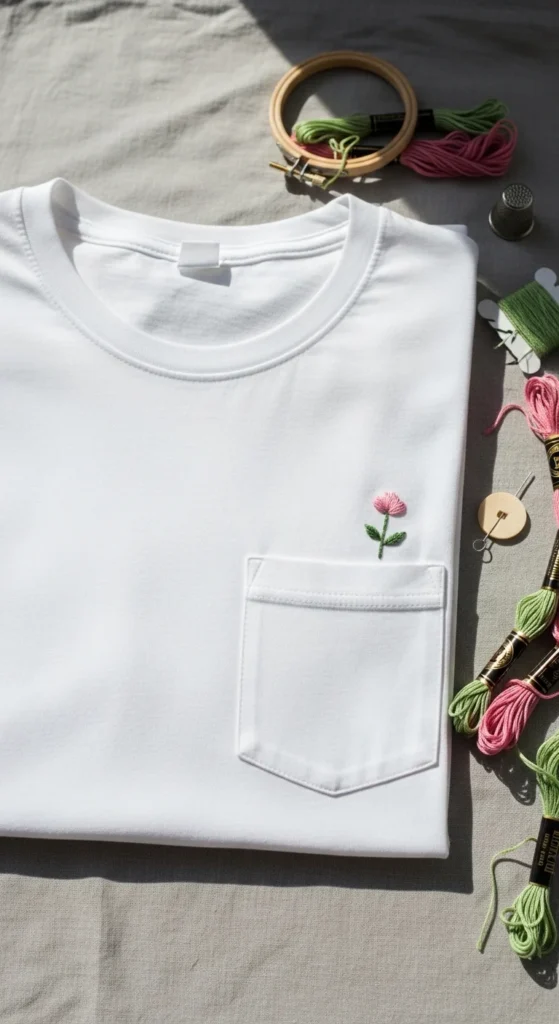
A pocket tee flower stitch is a fun first wearable embroidery project because it adds personality to clothing without requiring a large design. You only need a tiny flower, leaf sprig, or little daisy shape stitched just above the pocket edge or near the corner. That small placement keeps the project simple while still making the shirt feel customized. This is a good beginner step if you want to move beyond hoops and put embroidery onto something useful. Choose a cotton shirt so the fabric is easier to stitch through, and use a small hoop if needed to keep the area steady. A simple backstitch stem and a few lazy daisy petals are often enough. Keep the colors soft if you want a subtle look, or pick brighter thread if you want the flower to stand out more. This project is affordable if you already own a basic tee, and it makes clothing feel more personal without much effort. Tiny stitched details can make everyday pieces feel special in a very calm handmade way.
14. Tea Towel Herb Sprig
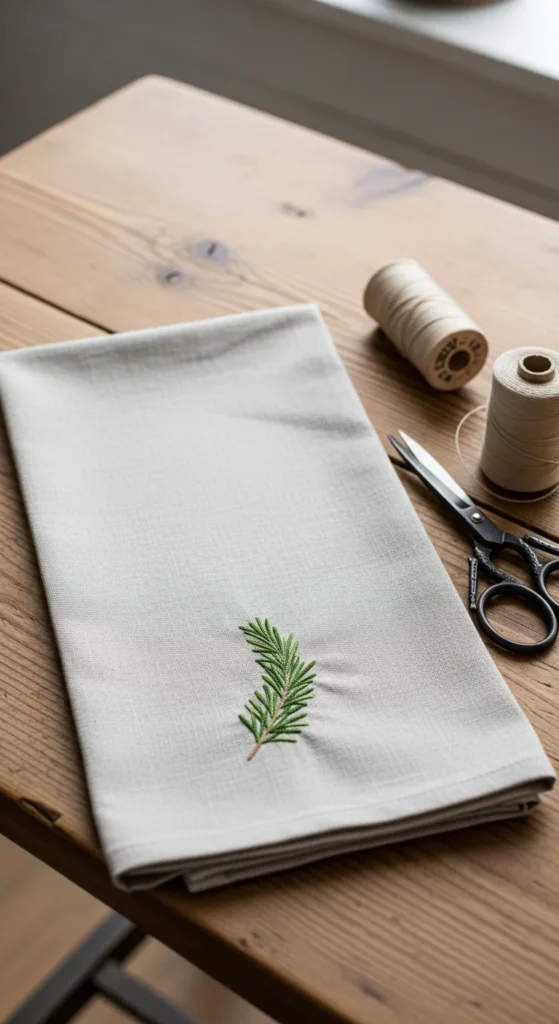
A tea towel herb sprig is an excellent beginner project because it turns a plain kitchen cloth into something charming and useful. A simple rosemary stem, lavender sprig, thyme branch, or mint leaves can all be stitched with basic lines and leaf shapes. You do not need a large design. One small herb motif near the corner or lower edge already looks lovely. This is a smart project if you enjoy practical crafting, because the finished towel can be used in the kitchen, gifted, or tucked into a basket with homemade items. It is also budget friendly. Plain cotton tea towels are easy to find, and herb designs use only a little green thread plus maybe one accent color. The project helps you practice clean stems and repeated leaf shapes, which are very useful for future floral work. Keep the motif light and simple so the towel still feels neat and functional. A stitched herb sprig brings a warm handmade touch to everyday kitchen items, and that makes it a very satisfying beginner embroidery choice.
15. Snail Mini Hoop
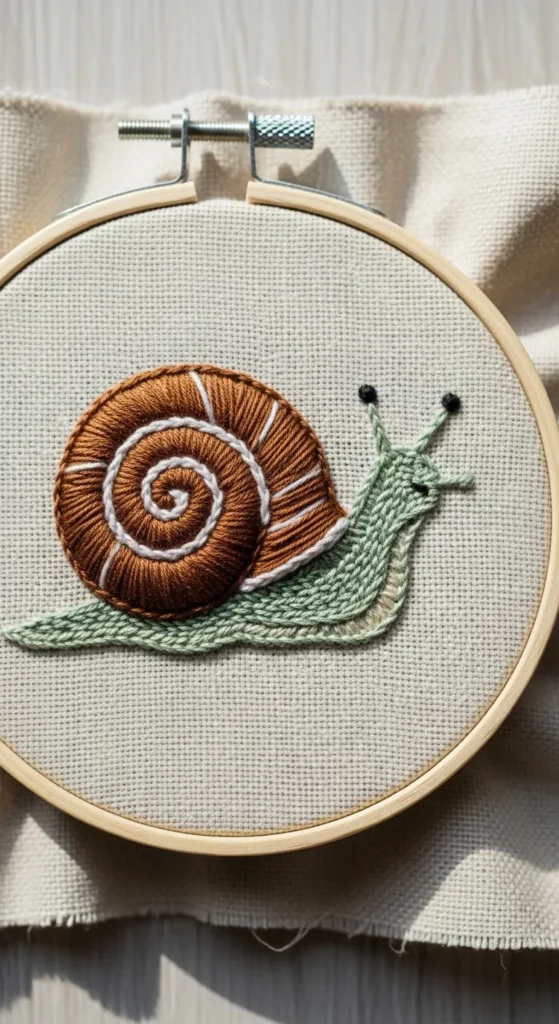
A snail mini hoop is a playful beginner project that feels lighthearted and relaxing to stitch. The shape is simple. One spiral shell, a rounded body, and a pair of tiny feelers are enough to make it recognizable and charming. Because the design is compact, it fits beautifully in a very small hoop, which keeps both the cost and the stitching time low. A snail is also forgiving. If the spiral is slightly uneven or the body line is a little wobbly, it still looks cute. This makes it ideal for someone just learning to control thread and stitch placement. Use earthy tones like brown, cream, sage, and dusty rust for a soft woodland feel. You can leave the background plain or add a tiny mushroom, leaf, or flower for extra detail. This hoop is especially nice for children’s rooms, craft corners, or whimsical gallery walls. It is a fun reminder that beginner embroidery does not have to be serious. Small playful designs often make the hobby feel more enjoyable and less intimidating right from the start.
16. Tote Bag Cactus Design
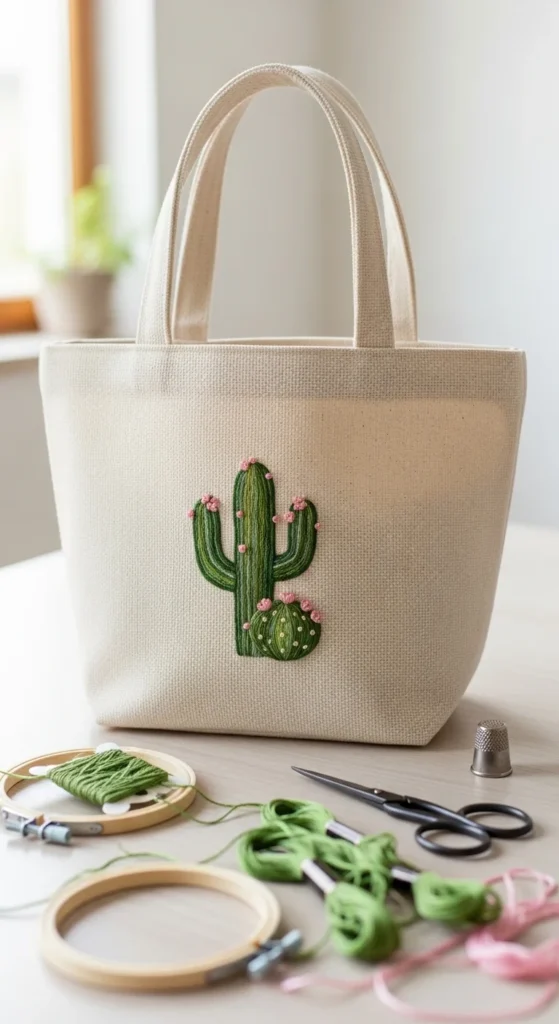
A tote bag cactus design is a beginner-friendly project that gives you something useful at the end, which always feels rewarding. A cactus is easy to simplify into one or two upright shapes with small arms and a tiny flower on top if you want a cute detail. Backstitch or split stitch works well for the outline, and simple filling stitches can give the cactus body a little texture. Because canvas totes are common and affordable, this project can stay very budget friendly. It is also a nice way to practice stitching on thicker fabric without committing to a huge design. Place the cactus near the lower corner, above the pocket area if the tote has one, or centered in a small section for a neat finished look. Green, dusty olive, and muted pink work beautifully together. If you want to keep it even easier, stitch only the outline and skip the filling. This project feels practical, cheerful, and beginner-safe. It turns a plain everyday bag into something personal, and that makes it a very satisfying embroidery project to complete.
17. Simple Star Sampler
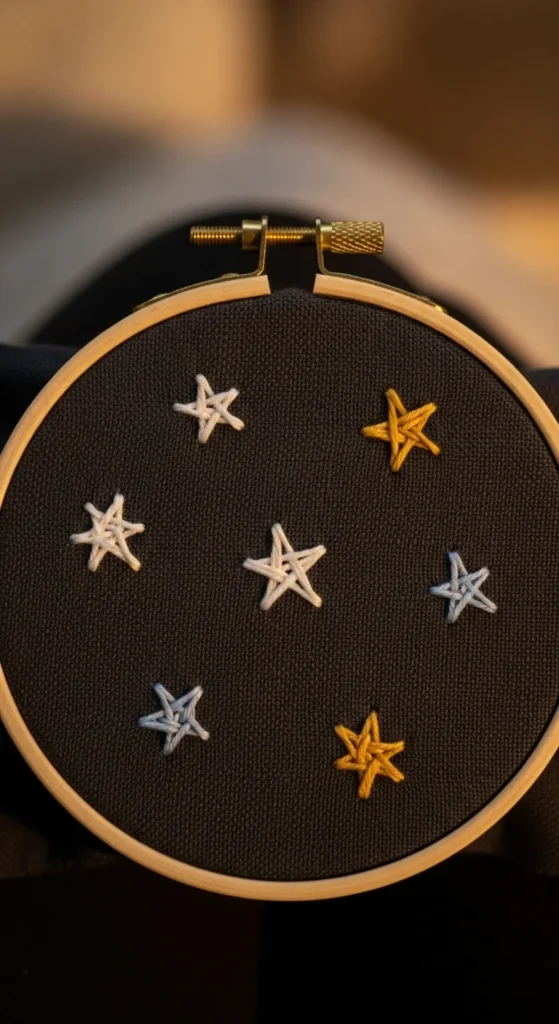
A simple star sampler is a calming project because it is mostly repetition, and repetition is often what makes embroidery feel relaxing. Stitch a group of small stars using straight stitches, tiny crosses, or little spark shapes across dark or neutral fabric. The design can be scattered randomly or arranged in a soft cluster. This is a great beginner project because it teaches spacing, stitch consistency, and control without needing any difficult shapes. It is also very flexible. You can keep it in a hoop for wall decor, stitch it onto a pouch, or add a tiny cluster to the edge of a pillow or cloth bookmark. Mustard, cream, pale blue, and soft gold all work nicely for a celestial look. Because each star uses just a few stitches, the project is low cost and a good way to use leftover floss. It also finishes quickly, which can feel very encouraging for beginners. A star sampler has a calm quiet beauty, and sometimes that is exactly what makes a small embroidery project feel so enjoyable to work on.
18. Woven Wheel Rose Brooch
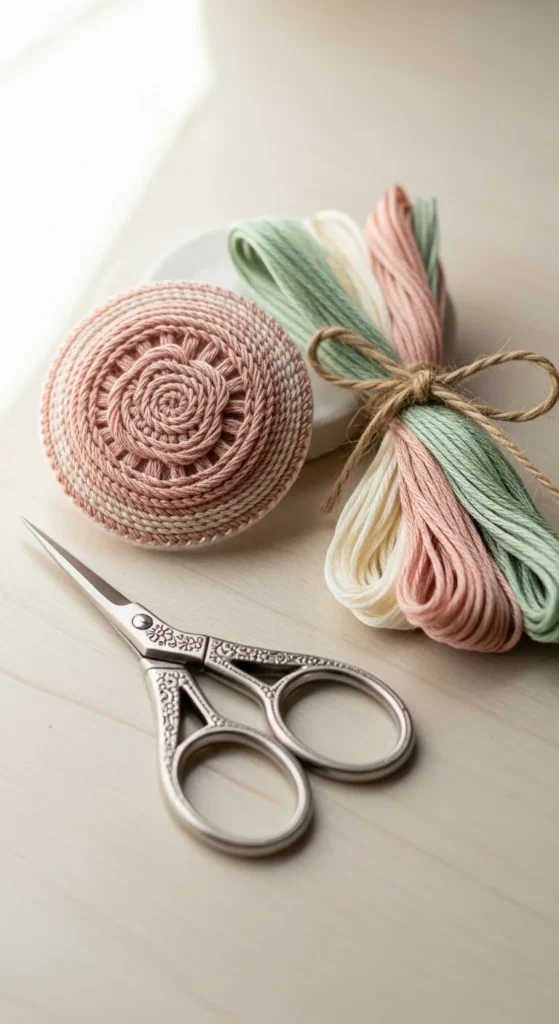
A woven wheel rose brooch is a lovely beginner project for anyone ready to try one decorative flower technique without making a whole large hoop. The woven wheel rose looks more detailed than it really is, which makes it very rewarding. You create a small stitched base, then weave the thread around it until a rose shape forms. Once you make one, it starts to feel quite relaxing. Turn the finished flower into a little brooch, patch, or mini framed piece. That keeps the project focused and manageable. This is a good use for felt or sturdy cotton scraps, which helps keep costs down. Soft pink, dusty rose, cream, and berry tones all work beautifully. Add one or two tiny green leaves and the design already feels complete. Because the rose is the main event, you do not need much else around it. A small project like this is perfect for beginners who want to try a new stitch style while still keeping the overall piece short and achievable. It feels pretty, handmade, and a little extra special without becoming too complicated.
19. Rainbow Arch Practice Hoop
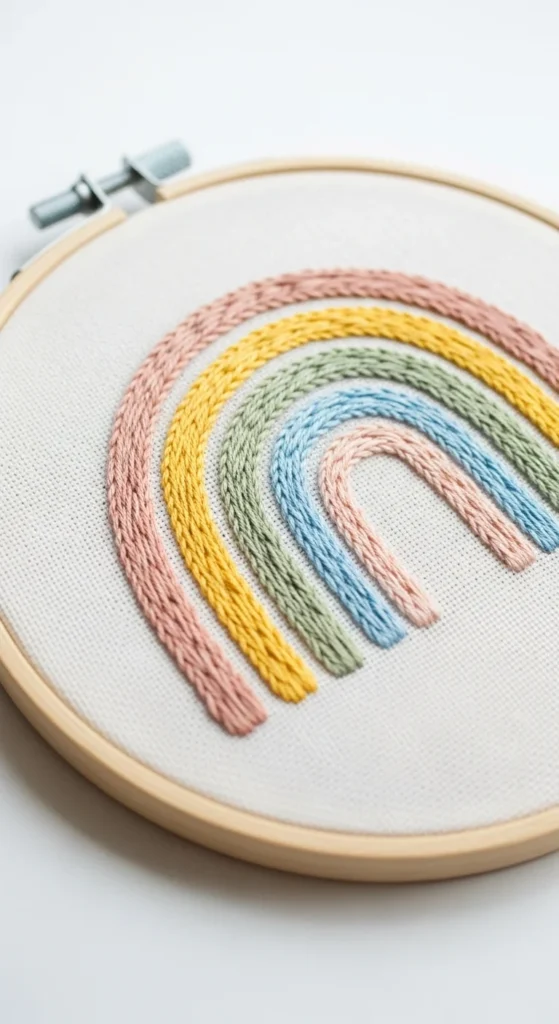
A rainbow arch practice hoop is ideal for beginners because the design relies on repeated curved lines rather than tiny detailed shapes. Each arch can be stitched in a different color, which makes the project feel cheerful and lets you use small amounts of leftover floss. Soft tones like blush, peach, pale yellow, sage, and dusty blue give the hoop a calm handmade look that works well in nurseries, bedrooms, or craft rooms. This design is also helpful for building rhythm. You repeat the same motion over and over, which makes the process feel almost meditative. Use backstitch, split stitch, or chain stitch depending on what you want to practice. The hoop can stay minimal with just the arches, or you can add tiny clouds, stars, or dots around them for a little extra charm. A small or medium hoop is perfect, so the project stays affordable and does not drag on too long. It is a great reminder that beginner embroidery can be both relaxing and visually appealing without requiring a complex pattern.
20. Friendship Keyring Patch
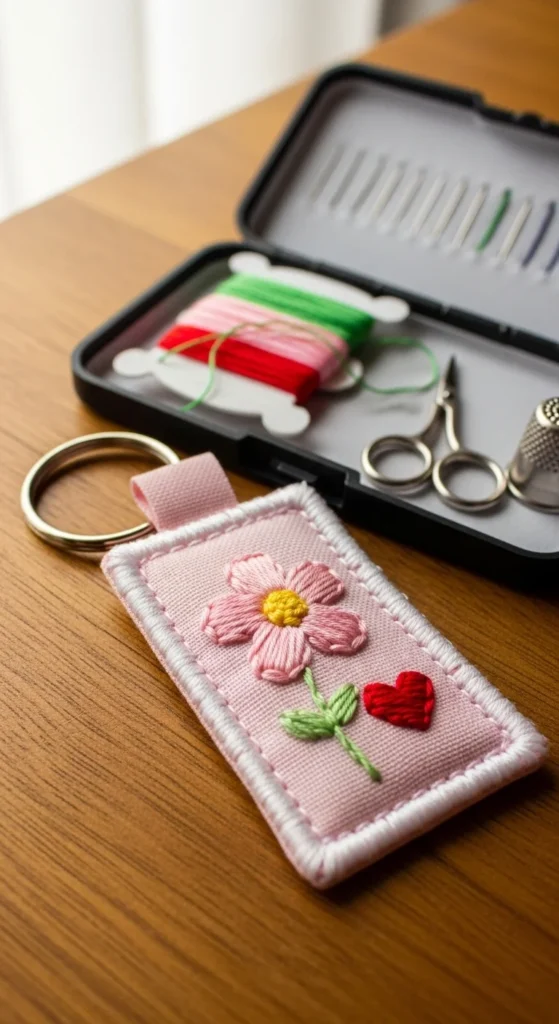
A friendship keyring patch is a small project with a very useful outcome, which makes it excellent for beginners. Stitch a tiny flower, heart, star, initial, or smiley motif onto a small piece of sturdy fabric or felt, then turn it into a keyring or bag charm. The scale stays tiny, so the project is quick, affordable, and easy to finish in one sitting. That makes it a strong choice for people who want quick progress rather than a long hoop project. These little stitched patches also make great gifts. You can personalize them with colors or symbols that match the person receiving them. Felt is especially good because it is firm and easy to handle, but sturdy cotton backed with another layer works too. Because the design is so small, you only need a little thread and a few simple stitches. This project feels practical, fun, and low pressure. It is also a great way to use up leftovers from bigger projects. Tiny embroidered keyrings prove that beginner crafting can be both simple and genuinely useful.
21. Mixed Beginner Stitch Hoop
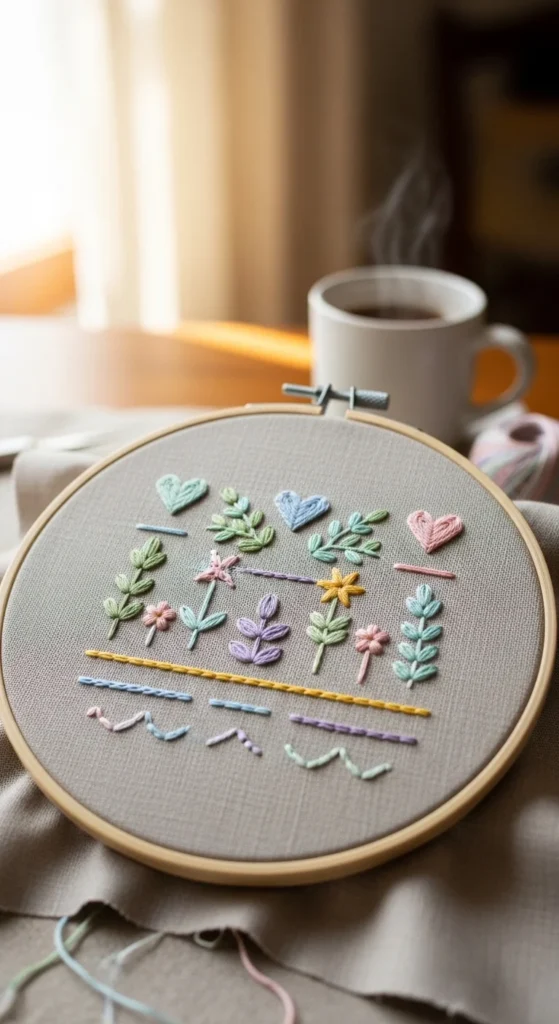
A mixed beginner stitch hoop is a perfect final project because it lets you practice several easy ideas in one place without worrying about making a polished single picture. Divide the hoop loosely into little sections or scatter small motifs across the fabric. Add a heart, a leaf, a star, a tiny flower, a curved line, and maybe a short word if you want. Use each section to try one simple stitch, such as backstitch, lazy daisy, satin stitch, French knots, or straight stitch. This kind of sampler is great because it removes pressure. You are not trying to create one perfect finished design. You are simply learning while making something colorful and charming. It also helps you see which stitches you enjoy most before starting larger embroidery projects. Use leftover floss in soft colors and any plain cotton or linen fabric you have on hand. Once the hoop is done, it can still hang on the wall as a sweet handmade piece. For beginners, this is one of the most useful projects of all because it builds confidence while keeping the whole experience relaxed and creative.
Conclusion
Easy embroidery projects are such a nice way to slow down, make something with your hands, and enjoy a craft that does not ask for a huge budget or a perfect result. Small hoops, simple motifs, and useful little items like bookmarks, towels, totes, and keyrings can help you learn stitches in a calm and encouraging way. The best part is that each tiny project teaches something you can carry into the next one. Start with one idea that feels fun, use fabric and thread you already have where you can, and let the process stay gentle. Beginner embroidery gets much more enjoyable when the projects stay small, practical, and easy to finish.

Lily Summers is a digital artist and creative storyteller who loves bringing colorful characters to life. With a passion for cartoons, fan art, and playful sketches, she inspires others to explore their imagination through art. When she’s not sketching, you’ll find her dreaming up new ideas for CraftedWizard.com to spark creativity in every artist. 🌈✨