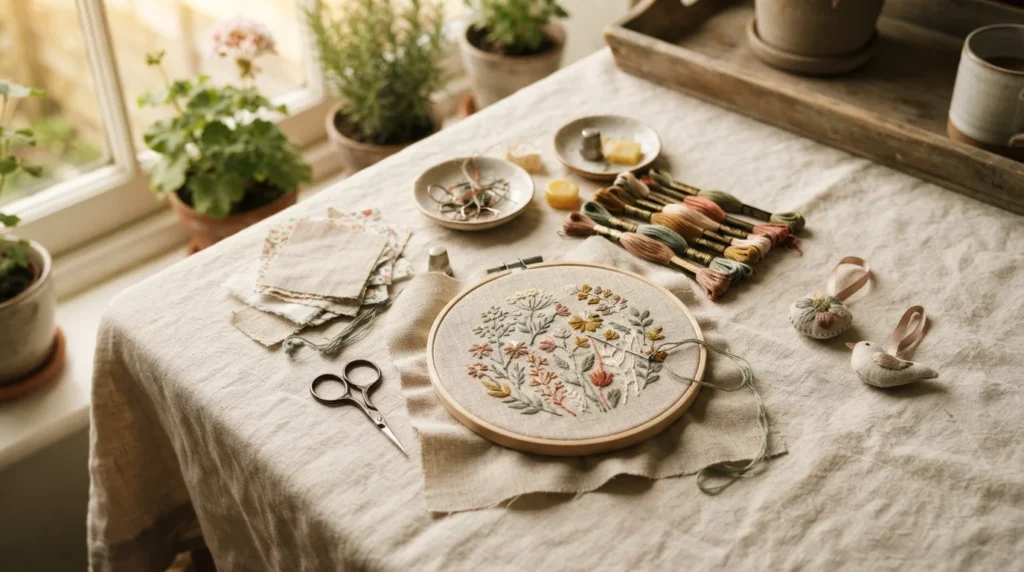
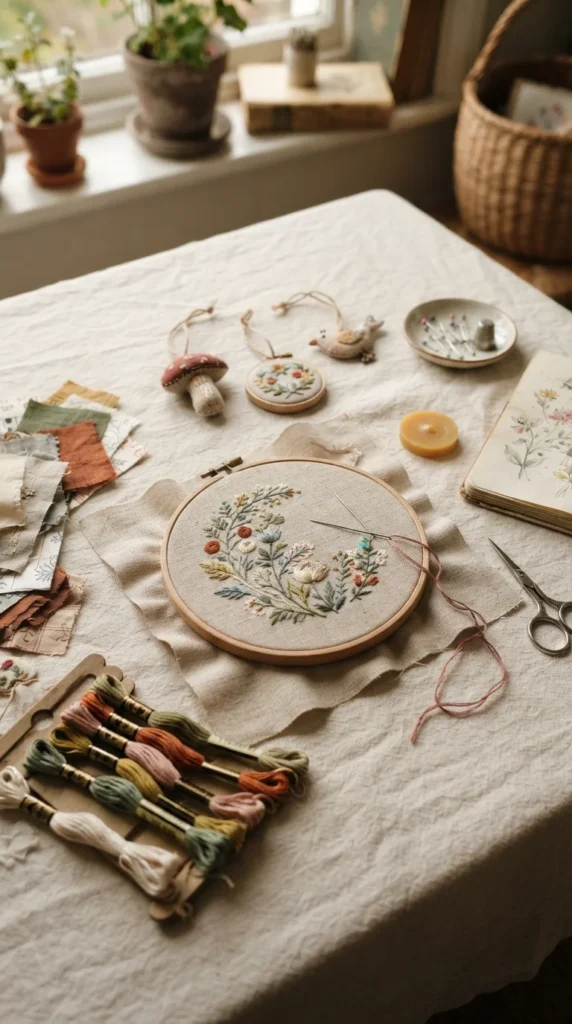
Slow stitching is a lovely way to spend a quiet afternoon while turning leftover fabric and thread into something personal. You don’t have to finish a large project in one sitting, and even a few simple stitches can turn an ordinary scrap into a keepsake. From tiny embroidered flowers and fabric bookmarks to patchwork ornaments and decorative wall pieces, these projects are all about enjoying the process. Grab your embroidery hoop, collect your favorite fabric leftovers, and try one of these 19 slow stitching ideas at your own pace.
1. Tiny Embroidered Wildflowers
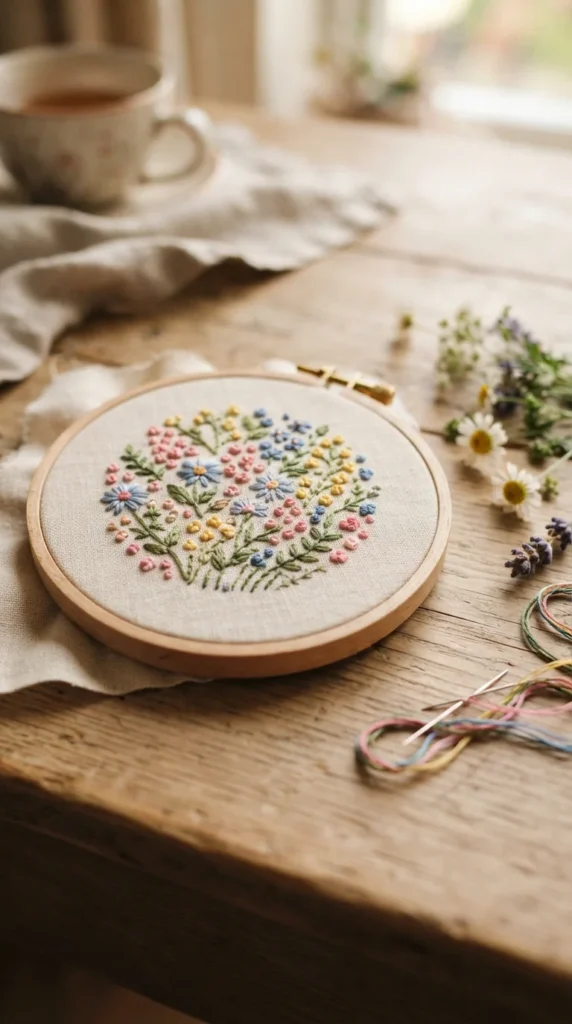
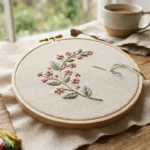
Tiny wildflowers are a wonderful way to practice hand embroidery without worrying about making every stitch identical. Use a small piece of cotton, linen, or an old pillowcase as your base. Draw a few stems with a washable fabric pen, then add petals using lazy daisy stitches, small leaves using satin stitches, and flower centers using French knots.
Keep the flowers scattered instead of arranging them in a perfectly straight pattern. A few uneven blooms can give the fabric a garden-like appearance. Choose two or three thread colors to keep the design simple and easy to finish.
Once your stitching is complete, turn the fabric into a small wall hanging, sew it onto a tote bag, or frame it in a mini hoop. Start with three flowers if you’re new to embroidery, and add more when you feel comfortable.
2. Fabric Scrap Embroidered Bookmarks
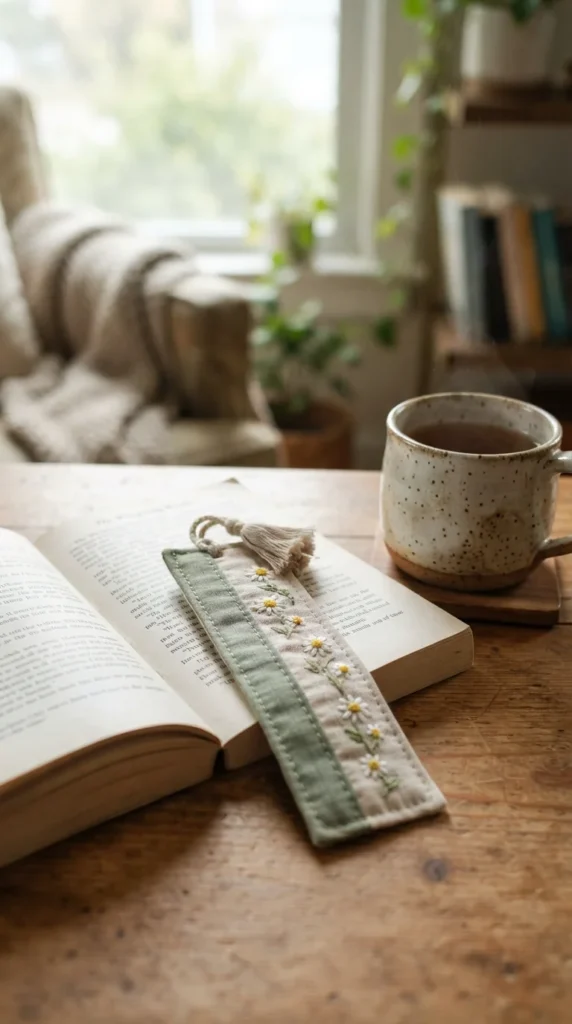
Bookmarks are perfect for slow stitching because they are small, useful, and easy to personalize. Cut two narrow strips of fabric from your leftover cotton or linen, then place a thin piece of felt between them for a little structure. Stitch a simple floral border, tiny hearts, stars, or a few scattered leaves before joining the pieces.
You can hand-sew the edges with a running stitch or blanket stitch. Leave the corners square or trim them into a gentle curve for a softer finish. A small tassel made from embroidery floss adds a decorative touch without requiring extra supplies.
This is also a lovely project for someone who enjoys reading. Make a few bookmarks using different color palettes and keep them beside your favorite books. You can use old shirts, pillowcases, or fabric from previous sewing projects instead of buying new material.
3. Embroidered Fabric Heart Ornaments

Fabric hearts are easy to cut, stitch, and decorate, making them a sweet way to use small fabric pieces. Draw a heart shape onto paper, transfer it to two fabric scraps, and cut out matching pieces. Embroider one side before sewing the pieces together so you can work comfortably on a flat surface.
Try little vines, initials, tiny blossoms, or a simple dotted border. You can also mix fabrics, such as gingham on one side and plain cotton on the other, for a playful patchwork effect. Leave a small opening, add a little stuffing, and close it with neat hand stitches.
Attach a ribbon loop at the top to hang the heart on a door handle, wall hook, decorative branch, or gift package. These ornaments look lovely in soft colors, but darker fabrics with contrasting thread can create a beautiful handmade look too.
4. Slow-Stitched Patchwork Coasters
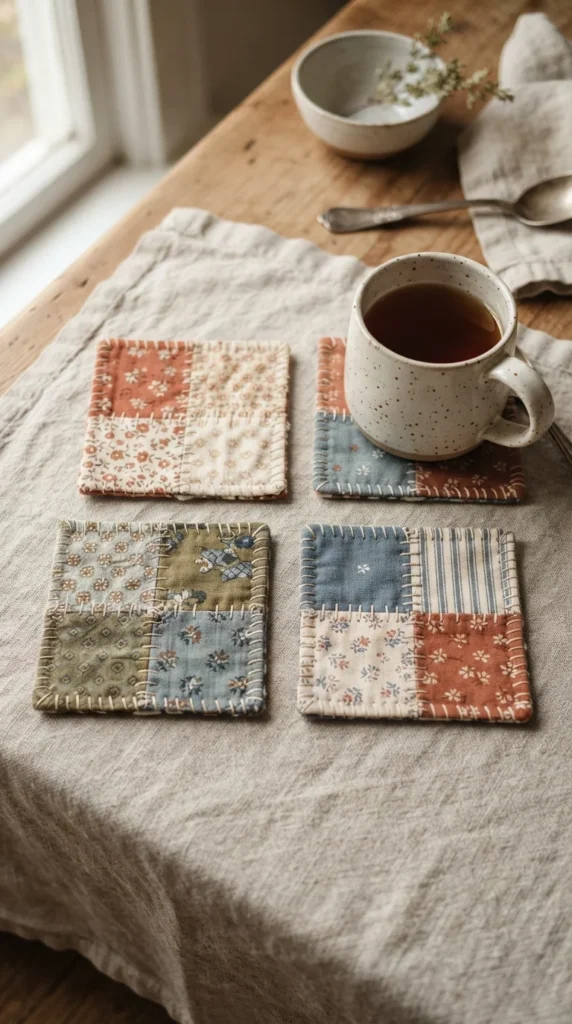
Patchwork coasters let you combine different fabric patterns while practicing straight stitching. Cut small squares from fabric scraps and arrange them in pairs or groups of four. Try mixing stripes with tiny florals, checks, or plain fabrics in similar colors so the pieces look connected.
Sew the squares together with a simple running stitch, leaving the stitches visible on the front. Add a layer of cotton batting or an old towel between the patchwork top and backing fabric to give the coaster a padded feel. Finish the edges with a blanket stitch using embroidery thread.
You don’t have to make a matching set. Each coaster can have its own pattern, as long as the colors work nicely together. These are handy for tea cups, small glasses, and decorative jars, and they make a practical project from fabric pieces that might otherwise go unused.
5. Mini Embroidered Landscape Hoops
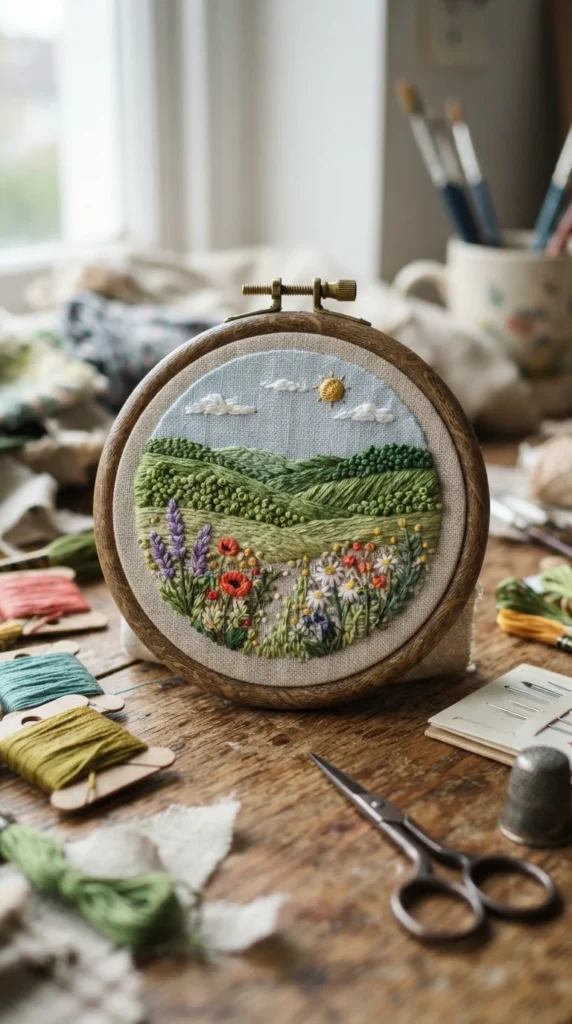
A miniature landscape is a great project when you want to experiment with colors and stitches. Start with a small hoop and sketch a basic scene featuring hills, clouds, a sun, trees, or a little cottage. Use long and short stitches for grassy areas, straight stitches for tree trunks, and French knots for flowers or stars.
Keep the shapes simple so the fabric remains easy to work with. You can use leftover thread from other projects instead of buying an entire color set. Mixing a few shades of green or blue gives your landscape more depth without making it complicated.
Try a different scene in every hoop, such as a sunset, mountain range, garden, or beach. Arrange two or three finished hoops together on a wall for a handmade gallery display. They also look lovely sitting on a shelf or tucked into a craft corner.
6. Embroidered Denim Patches
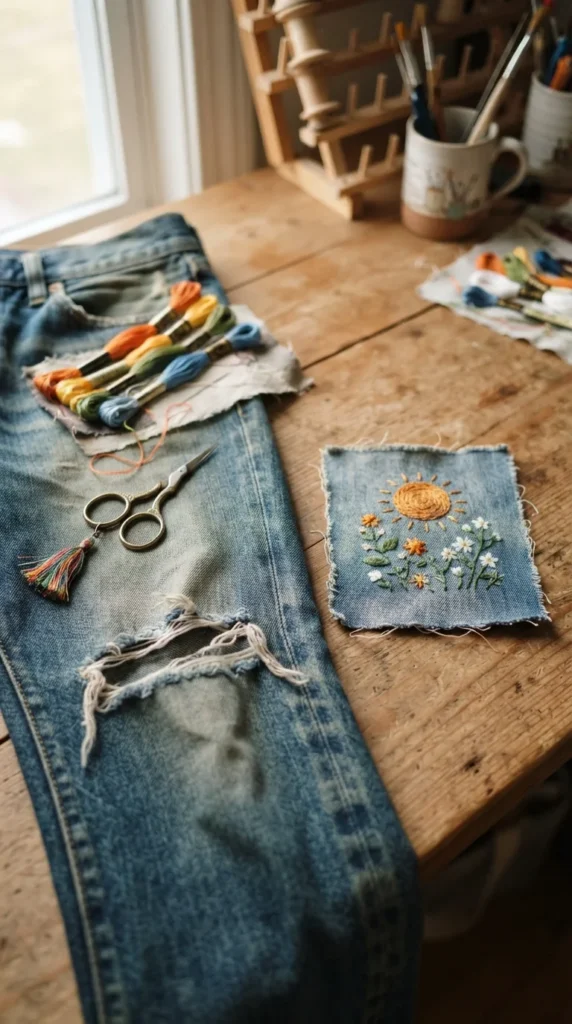
Old jeans are a great source of sturdy fabric for handmade patches. Cut a small rectangle, circle, or flower shape from denim and stitch a design onto it before attaching it to clothing. Denim holds up well to simple embroidery, especially when you use thicker thread and avoid overly dense stitching.
Try a tiny sunflower, a mushroom, a crescent moon, or a few colorful stars. If you want to cover a hole in your jeans, make the patch slightly larger than the damaged area and stitch it around the edges. You can also place the patch on the inside of the garment and sew through the denim from the outside.
Use denim from old jeans for a patch that matches the weight of the clothing you’re repairing. Add decorative running stitches around the border to give the patch a handmade finish and help secure the edges.
7. Fabric Scrap Needle Book
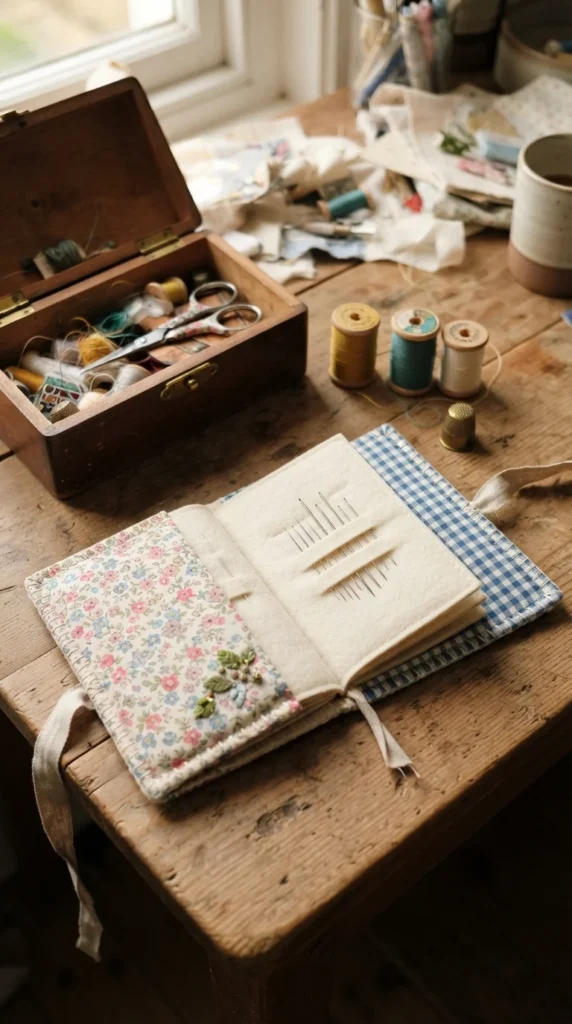
A small needle book keeps your embroidery needles in one place while giving you a chance to use some of your favorite fabric scraps. Cut two matching rectangles of fabric for the covers and a smaller piece of felt for the inside pages. Stack the felt in the middle and sew everything together along the spine.
Decorate the cover with a tiny stitched flower, a simple vine, or a few initials. You can use running stitches around the edges or add a little fabric pocket to hold needle threaders and small sewing accessories.
Keep the design light so the book closes easily. If you have leftover ribbon, sew a small tie around the outside to keep the pages together. This makes a useful addition to your sewing basket and a thoughtful handmade gift for someone who enjoys stitching.
8. Hand-Stitched Fabric Garland
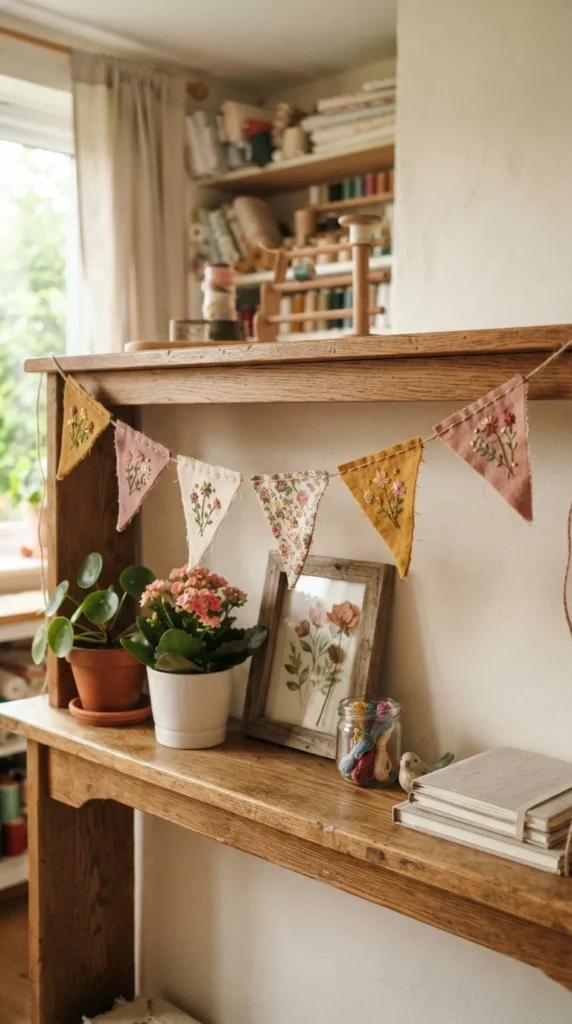
Fabric garlands are a fun way to turn a collection of small scraps into room decor. Cut triangles, rectangles, or rounded flag shapes from different cotton fabrics. Add small embroidered flowers, dots, leaves, or stars to each piece before attaching them to a long ribbon or fabric strip.
You can keep the garland in a single color family or use a variety of prints for a more playful look. Hand stitching gives each flag a slightly different character, so there is no need to make them identical.
Hang the finished garland over a shelf, across a craft room wall, above a desk, or near a window. It can also decorate a birthday table or a small handmade gift corner. For a shorter project, make just five flags and leave the rest of the ribbon plain.
9. Embroidered Fabric Tea Bag Tags
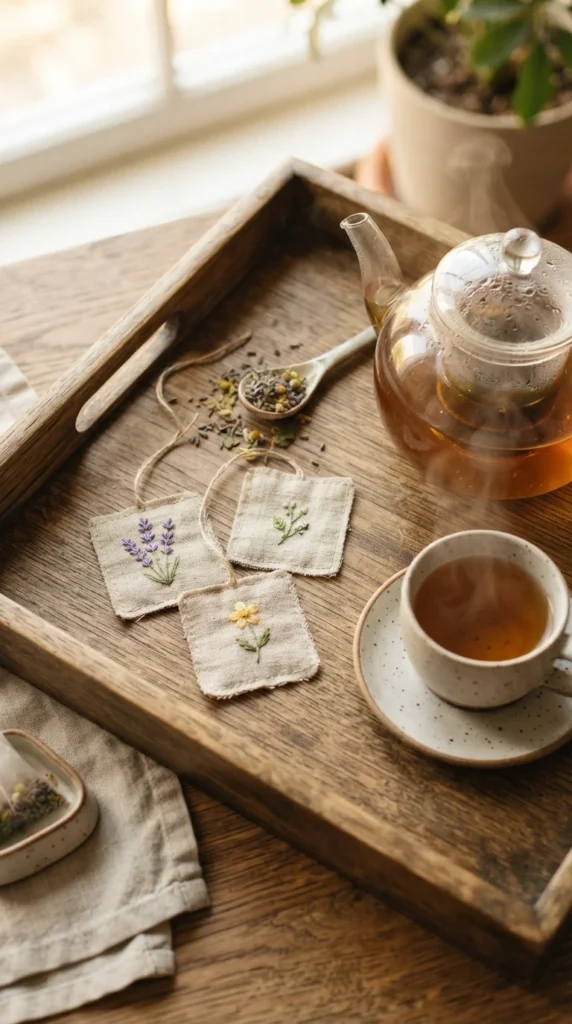
These miniature fabric tags are a lovely project for anyone who enjoys tea and tiny decorative details. Cut small squares from linen or cotton, fold the edges inward, and stitch around them with a simple border. Add a tiny floral motif in the center using two or three embroidery stitches.
You can make the tags as decorative tea accessories or use them as little labels on fabric pouches that hold loose tea gifts. If you’re making actual tea bag tags, keep the fabric and thread away from direct contact with the tea and use food-safe materials for anything that touches the drink.
Choose small designs that are easy to repeat, such as a sprig of mint, a lemon slice, a little berry, or a flower. Make a few matching pieces in one afternoon and store them in a small tin until you want to use them.
10. Scrap Fabric Floral Brooches
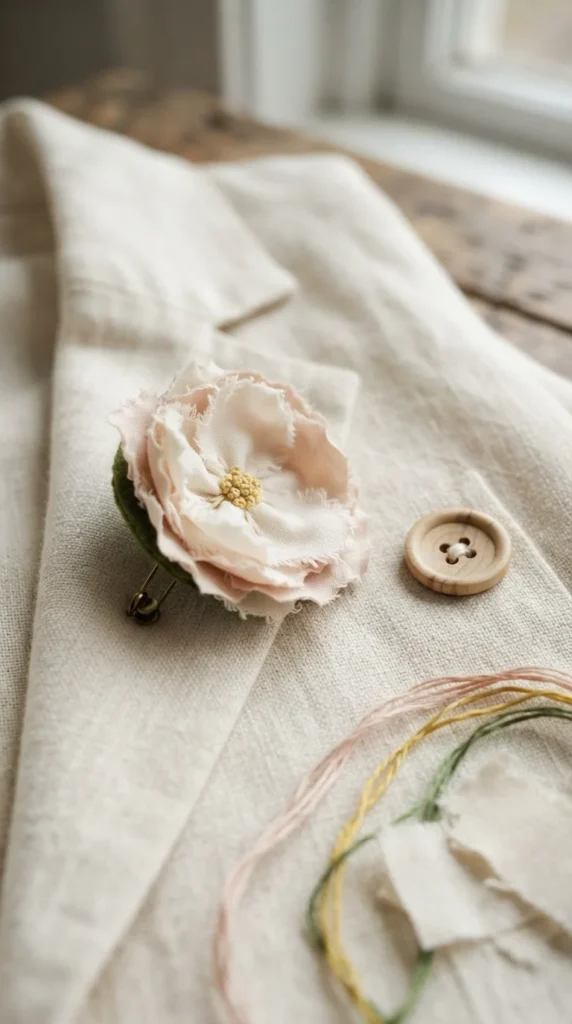
A fabric floral brooch gives tiny fabric pieces a second life as wearable accessories. Cut a few petal shapes from lightweight cotton and layer them into a flower. Stitch through the center to hold the petals together, then add a small embroidered center using French knots or a few straight stitches.
You can mix prints, use plain fabric, or layer different shades of the same color. Soft cotton works well because the petals are easy to fold and sew by hand. Add a felt circle to the back and attach a brooch pin with secure stitches.
Make one flower or a small cluster of two flowers. These can decorate scarves, bags, jackets, hats, or gift wrapping. If you prefer a flatter accessory, stitch a flower design onto a fabric circle instead of layering petals.
11. Embroidered Fabric Gift Tags
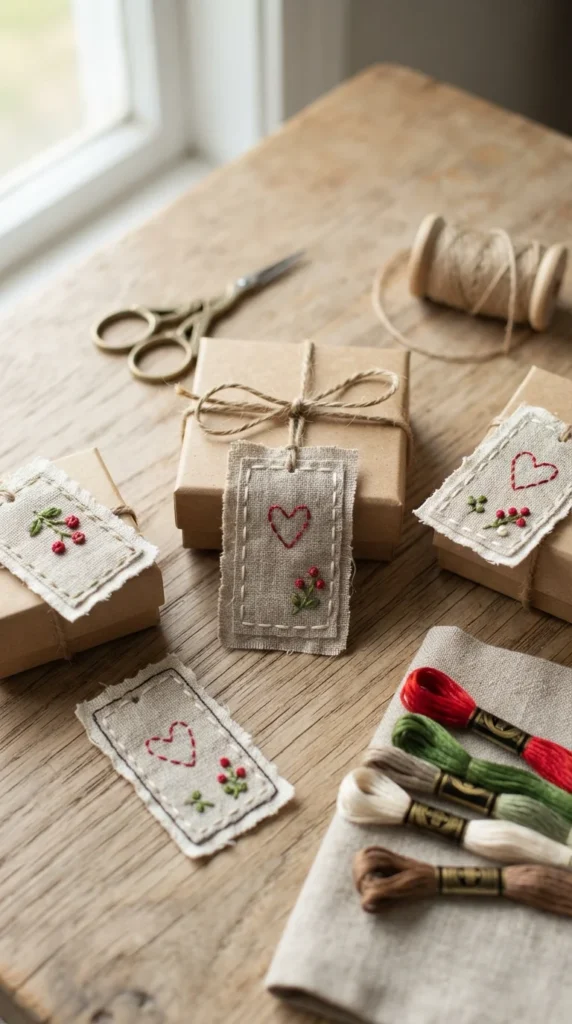
Reusable fabric gift tags are an easy way to add a handmade touch to birthday presents, holiday packages, or small gifts for friends. Cut sturdy fabric into tag shapes and reinforce the back with another layer of cotton or felt. Before sewing the layers together, decorate the front with a small flower, star, heart, or seasonal motif.
Use embroidery floss to stitch a border around the edge and make a tiny loop at the top for twine. Leave a blank area if you plan to write the recipient’s name on a separate paper label attached to the tag.
Keep several tags in a small box so you can use them whenever you wrap a present. You can reuse them again and again, especially when they are attached with string instead of tape. Mix different fabric patterns for a collection that looks handmade and personal.
12. Slow-Stitched Fabric Suncatcher
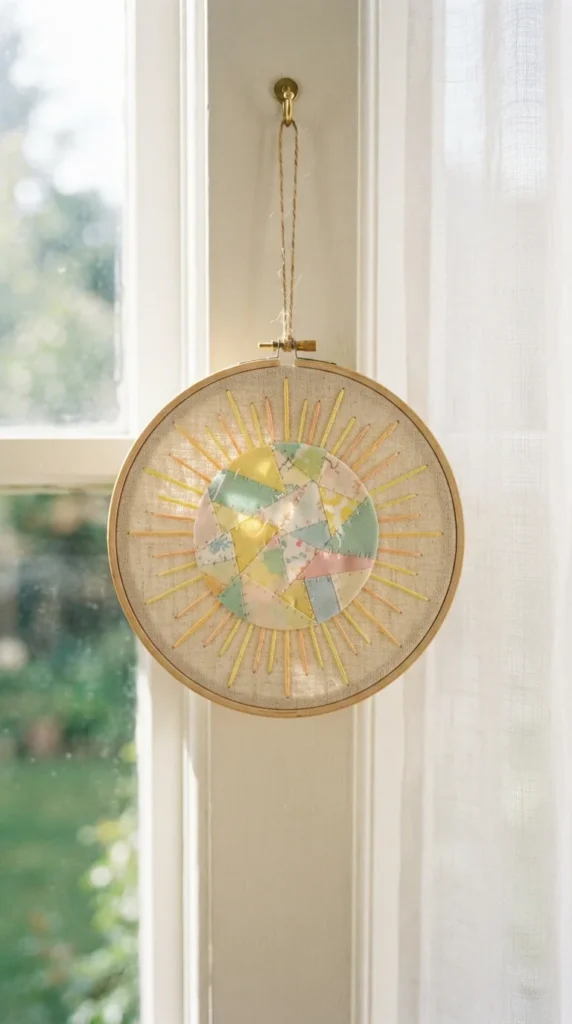
This decorative project combines simple patchwork with embroidery for a light, cheerful window display. Use a small circular hoop or cut a ring from sturdy cardboard and wrap it with fabric. Create a small patchwork circle in the center using scraps of cotton, then add embroidered rays around the edges.
Choose sunny colors such as pale yellow, peach, cream, or light pink. A few long stitches radiating outward can create the appearance of sunlight without requiring complicated patterns.
Attach a hanging loop at the top and place it near a window where natural light can brighten the fabric. Since fabric doesn’t let light pass through like glass, the effect is more of a soft decorative window accent than a traditional transparent suncatcher. It still makes a lovely addition to a craft room, bedroom, or cozy corner.
13. Embroidered Scrap Fabric Napkin Corners
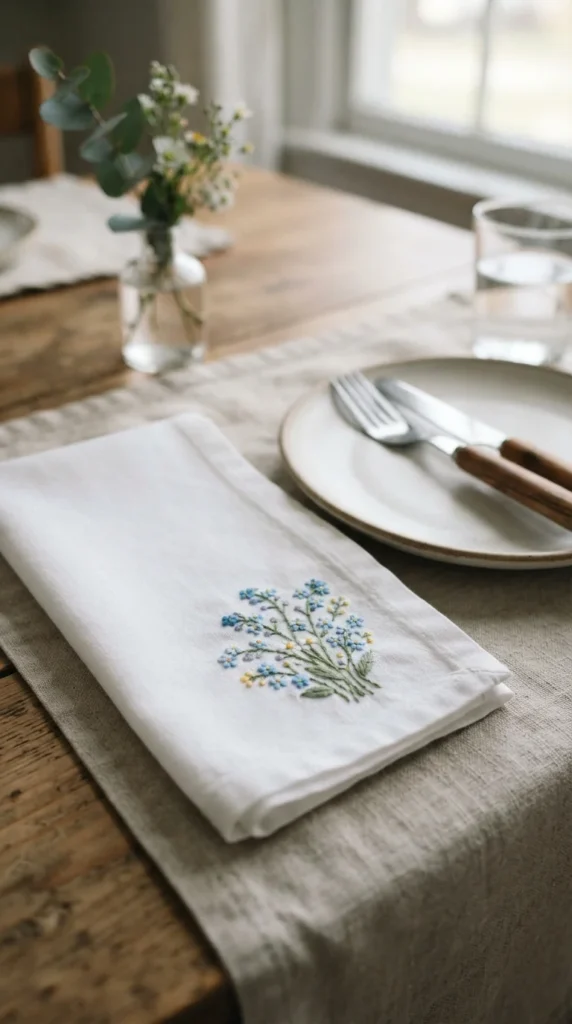
If you have old cotton napkins or plain fabric pieces, a small embroidered corner can make them feel special again. Choose one corner and draw a simple floral cluster or leafy branch. Use stem stitches for the stems, satin stitches for the petals, and tiny French knots for the centers.
Keep the motif small so it doesn’t take over the fabric. A single flower with two leaves can look just as lovely as a larger arrangement. Choose thread colors that work with your everyday tableware, such as blue and white, green and cream, or muted red with natural linen.
If the napkins are meant for everyday meals, wash the fabric before stitching and choose embroidery floss that can handle regular laundering. Finish the thread ends carefully so they don’t loosen over time. A matching set of two or four napkins makes a lovely handmade table detail.
14. Tiny Embroidered Mushrooms
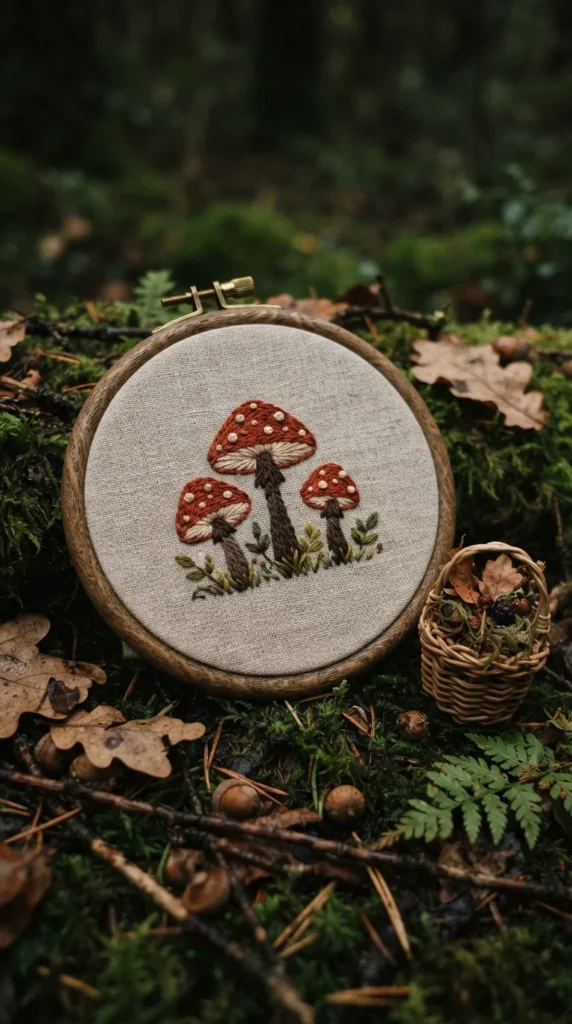
Mushroom embroidery is perfect for slow stitching because the shapes are simple and the details can be added gradually. Draw two or three mushrooms in different sizes on your fabric, then fill the caps with satin stitches or use small straight stitches to create texture.
Add tiny dots to the caps, thin stems, and a few grass stitches around the base. You can also stitch little leaves or a small snail nearby if you want to turn the design into a miniature woodland scene.
Use earthy colors such as rust, cream, olive, and brown, or choose brighter shades for a playful look. The finished design can be framed in a mini hoop, sewn onto a pouch, or turned into a decorative patch. It also makes a sweet handmade gift for someone who loves nature-themed crafts.
15. Fabric Scrap Patchwork Pouch
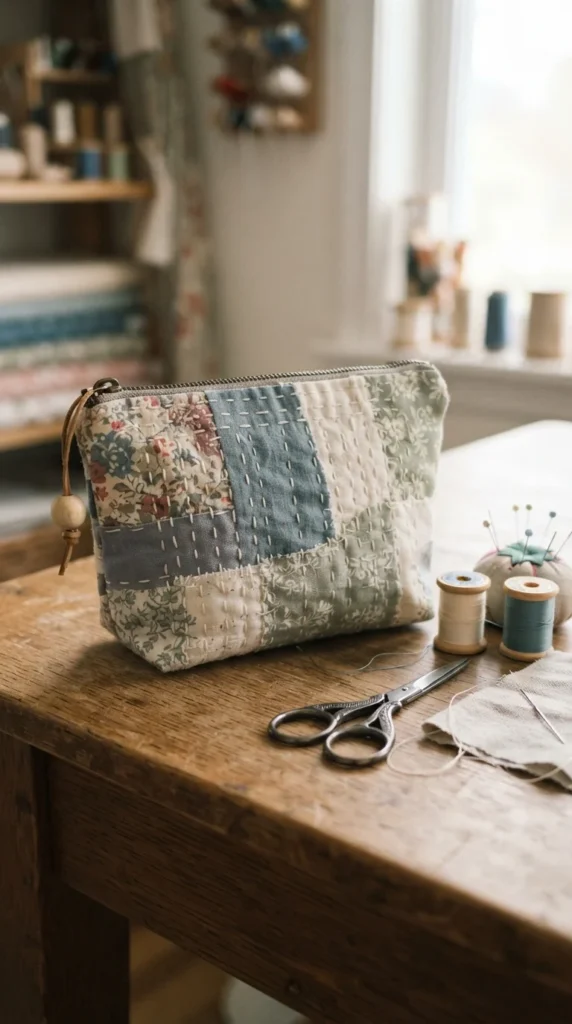
A patchwork pouch is a practical project that lets you combine hand embroidery and basic sewing. Start by joining several small fabric squares to create a front panel. Once the patchwork is complete, add simple running stitches across the seams or stitch tiny flowers into a few squares.
Cut a matching backing piece and add a lining if you want the pouch to feel more finished. Sew in a zipper, or use a simple envelope-style closure if you prefer not to work with zippers. Keep the pouch small enough for embroidery supplies, earbuds, coins, hair clips, or other everyday items.
You can use scraps from previous projects and make each pouch different. A few visible hand stitches across the fabric give it a handmade look while helping hold the layers together. This is a great weekend project when you want something useful at the end.
16. Hand-Embroidered Fabric Photo Frame
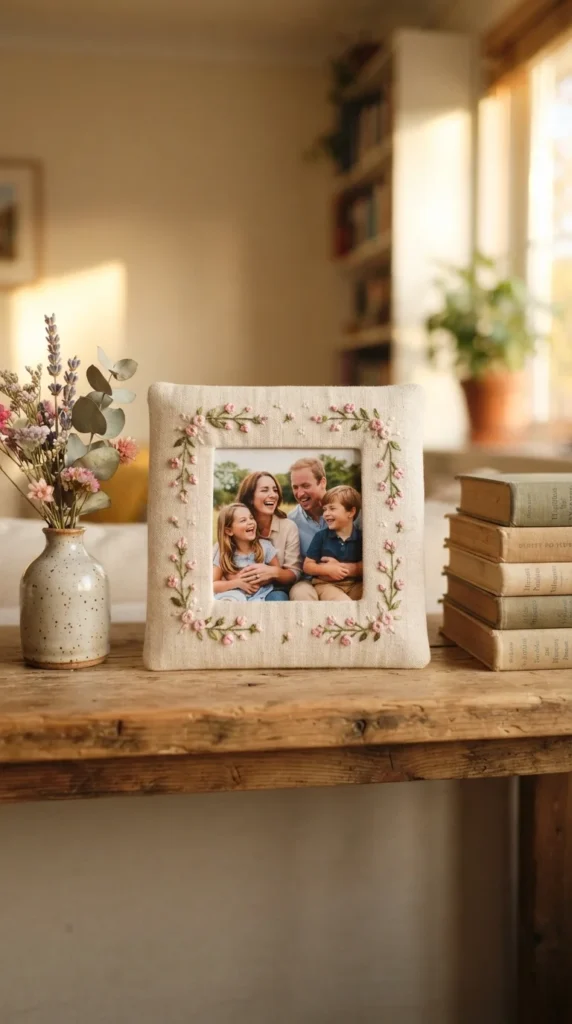
A fabric photo frame is a thoughtful way to combine stitching with a personal memory. Cut a piece of sturdy fabric slightly larger than your photo and mark the opening in the center. Embroider the border before assembling the frame, using small flowers, leaves, dots, or a simple geometric pattern.
You can back the fabric with felt or cardboard to help it hold its shape. Make a small pocket at the back to slide the photo in and out, or attach the fabric to a lightweight cardboard frame. Add a folded fabric stand if you want it to sit on a desk or shelf.
Choose a photo from a family gathering, a favorite trip, or a special moment with a friend. The embroidery doesn’t have to be perfect. Slightly uneven stitches can make the frame feel more personal and warm.
17. Stitched Fabric Leaf Bookmarks
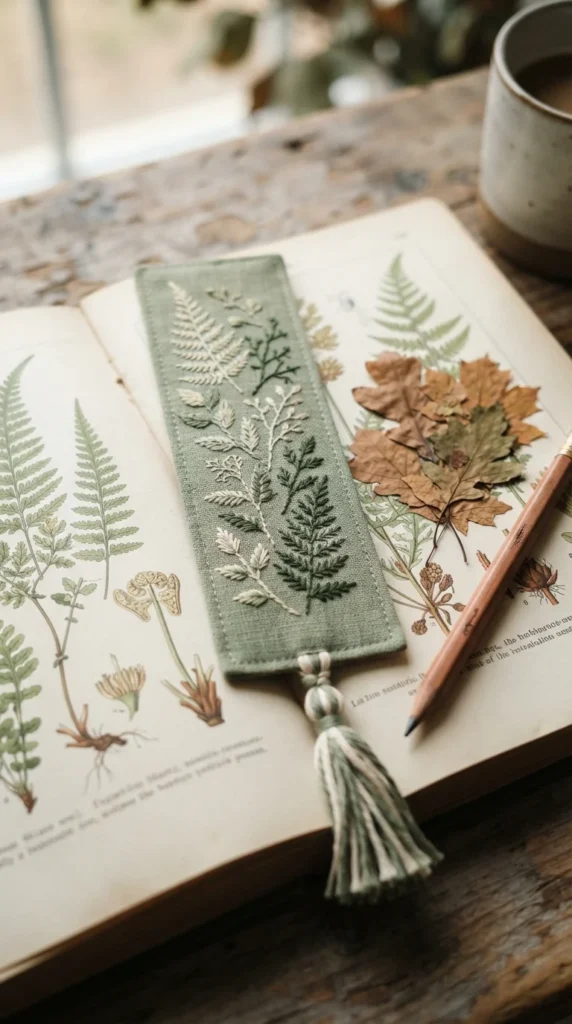
Leaf bookmarks are a relaxing embroidery project for anyone who enjoys botanical patterns. Cut a long strip from cotton or linen, then sketch a branch, fern, eucalyptus, or simple vine along the center. Use stem stitches for the branches and lazy daisy or satin stitches for the leaves.
You can use a single shade of green or mix a few tones to give the design more detail. Add a running stitch border around the bookmark, then back it with another fabric strip so the loose thread ends are hidden.
Finish the top with a tassel or a loop made from embroidery floss. This project works well with fabric scraps from old shirts, curtains, or pillow covers. Make one for yourself and another to give to a friend who loves reading or collecting books.
18. Embroidered Fabric Sachets
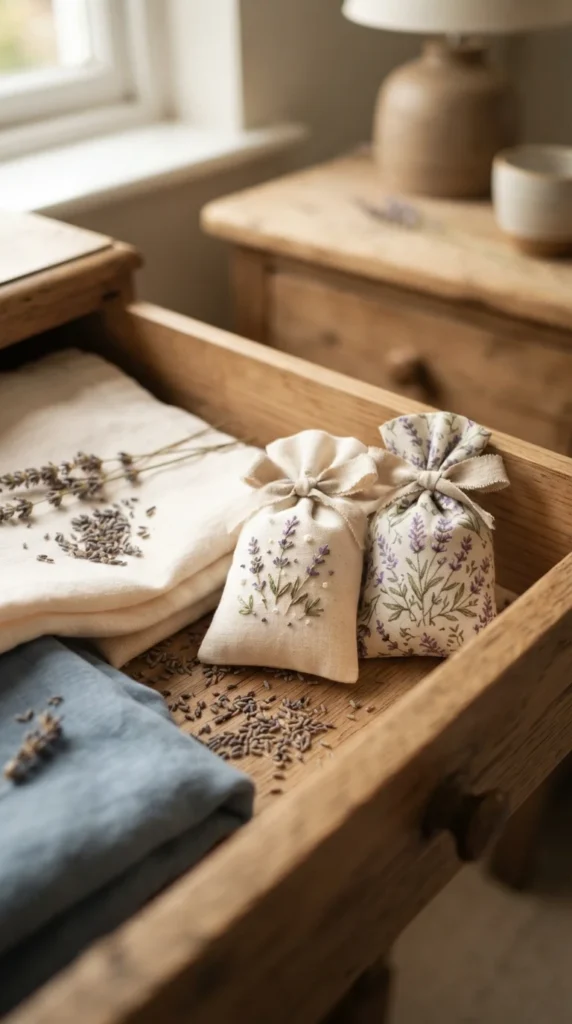
Fabric sachets are a gentle way to use small pieces of cotton or linen while creating something for your home. Cut two small rectangles, embroider a simple flower or lavender sprig on the front, then sew the pieces together with the right sides facing inward.
Leave a small opening along the top, turn the sachet right side out, and fill it with dried lavender or another suitable filling. Close the opening with hand stitches, then tie a ribbon around the top or add a little loop for hanging.
You can place sachets in drawers, wardrobes, storage boxes, or beside folded linens. If you prefer a reusable version, make an inner pouch that can be opened and refilled. Soft floral fabrics and small embroidery designs work especially well for these little gifts.
19. A Slow-Stitched Scrap Fabric Wall Collage
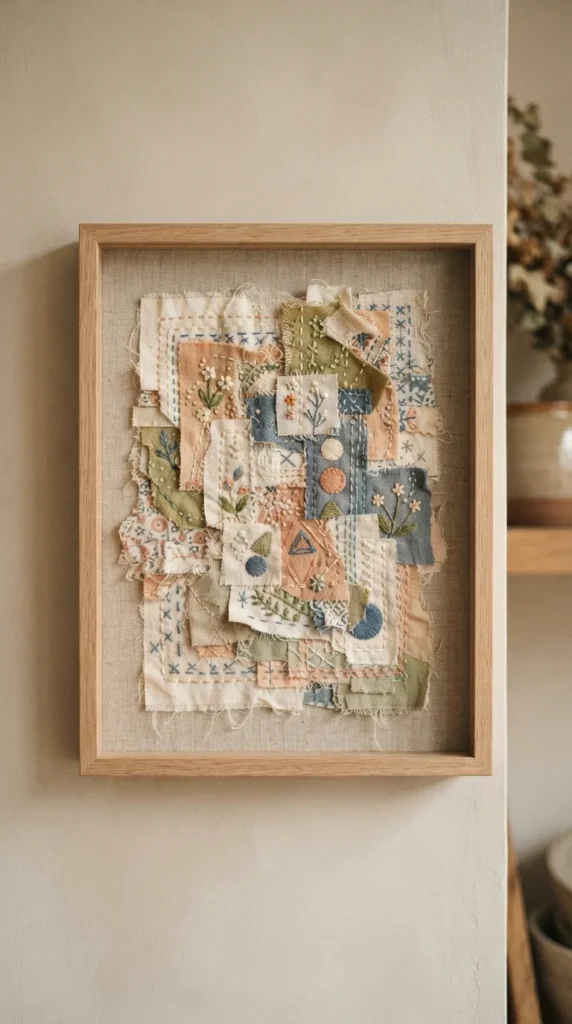
A fabric collage is a wonderful project when you have lots of different scraps and don’t want to cut them into matching shapes. Start by laying pieces of fabric on a larger backing cloth, moving them around until you like the arrangement. Combine plain colors with floral prints, stripes, and textured pieces.
Attach each scrap with small running stitches, blanket stitches, or decorative cross stitches. You can leave some edges visible for a relaxed patchwork look or fold the edges under for a tidier finish. Add tiny flowers, circles, leaves, or little stitched marks wherever the composition feels empty.
There is no set pattern to follow, so you can work on the collage whenever you have a few minutes. Once finished, stretch it over a piece of cardboard or place it in a simple frame. It becomes a one-of-a-kind piece of handmade wall art that carries the colors and textures of your previous projects.
Final Thoughts
Slow stitching is a lovely reminder that handmade projects don’t have to be complicated or finished in a single afternoon. A few fabric scraps, a needle, and leftover embroidery floss can turn into bookmarks, ornaments, patches, home decor, and little gifts you can share with others. Start with the idea that catches your eye, gather what you already have, and let yourself enjoy each stitch without rushing. Save your favorite ideas and try one small project this week.

Lily Summers is a digital artist and creative storyteller who loves bringing colorful characters to life. With a passion for cartoons, fan art, and playful sketches, she inspires others to explore their imagination through art. When she’s not sketching, you’ll find her dreaming up new ideas for CraftedWizard.com to spark creativity in every artist. 🌈✨