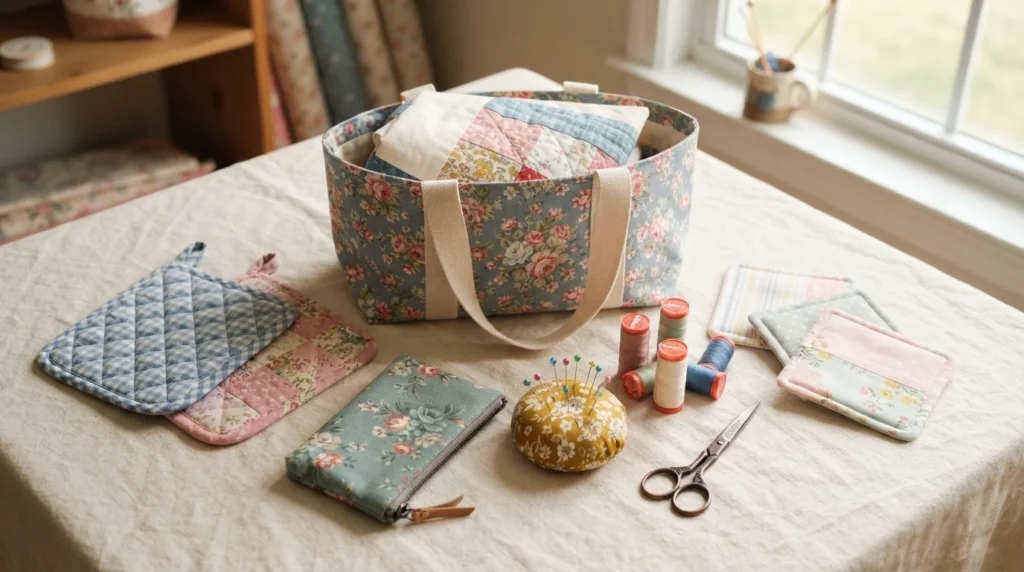
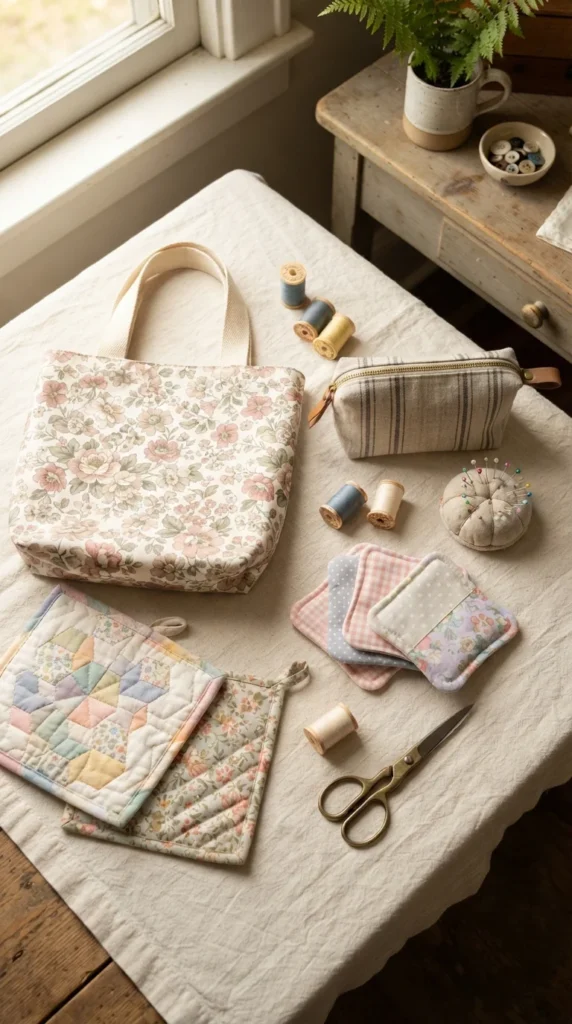
Sewing is a wonderful way to turn leftover fabric, old clothes, and simple materials into things you can use every day. Whether you are learning to sew by hand or already have a sewing machine, there are plenty of small projects that are both practical and fun to make. From reusable kitchen accessories to pretty bags and handy organizers, these DIY sewing ideas offer something for every skill level. Gather your fabric scraps, thread, needles, and scissors, and start with a project that fits your home, routine, or personal style.
1. Reusable Fabric Shopping Bags
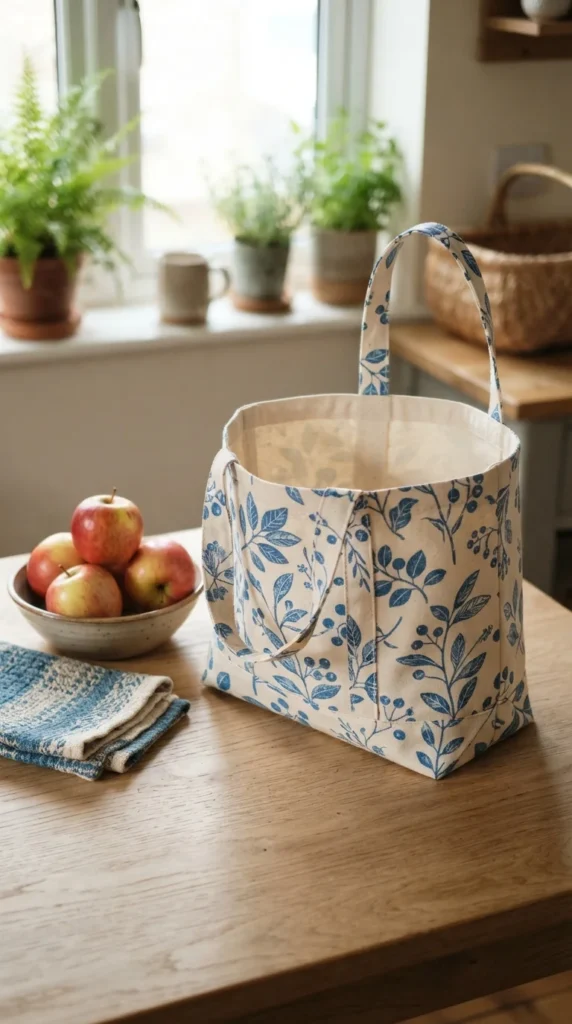
A reusable fabric shopping bag is a practical first sewing project that you can carry to the grocery store, farmers market, or local shops. Choose cotton canvas, denim, or sturdy woven cotton for a bag that holds its shape and handles regular use. Cut two matching rectangles, sew the sides and bottom together, and attach two long fabric handles.
For extra strength, sew a second line of stitching along the handles where they connect to the bag. You can also add a small inside pocket for keys, receipts, or a shopping list. Washable fabric makes this project easy to maintain, and leftover curtain fabric or an old tablecloth can work well if the material is strong enough.
2. Handmade Fabric Scrunchies
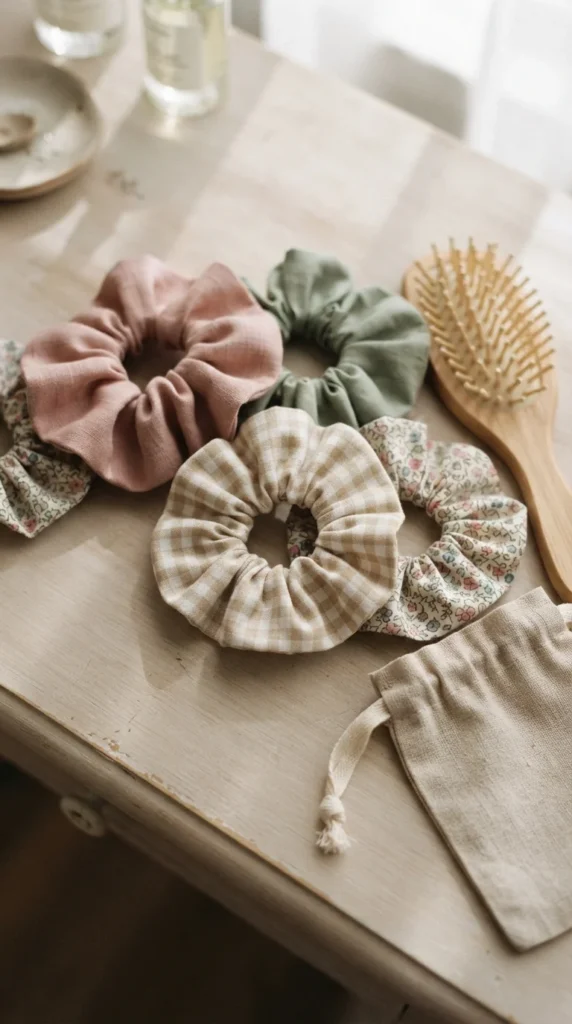
Fabric scrunchies are quick to make and useful for everyday hairstyles. They are also a great way to use narrow fabric scraps that might otherwise end up in the bin. Cotton, satin, and lightweight linen all work, depending on whether you prefer a casual or dressy finish.
Cut a long fabric strip, fold it lengthwise with the printed side facing inward, and stitch along the long edge. Turn the fabric tube right-side out, thread elastic through it, and join the elastic ends securely before closing the opening. The elastic length controls the hold, so adjust it to suit your hair thickness and preferred fit.
Make a matching set in different colors for your bathroom drawer, or package a few together as a handmade gift. Once you get comfortable with the basic shape, try oversized scrunchies or narrow versions for a more subtle look.
3. Zippered Makeup Pouches
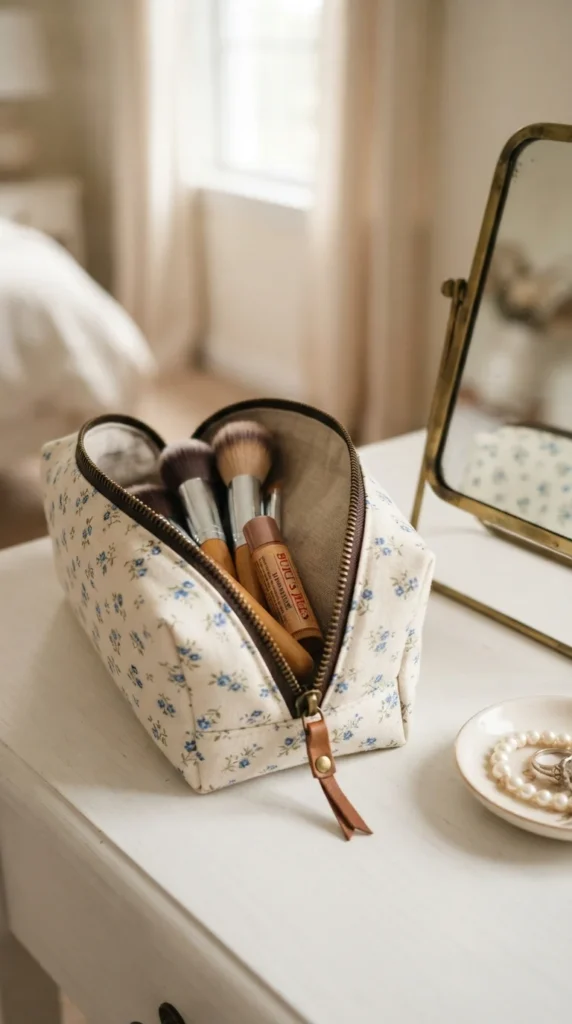
A zippered makeup pouch keeps cosmetics, toiletries, chargers, and small personal items in one place. It is a useful sewing project for anyone ready to practice installing a zipper without making a full-sized bag. Choose a medium-weight outer fabric and a smooth cotton lining for a clean interior.
Cut two outer pieces and two lining pieces to the same size. Place the zipper between the outer fabric and lining along the top edge, stitch, and repeat on the opposite side. Open the zipper before sewing around the remaining edges, then turn the pouch right-side out through the opening.
You can make the pouch flat for makeup brushes or add boxed corners for more room. Waterproof lining fabric is another option for toiletries, especially if the pouch will travel in a suitcase. Finish with a small fabric loop at one end so you can hang it from a hook.
4. Quilted Kitchen Potholders
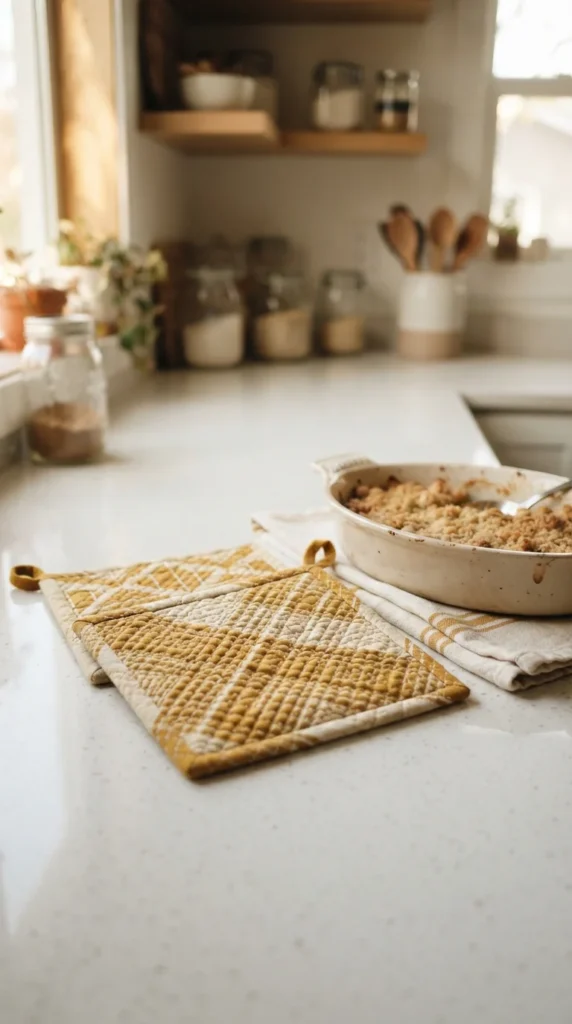
Quilted potholders protect your hands when handling warm cookware and add a coordinated touch to your kitchen. Choose tightly woven cotton for the outer layers and use a heat-rated batting designed for potholders. Avoid ordinary polyester filling, which may melt when exposed to high heat.
Cut two matching fabric squares and the appropriate batting layers. Stack them together, then sew parallel lines or a simple diamond pattern through the layers to hold everything in place. Add a cotton loop in one corner before finishing the edges with binding.
You can make a set that matches your kitchen towels or use contrasting prints for a playful look. Wash the finished potholders according to the fabric and batting instructions, and check them regularly for thinning or damaged areas. Never rely on a potholder that has become worn or damp when handling hot pans.
5. Fabric Bookmarks

Fabric bookmarks are small, useful gifts for readers and a simple way to practice straight stitching. They work particularly well with cotton scraps left over from larger projects. Add a lightweight interfacing layer between two fabric pieces to give the bookmark structure without making it too bulky.
Cut two narrow rectangles, place them with their printed sides together, and stitch around the edges while leaving a small gap. Turn the bookmark right-side out, press it flat, and close the gap with a neat line of stitching. A short ribbon or narrow fabric loop can be added at the top.
For a decorative finish, sew a border around the edges or add a small embroidered flower. Keep embellishments flat so the bookmark sits comfortably inside a book. Make several in different prints and keep a few ready for birthdays, teacher gifts, or holiday presents.
6. Drawstring Storage Bags
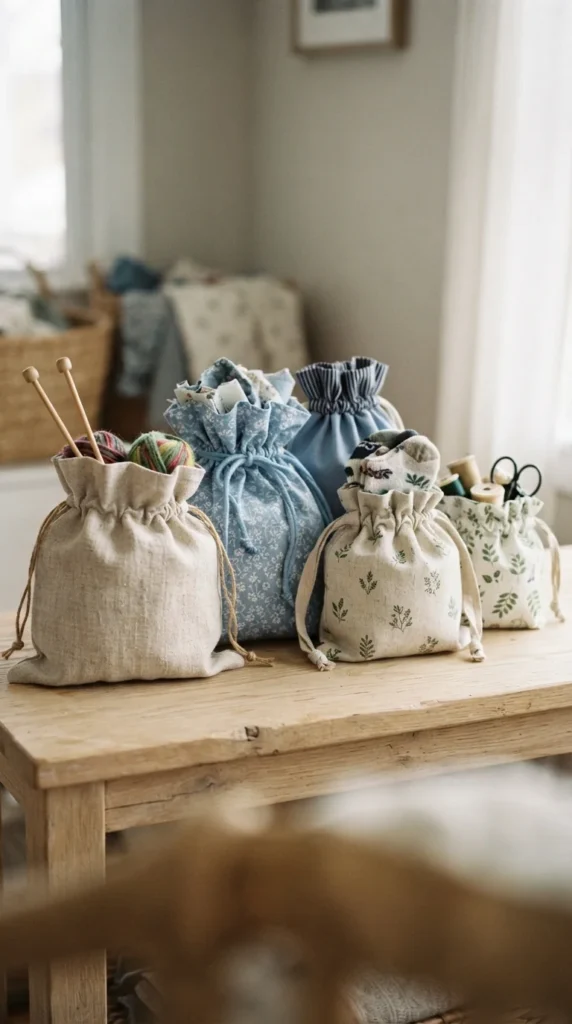
Drawstring bags are handy for storing jewelry, travel accessories, toys, shoes, or spare cables. Their simple shape makes them suitable for beginners, and you can change the dimensions to suit almost any small item. Lightweight cotton works well for everyday storage, while heavier fabric can support larger bags.
Cut two rectangles, sew the side and bottom edges, and fold the top edge inward to form a channel for the cord. Leave an opening in the side seams where the drawstring will emerge, then thread a cord or narrow ribbon through the channel using a safety pin.
For a travel set, make several sizes in matching fabrics. Use a small bag for charging cables, a medium one for toiletries, and a larger one for laundry. If you plan to store delicate jewelry, add a soft lining to help protect the contents from scratches.
7. Handmade Fabric Coasters
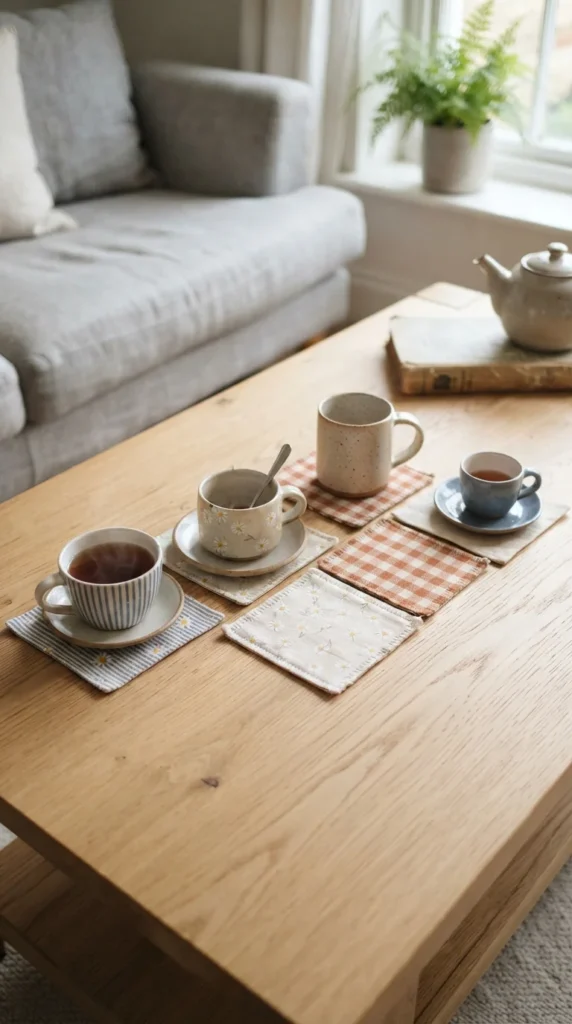
Fabric coasters help catch small drips and give your coffee table a personal touch. They are ideal for using coordinated scraps, and you can make a matching set in a single afternoon. Cotton is a good choice because it is easy to sew and usually simple to wash.
Cut two fabric squares and one square of thin absorbent batting for each coaster. Stack the layers, sew around the edges with the printed sides facing inward, and leave a small gap for turning. Turn the coaster right-side out, press it flat, and close the gap before adding a decorative border.
Choose prints that match your sofa cushions or dining table linens. A simple grid of stitching across the surface helps hold the layers together and gives each coaster a quilted appearance. These coasters are best for cool or warm drinks rather than as substitutes for heat-resistant trivets.
8. Fabric Headbands
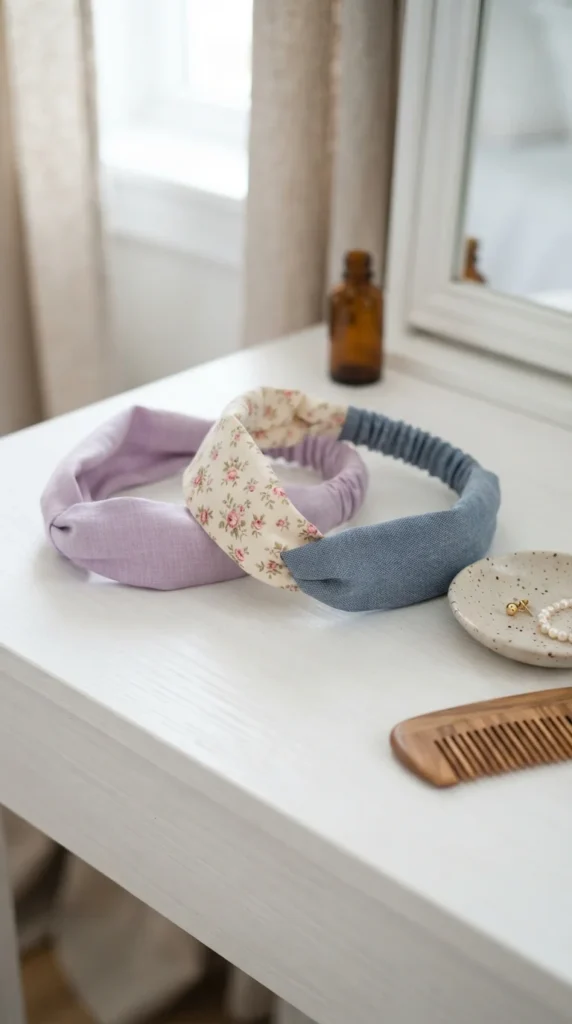
A handmade headband is a useful accessory that keeps hair away from your face while adding color to an everyday outfit. You can sew a simple fitted band from stretchy fabric or make a woven cotton version with elastic at the back. Beginners may find the woven style easier to handle.
Cut a long strip wide enough to fold in half, stitch along the long edge, and turn it right-side out. Press the band flat, then attach a short elastic section at the ends to create a comfortable fit. Measure around your head before cutting so the finished headband does not feel too tight.
Try floral cotton for a soft everyday look or use a solid color that matches your favorite clothes. A twisted front detail adds visual interest without requiring extra materials. Make sure the seams are smooth and the elastic sits comfortably behind your ears.
9. Reusable Fabric Bowl Covers
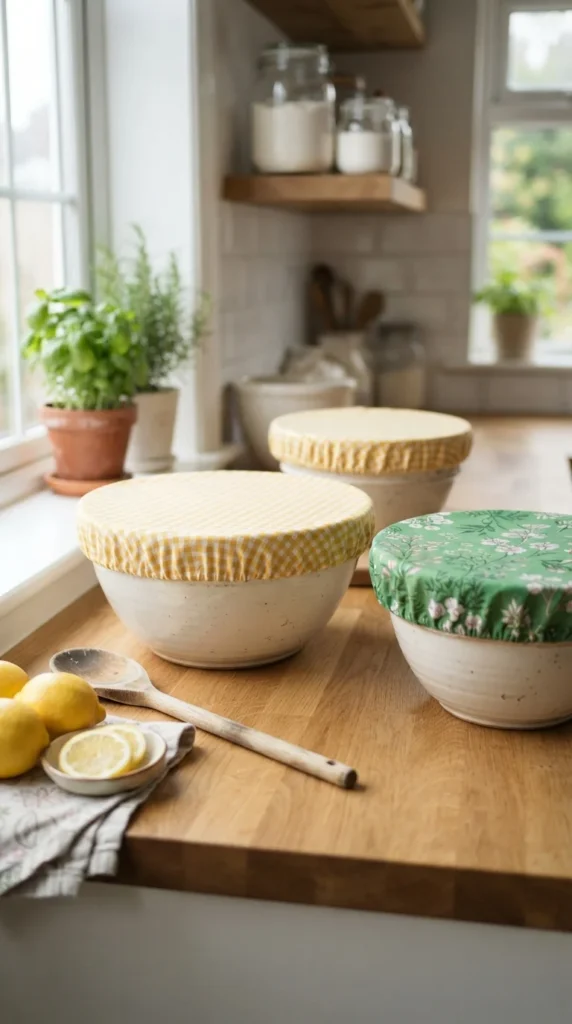
Fabric bowl covers provide a washable alternative to disposable covers for protecting bowls during food preparation or serving. Use tightly woven cotton and food-safe elastic, choosing a fabric that can be laundered regularly. These covers are useful for keeping dust and insects away from food during short periods on the counter.
Place a bowl upside down on the fabric and trace a circle that extends several inches beyond its rim. Cut the circle, fold a narrow channel around the edge, and stitch it while leaving a small opening. Thread elastic through the channel, test the fit on the bowl, and sew the elastic ends together before closing the opening.
Make a few different sizes for mixing bowls, serving dishes, and proofing bowls. Wash the covers after use, especially if they come into contact with food residue. They are not airtight and should not replace refrigeration or proper food storage.
10. Padded Fabric Glasses Cases
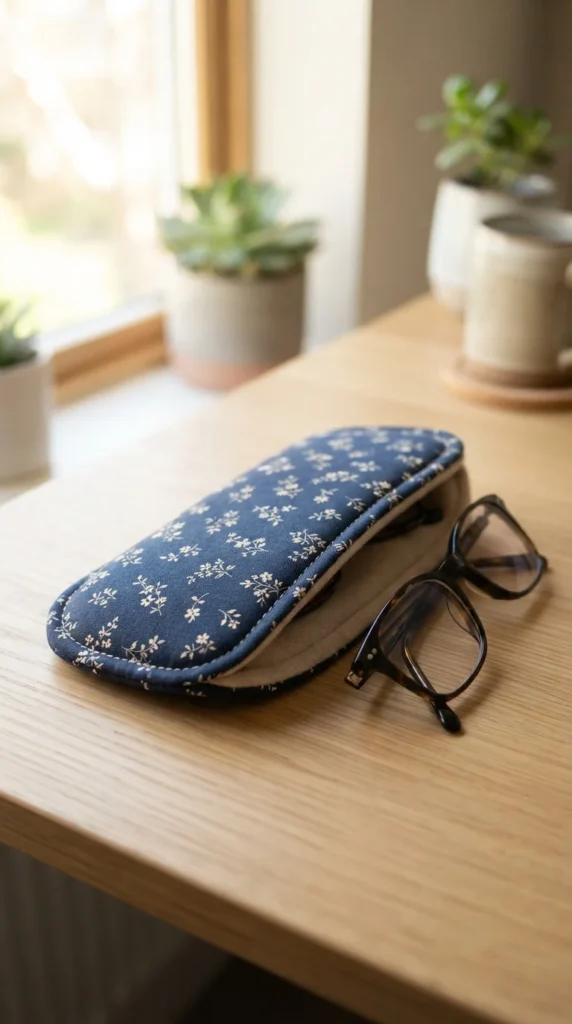
A padded glasses case helps protect your eyewear from dust and everyday scuffs inside a handbag or desk drawer. It is a good small project for practicing lining techniques and curved seams. Pick a soft cotton print for the outside and a smooth lining fabric that will not scratch the lenses.
Trace your glasses onto paper, allowing extra space around the frames and room for the opening. Cut two outer fabric pieces, two lining pieces, and suitable thin padding. Stitch the outer pieces and lining separately, join them at the opening, and turn the case right-side out before pressing the seams.
A simple envelope flap or rounded top gives the case a finished look. You can add a snap closure if it is securely attached and does not press against the lenses. For sunglasses, increase the width and height so the frames slide in and out without bending.
11. Fabric Pencil Pouches
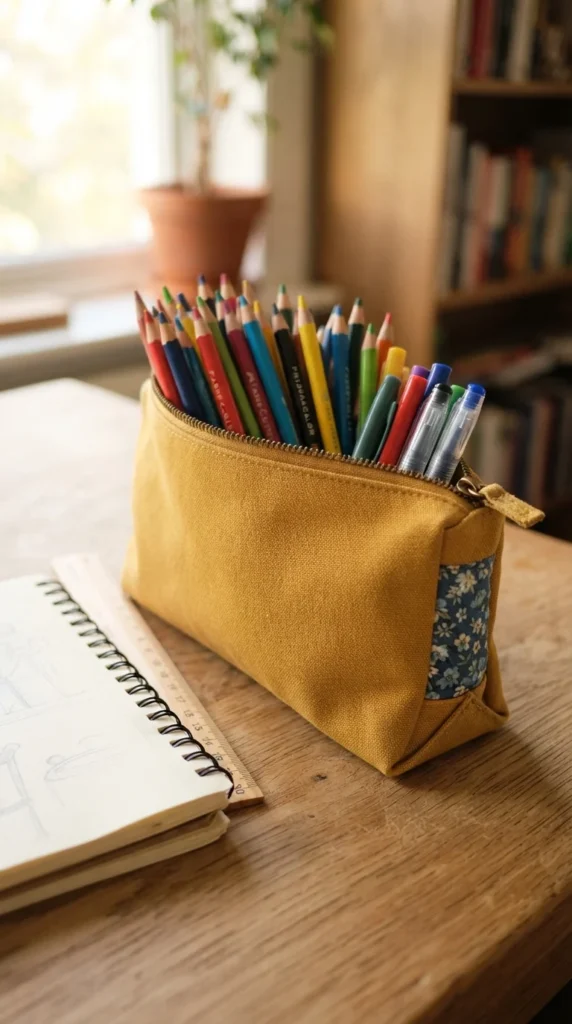
A fabric pencil pouch keeps pens, pencils, markers, and small stationery items together at school, work, or home. Unlike a store-bought plastic case, a handmade pouch can be sized to fit the exact supplies you use. Medium-weight cotton or canvas is durable enough for regular handling.
Cut two outer rectangles and two lining rectangles. Sew a zipper along one long edge, attach the other side, and stitch around the remaining edges with the zipper partly open. Turn the pouch through the zipper opening and press the seams gently for a tidy finish.
For extra room, add small boxed corners at the bottom. A patterned outer fabric paired with a plain lining makes the pouch look coordinated without much effort. You can also make a wider version for paintbrushes, crochet hooks, or makeup tools.
12. Handmade Fabric Napkins
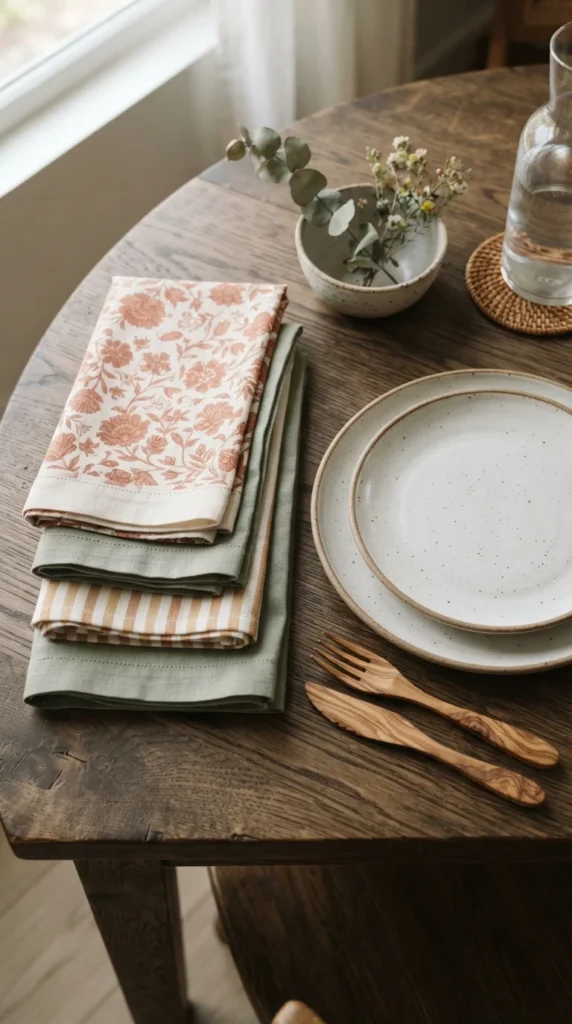
Reusable fabric napkins are practical for family meals, picnics, and dinner parties. They can be washed and used repeatedly, and matching sets make a dining table feel thoughtfully arranged. Cotton and linen are good options because they absorb moisture and become softer with regular washing.
Cut squares to your preferred finished size, adding extra fabric around every edge for the hem. Fold each edge inward twice, press it flat, and stitch around the perimeter. For a neat corner, fold the fabric carefully before stitching so the edges meet cleanly without bulky layers.
Choose a plain fabric for everyday use or mix two coordinating prints for special occasions. Before cutting, wash and dry the fabric to account for shrinkage. Make four or six napkins at once so you have a complete set ready for daily meals.
13. Fabric Pin Cushions
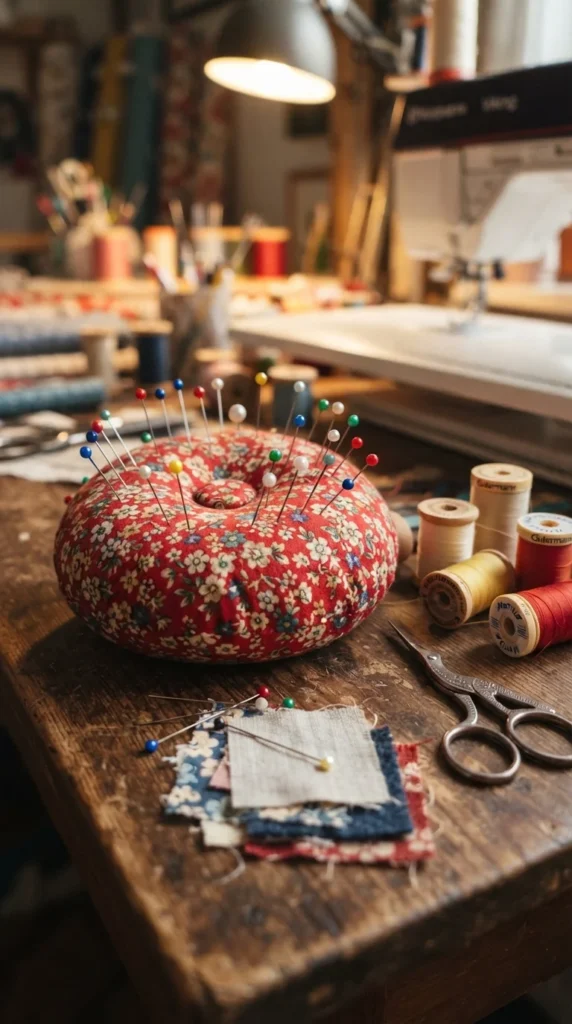
A pin cushion gives sewing pins and needles a dedicated place, making it easier to keep your workspace organized. It is also a satisfying project for using small fabric scraps that are too tiny for larger crafts. Choose a tightly woven fabric that can hold pins without fraying easily.
Cut two matching circles or squares, place the printed sides together, and stitch around the edge while leaving a small opening. Turn the piece right-side out, fill it firmly with suitable stuffing, and hand-stitch the opening closed. A little extra stuffing helps the cushion hold its shape.
For a classic look, wrap embroidery thread around the cushion in sections to create a segmented shape. You can also attach the finished cushion to a small fabric base. Keep it on your sewing table or beside your machine so pins remain easy to find while you work.
14. Simple Fabric Baskets
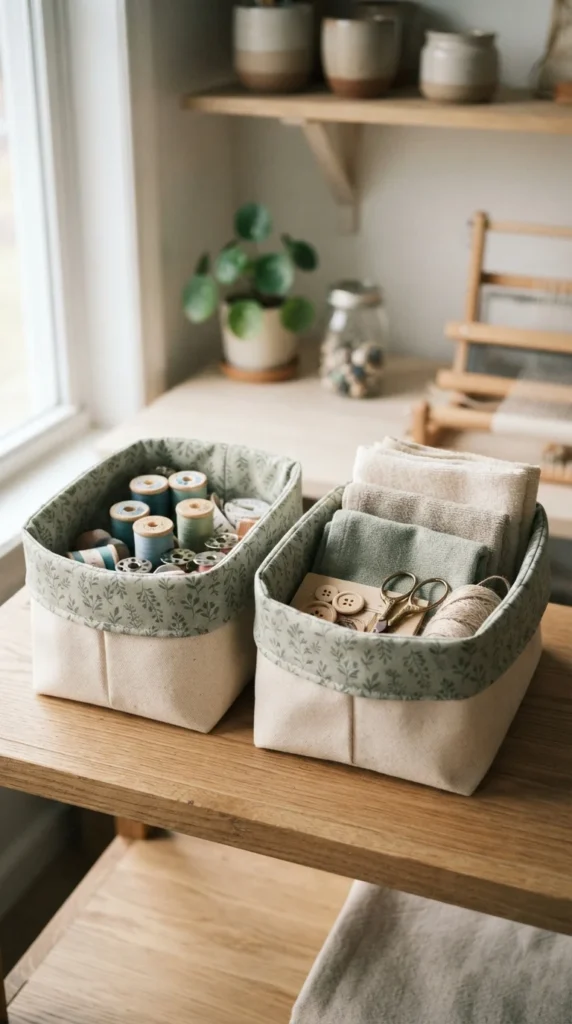
Fabric baskets help organize shelves, drawers, bathroom counters, and craft supplies. They can be made in different heights and widths, making them useful for everything from folded socks to sewing notions. Medium-weight cotton paired with interfacing gives the sides enough structure to stand upright.
Cut matching outer and lining pieces for the sides and base. Sew the side seams, attach the base, and repeat with the lining. Place the two baskets together with their printed sides facing, stitch around the top edge, then turn through a small opening and close it neatly.
For a firmer basket, use a heavier interfacing suited to your fabric. Add small handles at the sides if you want to move the basket between rooms. Fold the top edge outward for a contrasting lining detail that also makes the basket easier to grip.
15. DIY Fabric Keychains
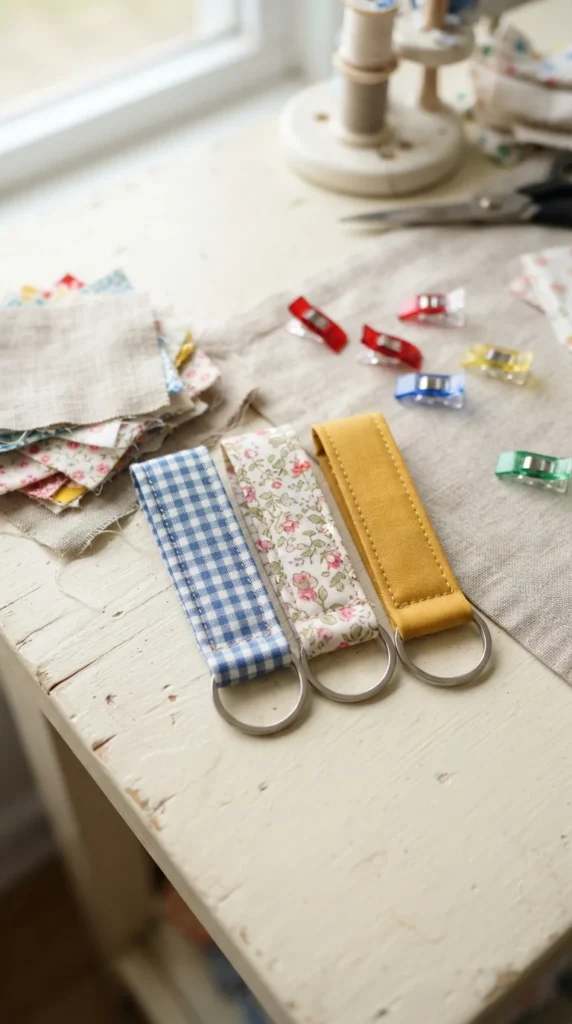
Fabric keychains are small, practical accessories that help make keys easier to spot in a bag. They are suitable for beginners because they require little fabric and only a few straight seams. Use sturdy cotton, denim, or canvas for a keychain that can handle daily handling.
Cut a long strip, fold the raw edges inward, then fold the strip in half lengthwise and press. Stitch along both long edges, slide one end through a metal key ring, and fold it back onto itself. Sew several reinforced lines near the ring to hold the fabric securely.
You can personalize each keychain with a different print for house keys, car keys, or luggage. A short tab style works well for small bags, while a longer wristlet offers a comfortable loop for carrying keys by hand. Check the metal ring and stitching regularly if you use it for heavy keys.
16. Reusable Produce Bags
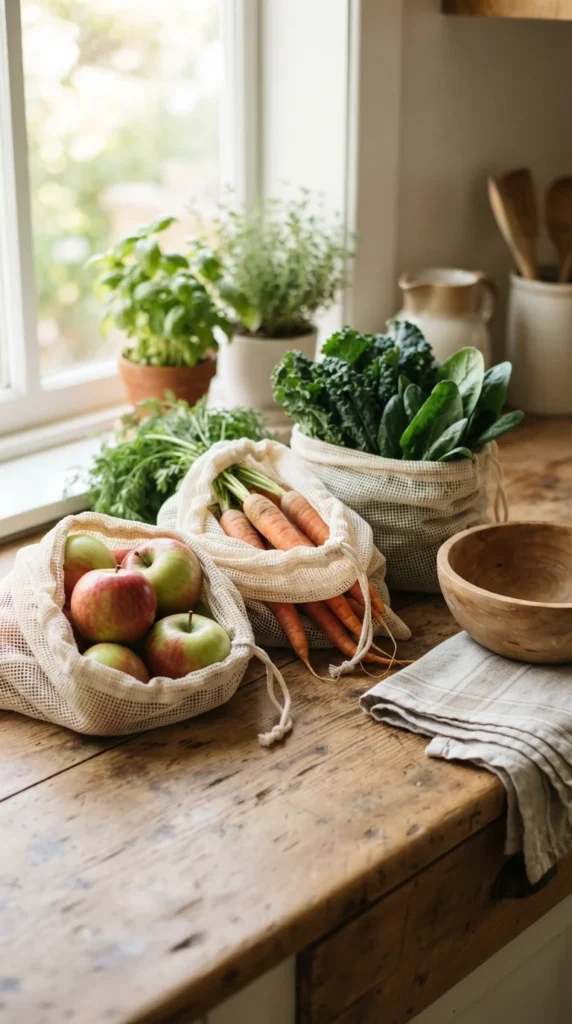
Reusable produce bags are useful for shopping trips and storing certain dry produce at home. Lightweight cotton mesh or washable open-weave fabric allows you to see what is inside without opening every bag. Pick material that is strong enough for the weight of the produce you usually buy.
Cut two rectangles, place them together, and sew the side and bottom seams. Finish the top edge with a folded channel, then thread a cotton cord through it. Reinforce the corners and test the bag with a few pieces of fruit before carrying heavier items.
Make small bags for lemons and garlic or larger versions for apples and potatoes. Wash them regularly and let them dry completely before storing them away. Because different fruits and vegetables have different storage requirements, use these bags according to the produce rather than treating them as airtight containers.
17. Handmade Fabric Cozies for Mugs
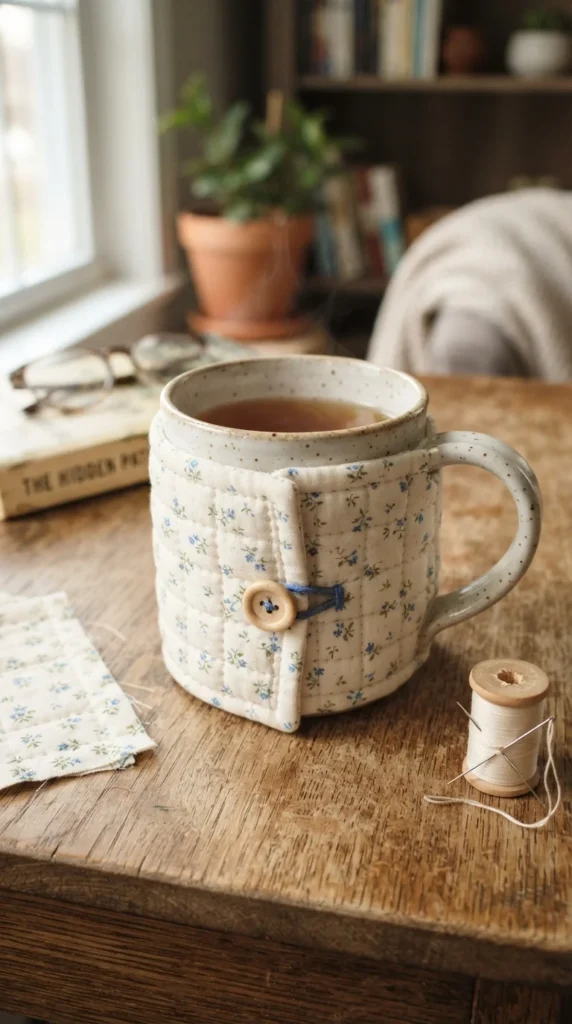
A fabric mug cozy adds a handmade touch to a favorite ceramic mug and gives you something comfortable to hold around the handle area. It is especially useful for people who enjoy sewing small gifts. Use cotton fabric and thin cotton batting, keeping the layers away from direct contact with hot liquid.
Measure around the mug body and from just below the rim to near the base. Cut two fabric pieces and a matching batting piece, then stitch the layers together with simple parallel lines. Finish the edges with binding and attach a small button or fabric loop to secure the cozy around the mug.
Make sure the finished cozy fits snugly without interfering with the handle or making the mug unstable. Remove it before washing the mug, and keep it dry between uses. This accessory is meant to provide a comfortable grip, not to act as a heatproof barrier against very hot surfaces.
18. Fabric Tissue Box Covers

A fabric tissue box cover hides plain cardboard packaging and makes a bedroom, office, or living room feel more coordinated. It is a useful project for practicing measurements and box-shaped seams. Choose a medium-weight cotton or linen that holds its shape without being too stiff.
Measure the tissue box’s length, width, and height before cutting. Create a top panel with an opening in the center and four side panels that wrap around the box. Sew the panels together, finish the bottom edges, and slide the cover over the original cardboard box.
A contrasting fabric around the opening can add a decorative detail. You can also use a plain base fabric with a patterned top panel to match existing curtains or cushions. Since tissue boxes come in different sizes, measure your own box rather than relying on a standard template.
19. DIY Fabric Laptop Sleeves
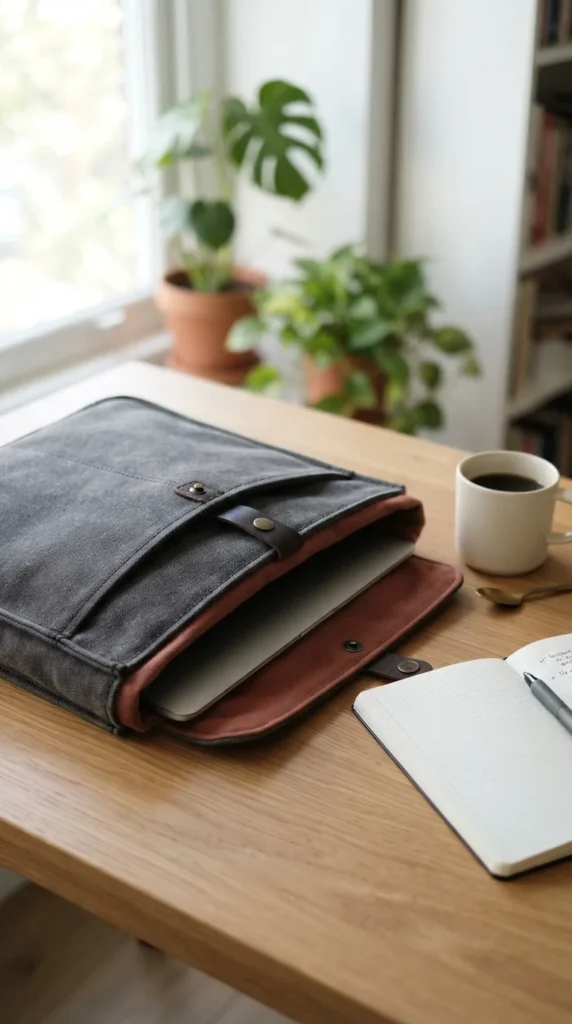
A fabric laptop sleeve can protect your device from light scratches while making it easier to carry between home, school, and work. It is a good project for sewists who are comfortable with straight seams and lining. Choose sturdy outer fabric and suitable padding that fits your device without making the sleeve too bulky.
Measure the laptop’s width, height, and thickness, then add enough room for the padding and seams. Cut two outer pieces, two lining pieces, and matching padding. Stitch the layers together, construct the sleeve, and add a flap or closure that keeps the laptop from sliding out.
Test the fit with the laptop before finishing all the seams. A soft lining can help prevent scratches, while a small pocket on the outside provides room for a charging cable. Keep the closure free of hard parts that might press against the device, and remember that a fabric sleeve is not a substitute for a rigid protective case.
20. Handmade Fabric Gift Bags
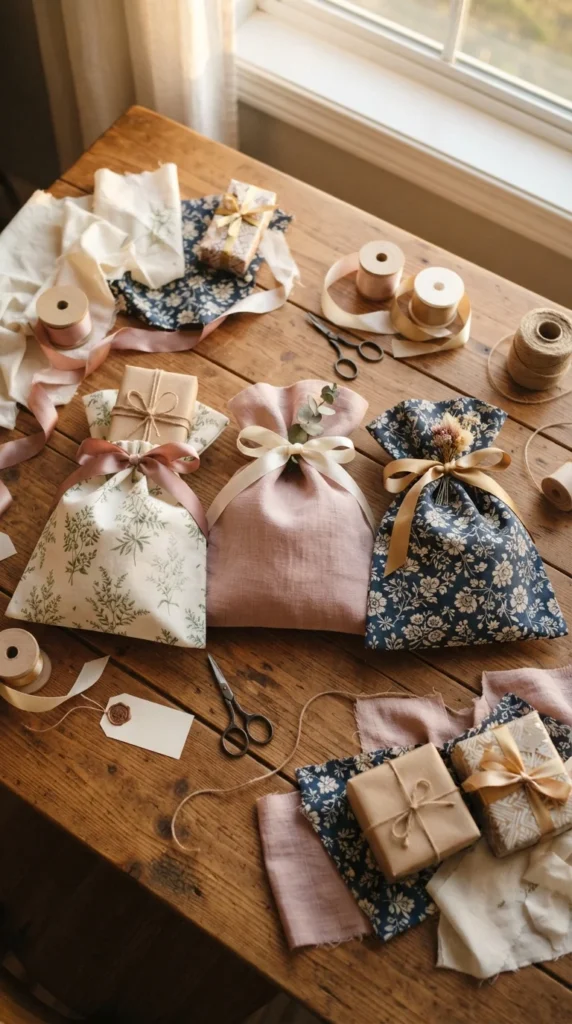
Fabric gift bags are a reusable alternative to disposable wrapping paper and can be made in sizes for jewelry, books, candles, and clothing accessories. They are also a practical way to use attractive fabric remnants from previous projects. Lightweight cotton works well for small gifts, while thicker material suits heavier objects.
Cut two rectangles according to the size of the gift, sew the side and bottom seams, and finish the top edge with a drawstring channel. Thread a ribbon or cotton cord through the channel and tie it to close the bag. If you prefer a flat gift pouch, use a simple envelope shape with a button loop.
Choose festive prints for birthdays and holidays, or stick to neutral linen for bags that suit any occasion. You can reuse the same bag many times, changing only the ribbon or decorative tag. Make a small collection in different sizes and store them with your gift supplies.
21. Fabric Cord Organizers
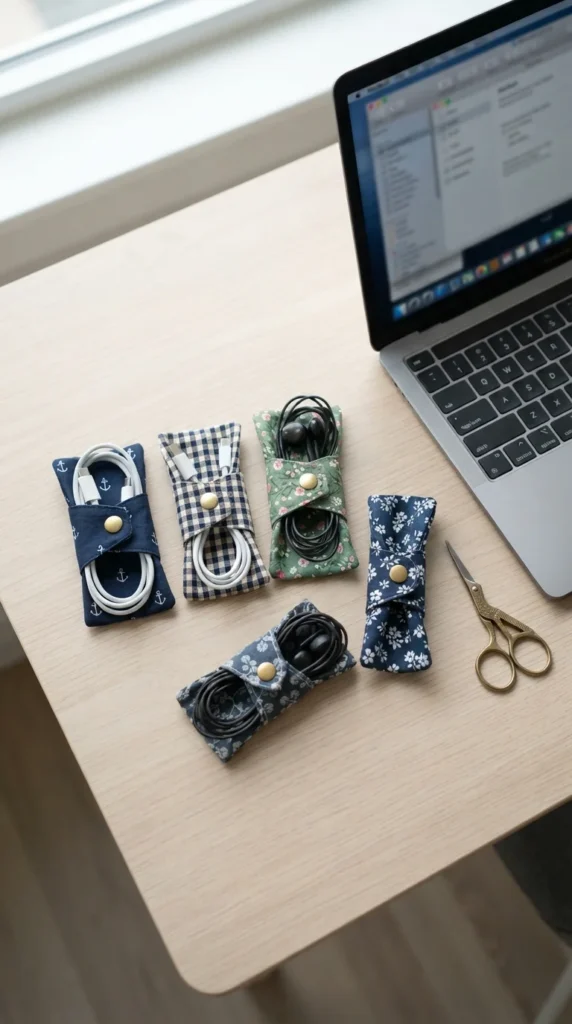
Fabric cord organizers help keep charging cables, headphones, and small electronic cords from tangling inside a bag or desk drawer. They are tiny projects that require very little fabric, making them perfect for using narrow scraps. Choose a tightly woven cotton and lightweight interfacing for a firmer finish.
Cut two small matching rectangles or rounded strips, add interfacing to one side, and place the pieces with their printed sides together. Stitch around the edge, leaving a small opening, then turn the piece right-side out and close the opening. Attach a suitable snap or hook-and-loop fastener to keep the wrap closed around a coiled cable.
Make several in different prints to identify cables at a glance. Keep the organizer snug enough to hold the coil without squeezing it tightly. Avoid wrapping cables while they are hot or using a closure that pinches or bends the wire sharply.
22. Handmade Fabric Pot Holders for Plants
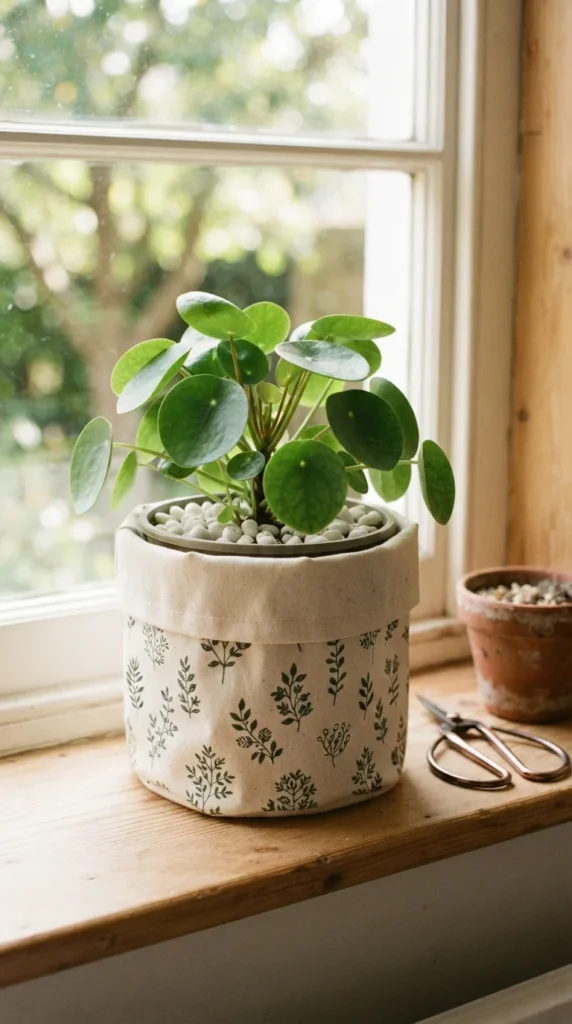
A fabric plant pot cover gives an ordinary nursery pot a coordinated decorative finish. It works well for lightweight indoor plants and lets you match the pot to your room’s colors. Canvas, denim, and sturdy cotton are good options because they hold their shape better than very thin fabric.
Measure the pot’s height and circumference, then cut a rectangular side piece and a circular base. Sew the side seam, attach the base, and fold the top edge inward for a neat finish. If you want a folded cuff, leave extra height so the fabric can turn down over the rim.
Keep the plant in its original pot or use a separate waterproof inner container. Fabric can absorb moisture and may develop stains or mildew if it stays wet. Remove the cover periodically to check for trapped water, and let it dry fully before putting it back around the pot.
23. Simple Fabric Aprons
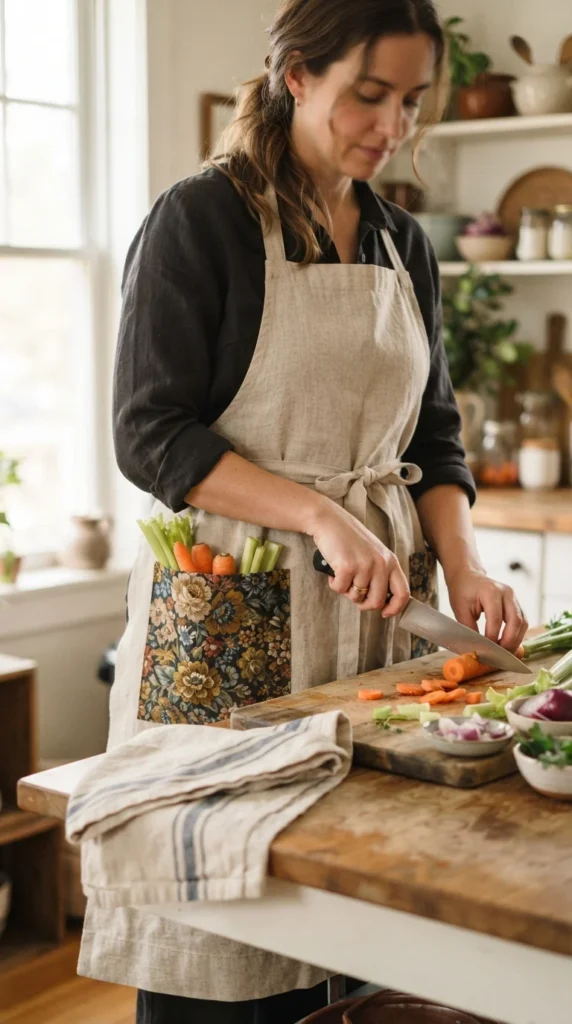
A fabric apron is useful for cooking, gardening, painting, or working on messy craft projects. You can make a simple waist apron with a few straight seams or a fuller version with a bib and adjustable neck strap. Choose washable cotton or canvas that can handle repeated use.
Cut the main apron panel to your preferred width and length, then hem the sides and bottom. Make a long waistband from folded fabric and stitch it securely across the top edge. Add one or two pockets before attaching the waistband so you can sew them flat without working around the finished ties.
For a kitchen apron, a large divided pocket is handy for holding a recipe card, towel, or small utensil. Use a print that hides minor stains or choose a solid color that matches your kitchen. Press the seams as you sew to help the apron sit neatly against your clothes.
24. Patchwork Cushion Covers
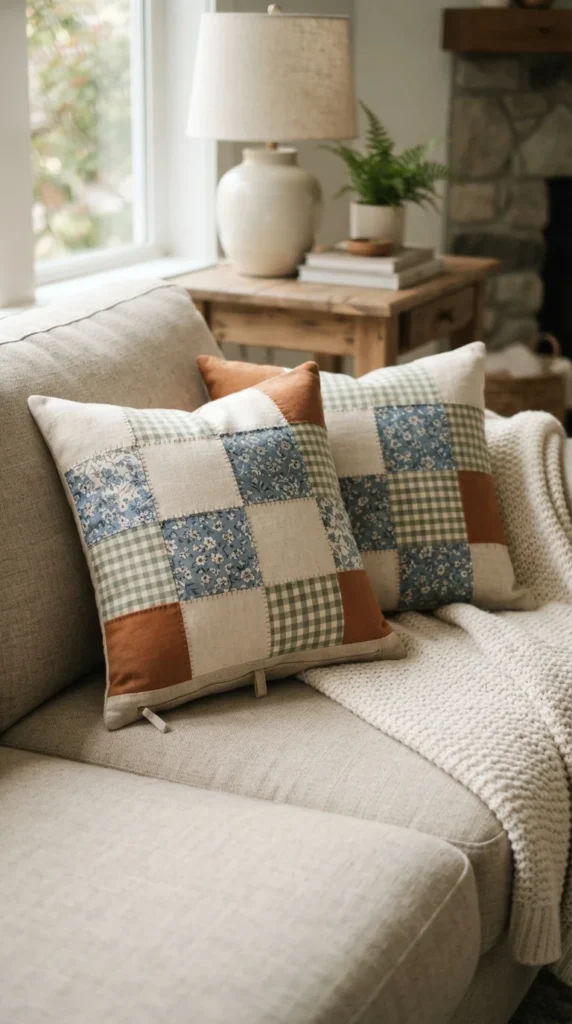
Patchwork cushion covers turn small fabric pieces into a useful home accessory with plenty of personality. They are a good choice when you have scraps left from several sewing projects and want to bring the colors together in one design. Cotton fabrics of similar weight are easiest to sew into a smooth, flat front panel.
Cut your scraps into equal squares or rectangles, arrange them on a table, and sew them into rows. Join the rows, press the seams flat, and trim the finished panel to fit your cushion insert. Add a plain fabric back with an envelope opening or a zipper so the cover can be removed for washing.
Try a two-color layout for a clean modern look or mix small floral prints with checks and stripes for a more playful design. Before stitching the patchwork, take a quick photo of your arrangement so you can remember the layout. Matching the finished cover to your curtains, throw blanket, or rug helps the room feel coordinated.
Final Thoughts
These 24 creative DIY sewing ideas show how a few basic supplies can become useful accessories, kitchen essentials, storage solutions, and handmade home decor. Start with an easy project such as fabric scrunchies, bookmarks, or coasters, then work toward zippered pouches, aprons, and patchwork cushion covers as your skills grow. Use fabric scraps whenever possible, measure carefully, and take your time with each seam. Choose one project today, gather your materials, and create something useful with your own hands.

Lily Summers is a digital artist and creative storyteller who loves bringing colorful characters to life. With a passion for cartoons, fan art, and playful sketches, she inspires others to explore their imagination through art. When she’s not sketching, you’ll find her dreaming up new ideas for CraftedWizard.com to spark creativity in every artist. 🌈✨