A vision board becomes powerful when it moves from decoration to daily mental training. Modern boards combine emotional clarity, visual repetition, and simple habits that guide attention throughout the day. Instead of treating manifestation as magic, this approach uses focus, identity shifts, and consistent reminders. When you repeatedly see images tied to meaningful feelings, your brain begins scanning your environment differently. That filtering system — known as the Reticular Activating System — helps you notice opportunities you may have ignored before. For 2026, the most effective boards mix physical visuals with digital reminders, keeping goals visible without turning them into pressure. These practical tricks keep the process grounded, personal, and easy to maintain long term.
1. Start With Feelings, Not Things
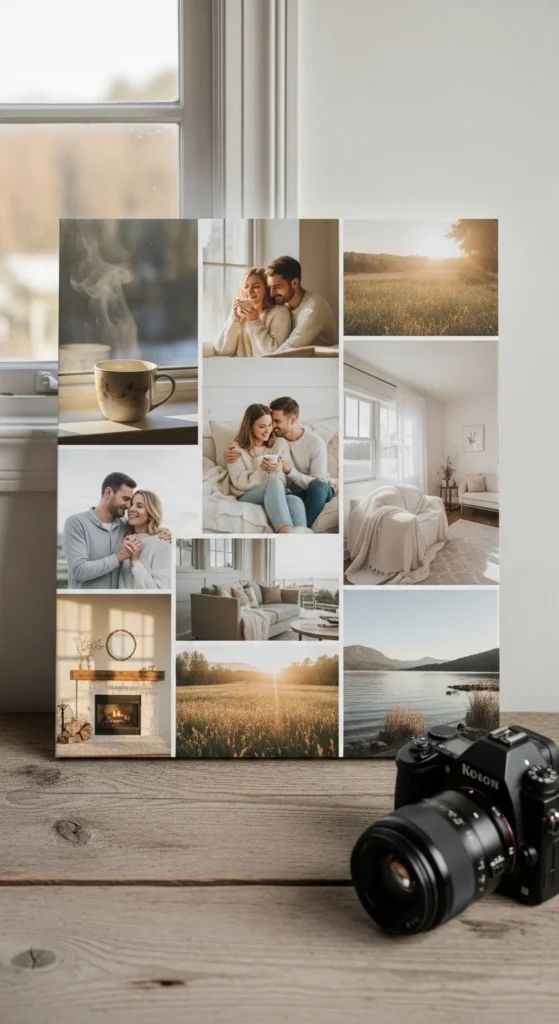
Before choosing any images, pause and decide how you want life to feel. Calm mornings, confident conversations, steady energy, or creative flow. Write those feelings on paper first so they guide your choices. A photo of the ocean might represent peace, not just travel. A bright workspace might symbolize focus, not just career success. This emotional filter prevents the board from turning into a shopping list. Feelings create direction, while objects only show surface results. When your brain links images with emotions, motivation becomes more natural. Keep your feeling list nearby while building.
2. Use Photos of Yourself
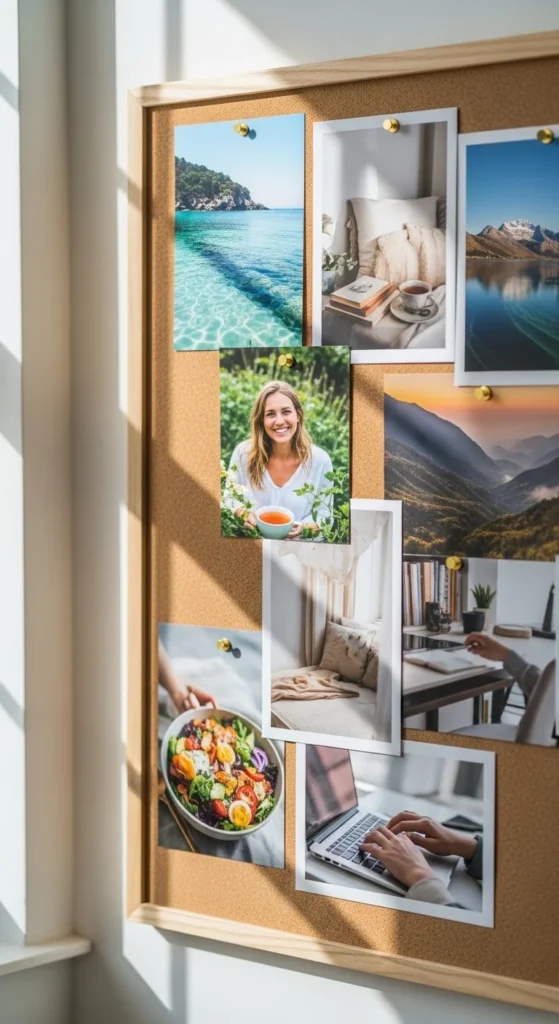
Adding your own photo makes the board more personal and believable. Place your face near images that match your future lifestyle. This helps your brain picture you inside those moments instead of watching someone else live them. It shifts the energy from “someday” to “me.” A simple printed selfie works perfectly fine. No professional editing is required. Even small passport-size pictures are enough. Familiar faces create stronger emotional connections than strangers. That connection makes daily viewing more effective.
3. Create a “Future Self” Section
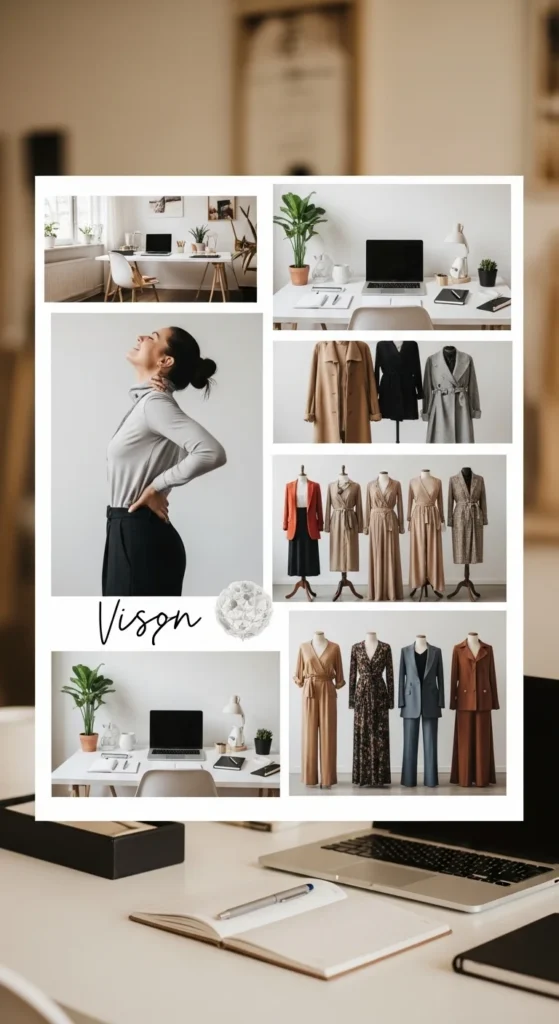
This section focuses on who you are becoming, not just what you want to have. Include images that represent confidence, calm energy, discipline, or creativity. These visuals train your attention toward identity growth. Identity changes often lead to behavior changes without force. The more often you see this version of yourself, the more natural it feels. You begin to make small choices that align with that identity. Keep this section near eye level for daily exposure. Repetition slowly shapes self-perception.
4. Make a Digital Mini Version
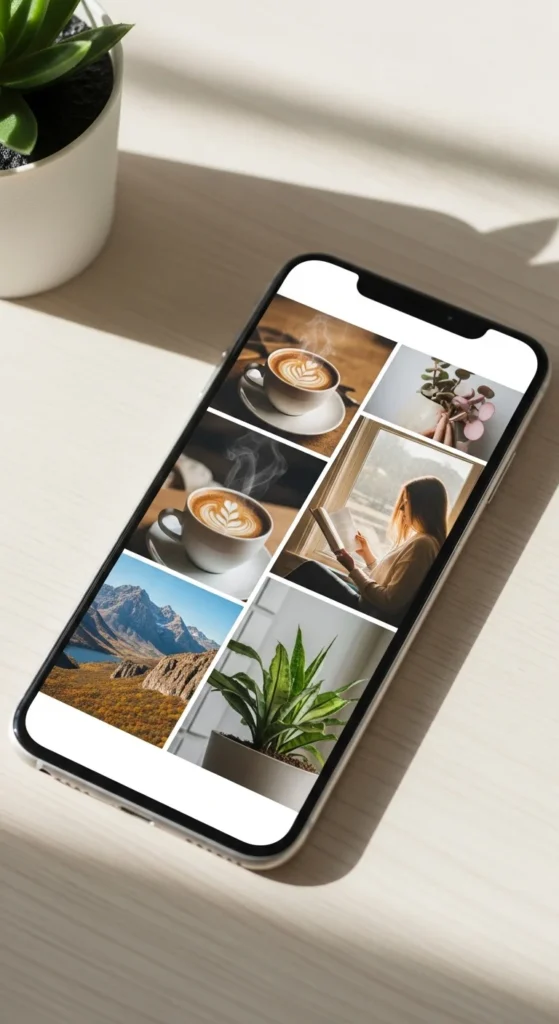
Create a small digital version of your board using Canva or any collage app. Set it as your phone lock screen or wallpaper. This gives you multiple reminders throughout the day without extra effort. Even a quick glance reinforces your direction. Choose five to eight strong images only. Too many visuals make it cluttered and distracting. Digital boards keep your focus consistent when you are away from home. Frequency matters more than length of viewing.
5. Add Action Images

Use pictures that show people taking action, not just celebrating results. Someone studying, exercising, creating, or practicing a skill. These visuals connect goals to daily behaviors. Your brain starts linking success with effort and routine. It makes progress feel practical instead of distant. This reduces procrastination because you see the steps, not only the outcome. Place action images near related goals. This keeps motivation grounded in movement.
6. Limit Words on the Board
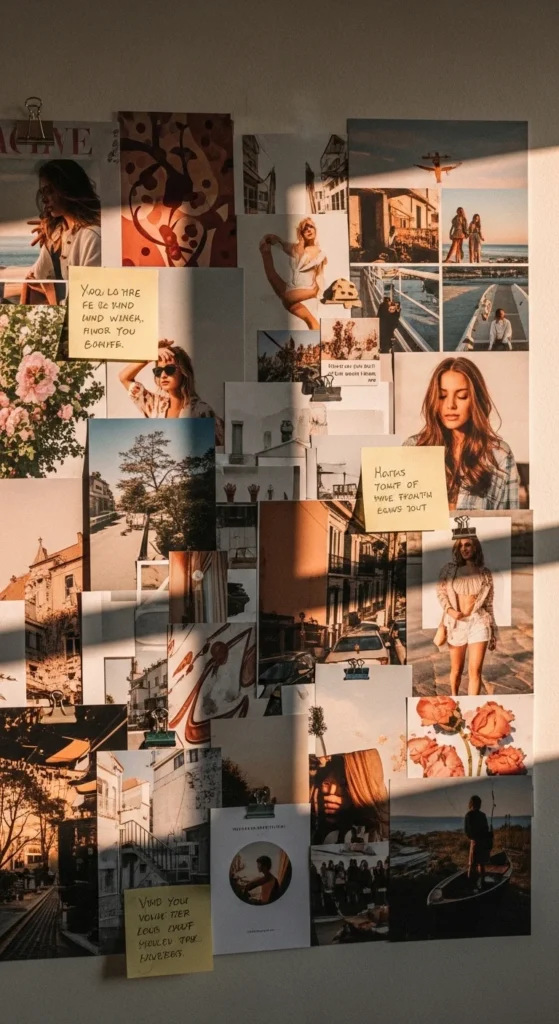
Too many sentences turn a vision board into a checklist. Images communicate faster and create stronger emotional responses. Use short phrases only if they feel meaningful and personal. Handwritten notes can add warmth, but keep them minimal. The focus should stay on visual storytelling. When the board feels calm and clear, you are more likely to look at it daily. Simplicity keeps it inviting.
7. Place It Where You See It Daily
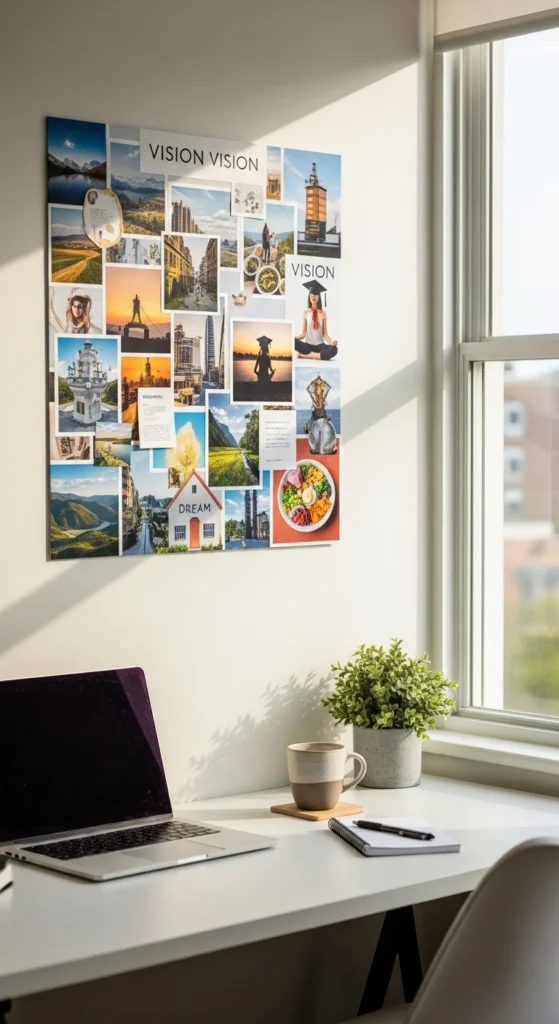
Visibility is more important than perfection. A hidden board loses its purpose quickly. Place it near your desk, bedside, or dressing area. Somewhere your eyes naturally rest. Repeated exposure keeps goals active in your awareness. Even passive glances shape attention patterns. Daily viewing builds familiarity and comfort with your future vision. Consistency over intensity makes the difference.
8. Pair Viewing With Breathing
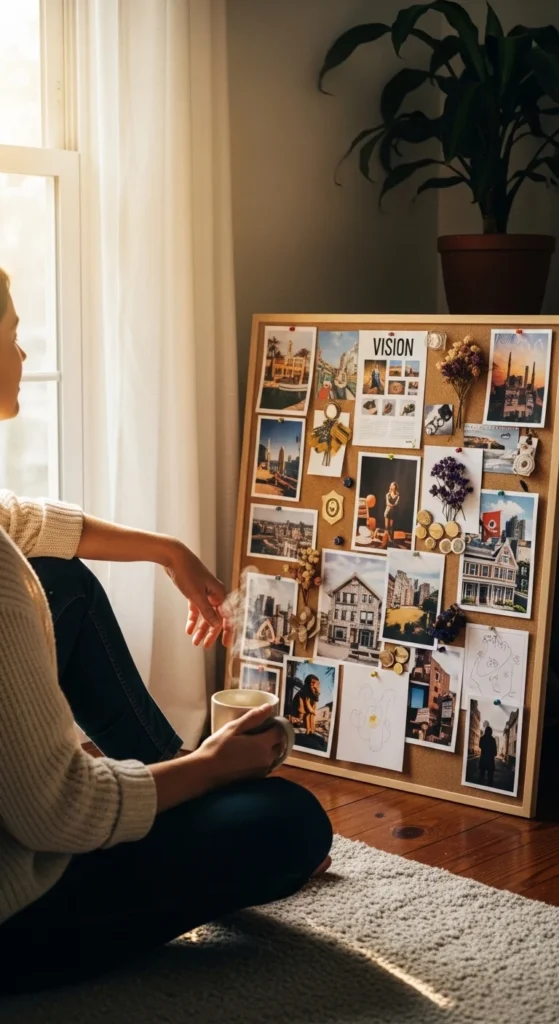
Take one slow breath while looking at your board each morning. This links calm focus with your goals. Breathing reduces stress and helps your mind stay open instead of pressured. The ritual takes less than a minute, so it feels easy to keep. Small habits done daily build strong mental associations. Over time, your brain connects relaxation with growth. This keeps motivation gentle and sustainable.
9. Use One Signature Scent
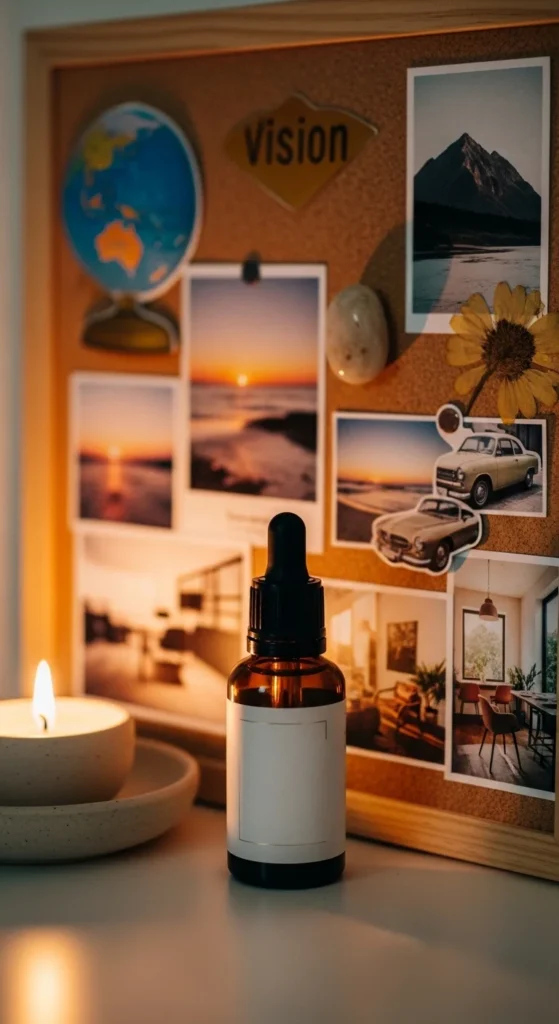
Choose a candle or essential oil to use while reviewing your board. Smell connects strongly to memory and emotion. Using the same scent during visualization builds a mental link. Later, that scent alone can bring back focused feelings. This adds a sensory layer to your practice. Keep it subtle and pleasant. Over time, the scent becomes a mental trigger.
10. Organize by Life Areas
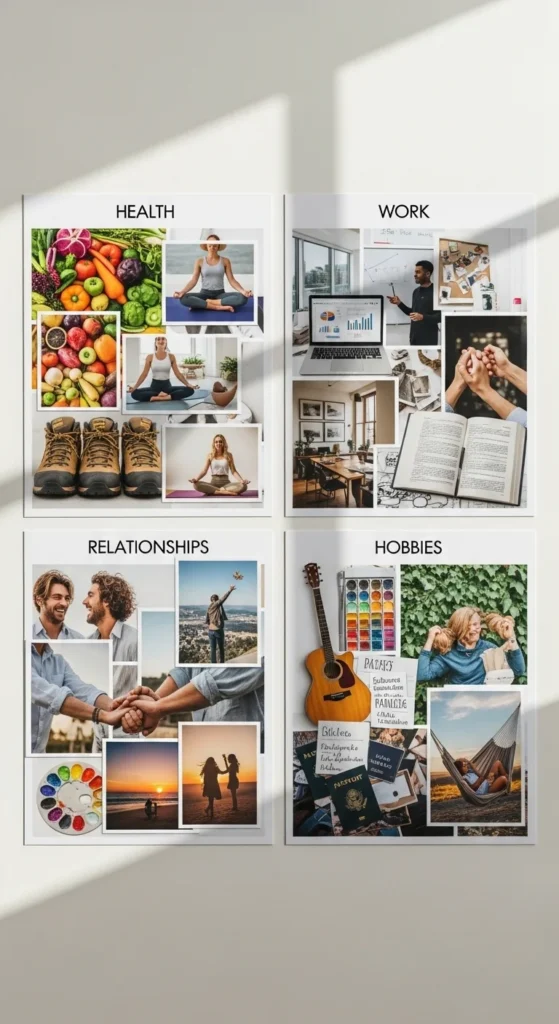
Divide the board into sections such as health, career, relationships, and personal growth. This keeps your goals balanced instead of one-sided. Visual structure helps your brain process information clearly. It also prevents overwhelm from too many mixed themes. Each section becomes a reminder of a different life area. Balanced boards create balanced focus. Simple layout leads to clearer thinking.
11. Add Gratitude Images

Include images that represent things you already appreciate in your life. Gratitude keeps your mindset grounded and positive. It prevents constant chasing and comparison. Recognizing what you have builds emotional stability. That stability supports long-term progress. Gratitude also reduces pressure around goals. A calm mind makes clearer decisions.
12. Use Realistic Timeframes
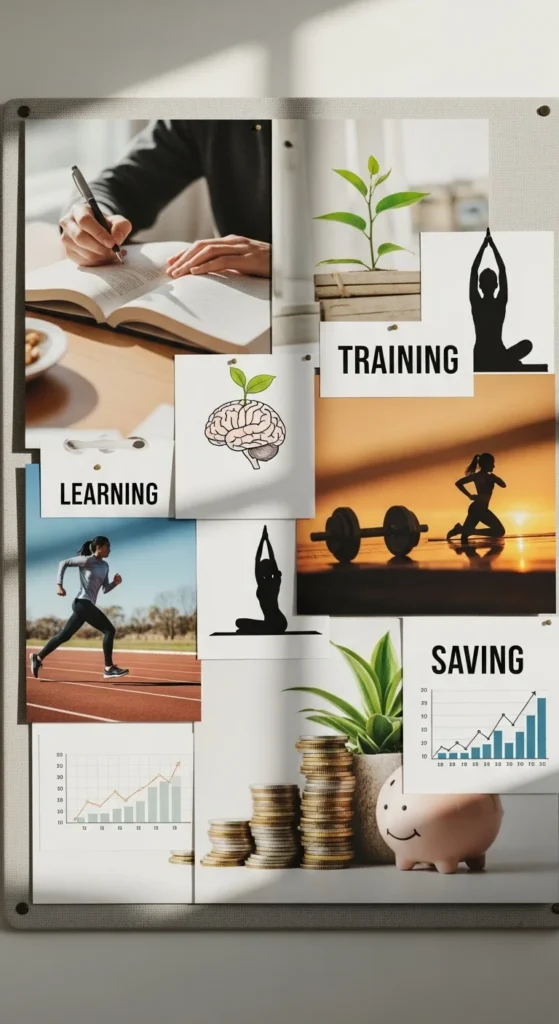
Choose visuals that represent stages of progress, not only final achievements. Learning, practicing, improving, and growing. This makes your goals feel reachable step by step. Unrealistic timelines often lead to frustration. Progress-based images build patience. They remind you that growth takes time. This mindset supports steady effort.
13. Keep It Visually Calm
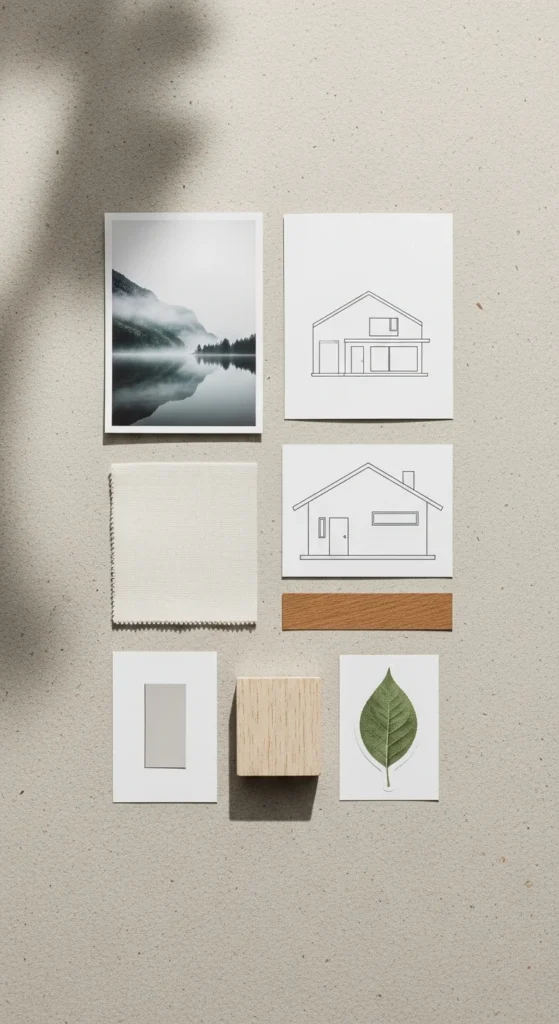
Avoid overcrowding your board with bright or clashing visuals. Leave small gaps of empty space between images. Calm boards are easier to look at daily without feeling overwhelmed. Neutral tones can help create a peaceful feel. Visual breathing space improves focus. When the board feels pleasant, you naturally return to it. Calm visuals support calm thinking.
14. Update It Mid-Year
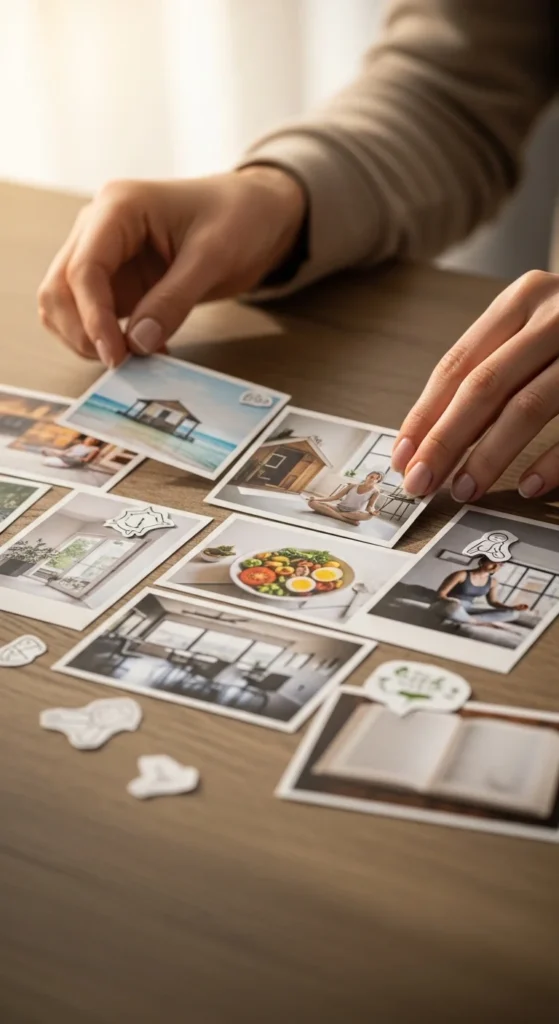
Your goals and priorities may shift during the year. Refresh your board when something no longer fits. Replacing old images keeps the board meaningful. This prevents it from becoming background decoration. Updating also reminds you that growth is flexible. Life evolves, and your vision can evolve too. Regular refreshes maintain emotional connection.
15. Use Printed Pinterest Finds
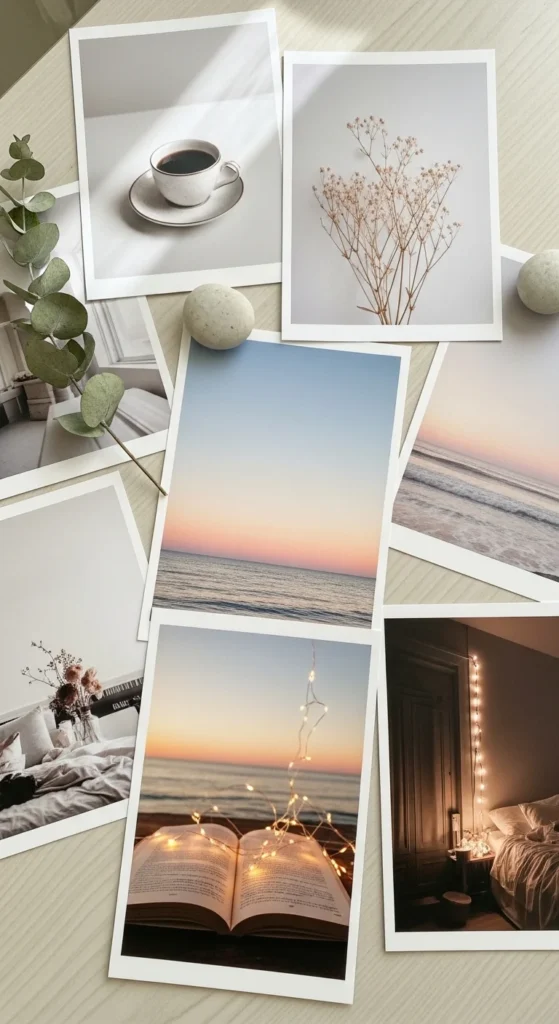
Search for specific emotional themes instead of generic goals. Words like peaceful morning, confident woman, or creative workspace bring better results. Print small, clear images at home to save money. Specific visuals feel more motivating than random magazine cutouts. This makes the board feel more intentional. Clear imagery supports clearer focus.
16. Add One Stretch Goal
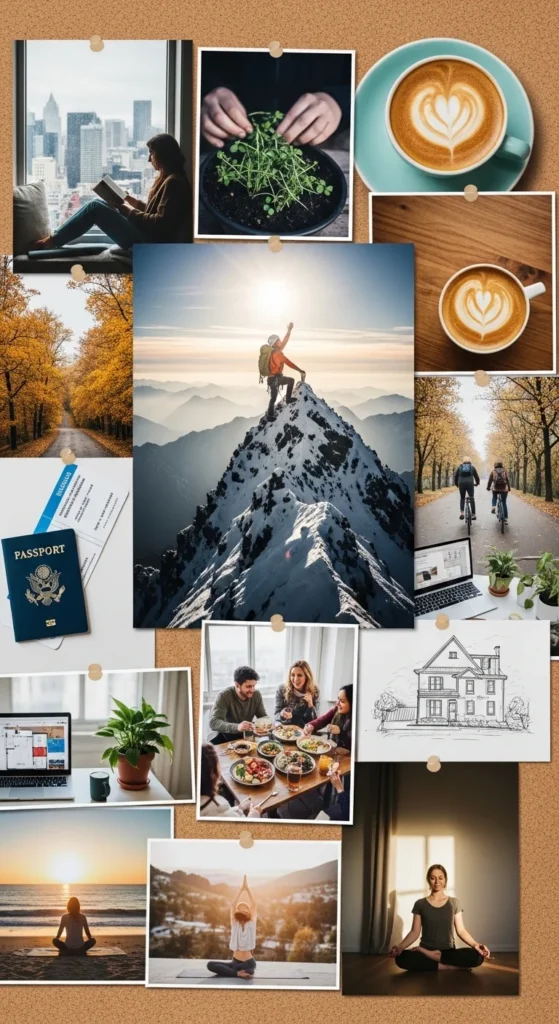
Include one goal that feels slightly outside your comfort zone. Not impossible, just exciting. This keeps growth part of your focus. Seeing it daily slowly reduces fear around it. Over time, your brain begins accepting it as possible. Stretch goals inspire expansion without overwhelming you. Keep it balanced with realistic ones.
17. Keep It Personal, Not Trendy
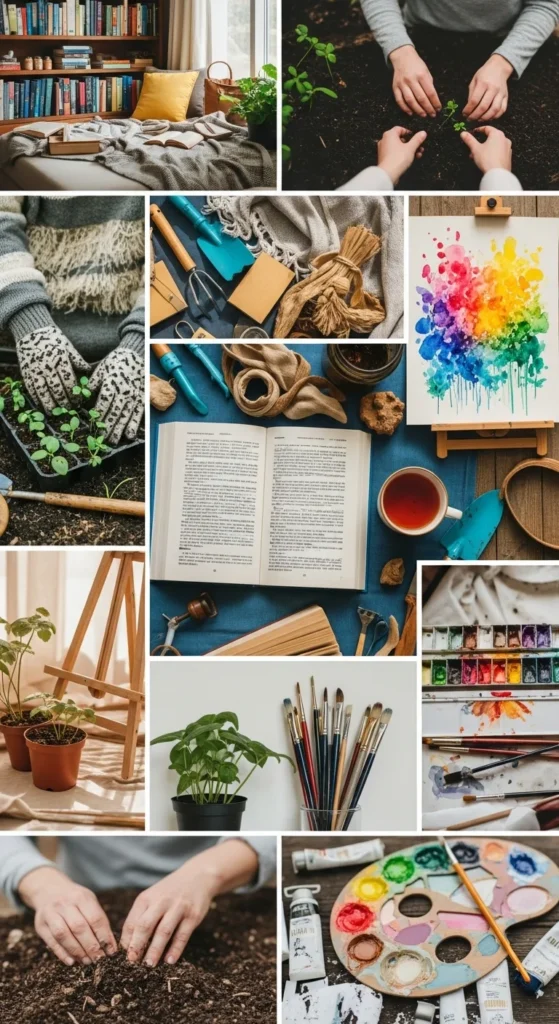
Choose images that truly reflect your life and interests. Trends change quickly, but personal meaning stays. A hobby you love may matter more than a luxury lifestyle image. Personal relevance creates stronger emotional reactions. This makes you more likely to stay consistent. Authentic boards work better than aesthetic-only ones.
18. Do a 60-Second Morning Look
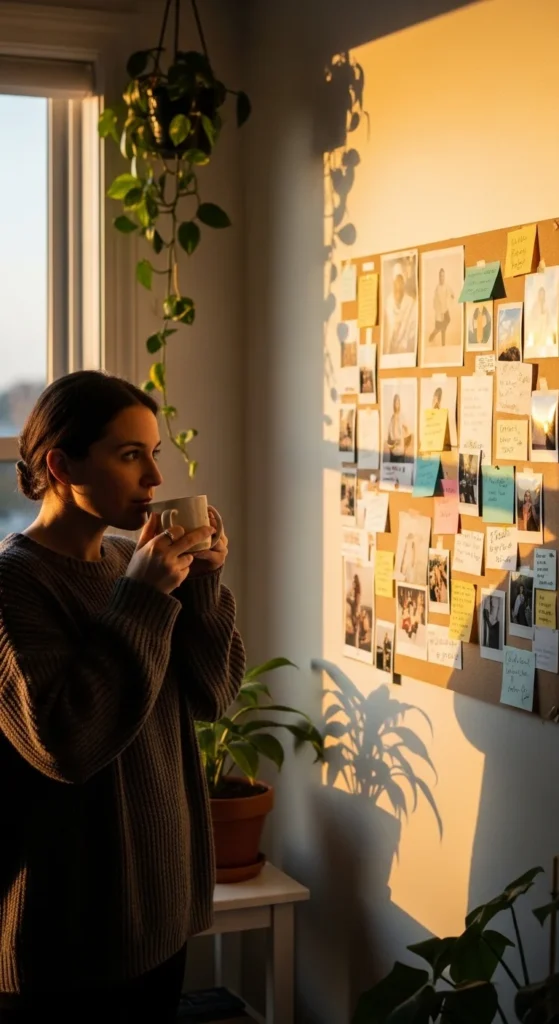
You don’t need a long ritual. A calm one-minute glance each morning is enough. Consistency matters more than duration. Short habits are easier to maintain long term. This keeps your goals present without pressure. Simple repetition trains attention quietly. Small moments add up.
19. Pair With a Small Daily Habit
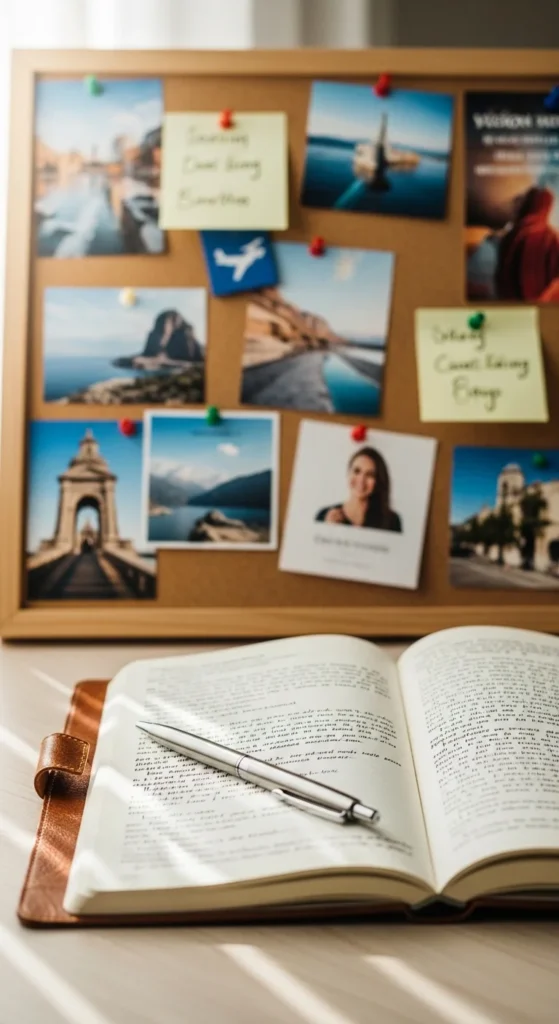
Link your board to one tiny habit like journaling, stretching, or planning your day. This connects inspiration to action. When you look at the board, follow it with a small step. Action reinforces belief. Belief encourages more action. This cycle builds momentum.
20. Keep Supplies Simple
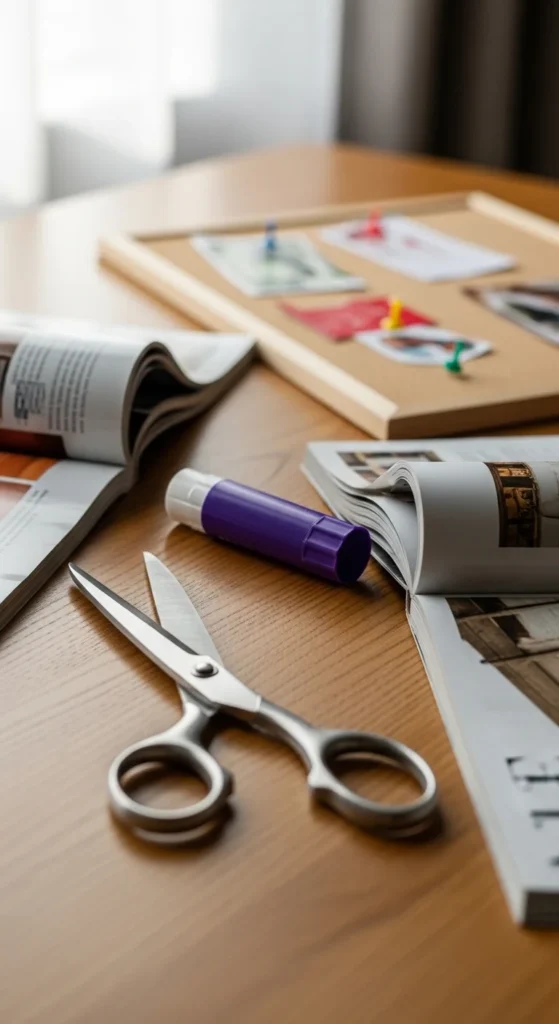
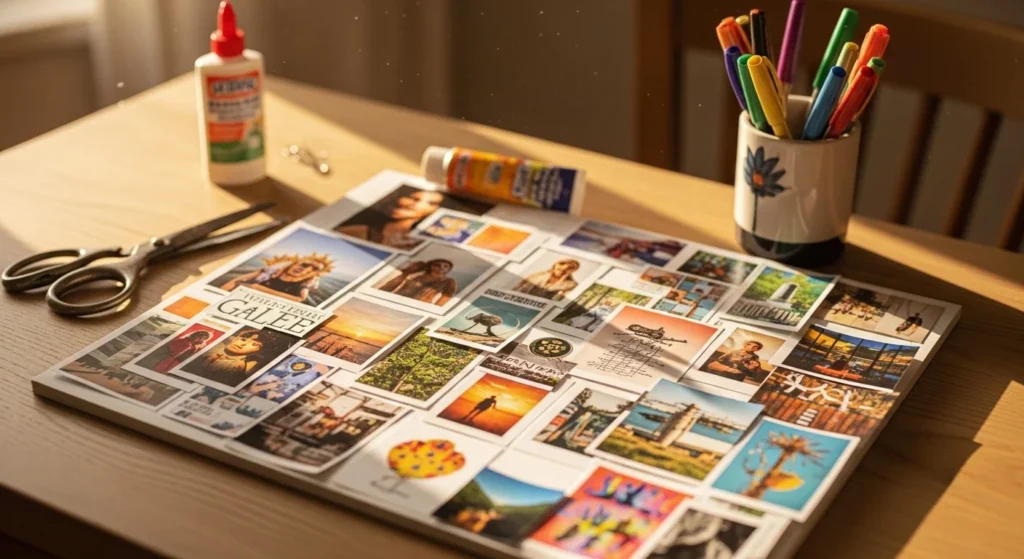
You don’t need expensive materials to build a meaningful board. Old magazines, glue, and paper work perfectly. Keeping supplies simple prevents delay. Starting quickly matters more than perfect tools. Creativity grows through use, not preparation. Simplicity removes barriers.
21. Focus on Lifestyle Scenes
Everyday lifestyle scenes feel more relatable than extreme luxury images. Your brain connects more easily with normal routines. These visuals feel achievable and comforting. They support sustainable change. Daily life images create emotional familiarity. Familiarity reduces resistance.
22. Avoid Cluttered Collages
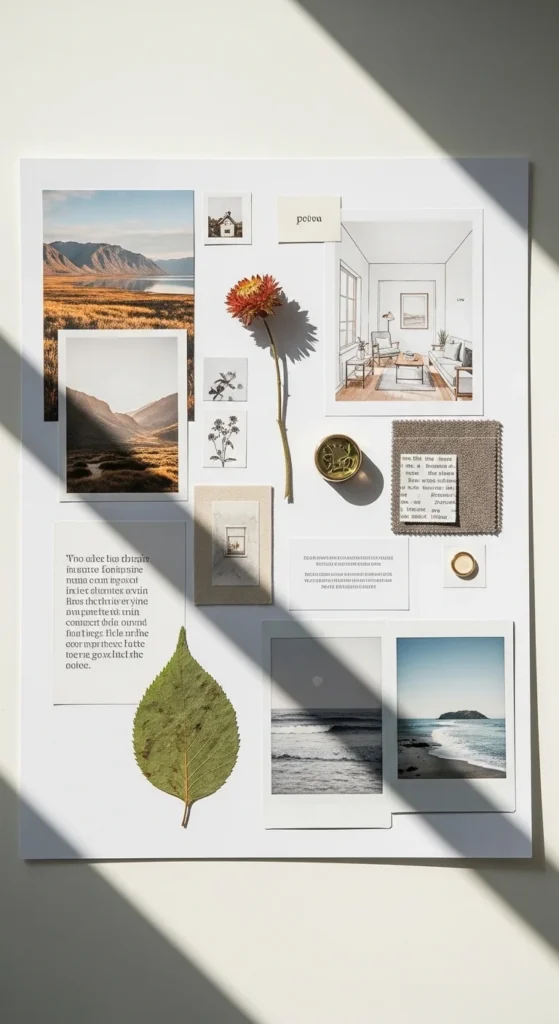
Too many pictures reduce clarity and focus. Choose fewer, stronger visuals that truly matter. Clean spacing makes the board easier to view daily. Visual simplicity reduces mental noise. This supports better concentration on goals. Clarity helps commitment.
23. Take a Photo of Your Board
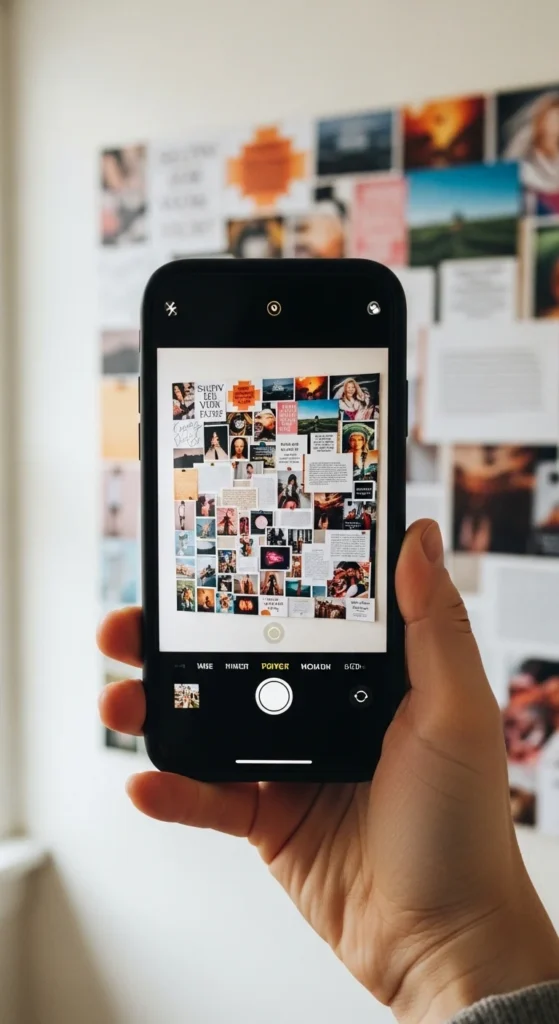
Capture a photo of your board and keep it on your phone. This keeps your vision accessible anywhere. You can glance at it during breaks or travel. Digital access maintains consistency. It also protects your ideas if the physical board changes. Portable reminders keep focus steady.
24. Reflect Monthly
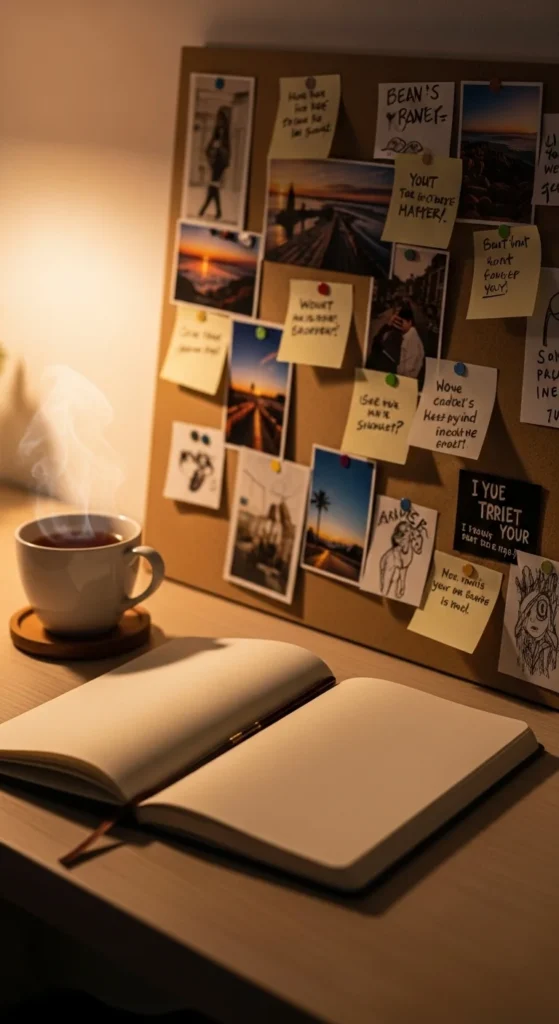
Once a month, look at your board and reflect on progress. Write small wins and changes you’ve noticed. Reflection builds awareness and appreciation. It also helps you adjust goals thoughtfully. Seeing progress builds confidence. Confidence supports continued action.
Conclusion
A vision board becomes meaningful when it is seen often, felt emotionally, and linked to small daily habits. Combining visual reminders with calm rituals helps your mind stay aligned with the direction you want to grow. Keep your board personal, simple, and visible, and let it quietly guide your focus, choices, and energy throughout 2026.

Lily Summers is a digital artist and creative storyteller who loves bringing colorful characters to life. With a passion for cartoons, fan art, and playful sketches, she inspires others to explore their imagination through art. When she’s not sketching, you’ll find her dreaming up new ideas for CraftedWizard.com to spark creativity in every artist. 🌈✨