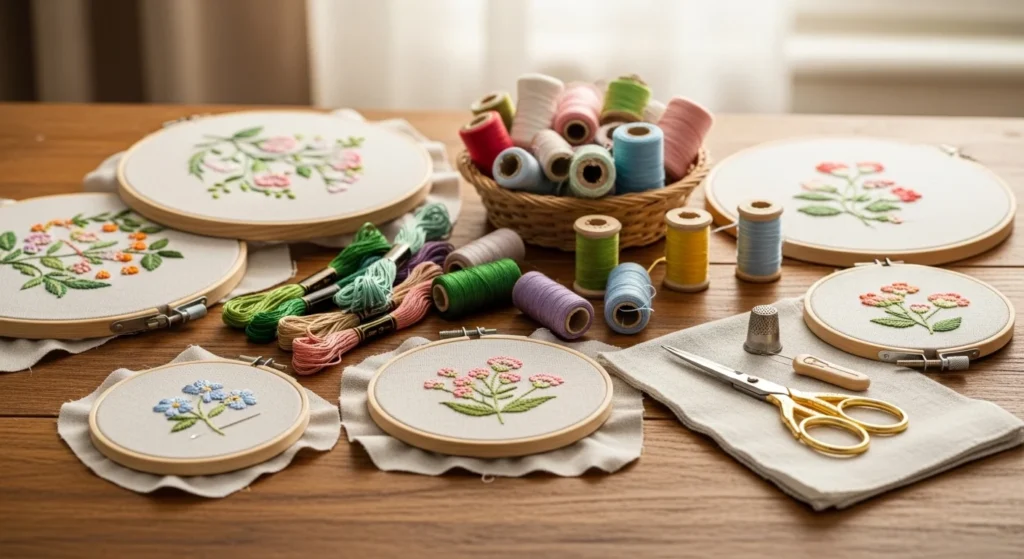
Hand embroidery is having a big moment because it turns simple fabric into something personal, tactile, and beautiful without needing expensive tools. In 2026, makers are mixing classic floral embroidery patterns, minimal line art, textured stitches, and heritage-inspired motifs to create DIY pieces that feel both timeless and current. From denim jackets and tote bags to hoop art, pillow covers, cuffs, and giftable monograms, hand embroidery gives you a flexible way to decorate what you already own. These pattern ideas are designed to help beginners and experienced stitchers alike find something striking, practical, and affordable enough to try at home.
1. Timeless Bloom Basics
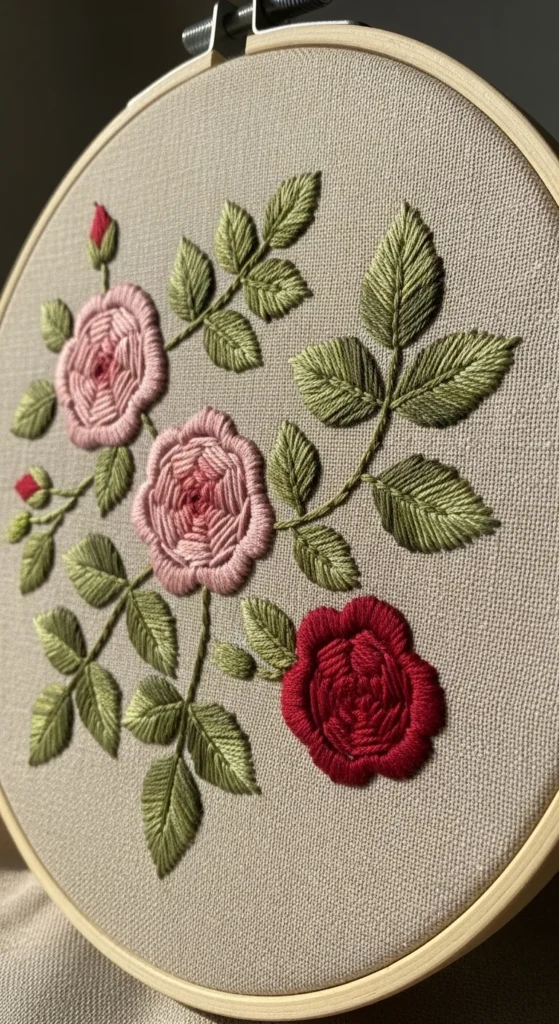
Classic floral embroidery stays popular because it works on almost everything. A simple rose with a few leaves can look lovely on a hoop, a tote bag, a pocket, or even the corner of a pillow cover. This kind of pattern is also a smart starting point because you can repeat the same petals and leaves until your stitches feel more even. Start with one bloom and two or three leaf shapes rather than trying to fill the whole fabric at once. That keeps the project manageable and helps the final piece look neat instead of crowded. If you want to save money, practice the pattern first on scrap cotton or an old shirt before moving to linen or denim. This kind of floral design looks beautiful in soft pink and green, but it also works in earthy shades, bright jewel tones, or simple cream-on-beige stitching if you prefer a quieter look. One of the nicest things about a basic floral pattern is that it never feels out of place. It can look romantic, vintage, minimal, or cheerful depending on your thread colors and fabric choice. It is a reliable pattern style that gives you room to grow.
2. Raised Relief Roses
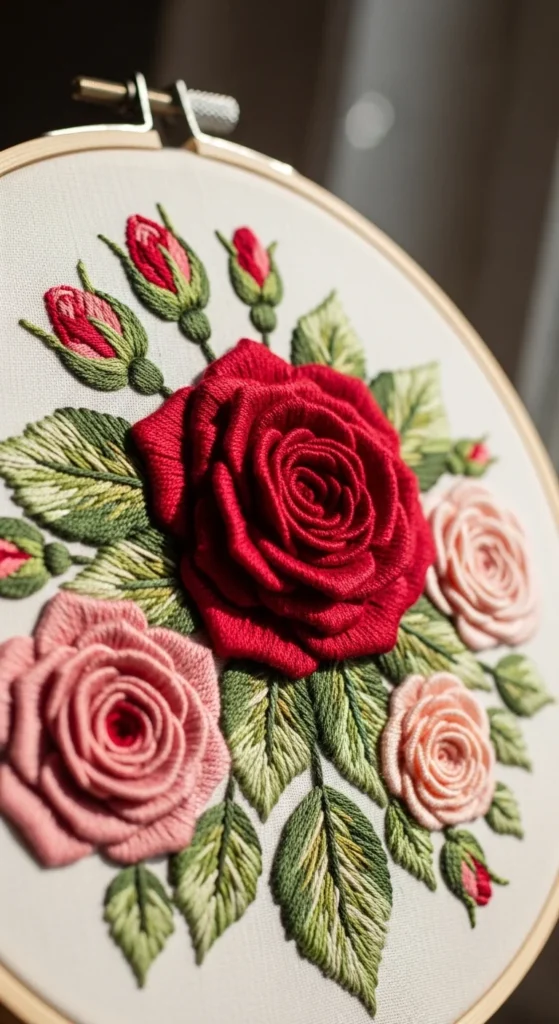
Raised rose embroidery is a beautiful choice when you want texture that stands out from the fabric. Instead of keeping everything flat, this pattern uses layered stitching to give the petals a fuller look. The result feels rich and handmade in a very visible way. This style may sound advanced, but it becomes much easier when you begin with one small rose and let the surrounding design stay simple. A single raised flower in the middle of a hoop or at the corner of a cushion cover can do a lot on its own. If you are working on a budget, use regular embroidery floss and build the effect slowly rather than buying specialty thread right away. Practice the raised petal section on scrap fabric first so you can get used to the shape and tension. This kind of floral pattern looks especially pretty on hoops, clutch bags, and keepsake pieces because the texture catches the light. If the rose feels too detailed, pair it with flat stitched leaves to keep the design balanced. Raised roses are perfect when you want your embroidery to feel soft, dimensional, and a little more special than a flat stitched flower border.
3. Green Stitch Guide Florals
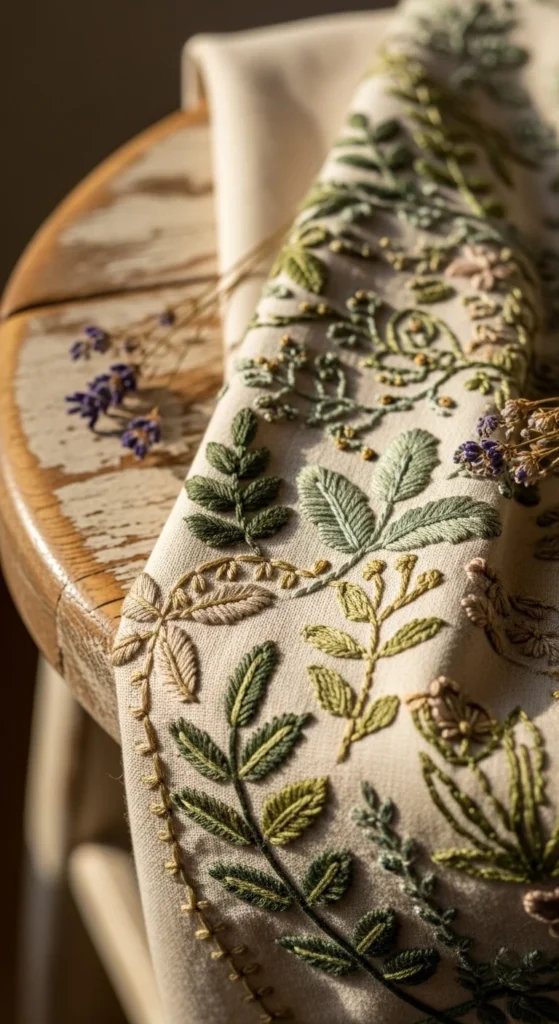
Eco-minded embroidery patterns are becoming more popular because many stitchers want beautiful projects that also feel practical and thoughtful. A floral design stitched with earthy greens, dusty pinks, warm rust tones, and natural cotton fabric creates a calm, handmade look that feels easy to use in everyday decor. This style is less about one special stitch and more about the materials and color choices. Start with a simple leaf vine, one small flower, and a neutral background. If you already have leftover floss from older projects, use that first instead of buying an entire new thread set. Mixing slightly different greens can actually make the botanical pattern look more natural. This kind of embroidery works well on reusable napkins, tote bags, fabric pouches, and mending patches because it turns practical fabric items into something nicer to keep. A good way to stay budget-friendly is to stitch on thrifted cotton shirts, old tea towels, or fabric scraps from sewing projects. The final look feels soft, useful, and gentle rather than overly polished. It is a strong pattern choice for anyone who likes floral embroidery with a natural, grounded mood and a simple material setup.
4. Clean Curve Florals
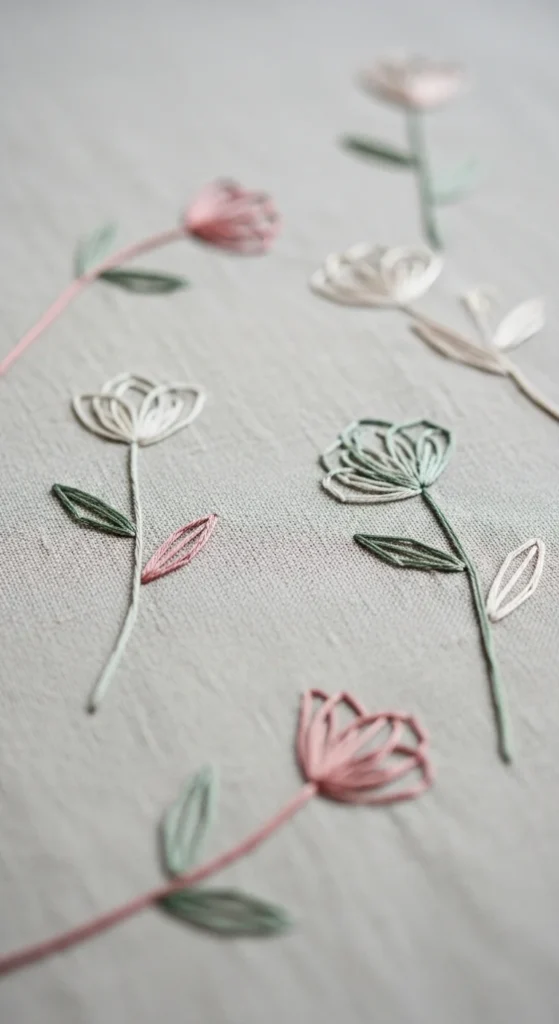
Minimal line floral patterns are ideal when you want hand embroidery to feel modern and calm. Instead of filling every petal and leaf, this style uses simple outlines, curved stems, and open space to create the design. It is one of the easiest ways to get a polished look without spending days on dense stitching. A single flower outline on a shirt pocket or a thin branch stitched onto a hoop can look very refined. This is especially helpful for beginners because the pattern relies on smooth lines and spacing rather than many stitch types. Start with one stem, two leaves, and one bloom shape. Keep the lines steady and let the fabric show through. That open space is part of the design. If you want an affordable project, use one thread color only. Black, olive green, cream, or dusty pink can all work beautifully depending on the fabric. Minimal floral line art is also a strong option for gifts because it feels current without looking trendy in a way that fades quickly. It looks lovely on handkerchiefs, cuffs, collars, tote bags, and wall hoops. This pattern style proves that a little embroidery can still make a big visual impact.
5. Bold Block Designs
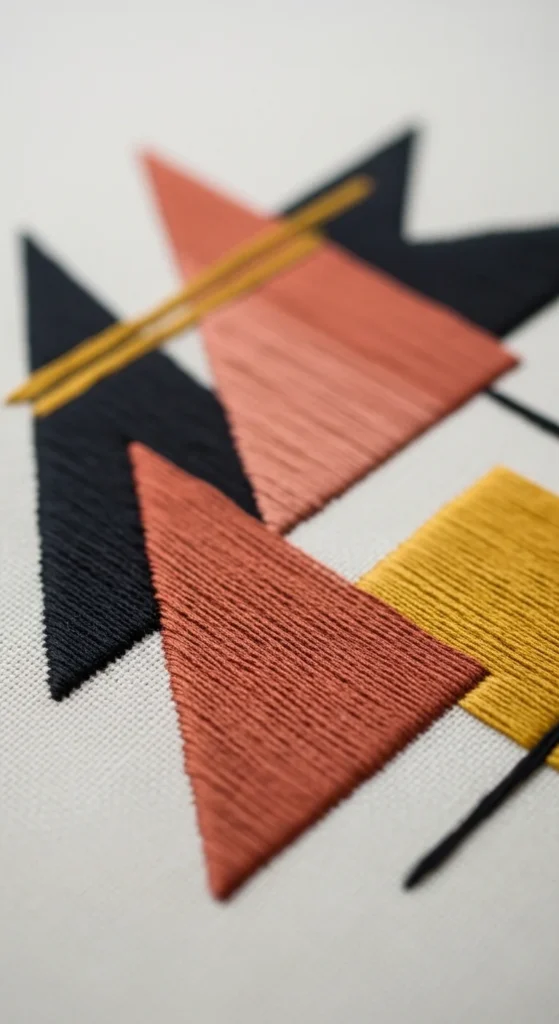
Geometric embroidery patterns are perfect for stitchers who want something less floral and more graphic. These designs use triangles, circles, grids, arches, and sharp lines to create a clean, modern look. They work especially well on home decor and accessories because the shapes feel structured and bold. A good beginner version might include one large arch, a few stacked triangles, and some small stitched dots around them. This gives the design interest without making the layout too complicated. If you want a low-cost project, geometric patterns are great because they often need fewer thread colors than floral work. You can make a strong design with just black, rust, mustard, or one soft neutral. This style looks especially nice on cushion covers, wall hoops, pouches, and jacket panels where the shapes have room to breathe. Use a ruler and washable pencil to sketch the layout first so the lines stay balanced. If your stitches are not perfectly even yet, geometric patterns can still look good because the structure carries the design. This is a very practical style for anyone who likes modern decor, simple forms, and embroidery that feels fresh without relying on flowers.
6. Global Stitch Stories
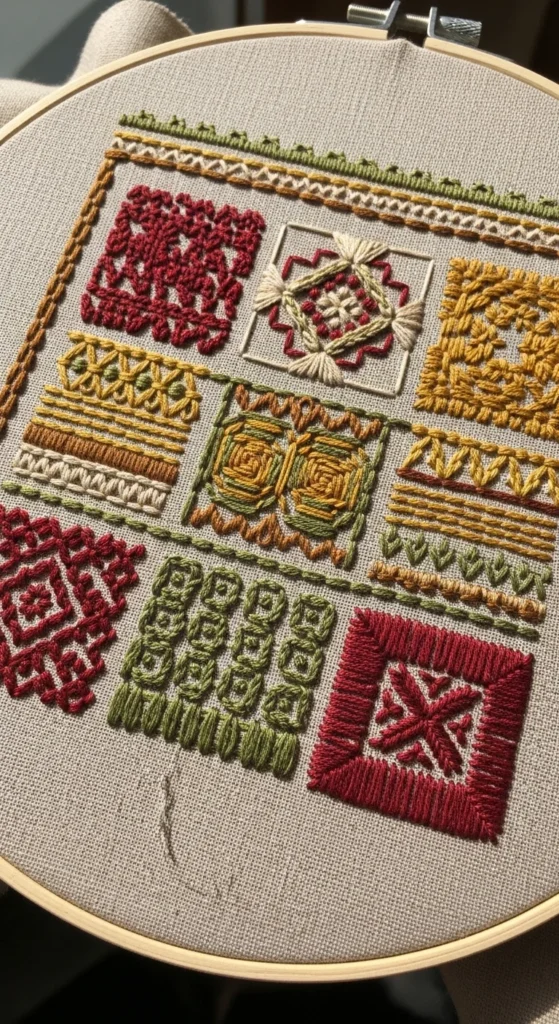
Heritage-inspired embroidery patterns feel meaningful because they connect simple stitching to long traditions of making. Patterns influenced by Kantha, Sashiko, folk florals, or regional border styles can add rhythm and texture without needing very dense work. A good way to approach this style is to choose one repeating motif or one line pattern rather than trying to copy a very large traditional piece all at once. Running stitches, layered borders, and repeating petal shapes are often enough to create a beautiful result. This kind of pattern works well on table runners, patches, visible mending projects, and decorative fabric panels. If you want to keep it affordable, start with one-color stitching on plain cotton or denim. Repetition is what gives this style its beauty, so you do not need many materials. The design grows from patience more than from a large supply haul. A nice idea is to make a sampler square first so you can practice the repeated stitch rhythm before adding it to clothing or home decor. Heritage-inspired patterns bring a sense of story and structure to embroidery, which makes them especially rewarding for people who enjoy slower projects and thoughtful details.
7. Glow Thread Glam
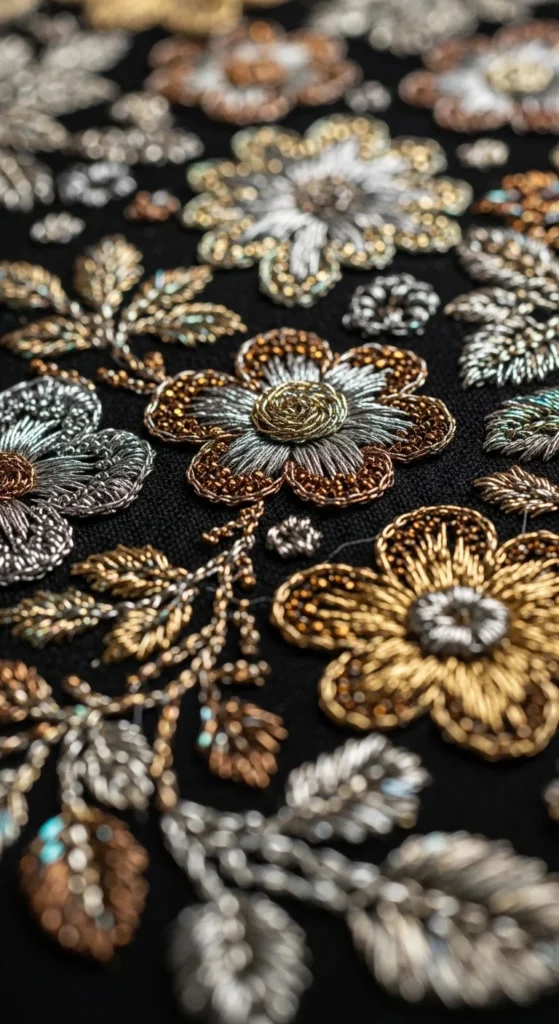
Metallic thread embroidery can make even a small pattern feel special. A simple flower, moon, starburst, or geometric border stitched with a bit of shimmer stands out beautifully on dark fabric. This style works best when the metallic thread is used as an accent rather than for the whole design. A rose with one metallic outline or a leaf vine with a few sparkling details often looks more balanced than a fully shiny pattern. If you are trying to save money, mix one metallic thread color with ordinary embroidery floss you already own. That gives the piece enough glow without making the project more difficult than it needs to be. Metallic thread can twist or catch, so shorter thread lengths usually help. Use it on projects where the shine can really show, like evening clutches, festive hoop art, decorative cuffs, or gift pouches. This pattern style is especially nice when you want embroidery that feels a little dressier or more celebratory. Even a very basic motif can look much richer once a small hint of metallic stitching is added. It is a simple way to create contrast, light, and visual focus.
8. Painterly Petals
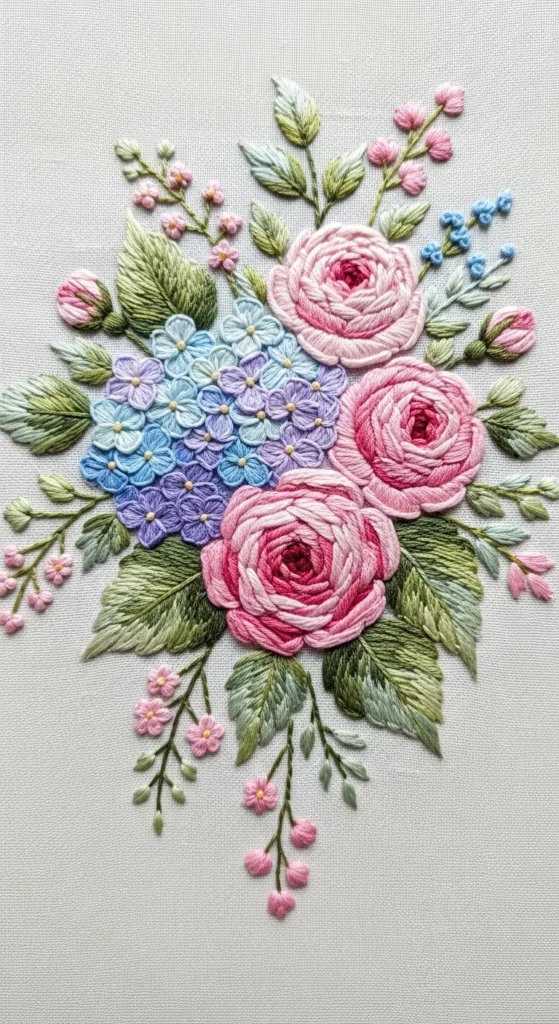
Thread painting is ideal when you want embroidery to look more like art than pattern. Instead of using just outlines or flat fills, this style layers close stitches in shifting shades so petals and leaves look softly shaded. It can create a very realistic effect, but it does not have to be intimidating. A small petal cluster in two or three shades is enough to begin. Try one flower head and keep the background empty so the detail has space to stand out. This kind of embroidery works beautifully in hoops, framed pieces, and keepsake gifts because people can really see the stitched color transitions. If you want to keep it budget-friendly, choose one flower and use just a light, medium, and dark version of the same color family instead of buying a huge range of floss. This pattern style rewards patience, but even a partial attempt often looks lovely. The soft color shifts make the embroidery feel hand-painted and delicate. It is a wonderful option for stitchers who enjoy slower work and want to create something that feels artistic, layered, and full of quiet detail rather than bold graphic shapes.
9. Fashion Focus Zones
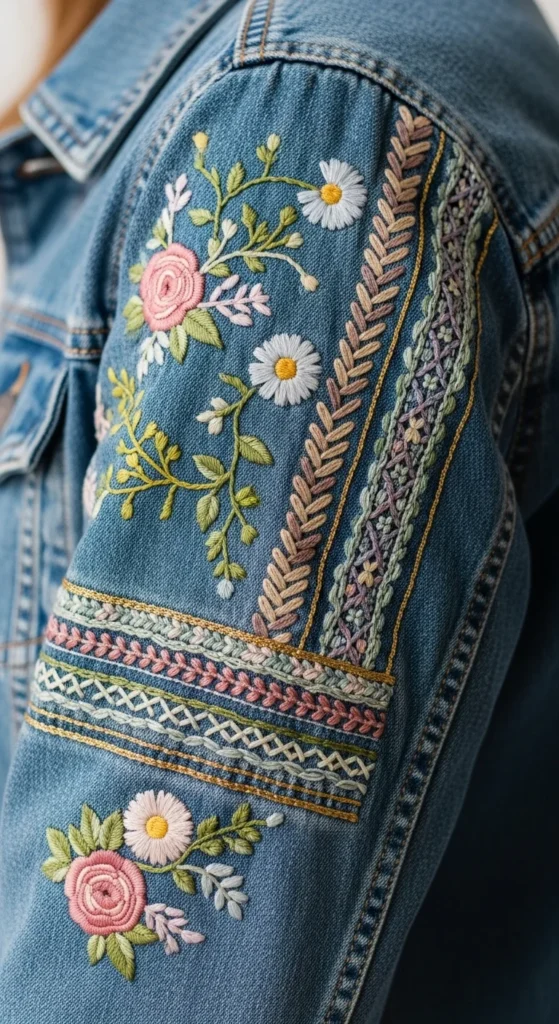
Some embroidery patterns stand out more because of where they are placed rather than how complex they are. Sleeves, cuffs, shirt collars, jacket shoulders, pocket corners, and denim panels are all strong “fashion focus zones” where a simple stitched motif can look intentional and stylish. A tiny floral spray on a cuff or a bold leaf branch on a jacket shoulder can completely change how a basic piece feels. This is good news if you want a striking DIY result without covering a full garment in stitches. Start with a small pattern in one visible area and see how it changes the clothing. If the fabric is thick, use a sturdy needle and keep the design simple at first. Denim, canvas, and cotton shirts all work well for this. A budget-friendly tip is to embroider on thrifted clothing or older basics you already own. That way the project feels low-risk and creative. Placement matters a lot, so hold the garment up and check where the design will be seen most naturally before you start. Smart placement can make a very simple embroidery pattern feel modern and stylish.
10. Knot Clusters
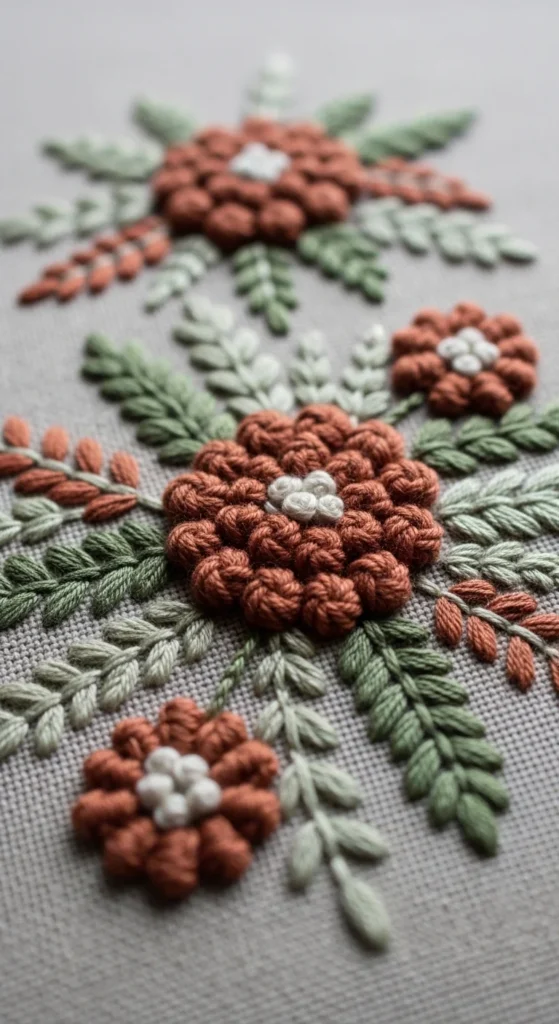
French knots and bullion knots are perfect when you want texture without a huge pattern. A cluster of knots can become a flower center, berry bunch, tiny blossom cloud, or textured abstract patch. These stitches add raised detail that looks charming even in very small areas. A good beginner-friendly pattern might be a simple stem with leaves and a knot cluster at the top to suggest wildflowers. This style works well because the texture itself carries so much visual interest. If your lines are still improving, knot-based details can help the piece feel fuller without relying on perfect outline work. Keep the first project small and use a fabric that holds tension well, like cotton or linen. If you want to save supplies, use leftover thread bits in related shades for the knot sections. Mixed pinks, creams, yellows, or greens often look natural together. Knot clusters are especially lovely on botanical hoops, denim details, and little embroidered gifts because the raised stitching gives them a handcrafted feel right away. This pattern style is simple to scale up or down, which makes it very useful for beginners and for decorative finishing touches alike.
11. Digital Design Downloads
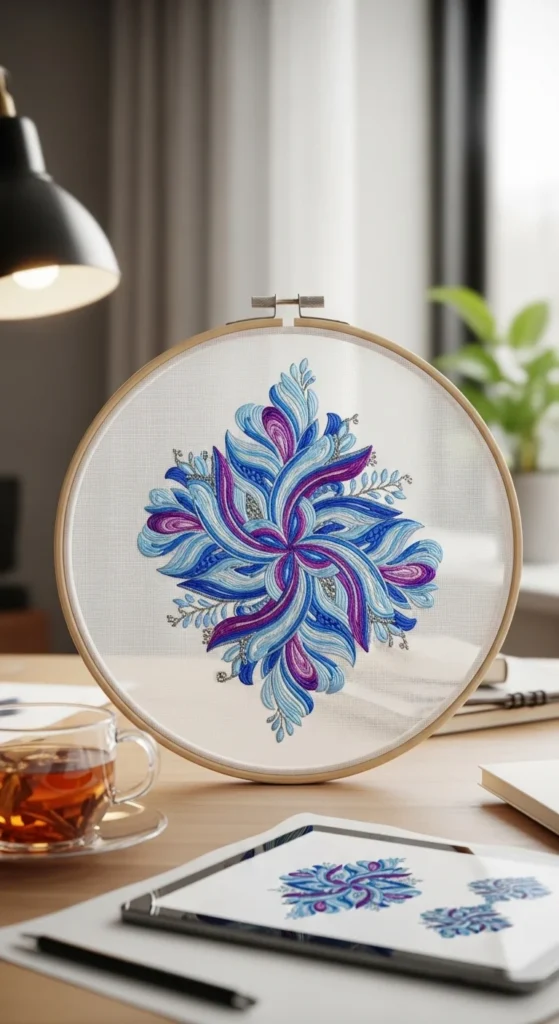
Digitally inspired embroidery patterns are becoming more common because they give makers access to unusual layouts and fresh visual ideas. These motifs often mix florals, curves, abstract geometry, celestial elements, or layered line art in ways that feel less traditional. If you like modern embroidery but do not want to draft every design by hand, a digitally planned pattern can be a good starting point. A helpful way to keep this affordable is to print or trace a simple downloaded pattern and stitch it with thread colors you already own rather than buying everything shown in a sample. Choose one design with clear shapes and not too many tiny sections if you are new to this style. AI-inspired motifs often work well in hoop art, notebook covers, decorative patches, and tote bags because the pattern itself becomes the focus. The nice thing about this approach is that it lets you explore combinations you might not sketch on your own. It still becomes handmade once you choose the thread, the fabric, and the stitch style. This kind of pattern is great for makers who want something a little more current, unusual, and design-led while still keeping the work practical at home.
12. Heirloom Hybrids
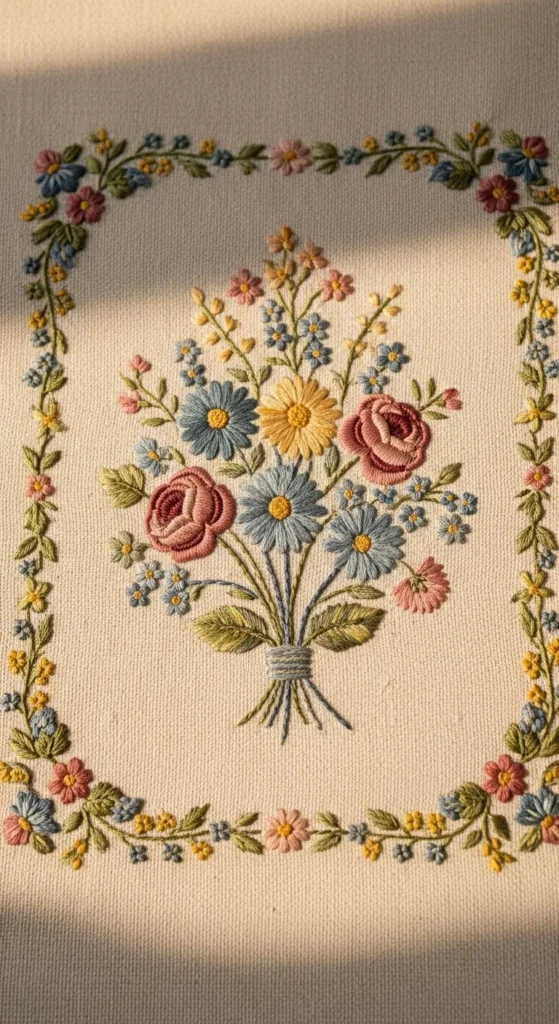
Vintage-style embroidery patterns are coming back because they feel warm, familiar, and easy to adapt for modern DIY. Think soft roses, trailing vines, scalloped borders, tiny bows, retro daisies, and muted thread colors like dusty pink, sage, butter yellow, and faded blue. These patterns work especially well on tea towels, pillow covers, apron pockets, and framed hoop art because they already carry that homey, heirloom mood. A good way to keep the style current is to pair the vintage motif with cleaner spacing or a modern fabric tone. That is where the “hybrid” feel comes in. You keep the nostalgic floral or border idea but simplify the overall layout. If you are on a budget, this is a wonderful style for repurposing old linens or fabric scraps because the slightly worn texture can actually add charm. Start with one retro bloom or one corner cluster and let that be enough. Vintage patterns do not need to be crowded to feel complete. This embroidery style is especially rewarding for people who love soft details, home decor projects, and stitched pieces that feel handmade in a very personal, lasting way.
13. Giant Garden Stitches
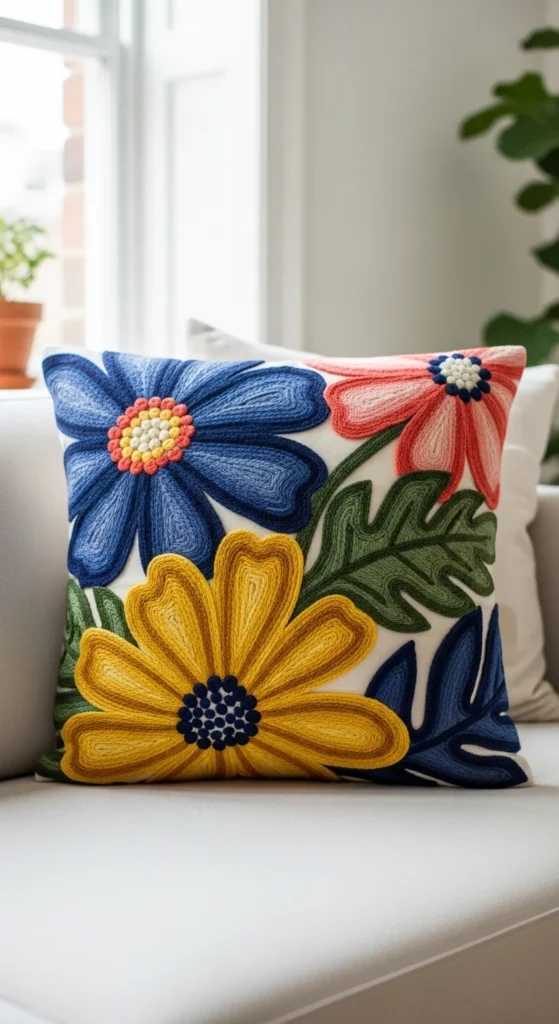
Oversized floral patterns are great when you want a dramatic result without stitching dozens of tiny details. One very large bloom can fill a hoop, decorate the center of a cushion, or spread across the back of a jacket in a way that looks bold and artistic. This style is especially helpful if you like florals but do not enjoy very small, tight stitching. Larger petals give you more room to work and make the design easier to manage visually. A good beginner version could be one giant daisy, poppy, or abstract rose with two big leaves. Use broad satin stitches, long-and-short sections, or simple outline work depending on your comfort level. This style also helps you save time because a single large motif often feels complete without lots of filler. If you want to keep costs low, use fewer colors and let scale carry the impact. Big floral embroidery looks especially good on cushions, wall hoops, tote bags, and statement clothing pieces. It feels modern, eye-catching, and a little more daring than smaller scattered florals while still staying very approachable for DIY.
14. Name Needlework
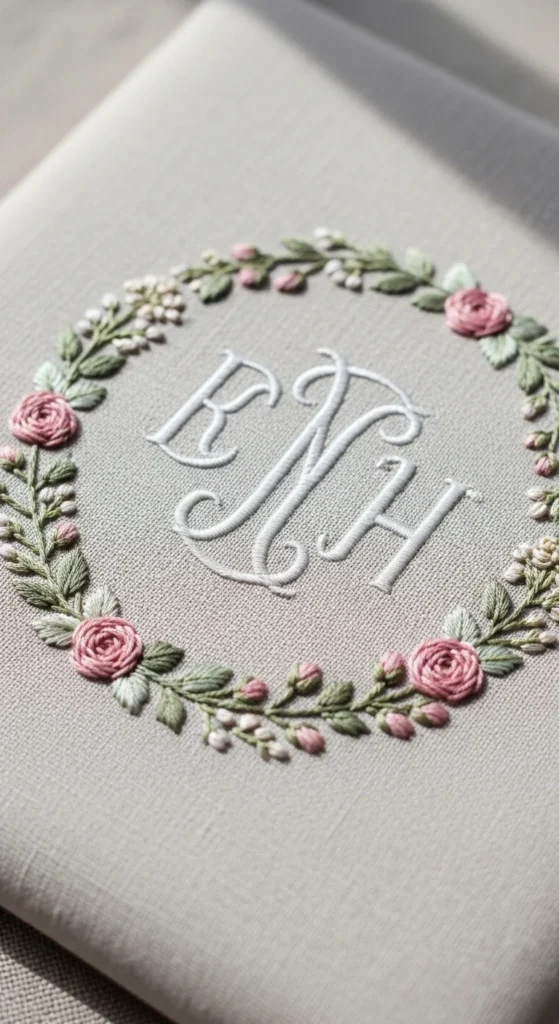
Monogram embroidery is one of the most practical pattern ideas because it works for gifts, keepsakes, home linens, and clothing details. A single stitched initial can look beautiful on a handkerchief, napkin, shirt cuff, tote bag, or baby gift. You can keep it very simple with clean lettering, or add a tiny floral stem, leaf wreath, or dotted border around the letter for a softer look. This type of design is ideal if you want a smaller project that still feels meaningful. It is also budget-friendly because you only need a small amount of thread and one main motif. A nice trick is to trace the letter lightly first and then stitch slowly rather than trying to freehand it on fabric. Block letters look modern and neat, while script initials feel more romantic. This style also works well for practicing line consistency because the shape is clear and focused. Personalized embroidery often feels more special than larger decorative patterns because it connects directly to a name or memory. It is a strong option for anyone who wants a DIY project that is simple, elegant, and easy to tailor for birthdays, weddings, or house gifts.
15. Stack and Shadow Florals
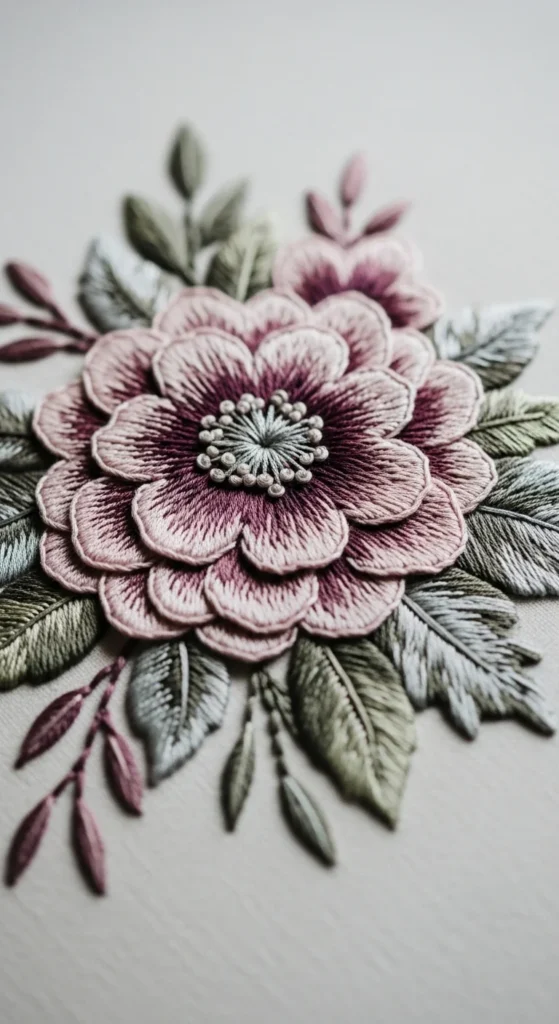
Layered floral embroidery gives your design more depth by stacking elements instead of placing every flower flat and separate. A petal can overlap another petal. A leaf can tuck under a stem. A darker stitch line can sit behind a lighter bloom. These small choices make the pattern feel richer without needing true 3D embroidery. This is a great next step when you already know basic floral stitching and want the composition to look fuller. Start with two flowers instead of one and let one sit slightly behind the other. Add shadow with a slightly deeper thread shade near the overlap area. Even a very small amount of color change can create more dimension. If you want to stay budget-friendly, use light, medium, and dark shades from one color family you already own. This pattern style works especially well in hoop art, pillow covers, and larger tote bag panels where the layering has room to show. The finished look feels more painterly and natural than flat floral spacing. It is a very useful style for makers who want their embroidery to feel more developed without needing highly raised or padded techniques.
16. Sturdy Patterns
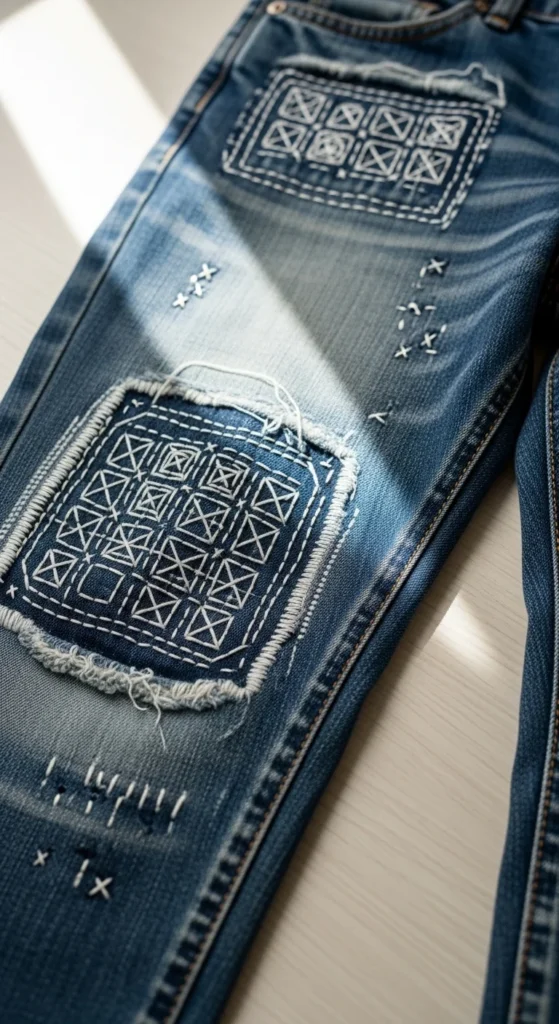
Functional embroidery patterns are a wonderful choice when you want your stitching to decorate and strengthen fabric at the same time. Inspired by visible mending and sashiko-style layouts, these patterns use repeated running stitches, grids, and geometric forms to reinforce worn areas on jeans, jackets, bags, or household cloth. The beauty of this style is that it feels useful as well as decorative. A patched knee or thin elbow becomes more interesting once stitched with a clean pattern. Start with a simple line grid, diamond pattern, or box repeat rather than a very dense all-over design. This keeps the project manageable and helps the structure of the stitches stay even. If you want to save money, use embroidery to extend the life of fabric you already own rather than stitching new material. Visible mending patterns often look best when the thread contrasts with the fabric, but soft tonal stitching can work beautifully too. This style is ideal for people who like practical DIY, geometric repetition, and projects with a clear purpose. It turns wear and repair into part of the beauty instead of something to hide.
17. Veil Vineworks
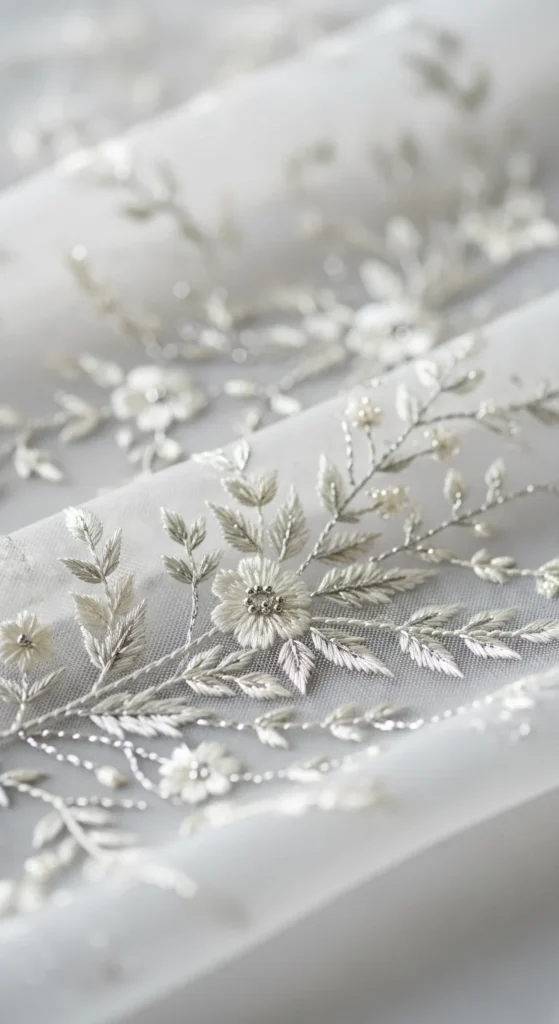
Dainty vine embroidery is perfect for pieces that need a soft, elegant touch. A slim branch with tiny leaves, scattered buds, and miniature blossoms can look beautiful on handkerchiefs, dupattas, cuffs, bridal accessories, ring pillows, or gift pouches. This style feels graceful because it uses space carefully. The fabric stays visible, and the vine moves lightly rather than filling every area. A good way to start is with one long curved stem and small leaves stitched in pairs. Then add a few little flower shapes or French knot buds. Keep the thread colors soft if you want the design to feel airy, or choose one metallic accent if you want a slightly dressier effect. This kind of pattern is also surprisingly affordable because it uses less thread than dense fill work. If you are nervous about stitching on delicate fabric, practice the vine path first on cotton to get used to the flow. Dainty vine patterns look especially lovely when placed along edges, hems, veils, and corners. They create a soft decorative effect that feels handmade and romantic without needing a huge amount of time or material.
18. Puffed Posies
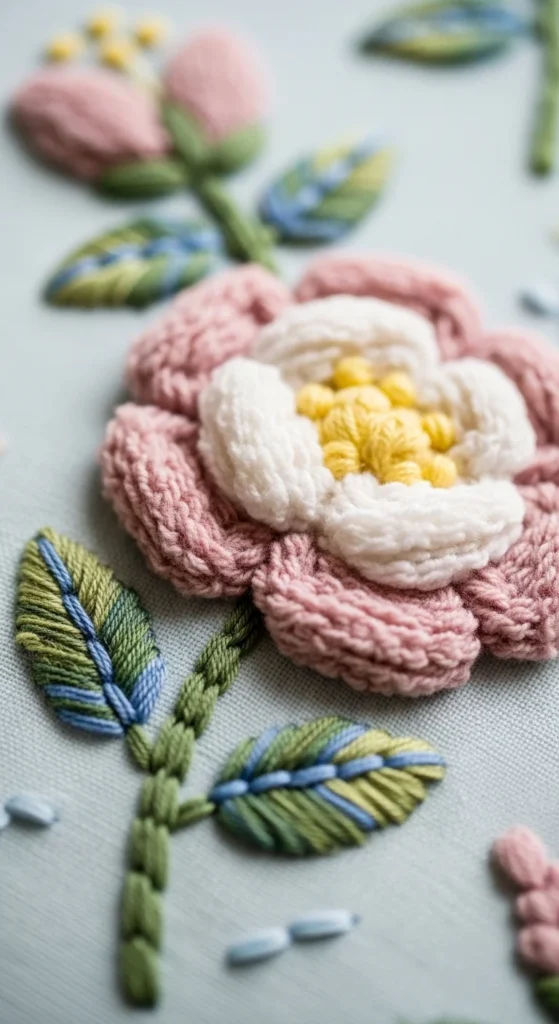
Padded floral embroidery gives flowers a plush, lifted look that feels soft and eye-catching. This can be done by building up stitches beneath a petal shape or using gentle padding under certain sections so the top layer rises slightly above the fabric. The result is fuller than ordinary flat embroidery but softer than very sculptural stumpwork. A simple padded daisy, blossom, or leaf can add so much interest to a hoop or pillow corner. This style is best approached in small sections. Try one padded flower head first instead of making every part raised. That helps you understand how much build-up looks good on your chosen fabric. If you want to keep the project affordable, use leftover thread or small bits of scrap fabric as the padding base rather than buying special materials. Puffed floral patterns are especially nice for nursery decor, keepsake pieces, and gift hoops because they look delicate and tactile at the same time. Even a tiny amount of padding can make the whole design feel more thoughtful. It is a lovely choice when you want something soft, dimensional, and a little different from flat stitched florals.
19. Lume Leaf Lines
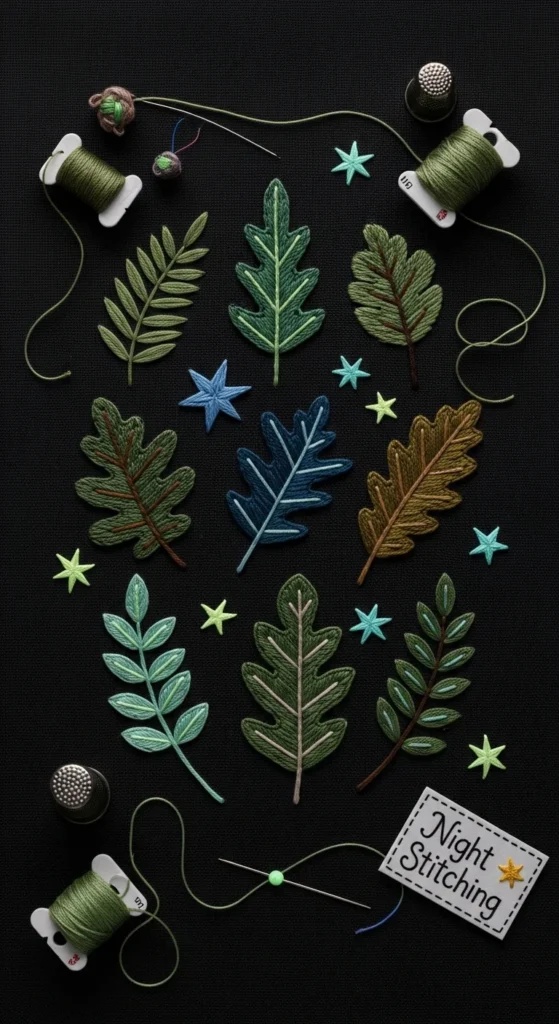
Glow accents can make embroidery feel playful without changing the whole design style. A simple leaf vine, moon motif, tiny stars, or night garden pattern stitched mostly in regular thread can become more interesting with just a little glow-in-the-dark floss in selected areas. This is a fun idea for children’s room decor, zipper pouches, pajama pockets, wall hoops, and gift projects with a whimsical feel. The best approach is to use glow thread as a detail rather than for the whole design. Outline a star. Stitch the center vein of a leaf. Add a few tiny dots around a moon. That way the pattern still looks lovely in daylight and has an extra surprise in the dark. If you are trying to stay budget-friendly, buy just one small glow thread color and pair it with thread you already own. This type of embroidery is especially charming on dark fabric where the contrast feels stronger. It is a simple way to turn an ordinary botanical or celestial pattern into something playful, handmade, and memorable without making the project much more difficult.
20. Cultural Critters
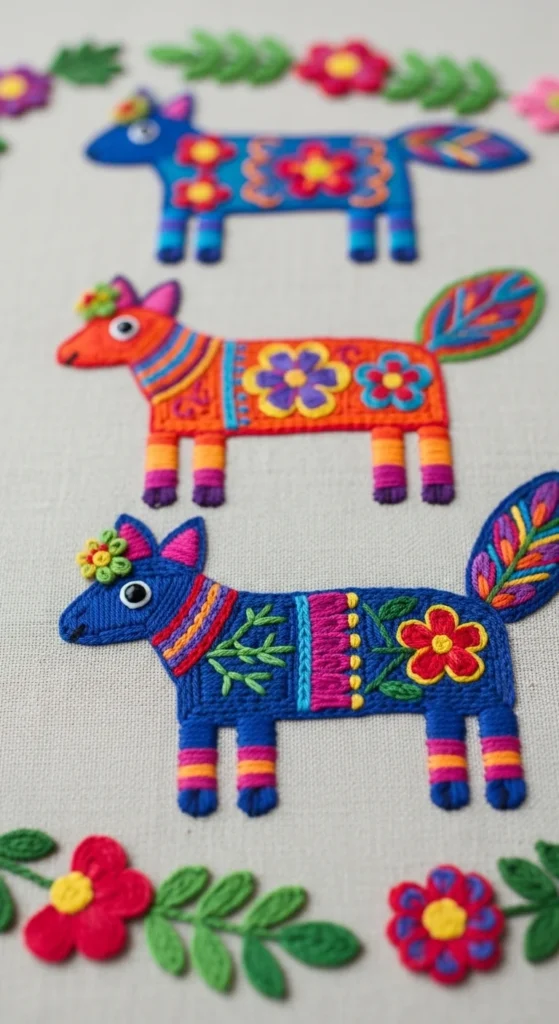
Animal embroidery inspired by folk art traditions can bring so much personality to a project. A bird, deer, fox, rabbit, or cat surrounded by stylized flowers and leaves creates a pattern that feels lively, decorative, and full of character. These motifs often use bold color, simple shapes, and repeated decorative accents rather than realistic anatomy, which makes them very approachable for DIY. A good starting project might be one bird with a flower branch or one small animal framed by leaves. Keep the shapes strong and clear, and let the decorative details support the main figure. This style works beautifully on tote bags, wall hoops, children’s room decor, and cushion covers. If you want to save money, use bright thread scraps in mixed colors rather than buying a large matching set. Folk-style animal embroidery often looks great with visible color variation. The final result feels cheerful and artistic, even when the stitches themselves stay basic. It is an excellent pattern choice for people who want embroidery that feels vivid, story-like, and a little different from the usual floral-only designs.
21. Festive Flower Fills
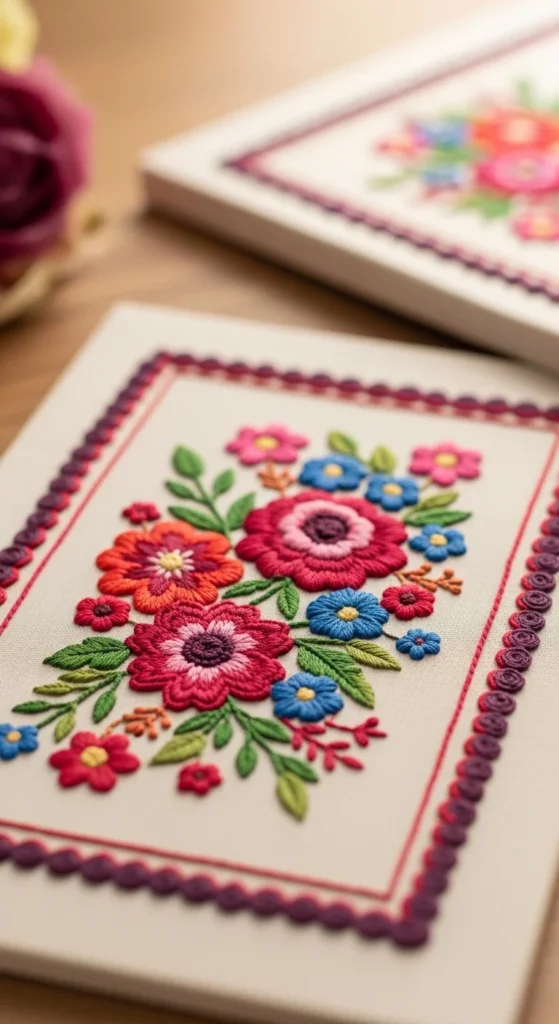
Festive floral fill patterns are useful when you want embroidery that feels richer and more decorative for special seasons or events. These designs often use closer flower spacing, stronger color, and small filler details like dots, leaves, buds, and tiny curved lines. The result feels fuller than minimalist floral embroidery but still manageable if you build it in sections. A good approach is to choose one main bloom shape and repeat it with small changes instead of trying to design many different flowers. That keeps the work cohesive and easier to stitch. Jewel tones like magenta, emerald, gold, deep orange, and rich pink can make the embroidery feel celebratory right away. If you want to keep it affordable, use those stronger shades in just a few areas and let the rest of the pattern stay lighter. This style works especially well on festive clutches, dupattas, table runners, hoop art, and gift fabric wraps. It gives projects a more dressed-up look without needing very advanced 3D stitches. Festive floral fills are ideal when you want your embroidery to feel bright, joyful, and ready for special days.
22. Wildflower Border Trails
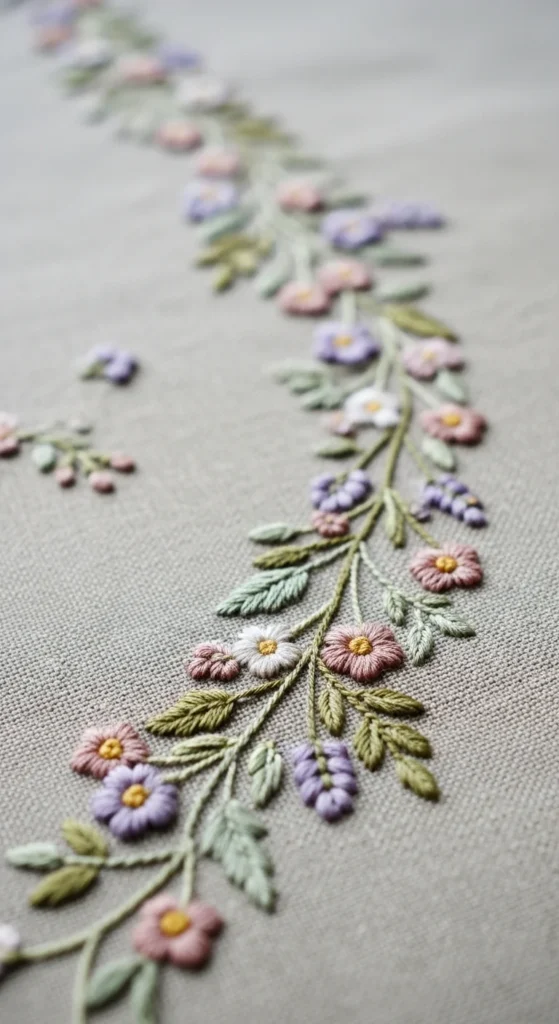
Border embroidery is a practical style because it frames fabric beautifully without needing a central motif. A wildflower trail running along the edge of a napkin, sleeve, table runner, scarf, or pillowcase can look charming and handmade in a very natural way. This kind of pattern usually works best with a loose stem, tiny blossoms, and repeated small leaves rather than one large focal flower. That makes it easier to continue the design as far as you want. A border also feels less intimidating than a center composition because you can build it gradually. Stitch one section, then add the next. If you want to save supplies, use two or three thread colors only and let repetition create the richness. Wildflower borders look lovely in soft meadow tones, but they can also work in monochrome for a quieter effect. This pattern style is especially good for people who want embroidery that decorates fabric gently rather than taking over the whole surface. It is delicate, useful, and easy to adapt for gifts or household pieces.
23. Moon and Meadow Motifs
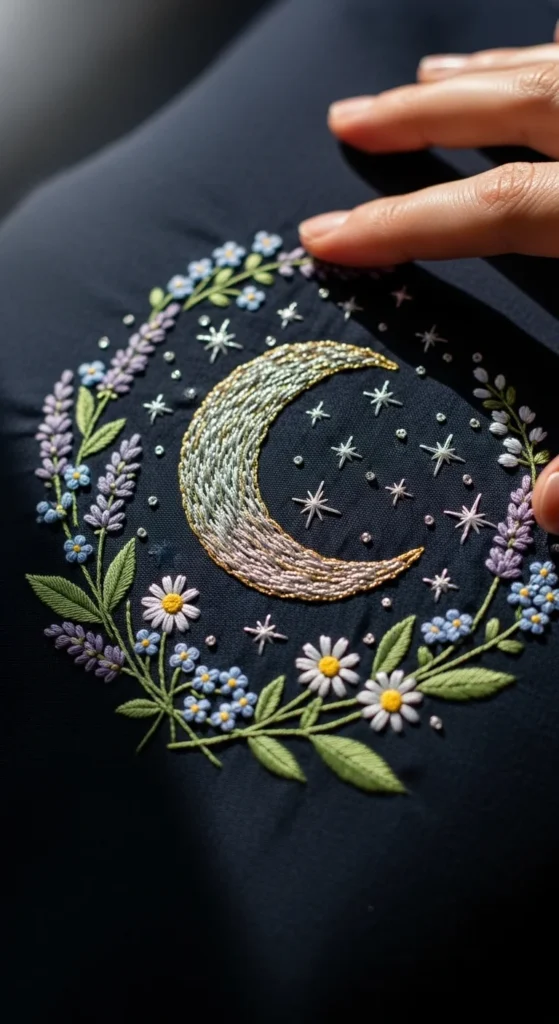
Celestial botanical embroidery feels popular because it combines two beloved themes in one pattern. A crescent moon with tiny stars, little wildflowers, leaves, and dotted details can look dreamy without becoming overly complex. This style is wonderful for hoop art, journal covers, pouches, sleep masks, and gift pieces because it feels calm and decorative. A good beginner-friendly version could be one moon shape with a small floral cluster growing around one side. Keep the flowers simple and use dots or little stitches to suggest stars instead of trying to fill the whole sky. If you want to stay on budget, choose one fabric color and use just two or three floss shades, such as cream, olive, and gold or soft white, green, and dusty blue. The contrast between celestial shapes and natural florals gives the pattern a gentle magical feel. It is a very flexible style because it can lean boho, minimal, romantic, or whimsical depending on the thread colors you pick. This is a beautiful pattern choice for anyone who enjoys soft symbolism and calm decorative motifs.
24. Botanical Pocket Corners
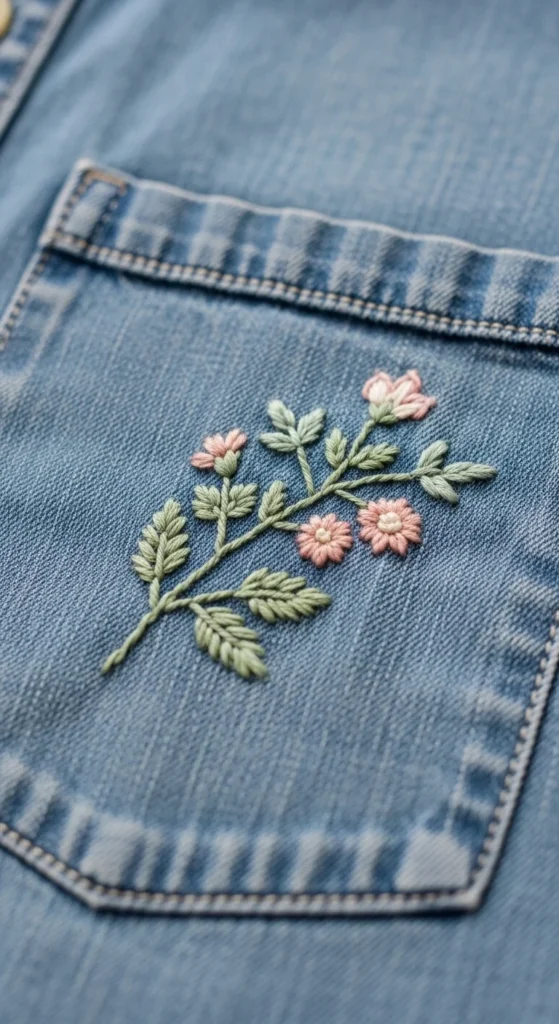
Small corner embroidery patterns are ideal when you want a wearable project that feels subtle and stylish. A pocket corner with tiny leaves, one flower bud, or a short stem detail can completely change a plain shirt, apron, tote, or pouch. This type of pattern is especially good for beginners because the scale stays manageable and the placement naturally limits how much you need to stitch. Start with one leaf sprig or mini floral curve and let that be enough. If the design still feels too plain, add a dot cluster or a second small leaf rather than expanding too far. This is also one of the most affordable embroidery styles because it uses very little thread and works well on existing clothing you already own. Pocket corner motifs look best when they feel light and intentional, not crowded. That makes them perfect for people who like tiny details more than large statement pieces. It is a practical pattern idea that turns everyday fabric into something personal with just a few stitches.
25. Abstract Face Florals
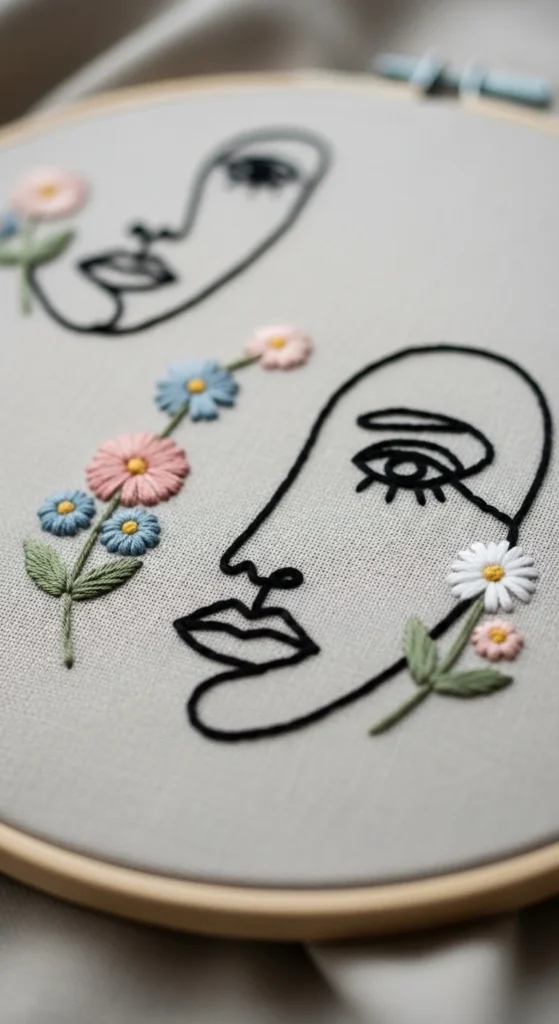
Abstract face embroidery paired with floral accents has become a popular modern style because it feels artistic without requiring a huge number of stitches. A single face outline with one flower stem crossing the cheek or one leaf cluster near the neck can create a striking design using mostly line work. This is a strong choice for hoop art, tote bags, and wall decor because the pattern itself feels like illustration. If you are new to this style, start with a very simple profile or continuous line face and keep the floral accents small. The beauty comes from the balance between the line drawing and the botanical softness. Use one or two thread colors only to keep the look clean. Black line work with olive leaves or rust flowers is a simple, budget-friendly combination that works on many fabrics. This pattern style feels current, stylish, and creative without needing a lot of fill stitching. It is especially good for people who like embroidery that looks more like modern art than traditional decorative craft. A few well-placed lines can create a very memorable finished piece.
26. Denim Meadow Mending
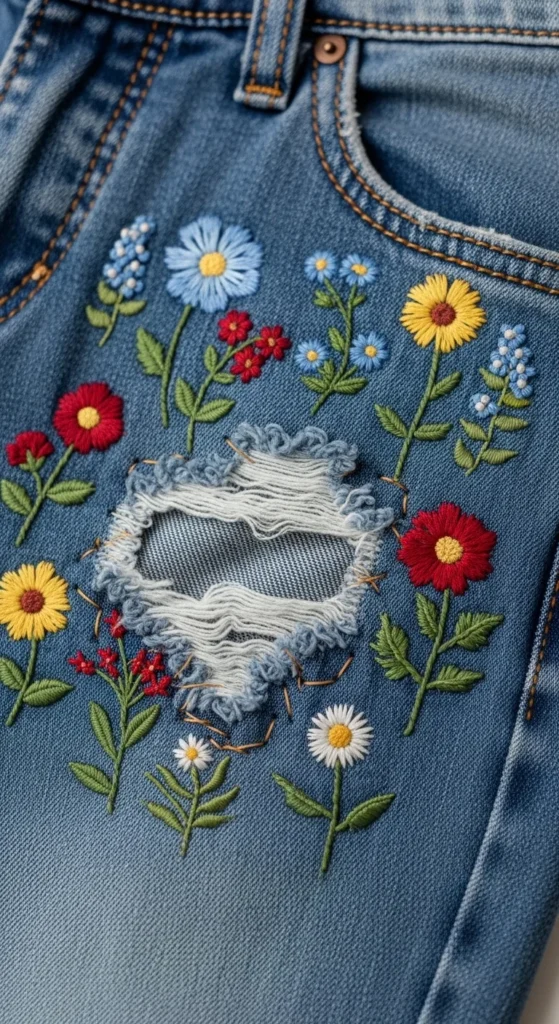
Floral visible mending on denim is a clever way to make repairs feel intentional and beautiful. Instead of hiding a worn spot, patch it and stitch a little meadow of flowers, leaves, and stems across the area. This works well because denim can handle embroidery nicely and the contrast makes the stitching stand out. A torn knee, weak pocket, or faded jacket elbow can all become part of the design. Start with a small patch underneath if the fabric is thin, then stitch simple flowers across the repair zone. Keep the floral shapes uncomplicated so the focus stays on the cheerful effect rather than perfect detail. This is a wonderful budget-friendly embroidery project because it extends the life of clothes you already own. It also feels personal in a way store-bought patched denim does not. Wildflower mending patterns can be bright and playful or soft and subtle depending on your thread choice. It is a very satisfying way to mix usefulness and decoration in one project, especially for people who like DIY clothing with a gentle handmade touch.
27. Hoop Garden Samplers
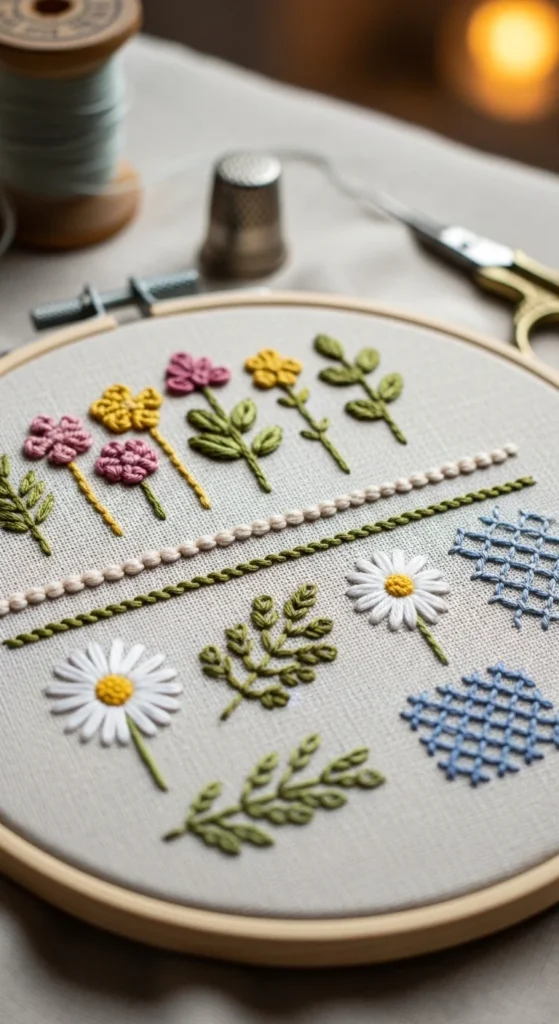
A sampler hoop is one of the smartest embroidery pattern ideas because it lets you try many motifs in one project. Instead of committing to one large design, divide the hoop into sections and stitch small flowers, leaves, knot clusters, line art, border rows, geometric shapes, and tiny decorative motifs across the fabric. This gives you a finished piece that also works like practice. It is perfect for beginners who want to improve without making endless separate test swatches. It is also a great stash-busting project because you can use leftover thread in small amounts. A hoop sampler can lean floral, modern, heritage-inspired, or mixed depending on what you include. One section might be a rose. Another might be a Sashiko-style repeat. Another might be a monogram or a moon motif. The variety keeps the project interesting and lets you discover which styles you enjoy most. Once done, the hoop looks decorative on its own and also becomes a useful reference for future projects. It is practical, creative, and one of the best ways to explore hand embroidery patterns without feeling locked into a single design style.
Conclusion
Hand embroidery patterns are especially exciting right now because they bring together classic florals, modern line art, textured stitches, heritage influences, and practical DIY uses in one craft. You can keep things simple with a tiny pocket sprig, a monogram, or a clean geometric motif, or try something richer like raised roses, layered florals, padded petals, or visible mending on denim. The best part is that beautiful embroidery does not require a huge budget. A small hoop, a needle, some thread, and fabric you already have can be enough to start. Pick one pattern style that fits your mood, your fabric, and your time, then let that single design grow into your next favorite handmade piece.

Lily Summers is a digital artist and creative storyteller who loves bringing colorful characters to life. With a passion for cartoons, fan art, and playful sketches, she inspires others to explore their imagination through art. When she’s not sketching, you’ll find her dreaming up new ideas for CraftedWizard.com to spark creativity in every artist. 🌈✨