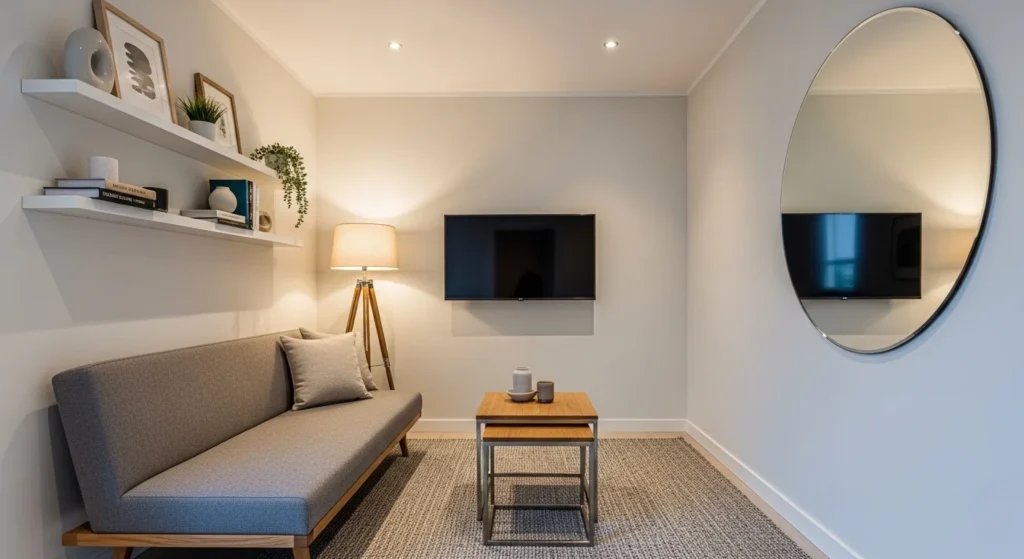
Small living rooms can feel cramped fast, especially when furniture is bulky or storage is limited. The right layout and a few smart design tricks can completely change how the space feels. Light colors, slim furniture, and vertical storage help open up the room without removing comfort. Thoughtful choices like mirrors, multifunctional pieces, and hidden storage keep clutter low while adding style. These ideas focus on making the most of every square foot using practical, budget-friendly updates that work in apartments, condos, and compact homes.
1. Light Neutral Wall Colors
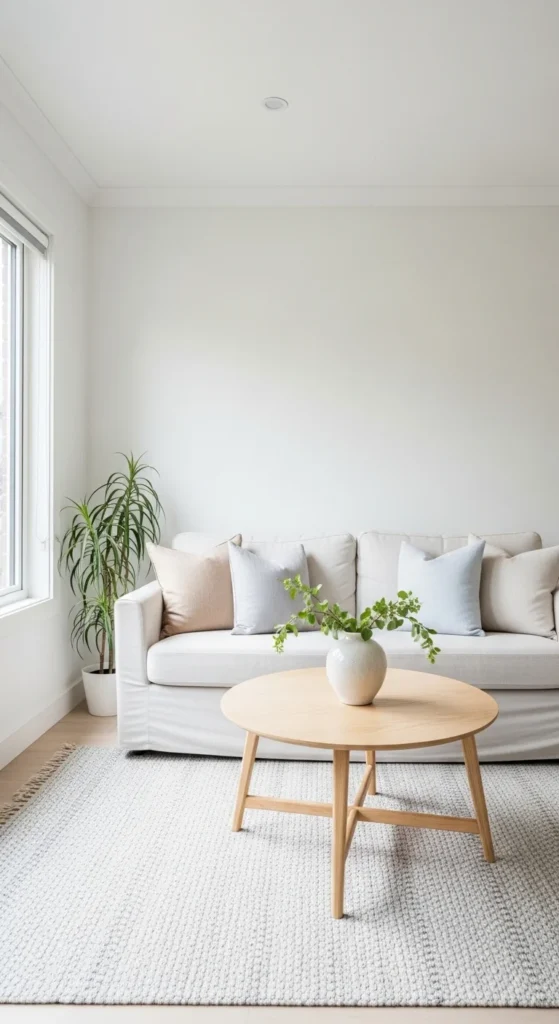
Light neutral walls help reflect natural light and make a small living room feel more open. Shades like warm white, soft beige, or pale gray create an airy backdrop without feeling stark. Painting walls and ceilings in similar tones reduces visual breaks and makes the space feel taller. Matte finishes hide imperfections and create a calm look. If repainting the entire room feels like too much, start with the main walls and leave trim slightly brighter for contrast. Light colors also make it easier to mix different furniture styles without clashing. This simple change often has the biggest visual impact in small spaces.
2. Slim-Legged Sofas
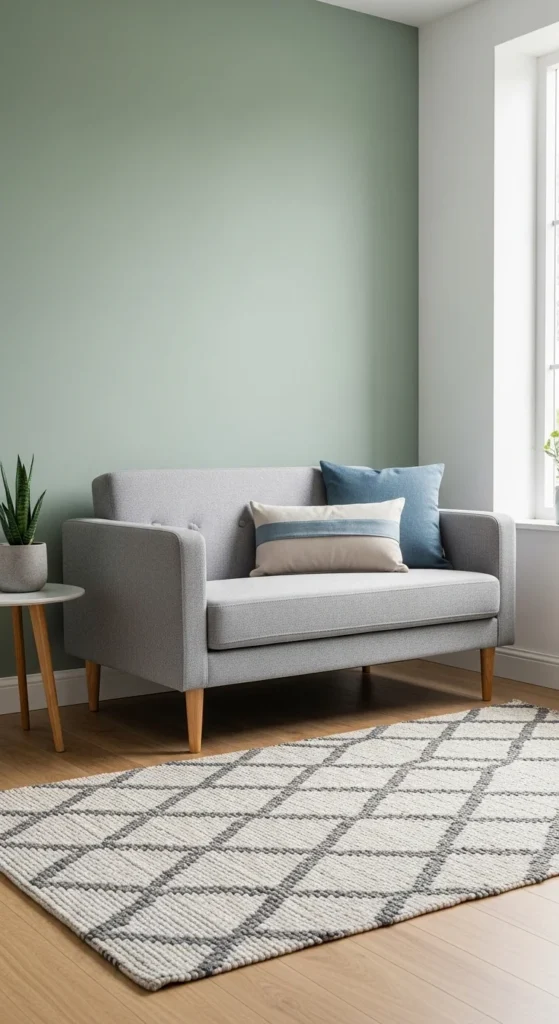
Sofas with slim legs create visible floor space underneath, which makes the room feel lighter. Bulky sofas that sit flat on the floor can make a space feel crowded. Raised legs add airiness and allow light to pass through. Choose narrow armrests and low backs to keep the silhouette clean. Even budget sofas now come in slimmer profiles. Pair with a simple throw to add softness without bulk. This small furniture detail makes a noticeable difference.
3. Multifunctional Nesting Tables
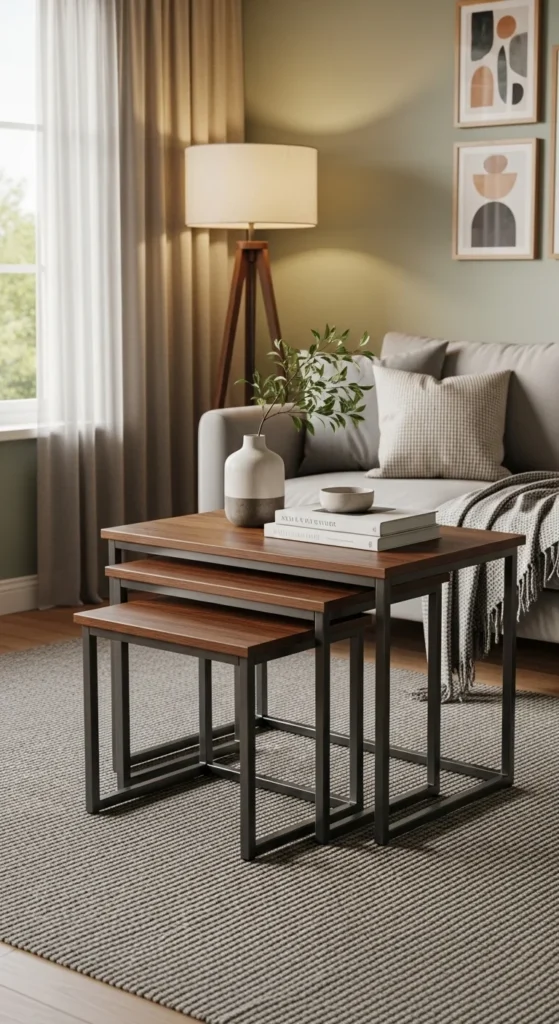
Nesting tables provide flexible surface space without taking up permanent room. Pull them apart when guests visit, then slide them back together afterward. Their compact design works well in front of small sofas. Look for lightweight designs that are easy to move. Wood or metal finishes keep them durable. This setup replaces one bulky coffee table with several small surfaces that can adapt to your needs. It is a practical way to add function without crowding the room.
4. Floating Wall Shelves
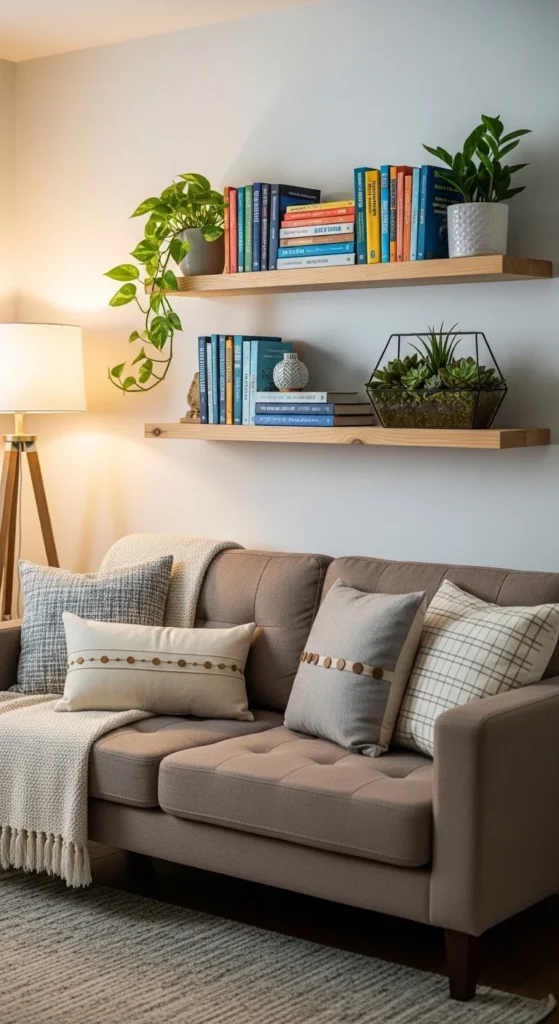
Floating shelves use vertical wall space instead of floor space. Install them above a sofa or along an empty wall. Use baskets or matching storage boxes to keep shelves tidy. This keeps books and decor off tables. Stagger shelf placement to add visual interest. Properly anchored shelves are strong and safe. Vertical storage helps keep the room organized and open.
5. Mirrors Opposite Windows
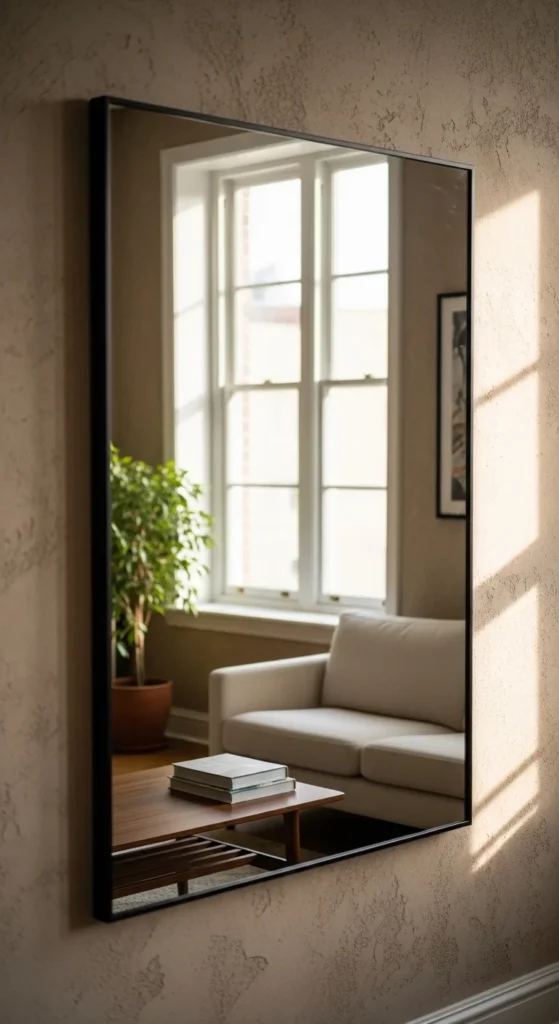
Placing a mirror directly across from a window helps bounce light around the room and creates the feeling of added depth. This simple trick makes a compact space feel brighter and more open. Choose a large mirror with a slim frame so it does not look heavy on the wall. Leaning a floor mirror against the wall can also add height without permanent installation. Mirrors work especially well in rooms that do not get a lot of direct sunlight. They reflect both daylight and lamplight, making the room feel lively even in the evening. This visual expansion effect costs far less than major renovations and delivers an immediate difference.
6. Wall-Mounted TV Setup
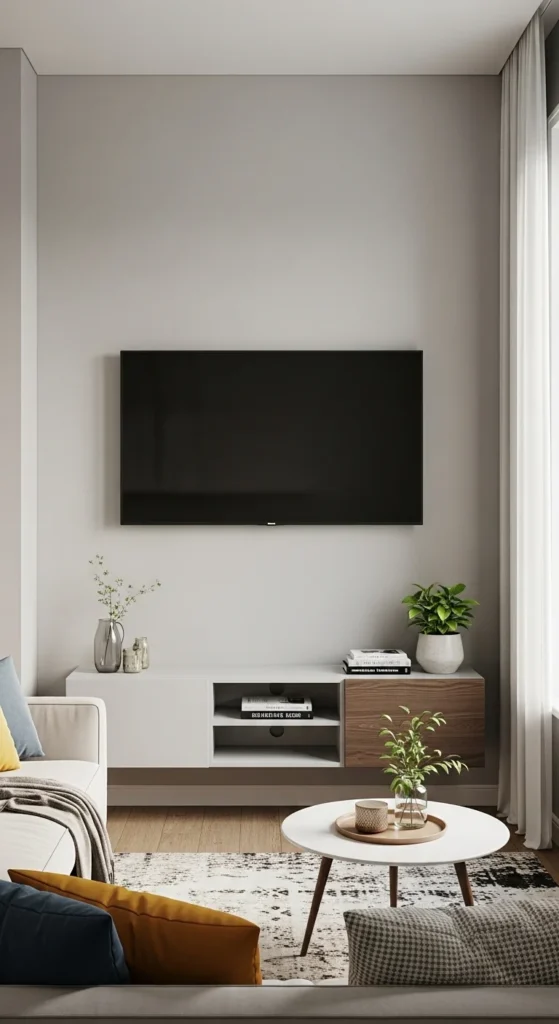
Mounting the TV on the wall frees up valuable floor and surface space. Without a bulky media stand, the room feels less crowded and more streamlined. Use a slim swivel mount so the screen can be adjusted for different seating angles. Hiding cables behind the wall or inside a paintable cord cover keeps everything looking tidy. A narrow floating shelf below the TV can hold a streaming device or remote tray without adding visual weight. This setup keeps the focus on seating and movement instead of electronics.
7. Storage Ottoman Coffee Table
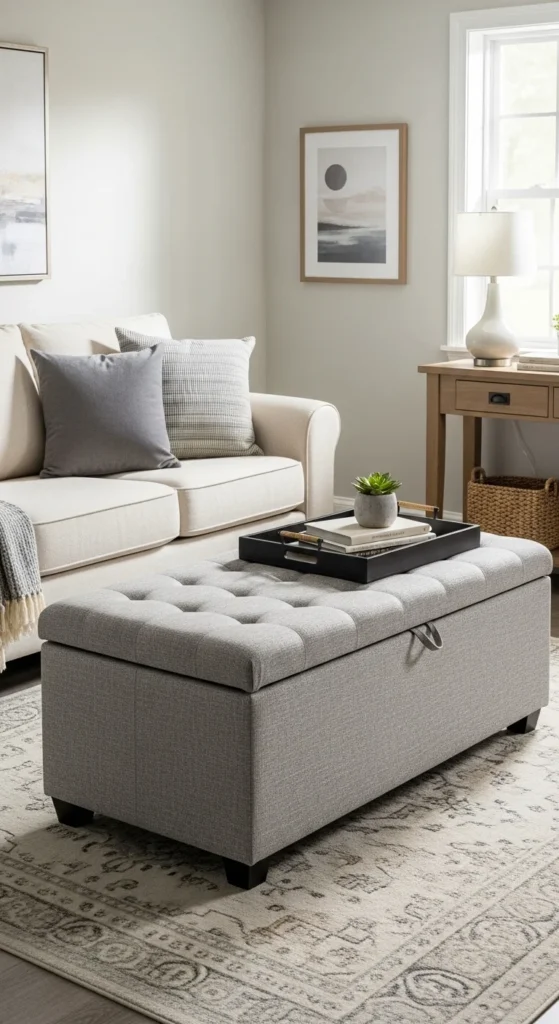
A storage ottoman works as a coffee table, extra seating, and hidden storage all at once. Inside, you can store blankets, magazines, or remote controls to keep surfaces clear. Choose a neutral fabric to match the sofa and keep the room cohesive. A tray placed on top can hold drinks or decor when needed. Soft edges also make ottomans safer in tight layouts. This piece replaces multiple items with one practical solution, helping reduce clutter in a small living area.
8. Low-Profile Sectional
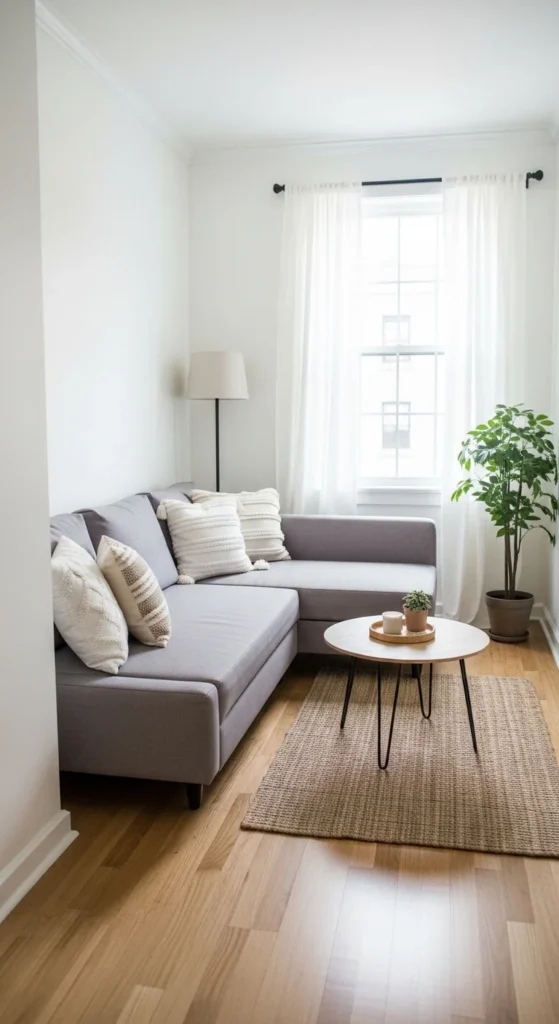
A low-profile sectional keeps sightlines open and makes ceilings feel taller. Slim cushions and narrow arms prevent the sofa from overpowering the room. L-shaped designs can fit neatly into corners, using space efficiently. Choose light upholstery to keep the room bright. Raised legs add extra airiness underneath. This seating style offers comfort without making the layout feel tight or heavy.
9. Layered Lighting Sources
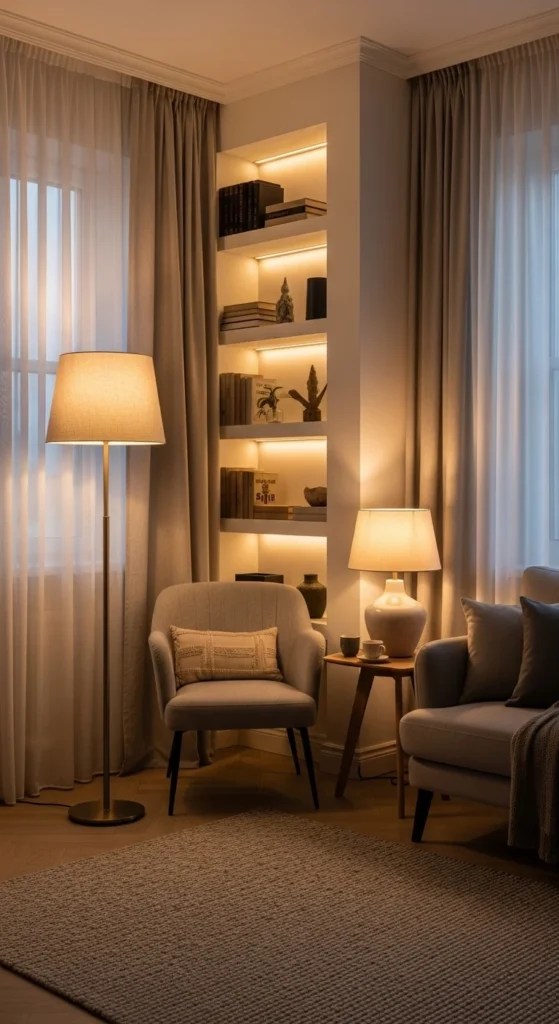
Layered lighting adds depth and warmth without taking up much room. Combine a floor lamp in one corner, a table lamp on a side table, and a wall light if possible. Multiple light sources prevent harsh shadows and make the room feel larger. Warm-toned bulbs create a cozy atmosphere. Dimmers allow you to adjust brightness for different times of day. Good lighting helps every other design choice stand out.
10. Statement Rug to Define Zone
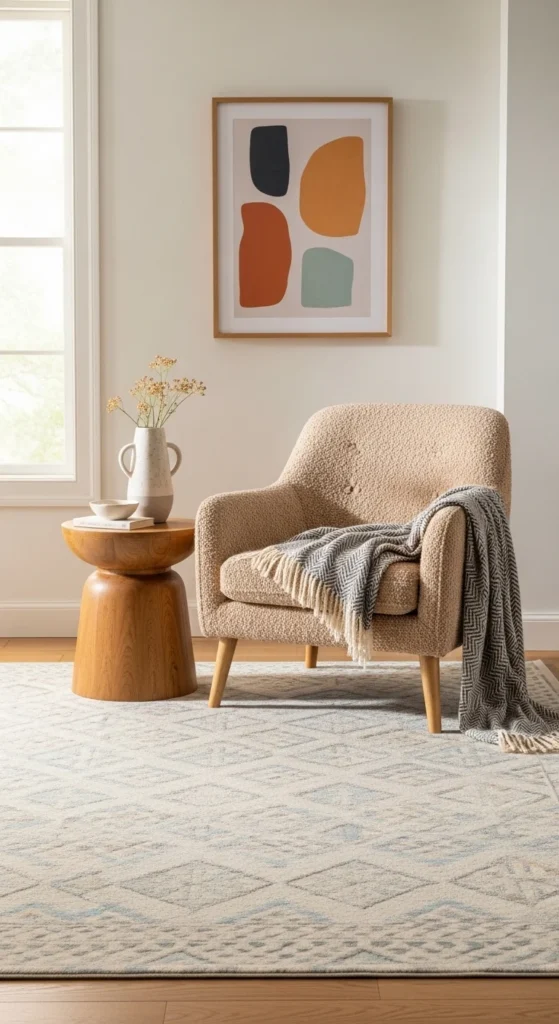
A rug helps define the seating area and visually anchors the furniture. Choose a size large enough for at least the front legs of the sofa and chairs to sit on it. Low-pile rugs keep the room feeling open and easy to walk through. Subtle patterns add interest without overwhelming the space. This simple addition makes the layout feel more intentional and organized.
11. Color-Consistent Decor
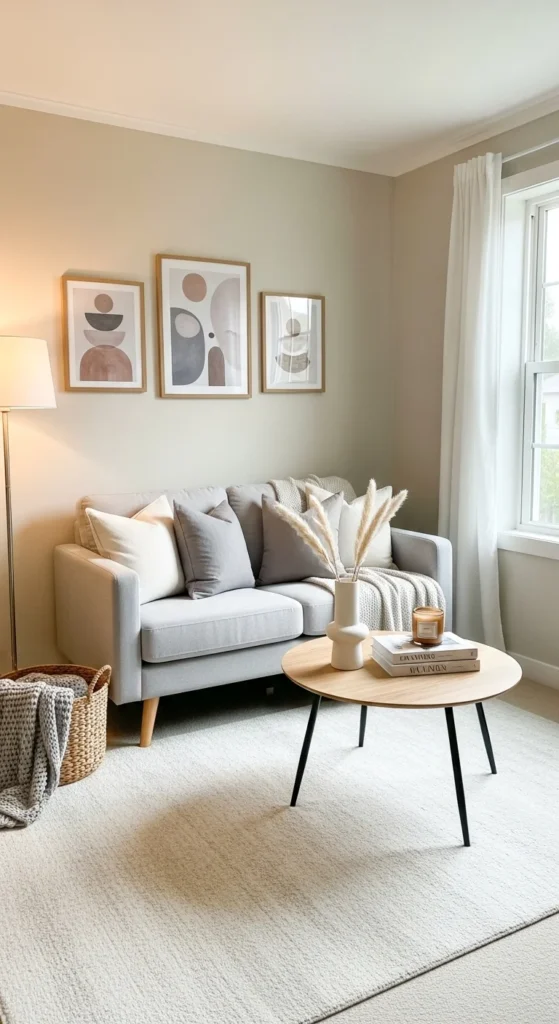
Keeping decor within a similar color palette helps reduce visual clutter. Soft neutrals or gentle accent shades create a calm, unified look. Matching tones across pillows, throws, and artwork make the room feel cohesive. Limiting bold contrasts prevents the space from feeling busy. This approach allows small rooms to feel balanced and restful.
12. Built-In Bench Seating
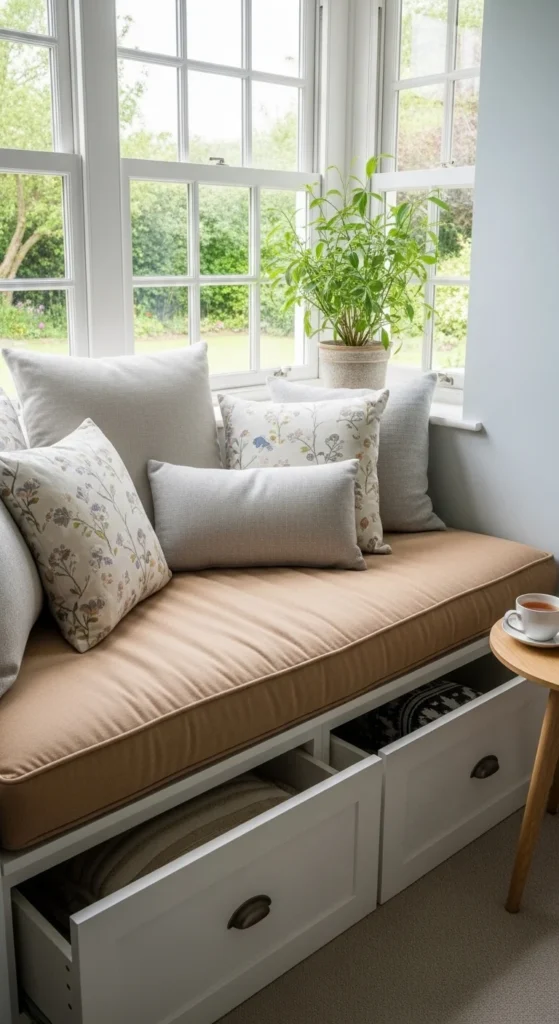
A built-in bench offers seating without bulky chairs taking up floor space. It fits neatly under windows or along unused walls. Add cushions and pillows for comfort. Storage drawers below can hold blankets or books. This turns an overlooked corner into a functional and cozy feature.
13. Slim Console Behind Sofa
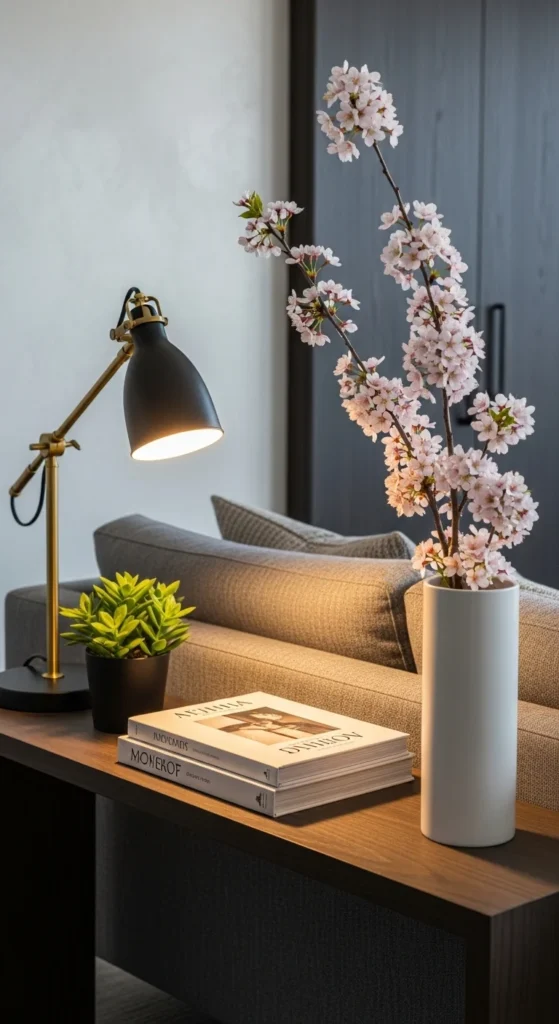
A slim console behind the sofa adds surface space without crowding the room. Use it for a table lamp, plant, or small decor pieces. Narrow designs allow easy walking space. Some consoles include drawers or shelves for hidden storage. This makes the back of the sofa useful instead of wasted space.
14. Sheer Curtains for Light Flow
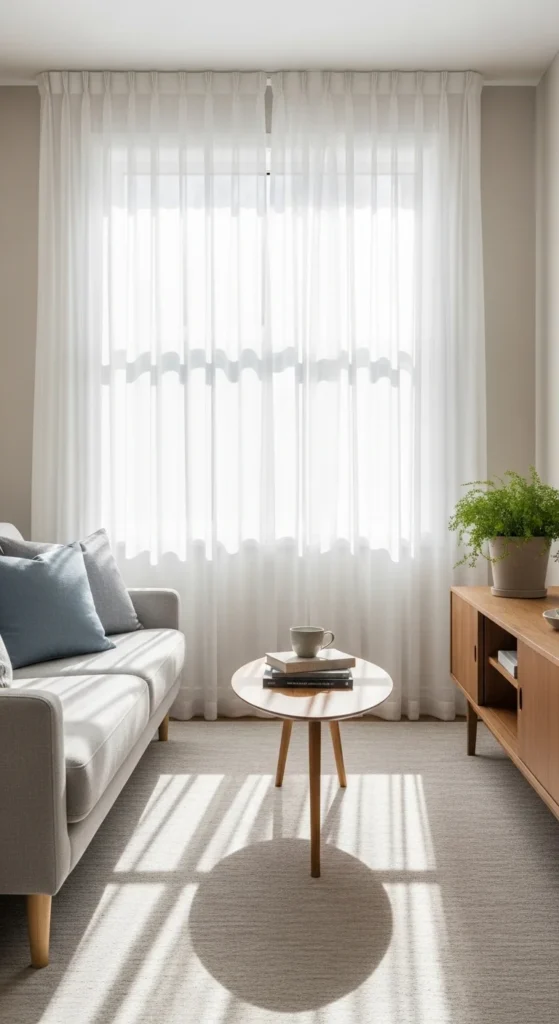
Sheer curtains allow natural light to enter while maintaining privacy. Light fabrics keep the room feeling open. Hang curtains higher than the window frame to create the illusion of taller ceilings. This softens the space without blocking brightness.
15. Vertical Gallery Wall
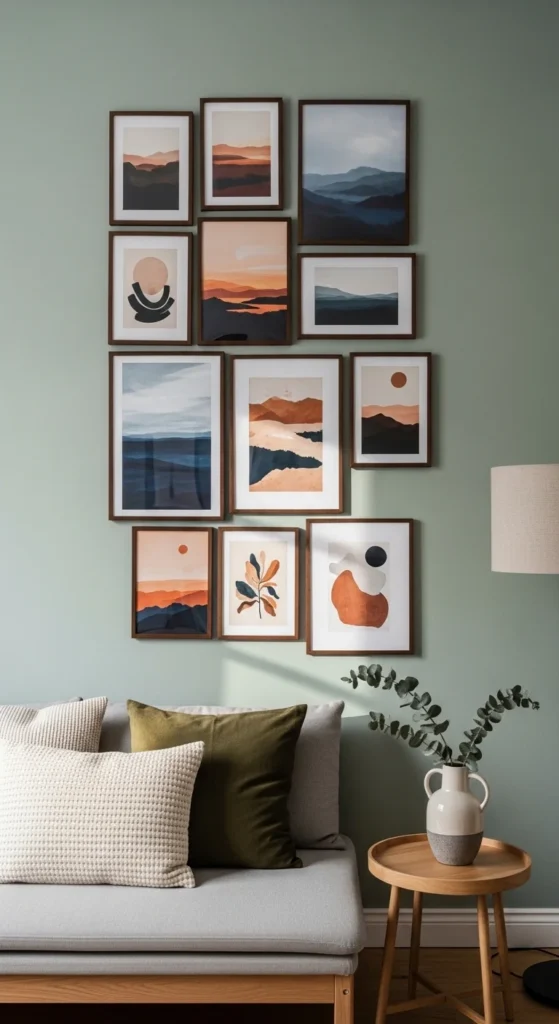
A vertical gallery wall pulls the eye upward and makes the room feel taller. Use slim frames in similar colors to keep the arrangement light and organized. Black, wood, or white frames work well in small spaces. Stick to a tight layout rather than spreading frames too far apart. This keeps the display feeling intentional instead of scattered. Choose art with soft tones or simple graphics so the wall does not feel busy. You can mix photos, sketches, and small prints for personality. Paper templates taped to the wall help plan spacing before hanging. This idea adds style without taking up any floor space.
16. Modular Cube Shelving
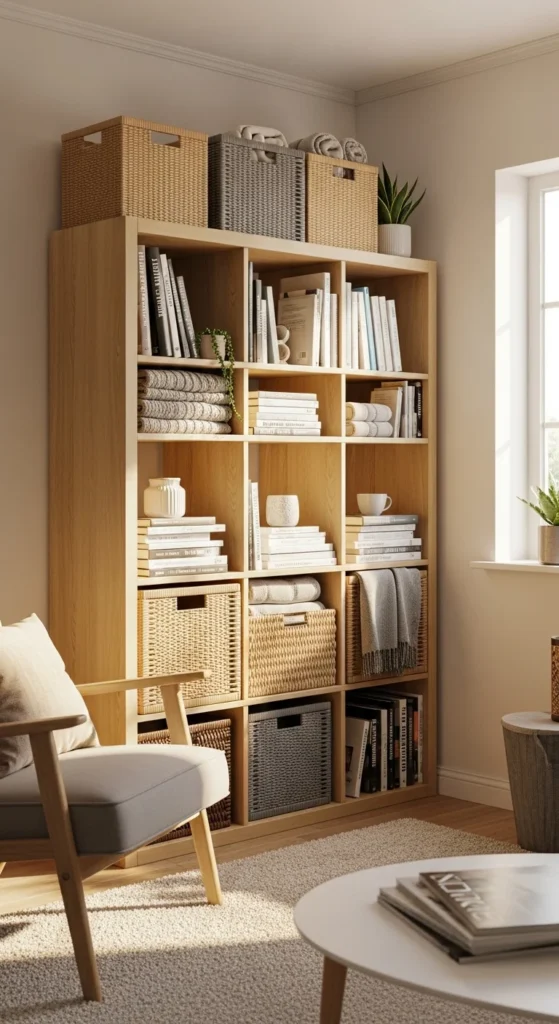
Modular cube shelves adapt easily to changing storage needs. You can stack them vertically to save floor space or place them horizontally under a window. Fabric or woven baskets slide inside cubes to hide clutter. Leave some cubes open for books or decor to keep the unit from looking heavy. Light wood or white finishes help the piece blend into small rooms. This system works well for renters since it can move with you. It also doubles as a room divider in studio layouts. Rearranging the cubes over time keeps the setup flexible. It is a practical way to add storage without bulky cabinets.
17. Wall-Hung Side Tables
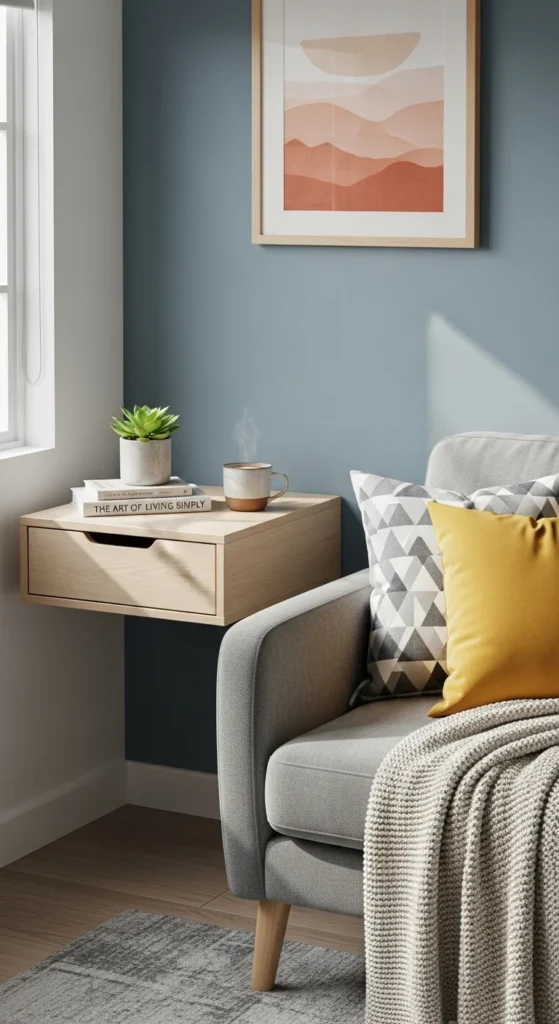
Wall-hung side tables offer surface space without legs touching the floor. This keeps walkways open and makes the room feel less crowded. They work well beside sofas or accent chairs. A small lamp, book, or drink fits comfortably on top. Choose a finish that matches other furniture for a cohesive look. Installation is simple with sturdy wall anchors. Because the table is compact, it keeps visual weight low. This is a smart swap for bulky end tables. It helps maintain a clean and airy layout.
18. Textured Neutral Fabrics
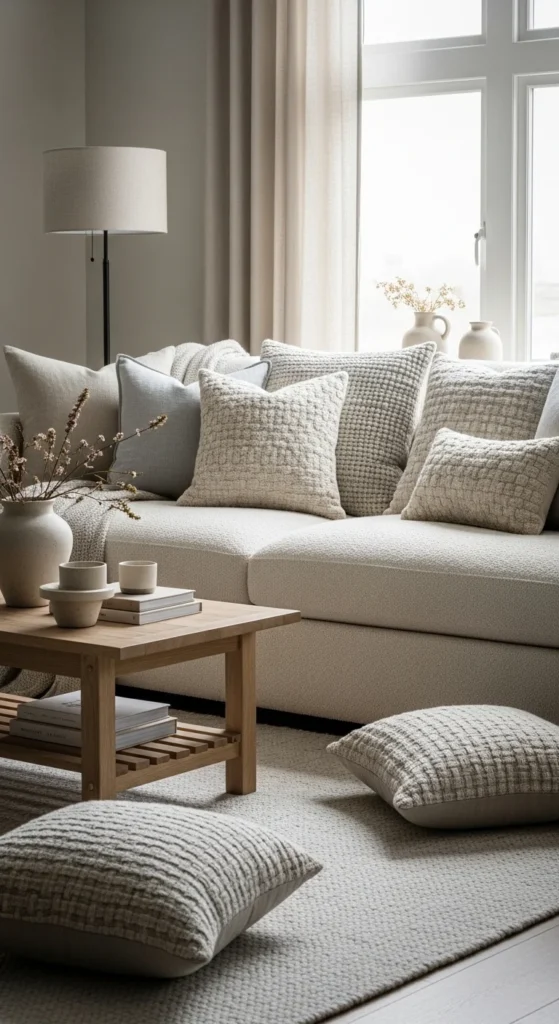
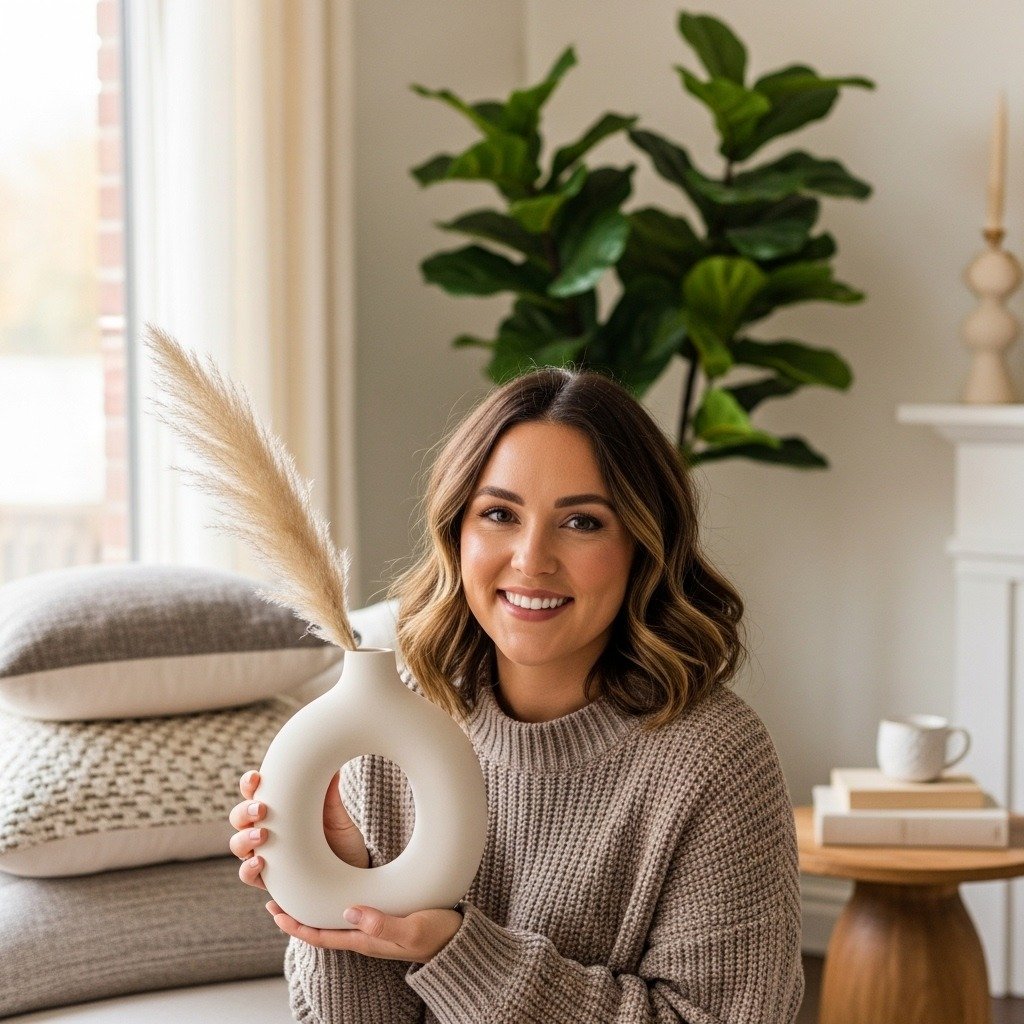
Textured fabrics add depth without relying on bold colors. Linen, cotton, and boucle create visual interest while keeping the palette calm. Layer cushions in slightly different shades of the same tone. A chunky knit throw can add softness to a sofa. This approach keeps the room warm and inviting. Neutral textures work well in small spaces because they do not overwhelm the eye. They also mix easily with wood, metal, or glass furniture. Changing pillow covers seasonally keeps the look updated. Texture is a subtle way to make a small room feel cozy.
19. Hidden Cable Management
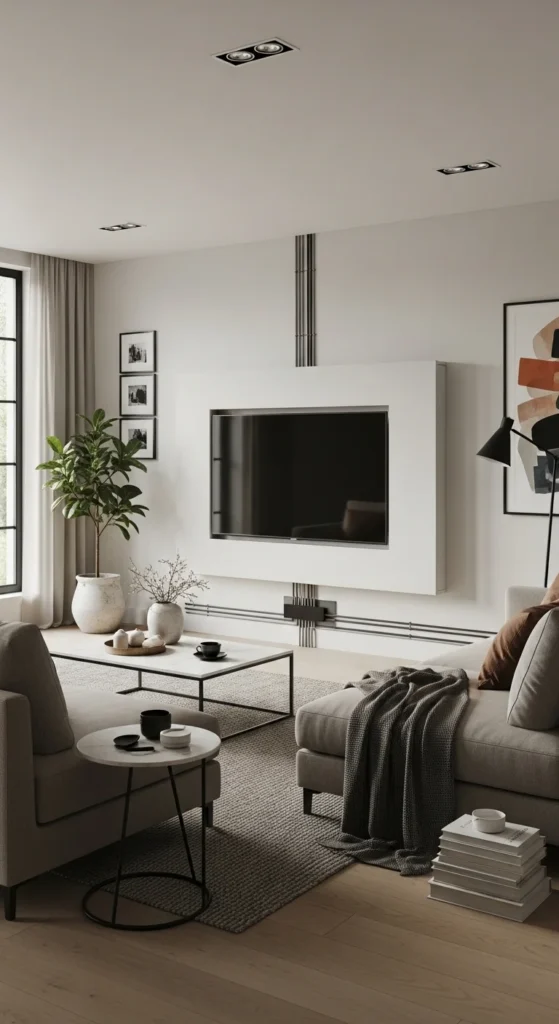
Visible cables can make even a tidy room look messy. Use cord clips along furniture legs to guide wires neatly. Paintable cord covers help hide cables running down walls. Velcro ties keep extra length bundled behind furniture. A small storage box can conceal power strips on the floor. Labeling cords helps when unplugging devices later. Keeping wires organized improves both safety and appearance. This simple step instantly makes the room look more polished. Less visual clutter makes the space feel calmer.
20. Fold-Down Wall Desk
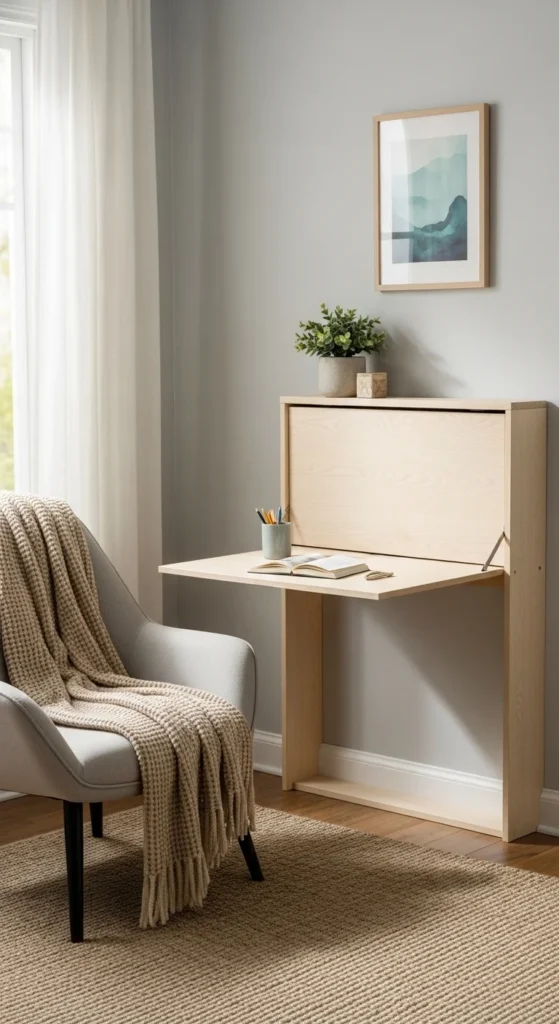
A fold-down desk creates a workspace without permanently taking up room. When closed, it sits flat against the wall like a cabinet. Open it only when needed for work or hobbies. Add a slim chair that tucks away underneath. This keeps the living room flexible for daily use. Many designs include small shelves inside for supplies. Light wood or white finishes help the desk blend into the wall. This idea works well in apartments or multipurpose rooms. It allows productivity without sacrificing space.
21. Round Coffee Table
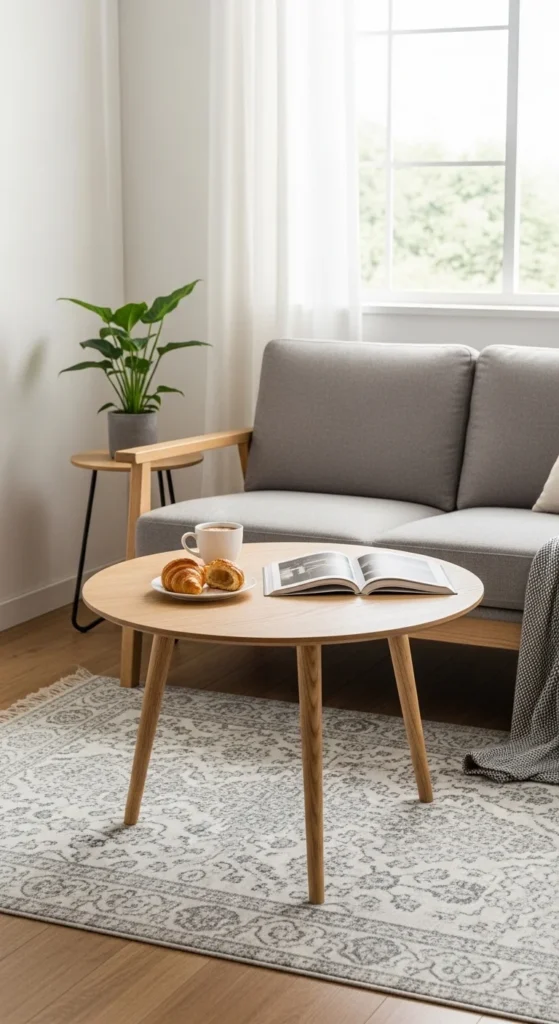
Round coffee tables improve flow in tight layouts. Without sharp corners, they are easier to move around. This helps when seating is close together. A table with a lower shelf can add hidden storage. Glass or light wood versions keep the look open. The curved shape softens the room visually. It also works well with sectional sofas. Choosing a slightly smaller diameter prevents overcrowding. This simple shape change can make a room feel easier to navigate.
22. Open Leg Furniture
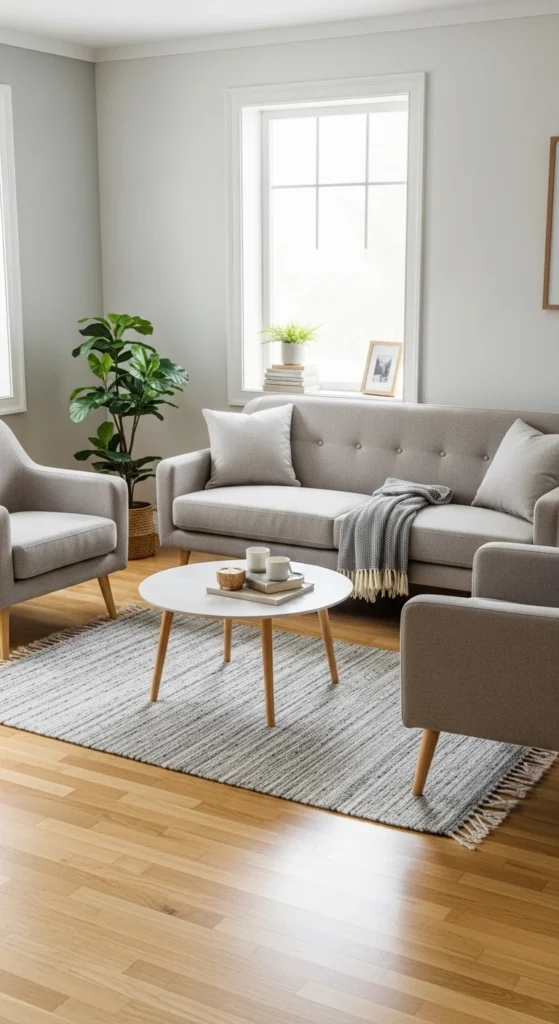
Furniture with visible legs shows more floor, which makes the room feel larger. Raised sofas and chairs create an airy appearance. This design allows light to move freely around the space. Slim legs in wood or metal keep pieces from feeling heavy. Avoid skirted furniture that blocks the floor visually. Matching leg finishes across pieces keeps the look cohesive. This subtle detail makes a big difference in small rooms. It helps everything feel lighter and less crowded.
23. Corner Floor Lamp
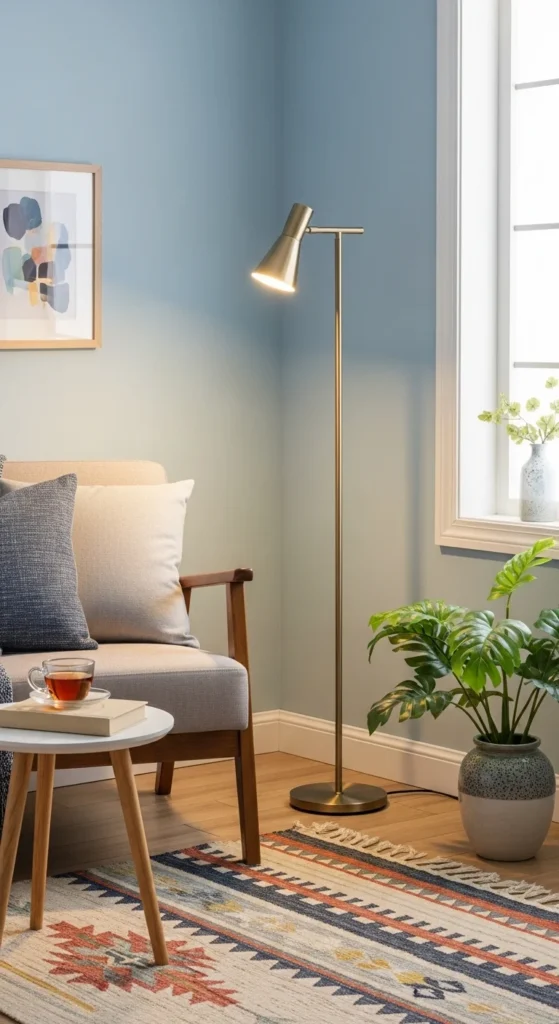
A tall floor lamp in the corner adds light without using table space. Corners are often underused, making them perfect for vertical lighting. Choose a slim design with a small base. This keeps the walkway clear. Soft light from above makes the room feel taller. Lamps with adjustable heads offer flexible direction. Warm bulbs add comfort in the evening. This is an easy lighting upgrade that fits almost any layout. It brightens the room while keeping surfaces free.
24. Floating Media Shelf
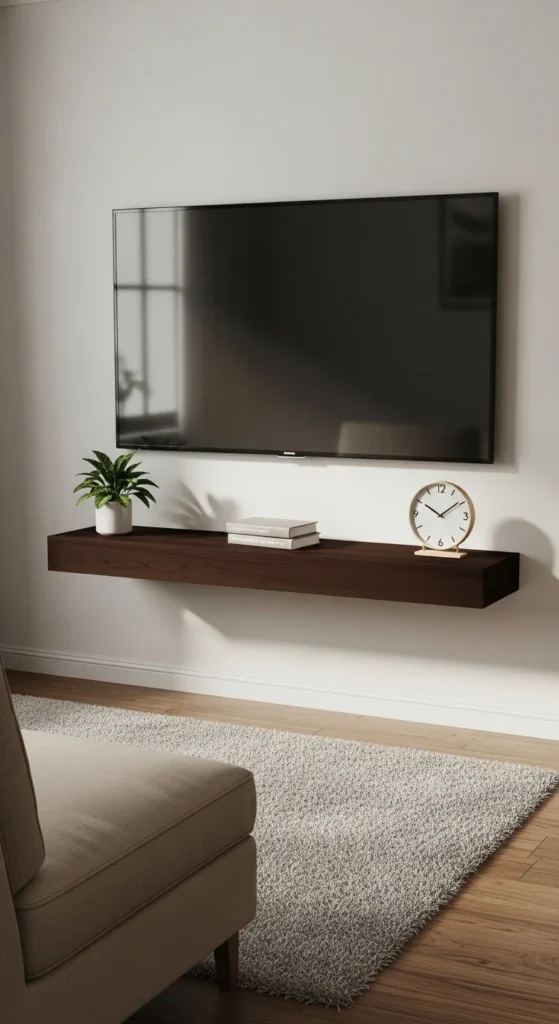
A floating media shelf replaces bulky TV stands. It provides space for devices without taking up floor space. Choose a narrow depth to keep it sleek. Hiding cables behind the shelf keeps the setup tidy. Light finishes help it blend with the wall. This keeps attention on the seating area instead of storage furniture. It works well in modern or minimalist rooms. Less furniture on the floor means more open space to move.
25. Accent Wall Nook Shelves
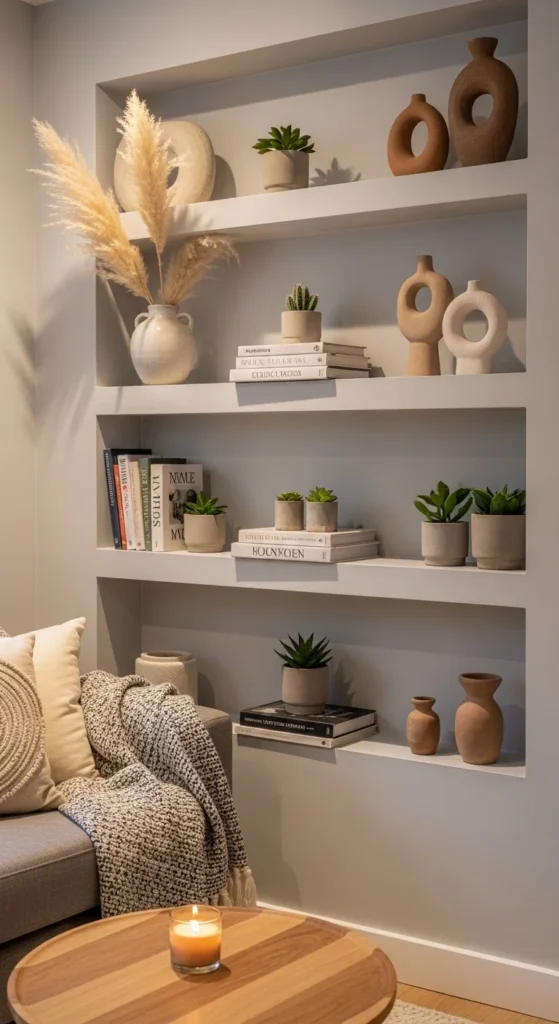
Wall niches create storage that does not stick out into the room. They are perfect for books, plants, or small decor items. Painting the inside a slightly darker tone adds depth. Built-ins look custom but can also be created with shallow shelving. This idea keeps surfaces clear while adding personality. Because the shelves sit within the wall, they do not reduce walking space. It is a clean and efficient storage option for tight layouts.
26. Dual-Purpose Poufs
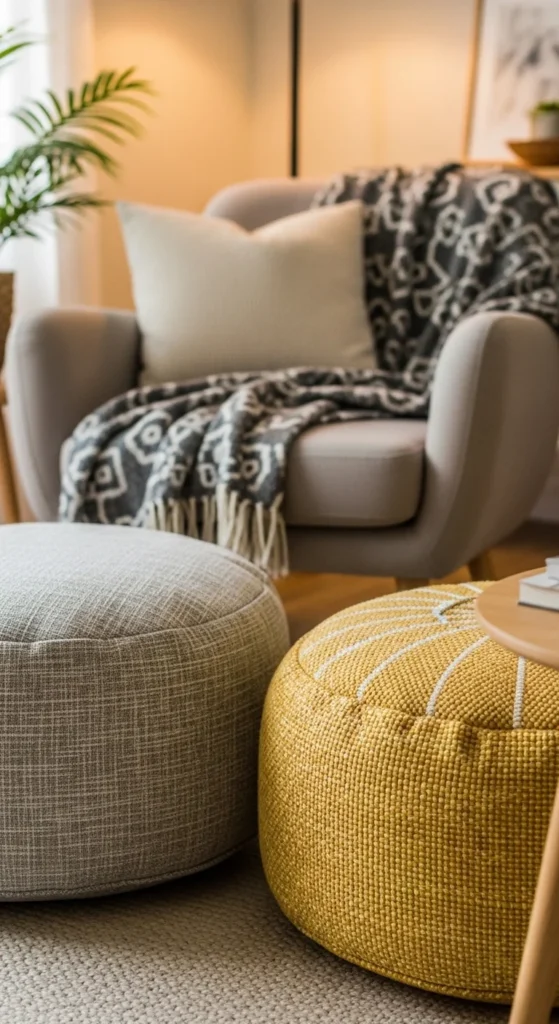
Poufs are lightweight and easy to move around. They work as footrests, extra seats, or small side tables with a tray on top. When not in use, they can tuck under a console or table. Choose colors that match your main furniture to keep the room cohesive. Soft shapes also make the space feel relaxed. Poufs are a flexible seating option for guests. They add function without taking up much room. This makes them perfect for small living areas.
27. Minimal Decor Styling
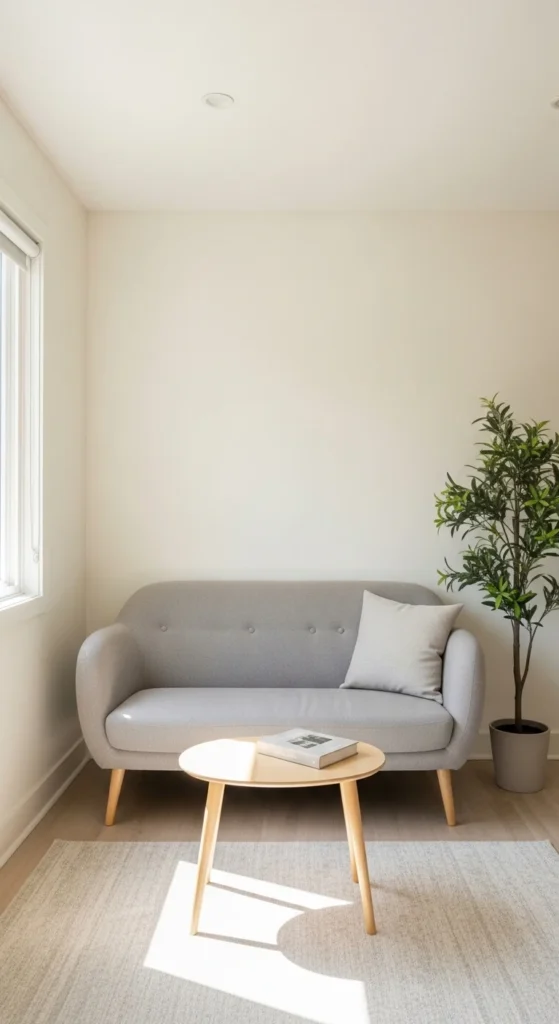
Keeping decor simple helps a small living room feel calm and open. Choose a few meaningful pieces instead of many small items. Clear surfaces make the room look bigger and easier to maintain. Use trays to group objects neatly. Stick to a limited color palette for harmony. Rotating decor seasonally keeps things interesting without clutter. Negative space is just as important as decoration. A less crowded room feels more relaxing and functional.
Conclusion
Small living rooms feel larger when furniture is slim, storage is vertical, and clutter is controlled. Light colors, mirrors, and layered lighting help open up the space visually. Multifunctional pieces like ottomans and nesting tables add flexibility without crowding the layout. Even small adjustments, such as floating shelves or wall-mounted fixtures, can make a noticeable difference. Start with one or two changes and build from there. Over time, these thoughtful updates create a living room that feels open, comfortable, and easy to enjoy.