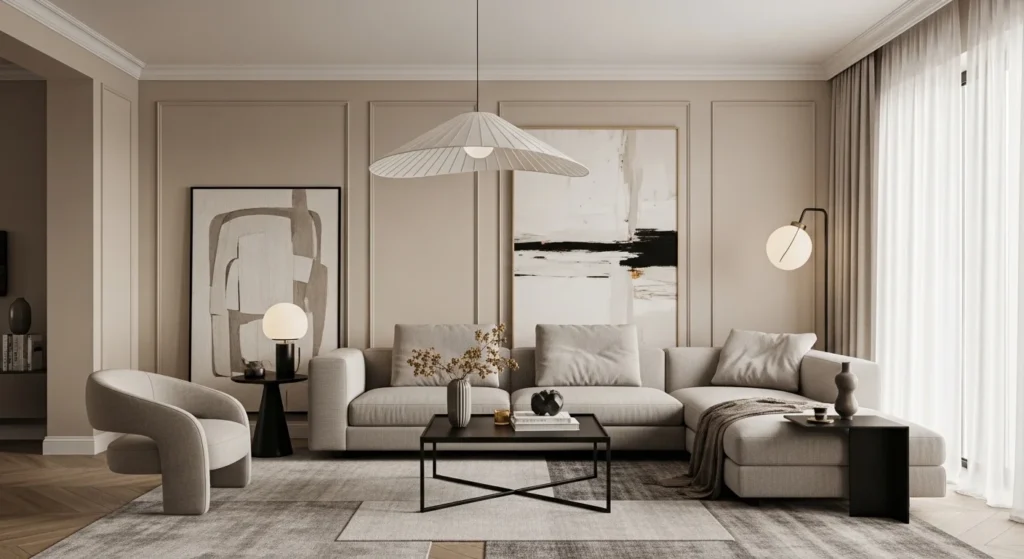
If you want a modern living room that looks expensive without spending like a showroom, the secret is restraint. Warm neutrals, clean lines, and a few strong choices read “high-end” fast. The good part? You can copy the look with smart swaps: paint, lighting, textiles, and secondhand finds that mimic designer rooms. Below are 25 sleek ideas you can mix and match, even in small spaces, rentals, or family homes.
1) Warm Neutrals as the “Quiet Luxury” Base
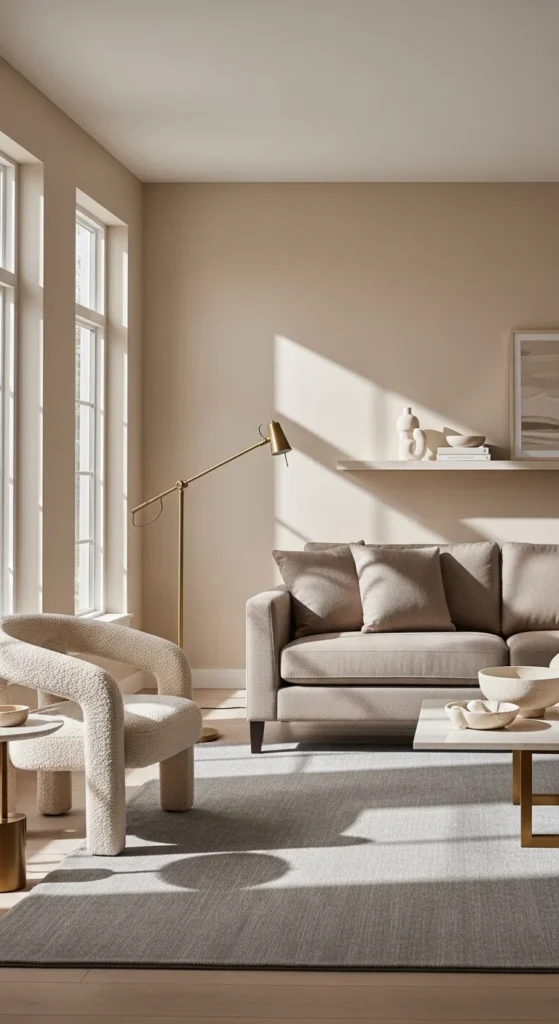
A high-end room almost always starts with a calm base. Think beige, taupe, soft gray, and warm white. These shades make the space feel cohesive, and they also hide small mismatches between budget pieces. Start with paint if you can. A warm greige on the walls instantly makes older furniture look more intentional. If you can’t paint, do it with big textiles: a neutral rug, neutral curtains, and a sofa cover in a warm tone.
Keep it simple. Pick one main neutral and one supporting neutral. Then repeat them around the room. For example: taupe sofa, ivory curtains, soft gray rug. Add a small touch of metal like brushed brass or black to keep it sharp.
Budget move: swap your throw pillows to a tight palette. Stick to three shades max. If your room feels flat, add texture instead of color linen, bouclé, chunky knit, or matte ceramics. You’ll get depth without visual noise.
DIY idea: paint your existing frames, lamp bases, or small tables in a warm matte neutral so they “disappear” and let your best pieces stand out.
2) Curved Furniture for a Softer, High-End Feel
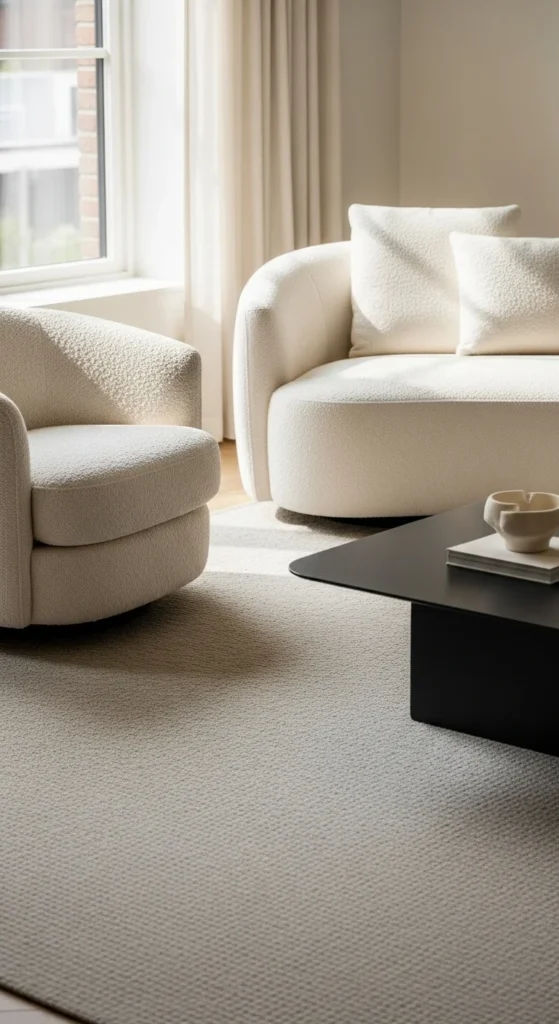
Curves make modern rooms feel expensive because they look custom. A rounded chair, a curved sofa, or even an arched floor lamp breaks up sharp lines and makes the space feel designed. You don’t have to buy a brand-new curved couch. One curved element is enough.
Try a rounded accent chair in bouclé or linen. Place it at an angle near the sofa to create a relaxed seating circle. If your space is tight, pick a curved ottoman that can tuck under a console or coffee table. Even a round mirror can give the same soft modern effect.
Budget move: look for secondhand chairs with curved arms. Reupholster with a neutral fabric, or use a tailored slipcover. If reupholstery is too much, use a boucle-style throw over the seat and back to fake the texture.
DIY idea: make a curved look with placement. Angle two chairs inward with a round side table between them. Add one sculptural vase on top. It reads like a designer vignette, even if every item is inexpensive.
3) Low-Profile Seating That Feels Modern Instantly
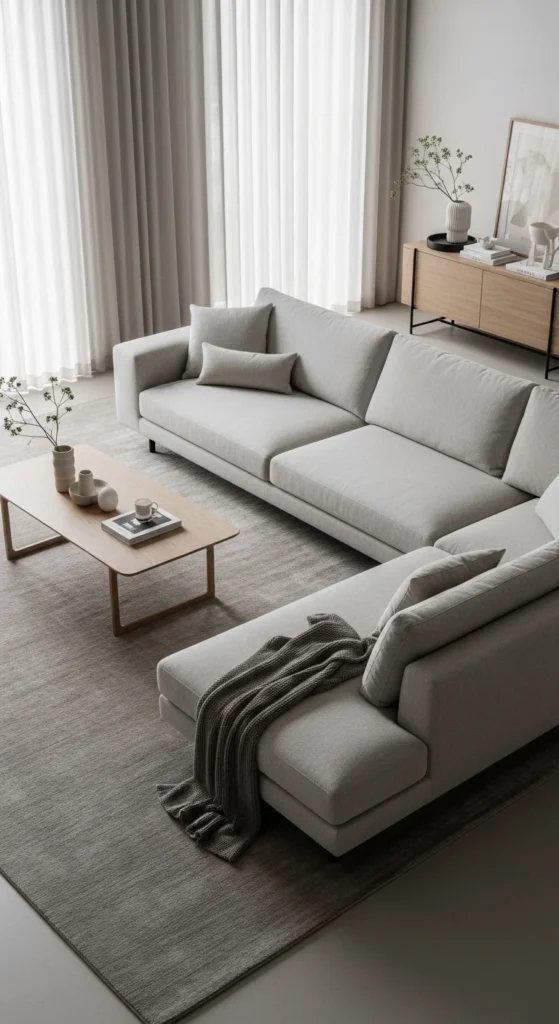
Low-profile furniture changes the whole mood. A sofa with a lower back and slimmer arms feels modern and gallery-like. It also makes ceilings look taller. If you already own a bulky sofa, you can still borrow the effect with styling.
First, pull the sofa slightly off the wall if possible. Add a large rug that extends beyond the sofa edges. Then use low, wide tables instead of tall pieces. A slim coffee table and short side tables keep the “grounded” look.
Budget move: replace large puffy pillows with firmer, structured cushions. It makes the sofa look more tailored. If your sofa legs are hidden, add furniture risers or swap legs to a simple wood or black leg (many sofas allow this). Even a 1–2 inch change can help.
DIY idea: create a low-profile vibe with seating alternatives. Use a simple bench or a pair of cube ottomans as extra seats. Cover them with a linen-like fabric. Add a tray on top, and they double as a table while still looking sleek.
4) One Oversized Art Piece as the Focal Point
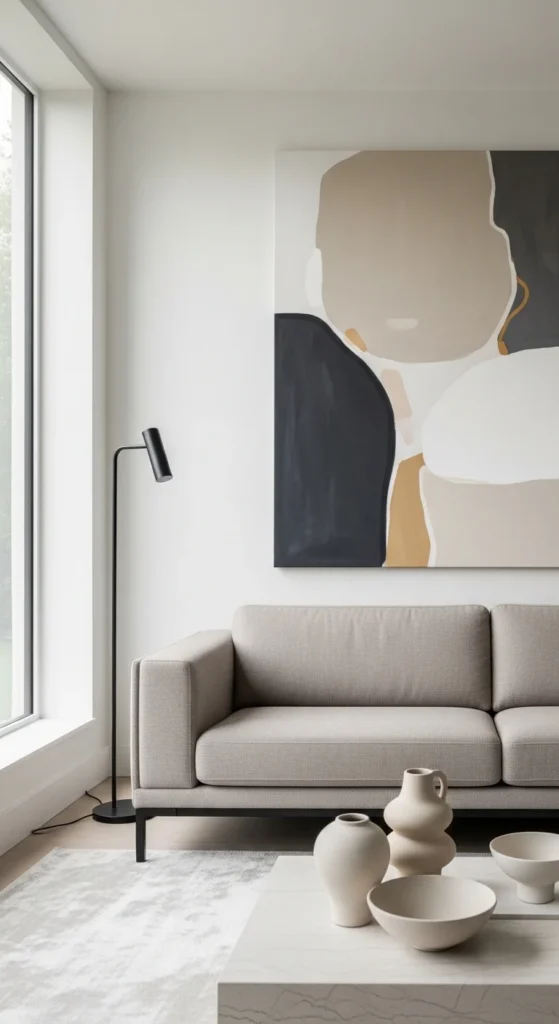
A single large artwork reads expensive because it feels intentional. Small art scattered everywhere often looks busy and random. Go big instead. One oversized abstract above the sofa can carry the entire room.
You don’t have to buy original art. Look for large printable art files, then have them printed as an engineer print or on canvas. Choose muted tones that match your room. Keep the frame simple: thin black, light oak, or a clean white.
Budget move: thrift large frames and repaint them. Then insert a custom print. Another option is to buy a big canvas and paint it yourself with two or three neutral shades. The goal is shape and movement, not perfect technique.
DIY idea: make a “gallery scale” piece with fabric. Stretch a neutral linen or textured cloth over a frame and staple it in back. Add a thin wood trim. It looks like modern textile art and costs very little.
Placement tip: hang art so the bottom is 6–10 inches above the sofa. Too high makes the room feel disconnected.
5) Layered Textures That Make Neutrals Feel Rich
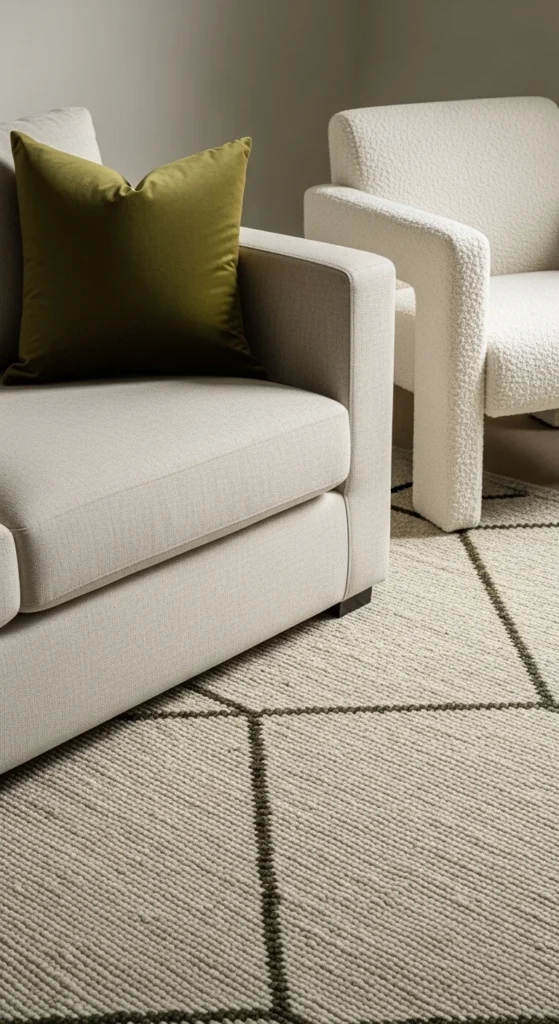
Texture is what keeps a neutral room from looking plain. High-end spaces often use tone-on-tone, then rely on fabrics and finishes for depth. Mix a few textures on purpose: linen sofa, bouclé chair, velvet pillow, and a woven rug. Keep the colors close so it looks calm, not chaotic.
Start with what you touch the most: pillows and throws. Try two linen pillows, one bouclé, and one velvet in a deeper neutral. Add a throw with a visible weave. Then add texture on surfaces: matte ceramic, ribbed glass, natural wood, or stone-look trays.
Budget move: buy pillow covers instead of whole pillows. Insert inexpensive pillow forms. Use one “fancy” cover and surround it with simpler ones. Also check discount stores for textured throws; the weave matters more than the brand.
DIY idea: create a textured wall moment with removable picture ledges and a few large objects. Use a plaster-look vase, a wood bowl, and a ribbed candle holder. These shapes catch light and make the room feel styled without adding clutter.
6) Black Accents for Clean Contrast
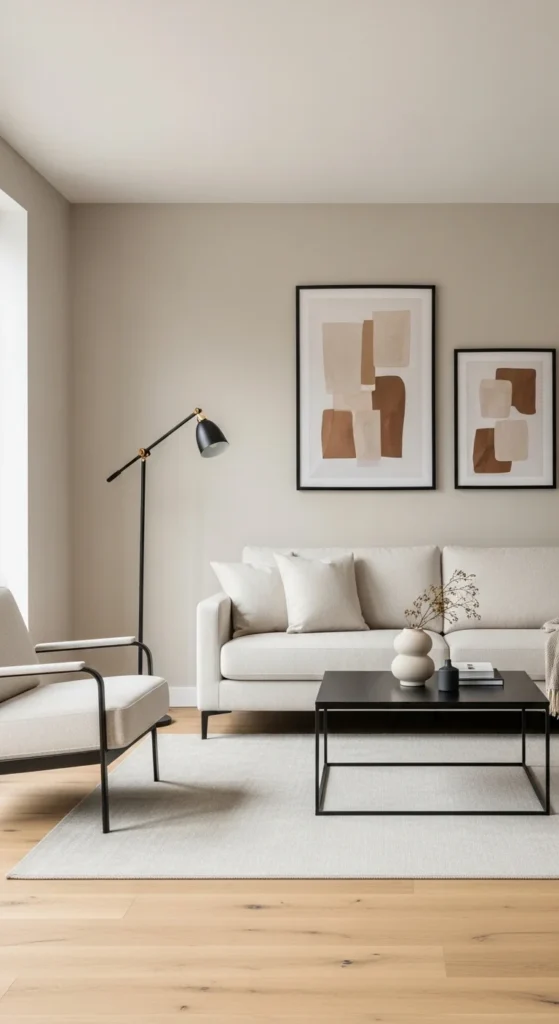
Black details make modern rooms look crisp. They outline the space and keep warm neutrals from feeling too soft. The trick is to use black in small, repeated touches instead of one heavy block.
Pick three places to repeat it: a floor lamp, a coffee table frame, and picture frames. Or a black curtain rod, black hardware on a console, and a black vase. Keep finishes matte or satin for a calmer look.
Budget move: spray paint is your friend. Turn mismatched metal decor into a matching set with matte black spray paint. Lamps, frames, baskets, and even ceramic vases can take paint if prepped well. This is one of the fastest DIY upgrades for a high-end look.
DIY idea: swap your curtain rod to a thin black rod and hang curtains high and wide. Even inexpensive curtains look better when the hardware is clean and minimal.
One caution: don’t overdo it. If black shows up in every corner, the room can feel harsh. Keep it as a sharp outline, not the main color.
7) Statement Pendant Lighting Over the Seating Zone
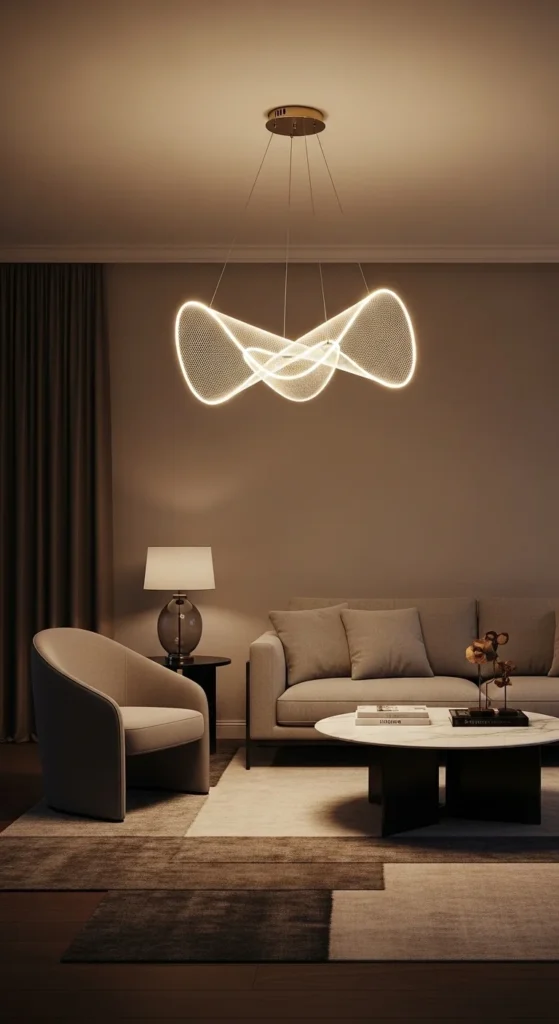
Lighting is one of the quickest ways to make a room look expensive. A statement pendant or chandelier becomes instant architecture. Even if your furniture is simple, good lighting changes the entire feel.
If you have a ceiling box, upgrade the fixture. Choose a sculptural shape in black, brass, or matte white. Keep it proportional: bigger is usually better than too small. Center it over the seating area, not the whole room, so the room feels zoned.
Budget move: buy a used fixture online and clean it up. Many modern pendants look great with a simple wipe-down and a new bulb. If you rent, use plug-in swag lights that hang from the ceiling with a hook.
DIY idea: update your bulbs. Warm, soft bulbs create a calmer look than cool white. Add a dimmer if possible. If not, use smart bulbs or plug-in dimmers for lamps.
Pro styling tip: pair the pendant with two lamps at eye level. Layered light reads high-end because it feels intentional and comfortable.
8) Layered Lighting: Lamps + Ambient Glow
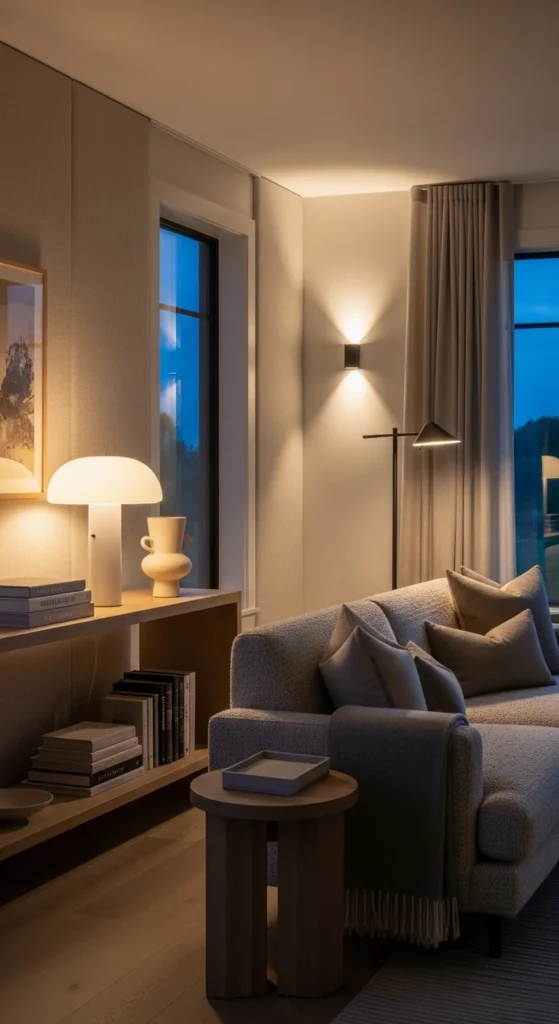
One overhead light can make a room feel flat. High-end rooms use layers: overhead, table lamps, floor lamps, and soft accent lighting. This makes the space feel cozy and polished.
Start with two lamps. Place one on a side table near the sofa and one on a console or shelf across the room. Add a floor lamp near a chair for a reading spot. If you want extra warmth, use LED strips behind a TV console or on the back of a shelf for a soft glow.
Budget move: buy matching lamp shades even if the bases are different. When the shades match, the room feels coordinated. Also consider thrifted lamp bases with new shades.
DIY idea: create built-in ambiance using battery puck lights inside bookcases or on shelves. It looks custom and costs little. Hide cords with simple cable covers painted the wall color.
Quick checklist: warm bulbs, three light sources minimum, and no harsh ceiling-only lighting. Your room will instantly look more high-end in photos and real life.
9) Built-In Style TV Wall Without Real Built-Ins
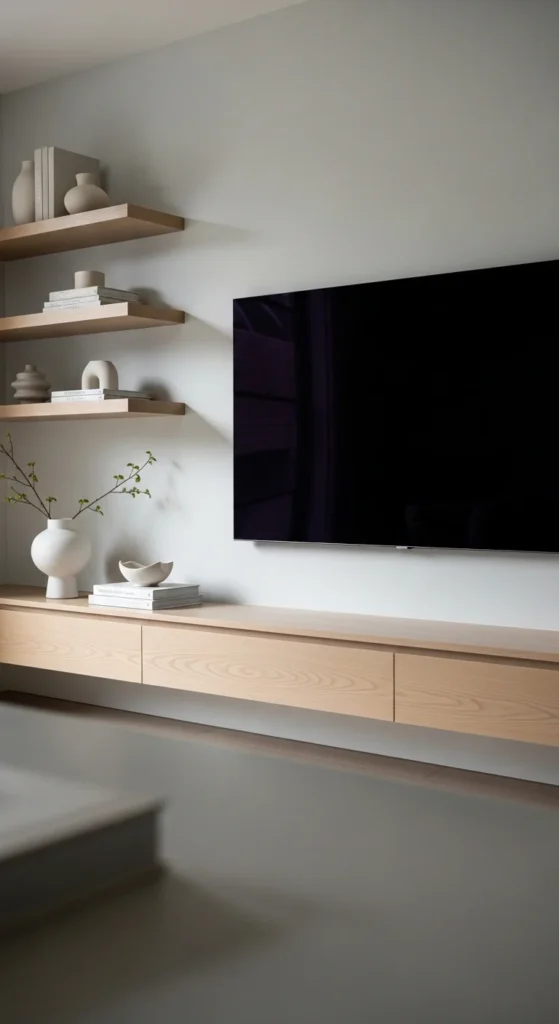
A clean TV wall makes the whole living room feel expensive. The main goal is to make the TV feel like part of the design, not a black rectangle floating on a wall.
Start with a long, low console. Wider than the TV is best. Add two tall elements on each side bookcases, open shelves, or slim cabinets to imitate built-ins. Keep the styling simple: a few books, a ceramic vase, and one sculptural object. Leave empty space.
Budget move: use IKEA cabinets or secondhand shelving units and paint them the wall color. Matching the wall makes the setup feel custom and calm. Add simple hardware for a cleaner look.
DIY idea: hide cords. Use cord covers painted to match the wall. Add a power strip inside the console. If you can, mount the TV and place a soundbar on the console. It looks streamlined.
Keep decor low and wide. Avoid tiny knickknacks. One large bowl, one stack of books, one plant. That’s enough.
10) Floating Media Console for a “Gallery Wall” Look
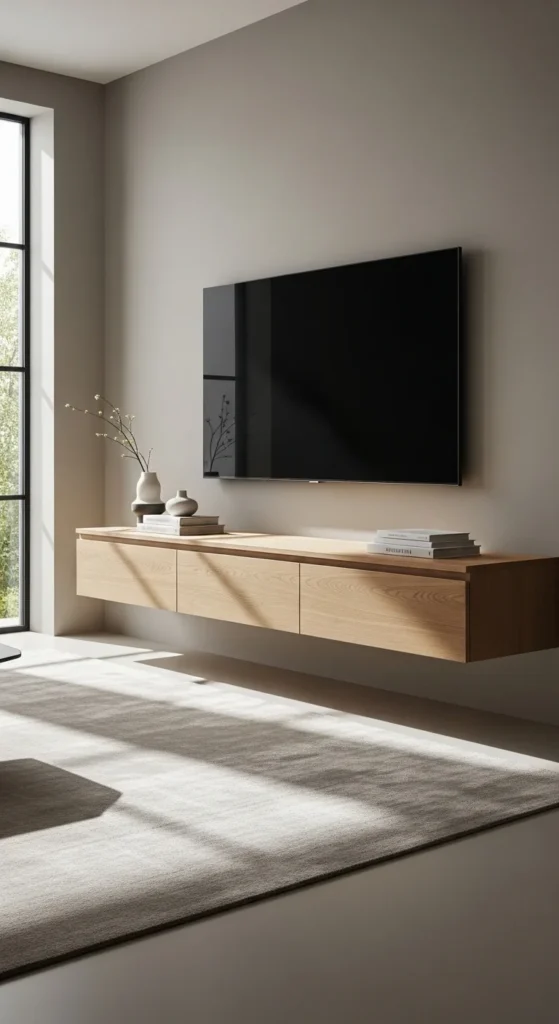
Floating consoles look sleek and expensive because they add negative space. The floor stays visible, which makes the room feel larger. If you can mount one safely, it’s a strong visual upgrade.
If mounting isn’t possible, fake it. Use a very slim console with legs and keep the area underneath clear. Avoid baskets stuffed under the unit. The open space is what makes it feel modern.
Budget move: wall-mount an IKEA cabinet system or a simple shelf unit. Use proper anchors. Keep the top surface clean one tray, one vase, maybe a small lamp.
DIY idea: create a floating look with a long wall shelf plus two hidden brackets. Add a cable management box behind the TV to keep wires neat. If you rent, use adhesive cord channels and place a slim console under the TV to reduce visual clutter.
Styling tip: keep the console longer than you think. A short console makes the TV feel oversized. A longer console makes it look intentional and balanced.
11) The Oversized Rug Rule
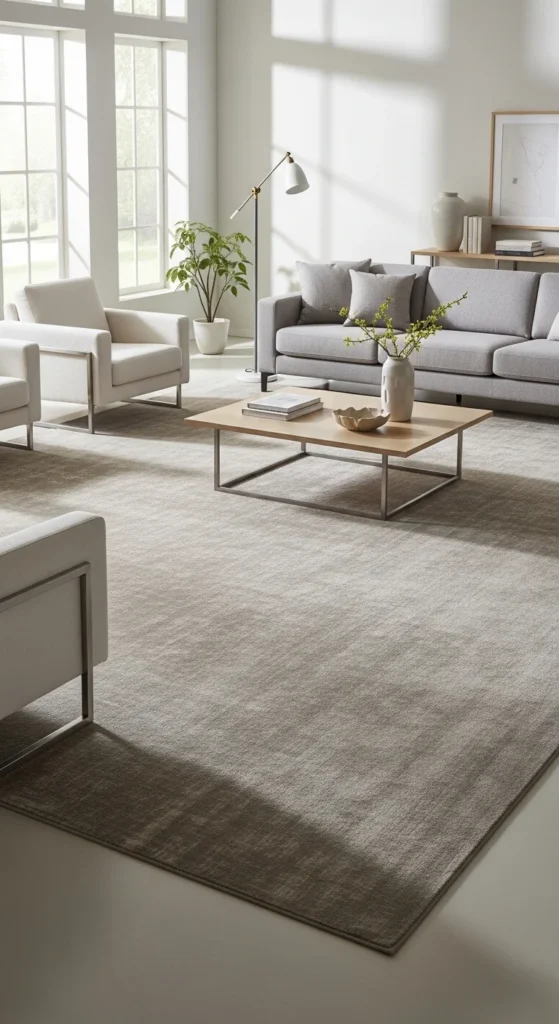
A rug that’s too small makes the room look cheaper right away. A larger rug makes the space feel planned. Aim for a rug that allows at least the front legs of the sofa and chairs to sit on it. In many rooms, that means going up a size from what you think you need.
If you’re on a tight budget, choose a simple neutral rug with subtle texture. It will work with everything and hide wear. Flatweaves and low piles also look modern and are easier to clean.
Budget move: buy a large inexpensive rug and add a smaller textured rug on top for a layered look. The top rug distracts from the lower rug’s cheaper pattern. You can also check warehouse stores or online resale for bigger sizes.
DIY idea: use rug tape or a rug pad to keep it flat and safe. Wrinkled corners ruin the look. If your rug is slightly too small, pull it forward so it frames the coffee table area better, then keep the back legs of the sofa off the rug. It still looks intentional.
A big rug is one of the best money looks upgrades you can make.
12) Layered Rugs for Warmth Without Busy Decor
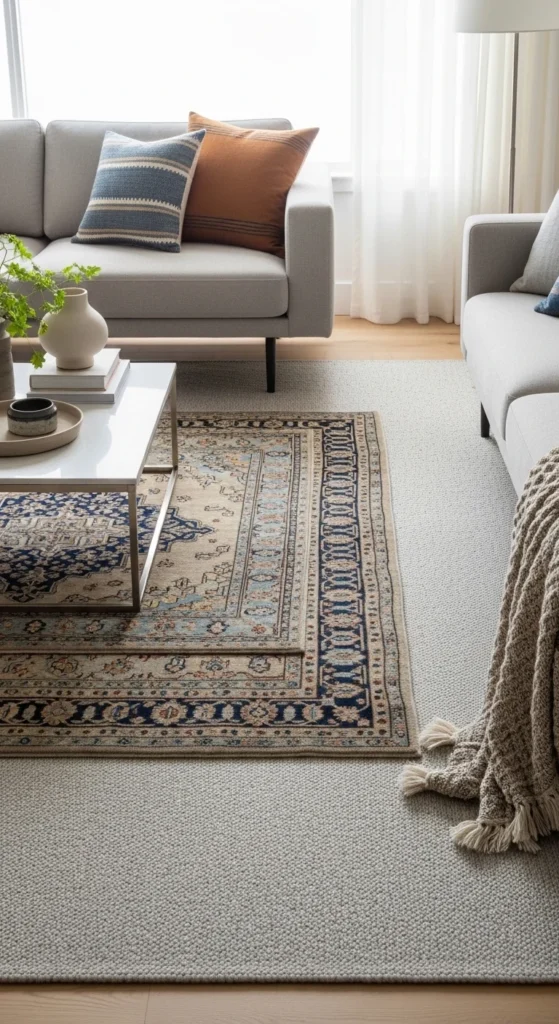
Rug layering adds depth and makes a room feel lived-in, but still sleek when done simply. The trick is a calm base rug, then one smaller rug with a character on top.
Use a large jute, sisal, or neutral flatweave as the bottom layer. Then add a smaller vintage-style rug in muted tones soft rust, faded blue, or charcoal. Keep patterns subtle so it doesn’t fight with the furniture.
Budget move: thrift the top rug. Even worn rugs look charming when they’re muted and layered. For the base, choose something durable and inexpensive.
DIY idea: if you can’t find the right top rug size, use a runner turned sideways under the coffee table. It still creates that layered look. Keep the top rug centered with the coffee table and aligned with the sofa. Straight placement looks modern.
Extra tip for small rooms: layer rugs to define zones. Put one layered set in the seating area, and a different simple rug near a desk or reading chair. This helps open layouts feel organized without adding room dividers.
13) Natural Wood Coffee Table as the Warm Anchor
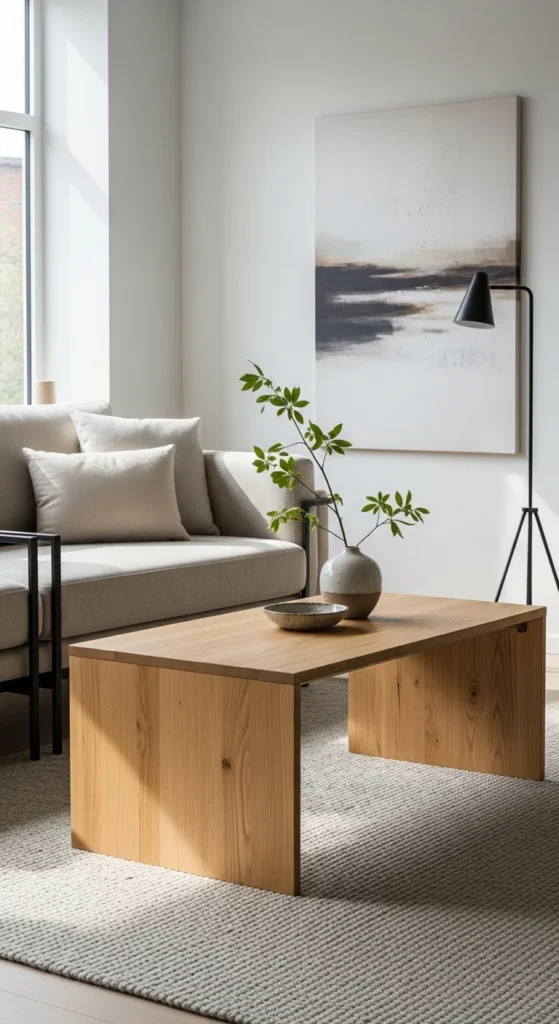
Natural wood makes modern rooms feel welcoming. A wood coffee table adds warmth without adding clutter. Look for simple shapes: oval, round, or a clean rectangle with thin legs.
If your current coffee table feels dated, consider swapping it for a wood tone that matches your floors or contrasts softly. Light oak works well with warm neutrals. Walnut works with moody tones.
Budget move: buy secondhand and refinish. Sand and seal with a matte finish. Even an older table can look modern with a simple refinish and new legs.
DIY idea: create a two-table look with nesting tables or two small round tables side by side. This feels designer and is practical. You can move one aside for extra space or use it near a chair.
Styling tip: keep the surface simple. Use a tray, one stack of books, and one sculptural object. Leave open space. The empty space makes it feel expensive.
14) Stone-Look Surfaces Without Real Marble
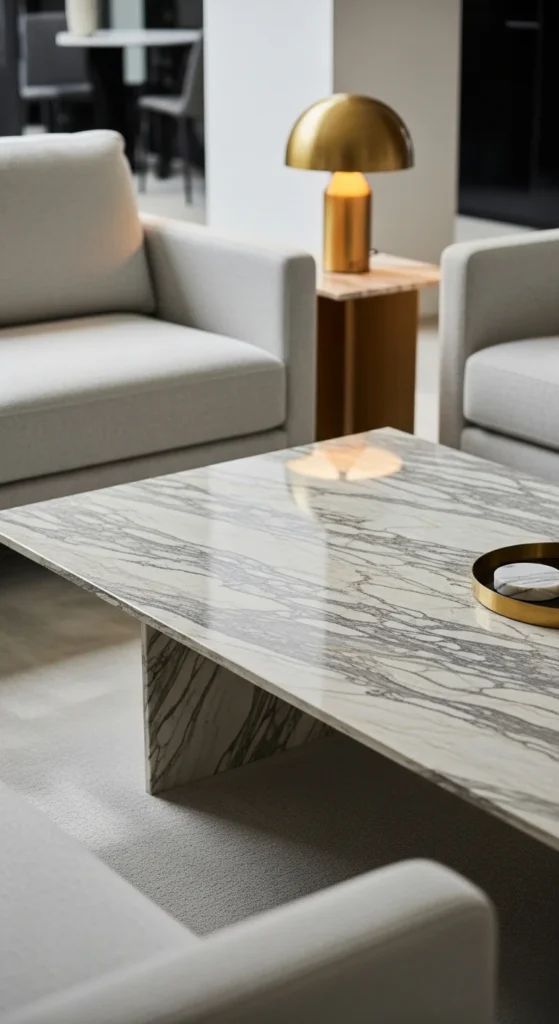
Stone surfaces read luxurious. Marble, travertine, and limestone look pricey, but you can get the feel without the cost.
Try a stone-look coffee table or side table. Many budget pieces use composite or laminate that still looks great from a normal distance. Keep the shape simple and the veining subtle. Loud veining can look fake fast.
Budget move: use a stone-look tray on your coffee table. A single stone piece gives the same vibe as a full table. You can also use peel-and-stick stone film on a tabletop if you prep well and apply slowly.
DIY idea: make a faux stone top with paint. Use a light base coat, then sponge on soft gray and beige, finishing with a matte sealer. Keep it subtle. The goal is calm variation, not dramatic swirls.
Pair stone with warm textures like linen and wood so the room doesn’t feel cold. One stone surface is enough to signal “high-end” when the rest of the room is clean and intentional.
15) A Small High-Gloss Moment for Modern Glam
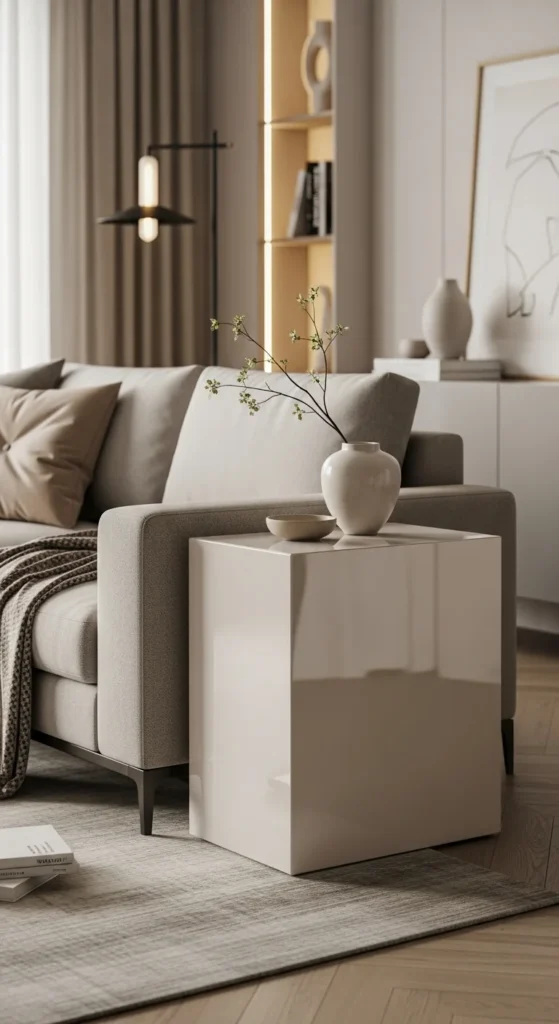
A little shine can make a room look expensive. The key is keeping it small. A glossy side table, a lacquered tray, or a shiny ceramic vase adds contrast against matte walls and textured fabrics.
Choose one glossy item and let it stand out. If you add too many shiny pieces, the room can feel busy. Pair glossy items with soft neutrals and black accents for a clean look.
Budget move: paint a small table with high-gloss paint. Prep it well and do thin coats. Even a basic thrifted table can look like a designer lacquer piece in black, cream, or taupe.
DIY idea: add shine with lighting reflections. A glossy piece near a lamp looks even richer because it catches warm light at night.
If you prefer a softer vibe, go for satin rather than mirror shine. A subtle glow still reads modern and polished.
16) Curtains Hung High and Wide
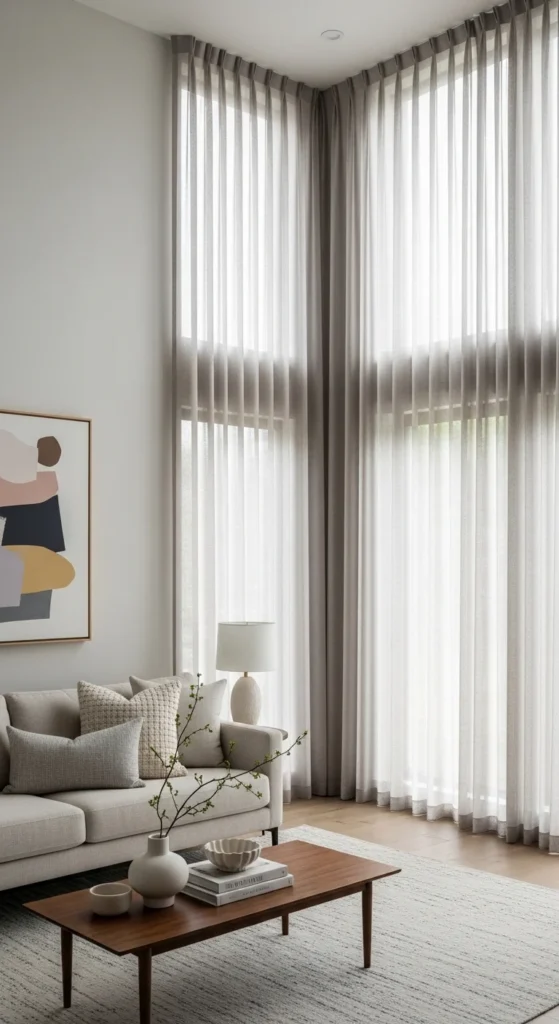
Curtains are a cheat code for high-end style. Hang them close to the ceiling and extend the rod wider than the window frame. This makes windows look larger and ceilings feel taller.
Choose long panels that kiss the floor or barely hover above it. Sheers add softness. Heavier drapes add a more formal look. In modern rooms, a simple linen-look curtain in warm white or beige works almost everywhere.
Budget move: buy affordable curtain panels, then use iron-on hem tape for the perfect length. Or clip-on rings to make them hang better. Upgrade the curtain rod to a thin black or brass rod for a cleaner look.
DIY idea: if your panels look flat, add a simple curtain weight at the bottom corners so they hang straight. Also steam them. Wrinkles make curtains look cheap, even if the fabric is nice.
This one change can make the whole room look like it was professionally styled.
17) Minimal Shelf Styling With Breathing Room
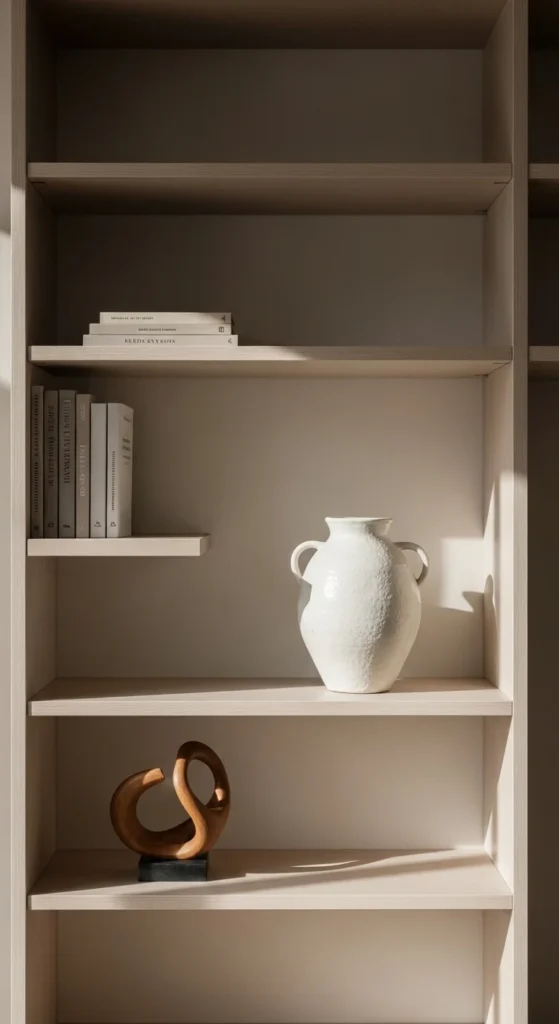
High-end shelves aren’t packed. They have space. That empty area is what makes each object look chosen.
Start by removing half your shelf items. Group what’s left into simple clusters: a stack of books, one larger object, and one smaller object. Repeat the same tones—cream, black, wood, and one muted accent color.
Budget move: use book covers. Wrap books in kraft paper or neutral covers so the spines don’t shout. It creates a calm, designer look. Add one thrifted ceramic vase and one wood bowl, and you’re set.
DIY idea: paint the back panel of your shelves the same color as the wall, or one shade darker. It creates depth without more decor. If you want a softer look, add a small battery light on one shelf to create a warm glow at night.
Keep the styling simple and a bit asymmetrical. It feels modern, not staged.
18) Sofa Symmetry That Looks Polished
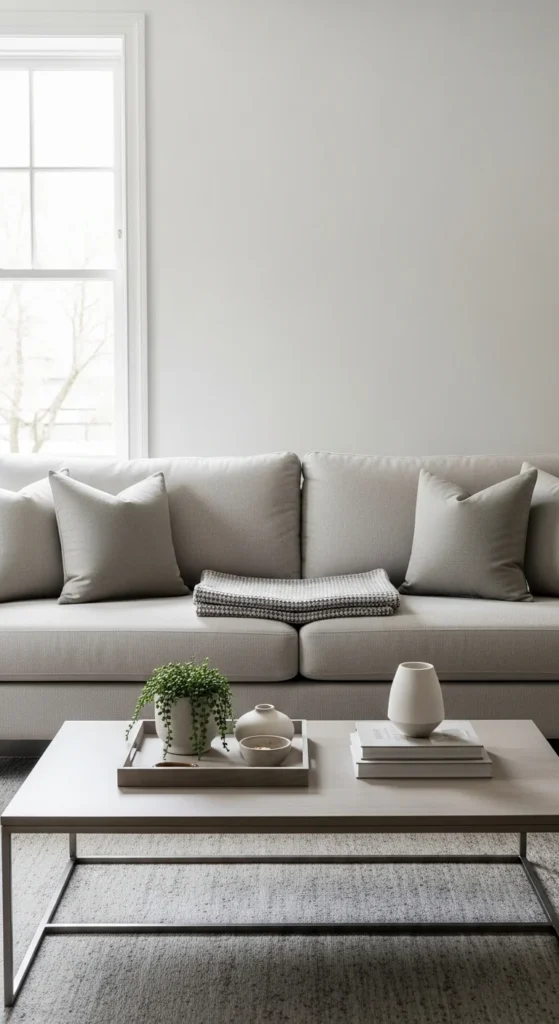
Symmetry reads “put together.” Two matching pillows on each side of the sofa, a centered throw, and a balanced coffee table arrangement can make even budget furniture look expensive.
Use a simple formula: two larger pillows in the back, two smaller pillows in front. Keep colors close. Then add one different texture pillow as the “feature” (bouclé or velvet), but keep it in the same palette.
Budget move: buy pillow covers in a set. Matching covers instantly make things feel coordinated. If you want variety, change texture, not color. A linen cover and a bouclé cover can both be cream, and still look rich.
DIY idea: if your throw looks messy, fold it neatly and place it over one arm. A clean fold looks more modern than a casual drape.
This is one of the easiest fixes for “my living room looks messy.” Symmetry calms the visual clutter.
19) Sculptural Side Tables Instead of Basic End Tables
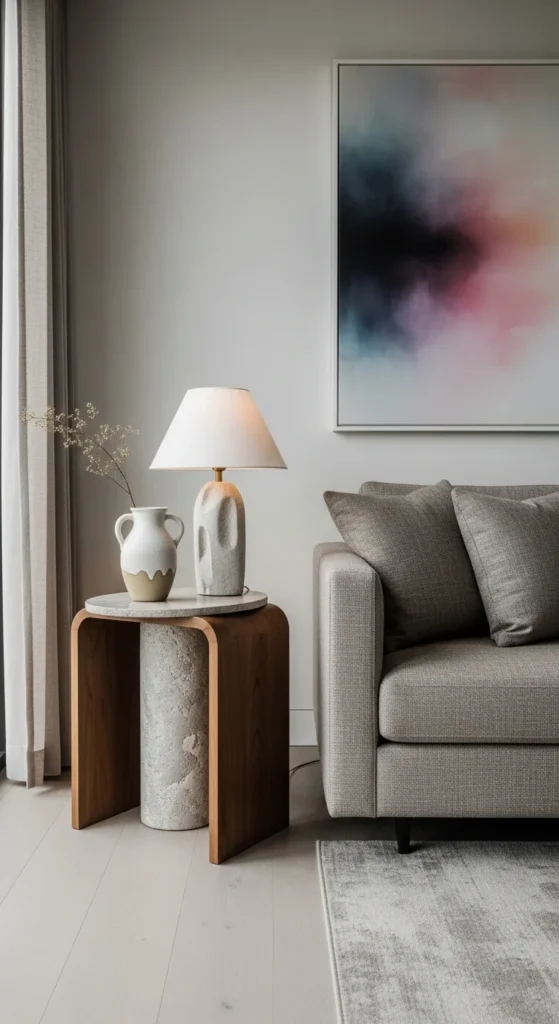
Sculptural side tables make a room feel curated. You don’t need two matching end tables. One interesting shape can do the work.
Look for rounded bases, drum tables, fluted details, or simple stone-look forms. Keep the color neutral so the shape stands out. Pair it with a clean lamp and a small tray.
Budget move: thrift a small table and change the base look. Wrap the base in ribbed wood trim, paint it, or add fluted detailing using inexpensive molding strips. Finish in a matte neutral.
DIY idea: use a plant stand or a small stool as a side table. Add a stone-look tray on top. It can look designer if the lines are clean and the styling is minimal.
Keep the surface uncluttered. One book, one candle, one small bowl. A sculptural table is already a statement.
20) Tonal Pillows That Look Designer, Not Random
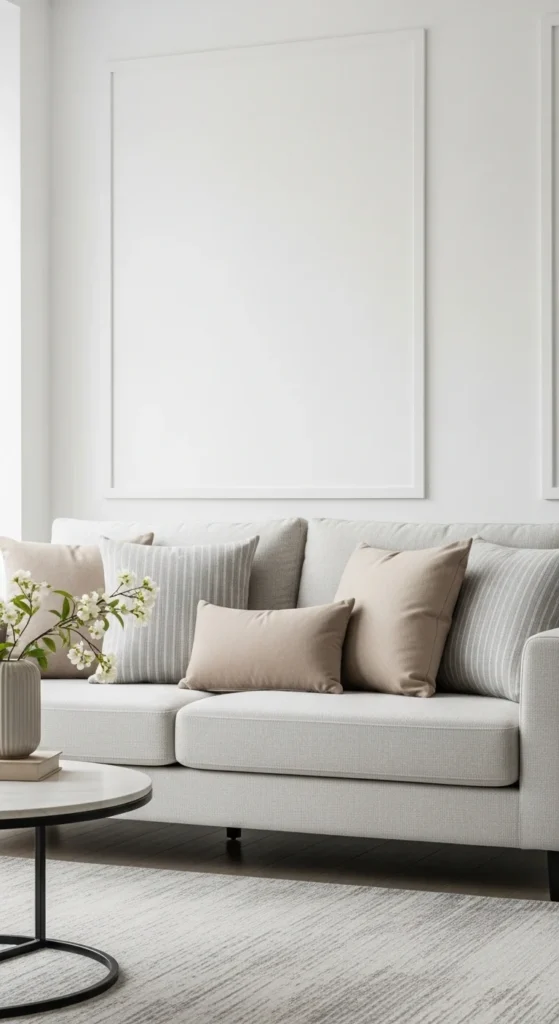
Random pillows make a room look chaotic. Tonal pillows make it look designed. Choose one color family and stay inside it. Beige + cream + taupe. Or gray + charcoal + soft white. Then mix textures to keep it interesting.
Use different sizes: one or two 22-inch pillows, one 20-inch, and one lumbar pillow. Stick to solid colors or very subtle patterns. A tiny stripe or woven texture is enough.
Budget move: buy covers online and reuse your inserts. If inserts are flat, add a little extra stuffing or upgrade just one insert to a fuller one. Full pillows look more expensive than limp ones.
DIY idea: sew a simple “faux designer” cover using linen-look fabric from a craft store. Add a hidden zipper if you can, or use an envelope back. Even a simple sew job looks great when the color and texture are right.
Tonal pillows are a small change that makes the whole room feel calm and high-end.
21) Color-Washed Feature Wall for a Cozy Modern Mood
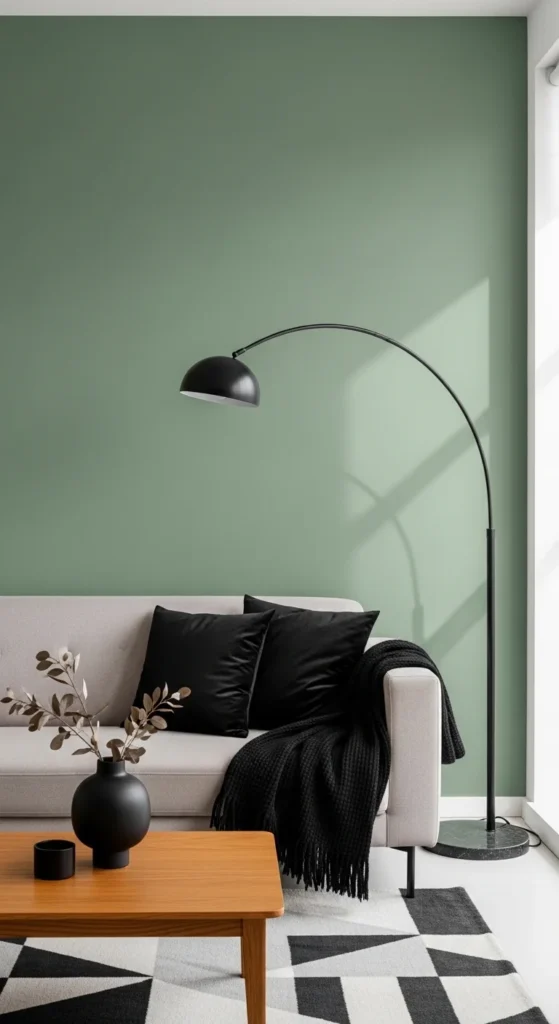
If your room feels too plain, paint one wall in a moody, muted shade. Sage green, dusty blue, or warm clay can make the room feel intimate while still modern. Keep the rest of the palette neutral so it doesn’t get loud.
Choose a color that looks good in both daylight and evening light. Matte paint often looks more expensive than shiny paint because it hides wall imperfections and feels softer.
Budget move: paint only the wall behind the sofa or TV. It’s the highest impact spot. If you rent, use peel-and-stick wallpaper in a solid muted color or a very subtle texture.
DIY idea: paint the wall and also paint the baseboards the same color. This makes it feel custom and modern. If you don’t want to paint baseboards, keep them crisp white and use black accents to tie the look together.
Keep decor minimal on that wall. One large art piece or one big mirror is enough.
22) Jewel Tones in Small Doses
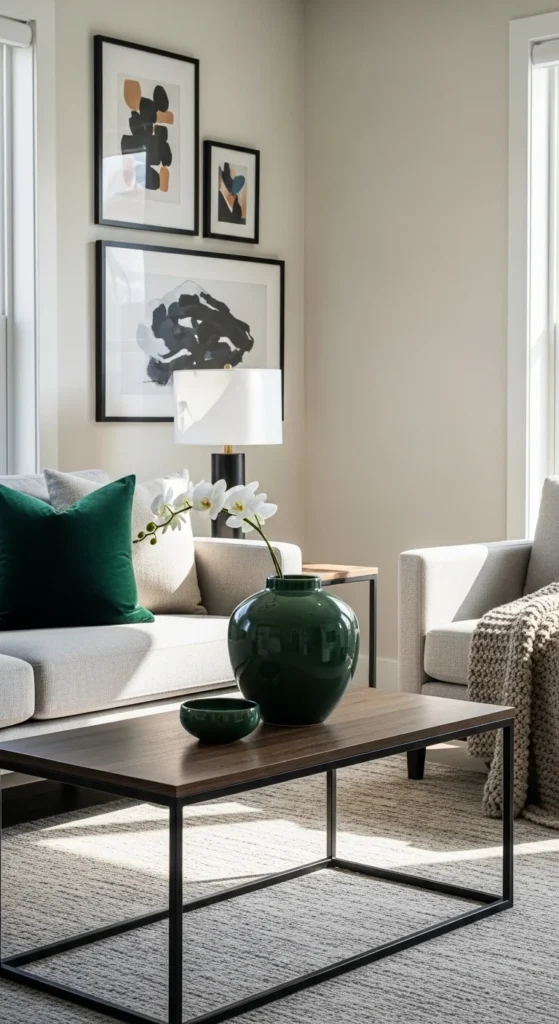
Jewel tones can add drama without taking over. A deep green pillow, a burgundy throw, or a navy vase adds richness to warm neutrals. Keep it small and intentional.
Pick one jewel tone and repeat it twice. For example: a deep green pillow and a deep green vase. Or a burgundy pillow and a burgundy art accent. Two touches feel planned. Five touches feel busy.
Budget move: swap pillow covers and a single decor item. That’s it. You don’t need new furniture. You can also thrift a vase and paint it in a deep tone with a satin finish.
DIY idea: dye a throw blanket with fabric dye in a deep color. A rich throw over a beige sofa looks expensive instantly.
Pair jewel tones with clean shapes. Simple pottery, smooth vases, and minimal patterns keep it modern.
23) Natural Fiber Textures for “Organic Modern” Warmth
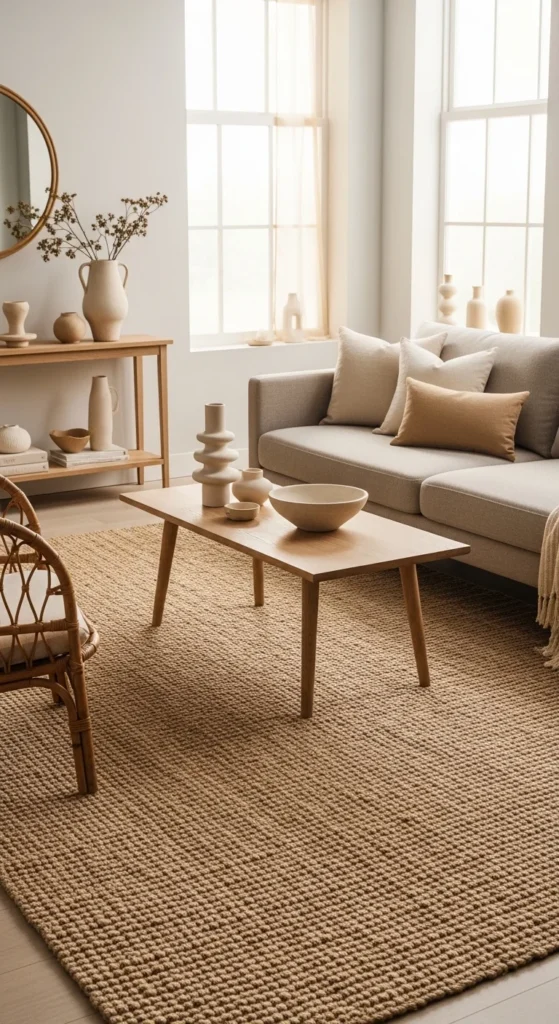
Natural fibers make sleek rooms feel welcoming. Jute rugs, woven baskets, rattan chairs, and wood details add texture without adding clutter. The look stays modern when shapes are simple and colors are calm.
Try a jute rug under a softer rug layer, or add a woven basket next to the sofa for throws. If you want a rattan piece, choose one with clean lines and neutral cushions.
Budget move: add one woven item and one wood item. A basket plus a wood tray can change the vibe. Thrift stores are great for baskets, wood bowls, and simple stools.
DIY idea: make a wood slat panel behind the TV or sofa using thin wood strips stained in a light tone. Even a small panel adds architectural interest without big renovations.
Keep natural fibers in warm tones. Avoid bright orange-y wood stains. Light oak, medium oak, and soft walnut look the most modern.
24) Vintage + Modern Mix That Feels Curated
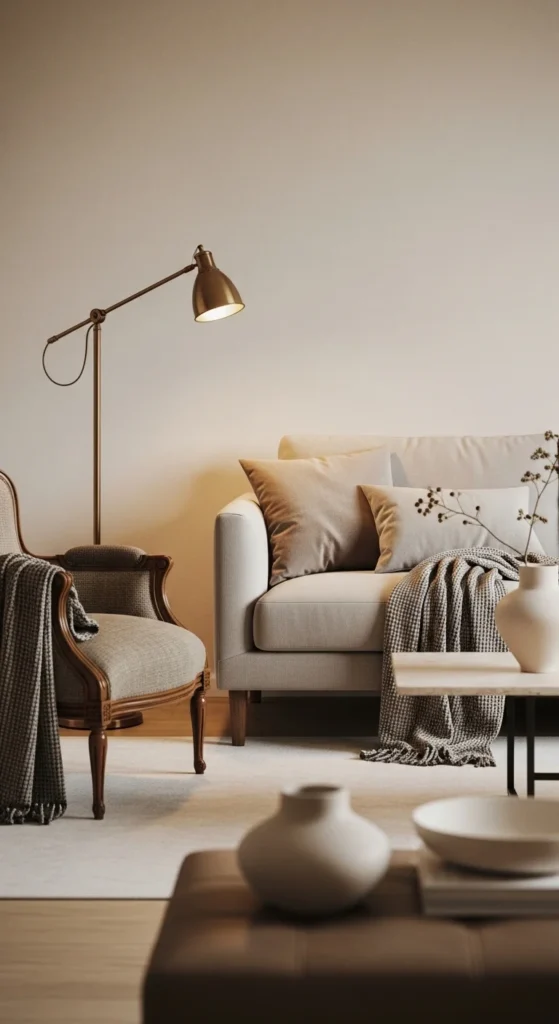
A room looks more expensive when it doesn’t look like it was bought all at once. Mixing vintage with modern creates that curated feel.
Try one vintage piece: an old chair, a vintage mirror, or an antique side table. Pair it with modern basics like a clean sofa and a simple rug. Keep colors consistent so the mix feels calm.
Budget move: thrift one standout piece and update it lightly. Clean it, tighten screws, and maybe refinish the wood. Keep the original character. A little wear can look charming when the rest of the room is tidy.
DIY idea: modernize a vintage piece with one change. Add a simple black handle to an older cabinet. Reupholster a chair in neutral fabric. Or paint a vintage frame in matte black.
Place the vintage piece where it can shine. Next to the sofa or under a big mirror is perfect. Let it look intentional, not accidental.
25) Modular Seating That Works for Real Life
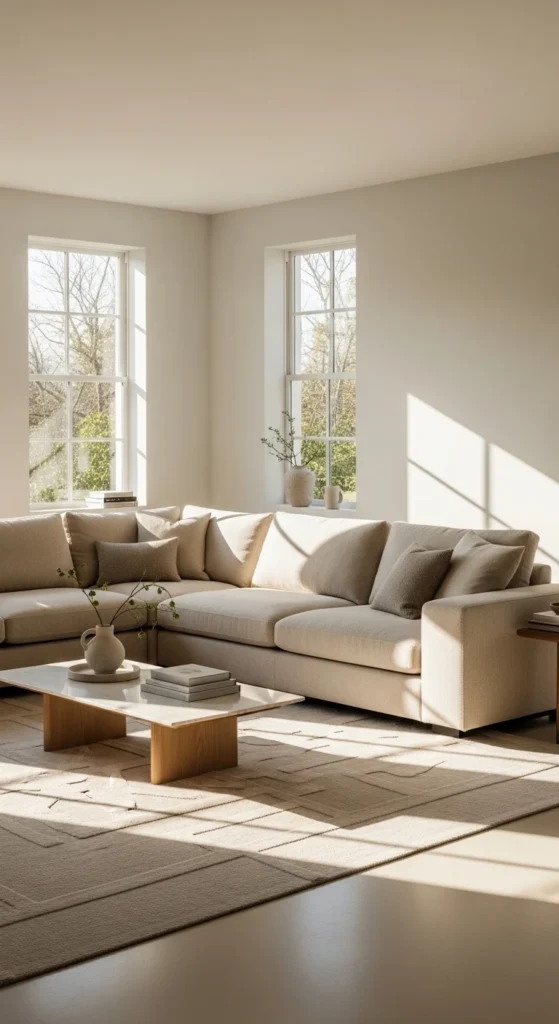
Modular seating looks modern and also fits real homes. You can reconfigure it for guests, movie nights, or open space when you want a lighter feel. This is especially helpful in multi-use living rooms.
If you can’t buy a modular sofa, mimic the idea. Use a sofa plus an ottoman that can move around. Or add a matching armless chair to create a sectional feel.
Budget move: shop secondhand for sectionals and replace the legs for a cleaner look. Use structured pillows to make it feel tailored. If the fabric is dated, cover it with a fitted slipcover in a warm neutral.
DIY idea: create flexible seating with two cube ottomans that tuck under a console. Pull them out when you have guests. Cover them in linen-look fabric and add a tray when they’re not in use.
A high-end room isn’t only about looks. It also feels easy to live in. Modular layouts help you keep the room neat because everything has a place and a purpose.
Conclusion
A high-end modern living room comes down to a few repeatable choices: warm neutral palettes as your base, clean low-profile shapes, and layered textures that add depth without visual clutter. Add softness with curved furniture, create mood with statement lighting, and bring warmth through natural materials like wood and stone looks. If you want extra coziness, try a color-washed wall in a muted tone, then keep accents simple maybe a small jewel-tone touch or a few black details for contrast. Pick two or three ideas from the list, tackle them this weekend, and take a quick before-and-after photo. You’ll see the room tighten up fast, and it’ll be easier to keep it looking polished every day.