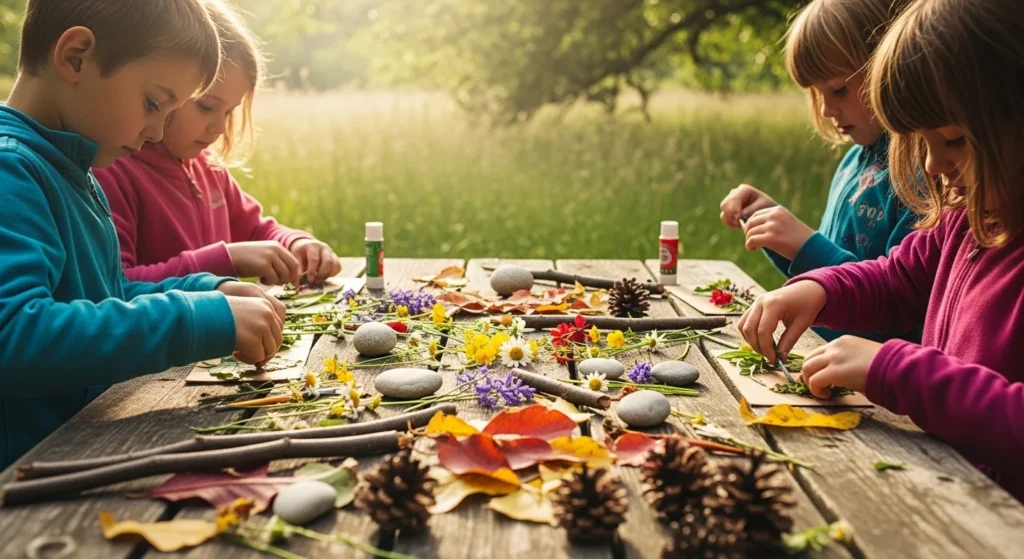
Nature crafts give kids a simple way to turn a walk outside into a creative project. Leaves, sticks, petals, bark, pebbles, seed pods, and pinecones can all become part of low-cost art that feels playful, sensory-rich, and easy to make. That is why nature crafts for kids work so well for backyards, parks, school gardens, and outdoor playdates. They help children look more closely at the world around them while building, painting, sorting, weaving, pressing, and imagining with materials they can gather themselves. These ideas are especially useful when you want hands-on outdoor creativity without a long shopping list or a complicated setup.
1. Sunlit Treasure Suncatchers
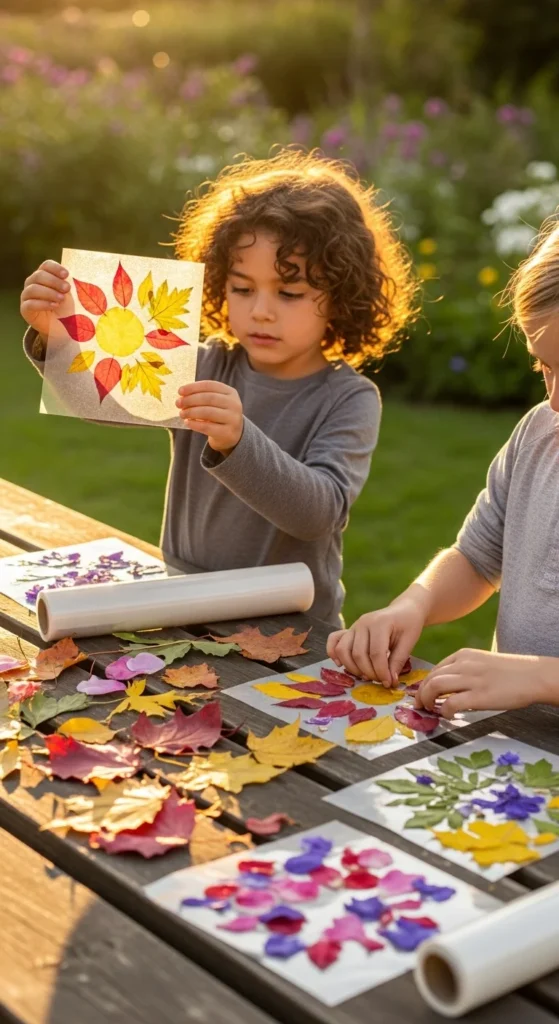
Nature suncatchers are one of the easiest outdoor crafts because the supplies are simple and the finished project looks beautiful right away. Start by taking kids on a short collecting walk for flat leaves, flower petals, tiny grasses, and small soft clover pieces. Then place the collected bits between two sheets of contact paper or clear sticky plastic. Once sealed, trim the edges into circles, hearts, or simple rectangles and hang them in a sunny window. The light shining through the petals and leaves makes the whole craft feel special without needing expensive supplies. This works well for different ages because younger kids can simply place and stick the items while older kids can sort by color or build patterns. It is also low-cost since most of the materials are already outside and the main supply is only contact paper. A helpful tip is to press thicker flowers under a book for a little while before using them so they lie flatter and seal more easily. You can also turn this into a mini outdoor learning activity by asking kids which leaves are smooth, jagged, thick, or thin enough to glow in the sunlight.
2. Kindness Stones Hide-and-Seek
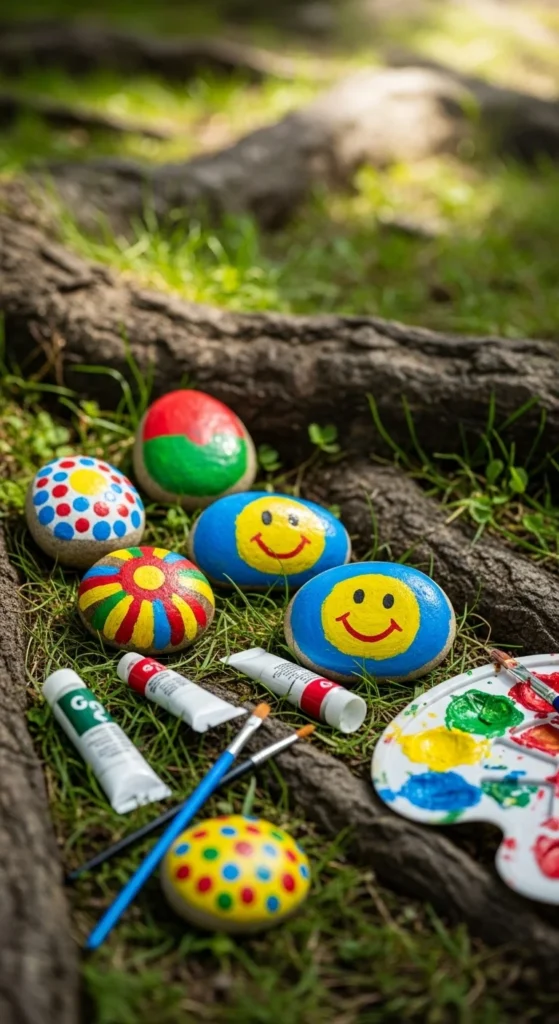
Painted rocks are popular because they are easy to collect, easy to decorate, and easy to turn into a game. Start with smooth stones from the yard, park, or garden border. Wash them, let them dry, and then use washable or acrylic paint to make bright patterns, bugs, flowers, rainbow dots, or smiling faces. Once dry, kids can hide the finished stones around the garden or along a path for someone else to spot later. This project works well for short attention spans because one rock can be finished quickly and still feels complete. If children want more challenge, turn the painted rocks into a themed set like butterflies, weather icons, fruit shapes, or number stones for counting games. A budget-friendly tip is to use old egg cartons as drying trays so the stones stay steady while the paint sets. If paint feels messy outside, give each child a damp cloth and a paper plate palette to make cleanup easier. Kindness stones are especially fun because they mix art with movement. Kids make something by hand, then use it in a hide-and-find game, a garden display, or a small handmade gift for someone else.
3. Texture Treasure Hunt Leaf Rubbings
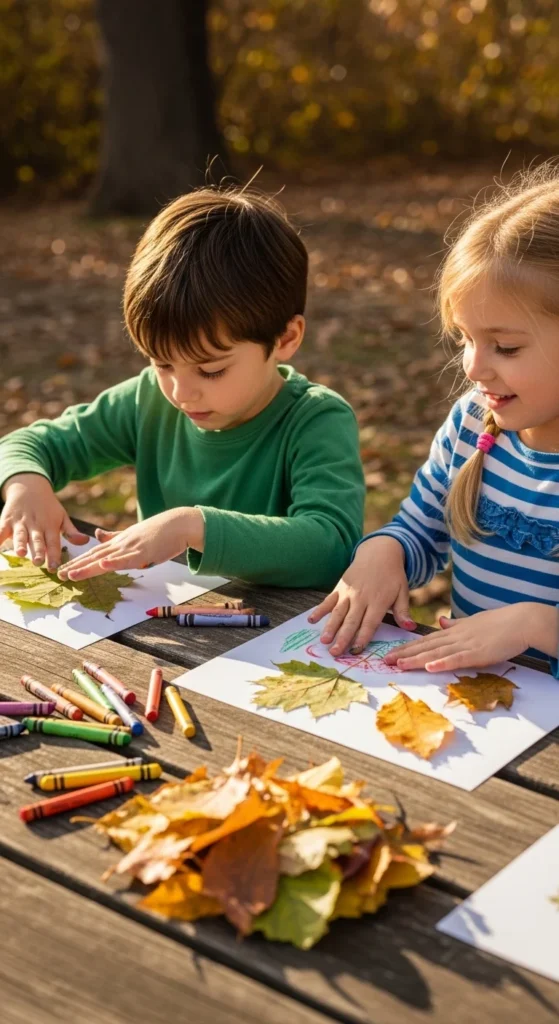
Leaf rubbings turn a simple walk into an art session with almost no setup. Gather leaves in different sizes and textures, then place one under a sheet of paper and rub over it gently with the side of a crayon. The veins and edges appear little by little, which makes the activity feel almost magical for kids. This is a great craft when you want something calm and low-mess. It also helps children notice differences between leaf shapes, sizes, and surfaces. Try using green, brown, yellow, or orange crayons for a nature-themed result, or let kids use wild color choices just for fun. If you want more variety, label the leaves after the rubbing or group them by tree type, size, or shape. A good low-cost tip is to save used crayons and peel the wrappers ahead of time so they are ready for rubbing. This project is very easy to take outdoors because all you need is paper, crayons, and a flat surface like a bench, clipboard, or picnic table. It works well for school-age children but younger kids can enjoy it too with a little help holding the paper steady.
4. Forest Folk Stick Figures
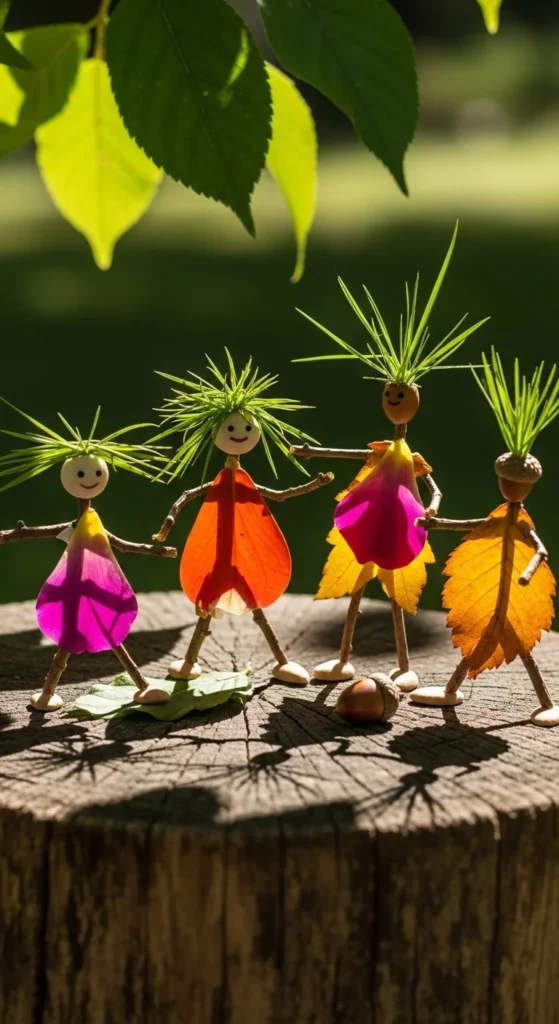
Stick figures made from natural materials are a great craft for kids who like imaginative play. Start by gathering twigs for the body, smaller sticks for arms and legs, and leaves or petals for clothes, wings, or hats. Kids can lay the pieces on the ground first to plan their characters before gluing them onto cardboard, paper, or a scrap wood base. These little “forest folk” can become fairies, explorers, animals, or whole families of nature people. This idea is especially good when children like storytelling because once the figures are finished, they can name them and create little outdoor adventures around them. It is also budget-friendly since the main materials are foraged from the yard or park. A simple homemade glue setup and a tray for collected pieces are usually enough. If you want to avoid glue entirely, make temporary stick people on the ground and photograph them before the wind changes the design. This makes the activity even simpler and fully outdoor-friendly. The craft mixes sorting, arranging, and imaginative thinking, which helps it feel like both an art activity and a game at the same time.
5. Mini Habitat Bug Hotels
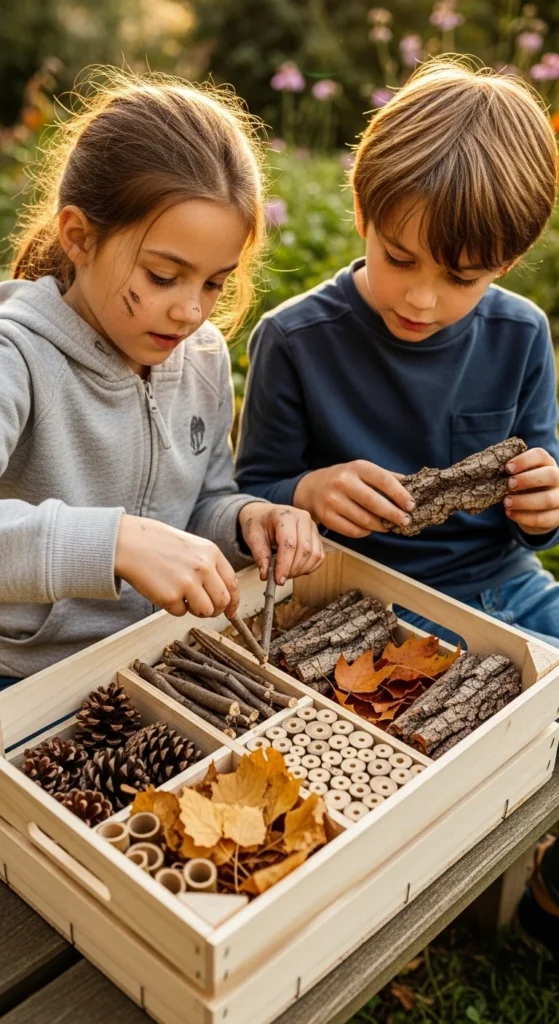
A bug hotel is one of the best nature crafts for kids because it turns collected materials into something useful for the garden. Start with a small wooden crate, box, flower pot on its side, or even a sturdy cardboard container for a temporary version. Then fill it with layers of bark, twigs, dry leaves, pinecones, hollow stems, and bits of straw. Kids can sort the materials by texture or size and pack them into sections like little nature rooms. This project works well because it feels like both crafting and building. Children get the satisfaction of making something while also learning that bugs need places to hide and rest. A helpful budget tip is to use what is already in the yard instead of buying fillers. Fallen branches, dried grass, and old plant stems usually work well. Place the finished bug hotel in a quiet garden corner and check it later to see if tiny creatures have visited. This is a great craft for older kids who enjoy building, but younger children can help collect and sort the materials too. It gives outdoor creativity a real purpose and keeps the nature theme going long after the craft session ends.
6. King and Queen of the Woods Crowns
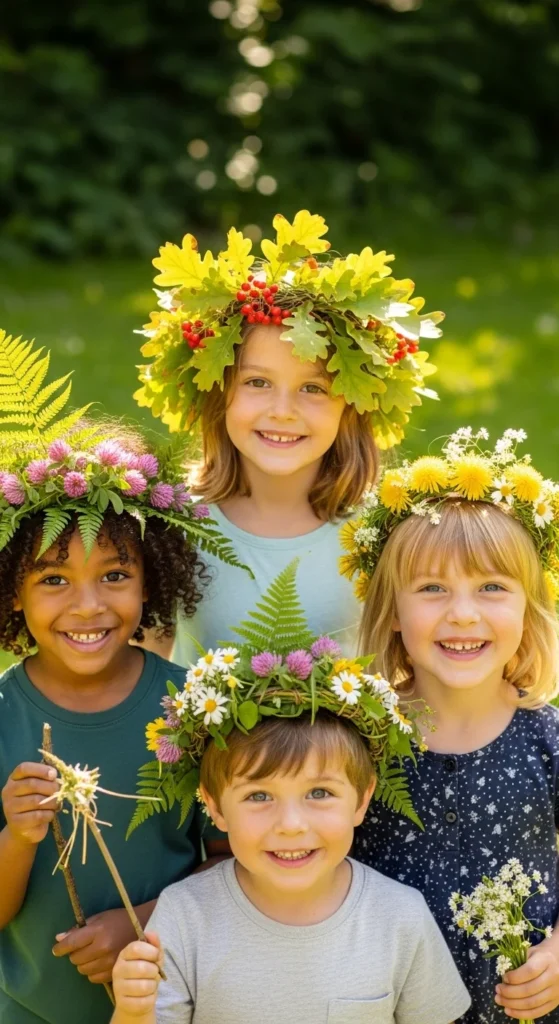
Nature crowns are a fun craft because they turn collected outdoor materials into something kids can wear right away. Start with a strip of cardboard, thick paper, or flexible card cut to fit around the head. Then let children decorate it with leaves, grass plumes, flower heads, clover, and tiny twigs using tape or glue. The final result can feel royal, fairy-like, woodland-inspired, or completely silly depending on what they collect. This is a great choice for a birthday party, garden playdate, or outdoor story time because the crowns become part of the pretend play after the craft is done. A budget-friendly tip is to use old cereal boxes cut into strips for the crown base, then cover the outside with leaves and flowers so the cardboard hardly shows. If flowers are limited, focus on layered leaves in different shapes and colors. Kids often enjoy collecting the materials as much as making the craft itself, so turn the prep into a mini scavenger hunt. Once finished, the crowns can be worn for photos, garden games, or a “forest parade” around the yard.
7. Find-and-Tick Nature Scavenger Boards
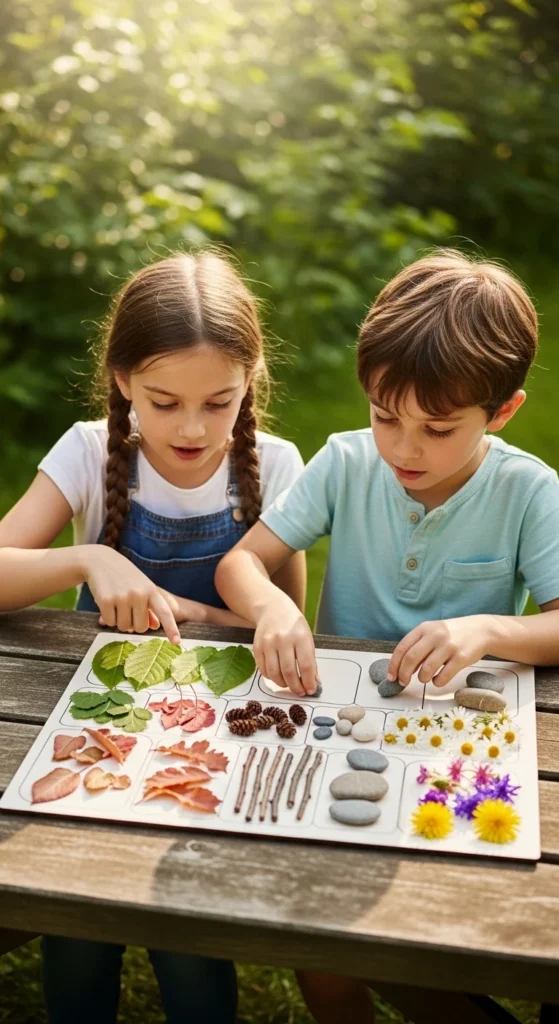
A scavenger board turns nature collecting into a craft and a game at the same time. Start with a sheet of cardboard, paper, or a simple tray and create sections for things like leaves, pebbles, feathers, pinecones, grass, petals, and bark. Then send kids out to collect one of each item and place them in the correct spot. Once the board is filled, they can glue the pieces down, draw around them, or use the collection as the start of another craft. This is especially good for children who like goals and movement because it gives the outdoor walk a clear purpose. It also works well for mixed ages since younger kids can match shapes and older kids can hunt for specific textures, sizes, or colors. A low-cost tip is to use an old pizza box or cereal box as the base. If you do not want to glue everything, just take a photo of the finished collection board before putting the items back outside. This activity builds observation skills, keeps kids moving, and helps them notice details they might miss on a normal walk.
8. Outdoor Story Stones
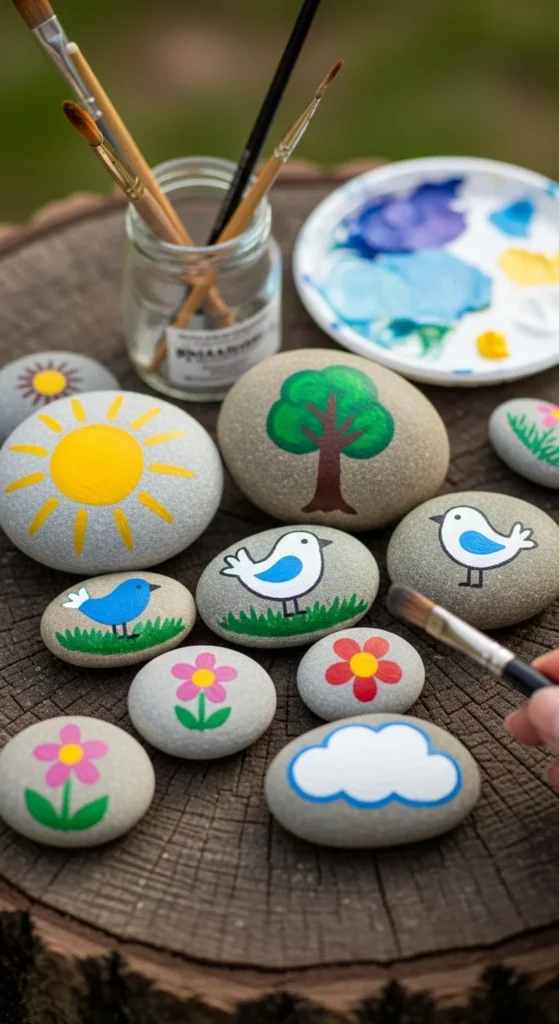
Story stones are simple painted rocks that kids can use to build their own outdoor stories. Start with smooth stones and paint easy symbols on each one, like a sun, tree, cloud, bird, flower, bug, pond, or house. Once dry, place the stones in a small basket or bag and let children pull out three or four at a time to create a story using the pictures. This makes the craft useful long after the painting is done. It is a great mix of art, imagination, and language play, especially for children who enjoy making up adventures. A helpful budget tip is to keep the symbols very simple so one paint session can make a whole set. You can use a paint pen or even permanent markers on lighter stones if you want less mess. Story stones are fun in the garden, on a picnic blanket, or during outdoor quiet time. They can also be grouped by theme, like weather, woodland animals, or seasons. This project works well because it gives children a finished object they can keep using in games, storytelling, and pretend play.
9. Enchanted Forest Tree Faces
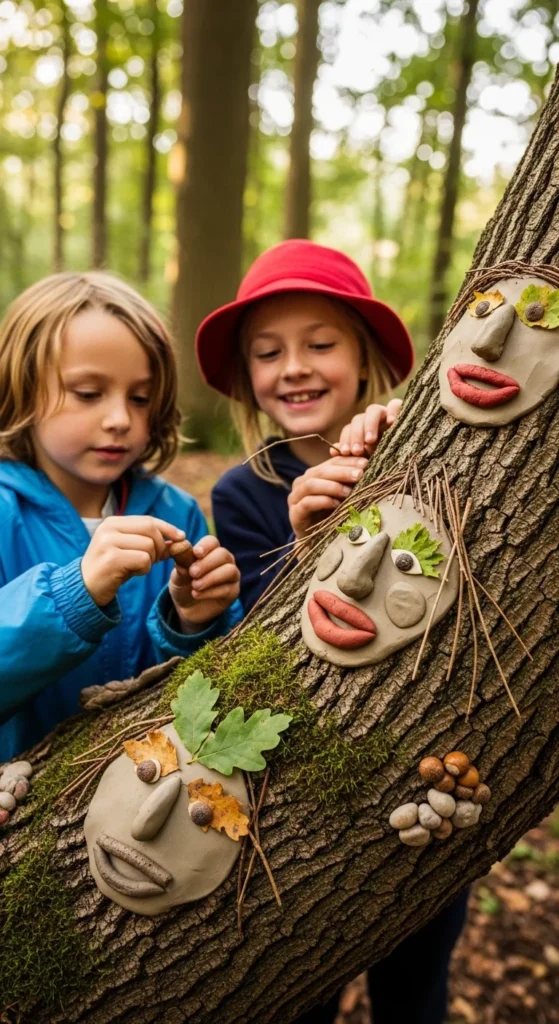
Tree faces are one of the most imaginative nature crafts because they make the outdoors feel alive. Give kids a small piece of clay or play dough and let them press it gently onto the bark of a tree to form eyes, noses, mouths, and eyebrows. Then use twigs, acorns, leaves, seeds, and grass to add extra details like hair, ears, eyelashes, or funny mustaches. This craft feels magical because children get to “discover” a face hiding in the tree. It also encourages close observation since they start noticing bark patterns, cracks, and shapes that can become part of the expression. If you want to keep it very simple, skip the clay and make temporary faces from mud and found materials. A good tip is to remind kids to be gentle and use only a small amount so the tree is not disturbed. This idea works best in a garden, yard, or park with sturdy trunks and lots of loose natural materials nearby. It is a strong choice for imaginative children because it feels like crafting, building, and storytelling all at once.
10. Forever Bloom Pressed Flowers
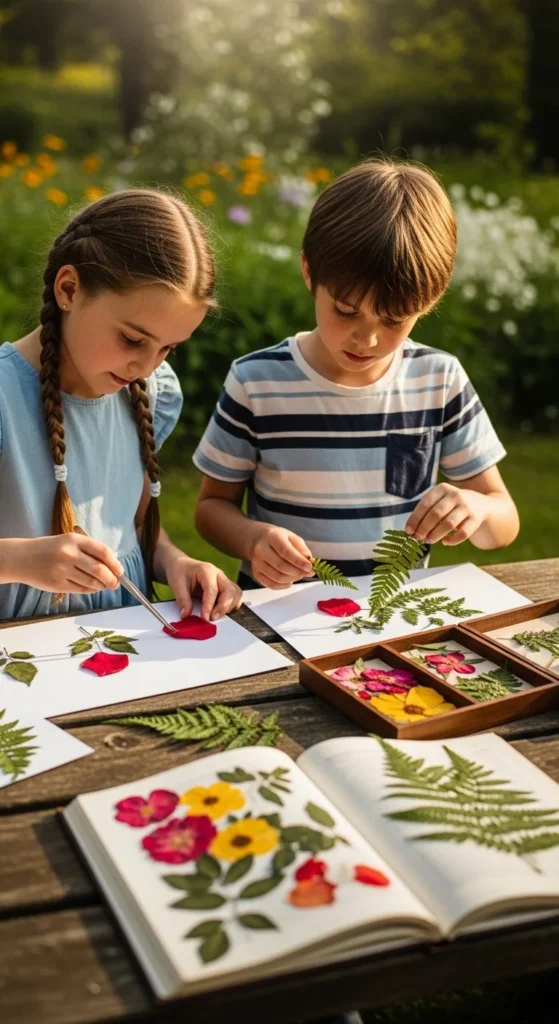
Pressed flowers let kids keep a little part of the outdoors long after the walk is over. Gather small flowers, clover, and flat leaves, then place them between sheets of paper inside a heavy book. After they dry, use them for cards, bookmarks, collages, or little framed pieces. This craft teaches patience because the flowers need time to flatten, but the result feels very special. If children want something quicker, press the flowers for a shorter time and use slightly flatter pieces first. A budget-friendly tip is to use old books, scrap paper, and recycled cardboard for the finished projects. Pressed flower crafts work especially well for spring and summer when petals are easier to find, but leaves can be pressed in autumn too. You can turn the finished pieces into gifts for grandparents, thank-you cards, or simple room decor. This project is nice for kids who enjoy sorting and arranging because the dried flowers can be grouped by color, size, or shape before gluing them down. It is calm, creative, and a lovely way to connect outdoor exploration with a more delicate kind of art.
11. Nature Playgrounds Tic-Tac-Toe
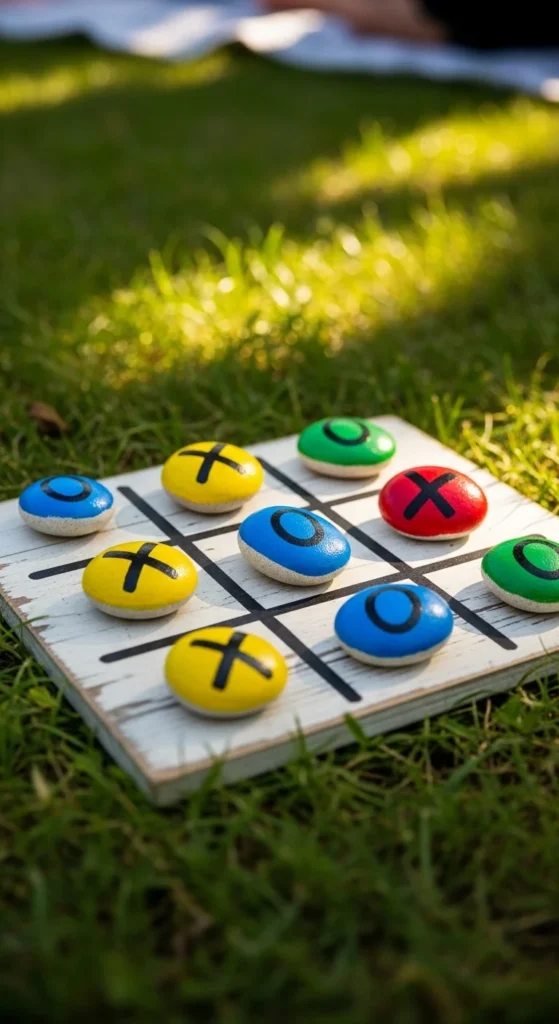
A nature tic-tac-toe set is a smart craft because it turns found materials into a game kids can play again and again. Start by collecting ten small rocks. Paint five of them one way and five another way, such as bees and flowers, leaves and dots, or simple X and O marks. Then make a board from cardboard, a piece of wood, or even just draw the grid with chalk outside. This project is great because the craft part stays simple and the fun continues after the paint dries. It works especially well for siblings or playdates because the finished game is ready to use right away. A budget-friendly tip is to keep the rock designs bold and easy so kids can make the full set in one sitting. If you want a bigger version, use sticks laid on the grass for the board. This idea combines art, outdoor play, and simple strategy in a way that feels useful rather than just decorative. It is also easy to take on a picnic, to the park, or out into the garden for a quiet screen-free activity.
12. Wild Weaves with Stick Looms
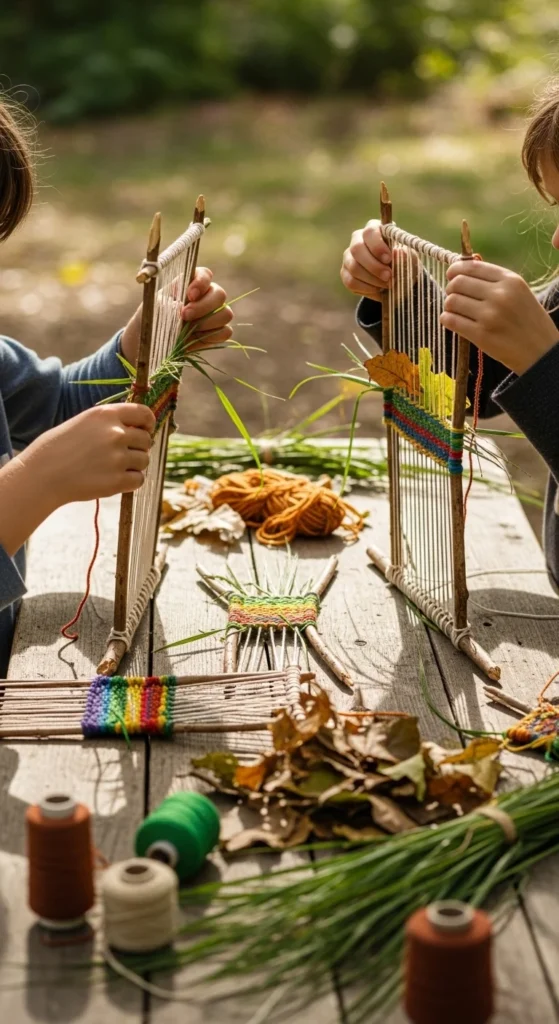
Stick weaving is a lovely nature craft because it turns a few twigs and some string into a little outdoor loom. Find two forked sticks or make a square frame from four small twigs tied together. Then stretch yarn or string across the frame and let kids weave in grass, leaves, petals, feathers, and thin strips of fabric. The result looks textured and colorful without needing many supplies. This is a great project for children who enjoy quiet, focused activities. It also helps with hand control because they have to guide the pieces through the frame carefully. If yarn is not available, soft plant stems or strips of old T-shirt fabric can work too. A good low-cost tip is to collect all the weaving materials in one bowl first so kids can choose textures as they go. The finished weavings can be hung from a branch, displayed indoors, or used as part of another nature collage. This craft feels relaxing and gives children a chance to work slowly while still staying outside.
13. Snack Stations Bird Feeders
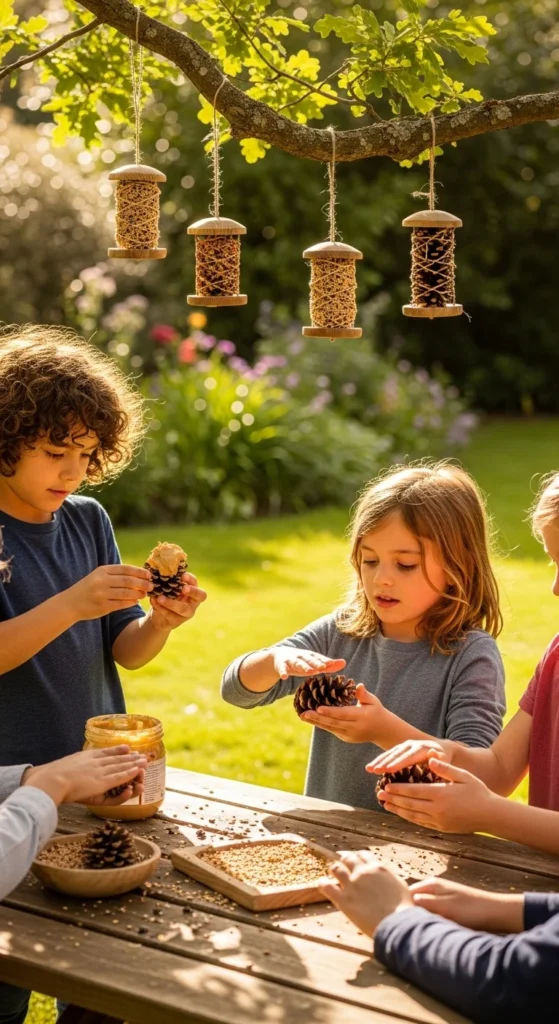
Bird feeders are a classic nature craft because kids get to make something and then watch it attract visitors later. One of the easiest versions uses a pinecone, a spread like peanut butter or seed butter, and birdseed. Tie a string to the pinecone first, spread the coating over it, roll it in seed, and hang it from a tree branch. This project is simple, hands-on, and very satisfying because children can check back later to see if birds found the feeder. If peanut butter is not a good option, use another safe spread or make a feeder from fruit halves, recycled cups, or cardboard tubes. A budget-friendly tip is to use pinecones already fallen in the yard instead of buying anything special. This craft works especially well in colder months when birds are easier to spot, but it can be done year-round. It is a nice mix of art and care for wildlife. Kids often enjoy choosing the hanging spot almost as much as making the feeder itself. It helps them see that a small handmade project can have a real purpose outdoors.
14. Leaf Boats and Raft Races
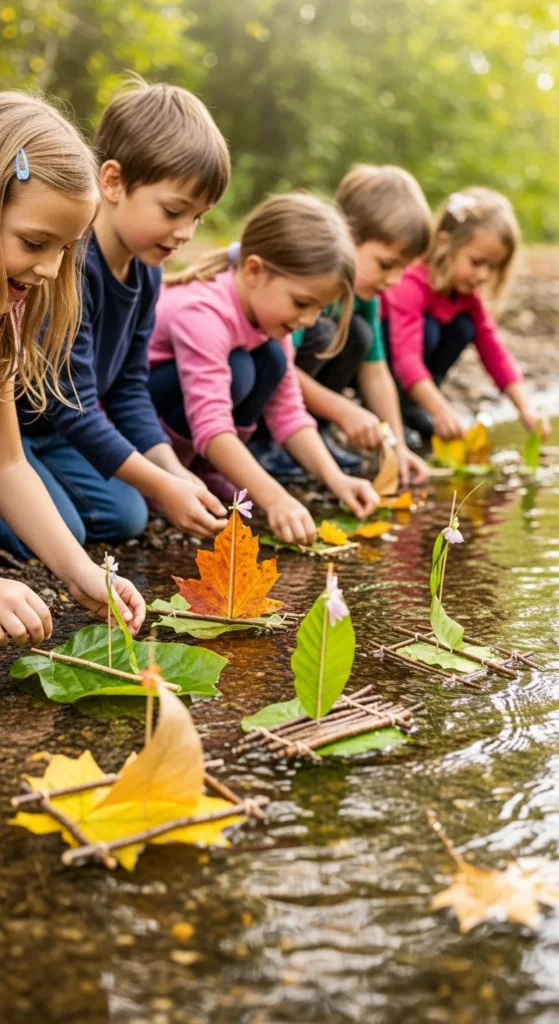
Leaf boats are a fun way to combine nature crafts with water play. Start with large leaves, bark pieces, or little twigs, then add a stick mast and a small leaf or petal sail if you want a more boat-like look. Kids can float them in a puddle, stream, water tray, or even a bucket outside. This craft works especially well because it feels like building and experimenting at the same time. Children can test which leaves float better, which boats tip over, and which sail shape catches the breeze. A smart low-cost tip is to make several quick versions instead of trying to perfect one. That keeps the mood playful and makes it easier to compare what works. If there is no water nearby, kids can still build the boats and save them for later. This is a great activity for siblings or groups because it naturally turns into a race or a float challenge. It encourages hands-on problem solving while still feeling simple and fun.
15. Rainbow Stick Color Quests
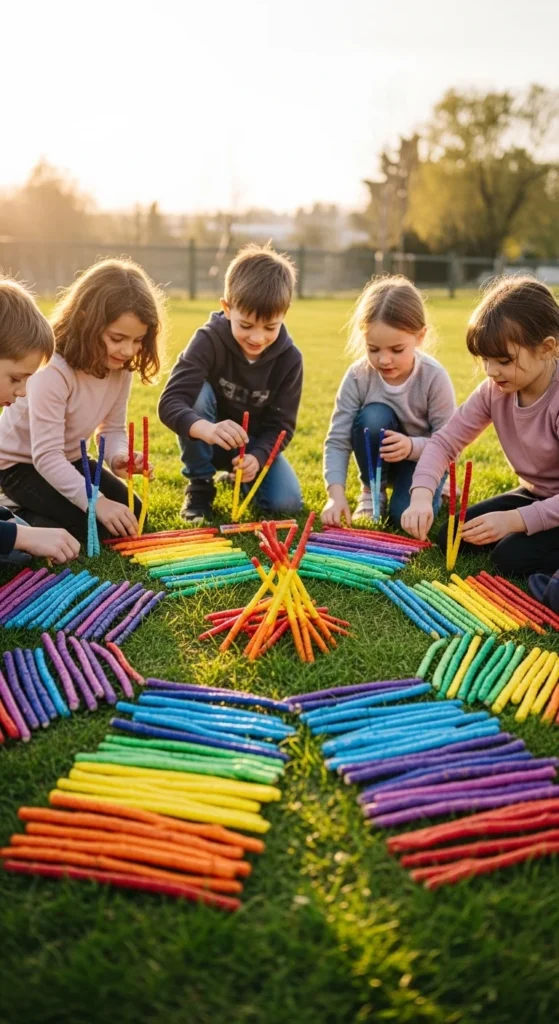
Rainbow sticks turn simple twigs into a colorful sorting and display project. Collect sturdy sticks, then wrap them with colored tape, yarn, fabric scraps, or washable paint. Once dry, kids can arrange them in rainbow order, use them as garden markers, or build little color sculptures on the ground. This is a strong choice when children enjoy bright color but you still want the craft to stay rooted in outdoor materials. It is also a good way to use leftover craft supplies that are already at home. A budget-friendly version uses only markers, scraps of ribbon, or even strips of paper tied around the sticks. Kids can also match collected flowers or leaves to the stick colors as part of a color hunt. This adds a playful learning piece without making the activity feel like schoolwork. Rainbow sticks look cheerful in a flower pot, along a garden path, or tucked into the soil of a play area. The craft is easy, flexible, and especially good for younger kids who like sorting, matching, and arranging things by color.
16. Texture Traps Sticky Nature Walls
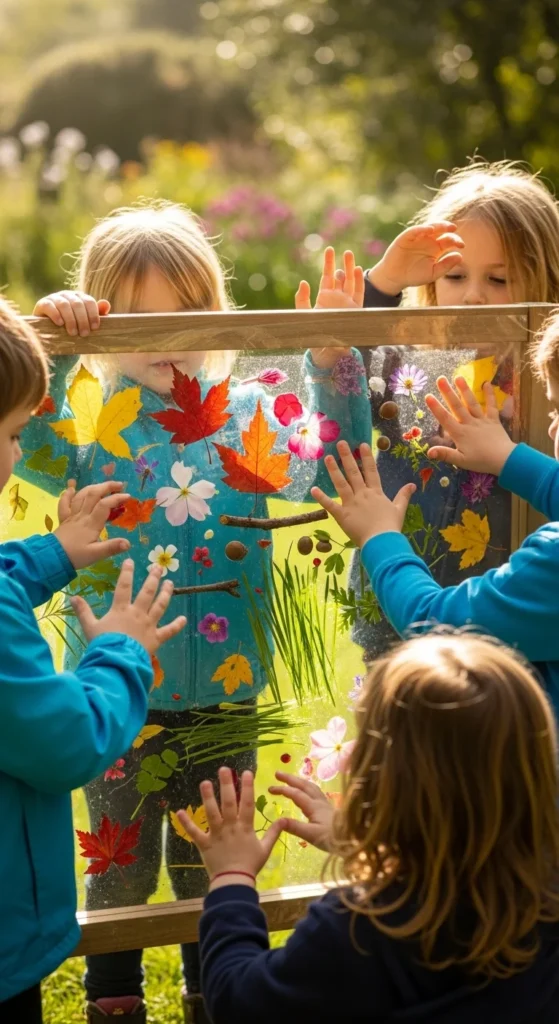
A sticky nature wall is perfect for toddlers and younger children because it is simple, sensory, and very open-ended. Tape a sheet of clear contact paper to a wall, fence, easel, or cardboard board with the sticky side facing out. Then let kids press leaves, petals, grasses, feathers, and tiny flat natural items onto it however they want. This works well because there is no right or wrong way to do it. Children can make pictures, patterns, or just enjoy the feeling of sticking things down. It is also a lower-mess option than paint, which makes it useful for outdoor playdates or quick backyard activities. A budget-friendly tip is to use one large sheet for several kids at once so they can work side by side. If materials are limited, turn the gathering stage into a scavenger hunt first. This craft is especially helpful for short attention spans because kids can join in for a few minutes, leave, and come back later. The final sticky collage often looks bright and textured, and the process feels just as fun as the result.
17. Sky Stories Weather Collages
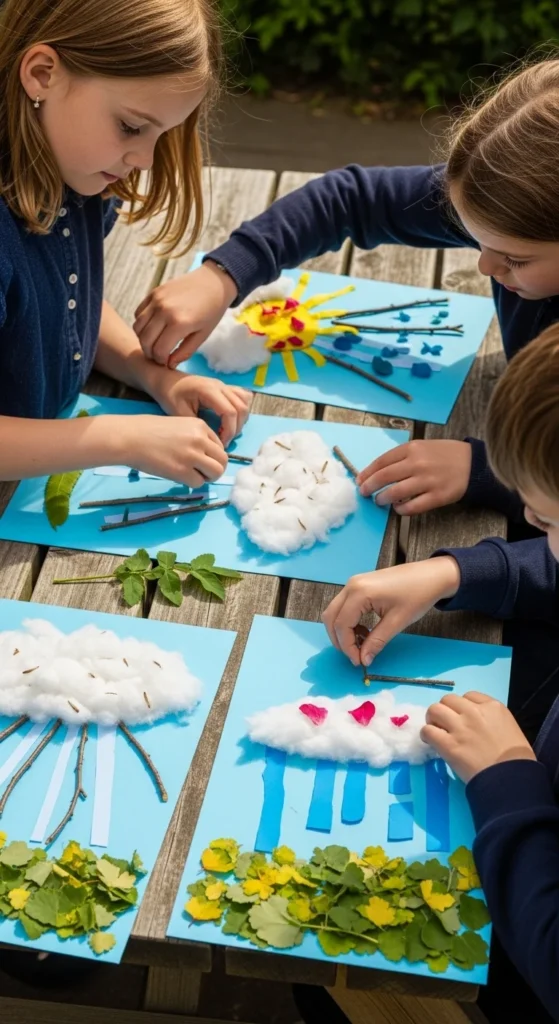
A weather collage is a great way to connect outdoor observation with creative play. Start by asking kids what the sky looks like today. Then have them build a weather scene using natural materials and a paper or cardboard base. Leaves can become clouds, yellow petals can form a sun, grass can make rain, and seed fluff can look like mist or snow. This project is especially nice because it helps children look up, notice the day, and turn what they see into art. It also works well in different seasons since the materials and weather themes change throughout the year. A budget-friendly tip is to use scrap cardboard from a package and glue only a few key materials instead of overfilling the page. If kids want more challenges, they can make a sunny collage one day and a stormy one another day to compare. This craft is calm, creative, and a good mix of science noticing and art making. It works in the yard, on a porch, or even after a park walk with a small bag of gathered materials.
18. Crash Cushion Egg Drop Nests
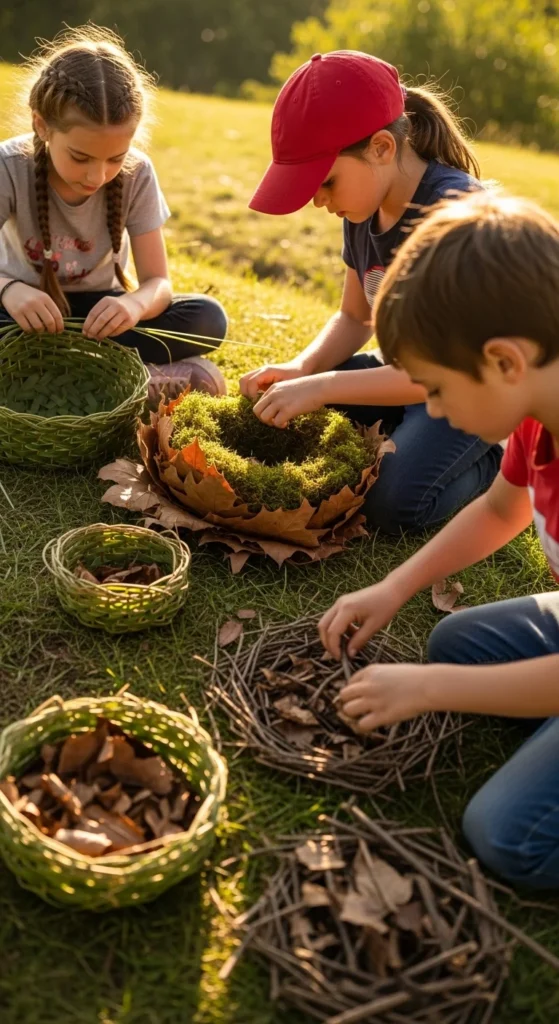
A nature egg-drop challenge turns gathered materials into a building experiment. Give kids an egg or a small substitute object if you want less mess, then let them create a protective nest using grass, moss, leaves, twigs, bark, and soft petals. They can build the crash cushion in a box, basket, paper tray, or handmade twig nest. The goal is to see if their natural padding can protect the object when dropped from a short height. This activity works well because it feels like a craft and a challenge at the same time. Children get to sort materials, compare textures, and think about which ones are softer or stronger. A budget-friendly tip is to use only foraged materials and recycled containers from home. Start with low drops so the activity stays fun and less frustrating. You can also make it a group challenge where kids compare different natural padding ideas. This is especially good for older children who like building and testing things, but younger kids can still enjoy stuffing and layering the materials. It gives outdoor creativity a playful problem-solving angle.
19. Circle Creations Nature Mandalas
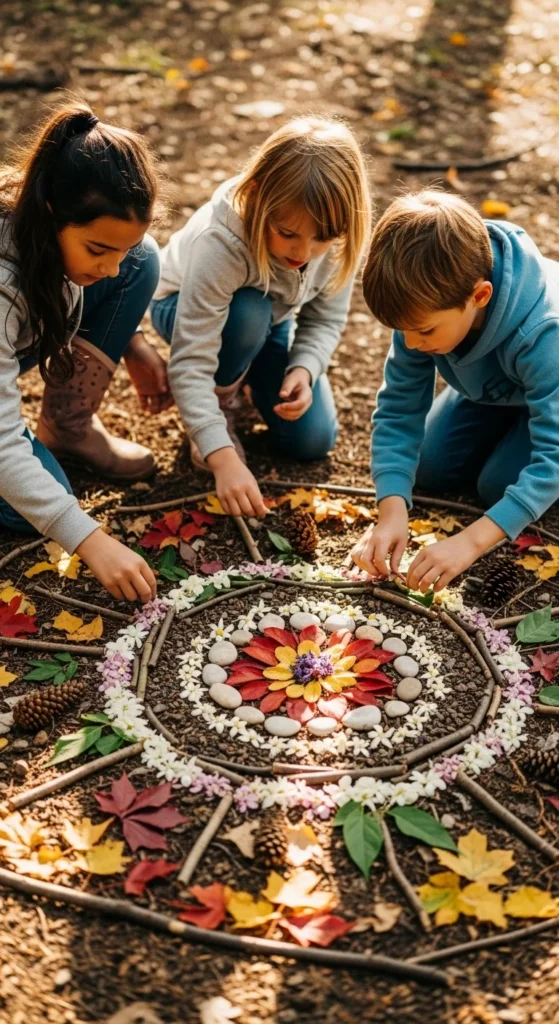
Nature mandalas are calming, beautiful, and surprisingly easy to make. Start by marking a center point on the ground, a tree stump, or a tray. Then work outward in circles using petals, pebbles, leaves, twigs, seed pods, and pinecones. Kids can sort materials by color, shape, or size and place them in repeating patterns. The final result often looks impressive, but the process is very simple: gather, sort, and arrange. This craft is perfect for mixed ages because younger kids can place items freely while older children can focus on symmetry and pattern. It also costs almost nothing if the materials are already outside. A helpful tip is to keep the first ring small so the design grows naturally instead of feeling too big too quickly. If the wind is strong, use heavier materials like stones and pinecones for the outer rings. Nature mandalas are great for mindfulness too because they encourage slow looking and careful placement. Kids often enjoy photographing the finished design before returning the materials to the ground. That makes the craft feel special without creating clutter at home.
20. Botanical Notes Pressed Flower Cards
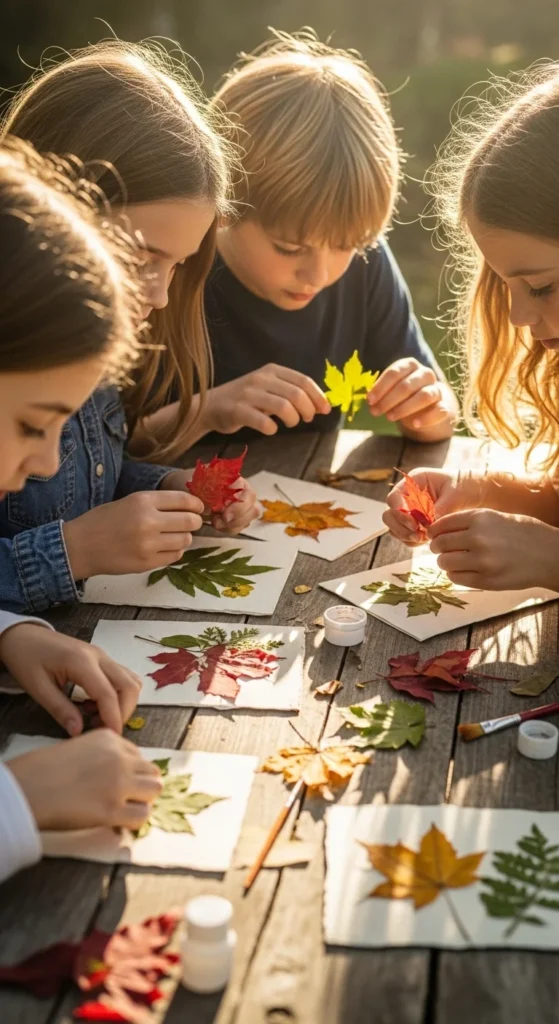
Pressed flower cards are a lovely way to turn collected petals and leaves into something giftable. Start with flowers that have already been pressed or flattened, then let kids arrange them on folded cardstock or recycled card pieces. A few petals, one leaf, and a small stem can form a very pretty design without much effort. This is a nice craft for birthdays, thank-you notes, or handmade seasonal cards. It is also budget-friendly because the main materials are foraged and the card base can come from scrap paper or old packaging. A helpful tip is to keep the arrangements simple so the flowers do not crumble while being glued. Tiny blossoms, flat leaves, and short stems are often easiest to work with. Kids can also make bookmarks, gift tags, or little framed pieces from the same pressed collection. This craft is especially good after a nature walk because it gives children a way to turn their finds into something lasting. It is gentle, creative, and perfect for quieter outdoor afternoons.
21. Forest Fingerprints Bark Rubbings
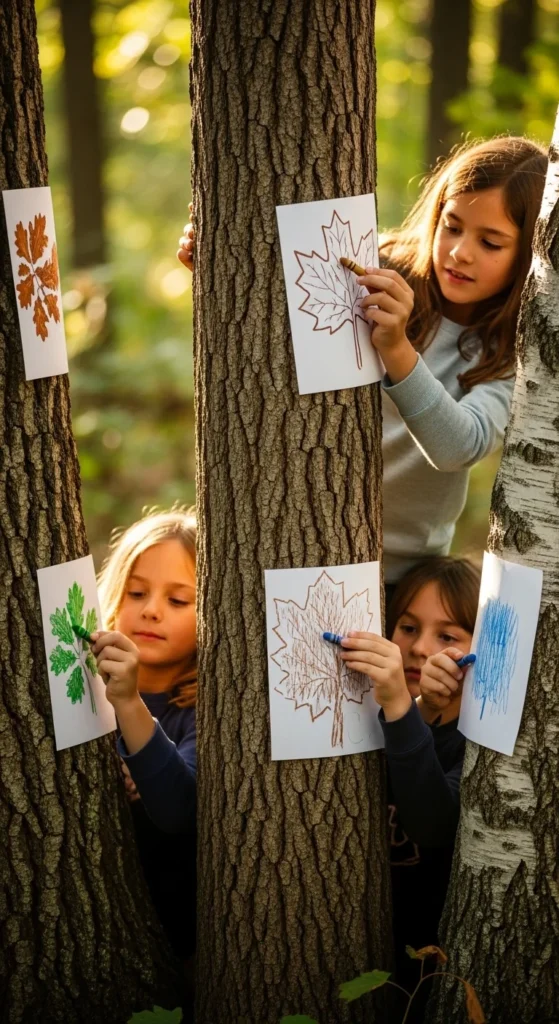
Bark rubbings are a simple way to help kids notice that every tree feels different. Hold a sheet of paper against a tree trunk, then rub over it gently with the side of a crayon. The rough pattern appears quickly and gives children a chance to compare one tree to another. This makes the craft feel like a discovery activity as much as an art project. It is a smart low-cost option because it uses almost no supplies and works best outdoors where the trees already are. To make it more interesting, collect rubbings from different trunks and compare the patterns later. Kids can label them by location, bark roughness, or tree size if they want more detail. A good tip is to use masking tape to hold the paper in place on windy days. Bark rubbings are especially useful when you want a calm outdoor activity that still feels hands-on. They work well in parks, forests, schoolyards, and gardens with mature trees. The finished papers can also be cut up later for collages or mixed-media nature journals.
22. Bird Brainstorm Mini Nests
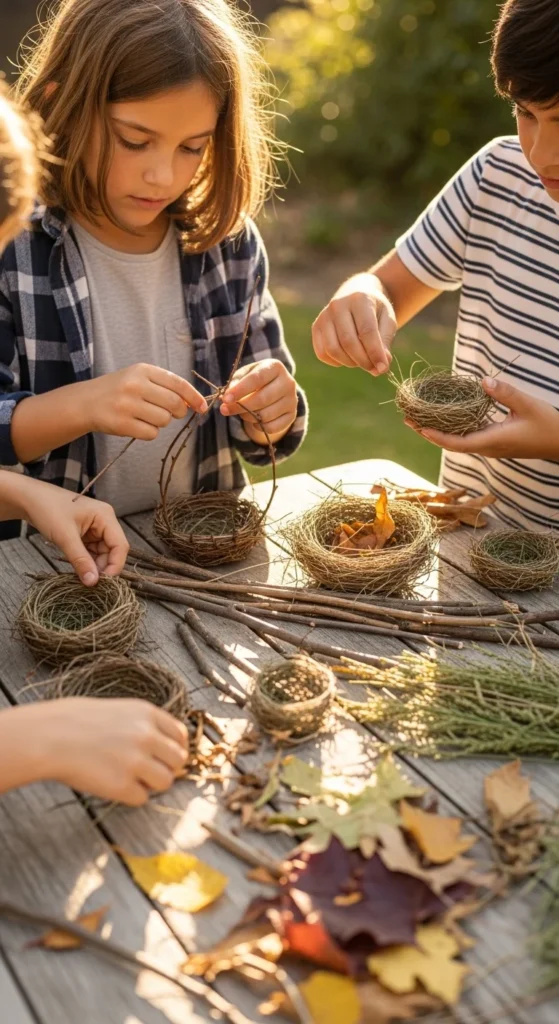
Mini nests are a wonderful craft because they turn loose natural materials into something children instantly recognize. Gather dry grass, flexible twigs, leaves, moss, and a few seed pods, then encourage kids to shape them into small nest forms using their hands or a bowl mold as a guide. The point is not to make a perfect nest. It is to experiment with how natural pieces overlap, tangle, and hold together. This project works especially well for kids who enjoy building and arranging. It also connects nicely with bird-watching or spring nature walks. A budget-friendly tip is to let children make the base shape inside a paper bowl or muffin liner if free-form weaving feels too hard. Then they can remove it later or leave it as support. Add a few pretend eggs made from pebbles or clay if you want to extend the play. These nests look sweet in a garden display, on a windowsill, or as part of another nature scene. The craft feels earthy, simple, and full of outdoor texture.
23. Pebble Puzzle Mosaics
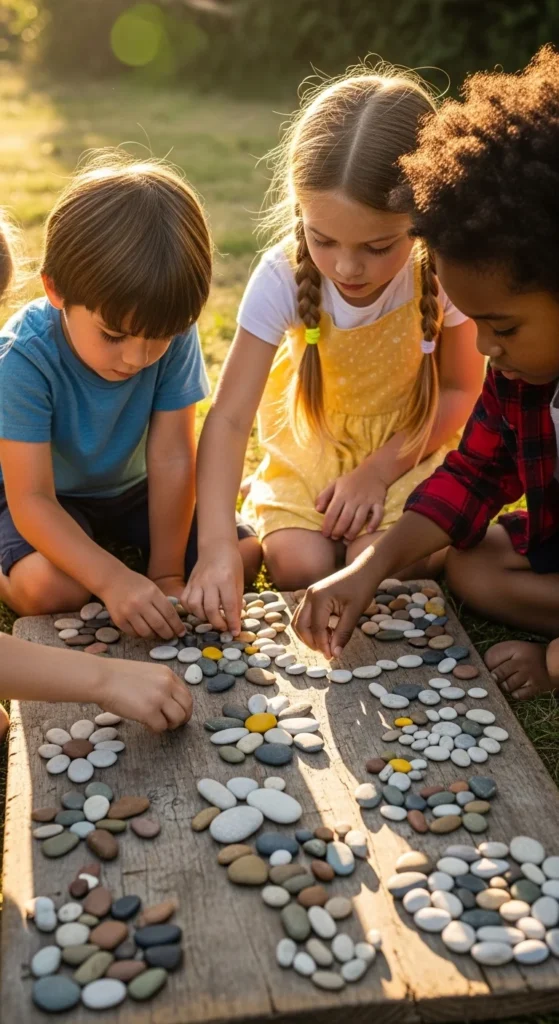
Pebble mosaics are a great outdoor craft because they do not require paint or glue if you want to keep things simple. Kids can collect small stones in different shades and sizes, then arrange them into shapes like hearts, fish, flowers, spirals, initials, or tiny landscapes. They can build the designs on the ground, on a tray, or on cardboard. This project works well because it encourages sorting, pattern-making, and visual planning without creating much mess. If children want a more permanent version, glue the pebbles onto thick cardboard or a scrap wood base once the layout is finished. A budget-friendly tip is to group pebbles by color first. That makes it much easier to build a pattern later. This craft is especially good for kids who like arranging objects carefully and seeing a picture appear piece by piece. Pebble art also pairs well with nature mandalas if you want to expand the activity. It is simple, tactile, and very satisfying once the final image comes together.
24. Backyard Nature Collage Frames
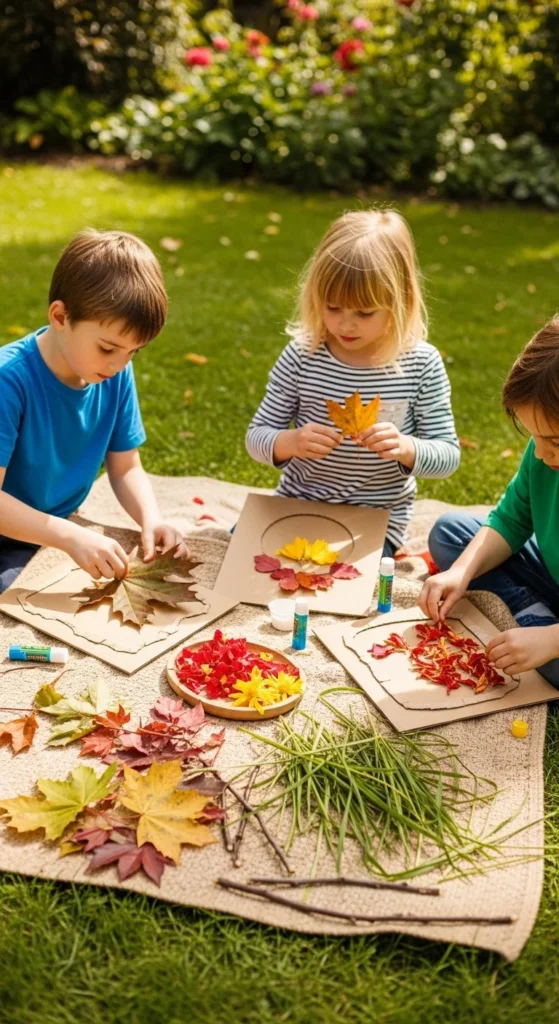
Nature collage frames are a wonderful final project because they combine collecting, arranging, and display in one activity. Start with a cardboard frame cut from a cereal box or old packaging. Then let kids glue leaves, petals, grasses, bark bits, and tiny twigs around the border. The middle can stay open like a real frame, or children can add a drawing, a photo, or a favorite leaf rubbing inside. This craft works well because it feels personal. Each child’s frame ends up looking different based on what they collect and how they arrange it. It is also very low-cost since the base can come from recycled cardboard and the decorations are found outdoors. A helpful tip is to let the natural materials dry a bit first if they are very damp, so they stick more easily. These frames make lovely gifts or seasonal keepsakes, and they can also hold small outdoor art made earlier in the day. It is a great way to turn a collection of nature finds into something that feels finished, decorative, and worth saving.
Conclusion
Nature crafts for kids work so well because they mix outdoor discovery with simple hands-on art. Leaves, rocks, sticks, petals, bark, grass, and pinecones can become suncatchers, story stones, bug hotels, crowns, feeders, mandalas, mosaics, and mini builds without requiring a big budget or a long supply list. The best part is that these activities invite children to collect, notice, sort, build, and imagine while spending more time outside. Start with one easy project like leaf rubbings or painted rocks, then let the collected materials lead into the next craft.

Lily Summers is a digital artist and creative storyteller who loves bringing colorful characters to life. With a passion for cartoons, fan art, and playful sketches, she inspires others to explore their imagination through art. When she’s not sketching, you’ll find her dreaming up new ideas for CraftedWizard.com to spark creativity in every artist. 🌈✨