

A diary doesn’t have to be “perfect writing” or a serious daily recap. It can be a safe place to spill feelings, play with ideas, and create something that looks like you. Some days you’ll want to write a lot. Other days you’ll want to paste one photo, draw a messy shape, and call it done. That still counts. The best diary is the one you actually return to, even when life is busy. These ideas are meant to help you express emotions and creativity without pressure, using simple supplies and small habits you can keep.
1) Mood Check-In Page
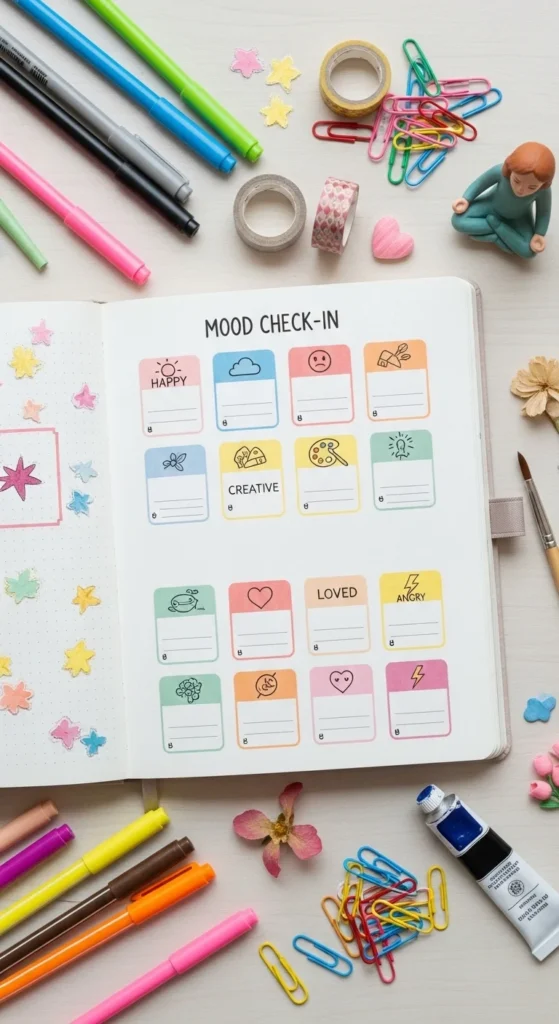
Make a one-page mood check-in that you can repeat anytime. Start with three simple shapes: a circle for “how I feel,” a square for “what’s stressing me,” and a triangle for “what I want.” Fill each shape with color, scribbles, or tiny doodles. You don’t have to explain everything in words. If you want to write, add one short sentence under each shape. Keep it small so it feels easy. Budget tip: use one pen and one highlighter only. Limiting tools makes you more consistent. You can also stick a small piece of colored paper as your mood color of the day. Over time, you’ll see patterns without forcing yourself to journal long paragraphs. This page works on low-energy days when writing feels heavy. It’s also great before sleep because it clears your head quickly. If you want a creative touch, add a tiny collage corner from magazine scraps that match your mood. Dark tones for overwhelm, soft tones for calm, bright tones for excitement. No pressure to be “artsy.” The page is for you, not for display.
2) One-Line-a-Day Feelings Log

If you want consistency, try a one-line feelings log. Each day, write a single line that captures the emotional headline of the day. Not what happened. How it felt. Keep it honest and short. If you don’t want words, use a tiny symbol like a cloud, star, or wave and color it in. Budget tip: draw a simple 30-day grid on one page and keep it as your monthly feelings tracker. You can add a small sticker for each day instead of writing. This idea is perfect when you feel too busy or too tired to journal. It keeps your diary alive even during stressful weeks. It also helps you notice emotional cycles. Maybe you feel lighter after walks. Maybe you feel drained after late nights. You don’t have to analyze it right away. Just capture it. To make it creative, decorate the edges of the grid with washi tape or a simple border doodle. You can also assign colors to emotions and make your log look like a calm color chart. It becomes both self-expression and a visual memory.
3) “Unsent Letter” Pages

Sometimes the best diary entry is a letter you never send. Write to a person, to your past self, or to a feeling like anger or fear. Let it be messy. Let it be raw. You can even tear the page later if you want. The point is release. If writing a full letter feels too much, start with “I wish you knew…” and write three lines. Budget tip: use plain paper and a basic pen. No decorating required. If you want a creative layer, fold the letter page like an envelope and tuck a small collage piece inside it. A ripped magazine photo that matches your mood. A tiny drawing. A pressed leaf. This makes the diary feel like a private vault. You can also write the letter in short sentences, like spoken thoughts. It’s less pressure than “proper writing.” These pages are great for emotional clarity. When your mind keeps replaying a conversation, an unsent letter gives it somewhere to go. And later, when you read it, you’ll see how much you’ve grown.
4) Collage “Emotion Board” Spread

Turn one diary spread into a collage that represents how you feel. Not how you want to look. How you actually feel. Use magazine cutouts, scrap paper, packaging, or old receipts. Tear shapes instead of cutting clean lines if you want it more expressive. Budget tip: keep a small “scrap envelope” inside your diary where you store random paper pieces. Then when you want to collage, everything is ready. Choose one theme for the spread, like “overwhelmed,” “hopeful,” or “new start,” but don’t write the word on the page. Let the visuals speak. Use color as your main language. Dark tones for heavy days, bright tones for light days, mixed tones for confusing days. Add one small drawing on top, like a scribble storm or a simple heart outline. If you want a tiny bit of writing, add three words only, hidden in corners. Collage pages are great because they don’t demand perfect sentences. They also become powerful memory pages. Months later, you’ll remember exactly what that time felt like just by seeing the colors and textures.
5) “What I’m Carrying” Dump Page

This is a brain unload page for heavy days. Write the phrase “what I’m carrying” at the top if you want, or skip it and just start listing. Then pour everything out in short lines. Worries, tasks, feelings, thoughts, small annoyances. Keep it fast. Don’t explain. Budget tip: set a phone timer for 5 minutes and write until it ends. If you don’t want words, draw a backpack outline and fill it with symbols. A tiny clock for time stress. A scribble for anxiety. A heart for love. This page works because it gets pressure out of your body and onto paper. After the dump, add one small section at the bottom: “one thing I can do today.” Keep it tiny and realistic. A shower, a message, a 10-minute tidy. This turns the page into relief, not rumination. To make it creative, use one bold marker to underline a few lines that feel “loud,” then leave the rest light. The contrast makes the page feel expressive without extra effort.
6) Memory Pocket Page

Add a paper pocket to your diary page and turn it into a memory holder. Use a scrap envelope, a folded page corner, or tape three sides of a paper rectangle to create a pocket. Then store tiny items inside: ticket stubs, tiny photos, receipts, notes, candy wrappers, pressed flowers. Budget tip: use packaging paper or old notebook covers to make sturdy pockets. This idea is great if you like journaling but don’t always want to write. Your memory items become the entry. When you want, pull one item out and write a few lines about it. What it meant, what you felt, what you learned. To keep it neat, choose a color theme for the pocket and use matching washi tape edges. If you don’t have washi tape, use clear tape and add small doodles around the pocket. This page feels creative because it’s interactive. It makes your diary feel like a treasure box. Later, when you flip through, you’ll have physical reminders of your life, not just words. It’s also perfect for travel days, busy weeks, or times when emotions are hard to explain.
7) Soundtrack of My Week Spread

Music holds emotions better than paragraphs sometimes. Make a spread that captures your week’s soundtrack without writing song titles. Use imagery instead. A headphone doodle. A vinyl record cutout. Color blocks for different moods. Then write short feeling phrases like “late-night calm” or “morning energy” if you want, but keep it minimal. Budget tip: cut tiny music-themed images from magazines or print small icons. You can also glue a small strip of paper with a hand-drawn waveform design. If you do want to include songs, write them in tiny handwriting and keep it subtle, or tuck them inside a pocket page. The goal is mood, not a list. This spread is a fun creative outlet because it turns emotions into a “playlist” feeling. It also becomes a time capsule. Later you’ll remember what you listened to during exams, during a breakup, during a new habit phase. Add a little color shading around the edges to match the vibe. Blue for calm. Orange for confidence. Purple for reflection. It’s a soft, creative page that doesn’t demand perfect writing.
8) Mini Doodle Diary (No Words)

If writing is hard, draw instead. Make a mini doodle diary where each day gets one tiny drawing. A cloud, a candle, a coffee cup, a star, a messy scribble. Anything. The drawing is your emotion symbol. Budget tip: use one black pen only. That limitation makes it easy and stops overthinking. You can add color later with a highlighter if you want. Keep the drawings small so you don’t freeze. Over time, your doodles become your emotional language. You’ll start noticing that you draw storms on stressed days and soft shapes on calm days. That’s useful self-awareness without heavy analysis. This idea works especially well for teens, students, and anyone who feels blocked by words. It’s also great for travel or busy weeks. If you want a bit more creativity, add a background wash with cheap watercolor or even diluted markers. Keep it light. The goal is expression, not art class. A doodle diary feels playful and private, and it helps you stay consistent because it takes 2 minutes.
9) “Tiny Wins” Gratitude Page

Make a gratitude page that focuses on small wins, not big life speeches. Write down tiny moments you’re proud of: answered a hard message, studied for 20 minutes, took a walk, drank water, cleaned one shelf. Keep each win to one short line. Budget tip: use star stickers or draw small stars next to each win. That makes it feel rewarding without extra effort. If you don’t want to write every day, add wins whenever you remember, like a running list. This page helps because it trains your brain to notice progress instead of only problems. It’s also great during stressful weeks when you feel like you’re falling behind. Add a small collage strip at the bottom with “good day” textures: warm colors, cozy items, calming images. No words needed. If you want more creativity, use different pen colors for different types of wins. Health wins in green. Study wins in blue. Social wins in pink. Over time, you’ll see what areas you’ve been growing in, and that can quietly lift your mood.
10) Color-Only Feelings Page

When words feel too hard, use color as your language. Fill a page with color blocks, scribbles, gradients, or messy strokes that match your mood. No explanation needed. Budget tip: use highlighters, cheap markers, or even colored pencils. Limit yourself to three colors so the page doesn’t feel chaotic. If you want structure, draw five rectangles and fill each one with a different “emotion color.” If you want freedom, just let your hand move. This is a great way to release tension because it uses your body, not just your mind. Add texture by gluing a small piece of paper or tissue in the corner. That tactile detail makes it feel like art without effort. Later, when you look back, you’ll remember the feeling immediately. A heavy gray page. A bright yellow page. A mixed purple-blue page. It’s also a great entry style for people who journal on and off. Even one color page keeps your diary alive. If you want a tiny hint of meaning, add one small symbol in the corner: a dot, a star, a wave.
11) “My Inner Weather” Forecast

Describe your emotions like the weather. Are you a sunny, cloudy, stormy, foggy, windy, calm night? Draw a simple weather scene on the page. Then add a few short lines like “storm is easing” or “fog all day.” Keep it gentle. Budget tip: use a black pen and one gray marker for clouds, then add one accent color. This makes it quick and still expressive. The weather metaphor helps because it reminds you that feelings move. A storm can pass. Fog can lift. This page is also good when you don’t know what you feel, because weather gives you a starting point. If you want extra creativity, add a small collage piece that matches the weather: torn tissue for clouds, shiny paper for sun, dark paper for night. No words needed beyond a few tiny notes. Over time, you’ll build a weather history of your emotions. It’s simple, visual, and comforting. And it’s easy to do even on days when you feel low.
12) “Conversation With My Future Self”

Write a short conversation between you and your future self. Start with one question: “What do I need to hear right now?” Then answer as your future self would. Keep it kind and real. Budget tip: split the page down the middle with a simple line. Left side is “me now,” right side is “me later.” You don’t have to write long paragraphs. Three exchanges is enough. This page is powerful because it gives you comfort and perspective without needing anyone else to be available. It also helps you make decisions. Your future self usually cares about consistency and peace, not drama. If you want a creative touch, add a small photo or collage piece that represents where you want to be. A calm room, a sunrise, a person studying, a tidy desk, a peaceful road. No words needed. You can also add a small envelope on the page and tuck a note inside for yourself to read later. This diary idea turns your journal into a supportive voice, not just a record of problems.
13) Five Senses Memory Entry

Instead of writing “what happened,” write what you sensed. Make five small sections for sight, sound, smell, taste, and touch. Then fill each with one or two lines. This creates a vivid entry without long storytelling. Budget tip: draw five tiny icons to represent the senses and reuse them every time. This idea is great for capturing meaningful days like trips, family moments, or even simple peaceful afternoons. The sensory approach makes your diary feel alive when you read it later. If you want creativity, add a small item that connects to the senses. A tea bag wrapper for smell. A small paper scrap from a bakery bag. A leaf for touch. Keep it light and flat so your diary doesn’t get too bulky. This format also helps when your mind is busy. You don’t have to write a perfect narrative. You just collect details. Over time, these pages become beautiful memory snapshots that feel like stepping back into that moment.
14) “Things I Wish I Could Say” List

This is a private honesty list. Write the things you wish you could say out loud, without censoring yourself. Keep each line short. No explaining. Budget tip: write it on a page you can fold and seal with tape, like a secret page. That makes it feel safe. If you don’t want to write directly, use code words or symbols you understand. Add creativity by writing in different pen pressures, like soft lines for vulnerable thoughts and bold lines for angry thoughts. You can also add a scribble border that matches your mood. This page helps because it releases pressure. When you keep everything inside, it grows. When you write it, it shrinks. After you finish, add one small line: “what I actually can do.” Keep it realistic. Maybe it’s setting a boundary, taking space, or having a calm talk later. This turns the page into clarity. You can revisit it when you feel stuck. It’s a diary idea that makes you feel lighter, not just emotional.
15) “My Comfort Menu” Page

Make a page that lists small comfort actions that actually help you. Not expensive self-care. Real comfort. A shower. Tea. A walk. A clean bed. Music. Stretching. Calling one friend. Watching one episode. Writing one page. Budget tip: draw tiny icons instead of writing long lists. A mug icon. A candle icon. A headphone icon. This page becomes your “rescue plan” on hard days. Add a small section called “comfort with zero energy” and include options you can do when you feel drained. Like opening a window or washing your face. Add creativity by making the page look like a menu layout with boxes and doodles, but keep it simple. You can also glue small scraps that match comfort, like soft-colored paper or tissue. This is a powerful diary idea because it’s practical. When you’re upset, your brain forgets what helps. This page reminds you. Keep it near the front of your diary so you can find it fast.
16) Weekly Photo + Three Lines

Print one small photo each week and glue it into your diary. Then write only three lines: what happened, how it felt, and what you learned. That’s it. This is perfect for people who want memories but don’t want long entries. Budget tip: print photos in tiny collage format on one sheet to save ink and paper. Or use old printed photos you already have and cut them down. If you don’t have a printer, sketch a simple thumbnail drawing of the moment instead. The photo becomes the anchor, and the three lines keep it meaningful. Add creativity with a simple frame made from washi tape or a border doodle. Keep it light so it doesn’t become a big craft project. Over time, you’ll have a weekly visual timeline of your life. It’s also great for tracking emotional growth. You’ll notice what kinds of weeks felt best and why. This method keeps you consistent because it’s small. One photo. Three lines. Done.
17) “My Energy Map” Page

Instead of tracking time, track energy. Draw a simple outline of a body or a circle that represents you. Then shade areas that feel heavy, tense, or light. Add small symbols around the map: a phone for draining scroll time, a book for calm focus, a walk icon for energy. Budget tip: use one gray marker for low energy and one bright color for high energy. This page helps you notice what drains you and what fills you up. It’s useful when you feel “tired for no reason.” Over time, you might see patterns: late nights drain you, certain people drain you, certain routines help. You don’t have to judge it. Just notice it. Add creativity by using watercolor washes or blending two colors. Keep it soft. This is a diary idea that connects feelings to the body, which is often where emotions live. It also helps you communicate with yourself more gently. You’re not “lazy.” You’re low energy. And you can learn what supports you.
18) “A Page of Firsts” Tracker

Make a page where you record firsts. First time trying a new cafe. First time saying no. First time finishing a book. First time staying consistent with a habit for a week. These are small but meaningful. Budget tip: leave space and add entries whenever they happen. No dates required if that feels annoying. Add creativity by drawing tiny icons next to each first: a cup, a book, a door, a star. This page becomes a confidence builder because it proves you’re growing. It’s also great for people who feel stuck. When you look back, you’ll see you’ve actually been moving forward. If you want a fun visual style, turn it into a “stamp page” with little boxes for each first. You can add a sticker every time you add a new first. This diary idea helps you remember that life changes through small moments, not dramatic turning points. It turns your diary into a record of courage.
19) “Creative Scrap Lab” Page
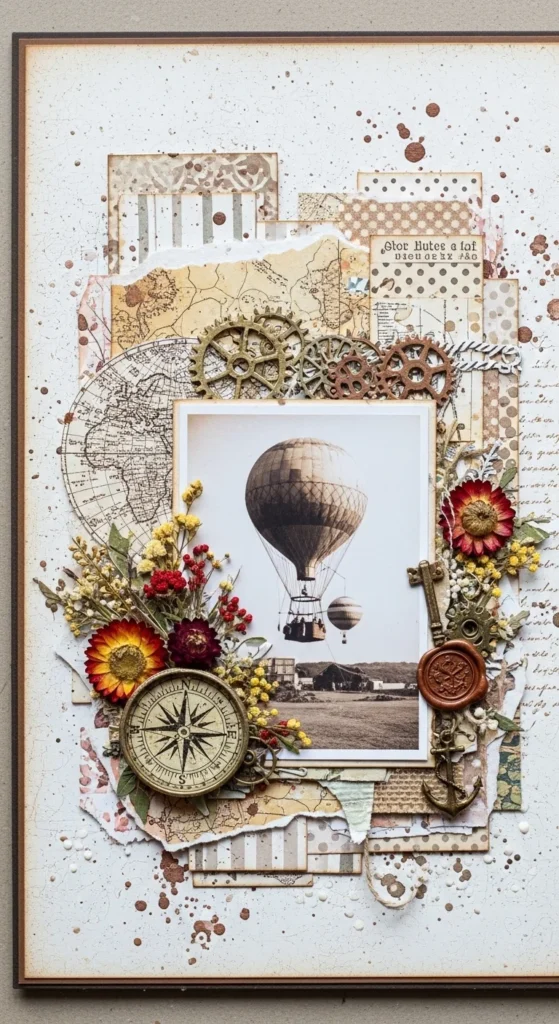
Give yourself a page where anything goes. Glue scraps. Test pens. Make messy patterns. Try a new doodle style. Tear paper and layer it. This is a creativity playground, not a “pretty spread.” Budget tip: use trash scraps like packaging, tags, receipts, and paper bags. The goal is to play without pressure. This page is perfect when you want to journal but don’t know what to write. Your hands start moving, and your mind relaxes. Sometimes emotions come up naturally once you stop forcing words. Add one small rule: no fixing mistakes. If glue wrinkles, let it wrinkle. If the ink smears, it’s texture. This page builds creative confidence. Over time, you’ll discover styles you like: minimal, messy, vintage, colorful. Then you can use those styles in other pages. A scrap lab page keeps your diary fun, which is what keeps you coming back.
20) “Before/After Feeling” Page

This page is simple but powerful. Split the page into two halves. On the left, show how you felt before something. On the right, show how you felt after. It could be after a walk, after a talk, after a tough day, after a decision. Use color, doodles, or short lines. Budget tip: you can do this with two highlighters only. One for “before,” one for “after.” This idea helps you see what actually changes your mood. Maybe you feel lighter after movement. Maybe you feel worse after scrolling. Maybe you feel calmer after cleaning your space. This isn’t to judge yourself. It’s to learn. Add creativity by making the halves look different: messy scribbles on one side, clean shapes on the other. Or dark collage on one side, light collage on the other. Over time, these pages become a guide to what helps you. And when you’re stuck, you can flip back and remember: “This worked before. I can do it again.”
Conclusion
Your diary can be a place where feelings get space and creativity gets permission. You don’t have to write perfectly, decorate perfectly, or journal every single day. Pick one or two ideas from this list and repeat them until they feel natural. Keep your tools simple. Keep your pages honest. When you return to your diary regularly, you’re not just recording life—you’re making room to understand it and express it in a way that feels like you.

Lily Summers is a digital artist and creative storyteller who loves bringing colorful characters to life. With a passion for cartoons, fan art, and playful sketches, she inspires others to explore their imagination through art. When she’s not sketching, you’ll find her dreaming up new ideas for CraftedWizard.com to spark creativity in every artist. 🌈✨