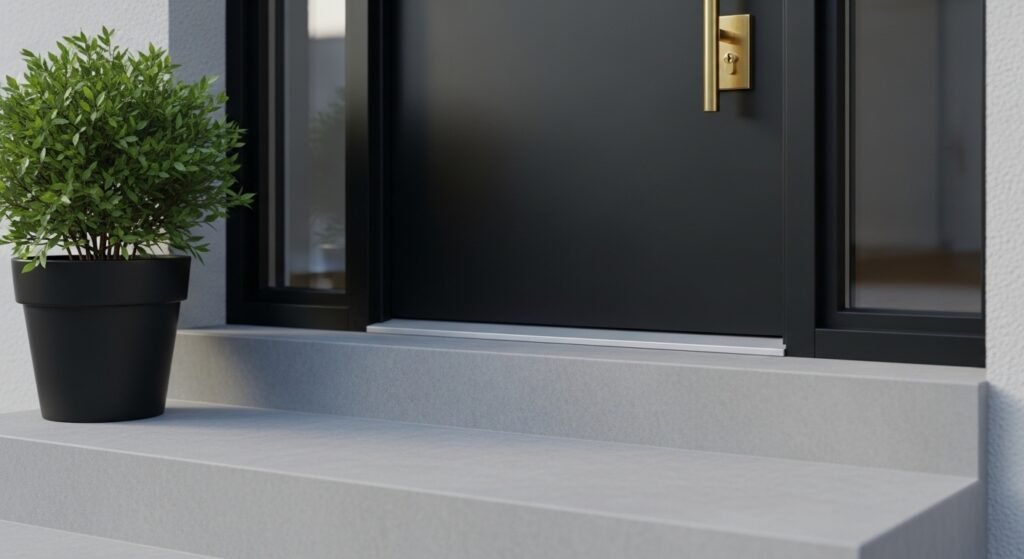
I spent years fussing with facades until I stopped copying showrooms and started living with choices. The best exterior ideas are the ones that age well and hide the little mistakes I keep making.
These are things I actually used, returned, or lived with. They made the house feel calm, modern, and quietly luxe.
27 Elegant Modern Aesthetic House Exterior Designs For A Luxury Look
These 27 ideas are practical, lived-in exterior moves that create a modern aesthetic house exterior with a luxury feel. I include real insights and clear shopping cues for each of the 27 looks.
1. Matte Black Front Door With Warm Brass Hardware
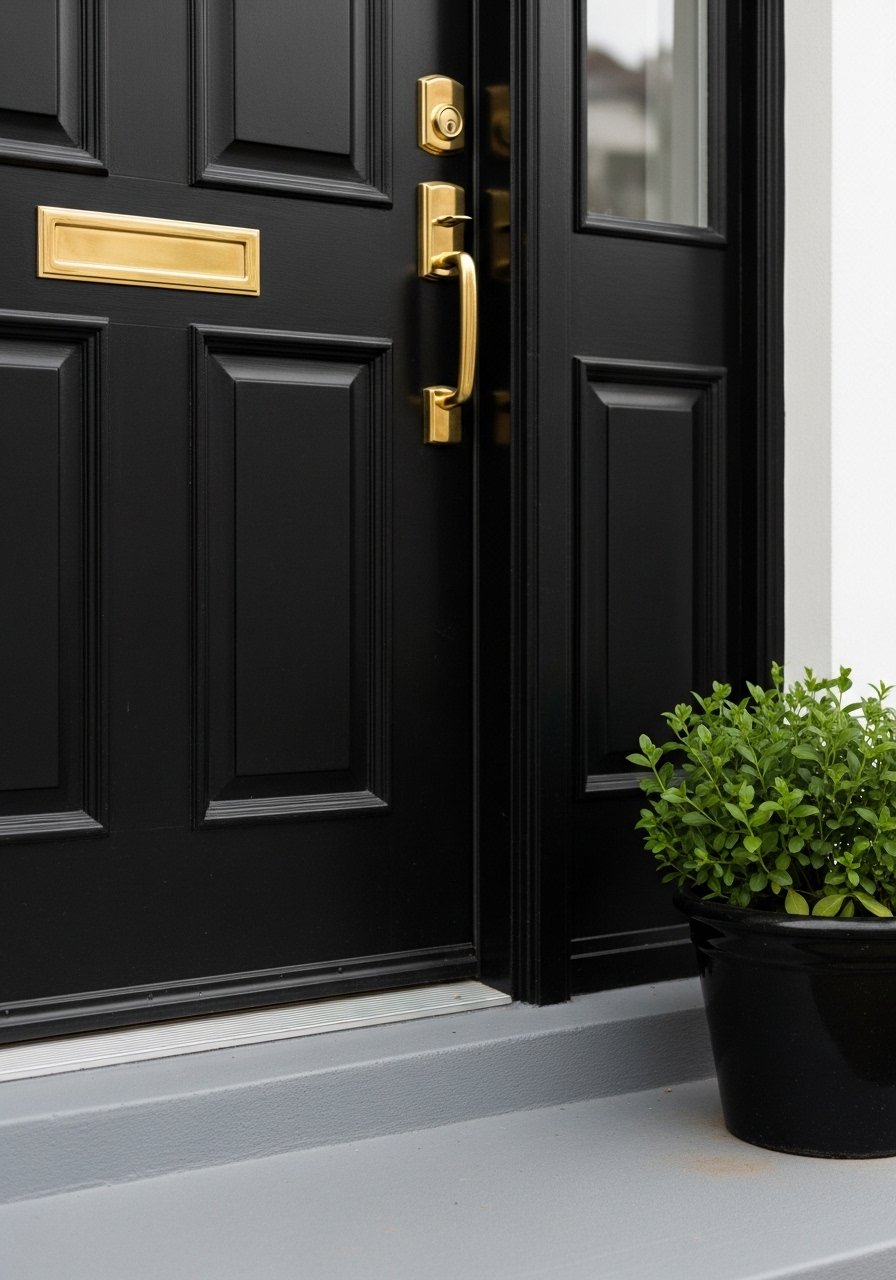
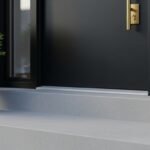
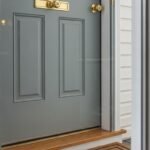
I painted my old door matte black and it finally anchored the whole facade. The black reads modern and makes wood and stone pop. I paired it with a warm brass handle to keep it from feeling cold.
It’s simple, but the finish matters. I learned the hard way that cheap brass chips quickly. Spend a little more on solid hardware.
Tip: wipe fingerprints weekly. It keeps the matte finish calm and deliberate.
What You’ll Need for This Look
2. Horizontal Wood Slat Cladding For Warmth
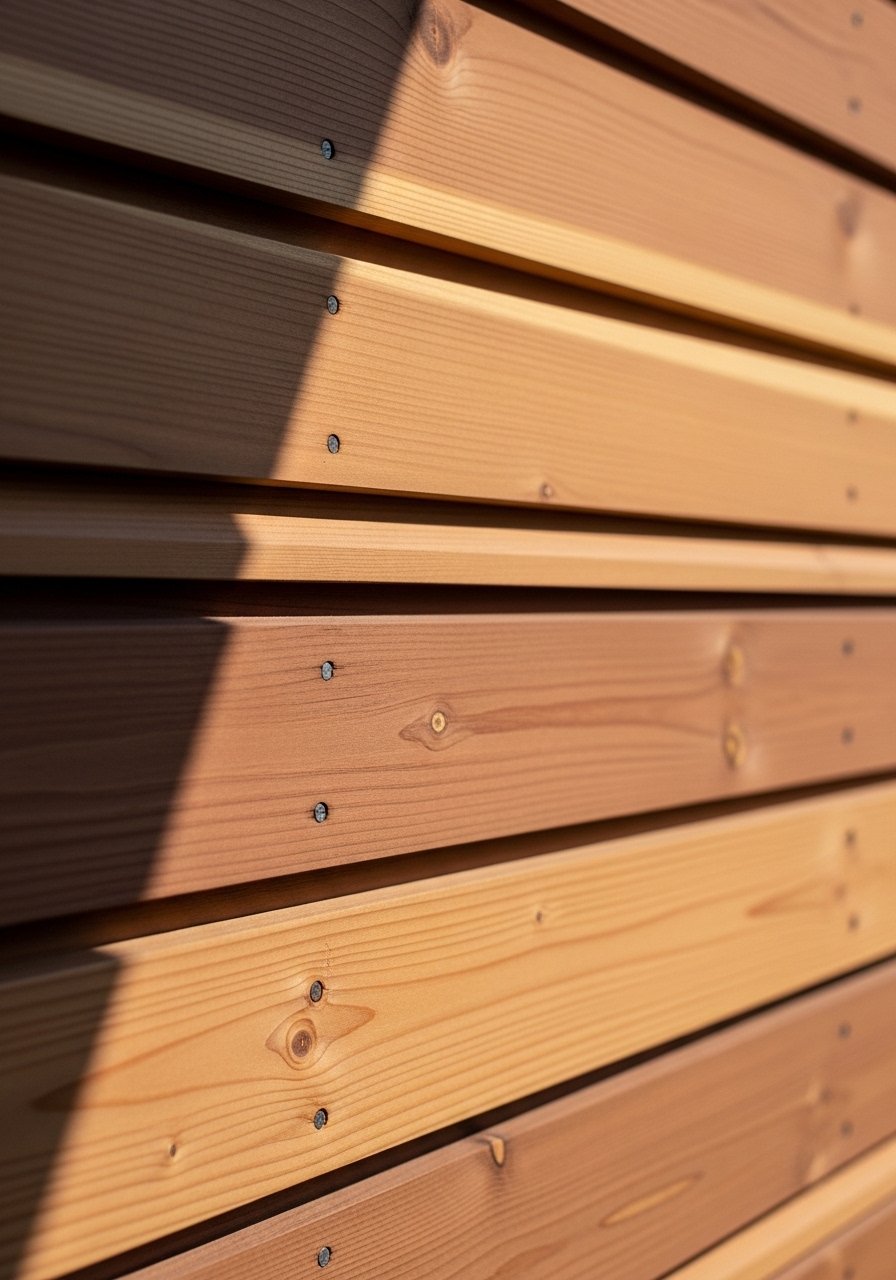
I wrapped one wall in horizontal cedar slats and the whole house stopped feeling flat. The grain adds texture and a modern rhythm without fuss. We left gaps small so rain drains cleanly.
I did mess up once by using an indoor stain—ended up having to sand and restain. Learn from me: use an exterior oil-based stain and seal the end grains.
Spacing, stain tone, and orientation change everything. Keep it consistent across the facade for a cohesive look.
What You’ll Need for This Look
3. Concealed Garage Door That Blends Seamlessly
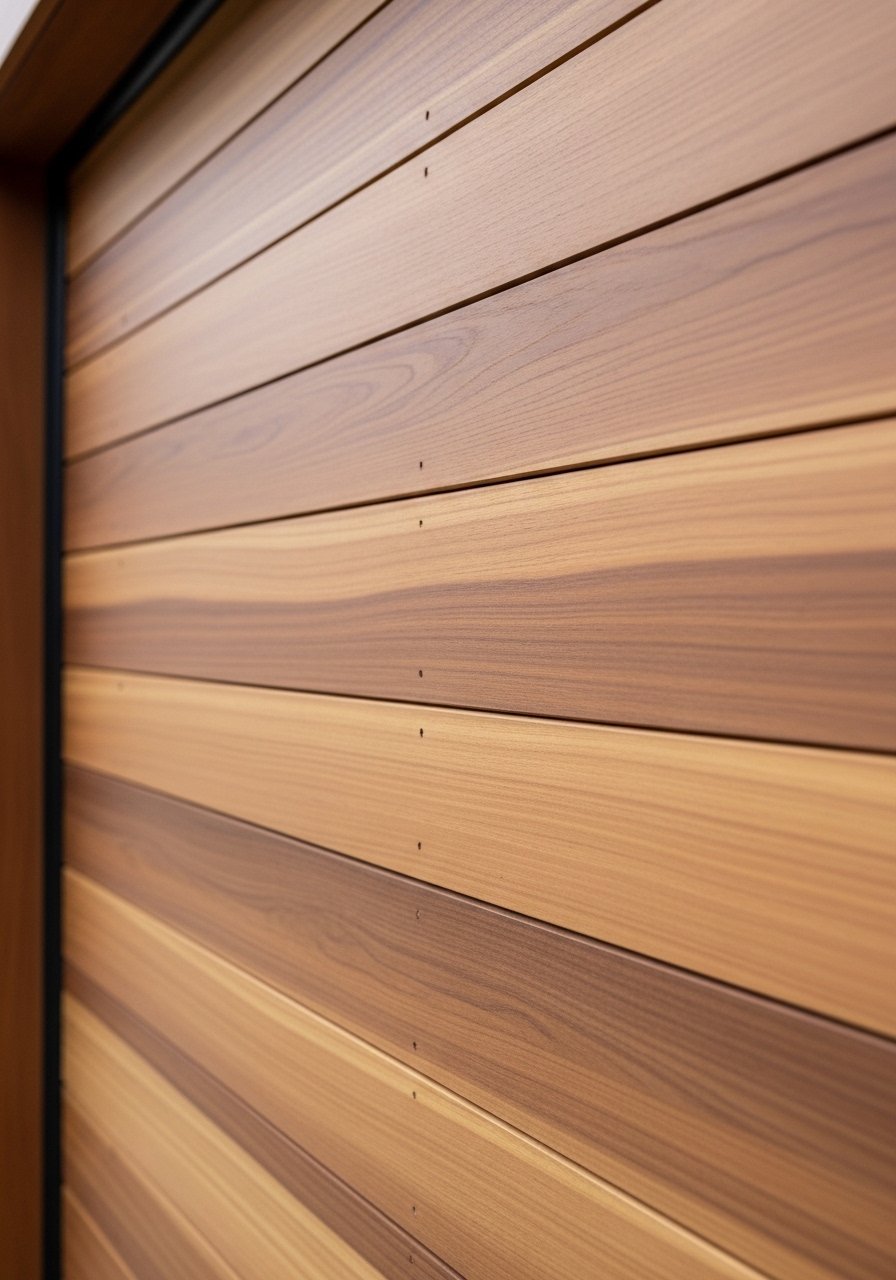
I swapped a standard garage door for a flush panel that reads like the facade. It quiets the mass and reads high-end. When the door disappears visually, the house looks custom.
The trick is matching materials and keeping lines uninterrupted. Don’t skimp on installation; small gaps give the game away.
Practical note: make sure your opener is robust. A heavy flush door needs stronger hardware than a typical overhead one.
What You’ll Need for This Look
4. Minimalist House Numbers in High-Contrast Metal
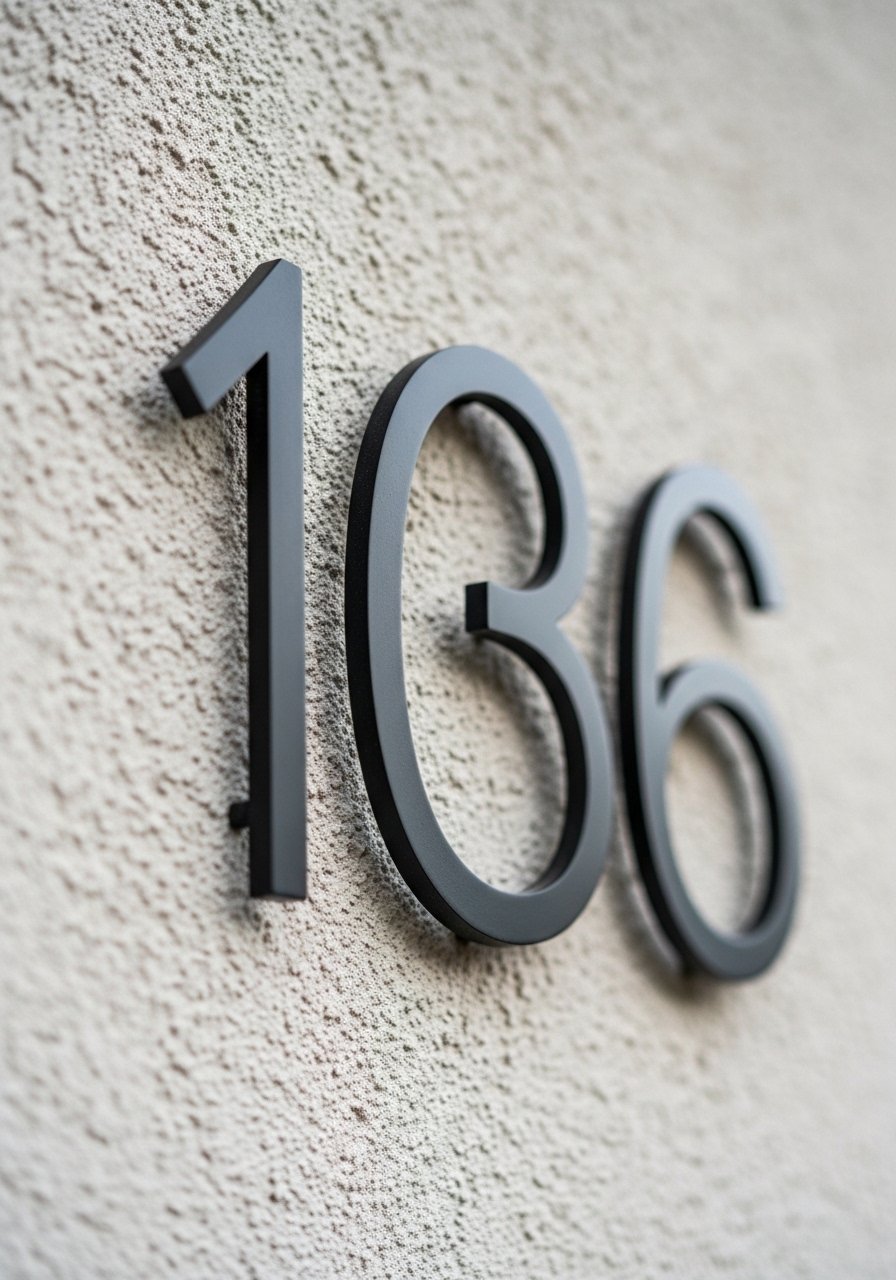
I switched our tiny plastic numbers for oversized metal ones and the curb appeal jumped overnight. Large, clean numbers feel modern and purposeful. I like them backlit for evening.
Choose a finish that reads against your facade—matte black on pale stucco or brushed steel on dark wood. Placement matters: keep them level and at eye height.
Small mistake I made: I centered numbers above a light and blocked the shadow. Test placement with tape before drilling.
What You’ll Need for This Look
5. Linear LED Path Lighting for Nighttime Drama
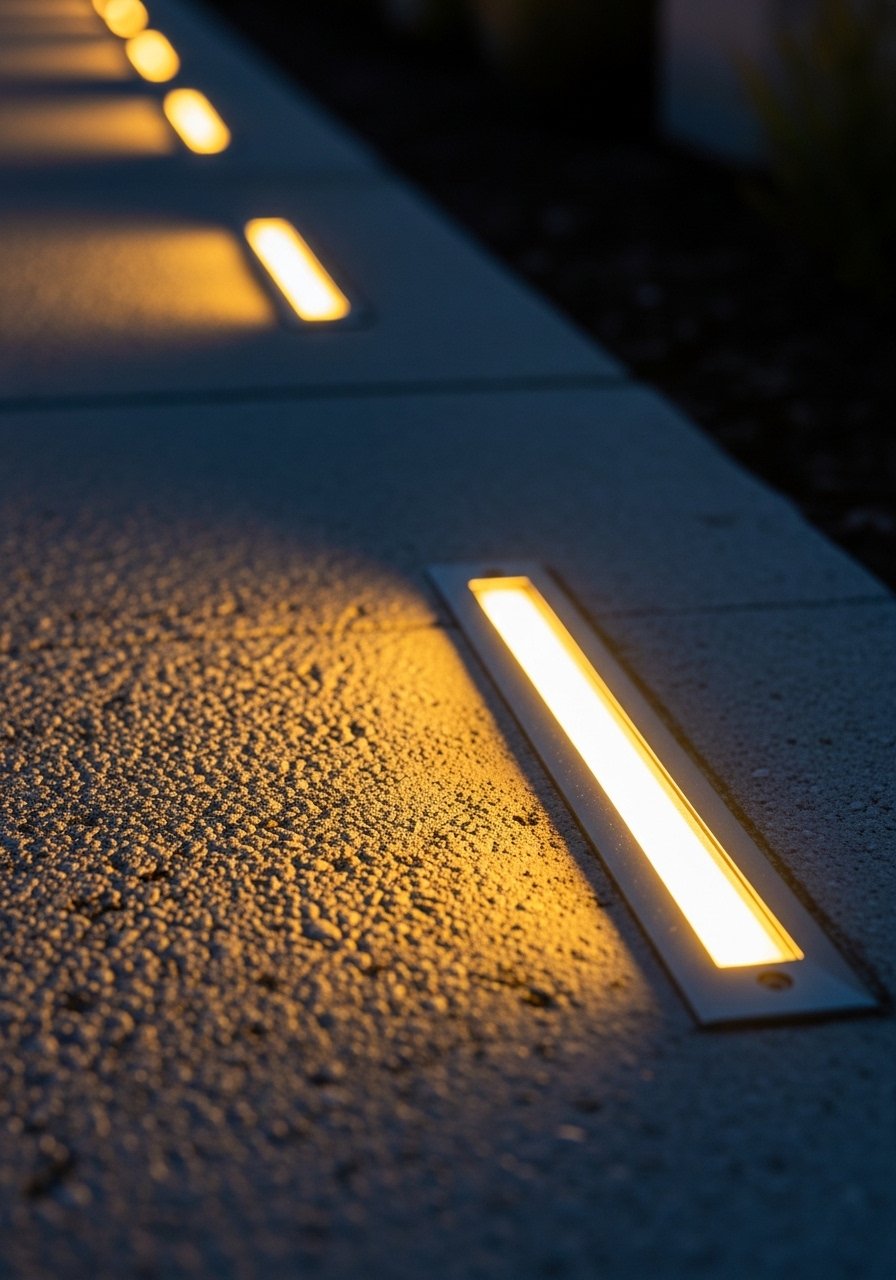
I added slim linear LEDs along the pathway and it suddenly felt intentional at night. The light is low and directional, which reads modern and safe without glare. Warm LEDs keep the house feeling welcoming.
Spacing was trial-and-error—too few and it looks sparse. I walked the path at night to find the right rhythm. Use dimmable fixtures to tune the mood.
Install on a timer or motion sensor so you’re not babysitting the lights every evening.
What You’ll Need for This Look
6. Monochrome Palette With One Warm Accent
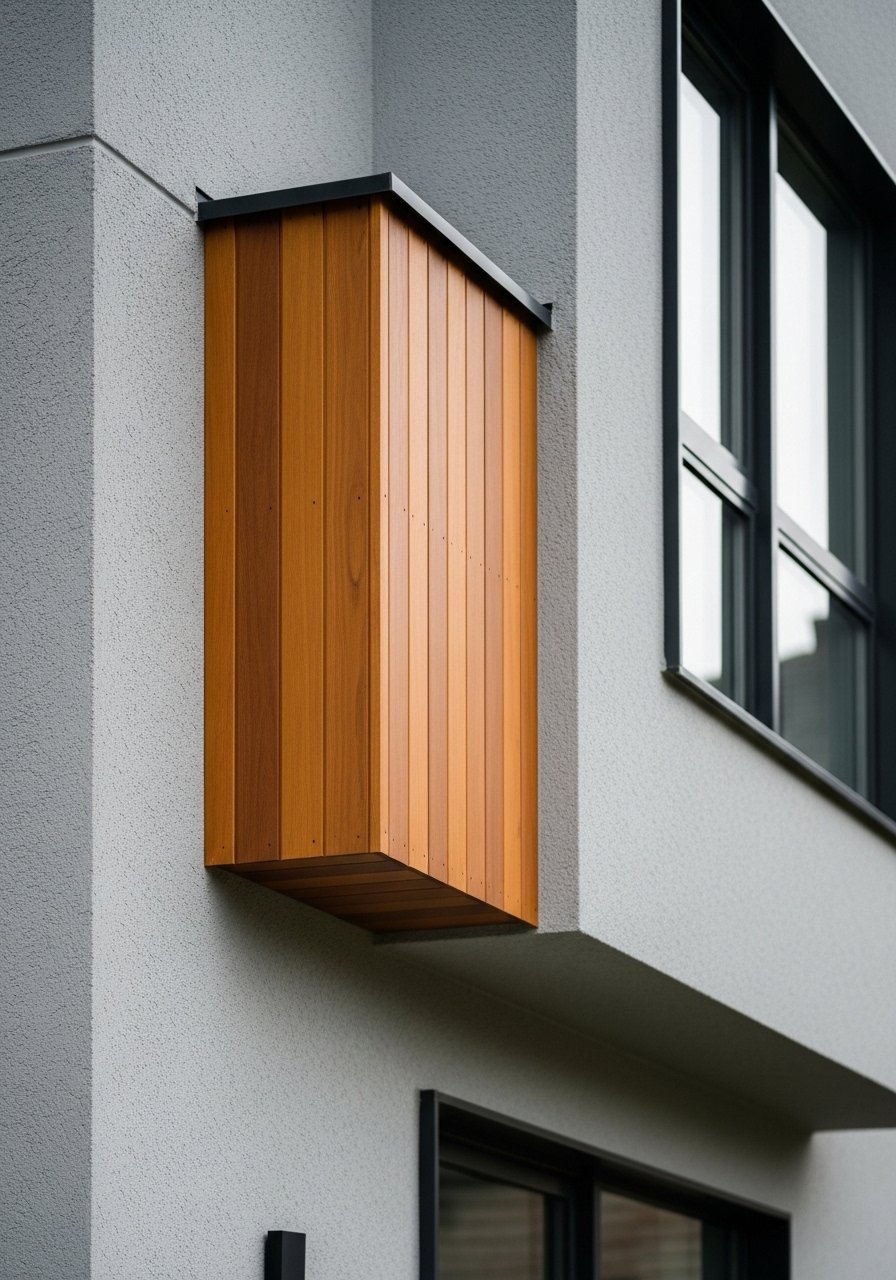
I went almost monochrome—soft gray walls and black trim—and added one warm wood panel by the door. The restraint makes details read louder, which is the whole point.
You don’t need many colors. One warm material (wood or brass) keeps the look from feeling flat. I once tried three accent colors and it lost the calm I wanted.
Keep paint and wood undertones compatible: cool grays with cool woods, warm grays with warm woods.
What You’ll Need for This Look
7. Oversized Planter Boxes for Architectural Greenery
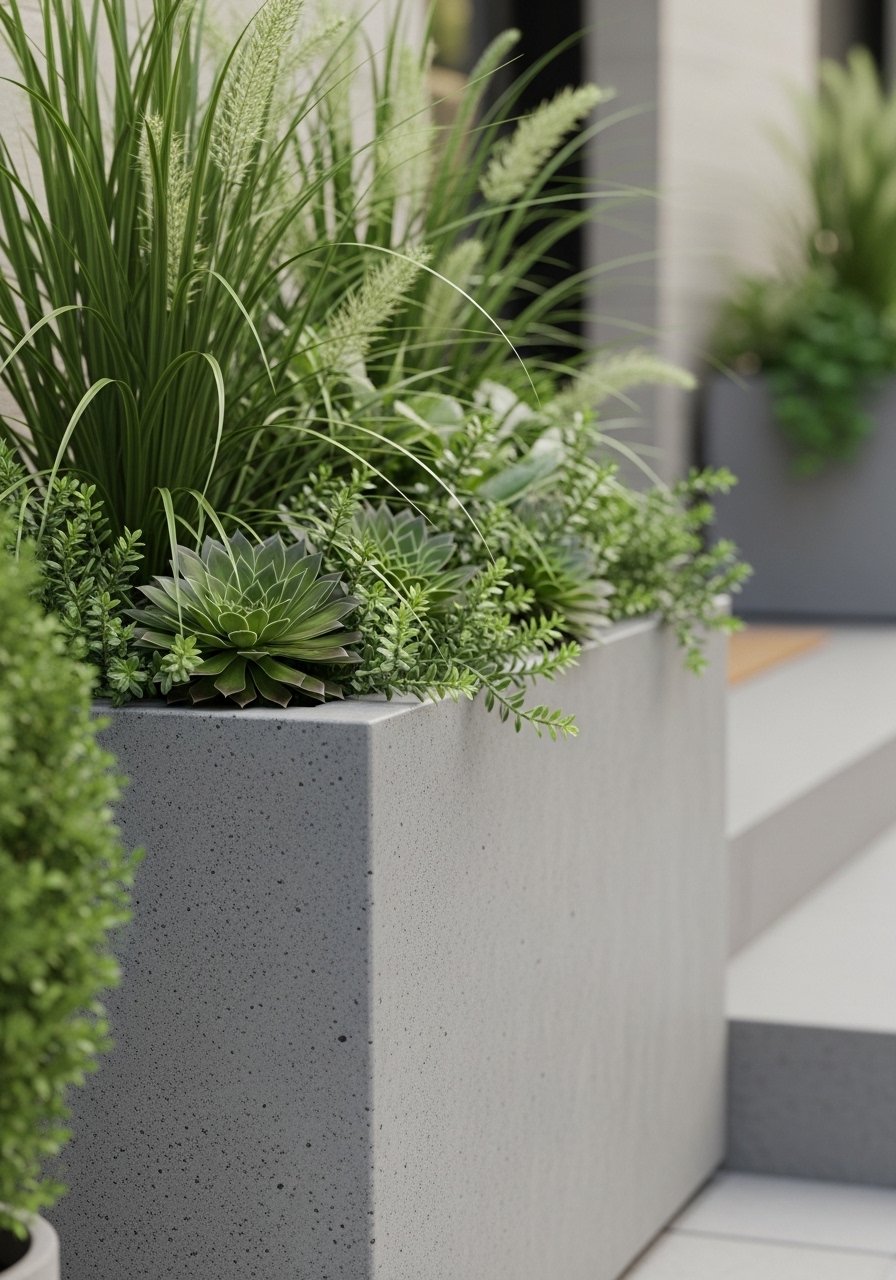
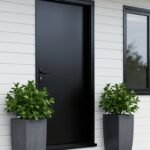
I replaced tiny pots with oversized rectangular planters. The scale makes landscaping feel intentional and modern, not decorative. Tall grasses add movement without clutter.
Pick plants that fit your light—don’t force shade plants into full sun like I did once. Concrete, corten, or dark metal planters read modern and sturdy.
Group two planters to frame an entry. It looks balanced and easy to maintain.
What You’ll Need for This Look
8. Slim Metal Awnings for Clean Shade
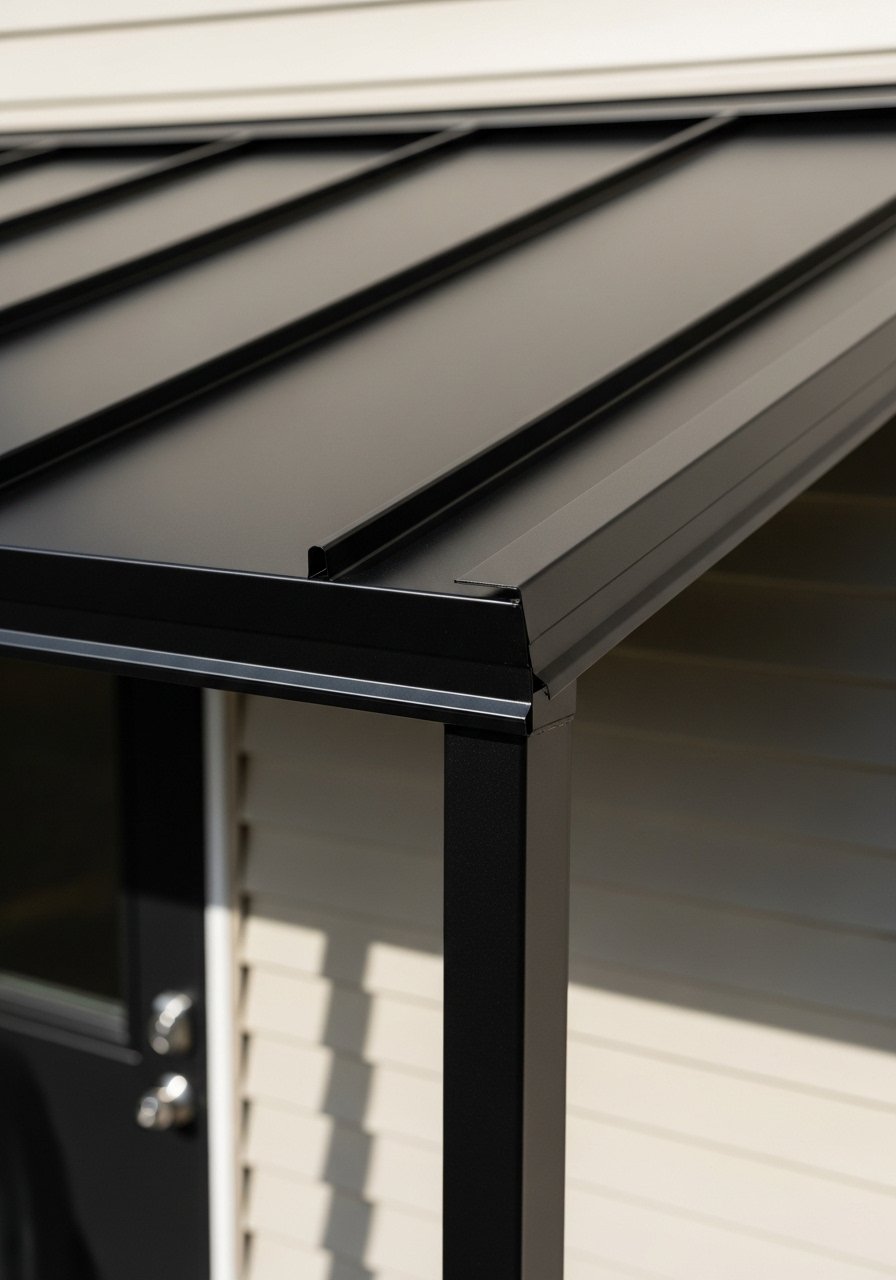
I added a slim metal awning above my entry and it improved proportions instantly. It’s minimal and protects the door without drawing attention. The straight line echoes other horizontal details.
I initially ordered an awning that was too deep; it swallowed the entry. Measure the reveal carefully so it looks light, not heavy.
Powder-coated finishes hold up best. Match the awning color to window frames for a cohesive look.
What You’ll Need for This Look
9. Vertical Green Wall as a Living Accent
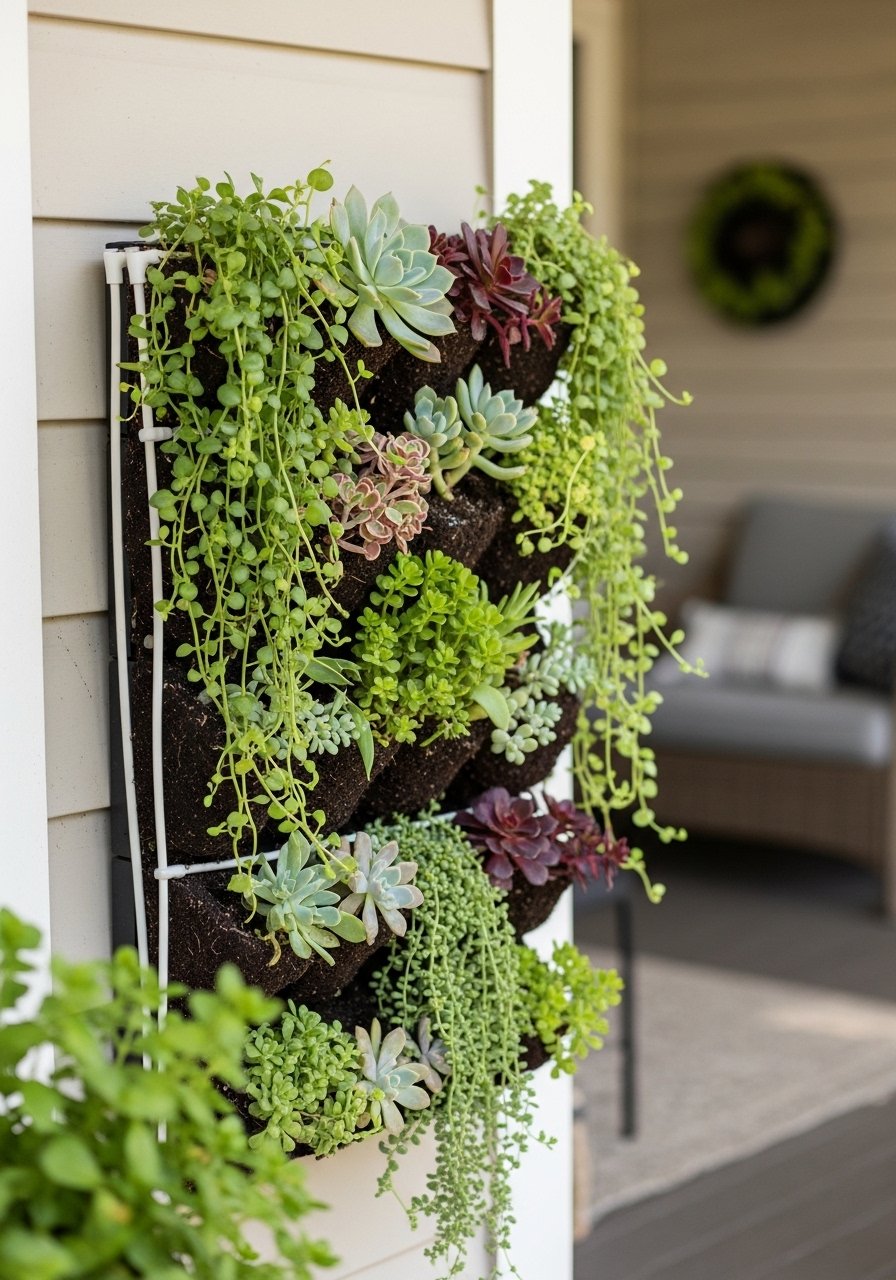
I installed a slim vertical garden by the side door and it reads like art. Living walls soften modern materials and add depth without taking up space.
I made a watering mistake early on—too frequent and it bred mold. Go with succulents or use a proper irrigation system. I recommend modular living wall panels for easier maintenance.
A vertical wall needs light planning, but it rewards you with year-round texture and a softer modern edge.
What You’ll Need for This Look
10. Stone Veneer Accent Wall for Weight and Texture
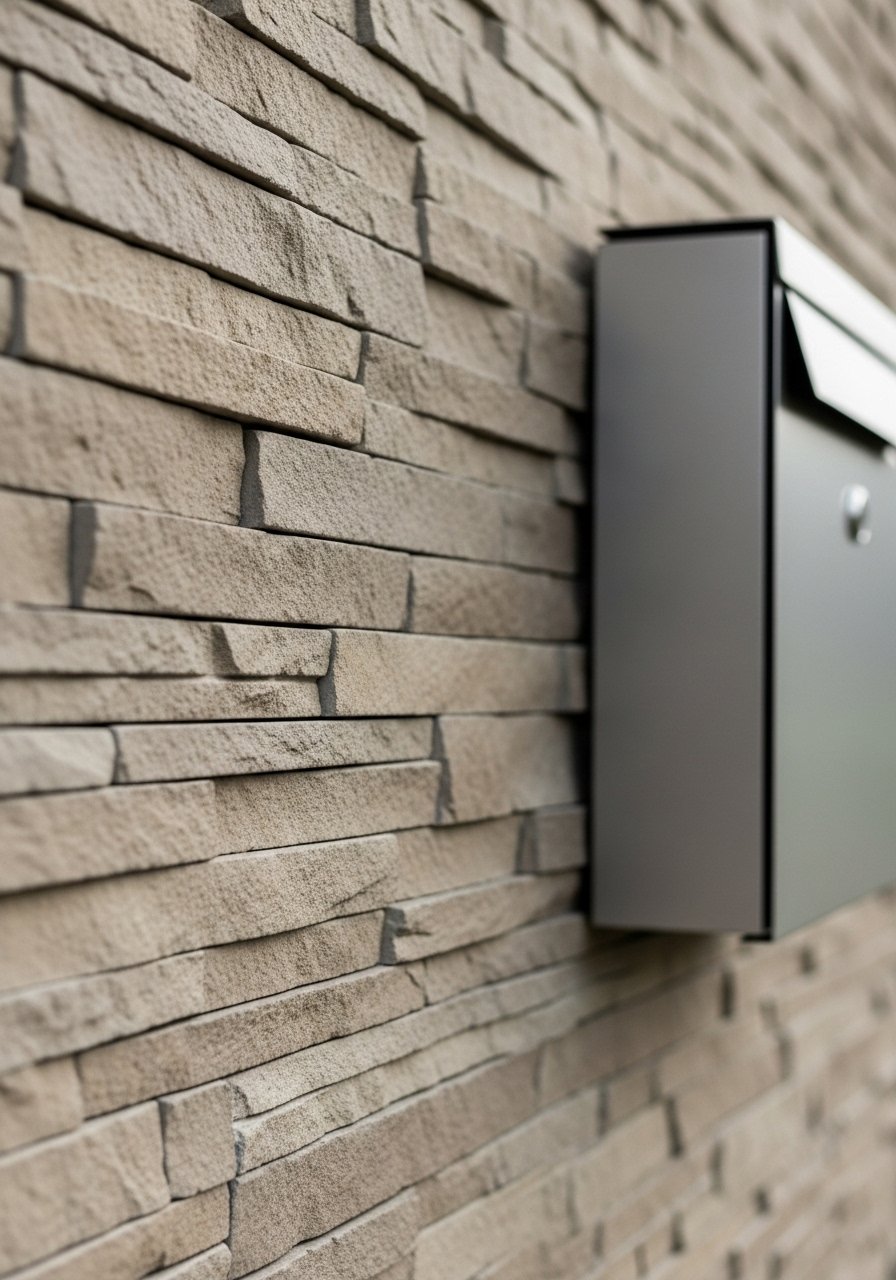
I used a stacked stone veneer on part of the facade to give the house a grounded look. Stone adds tactility and pairs well with smooth stucco or wood.
Don’t overdo it—one anchored wall is enough. I once covered the garage and it became visually heavy. Keep the stone to entry or a single corner.
Pick a lighter mortar and stagger the pattern; it reads more bespoke and less like a patch.
What You’ll Need for This Look
11. Slim Glass Balustrade for Uninterrupted Views
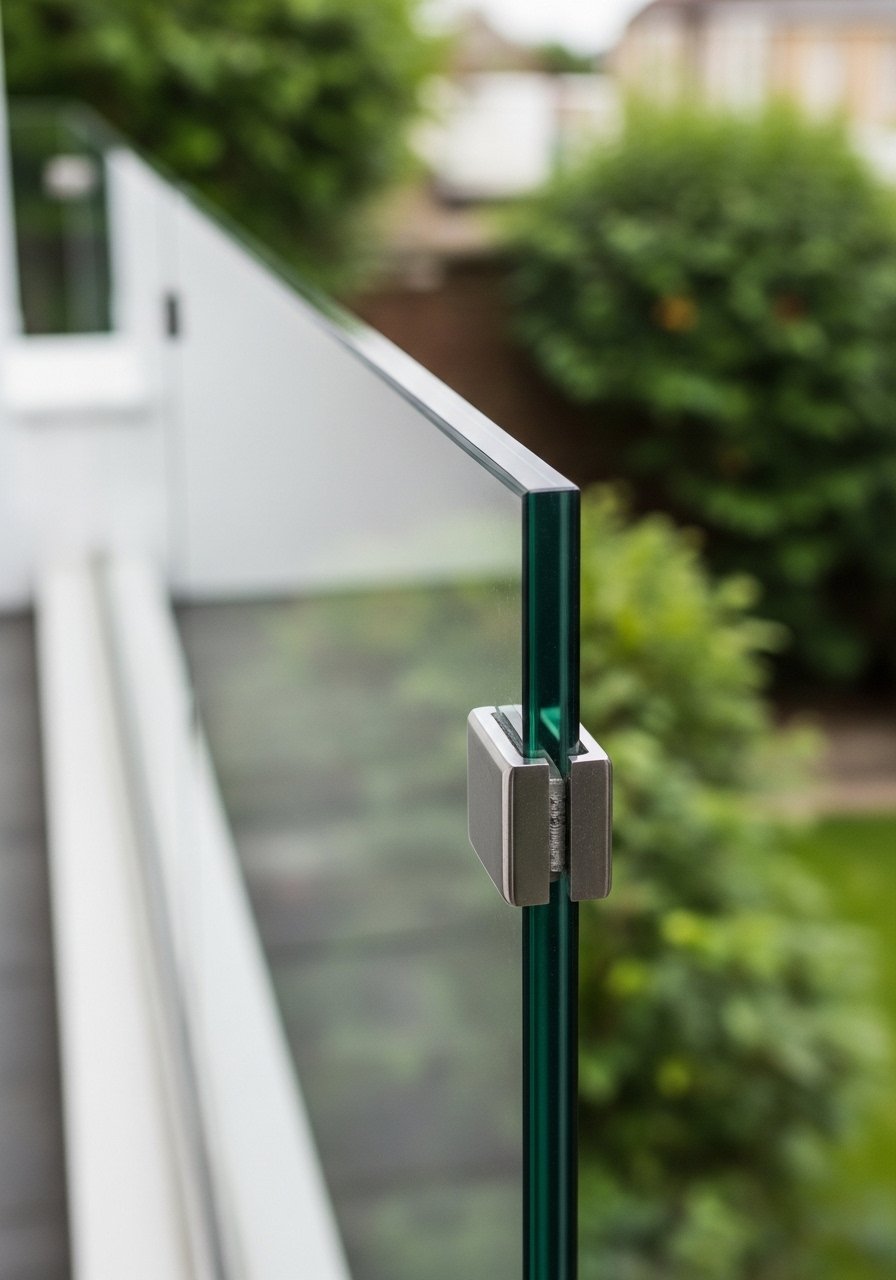
I replaced a chunky railing with a slim glass balustrade and it feels open and modern. Glass keeps sightlines clean and makes exterior spaces read larger.
Use minimal stainless hardware and thicker tempered glass for safety. I skimped on thickness once and the glass looked flimsy—don’t do that.
Glass needs cleaning but it’s worth the clarity when your view is part of the design.
What You’ll Need for This Look
12. Black Window Frames for Crisp Lines
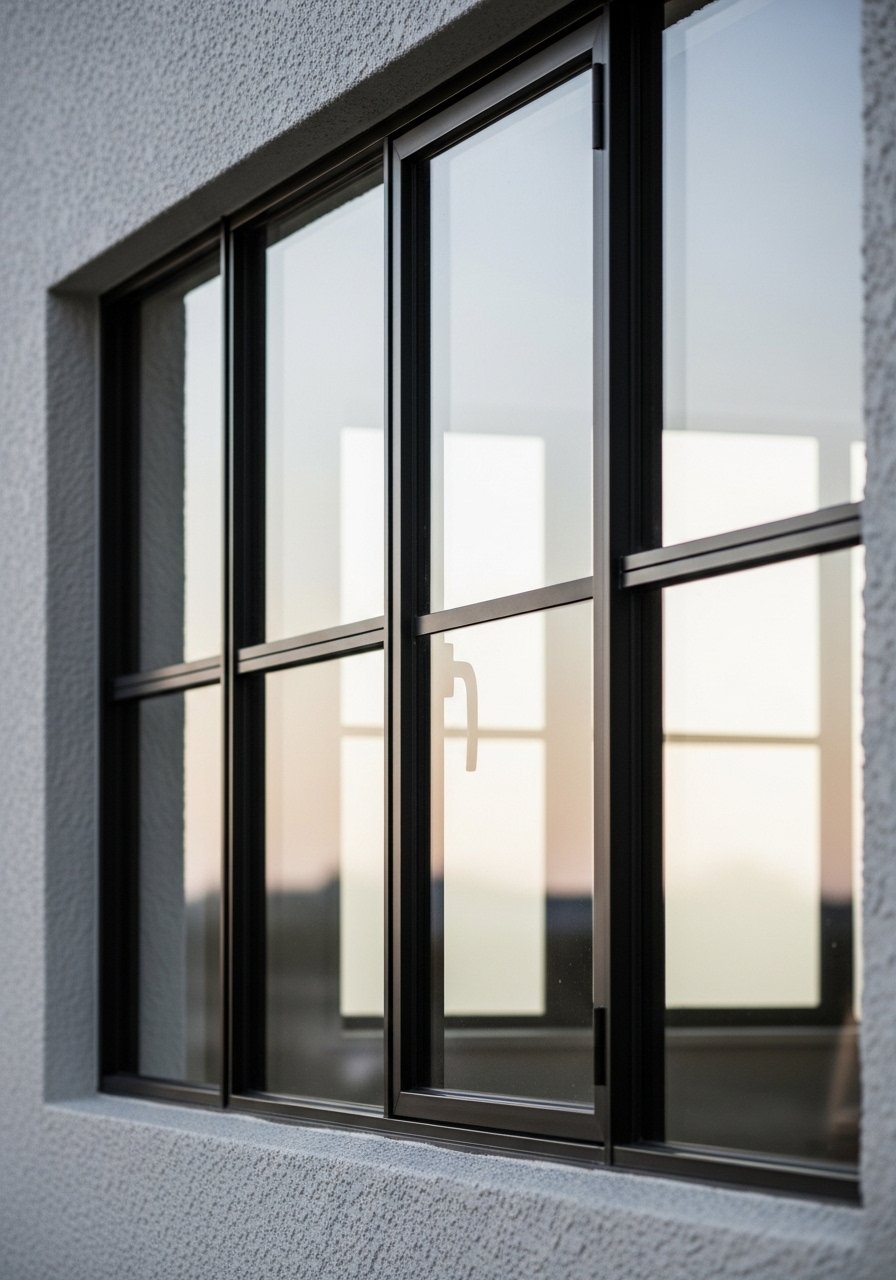
Switching to black window frames tightened every line on my house. The contrast is modern and makes architectural elements crisp. Black frames hide dirt better than white.
Pick anodized or powder-coated frames for longevity. I once chose cheap painted frames and the finish bubbled in sun. It’s worth the upgrade.
Black frames pair with nearly any finish, especially pale stucco and warm woods.
What You’ll Need for This Look
13. Recessed Entry Lighting for a Subtle Glow
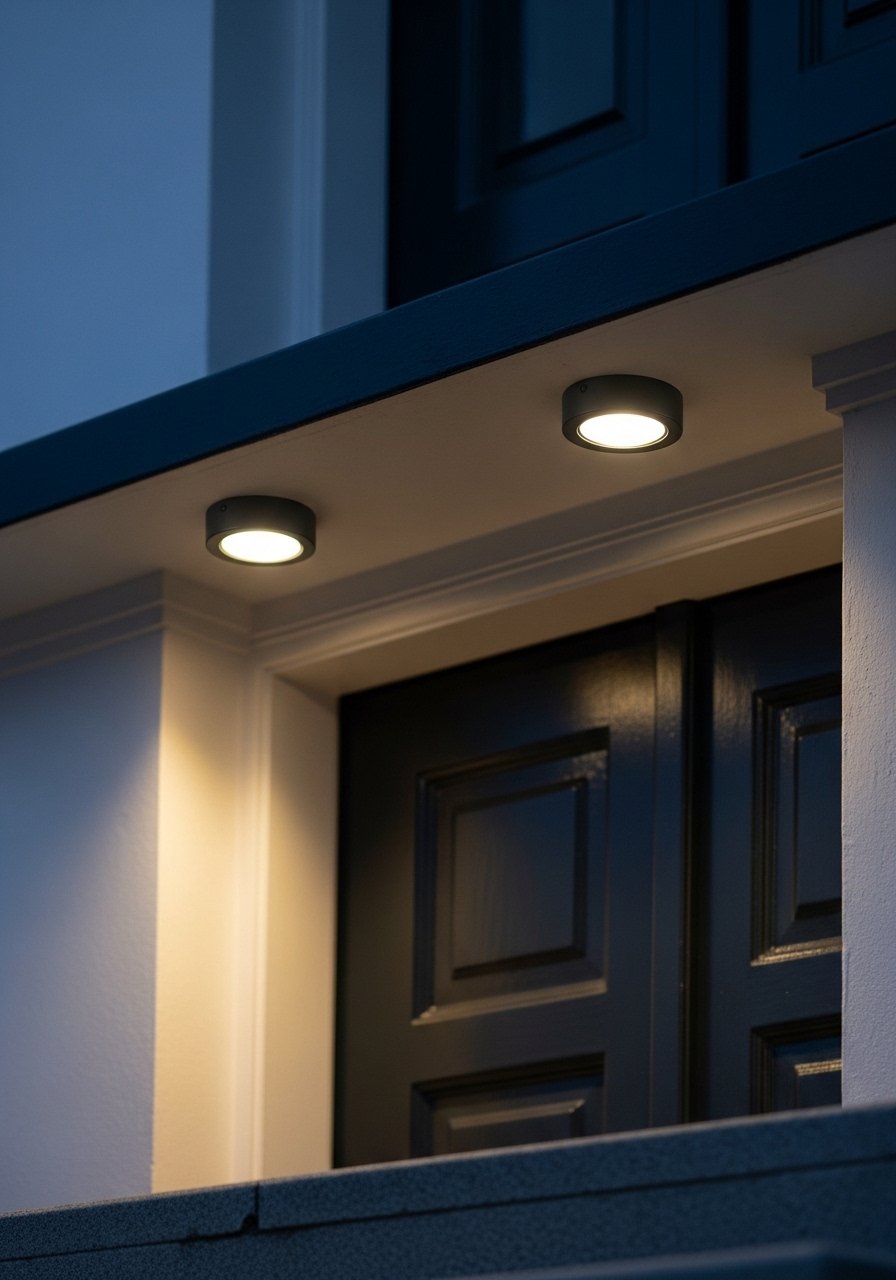
I swapped decorative sconces for recessed entry lights in the overhang. It’s less showy and more architectural. The light washes the door softly, which I prefer.
Placement is key—too far forward and it throws shadows. I moved mine once after noticing the wrong angle. Test at dusk before finalizing.
Use warm color temperature to keep the entry inviting, not institutional.
What You’ll Need for This Look
14. Floating Porch Canopy for Lightness
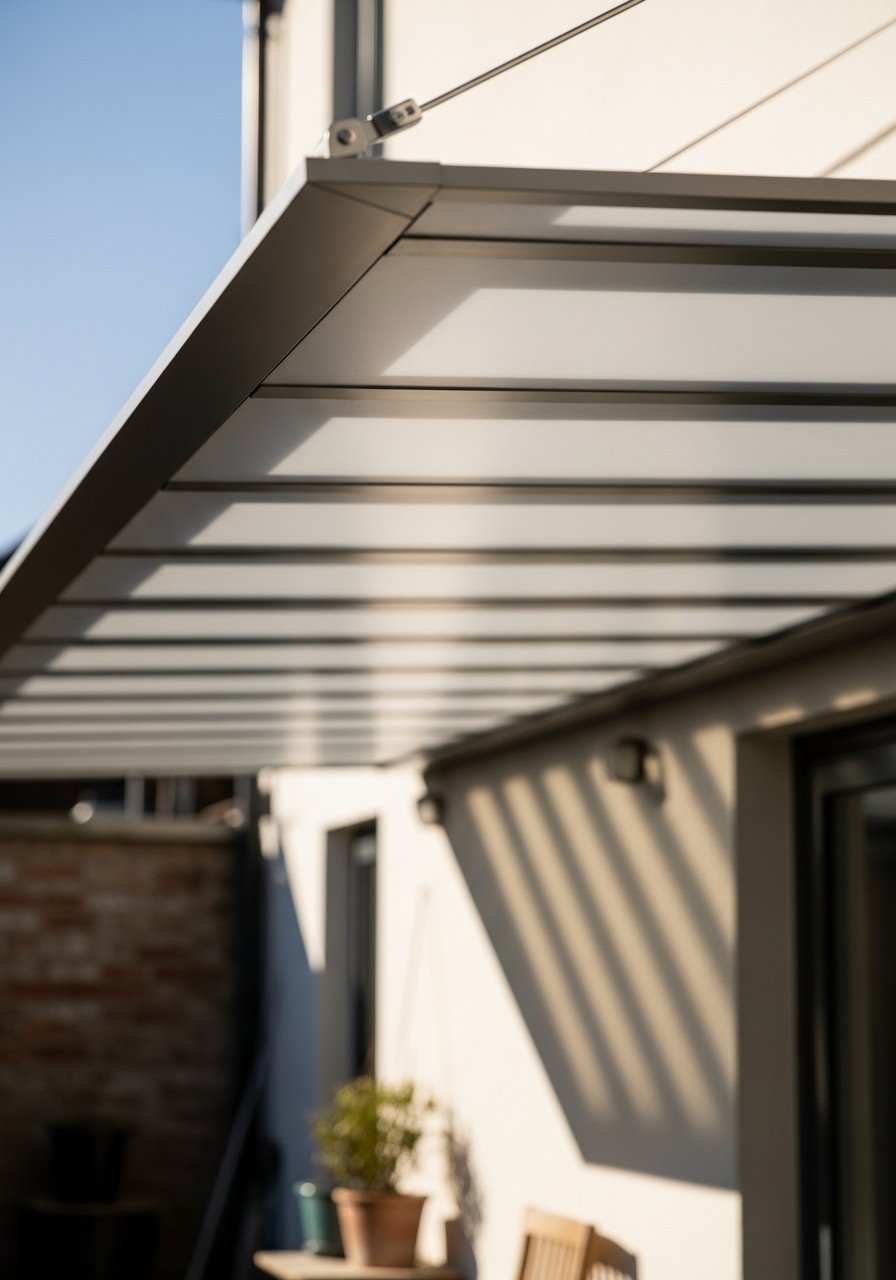
We built a floating canopy above our entry and it made the porch feel modern and protected. The gap between canopy and wall casts a neat shadow line that looks intentional.
Make sure supports are engineered; I tried hidden supports that sagged slightly and had to reinforce. Don’t skip the structural inspection.
A slim LED strip tucked into the underside adds drama without creating clutter.
What You’ll Need for This Look
15. Gravel Courtyard With Stepping Stones
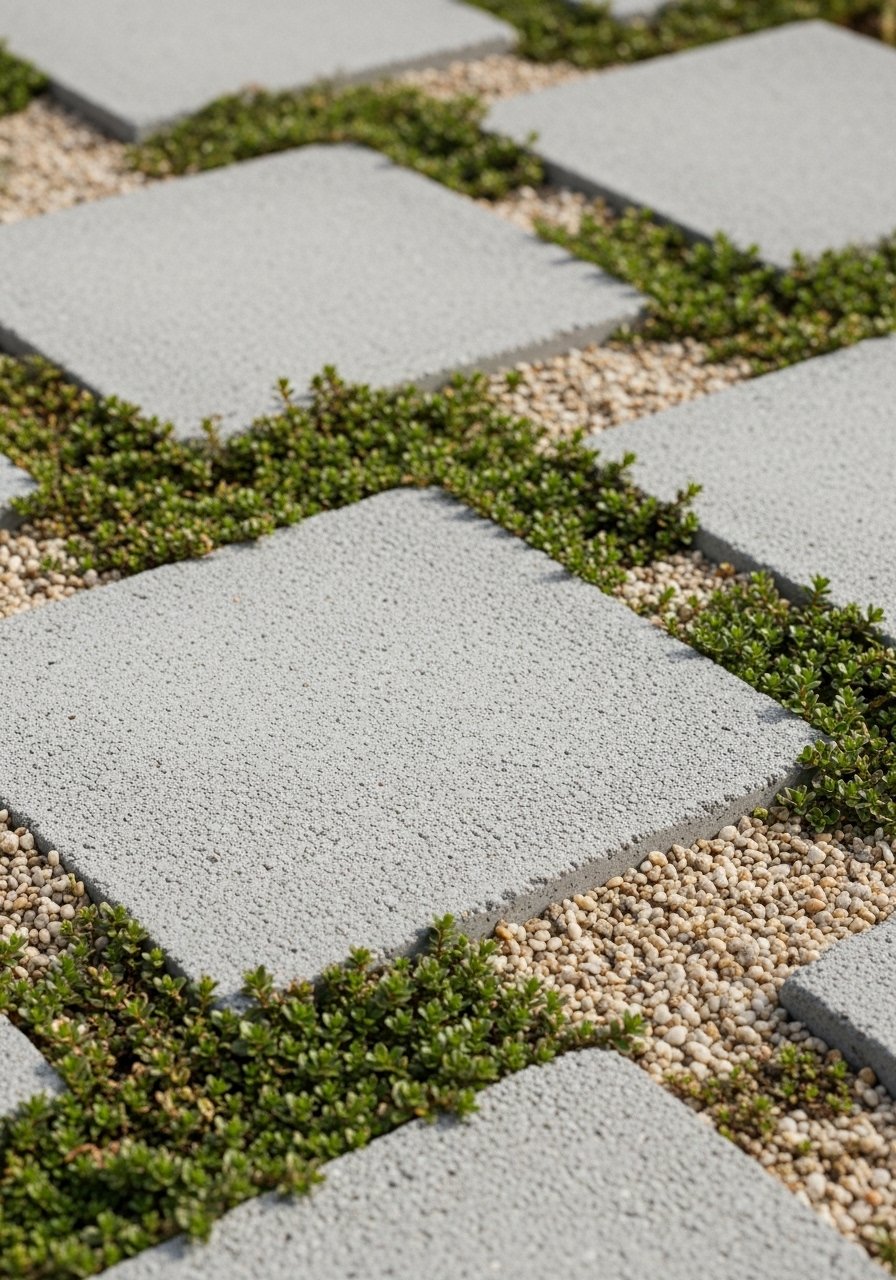
I replaced a messy lawn strip with a small gravel courtyard and stepping stones. It looks edited and requires almost no maintenance. The contrast between smooth pavers and pebbles reads modern.
Pick a neutral gravel color and ensure proper weed barrier below. I skipped weed fabric once and spent a season pulling grass—learn from me.
Keep steps large and evenly spaced so the path feels deliberate, not makeshift.
What You’ll Need for This Look
16. Symmetrical Planting for Formal Modern Balance
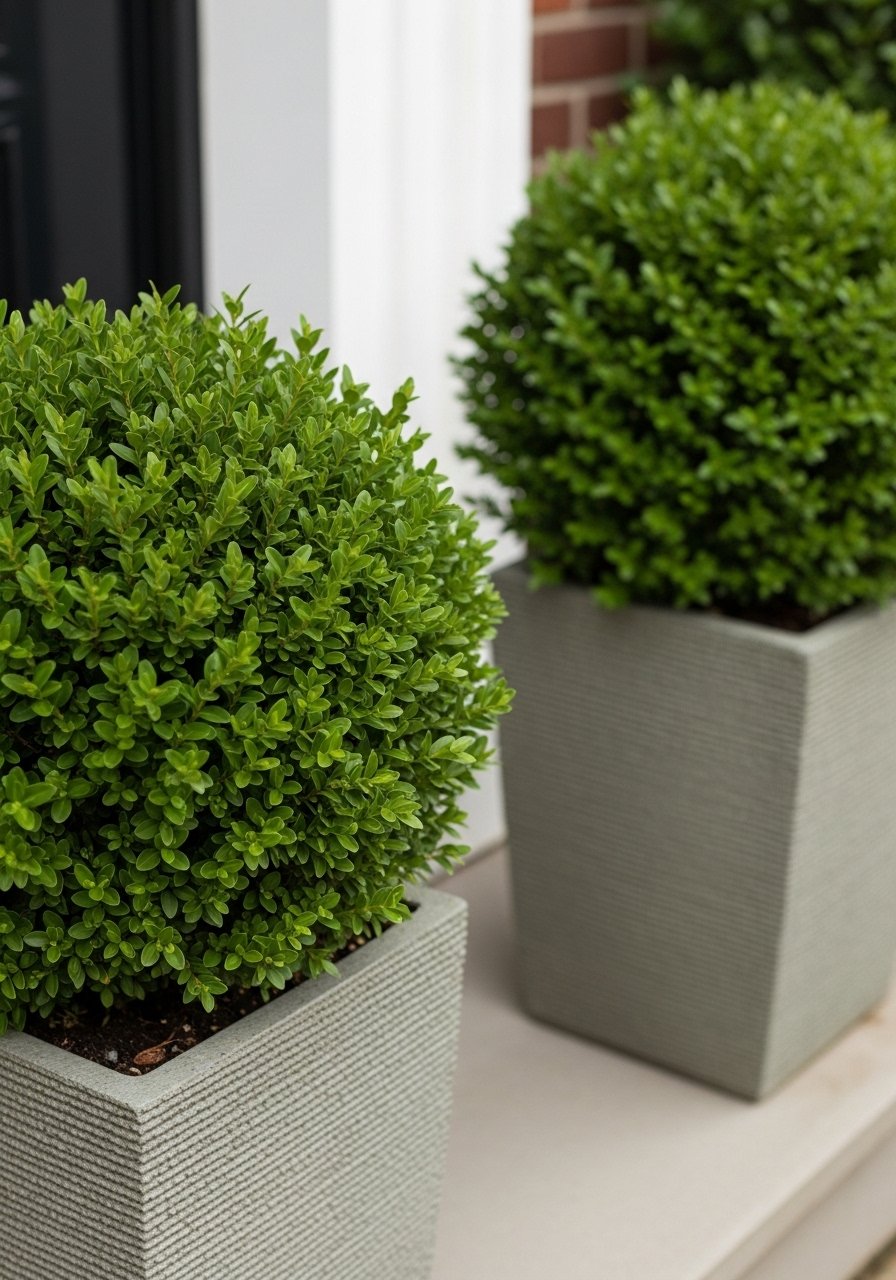
I planted matching boxwoods on either side of the door and it made the whole entry feel composed. Symmetry reads modern and calm, especially with clean materials.
I over-pruned mine the first season trying to keep them “perfect.” Plants respond better to gentle shaping. Let them breathe and they reward you with structure.
Symmetry feels intentional—pair pots, lights, or railings for a cohesive entry.
What You’ll Need for This Look
17. Mixed-Material Facade: Stucco, Wood, and Stone
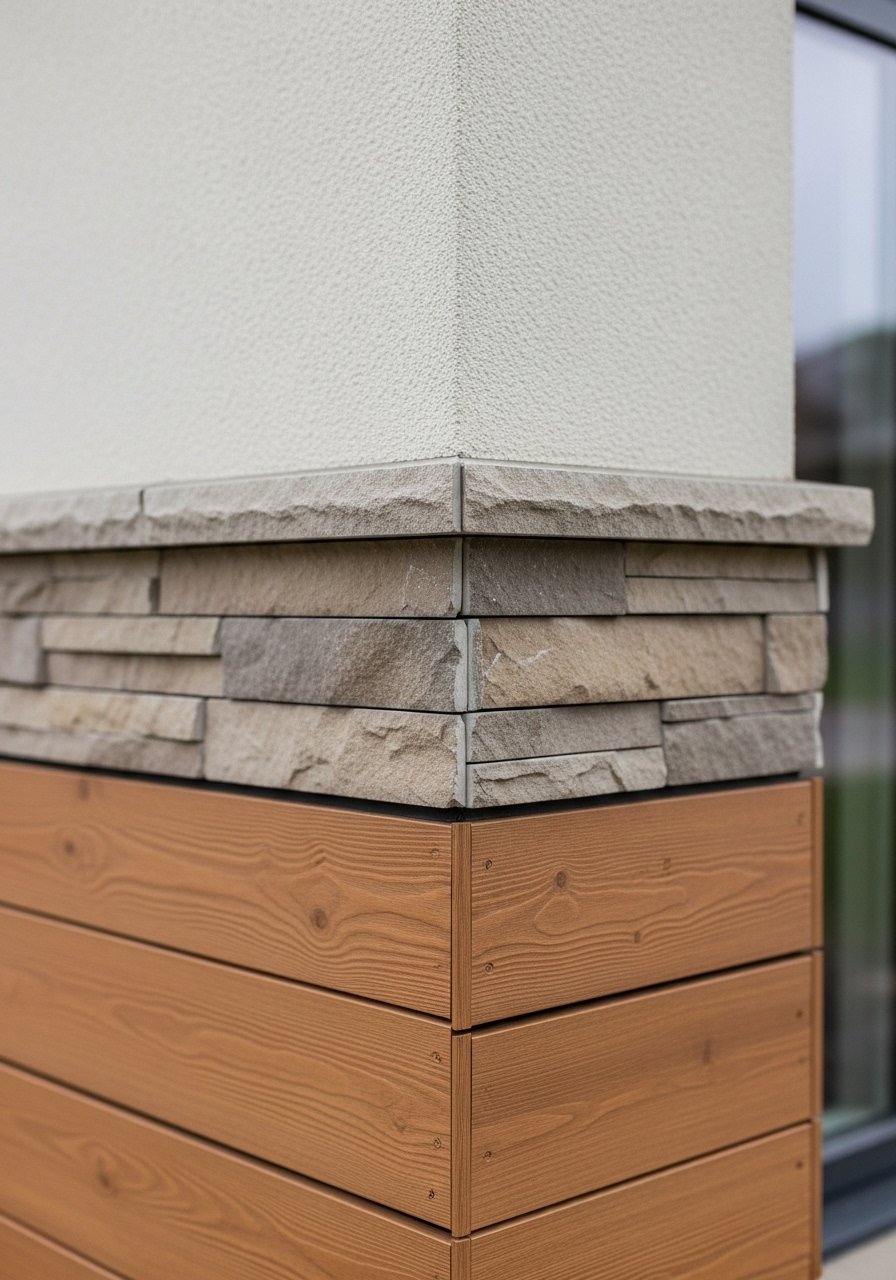
I layered stucco, warm wood, and a strip of stone to break up a long facade. The mix reads modern yet grounded and prevents the house from feeling like a single flat plane.
Keep proportions balanced—too much of one material undoes the harmony. I used wood sparingly as an accent and it reads like a design choice.
Match the undertones (warm/cool) so materials feel like they belong together.
What You’ll Need for This Look
18. Cozy Outdoor Seating Niche Under an Overhang
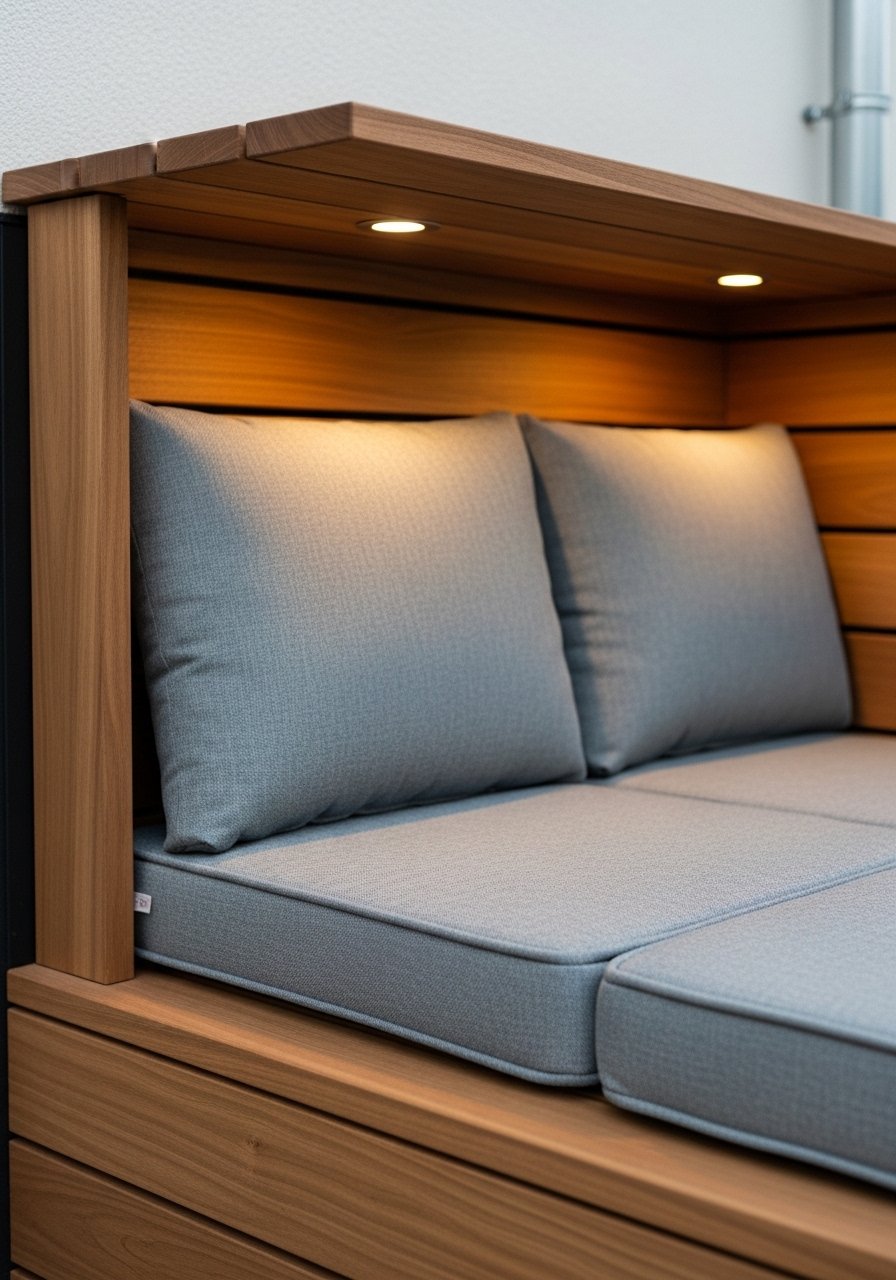
We carved a shallow seating niche under our porch overhang and it’s become our favorite morning spot. It looks intentional and invites use without crowding the yard.
Make the bench comfortable—add a slim cushion and outdoor pillows. I underestimated cushion thickness once and it was uncomfortable. Don’t repeat that.
Add a weatherproof wall sconce or recessed light for evening use.
What You’ll Need for This Look
19. Concrete Paver Driveway With Grass Joints
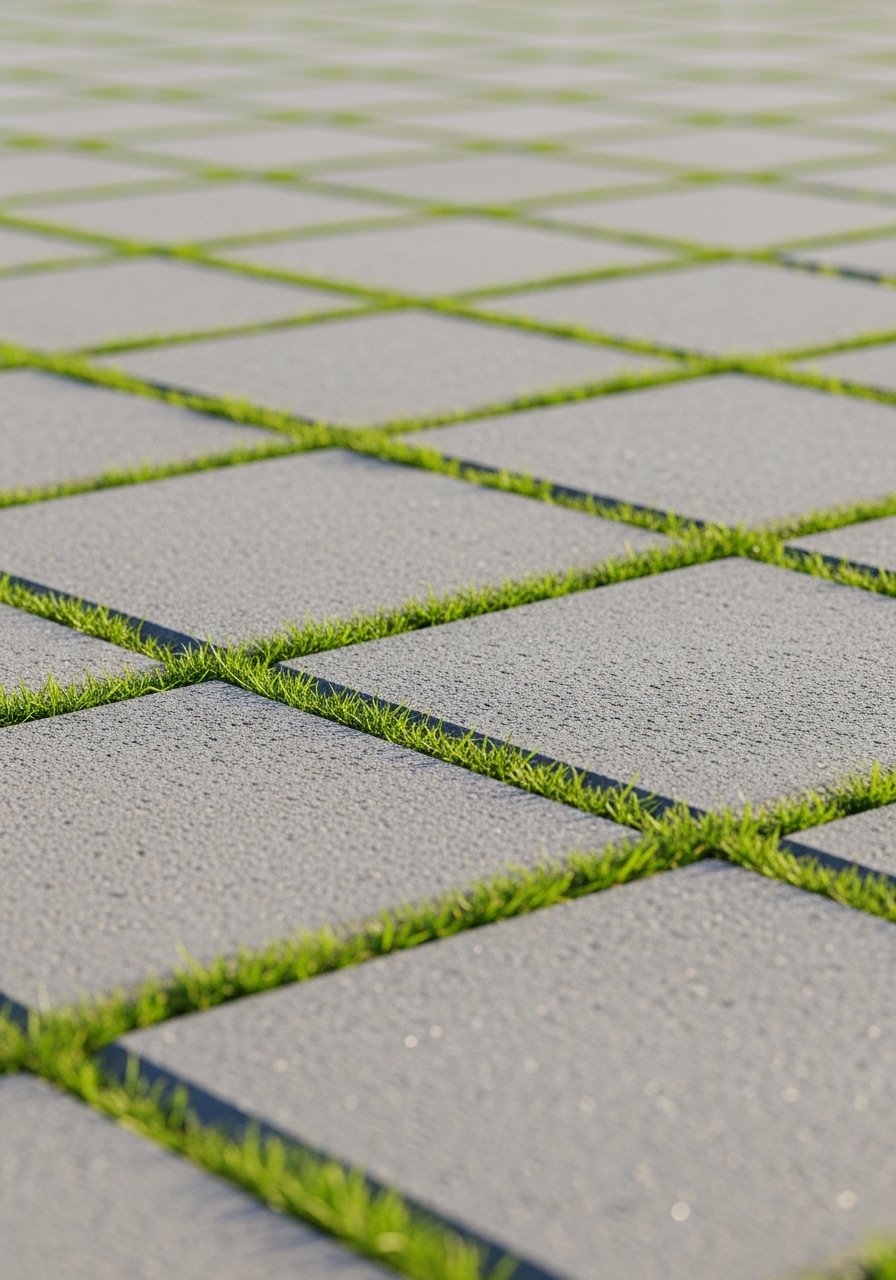
I replaced a plain asphalt patch with concrete pavers separated by grass joints. The grid feels modern and softens the hard surface. It’s more interesting and drains better.
Mistake I made: I didn’t compact the base enough and some pavers shifted. Proper base prep matters—hire it out if unsure.
Choose durable pavers and a low-growing grass to keep maintenance easy.
What You’ll Need for This Look
20. Warm Wood Details Against Cool Metal
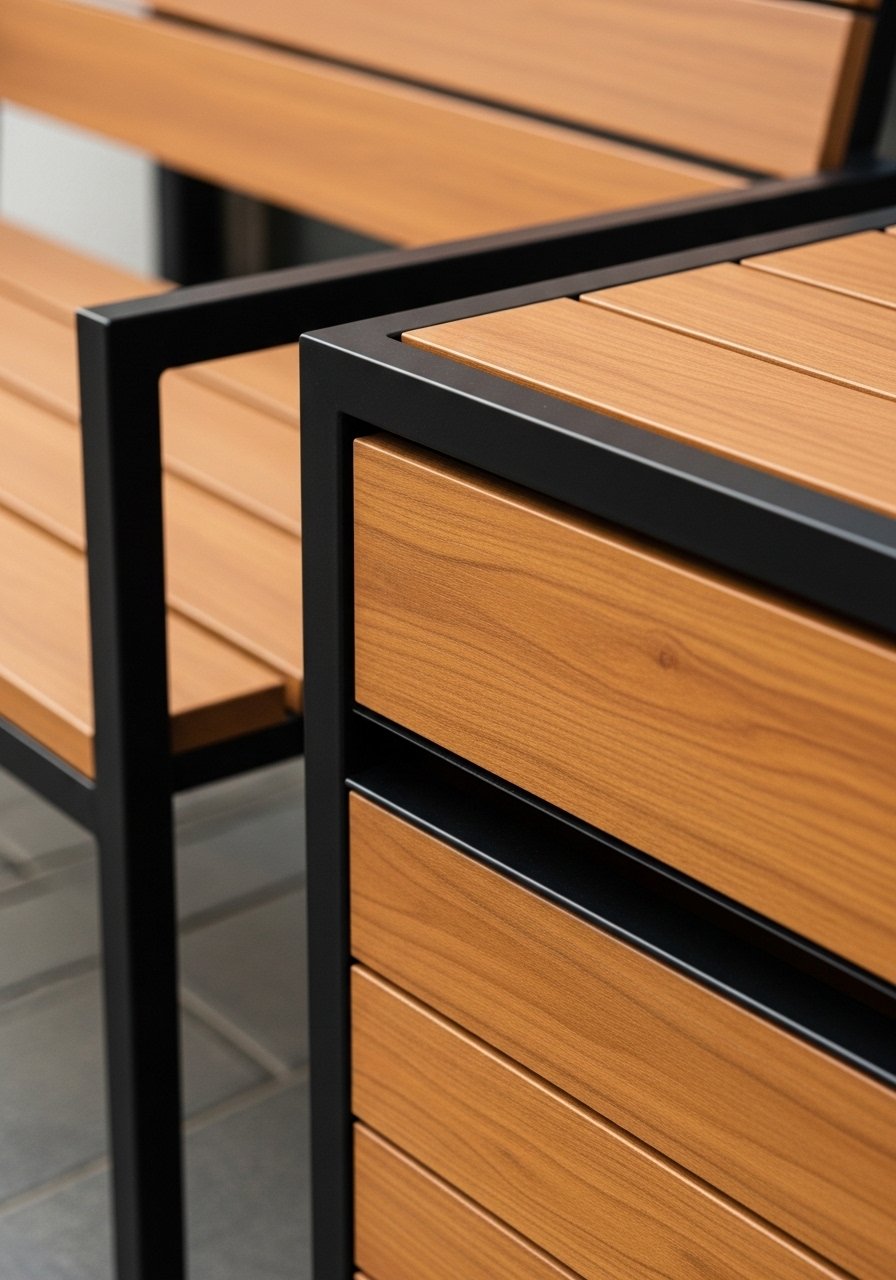
I deliberately mixed warm wood details—like a mailbox face and bench—with cool black metal. The pairing feels modern and layered, not sterile.
Keep the wood elements small so they act as accents. A full wood facade felt too heavy on our modern silhouette.
Sealing the wood for exterior use keeps it looking fresh without darkening unpredictably.
What You’ll Need for This Look
21. Minimal Mailbox and Address Plaque
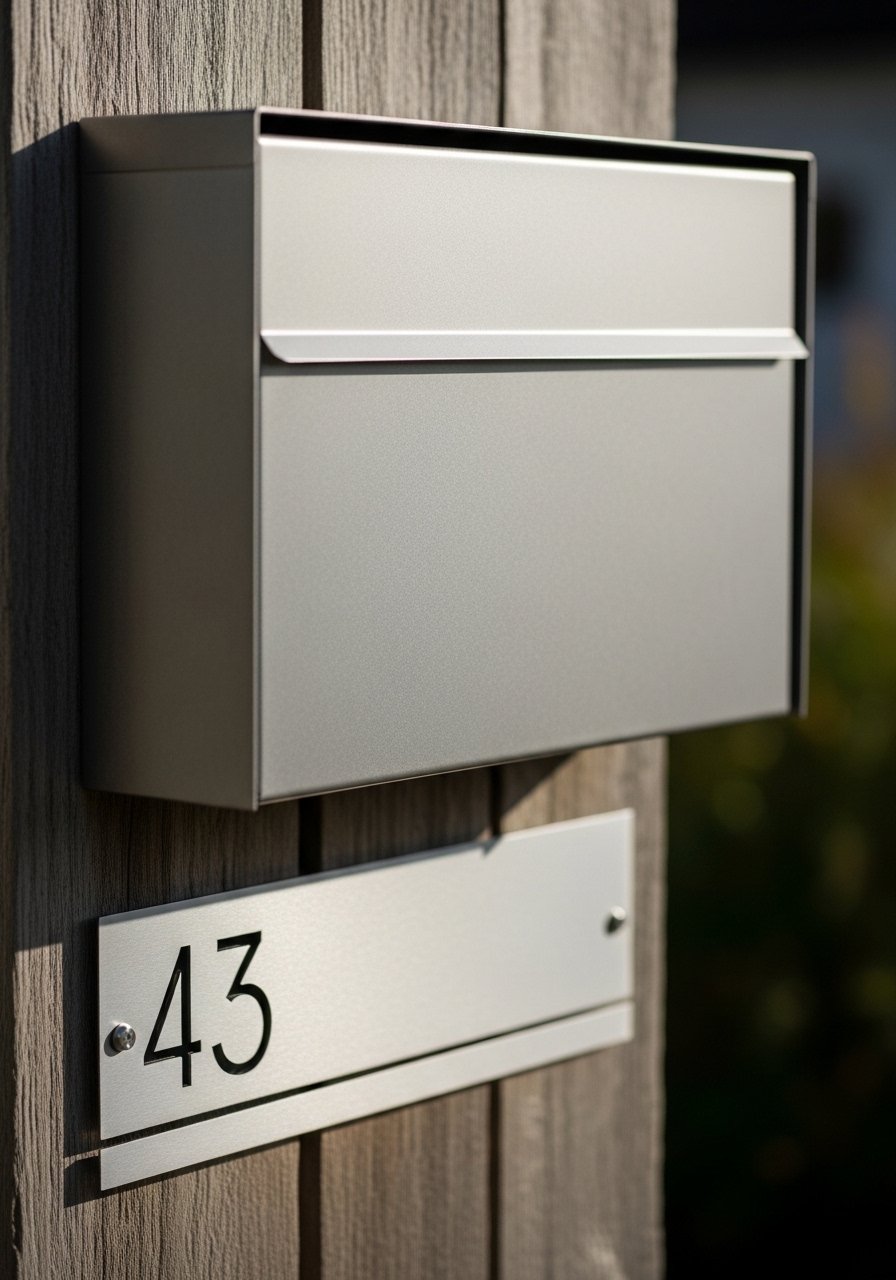
I swapped a bulky mailbox for a slim steel model and paired it with a narrow address plaque. The curb instantly looked more considered and modern.
Choose simple typography and a finish that coordinates with other metal accents. I once bought a shiny mailbox that clashed—matte finishes are easier to match.
Mounting height and placement matter for postal access and curb appeal.
What You’ll Need for This Look
22. Tall Privacy Screen Using Slatted Panels
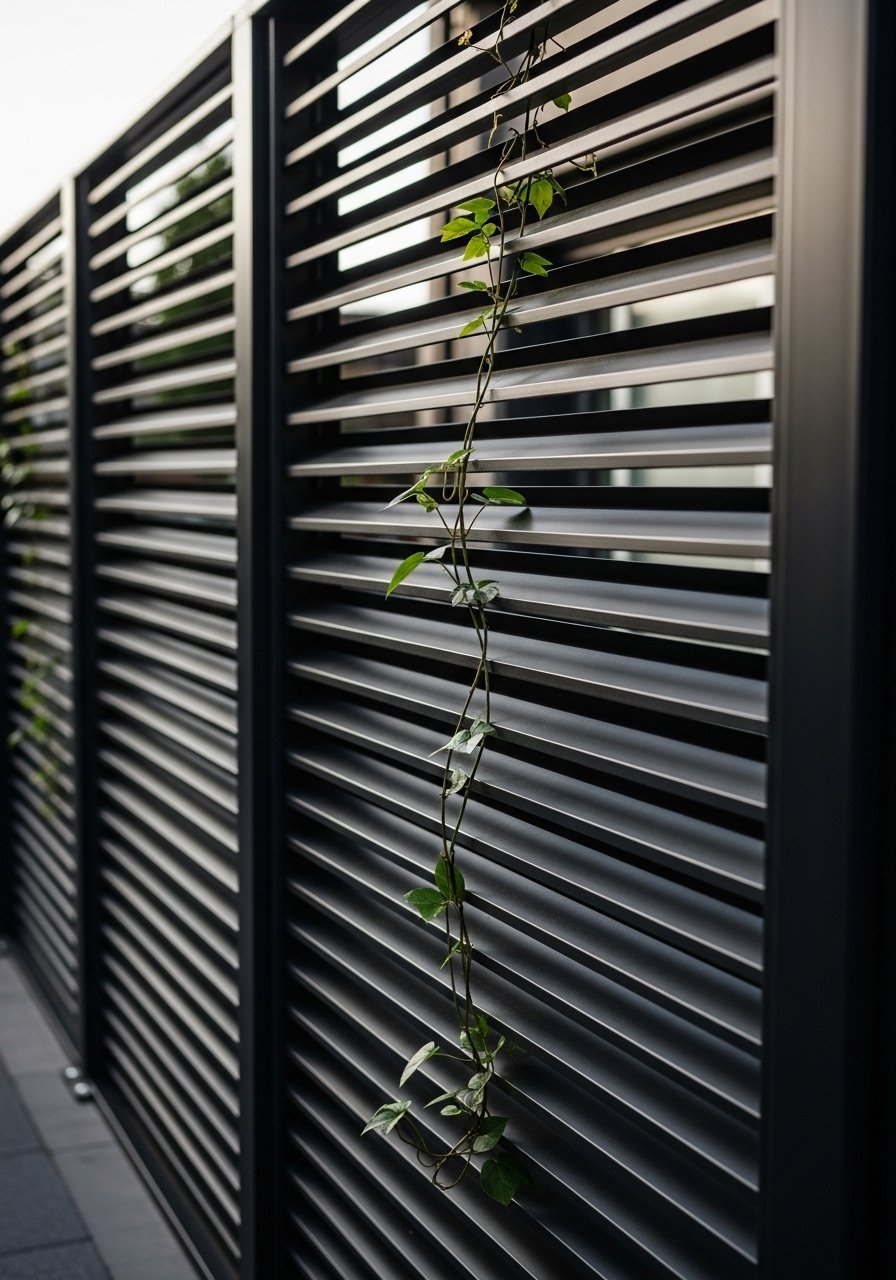
We installed tall slatted panels to screen a small patio from the street. The vertical rhythm feels modern and still lets air and light through.
Spacing is everything. Too close and it reads solid; too wide and it fails as a screen. I adjusted mine after living with it a month.
Corten or powder-coated metal holds up beautifully and reads architectural.
What You’ll Need for This Look
23. Matte Stucco Finish for Clean Geometry
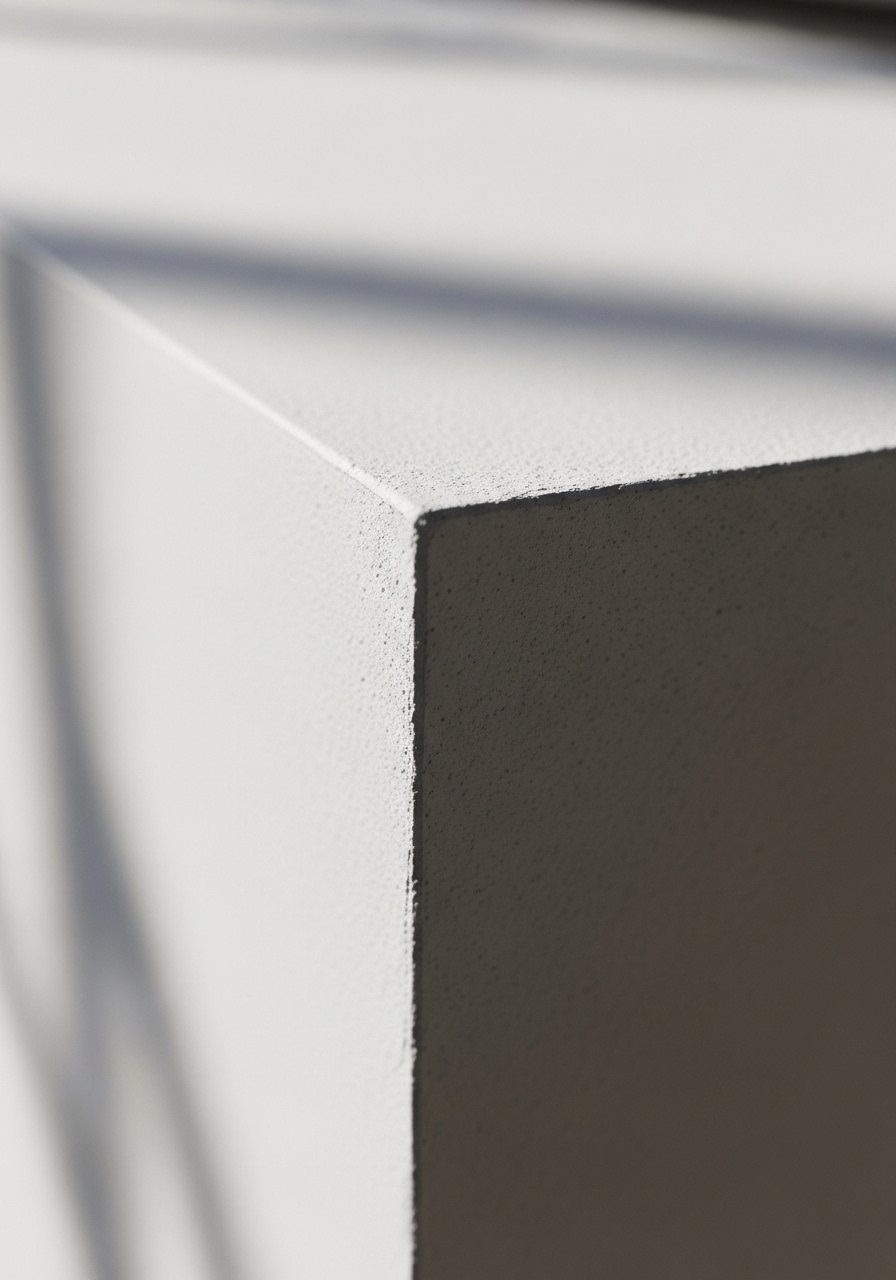
I opted for a matte stucco finish to emphasize the form rather than texture. It reads modern and forgiving under sunlight. The matte finish avoids glare and keeps the facade calm.
Work with a contractor who knows modern stucco techniques; I had surface inconsistencies when my installer used an older method.
A subtle sand finish hides minor imperfections while keeping geometry clear.
What You’ll Need for This Look
24. Dark Roof With Light Walls for Crisp Contrast
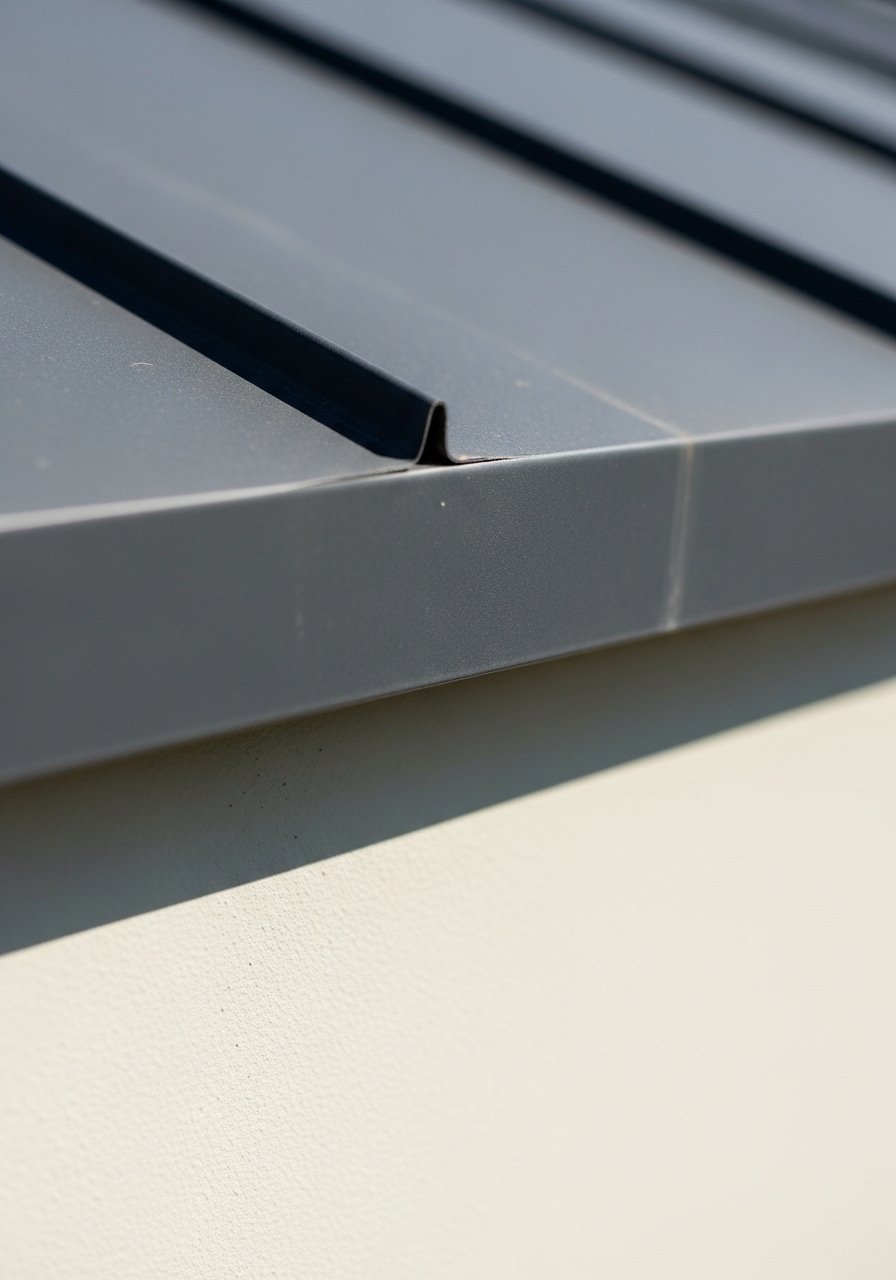
I chose a charcoal metal roof against pale plaster and it sharpened the silhouette. Dark roofs ground the house and give it a tailored profile.
Be mindful of climate—dark roofs absorb heat. In my climate, insulated underlayment helped. Check local performance before committing.
Metal or dark tiles both work; pick a finish that complements your trim.
What You’ll Need for This Look
25. Sculptural Exterior Light Fixtures as Features
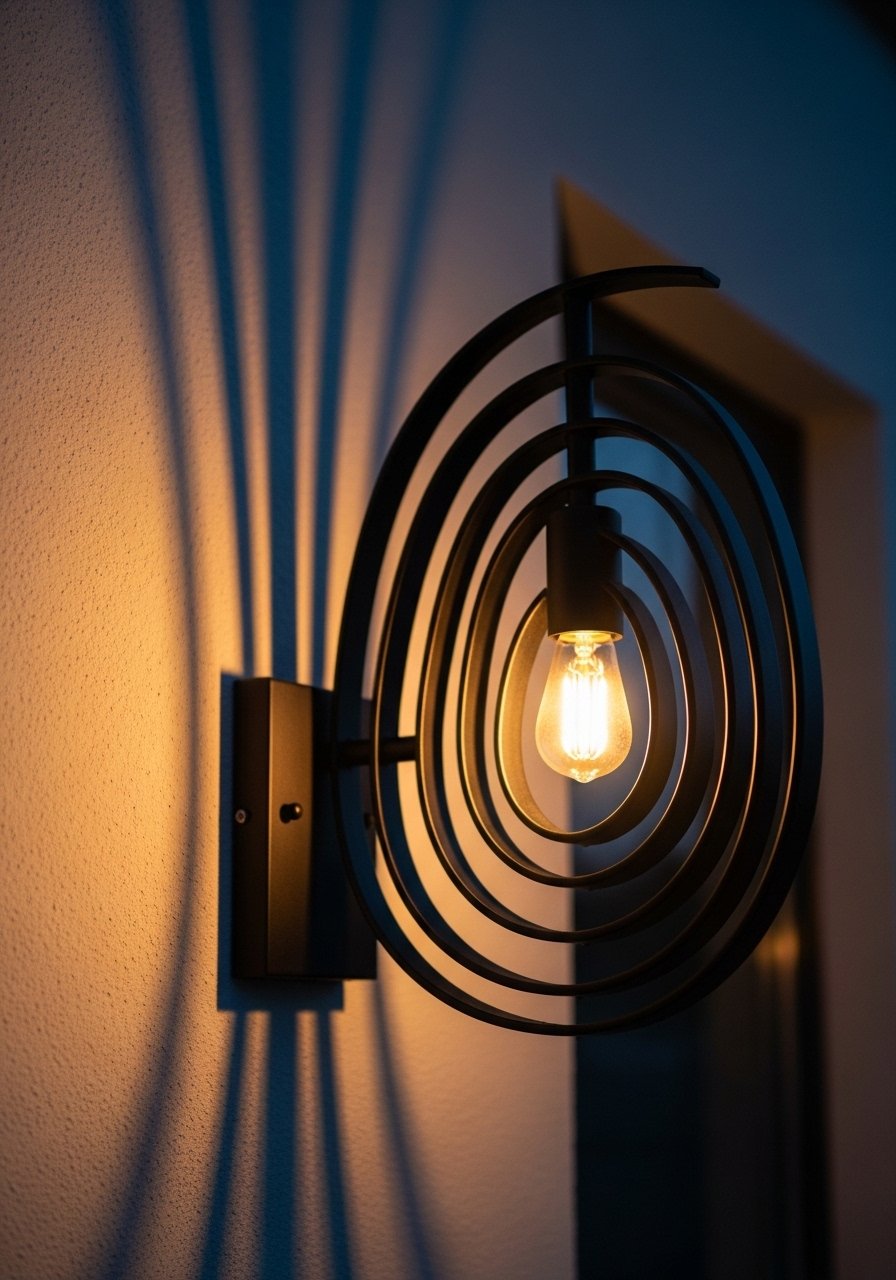
I picked a handful of sculptural fixtures instead of many small lights. One well-placed fixture can act like art on the facade and reads expensive.
Avoid overly ornate fixtures; keep the lines simple. I once bought a statement fixture that overwhelmed a small porch—scale matters.
A warm bulb keeps the fixture cozy and usable at night.
What You’ll Need for This Look
26. Hidden Gutters and Clean Rooflines
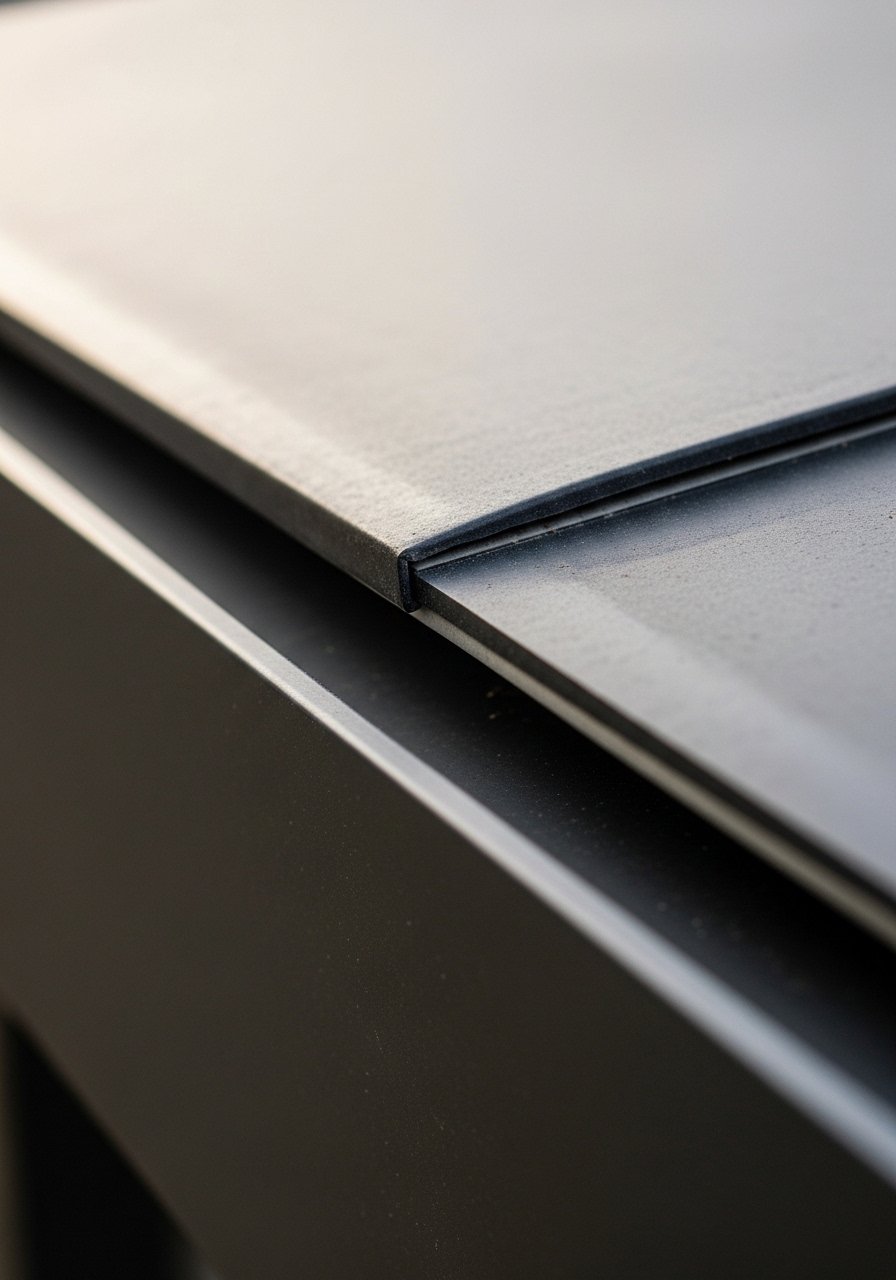
I hid my gutters behind a clean fascia and it made the roofline read smooth and modern. Visible gutters can interrupt otherwise clean geometry.
Make sure hidden gutters are accessible for maintenance. I learned the hard way that accessibility matters when leaves clog the trough. Add leaf guards and an access hatch if needed.
Hidden gutters pay off visually but plan for long-term cleaning.
What You’ll Need for This Look
27. Seasonal Container Rotation for a Lived-In Look
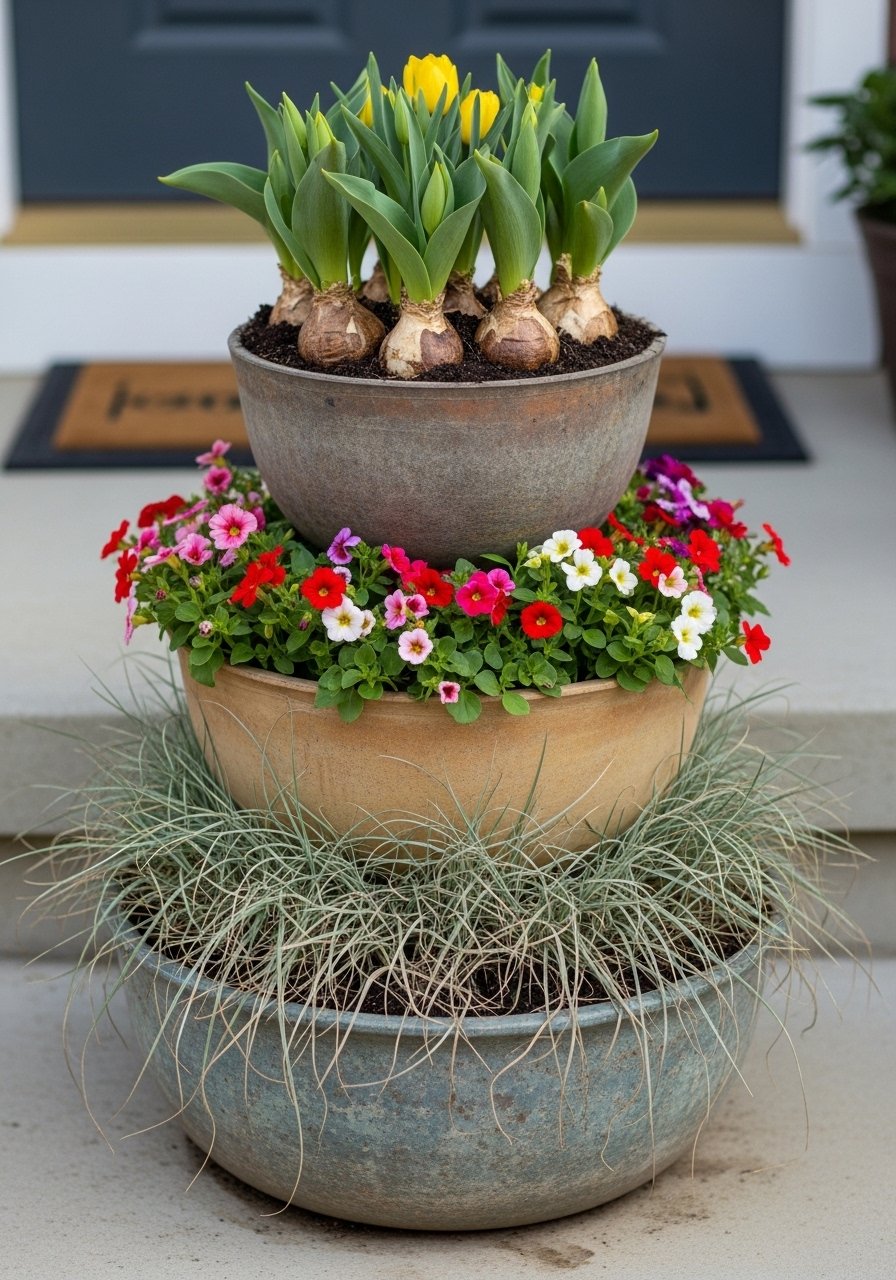
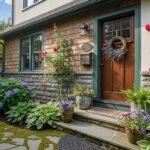
I rotate containers by season so the entry always looks cared for. Spring bulbs, summer foliage, and sculptural grasses in fall keep the front lively without big effort.
I learned to pick pots that work year-round in silhouette and material. Avoid fragile finishes that crack outdoors. I once used glazed ceramic that chipped in winter—choose hardy materials.
Rotation keeps the modern exterior from feeling static and shows attention to detail.
What You’ll Need for This Look
Final Thoughts
You don’t need to do every idea. I picked moves that paid off for me—small materials, careful lighting, and a few well-chosen accents.
Start with one change and live with it for a season. You’ll learn what really matters for your home.
These ideas are practical, affordable, and truly lived-in. You can do this.