
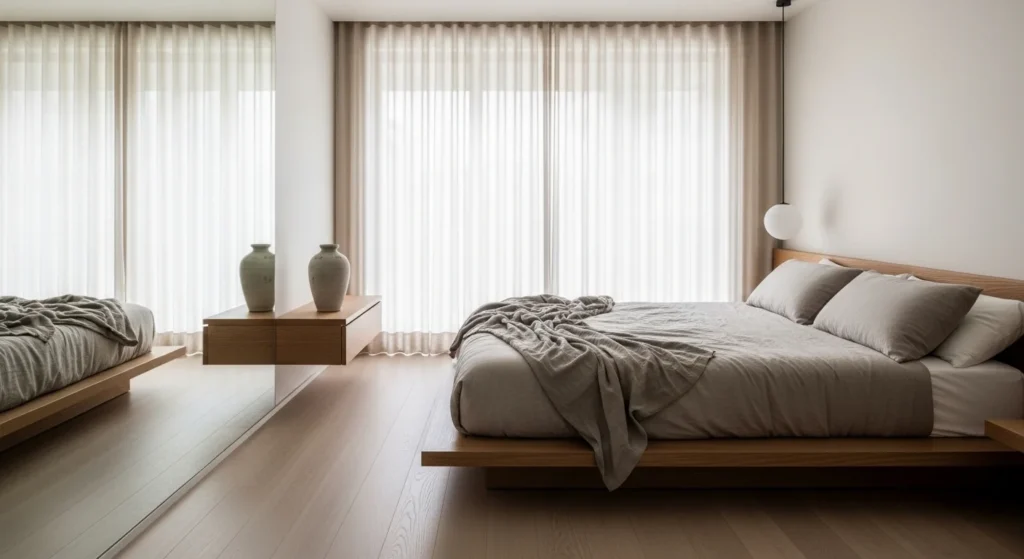
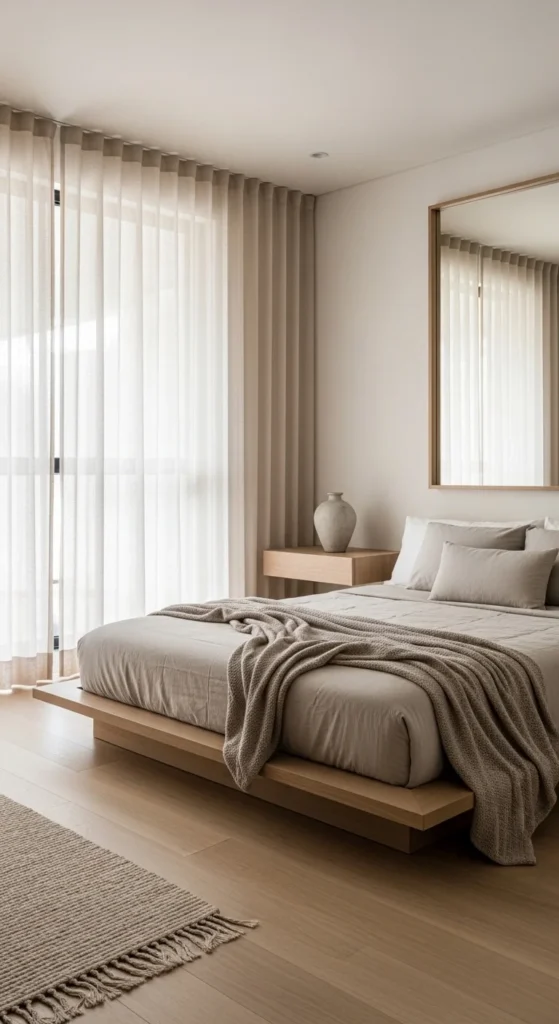
A minimalist bedroom isn’t about emptiness. It’s about creating a serene space where your mind can slow down the moment you walk in. Soft neutrals, clean lines, and clutter-free surfaces help reduce visual noise so the room feels peaceful instead of busy. The good news is you don’t need a big budget or a full makeover. Small, thoughtful changes can create calm quickly. These ideas focus on simple swaps, affordable DIY touches, and layout tricks that make your bedroom feel lighter, quieter, and more restful.
1. Start With a Soft Neutral Palette
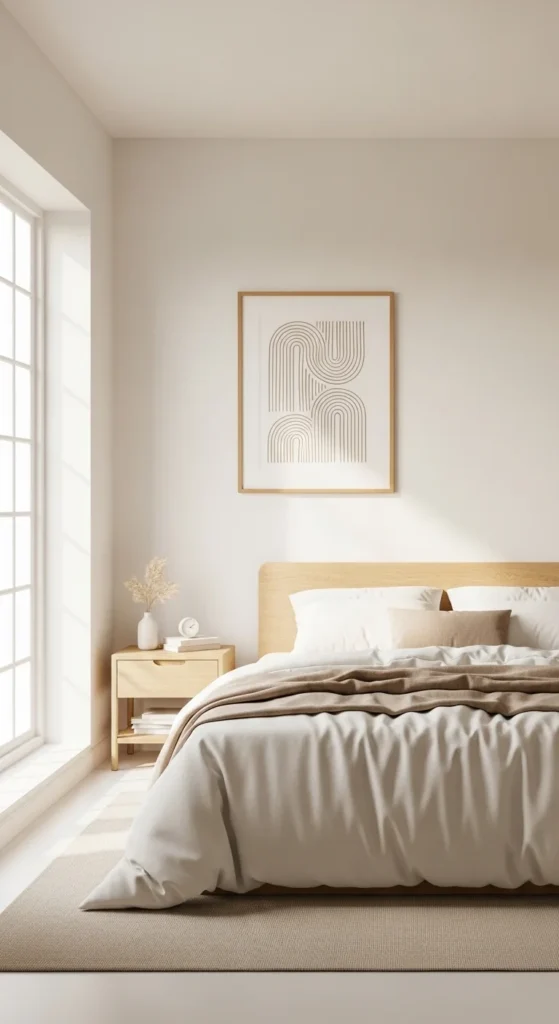
Color sets the emotional tone of a room, and a neutral palette is one of the easiest ways to create calm. Shades like warm white, soft beige, pale gray, and muted taupe reflect light gently and keep the eye from jumping around the space. Paint walls and trim in similar tones for a seamless look that feels quiet and cohesive. If repainting isn’t possible, bring in neutrals through bedding, curtains, and rugs instead. Stick to two or three main colors so the room feels settled rather than busy. Layer texture through linen, cotton, or wool to keep the space from feeling flat. Even swapping bold artwork for soft-toned pieces can make a big difference. Neutral tones help your bedroom feel like a retreat where your eyes and mind can rest at the end of the day.
2. Choose a Low-Profile Platform Bed
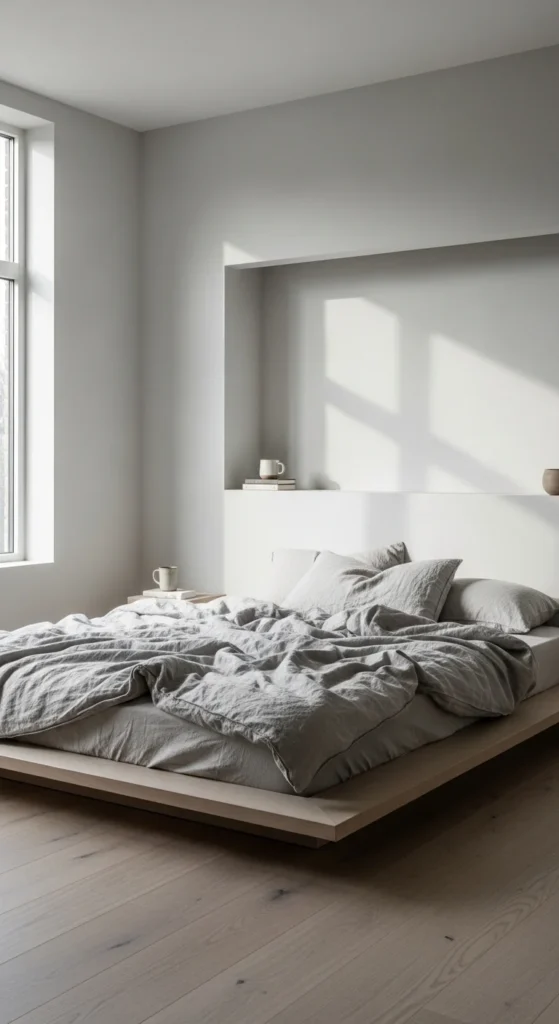
A low-profile bed makes the room feel grounded and open at the same time. When furniture sits lower, ceilings appear taller and the room feels less crowded. Choose a simple platform frame with clean lines and no bulky headboard. Light wood or upholstered frames in neutral fabric work well. Pair it with breathable linen bedding in soft, muted tones. Skip heavy bed skirts or ornate details that add visual weight. If you’re on a budget, wooden pallets sanded and sealed can create a similar look. Keep the area under the bed tidy or use shallow storage bins in matching colors. This simple furniture choice sets the tone for a calm, uncluttered bedroom without needing extra decor.
3. Keep Surfaces Completely Clutter-Free
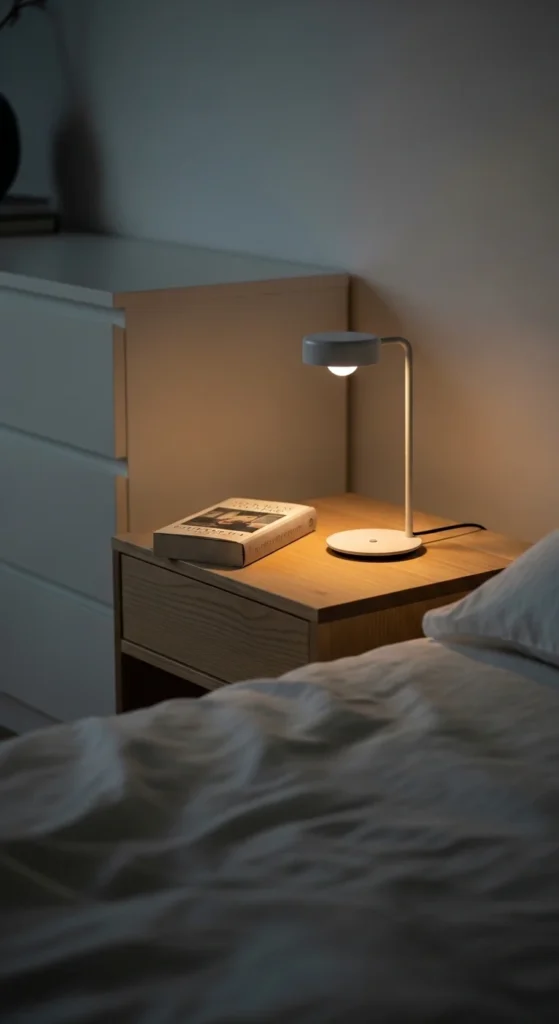
Clutter is one of the fastest ways to make a bedroom feel stressful. Aim for clutter-free surfaces on nightstands, dressers, and shelves. Keep only essentials like a lamp, a book, or a small plant. Store everything else out of sight using drawers, baskets, or closed storage boxes. Get in the habit of clearing surfaces each evening so the room feels reset by bedtime. If small items tend to pile up, use a single tray to contain them neatly. This approach creates visual breathing room and helps the mind relax more easily when you enter the space.
4. Warm Things Up With Natural Wood
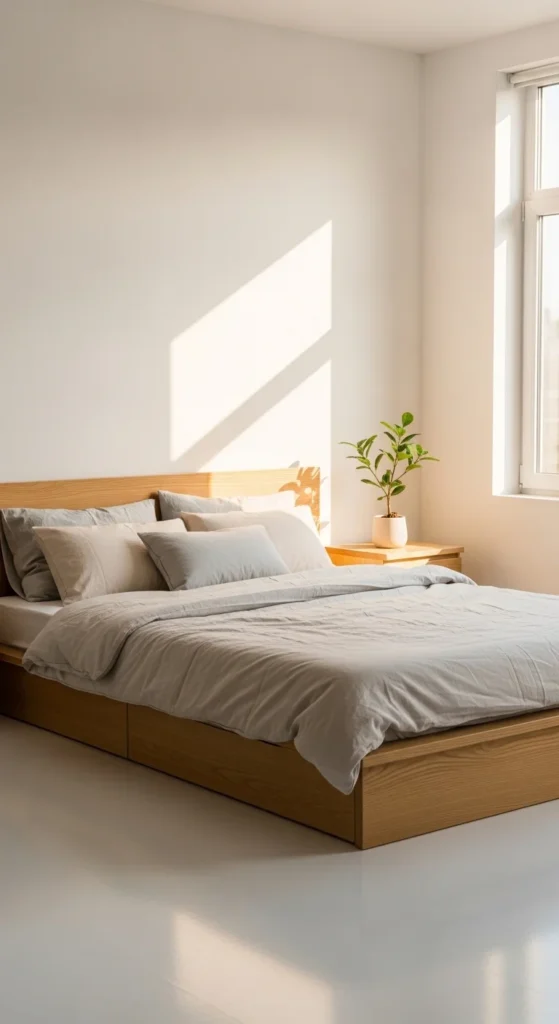
Minimal rooms can feel cold without warmth from natural materials. Light wood tones add softness without clutter. Choose pale oak, birch, or pine finishes for furniture or shelving. Even a wooden stool or picture frame can add warmth. If new furniture isn’t in the budget, try peel-and-stick wood veneer or a light wood stain on existing pieces. Keep the grain simple and avoid heavy carvings. Natural wood pairs beautifully with neutral walls and linen fabrics, helping the space feel calm and inviting.
5. Try an Invisible Acrylic Nightstand
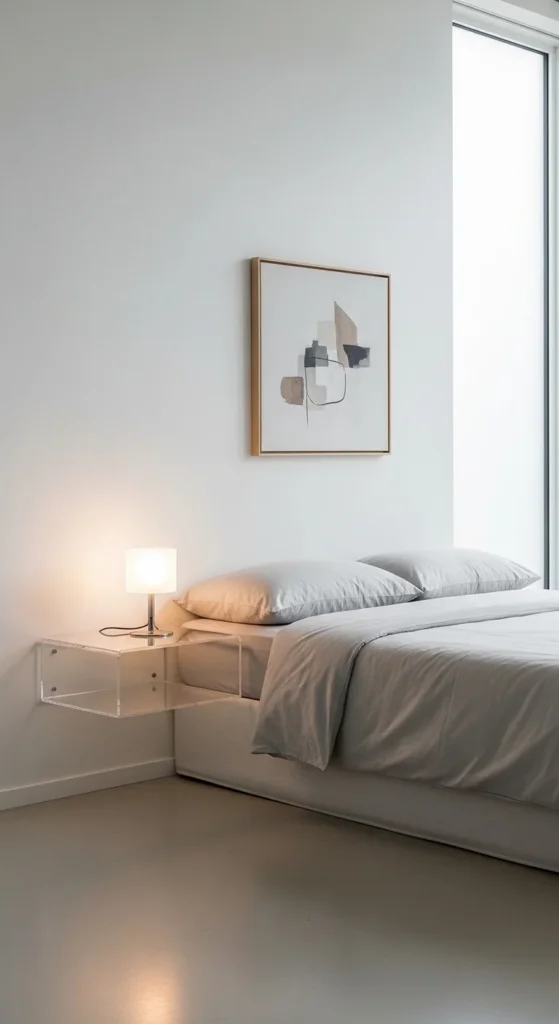
A clear acrylic or lucite nightstand gives you function without visual bulk. Because it’s transparent, it doesn’t interrupt sightlines or make the room feel crowded. Mount a slim floating shelf or use a clear side table beside the bed. Keep styling minimal with just a lamp and one small item. This is a great trick for very small bedrooms where traditional furniture feels heavy.
6. Let the Bed Be the Only Focal Point
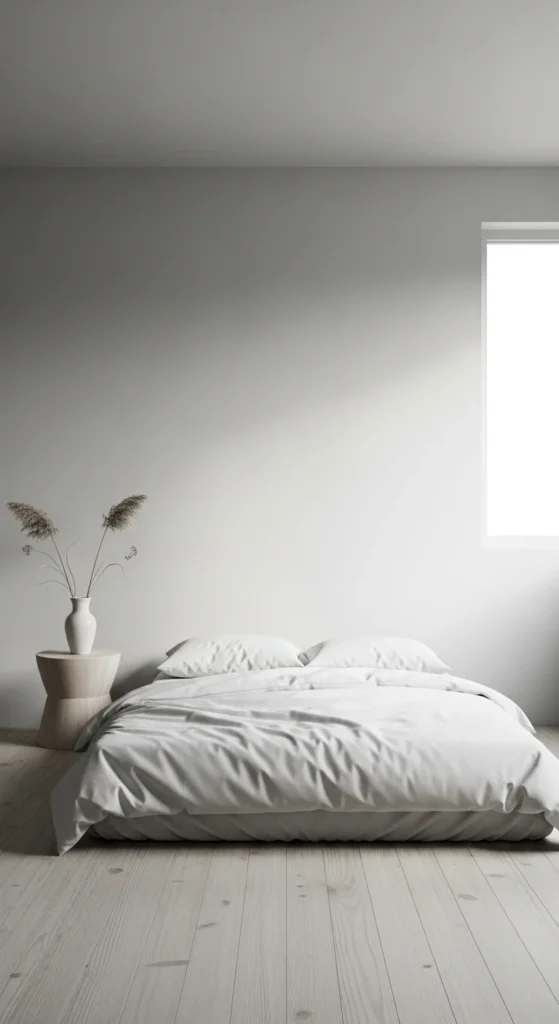
Minimalism works best when one element anchors the room. Let the bed be that focus. Choose a frame with clean lines or a subtle sculptural shape. Skip busy headboards or bold wall art above it. Keep bedding simple with one duvet and two pillows. This keeps attention centered and the room feeling balanced.
7. Simplify Bedding Layers

Too many pillows and throws create visual noise. Stick to minimal bedding layers like a duvet, fitted sheet, and two sleeping pillows. Add one lightweight throw if needed. Linen and cotton fabrics keep things soft and breathable. This simple setup looks calm and is easier to make each morning.
8. Add Subtle Texture With Whitewashed Walls
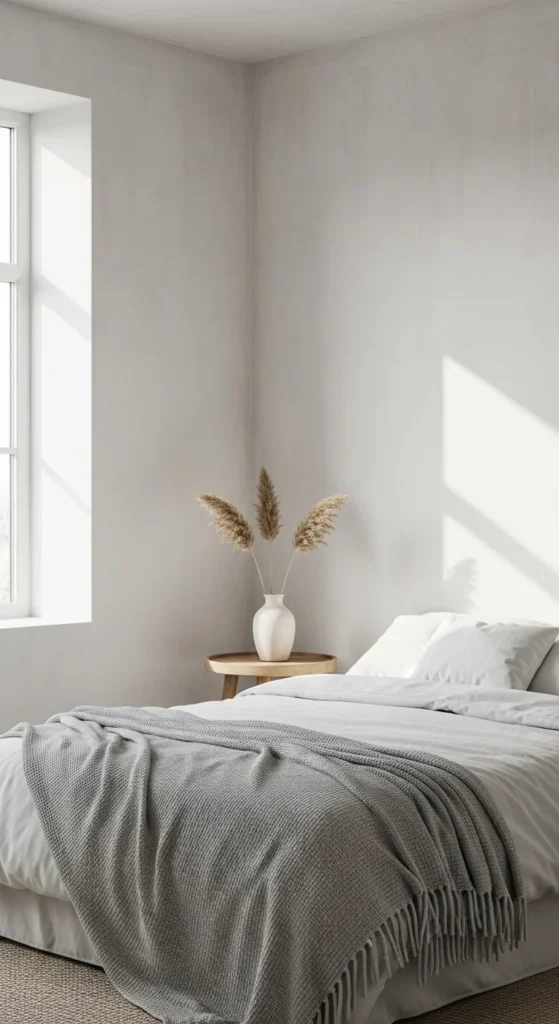
Flat paint can feel plain. A whitewashed or limewashed wall adds gentle texture while keeping the color light. This adds depth without busy patterns. You can DIY this with diluted paint and a large brush for a soft layered look.
9. Use Soft Ambient Lighting
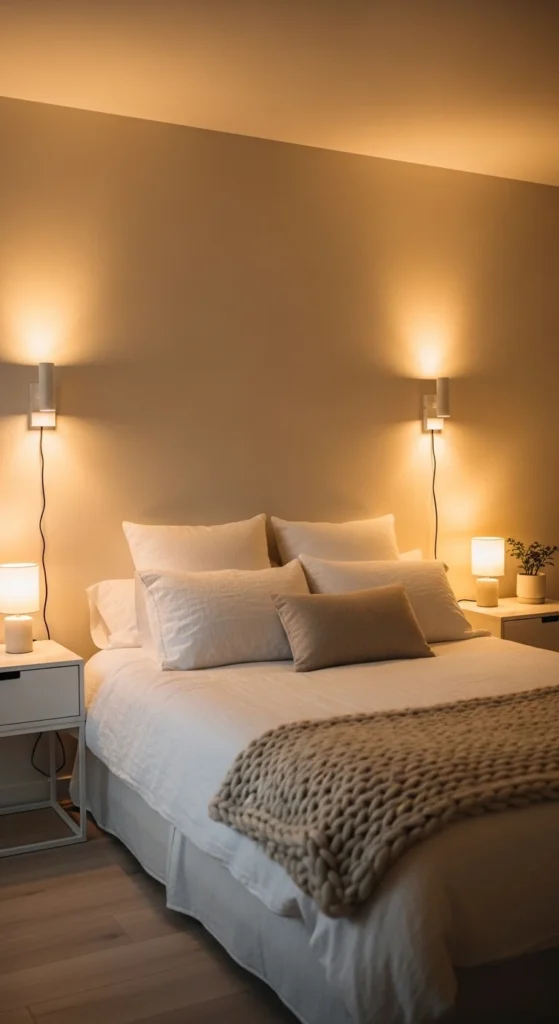
Harsh ceiling lights make a bedroom feel clinical. Use soft lighting instead. Wall sconces, plug-in pendants, or small lamps with warm bulbs create a relaxed glow. Add a dimmer if possible. This layered lighting helps the room feel cozy at night.
10. Create Symmetry for Visual Balance
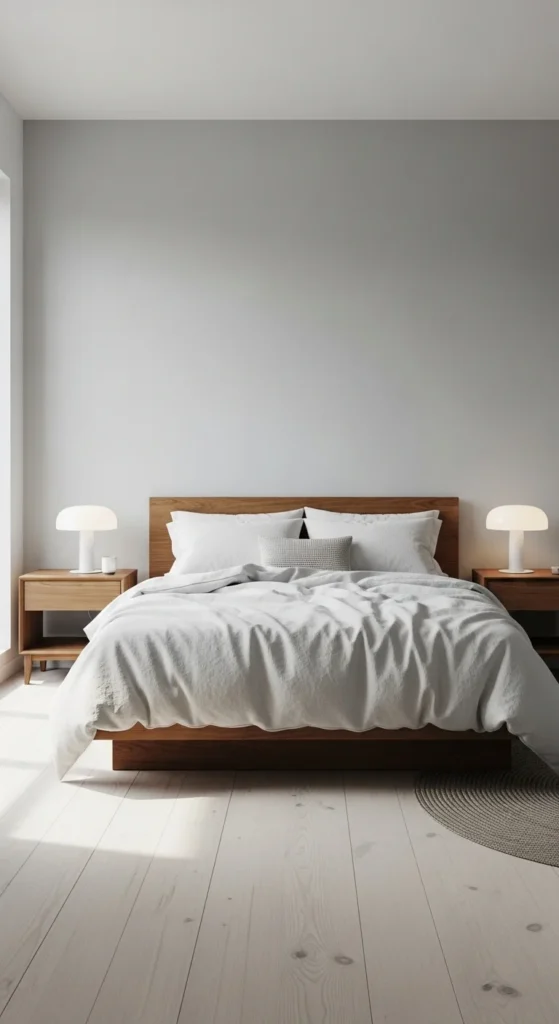
Symmetry helps a bedroom feel orderly and peaceful. When both sides of the bed look balanced, the room feels stable and easier on the eyes. You don’t have to buy identical furniture. Use pieces that share similar height, shape, or color so they feel related. Matching lamps are an easy starting point. If you only have one nightstand, place a small stool or wall shelf on the other side to even things out. Keep styling simple with just one or two items per surface. This layout works especially well in minimalist rooms because it reduces visual tension and makes the space feel thoughtfully arranged without adding extra decor.
11. Choose an Ottoman Storage Bed
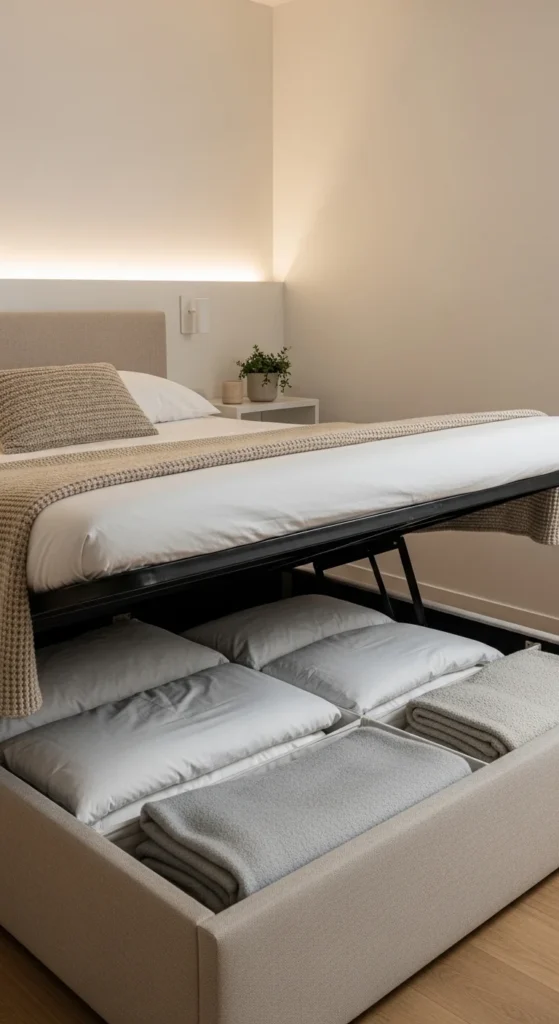
Hidden storage helps maintain a calm bedroom. An ottoman bed lifts from the base to reveal a large storage compartment underneath the mattress. This is a great place to store extra bedding, seasonal clothes, or spare pillows without adding dressers or bins to the room. Choose a design with clean lines and neutral upholstery so it fits the minimalist look. Keep stored items in soft fabric bags or simple boxes so the inside stays organized. If an ottoman bed isn’t possible, use shallow storage containers under a standard bed instead. Keeping items out of sight makes surfaces easier to keep clear, which helps the room feel lighter and more restful.
12. Add a Large Floor Mirror
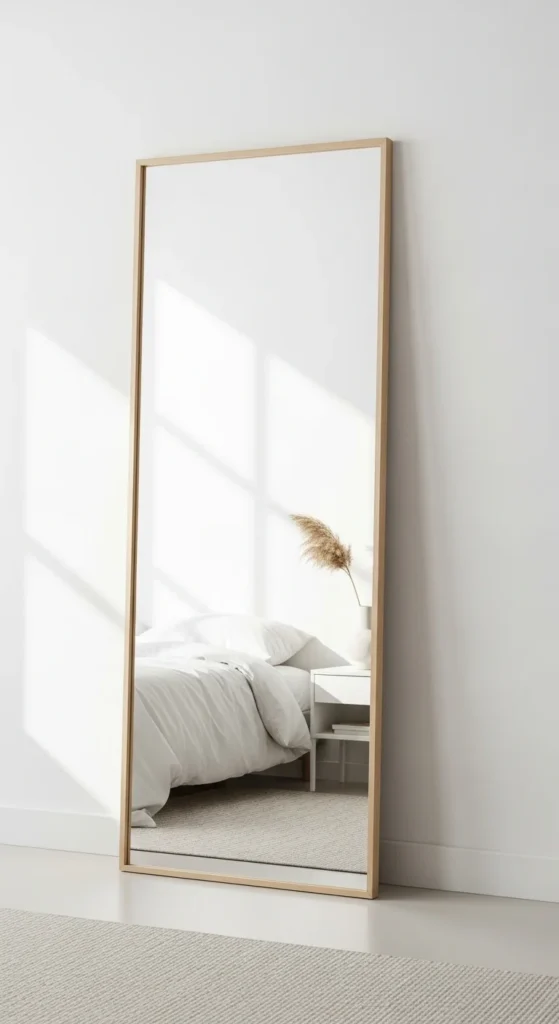
A large mirror reflects both light and open space, helping the room feel brighter and less closed in. Leaning a tall mirror against the wall gives a relaxed, modern feel and avoids the need for drilling. Position it across from a window if possible so natural light bounces deeper into the room. Choose a thin frame in wood, black metal, or no frame at all for a clean look. Avoid placing it where it reflects clutter, since that doubles visual mess. This simple addition makes the bedroom feel more open while also being practical for getting dressed.
13. Use a Velvet Coverlet for Soft Contrast

Minimalist rooms still need softness. A velvet coverlet adds texture and warmth without piling on layers. Choose a solid neutral color like sand, gray, or muted blush so it stays calm. Fold it neatly at the foot of the bed or lay it flat for a tailored look. This one piece adds visual comfort without extra pillows or busy patterns. If velvet isn’t in your budget, try a brushed cotton or quilted coverlet for a similar effect.
14. Try Tonal Pattern Drenching
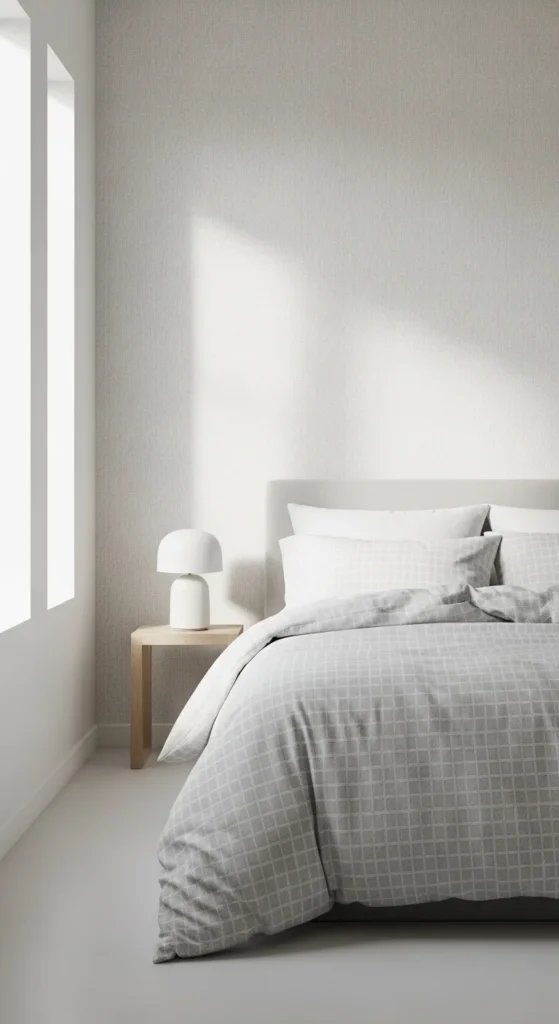
Patterns can work in minimalist rooms when they stay within the same color family. Tonal pattern drenching means using subtle prints in similar shades so nothing feels loud. Think soft striped bedding in beige tones or a faint geometric wallpaper in warm gray. Because contrast stays low, the room feels layered but still peaceful. DIY stenciling in a close paint shade can also create this effect on a budget.
15. Hang Simple Fiber Art Above the Bed
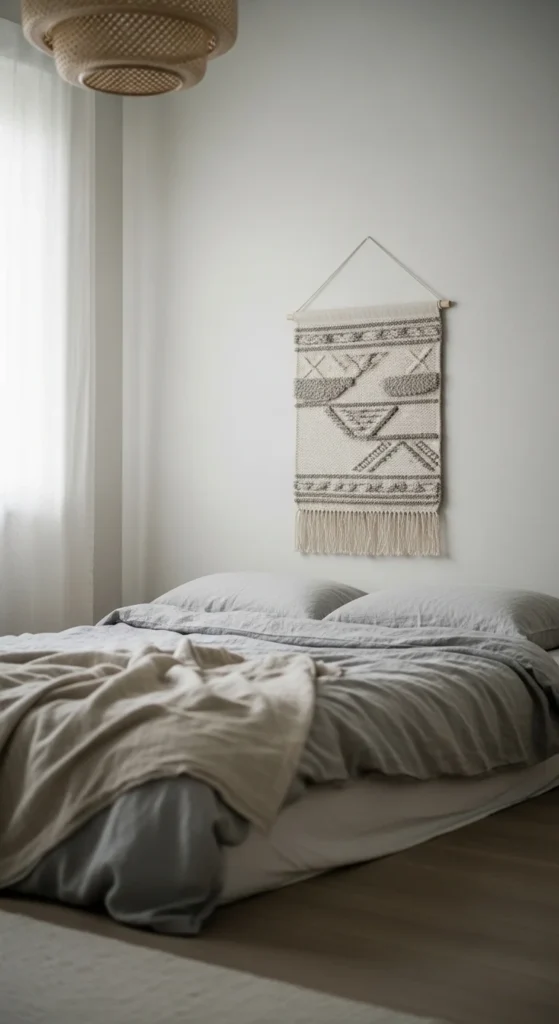
Instead of bold framed art, try a small woven wall hanging in cotton, wool, or jute. Fiber art adds texture and warmth without strong color or shine. Choose a piece in soft neutral tones and keep the size modest so the wall still feels open. You can even make your own using rope or yarn and a wooden dowel.
16. Bring in Bamboo or Natural Accents
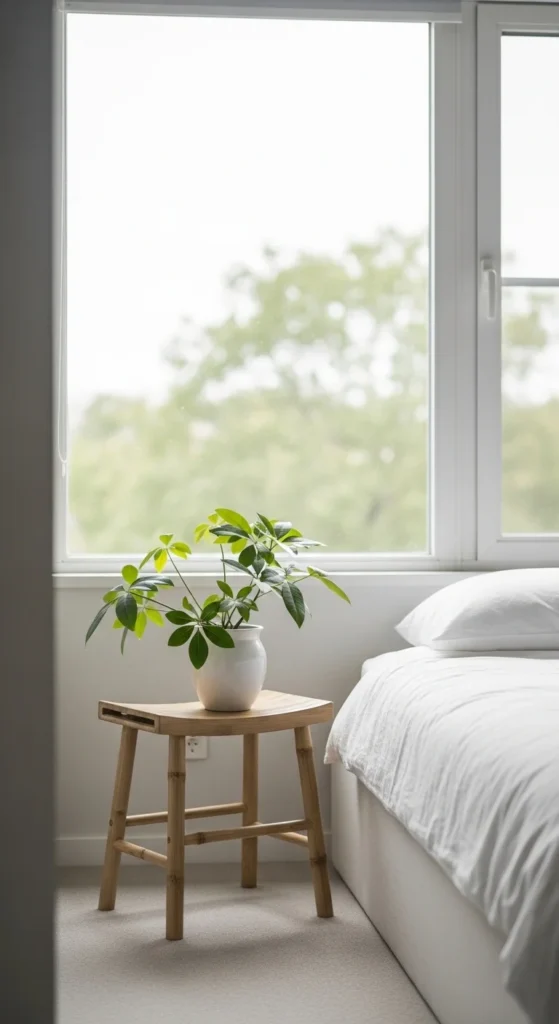
Natural accents help a minimalist room feel warm instead of stark. A bamboo stool, woven basket, or small potted plant introduces organic texture. Stick to one or two pieces so the space stays simple. If you don’t want plant care, try dried grasses in a plain vase.
17. Use Light Linen Drapes
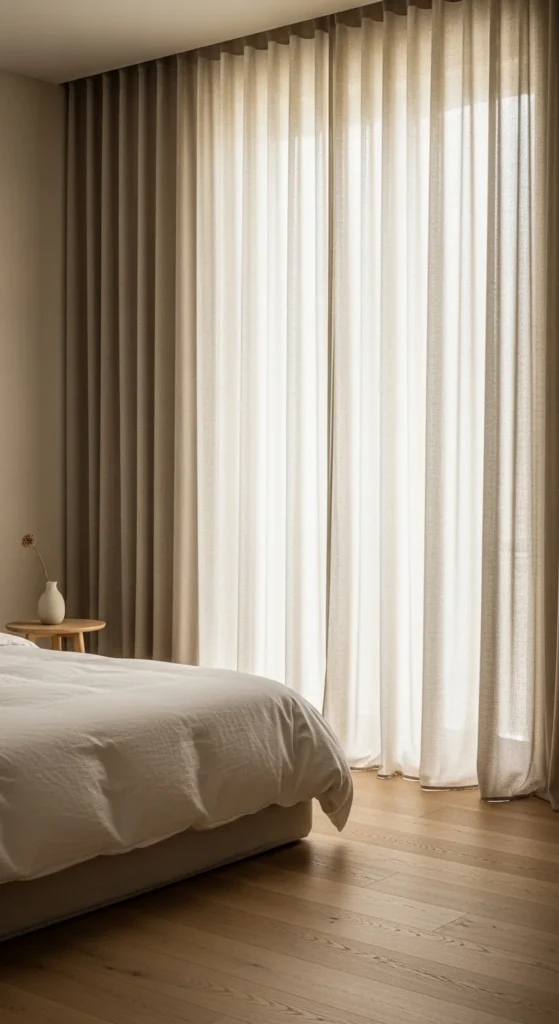
Linen curtains soften incoming light and add gentle movement to the room. Choose floor-length panels in white, beige, or light gray. Hang them close to the ceiling to make the walls look taller. Linen’s natural texture adds depth without heavy color or pattern.
18. Display Books With Spines Facing Inward
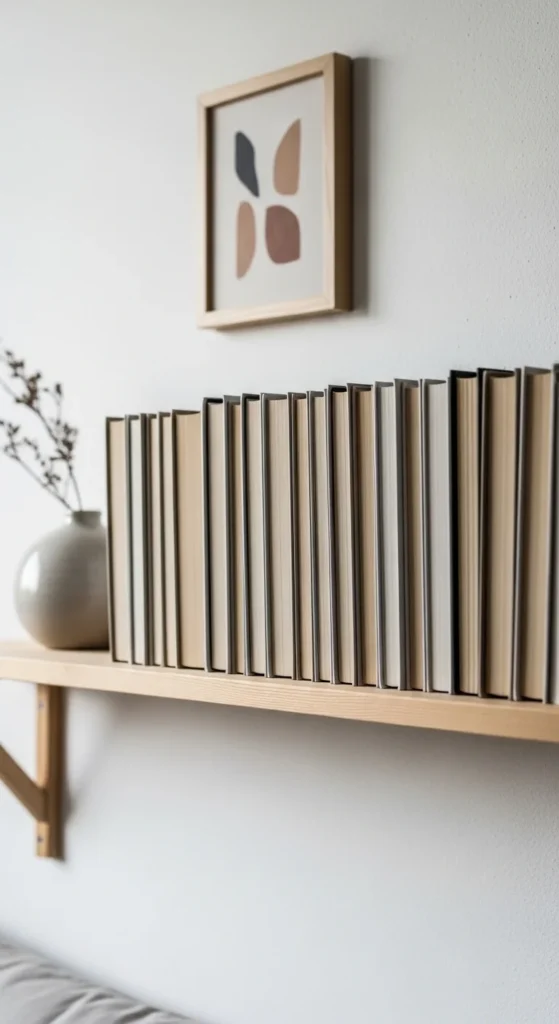
If you enjoy books but want a calmer look, turn the spines inward so only the neutral page edges show. This keeps shelves from feeling colorful or busy while still displaying items you love. Stack books neatly and leave some empty space around them.
19. Highlight Ceiling Height With Simple Lighting
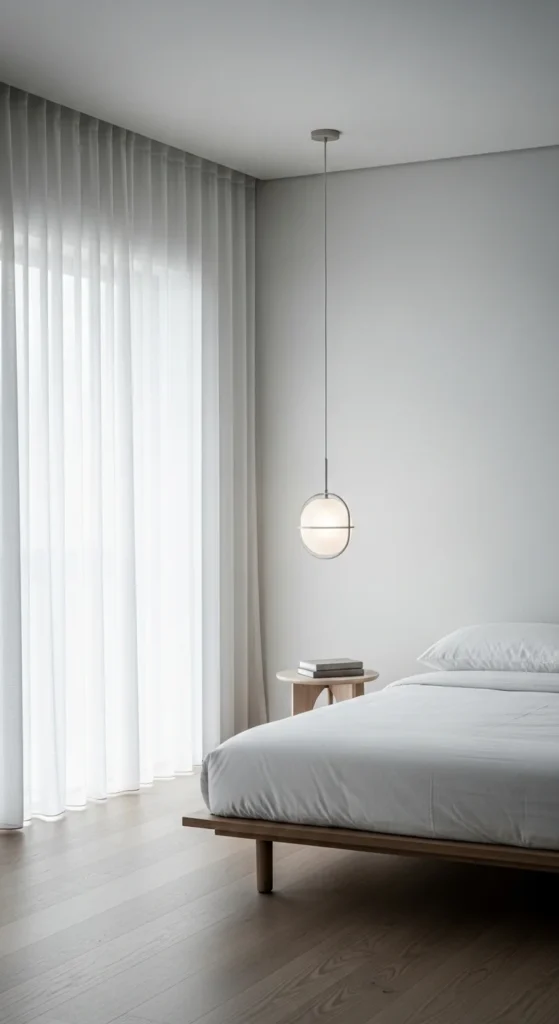
Drawing the eye upward makes a room feel more open. A simple pendant light or tall floor lamp emphasizes vertical space without adding clutter. Choose clean shapes and neutral finishes.
20. Try a Dark Monochrome Corner
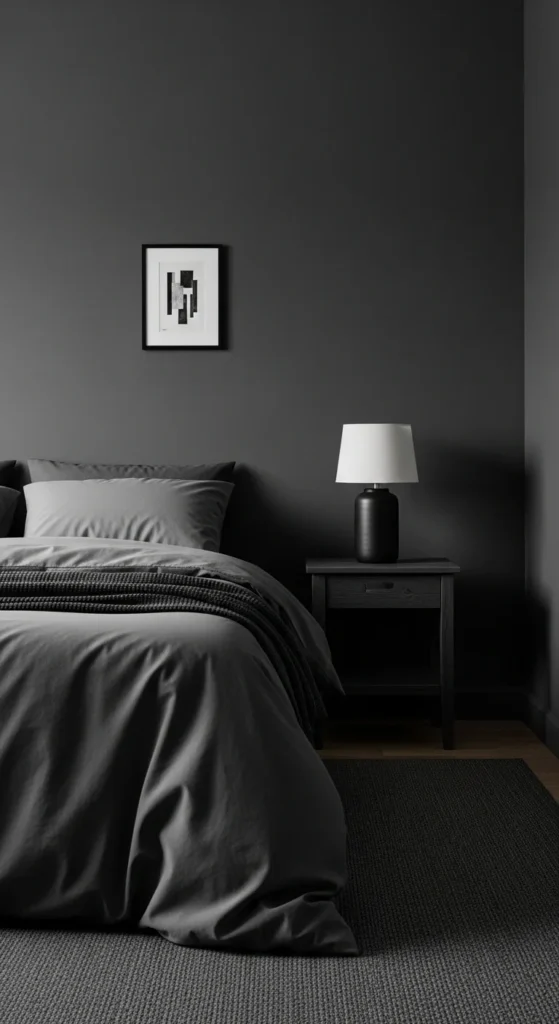
Minimalism doesn’t have to mean all white. A small section in deep charcoal or warm brown can feel cozy and grounded. Keep the rest of the room light so the darker area feels intentional and calm rather than heavy.
21. Add a Small Bedside Zen Garden
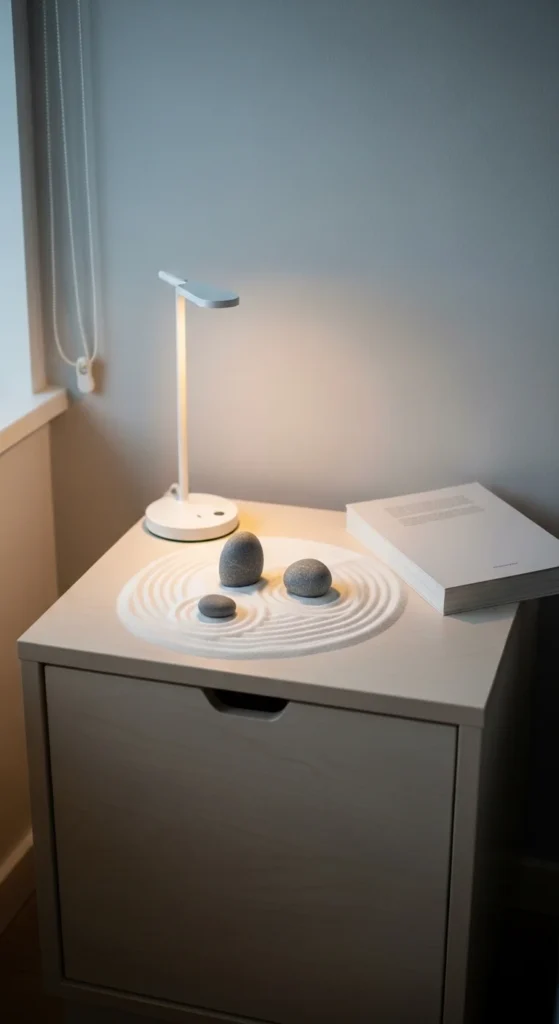
A tiny sand garden with a few stones adds a quiet ritual to your space. Choose a small tray and keep the design simple. This works as both decor and a calming hands-on moment before bed.
22. Use Essential Oils for a Subtle Scent Layer
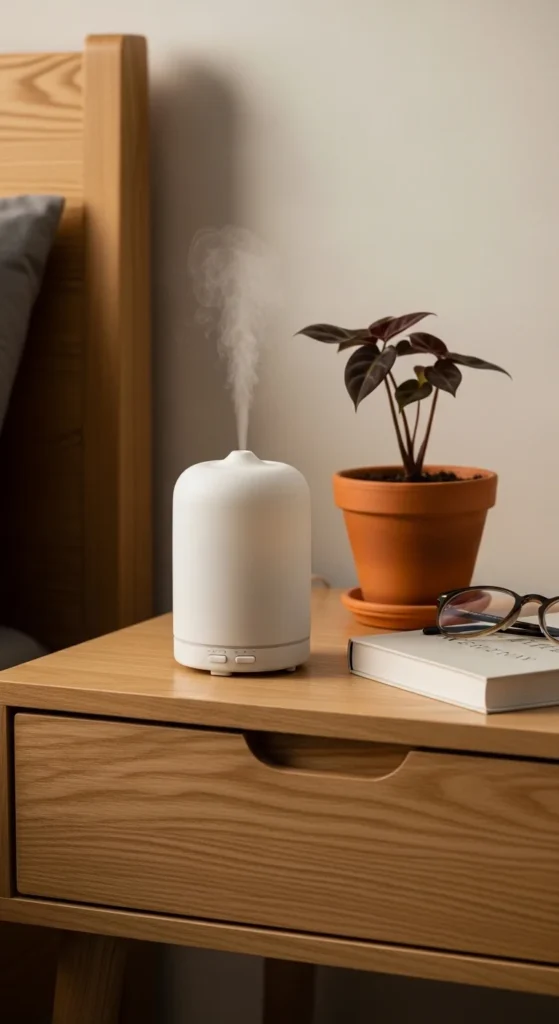
Scent influences how a room feels. A small diffuser with lavender or chamomile oil adds a gentle calming aroma. Choose a simple ceramic or glass diffuser that blends into the decor. Keep scents light so the atmosphere stays peaceful.
Conclusion
A minimalist bedroom feels calm when color stays soft, furniture stays simple, and surfaces stay clear. Low beds, neutral tones, and hidden storage reduce visual noise. Natural textures, soft lighting, and small personal touches add warmth without clutter. Start with one easy change, like clearing a surface or switching bedding to softer tones, and build from there. Even a few thoughtful updates can turn your bedroom into a quiet space where your mind can rest.