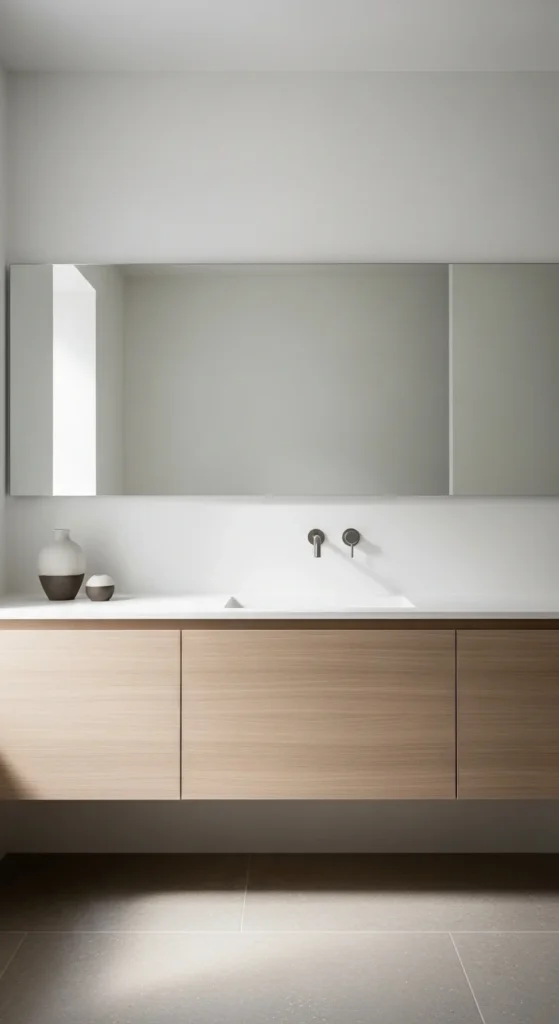
Minimalist bathroom decor appeals to people who want calm, order, and visual breathing room. Search intent around this style focuses on less clutter, simple forms, and stress-free spaces that feel easy to maintain. Minimalism is not about emptiness or expense. It’s about choosing fewer items, using them well, and letting light and space do most of the work. The ideas below focus on practical, affordable ways to simplify your bathroom while keeping it warm, functional, and intentional.
1. Floating Vanity with Hidden Storage
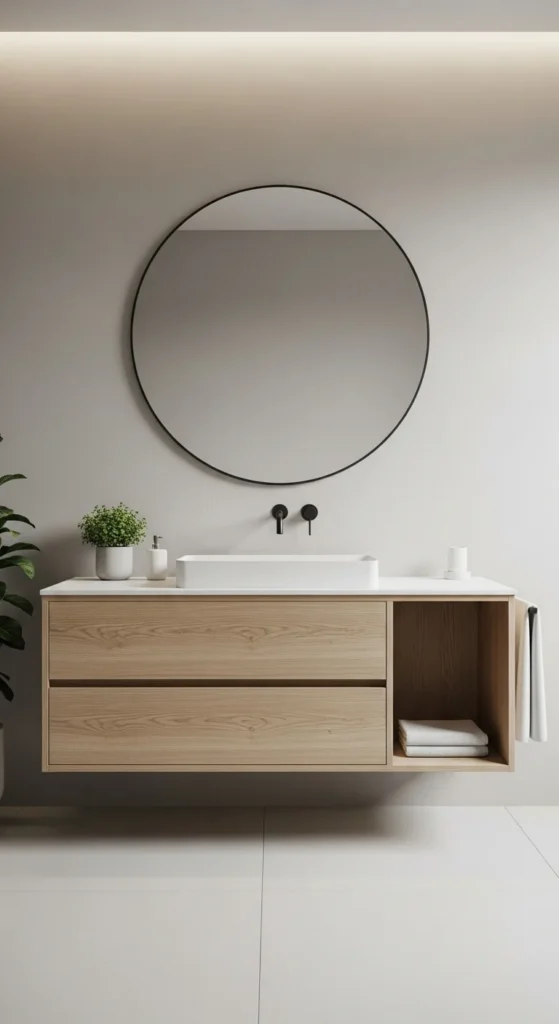
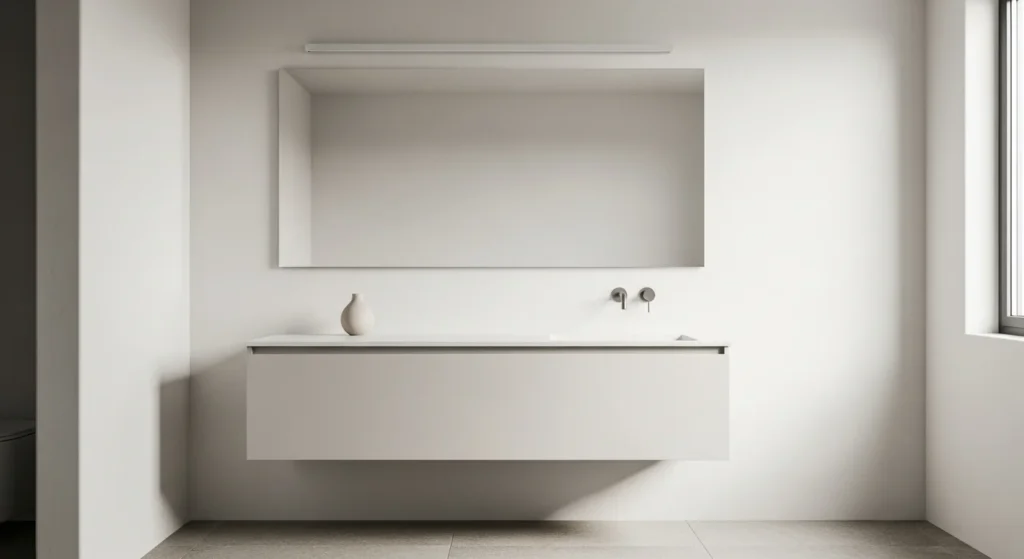
A floating vanity keeps the floor visible, which instantly makes the bathroom feel lighter and calmer. Hidden drawers allow daily items to stay out of sight, reducing visual noise. Choose flat-front drawers without hardware for a clean look. If replacing a vanity is not possible, repaint an existing one and remove decorative trim. Inside the drawers, use simple organizers so everything has a place. When surfaces stay clear, the entire room feels easier to use and easier to clean.
2. Frameless Oversized Mirror
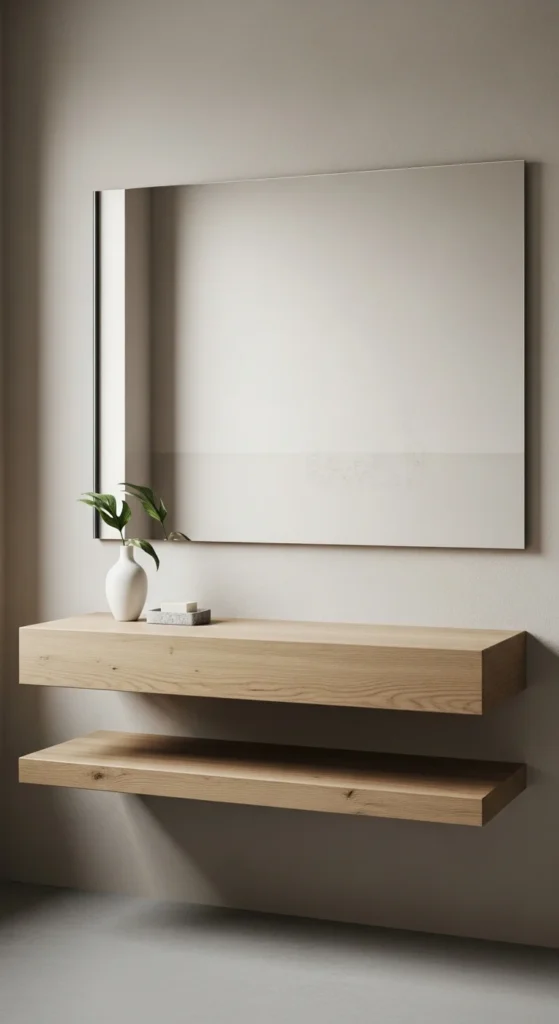
Frameless mirrors remove visual interruptions and reflect light evenly. Larger mirrors create the illusion of more space without adding objects. Thin edges keep the wall looking clean and intentional. If a custom mirror feels expensive, choose a standard large mirror with a polished edge. Mount it slightly higher to increase the feeling of height. This single change simplifies the wall and improves brightness.
3. Neutral Color Palette
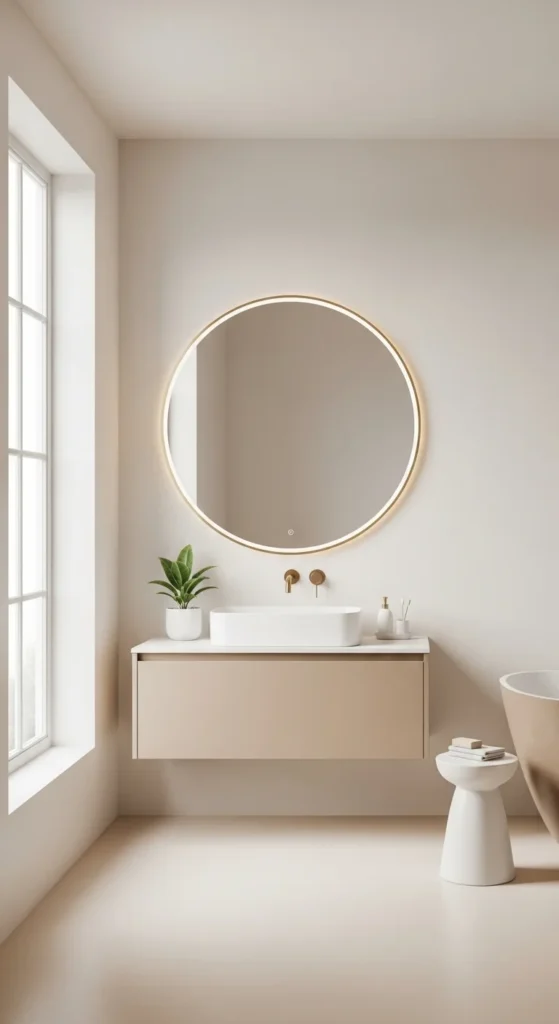
Minimalist bathrooms rely on calm color families. Soft white, beige, and light gray keep the space quiet. Using similar tones on walls, trim, and ceilings removes harsh breaks. Paint is one of the lowest-cost updates available. Keeping the palette limited makes every other choice easier and reduces visual stress.
4. Clear Countertops Only
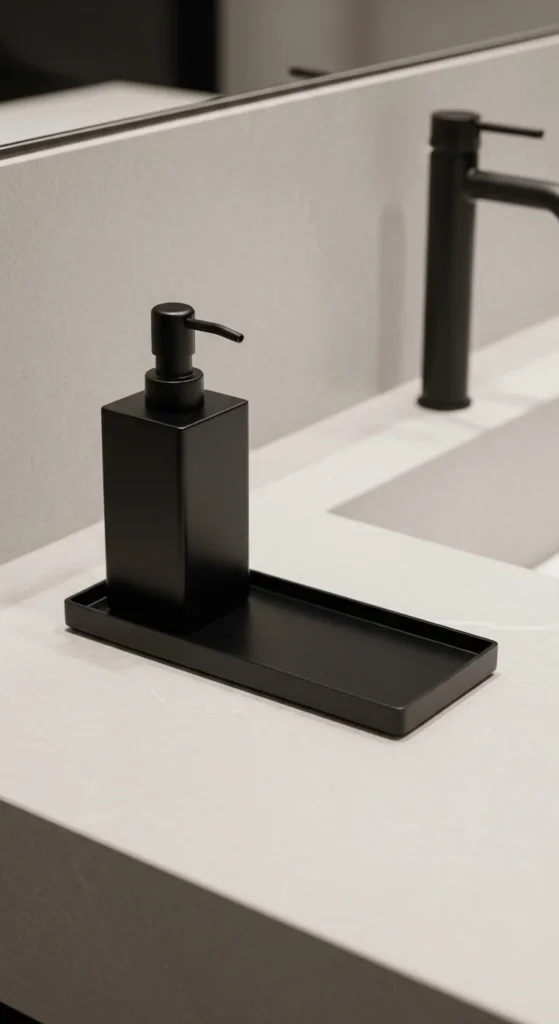
Clear counters are central to minimalist design. Limit items to what you use every day. Store backups and extras inside drawers or cabinets. A small tray helps group essentials without clutter. This habit costs nothing and changes how the bathroom feels immediately.
5. Wall-Mounted Faucets
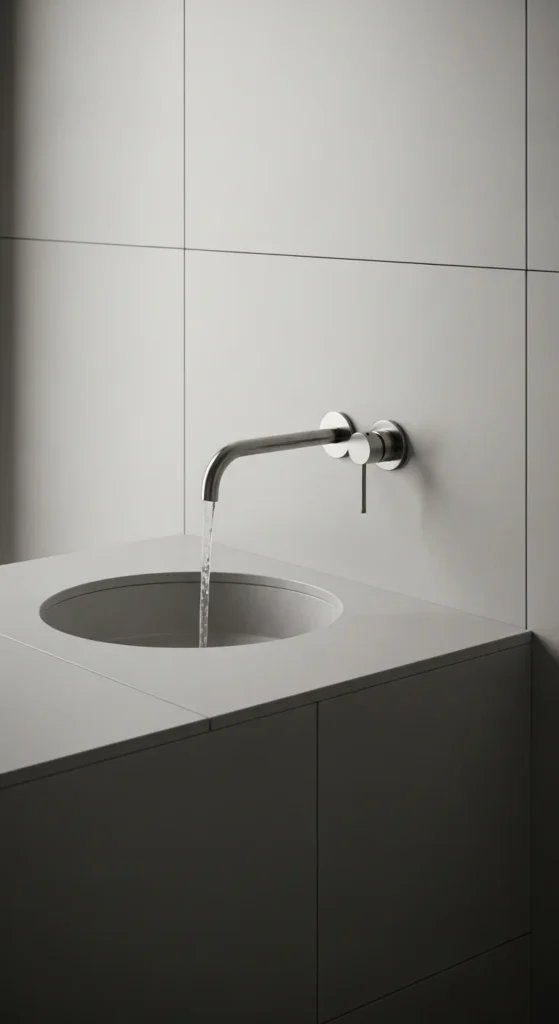
Wall-mounted faucets free up counter space and reduce visual complexity. The sink area feels more open and easier to clean. If plumbing changes are not realistic, choose a slim single-hole faucet. Keeping hardware minimal supports a clean, calm environment.
6. Large-Format Tiles
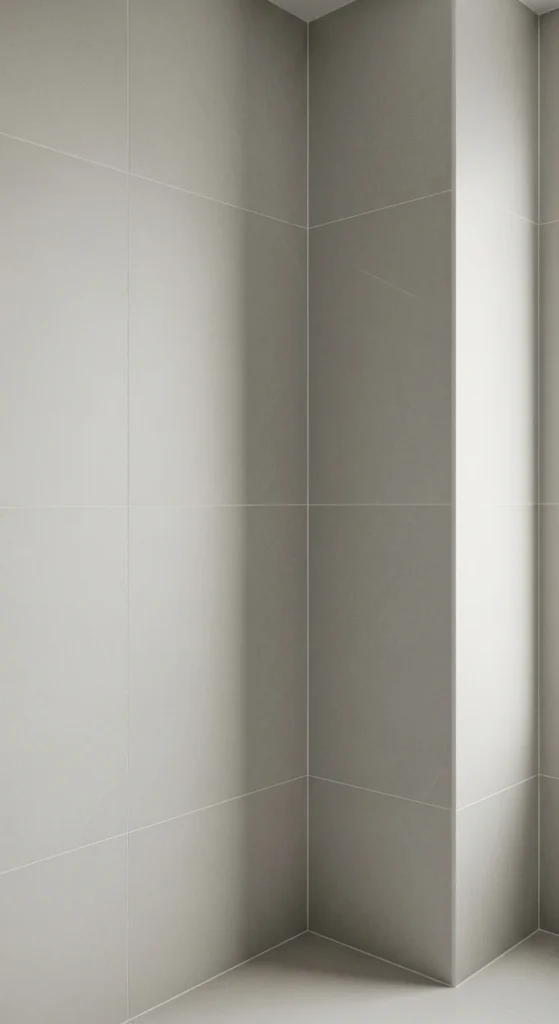
Large tiles create smoother surfaces by reducing grout lines. Fewer breaks help walls feel continuous and quiet. Stone-look porcelain offers this effect at a lower cost than natural stone. Stick to neutral tones for consistency. This works well on walls or floors.
7. Open Floor Space
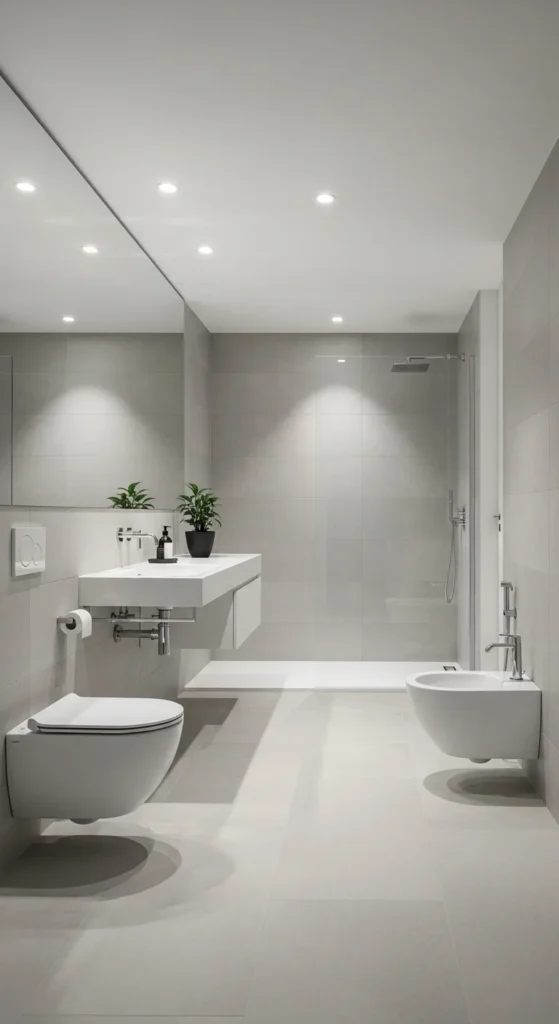
Minimalism values open space as much as objects. Keeping the floor clear improves visual flow. Floating vanities and wall-mounted fixtures support this goal. Avoid unnecessary furniture or baskets on the floor. More visible floor creates a calmer room.
8. Slim Hardware Choices
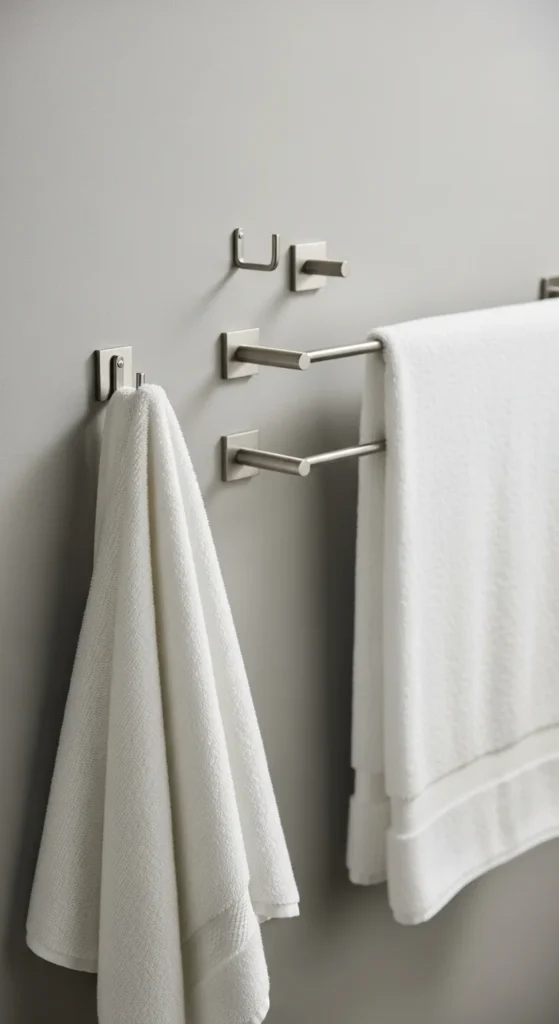
Slim hardware feels lighter and less distracting than bulky designs. Straight lines and simple forms suit minimalist spaces best. Replace towel bars, hooks, and handles in one finish. This is an affordable update that has a big visual effect.
9. Glass Shower Panels
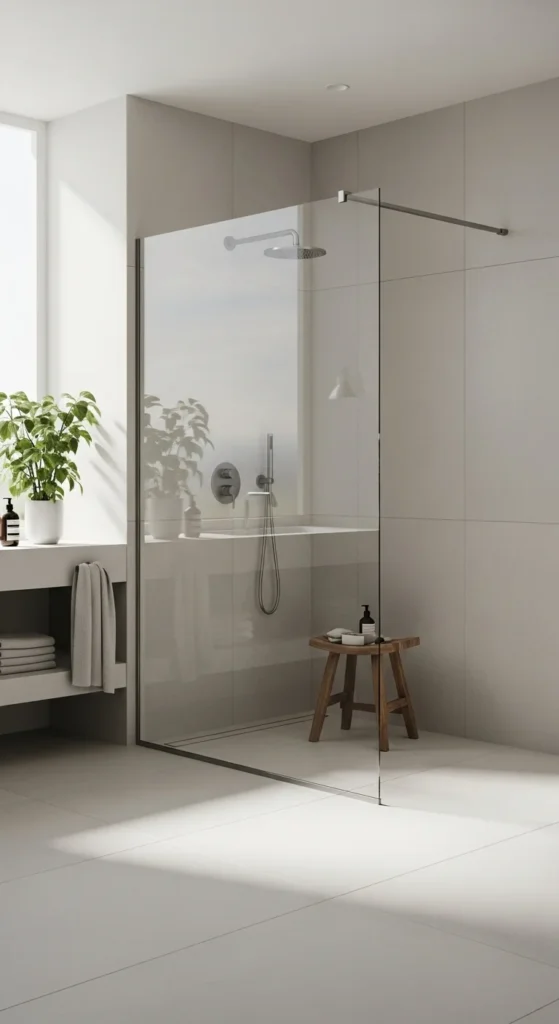
Glass panels keep sightlines open and reduce visual barriers. Frameless designs feel quiet and intentional. If replacing a curtain is the only option, choose a clear or very light one. Keeping the shower visually open supports a calm layout.
10. Recessed Storage Niches
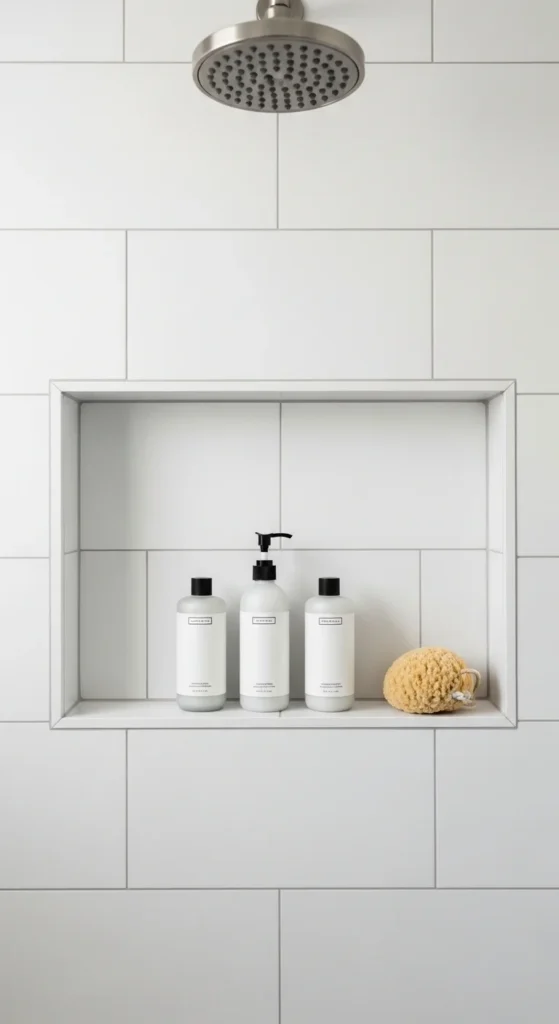
Recessed niches store products without protruding into the space. They keep walls flat and organized. Match the niche tile to the surrounding wall for subtlety. DIY kits make this achievable during small updates.
11. Monochrome Styling
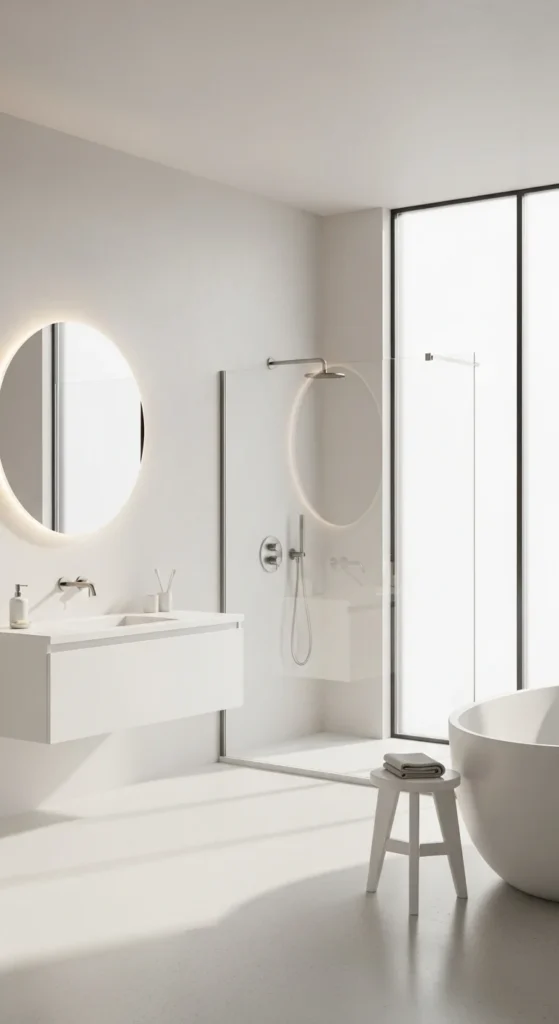
Monochrome styling creates calm by removing visual competition. When walls, towels, and fixtures sit within the same color family, the bathroom feels unified and steady. This does not mean everything looks flat. Texture replaces contrast. Matte tiles, soft towels, and smooth stone surfaces add depth without noise. Start with white or warm off-white as the base. Then layer slightly darker or lighter shades within that range. For a budget-friendly update, replace only visible textiles first. Hand towels and bath mats make the biggest difference. Keep patterns subtle or skip them entirely. This approach makes the room feel intentional and easier to maintain. When fewer colors compete for attention, the space feels clearer and more restful during daily routines.
12. Soft Natural Lighting
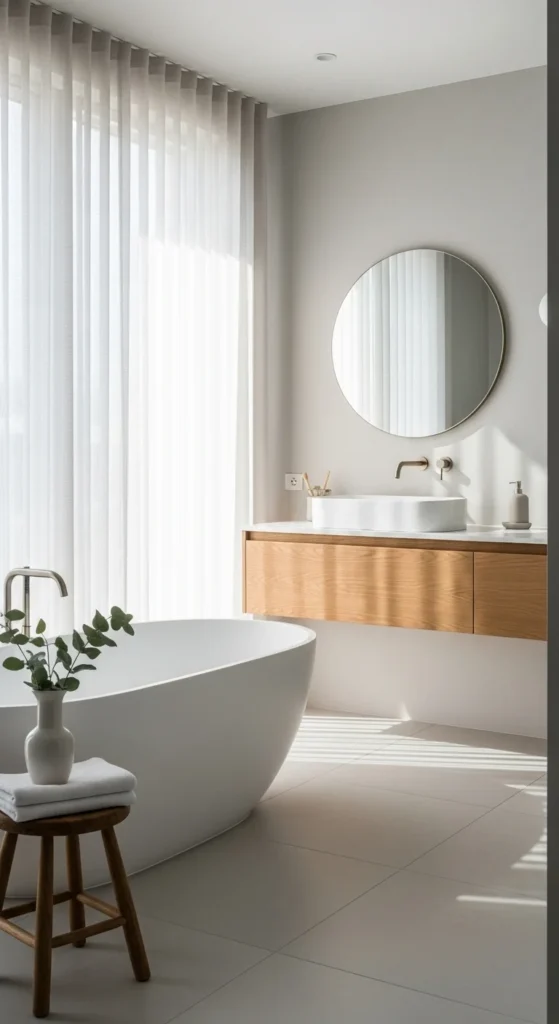
Natural light supports a calm bathroom more than any decor item. It softens edges and brings out gentle surface textures. Keep window coverings simple and light so daylight can pass through. Sheer cotton or linen panels work well for privacy without blocking brightness. If the bathroom has limited windows, focus on reflective surfaces like light tiles and pale walls. Avoid heavy blinds or dark frames that break the flow of light. For an affordable improvement, clean windows regularly and trim back outdoor plants blocking sunlight. Even small changes improve brightness. A well-lit bathroom feels easier to use and visually lighter throughout the day.
13. Simple Open Shelves
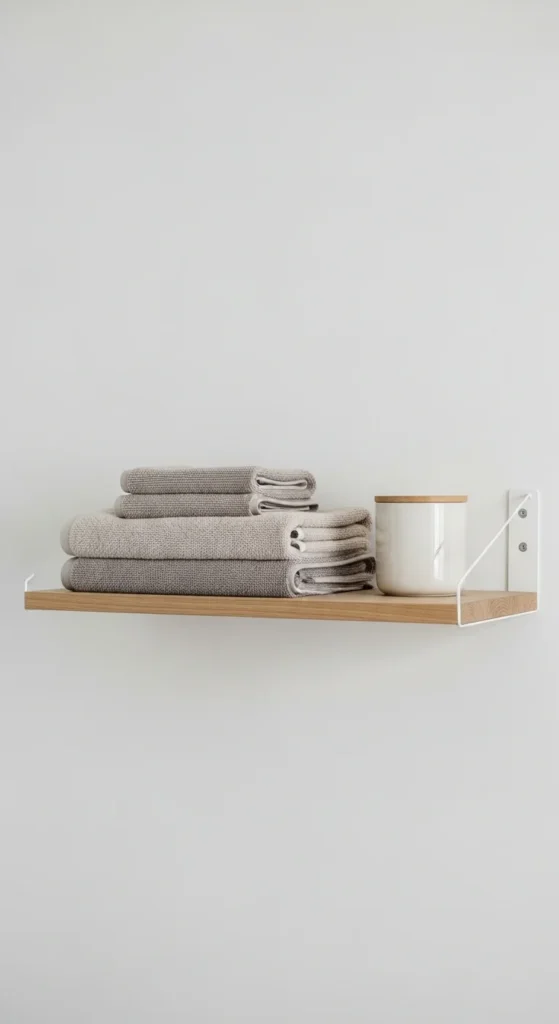
Open shelves fit minimalist bathrooms when used with restraint. One shelf is often enough. Two at most. Limit items to daily essentials so the shelf supports function, not display. Matching containers help maintain order. Leave visible empty space around objects so the shelf feels intentional. For a low-cost DIY, install a slim wood or painted shelf with hidden brackets. Avoid thick boards or decorative supports. The goal is quiet utility. When shelves stay uncluttered, they add storage without visual stress. This makes the bathroom easier to clean and easier to look at.
14. Minimal Accessories Only
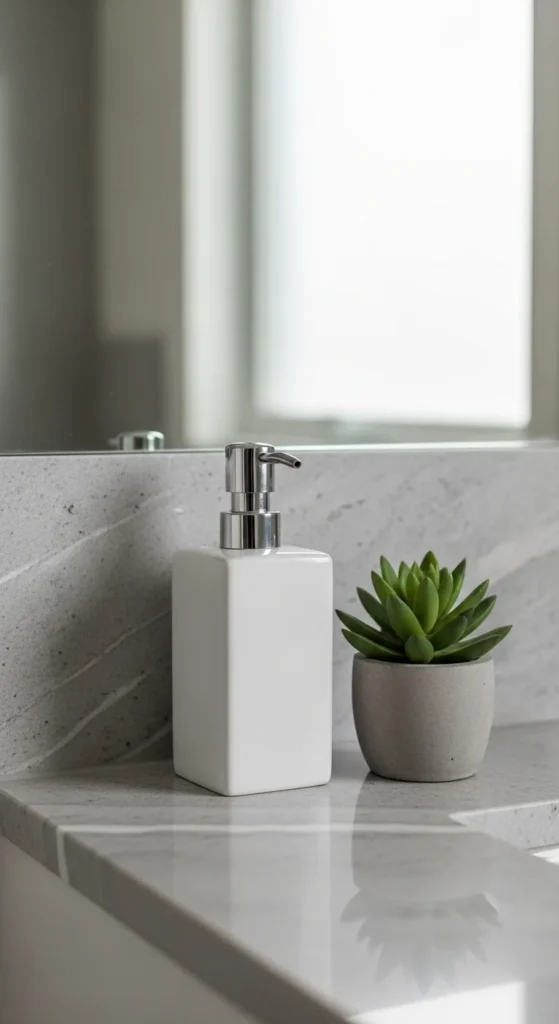
Minimalist bathrooms rely on fewer objects, not decorative layers. Choose accessories that serve a clear purpose. A soap dispenser. A toothbrush cup. That may be enough. Skip novelty items and extras that collect dust. When selecting accessories, look for simple shapes and neutral finishes. Ceramic, stone, or glass work well. For a budget approach, remove items first before buying anything new. Often the room improves immediately. Fewer objects mean faster cleaning and calmer visuals. This habit supports long-term simplicity, not constant rearranging.
15. Concealed Trash Storage
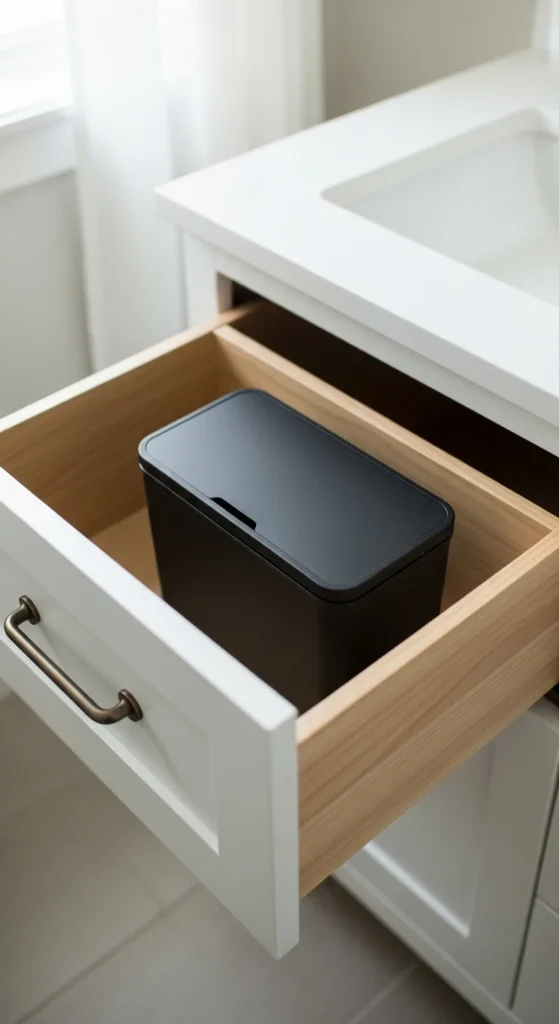
Visible trash breaks the calm of a minimalist bathroom. Concealed storage keeps the room visually quiet. Use under-sink bins, pull-out drawer systems, or small lidded containers hidden inside cabinets. Many organizers fit standard vanities and cost very little. If space is limited, mount a slim bin on the inside of a cabinet door. This small change removes daily clutter from sight. When the eye does not land on waste bins, the room feels cleaner and more intentional.
16. Neutral Textiles
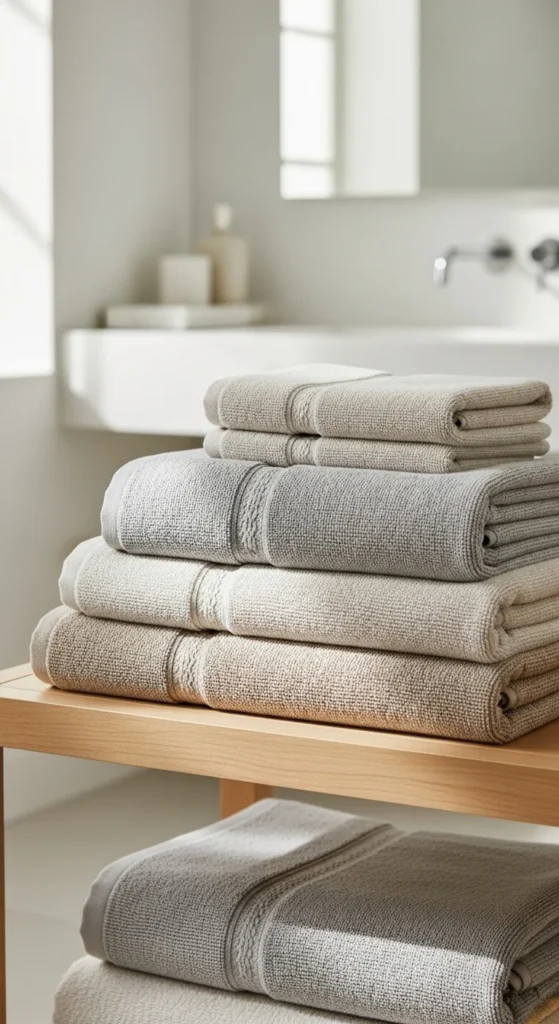
Textiles add softness without clutter when colors stay restrained. Stick to white, beige, or light gray towels. Mix textures instead of colors for interest. Waffle, ribbed, or smooth cotton create variety without visual noise. Replace only hand towels first if budget is tight. They are the most visible items. Keep extras stored away so shelves and counters stay clear. Neutral textiles help the bathroom feel calm even when used daily.
17. Wall-Hung Toilet
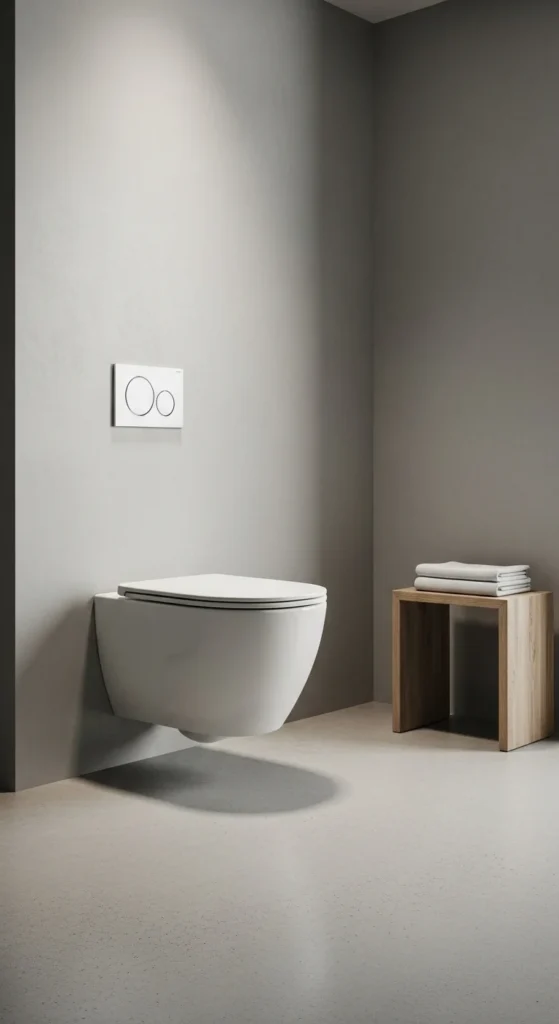
Wall-hung toilets open up floor space and simplify cleaning. The exposed floor creates a lighter visual footprint. This supports a clean, modern look. If replacing the toilet is not realistic, choose a compact floor-mounted model with simple lines. Keep the surrounding area free of decor. Clear space around fixtures helps the bathroom feel less crowded and easier to maintain.
18. Flush Ceiling Lighting
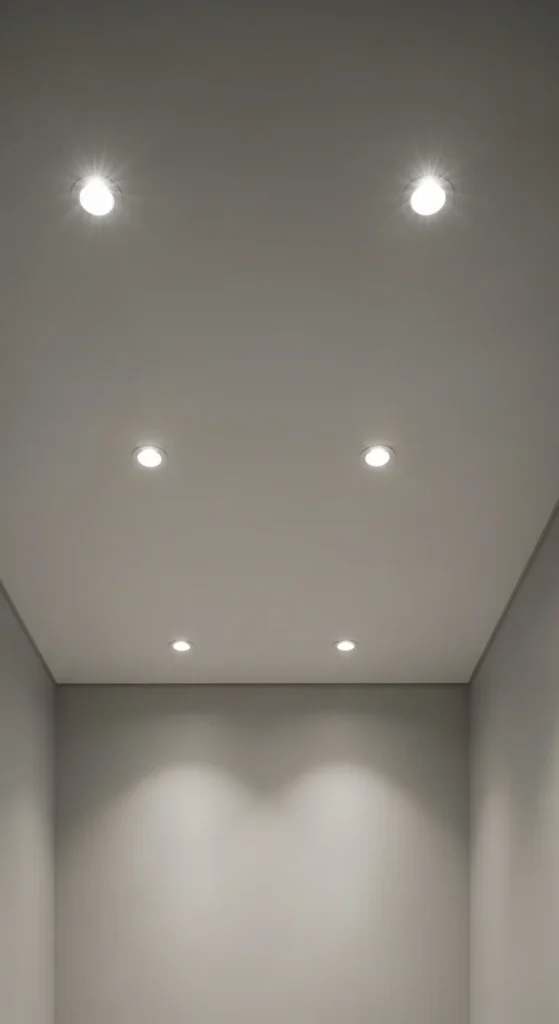
Flush lighting avoids visual clutter overhead. Recessed fixtures spread light evenly across the room. This prevents harsh shadows and dark corners. Choose warm bulbs for a softer effect. Swapping ceiling fixtures is usually straightforward and affordable. Good lighting supports both function and mood. When lighting feels balanced, the entire bathroom feels calmer.
19. Soft Wood Accents
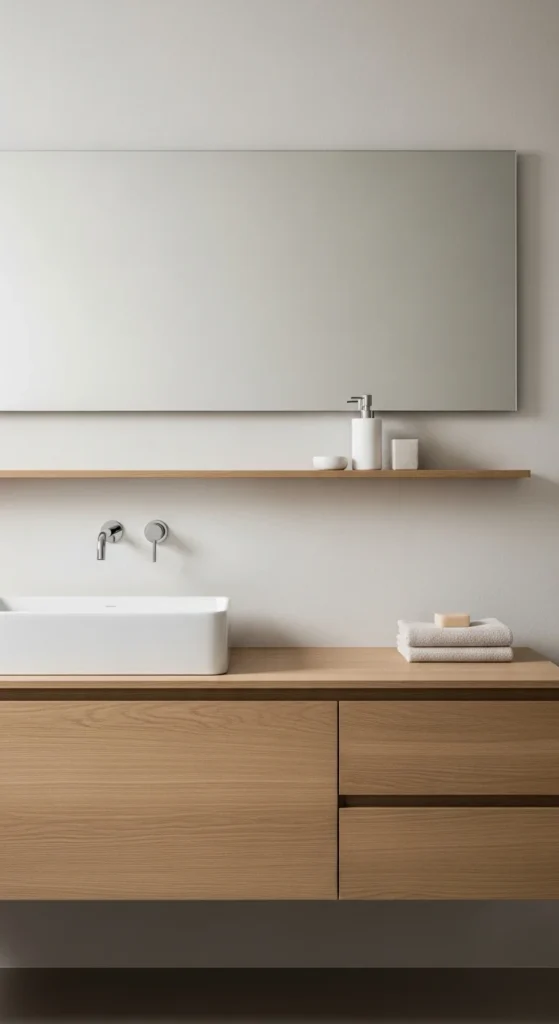
Wood adds warmth without breaking minimalist principles. Use light wood tones with smooth finishes. Limit wood to one or two elements such as a vanity or shelf. This keeps the look clean and grounded. For a budget update, add a wood tray or shelf instead of replacing furniture. Natural texture paired with neutral colors creates quiet comfort.
20. Seamless Flooring
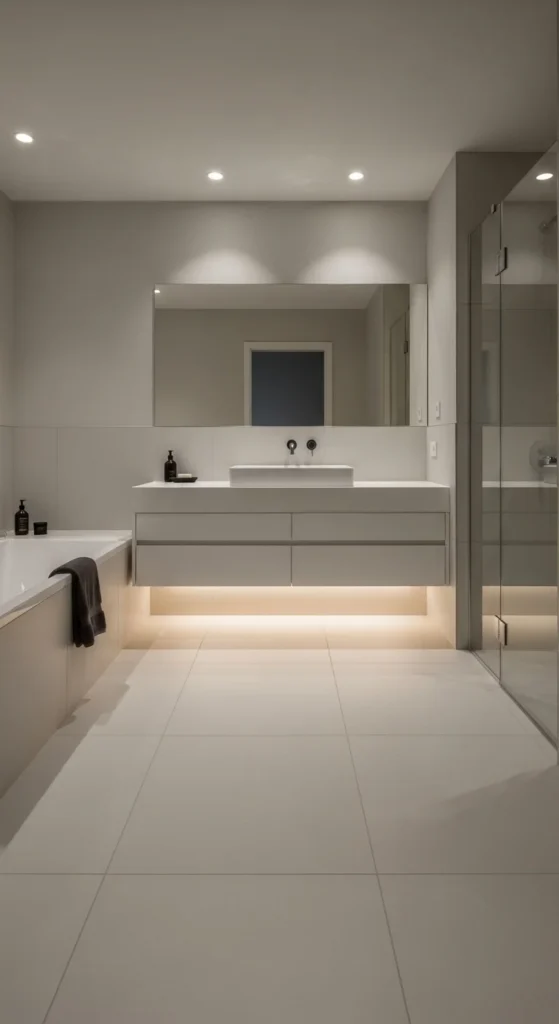
Seamless flooring reduces visual breaks and supports calm design. Light tiles reflect more light and keep the room open. Large tiles reduce grout lines, making cleaning easier. If replacing floors is not possible, choose a rug that matches the floor tone closely. Visual continuity matters more than material.
21. One Subtle Art Piece
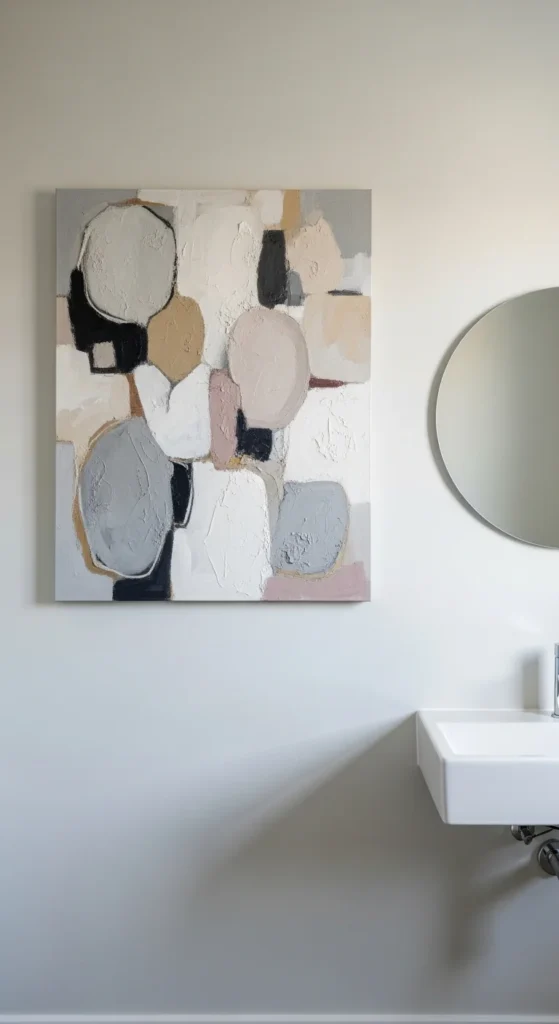
Art belongs in minimalist bathrooms when limited to one piece. Choose simple forms and quiet colors. Avoid busy patterns or text. Place the artwork where it does not compete with mirrors or fixtures. One thoughtful piece adds personality without clutter. More than one usually feels unnecessary.
22. Consistent Finishes Throughout
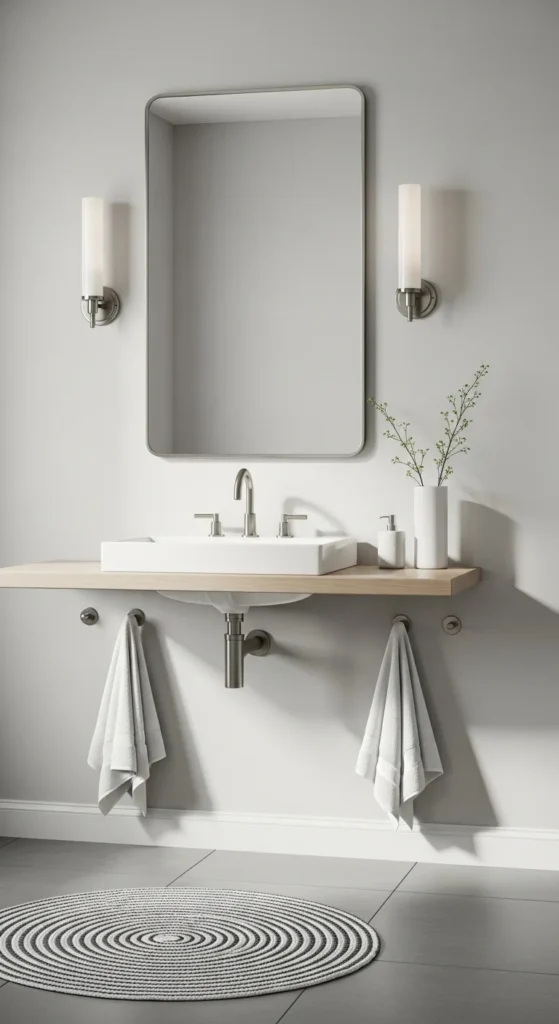
Consistency brings order to minimalist spaces. Use the same metal finish across faucets, hooks, and lighting. This repetition keeps the room visually calm. If replacing everything at once is not possible, update the most visible pieces first. Over time, consistency shapes a bathroom that feels deliberate and easy to live with.
Conclusion
Minimalist bathroom decor works when simplicity supports daily life. Clear surfaces, limited colors, and thoughtful storage reduce visual stress and cleaning effort. You don’t need a full remodel to achieve this look. Start by removing clutter, simplifying finishes, and letting space and light take the lead.