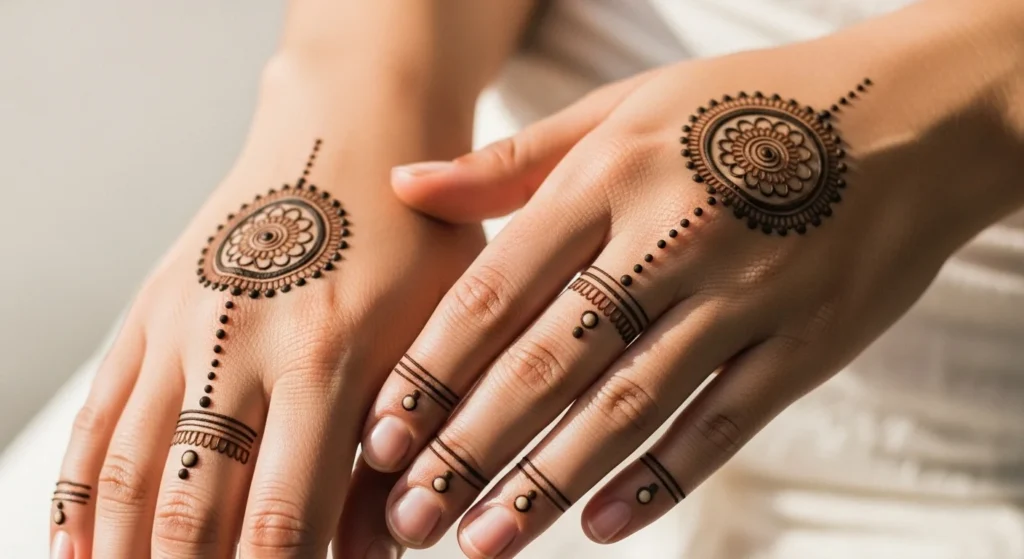
Mandala simple mehndi designs are popular because they give the hand a polished, artistic look without requiring a full heavy pattern. A well-placed circle, a few petal layers, neat dots, and small finger trails can create the feel of a detailed mehndi design while still staying beginner-friendly and quick to draw. That is why mandala mehndi works so well for weddings, Eid, casual functions, festive dinners, and at-home practice. It also matches many styles, from classic floral patterns to modern negative-space looks, especially when the center stays bold and the outer details stay light. The ideas below follow the simple mandala, easy extension, and symmetry-friendly direction reflected in the brief you shared.
1. Single Circle Classic Mandala
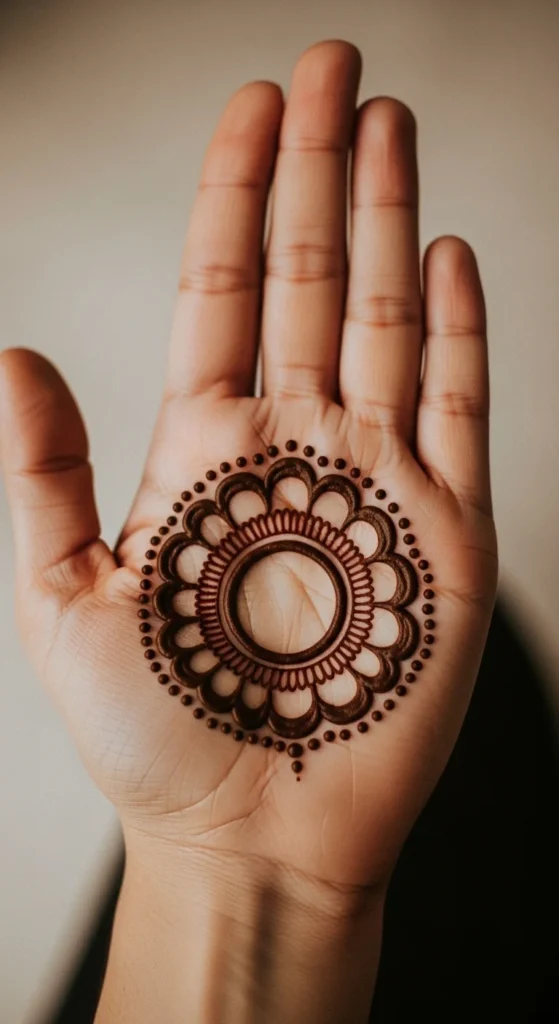
A single circle classic mandala is one of the easiest ways to make mehndi look neat and detailed without doing too much. Start with a small center dot or tiny circle, then build one ring of rounded petals around it. After that, add a thin outer circle and finish with tiny dots, little arches, or mini teardrops. The beauty of this style is that it looks complete very fast. It also works well for beginners because the design grows evenly from the center, which makes spacing easier to manage. If your lines are not perfect, the repetition still helps the pattern look balanced. This is a smart design for casual functions, quick festive looks, or light bridal mehndi when you want something elegant but not too heavy. It also pairs beautifully with plain fingers or one light ring-style finger trail. A classic mandala works especially well in the center of the palm because the circular shape naturally catches attention. The final result feels tidy, traditional, and graceful. It is the kind of design that proves simple mehndi can still look very dressed up.
2. Soft Petal Floral Mandala
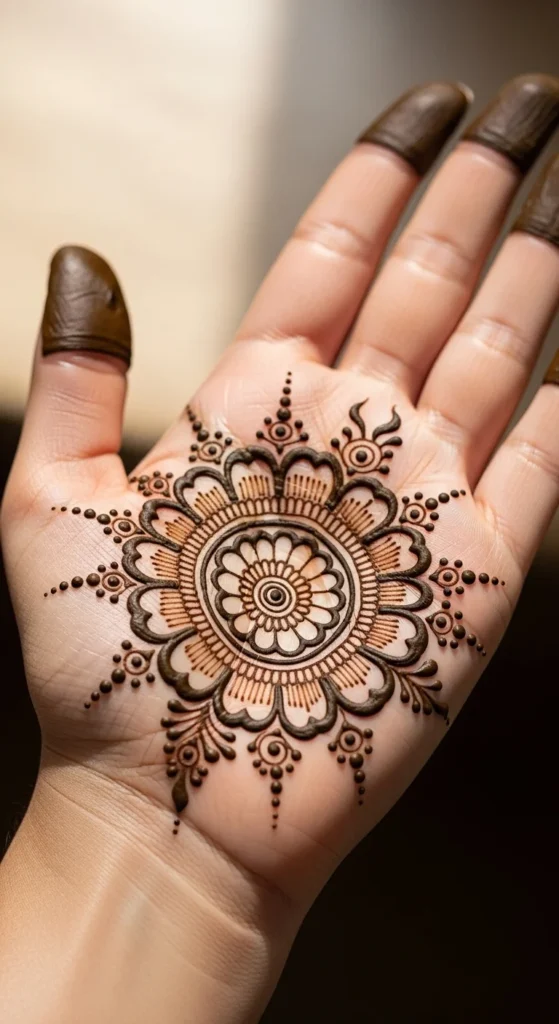
A soft petal floral mandala is perfect when you want a romantic design that looks richer than a plain circle but still stays easy to draw. The basic idea is to build the mandala with flower petals instead of sharp geometric points. Begin with a small center circle, then add one layer of rounded petals, followed by a second layer that sits between the first. This gives the illusion of detail without making the pattern too hard. Once the petal layers are done, add small dots or tiny scallops around the edge to finish it. This design works beautifully for engagement events, festive nights, or simple bridal looks because it feels soft and decorative. It is also budget-friendly for at-home practice since it uses mostly basic shapes. If you want more detail, extend one or two tiny leaf trails outward from the circle. If you want it more minimal, leave the petals alone and stop there. The final look feels feminine, polished, and easy to style with ethnic wear. It has a floral richness without needing a heavy full-hand layout.
3. Dot Grid Geometric Mandala
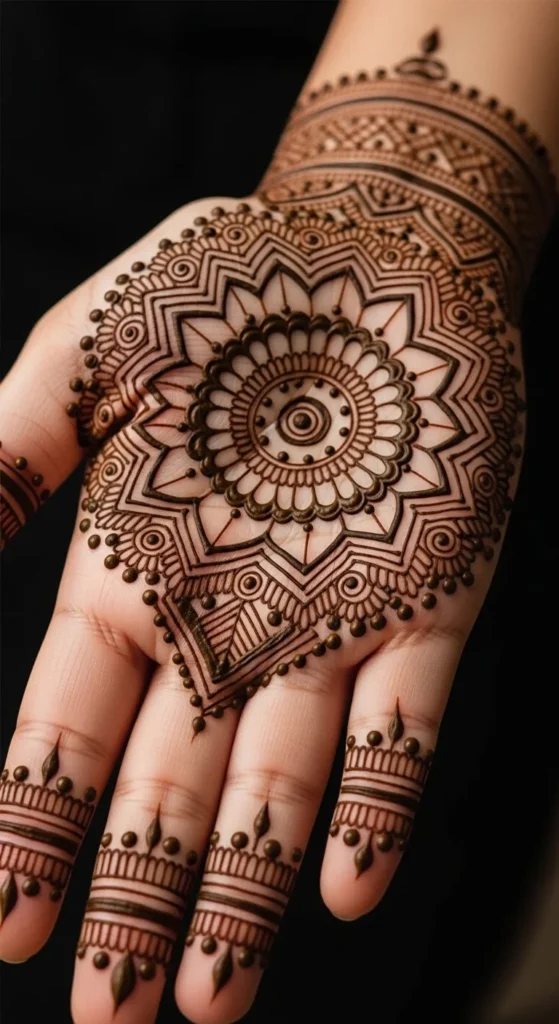
A dot grid geometric mandala is a great choice for people who like cleaner structure in their mehndi. Instead of relying only on freehand petals, this design uses dots, tiny lines, and pointed edges to create a more precise circular layout. Start with a central dot, then place guiding dots around it in an even ring. From there, connect the spaces with short lines, little triangles, or small square-like frames. This makes the design feel detailed, but the method stays very manageable because each part grows from a guide. It is especially useful if symmetry is something you struggle with. The dot structure helps keep everything balanced. This type of mandala looks very nice for modern festive outfits and can also work on the back of the hand for a cleaner finish. If you want to soften it, mix one ring of petals into the geometric layout. If you want a stronger look, keep the edges crisp and add tiny checker details between layers. The final result feels smart, neat, and surprisingly intricate even though it comes from simple repeated shapes.
4. Lotus Center Mandala
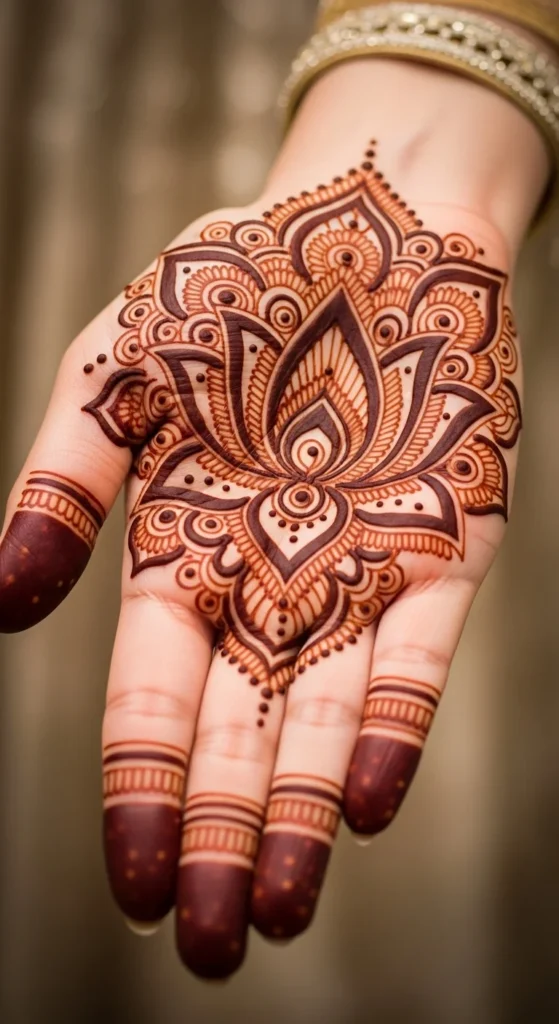
A lotus center mandala is a lovely design when you want something that feels slightly spiritual and decorative at the same time. The lotus shape naturally creates a layered look, which is why it makes even simple mehndi feel more special. Start with a small center, then build lotus petals in one direction first. After that, add a second softer layer behind them so the design feels fuller. Tiny dots, little curves, or a fine circular border around the petals can complete the mandala without making it too busy. This style is especially good for weddings, pooja events, and festive dressing because it looks graceful and meaningful. It also works for beginners if the petals are kept broad and not too sharp. A lotus mandala looks beautiful in the middle of the palm or slightly lower toward the wrist for a different layout. If you want more extension, add small leaf sprays toward the fingers. The final result feels elegant, balanced, and much more detailed than the effort it actually takes.
5. Pearl Drop Mandala
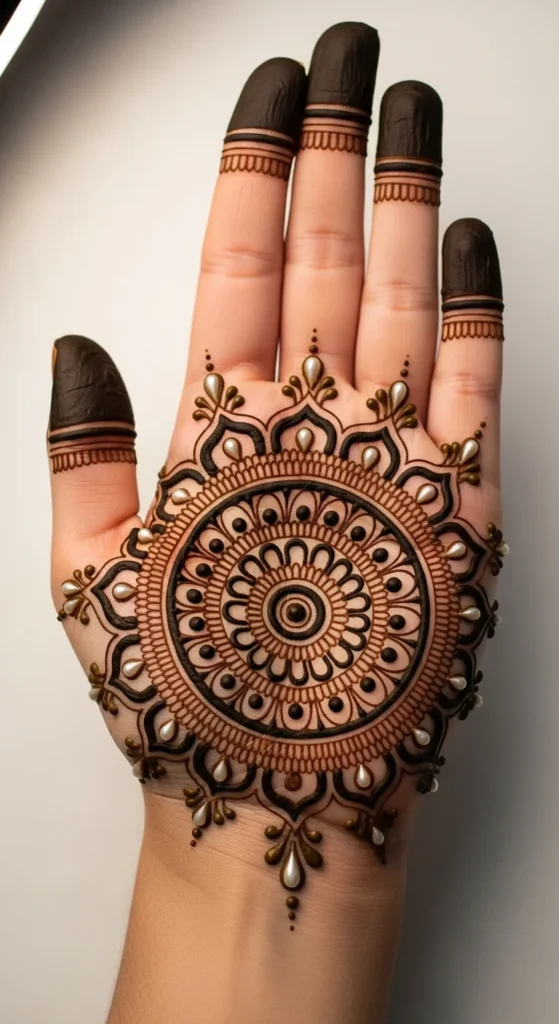
A pearl drop mandala is one of the easiest tricks for making a simple circle look much more detailed. The main mandala can stay basic, with one center and two petal rings, but the magic comes from the outer finishing layer. Add teardrop shapes, little hanging dots, and rounded accents around the border so the design feels fuller. These small additions create the look of lace or jewelry without needing hard filling work. This style is especially nice if you want something that seems intricate in photos but still remains simple to make at home. It works well for palms, backhands, and even feet if you want a matching central motif. The pearl-like drops soften the design and give it movement, which makes it feel richer than a plain closed circle. If you want a bridal version, add a few more drops and tiny swirls. If you want a guest look, keep the border very neat and light. The final result feels polished, ornamental, and very elegant while still being based on easy repeated shapes.
6. Mandala with Finger Vine Trail
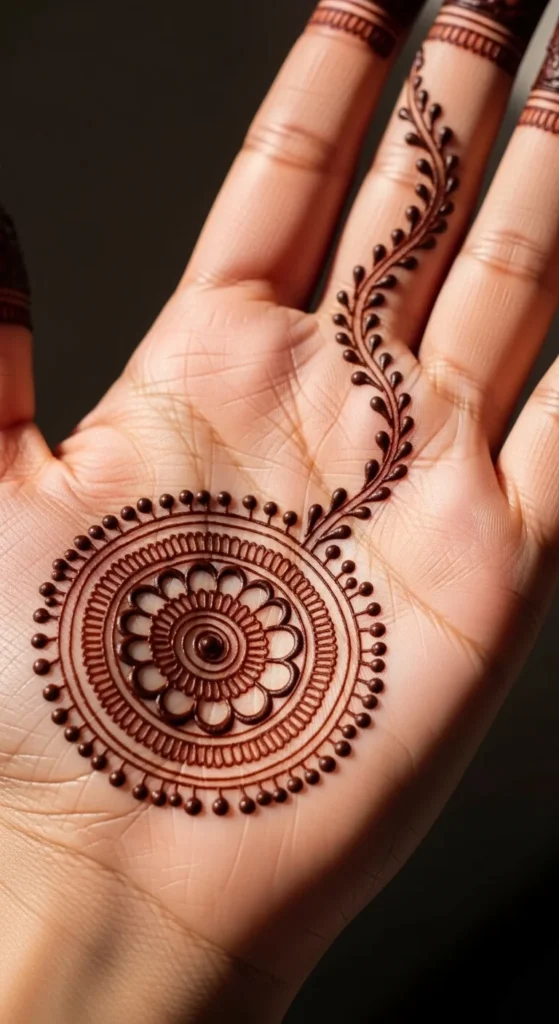
A mandala with a finger vine trail is perfect when you want a simple center design that still feels like a full hand look. The idea is easy. Place the main mandala in the center of the palm, then extend a thin vine, dotted chain, or leafy line toward one finger, usually the ring finger or middle finger. This small extension changes the whole look of the mehndi because it connects the center to the hand shape. That makes the design feel more complete without needing a dense finger pattern. This is a great option for bridesmaids, festive looks, and light wedding functions. It also works well for beginners because the center stays simple and the trail uses only small repeated leaves or dots. If you want a softer finish, use tiny petals along the trail. If you want something more modern, keep the line thin and airy with lots of open skin around it. The final design feels graceful and balanced. It has the charm of a full composition while still staying quick and manageable.
7. Half Palm Mandala
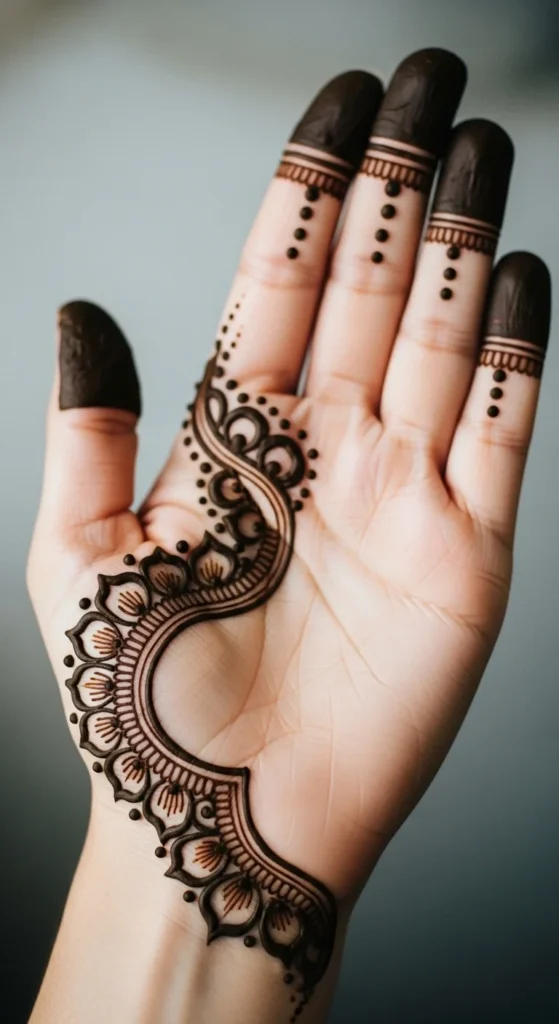
A half palm mandala is a smart design when you want something a little different from the usual center circle. Instead of placing the mandala right in the middle, draw only half of it along one side of the palm. Then let the petals, dots, and curved edges open outward into the empty space. This creates an asymmetrical style that feels very trendy while still using the same easy mandala logic. It is also useful if you worry about perfect circles, because the shape only has to work as a half composition. The open side of the palm gives the design a more modern airy look, which makes it nice for casual festive wear and contemporary bridal styling. If you want more detail, extend a few leaves or tiny chains from the open edge. If you want to keep it very simple, let the half mandala stand on its own. This design looks especially good on the back of the hand too. The final effect feels fashion-forward, clean, and surprisingly detailed without needing a lot of filling or full symmetry.
8. Mirror Twin Mandala Layout
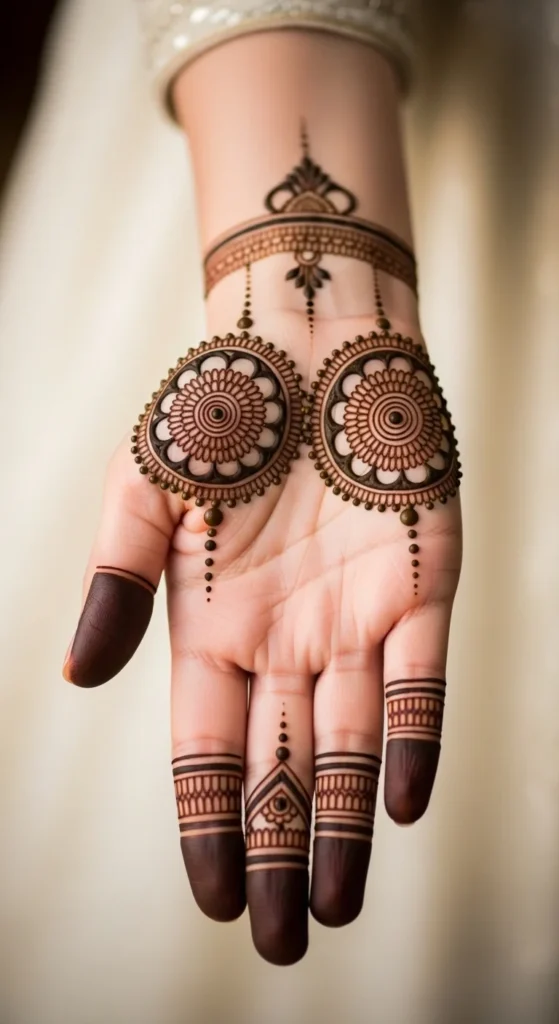
A mirror twin mandala layout creates the illusion of a carefully planned full design while still staying simple. Instead of drawing one large circle, place two smaller matching mandalas on connected areas of the hand, such as the lower palm and upper palm, or the palm and one finger section. The mirrored balance makes the design feel more intricate because the eye reads the repetition as intentional detail. This is especially helpful for people who enjoy symmetry but find huge patterns overwhelming. Two small matching circles can often be easier than one large complicated one. Keep the petal rings similar and let the outer dots match closely so the pair feels balanced. This type of design works well for festive dressing and also photographs beautifully because both shapes help fill the hand without looking crowded. If you want a softer version, connect the two with a dotted chain. If you want a cleaner look, leave them separate. The final design feels structured, elegant, and fuller than a single motif while still staying based on simple circles and repeated details.
9. Negative Space Mandala
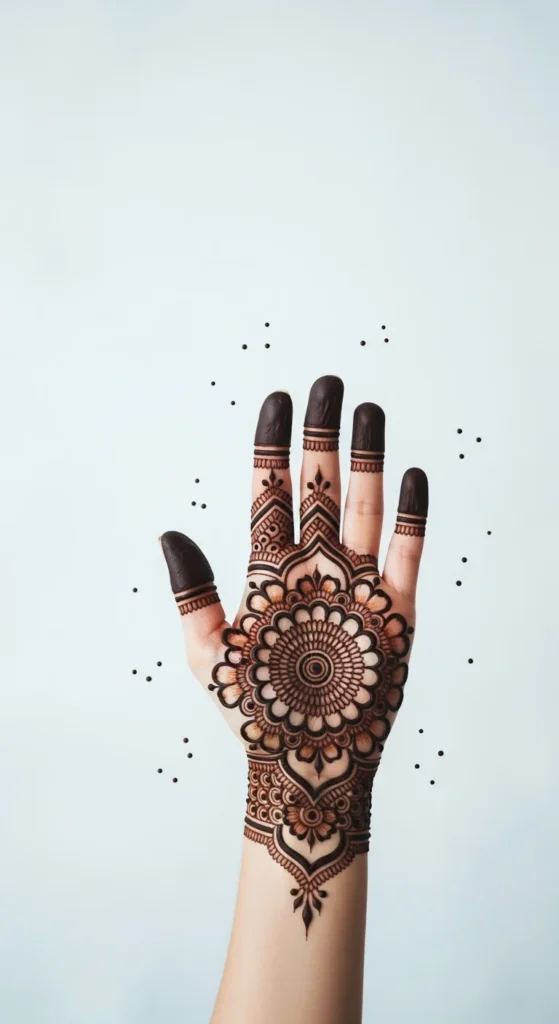
A negative space mandala is perfect for anyone who likes modern mehndi with a light elegant finish. The design uses empty skin as part of the pattern, which makes the mandala feel cleaner and more stylish. Instead of filling every outer ring, leave open gaps between petals, dots, and lines so the shape looks airy. This makes even a small mandala stand out more strongly. It is also a very good option for people who want bridal or festive mehndi that does not feel too heavy on the hands. Start with a bold center, then use slim outer details spaced well apart. Tiny dots, short petal clusters, and little leaf shapes all work beautifully here. This style is good for beginners too because less filling means less pressure. The final design often looks more detailed than it really is because the clean spacing helps each layer stand out. It works beautifully on the palm or backhand and pairs nicely with rings and bracelets. The overall effect feels fresh, stylish, and polished in a quiet way.
10. Bracelet Wrist Mandala
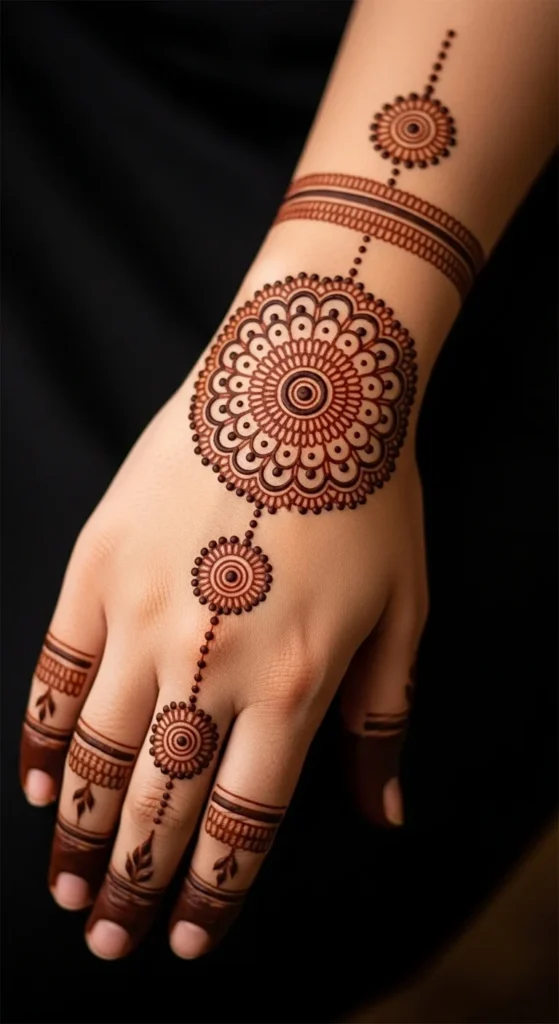
A bracelet wrist mandala is a lovely choice when you want mehndi that feels like hand jewelry. Instead of placing the full focus on the palm only, build a circular mandala at the wrist and then connect it upward with a small trail or tiny finger accents if you want. The circular design acts like the centerpiece of a bracelet, while the extensions feel like chains or ornamental links. This instantly makes the mehndi look more decorative. It is a great option for people who love bangles, hand accessories, and feminine detailing. It also works well for brides who want something elegant but not overloaded across the whole hand. If you are doing it yourself, start with the circle first and treat it like a basic mandala. Then add small dots, teardrops, or leaf trails outward. A bracelet mandala can stay very simple and still look beautiful because the placement itself is interesting. The final result feels delicate, dressy, and a little regal without needing full heavy mehndi coverage.
11. Paisley Fusion Mandala
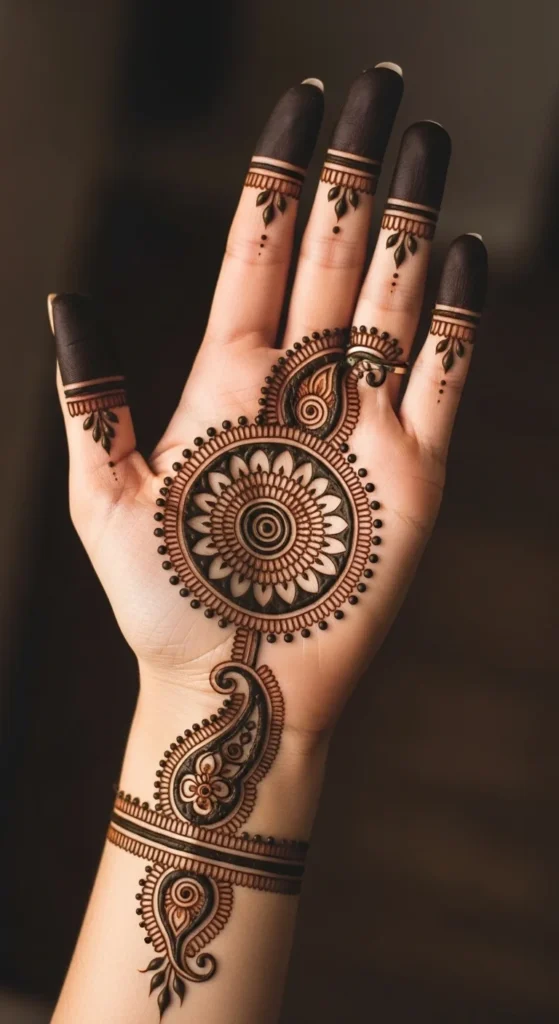
A paisley fusion mandala is a nice design when you want the softness of a circle and the flow of a more traditional mehndi shape. Start with a small mandala center, then attach one or two paisley curves around the outer edge. This makes the design feel layered and more detailed without changing the base method too much. The paisley parts help break the strict round shape, so the final look feels fuller and more classic. This style works very well for weddings and festive wear because it blends traditional mehndi language with an easy circular structure. It is also helpful if you want the design to stretch slightly across the palm without turning into a full heavy pattern. Keep the paisleys broad and decorate them with dots or small petal fillings. That will make them feel rich without becoming hard. The finished look feels graceful, balanced, and a little more intricate than a plain mandala, which is exactly why it works so well for this kind of theme.
12. Ring Finger Mini Mandala
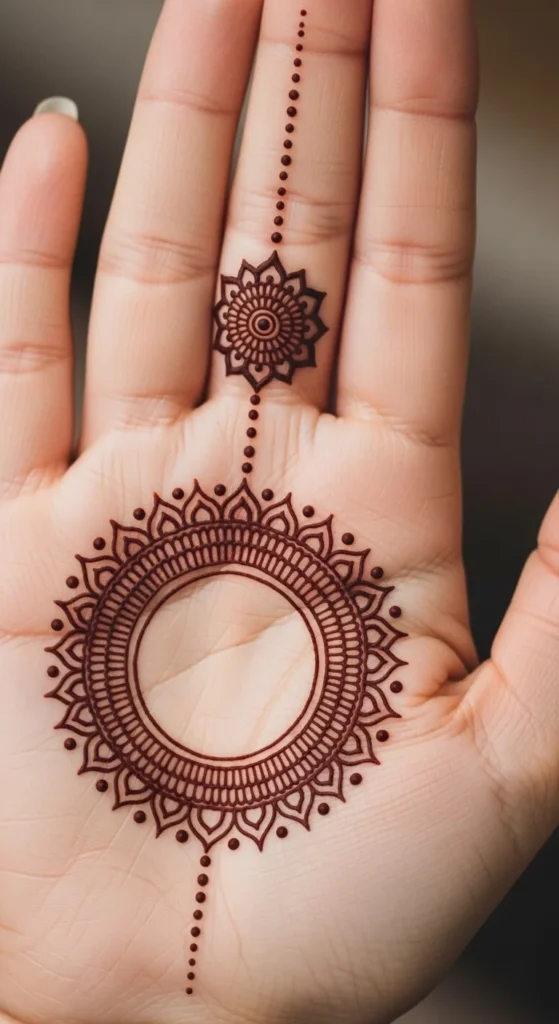
A ring finger mini mandala is a simple way to make a central mehndi design feel more complete and styled. The main palm circle stays the hero, but a smaller matching mandala sits on the ring finger to echo the shape. That repetition gives the whole hand a more thoughtful flow. This is especially nice for engagement looks, wedding guests, and festive events where the ring finger already carries visual attention. The mini mandala can be just one small circle with petals and dots, or it can be connected with a fine dotted line to the main palm design. This keeps the overall look neat and easy. It is also beginner-friendly because the finger motif stays very small and does not need much filling. If you want more detail, add tiny netting or side leaves near the finger base. If you want a clean modern finish, leave lots of open space between the two circles. The final result feels elegant, balanced, and more polished than a single center design while still staying very manageable.
13. Dot-Only Mandala
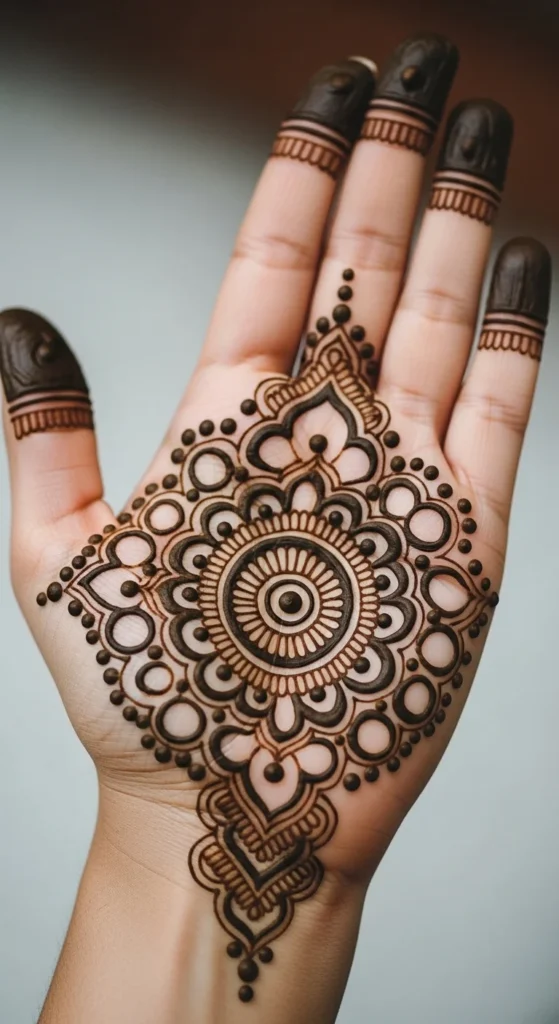
A dot-only mandala is a very clever design because it looks delicate and detailed while using one of the easiest mehndi techniques. Instead of relying on many petals or fillers, build the pattern mostly through circles of dots in different sizes. Start with a center dot, then add a ring of small dots around it. After that, increase the dot size slightly or mix in tiny circular outlines to create contrast. This style works beautifully when you want a soft minimal mehndi look that still reads as elaborate from a distance. It is also a useful design for practice because the repeated dot work helps control spacing and hand movement. If you want more richness, add one thin petal ring between two dot circles. If you want a fully modern result, leave the design as dots only. A dot mandala looks especially pretty on the back of the hand, fingers, and even feet. The final effect feels light, elegant, and surprisingly eye-catching considering how easy the method really is.
14. Heart Petal Mandala
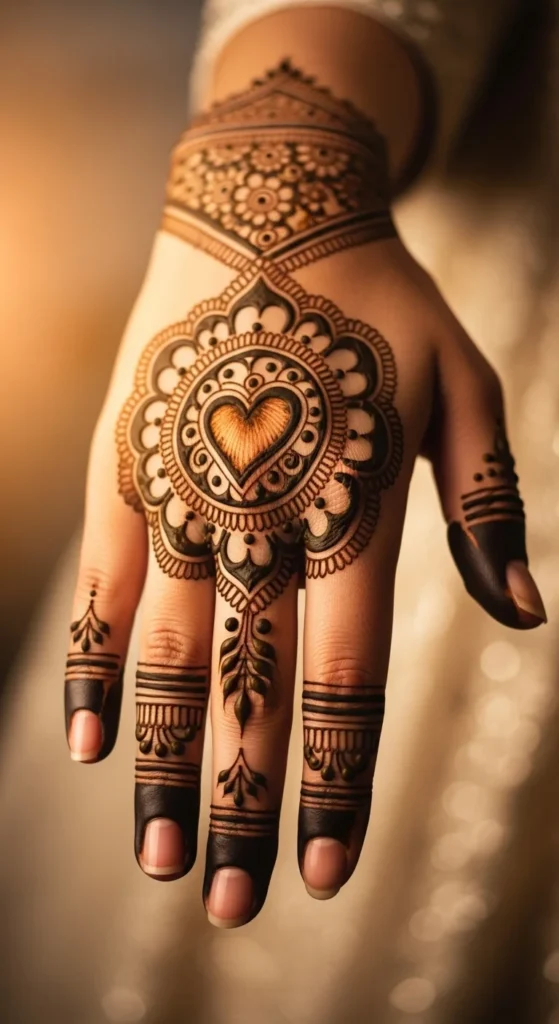
A heart petal mandala is a sweet design for romantic occasions because it mixes the soft feel of flowers with tiny heart-shaped petal forms. The layout still follows a normal mandala pattern, but the petals are drawn with a slight curve that gives them a heart-like look. This makes the design feel special without becoming hard to do. It is a lovely option for brides, engagement events, Valentine-themed functions, or anyone who likes softer feminine mehndi. Start with a center circle, then add one layer of heart petals around it. A second layer can sit between those shapes to create more fullness. Finish with dots and tiny arches if needed. Since the heart effect comes from petal shape rather than a literal big heart drawing, the design still feels elegant and wearable. If you want to keep it subtle, use just one heart-petal ring. If you want more detail, add tiny leaves around the outer edge. The final result feels romantic, gentle, and much more intricate than the effort actually required.
15. Jaal Background Mandala
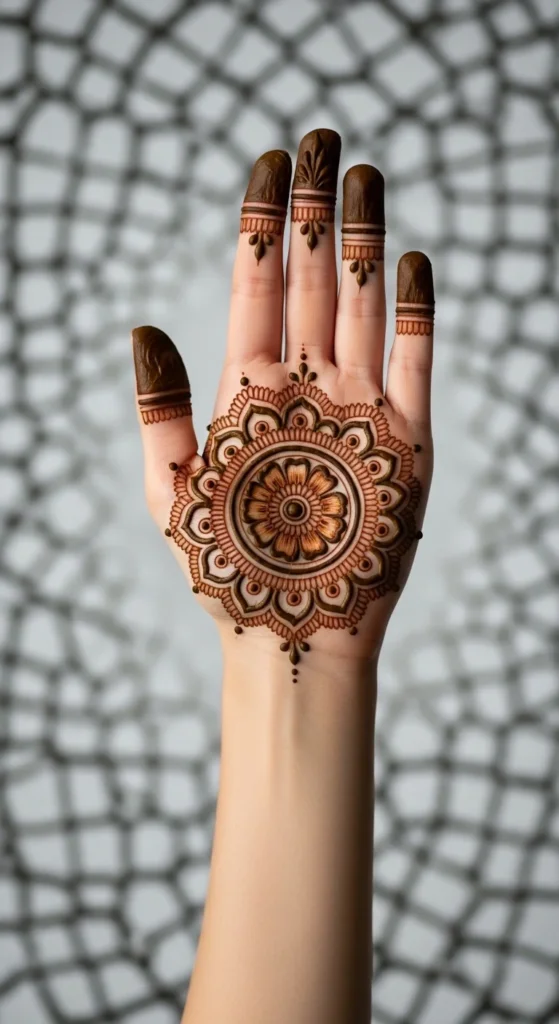
A jaal background mandala is one of the easiest ways to make a simple center design look much more elaborate. The main mandala itself can stay very basic, with one center and two petal rings. Then the surrounding empty area gets filled with a light net or jaal pattern. This instantly makes the mehndi feel richer because the background adds texture and completion. The trick is to keep the jaal small and neat, not spread all over the hand. Just one section around the main circle is often enough. This is especially useful if you feel your mandala looks unfinished once the center is done. A tiny net fill solves that problem quickly. It works very well for bridal events and festive functions, but it can also be done lightly for casual wear. If you want more softness, add a few dots where the jaal lines meet. The final design feels detailed, traditional, and much fuller while still being built from easy straight lines and repeated spacing.
16. Spiral Arm Mandala
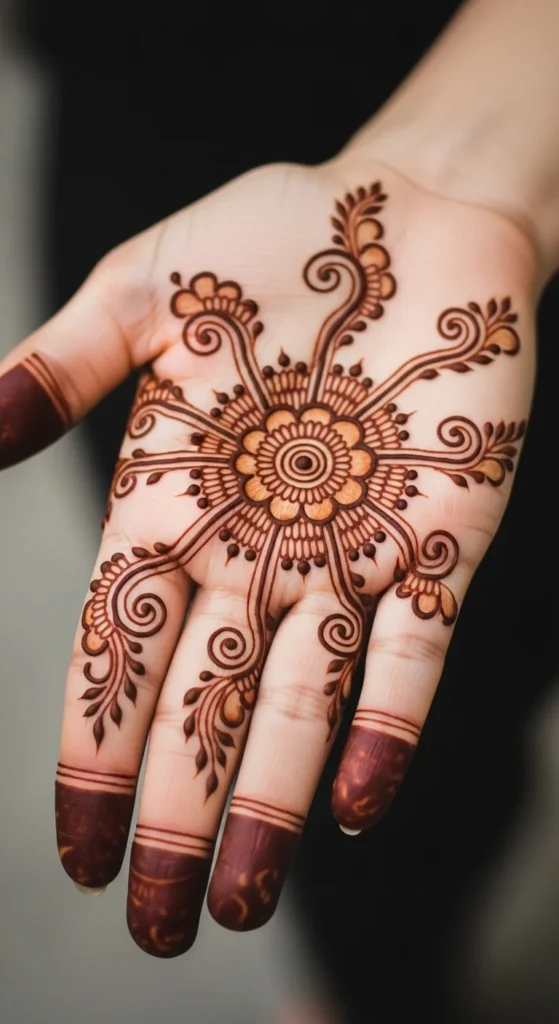
A spiral arm mandala is a great design when you want the center circle to feel more dynamic. Instead of using only even rings around the mandala, add soft curved spiral arms extending outward from the center. These can be finished with dots, teardrops, or little leaf ends. The result feels more flowing and artistic than a standard closed circle. This is a lovely option for people who want something a little more expressive but still easy to draw. The central build remains simple, while the spiral lines do the extra visual work. This style looks especially good on the palm and backhand because the motion gives the mehndi a more alive feeling. If you want a cleaner result, keep the spiral arms thin and evenly spaced. If you want a richer look, add tiny dots between them. The final design feels playful, detailed, and more unusual than a regular mandala, which helps it stand out while still staying beginner-friendly.
17. Leaf Border Mandala
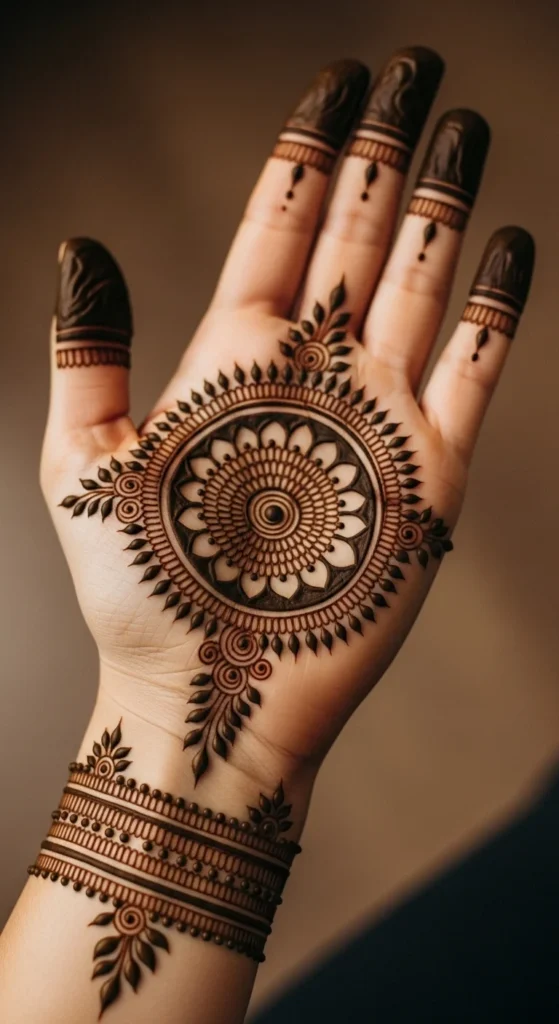
A leaf border mandala is a soft nature-inspired take on the basic circular design. The center can remain simple, but instead of finishing the outer ring only with dots or petals, frame it with tiny leaf shapes. This instantly gives the pattern a more botanical and graceful look. The leaf border can be done as one clean ring or in short clusters around the circle. Either way, it helps the mandala look fuller and more artistic. This style is very good for festive looks where you want something decorative but not too heavy. It also works beautifully for bridesmaids or younger girls because the leaf shapes feel fresh and pretty. At home, it is easy to do because the leaves are just little pointed ovals repeated around the edge. If you want to extend the design, let a few leaf stems trail toward the wrist or fingers. The final result feels gentle, feminine, and more detailed than a plain petal circle while still using very simple shapes.
18. Backhand Center Mandala
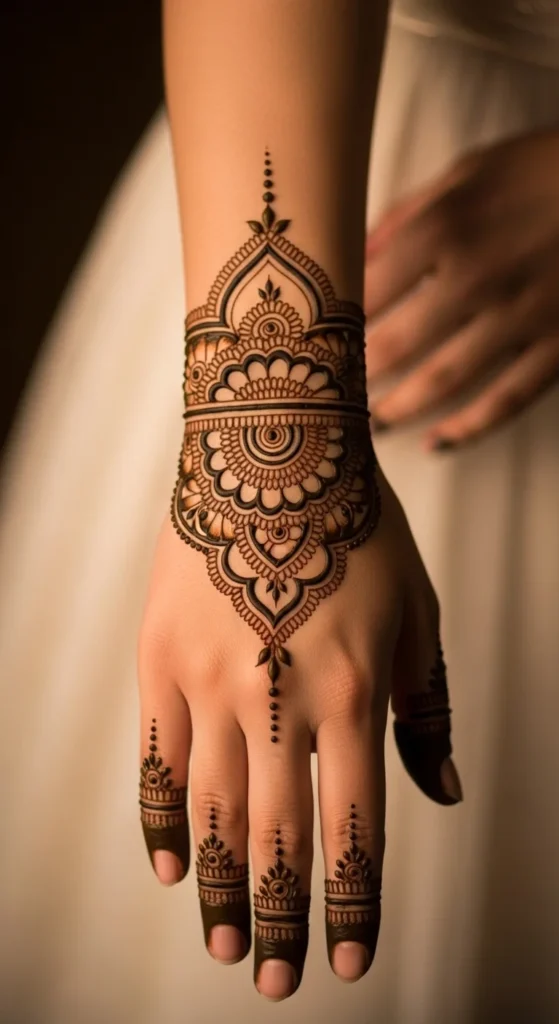
A backhand center mandala is one of the prettiest placements for simple mehndi because the circle sits naturally where the eye falls first. A centered design on the back of the hand feels elegant and polished, especially when paired with light fingertip trails or tiny finger rings. The good thing about backhand mandalas is that they often look more dressed up than palm designs because they stay visible all the time. Start with the main circle, then add one or two soft petal rings and a neat outer dotted edge. If you want a little more detail, draw slim lines toward the fingers and end them with tiny motifs. This style is wonderful for weddings, Eid, family functions, and modern festive wear. It is also easy to adapt. Brides can make it denser, while guests can keep it very light. The final result feels stylish, balanced, and very wearable. It is one of the safest designs to choose when you want something simple that still looks impressive in photos.
19. Peacock Eye Mandala
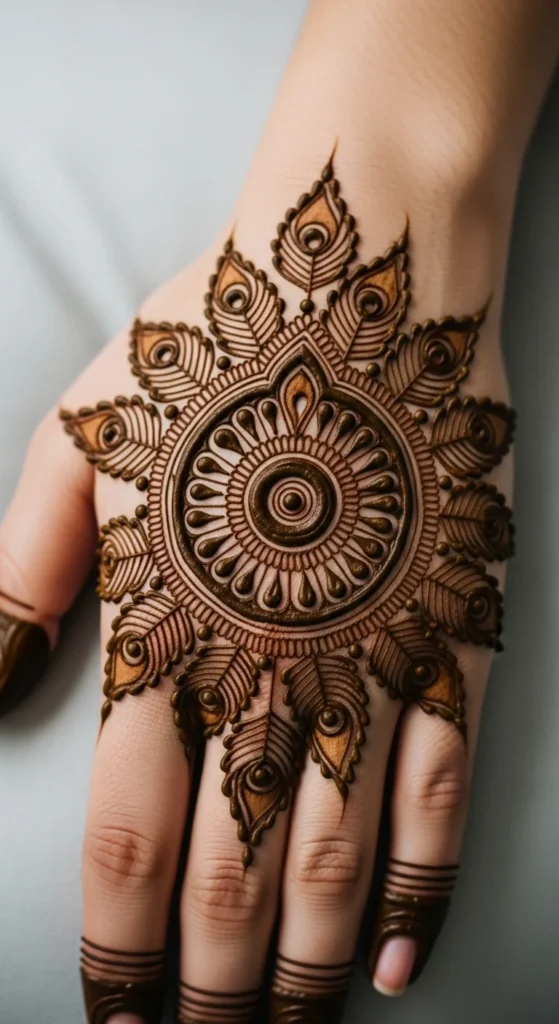
A peacock eye mandala adds a traditional festive feel without needing a full peacock drawing. The idea is to build the central circle with one or two eye-like teardrop forms that echo peacock feathers, then frame them with rounded feather details. This makes the mandala feel richer and more cultural while still staying compact. It is a great design for weddings and festive events because the peacock style naturally feels dressy. At the same time, it remains manageable because you are not drawing a whole bird. Keep the center round and let the feather-like shapes sit around it in repeated layers. Tiny dots and little curved lines can finish the design. If you want to soften it, keep the feather edges broad and simple. If you want more detail, add tiny inner dots inside the feather eyes. The final look feels ornate, elegant, and more intricate than a plain floral mandala while still being made from repeated basic shapes.
20. Thick-and-Thin Line Mandala
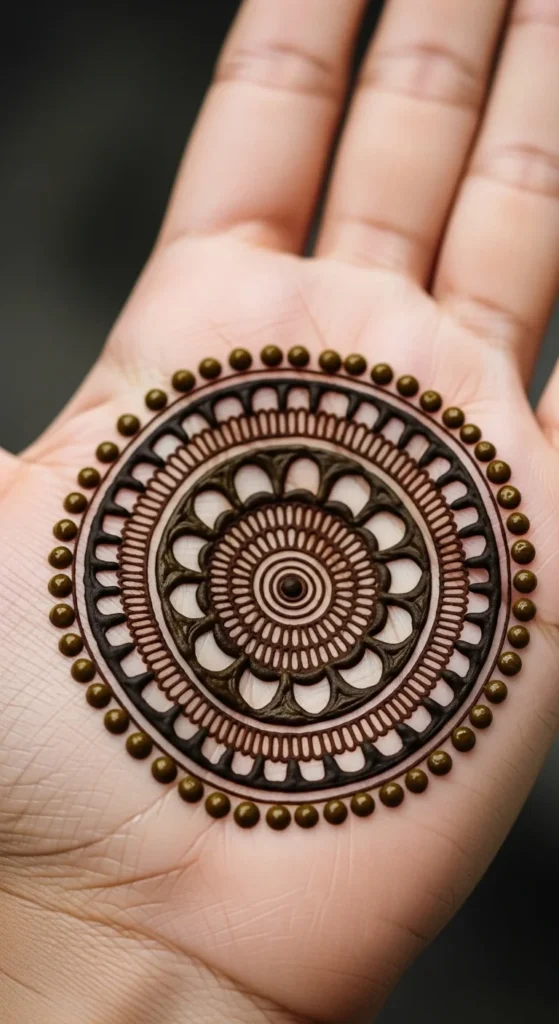
A thick-and-thin line mandala is a simple design trick that makes mehndi look much more advanced. The pattern itself can stay basic, but some outlines are drawn slightly thicker while the inner details remain fine. This creates contrast and gives the mandala more visual depth. It is one of the easiest ways to make a design seem more intricate without actually adding lots of extra elements. Start with a normal circle and petal layout, then choose one ring or border to bolden slightly. Keep the dots and inner details thin so the heavier parts stand out. This technique is especially helpful if you want your mehndi to show more clearly in photos. It works for both palm and backhand designs and can be combined with finger trails, jaal, or leaf borders. The final look feels polished, intentional, and a little more professional. It is a very smart method when you want more impact from a simple layout.
21. Scattered Mandala Layout
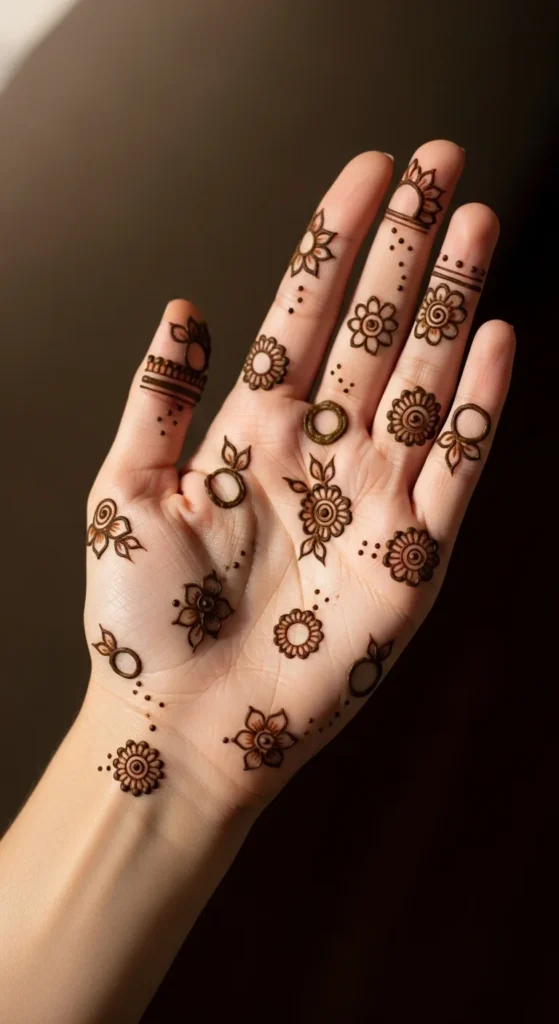
A scattered mandala layout is perfect if you want something trendy and less traditional than one big center circle. Instead of creating one closed mandala, place a few smaller circular motifs across the palm or backhand with airy spacing between them. Some can be full mini mandalas while others are just petal rings or dotted circles. The scattered placement makes the design look artistic and modern, and the eye reads the whole layout as more detailed than it really is. This style is especially good for people who like negative space and contemporary mehndi. It also helps if you struggle with drawing one large perfect circle. Several smaller motifs can feel easier and more forgiving. Keep the spacing balanced so the hand still feels organized. A few tiny leaf trails or dots can connect the circles lightly if you want. The final design feels stylish, light, and very current while still using basic mandala building shapes.
22. Fingertip Half-Mandala Flow
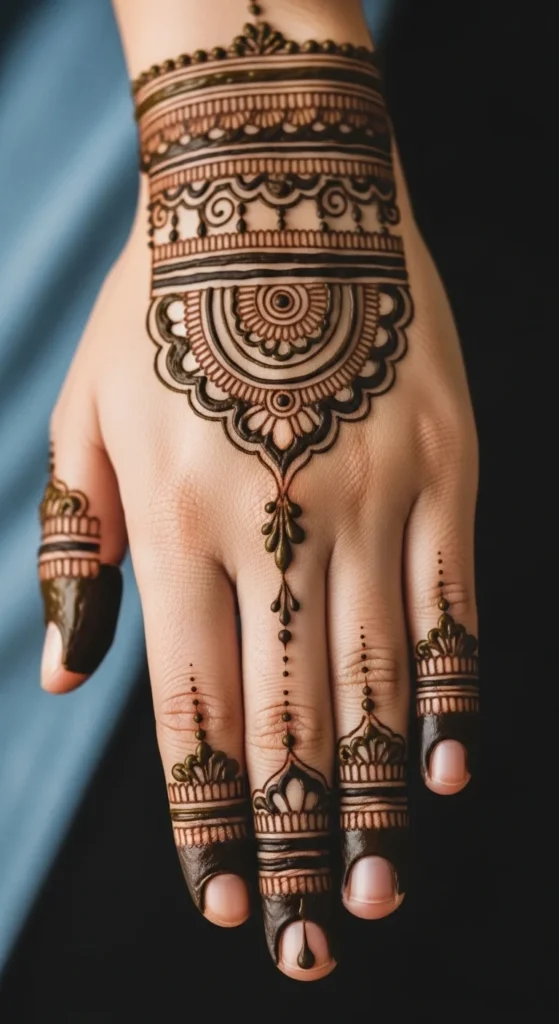
Fingertip half-mandala flow is a beautiful way to make finger mehndi look detailed without filling every finger heavily. The design starts at the fingertips with tiny half-mandalas, arches, or petal fans that point downward toward the palm. When paired with a central circle or small wrist detail, the whole hand feels connected. This approach works very well because the fingers already offer narrow spaces where half-circle forms look natural. It is also a good beginner style since each finger can be worked on separately. If one looks imperfect, the repetition still helps everything feel balanced. This design is especially nice for backhand mehndi, where the finger flow becomes very visible. Keep the center of the hand simple and let the fingers do the decorative work. The final result feels ornate, graceful, and more time-intensive than it really is. It is a very useful option when you want the mehndi to look full in photos without needing dense palm coverage.
23. Foot Mandala with Anklet Trail
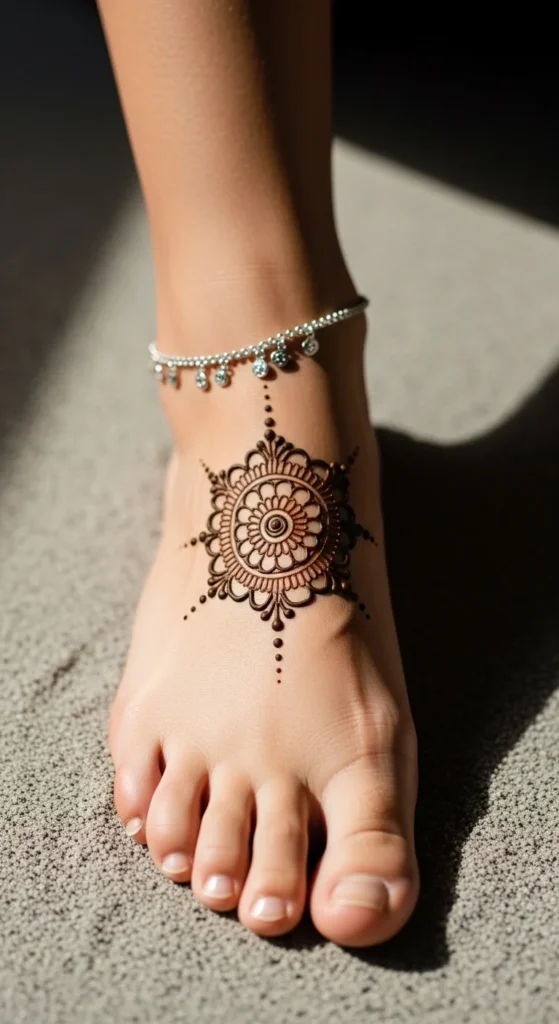
A foot mandala with an anklet trail is a lovely extension of the simple mandala style into foot mehndi. Start with one neat circular motif on the top of the foot, then add a light dotted or floral band near the ankle to mimic an anklet. This instantly makes the design feel more complete and ornamental. It is a great choice for brides, Eid styling, and wedding guests who want elegant feet mehndi without covering the whole foot. The center circle can stay basic, and the anklet part can be just a narrow bracelet-like line with tiny charms or teardrops hanging from it. This keeps the design comfortable, airy, and easy to wear with sandals. If you want extra finish, add a small toe dot pattern too. The final look feels graceful and much more elaborate than one simple foot circle alone. It is a nice example of how one extension trick can change the entire effect of the mehndi.
24. Framed Lotus Mandala
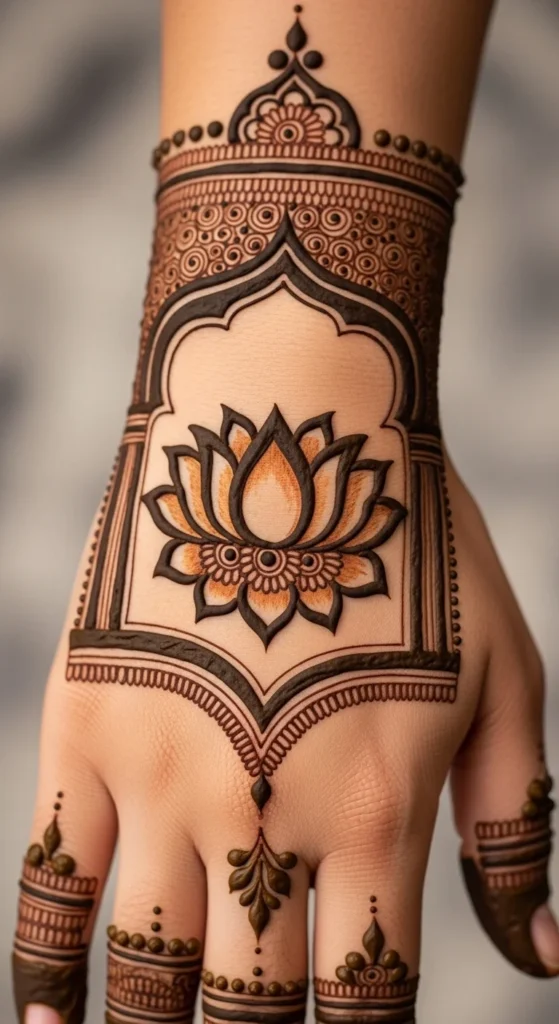
A framed lotus mandala is a beautiful design when you want something that feels slightly ornate without becoming very difficult. The central lotus mandala stays simple, but an arch, frame, or jharokha-inspired border is added around part of it. This makes the pattern feel layered and more architectural. The contrast between the soft petals and the firmer frame lines creates a more impressive look. It is especially nice for festive events and bridal mehndi because it has a richer visual story than a plain circle. At the same time, it still comes from easy shapes: petals, lines, dots, and arches. Keep the frame narrow so it supports the mandala instead of overpowering it. A few hanging drops or leaf details can make it even prettier. The final result feels elegant, decorative, and more intricate than a regular lotus circle while still being realistic for home application.
25. Five-Minute Core plus Easy Extensions
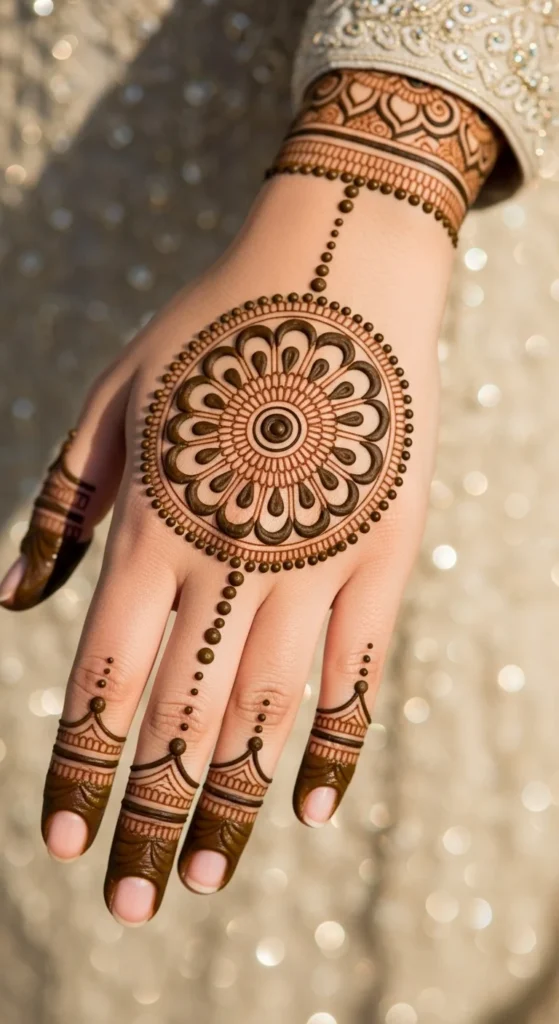
A five-minute core plus easy extensions design is the most practical mandala style when you want flexibility. Start with one quick central mandala made from a dot, a petal ring, and an outer border. That alone already looks nice. Then decide how much more you want. Add tiny dots for a softer finish, one finger vine for extra flow, mini ring motifs for detail, or a light jaal section if the hand still feels empty. This method is useful because it lets you stop early if time is short or keep going if you want more richness. It is ideal for beginners, busy festive days, and anyone doing mehndi at home without much planning. The core stays simple and reliable, while the extensions help the design look more intricate little by little. This kind of approach takes the pressure away because the hand already looks complete after the first stage. The final result feels adaptable, neat, and very smart for real-life mehndi use. It gives you a polished mandala look without forcing one fixed complicated design.
Conclusion
Mandala simple mehndi designs work so well because they build beauty through repetition, balance, and smart placement instead of hard full-hand filling. A center circle, petal layers, dot borders, finger trails, leaf frames, and light jaal can all make a design look rich while still staying easy enough to draw at home. Start with one clean circle, keep the spacing neat, and add only one or two extensions at a time. That is often enough to make a simple mehndi look detailed, graceful, and event-ready without turning the process into something stressful.

Lily Summers is a digital artist and creative storyteller who loves bringing colorful characters to life. With a passion for cartoons, fan art, and playful sketches, she inspires others to explore their imagination through art. When she’s not sketching, you’ll find her dreaming up new ideas for CraftedWizard.com to spark creativity in every artist. 🌈✨