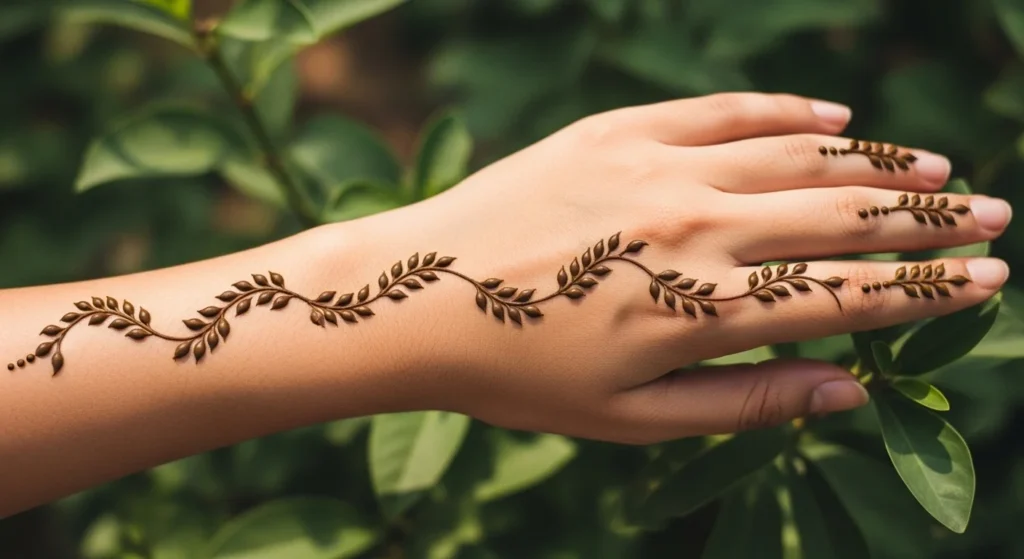
Leafy mehndi designs are popular because they feel light, graceful, and easy to wear for both casual days and festive moments. Instead of dense fills and very heavy motifs, this style uses leaf bunches, slim vines, dots, and soft Arabic-inspired flow to create a natural look that still feels polished. Many 2026 mehndi trends lean toward back-hand leafy layouts, finger trails, wrist cuffs, and open spaces that let the design breathe while keeping the hand elegant. These ideas are especially helpful for beginners because one leaf shape can be repeated in many ways, which makes the design look stylish without feeling hard to draw.
1. Cluster Leaf Magic
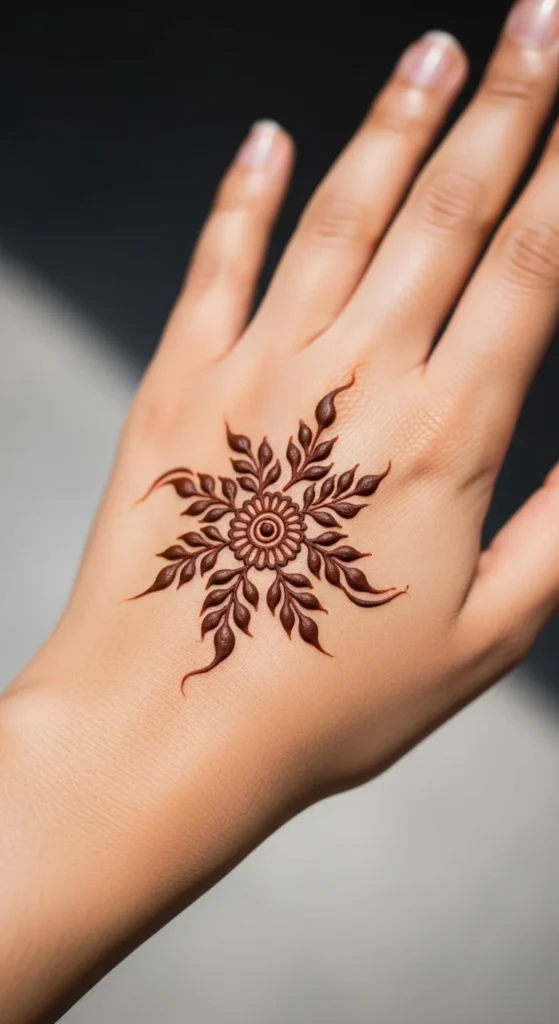
A leaf bunch is one of the easiest ways to make mehndi look pretty without making the hand feel crowded. Start with one small curved stem, then place short leaves on both sides in pairs or tiny groups. This creates a neat cluster that looks fuller than a single vine but still stays simple enough for beginners. The nice part is that you only need to repeat one basic leaf shape, which makes practice much easier. If you want the cluster to look more natural, keep the center leaves slightly larger and the outer ones a little smaller. You can place this design in the middle of the back hand, near the wrist, or even on the side of the palm. Add a few dots around the bunch if the design feels too plain. This style is also good for quick mehndi because it takes less time than heavy bridal patterns and still gives a polished finish. If one leaf turns out uneven, just add another small leaf beside it and the whole cluster looks balanced again. It is simple, soft, and very wearable for everyday events.
2. Reverse Glam Vines
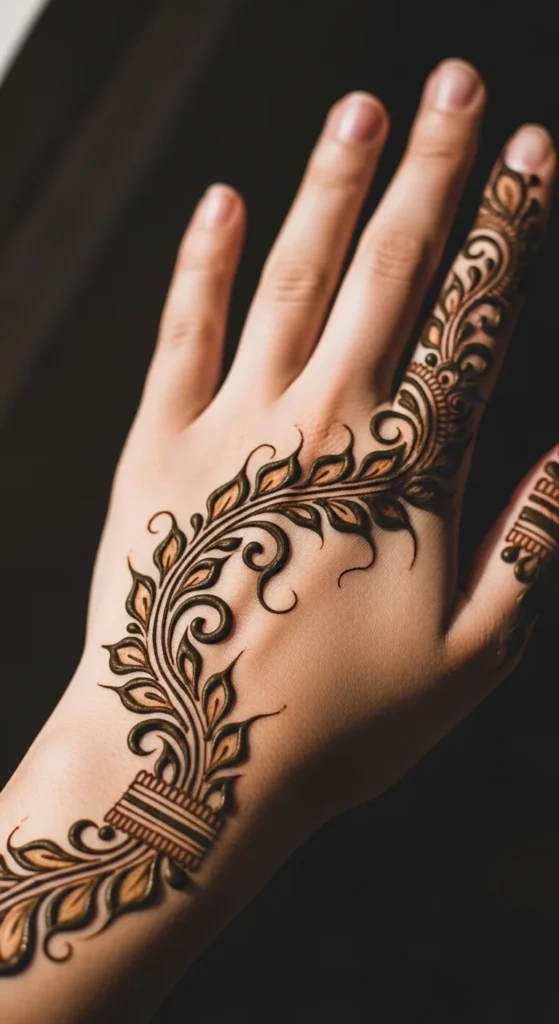
A back-hand leafy vine looks graceful because it follows the natural length of the hand. Start near the wrist or outer edge of the hand and let the vine move diagonally upward toward the index finger or middle finger. Then place leaf pairs along the line so the pattern feels connected and smooth. This style works so well because the open skin around the vine makes every leaf stand out more clearly. It is a smart choice for beginners because you are not trying to fill the whole hand. You are just guiding one clean path and decorating it. Keep the lower leaves slightly bigger and make them smaller as the vine moves upward. That gives the design a softer finish. If you want more detail, add dots near the stem or a few tiny curves between leaf pairs. This design is lovely for Eid, dinners, and family gatherings because it looks elegant in photos and still feels light on the hand. It is one of the best leafy mehndi layouts when you want something stylish without a lot of stress.
3. Breathable Branches
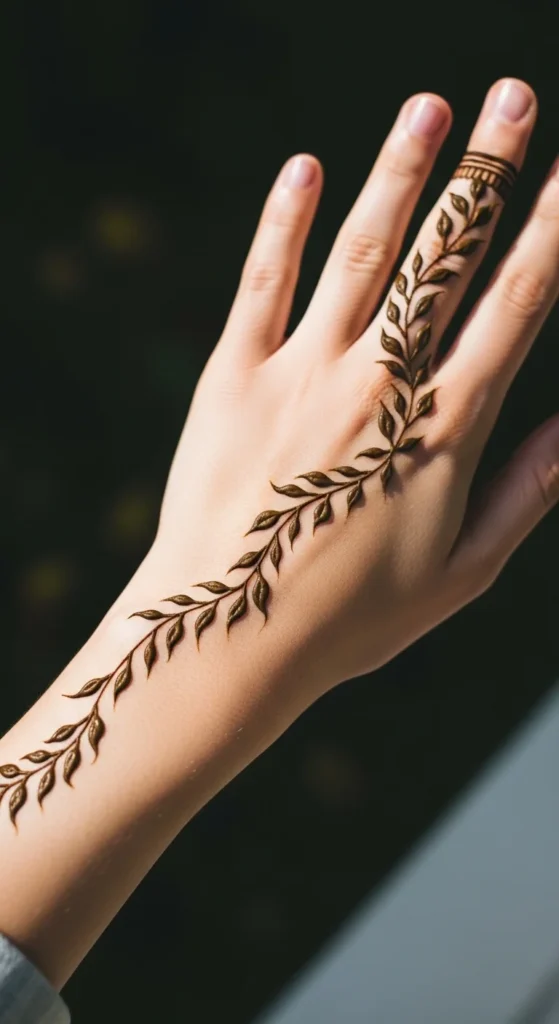
Some of the prettiest mehndi designs look beautiful because they leave space. A breathable leafy branch design uses thin curved lines, small leaves, and wide open areas so the hand looks neat and soft rather than dense. Begin with one slim branch and add leaves only in selected sections instead of covering every inch of the line. This makes the design feel more natural, like a real plant stem moving across the skin. If you want a modern simple mehndi look, this style works very well. It is also budget-friendly because it uses less henna paste than full-hand fills. If you are new to mehndi, sketch the main path lightly with a washable pencil first. Then follow that shape with your cone. Keep the leaves slim and pointed, and avoid making them too thick. A few tiny dots can be placed near the leaf tips for softness. This style is nice for college, daily wear, and small festive occasions because it feels dressed up without looking too heavy. The open space is what gives it charm, so let the design breathe.
4. Dainty Digit Trails
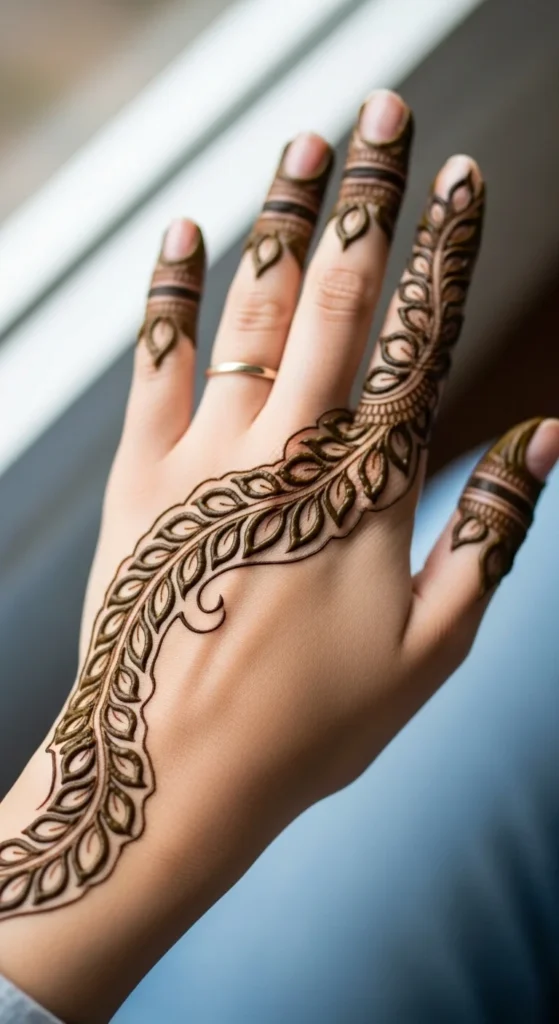
Finger trails can make a small mehndi design look complete very quickly. Start with a leafy bunch or slim vine on the back hand, then extend one thin trail upward toward a finger. Add tiny leaves along the side of that line so the finger looks decorated without becoming crowded. This works especially well on the index finger, ring finger, or middle finger because those fingers naturally frame the hand. For a lighter look, decorate only one side of the finger instead of wrapping the whole finger in pattern. That makes the design easier for beginners and keeps the final look elegant. If the trail seems too plain, add two or three tiny dots between the leaves. A larger leaf near the finger base and smaller ones higher up usually looks very pretty. This design is perfect when you want something quick but still polished. It also pairs nicely with back-hand Arabic leafy styles. Even if your main design is very small, adding a finger trail gives the hand extra length and movement. It is simple, pretty, and easy to repeat on the other hand if you want a matching set.
5. Floral Fusion Leaves
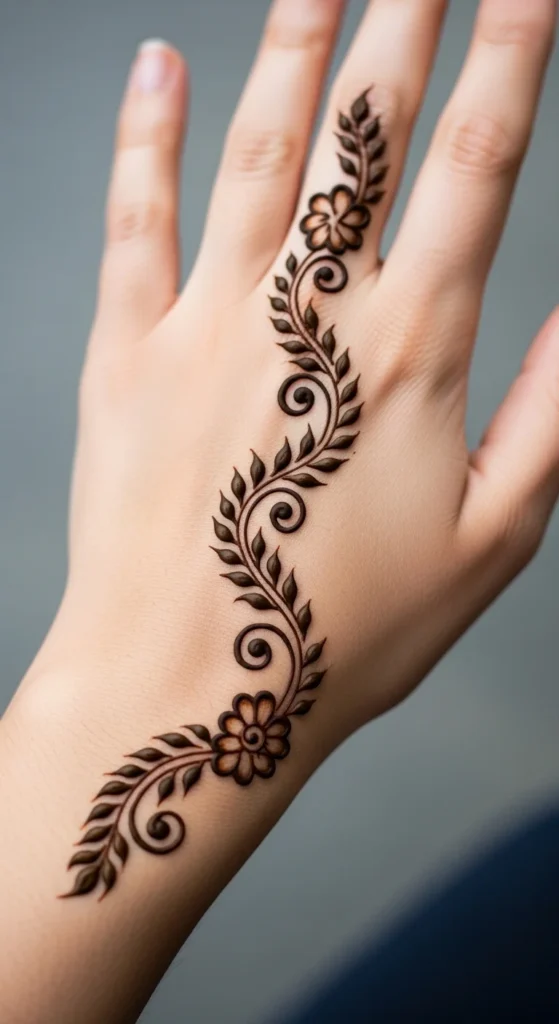
Leafy mehndi looks even softer when one small floral detail is added beside the leaves. Start with a basic vine or leaf bunch, then place one tiny flower swirl or petal shape near the center of the design. This gives the pattern a gentle Arabic feel while keeping the leafy theme in focus. The trick is to keep the flower small and let the leaves stay as the main feature. That way the design feels balanced and not overly busy. This idea works well for Eid, Ramadan gatherings, and soft bridal side designs because it feels slightly dressier than plain vines. If you are a beginner, you can make the flower as a simple spiral with four or five petals. Then let leaves grow outward from it. If one side feels empty, add dots instead of extra flowers so the pattern stays airy. This kind of design also photographs beautifully because the floral center draws attention while the leaves add movement. It is a simple way to make your mehndi feel more festive without turning it into a heavy full-hand pattern.
6. Thick Stroke Starters
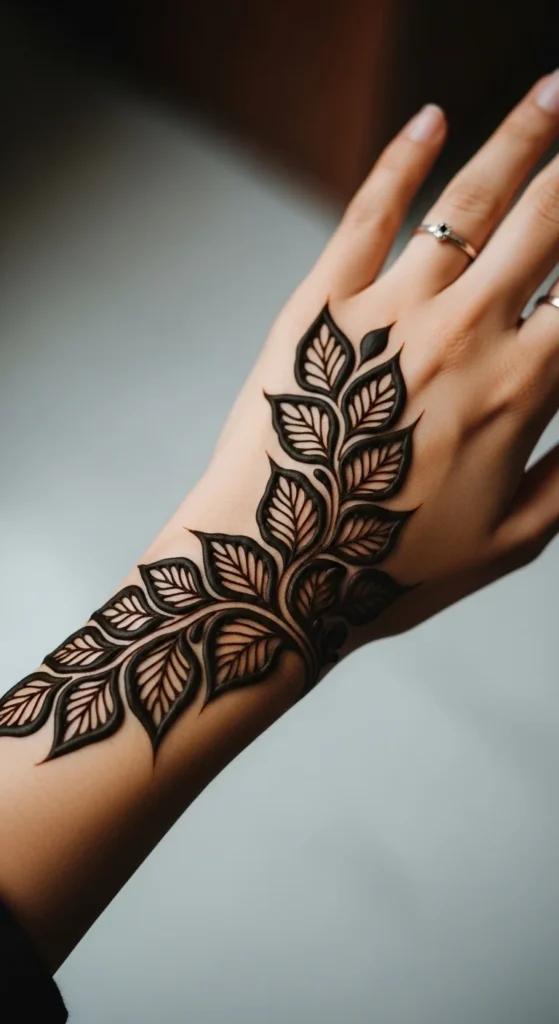
Bold leafy outlines are very useful when you are still learning cone control. Thin lines can wobble if your hand is not steady yet, but a slightly bolder stroke often looks cleaner and more intentional. Start with a medium-thick stem, then draw leaf shapes with clear outer edges. You can leave the inside open or add one tiny line through the center of each leaf. This style looks especially nice on the back hand and wrist because the bold outlines stand out well without needing a lot of filling. It also helps the stain look sharper after the mehndi dries. A good beginner trick is to cut your cone tip so the paste flows smoothly but not too fast. If it comes out unevenly, test the pressure on paper or glass first. Bold leafy mehndi works well for simple festive looks because it is easy to see from a distance and still feels elegant. You can pair it with dots, a curved wrist trail, or a small finger pattern. If you want a leafy design that looks stylish and beginner-friendly at the same time, bold outlines are a very strong option.
7. Flowing Links
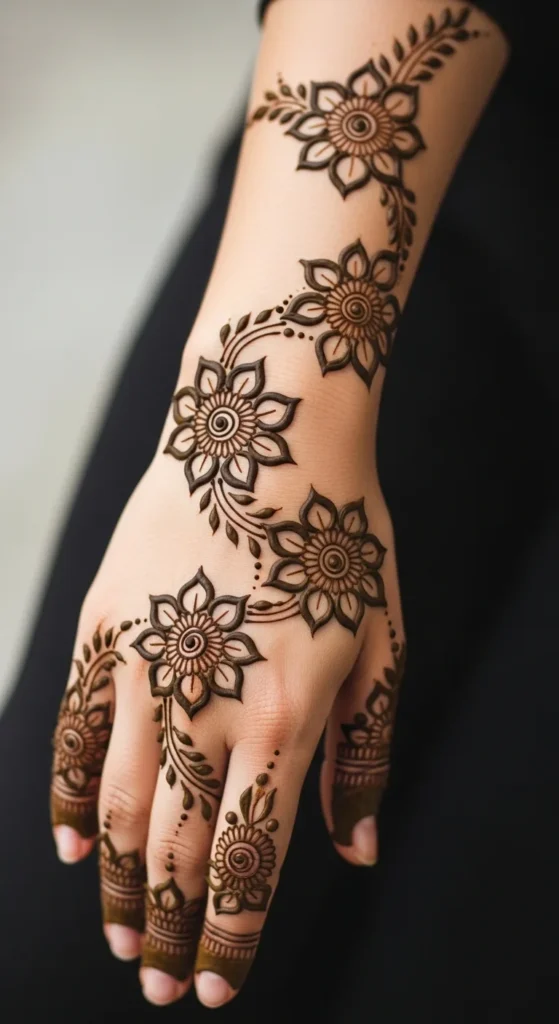
A connected leafy design looks beautiful because it guides the eye across the hand. Start by creating one leaf bunch near the wrist, another near the center of the back hand, and a smaller one near the finger area. Then join them with slim curved vine lines. These connections make the design feel larger without filling everything in. This is helpful if you want a more detailed look but still want open spaces between motifs. Each bunch can stay simple, which makes the whole design easier to draw. The linking vines should curve gently rather than move in stiff straight lines. That gives the design a softer and more organic finish. You can use tiny dots between the linked sections if any area feels too empty. This layout is also very beginner-friendly because you are working with small repeated parts instead of one large difficult pattern. If one bunch turns out slightly off, the connecting lines often help the overall design still look balanced. This is a smart choice for someone who wants a graceful full-hand feel while keeping the design easy and manageable.
8. Pebble Dot Leaves
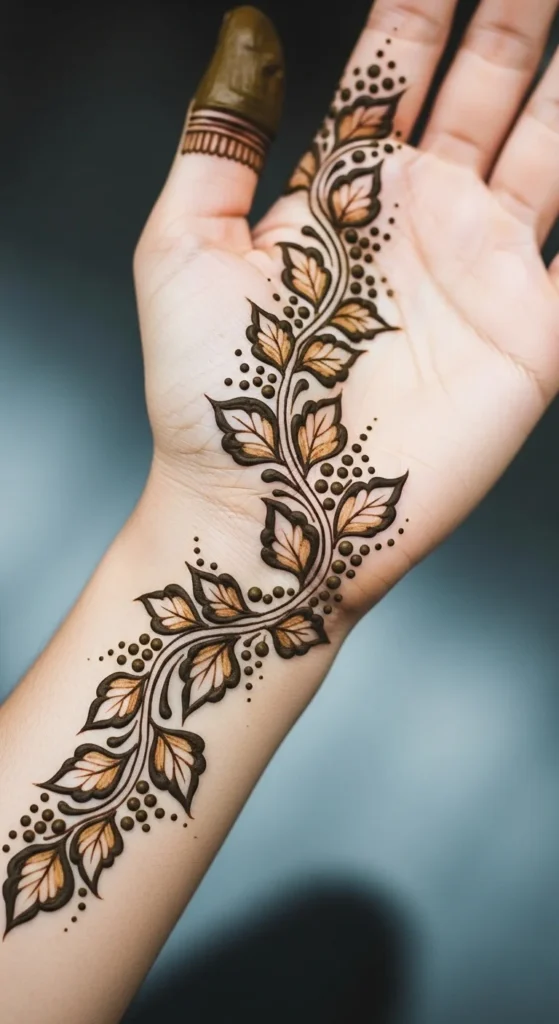
Dots are one of the easiest ways to make leafy mehndi look more detailed without making it hard to draw. After finishing a basic vine or leaf bunch, place tiny dots near the stem, between leaf gaps, or close to the leaf tips. This gives the design a textured finish and helps it look more polished. Dots are also a great fix when the spacing between leaves feels uneven. Instead of redrawing the whole section, you can add two or three dots and the layout suddenly looks intentional. If you want a soft shaded feel, put a few dots inside the larger leaves near the base. That creates a gentle depth effect without dense filling. This style works especially well on wrist vines, back-hand leaf bunches, and finger trails. It is also a smart beginner trick because dots are easy to control even if your leaf shapes are still improving. Just keep them neat and don’t overcrowd the pattern. A light touch gives the nicest result. Pebble-like dot accents can turn a plain leafy design into something that looks much more refined and festive.
9. Mirror Leaf Mandalas
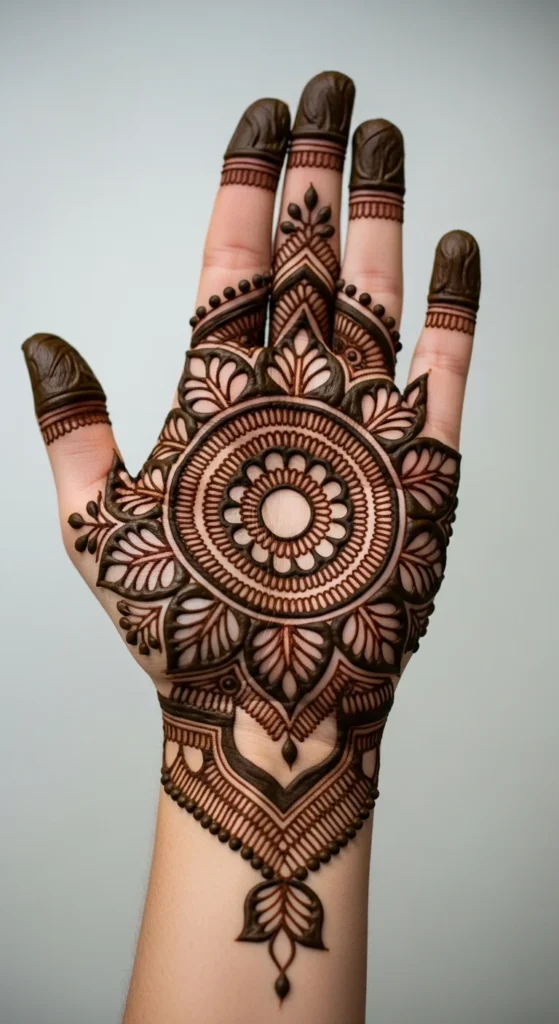
A mirrored leafy mandala is a lovely option if you enjoy balanced designs. Start with a small circle, dot cluster, or tiny floral center in the middle of the palm. Then place leaf bunches around it in even directions so the pattern feels symmetrical. The leaves act like soft rays coming out from the center, which gives the design a natural mandala effect without looking too dense. This style is easier than it seems because you can build it in sections. First place four main leafy shapes at the top, bottom, left, and right. Then fill the spaces between them with smaller leaves or dots. If you keep repeating the same leaf shape, the whole pattern looks neat and intentional. This is a beautiful style for festive days, engagement functions, or someone who wants a centered palm design that is not too complicated. It also helps beginners practice spacing and balance. A mirror-style design looks best when the leaves are similar in size, so take your time with the first few shapes. Once the center is balanced, the rest becomes much easier to complete.
10. Quick Green Getups
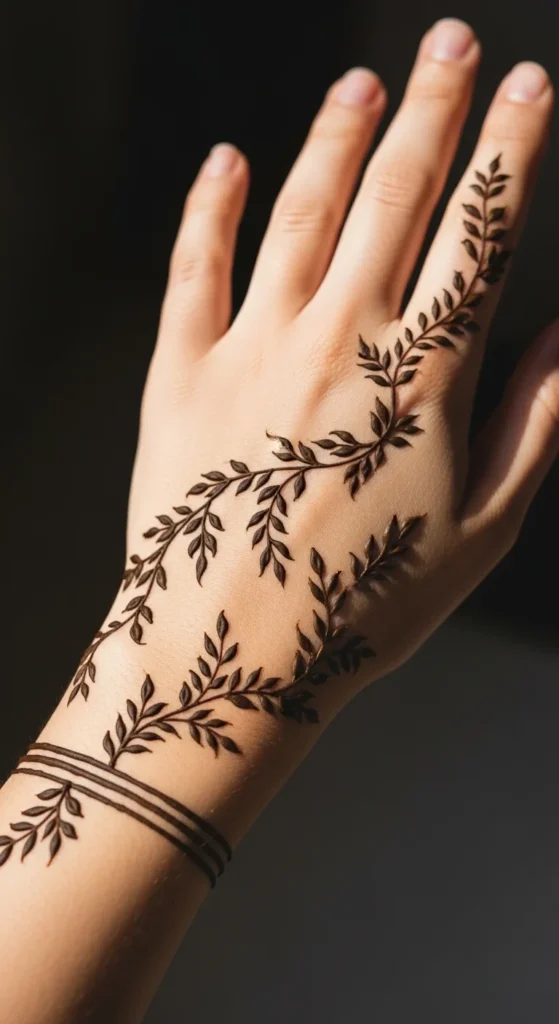
Not every mehndi design has to take a long time. A quick leafy layout can be finished in a short sitting and still look graceful. Start with one vine from the wrist to the back hand, then add two or three leaf bunches along the path. Finish with a short finger trail or a dot cluster near the thumb side. This kind of design is perfect for daily wear, sudden family plans, or casual Eid prep when you do not have time for a full pattern. The beauty of this style is that it relies on repetition. Once you know how to draw one leaf shape, the whole design comes together fast. You can keep the cone lines medium-thin so the design stays soft and natural. A nice trick is to leave more open skin between motifs so the pattern looks fresh and not rushed. This style is also good for beginners who want something pretty without feeling overwhelmed. It uses less paste, less time, and less pressure. Even a simple leafy vine and two small clusters can look very elegant when the spacing is clean.
11. Festive Foliage
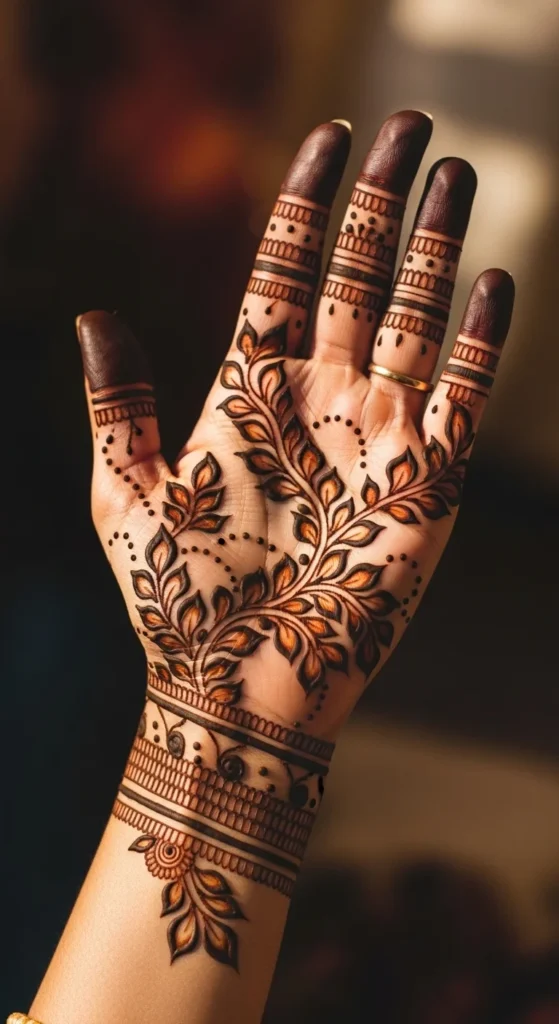
Leafy mehndi can feel festive without becoming heavy. Start with a larger leaf bunch in the center of the back hand, then add curved vine arms moving toward two fingers or down toward the wrist. Fill a few spaces with dots and one or two tiny swirls. This keeps the look celebration-ready while still feeling fresh and natural. It is a great option for Eid, Ramadan gatherings, nikah events, and family dinners because it looks dressed up but still soft. If you want to make it feel more special, use slightly bolder outlines on the main leaves and thinner dots around them. That contrast gives the design extra charm. Keep the layout open enough so the leafy pattern stays the main attraction. This design also works well if you want something matching for both hands without spending too much time. You can repeat the same main bunch on both hands and just switch the direction of the vines. That keeps the set balanced and easier to apply. Festive foliage is ideal when you want mehndi that feels elegant, modern, and still simple to draw.
12. One-Leaf-at-a-Time Practice Design
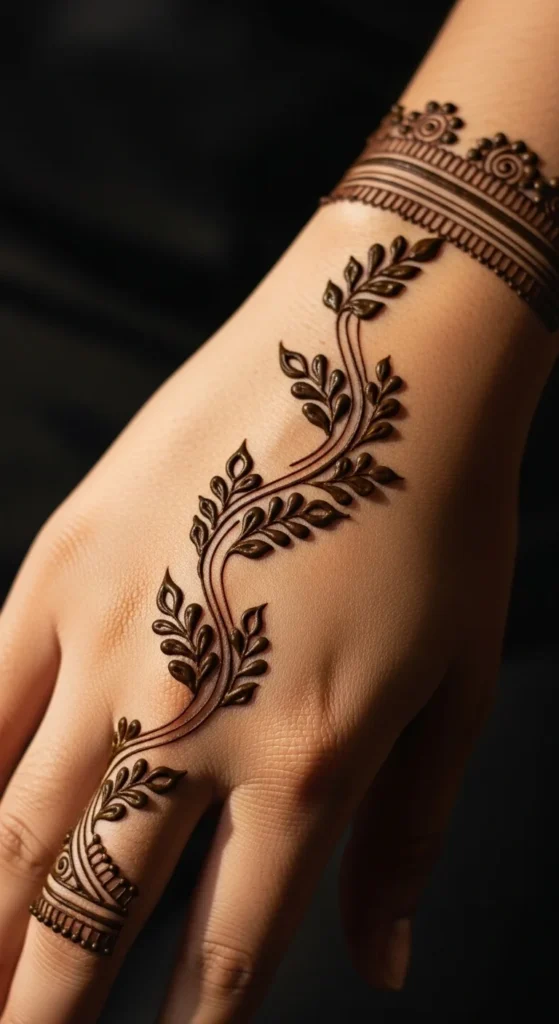
If you are still building confidence, the best leafy mehndi design is one made from repeated simple leaves. Start with one curved line. Then place one leaf on the left, one on the right, and repeat. That is it. You do not need a complex motif to make mehndi look good. This kind of pattern helps your hand learn muscle memory. After a few rows, your leaves start becoming more even and your cone pressure improves naturally. It also makes planning much easier because you are not guessing what to draw next. You can place this repeated leaf design diagonally across the back hand, around the wrist like a bracelet, or down a finger as a side trail. If the layout feels too plain, add small dots between every second pair of leaves. That simple addition can make the whole design look more finished. This is also a smart way to practice on paper, plastic sheets, or glass before applying mehndi on skin. One-leaf-at-a-time practice may look basic, but it often creates some of the prettiest simple mehndi patterns because the repetition feels calm, clean, and stylish.
13. Smooth Sap Lines
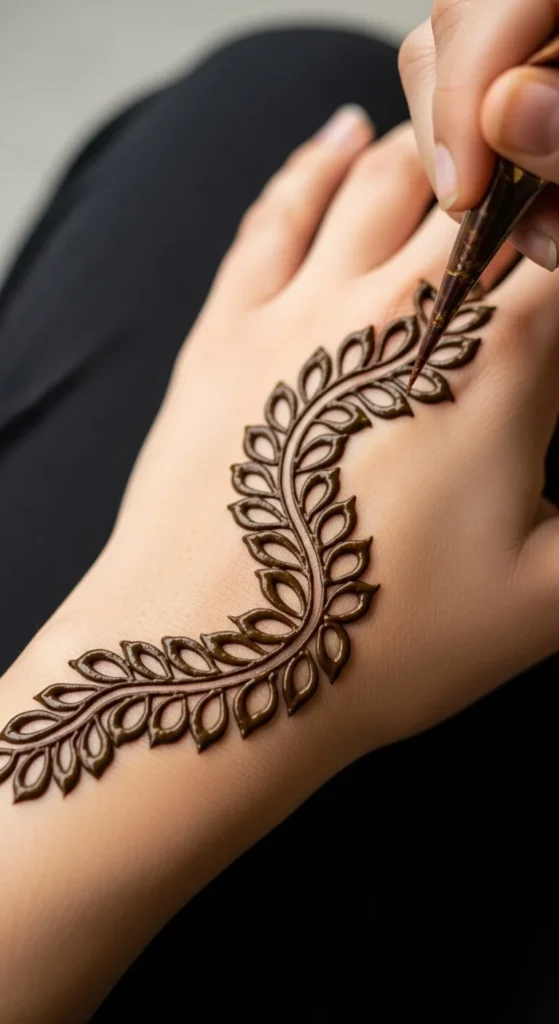
A leafy design always looks better when the lines flow smoothly. That is why cone pressure matters so much. For this style, start with one easy vine and focus on making the line steady from beginning to end. Then add leaves using the same hand pressure so the pattern feels consistent. Even a basic design can look very polished when the lines are even. If your cone keeps releasing too much paste, wipe the tip and test it on paper before returning to the hand. A lot of beginners press too hard at the start of each leaf, which makes one side thick and the other side thin. Try moving your hand slowly and keeping your wrist relaxed. This type of practice design is perfect for improving line quality while still making something pretty. Use a simple back-hand branch with six to eight leaves and maybe a few dots. That is enough. The focus here is not on adding many elements. It is on making the existing leaves look clean and natural. Smooth sap-like lines give leafy mehndi its graceful feel, so this design is a great skill-builder and still very wearable.
14. Verdant Variations
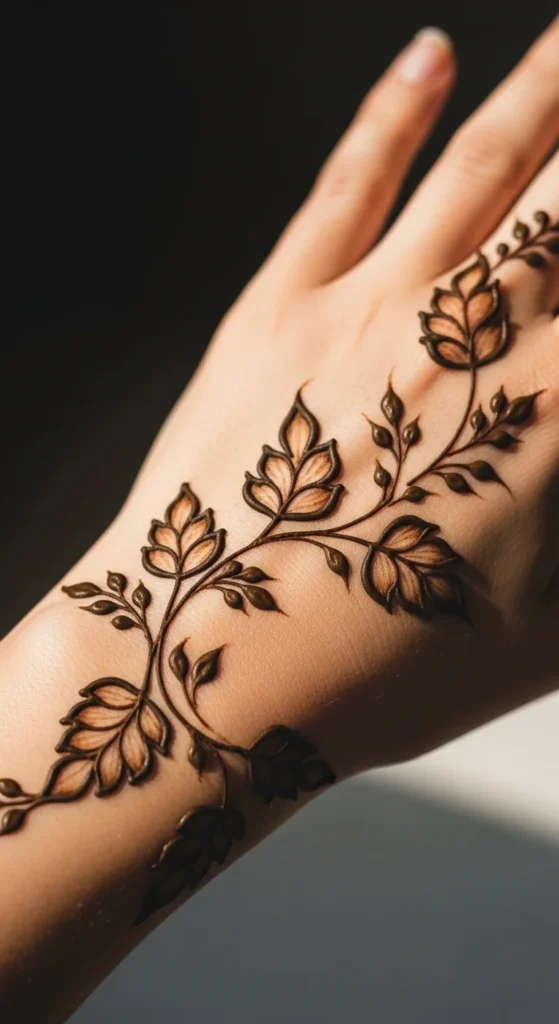
A leafy mehndi design looks more natural when all the leaves are not exactly the same. Start with a main vine, then vary the leaf size slightly as you move along the path. Larger leaves near the center or wrist and smaller leaves near the fingers often create the nicest flow. You can also angle some leaves upward and some downward so the pattern feels softer. This kind of variation gives the mehndi a botanical look without making it hard to draw. It is still based on one simple leaf shape, just repeated with tiny changes. This works especially well for back-hand Arabic styles because the design feels more alive and less stiff. If you want a budget-friendly practice method, draw the same vine three times on paper and change only the leaf sizes. That helps train your eye before using henna. Add a few dots or one tiny curve near the larger leaves if you want a fuller result. This design is beautiful for daily wear because it feels calm and natural. The small variations are what make it special. It is simple, but it does not look flat or repetitive.
15. Bracelet Branches
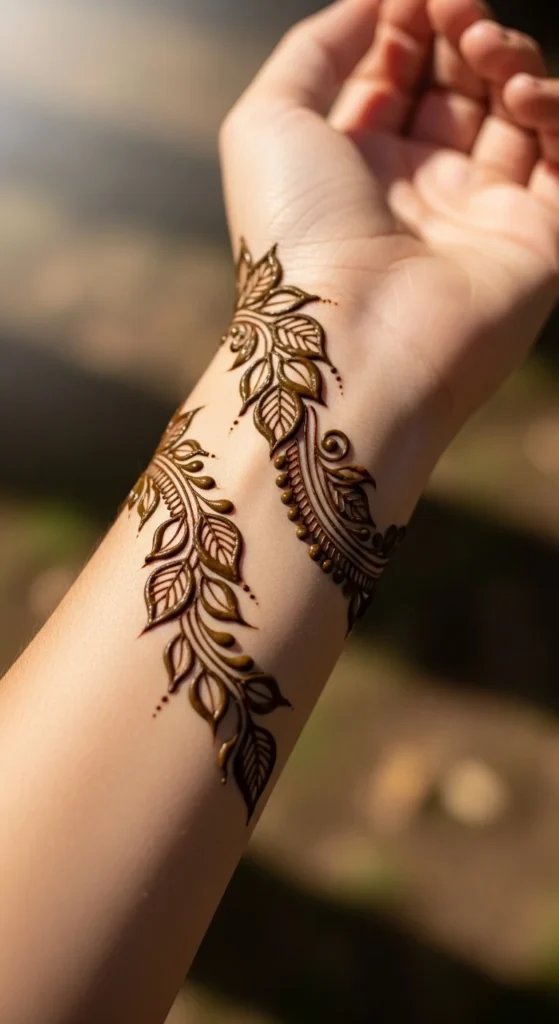
A leafy wrist cuff is a great way to wear mehndi like jewelry. Start by drawing a curved band around the wrist, then decorate it with tiny vines, leaf bunches, or repeated leaf pairs. The result looks like a natural bracelet and works beautifully even if the rest of the hand is left plain. This is very useful if you want a stylish mehndi look but do not have time for a full back-hand pattern. You can keep the band slim and delicate or make it slightly wider by adding a second vine above it. If you want the bracelet to feel more festive, place dots between the leaf groups or add one tiny floral swirl in the center. This design is also easy for beginners because the wrist gives you a clear path to follow. Just keep the leaves angled in the same direction for a neater result. A leafy cuff is lovely for Eid, brunches, or small family events because it looks decorative and still stays simple. It also pairs nicely with bangles since the pattern sits naturally where jewelry would.
16. Whisper Vines
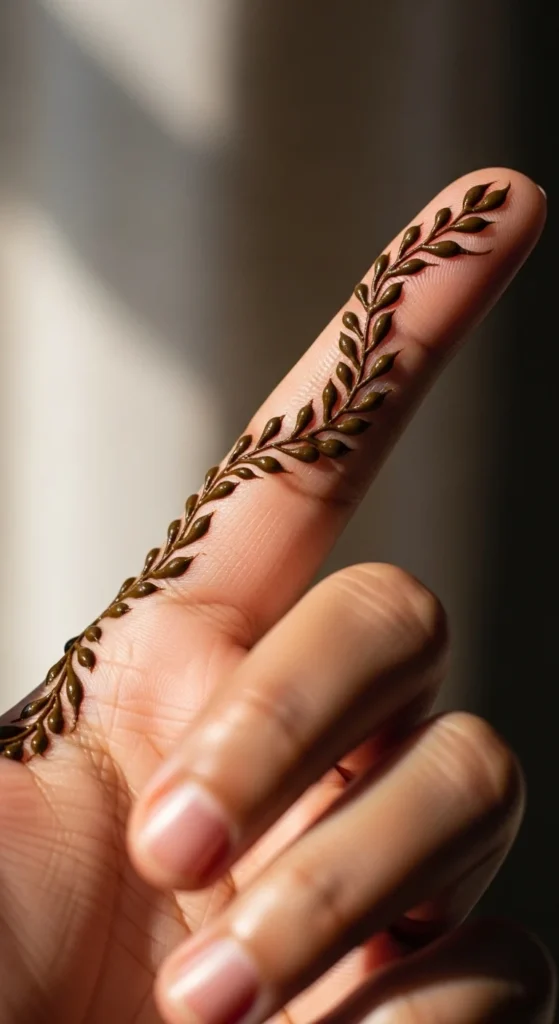
Whisper vines are soft side-finger trails that add just enough detail without taking over the whole hand. Start from the side of the palm or near the thumb base and let a very thin vine travel toward one finger. Add tiny leaves along only one side or in small paired groups. This keeps the pattern light and graceful. It is one of the easiest leafy mehndi ideas for someone who wants a minimal look. Because the design is narrow, it is fast to apply and easy to match on the other hand if needed. This style also works well when you want to pair mehndi with rings, since the finger is decorated but not overloaded. A nice trick is to keep the leaves closest to the fingertip very tiny. That makes the whole vine look more delicate. Add one or two dots only if the line feels too plain. Whisper vines are great for workdays, college events, and casual gatherings because they are subtle but still pretty. They prove that even a very small mehndi pattern can feel stylish and complete.
17. Overlapping Oaks
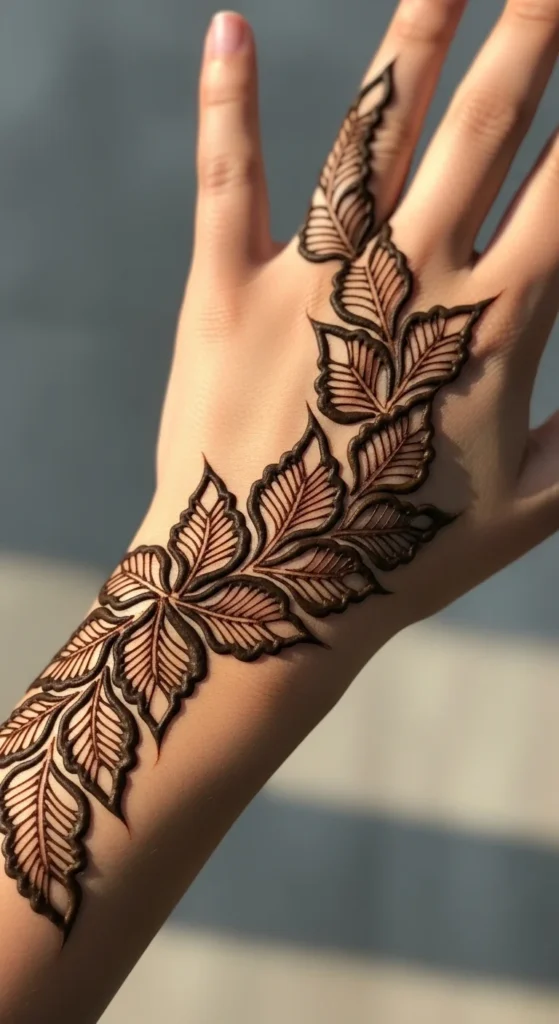
A layered leaf design can make simple mehndi look richer without using too many extra shapes. Start with one vine and draw a few leaves the normal way. Then overlap one or two leaves slightly on top of the earlier shapes so the bunch looks fuller. This creates a stacked effect that feels more textured and decorative. It is a nice choice if you want your leafy mehndi to look a little more festive while still staying within a simple theme. The key is to overlap only a little. If too many leaves cover each other, the design can become messy. A few stacked leaves near the center of the hand or wrist are enough to create depth. This style works especially well with bold outlines because the overlapping shapes stay visible more clearly. Add tiny dots near the layered section if you want to soften the look. It is a lovely middle step between very basic leaf vines and more detailed Arabic mehndi. You still repeat the same leaf shape, but the layout feels more styled and polished.
18. Clear Trial Runs
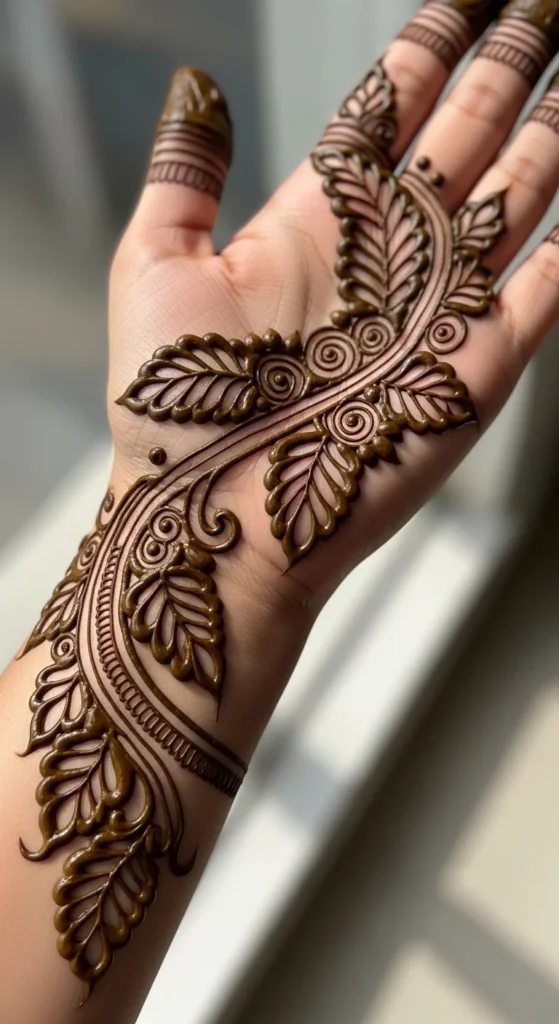
Practicing leafy mehndi on glass can help a lot before you apply it on skin. The smooth surface lets you focus on cone pressure, leaf shape, and spacing without worrying about mistakes staying on your hand. Start with a simple vine and repeated leaves. Then wipe it away and try again. This is a very affordable way to improve because you are not wasting cones on repeated skin practice. If you do not have glass, a plastic folder or smooth acrylic sheet can work too. Practice drawing the same leaf bunch three or four times until the shape starts feeling natural. Then move to finger trails or wrist cuffs. This method is especially useful for beginners who struggle with uneven leaf sizes or shaky stems. You can also practice dots and tiny connectors on the same surface. Once your lines start looking steady there, they usually look better on the hand too. Clear trial runs are not a mehndi design by themselves, but they make every leafy design easier to apply. A few practice rounds can save time, paste, and stress later.
19. Paste Perfection Leaves
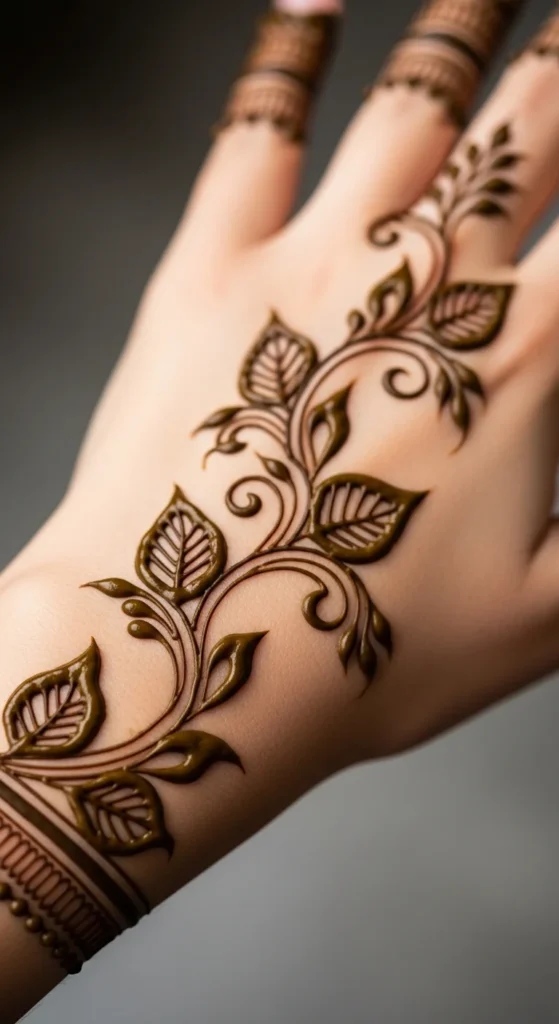
A simple leafy mehndi design can look much better when the henna paste flows evenly. If the paste is too thick, the leaves come out bulky. If it is too thin, the lines may spread and lose shape. For this style, start with a basic back-hand leaf vine and focus on keeping each line smooth and similar in thickness. Before applying the design, test the cone on paper. If the paste is skipping or bursting out unevenly, adjust the cone tip or knead the cone gently so the texture feels more consistent. This leafy pattern is great for building confidence because it shows very clearly how the cone is behaving. A clean paste gives cleaner leaves. If your lines start getting too thick while working, wipe the tip and continue slowly. This kind of design does not need many details. A simple vine, six or seven leaves, and a short finger extension are enough. The goal here is a neat finish. Good paste flow makes even a plain mehndi design look elegant, so paying attention to that part really helps your leafy patterns stand out.
20. Hold and Heal Leaf Trails
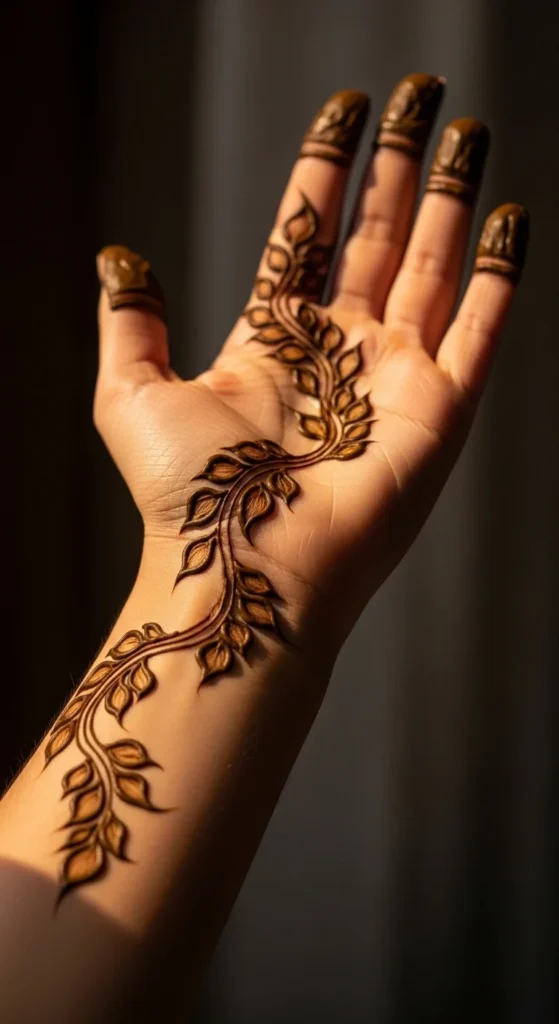
Aftercare matters a lot when you want your leafy mehndi to stain nicely. This idea focuses on simple vine trails that are easy to keep safe while drying. A back-hand leafy pattern works especially well because you can hold your hand upward without smudging too much. Start with a soft vine and leaf bunch design, then once it is done, keep the hand as still as possible while the paste begins to dry. Avoid touching clothes, hair, or your phone during that stage. If you want a deeper stain, let the mehndi sit longer and avoid washing the area too soon. A simple sugar and lemon dab can help the dried paste stay on longer, but use only a little so the design does not smear. This style is ideal for beginners because the pattern itself is easy and the aftercare is manageable. Since the design has open space, it is less likely to smudge into a dense mess. A clean leafy trail with good drying habits can stain beautifully and look much richer the next day.
21. Viral Vine Picks
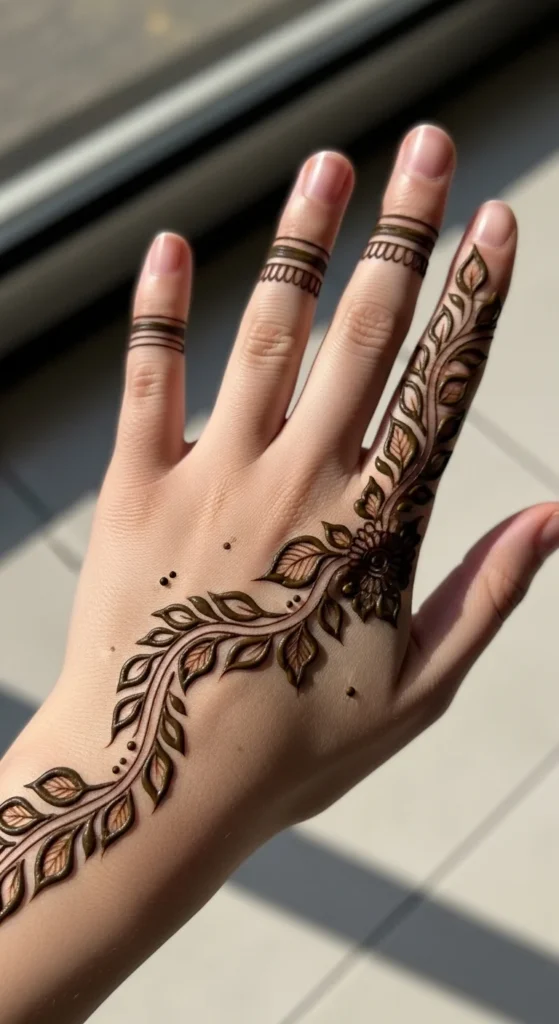
Trendy leafy mehndi in 2026 often follows one simple formula: back-hand placement, leaf bunches, open space, and a slim finger extension. This combination keeps showing up because it feels stylish and easy to wear. A viral vine layout usually starts with a bold leafy bunch near the center or wrist, then flows into a thinner vine that reaches one or two fingers. The design stays light, but the hand still looks decorated. This is a smart pattern to copy if you want something current without spending ages on a very detailed style. It also suits many outfits because it does not fight with jewelry or sleeves. Keep the leaves clean and slightly pointed, and use dots only where needed. Too many extras can take away from the trendy airy feel. If you want to try a current look at home, this kind of design is a very safe choice. It feels modern, natural, and pretty in pictures. It is also easy to adapt with your own leaf size, vine direction, and finger choice.
22. Effortless Elegance Leaves
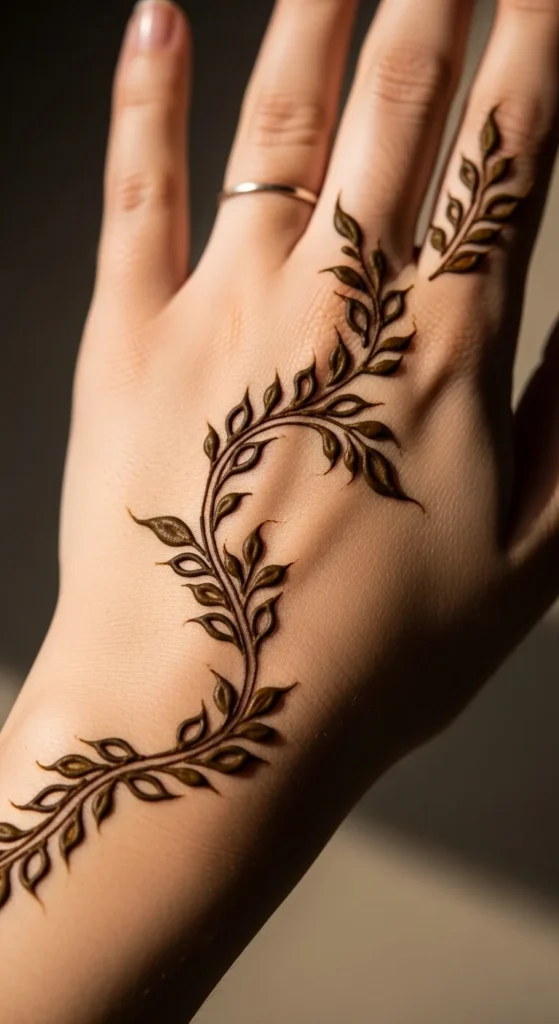
Some mehndi designs feel beautiful because they are not trying too hard. An effortless leafy layout uses one graceful vine, two or three balanced leaf bunches, and enough open space to let the pattern breathe. That is often all you need. Start with the main curve across the back hand, then place one focal bunch in the center and smaller leafy details near the wrist and finger area. This creates a full design without making it dense. Keep the leaves soft and pointed, and let the vine move naturally instead of forcing sharp turns. If you want a more polished finish, add a few dots near the edges and one short side-finger trail. This style works for almost everything, from daily wear to festive outfits, because it feels elegant but not overdone. It is also one of the best final looks for beginners because it uses all the easy elements in one balanced way. If you have been practicing leaf shapes, vines, dots, and spacing, this design lets you bring them together into something that feels simple, stylish, and naturally graceful.
Conclusion
Leafy simple mehndi designs work so well because they give you a graceful look without the pressure of very heavy patterns. A few leaf bunches, soft vines, dots, and clean open spaces can create a design that feels natural, modern, and easy to wear for daily use, Eid, or light bridal events. Back-hand vines, finger trails, wrist cuffs, and airy Arabic-inspired layouts are especially popular right now because they look elegant while staying beginner-friendly. Start with one leaf shape, practice it until it feels easy, and then build your design around that simple form. That is often the easiest path to beautiful mehndi.

Lily Summers is a digital artist and creative storyteller who loves bringing colorful characters to life. With a passion for cartoons, fan art, and playful sketches, she inspires others to explore their imagination through art. When she’s not sketching, you’ll find her dreaming up new ideas for CraftedWizard.com to spark creativity in every artist. 🌈✨