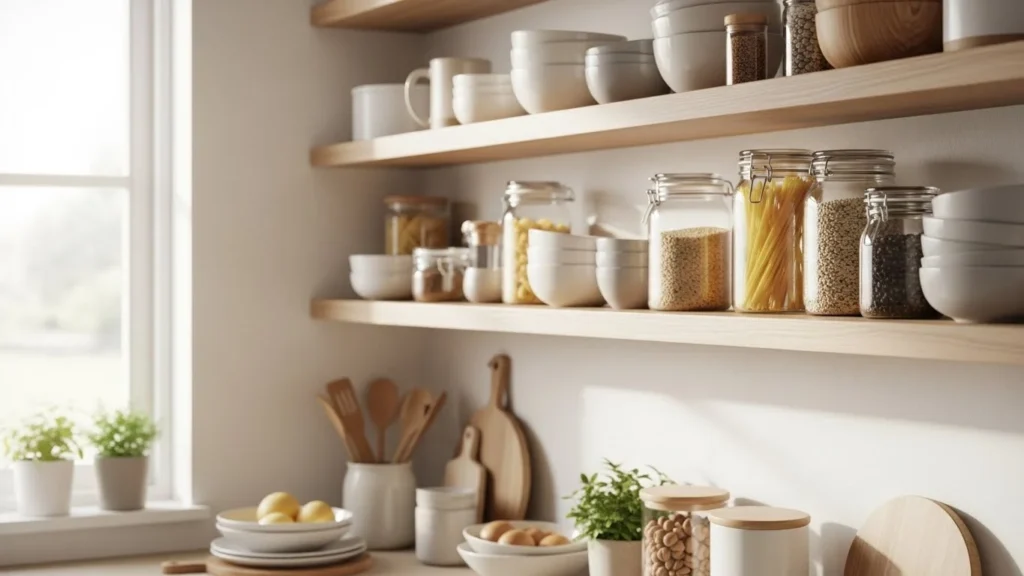
Open kitchen shelves can look calm and put-together or cluttered and random. Most people searching for kitchen shelf styling ideas want shelves that feel intentional without constant restyling. The goal is balance. Everyday items should stay easy to reach while decor adds structure and rhythm. With a few simple rules and low-cost styling tricks, shelves can look polished without feeling staged. These ideas focus on real kitchens, limited budgets, and layouts that change over time. Each one works on its own and can be layered slowly. Nothing here requires special tools or expensive decor. The focus stays on simple actions that help shelves feel ordered, useful, and visually steady.
1. Group Items in Sets of Three
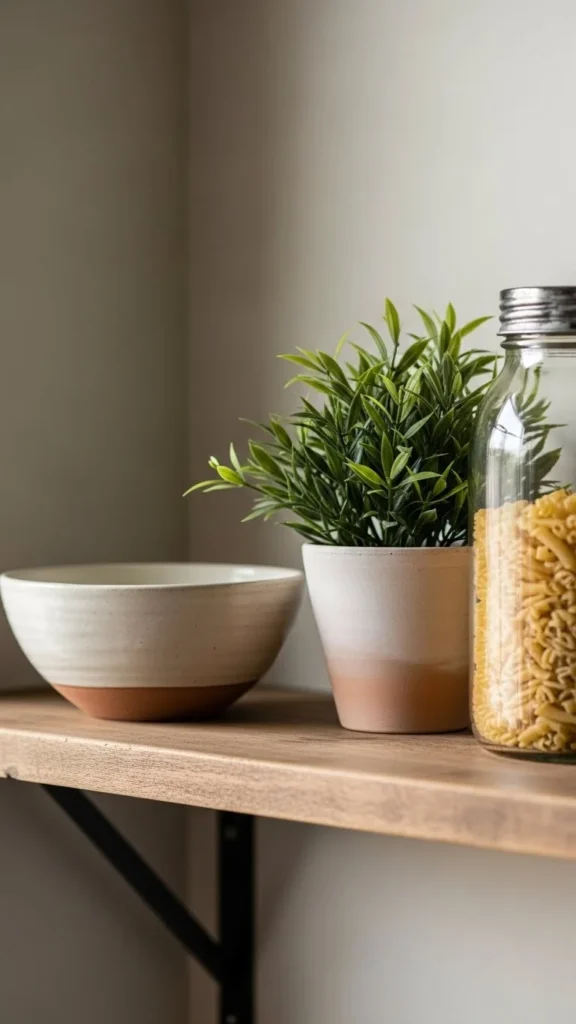
The rule of three helps shelves feel balanced without effort. Grouping three objects creates a rhythm that feels natural to the eye. Start with one functional item, one textured piece, and one softer shape. A bowl, a jar, and a small plant work well together. Keep colors within the same family so the grouping feels calm. Avoid lining items straight across. Slight overlaps add depth. This approach works with items already owned. Rotate pieces rather than buying new ones. When shelves feel crowded, remove one item from each group. This keeps the display airy while still intentional. Using this rule across multiple shelves creates consistency without repetition. It also helps prevent random placement that leads to clutter.
2. Place Everyday Dishes on Lower Shelves
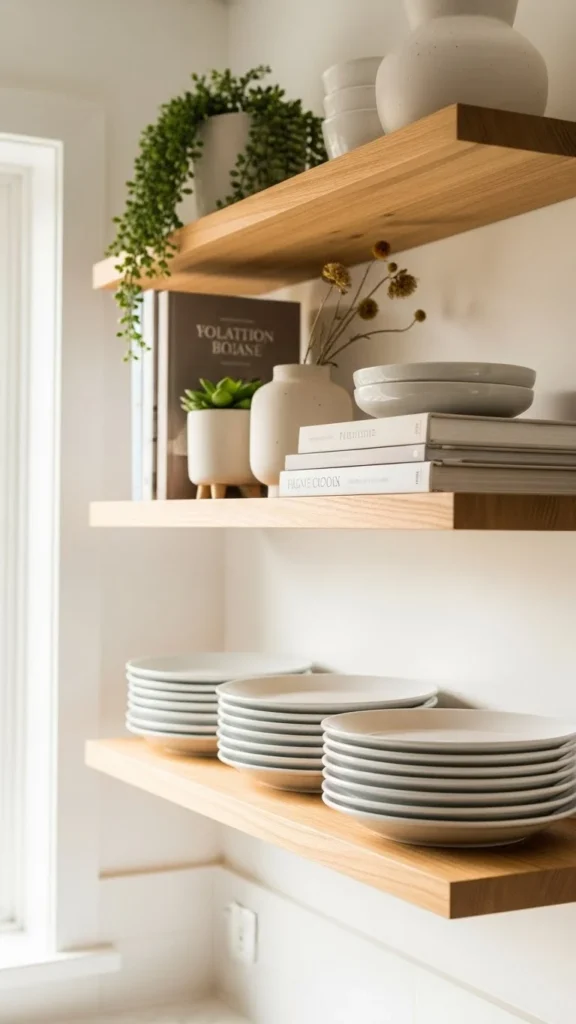
Lower shelves work best for items used daily. Plates, bowls, and glasses stay easy to reach and reduce visual chaos. Stack items neatly and keep quantities limited. Extra pieces can stay in cabinets. Upper shelves can hold decor or rarely used items. This zoning keeps shelves practical and clean. Using matching dish sets helps maintain order. Thrift stores are good places to find simple ceramics at low cost. When shelves feel busy, remove half the items and reassess. Fewer dishes displayed often look calmer and are easier to maintain.
3. Mix Wood, Glass, and Metal Finishes
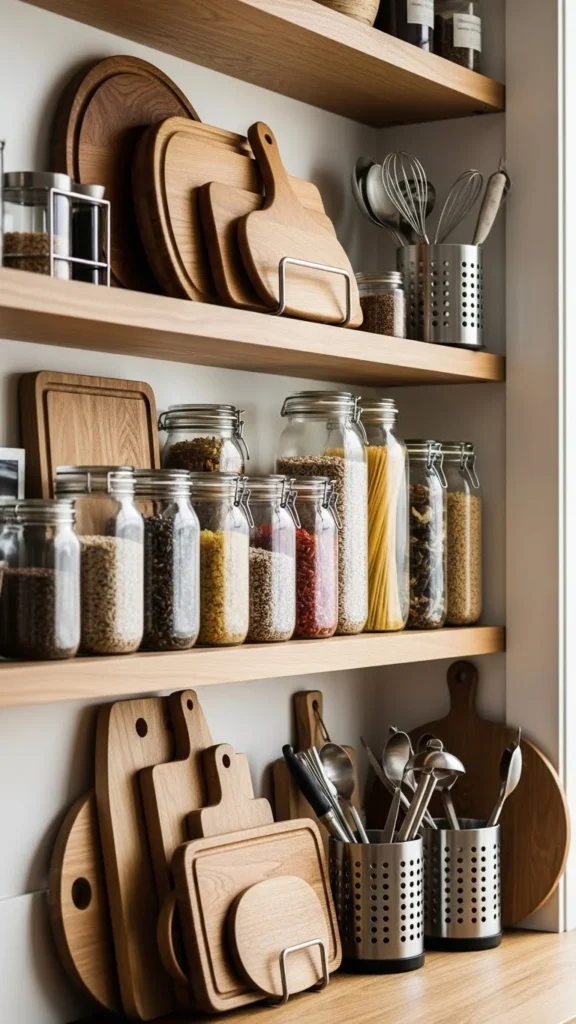
Using different materials adds depth without clutter. Wood brings warmth. Glass keeps things light. Metal adds contrast. Combining all three creates balance. Use items already in the kitchen like cutting boards, jars, or utensil holders. Keep the color palette simple so finishes do not compete. Repeat materials across shelves to create flow. Avoid placing all wood on one shelf and all glass on another. Spreading materials evenly keeps the display steady. This approach works in both modern and traditional kitchens.
4. Match Shelf Color to Surroundings
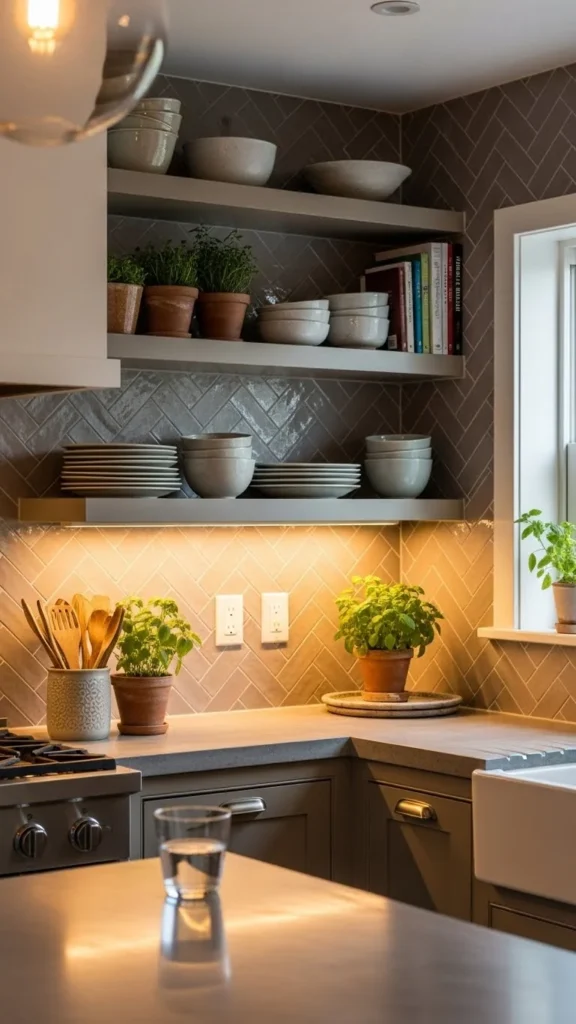
Shelves feel calmer when they relate to nearby finishes. Matching shelf color to cabinets or backsplash creates cohesion. If painting shelves feels like too much, style items in similar tones instead. White dishes on white shelves feel clean. Wood shelves paired with warm backsplashes feel grounded. This simple alignment keeps shelves from standing out in a distracting way. Paint samples help test color before committing. Even small adjustments can change how unified the space feels.
5. Add Hooks Under Shelves for Mugs
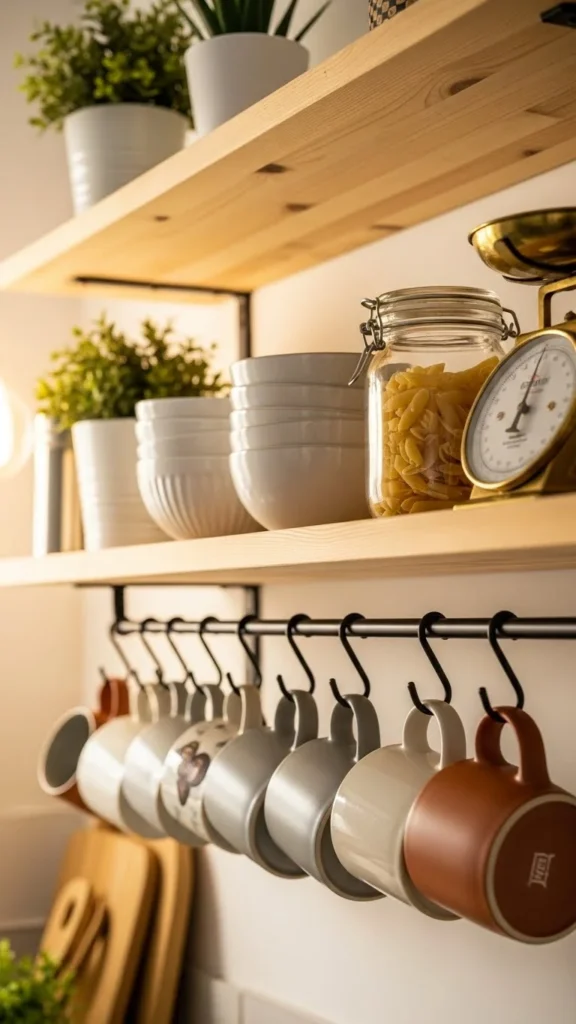
Hooks under shelves create extra storage without clutter. Mugs stay easy to grab and add shape below the shelf line. Choose simple metal hooks for a clean look. Install them evenly spaced. Keep the number limited so the area does not feel crowded. This works well for coffee corners or near breakfast areas. It also frees cabinet space. Hooks are inexpensive and easy to remove later.
6. Layer Heights From Back to Front
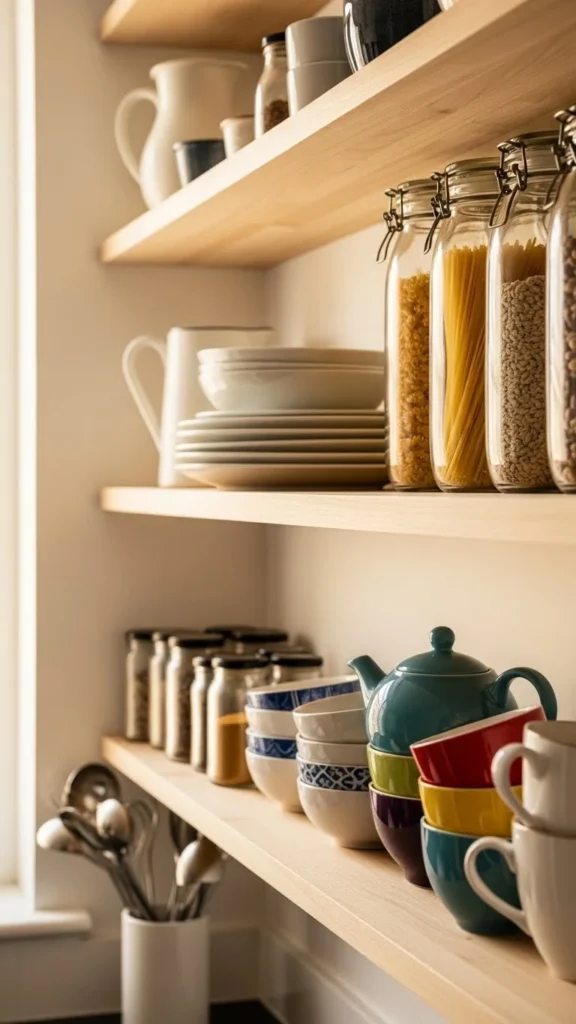
Depth makes shelves feel styled rather than flat. Place taller items toward the back and shorter pieces in front. This helps each object stay visible. Cutting boards, framed art, or tall jars work well in the back. Bowls or small decor sit forward. Avoid lining everything in a single row. Overlapping slightly creates movement. This technique works even on narrow shelves and costs nothing to apply.
7. Add Small Plants for Life
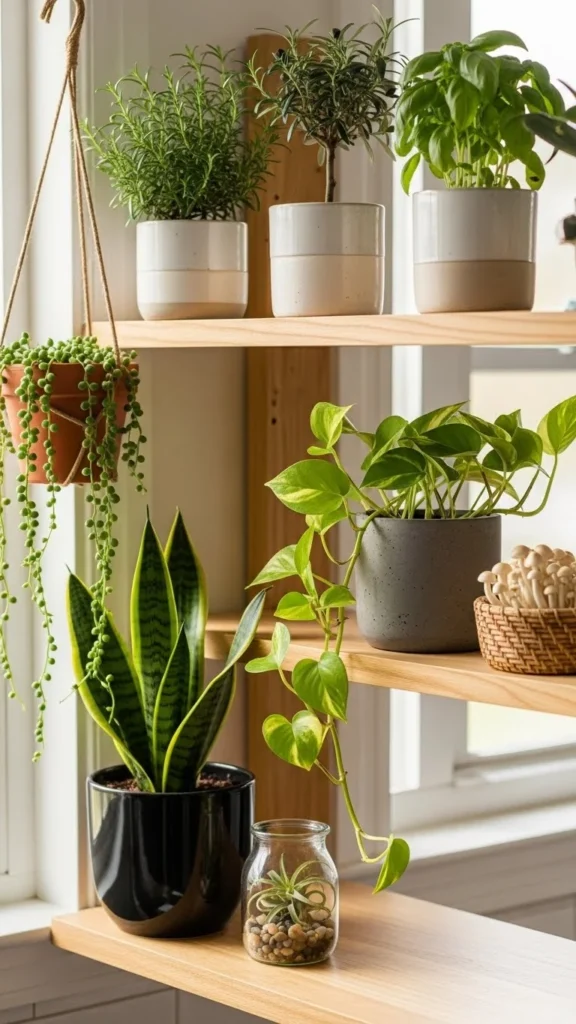
Plants soften shelves and add natural shape. Small potted herbs or trailing plants work well. Choose low-maintenance options. Faux plants also work when light is limited. Keep planters simple so greenery stands out. One or two plants per shelf is enough. Too many can feel messy. Plants pair well with ceramics and wood, adding contrast without clutter.
8. Style Shelves Only 30 Percent Full
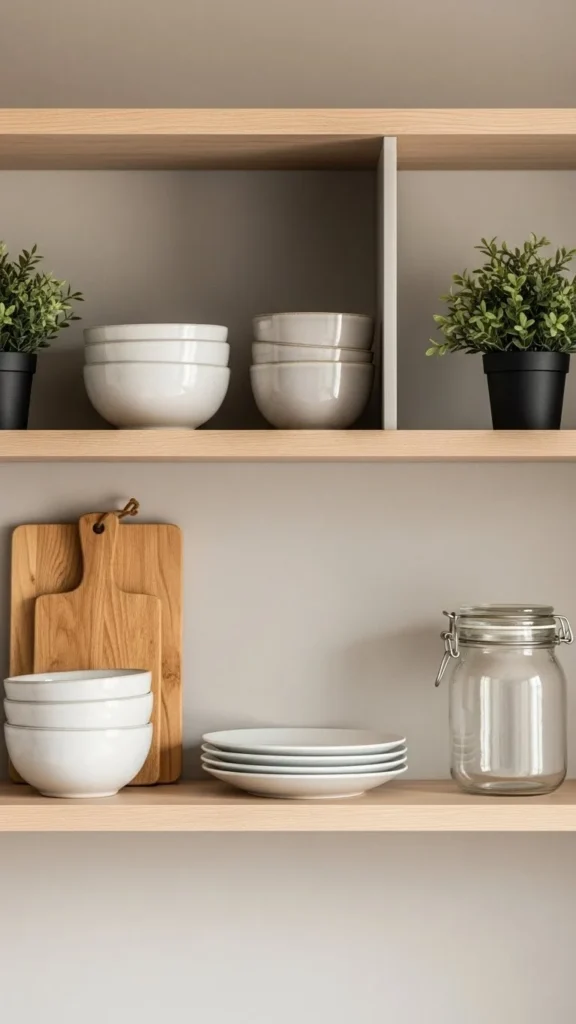
Leaving empty space is key to a polished look. Shelves filled edge to edge feel busy. Aim to use only part of the available space. This gives items room to stand out. Remove extras and store them elsewhere. Negative space makes shelves easier to clean and restyle. It also helps prevent visual overload in small kitchens.
9. Use Ceramics as Visual Anchors
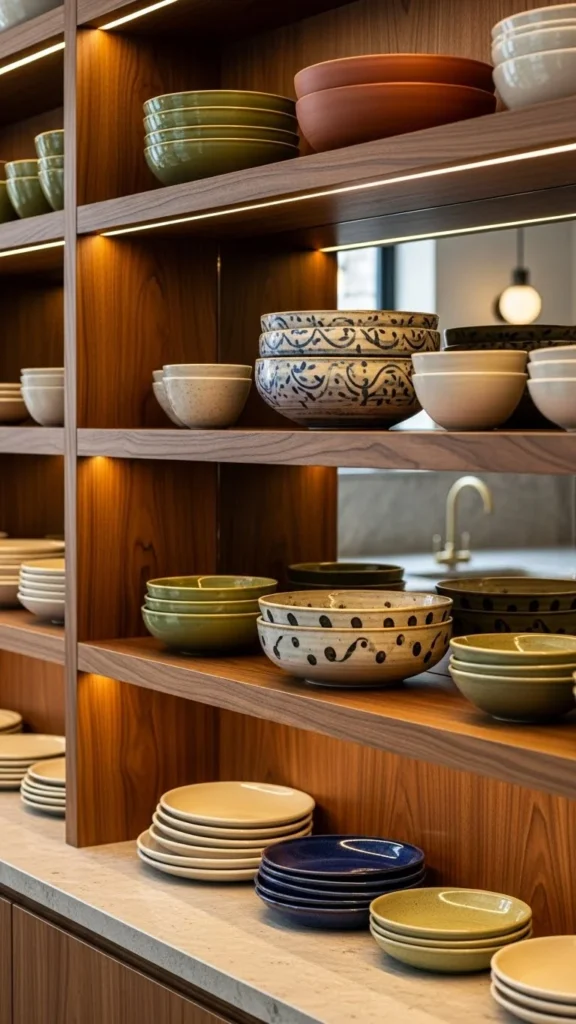
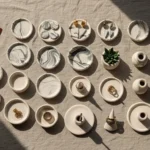
Ceramic bowls and plates ground shelf displays. Their weight and texture create focus. Use them as anchor pieces at the ends or center of shelves. Neutral colors work best. Stacking plates vertically or leaning them against the wall adds interest. These items often come from existing dish sets, keeping costs low.
10. Style Corner Shelves With Purpose
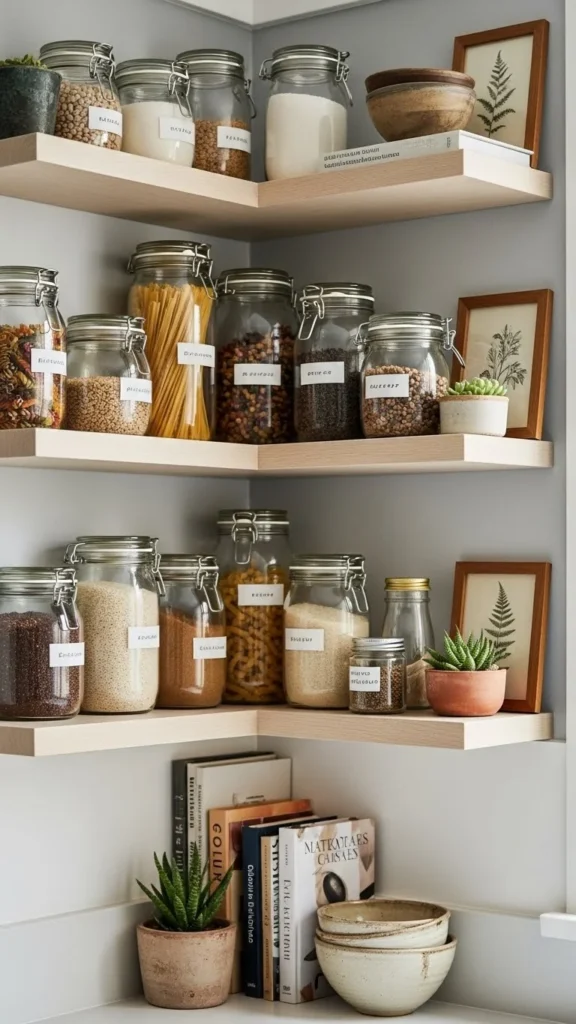
Corner shelves often become cluttered. Treat them like small displays instead. Limit items to a few coordinated pieces. Jars, plants, or bowls work well. Avoid mixing too many styles. Keeping corners simple helps the rest of the shelves feel calmer.
11. Use Freestanding Shelves for Flexibility
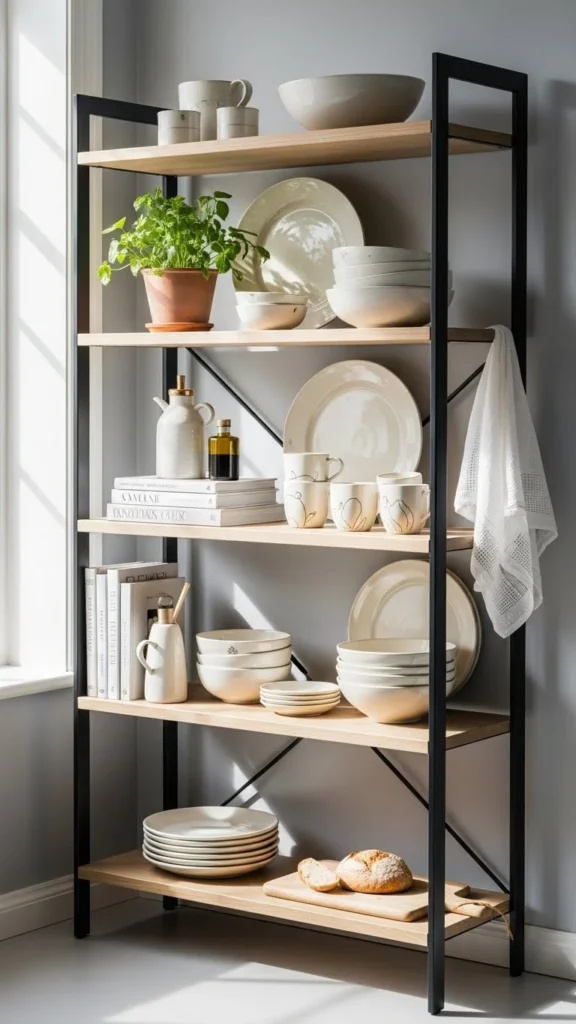
Freestanding shelves work well for rentals or changing layouts. They allow styling without wall installation. Keep displays light so the unit does not feel heavy. Baskets on lower levels hide storage. Decor and dishes stay higher. This option adds storage without commitment.
12. Style Shelves Symmetrically
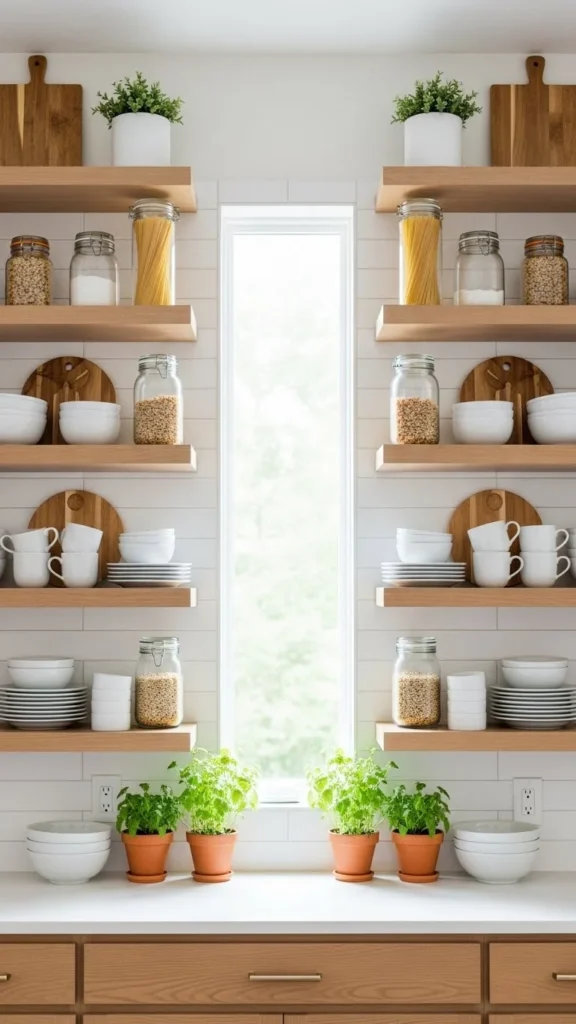
Symmetry creates order. Matching items on both sides of a shelf feel calm and balanced. This works well in formal kitchens. Use pairs of jars, bowls, or plants. Keep sizes similar. This approach reduces guesswork and keeps shelves tidy.
13. Hide Storage With Baskets
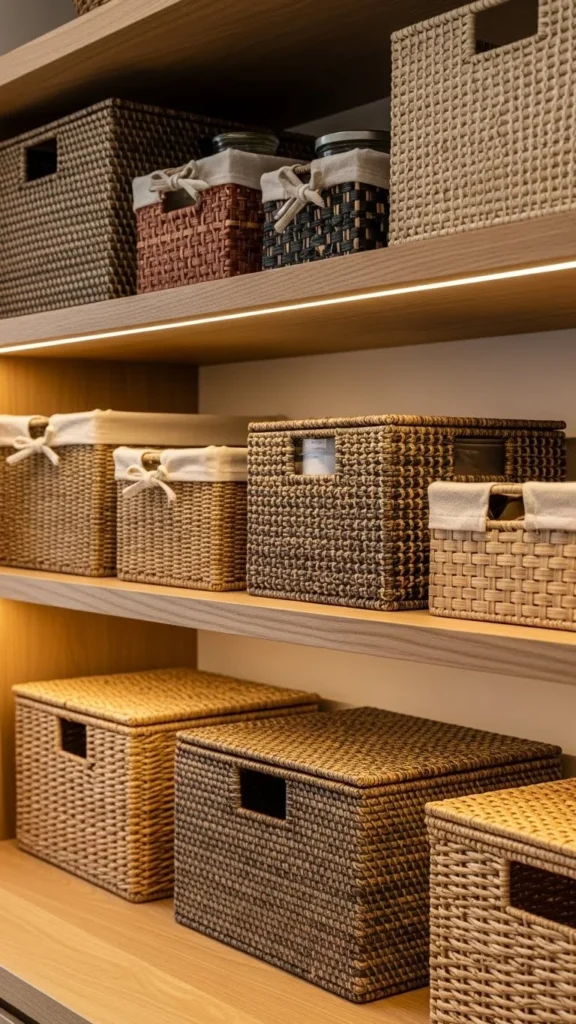
Baskets hide less attractive items while adding texture. Woven styles work well in kitchens. Use them for snacks, linens, or small tools. Keep basket sizes consistent for a clean look. Labels are optional but not required.
14. Lean Framed Art for Personality
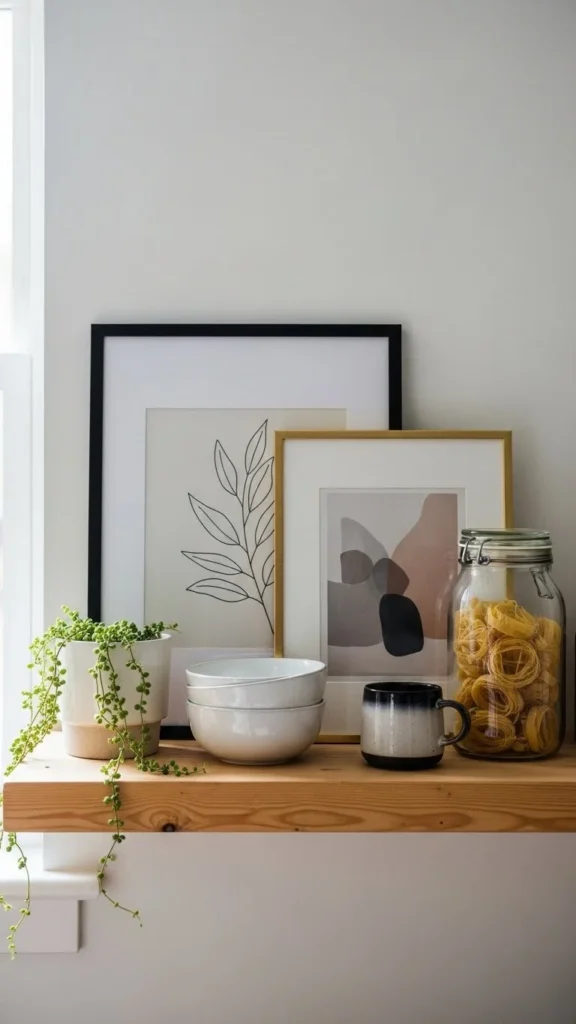
Leaning art adds personality without nails. Small frames work best. Food prints or simple sketches suit kitchens well. Keep frames neutral. Layer art behind other items for depth. This approach allows easy swaps later.
15. Lighten Wood With a Simple Finish
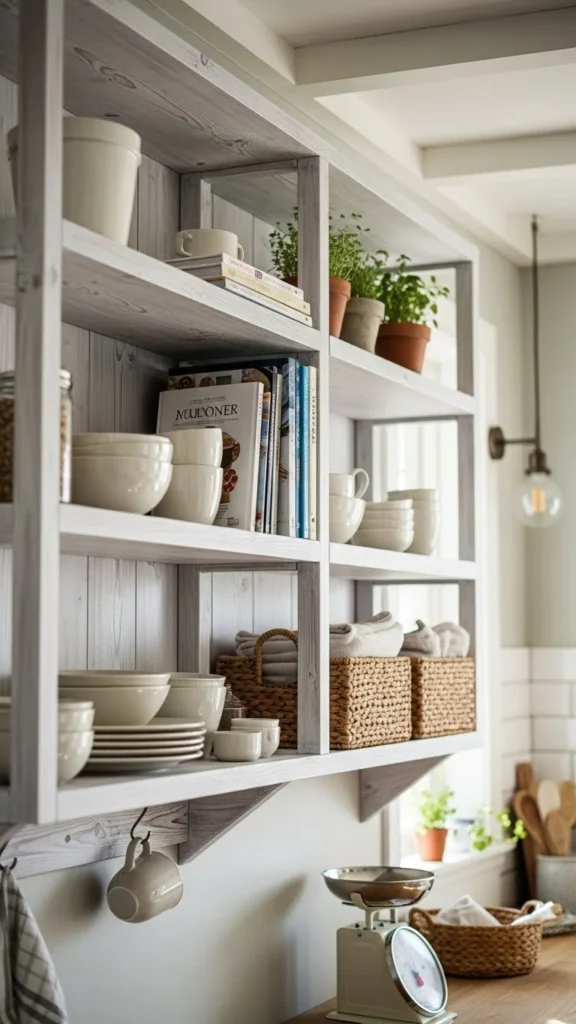
Whitewashing wood shelves softens their look. This works well in farmhouse-style kitchens. Use diluted paint and wipe excess off. Test on a hidden area first. This update costs little and refreshes older shelves.
16. Arrange Spice Jars in Uniform Rows
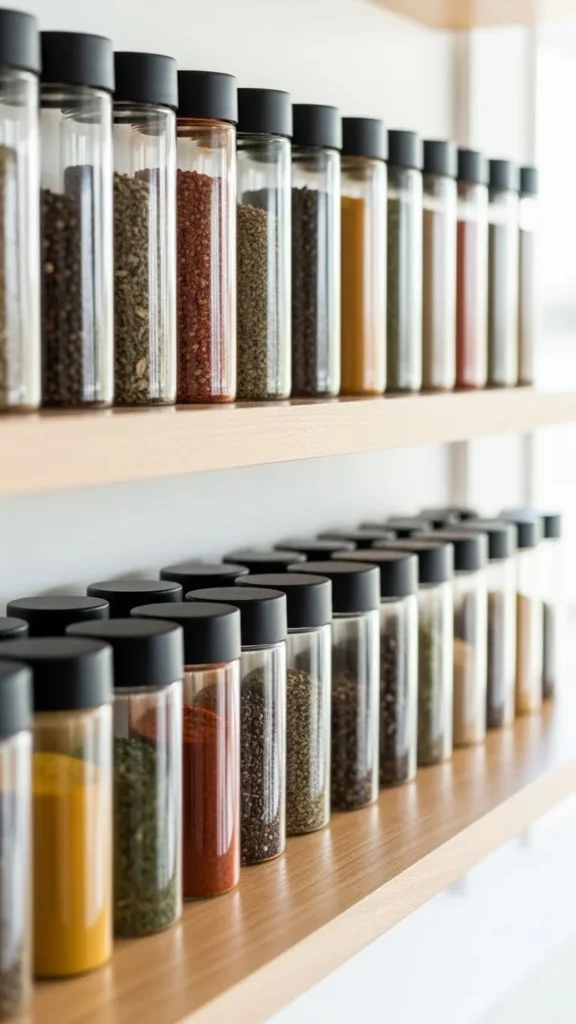
Matching spice jars bring order to shelves. Clear jars with simple lids work best. Labeling is optional. Keep jars aligned in rows for a pantry-style look. This setup improves access while staying neat.
17. Mix Vintage Pieces With Modern Items
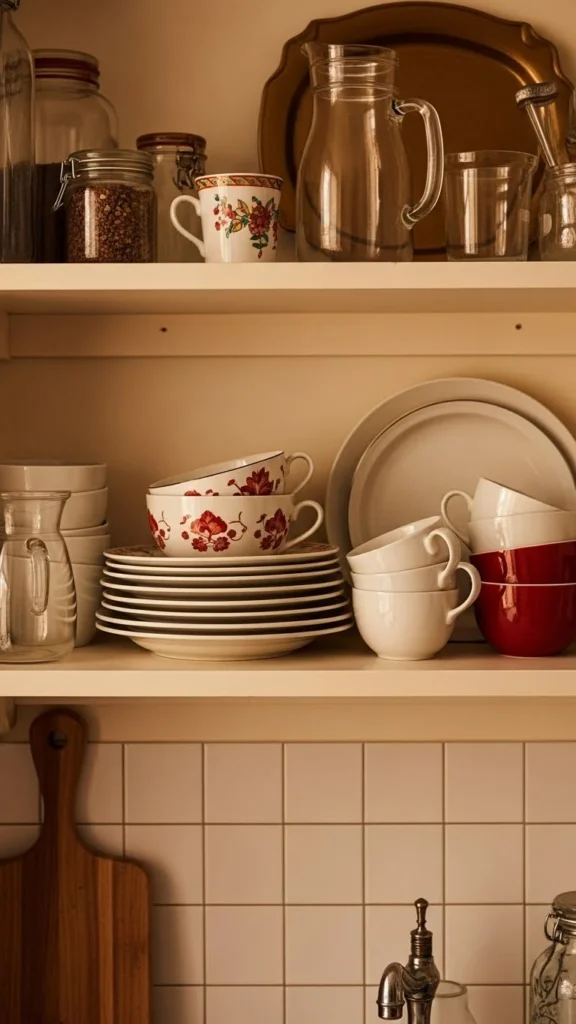
Vintage finds add character. Balance them with simple modern pieces. A vintage jar beside clean ceramics works well. Thrift stores offer affordable options. Keep the mix limited so shelves stay cohesive.
18. Add Subtle Backlighting
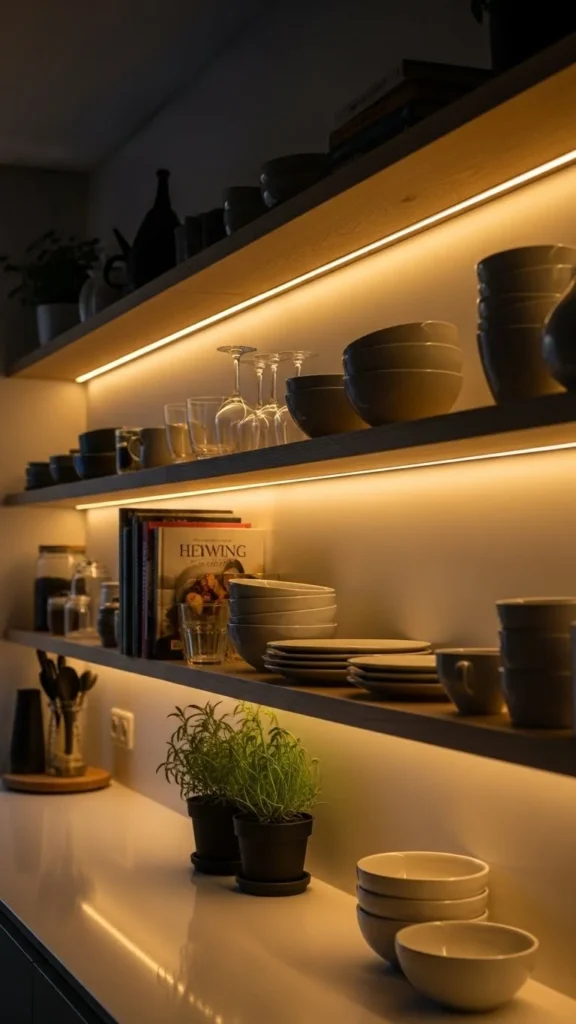
LED strips behind shelves add depth. Warm tones work best. Installation is simple with adhesive strips. Hide cords for a clean look. This adds gentle light without changing fixtures.
19. Rotate Items by Season
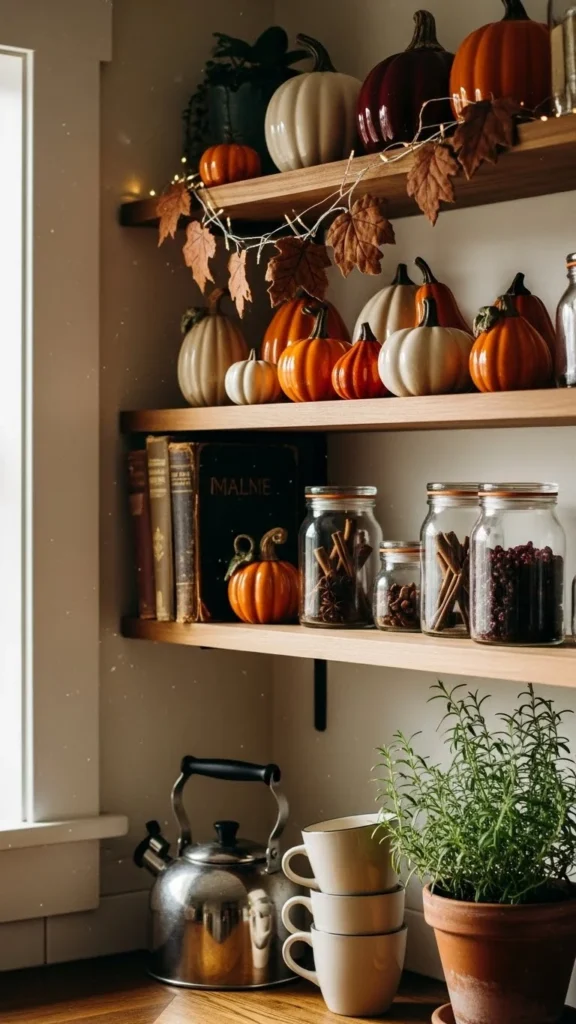
Seasonal swaps keep shelves interesting. Use items already owned. A few changes are enough. Store unused pieces neatly. This keeps shelves from feeling static without buying new decor.
20. Cluster Glassware Together
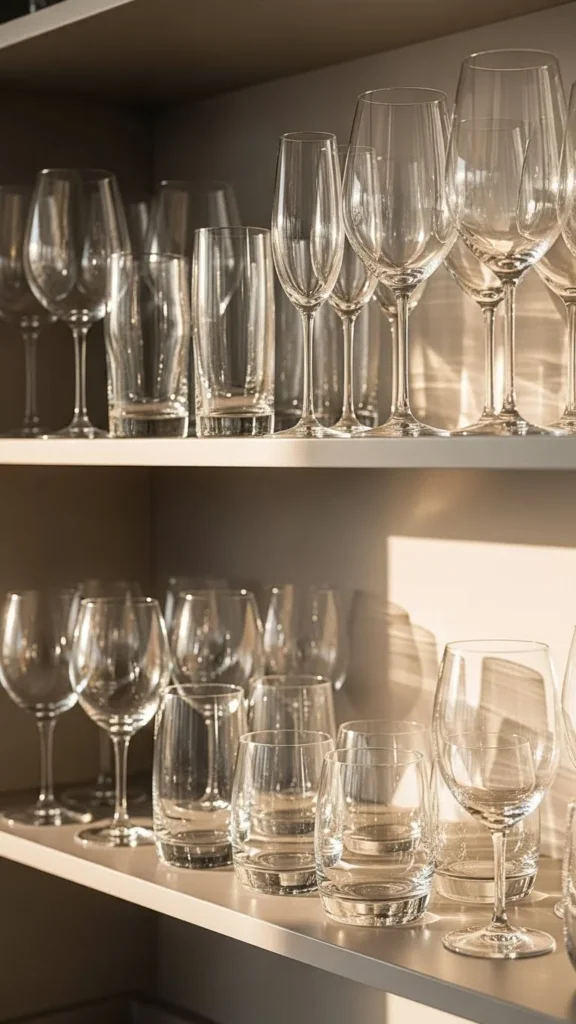
Glassware adds shine. Group similar pieces together. Keep clusters small. This creates sparkle without clutter. Place glass near light sources for best effect.
21. Use Trays to Group Small Items
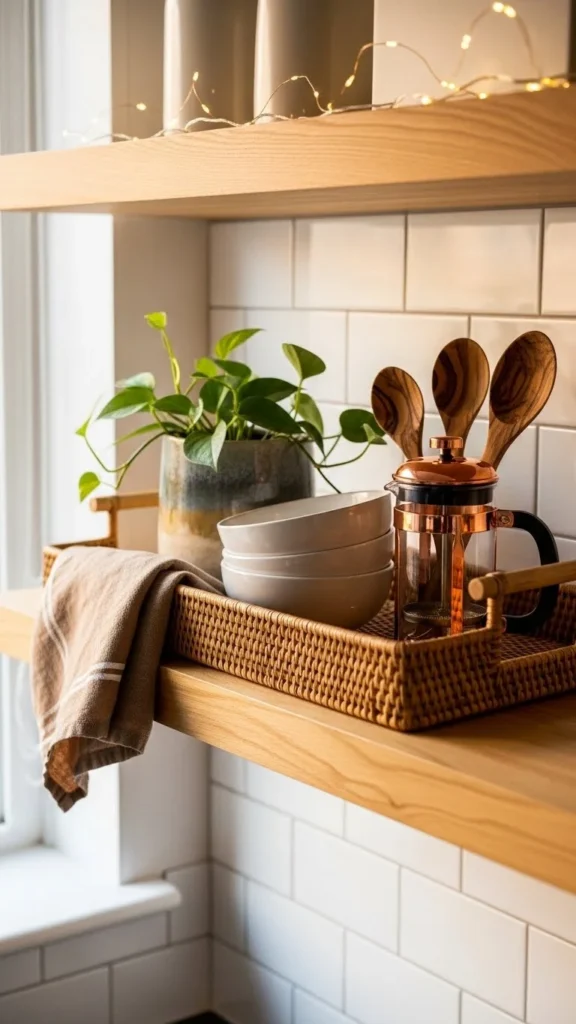
Trays help contain smaller pieces. They create mini displays that feel intentional. Use wood or metal trays for contrast. This method keeps shelves tidy and easy to adjust.
22. Choose Floating Shelves Without Brackets
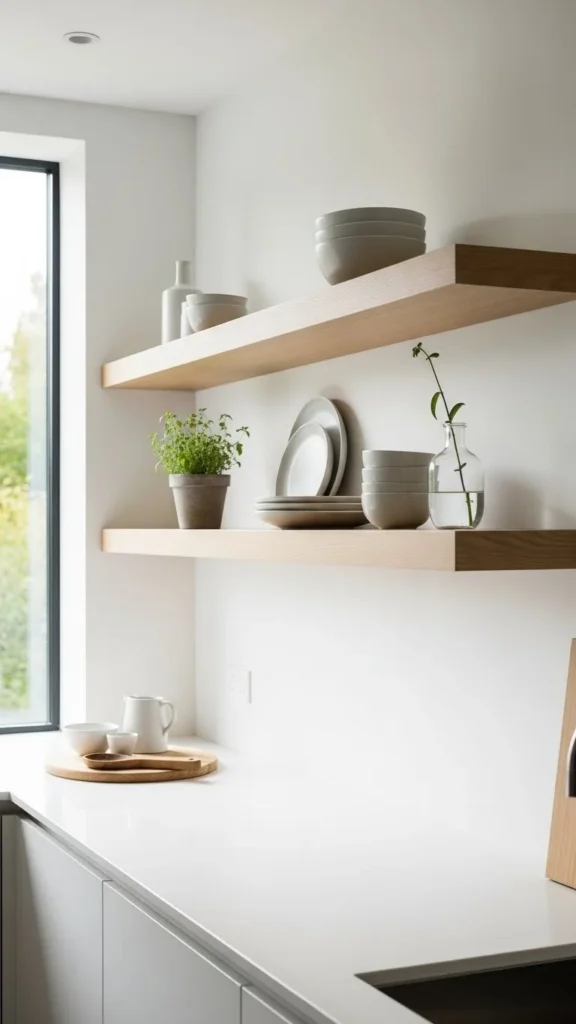
Hidden brackets create a clean look. Floating shelves feel lighter visually. Keep styling minimal so shelves remain the focus. This works well in modern kitchens.
23. Style Shelves Between Windows
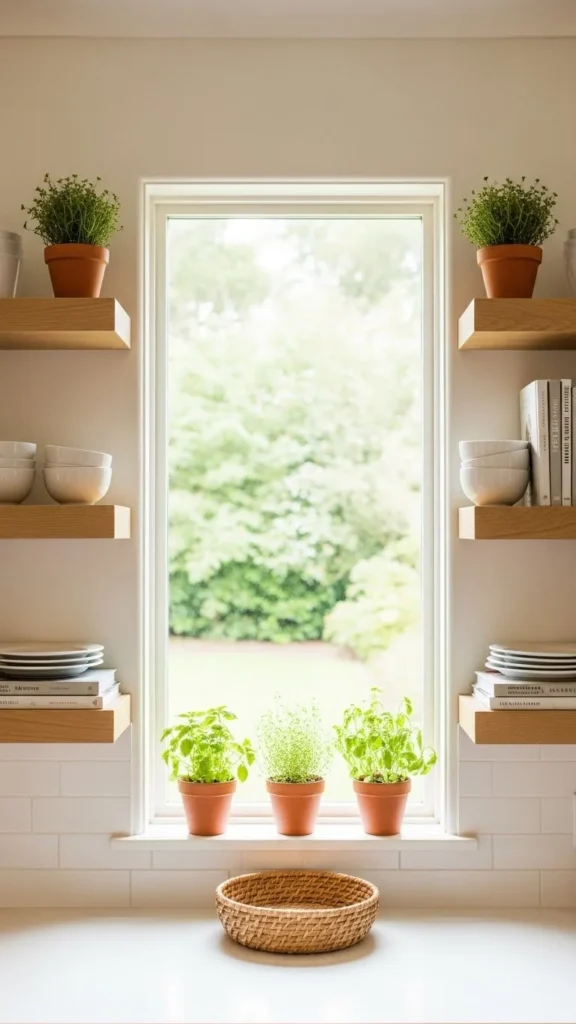
Shelves between windows benefit from repetition. Matching decor on each side creates balance. Keep colors consistent. This framing effect feels orderly and intentional.
24. Edit Aggressively in Small Kitchens
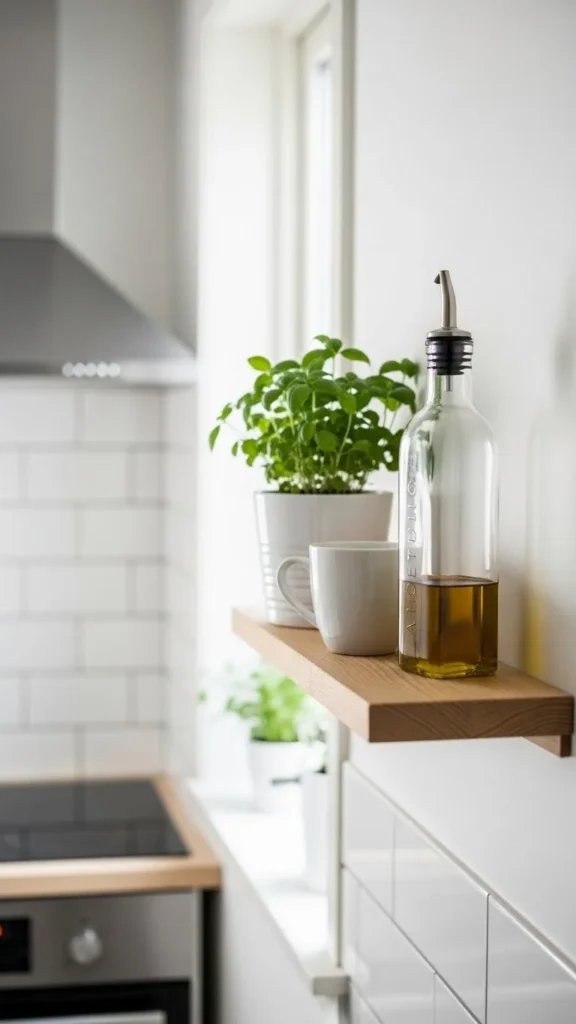
Small kitchens require restraint. Fewer items look better. Remove anything not used or loved. Keep shelves light and open. Editing often has the biggest visual impact without spending money.
Conclusion
Kitchen shelf styling looks polished when it follows simple patterns and stays practical. Grouping items thoughtfully, leaving space, and using everyday pieces keeps shelves calm and useful. Small adjustments often make the biggest difference. By styling slowly and editing often, shelves remain easy to maintain and enjoyable to see every day.