A kitchen that feels seamless is built through visual flow, not major renovation. When finishes, colors, and lines repeat across spaces, the kitchen connects naturally with dining and living areas. These ideas focus on simple decor choices, affordable updates, and realistic DIY steps that help reduce visual breaks. Each idea supports smoother movement, calmer sightlines, and a home that feels pulled together without heavy spending.
1. Consistent Cabinet Finishes Across Zones

Matching cabinet finishes across open areas helps the eye move without interruption. If your kitchen opens into a dining room with built-ins, sideboards, or storage walls, repeat the same cabinet color or wood tone.
You don’t have to replace anything. Paint is often enough. Use one neutral shade across all cabinetry. Even matching just the visible edges can help. Hardware matters too. Keep knobs and pull the same finish. This small detail keeps everything visually tied together and avoids a patched look.
2. Open Shelving That Bridges Spaces

Open shelves near kitchen edges soften the shift into nearby rooms. They act as visual stepping stones. Use shelf materials that repeat nearby furniture tones. Wood shelves near a dining table work well.
Style shelves lightly. Stack plates, bowls, or glasses already used elsewhere. Leave space between items so the shelves guide the eye instead of stopping it.
3. Island Pendants Aligned With Nearby Lighting

When pendant lights over the island line up with dining lights, the layout feels intentional. Height, spacing, and bulb warmth matter more than fixture style.
You can save money by keeping fixtures and swapping shades. Choose similar shapes or finishes. Use warm bulbs across both areas to keep lighting consistent and comfortable.
4. Backsplash That Wraps Onto Adjacent Walls

Extending backsplash tile beyond the kitchen adds continuity. Even a small wrap helps connect zones.
Peel-and-stick tile works well for renters or tight budgets. Keep grout color close to tile shade to avoid harsh lines. This trick pulls attention outward instead of stopping it at the counter edge.
5. Neutral Flooring That Runs Through Spaces

Flooring plays a major role in flow. Using the same floor through connected rooms reduces visual breaks.
If replacing flooring isn’t an option, use large neutral rugs to mimic continuity. Choose similar textures and tones. Avoid strong patterns at thresholds. Calm surfaces help spaces feel linked and steady.
6. Hidden Appliances for Clean Sightlines
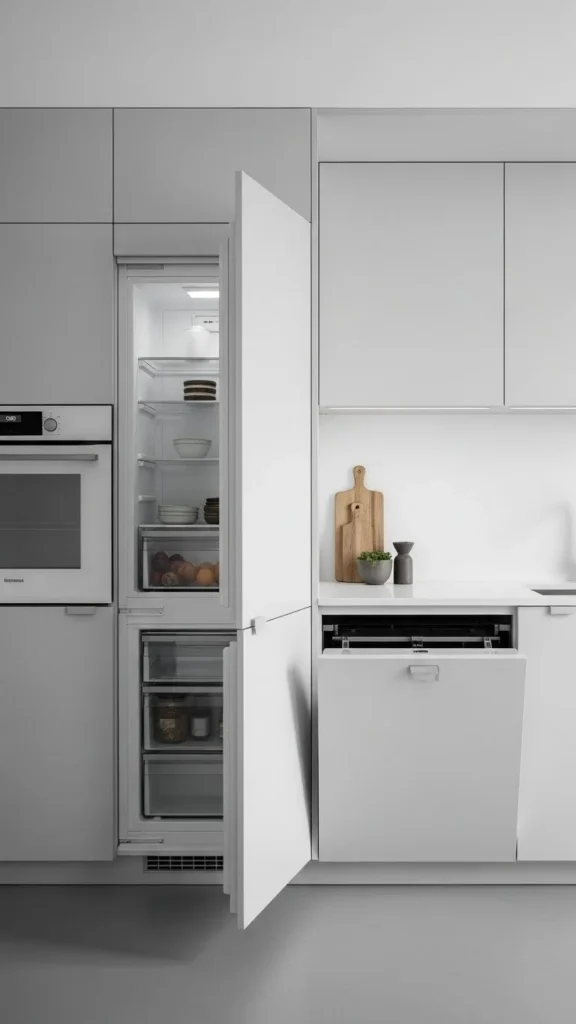
Visible appliances can interrupt flow. Panel-ready options or appliance covers help reduce clutter.
You can use vinyl wraps or paint appliance fronts to match cabinetry. Even small fixes make a difference. Clear counters also help. Store daily tools in drawers to keep sightlines open.
7. Bar-Height Counters as Soft Dividers

Bar-height counters define space without walls. They allow separation while keeping openness.
Use stools that match living room furniture finishes. This repeats visual cues across rooms.
Keep decor minimal on the counter so it feels like a shared surface, not a barrier.
8. One Color Used Across Walls

Using one wall color across connected spaces creates calm flow. Soft neutrals work best.
Paint trim the same shade for added continuity. This removes harsh outlines.If repainting everything feels like too much, start with the most visible walls first.
9. Arched Openings for Soft Shifts

Arches guide movement gently between rooms. They soften edges without closing things off.
You can fake an arch using paint or lightweight trim. Even a rounded paint edge helps. This works well in homes with open layouts that feel too sharp.
10. Herb Walls That Link Indoor and Outdoor

A small herb wall connects kitchen and outdoor areas visually. Use wall-mounted planters or rail systems. Keep plants simple and easy to maintain.
Greenery draws the eye outward and adds life without clutter.
11. Pocket Doors That Hide Utility Zones

Pocket doors allow you to hide storage or utility areas when not in use. They keep living areas clean while maintaining easy access. If installing doors isn’t possible, use curtains or sliding panels as alternatives.
12. Unified Hardware Finishes Everywhere

Repeating hardware finishes across rooms strengthens flow.
Swap mismatched pulls for a single finish. This is a low-cost update with strong visual impact. Even lighting fixtures can follow the same metal tone for consistency.
13. Banquette Seating That Extends Living Comfort
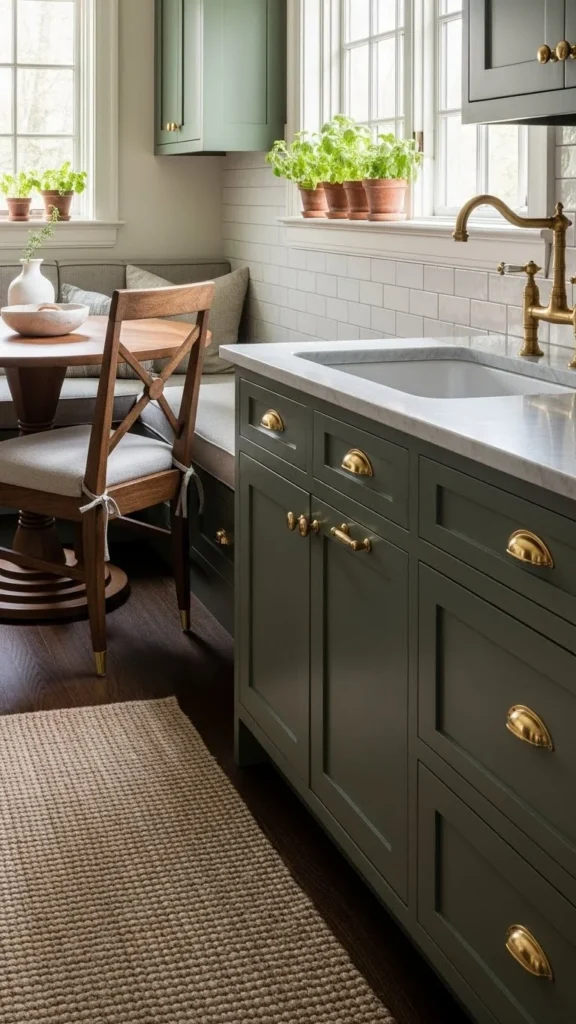
Built-in seating connects kitchen and living zones. Use similar cushions and fabrics as nearby sofas. This makes seating feel shared instead of separated.
14. Glass Partitions That Keep Light Moving

Glass dividers define areas without blocking light. Use framed panels or simple glass screens. This keeps brightness consistent across rooms.
15. Curved Islands That Echo Furniture Shapes

Repeating shapes helps visual flow. A curved island reflects rounded sofas or tables nearby.
If replacing an island isn’t possible, soften corners with rounded stools or decor.
16. Shared Vent Hood Styling
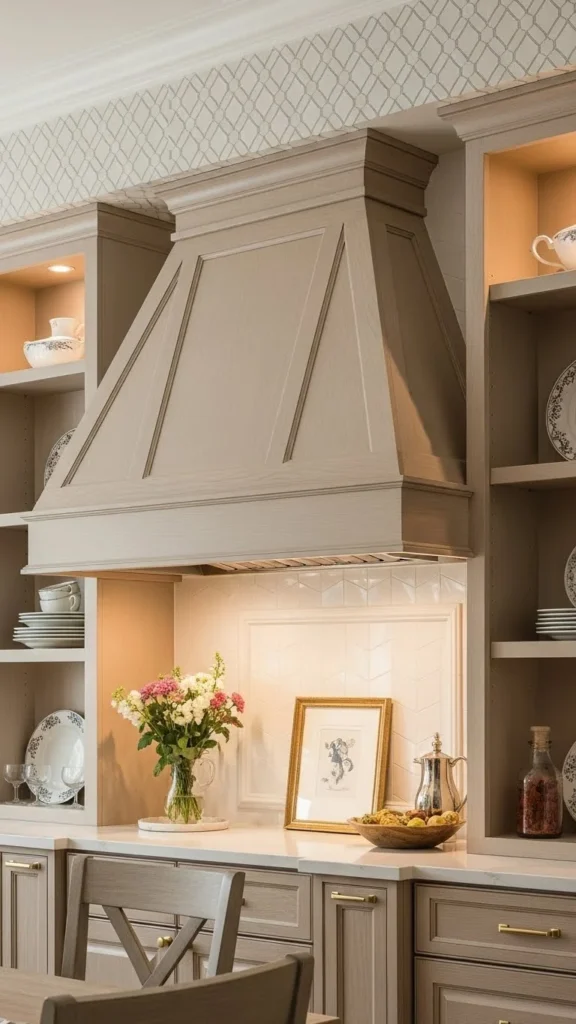
Vent hoods don’t have to stand alone. Paint or clad them to match surrounding cabinetry or walls. This keeps attention moving smoothly across the space.
17. Pendant Clusters That Match Table Lighting

Using similar pendant groupings over island and table links zones. Spacing matters more than style. This repetition makes lighting feel planned and calm.
18. Pantry Doors That Match Cabinetry

Camouflaged pantry doors reduce visual clutter. Paint or panel doors to match cabinets. This keeps walls clean and consistent.
19. Rug Runners That Guide Movement

Runners guide walking paths. Choose simple patterns and neutral colors. Layering rugs helps connect distant areas without flooring changes.
20. Wall-Mounted Faucets for Line Alignment

Wall-mounted fixtures free counter space and align sightlines They also echo bar or prep sinks nearby. This small change helps surfaces feel open.
21. Fluted Panels That Continue Texture

Fluted textures add depth without visual noise. Extend panels onto walls or islands. Paint them the same color to keep things calm.
22. Open Tread Stairs Near Kitchen Views

Open stairs allow light and views to pass through. They reduce heavy visual blocks near kitchens. If stairs already exist, lighten them with paint or open risers.
23. Backlit Cabinets That Glow Into Hallways

Soft lighting helps spaces blend. Add LED strips under cabinets or shelves. Use warm tones to avoid harsh contrast.
24. Repeated Decor Materials Across Rooms

Repeat materials like wood, ceramic, or stone. Use the same trays, bowls, or vases across zones. This quiet repetition keeps spaces connected.
25. Clear Counters That Support Visual Calm

Clear counters help flow more than any decor. Store daily items out of sight. Use one or two shared decor pieces to tie areas together.
Conclusion
Seamless kitchen flow comes from repetition, restraint, and thoughtful placement. By reusing colors, finishes, shapes, and lighting across spaces, you reduce visual breaks and create calm movement through the home. These ideas focus on small, affordable steps that work in real layouts. Choose a few that fit your space, apply them slowly, and let the kitchen connect naturally with the rooms around it.