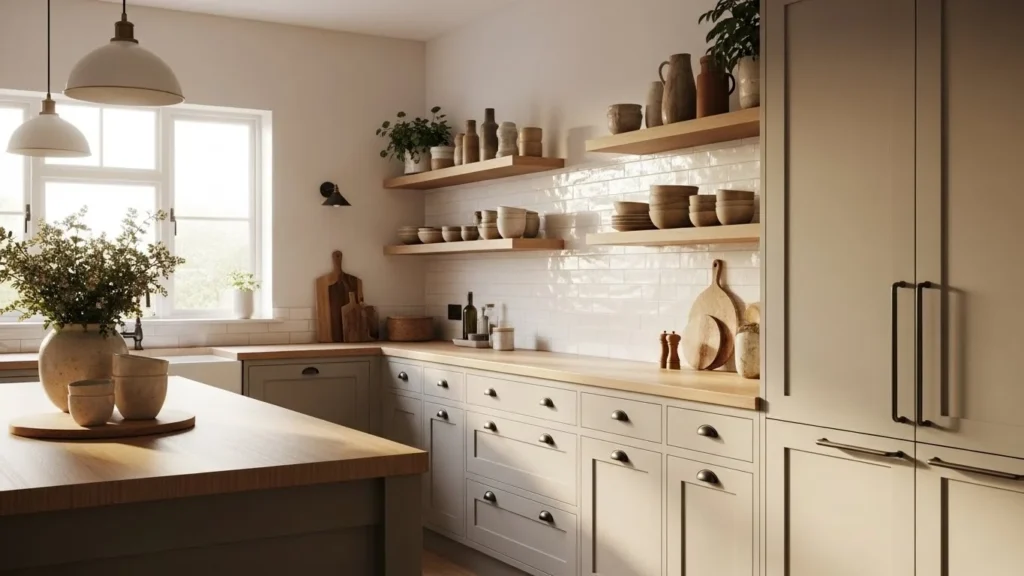
A kitchen that feels just right usually isn’t about adding more decor. It’s about balance. When colors, light, texture, and layout work together, the space feels calm and functional without effort. Many kitchens feel off because everything matches too closely or nothing connects at all. This list focuses on realistic, affordable ideas that help create harmony using simple changes. Each idea works in real homes, including small kitchens and rentals, and avoids anything complicated or expensive.
1. Neutral Bases With One Warm Accent
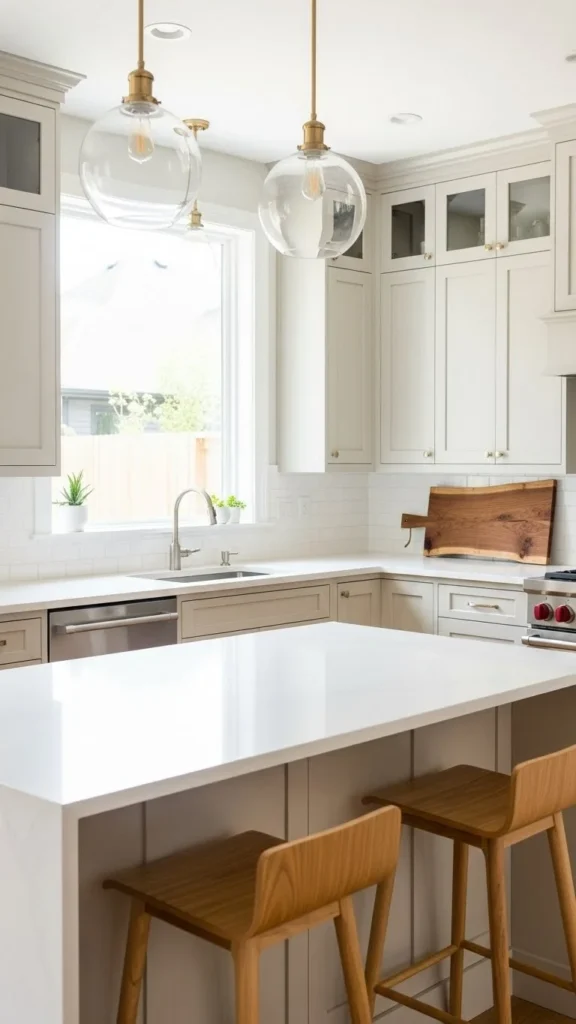
Neutral kitchens feel calm, but they can fall flat without warmth. Start with a soft base like white, cream, or light gray. Then add one warm accent. Wood works best because it feels natural and easy to repeat. A pair of wooden stools, a butcher block board, or a small bench can carry the look without crowding the space. Keep the accent limited so it stands out. Budget-wise, thrift stores often have wooden trays or bowls that fit perfectly. Avoid adding several accent colors at once. One warm element creates balance without visual noise.
2. Two-Tone Cabinets for Visual Grounding

Two-tone cabinets help anchor a kitchen, especially small ones. Darker lowers make the room feel stable, while lighter uppers keep it open. This contrast breaks up large surfaces and keeps the space from feeling boxed in. If replacing cabinets isn’t an option, paint works well. Many homeowners repaint only the lower cabinets to save money. Stick to classic tones like charcoal, olive, or navy paired with white. This approach adds depth without clutter and keeps the kitchen feeling organized.
3. Mixed Metals With Simple Rules

Mixed metals add texture when kept simple. Choose two finishes only. One should appear more often, such as black handles. The second, like brass, can show up in lighting or faucets. Repeating each finish at least twice helps everything feel connected. Swapping hardware is an affordable DIY that changes the look fast. Avoid mixing too many finishes, which can feel scattered instead of balanced.
4. Curated Open Shelving

Open shelving works best when treated like display, not storage. Use mostly everyday items in matching tones. Add one or two decorative pieces and leave space empty. This breathing room is what makes shelves feel calm. A simple rule is fewer items per shelf than you think you need. Rotate pieces seasonally to keep it feeling updated without buying more.
5. Large-Format Tiles for Calm Floors

Large tiles reduce visual breaks, which helps small kitchens feel bigger. Fewer grout lines mean less distraction. Choose light or mid-tone tiles to keep the room grounded. Many budget tile options mimic stone or concrete and are easy to install. This single change can quiet a busy space.
6. Earthy Wall Colors That Settle the Room

Earth-inspired neutrals like warm beige or soft taupe help balance busy kitchens. These shades feel calm next to stainless appliances and wood accents. Paint is one of the most affordable upgrades and instantly changes how the space feels. Stick to warm undertones for a cozy result.
7. Backlit Backsplashes for Soft Glow

LED lighting behind or under cabinets adds gentle light without glare. It’s useful at night and adds mood without extra decor. Peel-and-stick LED strips are inexpensive and renter-friendly. Warm light works better than bright white for balance.
8. Reclaimed Wood Touches

Reclaimed wood adds character without overpowering the room. Use it in small ways like shelves, trim, or an island face. Salvage shops often sell affordable pieces. The texture balances sleek finishes and keeps the kitchen from feeling cold.
9. Matte Finishes for Quiet Surfaces

Matte cabinets reduce shine and visual noise. They feel calm and modern at the same time. If replacing cabinets isn’t possible, matte hardware or appliances help achieve a similar effect. This finish also hides fingerprints better, which keeps the kitchen looking tidy.
10. Natural Light Focus

Let natural light lead the design. Keep windows clear or use sheer curtains. Mirrors or glossy tiles help bounce light around. Even small changes like lighter rugs or countertops help the room feel open.
11. Functional Wall Decor That Works Daily

Wall decor feels balanced when it serves a purpose. Hanging boards, hooks, or rails keeps tools off the counter and adds texture at the same time. Choose similar materials so the wall feels calm instead of crowded.
12. Simple Seasonal Decor Rotations

Rotating small decor pieces keeps the kitchen feeling current without adding clutter. Swap towels, framed prints, or countertop items every few months. Store extras in one box so things don’t pile up.
13. Visual Zones That Guide Movement

Kitchens feel calmer when areas are visually defined. Use rugs, lighting, or tile changes to separate cooking, prep, and dining spots. Even small kitchens feel more organized with clear zones.
14. Counter Styling With Restraint

Keep counters useful by grouping items on trays. Limit each surface to a few objects you use daily. This keeps the kitchen tidy and easy to clean.
15. Soft Window Treatments for Light Control
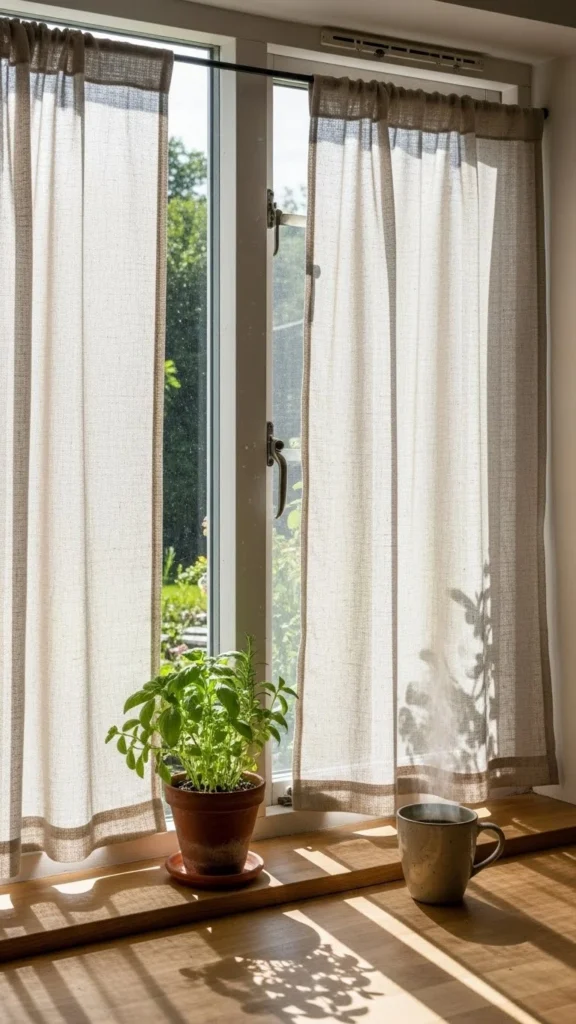
Sheer or light fabric curtains soften the room without blocking sunlight. Neutral tones work best with most kitchens. Skip heavy patterns that pull attention away from the space.
16. Pattern Used in One Spot Only

Patterns work best when they appear once. A backsplash or runner rug is enough. Keeping the rest of the kitchen simple helps the pattern feel intentional.
17. Consistent Wood Tones Across the Room

Using one main wood tone keeps the space steady. Mixing too many finishes can feel scattered. If you add new pieces, try to match what’s already there.
18. Slim Furniture That Saves Space

Furniture with thin legs and simple shapes keeps kitchens open. Bulky pieces make rooms feel tight. Look for stools and tables with open bases for better flow.
19. Quiet Appliance Finishes

Appliances that match cabinetry reduce visual breaks. Panel-ready options work well, but even choosing similar tones helps. This keeps the kitchen from feeling busy.
20. Soft Textiles for Warmth Underfoot

A simple rug adds comfort and warmth. Stick to low-pile styles that are easy to wash. Neutral patterns work better than bold prints.
21. Even Shelf Spacing for Visual Calm

Shelves feel calmer when spacing is consistent. Crowded or uneven placement pulls attention. Measure carefully before installing to keep things aligned.
22. Leaving Space Empty on Purpose

Not every corner needs decor. Empty space lets the eye rest and helps the kitchen feel organized. This is often the simplest way to restore balance.
Conclusion
A balanced kitchen doesn’t rely on expensive upgrades or constant changes. Small, thoughtful choices create calm and connection across the space. By focusing on light, texture, and restraint, your kitchen can feel steady and welcoming every day. Save this list and try one idea at a time. Balance grows through simple steps.