Journaling is more than writing daily thoughts. It can become a personal space for ideas, reflection, and playful thinking. With the right prompts, a simple notebook turns into a creative habit that fits any schedule or budget. These journal ideas focus on practical ways to write, sketch, list, and explore thoughts without pressure. Each one works with basic supplies and short time blocks, making it easier to stay consistent and curious.
1. Morning Thought Pages

Morning thought pages give your mind space before the day fills up. Open your journal and write whatever comes up. No theme. No edits. Just movement from mind to page. Keep writing for five to ten minutes.
This practice works well with cheap notebooks and basic pens. Fancy supplies are not required. The value comes from repetition, not appearance. If your thoughts feel scattered, that’s fine. Short lines are enough.
Some days you may write plans. Other days it may be worries or random ideas. All of it counts. Over time, patterns appear naturally. You may notice repeated topics or ideas worth keeping.
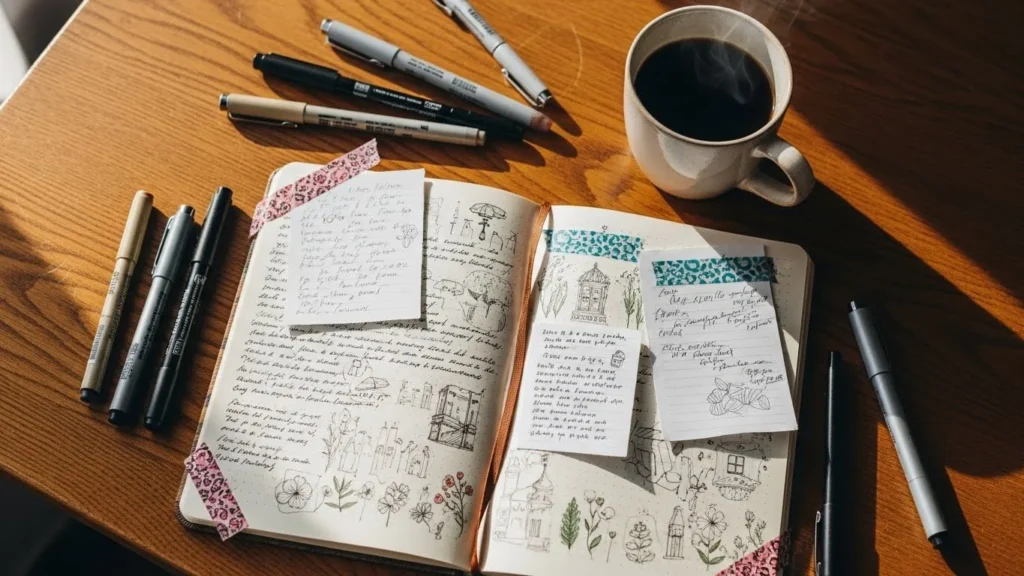
If mornings feel rushed, try this while drinking tea or coffee. Set a timer and stop when it rings. Consistency matters more than length. This habit helps clear mental clutter before tasks begin.
2. One-Sentence Days

One-sentence journaling keeps writing manageable. Each day, write a single sentence that captures something meaningful. It might describe a moment, a feeling, or an observation.
This format fits busy schedules and removes pressure. A sentence can be short. Even five words count. Use lined notebooks or planners you already own.
Over weeks, these entries become a timeline of daily life. Reading them later brings clarity and perspective without long paragraphs. Some days feel quiet. Others stand out.
If you miss a day, continue without guilt. The goal is simple recording, not perfection. This idea works well for people who want consistency with minimal effort.
3. Mood Color Pages
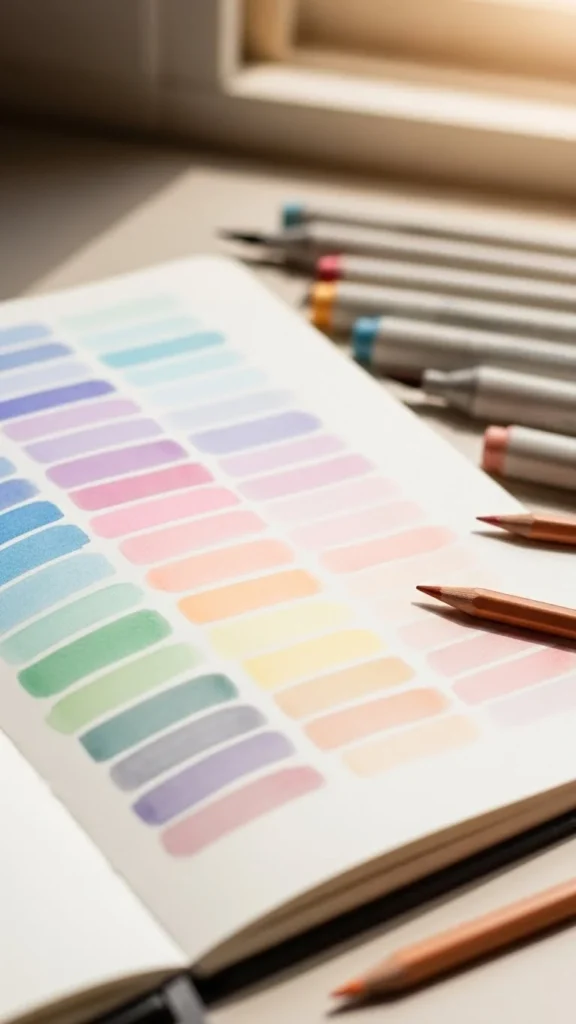
Mood color pages replace words with color. Choose one color that matches how you feel and fill part of the page. Add another if needed. Shapes can be loose or structured.
This works well with basic markers or pencils. No art skills required. The act of choosing colors encourages emotional awareness without long writing.
You can add a small note later if you want. Or leave the page visual only. Over time, patterns in color choices appear naturally.
This idea suits days when writing feels heavy. It keeps the journal habit alive through simple action.
4. Lists of Small Joys

Listing small joys trains attention toward positive moments. Write short items that brought comfort or interest during the day. A good meal. A quiet moment. A kind exchange.
Lists keep writing light and quick. Use any notebook and a pen. No structure needed beyond bullet points.
This practice builds awareness of everyday experiences that often pass unnoticed. Reading back later reminds you of simple pleasures already present.
Aim for three to five items per entry. If you feel stuck, list the obvious. It still counts.
5. Memory Snapshots

Memory snapshot journaling focuses on one small moment. Choose a scene and describe it briefly. Where you were. What you noticed. How it felt.
Keep paragraphs short. A few sentences work well. This style sharpens observation and recall.
Use plain paper and a pen. Add a quick sketch if you like, but it’s optional. Writing carries the weight here.
This approach works well for capturing moments before they fade. Over time, these snapshots form a personal archive of lived experiences.
6. Letter to Your Past Self

Writing to your past self creates space for reflection. Pick a specific age or moment. Write as if you are speaking directly to that version of yourself.
Keep sentences honest and simple. Advice, reassurance, or understanding all fit. This practice costs nothing beyond time and paper.
You don’t need to reread it often. The value comes from writing it out. Many people find clarity through this process.
Use lined or blank pages. Handwriting helps keep the tone personal and grounded.
7. Letter to Your Future Self

A future letter captures hopes, questions, or reminders. Choose a date one year or five years ahead. Write what you want remembered.
This entry can include goals, current worries, or simple observations. Keep language clear and honest.
Seal the page or mark the date to read it later. This adds meaning without extra cost.
This practice encourages long-term thinking through a short writing session.
8. Favorite Sounds Log

A sound log shifts focus away from visuals. Write down sounds you notice during the day. Rain, footsteps, distant music, quiet rooms.
Describe them briefly. One line per sound works well. This sharpens sensory awareness.
No special supplies required. A pen and notebook are enough. This idea fits short writing windows.
Over time, entries reveal how sound shapes daily experience.
9. Daily Doodle Space

Daily doodle pages remove writing pressure. Draw lines, shapes, or patterns without meaning. Let your hand move freely.
This practice works with cheap pens or pencils. Skill level does not matter. Movement matters.
Doodles often reflect mood through pressure and flow. Some days feel energetic. Others quiet.
Adding a doodle page keeps journaling playful and flexible.
10. Gratitude Fragments

Gratitude fragments focus on small pieces rather than full sentences. Write short phrases that reflect appreciation.
This style reduces effort while keeping awareness active. Fragments feel lighter than paragraphs.
Use spare moments to add entries. One phrase is enough. Over time, the page fills naturally.
This habit fits well into busy routines and keeps journaling simple.
11. Quote Reflection Pages
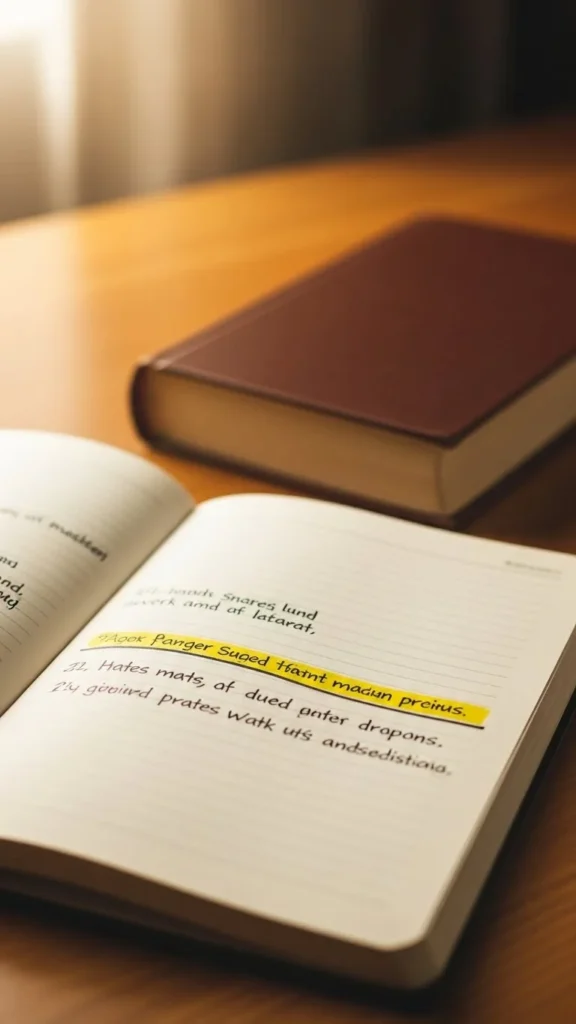
Choose a quote from a book or article. Write it at the top of the page. Below, respond with a few thoughts.
Keep reflections brief. Focus on why it stood out. This approach links reading with writing.
Library books or online articles work well. No purchases required.
These pages build thoughtful engagement through short entries.
12. Dream Recall Notes

Dream recall pages sit near the bed. Upon waking, write anything remembered. Images, feelings, fragments.
Don’t judge clarity. Write quickly before details fade. Even vague notes count.
Use simple notebooks. Keep entries short. Over time, recall improves through repetition.
This practice captures inner imagery with minimal effort.
13. Daily Questions Journal
A daily question journal uses one prompt per day. Questions can be simple. “What felt calm today?” or “What surprised me?”
Answer briefly. One or two sentences work well. This format keeps writing focused.
Reuse questions across weeks. Answers change naturally. No extra materials required.
This idea suits people who prefer direction over free writing.
14. Scrap Paper Collage Pages

Collage journaling uses leftover paper. Receipts, packaging, and scraps all work. Glue them onto a page.
Add short notes if desired. Visual arrangement carries most of the meaning.
This approach uses materials already at home. No artistic background required.
Collage pages capture moments through texture and color rather than long writing.
15. Tiny Goals Tracker

Tiny goals focus on realistic actions. Write one to three small goals per day. Simple tasks work best.
Check them off by hand. This physical action adds satisfaction.
Use any notebook. Rulers optional. Keep layout minimal.
This page style supports progress through manageable steps.
16. Song-Inspired Writing

Choose a song and write while listening. Focus on mood, imagery, or memories that surface.
Writing can be short. Lines, phrases, or reflections all fit.
Streaming music costs nothing extra. This idea blends sound and writing naturally.
Different genres lead to different tones across pages.
17. Sensory Detail Pages

Sensory pages focus on one sense per entry. Sight, sound, touch, taste, or smell.
Describe simple details. A texture. A flavor. A temperature.
This practice builds awareness through short descriptions. No long writing required.
Rotate senses across days for variety.
18. People Watching Notes

People watching journaling captures observations. Write about gestures, movements, or interactions you notice in public spaces.
Avoid judgments. Focus on neutral details. This keeps entries respectful.
A notebook and pen are enough. Short notes work well.
This habit sharpens observation skills through everyday moments.
19. Travel-From-Home Entries

Travel-from-home journaling uses imagination. Choose a place and write as if you are there.
Describe surroundings, sounds, and pace. Keep entries short.
Maps or online photos help spark ideas without cost.
This style brings variety without leaving home.
20. Habit Reflection Pages

Habit reflection pages track how routines feel. Write brief notes about energy or mood.
Avoid long analysis. Simple observations work best.
Use symbols or short phrases. This keeps pages light.
Over time, patterns become visible through repetition.
21. Unsent Letters

Unsent letters allow honest expression. Write to someone without sharing it.
Say what feels unfinished. Keep sentences direct.
This practice costs nothing and stays private. Writing itself holds value.
Pages can be sealed or left open.
22. Weekly Highlights Log
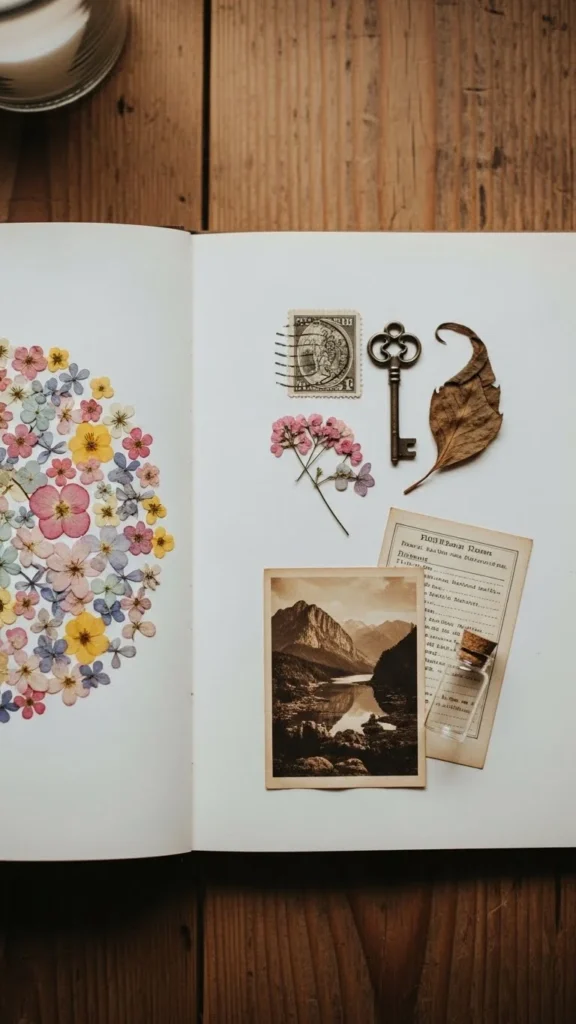
Weekly highlights gather moments that stood out. List three to five events.
Keep entries short. Dates help with recall.
This format works well for reflection without daily pressure.
Reading back shows progress through time.
23. Object-Focused Writing

Choose one object and write about it. Shape, texture, use, and memory all fit.
Limit writing to one page. Focus on detail.
This approach sharpens descriptive skills through ordinary items.
No special tools required.
24. Emotion Check-In Pages
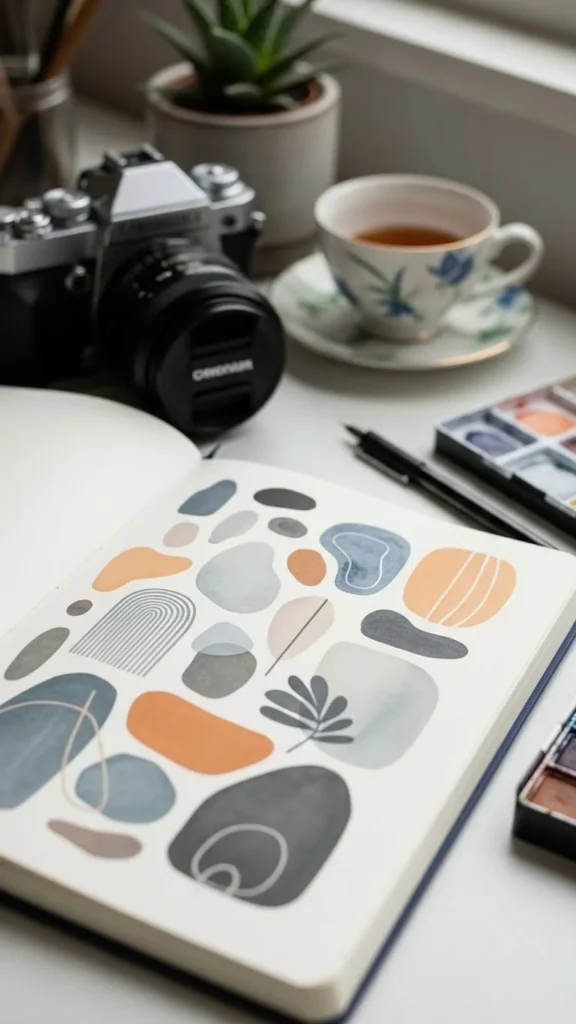
Emotion check-ins name feelings without explanation. Write the emotion. Add a short note if helpful.
This practice builds awareness through labeling.
Use color or symbols to support words.
These pages stay short and direct.
25. Story Starters Notebook

Story starters begin with one sentence. Write an opening line and stop.
Return later to add more or start a new one.
This keeps writing playful and low pressure.
Use scraps or a dedicated notebook.
26. Photo Response Journaling

Choose a photo and respond in writing. Describe mood, memory, or imagined context.
Photos can come from phones or old albums.
Writing stays brief. One paragraph works well.
This practice links visuals with reflection.
27. Monthly Recap Spreads

Monthly recap pages collect highlights, lessons, and feelings. Use short sections.
Lists work well here. Keep writing simple.
This format helps close one month before starting another.
No decoration required.
28. Free-Write Timer Pages
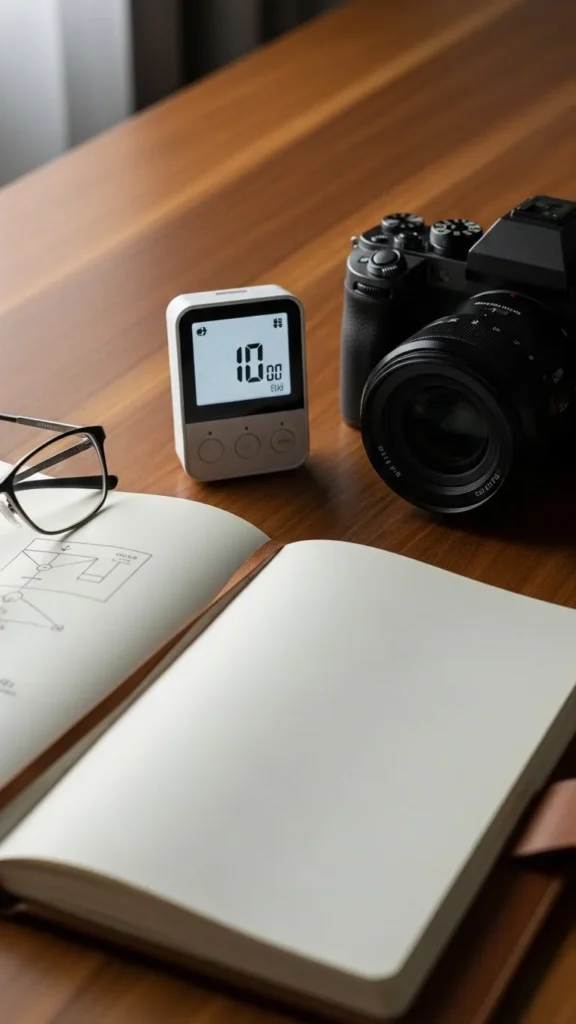
Free-write pages use a timer to guide writing. Set five minutes and write continuously.
Spelling and structure don’t matter. Movement matters.
Stop when the timer ends. No rereading required.
This habit builds writing flow through short sessions.
Journaling grows through steady, low-pressure practice. These ideas show how simple prompts and basic supplies can turn a notebook into a space for reflection and play. Choose one approach that fits your routine and try it today. Small actions repeated over time create pages worth returning to.

Lily Summers is a digital artist and creative storyteller who loves bringing colorful characters to life. With a passion for cartoons, fan art, and playful sketches, she inspires others to explore their imagination through art. When she’s not sketching, you’ll find her dreaming up new ideas for CraftedWizard.com to spark creativity in every artist. 🌈✨