
Hand lettering with brush pens looks magical when you scroll past it on Pinterest or Instagram. Smooth curves. Thick downstrokes. Thin upstrokes. It feels artistic, personal, and relaxing all at once. The best part? You don’t need to be “good at drawing” to start. With the right basics and a little patience, anyone can learn.

This guide walks you through exactly how to begin hand lettering with brush pens in a simple, no-pressure way. You’ll learn what tools to buy, how to hold the pen, and how to practice without feeling stuck or overwhelmed.
What Is Hand Lettering With Brush Pens?
Hand lettering is drawing letters, not writing them the usual way. Brush pens make this style special because the flexible tip changes thickness based on pressure.
Here’s the basic rule:
- Light pressure on the way up = thin lines
- Firm pressure on the way down = thick lines
That contrast is what gives brush lettering its signature look.
You don’t need perfect handwriting. You don’t need fancy words. You just need practice and a willingness to slow down.
Choosing the Right Brush Pens as a Beginner
Not all brush pens feel the same. Some are soft and bendy. Others are firm and easier to control.
For beginners, look for:
- Small or medium brush tips
- Pens labeled “beginner” or “firm tip”
- Water-based ink for smoother flow
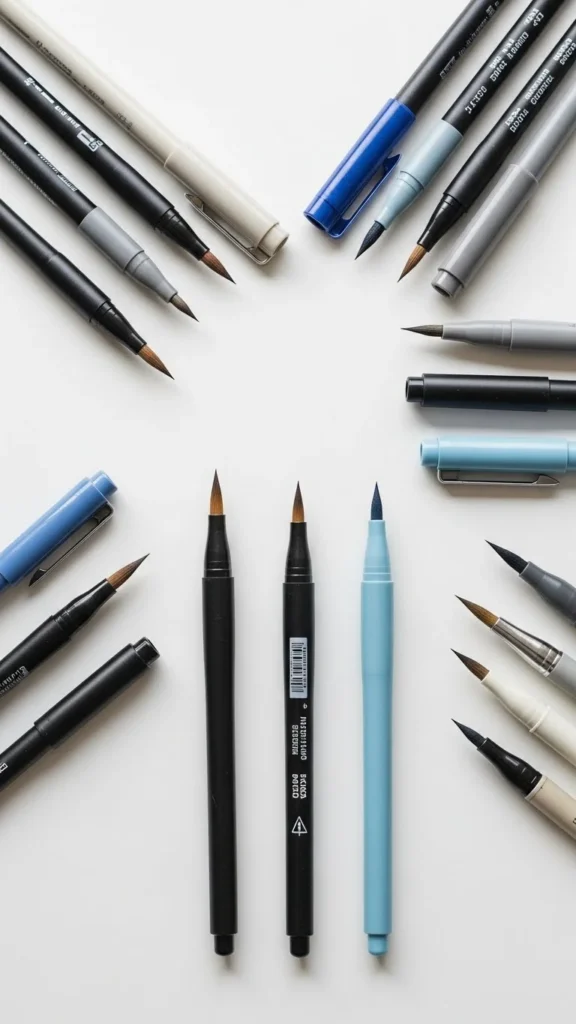
Popular beginner-friendly options include:
- Tombow Fudenosuke (hard or soft tip)
- Pentel Touch Sign Pen
- Crayola brush pens for practice
Tip: Start with one or two pens. Learning control matters more than owning many colors.
Paper Matters More Than You Think
Paper choice can make practice either enjoyable or frustrating.
Good paper for brush lettering:
- Smooth marker paper
- Rhodia or Clairefontaine notebooks
- Laser printer paper for warm-ups
Avoid rough paper at first. It wears down brush tips fast and makes lines look shaky.
Practice tip:
- Use cheap smooth paper for drills
- Save better paper for finished pieces
Your pens will last longer, and your strokes will look cleaner.
How to Hold the Brush Pen
Brush pens aren’t held straight up like regular pens. Angle makes a big difference.
Try this:
- Hold the pen at a slight angle
- Relax your grip
- Use your arm, not just your fingers
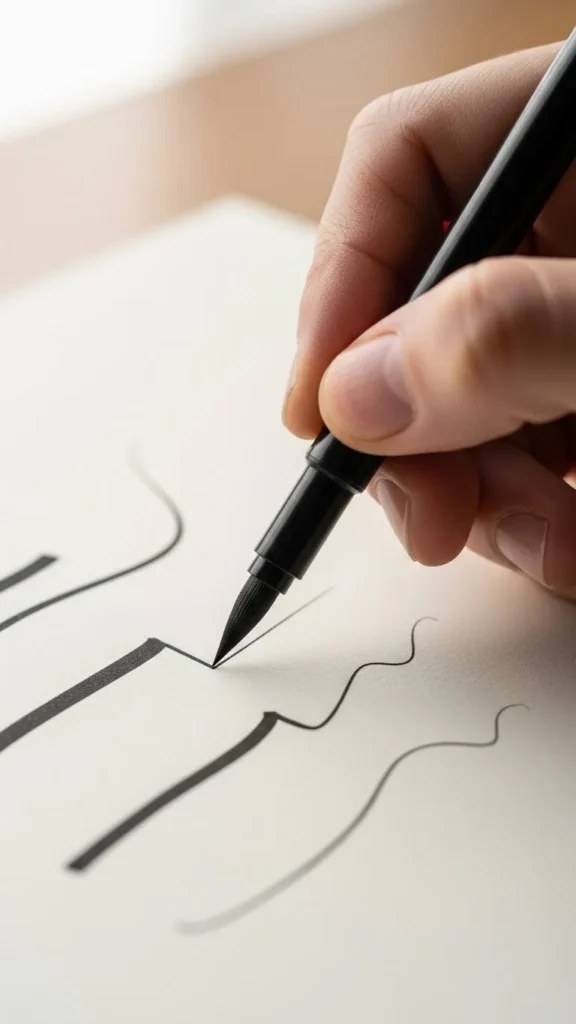
Keep your wrist loose. Tension shows up in shaky lines.
If your hand feels tight, pause and shake it out. Comfort helps control.
Start With Basic Stroke Practice
Before writing words, train your hand with simple strokes. This step saves time later.
Practice these daily:
- Thin upstrokes
- Thick downstrokes
- Oval shapes
- Slow curves
Fill a page with just lines and curves. It may feel boring, but it builds muscle memory.
Helpful habit:
- Practice for 10–15 minutes
- Focus on consistency, not speed
Short, regular practice works better than long sessions once a week.
Learning the Basic Letter Shapes
Once strokes feel comfortable, move to letters.
Start with lowercase letters. They connect more easily and feel less stiff.
Begin with:
- i, u, t, l (simple strokes)
- o, a, e (oval shapes)
- n, m, h (controlled downstrokes)
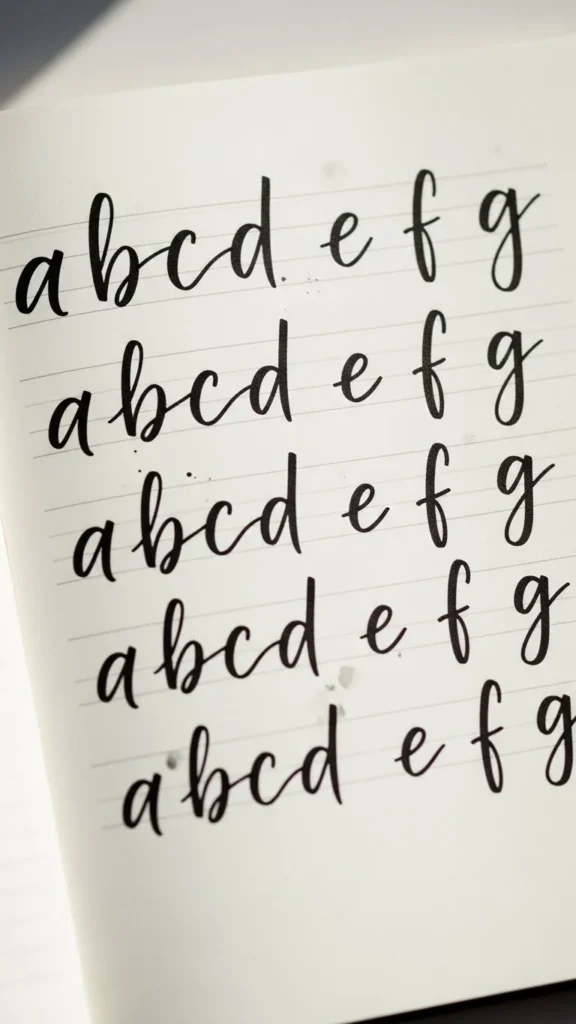
Write slowly. Draw each letter in parts if needed.
Don’t worry if letters look uneven. That’s normal early on.
Connecting Letters Into Words
After individual letters, practice simple words.
Good starter words:
- hello
- love
- yes
- home
Tips for smoother words:
- Lift your pen less
- Keep spacing loose
- Let letters breathe
If a word looks off, circle what you like instead of what you don’t. Progress shows faster that way.
Common Beginner Mistakes to Avoid
Everyone makes these. Catching them early helps.
Watch out for:
- Pressing too hard on upstrokes
- Rushing through letters
- Using rough paper too soon
- Comparing your work to experts
Brush lettering improves with time. Messy pages mean learning is happening.
Simple Ways to Practice Every Day
You don’t need special projects.
Try these ideas:
- Letter one word a day
- Rewrite song lyrics
- Practice quotes you like
- Trace printed letters for control
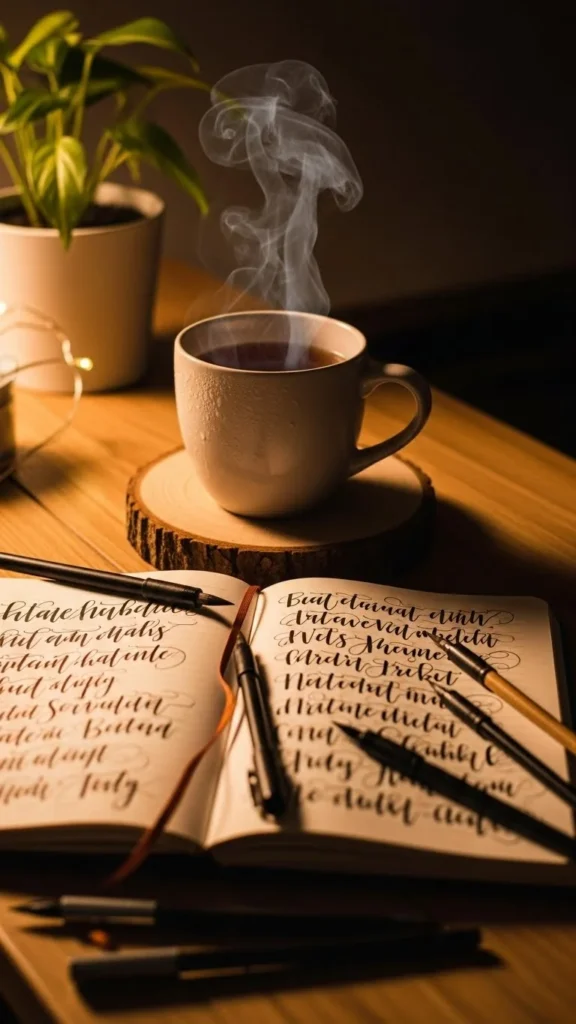
Small daily habits add up quickly.
Final Thought
Starting hand lettering with brush pens is about patience, not perfection. Focus on basics. Use simple tools. Practice a little at a time. Your lines will smooth out, your confidence will grow, and your style will start to show.

Lily Summers is a digital artist and creative storyteller who loves bringing colorful characters to life. With a passion for cartoons, fan art, and playful sketches, she inspires others to explore their imagination through art. When she’s not sketching, you’ll find her dreaming up new ideas for CraftedWizard.com to spark creativity in every artist. 🌈✨