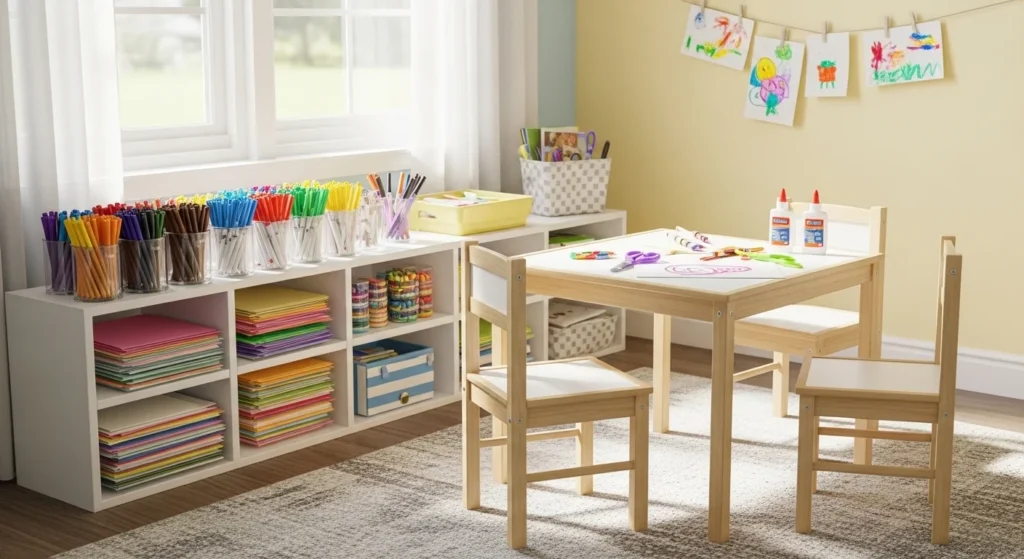
Kids’ craft time is a lot more fun when the glue sticks are easy to grab, the crayons are not rolling under the table, and the paper is actually where you thought you put it. A simple craft setup can turn everyday moments into easy creative wins.
The good news is that you do not need a fancy playroom or expensive storage bins to make it work. With a few smart organizing ideas, you can create a kid-friendly system that feels tidy, practical, and ready for daily fun.
Start by Sorting Everything Into Simple Categories
Before you buy containers or rearrange shelves, start with a quick reset.
Take out all the craft supplies and group them into easy categories. This helps you see what you have, what you use often, and what is just taking up space.
Try categories like:
- Coloring tools like crayons, markers, and colored pencils
- Paper supplies like construction paper, printer paper, and cardstock
- Glue and tape
- Scissors and kid-safe cutting tools
- Stickers and embellishments
- Paints and brushes
- Seasonal or specialty craft items
Keep the categories broad and simple. If the system feels too detailed, it will be harder to maintain.
As you sort, toss dried-out markers, broken crayons, empty glue bottles, and random scraps that are no longer useful. A smaller, cleaner collection is much easier to manage.
Choose Storage That Kids Can Actually Use
The best craft storage is not just pretty. It also has to be easy for kids to use on their own.
Look for storage solutions that are:
- Low enough for kids to reach
- Light enough for them to carry
- Open or clear so they can see what is inside
- Simple to put back without help
Good options include:
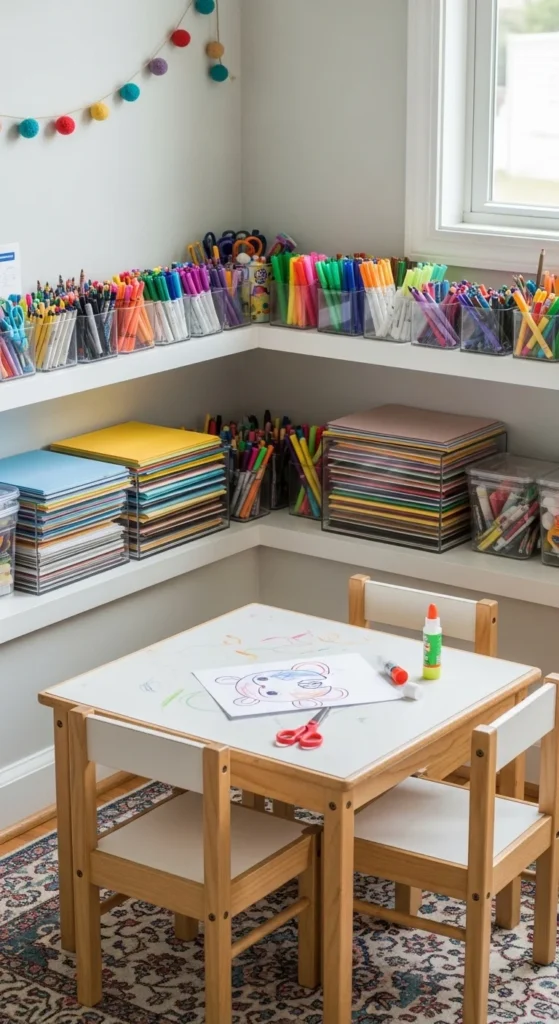
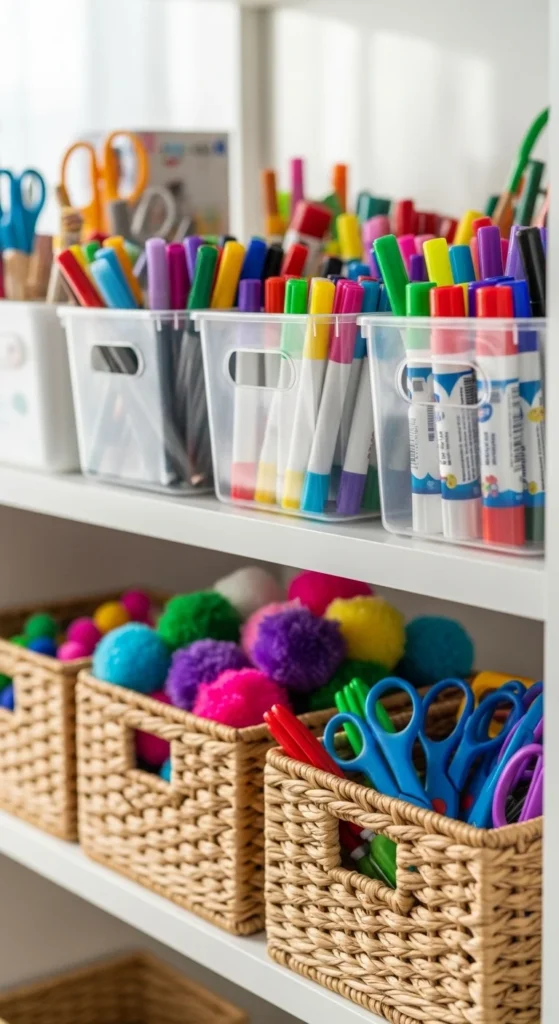
- Clear plastic bins
- Small baskets
- Mason jars or cups for pencils and markers
- Rolling carts
- Drawer units with labels
- Stackable trays for paper
If your child is little, avoid heavy lids or containers that are hard to open. The easier it is to grab supplies and clean them up later, the more often creativity will happen.
Create a Grab-and-Go Daily Craft Zone
One of the easiest ways to encourage regular crafting is to set up a small daily-use zone.
This does not need to be a whole room. It can be:
- One shelf in the living room
- A rolling cart by the dining table
- A corner of the kitchen
- A small cabinet in the playroom
Fill this area only with the supplies your kids use most often. Think everyday basics instead of every single craft item you own.
A good daily creativity zone might include:
- Crayons or markers
- White paper and colored paper
- Glue sticks
- Child-safe scissors
- Stickers
- Washable coloring supplies
Store messier or less-used items like glitter, paint, beads, or hot glue in a separate spot for supervised projects.
This setup keeps daily craft time easy and low-stress. Kids can get started fast, and cleanup feels much more manageable.
Use Labels and Picture Cues for Easy Cleanup
Labels can make a huge difference, especially if you want kids to help put everything away.
For younger children, picture labels work especially well. You can use:
- A photo of crayons on the crayon bin
- A picture of paper on the paper tray
- A sticker showing scissors on the scissors container
For older kids, simple word labels are usually enough.
Try labeling:
- Draw
- Cut
- Glue
- Paint
- Stickers
- Paper
This makes cleanup feel like part of the routine instead of a big mystery. Kids know where things go, and you do not have to answer the same questions every day.
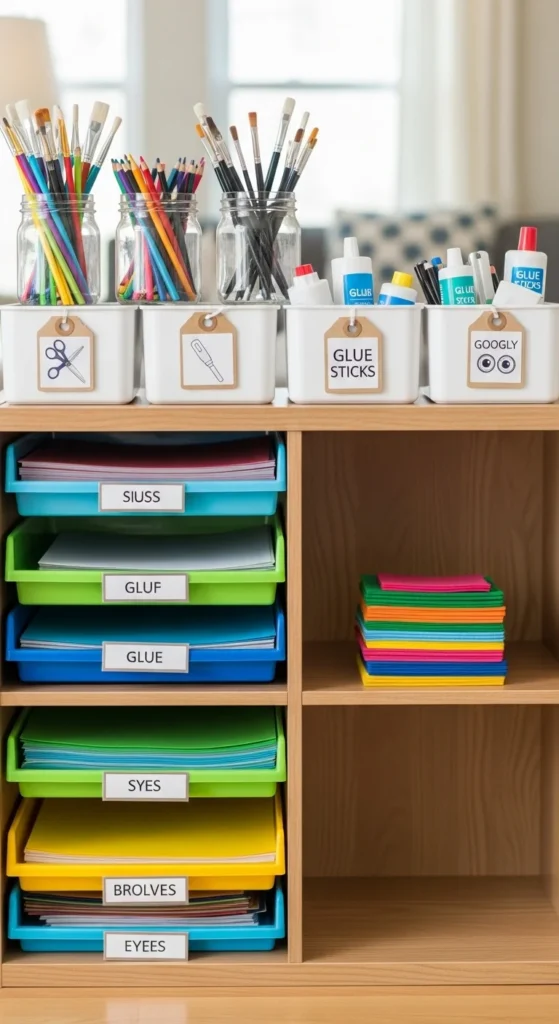
Keep Paper and Small Items Under Control
Paper and tiny supplies can become the messiest part of any craft collection.
To keep paper neat:
- Use vertical trays or magazine holders
- Separate blank paper from colored paper
- Keep special paper in a different bin
- Store only a reasonable amount in the daily-use area
For small items like buttons, googly eyes, beads, and pom-poms:
- Use divided boxes
- Try small lidded containers
- Keep them grouped by type or color
- Store them higher up if they need supervision
You do not need dozens of mini categories. Just enough structure to stop everything from ending up in one giant mixed-up box.
A simple system saves time and makes projects feel more fun from the start.
Make Cleanup Part of the Craft Routine
A well-organized craft space works best when cleanup is built into the process.
Try this simple routine after every activity:
- Put tools back first
- Save any reusable paper scraps
- Throw away obvious trash
- Return the supply bin to its shelf
- Wipe the table quickly
You can even turn cleanup into a small habit by using a timer or a clean-up song. It keeps the mood light and helps kids see tidying as the final step of making something.
The goal is not perfection. It is creating a system that is easy enough to repeat every day.
Rotate Supplies to Keep Creativity Fresh
Not every supply needs to be out all the time.
Rotating materials can make the craft area feel fresh without buying anything new. Store some items away and swap them in every few weeks.
You might rotate:
- Seasonal stickers
- Stamps
- Paint sets
- Foam shapes
- Ribbon and washi tape
- Holiday craft kits
This keeps the main area less cluttered and makes old supplies feel exciting again. Kids often create more when they are not overwhelmed by too many choices.
A smaller selection can actually lead to more focused, imaginative play.
Make It Pretty, But Keep It Practical
Yes, a cute craft station is lovely. But it should still work for real life.
Choose storage that matches your home style if that matters to you, but keep function first. Neutral bins, colorful baskets, or a simple rolling cart can all look great when they are arranged neatly.
Focus on:
- Easy access
- Fast cleanup
- Safe tools
- Clear categories
- Everyday use
When the space feels inviting and simple, kids are more likely to return to it again and again.
Organizing craft supplies for kids does not have to be complicated. A few bins, simple labels, and a daily-use setup can make creativity feel easy instead of chaotic.

Lily Summers is a digital artist and creative storyteller who loves bringing colorful characters to life. With a passion for cartoons, fan art, and playful sketches, she inspires others to explore their imagination through art. When she’s not sketching, you’ll find her dreaming up new ideas for CraftedWizard.com to spark creativity in every artist. 🌈✨