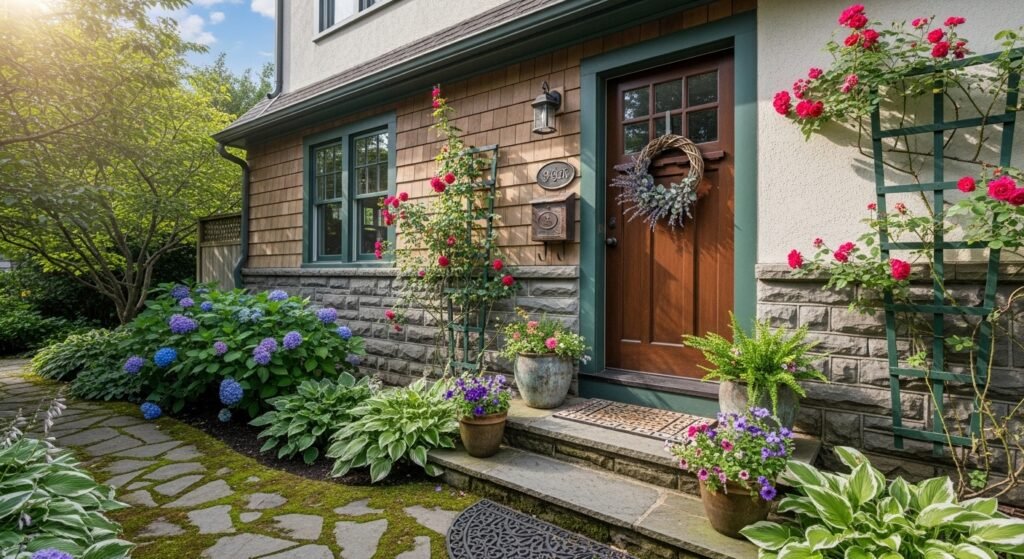
I used to step outside and feel my house looked flat and forgettable.
I tried big projects and tiny fixes. Nothing stuck.
I learned that expensive work isn’t necessary.
I focus on balance, texture, and a clear focal point. I’ll show the visual choices I use.
How to Make A House Exterior Look Aesthetic On Any Budget
I’ll show how I make curb appeal feel intentional using placement, color pops, and layered texture. It’s practical and doable on any budget. The result is a calm, finished look that reads as inviting.
What You’ll Need
- Medium terracotta outdoor planter (12-inch, unglazed clay)
- Weather-resistant coir welcome mat (24×36, natural brown)
- Warm white outdoor string lights (25ft, LED, waterproof)
- Brass house numbers (4-inch modern numerals)
- Black metal wall lantern (outdoor LED, flush mount)
- Exterior paint sample (8 oz, warm beige)
- Wood planter bench (3-foot, weathered finish)
- Composite decorative shutters (12×48, black)
Step 1: Choose a Single Focal Point
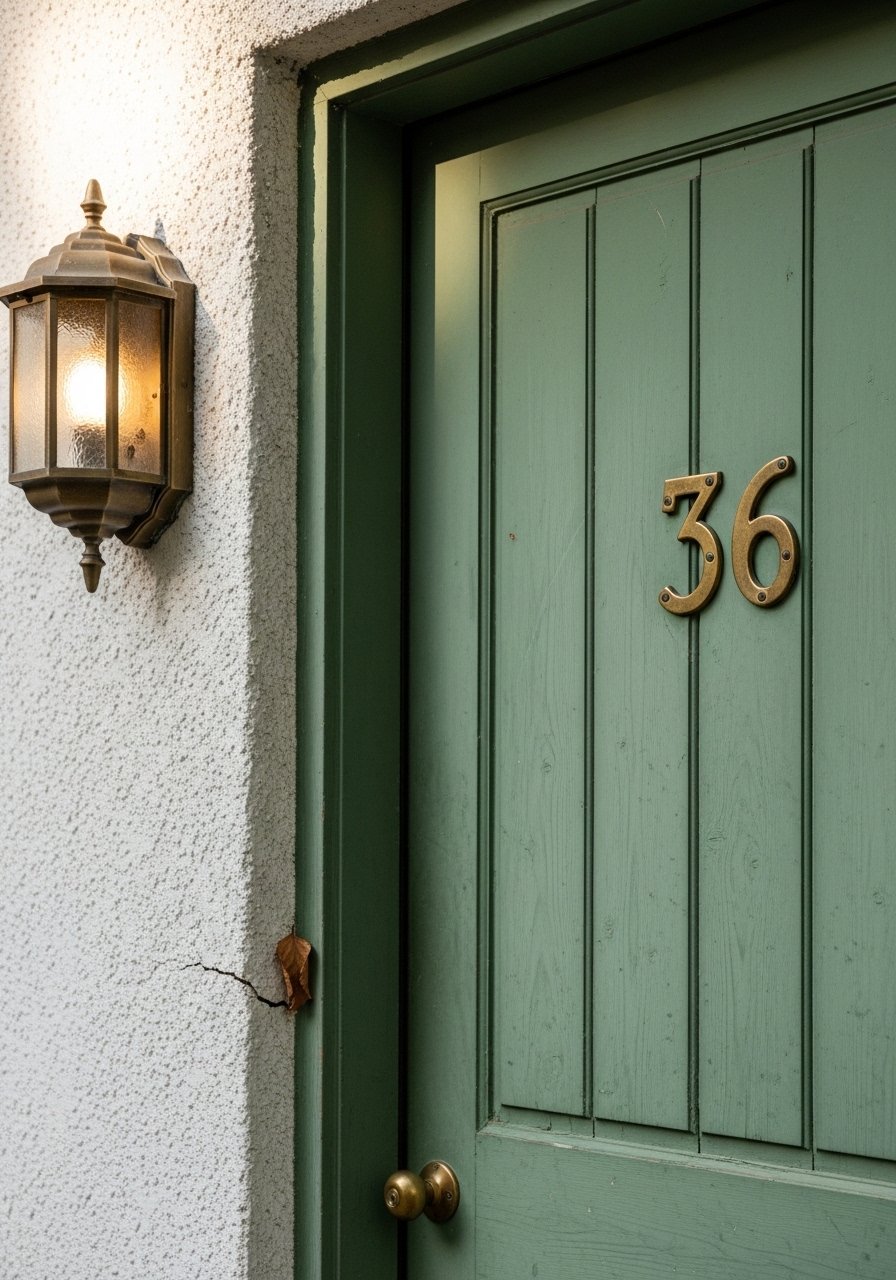
I pick one spot to anchor everything. For me that’s usually the front door and the house numbers with a single wall lantern. The eye lands there first, so small upgrades feel meaningful.
What changes visually: the whole facade reads as intentional instead of scattered. An insight I missed was how much a small, well-lit focal point sells the entire house. A mistake to avoid is creating competing focal points—less is clearer.
Step 2: Ground the Entry with Anchors
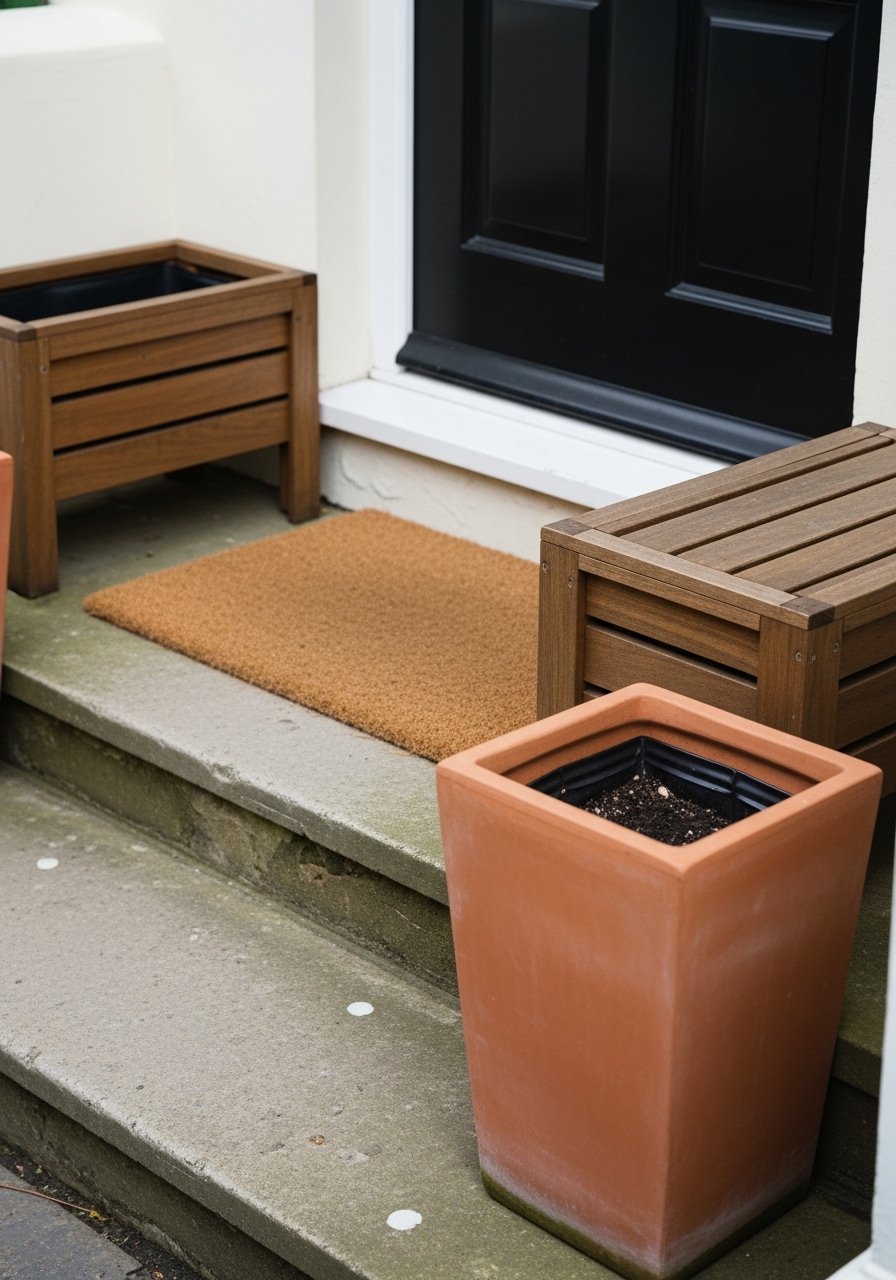
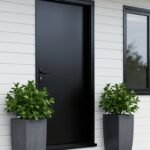
I add heavy, low elements to anchor the doorway: a coir mat, a pair of terracotta planters, or a short planter bench. These pieces sit at eye level from the sidewalk and make the entry feel grounded.
What changes visually: the house looks welcoming and balanced. One insight I learned is that symmetry isn’t required—pairing a bench on one side and a taller planter on the other reads deliberate. A common mistake is choosing anchors that are too small; they need presence to read like intention.
Step 3: Layer Lighting for Warmth
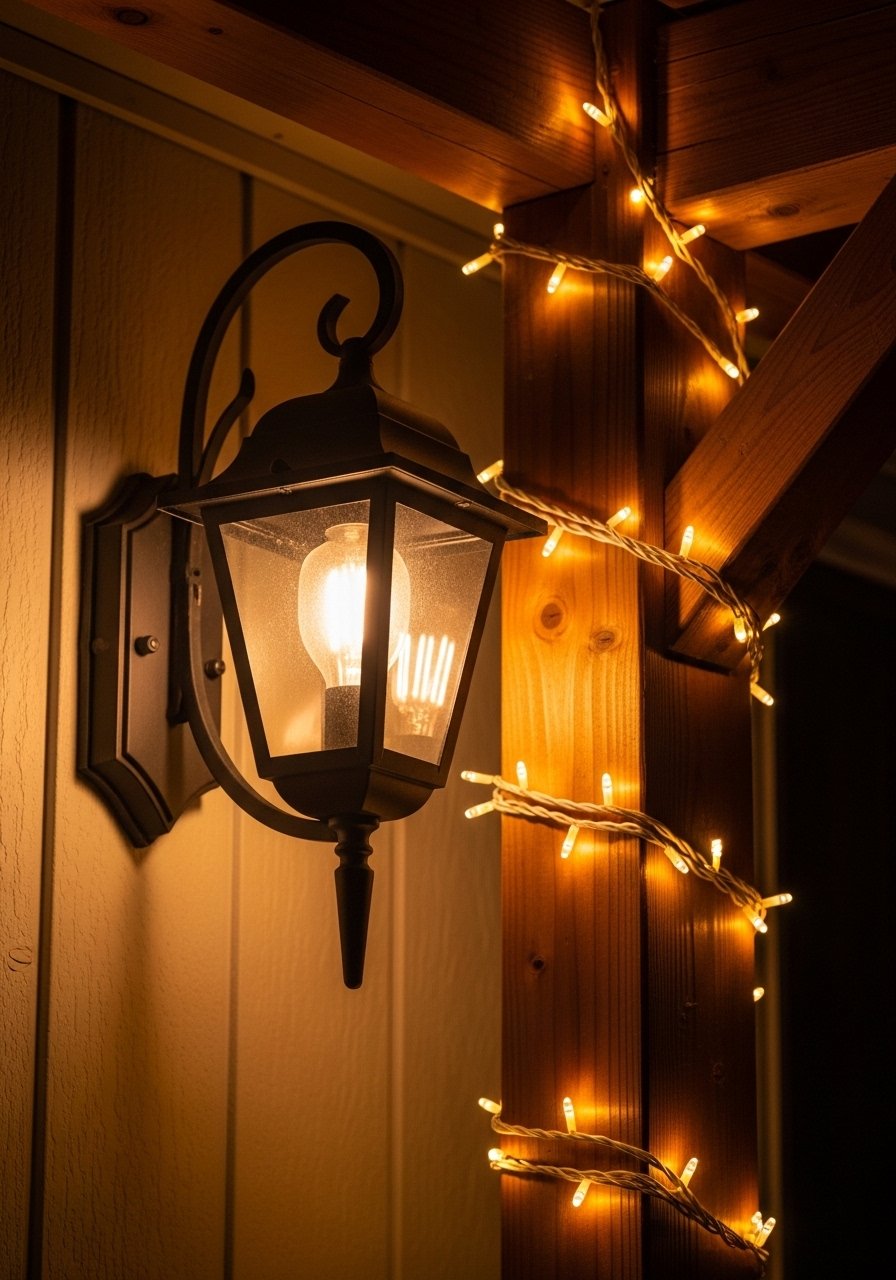
I layer one solid wall lantern with a soft wash of string lights. The lantern gives structure and the strings add a lived-in, cozy glow for evening views.
What changes visually: shadows soften and architectural details gain depth. An insight I missed was that warm light color matters more than brightness for curb appeal. A mistake to avoid is using cool, harsh bulbs that read industrial instead of inviting.
Step 4: Add Texture and Small Color Repeats
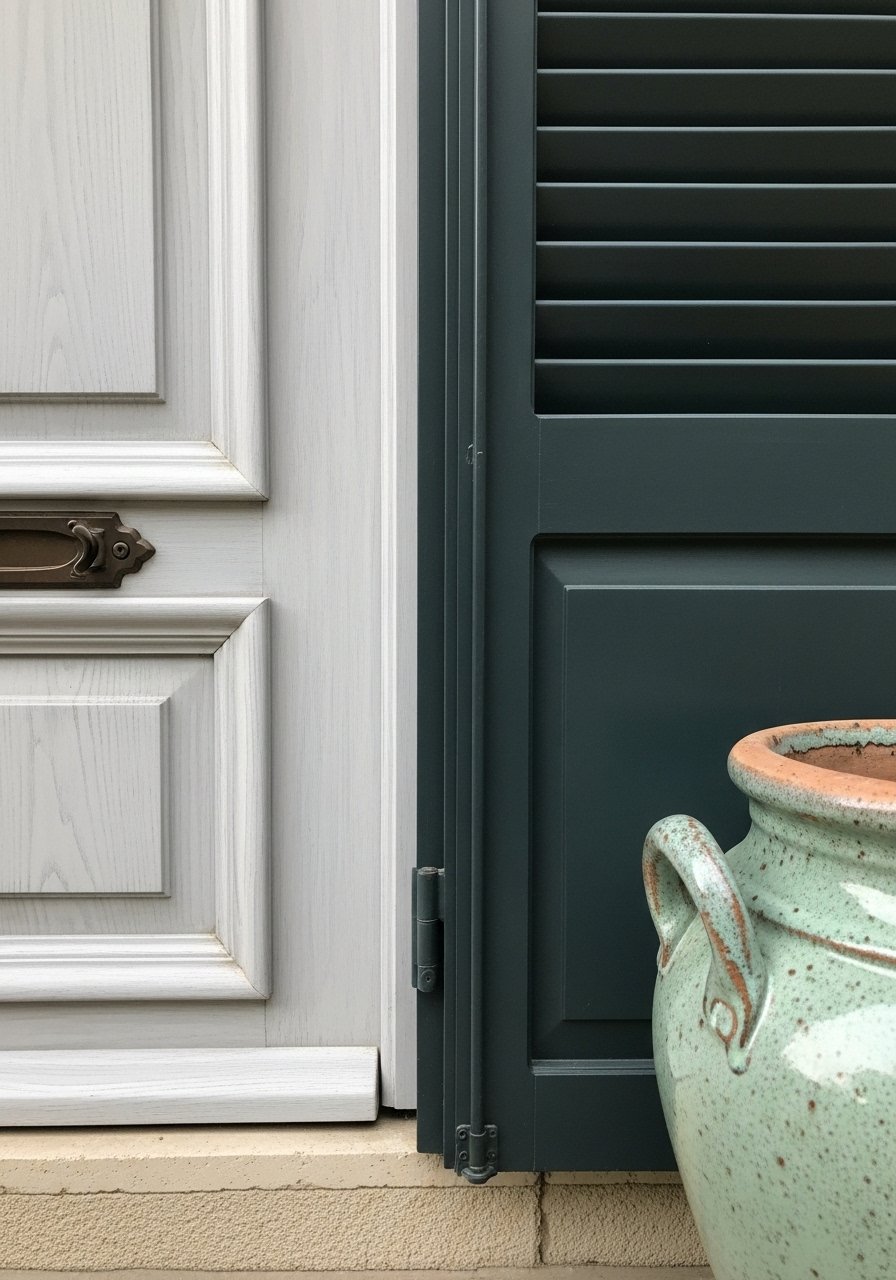
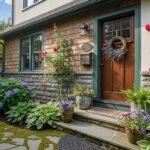
I pick one accent color and repeat it in small doses: shutters, a bench, or a glazed planter. I also mix textures—mat fibers, terracotta clay, metal lanterns—to keep the look layered.
What changes visually: the facade feels cohesive and curated. One insight is that repeating a color twice creates rhythm without overdoing it. The mistake I avoid is matching everything exactly; contrast keeps the eye moving.
Step 5: Finish with Small, Clean Details
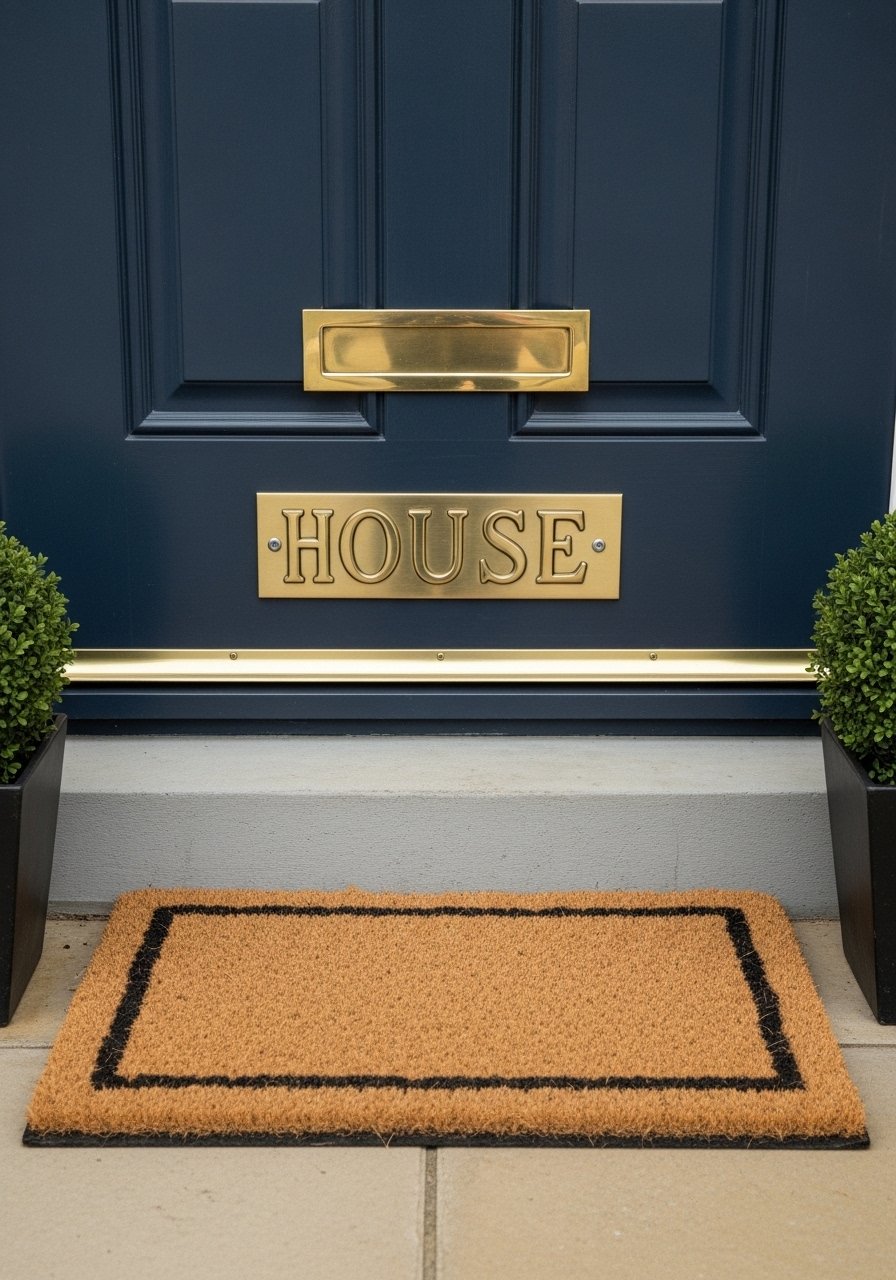
I check the tiny things last: straight mat, visible house numbers, trimmed plants, and a quick wipe of lantern glass. These small acts read as care and polish.
What changes visually: the house reads as maintained and welcoming. One insight I learned is that tidy details often make a cheap item look thoughtful. The mistake to avoid is over-accessorizing the porch; a few clean pieces read better than clutter.
What This Solves
I use this approach when the exterior feels unfinished or forgettable. The method makes the house read as cared-for without large projects. It answers the gap between “something’s off” and “I don’t know what.”
I also find it helps when I’m short on time. A single planted pair, a warm bulb, and clear numbers create a complete feel quickly.
Common Materials and Colors
I lean toward natural textures: terracotta, woven coir, weathered wood, and black metal. They age well and look intentional together. For color, I stick to warm neutrals and one accent color repeated in small amounts.
I avoid trendy color overload. Instead I use color as punctuation—one painted door or matching planters—to keep the facade calm and cohesive.
Budget-Friendly Swaps
I often swap expensive fixtures for smart visuals:
- Use an exterior paint sample on the door instead of a full repaint.
- Choose composite shutters instead of custom wood.
- Buy one nice planter and mix with thrifted pots.
I focus on visible repetition and placement. Those moves read as thought-out even when the budget is small.
Final Thoughts
Start with one small move. I often add a planter and a warm bulb first.
I notice the house already reads as cared for after those changes.
I keep choices few and repeat them around the entry.
Small, visible decisions make the exterior feel complete without spending much.