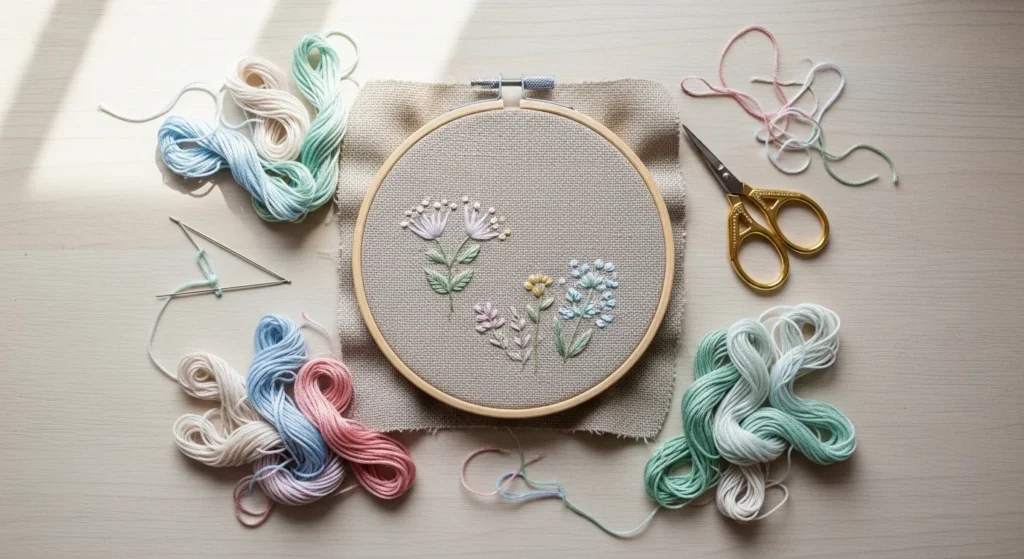
Embroidery looks delicate and impressive, but getting started is much easier than most beginners think. You do not need a giant craft room, expensive supplies, or years of practice to make something beautiful. With a few basic tools and a couple of simple stitches, you can start creating pretty flowers, names, borders, and small designs right away.
The best part is that embroidery feels calm and rewarding. Every stitch helps you slow down, focus, and build confidence one small step at a time.
What You Need to Start Embroidering
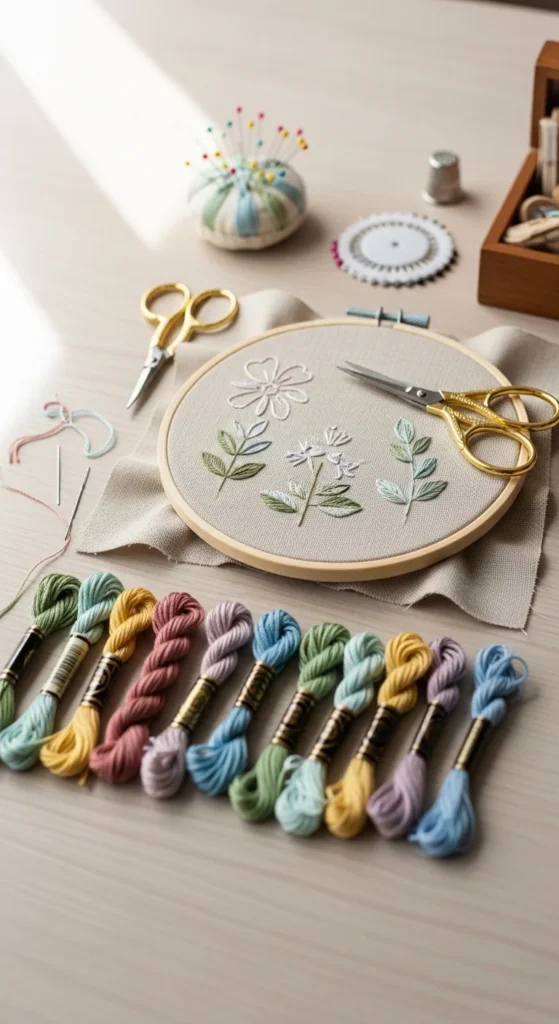
Before you make your first stitch, gather a few beginner-friendly supplies. Keep it simple. You do not need a huge kit.
Here is what works best for beginners:
- Embroidery hoop to hold the fabric tight
- Cotton or linen fabric that is easy to stitch through
- Embroidery floss in a few colors
- Embroidery needle with an eye large enough for floss
- Small sharp scissors
- Water-soluble pen or pencil for sketching your design
- A simple pattern like a flower, heart, leaf, or name
Try to choose light-colored fabric for your first project. It makes the pattern easier to see and helps you spot your stitches more clearly.
You also do not need to use all six strands of embroidery floss. Many beginners find that 2 or 3 strands are easier to control and give a neat result.
How to Set Up Your Fabric and Hoop
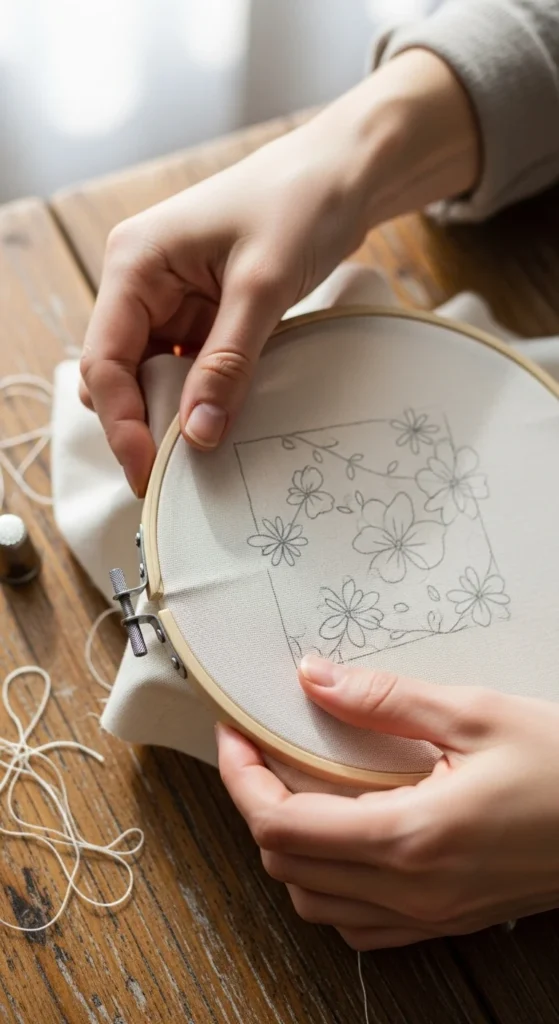
A good setup makes embroidery much less frustrating. If your fabric is loose, your stitches may pucker or look uneven.
Follow these simple steps:
- Place the inner hoop under the fabric
- Put the outer hoop on top
- Pull the fabric gently until it feels snug like a drum
- Tighten the screw so the fabric stays firm
- Smooth out wrinkles before you begin
Then transfer your design onto the fabric. You can draw a very simple shape by hand or trace a beginner pattern from paper.
Start with something small, such as:
- A daisy
- A tiny heart
- A rainbow
- A single word
- A group of leaves
Learn These Easy Beginner Stitches First
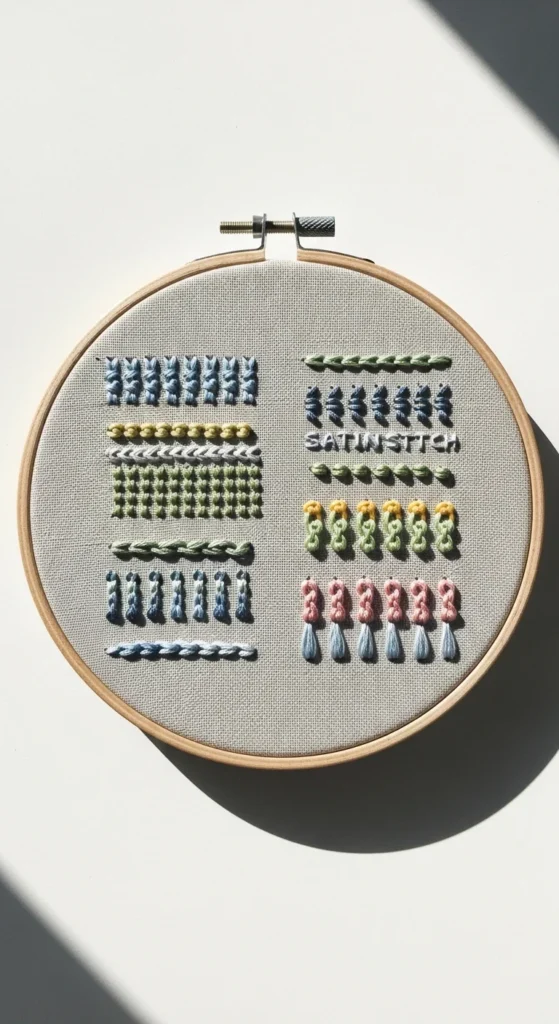
You do not need to learn ten stitches on day one. Start with a few basics that can be used in many designs.
Running Stitch
This is one of the easiest stitches. It creates a dashed line and is perfect for outlines and simple decorative details.
Use it for:
- Borders
- Stems
- Minimal patterns
- Practice rows
Back Stitch
Back stitch creates a stronger, more solid line than running stitch. It is great for words, outlines, and shapes.
Use it for:
- Lettering
- Clean outlines
- Small patterns with detail
Satin Stitch
Satin stitch fills in shapes with smooth, close stitches. It looks lovely on petals, hearts, and tiny leaves.
Use it for:
- Filled flower petals
- Dots
- Small shapes
French Knot
This stitch looks tricky at first, but it gets easier with practice. It creates tiny raised dots that add texture.
Use it for:
- Flower centers
- Decorative accents
- Tiny berries or stars
A smart beginner move is to practice each stitch on a scrap piece of fabric before starting your real design.
How to Make Your First Simple Embroidery Project
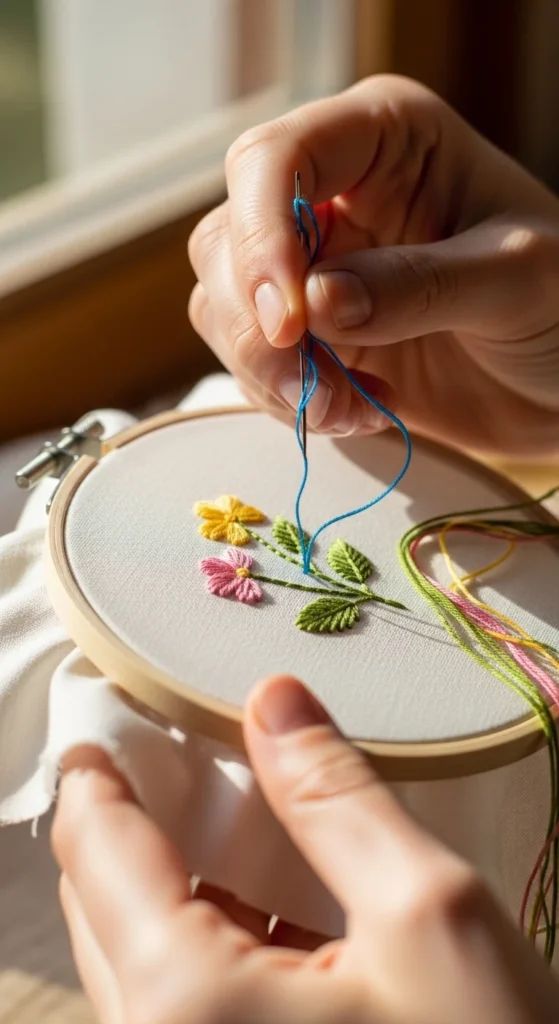
Your first project should feel fun, not overwhelming. Choose a very small design so you can finish it and feel successful.
A great beginner project could be a tiny floral hoop art piece.
Here is a simple way to do it:
- Sketch or trace a small flower design
- Start with the stem using back stitch
- Add leaves with satin stitch
- Stitch petals with lazy daisy stitch or satin stitch
- Finish the flower center with French knots
Work slowly and do not worry if your stitches are not perfect. Handmade work always has a little personality, and that is part of the charm.
Try these tips while stitching:
- Keep your thread length moderate so it does not tangle too much
- Pull the thread gently instead of too tight
- Trim knots and loose ends neatly on the back
- Pause every few minutes to check your shape and spacing
Common Beginner Mistakes and How to Avoid Them
Almost everyone makes a few mistakes at the beginning. That is normal. The goal is to notice them early and keep going.
Here are some common problems:
- Fabric puckering
Usually happens when stitches are pulled too tightly. Keep your tension soft and even. - Tangling thread
Use shorter lengths of floss and let the needle dangle occasionally to untwist the thread. - Uneven stitches
Practice keeping your stitch size similar. This improves naturally with time. - Messy back of fabric
Avoid long jumps across the back. End and restart your thread when needed. - Starting with a design that is too hard
Choose simple shapes first. Small wins build confidence fast.
Tips to Build Confidence With Every Stitch
Embroidery gets easier the more you do it. The key is to make the learning process enjoyable.
A few ways to build confidence:
- Start with small projects
- Repeat the same basic stitches until they feel natural
- Use simple color palettes at first
- Save photos of your progress
- Keep your early pieces instead of throwing them away
You will be surprised how fast your hands learn. Even after just a few small projects, your stitching will start to look more even and polished.
It also helps to think of embroidery as relaxing practice, not performance. You are not trying to make a museum piece on your first try. You are learning a skill one stitch at a time.
Easy Beginner Embroidery Ideas to Try Next
Once you finish your first project, keep the momentum going with easy ideas like these:
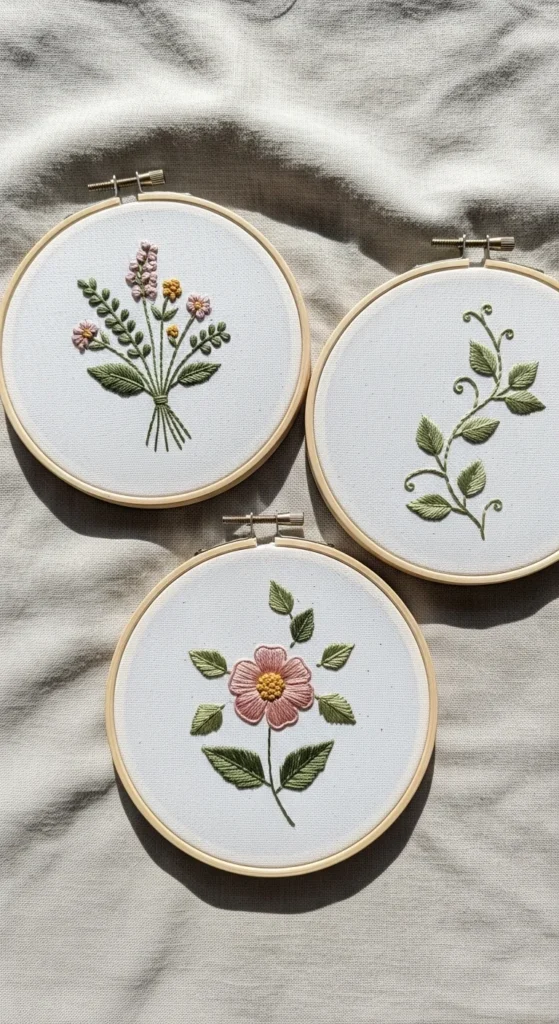
- Tiny flowers in a hoop
- Monogram initials
- Simple leaf branches
- Cute hearts or stars
- A small quote in script
- Embroidered corner details on a tote bag
- Minimal rainbow designs
These projects are approachable, pretty, and very Pinterest-friendly for gifts or home decor.
Final Takeaway
Embroidery for beginners does not have to feel hard or intimidating. Start with a few basic supplies, learn simple stitches, and choose a small project you can actually finish. That is how confidence grows.
The more you practice, the more natural it will feel. One hoop, one thread color, and one stitch at a time is all it takes to begin.
Save this guide for later and try your first embroidery project this week.
Lily Summers is a digital artist and creative storyteller who loves bringing colorful characters to life. With a passion for cartoons, fan art, and playful sketches, she inspires others to explore their imagination through art. When she’s not sketching, you’ll find her dreaming up new ideas for CraftedWizard.com to spark creativity in every artist. 🌈✨