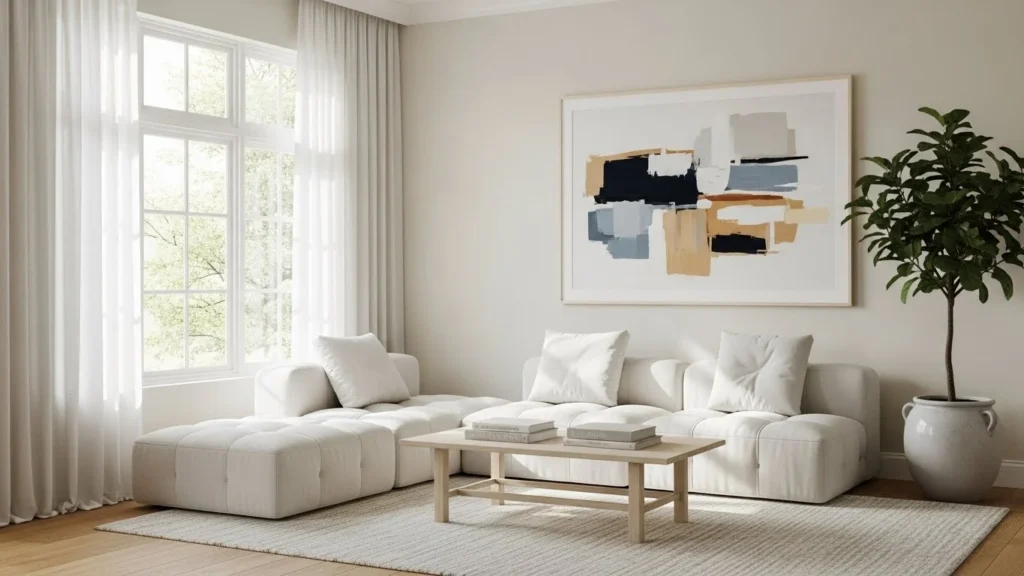
Empty walls can feel frustrating. On one hand, blank space can look cold and unfinished. On the other, filling every inch can quickly turn a room into visual noise. The secret isn’t more decor it’s intentional decor.
When done right, wall styling adds warmth, personality, and balance without overwhelming the space. This guide will show you how to decorate empty walls in a way that feels thoughtful, calm, and Pinterest-worthy not cluttered.
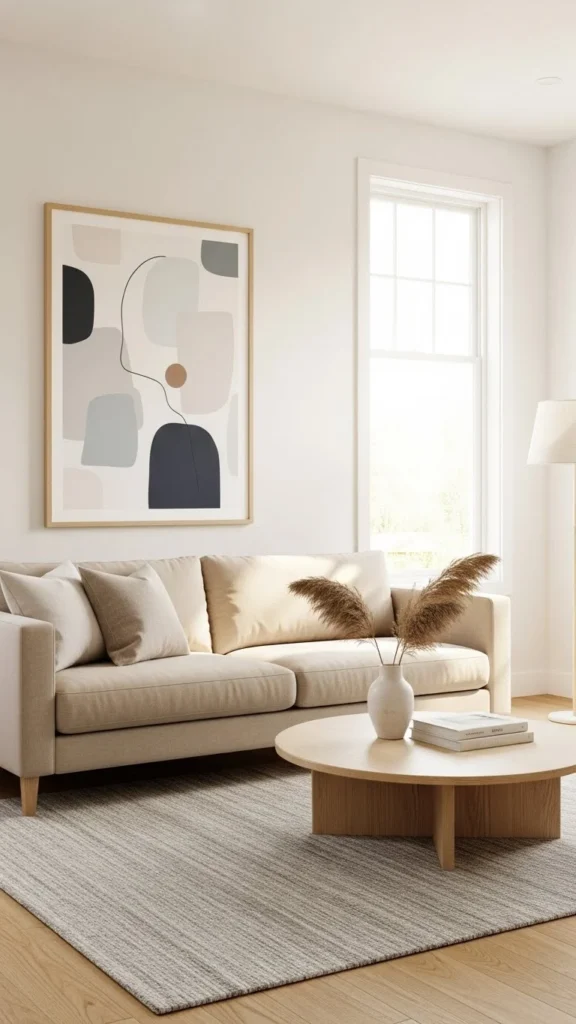
1. Decide What the Wall Needs Before Adding Anything
The biggest mistake people make is decorating first and thinking later. Before you hang a single frame, pause and observe the wall.
Ask yourself:
- Is this wall meant to be a focal point or a backdrop?
- Is the room already visually busy?
- How much natural light does the wall get?
Not every wall needs decoration. Some walls are meant to breathe.
Pro tip: If the room already has bold furniture, patterns, or textures, keep wall decor minimal to balance the space.
Sometimes, the right choice is doing less not more.
2. Choose One Statement Piece Instead of Many Small Ones
If clutter is your fear, this is your safest strategy.
A single, well-chosen statement piece creates impact without chaos.
Great statement wall options:
- One oversized framed artwork
- A large canvas or textile
- A round mirror
- A sculptural wall hanging
The key is scale. Small art on a big wall often looks lost which leads to over-decorating.
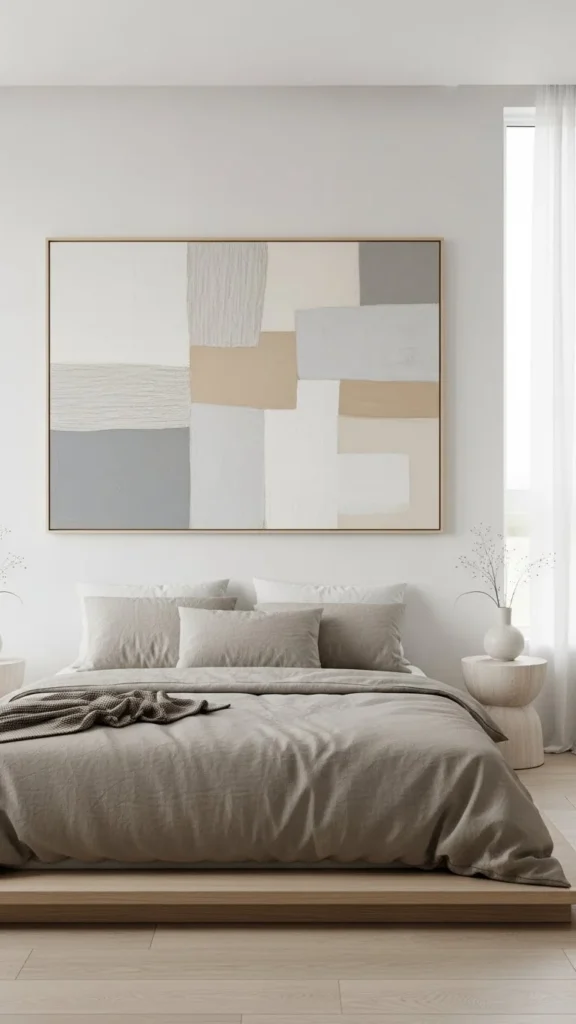
Let the piece have space around it. Negative space is part of the design.
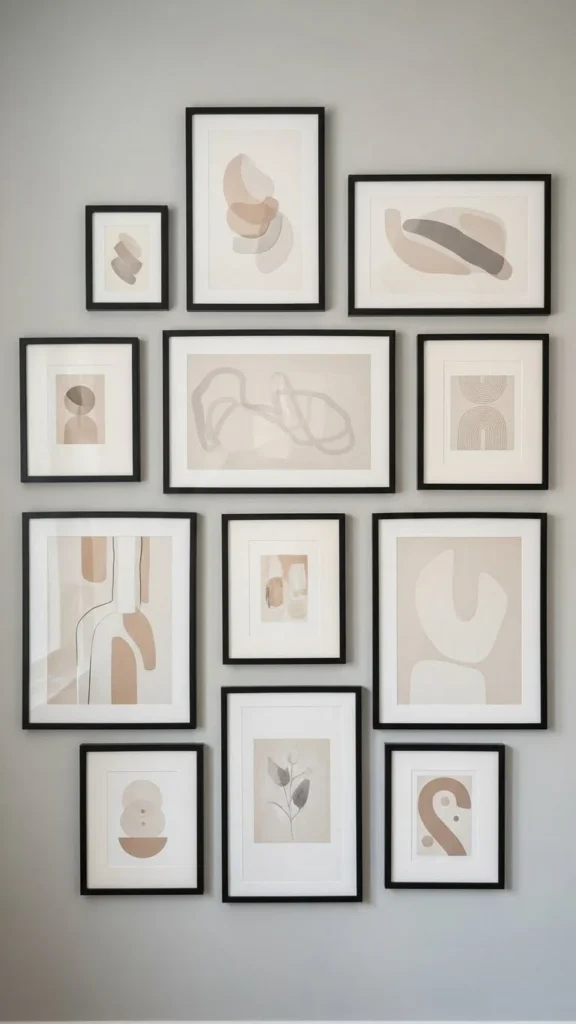
3. Create Visual Order With Symmetry or Structure
Clutter often comes from randomness, not quantity. Even multiple items can feel calm if they’re organized.
If you’re using more than one piece, give your wall a clear structure.
Easy structure ideas:
- A symmetrical pair of frames
- A clean grid-style gallery wall
- Even spacing between all pieces
- Matching frame colors or materials
Avoid mixing too many sizes, colors, and finishes on the same wall. Cohesion is what keeps things visually quiet.
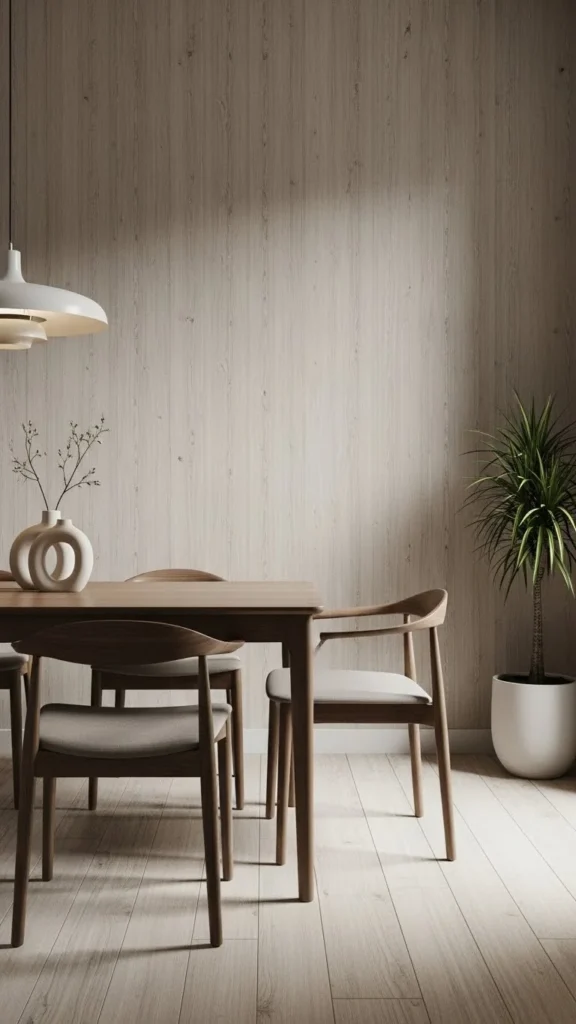
4. Use Texture Instead of More Objects
If your wall feels empty but adding frames feels like too much, texture is your solution.
Textured wall elements add interest without visual clutter.
Clutter-free texture ideas:
- Wood slat panels
- Fabric or linen wall hangings
- Subtle wallpaper with a soft pattern
- Plaster or limewash finishes
Texture works especially well in neutral spaces because it adds depth without demanding attention.
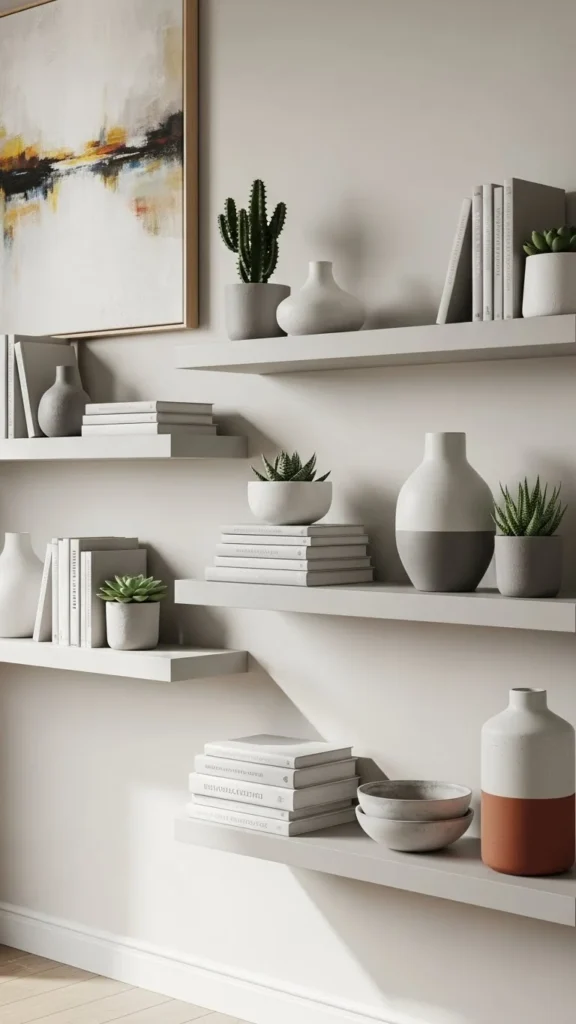
5. Style Floating Shelves With Intention (Less Is More)
Floating shelves are popular and often overcrowded.
Shelves should feel styled, not stuffed.
How to keep shelves clutter-free:
- Use 3–5 items per shelf max
- Mix heights, not quantities
- Leave intentional empty space
- Stick to a limited color palette
Think of shelves as breathing room for your favorite pieces, not storage for everything you own.
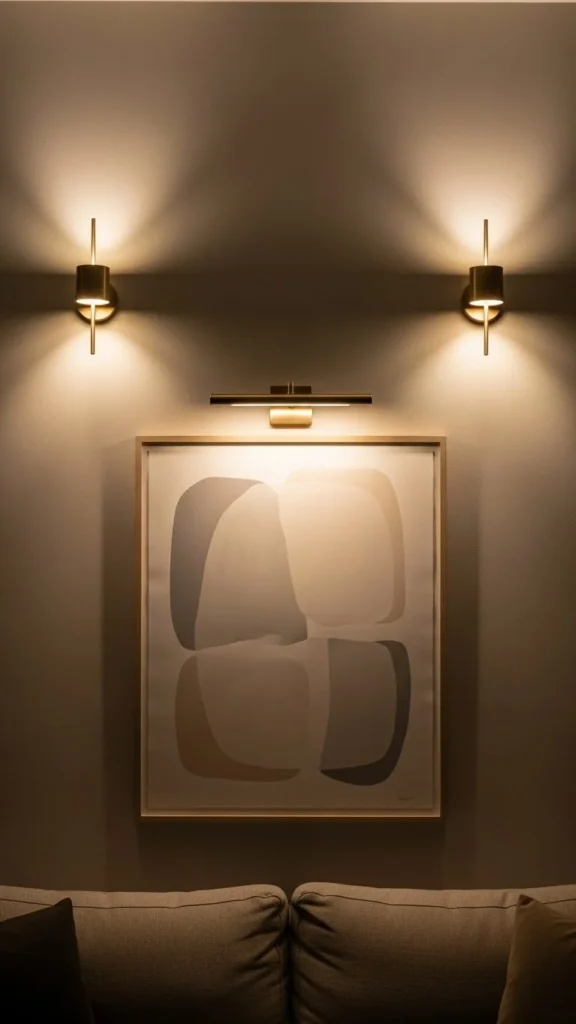
6. Let Lighting Be Part of the Wall Decor
Wall lighting is one of the most underrated ways to decorate without clutter.
It adds warmth, depth, and atmosphere without adding objects.
Wall lighting ideas:
- Simple sconces
- Picture lights above artwork
- Plug-in wall lamps for rentals
Lighting draws the eye gently, creating interest without overwhelming the space.
7. Know When to Stop (The Most Important Rule)
If you’re wondering whether to add “just one more thing,” pause.
A finished wall should feel:
- Calm
- Balanced
- Easy on the eyes
If your eye doesn’t know where to rest, it’s likely too much.
Remember: Empty space is not wasted space. It’s what allows your decor to stand out.
Final Takeaway: Intentional Walls Feel Better Than Full Walls
Decorating empty walls isn’t about filling space it’s about shaping how a room feels.
Start with purpose. Choose fewer, larger pieces. Use structure, texture, and lighting. And most importantly, give your walls permission to breathe.