
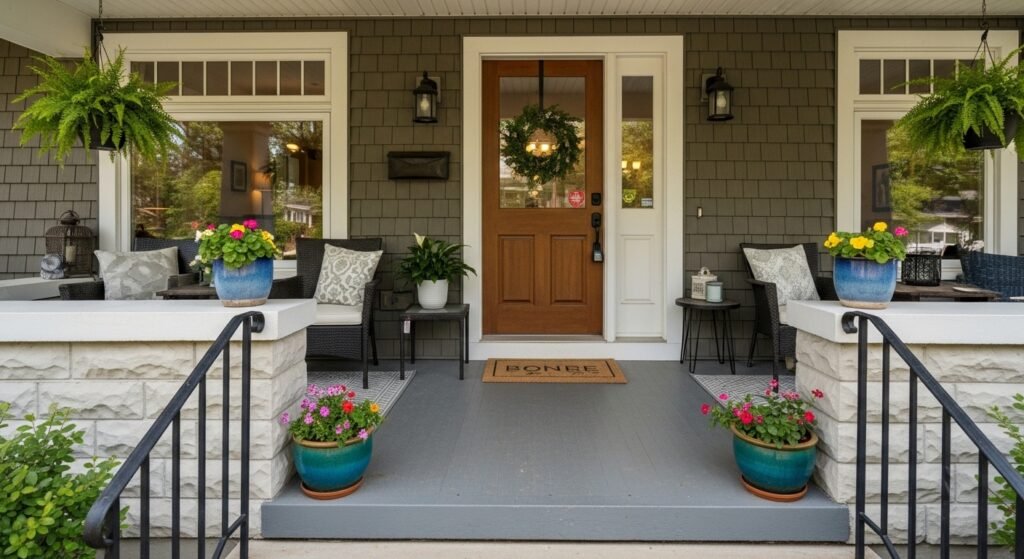
I stood on my stoop staring at an empty corner and felt stuck. The house looked fine, but the entry didn’t feel like an invitation.
I wanted a porch that felt warm before someone stepped inside. Not fussy. Just thoughtful.
If you’ve felt the same, this is for you.
How to Decorate An Aesthetic Front Porch For A Welcoming Entry
This piece shows the simple approach I use when a porch feels unfinished. You’ll learn how to arrange furniture, layer texture, and add personality so the entry reads as warm and intentional. The result is a porch that feels lived-in and welcoming, not staged.
What This Solves
This method fixes porches that feel empty, awkward, or overstuffed. It brings balance, clear focal points, and easy seasonal swaps. You’ll end up with an entry that looks like people live there and guests are welcome.
What You’ll Need
- Coir Doormat (18 x 30, natural)
- Outdoor Rug (3×5, neutral stripe, weather-resistant)
- Bistro Chairs (metal, black, set of 2)
- Small Side Table (wicker, natural finish)
- Outdoor Throw Blanket (woven, cream)
- Tall Planter Stand (wooden, 28-inch)
- Faux Fiddle Leaf Fig (large, potted)
- Hanging Basket (wrought iron)
- Metal Lantern (battery-operated, bronze)
- Wood Welcome Sign (neutral, rectangular)
Step 1: Establish the layout and focal point
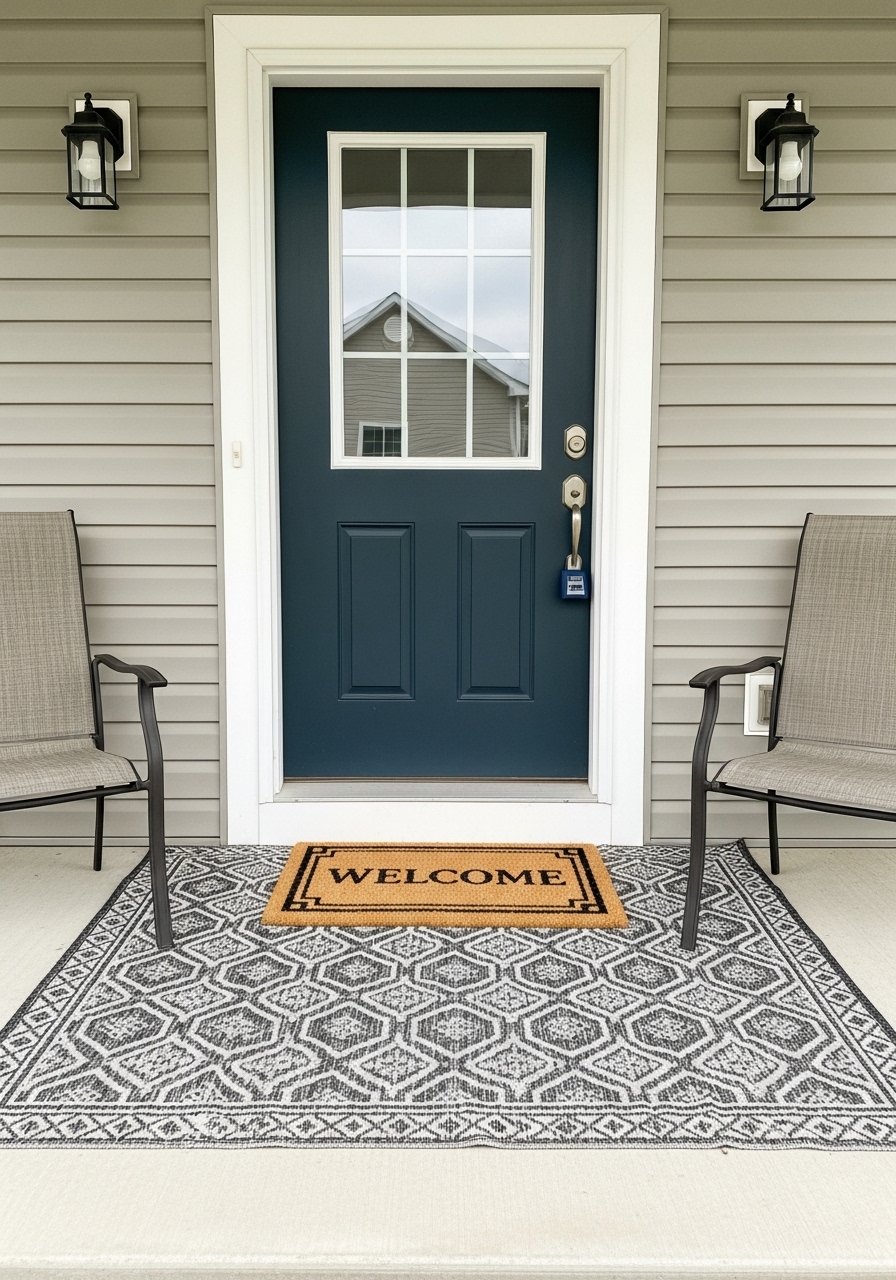
I start by picking the focal area around the door. I place the doormat and then layer an outdoor rug so the entry reads as a defined space. Adding two chairs anchored by a small side table frames the door and makes the porch feel intentional.
Visually, the porch stops being a walk-through and becomes a place to pause. People miss defining that visual "room" on a porch. Don’t cram too many pieces—too much makes the space feel cluttered instead of welcoming.
Step 2: Layer texture for a lived-in look
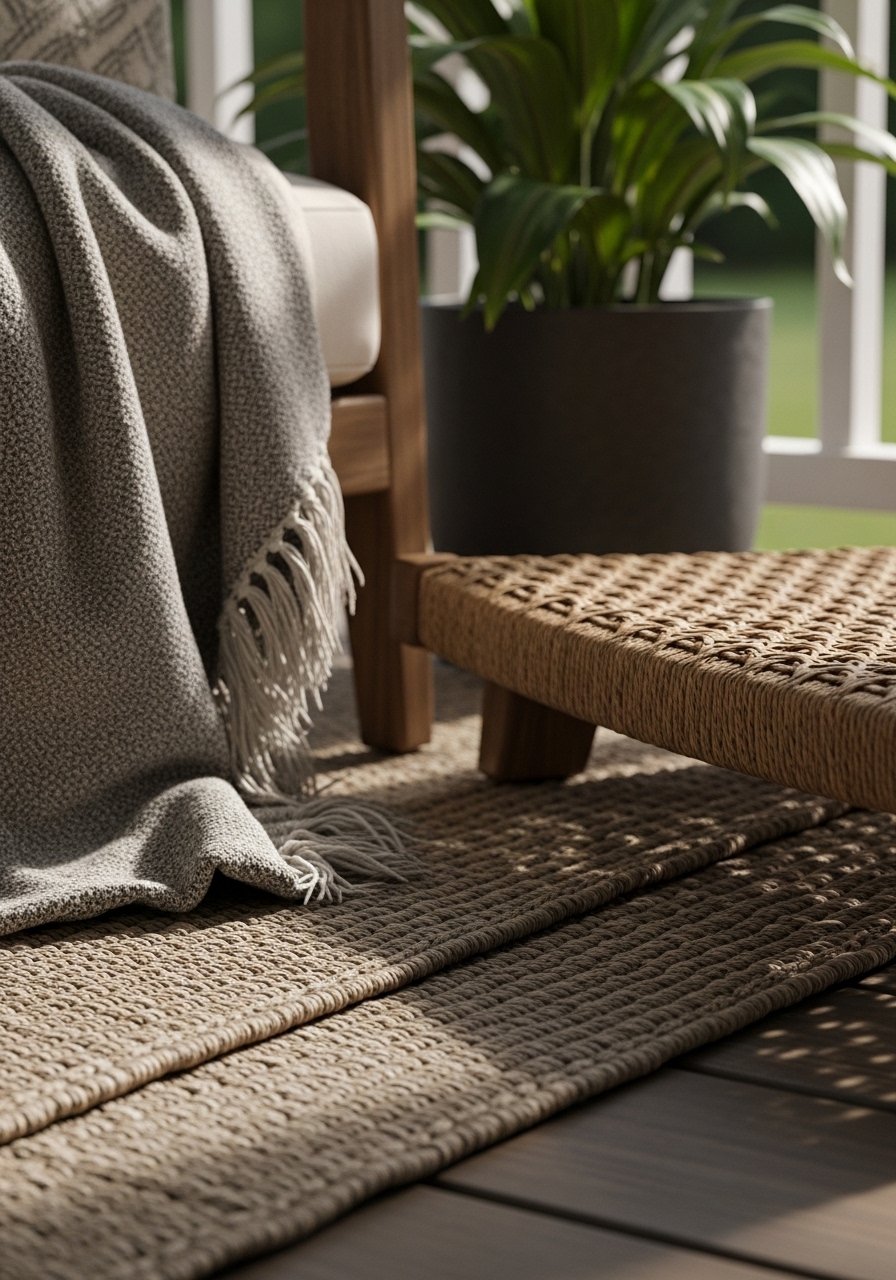
Next I add texture: the rug’s weave, a wicker table, and a folded throw on a chair. These layers catch the eye and make the porch feel comfortable. Texture also helps the porch feel warm even before adding color.
The visual change is immediate—the porch stops feeling flat and gains depth. A common miss is using only one texture; it looks flat. Avoid over-patterning. Keep patterns subtle so textures do the main work.
Step 3: Add greenery and height
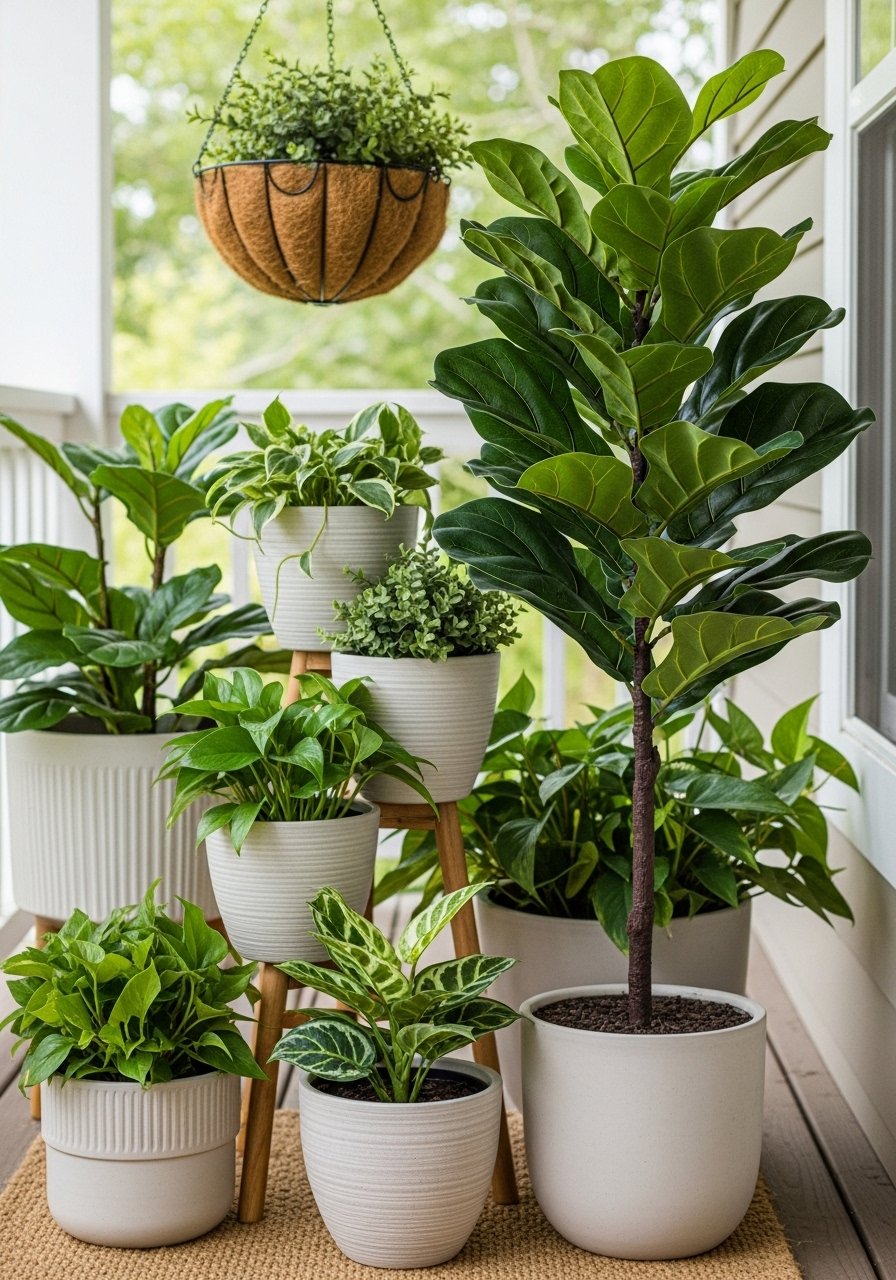
Greenery anchors the space and adds life. I use a tall faux fiddle leaf fig on a planter stand and a hanging basket for vertical interest. Small pots near the door create a natural flow toward the entry.
The porch suddenly feels more layered and balanced. People often underestimate scale—small plants alone read like props. One mistake is clustering everything at floor level; add height so the eye moves up and across the porch.
Step 4: Layer soft lighting and functional accents

I place a metal lantern on the side table and add subtle string lights if the porch is covered. Lighting makes the porch usable at dusk and adds warmth. A single, intentional accent like a lantern changes the mood.
Visually, the space becomes inviting at different times of day. A common miss is using only harsh overhead lights. Avoid too many light sources that fight each other—choose one or two soft accents.
Step 5: Finish with a personal welcome and edit
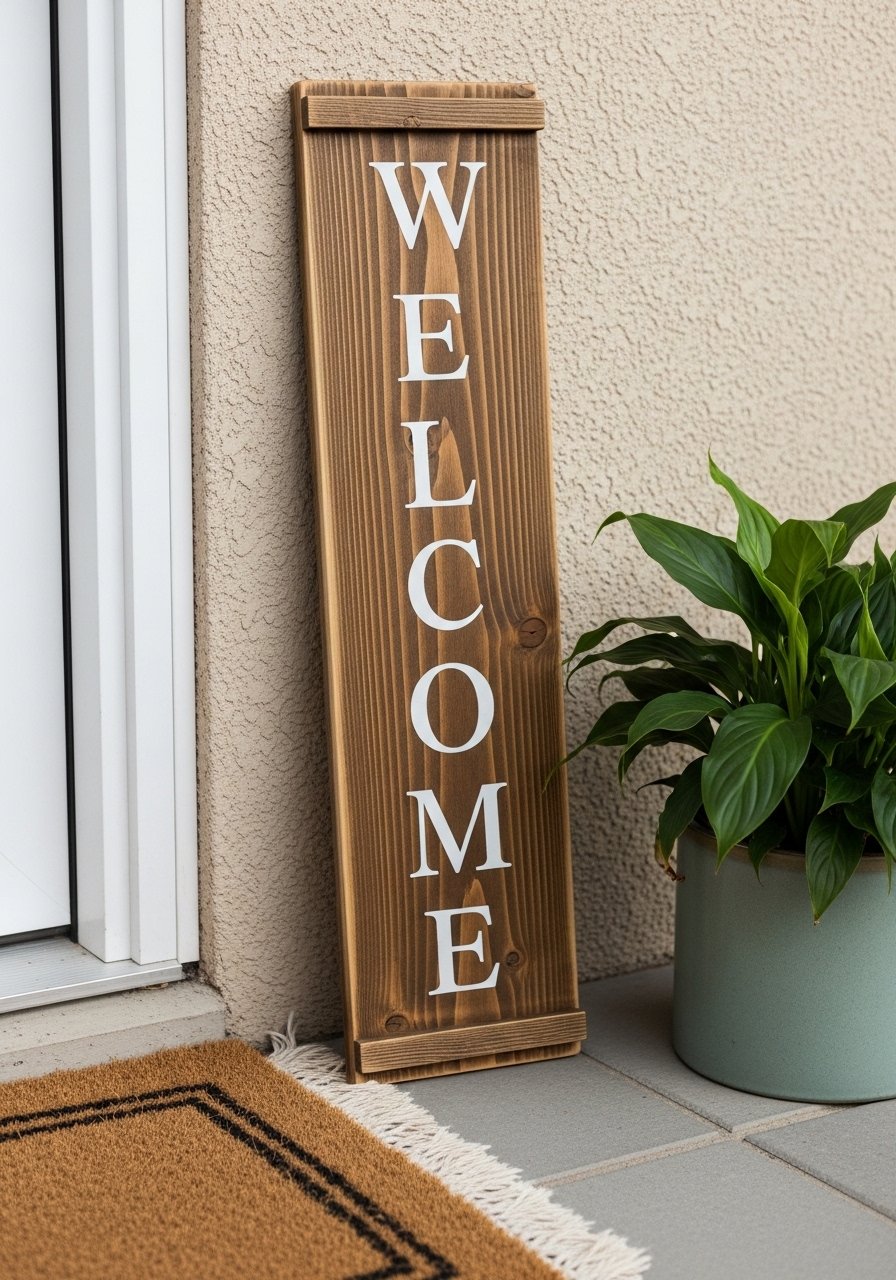
Finally, I add a simple welcome sign and one seasonal touch. This reads as hospitality. Then I step back and edit: remove anything that competes with the entry. The goal is a calm, readable first impression.
The porch now feels intentional and friendly. People often over-accessorize; less often looks like care. Avoid tiny knickknacks that get lost—choose a few meaningful pieces.
Seasonal Swaps
I change small items with the seasons. Switch the throw, swap seasonal plants, or trade a wreath. These small swaps keep the porch feeling fresh without a full redo.
Keep the base pieces the same—rug, chairs, table—and rotate accents. This keeps the entry cohesive and manageable.
Scale and Balance
Think about how items relate to the door size. Large doors need taller elements. Small porches do better with low, layered items.
Balance weight across the porch. If you have a big plant on one side, add a chair or lantern on the other so the composition feels even.
Quick Refresh Routine
Once a week I sweep, fluff the throw, and rotate any small decor that looks tired. Wipe the doormat and shake out the rug if needed.
These five minutes keep the porch feeling cared for. It’s an easy habit that keeps the entry welcoming.
Final Thoughts
Start with the layout and add one layer at a time. Keep scale and texture in mind. Edit ruthlessly until the porch reads calm and intentional.
You don’t need many things to make an entry feel welcoming. Begin small and adjust until it feels right.