
Ever walked into a living room and instantly thought, “This looks expensive” — even though nothing about it felt flashy? That’s designer-level decorating. It’s not about buying the most expensive sofa or copying a showroom. It’s about balance, layering, and intentional choices that make a space feel polished yet comfortable.
The best part? You can apply these same principles in any living room — big or small, modern or traditional.

1. Start With a Clear Color Story
Designers never decorate randomly. They begin with a color plan and stick to it.
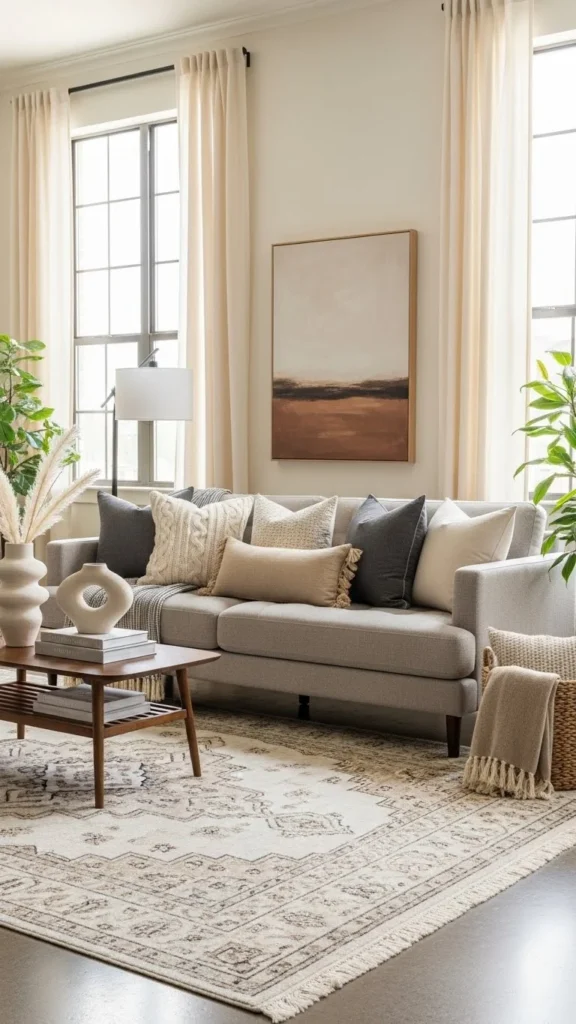
A strong living room usually has:
- 1 main neutral (white, beige, greige, soft gray)
- 1–2 supporting tones (wood, black, muted color)
- 1 accent color (used sparingly)
This keeps the room cohesive and calm.
Designer tip:
Repeat each color at least three times around the room (pillows, art, decor) so nothing feels out of place.
Avoid introducing too many colors — that’s how rooms start looking busy instead of intentional.
2. Anchor the Room With the Right Furniture Layout
Before decor comes layout. Designers always think in zones and sightlines.
Ask yourself:
- What is the focal point? (TV, fireplace, window, art wall)
- Where do people naturally sit and walk?
- Does the furniture face each other for conversation?
Layout rules designers follow:
- Rugs should be large enough for at least front legs of furniture
- Sofas don’t always have to hug the wall
- Chairs should “float” when space allows
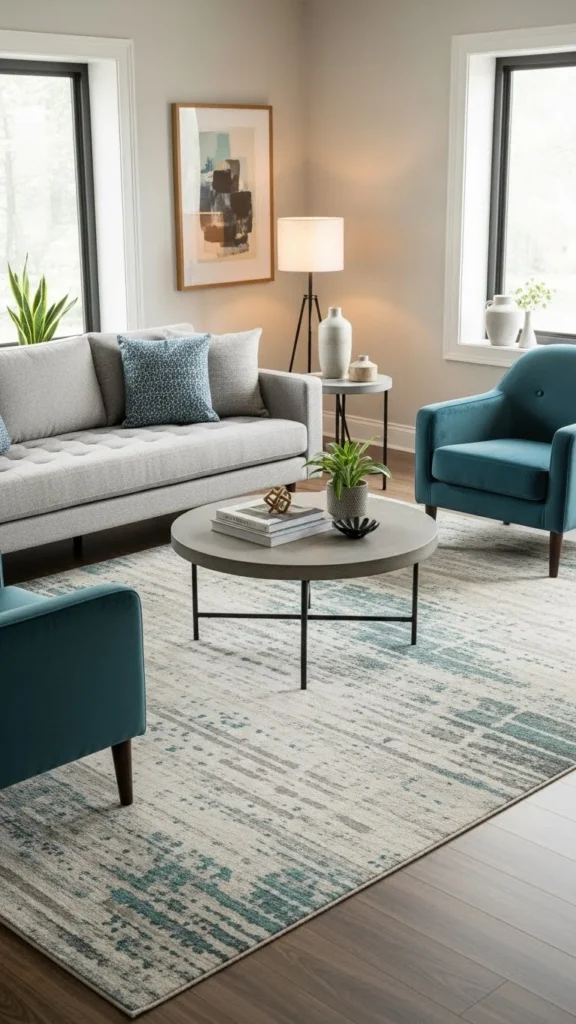
If the layout feels off, no amount of decor will fix it.
3. Layer Textures to Add Depth (This Is a Designer Secret)
A room can be neutral and still feel rich — if textures are layered properly.
Designers rely on texture more than color.
Easy ways to layer texture:
- Linen or velvet pillows
- A chunky knit throw
- Wood, stone, or ceramic decor
- Woven baskets or trays
Mix smooth with rough. Soft with structured. Shiny with matte.
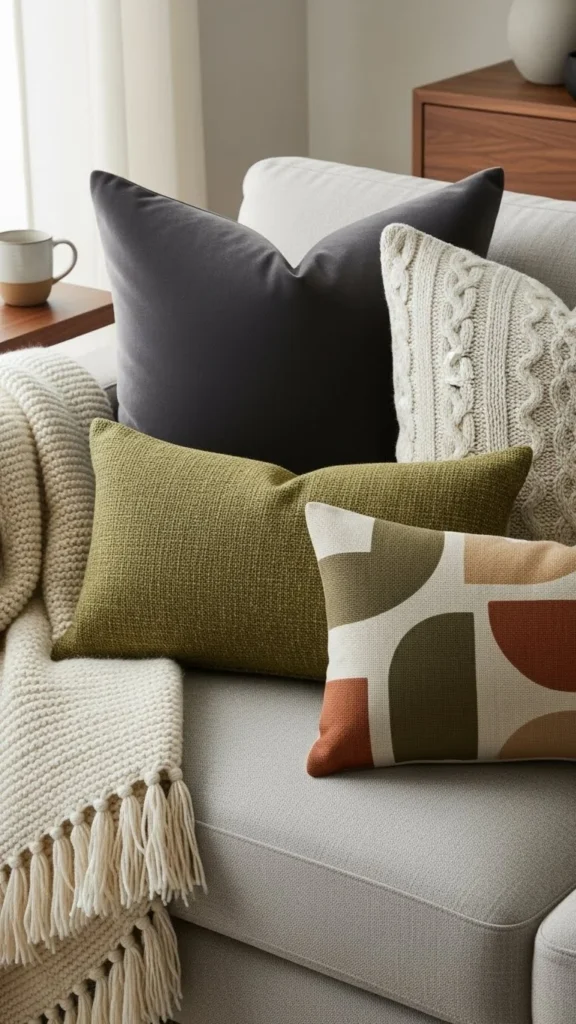
If everything feels flat, add texture — not more stuff.
4. Style Surfaces With Intention (Not Clutter)
Designers are very selective about what goes on tables and shelves.
Every surface should feel curated, not crowded.
Designer-approved styling formula:
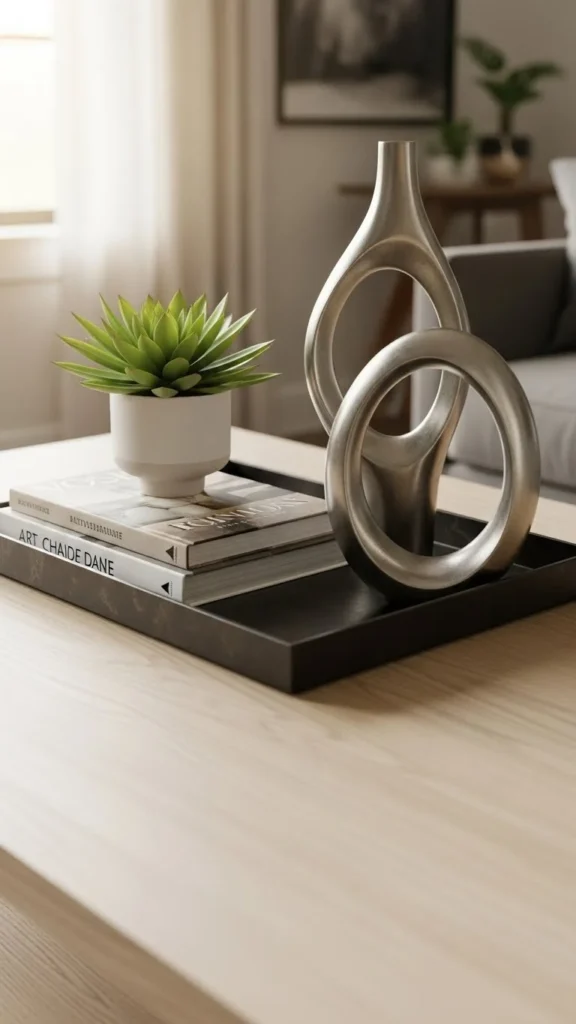
- One tray or book stack
- One organic item (plant, branch, flower)
- One sculptural or personal object
Stick to odd numbers (3 or 5 items) and vary heights.
Leave empty space on purpose. That’s what makes decor feel elevated.
5. Use Art and Wall Decor Strategically
Designers don’t scatter small art randomly. They think in scale.
Rules to follow:
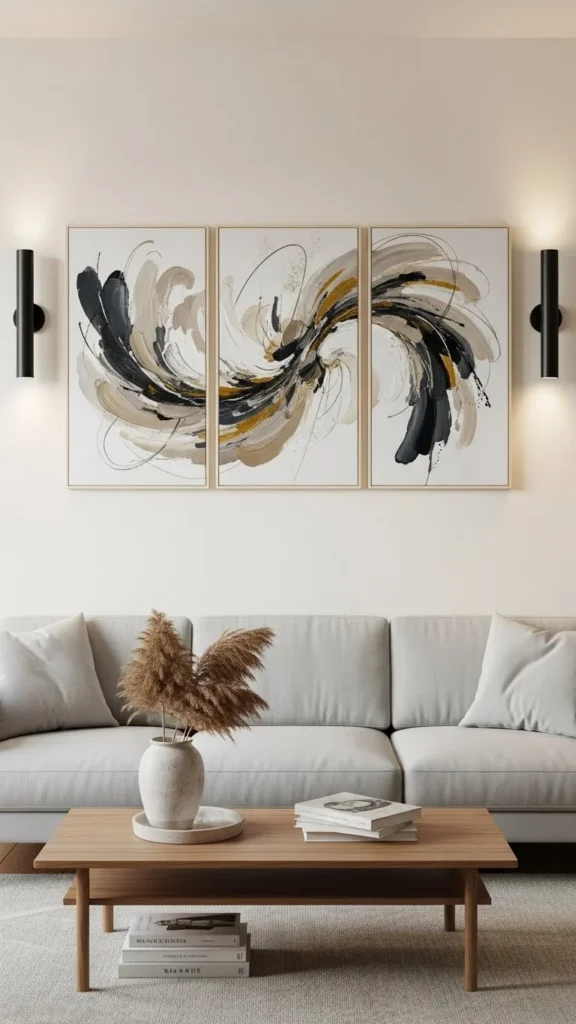
- Big wall = big art
- Small art should be grouped
- Center art at eye level
If you’re doing a gallery wall, keep frames consistent or art styles similar to avoid visual chaos.
Mirrors are also a favorite designer trick — they reflect light and make rooms feel larger.
6. Add Lighting Layers (Never Rely on One Light)
One overhead light is a dead giveaway of an unfinished room.
Designers layer lighting to create warmth and mood.
A well-lit living room includes:
- Overhead or ceiling light
- Table lamps
- Floor lamp or wall sconce
Use warm bulbs, not cool white. Lighting should feel inviting, not clinical.
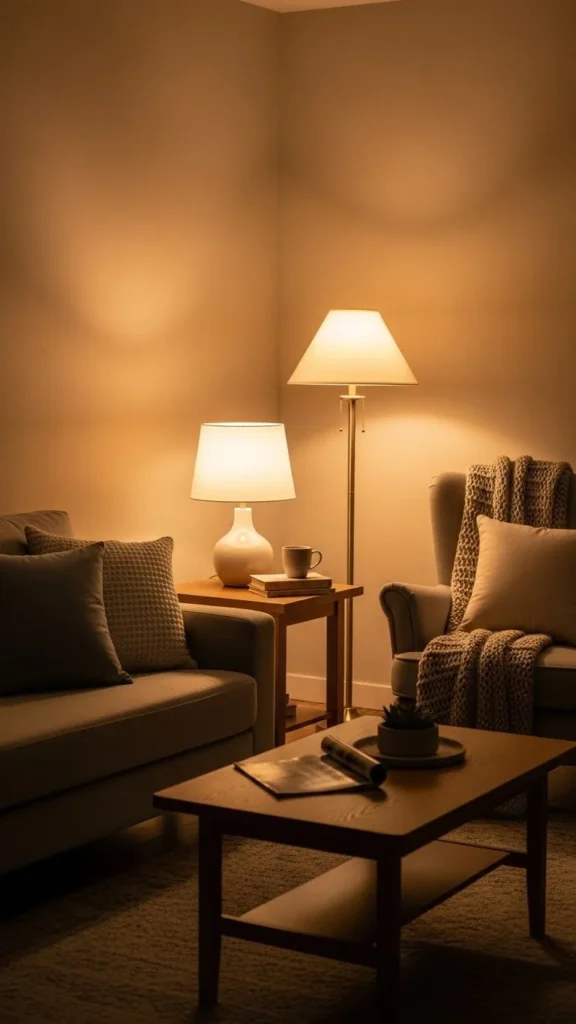
At night, you should be able to turn off the overhead light and still have a cozy glow.
7. Finish With One “Wow” Detail
Every designer room has a quiet statement — something that draws the eye without screaming.
It could be:
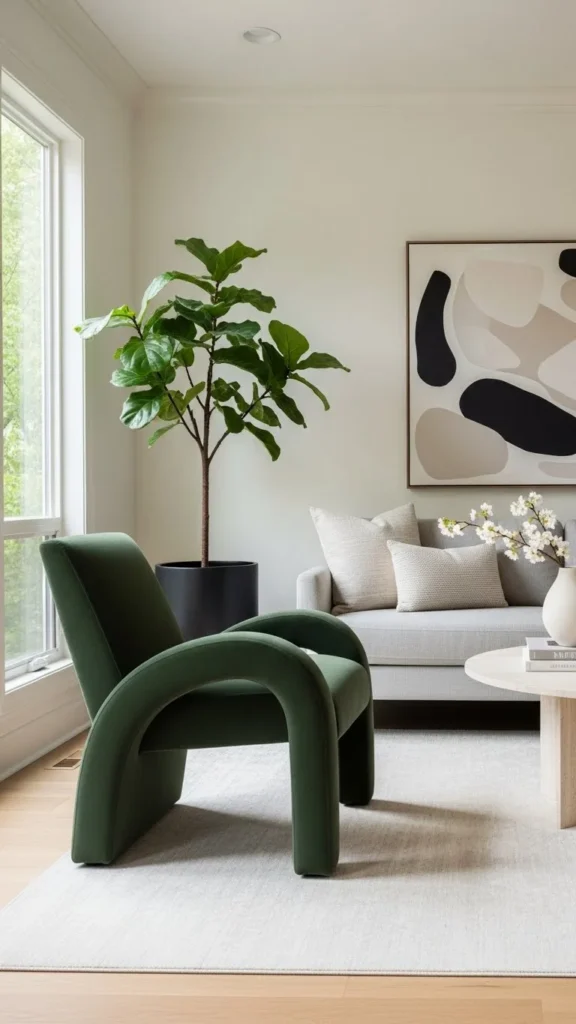
- A bold accent chair
- A sculptural floor lamp
- A dramatic plant
- A unique coffee table
This is the piece people remember.
Final Takeaway: Designer Rooms Feel Intentional, Not Perfect
Decorating like a designer isn’t about copying trends. It’s about editing, layering, and making thoughtful choices.
Focus on:
- A clear color palette
- Strong layout
- Texture over clutter
- Fewer, better decor pieces
When every item has a purpose, your living room naturally looks polished.