

Your bedroom should feel like an exhale at the end of a long day. A place where your mind slows down, your body relaxes, and sleep comes easily. But too often, bedrooms become cluttered, overstimulating, or styled more for looks than rest.
The truth is, a calm bedroom isn’t about perfection or expensive furniture. It’s about intentional simplicity, soft layers, and choices that gently signal your brain: it’s time to rest.

1. Start With a Soft, Soothing Color Palette
Color has a powerful effect on your nervous system. For a calm bedroom, the goal is to reduce visual noise and create a gentle flow.
Best calming bedroom colors:
- Warm white or ivory
- Soft beige or sand
- Muted sage or olive
- Pale gray or greige
- Dusty blue or blush
Use bold colors sparingly if at all. Your walls, bedding, and large furniture should feel quiet and cohesive.
If you love color, introduce it through subtle accents like pillows or throws instead of large surfaces.
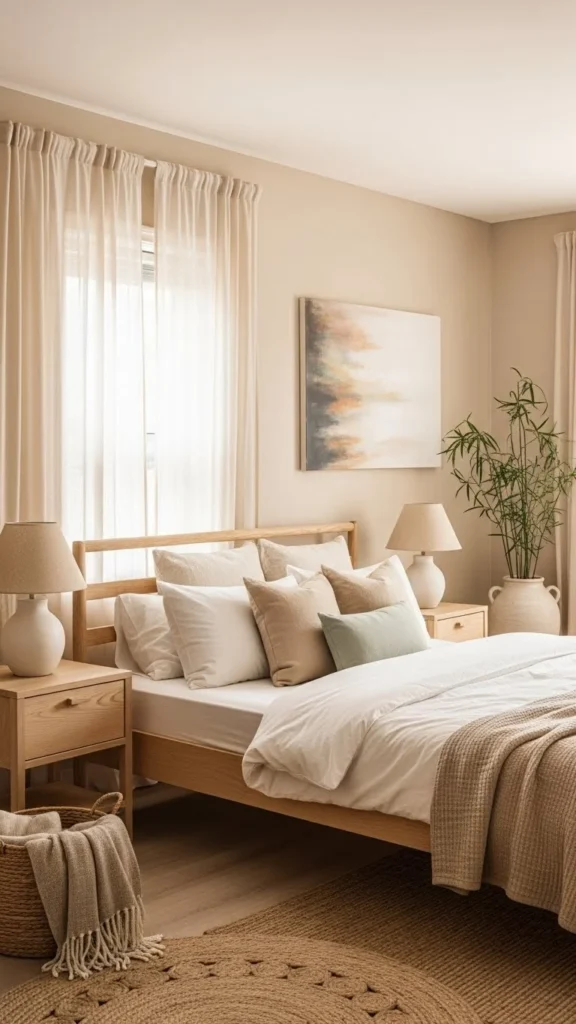
2. Choose Bedding That Feels Like a Retreat
Your bed is the visual and emotional center of the room. Calm bedrooms start with inviting, layered bedding that looks as good as it feels.
Relaxing bedding essentials:
- Crisp cotton or linen sheets
- A lightweight, breathable duvet
- Two to four pillows (not ten)
- A soft throw folded at the foot
Stick to neutral or tonal bedding rather than busy patterns. Texture adds interest without overstimulation.

3. Declutter Surfaces to Clear Your Mind
A cluttered bedroom often leads to a restless mind. Designers and sleep experts agree: visual calm supports mental calm.
Start with the basics.
Easy decluttering wins:
- Clear nightstands except for essentials
- Hide chargers, cables, and clutter
- Use drawers or baskets for small items
- Remove anything that doesn’t belong in a bedroom
Your bedroom should not double as a storage room, office, or laundry zone if you want it to feel restful.
Less on display = more peace.
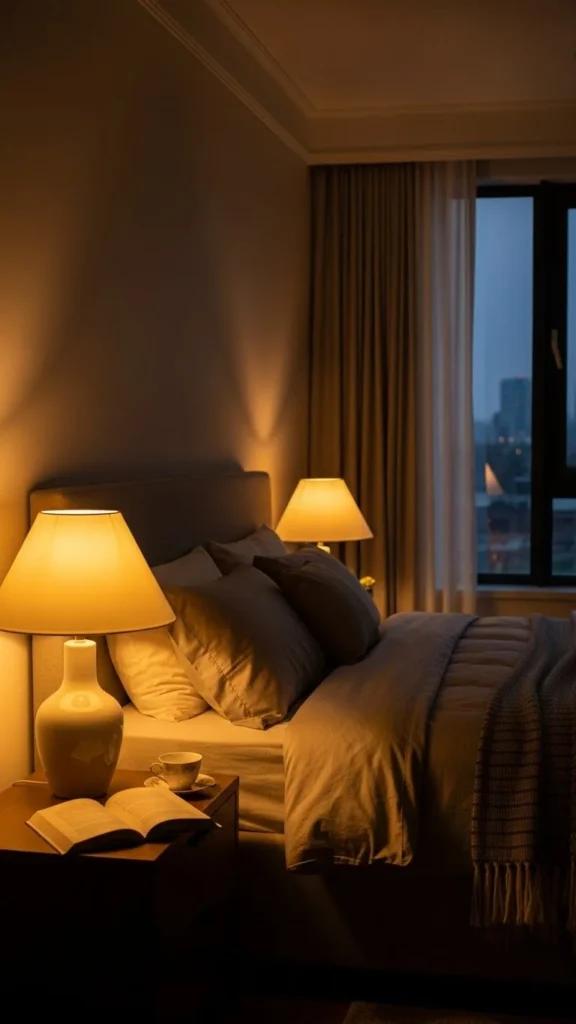
4. Use Soft, Layered Lighting (Never Just One Light)
Lighting is one of the most overlooked elements in bedroom design — and one of the most important.
Harsh overhead lighting instantly kills a calm vibe.
Create a relaxing glow with:
- Bedside lamps with warm bulbs
- A soft floor lamp or wall sconce
- Optional candles or dimmable lights
Aim for warm light (2700K–3000K). At night, you should be able to turn off the main light and still feel comfortably lit.
5. Bring in Natural Materials and Gentle Texture
Nature-inspired materials help ground a space and reduce sensory overload. A calm bedroom feels soft, warm, and tactile.
Soothing materials to layer in:
- Light or medium-toned wood
- Linen, cotton, or wool textiles
- Woven baskets or stools
- Ceramic or stone accents
Avoid shiny, overly reflective finishes. Matte and natural textures feel more restful and timeless.
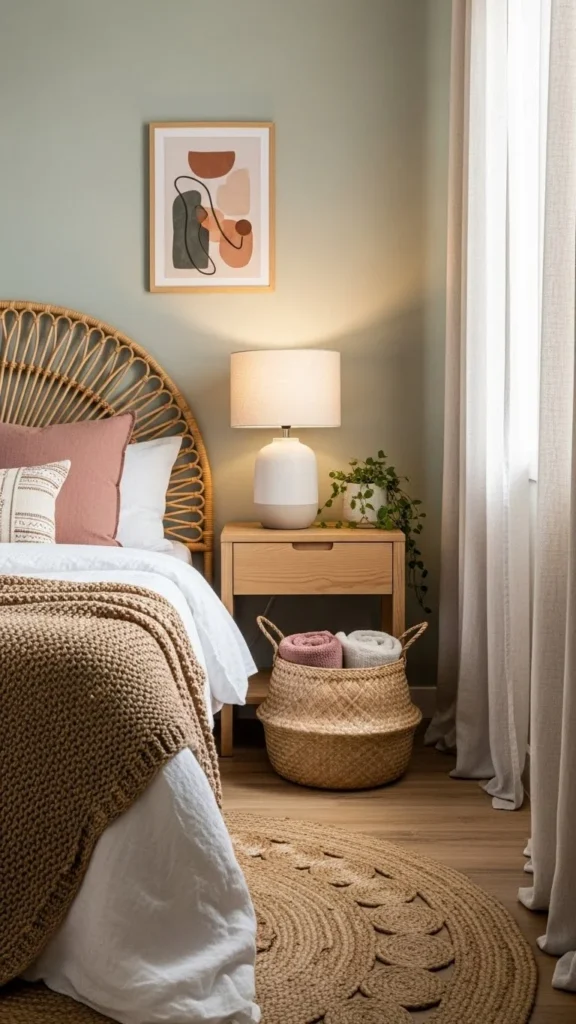
6. Keep Wall Decor Minimal and Meaningful
Bare walls can feel cold — but too much wall decor can feel busy. The sweet spot is intentional simplicity.
Calming wall decor ideas:
- One large piece of soft-toned artwork
- A simple framed photograph
- A subtle textile or wall hanging
Skip bold graphics, bright colors, or cluttered gallery walls in the bedroom. Choose pieces that feel personal and peaceful.
If it doesn’t calm you, it doesn’t belong here.
7. Add One or Two Comfort-Driven Finishing Touches
The final layer should make the room feel yours — not styled for a showroom.
Think comfort over decoration.
Relaxing finishing touches:
- A small plant or branch
- A book you love
- A cozy chair or bench
- Light, breathable curtains
These details create warmth without overwhelming the space.
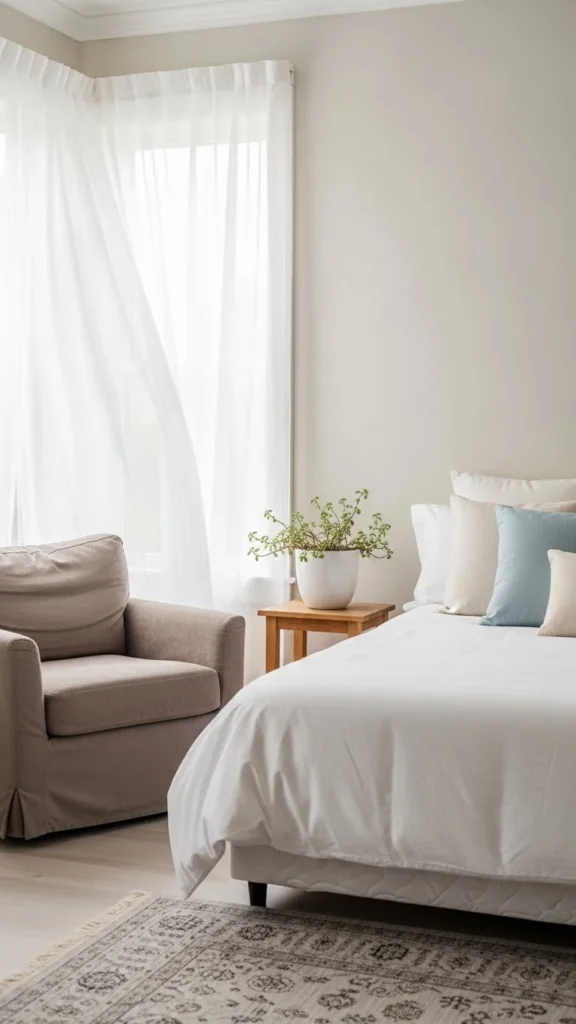
Final Takeaway: Calm Bedrooms Are Designed to Rest, Not Impress
A relaxing bedroom isn’t about trends or perfection. It’s about how the space makes you feel when you walk in especially at night.
Focus on:
- Soft colors
- Simple bedding
- Minimal clutter
- Warm lighting
- Natural textures
When your bedroom supports rest, everything else in your life benefits too.