A stylish home office desk setup can change the way work feels every day. When your desk looks clean, balanced, and comfortable, it becomes easier to focus, easier to stay organized, and much more pleasant to sit down and use for hours at a time. That is why so many people search for home office desk setup ideas that combine beauty with real function. A good work area is not only about expensive furniture or trendy accessories. It is often built through small practical changes like better lighting, smarter storage, fewer cables in sight, a simple color palette, and desk tools that work well together. These ideas are designed for remote workers, freelancers, business owners, students, and anyone who wants a more stylish work area at home. From compact desk layouts to layered shelves, warm lighting, and low-cost organizing tricks, these setup ideas can help your desk look polished while still working hard every single day.
1. Neutral Wood and White Desk Combo
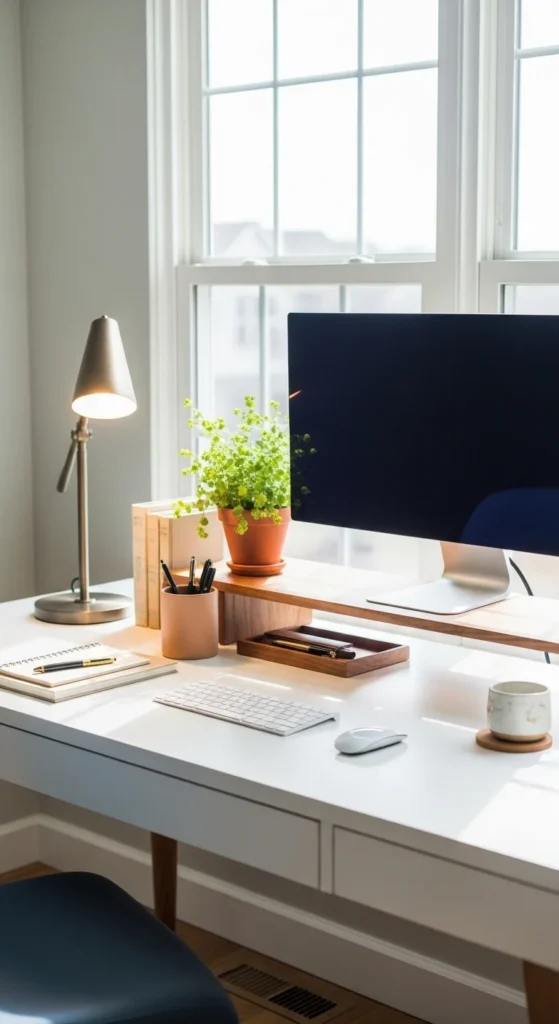
A neutral wood and white desk combo is one of the easiest ways to create a stylish work area that still feels calm and practical. The contrast between clean white surfaces and warm wood tones gives the desk a balanced look that works in almost any home office, whether the room is modern, cozy, or minimal. A white desk keeps the space feeling bright, while wood accents through shelves, a monitor riser, frames, or a lamp base stop the setup from looking too cold. This style is also very forgiving if you are building the desk slowly over time. You can start with a plain white desk and add warm wood details later through a thrifted shelf, a wooden tray, or even a stack of books used as a riser. It pairs beautifully with cream storage boxes, black tech accessories, and a small green plant. The setup feels clean on camera too, which is helpful for calls. If you want a budget-friendly version, contact paper, wood organizers, or simple DIY shelf pieces can help tie the look together. This desk style works so well because it feels bright, tidy, and grounded at the same time, which is ideal for long hours of focused work.
2. Desk Facing a Window for Natural Light
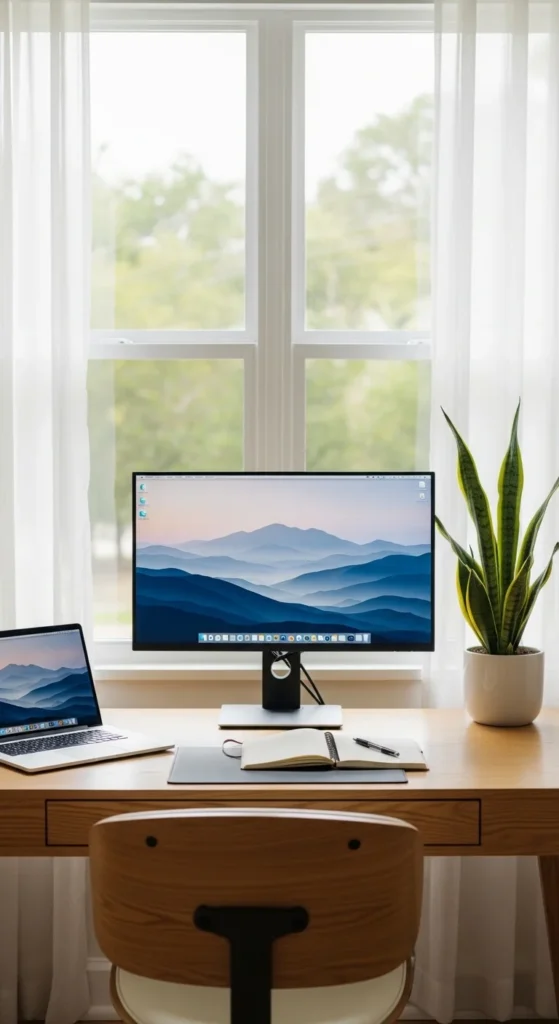
Placing your desk near or facing a window can completely change the mood of a home office without requiring any new furniture at all. Natural light helps a workspace feel more open, more energizing, and much easier to enjoy during the day. It also makes the desk itself look better, since light brings out the texture of wood, the softness of fabric, and the clean lines of your setup. A window-facing desk can also give your eyes a softer place to rest between tasks, which is helpful if you spend many hours looking at a screen. If glare becomes a problem, a sheer curtain or slight change in desk angle can usually fix it. This layout works especially well with a small plant, a notebook, and a warm lamp for evenings, creating a desk that feels bright by day and cozy by night. If your room is small, even moving the desk slightly closer to the window can make a difference. This idea is especially useful because it costs nothing to try. Sometimes a better desk setup begins with a smarter position in the room rather than another object on the surface.
3. Slim Desk Mat That Defines the Workspace
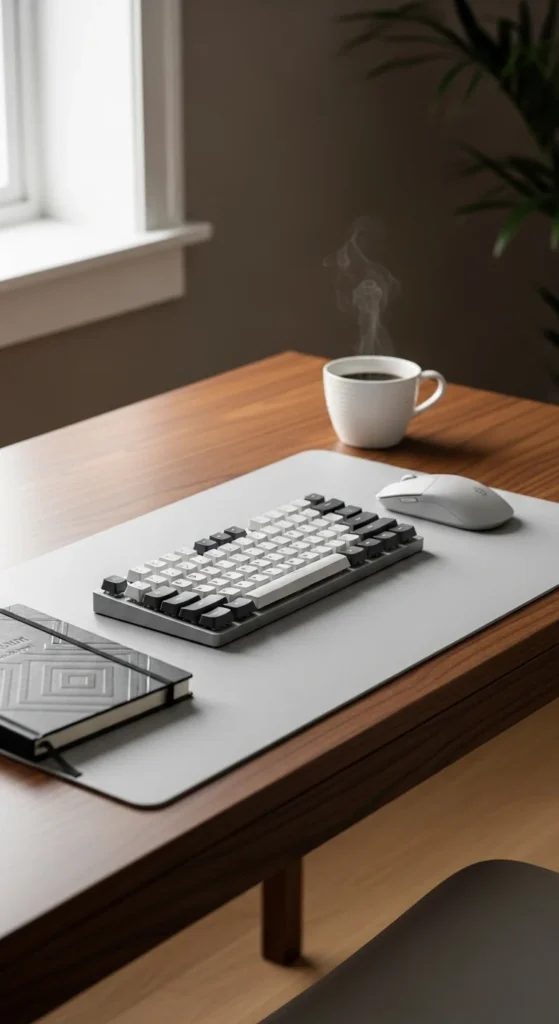
A slim desk mat can make a home office look more polished almost immediately because it creates a clear visual zone for the main work tools. Instead of letting the keyboard, mouse, notebook, and everyday items float on the desk, the mat groups them together into one neat area. This makes the setup feel more intentional and much less scattered. A soft desk mat in taupe, beige, charcoal, sage, or muted brown can also help tie different desk accessories together, especially if your keyboard, mouse, and storage pieces are in similar tones. Beyond looks, it protects the desk surface from scratches, mug rings, and pen marks, which is useful if you work on a wood or painted table. If you are on a budget, you do not need an expensive leather version. Felt mats, cork mats, or even a neatly cut fabric layer can work surprisingly well. This setup detail is particularly effective for home offices because it helps the desk feel like a real work zone rather than just another table in the house. A good mat adds softness, order, and a cleaner overall shape to the desk without taking up any extra room.
4. Matching Monitor, Keyboard, and Mouse Palette
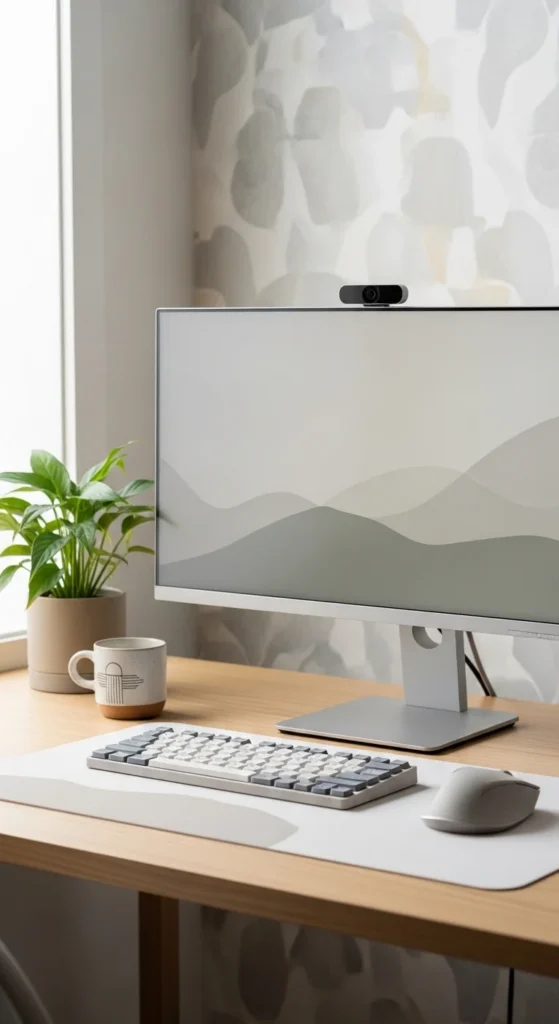
A matching color palette across your main desk tools can make the whole setup feel more thoughtful without needing a major redesign. The monitor, keyboard, and mouse are the pieces your eyes land on most often, so when they work well together, the desk instantly looks calmer. White, cream, black, grey, soft green, and muted pink are popular choices, but the real goal is simply to avoid a setup where every main tool feels unrelated. If you already own different colors, you can still bring them together with a desk mat, monitor riser, or tray in one steady tone that acts like a visual base. This idea works especially well in home offices because it helps the desk look polished on camera and more peaceful in daily use. You do not have to replace everything at once either. Sometimes one updated keyboard or mouse is enough to make the setup feel more aligned. The less visual noise you have around your main work tools, the easier the desk often feels to settle into. A matching palette does not just make things look better. It also makes the work area feel more deliberate and easier to maintain.
5. Warm Lamp for Late Work Sessions
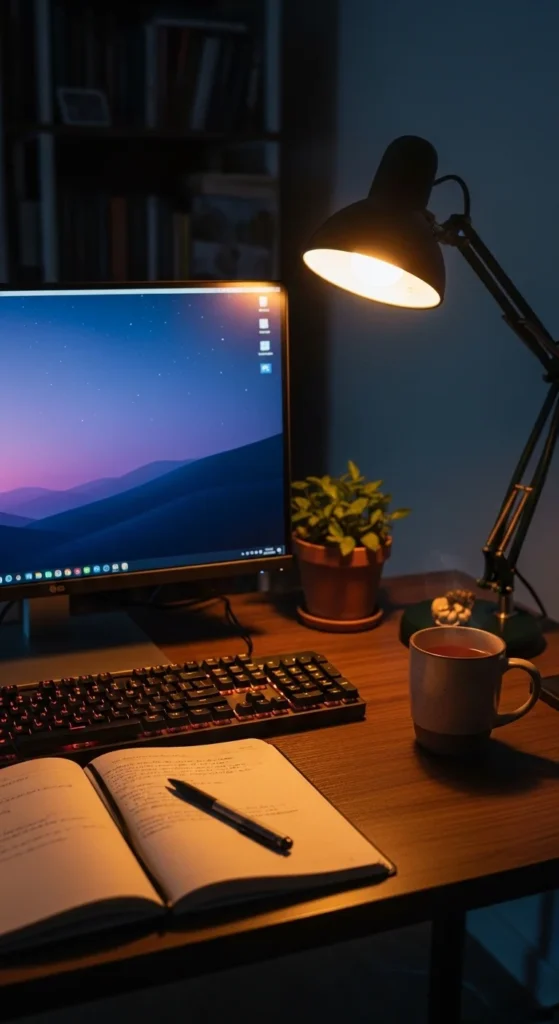
A warm desk lamp can change the feeling of a home office far more than most people expect. Many rooms rely on harsh ceiling lights, which can make the desk feel flat and tiring, especially at night. A small lamp with a warm bulb creates a softer, more focused pool of light that makes the work area feel separate from the rest of the room. This is especially useful if your home office is in a bedroom or living area where you want a more relaxed mood after dark. A warm lamp also gives the desk more depth and can make wood, paper, and neutral accessories look richer and more inviting. If you are working with a smaller budget, even a basic lamp from a thrift store can look beautiful with the right bulb and placement. Put it on the side opposite your writing hand if you use notebooks often, and keep the shape simple if the rest of the desk already has many items. A warm lamp is both practical and decorative. It helps with visibility, supports a calmer atmosphere, and makes the desk feel more like a place you want to sit down and use.
6. Pegboard Wall for Stylish Storage
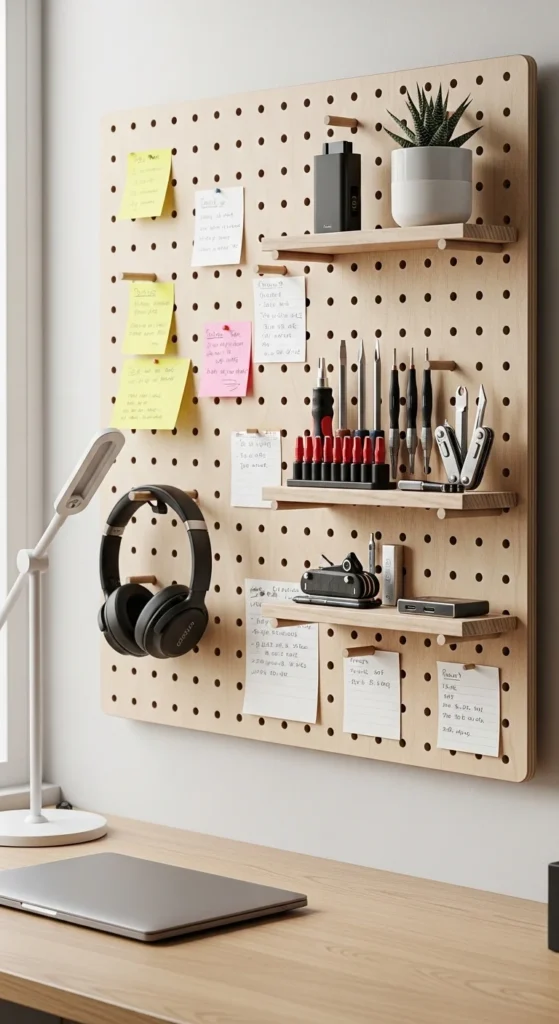
A pegboard wall above the desk is one of the smartest ways to keep a home office both organized and attractive. It moves small but important items off the desk surface and onto the wall, which frees up space without hiding everything in drawers. This works especially well for headphones, scissors, sticky notes, chargers, pens, mini baskets, and small decor pieces. The trick is to keep the layout edited so the pegboard stays helpful instead of becoming another messy display. Two or three hooks, one small shelf, and one container often do more than filling every inch. White, black, wood, or muted neutral pegboards usually work best if you want the desk to feel stylish. If you are on a tighter budget, a simple wire grid panel can offer a similar effect with clips and hanging baskets. This setup detail works well in small home offices where desk space is limited. It also helps create a clear visual frame for the workspace, which can make the area feel more dedicated and complete. A good pegboard brings storage, texture, and function together in a way that really supports everyday work.
7. Floating Shelf With Edited Decor
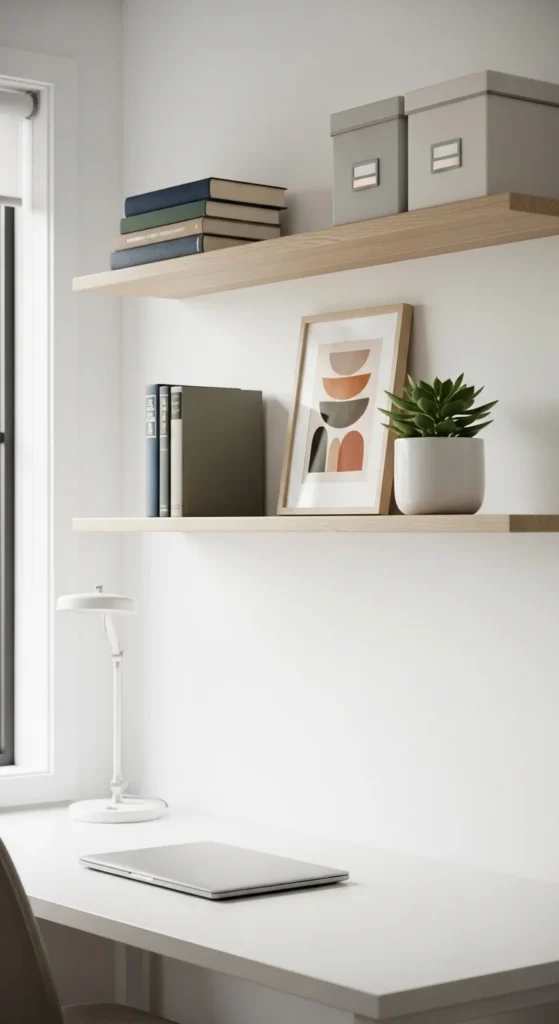
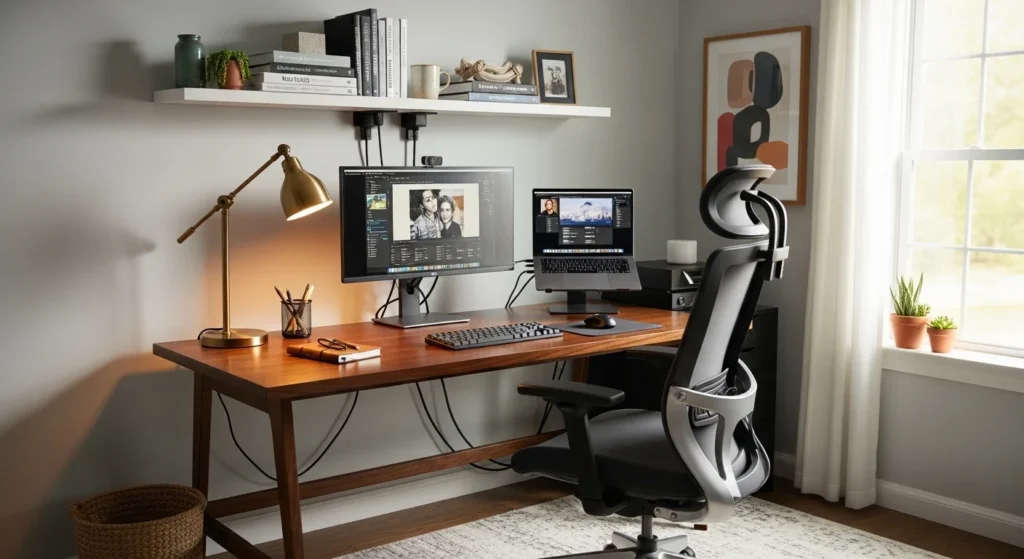
A floating shelf above the desk can make a home office feel layered and finished, but the key is to keep the styling edited. One shelf with books, a small plant, one framed print, and a tidy storage box usually looks much stronger than a crowded shelf stuffed with random items. This kind of shelf is helpful because it adds vertical storage without shrinking the desk surface. It can hold notebooks, spare chargers, paper supplies, or decorative objects that would otherwise take over the workspace. A wood shelf adds warmth, while a white shelf keeps things bright and minimal. If you want a low-cost version, a plain board with simple brackets can work beautifully once painted or lightly sanded. The floating shelf is especially good for home offices in bedrooms or shared spaces because it helps visually define the desk area. It also gives you a place to display one or two personal touches without cluttering the actual work zone. When styled lightly, a shelf makes the desk look more established and pulled together, which can help the whole room feel more professional and more pleasant to work in.
8. One Tray for Everyday Essentials
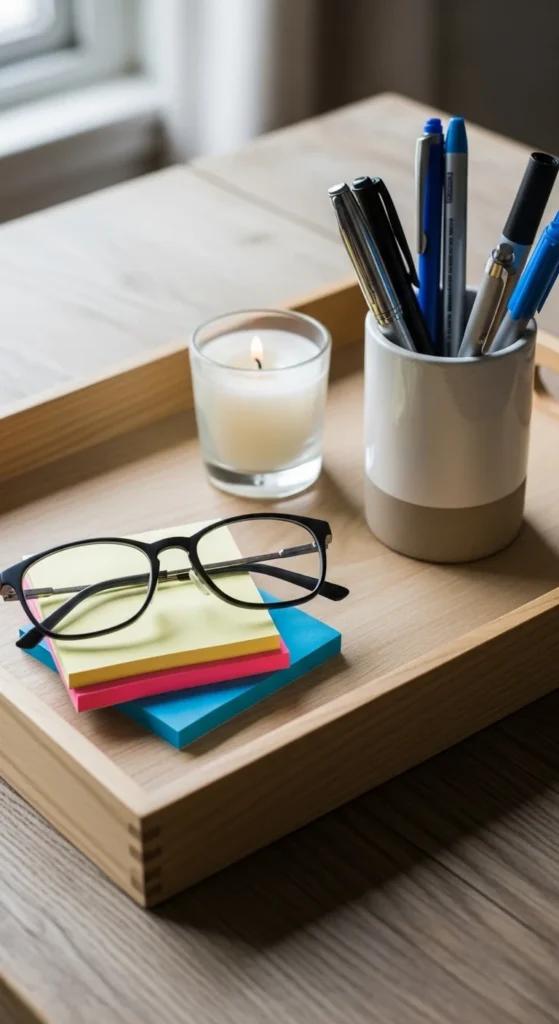
One desk tray can do a lot to make a home office feel more orderly because it gathers the little items that usually spread out and create visual mess. Pens, sticky notes, glasses, lip balm, earbuds, clips, and other everyday tools can live in one defined space instead of floating around the desk. This makes the setup look cleaner even when the tray itself holds several things. It also makes the desk easier to reset at the end of the day. Trays work especially well in home offices because daily life often brings extra objects to the desk that would not appear in a formal office. A simple tray helps that mix of work and life feel more managed. Wood, ceramic, metal, woven, or acrylic trays can all look good depending on your style. If you want a budget-friendly option, a shallow kitchen tray, thrifted plate, or sturdy box lid can work beautifully. Keep the tray edited so it does not become a clutter zone. A pen cup, one small dish, and one or two frequently used items are often enough. This single detail can make the desk feel much more thoughtful and usable.
9. Hidden Cable Setup for a Clean Surface
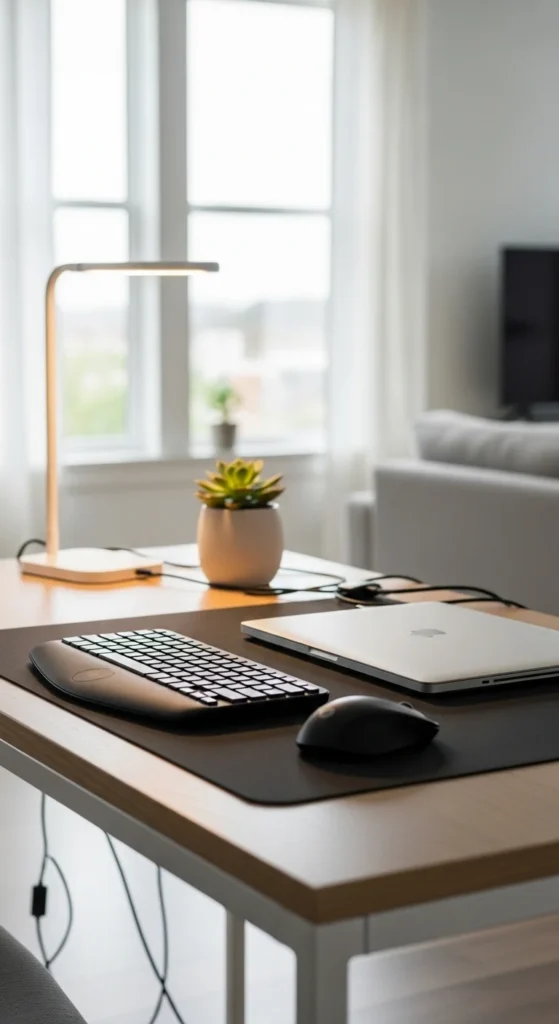
A hidden cable setup can make even a basic home office look much more expensive and much less stressful. Cables are one of the fastest ways for a stylish desk to start feeling messy, especially when chargers, monitor cords, laptop cables, and power strips all compete for space. The good news is that cable organization does not have to cost much. A few cable clips, velcro ties, binder clips, or adhesive hooks can guide cords along the back of the desk or desk leg so they stay out of sight. Mounting or tucking the power strip under the desk usually helps the most. You can also place bulky chargers in a small box or basket nearby so the surface stays clear. This setup matters in a home office because a cleaner visual field often makes the room feel more focused and more professional. It also helps when you are on video calls or trying to clean quickly. Hidden cables support both style and function. They reduce tangles, make devices easier to move, and keep the desk feeling calmer day after day. Few upgrades make such a fast difference for so little cost.
10. Laptop Stand With External Keyboard
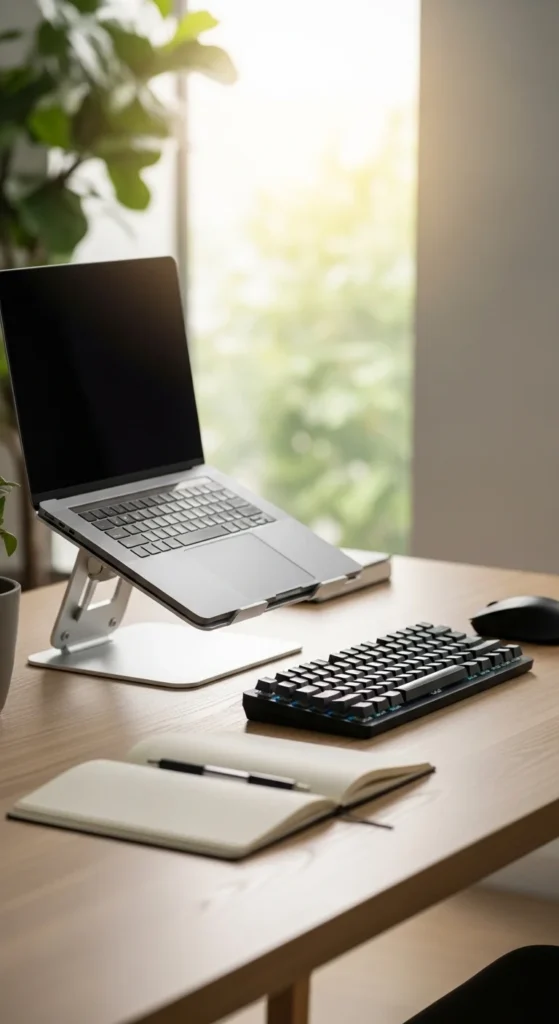
A laptop stand paired with an external keyboard is one of the most practical home office upgrades because it improves posture while also making the desk look more structured. When a laptop sits flat on the desk, the screen often feels too low and the whole setup can look compressed. Raising the laptop gives the workspace more layers and opens up space underneath for slim storage or simply more visual breathing room. An external keyboard lets you keep your hands at a more comfortable level while the screen stays easier to see. This arrangement works especially well in smaller home offices where one laptop serves as the main work device. If you are on a budget, a stack of sturdy books or a simple wooden riser can work as the stand until you want a dedicated one. Try to keep the keyboard and mouse in tones that match the rest of the setup. A laptop stand changes the overall shape of the desk in a good way. It makes the screen feel more intentional, the work area feel more open, and the daily experience feel more comfortable over long hours of work.
11. Slim Drawer Organizers for Hidden Order
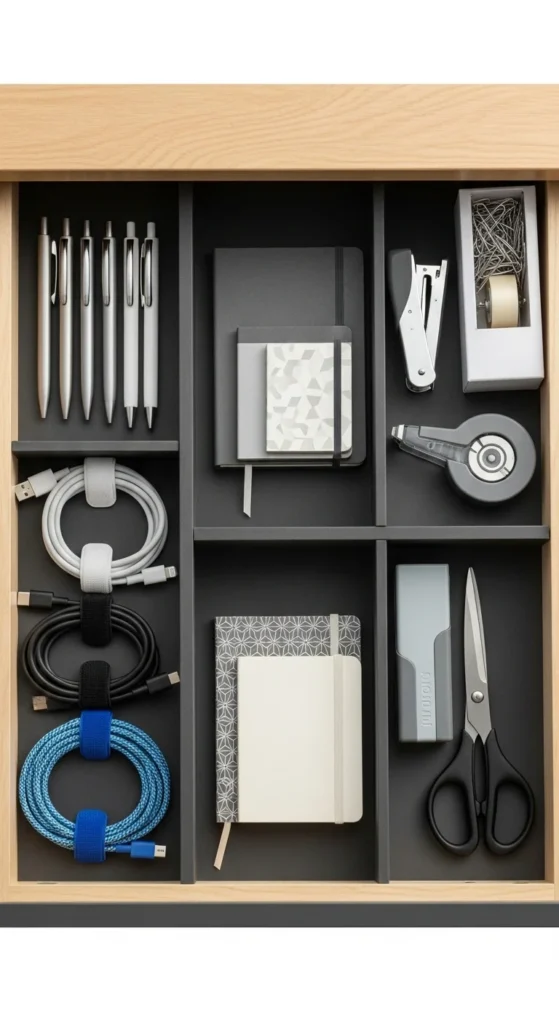
A stylish desk surface is much easier to keep that way when the drawers underneath actually make sense. Slim drawer organizers help give all the small office items their own place so they do not become one frustrating pile. Pens, clips, charging cords, sticky notes, flash drives, scissors, and spare batteries can all be grouped in ways that are easy to find and easy to return after use. This is especially useful in a home office because the desk often has to hold both work tools and personal items. If the inside is chaotic, the outside gets messy much faster. The best part is that drawer organization does not need expensive inserts. Small boxes, shallow kitchen containers, cardboard dividers, or old packaging can all work well if they fit cleanly. Keep only the things you actually use often and move the extras elsewhere. When the drawers are easier to use, your desk becomes much easier to reset at the end of the day. Hidden order supports visible style more than people think. A tidy drawer system keeps the desk surface cleaner and makes the workspace feel more under control during busy days.
12. One Large Monitor as the Focal Point
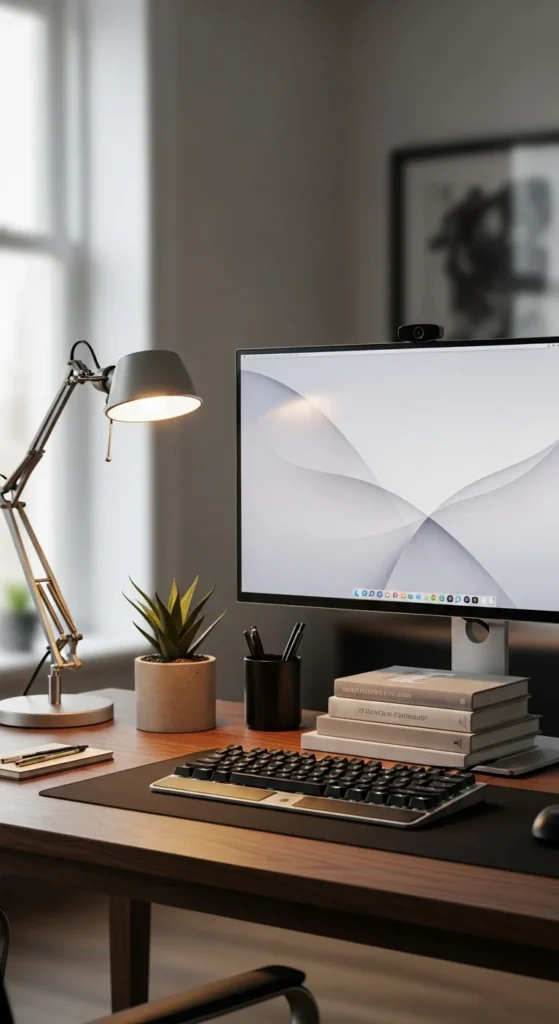
One large monitor centered on the desk can make a home office feel clean, strong, and visually balanced. Instead of mixing several mismatched screens or leaving the laptop as the only focus, one main monitor creates a clear anchor for the setup. This works especially well if the desk itself is not very large because the layout stays simple and readable. A centered screen with a keyboard and mouse beneath it naturally builds a tidy working triangle. It also makes the rest of the desk easier to style because you already know where the visual center is. Keep accessories low and simple around it so the screen stays the main shape in the arrangement. If you want a budget-friendly upgrade, a good used monitor on a simple riser can make a huge difference. Pair it with a laptop stand off to one side if needed. In home offices, a single large monitor often looks cleaner on video calls too. This layout feels professional without being overcomplicated, and it gives the desk a stronger sense of order. Sometimes one well-placed screen does more for style than many smaller accessories ever could.
13. Framed Art Leaning Against the Wall
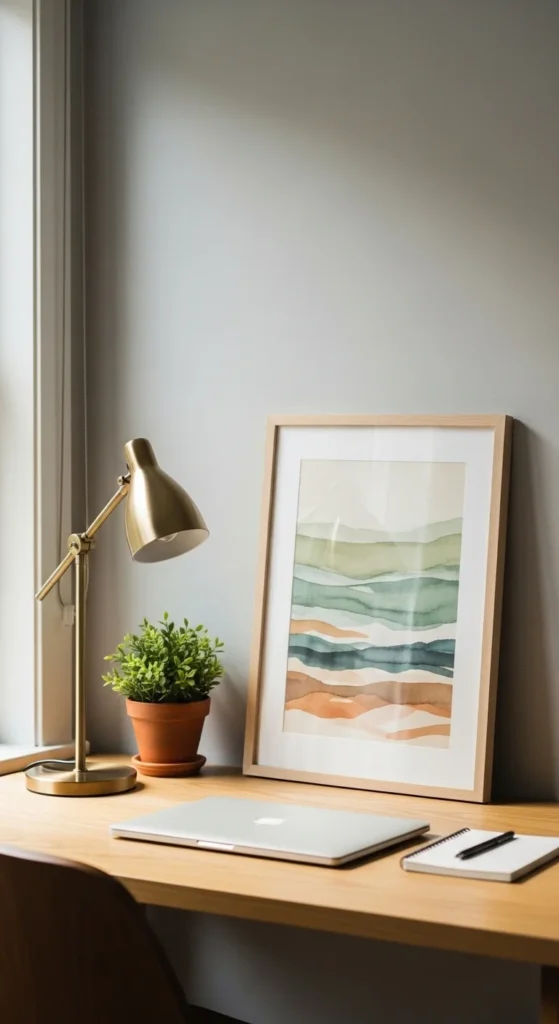
A framed print leaning behind the desk setup can add personality without taking over the workspace. This is a good option if you want the desk to feel stylish but do not want to hang a full gallery wall or clutter the surface with too many decorative objects. One simple frame, placed behind a lamp or beside a monitor, can soften the whole look of the desk and make the room feel more personal. The art does not need to be expensive. A postcard, digital print, magazine page, or your own photograph can look beautiful in a plain frame. Choose something that fits the desk palette rather than something loud that competes with your screen and tools. Line art, abstract shapes, soft landscapes, or calm typography often work well in home offices. This setup detail is especially helpful in work-from-home spaces because it adds warmth and identity to a place that could otherwise feel purely functional. One frame is usually enough. It gives the eye a gentle resting point and helps the desk feel like part of a home, not just a station for tasks.
14. Small Plant Cluster on One Side
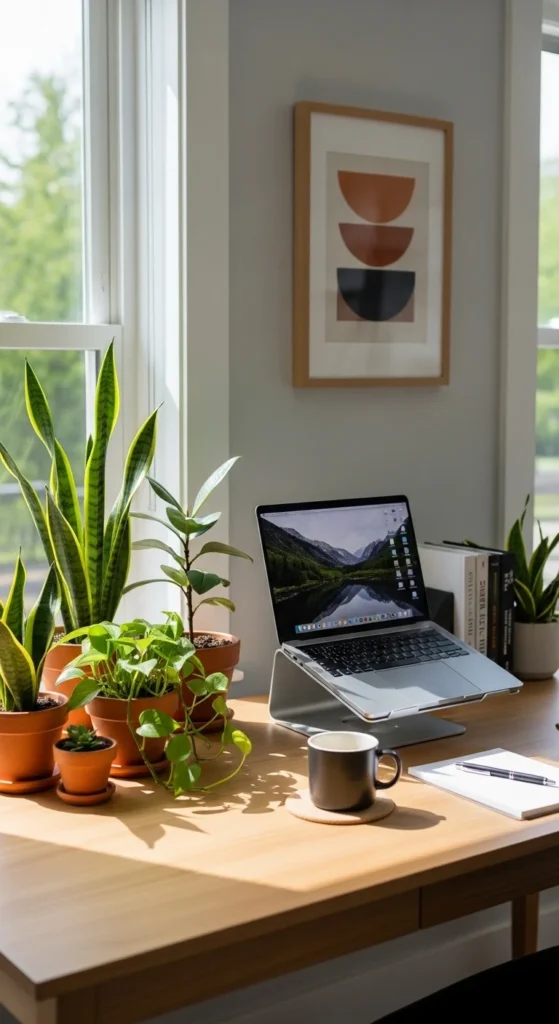
A small plant cluster can make a home office feel much more inviting, especially when the rest of the setup has lots of straight lines, screens, and hard surfaces. Instead of using one plant alone, grouping two or three small plants on one side of the desk or on a nearby shelf creates a more finished and natural look. This works especially well with a mix of leaf shapes, such as one upright plant, one trailing cutting, and one small succulent. The arrangement feels softer and more layered than a single pot on its own. If you want to stay budget friendly, use simple cuttings in jars, thrifted ceramic pots, or basic nursery containers hidden inside baskets or sleeves. Plants like pothos, snake plant, ZZ plant, and small philodendron varieties tend to be low effort and desk friendly. Keep the cluster off the main work zone so it adds to the look without getting in the way. A plant group can make the workspace feel calmer and more alive, which is especially valuable in home offices where the line between work and home can start to feel too hard or too dull.
15. Side Rolling Cart for Extra Supplies
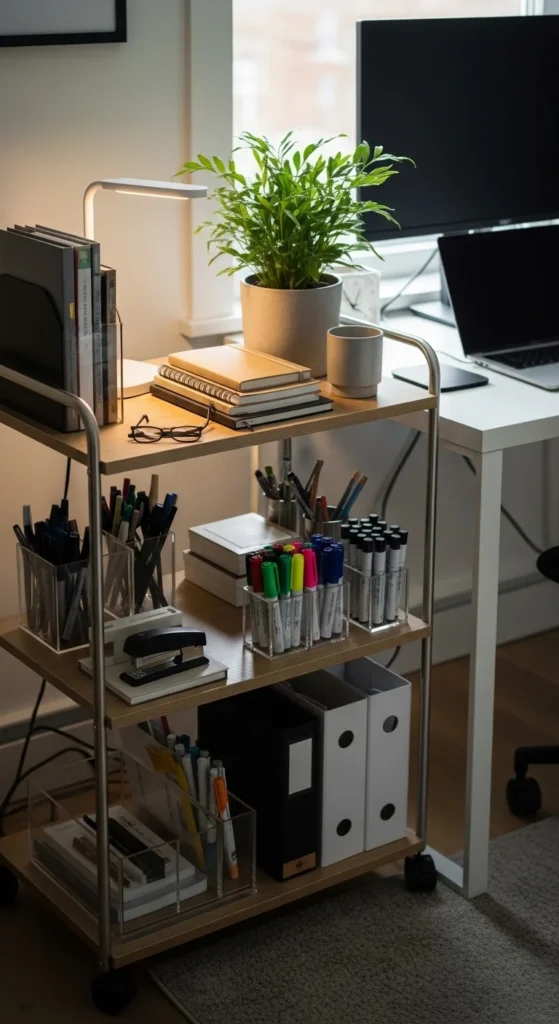
A side rolling cart is ideal for home offices that need more storage but cannot fit a bigger desk. It acts like a second layer of organization, holding all the items you use often without forcing them onto the actual work surface. This can include notebooks, chargers, papers, office tools, reference books, and even snacks or a small printer. The best carts work when the top shelf holds daily essentials and the lower shelves hold backup items or less-used supplies. To keep the look stylish, use matching containers, small baskets, or neutral trays rather than dropping everything in loosely. A cart can feel messy very quickly if it is not grouped well. If you are working with a smaller budget, a basic utility trolley can look much better with just a few simple styling choices like a plant, a tray, or one covered box. This setup is especially helpful in shared rooms or small home offices because the cart can move when needed. It adds storage without making the desk itself feel overloaded, which helps keep the main work area more focused and easier to use.
16. Under-Desk Storage That Stays Invisible
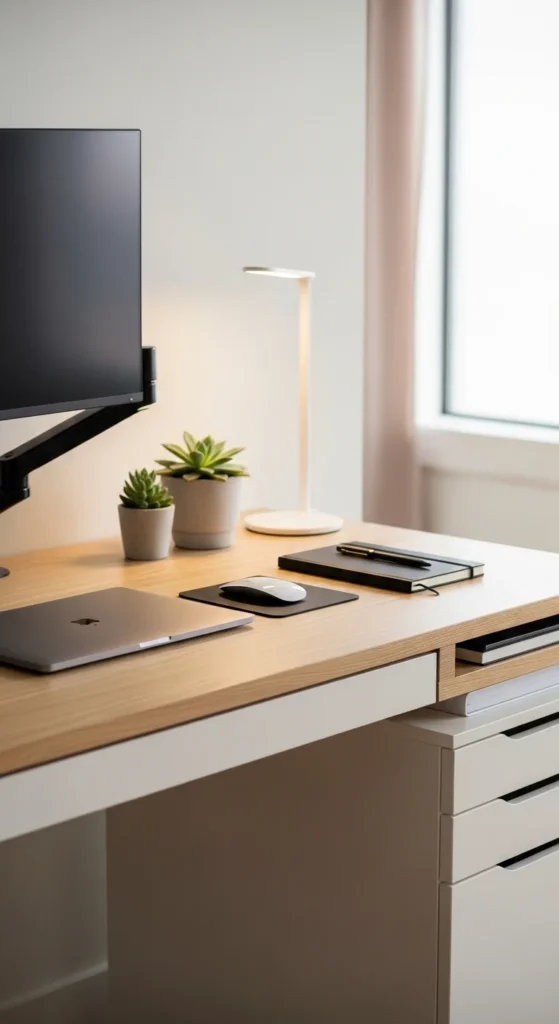
Under-desk storage can be a great solution in a home office because it creates more room for supplies without changing the clean look of the desk surface. Slim drawers, attached baskets, hidden shelves, or storage bins tucked neatly underneath can hold notebooks, chargers, cables, extra paper, and items you need nearby but do not want in sight. This works especially well in smaller rooms where every bit of visible clutter makes the office feel tighter. The best under-desk storage stays simple and quiet. It should support the desk, not draw attention away from it. If you are on a budget, small bins, adhesive drawers, or even a well-placed shallow basket can work beautifully. Keep the front edges neat and avoid overfilling them so the desk still feels open from across the room. This kind of setup is useful because it respects the main role of the desk, which is to give you a clean place to work. Hidden storage makes that easier by pulling back the visual noise. A desk often feels much more stylish when the extra supplies have a place that is close, practical, and mostly invisible.
17. Bookshelf Desk Pairing for a Built-In Feel
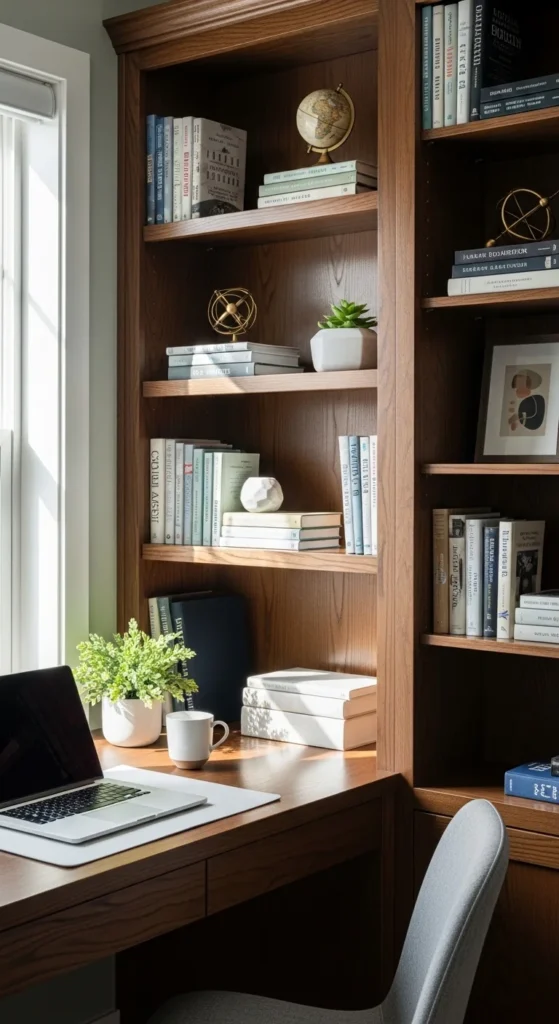
Placing a desk next to a bookshelf can make a home office look much more complete, almost like a custom built-in work area. The shelf frames the desk visually and gives the whole zone more structure, which is helpful in bedrooms, living rooms, or shared spaces where the office needs to feel like part of the room. A nearby shelf also gives you a place for books, storage boxes, files, art, and plants without crowding the actual desk. This pairing works best when the shelf styling stays edited and the colors connect with the desk. A white desk next to a wood shelf or matching wood tones across both pieces can make the setup feel more intentional. If you are working with secondhand furniture, a coat of paint or a few matching organizers can help tie the pieces together. A bookshelf desk pairing also supports productivity because reference materials and tools stay close by without taking up keyboard space. It creates a stronger office zone visually, which can help work feel more contained. This is a smart layout trick when you want the room to feel stylish and the desk to feel more permanent.
18. Pinboard for Planning and Inspiration
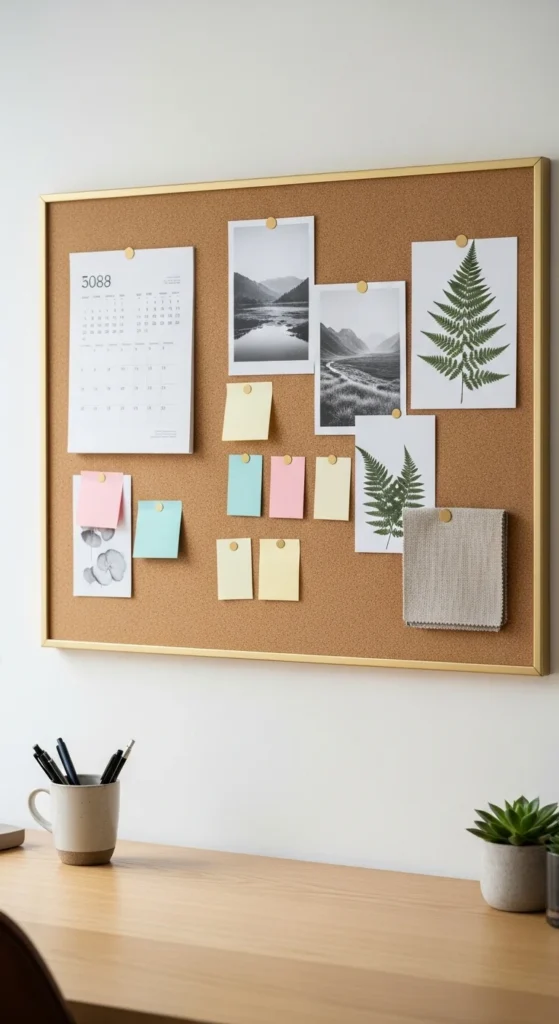
A pinboard above the desk gives you a place for planning, reminders, and visual ideas while adding texture to the office wall. This is especially useful in home offices where the desk may also be used for personal projects, content planning, study, or business tasks. A pinboard can hold a monthly plan, key deadlines, small reference notes, and one or two motivating visuals without leaving paper scattered across the desk. To keep it looking stylish, limit the color palette and avoid pinning too many unrelated scraps. One calendar page, a short to-do section, and a few carefully chosen images often look much better than filling every space. If you want a budget-friendly approach, a plain corkboard can be painted around the edges or covered partly with linen for a softer look. This setup works well because it supports planning while still keeping the main desk surface clearer. A good pinboard makes the home office feel active and personal without becoming chaotic. It also gives your eyes a useful place to go during the day, which helps the workspace feel more complete and easier to manage.
19. Statement Chair That Still Feels Comfortable
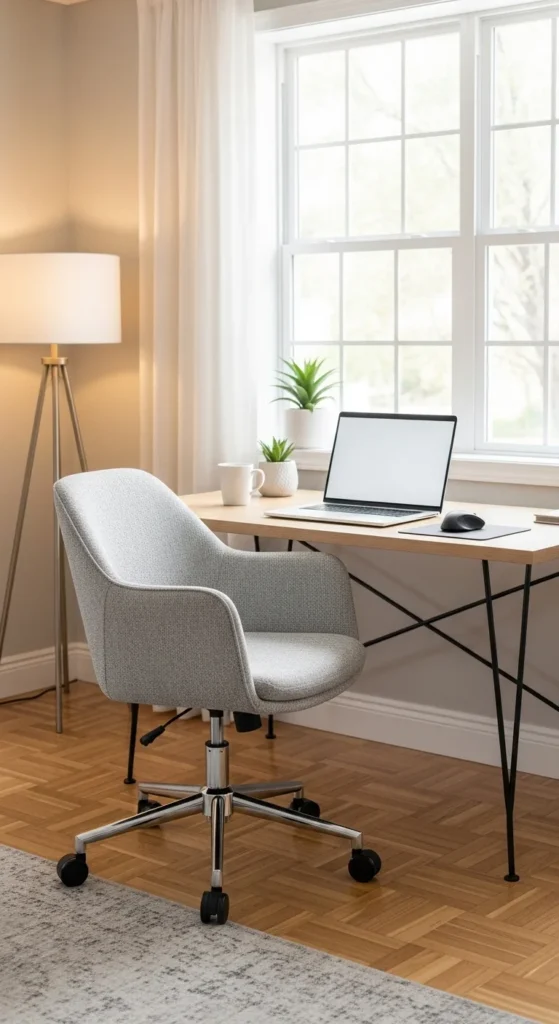
A statement chair can change the whole feel of a home office because it is usually one of the largest visible pieces in the setup. A chair with clean lines, soft fabric, warm wood details, or a beautiful neutral tone can make the desk area feel much more designed. But style alone is not enough. Since this is a work chair, comfort still matters. The best setup combines both. If you already own a basic office chair, you can update the look with a washable cushion, a simple back pillow, or a nearby throw when the chair is not in use. If you are shopping on a budget, even a dining-style office chair can work for shorter work sessions if paired with good posture support. This idea matters in home offices because the chair is often in view from the rest of the room, especially in bedrooms or living spaces. A bulky, mismatched chair can make the setup feel less polished, while a well-chosen one helps anchor the whole area. A stylish chair makes the office zone feel more intentional and more like part of the home instead of a temporary corner for work.
20. Desk Lamp Plus Floor Lamp Layered Lighting
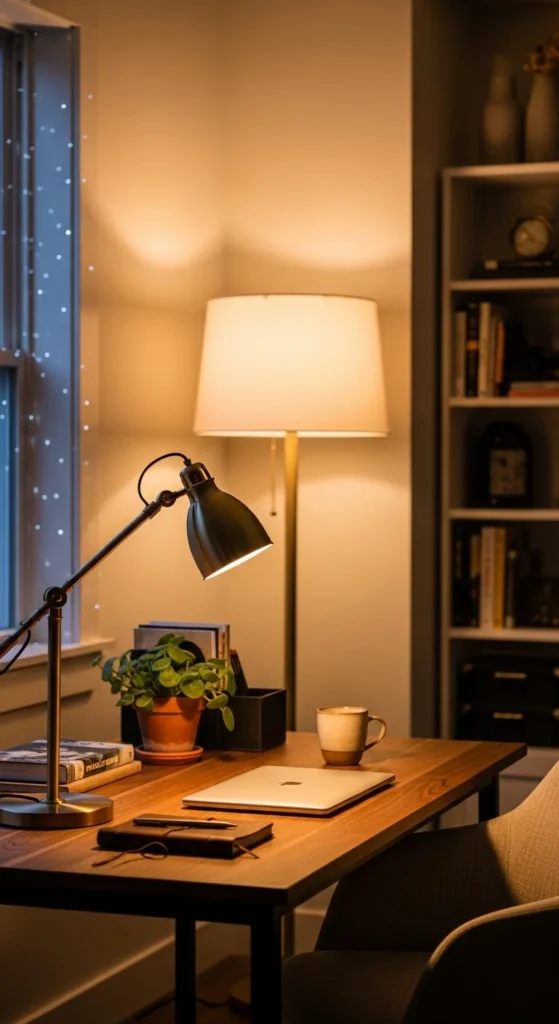
Layered lighting can make a home office feel far more comfortable than relying on one overhead light alone. A desk lamp handles focused task lighting, while a floor lamp nearby softens the rest of the room and makes the office area feel warmer. This is especially helpful in home offices located in bedrooms, spare corners, or living spaces where you want the room to feel pleasant both during work hours and after. The desk lamp should light the immediate work area, while the floor lamp adds depth and makes the whole space feel less harsh at night. Warm bulbs usually work best if you want a cozy and stylish look. If you are on a budget, even a very simple floor lamp can help once paired with a soft bulb and placed well. This setup also looks better in video calls because the room has more depth and more flattering light. Layered lighting is one of those design choices that supports both comfort and style. It makes the desk area feel more intentional, more inviting, and much easier to use as daylight fades. Good light is one of the strongest tools in a home office.
21. Minimal Black Desk for Contrast
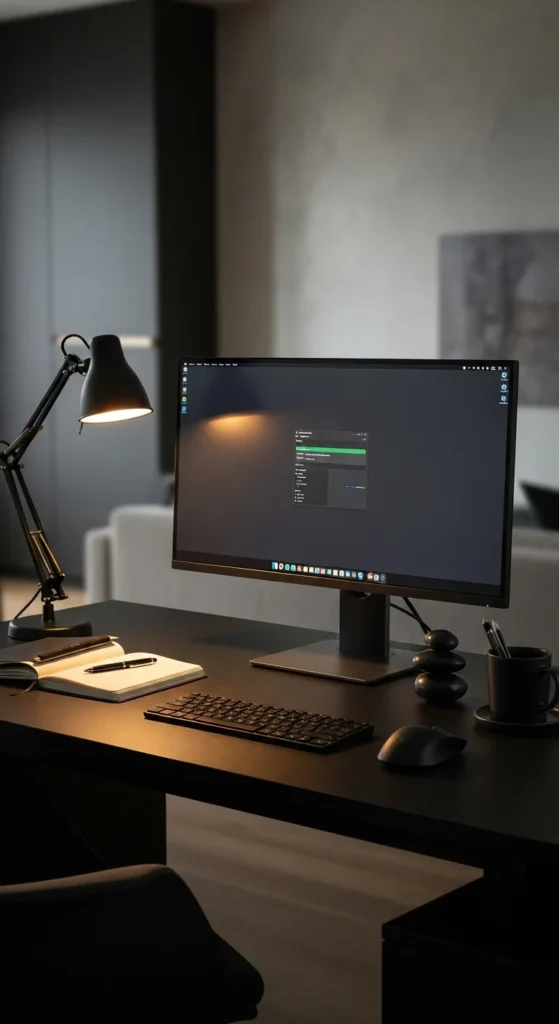
A minimal black desk can create a strong and stylish work area, especially if the rest of the room is light or neutral. The dark surface gives the office a little more depth and contrast, which can make simple accessories stand out beautifully. White keyboards, brass lamps, wood accents, green plants, and cream notebooks all look especially sharp against black. This style works well for modern home offices, creative studios, and corners where you want a more polished, slightly dramatic feel. The trick is to keep the rest of the setup edited. A black desk can look very elegant when the surface stays clean, but it can also feel heavy if it becomes crowded. If you are on a budget, even painting an older desk black can create this effect without buying a new piece. Pair it with warm lighting and one or two natural textures so the setup still feels homey rather than harsh. A black desk makes the workspace feel intentional and grounded. It can give a simple room more style with very little extra decor, especially when the accessories are chosen carefully and the surface stays uncluttered.
22. White Desk With Soft Beige Accents
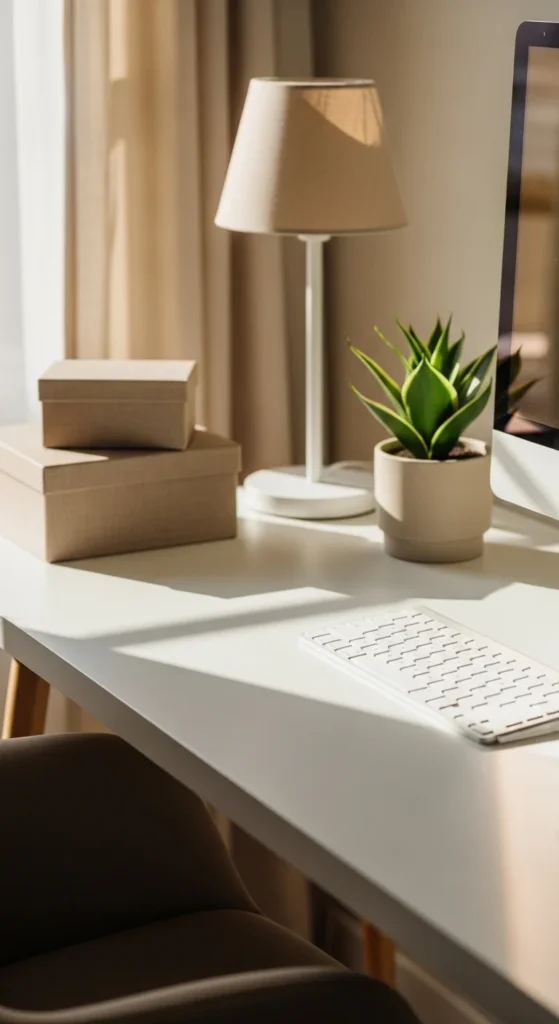
A white desk with soft beige accents creates a calm and airy home office that feels bright without becoming too plain. The white base keeps the room open, while beige, oat, sand, and cream details add warmth so the setup still feels comfortable. This combination works especially well in smaller rooms because it reflects light and helps the office look less crowded. Beige storage boxes, a desk mat, a linen pinboard, a ceramic mug, or a soft lamp shade can all add that warmth without much effort. This style is also very forgiving if you are building the office slowly. Many budget items already come in white or neutral shades, so it is easy to add pieces over time without the desk looking random. A soft beige palette pairs beautifully with plants, wood details, and black tech tools for a little contrast. The overall result feels calm and organized, which suits long work sessions very well. This setup is popular for good reason. It looks polished, works in many kinds of homes, and makes the desk area feel more restful and less visually noisy.
23. Compact Corner Desk With Vertical Styling
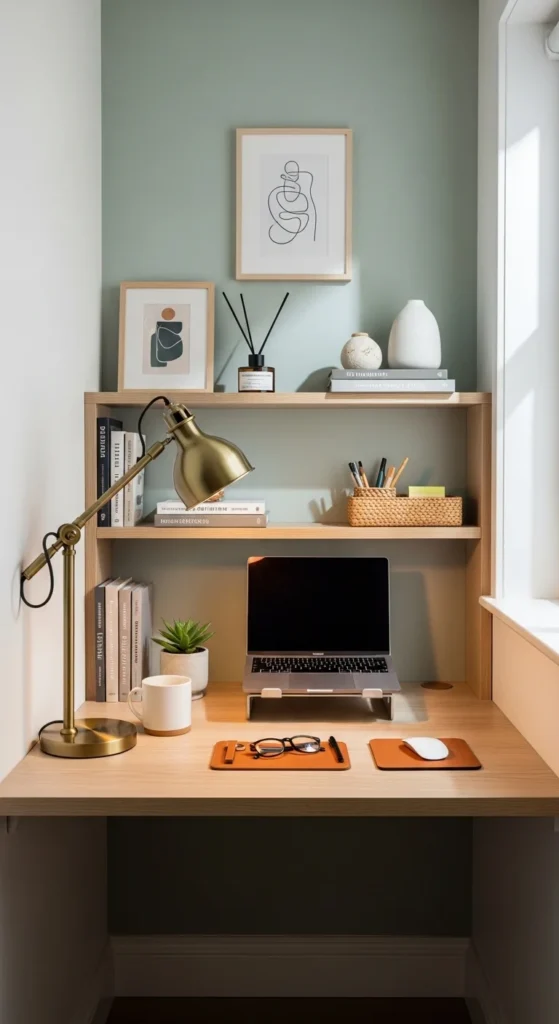
A compact corner desk can become a very stylish home office if you treat the wall space above it as part of the setup. Small desks often struggle because people try to place too much directly on the surface. Vertical styling solves that problem. A shelf, pinboard, pegboard, or wall art above the desk helps carry the design upward, which makes the office feel bigger and more complete. This is especially important in apartments, bedrooms, and shared spaces where the work area must fit into a small footprint. Keep the desk surface focused on essentials like the screen, lamp, notebook, and one tray. Then use the wall for storage and decor that supports the look. A corner desk also benefits from a clear color palette. Light neutrals, wood, black, or muted greens can help everything feel more unified. If you are on a budget, simple brackets, thrifted organizers, and painted shelves can do the job well. A well-styled corner desk proves that a small office can still feel thoughtful and attractive. Sometimes compact spaces look even better when they are designed carefully because every piece has a clear purpose.
24. Desk Setup With a Dedicated Writing Zone
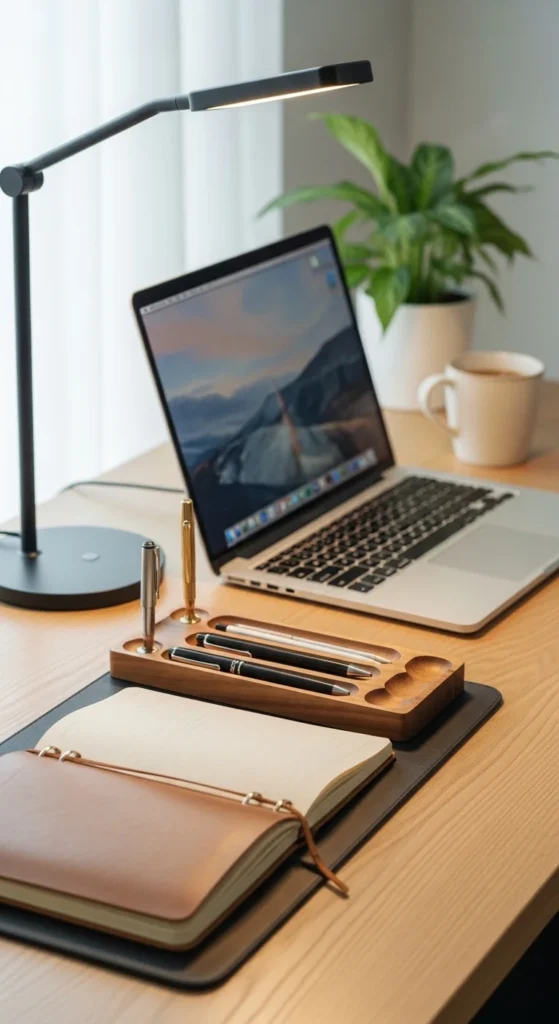
A dedicated writing zone is a helpful desk idea for people who still use notebooks, planners, or handwritten notes alongside digital work. Instead of letting paper float wherever it lands, create one clear section of the desk for writing. This might be a left-side notebook area with a pen tray and coaster, or a central space kept open by moving the keyboard slightly when needed. This setup is useful because it respects the reality of work at home. Many tasks still require quick notes, lists, sketching, or planning on paper, and when the desk has no room for that, everything starts piling up. A writing zone keeps the desk more functional and also more attractive because the surface has a clear rhythm. The screen area, the writing area, and the storage area each have their own place. If you are working with a smaller desk, even using a slim riser or tray can help create more space for writing below or beside the monitor. This small layout choice can make the home office feel more natural to use and much less frustrating throughout the day.
25. One Signature Decor Piece Only
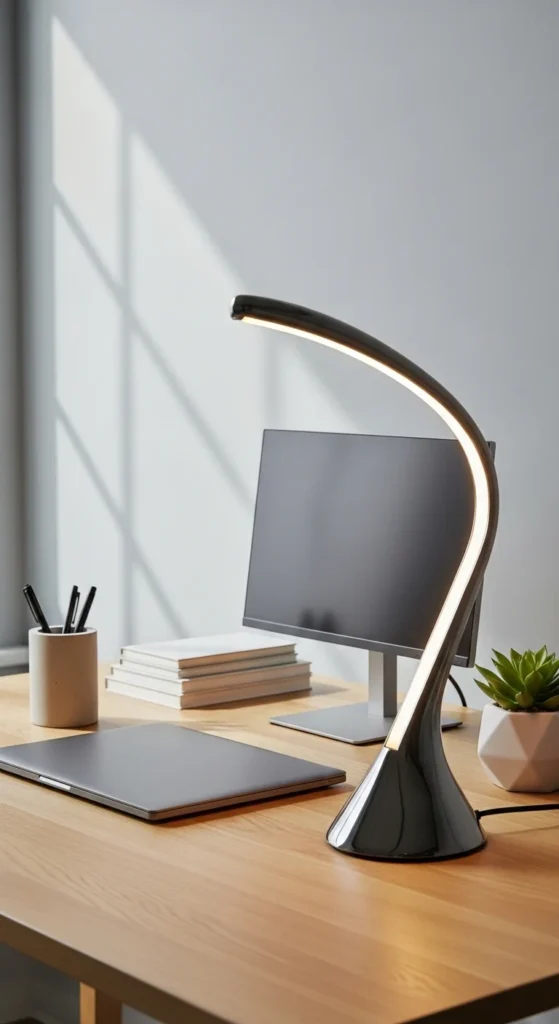
One signature decor piece can give a home office real personality without taking up too much space or turning the desk into a display shelf. This could be a sculptural lamp, a striking plant pot, a special clock, a handmade tray, or one beautiful framed object. The point is to choose one thing that carries character and let it stand out while the rest of the desk stays more simple. This works especially well in stylish work areas because it keeps the setup clean but not bland. Too many small decorative objects often make a desk feel cluttered and less useful. One stronger piece usually has more impact. If you are working on a budget, the signature item does not have to be expensive. A thrifted lamp, repainted vase, handmade ceramic piece, or framed postcard can easily become the focal point. Place it somewhere visible but not in the core work zone. This approach gives the office a sense of taste without sacrificing space. A desk with one strong decorative element often feels more intentional and more stylish than a desk with many tiny extras fighting for attention.
26. Reset Basket for Quick End-of-Day Cleanup
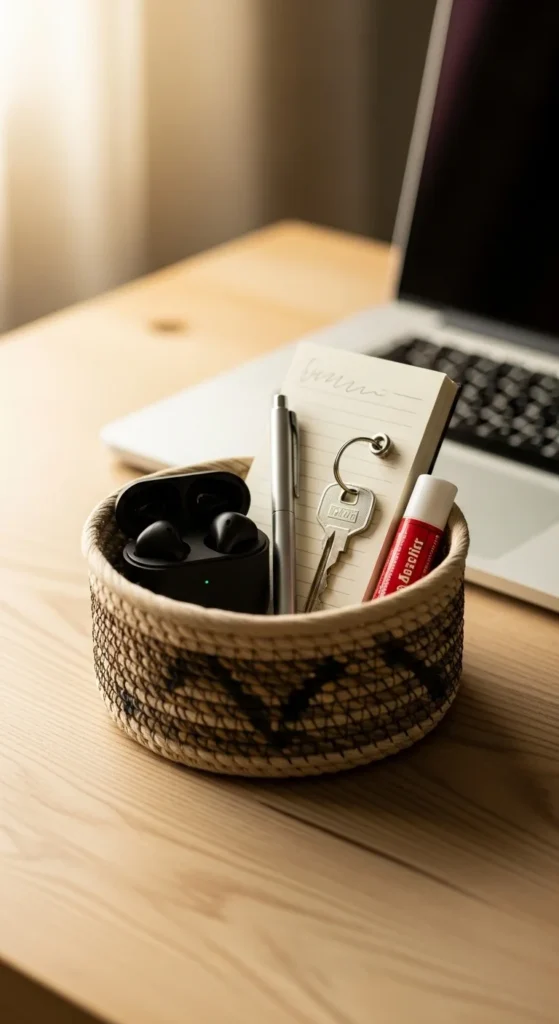
A reset basket is one of the most practical ideas for keeping a home office stylish over time because it makes quick cleanup possible even on busy days. During work, little things gather fast. Receipts, notes, cords, pens, chargers, snacks, and random daily items can build up until the desk no longer feels clean. A small basket, box, or deep tray gives those temporary items one place to go so the surface can be cleared in seconds. This is especially useful in home offices that sit in shared rooms, where visual mess affects the rest of the space too. The basket should be small enough that it does not become permanent clutter storage. Once or twice a week, empty it and return everything where it belongs. A woven basket, neutral box, or simple wooden container usually looks best. This idea supports style because it respects real life. Not every day ends with perfect organization, but one basket can stop the desk from falling apart visually. A fast reset system helps the office return to calm much more easily, which keeps the whole setup more enjoyable and more usable.
27. Five-Minute Night Reset Routine
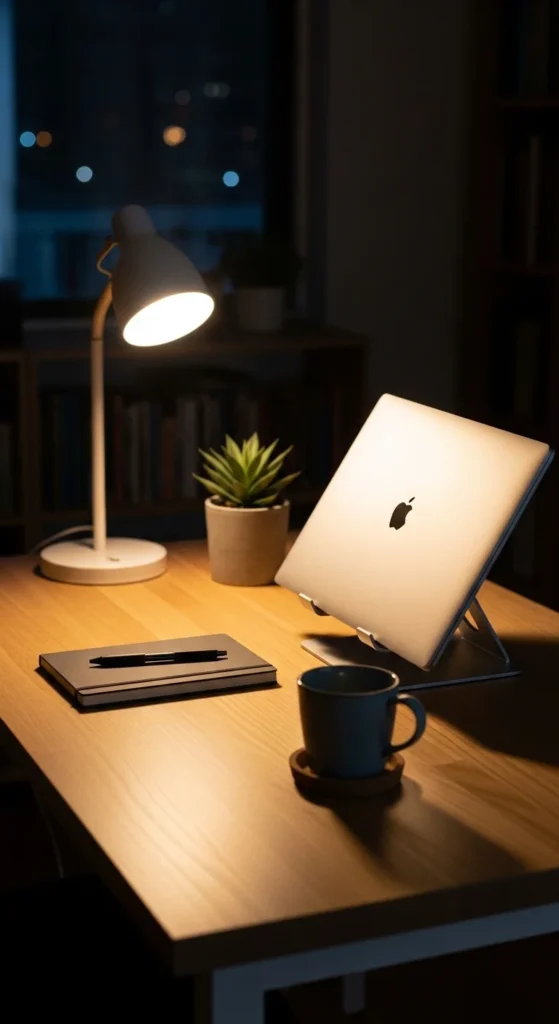
A five-minute night reset is one of the best home office desk ideas because it keeps all the other setup choices working. Even the most stylish desk will stop feeling good if it is left cluttered day after day. A short reset at night can make the office feel clean, calm, and ready before the next workday even begins. Put pens back in their cup, stack notebooks, clear mugs, plug in devices, wipe the surface, and return loose items to trays or drawers. That small habit makes mornings feel easier because the desk already feels under control. It also helps reveal which parts of the setup are not working. If cables keep ending up in the wrong spot or papers pile up every night, that shows where the desk may need a better system. This routine costs nothing, but it supports almost every part of an aesthetic office. A beautiful desk looks best when it is actually maintained, and a short nightly reset helps that happen without much effort. It is the habit that turns a good-looking workspace into one that keeps working well every day.
Conclusion
A stylish work area does not come only from expensive furniture or perfectly matching accessories. It usually comes from a desk that feels clear, useful, comfortable, and thoughtfully arranged around the way you actually work. A warm lamp, edited shelf, hidden cable plan, good chair, desk mat, plant cluster, and five-minute reset routine can do far more for a home office than filling it with random decor. Start with one idea that fixes a real problem on your desk, then build from there. When the workspace functions better, it usually looks better too, and that is what makes a home office feel truly finished.