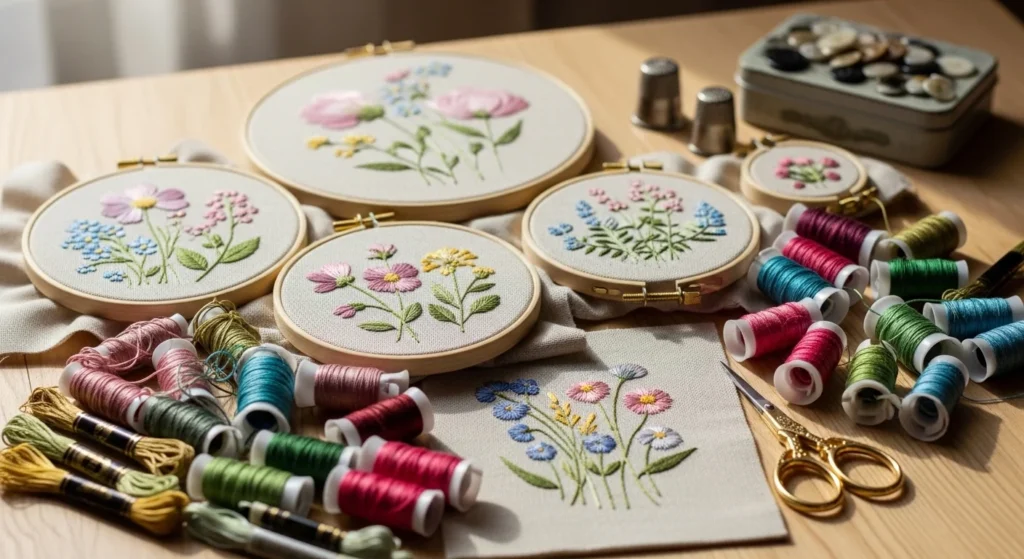
Elegant floral embroidery is a beautiful way to bring handmade charm into a home without needing a huge supply haul or advanced equipment. Current embroidery trends are leaning toward oversized blooms, minimal line florals, gradient thread shading, raised 3D texture, and more thoughtful material choices, which makes floral decor feel both timeless and current. These ideas work especially well for pillows, table linens, wall hoops, framed art, and small gift pieces because flowers naturally suit soft decorative projects.
1. Statement Bloom Panels
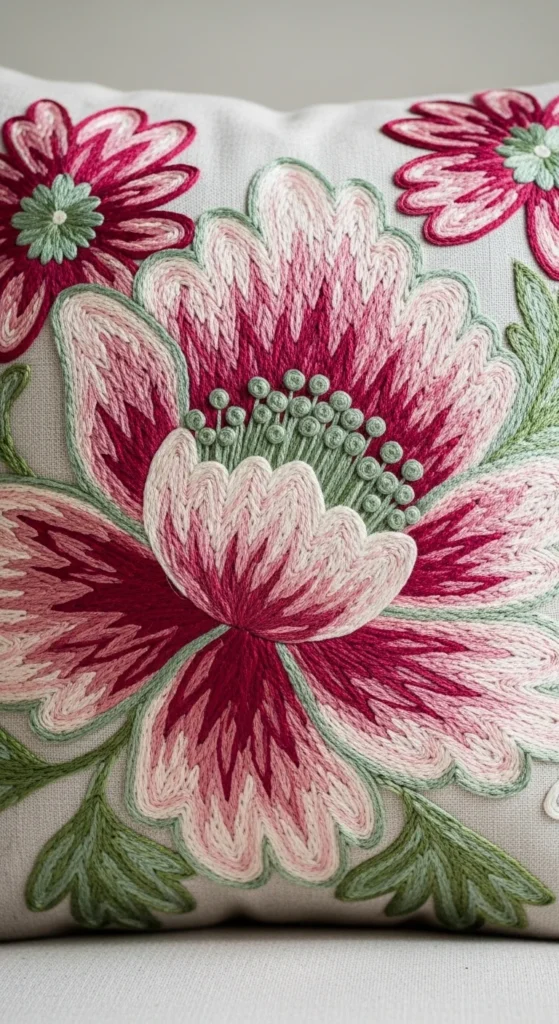
An oversized bloom is one of the easiest ways to make floral embroidery feel dramatic without stitching dozens of tiny details. One large rose, peony, or poppy can fill most of a pillow front or hoop and still look balanced. This style works well because the size becomes the decoration. You do not need a crowded layout. Start with one main flower and just a few leaves so the design has room to breathe. If you are working on a budget, use three shades of the same color family instead of buying a full rainbow of thread. That still gives the flower depth while keeping the supply list small. A large bloom looks especially pretty on neutral linen, cotton canvas, or an old pillow cover you want to update. If the petal sections feel too wide, divide them with gentle stitch direction changes rather than adding new colors. This keeps the flower interesting without making it harder. A statement floral panel feels polished, soft, and very decorative, which makes it a strong choice for living room cushions, bedroom accents, or framed fabric art.
2. Subtle Stem Sketches
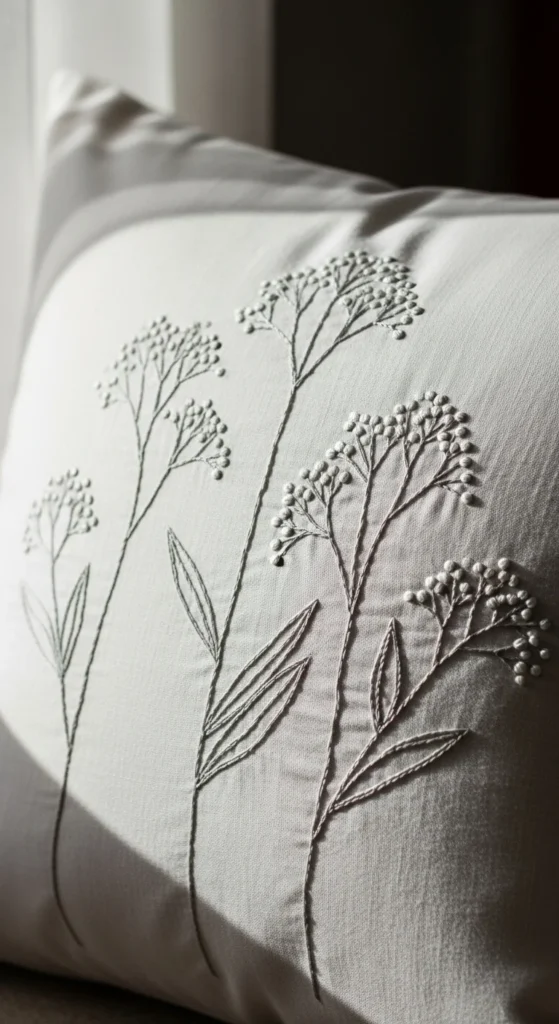
Minimal line florals are perfect when you want embroidered decor that feels calm and refined. A single curved stem with one bloom and two leaves can look beautiful on a napkin corner, a small wall hoop, or a table runner edge. This style is especially good for beginners because it relies on clean outlines and open space instead of dense filling. Keep the flower simple. One daisy outline, one tulip shape, or one abstract blossom is enough. If you want to save money, use one thread color only. Soft cream, olive, dusty pink, or charcoal can all look elegant depending on the fabric. A good tip is to trace the design lightly first so the stem flow feels natural before you start stitching. This type of floral embroidery also works well in sets. Three small matching line flowers framed together can become a lovely wall arrangement without taking much time. The beauty of this style comes from restraint. Leaving fabric visible is part of the design. That makes subtle stem sketches a great option for modern decor that still feels handmade and warm.
3. Fading Florals
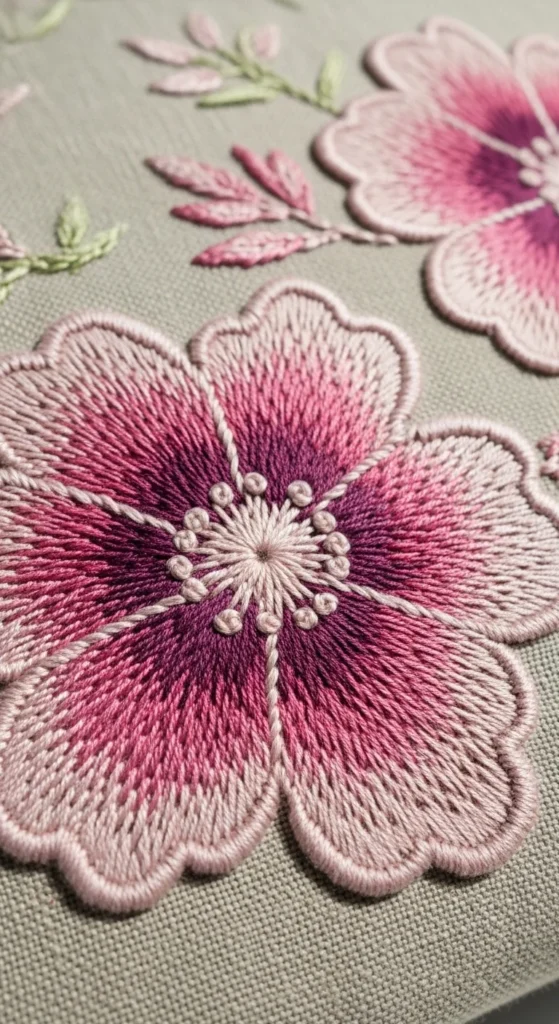
Gradient floral embroidery gives petals a soft shaded look that feels richer than flat color. This idea works especially well for roses, peonies, cosmos, and soft wildflowers because the color can move from dark at the center to lighter near the edges. You do not need many shades to make this work. Even three thread tones in one family can create a lovely ombre effect. A smart budget trick is to buy only a dark, medium, and light version of the same color instead of a full palette. Start with one flower head before turning the design into a bouquet. That keeps the stitching manageable and lets you focus on how the shades meet. Try using shorter stitches near the center and slightly longer ones as the color opens outward. This can make the petal transitions feel softer. Gradient florals are beautiful on cushion corners, framed hoops, and decorative linen panels because the shading catches the eye right away. The final result feels delicate and elevated, but the process stays realistic for a home project if you keep the first flower small and let the color do the work.
4. Plush Posy Pillows
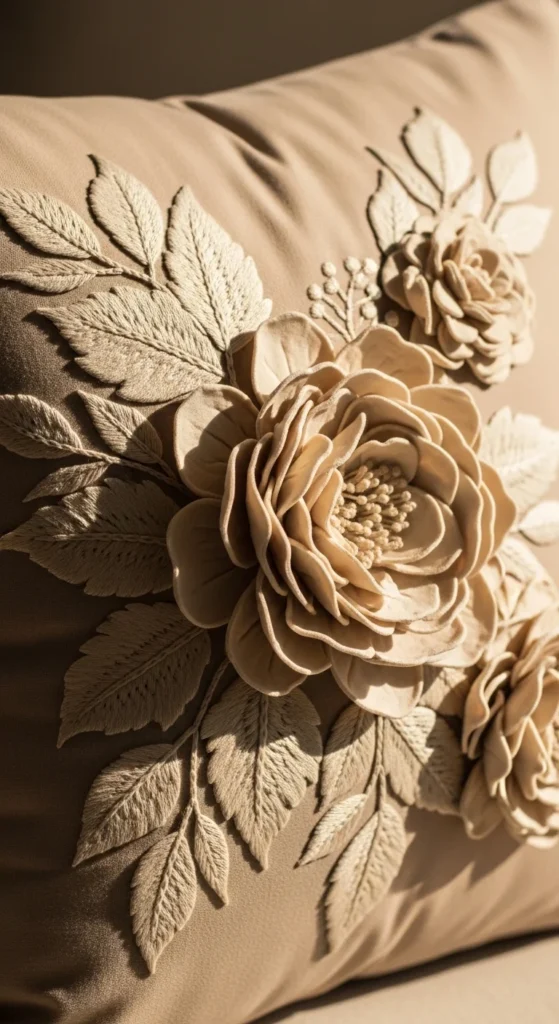
Raised floral embroidery can make a plain pillow feel much more special. Instead of keeping every petal flat, you can build one or two blossoms with slightly padded or layered stitching so they lift off the fabric. This gives the pillow a tactile look without needing to turn the whole surface into a heavy design. A good starting point is one central flower or one corner cluster rather than a full raised bouquet. That keeps the bulk under control and makes stitching easier. If you want to keep costs down, use regular embroidery floss and create lift with layered stitches instead of buying specialty materials. Raised petals look especially nice on velvet-look cushions, linen covers, or neutral cotton where the shape can stand out clearly. Pair the raised flower with flatter stitched leaves so the design stays balanced. This kind of embroidery is lovely for a reading chair pillow, guest room accent, or handmade gift cushion. It feels elegant because the texture is visible even from a distance. One plush posy can change the entire look of a simple pillow front.
5. Herbarium Hanging
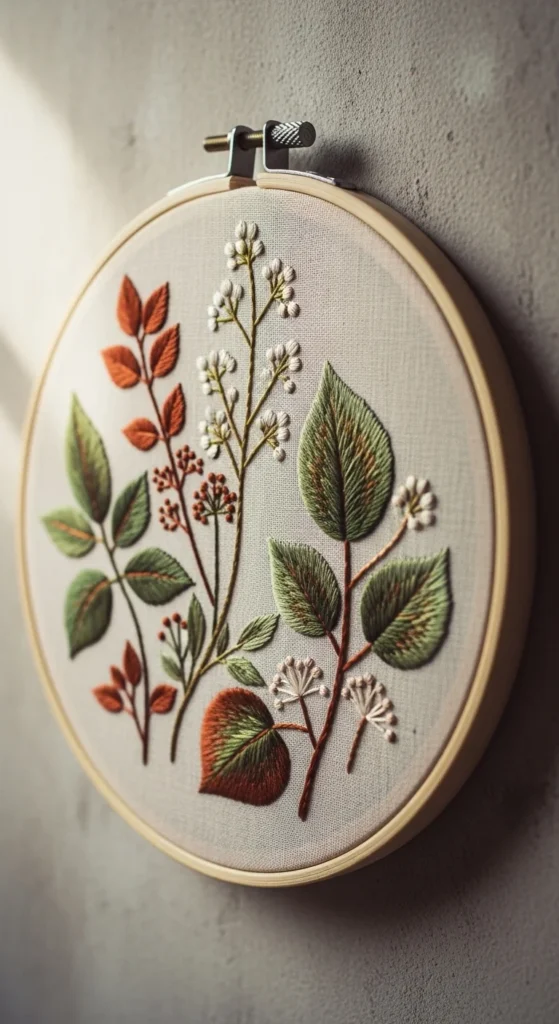
Botanical embroidery inspired by pressed plant studies looks wonderful as wall decor. Instead of a lush bouquet, this idea focuses on one stem, one herb sprig, or a few carefully stitched leaves with a more realistic layout. Think of it like a stitched herbarium page. This style works especially well in hoops or narrow framed panels because the design feels organized and airy. Choose one botanical subject, such as lavender, eucalyptus, fern, or chamomile, and let the stem shape stay slender. If you are working on a budget, use natural-toned fabric and only a few thread colors so the project feels clean rather than overloaded. A nice tip is to add a tiny stitched label line or monogram beneath the stem if you want the piece to feel more curated. This kind of embroidery looks especially pretty in kitchens, hallways, and bedrooms where soft botanical decor suits the room. It brings a classic handmade feel without becoming fussy. If you enjoy floral embroidery but want something a little more restrained and grown-up, a herbarium-style hanging is a very elegant direction to take.
6. Spotlight Stems
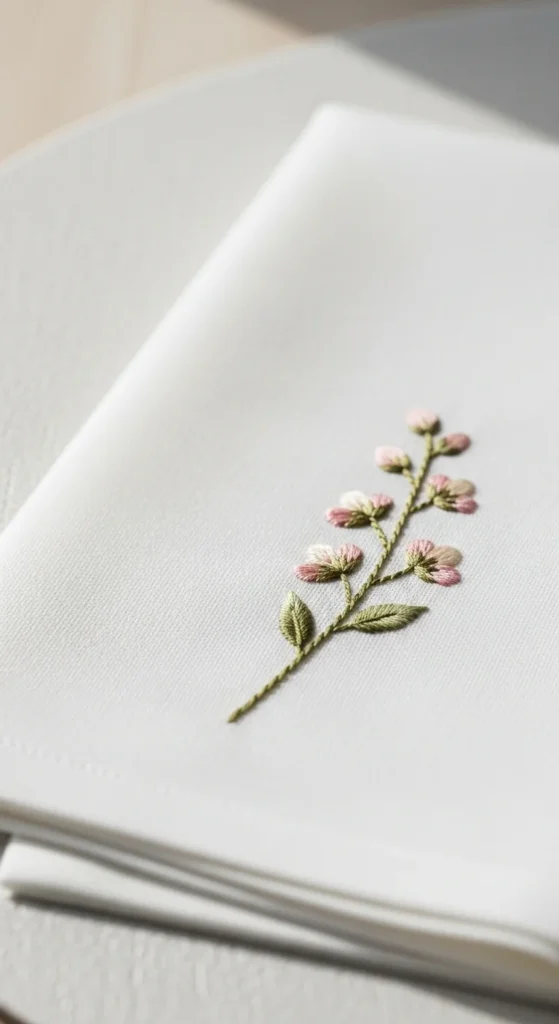
A placed single flower can look more elegant than a crowded bouquet. That is the beauty of spotlight stem embroidery. Instead of filling the full fabric, stitch one flower exactly where it will be noticed most, such as a napkin corner, pillow edge, pouch flap, or table runner end. This makes the placement feel intentional and polished. A single stem with two leaves and a bloom is often enough. You can choose a rosebud, tulip, daisy, poppy, or any soft botanical shape that suits your decor. A low-cost benefit of this style is that it uses very little thread and works well on fabric scraps or older linens you want to update. If you are new to floral embroidery, this is an ideal way to practice because the scale stays small and the pressure stays low. You are not committing to a giant full-piece design. Spotlight stems are especially useful for gifts because they make ordinary household items look personalized and handmade. This pattern idea proves that one well-placed flower can do more than a large design placed without thought.
7. Field Bouquet Frames
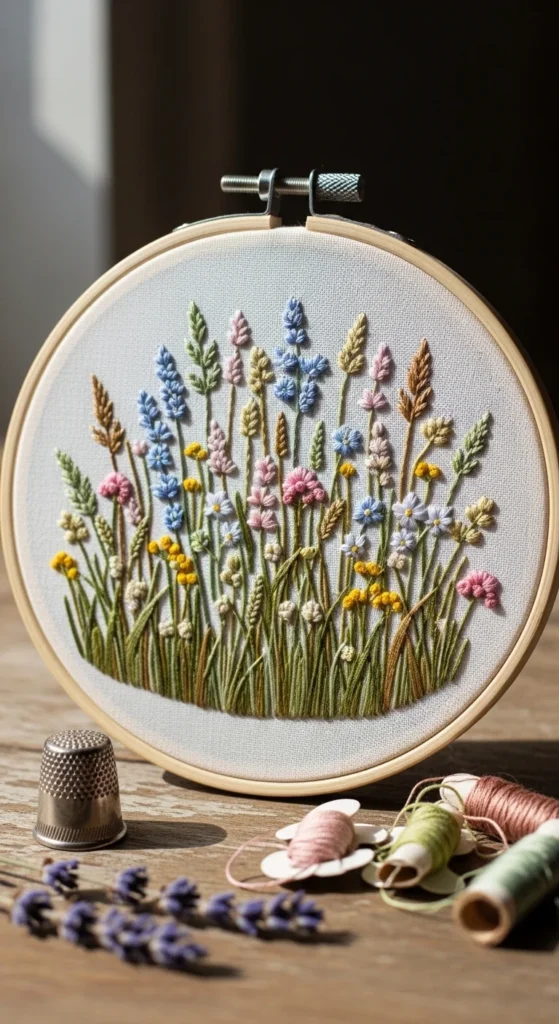
Wildflower meadow embroidery feels soft, airy, and very charming in home decor. Instead of one formal flower, this pattern uses many smaller blooms, grass sprigs, tiny buds, and leaf stems grouped in a loose field-like arrangement. It works especially well in hoops because the rounded frame naturally suits a scattered bouquet. If you want to keep it affordable, use a few repeated flower shapes rather than designing ten different blooms. Tiny daisies, knots for buds, and slim grass lines can create a convincing meadow effect with just a handful of stitches. This style looks beautiful in pastel palettes, but it also works in earthy greens, faded golds, and muted pinks for a more rustic finish. A useful tip is to vary the flower height so the arrangement feels natural. Do not line everything up evenly. Wildflower bouquets are lovely for nursery walls, entryway decor, and seasonal spring displays. They feel light and joyful without looking formal. If you like floral embroidery that feels organic and relaxed rather than symmetrical, this is one of the prettiest ways to fill a hoop or small framed panel.
8. Crystal Bloom Coasters
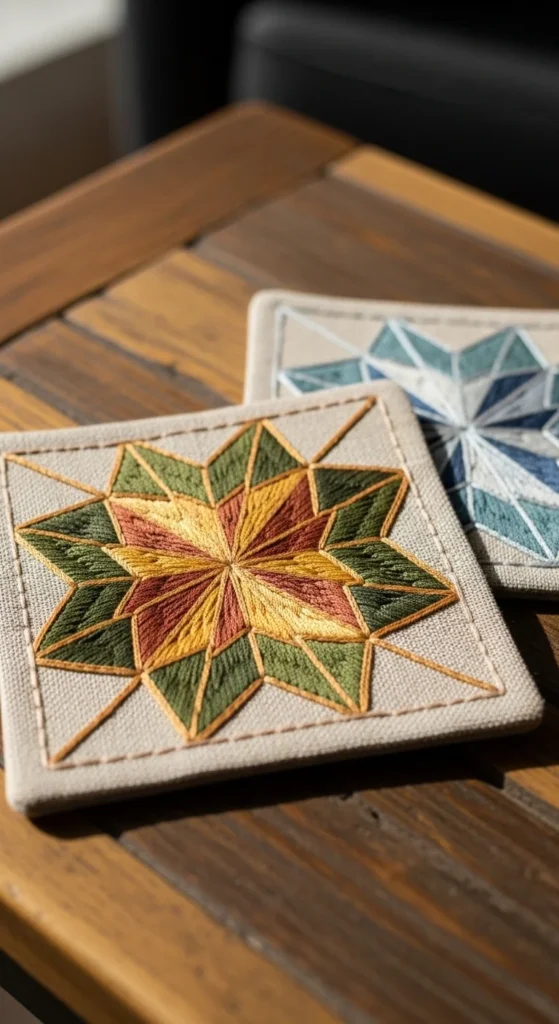
Geometric floral embroidery is a great option when you want flower-inspired decor that feels modern. Instead of soft rounded petals, this style uses cleaner angles, repeated shapes, and structured lines to suggest blossoms in a more graphic way. It works especially well on small decor items like fabric coasters because the compact format suits crisp patterns. Try one flower built from triangles, diamonds, or faceted petal sections in just two or three colors. This keeps the design clear and affordable. You do not need a huge palette to make the shape look striking. A nice way to keep costs low is to stitch onto sturdy scrap fabric backed with felt or old denim, then cut the coaster shape afterward. These floral coasters look elegant on coffee tables, side tables, or gifting trays because they feel decorative without being overly sweet. If your home decor leans a little more minimal or contemporary, this pattern style fits in beautifully. It still counts as floral embroidery, but the mood is sharper, cleaner, and more design-led than traditional roses or trailing vines.
9. Quilted Queen Anne’s Lace
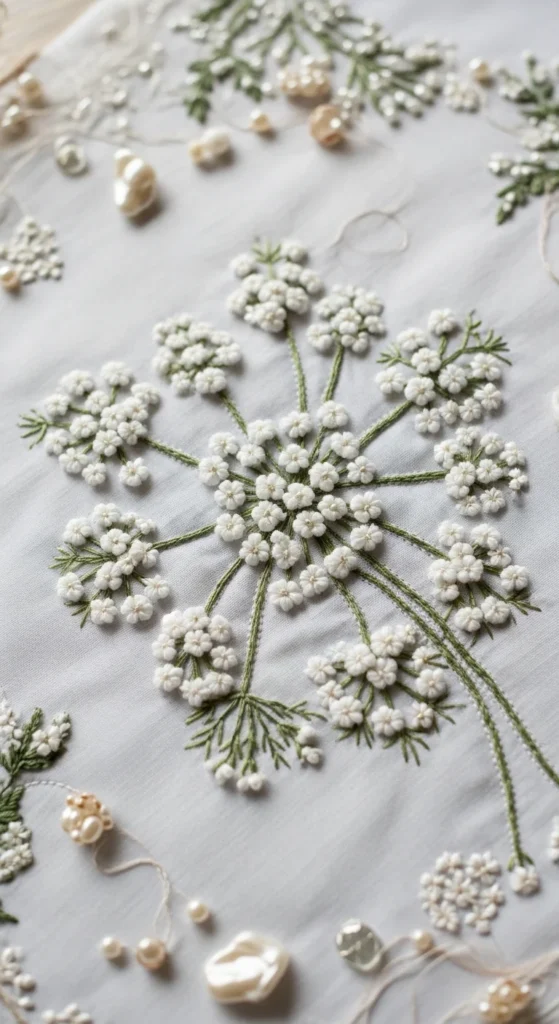
Padded floral embroidery can make delicate flower heads look soft and sculptural. A Queen Anne’s lace-inspired pattern works especially well because the design already has a clustered shape that looks beautiful when given gentle lift. Instead of padding every section, focus on one or two main bloom heads and let the stems and leaves stay flatter. This keeps the piece elegant rather than bulky. A small framed hoop or a decorative fabric panel is a good place to try this style first. If you want to keep costs down, use small thread scraps or thin fabric bits under the raised sections rather than buying specialty padding materials. The goal is not extreme height. Even a subtle lift can make the floral pattern look richer. Soft neutrals, pale sage, ivory, or faded blue threads work beautifully for this style because they let the texture show without shouting. This type of embroidery feels especially refined on bedroom decor, nursery walls, and quiet seasonal displays. It is a lovely option if you want something romantic and tactile but still very soft in mood.
10. Gilded Garden Tablecloth
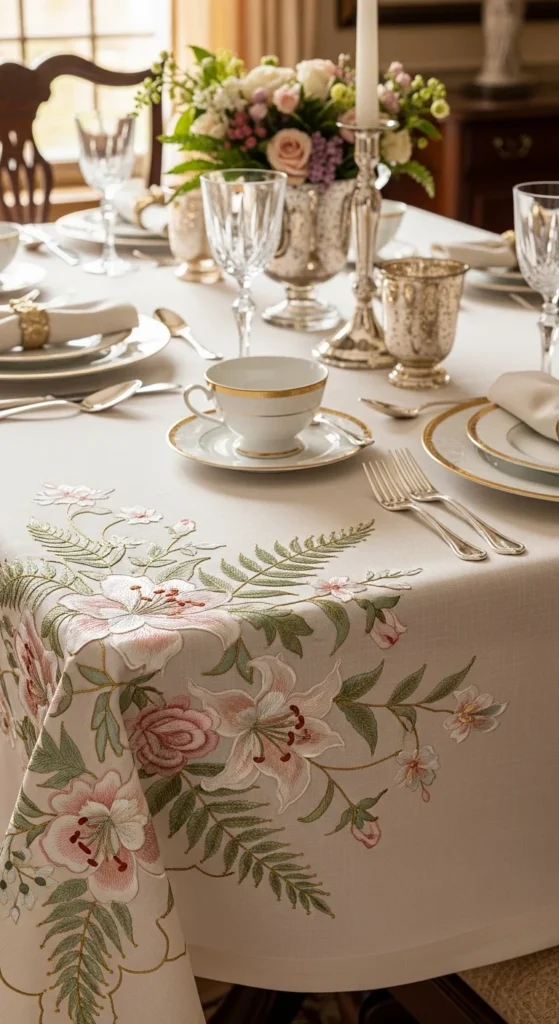
Metallic accents can make floral embroidery feel much more refined without turning the whole piece flashy. A tablecloth corner, runner border, or placemat set stitched with flowers in ordinary floss can be lifted beautifully by a touch of gold or champagne thread on stamens, outlines, or tiny leaf veins. This works best when the metallic thread stays minimal. A little shine goes a long way. If you are keeping the project budget-friendly, buy only one spool of metallic thread and mix it with thread shades you already have. This kind of embroidery is especially pretty for dining decor because candlelight or daylight catches the metallic details softly. Start with one corner motif before deciding whether the whole table linen needs repeating flowers. That way you do not overcommit. Soft florals with gilded centers can make even a plain runner feel festive and special. This is a very good pattern direction for holiday hosting, handmade dinner gifts, or a linen upgrade that feels graceful rather than busy. The floral base stays classic, and the metallic thread adds quiet richness.
11. Dupatta Daisy Chains
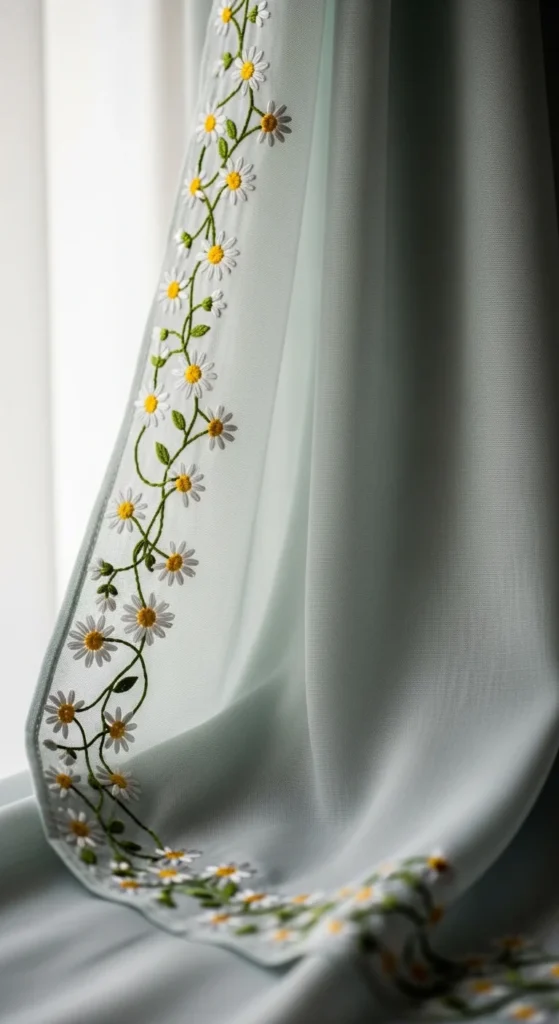
Floral border embroidery is a graceful way to decorate long fabric edges. A daisy chain pattern works especially well because the repeated flower shape creates rhythm without feeling too dense. This kind of border can inspire decor pieces too, not just garments. Think of pillow flanges, curtain edges, table runners, or fabric drapes displayed over furniture. Small repeated daisies with linked stems look fresh, soft, and very pretty when stitched along a clean edge. If you want a budget-friendly setup, choose one flower shape and two thread colors only, such as white and green or blush and sage. Repetition is what makes the design elegant, not a huge color range. A useful tip is to mark your spacing before you start so the chain stays even along the fabric. This style looks especially nice on light cotton, voile, and soft linen where the flowers can feel airy. Daisy chain borders give decor a festive but not overworked finish. They are ideal when you want embroidery that frames fabric gently and keeps the floral effect consistent from one end to the other.
12. Silky Stemwork
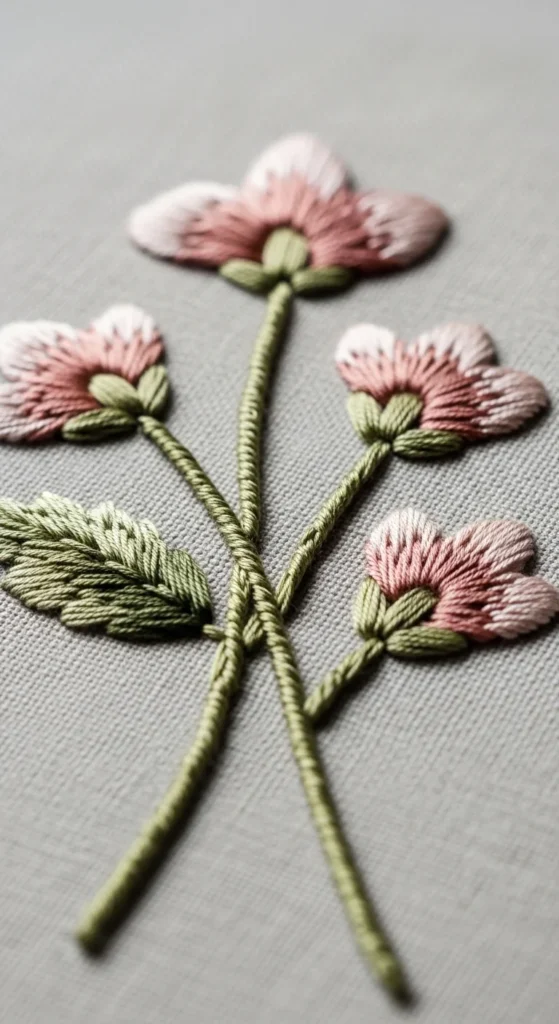
Satin stitch petals are a staple for floral embroidery because they create smooth, polished flower shapes that catch the light nicely. A simple satin-stitched bloom with one clean stem and two leaves can already look finished enough for decor. This makes silky stemwork a strong option for people who want classic embroidery that feels elegant but not overly complex. Start with a petal shape that is not too large so the satin stitching stays easier to control. A small tulip, daisy, or abstract blossom is a good first choice. If you are trying to save thread, keep the petals limited and let the fabric background do some of the visual work. Satin stitch looks especially good on hoops, napkin corners, and decorative pocket-style fabric panels because the smooth fill feels refined up close. A helpful tip is to keep your stitch direction consistent inside each petal so the finish stays neat. This type of floral embroidery may look traditional, but it continues to feel relevant because the result is clean, graceful, and beautifully suited to pretty handmade decor.
13. Dotted Daisy Eyes
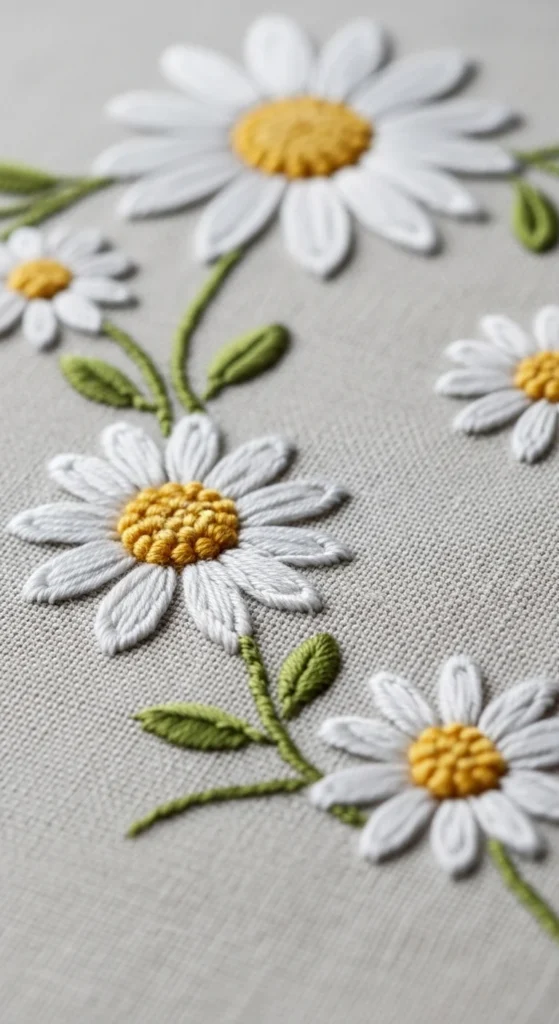
French knots are one of the easiest ways to add charm and texture to floral embroidery. In daisy patterns, knot centers can make the flowers look more tactile and lively without adding much complexity. This is why dotted daisy designs work so well for pretty decor. A few white or cream petals around a soft yellow knot center can instantly brighten a hoop, tea towel, or cushion corner. If you are a beginner, this is a very manageable floral style because the petals can stay simple while the knot center gives the design its depth. A good low-cost idea is to make a small cluster of daisies using only two or three thread colors. That keeps the project cohesive and uses very little floss. Daisies also combine beautifully with little leaves, tiny buds, and curved stems if you want to build out the design later. This pattern style feels cheerful and elegant at the same time, which makes it useful in kitchens, breakfast nooks, bedrooms, and gift projects. It is simple, textured, and one of the easiest floral ideas to make look polished.
14. Wandering Wisteria
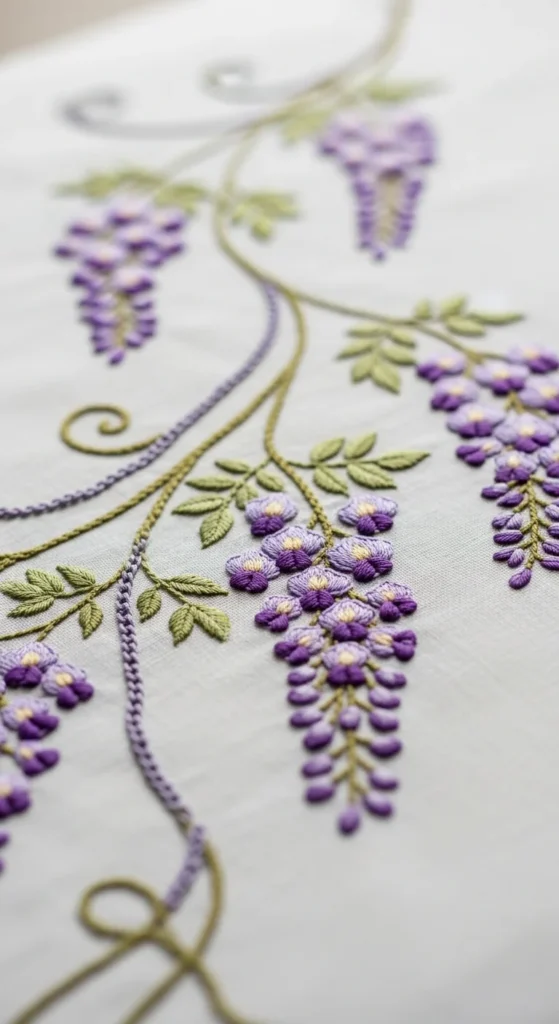
Chain stitch vines are perfect for floral designs that need movement. A wisteria-inspired pattern uses flowing stems and hanging blossom clusters to create a very graceful decorative effect. This looks especially pretty on runners, curtain edges, long wall banners, and vertically framed hoops because the shape naturally wants to travel downward or across fabric. Start with one curved vine and let small blossoms hang from it in groups. Keep the color palette soft if you want the design to feel elegant. Lavender, dusty mauve, sage, and cream work beautifully here. If you are keeping the cost low, use a single blossom color and build the interest through spacing instead of many shades. Chain stitch is especially nice for stems because it gives the vine a little body without becoming thick. This kind of embroidery feels romantic and decorative without requiring extremely dense filling. It is a wonderful pattern choice for people who like trailing florals more than centered bouquets. Wandering wisteria can make even a plain piece of fabric feel gentle, flowing, and beautifully handmade.
15. Floating Fern Fronds
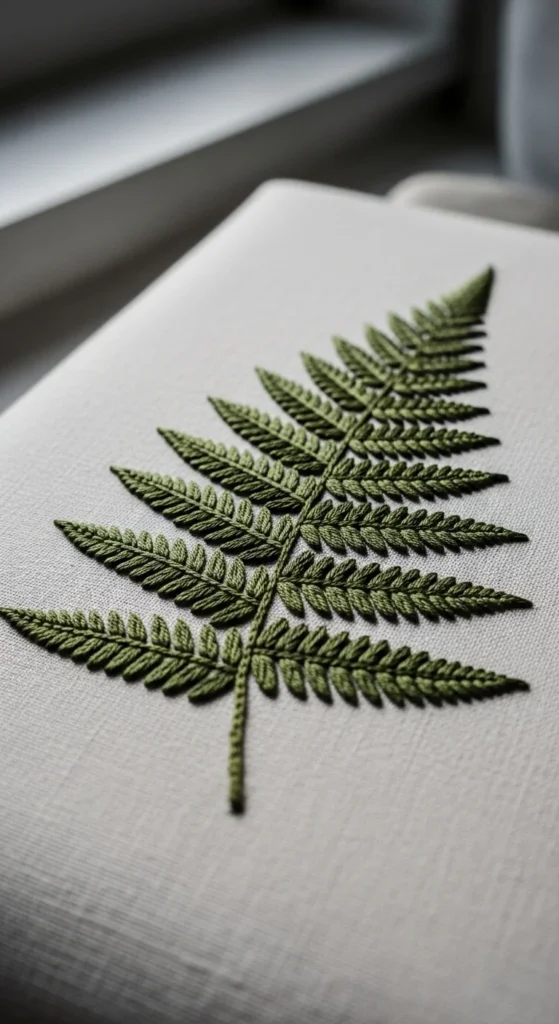
Detached raised leaf work can make botanical embroidery feel airy and sculptural. Fern fronds are especially beautiful for this because their slim leaflets already suggest movement and lightness. A floating fern pattern works well in hoops, framed botanical panels, and soft wall decor because the leaves seem to lift slightly away from the fabric. If you want to try this style without committing to a highly technical project, begin with one or two raised fronds mixed into a mostly flat botanical design. That gives the piece texture without making it too complicated. A budget-friendly approach is to reserve the raised work only for the focal leaves and keep the rest stitched in ordinary floss and simple outline techniques. Soft green, sage, eucalyptus, and muted olive shades work particularly well. This style feels very elegant because it is subtle. The beauty comes from the lifted edges and delicate movement rather than heavy color. Floating fern embroidery is perfect when you want floral decor that leans botanical, calm, and quietly detailed instead of lush and crowded.
16. Gown Garden Wall
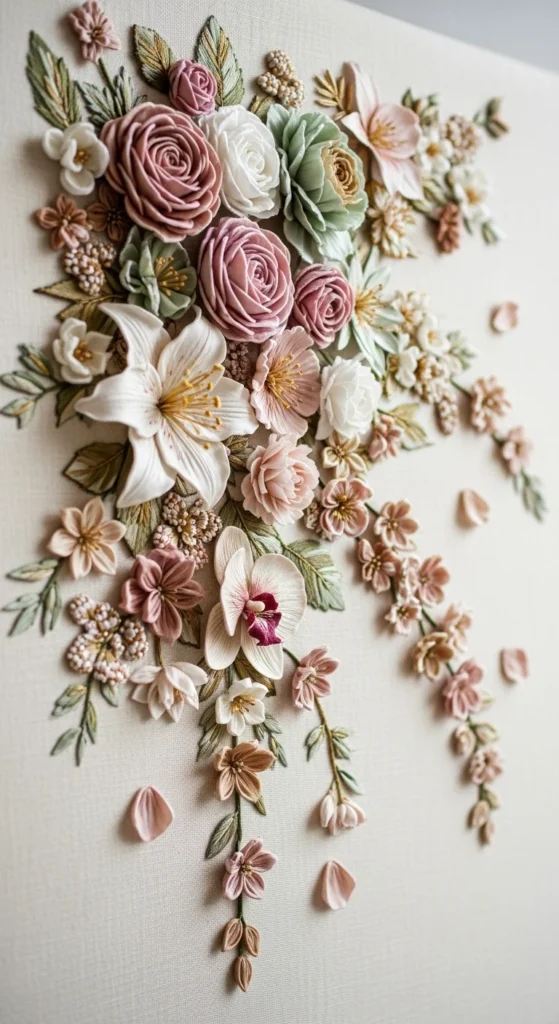
Placed floral motifs, inspired by couture embellishment layouts, can make wall decor feel instantly more sophisticated. Instead of one centered bouquet or full all-over pattern, place a few flowers strategically across the fabric so they look as if they are drifting or blooming naturally. One large bloom near the corner, two smaller flowers lower down, and a few leaves between them can feel much more elegant than a packed design. This is a wonderful style for wall hangings because negative space becomes part of the composition. It is also very budget-friendly since you do not need many motifs to get a strong result. Use larger petals for the main bloom and simpler shapes for the supporting flowers. If you want the piece to feel cohesive, repeat one leaf shape across all sections. Placed florals work well on rectangular fabric hangings, tall hoops, and decorative linen panels. This idea is especially appealing if you like floral embroidery but want it to feel refined and artful rather than sweet. Careful placement can make a modest amount of stitching look very polished.
17. Pastel Poppy Plaques
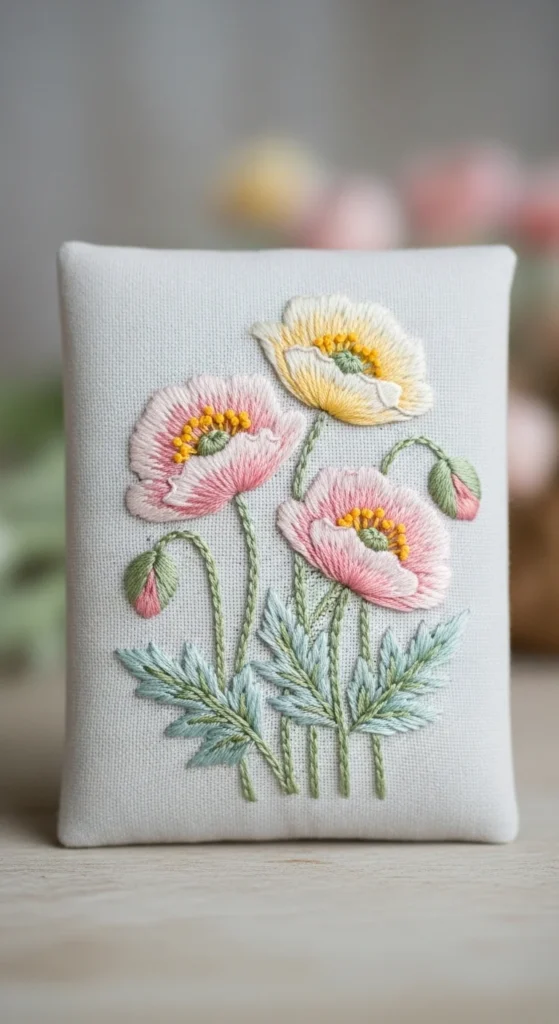
Pastel floral embroidery feels especially lovely in spring decor, and poppies are a strong choice because their shape is simple but expressive. A pastel poppy plaque can be stitched onto a small linen square, framed fabric board, or hanging hoop for a seasonal handmade accent. Soft peach, blush, butter yellow, faded coral, and powder blue all work beautifully in floral decor because they feel gentle without disappearing completely. If you want to keep the project affordable, choose one bloom shape and let color changes create variety rather than designing multiple kinds of flowers. Poppy petals can be stitched fairly simply, which makes this pattern beginner-friendly too. Add one or two stems and a couple of leaves, then let the background stay open. The result feels light and decorative rather than busy. Small plaques like this are ideal for shelf styling, spring mantel displays, or bedroom wall groupings. They also make sweet handmade gifts because the floral pattern feels cheerful and elegant without needing a very large or time-consuming composition.
18. Pet-Me Petals Runner
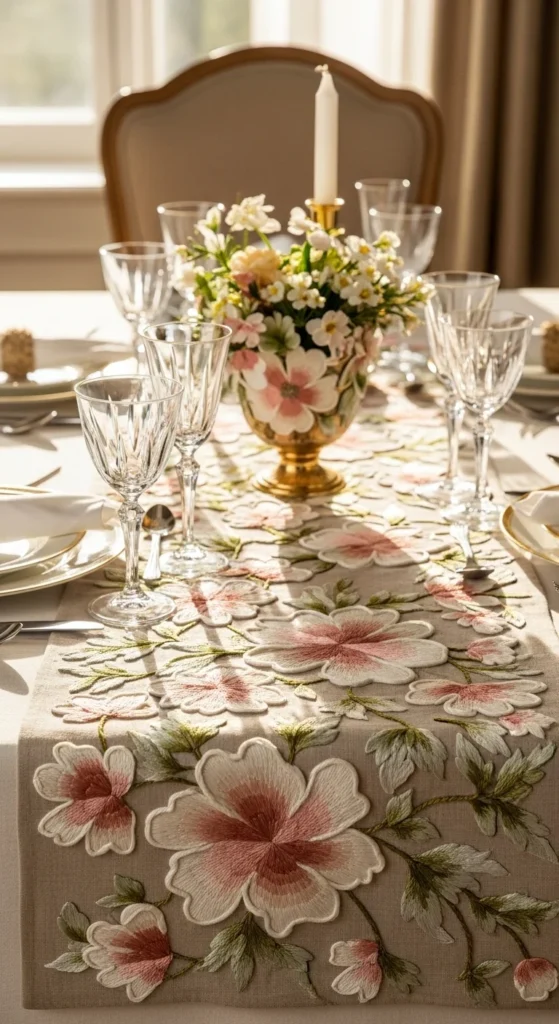
Some embroidered decor feels special because it invites touch as much as admiration. A floral runner with softly raised petals, knot clusters, and layered leaves can add this kind of tactile richness to a dining table, dresser, or entry surface. The idea is not to make every flower bulky. Instead, choose a few petals, centers, or leaves to give extra texture so the whole design feels more alive. This works beautifully on runners because the long format lets small textured clusters repeat along the length. If you want to keep the cost down, build tactile detail with ordinary stitches like French knots, layered satin sections, and slightly padded leaves rather than using specialty materials everywhere. Soft floral textures look especially elegant in neutral palettes such as cream, sage, pale blush, and warm taupe. A runner like this feels decorative but still practical because the embroidery can be placed mainly near the ends or edges. It is a lovely option if you want floral decor that feels handmade in a more sensory, intimate way and adds gentle richness to a room without shouting for attention.
19. All-White Anemone
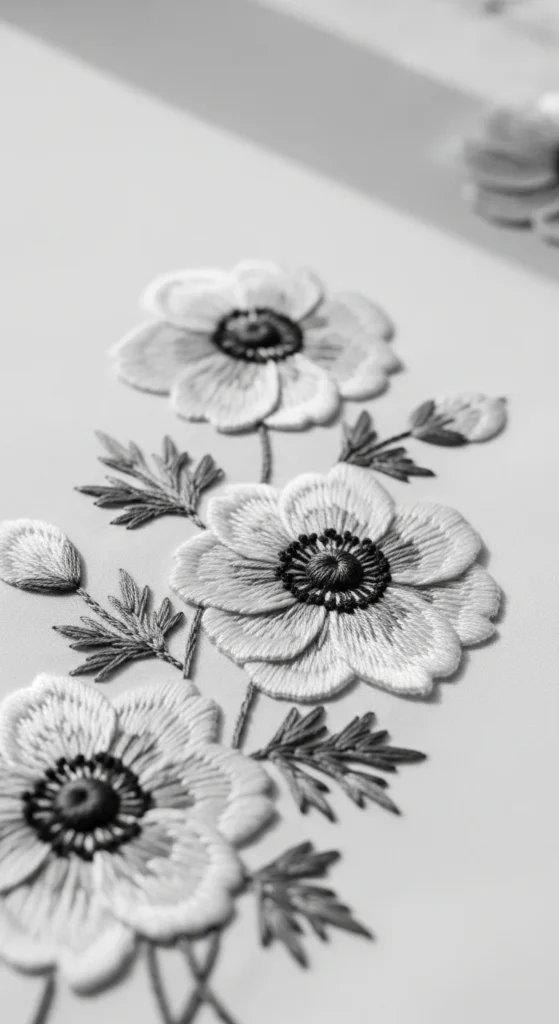
Monochromatic floral embroidery can look incredibly elegant because the detail comes from texture and shadow rather than color contrast. An all-white or ivory floral design on matching or slightly off-white fabric feels especially refined in bedrooms, formal dining decor, and soft minimalist interiors. Anemone-style blooms work beautifully here because their petal shape gives the stitching enough definition even when the thread color stays tonal. Use satin stitch, French knots, and a few outline details to let the flower show through the fabric in layers. If you want to keep it affordable, this is a great style because one thread family can cover the whole project. You do not need a large collection of floss. Monochrome embroidery looks best when the fabric has a little texture, such as linen or cotton slub, because the surface helps the tonal work stand out. This kind of floral pattern is perfect for pillow shams, guest towels, hoop art, and decorative panels. It feels soft, clean, and quietly luxurious. If you prefer decor that whispers rather than shouts, an all-white floral embroidery piece is a beautiful choice.
20. Fiesta Flower Fans
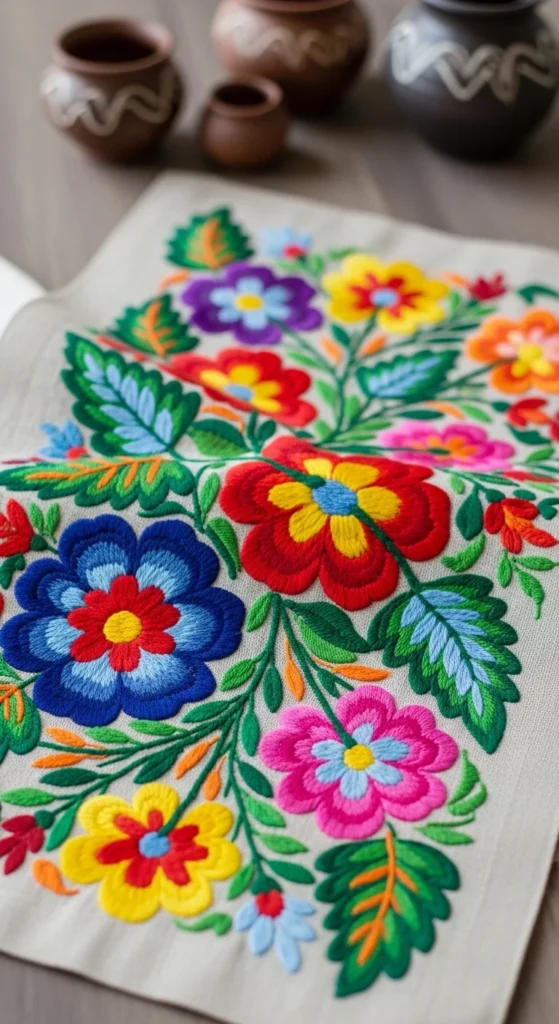
Bright folk-inspired floral embroidery brings energy to decor in a way softer florals do not. Bold petals, strong outlines, and decorative leaf shapes can create a joyful pattern that still feels elegant when the layout is controlled. A floral fan motif or repeated folk bloom cluster is especially pretty on wall hoops, table mats, and cushion fronts. The key is to let the colors be lively while keeping the composition clear. Try one repeated floral shape with a strong center and balanced leaves rather than many competing motifs. If you are working on a budget, this style is perfect for using leftover bright floss from older projects. Mixed pinks, oranges, blues, greens, and yellows can all work together here. Folk-style florals often look better when they feel handmade and slightly imperfect, so you do not have to chase a highly polished finish. This makes them especially fun for personal decor. A well-placed bright floral fan can completely change the mood of a neutral room. It adds warmth, color, and a handcrafted feel without relying on mass-produced patterns.
21. Secret Stem Initials
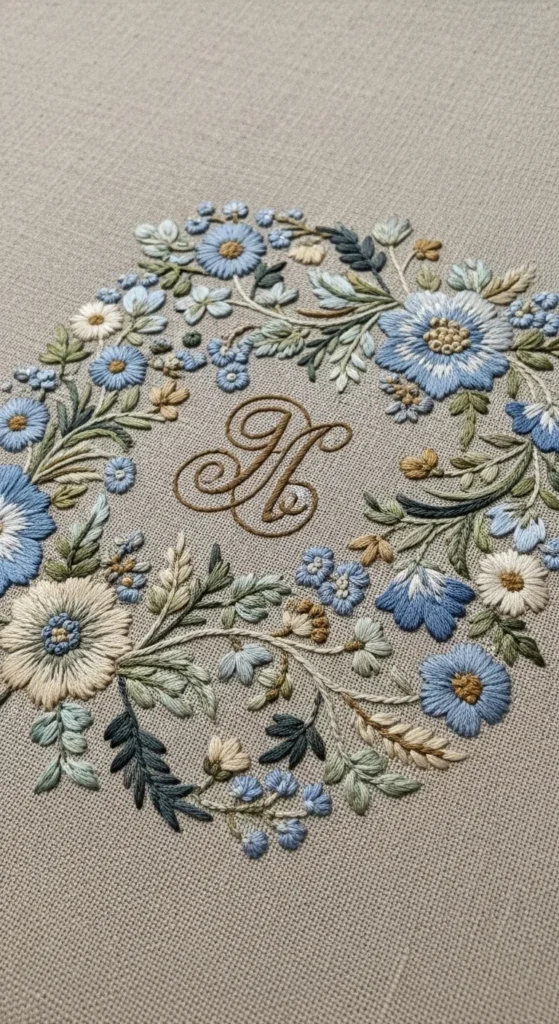
Personalized floral embroidery becomes even more special when the monogram is tucked quietly into the design. Instead of placing a large obvious initial beside the flowers, stitch the letter into a stem curl, leaf vein, or petal edge so it feels like part of the composition. This makes the decor piece feel personal without losing its elegance. A small wall hoop, pillow corner, hand towel, or fabric gift wrap can all carry this kind of hidden detail beautifully. If you are on a budget, this is an excellent project because you only need one floral cluster and one letter worked into it. The final design looks thoughtful and custom without requiring a large amount of stitching. A useful tip is to sketch the monogram into the stem path before you start so the shape feels natural rather than forced. This pattern idea is perfect for wedding gifts, housewarming decor, nursery keepsakes, or personal room accents. It adds meaning while keeping the overall look soft and floral. Secret stem initials are subtle, pretty, and wonderfully giftable.
22. Framed Garden Corners
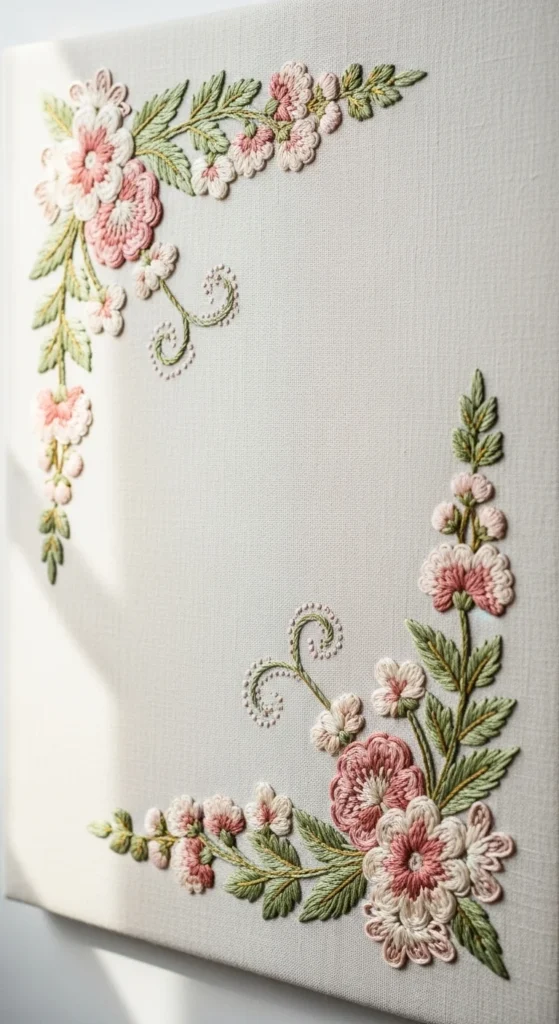
Corner floral embroidery is one of the easiest ways to make handmade decor feel tidy and elegant. Instead of centering the flowers, let them grow inward from one or two corners of the fabric. This creates a framed effect that works beautifully for wall panels, table linens, hand towels, and cushion fronts. The open center keeps the piece light, while the floral corners give enough decoration to feel finished. Start with one main bloom in the corner and let smaller leaves and buds trail gently inward. This is also a budget-friendly style because you only need to stitch part of the surface. The empty space does a lot of the design work for you. Corner florals can be soft and romantic, minimal and modern, or lush and layered depending on the thread colors and stitch choices. A useful tip is to keep the two corners visually related if you are stitching more than one. Repeat at least one flower or leaf shape so the piece feels cohesive. Framed garden corners are graceful, practical, and very easy to adapt for many kinds of handmade home decor.
Conclusion
Elegant floral embroidery works so beautifully in home decor because it combines softness, texture, and personal detail in a way that still feels approachable for DIY. In 2026, the floral direction is especially rich, with oversized blooms, minimalist outlines, gradient thread shading, raised 3D petals, and more thoughtful material choices all shaping what handmade embroidered decor looks like now. Whether you choose a single spotlight stem, a meadow-style hoop, a padded blossom pillow, or a monochrome floral panel, even a small stitched motif can make ordinary fabric feel much more special.

Lily Summers is a digital artist and creative storyteller who loves bringing colorful characters to life. With a passion for cartoons, fan art, and playful sketches, she inspires others to explore their imagination through art. When she’s not sketching, you’ll find her dreaming up new ideas for CraftedWizard.com to spark creativity in every artist. 🌈✨