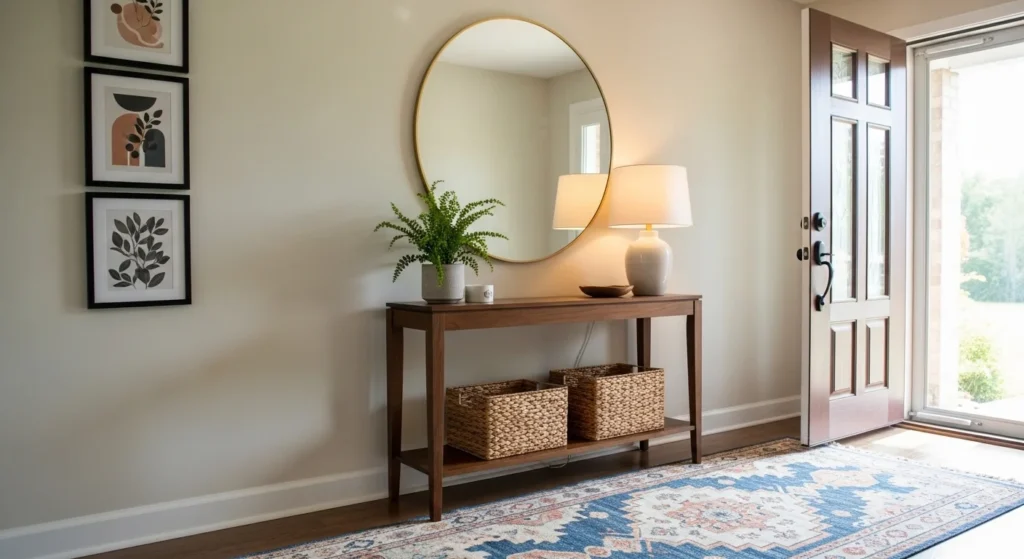
Your entryway sets the tone for the whole home. It is the first space guests see and the first thing you notice when you walk in after a long day. A well-styled entry can feel warm, tidy, and inviting without being expensive or overdone. The best entryway decor ideas mix beauty with function, so the space looks polished while still handling shoes, bags, keys, and daily traffic. These ideas focus on simple details, smart storage, and affordable styling choices that help create a beautiful first impression from the moment the door opens.
1. Style a Slim Console Table
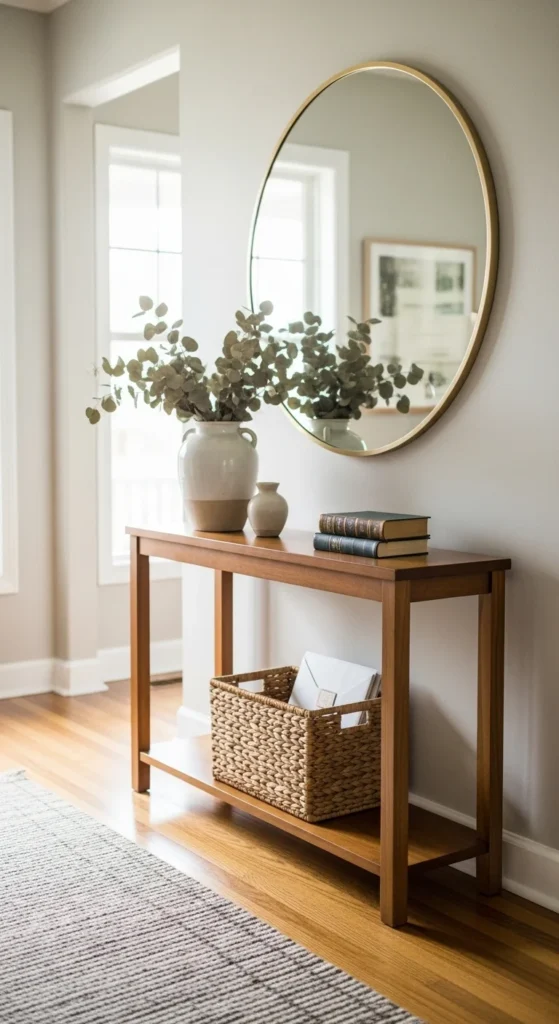
A slim console table is one of the easiest ways to make an entryway look finished. It gives the space a clear anchor and creates a spot for decor without taking up too much room. This works especially well in small hallways where bulky furniture would feel cramped. A narrow wood or painted console can hold a lamp, a small vase, a tray for keys, and maybe one or two framed pieces leaning against the wall. The goal is to keep it useful but not crowded. If buying a new table is not in the budget, try a thrifted desk, a narrow shelf, or even a wall-mounted ledge. A coat of paint or new hardware can make an older piece look much more current. Keep the styling simple so the table still feels practical for daily use. One stack of books, one decorative bowl, and a plant can already look beautiful. A console table also helps define the entry as its own zone, which is helpful in open layouts. It gives your front door area more purpose and makes the whole home feel more thoughtfully arranged from the start.
2. Hang a Statement Mirror
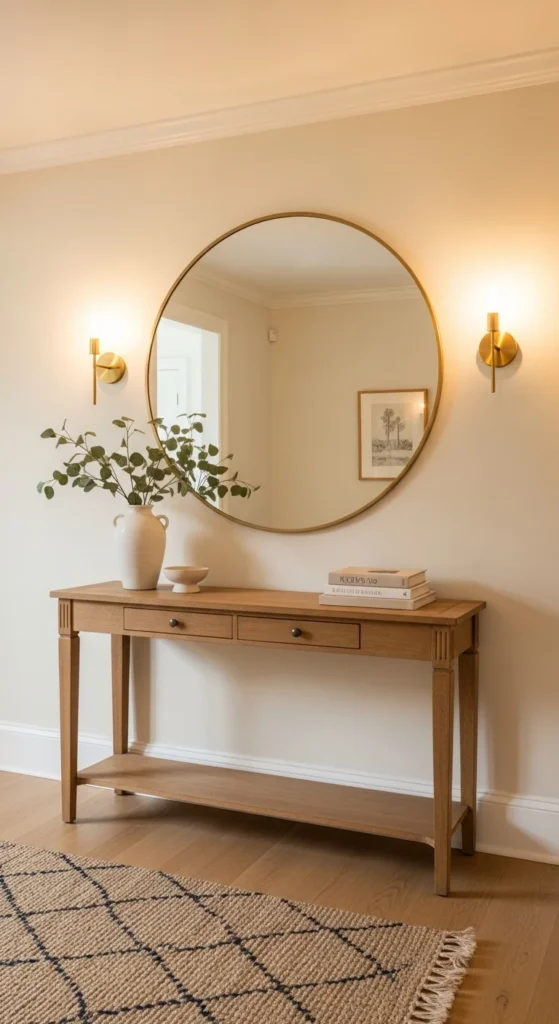
A mirror in the entryway does more than help with last-minute outfit checks. It reflects light, makes the space feel larger, and gives the wall a strong focal point. A round mirror is a popular option because it softens the straight lines of tables, doors, and walls. A rectangular mirror can work beautifully too, especially in narrow entryways where you want more vertical shape. Choose a frame that suits your home, like wood for a warm natural look, black for something clean, or brass for a softer polished touch. If you are decorating on a budget, check thrift stores and resale listings for mirrors with good shape. Even an older frame can look beautiful with a little paint. Place the mirror above a console table, bench, or small shelf so the whole wall feels connected. Keep the decor underneath simple so the mirror stays the main feature. This idea is especially useful in dim entryways because it helps bounce existing light around the room. A well-placed mirror can make a small or plain entry feel brighter, more open, and much more welcoming without needing a full redesign.
3. Add a Patterned Runner Rug
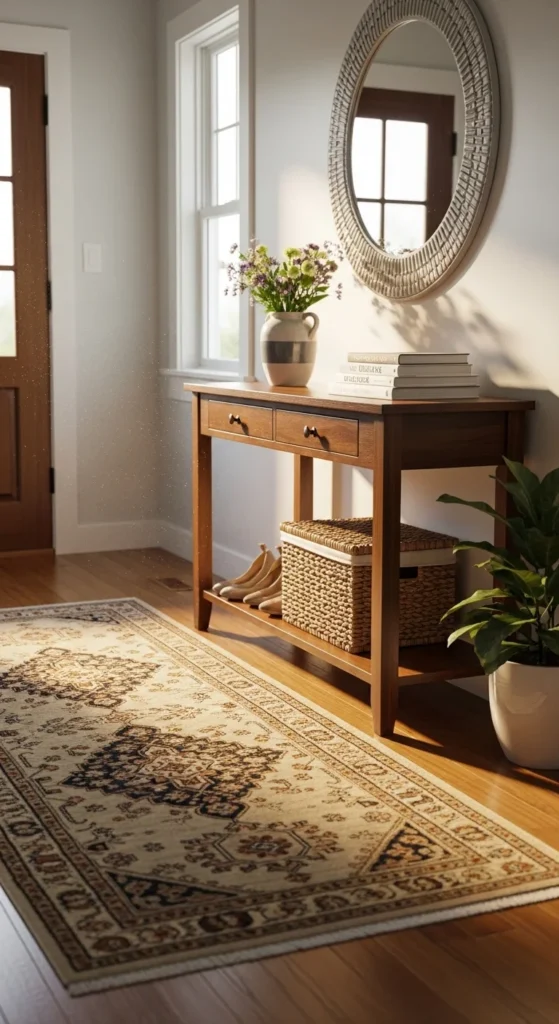
A runner rug can instantly warm up an entryway and make the whole space feel more complete. It helps define the walkway, adds color or pattern, and softens hard flooring like tile, wood, or laminate. In busy front door areas, a runner also helps catch dirt and makes the space feel more comfortable underfoot. For a stylish but practical look, go for a washable rug or one with a low pile that can handle shoes and daily traffic. Vintage-style patterns, soft stripes, or subtle geometric prints work especially well because they add interest without making the entry feel too busy. If your space is small, a runner can also help pull the eye inward and make the area feel longer. This is a good spot to bring in a little color if the walls and furniture are neutral. On a budget, check discount home stores or secondhand shops for runners with character. Even a smaller rug can work if it fits the width of the walkway well. A beautiful runner makes the entry feel less empty and more styled while still doing a very practical job every day.
4. Use a Bench for Beauty and Function
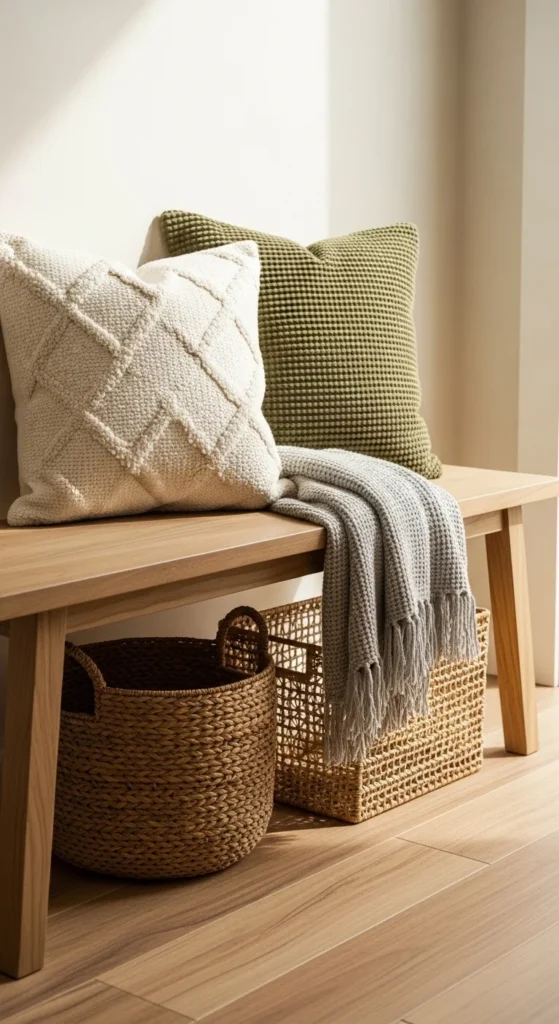
A bench makes an entryway feel useful and welcoming right away. It gives you a place to sit while putting on shoes, creates a natural styling spot, and helps the entry feel more like a real room instead of just a pass-through area. A simple wood bench works well in many homes, while an upholstered bench can add softness if the entry feels a little plain. Style it with one or two pillows, maybe a folded throw, and a basket or two underneath for extra storage. If you have a small entry, choose a narrow bench that does not block the walkway. On a tight budget, try a thrifted bench, a small dining bench, or even a sturdy wooden trunk that can double as storage. A quick paint job can make a basic piece look much more intentional. Keep the top styling light so the bench stays practical. This works especially well in family homes where people need a place to drop bags or change shoes. A bench helps the entryway feel lived in, but in a tidy and attractive way. It is one of the easiest ways to mix comfort and function in one simple piece.
5. Tuck in Woven Baskets for Easy Storage
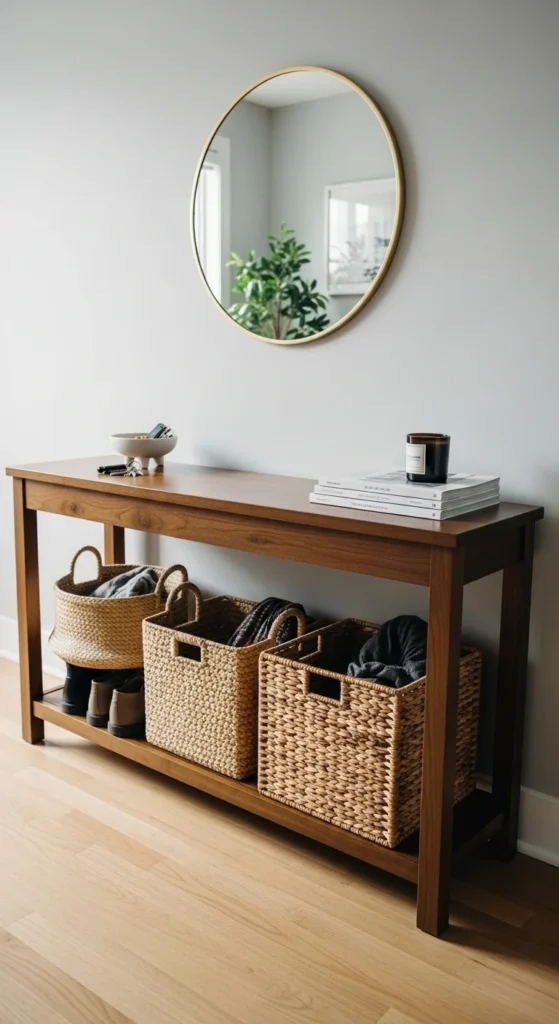
Woven baskets are a simple way to make an entryway look warmer while hiding everyday clutter. They add texture, help with storage, and fit into almost any decor style. Place them under a bench, below a console table, or near the door to hold shoes, scarves, reusable bags, pet leashes, or other grab-and-go items. This keeps the entry looking much more organized without asking you to hide everything in a closet. Natural baskets in seagrass, wicker, or rope work especially well because they soften the hard surfaces often found near a front door. On a budget, thrifted baskets are often easy to find and can look even better once cleaned up. Choose one large basket for a simple look or two matching ones if you want the space to feel more balanced. If small items tend to disappear inside, add a fabric liner or smaller bins inside the basket. Woven storage works because it feels decorative and practical at the same time. It helps the entryway stay tidy, adds a cozy texture, and keeps daily essentials close without leaving them scattered across the floor or piled near the door.
6. Add a Warm Table Lamp
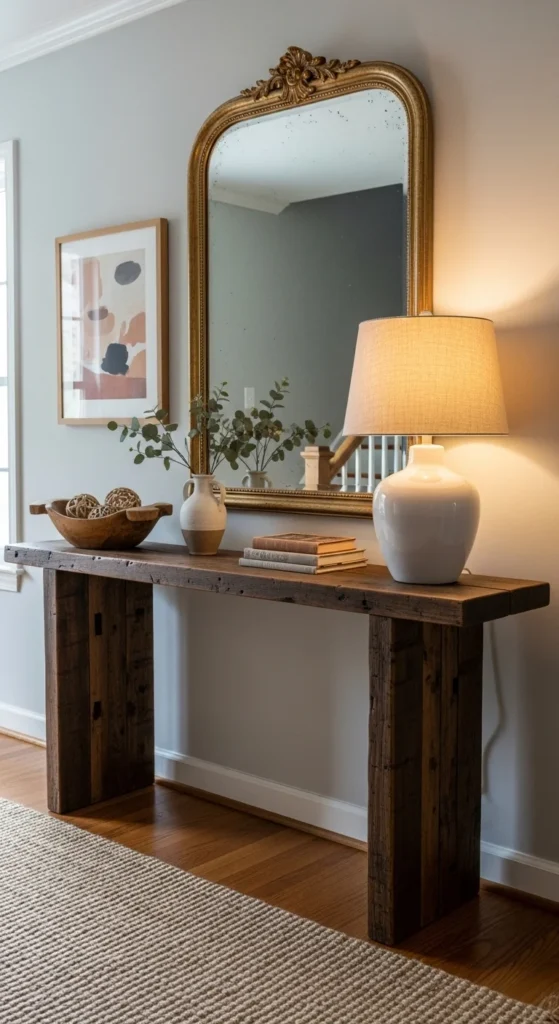
A table lamp can completely change the mood of an entryway. Instead of relying only on overhead lighting, a lamp adds a softer glow that feels calm and welcoming when you walk through the door. This is especially useful in the evening, when a warm light can make the whole front area feel more inviting. Place a lamp on a console table, shelf, or entry cabinet if you have one. Choose a base that suits your style, like ceramic, wood, glass, or metal, and keep the shade simple so it works with the rest of the decor. If your entryway is small, look for a compact lamp that still gives enough light without taking up the whole surface. On a budget, a thrifted lamp with a new shade can look beautiful. Just changing the bulb to a warmer tone can also make a big difference. Pair the lamp with a small tray or vase so the surface feels styled but not crowded. A lamp makes the entryway feel more like part of the home rather than just a place to pass through. It brings comfort, warmth, and a softer look with very little effort.
7. Install Stylish Wall Hooks
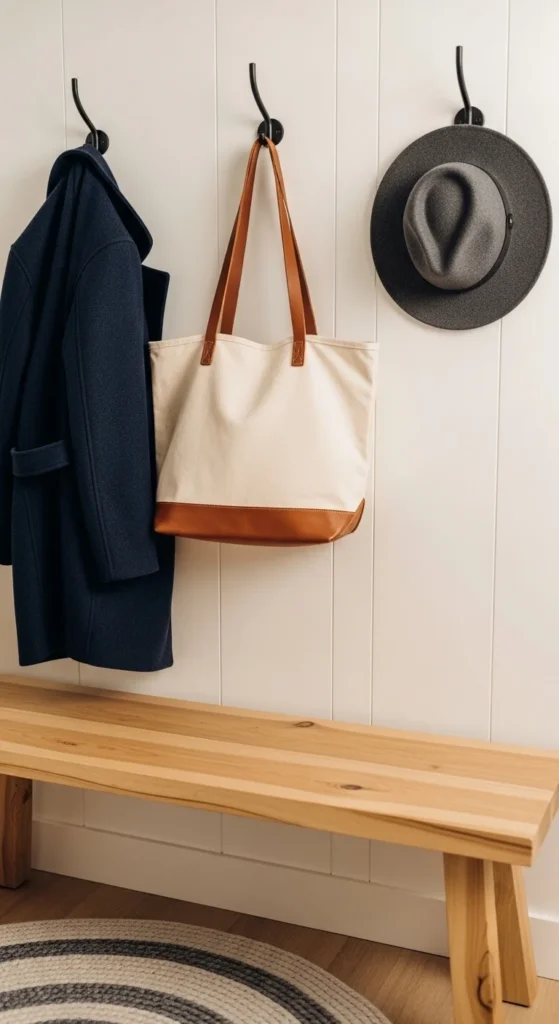
Wall hooks are one of the most useful things you can add to an entryway, and they can look beautiful too. They give coats, bags, hats, and scarves a place to go so the space stays organized and easy to use. This matters a lot in smaller homes where a coat closet may not be nearby. Choose hooks in black metal, brass, wood, or another finish that suits your style. A row of matching hooks looks neat and polished, while mixed vintage hooks can give the space more charm. Install them above a bench or along one side of the wall where they are easy to reach. If you are decorating on a budget, even a simple wood board with basic hooks can become a lovely DIY entry feature. Paint or stain the board, mount it securely, and the wall instantly feels more functional. Keep the number of hanging items in check so it still looks tidy. Hooks work best when there is a little breathing room between pieces. This small detail can make the entryway easier to live with every day while also adding shape and character to the wall.
8. Layer Framed Art for Personality
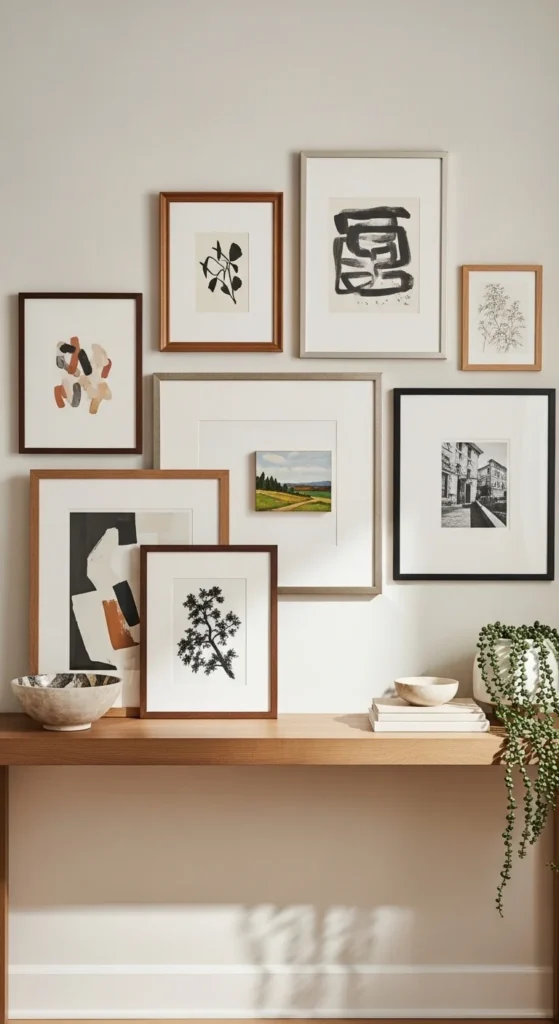
Framed art can make an entryway feel personal and finished. Even one or two pieces can shift the space from plain to thoughtful. You can hang a single statement print above a console table or create a looser layered look by mixing smaller frames on the wall and leaning one or two on the table surface. Botanical prints, landscapes, abstract shapes, black-and-white photography, or line art all work well in entryways because they feel calm and easy to live with. The key is to keep the palette tied to the rest of your home so the transition from the entry into the main space feels natural. On a budget, thrifted frames, printed downloads, or pages from old art books can look wonderful when styled with care. If the frames do not match, paint them one color for a more pulled-together look. Art helps the entryway tell a story about your style before guests even step farther inside. It also fills blank wall space without taking up floor area. A few carefully chosen pieces can make the entry feel warmer, more welcoming, and much more interesting without requiring a lot of money or effort.
9. Try a Floating Shelf in a Small Entry
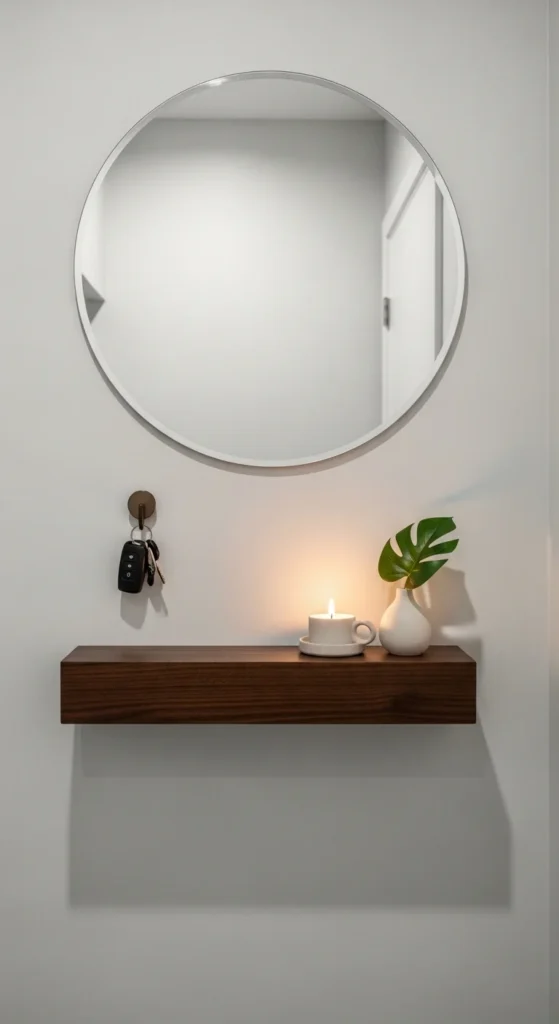
A floating shelf is a great solution when the entryway is too tight for a table or bench. It gives you a spot for keys, mail, and a few decorative items without taking up floor space. This makes it especially useful in apartments, narrow hallways, or doorways that open directly into the living area. Choose a shelf in wood, painted MDF, or metal depending on your style. Then keep the styling simple. A small dish for keys, one candle, a tiny vase, or one framed photo is usually enough. If you clutter the shelf, the whole area can feel cramped. A mirror or piece of art above the shelf can complete the look and make the wall feel more intentional. On a budget, a basic shelf bracket and a stained board can create a very nice DIY version. Floating shelves also work well with hooks underneath if you want extra function. This setup gives the entryway a proper landing spot even when space is limited. It keeps daily items from drifting onto counters and helps the front door area feel cleaner, more useful, and much more thoughtfully put together.
10. Use a Tall Vase with Branches or Stems
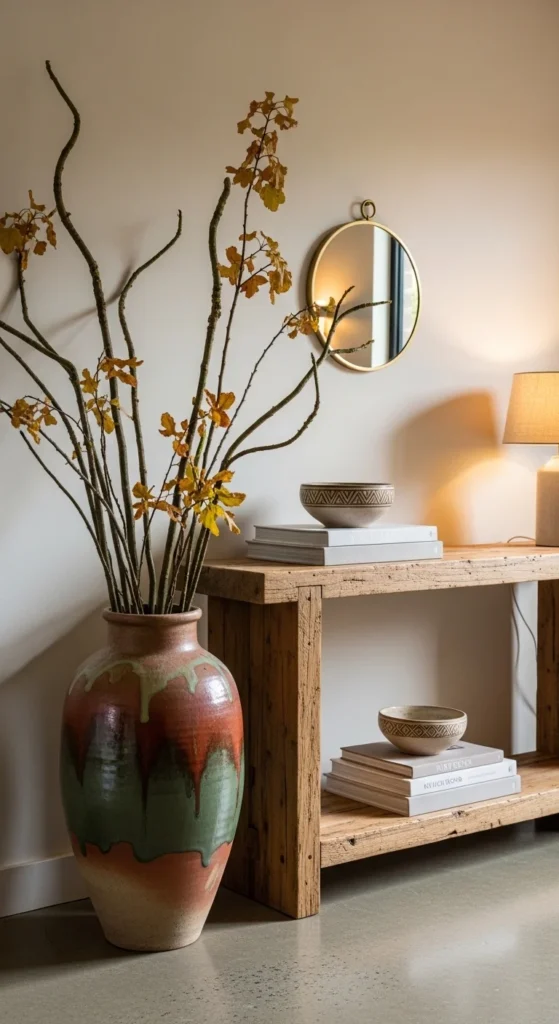
A tall vase filled with branches or stems is an easy way to add height and softness to an entryway. It works especially well beside a console table, on the floor in a corner, or even on top of a cabinet if you have enough space. This idea gives the entry some sculptural shape without needing a lot of small decor pieces. Dried branches, faux olive stems, eucalyptus, or seasonal foliage can all work beautifully. The look changes depending on what you use, but the overall effect is the same: it makes the space feel more styled and less flat. A ceramic, woven, or glass vase can all work, depending on the mood of your home. On a budget, forage simple branches from outside or reuse a vase you already own. Even a thrifted pitcher or old crock can look stunning when filled with something tall and airy. The key is to keep the arrangement loose rather than too formal. This detail works well because it brings a bit of nature into the entryway while also drawing the eye upward. It gives the space life, height, and a soft welcoming touch.
11. Create a Small Gallery Wall
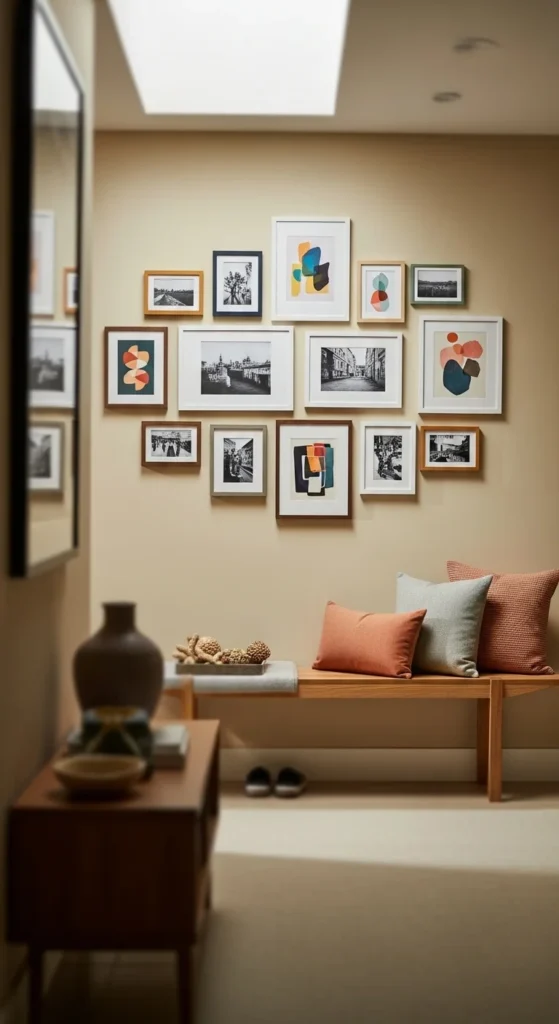
A gallery wall can make an entryway feel rich with character without taking up any floor space. This is a great option if the entry wall feels blank and you want something more layered than a single large print. Use a mix of small frames in a similar color palette or stick with matching frames if you want the look to feel cleaner. Family photos, travel pictures, sketches, vintage prints, and abstract art can all work together as long as the arrangement feels balanced. In a small entryway, keep the gallery compact so it does not overwhelm the wall. On a budget, print photos at home or use thrifted frames and paint them to match. Lay the arrangement out on the floor first so you can test spacing before hanging. A gallery wall gives the entryway personality right away and makes the home feel more lived in. It is also easy to add to over time, which makes it a very affordable decorating choice. When guests walk in, they immediately get a sense of your style, which makes the first impression feel warmer and more personal.
12. Corral Daily Essentials with a Tray
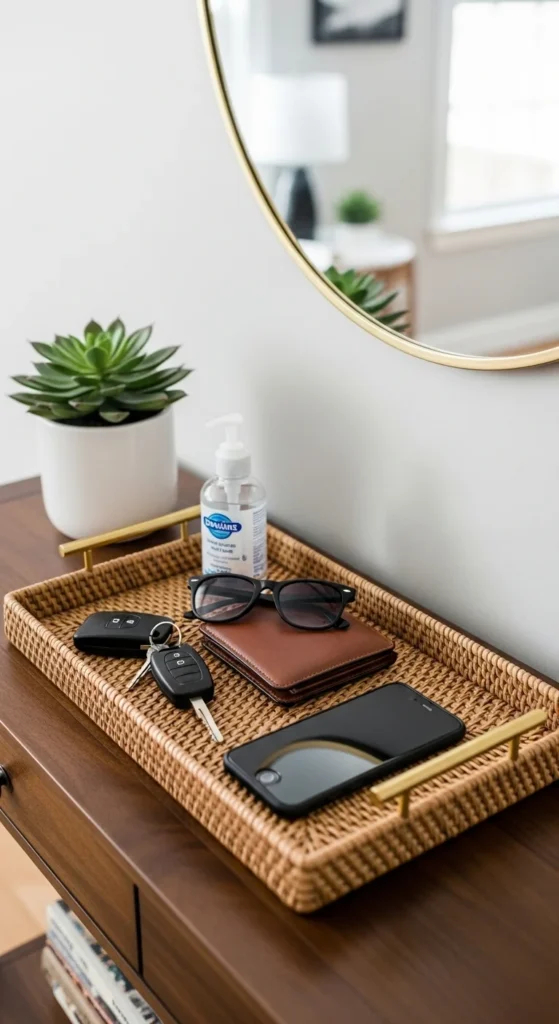
A decorative tray might seem small, but it can make a big difference in the entryway. It gives keys, sunglasses, wallets, and loose items one clear place to land, which helps the whole area stay neater. Without a tray, these everyday things tend to spread across the table and make the space look cluttered fast. A wood, marble, woven, or metal tray can work depending on your decor style. Place it on a console, floating shelf, cabinet top, or even a bench with enough room. Then keep only the true essentials inside. The tray should make things look calmer, not become a storage pile. If you are decorating on a budget, use a thrifted plate, shallow bowl, or even a small cutting board as a tray alternative. Pair it with one candle or tiny vase nearby so the setup still feels styled. This is one of the easiest changes you can make because it adds both function and polish right away. A tray helps the entry feel more controlled, more intentional, and easier to maintain, especially in busy homes where people are always coming and going.
13. Paint the Inside of the Front Door
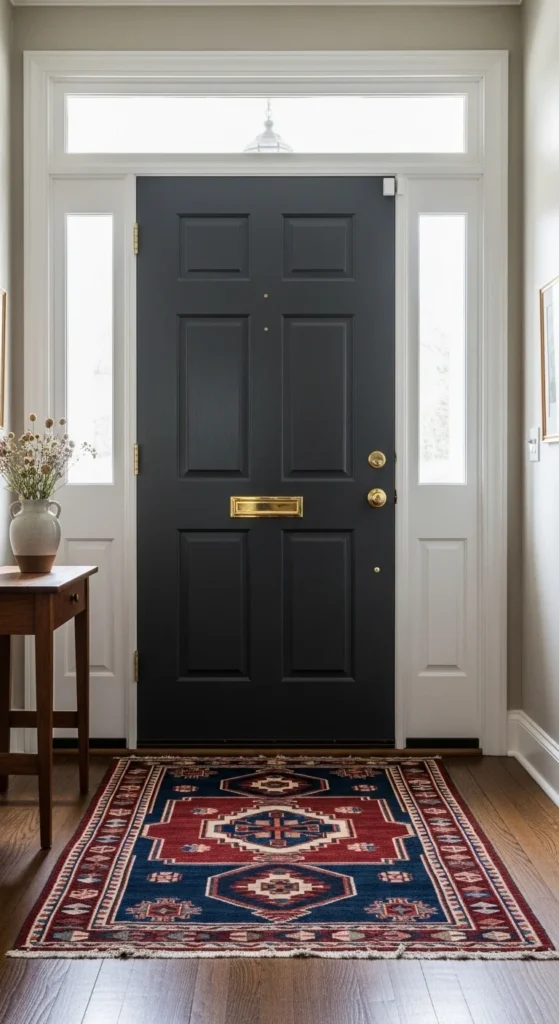
Painting the inside of the front door is a surprisingly effective way to add style to an entryway. Since the door is one of the first things you see, giving it a strong color can make the whole space feel more intentional. Black, deep green, navy, warm gray, and even muted clay can all look beautiful depending on the rest of your decor. This works especially well if the walls are neutral and the entry feels a little plain. A painted door creates contrast and gives the space a custom touch without needing much furniture or extra decor. It is also a very budget-friendly project because you only need paint and a little time. Pair the new door color with updated hardware, a fresh rug, or a mirror nearby for an even more finished look. If your entryway is small, a darker door can actually help anchor the space and make the lighter decor stand out. This is a smart decorating move when you want a visible change without spending much. A painted front door can make the entry feel sharper, warmer, and much more memorable.
14. Bring in a Plant for Life and Color
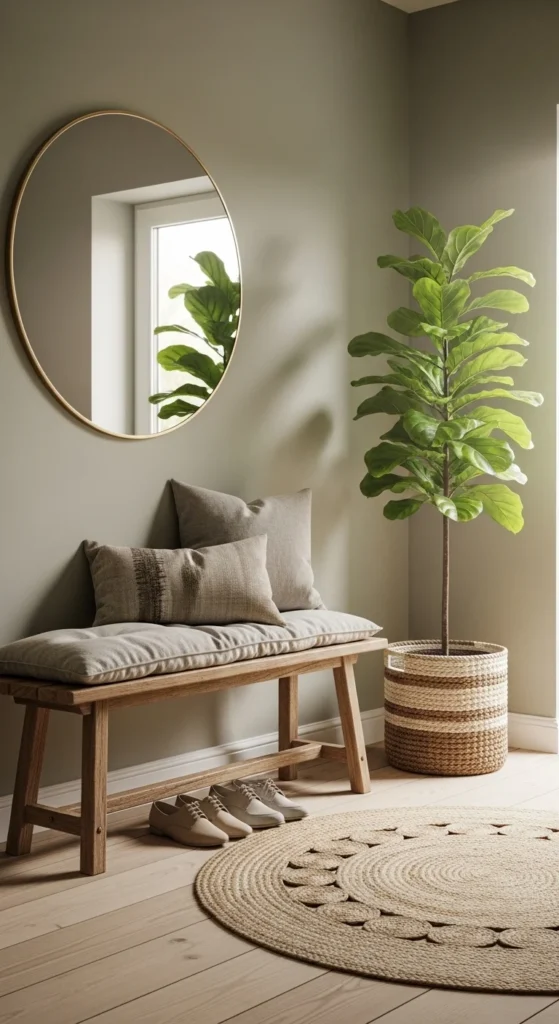
A plant is one of the easiest ways to make an entryway feel more alive. It adds softness, color, and a sense of care that helps the whole space feel more welcoming. A leafy floor plant works well beside a bench or console table, while a smaller plant can sit on a shelf or table if the entry is tight. Choose something that fits the light conditions near your front door. Snake plants, pothos, ZZ plants, and peace lilies are all good options for many homes. If natural light is limited, a realistic faux plant can still add shape and warmth without the upkeep. Place the plant in a woven basket, ceramic pot, or simple planter that matches your decor. On a budget, start with one easy plant and let that be the only greenery in the space. You do not need a full collection. One good plant can already change the feel of the room. Greenery works especially well in entryways because it softens hard surfaces like doors, tile, and mirrors. It makes the space feel more relaxed and lived in while still looking neat and decorative.
15. Mix Textures for a Richer Look
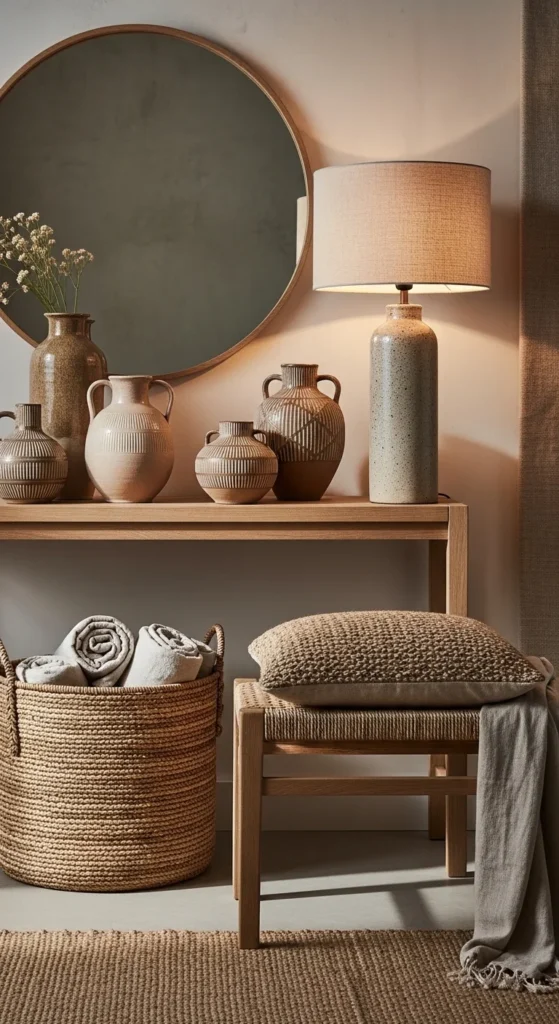
An entryway often looks better when it includes a mix of textures rather than just matching flat surfaces. Texture adds warmth and depth, which helps the space feel more layered and welcoming. This can be done with a wood console table, a woven basket, a ceramic lamp, a linen pillow on a bench, and a patterned rug underfoot. None of these pieces need to be expensive on their own. The magic comes from how they work together. If the entry feels too plain, adding texture is often more effective than adding more color. It makes the space feel softer and more thoughtful. On a budget, start by mixing materials you already own. Maybe add a woven tray to a painted table, or place a linen cushion on a wood bench. Even one textured piece like a basket or rug can help. The goal is not to crowd the entry with lots of stuff. It is to give the eye a few varied surfaces so the area feels richer and more complete. Texture is one of the easiest ways to create a beautiful first impression without needing a lot of square footage or expensive decor.
16. Tuck in a Small Stool or Ottoman
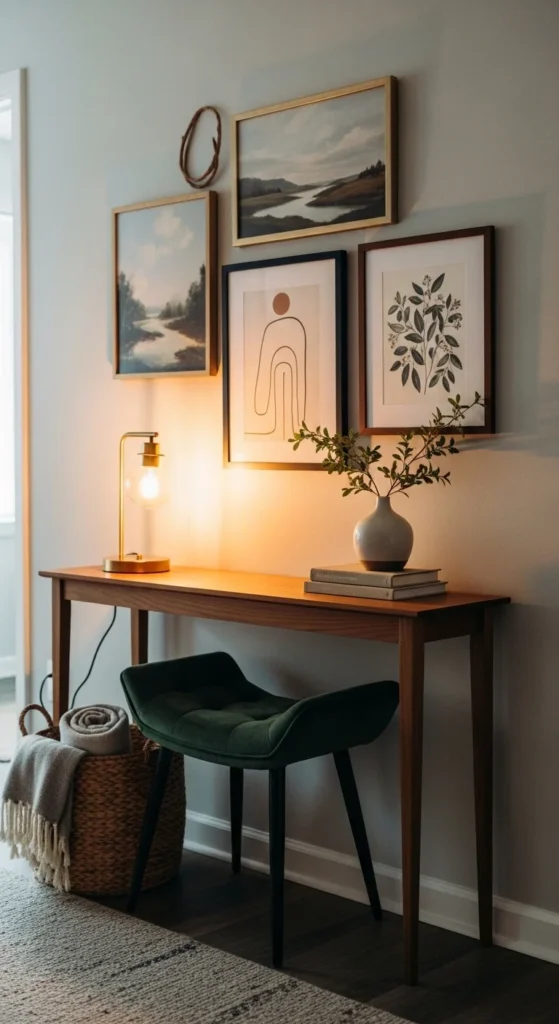
A small stool or ottoman can add both charm and function to an entryway. It works well in spaces where a full bench would be too large, but you still want a seat or a soft element near the door. Tuck it under a console table to save space, or place it beside a cabinet if the layout allows. An upholstered stool adds softness, while a wood or woven stool can keep things feeling light and natural. This is a great place to add a little pattern or color if the entry is mostly neutral. On a budget, try using a thrifted stool with a painted base or a secondhand ottoman with a simple slipcover. Keep the surrounding styling minimal so the stool feels useful and not like one more thing taking up room. A small seat is especially handy for putting on shoes or setting down a bag for a moment. It also makes the entry feel more complete, like a real designed corner rather than just a wall and a door. This one piece can make the space feel more comfortable and much more inviting.
17. Add Wall Paneling for Extra Character
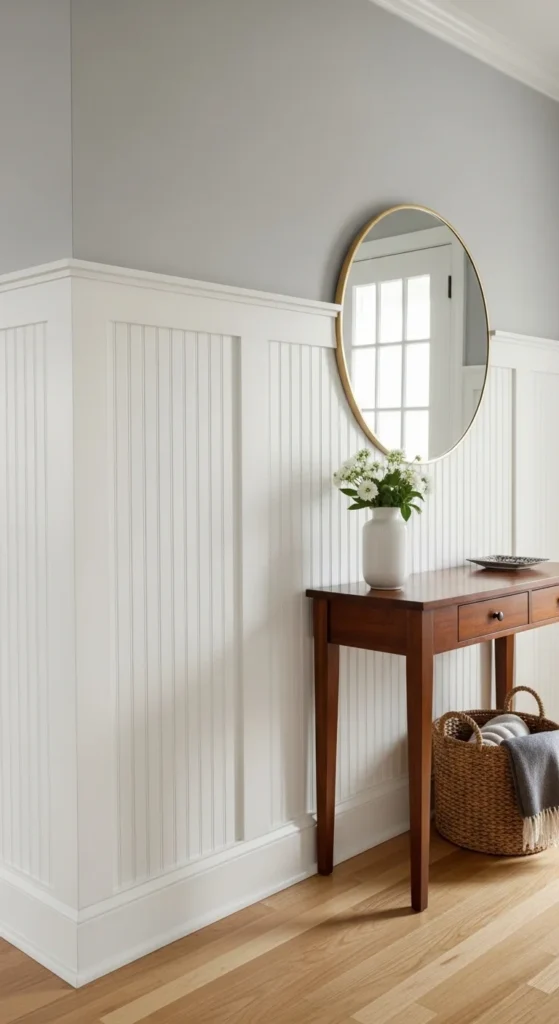
Wall paneling can give an entryway a more built-in, finished look without requiring a full renovation. Beadboard, board and batten, or simple picture-frame molding can all work beautifully depending on your home style. These details add depth to flat walls and make the entry feel more special right away. White paneling with a soft wall color above it is a timeless combination, but darker painted paneling can also look beautiful in the right space. If your entry gets bumped by bags, shoes, or kids coming in and out, paneling also helps protect the wall and hide minor marks. On a budget, simple trim pieces and paint can create a very attractive DIY version. You do not have to cover every wall either. Even one wall with lower paneling can make the entry feel more complete. Pair it with hooks, a bench, or framed art above so the whole area feels connected. Paneling adds structure and charm, which is especially useful in new-build homes where entryways can sometimes feel plain. It gives the front area more personality and helps create a stronger first impression with just a few materials.
18. Use a Closed Cabinet to Hide Clutter
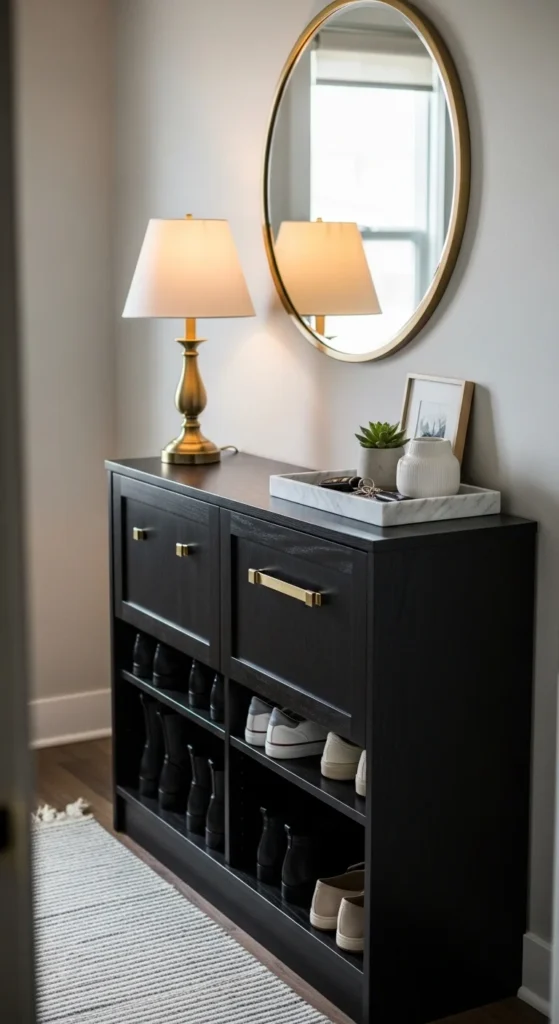
A closed cabinet is one of the best entryway pieces if you want the space to look tidy with very little effort. Unlike open shelving or baskets, a cabinet hides shoes, bags, umbrellas, and other daily items behind doors, which makes the room feel calmer right away. This is especially helpful in busy homes where the front area can become messy fast. A slim shoe cabinet, small sideboard, or entry chest can all work depending on your layout. Style the top with a lamp, mirror, tray, and maybe one small vase so the piece looks decorative as well as useful. If buying new furniture is not in the plan, look for secondhand cabinets that can be painted or updated with new knobs. A narrow cabinet often gives the best result in smaller entries because it keeps the walkway open. Closed storage works well when you want the front door area to feel polished even on hectic days. It gives you a place to hide the things you use every day without losing easy access. This makes the entryway look cleaner and feel more relaxing from the moment you walk in.
19. Layer Doormats for Extra Style
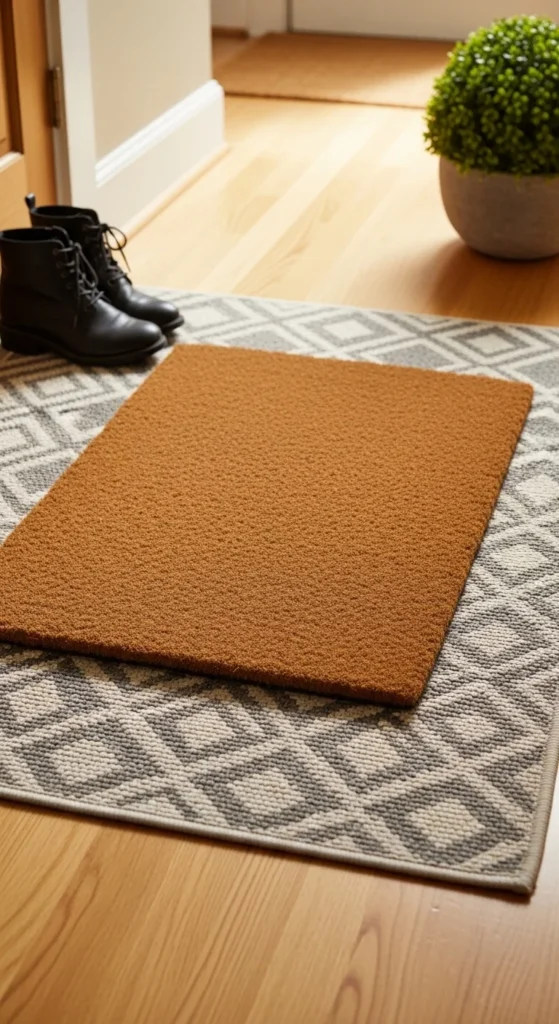
Layering doormats is an easy way to add style and texture to the entryway, especially right at the door. A common version is placing a simple coir mat over a larger striped or patterned outdoor rug. This creates a fuller, more styled look than a single small mat and can make even a plain front area feel more intentional. Inside the entry, you can use a similar idea by pairing a simple doormat with a runner or small washable rug. The layered look works best when one mat is more neutral and the other brings a little pattern or contrast. On a budget, use a basic mat you already have and add a second low-cost rug underneath. This trick works well because it fills the floor area more evenly and gives the entry more visual weight. It also helps with dirt and shoe traffic, which makes it practical in everyday life. Layered mats are a simple detail, but they make the door area feel more thoughtfully styled. They create a stronger first impression before guests even take off their shoes or step farther into the home.
20. Rotate Seasonal Decor in Small Ways
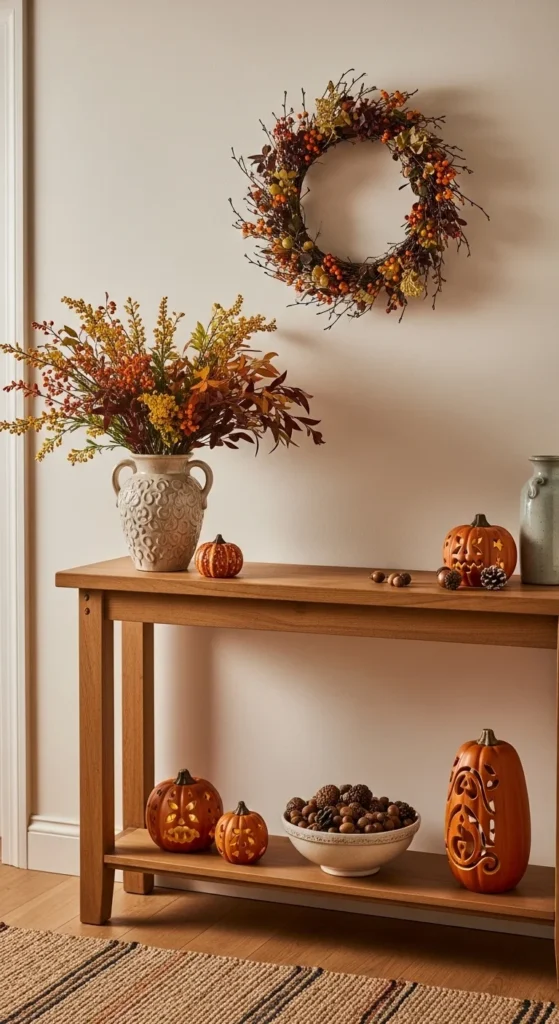
Seasonal decor can make an entryway feel current and cared for without requiring a full restyle every few months. The trick is to keep the changes small. A vase of seasonal stems, a wreath, a candle in a warm scent, or one small decorative object can be enough. In autumn, try dried leaves, muted pumpkins, or warm-toned florals. In spring, use green branches or lighter flowers. During the colder months, a cozy throw or a deeper-colored rug can shift the mood. These little updates help the entry feel alive and connected to the time of year. On a budget, use natural materials from outside, thrifted pieces, or decor you already own in storage. You do not need themed signs or lots of new items. A few subtle touches often look much better. Seasonal styling works especially well in the entryway because it is the first place you and your guests see. It gives the home a gentle sense of rhythm and makes the front area feel more welcoming. Small seasonal changes can keep the entry looking thoughtful all year while still staying simple and easy to manage.
21. Keep the Styling Balanced and Simple
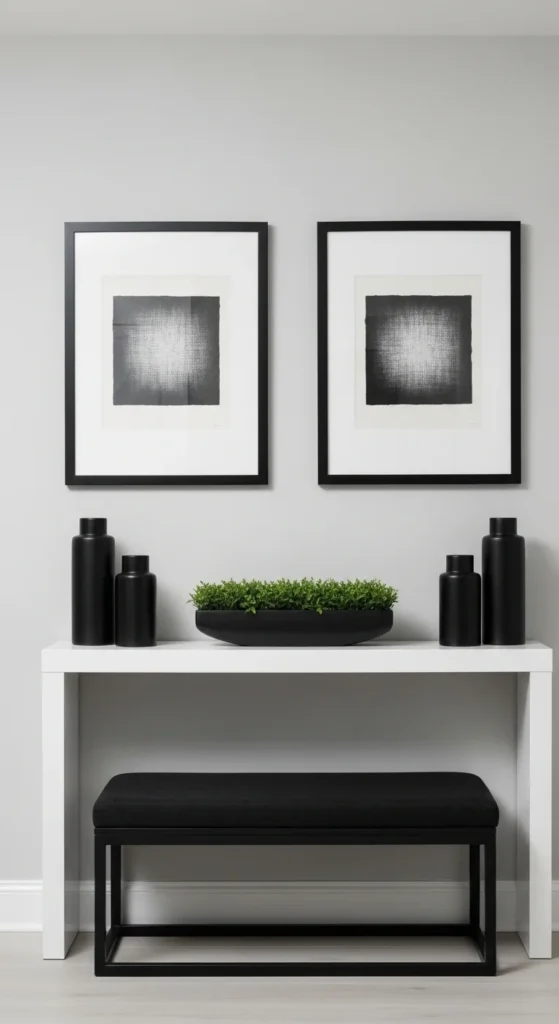
One of the best ways to make an entryway look stunning is to avoid overdecorating it. Since this area is often small and busy, a simple balanced arrangement usually looks better than filling every surface. This might mean a mirror centered above a console, a lamp on one side, a vase on the other, and a tray in the middle. Or it could mean one bench, one pillow, and one basket tucked underneath. The point is to let a few pieces stand out instead of crowding the space with too many little items. If the entry feels messy, remove half the decor and see if it looks calmer. Often it will. On a budget, this is great news because you do not need a lot of stuff to make the room look good. A more edited entryway usually feels more polished. Balance can also come from repeating color or material, like two baskets below a bench or two matching frames on a wall. Keeping the styling light helps the entry feel open, easy to clean, and pleasant to walk through, which matters just as much as the decor itself.
22. Set Up a Mail and Key Station
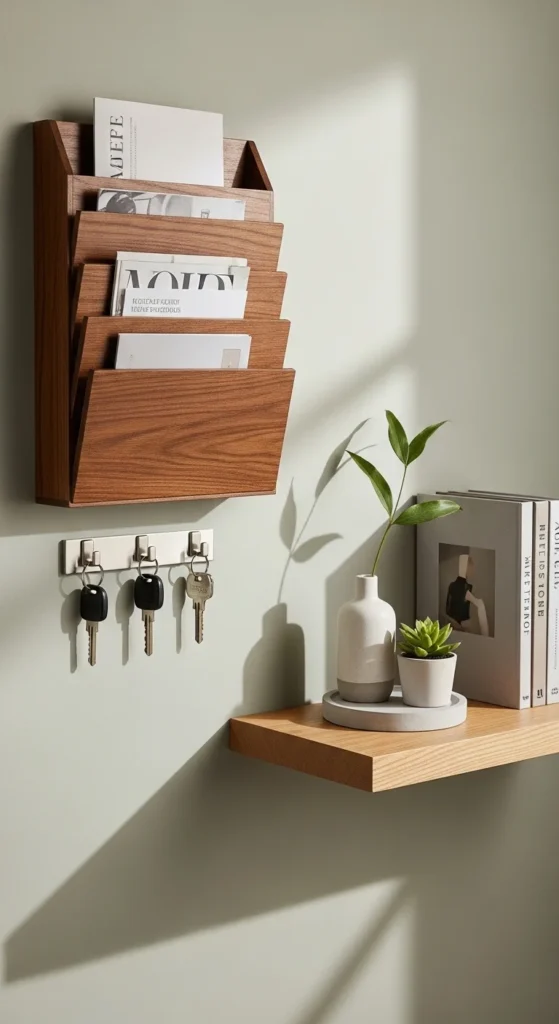
A dedicated mail and key station can make the entryway much more functional while still looking attractive. This is a smart idea if paper piles and lost keys tend to collect near the door. Use a wall-mounted organizer, a small shelf with hooks, or a compact tray-and-basket setup to give those items a proper home. The entry will look better right away because daily clutter is no longer spread across random surfaces. Choose a setup that suits your habits. If you always drop keys and mail the second you walk in, keep the station close to the door and simple to use. A wood organizer with metal hooks can look warm and stylish, while a black or white version may suit a more modern home. On a budget, create your own with a small shelf, a few hooks, and a basket below. The trick is not to let it become a dumping ground. Clear out junk mail often and keep only the essentials there. This small system helps the entryway feel more under control, which makes the whole first impression of the home feel calmer, tidier, and easier to manage every day.
23. Upgrade the Light Fixture
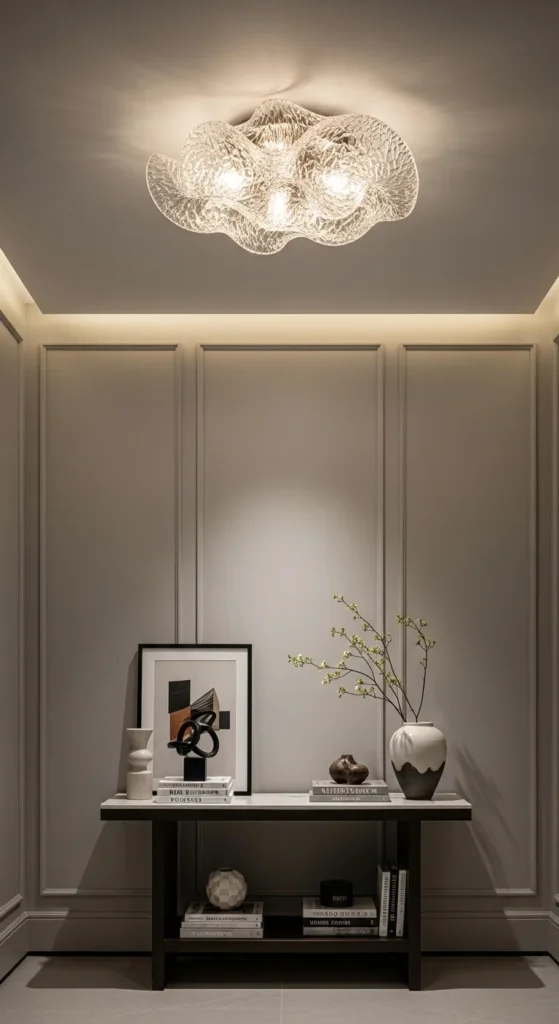
A light fixture can completely change how an entryway feels. Since this space is the first thing people see, an attractive ceiling light can make a strong impression right away. A pendant, lantern, semi-flush mount, or even a sculptural flush fixture can add style overhead while helping the area feel more finished. Choose something that suits the size of the space. A small narrow entry may do better with a compact fixture, while a taller foyer can handle something larger with more presence. On a budget, there are many affordable fixtures that look far more expensive than they are. You can also update an existing fixture with a new shade or paint parts of it if the structure is still good. Warm bulbs make a big difference here too. They help the entry feel softer and more inviting. A good fixture draws the eye upward and gives the room more dimension, which is helpful if the floor area is limited. When paired with a mirror, rug, or table below, the lighting helps tie the whole space together and makes the entry feel much more polished.
24. Stick to a Cohesive Color Palette
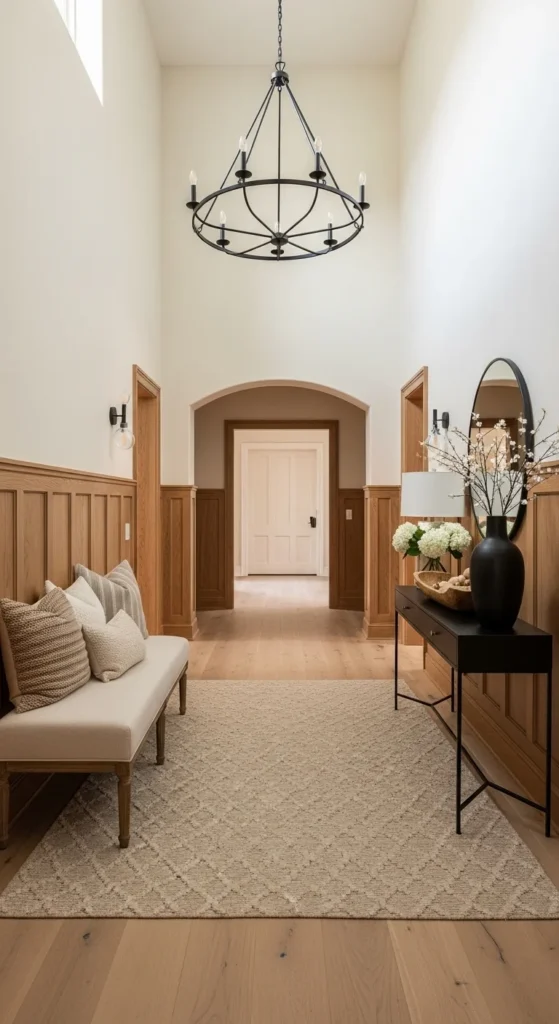
A cohesive color palette is one of the easiest ways to make an entryway look put together. Even simple furniture and budget decor can look more polished when the colors relate to one another. Start with two or three main tones that connect to the rest of your home. This could be warm white, wood, and black. Or beige, soft gray, and brass. Once you pick the palette, repeat it in small ways through the rug, mirror frame, basket, lamp, pillows, and art. This helps the space feel calm and intentional instead of random. If the entry looks busy, color may be part of the problem. Removing pieces that clash can make the area feel better without buying anything new. On a budget, this is one of the smartest decorating tricks because it helps existing items work together more effectively. A cohesive palette also gives the home a smoother flow from the front door into the next room. That first visual connection matters. It makes the entryway feel like part of a larger story, and that creates the kind of beautiful first impression people notice right away.
Conclusion
A beautiful entryway does not have to be large or expensive. With a few thoughtful pieces, smart storage, warm lighting, and a clear color palette, you can turn even a simple front door area into a space that feels polished and welcoming. Start with one anchor piece, add function where you need it most, and style the rest with restraint. Small changes like a mirror, rug, bench, or basket can make a big difference. When the entry feels warm, tidy, and personal, the whole home starts off on the right note.