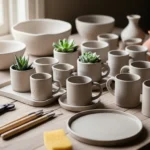
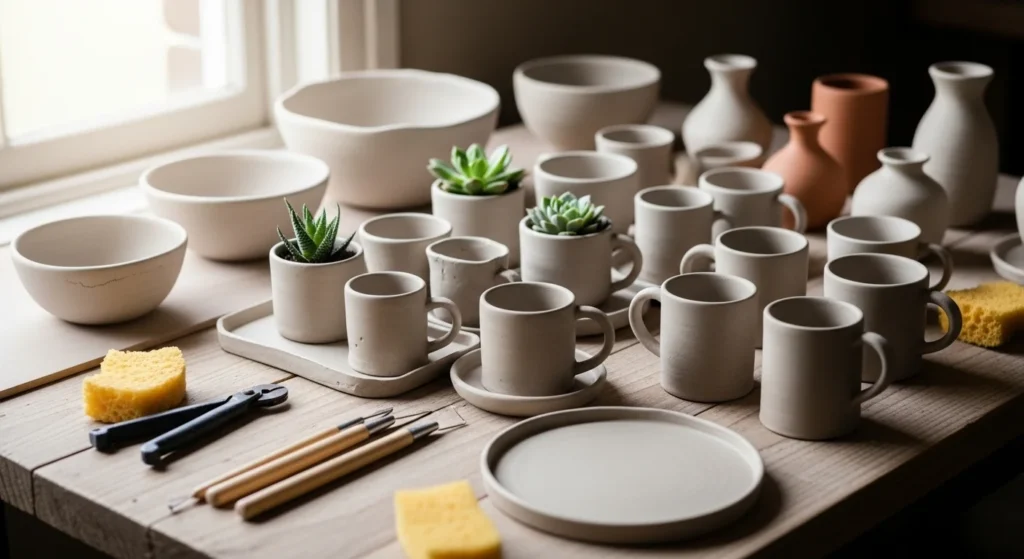
Pottery is one of the easiest hands-on crafts to start because you can make useful pieces without a wheel, a big studio, or a long supply list. Many beginners do best with hand-building pottery ideas like pinch pots, coil forms, and slab projects because those methods feel easier to control and less frustrating at the start. Small projects also help you practice shaping, joining, smoothing, and decorating without using too much clay. This list focuses on easy pottery ideas for beginners that look good, feel practical, and help you build skill one piece at a time. From bowls and mugs to ring holders, trays, planters, and candle pieces, these projects are simple enough to try at home and useful enough to keep or gift.
1. Thumb-Powered Pinch Bowls
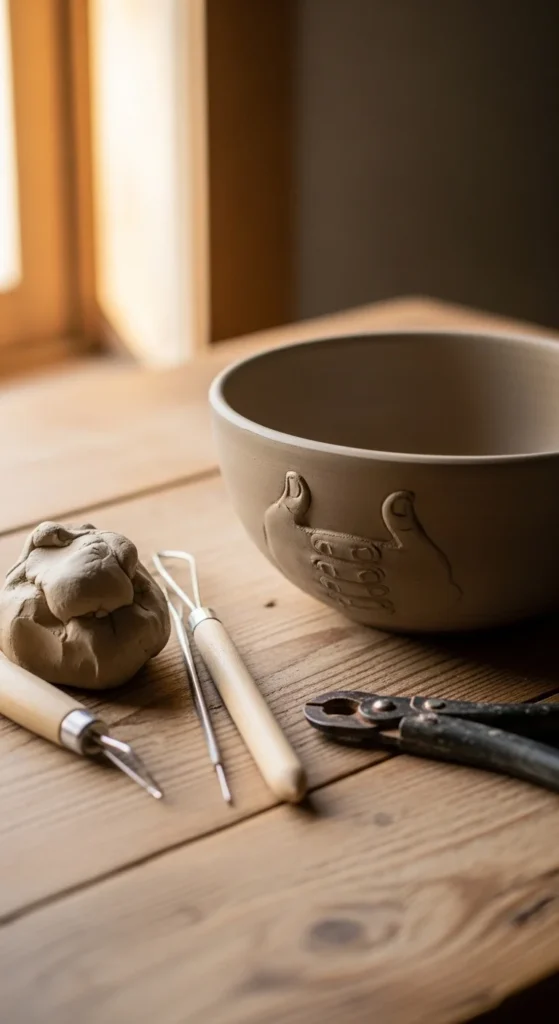
Pinch bowls are one of the best starting points for beginner pottery because they teach you how clay responds to your hands. Start with a ball of clay about the size of a lemon. Press your thumb into the center, then slowly pinch around the walls while turning the piece in your hand. Keep the pressure light so one side does not end up much thinner than the rest. That one habit helps a lot. A small bowl like this can hold jewelry, coins, tea bags, or paper clips, so it feels useful right away. If the rim looks uneven, smooth it with a damp finger instead of trying to force it flat. That keeps the shape looking soft and handmade. You can leave the outside plain or press in a tiny texture using lace, leaves, or even the back of a spoon. This project is budget-friendly because it uses very little clay and almost no tools. One small lump can turn into a finished piece in a short session, which helps build confidence fast.
2. Tiny Trinket Dishes
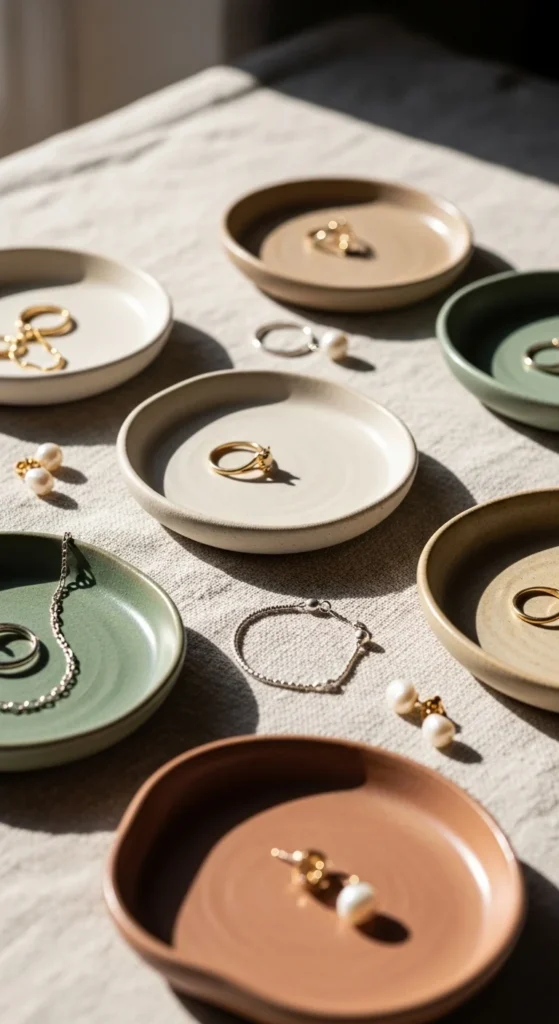
Tiny trinket dishes are perfect when you want a project that feels useful but does not take much clay or time. You can make them with pinch pot methods or by pressing a slab over a curved bowl form. Keep the shape simple at first. Round, oval, or softly squared dishes all work well. These little pieces are great for rings, earrings, keys, or hair pins, which makes them nice for gifts too. If you want a cleaner look, cut the edge with a butter knife or clay tool while the slab is still soft. If you like a more relaxed style, keep the wavy edges and call it part of the charm. A good beginner tip is to make two or three at once because small dishes dry fairly quickly and let you test different shapes without much risk. Pressing in fabric or leaf texture on the inside can make the surface feel more interesting without extra decorating steps. This kind of pottery project is simple, low-cost, and very beginner-friendly.
3. Mini Succulent Planters
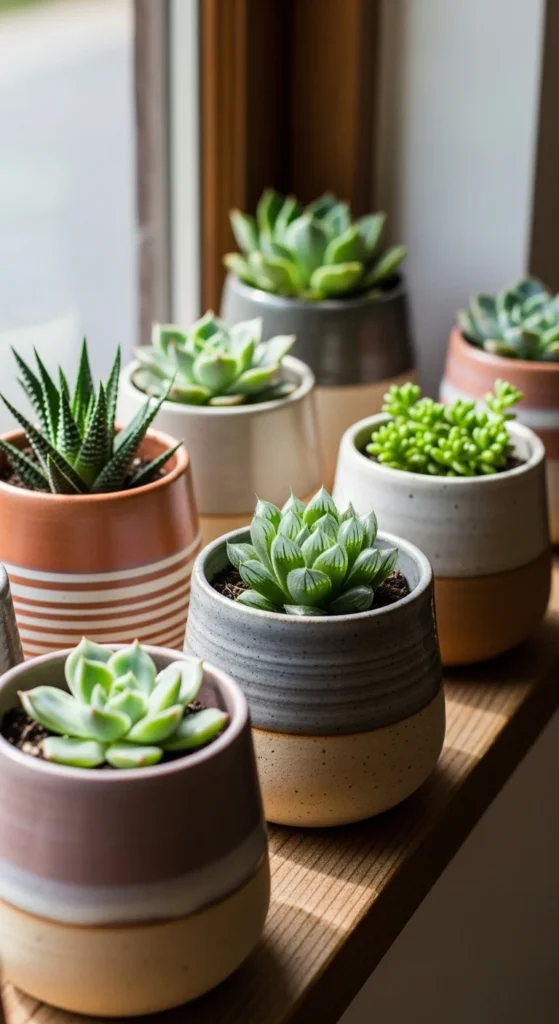
Mini succulent planters are a favorite beginner project because they are small, practical, and forgiving. You can make them with pinch pot, coil, or slab methods depending on what feels easiest to you. A simple cylinder or bowl shape works well, and the small size means you do not need much clay. That keeps cost low and lets you practice without pressure. One thing that helps is keeping the walls even so the planter dries more smoothly. If the walls get too thin near the rim, press from the base upward gently to rebalance the thickness. Add a drainage hole if the planter will hold a real plant. A straw or pencil can make that step easy. For decoration, try simple lines, stamped leaves, or a soft ribbed pattern made with a fork. Succulent planters are also great because even small shape flaws often disappear once the plant goes in. That makes them ideal for beginners who want something pretty and useful without chasing perfection on the first try.
4. Coil-Built Bud Vases
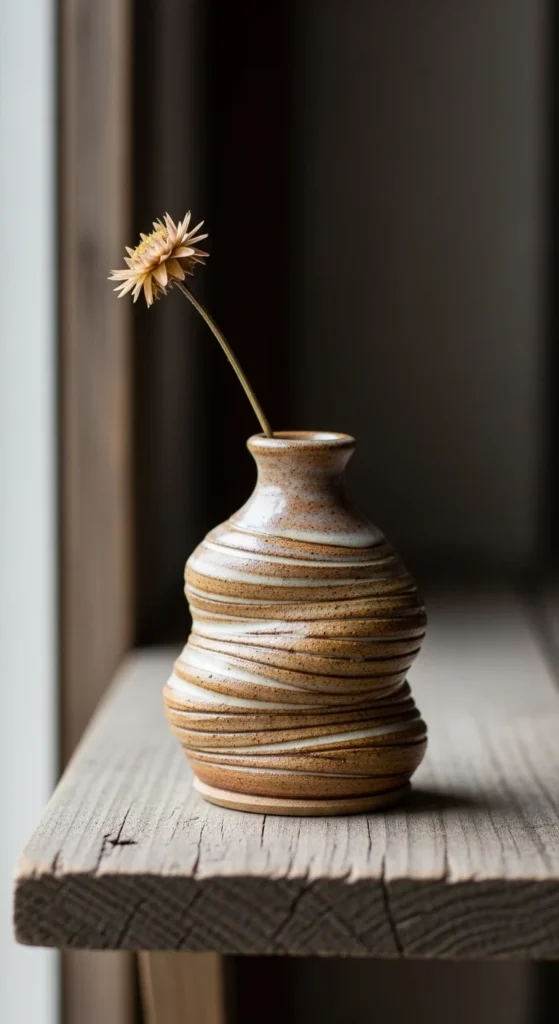
A small bud vase is a great way to practice coil building without jumping into a large project. Roll out several even clay coils, then stack them one by one to build the height. Press them together gently and smooth the joins inside and outside if you want a cleaner finish. You can also leave a bit of coil texture visible for a more rustic look. This project helps you understand how to build upward while keeping the form stable. That is a useful skill for many future pottery ideas. Keep the opening narrow and the vase short at first so the walls stay easier to manage. A single dried stem or small flower looks lovely in this kind of piece. If you want to save clay, do not make the base too thick. A simple round bottom and modest height are enough. Coil vases are low-cost, fun to personalize, and a nice next step after pinch bowls. They teach structure in a way that still feels simple.
5. Flat Pack Slab Trays
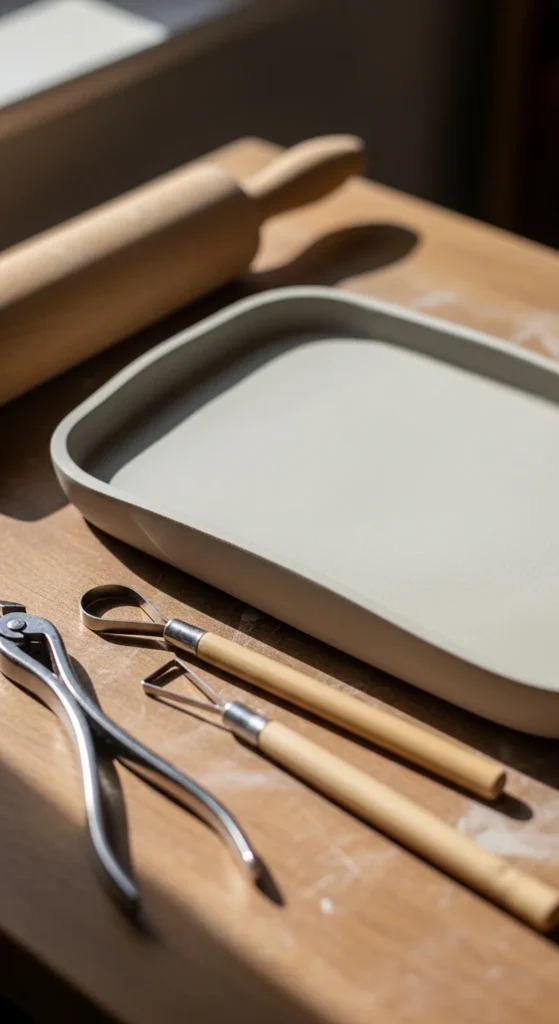
Slab trays are one of the easiest pottery ideas for beginners because the shape starts flat and stays easy to control. Roll your clay into an even slab using simple spacers like paint stirrers or chopsticks on both sides. That helps keep thickness more even. Cut the slab into a rectangle, oval, or arch shape, then lift or fold the edges slightly for a tray form. This can hold jewelry, candles, soap, or desk items, so it feels useful right away. If you want to decorate it, press in texture before cutting the final shape. Leaves, lace, mesh fruit bags, and fabric all create nice patterns with almost no extra cost. For a smoother look, use a damp sponge to soften the edges after trimming. A tray is a good starter piece because it lets you practice rolling, cutting, shaping, and finishing without worrying about tall walls or complex joins. It is simple, affordable, and easy to repeat if you want to make a matching set.
6. Wavy Rim Snack Plates
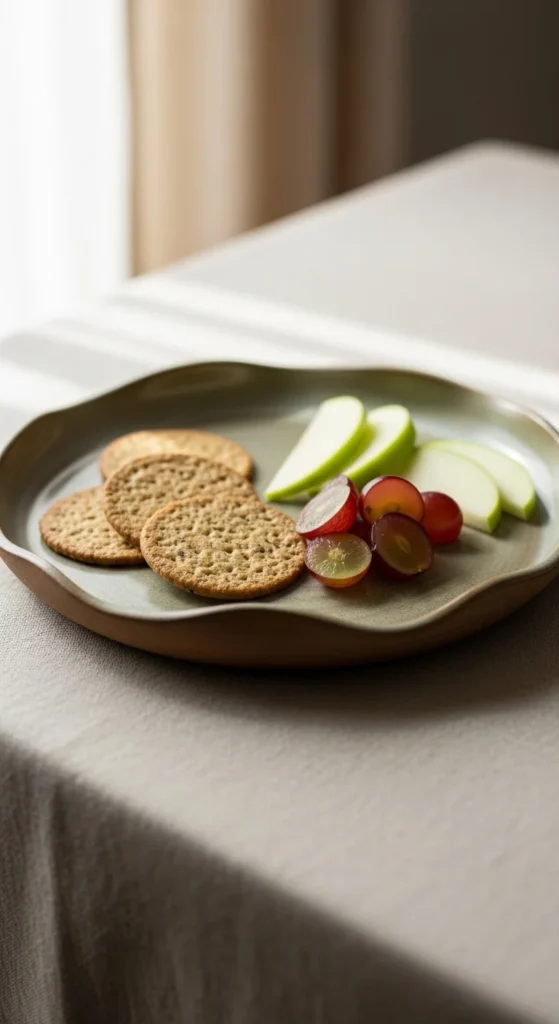
A small snack plate with a wavy edge feels modern and playful, but it is still beginner-friendly. Start with a slab and cut a circle or oval shape. Then gently push or pull the rim into soft waves. You do not need a perfect pattern. In fact, slightly uneven curves can make the plate look more handmade and warm. This project is great for learning how clay moves when it is still soft but not too wet. It also teaches you how to shape edges without adding more clay. Keep the plate on the smaller side for your first try so it dries more evenly and feels easier to lift. A plate like this works well for snacks, tea bags, or little dessert servings. If you do not want to glaze much, a simple clear or single-color finish usually looks great because the shape already adds interest. This is a fun way to move beyond flat trays while still staying in easy beginner territory.
7. No-Wheel Slab Mugs
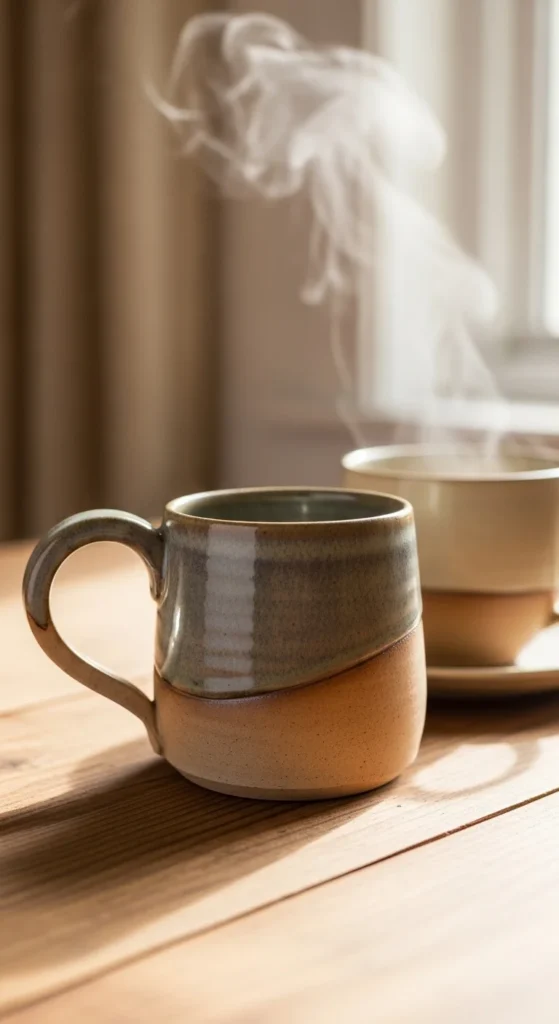
A slab mug sounds harder than it really is, especially if you keep the shape simple. Roll out a slab, cut it into a rectangle, and wrap it around a cup or paper template to form the walls. Then add a circle for the base and smooth the seams well. The handle can be a flat strip or a gently pulled coil. This project helps beginners learn joining, shaping, and balance in one useful item. The biggest tip is to let the mug body firm up a little before adding the handle. That helps the form hold better and makes attaching easier. Score and use slip where the handle meets the mug so the join stays stronger. If you want to make it feel more personal, add a thumb dent, soft texture, or simple carved line before it dries. A no-wheel mug is practical, giftable, and much easier than many people expect. It is a good project once you have made a few bowls or trays.
8. Handle Heroes Practice Cups
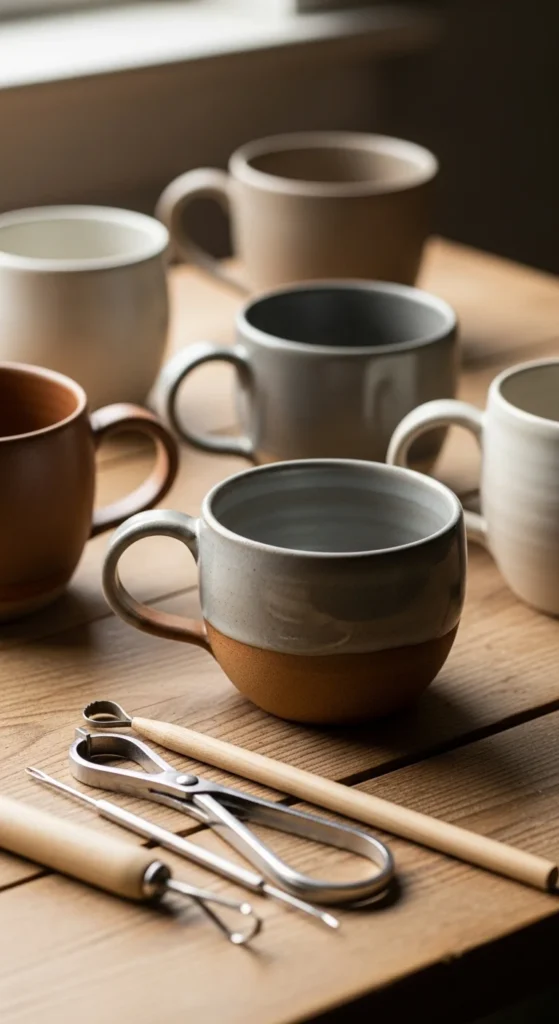
If full mugs feel a little too ambitious, make a few small cups and use them as handle practice. This is a smart beginner exercise because attaching handles is often the part that makes people nervous. Start with short cylinder cups using slabs or pinch forms, then try different handle shapes on each one. One can have a round loop, one can have a flat strap, and one can have a tiny thumb grip. This lets you see which style feels easiest to shape and hold. Small practice cups also use less clay than full mugs, which is helpful if you are working on a budget. Keep the walls thick enough to stay stable, but not so thick that the cup feels heavy. The goal is not making a perfect set. The goal is learning what kind of handle works for you. These cups can still be useful for pencils, tea lights, or tiny plant cuttings, so nothing goes to waste. It is simple skill-building with a practical result.
9. Spoon Rests for Everyday Use
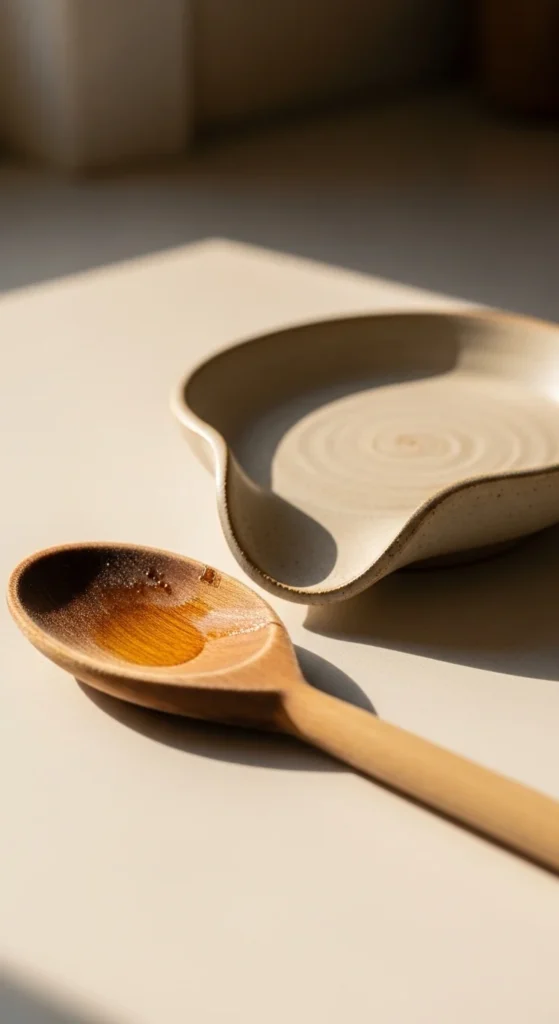
A spoon rest is one of the best beginner pottery projects because it is practical, small, and easy to shape. Start with a slab or a pinch form, then make a shallow dish with one side slightly raised to support the spoon handle. That little adjustment makes the piece feel more functional right away. You do not need fancy tools here. A bowl form, rolling pin, and butter knife can get the job done. Spoon rests also dry fairly well because they are low and open, which makes them less stressful for beginners. If you want to decorate them, try stamping leaves, adding soft stripes, or carving a simple line near the edge. Keep the base wide enough so it does not tip. A spoon rest is also great for gifts because most people can use one in the kitchen or by a coffee station. It is a low-cost project that teaches shaping, smoothing, and planning for function, all in one easy piece.
10. Simple Soap Dishes
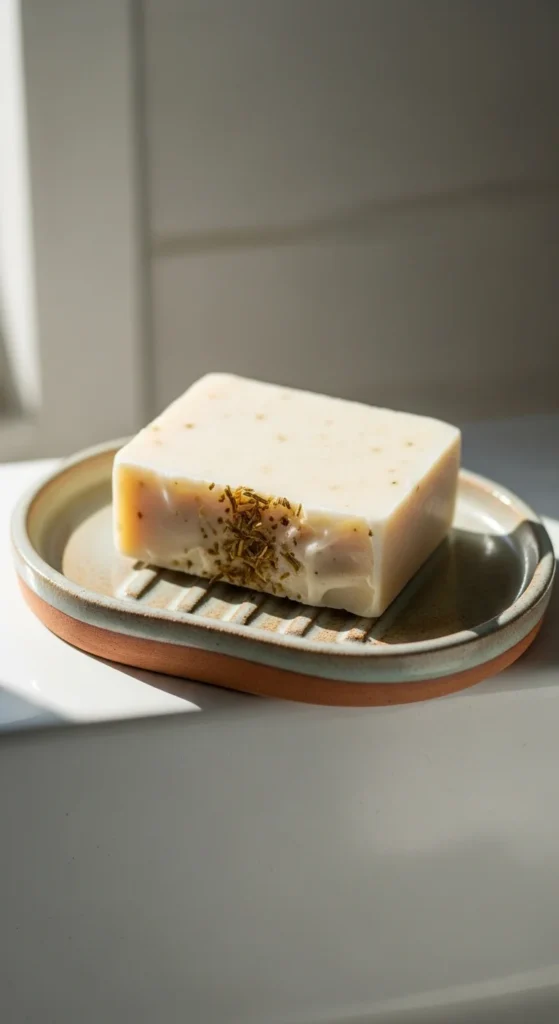
Soap dishes are a solid first pottery project because they are small, useful, and easy to personalize. Start with a slab and cut an oval, rectangle, or pebble-like shape. Then add a slight curve so water can drain more easily. You can carve a few shallow grooves across the center or poke small drainage holes if you want a more practical finish. This project is a nice way to practice balancing form and function without taking on anything too large. It is also very budget-friendly because the amount of clay is small and the tools are basic. A sponge, knife, and skewer are enough for most of the work. If you want a nicer look, soften the edges well so the dish feels smoother in the hand. Soap dishes make lovely handmade gifts, especially when paired with a bar of artisan soap. They are easy to repeat, easy to decorate, and useful in kitchens and bathrooms, which makes them a great beginner choice.
11. Tealight Holders with Cutouts
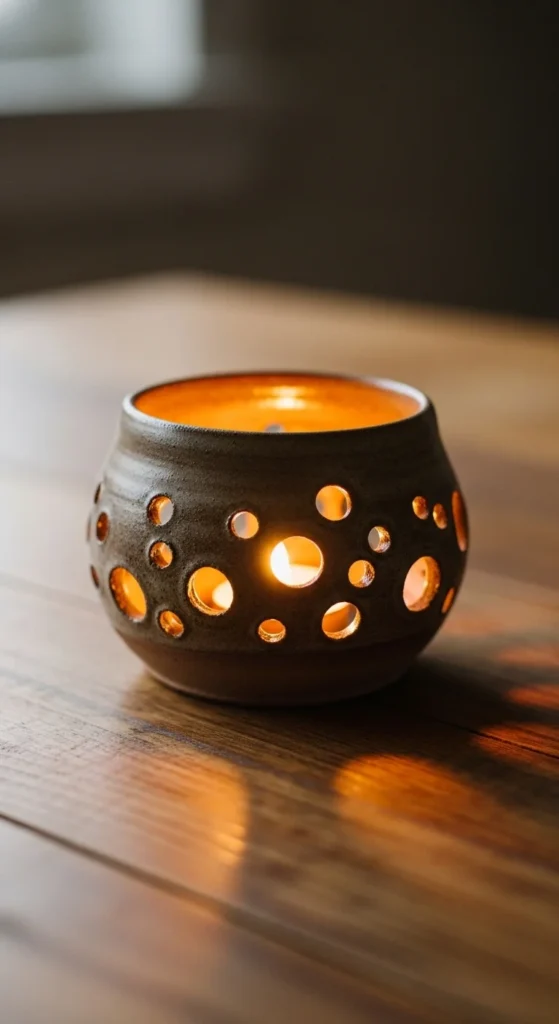
Tealight holders are fun because they mix simple pottery with a little atmosphere. You can make them as mini lantern shapes, shallow holders, or rounded cups with pierced holes. The easiest version is a small slab-built or pinch-formed cup with simple cutouts made before the clay fully dries. Circles, dots, stars, and small arches all work well. Keep the walls thick enough so the cutouts do not weaken the shape too much. A tea light inside creates a cozy glow, which makes the project feel more rewarding once finished. If you are new to clay, start with fewer holes and a simpler form. That keeps the structure stronger and lowers the chance of cracking near the openings. This project is nice for holiday gifts, shelf decor, or calm evening corners at home. It uses a small amount of clay and gives you practice with shaping and surface design in one piece. It is a great way to make something decorative that still feels functional.
12. Fridge Art Magnets
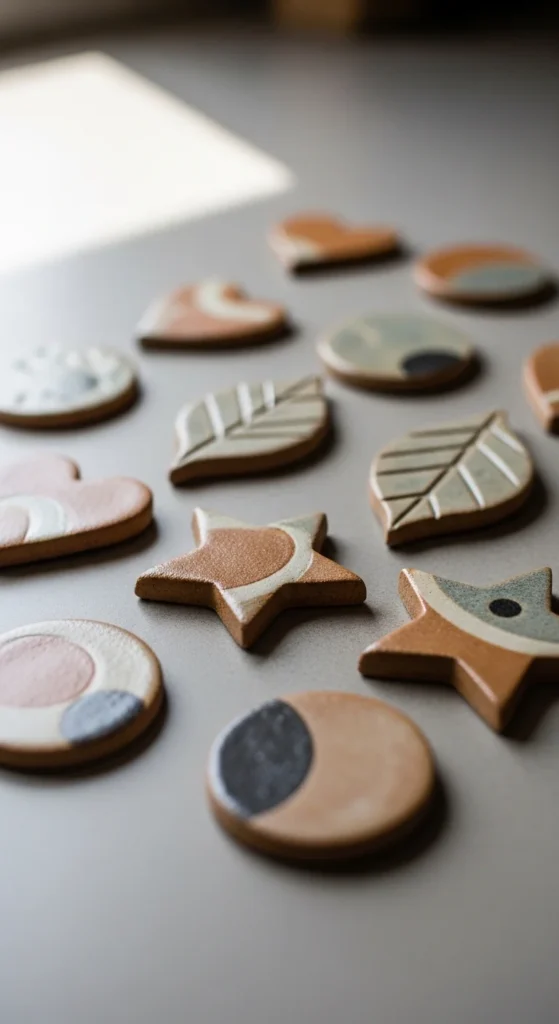
Clay magnets are great when you want very small beginner pottery projects that still feel finished. Roll out a slab and cut tiny shapes like hearts, leaves, stars, circles, flowers, or little pet faces. Because the pieces are flat and small, they are easier to dry and less likely to warp than larger work. This makes them a good choice when you are just getting used to clay handling. After firing or drying, you can glue a magnet to the back and use them on the fridge, office board, or school locker. These are perfect for using leftover clay from bigger projects too. That makes them a smart low-cost option. Add simple texture, carved lines, or a single color glaze for a clean look. You do not need to overdecorate them. Small shapes already feel charming. Clay magnets are also nice for kids, gift sets, or quick craft sessions when you want to practice without committing to a larger build. They are easy, useful, and fun to make in batches.
13. Ornament Discs with Texture
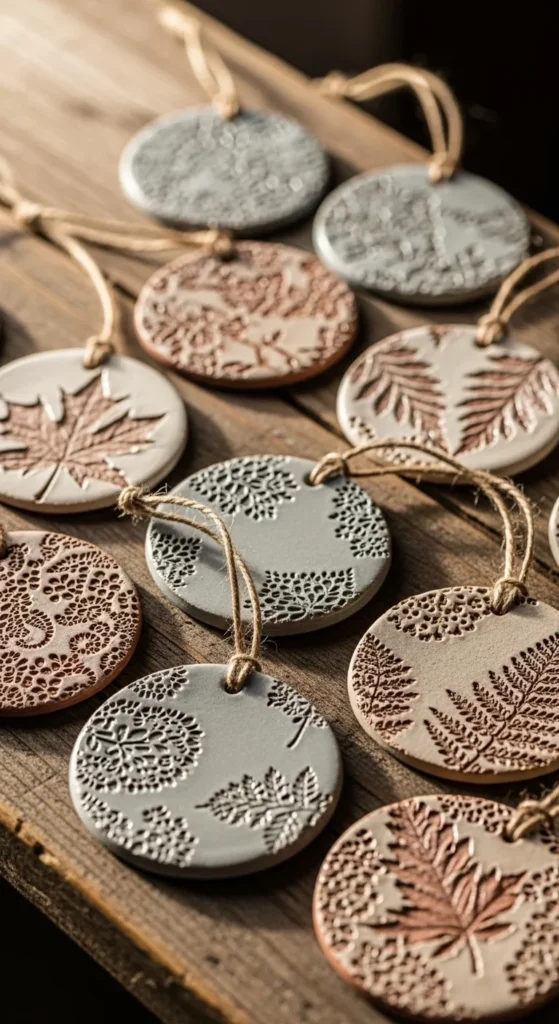
Ornament discs are an easy project that lets beginners focus on surface design. Roll out a slab, cut circles or simple shapes, and press in texture using lace, leaves, woven mats, or fabric scraps. Then poke a small hole near the top for hanging. That is really all you need for a simple but attractive piece. These can be used as holiday ornaments, wall hangers, gift tags, or little keepsakes for special dates. Because the form stays flat, you can focus on getting the surface and edges right without worrying about tall walls or joins. This is especially useful for beginners who want a calm, low-pressure project. If you want a cleaner look, smooth the edge with a damp finger after cutting. If you like a rustic style, leave the texture and slightly uneven edge visible. Ornament discs are affordable, easy to repeat, and ideal for using leftover clay. They are a nice way to practice rolling even slabs and making neat holes before moving to more complex pottery forms.
14. Ring Holders with a Cone Center
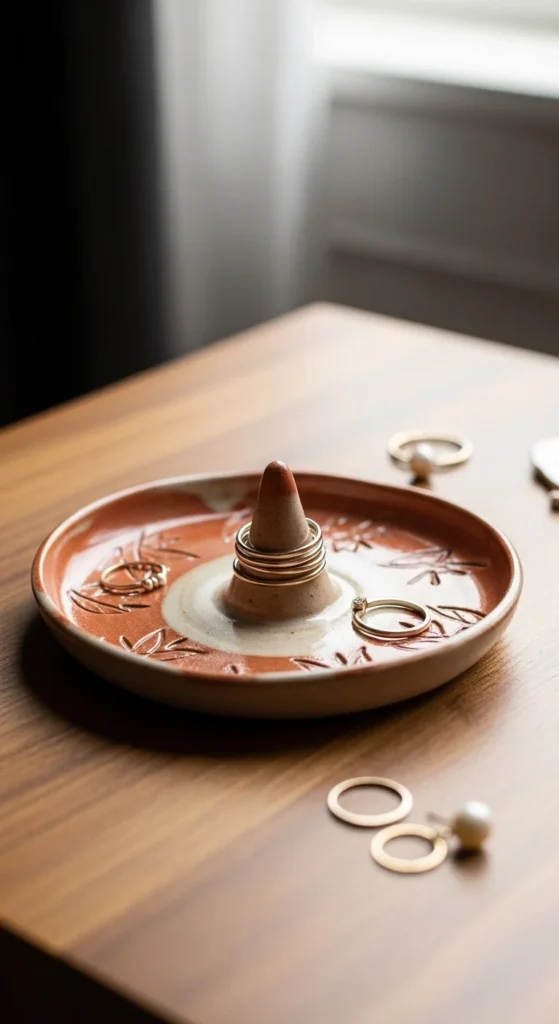
A ring holder dish is a small project that feels elegant but still stays beginner-friendly. Start with a tiny dish shape using a pinch method or a slab pressed into a bowl form. Then add a little cone in the center for stacking rings. This teaches you how to join two simple forms in a practical way. Keep the cone short and sturdy so it does not become fragile. Score and use slip where it meets the base so the attachment holds well. A ring holder is a smart project if you want something giftable without making a full bowl or plate. It uses little clay, dries quickly, and leaves room for small decorative touches like dots, carved lines, or pressed textures around the rim. You can also make a matching pair in different sizes for earrings and rings. These are especially nice for bedside tables, dressers, and bathroom counters. It is an easy piece that feels polished without asking too much from a beginner.
15. Wearable Clay Beads
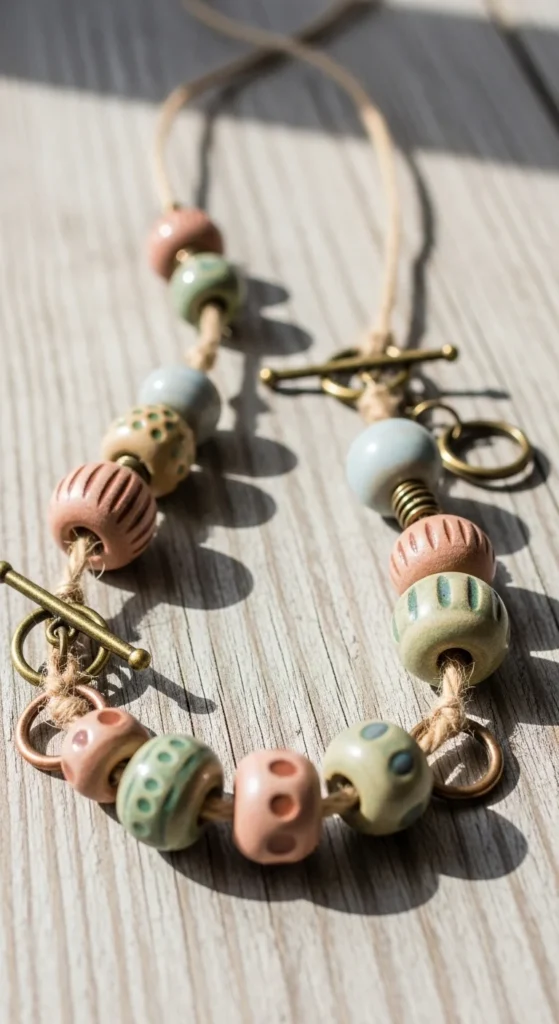
Clay beads are a great starter project because they are small, repeatable, and useful for necklaces, bracelets, bag charms, and decor strings. Roll tiny balls, tubes, or flattened discs, then poke holes through the center with a skewer while the clay is still soft. Try to keep the hole wide enough so it does not close too much as the bead dries. This project helps you build hand control without the pressure of making one large item. It is also very affordable. You can make a whole set from a small amount of clay, and even the imperfect beads still look good once strung together. Add simple texture by pressing lines, dots, or fabric into the surface. If you want a more polished result, sort your beads by size before firing or drying so the final string looks balanced. Clay beads are easy to turn into gifts and are a good choice for beginners who want fast results. They are small, low-risk, and surprisingly satisfying to make.
16. Animal Face Planters
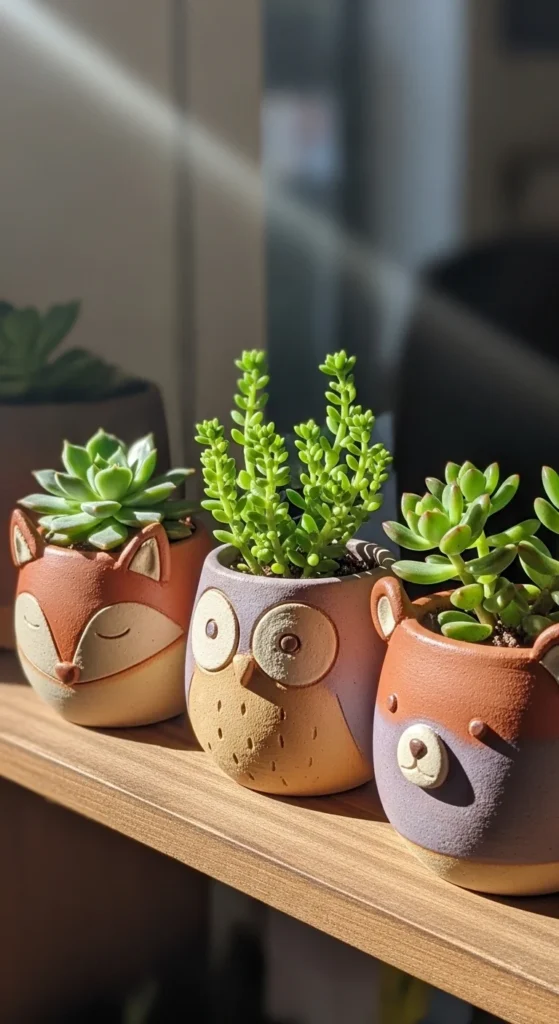
Animal face planters are a playful step up from plain succulent pots. Start with a simple round planter shape, then add minimal facial details like eyes, a nose, ears, or tiny paws. Keeping the features simple is the best move for beginners. A cat, bear, fox, or bunny can look adorable with just a few added shapes. This project teaches you how to attach small clay parts without overwhelming the form. Score and use slip on every added piece so the ears and face details stay secure. If you want a stronger chance of success, let the pot firm up slightly before attaching the little features. That helps prevent sagging. Animal planters are fun because they feel decorative and functional at the same time. A small succulent inside makes the whole piece look more finished, even if the form is not perfect. They are wonderful for gifts, shelf decor, and playful home corners. This is a beginner project with a lot of charm.
17. Nature Stamp Bowls
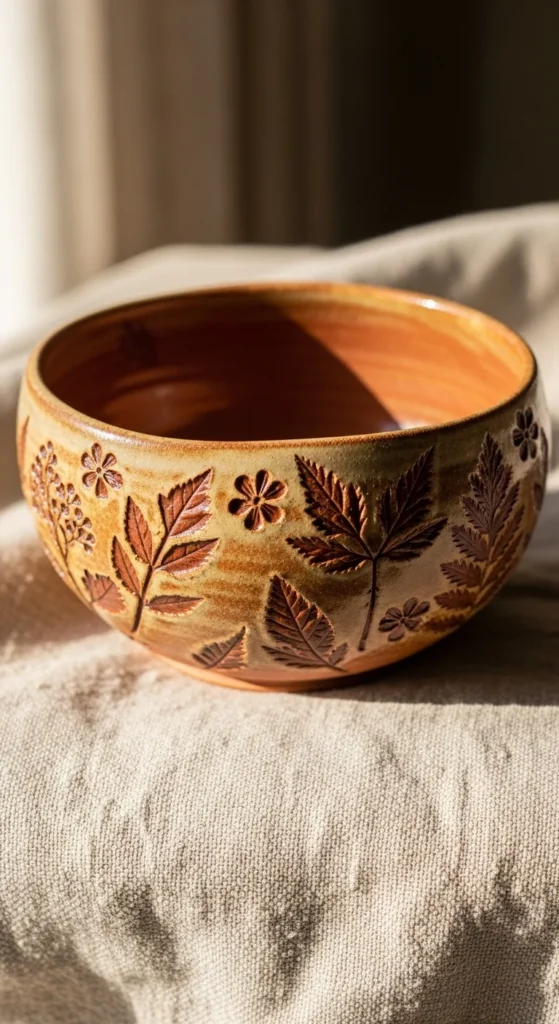
Nature stamp bowls are a lovely project when you want simple hand-building with more surface interest. Start with a pinch bowl or a small slab-formed bowl, then press leaves, flower heads, bark, or textured stems gently into the outside surface while the clay is still soft. The result looks detailed, but the method stays very easy. This is a nice beginner trick because the object itself creates the pattern for you. You do not need carving skill or special stamps. Just press carefully and lift away. Keep the bowl shape small so it stays easier to handle and dry. A bowl like this can hold rings, keys, wrapped candy, or tea bags. It also looks nice just sitting on a shelf. For a cleaner result, smooth the rim after shaping and avoid pressing texture too close to the edge. This project is affordable, useful, and calming to make. It gives you practice with form and decoration at the same time, which makes it a strong beginner favorite.
18. Scratch Art Sgraffito Tiles
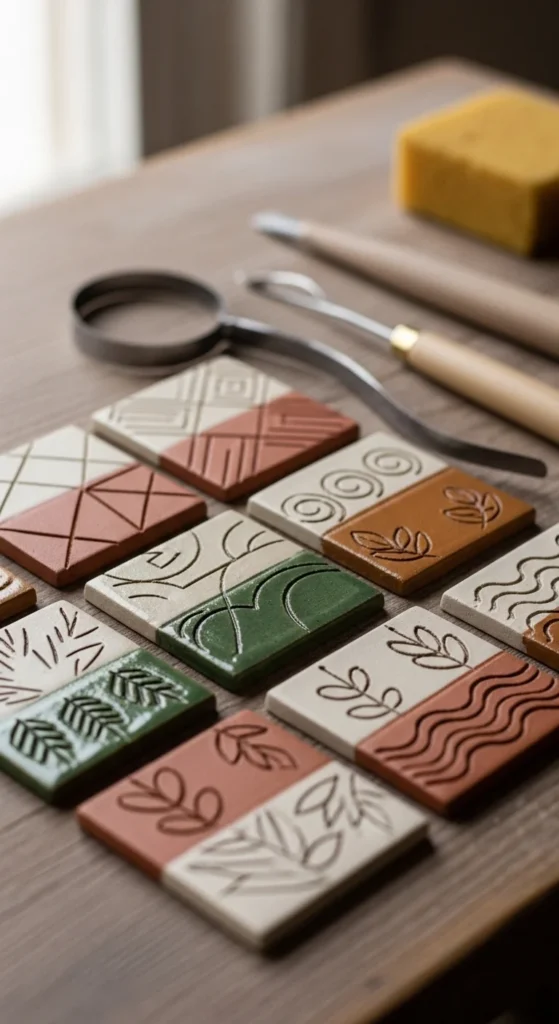
Small tiles are a smart way to practice surface decoration without worrying about complex forms. Make a flat square, rectangle, or circle from a slab, then smooth the surface and add a layer of slip or underglaze if available. Once it firms up a bit, scratch simple lines, leaves, patterns, or shapes into the surface. This scratch method is a nice beginner way to try sgraffito without taking on a full bowl or mug. Keep the design simple at first. Repeating lines, petals, stars, or abstract marks often look better than a crowded drawing. Tiles can be turned into coasters, wall decor, sample boards, or little keepsakes. They are also excellent practice pieces because they use very little clay. That makes them budget-friendly and easy to make in sets. If one design does not work, you have not lost much time or material. This project is all about building confidence with mark-making, and it gives you something useful or decorative at the end.
19. Breakfast Egg Cups
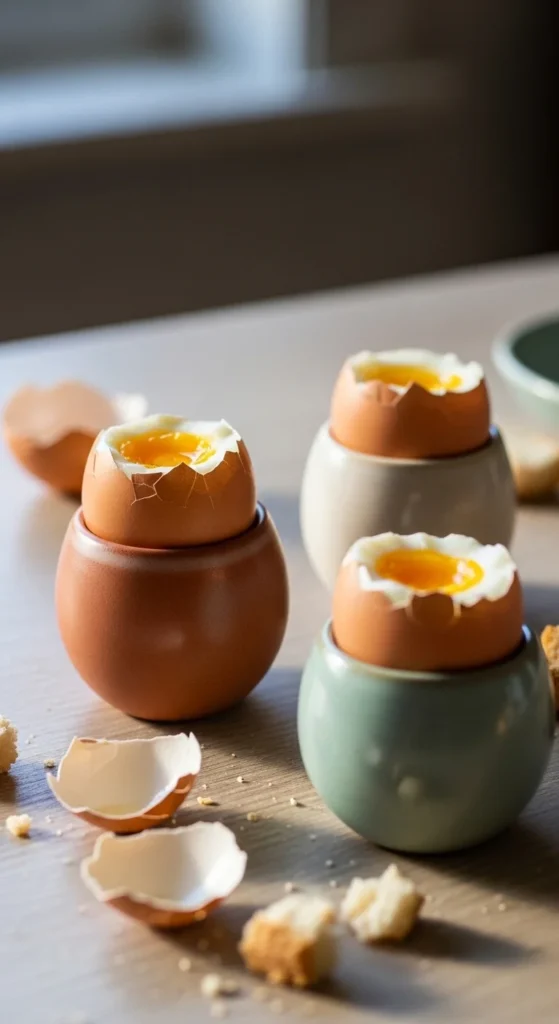
Egg cups are a small functional project that helps beginners practice shaping a stable form. You can make them as tiny pinch bowls on a short foot, or as slab-built cups with a simple ring base. The key is making the top wide enough to hold an egg while keeping the base steady. This teaches good thinking about balance and proportion in a very manageable size. Egg cups are useful, giftable, and easy to personalize with small carved lines or stamped patterns. Because they are compact, they use little clay and dry more quickly than larger items. That makes them a great weekend project if you want a fast win. If the first one feels awkward, make another right away and adjust the size. Small repeated projects like this are great for skill growth. Egg cups may not be the first item people think of, but they are practical, charming, and surprisingly fun to make.
20. Candle Jars with Soft Texture
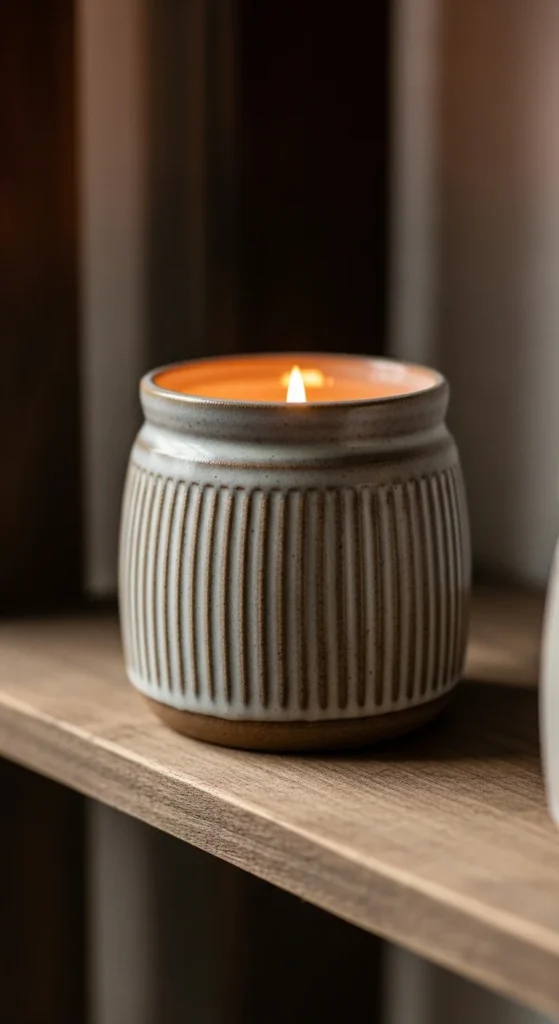
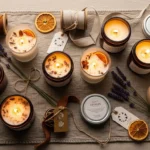
A simple candle jar is a rewarding beginner project because it feels substantial without requiring a difficult shape. Use coils or a slab wrapped into a cylinder, then keep the walls fairly even and the form straight. You do not need much height. A short rounded jar works very well for a first try. Add texture on the outside with a rib, fork, comb, or fabric press if you want more interest without extra decoration. If you plan to use it as a candle holder, keep the inside smooth enough to clean easily. Candle jars are nice because they work as decor even before you add a candle. They also make great handmade gifts when paired with a tea light or wax insert. Keep the base stable and the walls not too thin. That makes the piece feel more secure in use. This project helps you practice structure, smoothing, and simple texture in one very practical form that looks lovely on shelves and tables.
21. Small Wheel-Thrown Bowls
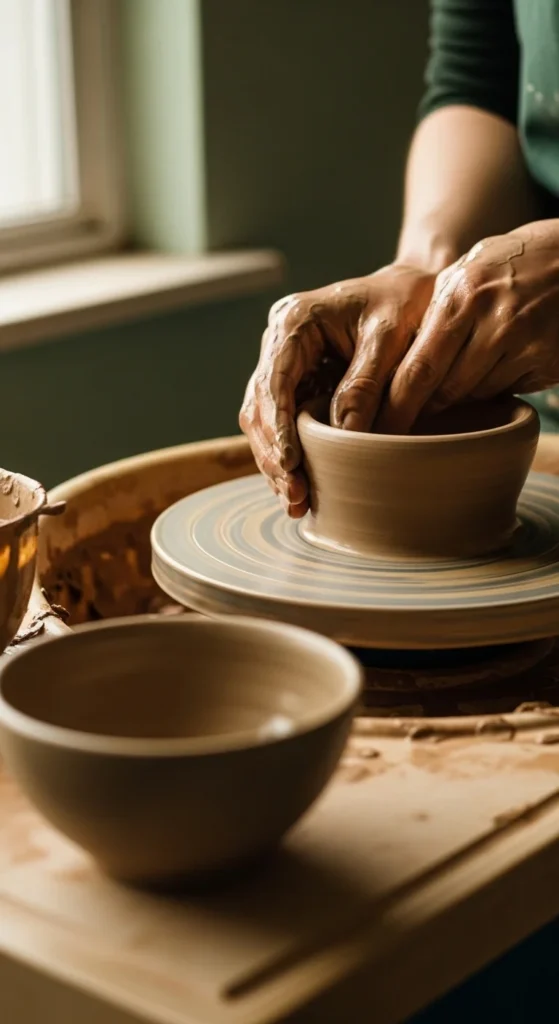
If you want to try the pottery wheel, small bowls are usually one of the easier first forms. They are more forgiving than tall cylinders and do not ask you to control height as much. Start with a modest amount of clay and focus on centering well. Then open the middle and pull the walls up only a little before widening into a bowl shape. Even if the form ends up shallow or a bit uneven, it can still work beautifully as a snack bowl or catchall dish. The small size keeps things manageable and helps you get used to how the wheel feels. It also saves clay, which matters when you are practicing often. If the rim gets wobbly, compress it gently with wet fingers rather than chasing perfection. Small wheel-thrown bowls are a good way to build confidence on the wheel without choosing a project that feels too hard too soon. They are practical, beginner-friendly, and easy to make again and again.
22. Base Boosters with Foot Rings
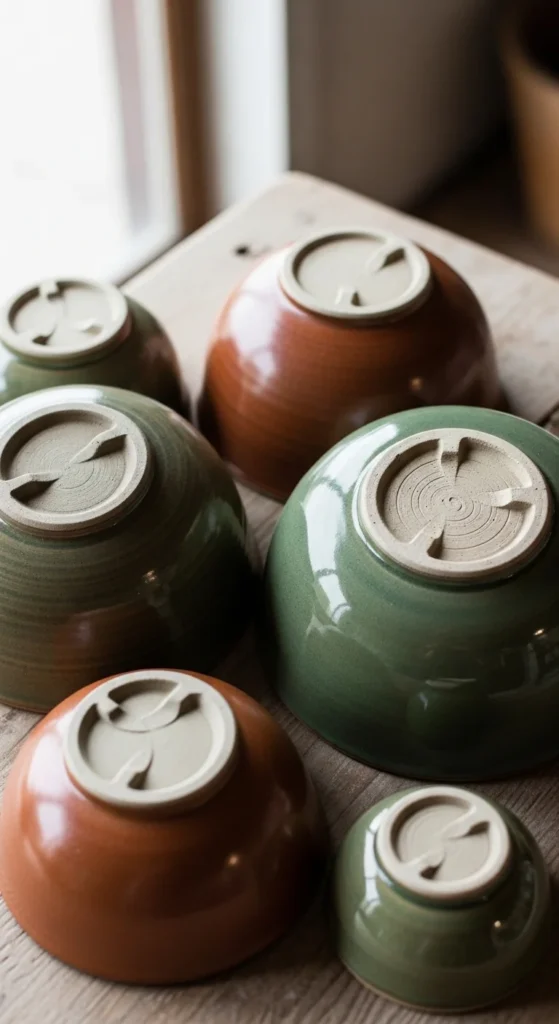
Adding a foot ring to a bowl, cup, or dish is a simple way to make beginner pottery feel more finished. A foot ring is the raised ring on the base that helps the piece sit neatly and can make the shape look lighter. You can add one by trimming away clay on a wheel-thrown piece when it becomes firm, or by attaching a simple coil ring to the bottom of a hand-built piece. For beginners, even a very soft foot ring can make a project feel more polished. It also teaches you to think about the base, not just the front view. That is a useful habit early on. Start small and keep the ring even so the item sits flat on the table. This works nicely on bowls, planters, cups, and little dishes. If you are not ready for trimming tools, a simple attached ring is enough to learn the idea. It is a small detail, but it adds a lot to the final feel of handmade pottery.
23. Tabletop Butter and Treat Dishes
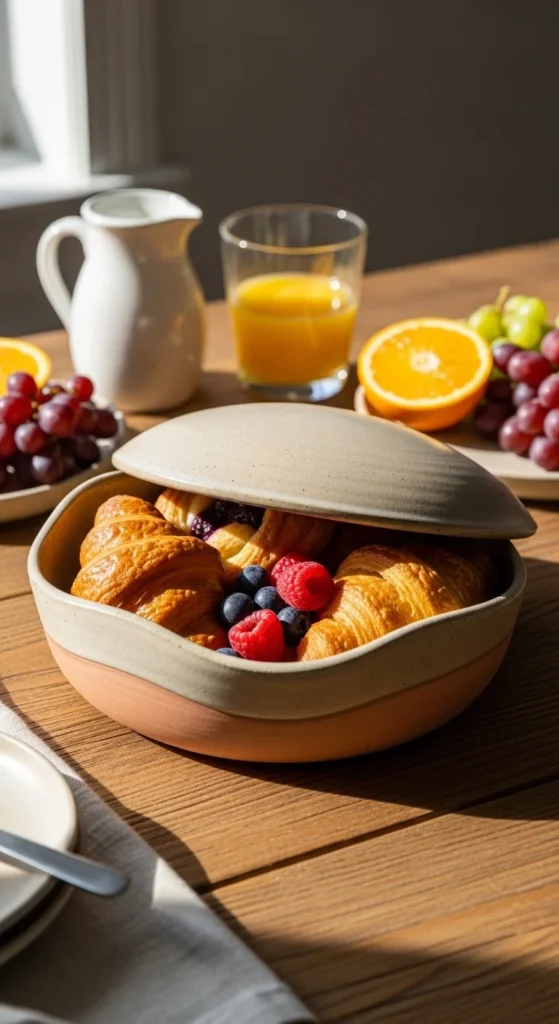
A butter or treat dish is a lovely beginner project when you are ready for something slightly larger but still very doable. The easiest version is a slab-built tray with raised sides or a shallow lidded dish made from two simple parts. You do not need to make it fancy. A clean rectangle, soft oval, or rounded square works beautifully. This kind of project helps you practice planning size and function, which is a big part of pottery. Keep the walls low so the form stays easier to handle, and do not make the base too thin. A dish like this can hold butter, cookies, wrapped candy, or tea bags, so it ends up useful even if it is not perfect. You can decorate it with light texture, carved lines, or a wavy rim for a handmade touch. It uses more clay than a tiny trinket dish, but it still stays well within beginner range. It is practical, attractive, and a satisfying project to grow into.
Conclusion
Beginner pottery works best when the projects stay small, useful, and easy to repeat. Pinch pots, slab trays, coil vases, soap dishes, spoon rests, planters, mugs, and little decorative pieces all help you build real skill without needing complicated tools or a pottery wheel right away. Small projects also keep clay costs down and make it easier to practice shaping, joining, smoothing, and decorating at your own pace. Start with one or two simple forms, make a few versions, and let each piece teach you something. The more you work with clay, the more natural it starts to feel. Pick one idea from this list, gather a basic lump of clay and a few simple tools, and begin with a project that feels fun enough to finish.

Lily Summers is a digital artist and creative storyteller who loves bringing colorful characters to life. With a passion for cartoons, fan art, and playful sketches, she inspires others to explore their imagination through art. When she’s not sketching, you’ll find her dreaming up new ideas for CraftedWizard.com to spark creativity in every artist. 🌈✨