
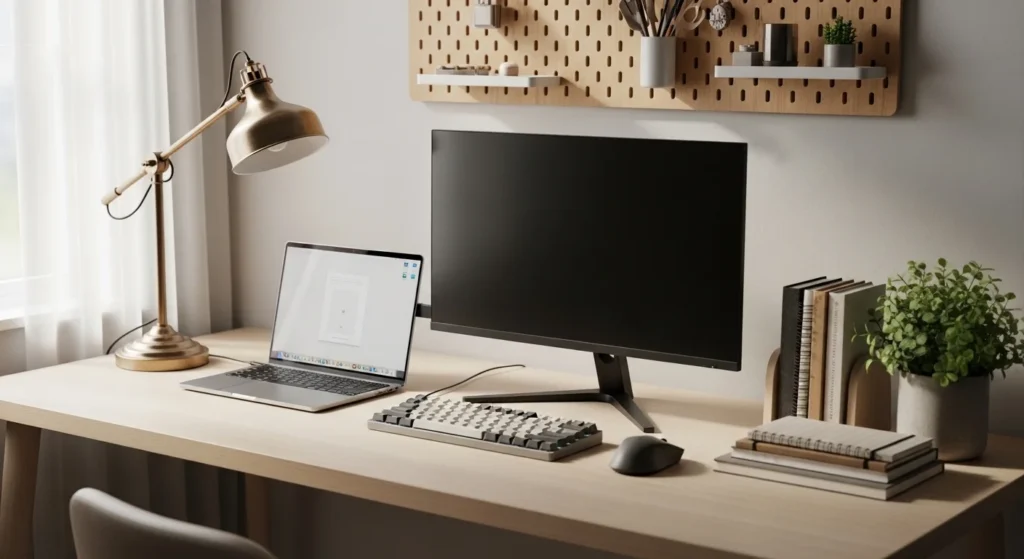
A well-styled desk can make everyday work feel calmer, cleaner, and easier to manage. That is why so many people search for aesthetic desk setup ideas that do more than just look pretty. A good workspace should help you focus, reduce visual mess, and make long hours at a desk feel more comfortable. The best part is that an attractive setup does not have to cost a lot. Small changes like better lighting, a tidy cable plan, vertical storage, matching containers, and a clear color palette can completely change how a desk feels. These ideas are designed for students, remote workers, creators, and anyone who wants a more productive workspace that still feels personal and cozy. From budget-friendly organizers to soft lighting and simple layout changes, these desk setup ideas can help your workspace look better and work better at the same time.
1. Neutral Color Palette Desk Setup
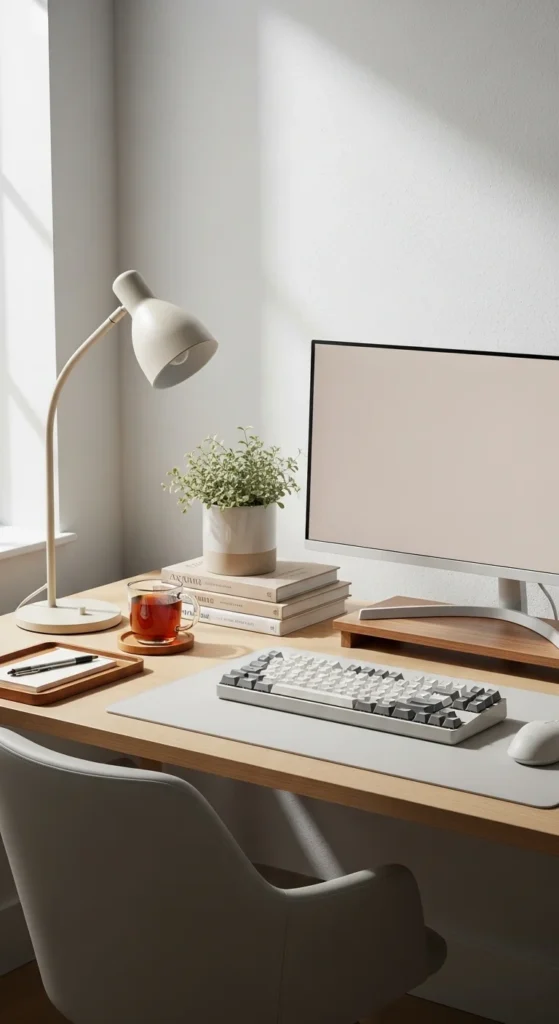
A neutral color palette is one of the easiest ways to make a desk look more organized without buying expensive furniture. When the main items on your desk follow a simple range like cream, beige, soft grey, white, or light wood, the whole setup feels calmer right away. This works well because your eyes are not jumping between too many bright colors while you work. Start by choosing two or three base shades and repeat them across your desk mat, pen holder, lamp, notebook, and storage boxes. You do not have to replace everything at once. Even covering a loud notebook with kraft paper or switching to plain containers can help. A neutral setup also makes cheap items look more polished. A basic white mug can become a pen cup. A simple beige tray can gather loose items and make them look intentional. This type of desk works especially well for students and remote workers who want a clean background for calls or videos. If you still want personality, add one small accent color through a plant pot, coaster, or art print. Keeping most of the setup neutral helps the whole workspace feel more restful and easier to focus in.
2. Desk Mat That Grounds the Whole Setup
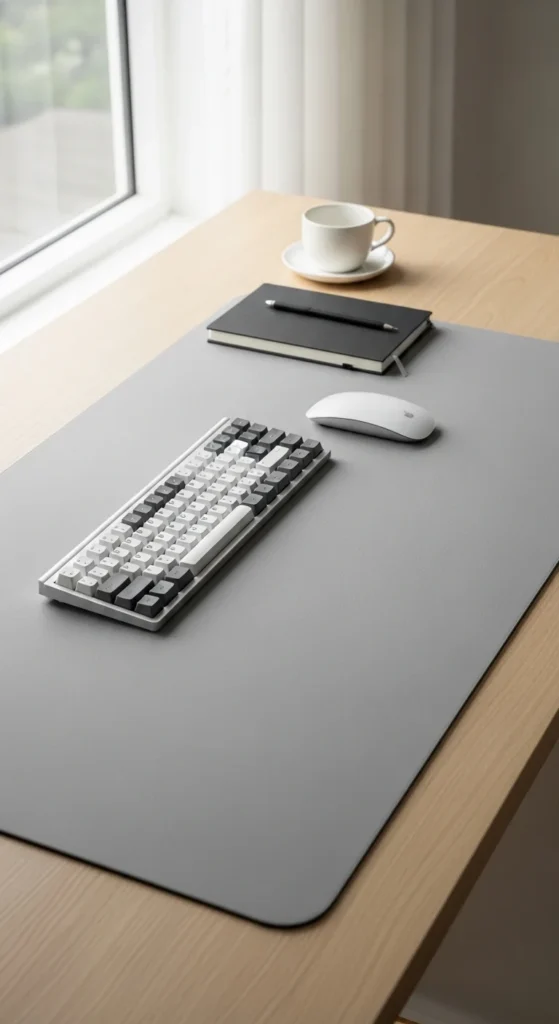
A desk mat can change the look of a workspace faster than almost anything else because it visually pulls everything together into one clear zone. It creates a base for your keyboard, mouse, notebook, and daily tools, which makes the desk feel more intentional and less scattered. A large mat in a calm color like taupe, cream, muted green, dusty blue, or charcoal can make even a simple desk feel styled. It also helps protect the surface from scratches, pen marks, and mug rings, which is useful if you are working on a rented desk or an older table. If you are trying to save money, you do not need a premium leather mat right away. Felt mats, cork mats, or even a clean piece of heavy fabric cut neatly can work as a budget-friendly start. A desk mat is especially helpful if your desk surface feels visually busy, because it gives your work area one steady foundation. Pair it with a keyboard and mouse in matching or neutral tones for the best effect. A good desk mat makes the setup feel less random and more complete, and that often helps your desk feel easier to use each day.
3. One Small Lamp With Warm Light
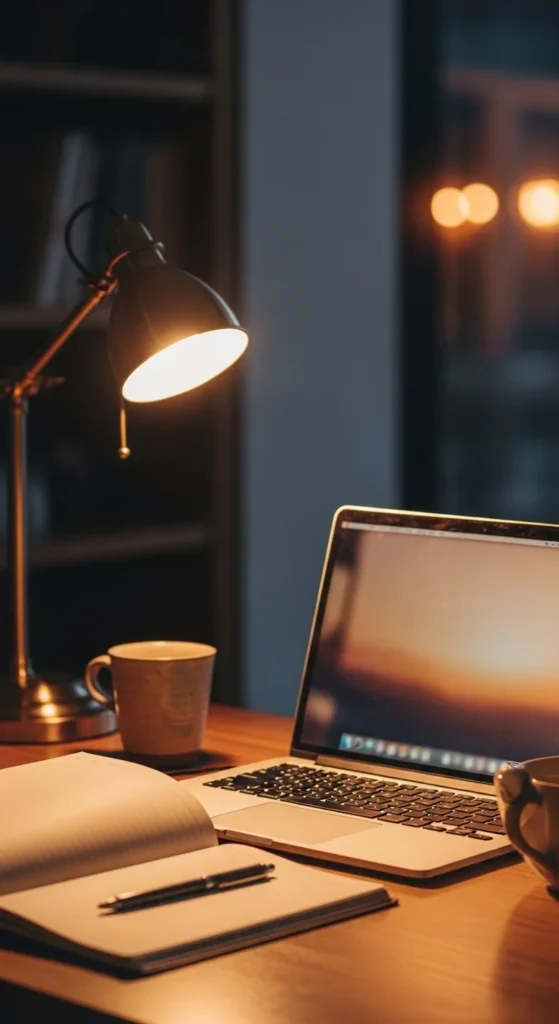
One small lamp with warm light can make a desk feel more welcoming and much easier to use in the evening. Overhead room lights are often too harsh, and that can make a workspace feel flat or tiring. A simple desk lamp adds a softer pool of light that makes the desk feel like its own quiet zone. This is useful for studying, journaling, reading, or late work sessions. Choose a lamp with a warm bulb rather than a stark cool one if you want the desk to feel cozy and calm. Soft white or warm white usually works well. If you are on a budget, even a basic thrifted lamp or clip-on light can make a big difference once paired with a good bulb. Place it on one side of the desk so it brightens your main work area without taking over the whole surface. A lamp with a small footprint is especially good for compact desks. Besides the practical light, a warm lamp gives the setup more atmosphere, which can make it easier to settle in and focus. It is one of the simplest upgrades for both looks and daily comfort.
4. Pegboard or Grid Wall Above the Desk
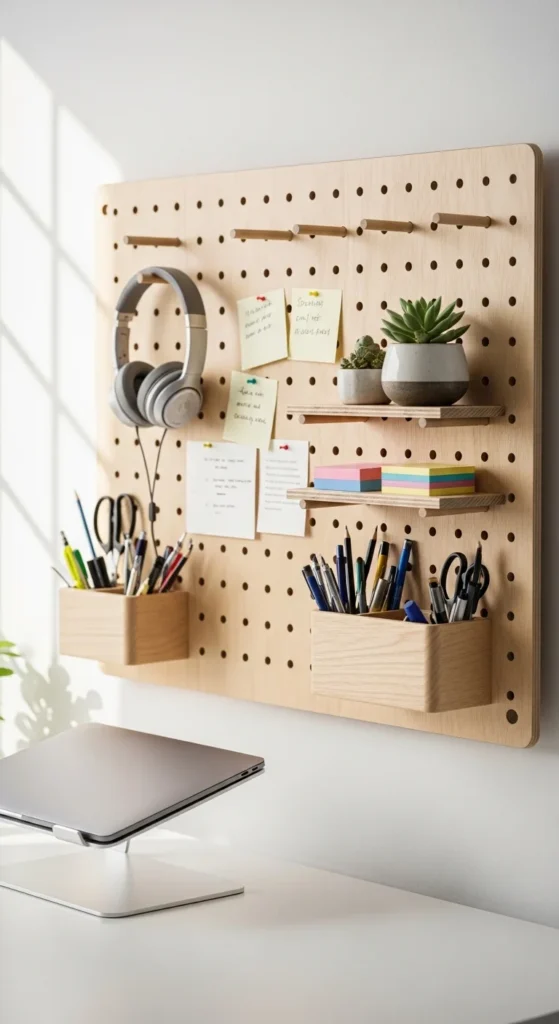
A pegboard or wall grid above the desk is a smart way to add storage without crowding the desk itself. When small items like headphones, scissors, sticky notes, chargers, and mini containers move up onto the wall, the work surface feels much more open. That extra breathing room can make the whole setup look cleaner and work better. Pegboards are especially good for small desks where every inch matters. You can use hooks, tiny shelves, cups, or clips to hold daily items in a way that still looks neat. If you want an aesthetic feel, keep the colors simple and avoid overloading the board. A few useful pieces usually look better than filling every hole. White, black, wood, or soft neutral boards are easiest to style. If you are keeping costs low, a basic metal grid panel can do a similar job with clips and baskets. This idea works well for students, artists, and remote workers because it keeps tools visible but off the desk. A good wall setup helps the desk stay focused on the tasks in front of you rather than becoming a storage pile.
5. Laptop Stand for a Cleaner Sightline
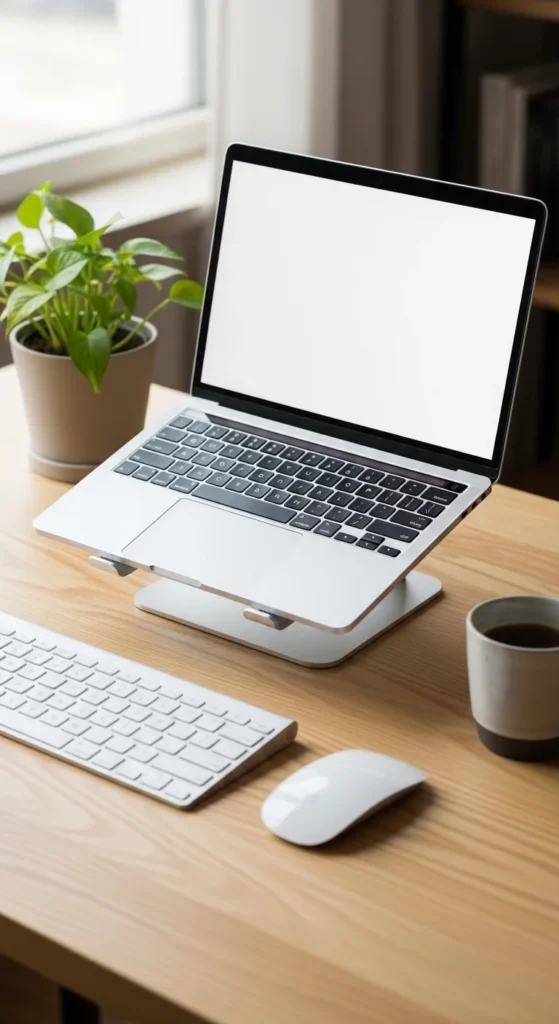
A laptop stand is one of the easiest ways to make a desk feel more put together while also helping with posture. When the screen sits too low, the whole desk can feel cramped and awkward. Raising the laptop instantly creates a cleaner line across the setup and opens up space underneath for notebooks, a slim tray, or a keyboard when not in use. It also helps the desk look more intentional because the screen becomes part of the layout instead of sitting flat in the middle. If you are on a budget, you do not need a fancy metal stand right away. A sturdy stack of books, a simple wooden riser, or a low shelf can work well too. Just make sure it feels stable. This idea is especially helpful for students and remote workers who spend long hours at a screen. Pair the stand with an external keyboard and mouse if possible to keep the setup more comfortable. Even when used alone, a stand makes the desk look more balanced. It is a practical upgrade that improves both the function and the appearance of the workspace without asking for a big change.
6. Matching Storage Jars and Containers
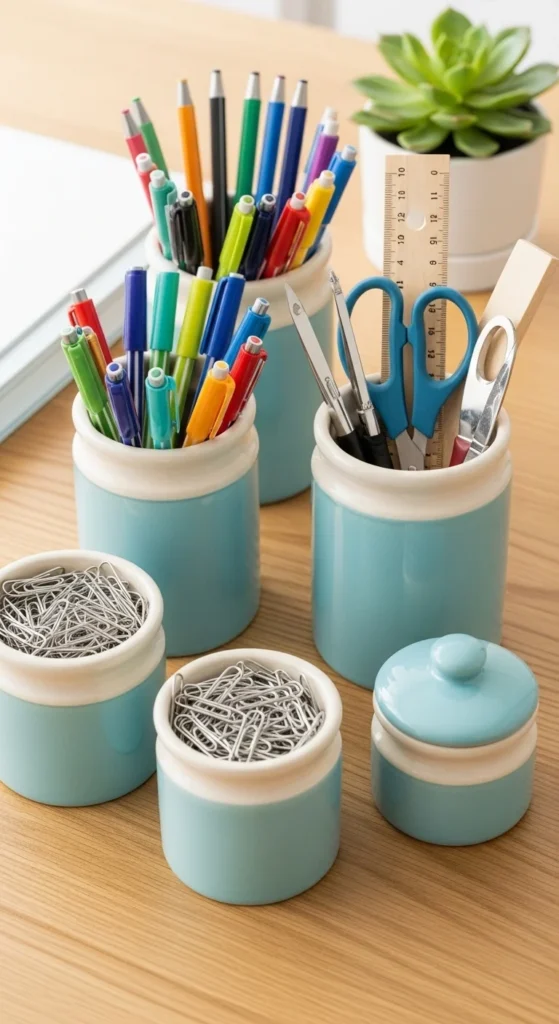
Matching storage jars and containers can make everyday desk clutter look much more intentional. Pens, paper clips, sticky notes, charging cables, and other small tools tend to make a workspace feel messy when they all sit in random holders. Using containers that share a similar color, material, or shape helps those items feel like part of the design instead of part of the mess. Clear jars, white cups, ceramic holders, small baskets, or neutral tins can all work well. The best part is that you can build this setup very cheaply by reusing jars from candles, sauces, or jams and simply cleaning them well. A coat of paint on the lids or a strip of matching fabric under each one can help them feel more coordinated. Try to limit yourself to only the tools you use often. If every pen you own is visible, the desk will still feel crowded. This kind of storage works especially well on one corner of the desk or on a shelf above it. It keeps the setup practical while giving it that neat, styled look that many people want from an aesthetic workspace.
7. Floating Shelf for Vertical Storage
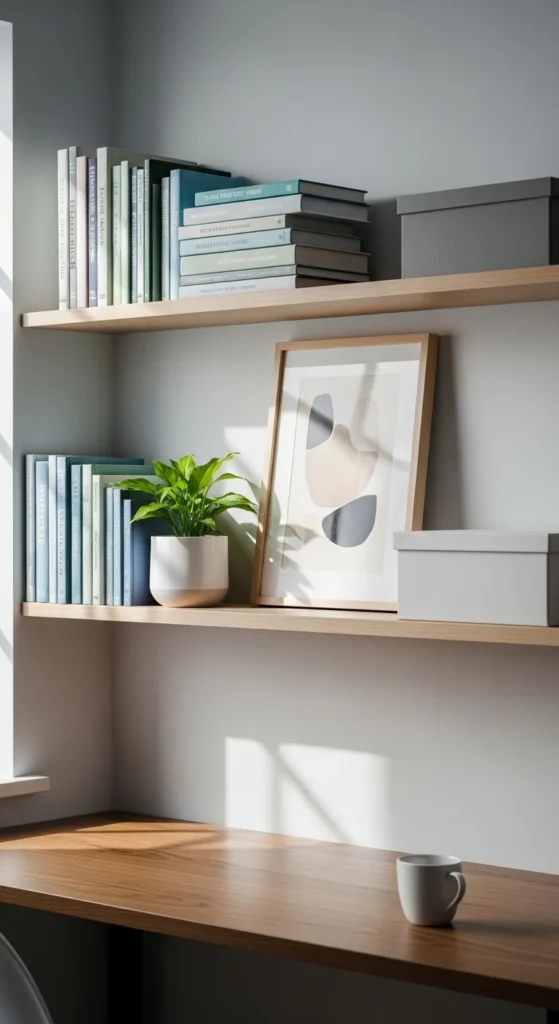
A floating shelf above the desk is a great way to add storage and style without taking up floor space or making the desk surface smaller. It gives you a place for books, a plant, small storage boxes, framed art, and tools that you do not need in front of you every second. That means the desk itself can stay more open for actual work. A good shelf also helps the whole setup feel layered and complete, especially if the wall above the desk feels empty. Keep the styling simple so the shelf does not become a second source of clutter. A few books stacked neatly, one plant, and one or two storage boxes usually work better than a crowded shelf full of random items. If you are on a budget, a plain wood board with simple brackets can look beautiful once painted or stained. Floating shelves are especially helpful in bedrooms and small apartments where desk storage is limited. They let you move visual weight upward, which makes the workspace feel taller and more balanced. It is a practical upgrade that also gives you more room to shape the desk area into a space you actually enjoy using.
8. Small Plant for Softness and Color
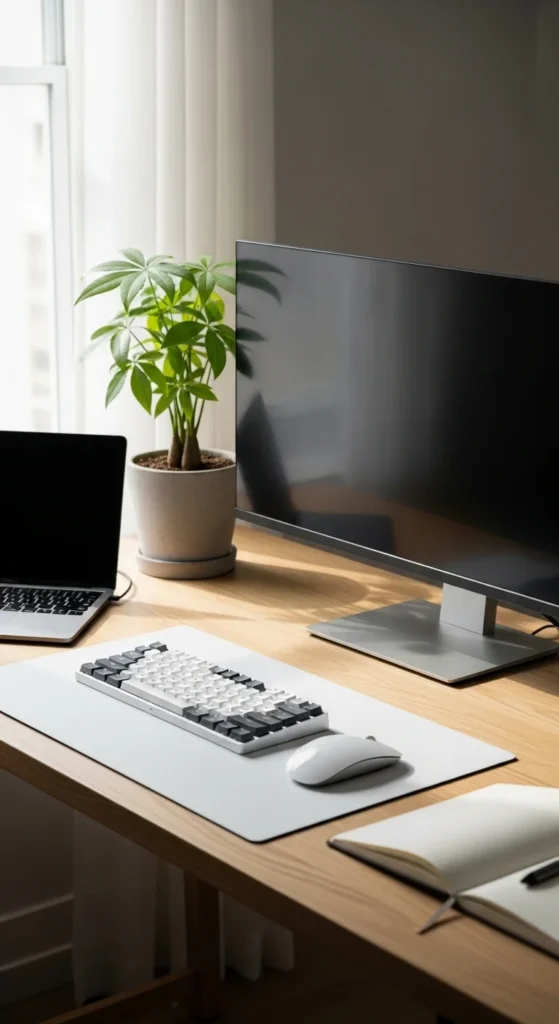
A small plant is one of the simplest ways to make a desk feel more alive. It adds shape, color, and softness to a setup that might otherwise feel too flat or too mechanical. A plant can break up all the hard lines from screens, books, and storage boxes, which helps the desk feel more balanced. Good desk-friendly plants include pothos cuttings, snake plants, succulents, small ZZ plants, and mini peace lilies depending on your light. If you are new to plant care, go for something hardy rather than something delicate. A simple ceramic pot, terracotta planter, or glass jar can look beautiful without costing much. Even one little cutting in water can add charm. The key is to keep it small enough that it does not block your work area or make the desk harder to clean. Placing the plant on one side of the setup usually works best. It gives the eye a soft landing point without getting in the way. A plant may seem like a tiny detail, but it often makes the whole workspace feel less cold. That can make a desk easier to enjoy and return to every day.
9. Hidden Cable Plan for a Tidy Look
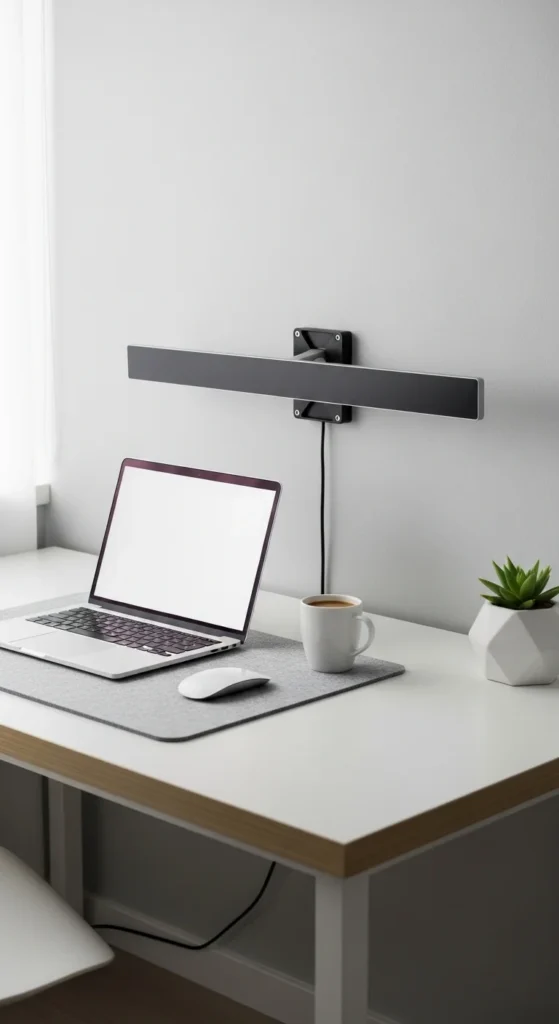
A hidden cable plan can make a desk look cleaner almost instantly. Even a beautiful setup can feel messy when cords hang everywhere, coil around the floor, or cross the desk in random directions. Organizing cables does not have to be expensive. A few cable clips, velcro ties, binder clips, adhesive hooks, or even twist ties can make a big difference. Start by deciding which cords actually need to stay plugged in daily. Then group them by direction and keep them close to the desk leg, wall edge, or back panel where they are less visible. If you have a power strip, mounting or tucking it under the desk often helps the most. You can also use a small box or basket to hide bulky chargers and adapters. A tidy cable plan helps with more than looks. It also makes cleaning easier and keeps you from wasting time untangling things when you need to move devices around. This is one of the most practical desk upgrades because it improves both function and appearance right away. A clean cable setup makes the whole workspace feel calmer and much more intentional.
10. Monitor Riser With Storage Space
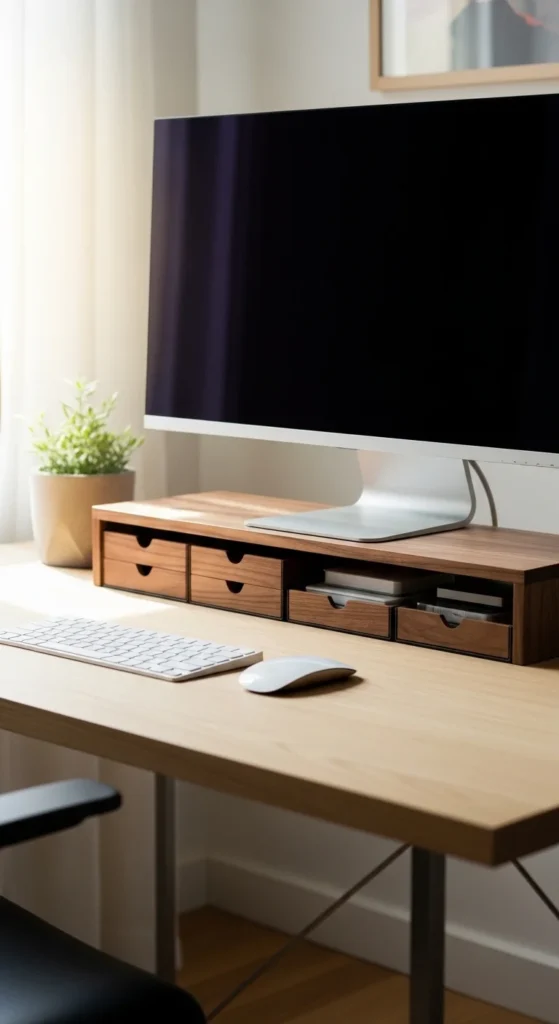
A monitor riser is helpful because it solves two problems at once. It lifts the screen to a more comfortable height and creates extra storage underneath for notebooks, hard drives, papers, or a keyboard. That small shelf-like layer can make a desk feel much more organized, especially if the surface tends to collect flat items. A wooden riser is a popular choice because it adds warmth, but white, black, and acrylic styles can look clean too. If you want to save money, a simple DIY riser made from wood boards, stacked books, or a small shelf organizer can work well. Keep the storage underneath limited to things you use often so it stays neat instead of becoming a hidden pile. This kind of riser works especially well for people using one large monitor or a laptop-plus-monitor setup. It also helps the desk feel more structured because the screen no longer sits directly on the surface. A riser gives the eye a clear layer system, and that often makes the workspace feel more polished. It is a practical desk idea that makes both the layout and the daily workflow feel easier.
11. One Tray for Daily Essentials
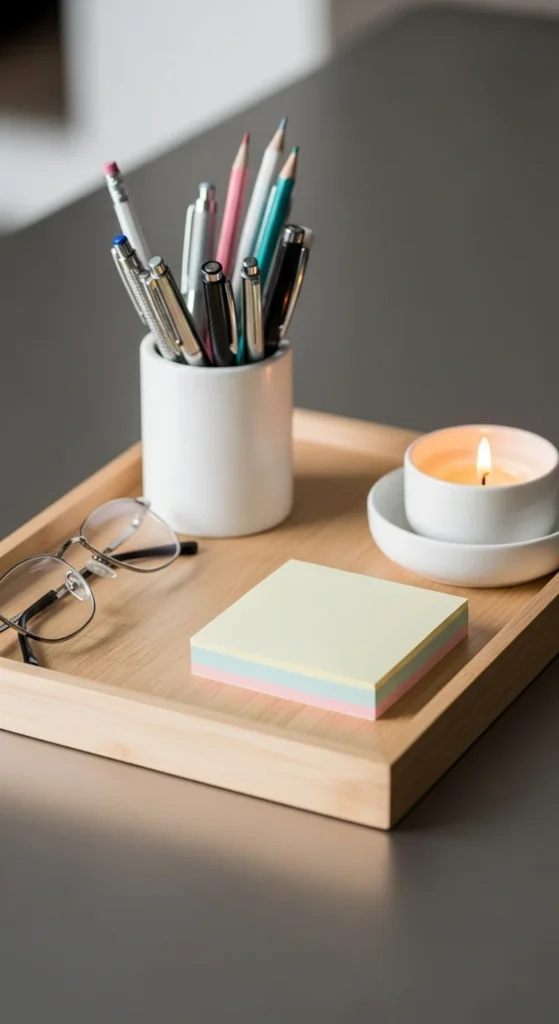
One tray for daily essentials can make a desk feel far less scattered. Instead of letting glasses, pens, sticky notes, earbuds, lip balm, clips, and other small items spread across the surface, gather them into one defined zone. That single boundary helps the desk look more organized even when the tray holds several things. A tray also makes cleaning easier because you can lift one piece instead of moving ten loose items. Wood, metal, ceramic, acrylic, or woven trays can all work depending on your style. If you are keeping costs low, a simple kitchen tray, thrifted dish, or shallow box lid can do the job. The trick is to keep the tray edited. Only include the things you reach for often. A pen cup, one small dish, and maybe a coaster or candle are usually enough. This works especially well for people who like a tidy look but still need quick access to everyday tools. A tray brings order without hiding everything away, which is helpful in real working spaces. It is one of the easiest small changes for making a desk feel more styled and less chaotic.
12. Soft Backlight Behind the Monitor
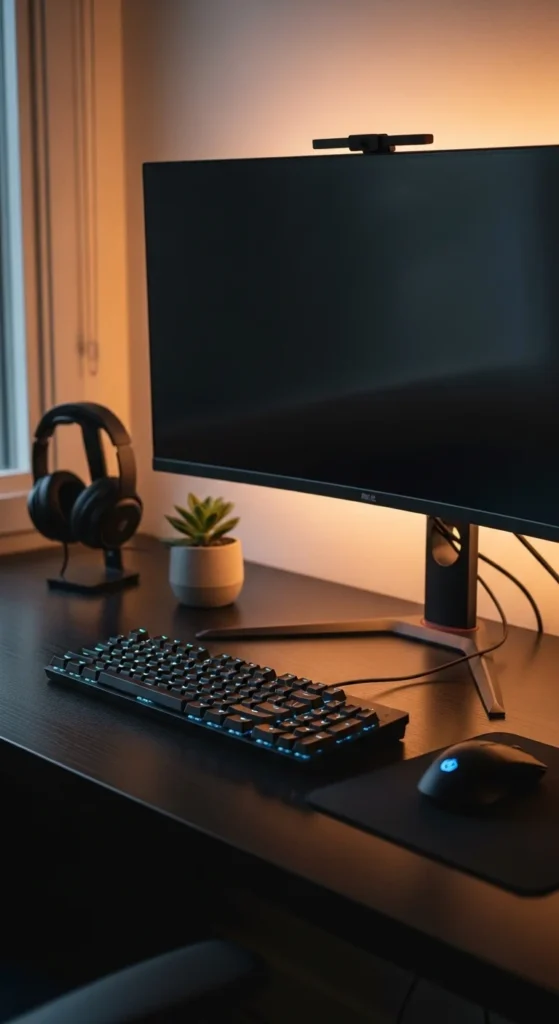
Soft backlighting behind a monitor can make a workspace feel more polished and relaxing, especially in the evening. A subtle glow behind the screen adds depth to the setup and helps the desk feel less flat against the wall. It can also make the work area easier on the eyes when the room is darker. Warm white or soft neutral light usually works best if you want a cozy look. If the light is too bright or too colorful, it can feel more distracting than helpful. LED strips or compact light bars are common choices, but even a small lamp placed behind the monitor can give a similar effect. This idea works especially well in bedrooms, gaming-study hybrid spaces, and home offices where the desk is used after sunset. If you are on a budget, use a basic light strip with a dim setting rather than a more advanced system. Keep the rest of the desk fairly simple so the glow stands out in a calm way. Soft backlighting is one of those upgrades that makes a setup feel more intentional right away without changing the core furniture.
13. Corkboard for Visual Planning
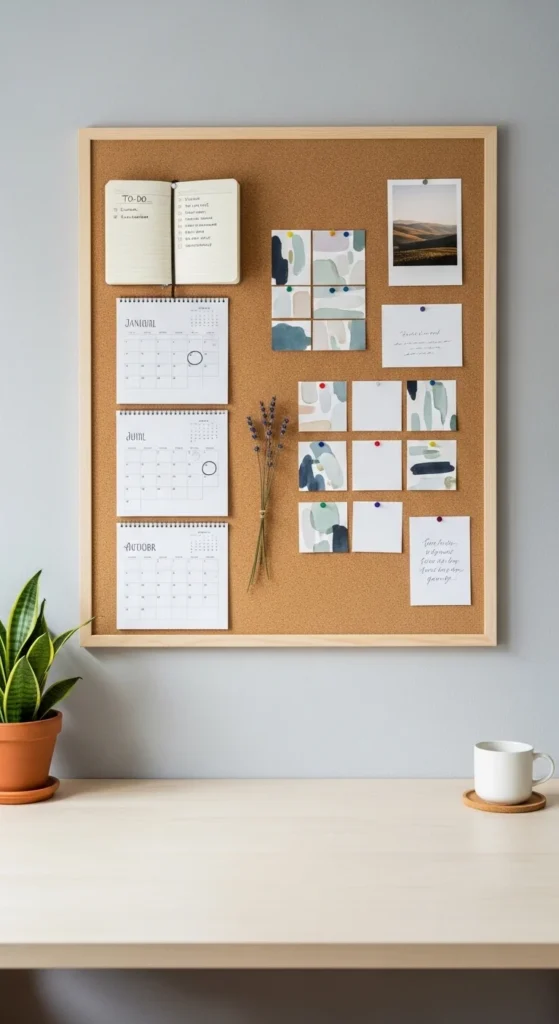
A corkboard can be both useful and beautiful when it is styled with care. It gives you a place for schedules, reminders, small prints, to-do lists, and visual ideas without leaving paper all over the desk. This is especially helpful for students, freelancers, and anyone juggling multiple tasks. A corkboard keeps important information visible while still giving it a clear home. To make it feel aesthetic, use a limited color palette and avoid pinning every random scrap of paper you own. One calendar page, a few neat notes, and one or two inspiring images often look much better than a crowded board. If you want to keep costs low, a basic corkboard can be painted around the frame or covered partly with fabric for a cleaner look. Even a simple board can look styled when the pins and paper choices feel intentional. Place it at eye level above the desk so it stays easy to use. A corkboard is practical because it supports planning, but it also adds visual texture to a blank wall. That can help the workspace feel more complete without using extra desk space.
14. Drawer Divider System for Hidden Order
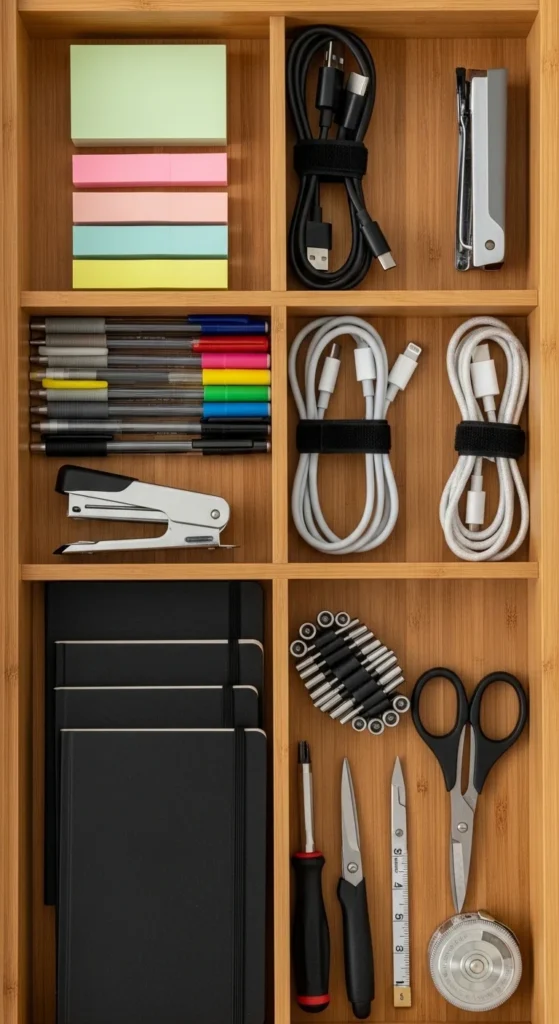
A clean desk surface is much easier to maintain when the drawer underneath is not a mess. That is where a drawer divider system helps. It gives small tools like chargers, pens, sticky notes, cables, clips, scissors, and notebooks their own zones so they do not become one frustrating pile. This makes it easier to find what you need and helps you avoid buying duplicates because you forgot what you already had. Drawer dividers do not have to be expensive. Small boxes, folded cardboard, food containers, or thrifted trays can all work as budget-friendly organizers. The key is to group similar items together and only keep what you actually use. If the drawer is packed too tightly, it will still feel stressful. This type of hidden organization supports an aesthetic desk because it helps the visible surface stay clear. A tidy drawer system is especially useful for students and remote workers who need quick access to tools but do not want everything on display. When the inside of the desk makes sense, the outside is much easier to keep looking calm and clean each day.
15. Book Stack as a Functional Decor Piece
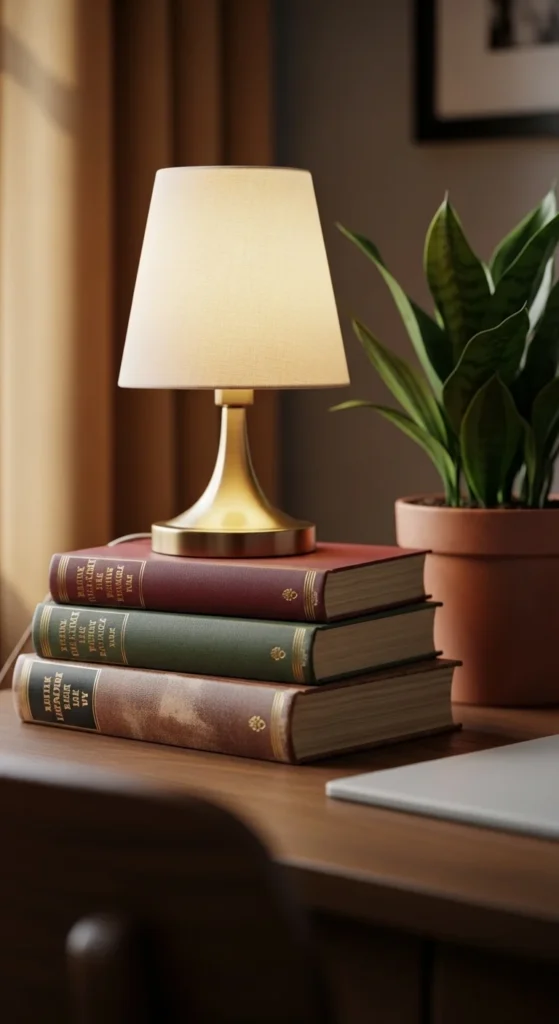
A small stack of books can do more than just decorate a desk. It can also act as a riser for a lamp, a laptop, a clock, or a small plant. This makes it one of the easiest budget-friendly desk ideas because many people already have books at home. Choose books with covers that fit your desk color palette, or remove the jackets if the bare covers look calmer. Two or three books are usually enough. Too many can make the desk feel crowded. A book stack works best on one side of the setup where it adds a little height without blocking the main work zone. It can help the desk feel layered and less flat, especially if everything else sits low to the surface. If you want the books to look more intentional, keep the stack neat and pair it with only one or two items on top. This trick is especially helpful for students and renters who want style without buying extra decor objects. A simple book stack can make the setup feel more personal and useful at the same time, which is ideal for a workspace that has to work hard every day.
16. Aesthetic Headphone Stand or Hook
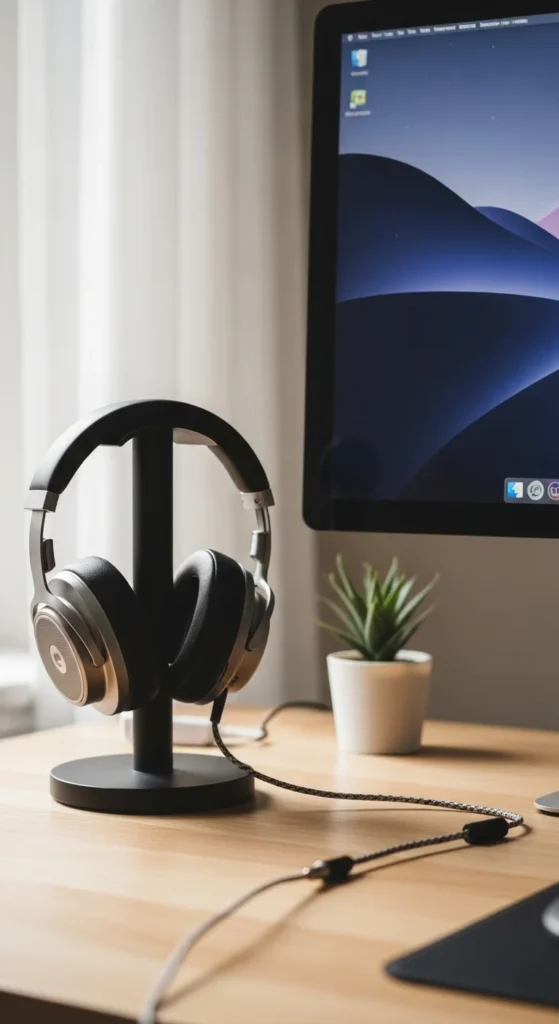
Headphones often become part of desk clutter because they end up draped over monitors, tossed in a drawer, or left in the middle of the workspace. A dedicated headphone stand or hook gives them a proper place and helps the whole setup look tidier. A simple stand on the desk works well if you want the headphones to be part of the design. An under-desk or side hook is better if you want to keep the surface more open. Both options make it easier to grab headphones quickly without adding visual mess. If you are on a budget, a small adhesive hook or wall peg can work just as well as a branded stand. This detail is especially useful for remote workers, gamers, students, and anyone who uses headphones daily for calls, study, or focus. Choose a wood, metal, or neutral-colored holder if you want the setup to stay calm. It is a small change, but it makes the desk feel more considered. When your headphones have a home, the workspace often feels more complete and much easier to keep tidy.
17. One Notebook Zone Instead of Paper Piles
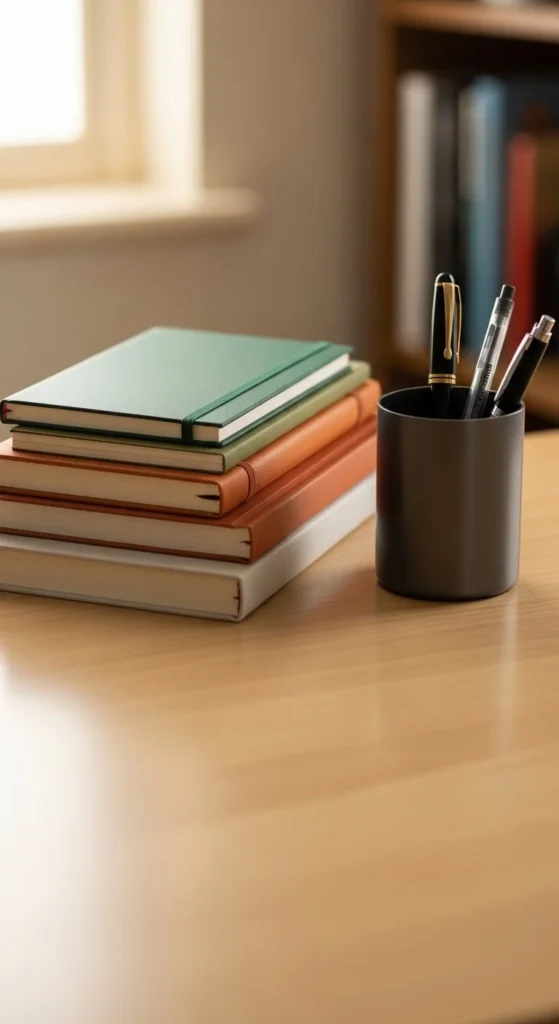
Loose papers can make a desk feel messy very quickly, even if everything else looks clean. Creating one notebook zone helps solve that problem by giving your planner, journal, class notes, or sketchbook a single place to live. This can be a slim stack on one corner, a vertical file holder, a shelf section, or a tray dedicated only to paper items. The idea is to stop papers from spreading across the whole desk. A notebook zone works especially well for students, writers, and remote workers who always have something to jot down. If you want the area to look more styled, choose notebooks in matching or similar tones, or cover them in simple paper if the covers feel too noisy. A magazine file, thrifted basket, or even a clean shoebox lid can help keep the stack contained. This type of setup supports productivity because the surface stays more open for actual tasks. It also makes it easier to find the notebook you need without flipping through random piles. One clear paper zone can do a lot to make a desk feel more focused and less overwhelming.
18. Mouse and Keyboard in Matching Tones
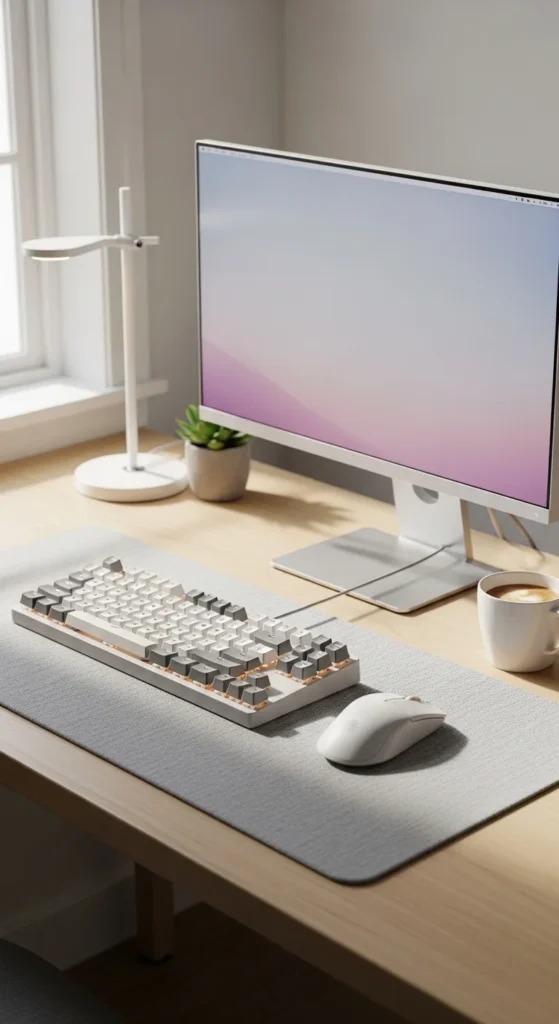
Matching your keyboard and mouse is one of the easiest ways to make a desk look more polished. These are usually the two items your eyes land on first when you sit down, so when they coordinate, the whole setup feels more intentional. White, black, grey, cream, sage, and muted pink are all popular choices depending on the overall desk style. If buying a new pair is not in the budget right now, even keeping the mouse and keyboard in similar tones or on the same desk mat can help them feel more connected. This idea works well because it creates visual order without asking for a big furniture change. A matching setup also photographs well, which is why it shows up so often in aesthetic desk inspiration. Beyond looks, a keyboard and mouse that work comfortably for you will support daily productivity much better than random leftovers. Keep the rest of the desk around them simple so they act as anchors for the layout. When these two main tools match, the desk often looks calmer and more thoughtfully arranged right away.
19. Simple Art Print or Quote Frame
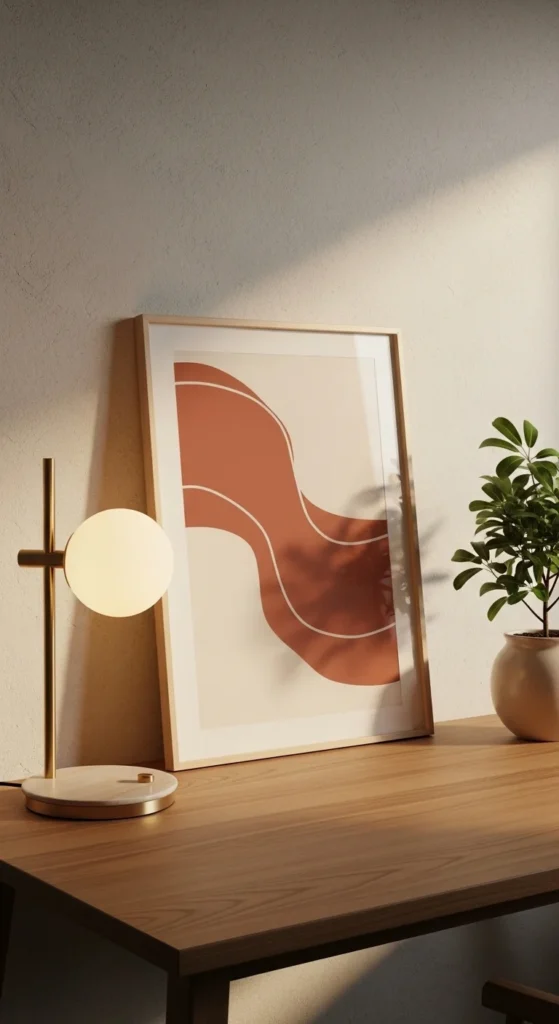
One simple framed print can give a desk more personality without making it feel busy. This works especially well if the desk is against a blank wall or if the setup feels functional but a little cold. A small print leaning on the desk or sitting on a shelf above it can soften the space and make it feel more personal. The print does not need to be expensive. A postcard, magazine page, digital download, or even your own photograph can look beautiful in a simple frame. If you want the desk to stay calm, choose artwork that follows your color palette instead of something loud and random. A clean line drawing, soft landscape, abstract shape, or muted typography piece usually works well. One frame is often enough. Too many can make the desk feel more like a gallery wall than a workspace. This small decorative touch matters because it gives the eye something pleasant to land on during breaks. It helps the desk feel like a space you chose, not just a place where work happens.
20. Rolling Cart Beside the Desk
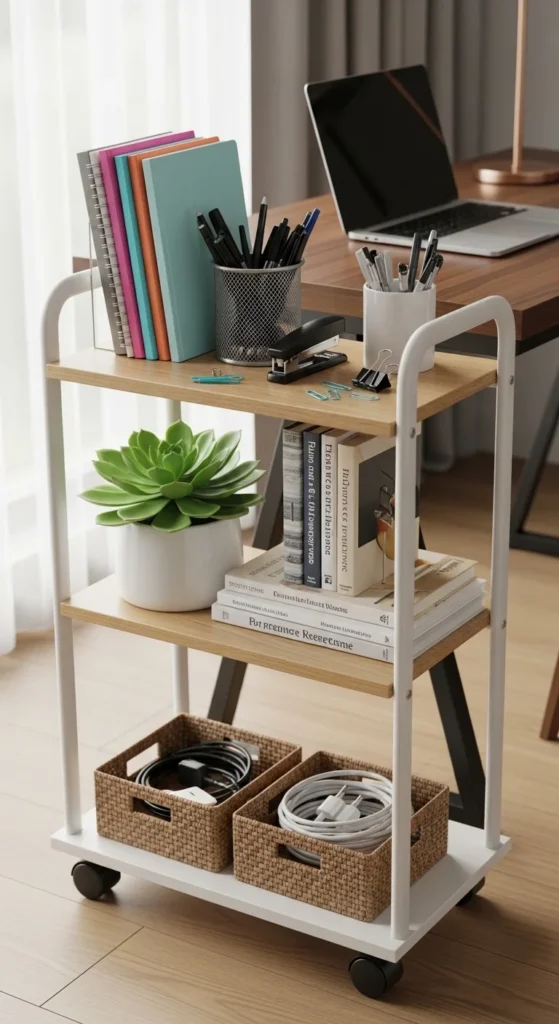
A rolling cart beside the desk is a useful idea when the desk itself cannot hold everything you need. It acts like a second storage layer without permanently taking over the room, and it can be moved when needed. This is especially helpful for students, crafters, and remote workers who use extra notebooks, tools, chargers, paper, or tech accessories. Keep the top tier for daily-use items and the lower levels for backup supplies or less-used materials. To make it look aesthetic, use trays, matching containers, and a limited color palette. A cart can feel messy very quickly if everything is just dropped into it. If you are working on a budget, thrifted utility carts or simple storage trolleys can work beautifully once styled with baskets or jars. Adding one small plant or lamp on the top shelf can help the cart feel more like part of the decor and less like storage overflow. This idea supports a productive workspace because it keeps tools nearby without forcing the desk surface to carry all the visual weight. It is practical, flexible, and especially good for small rooms.
21. Window-Facing Desk Position
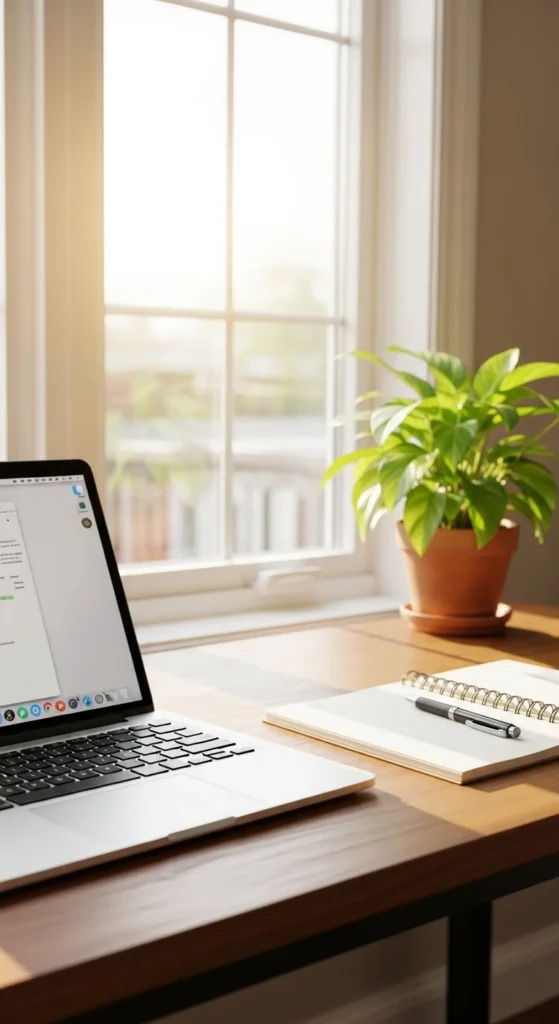
The position of your desk matters just as much as the accessories on it. Placing the desk near or facing a window can make the workspace feel brighter, calmer, and easier to spend time in. Natural light helps the desk look better during the day and often makes colors, plants, and textures feel more alive. A window-facing desk can also give your eyes something softer to look at during short breaks instead of only a wall or screen. If full window-facing is not practical, even turning the desk slightly toward natural light can help. This setup works especially well for writing, studying, planning, and creative work. To keep glare under control, use sheer curtains, blinds, or angle the monitor a little. If your desk area feels dull, changing the position can make a bigger difference than buying another object. This is also one of the most budget-friendly upgrades because it uses what the room already has. A brighter desk often feels more welcoming, and that can make it easier to sit down and actually start the work. Sometimes the layout is the real design fix.
22. One Signature Decor Piece Only
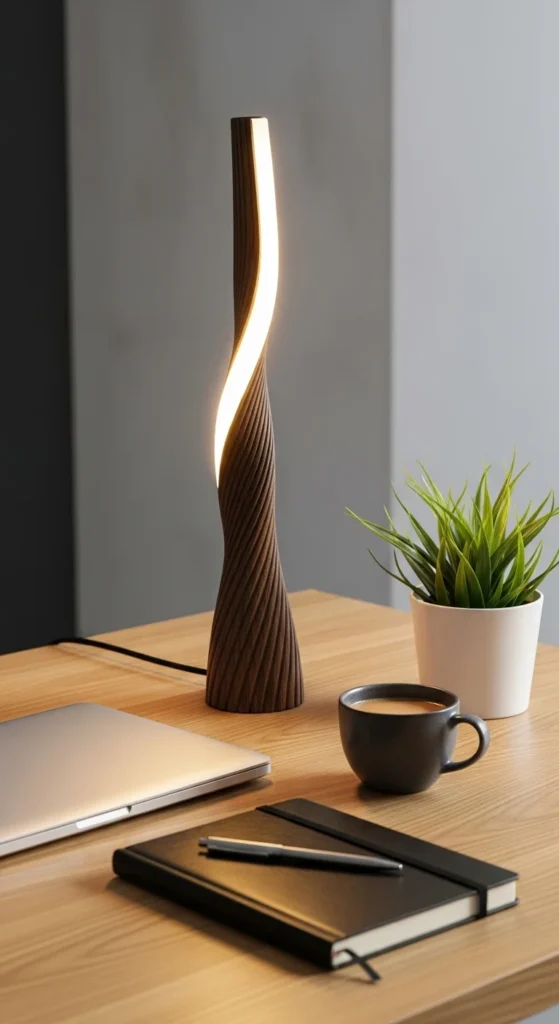
One signature decor piece can make a desk feel styled without turning it into a display shelf. This could be a sculptural lamp, a beautiful clock, a special plant pot, a ceramic pen holder, or a small art object. The point is to choose one thing that adds character and let it stand out rather than scattering lots of little decorations around the desk. This helps the setup stay clean and usable while still feeling personal. Too many decorative pieces can eat up working space and make the desk feel harder to reset. One statement item usually looks stronger than five tiny ones. If you are on a budget, the signature piece does not have to be expensive. A thrifted lamp, painted vase, handmade object, or framed photo can do the job. Place it where it can be seen easily but does not interfere with your main work zone. This approach works especially well in minimal setups where even one special object has room to breathe. A desk with one clear focal point often feels much more intentional and attractive than a desk crowded with small decorative extras.
23. Daily Reset Basket for Fast Cleanup
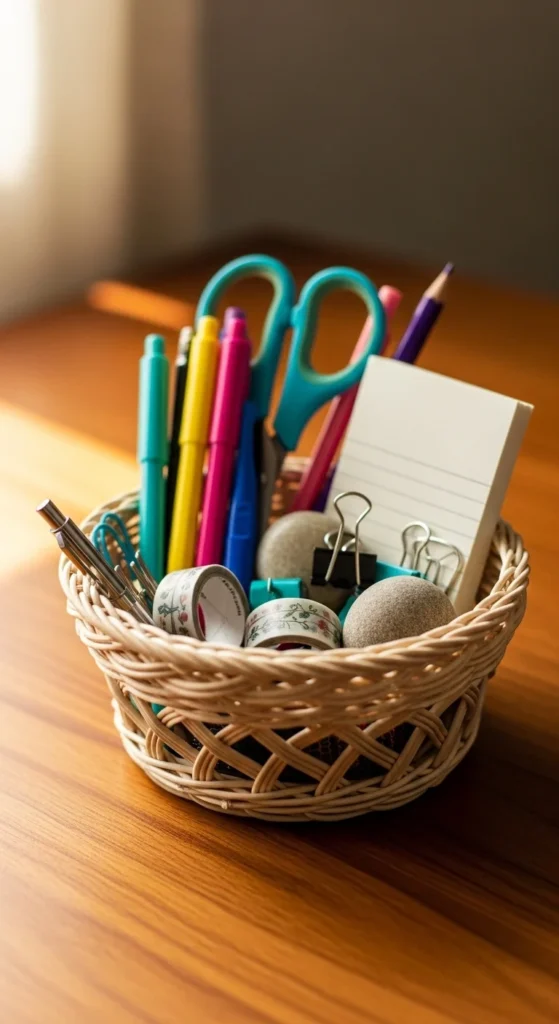
A daily reset basket is a practical idea for people who use their desk all day and do not always have time for a full clean. It gives you one place to drop temporary items like receipts, cables, sticky notes, pens, chargers, and random desk clutter so the surface can be cleared quickly in a minute or two. This is especially useful if your desk is in a bedroom or shared room where visual mess builds up fast. A small woven basket, box, or deep tray can work well. Keep it close enough to use easily, but not so large that it becomes a storage hole for everything. The goal is quick cleanup, not hidden chaos. Once or twice a week, empty the basket and return items to their proper places. This system works because it respects real life. Not every day allows for perfect organization, but one basket can stop the desk from sliding into complete disorder. A reset basket keeps the setup more manageable and supports an aesthetic look by helping the desk return to clean lines faster. It is simple, cheap, and very useful.
24. Clean Night Routine for the Desk
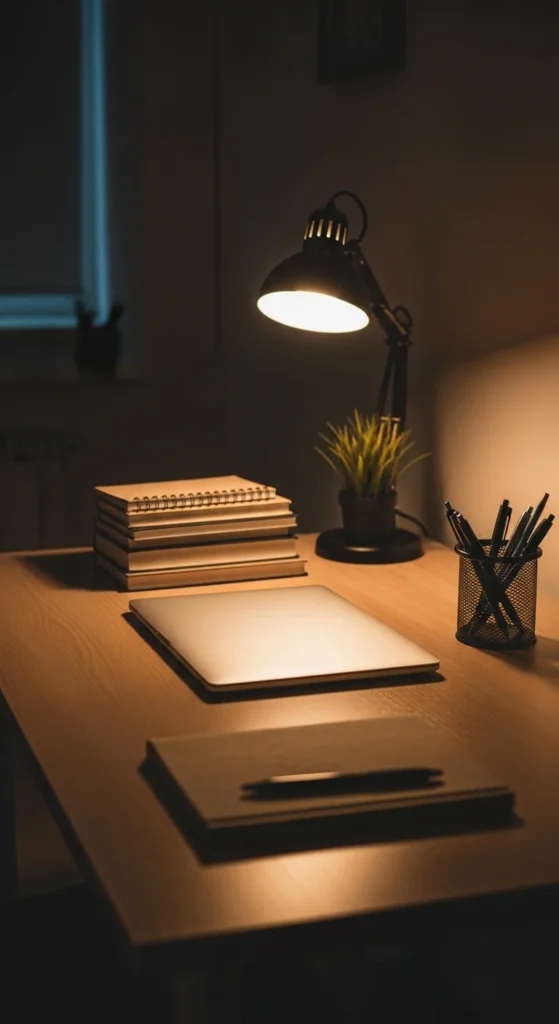
A clean night routine is one of the best desk setup ideas because it keeps all the other changes working. Even the prettiest workspace will stop feeling aesthetic if it is left cluttered every evening. A quick five-minute reset at night can make the desk feel fresh, calm, and ready for the next day. Wipe the surface, return pens to their holder, stack notebooks neatly, clear cups, plug in devices, and put loose paper into one tray or drawer. That small routine makes mornings easier because you sit down to a workspace that already feels under control. It also helps you notice what is not working in the setup. If certain items keep piling up, that may mean they need a better storage spot. This routine does not cost anything, but it has one of the biggest effects on both appearance and function. A desk that resets daily stays much easier to maintain. It is the habit that helps every lamp, tray, shelf, plant, and organizer actually matter. A beautiful workspace works best when it stays usable, and a simple night reset supports that every single day.
Conclusion
A more productive workspace does not have to come from expensive furniture or a full room makeover. Often, the biggest change comes from a few smart choices that make the desk feel calmer, cleaner, and easier to use. A desk mat, warm lamp, cable plan, storage tray, monitor riser, small plant, and clear color palette can completely change how the setup looks and feels. The best desk setup ideas are the ones you can actually maintain, so start with one or two changes that solve a real problem on your desk. Once the space works better, it usually looks better too.