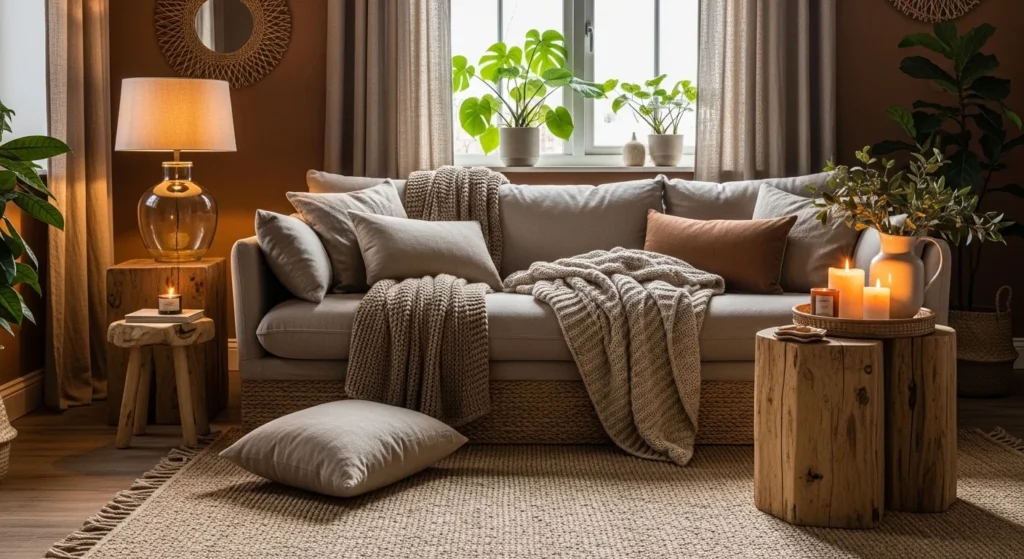
A cozy living room isn’t about buying new furniture. It’s about creating warmth you can feel the moment you walk in. Think soft layers, gentle lighting, earthy colors, and a layout that invites people to sit down and stay awhile. Whether you’re working with a small apartment, an open-plan space, or a family room that gets real use, these ideas focus on simple, affordable moves that make your space feel warm and inviting—without turning it into clutter.
1) The “Throw Blanket Stack” That Always Looks Inviting
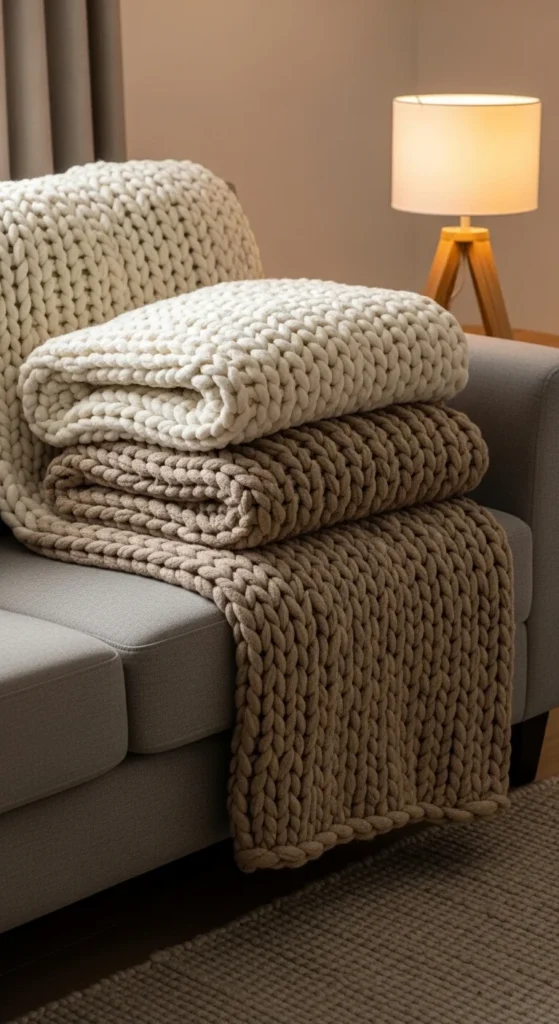
A cozy room starts with something you can grab. A throw blanket is the easiest signal that says, “Come sit.” Instead of one lonely throw, use two with different textures. Try a chunky knit plus a softer fleece or brushed cotton. Keep colors close, like cream and warm taupe, so it looks calm. Fold one throw neatly on the sofa back. Drape the other on the arm. That mix of tidy and relaxed feels lived-in, not messy.
Budget tip: buy seasonal throws from discount stores, then rotate them. Store extras in a basket so the room stays clean.
DIY idea: if your throw looks thin, layer it with a flat blanket underneath. It instantly reads thicker. You can also add oversized blanket pins or a simple leather strap to hold a rolled throw on a bench.
Pro comfort move: place one throw within reach of every seat. Even a single chair feels warmer when it has its own blanket.
2) Oversized Pillows That Make the Sofa Feel Like a Hug
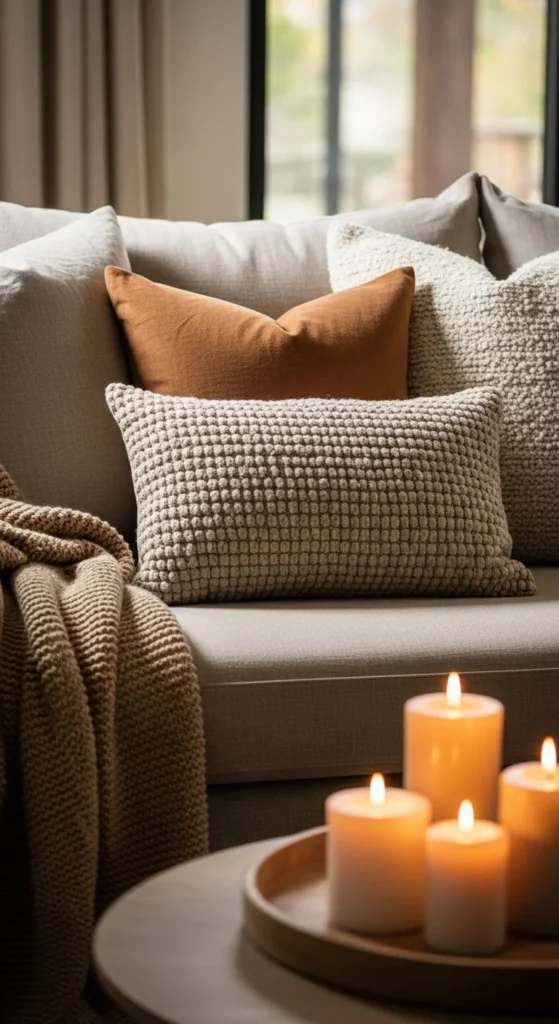
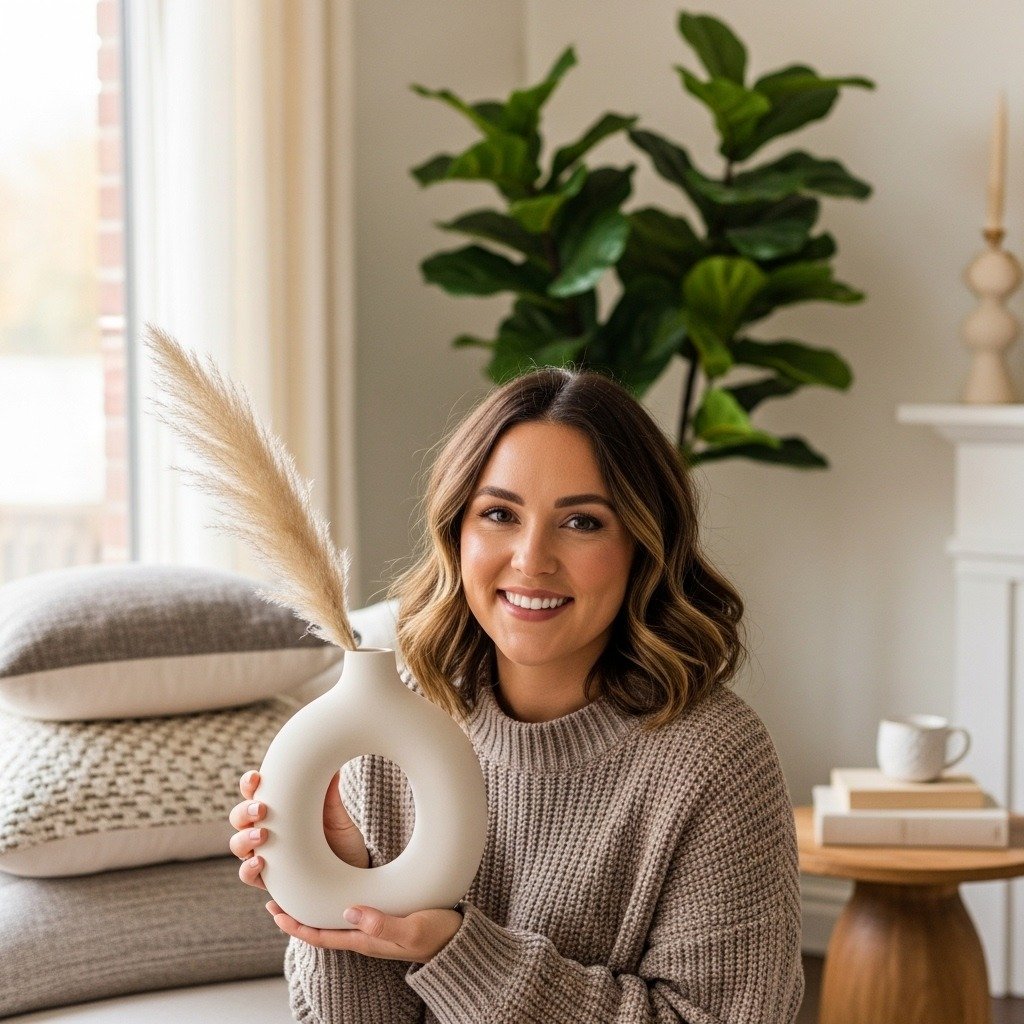
If your sofa feels stiff, pillows can fix that fast. The trick is going bigger than standard. Mix two oversized pillows (22–24 inch) with one lumbar pillow for your lower back. Stick to warm neutrals and soft browns, then mix textures like linen, bouclé, and velvet. Keep the look simple. Two pillows on each side can be enough. If you have kids or pets, choose washable covers and save your “fancy” fabric for one or two pieces.
Budget tip: buy pillow covers and reuse inserts you already have. If inserts are flat, add extra stuffing or upgrade just two inserts so the front pillows look full.
DIY idea: sew easy envelope-back covers from drop cloth fabric. It looks like relaxed linen for a low price. You can also use a throw blanket as a pillow cover in a pinch—wrap, tuck, and pin on the back.
Comfort check: if you actually want to lean back, keep one pillow slightly firmer. Cozy is not only visual. It should feel good.
3) Two-Rug Layering for Instant Floor Warmth
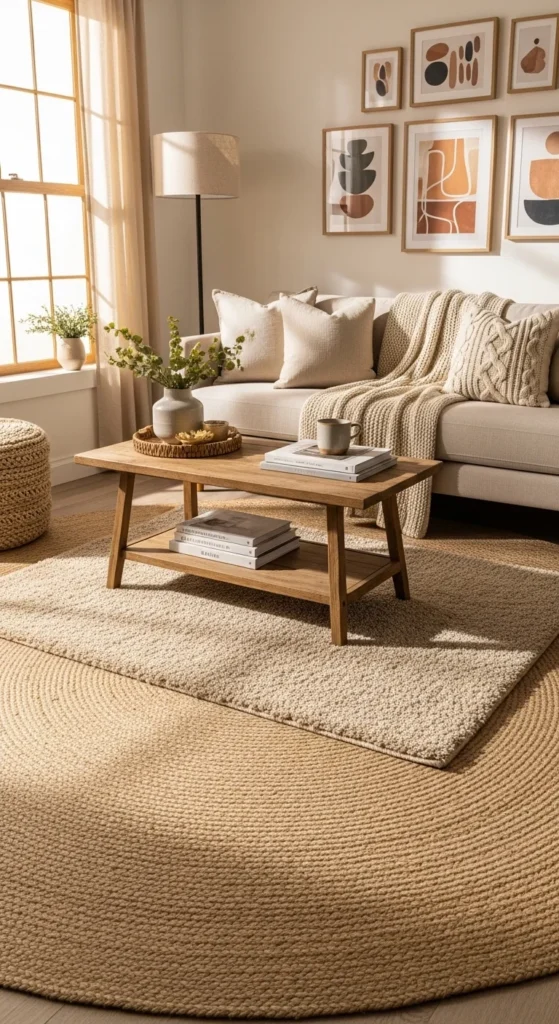
Cold floors make a room feel less inviting. Rug layering fixes that. Start with a large natural fiber rug like jute. Then place a plush wool or shag-style rug on top, centered under the coffee table and front sofa legs. The layered texture adds warmth without clutter. Keep the top rug simple and soft. A muted pattern is fine, but avoid busy designs if you want a calm, cozy vibe. The bottom jute rug gives structure, while the top rug gives comfort.
Budget tip: use an inexpensive large base rug and spend a little more on a smaller plush rug. You get the cozy feel where your feet land, without paying for a huge plush rug.
DIY idea: if your top rug slides, use rug tape or a non-slip pad cut to size. Also steam or flatten corners so it looks tidy.
4) Warm Earth Tones That Make the Room Feel Softer
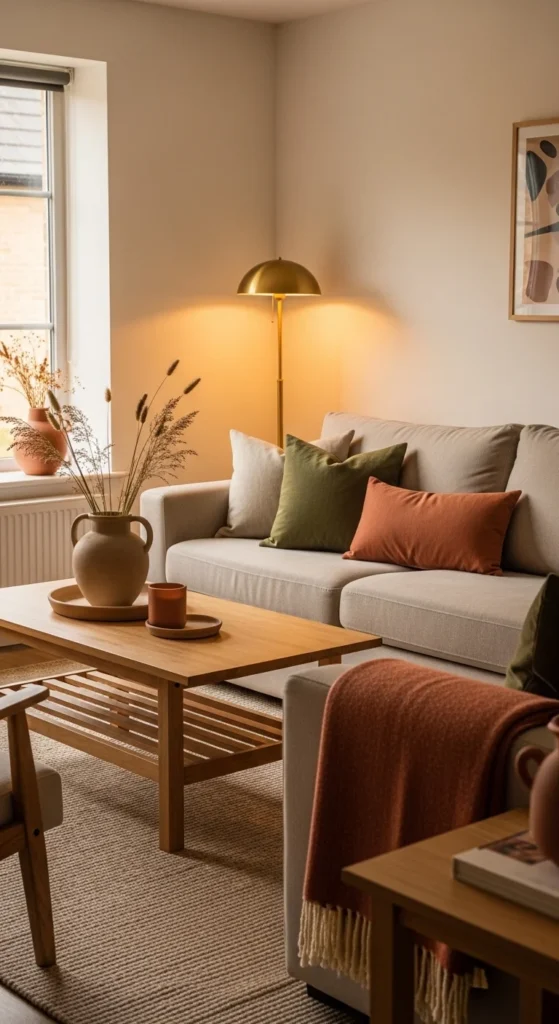
Earth tones make a room feel grounded. Think beige, terracotta, olive, soft browns, and warm cream. You don’t need to repaint everything. Start small with textiles and decor. Try terracotta pillows, an olive throw, or warm-toned art. If your walls are cool gray, warm them up with cream curtains and a beige rug. Warm tones can balance cooler walls without a full makeover.
Budget tip: pick one earth tone and repeat it twice. For example: olive pillow + olive vase. Repeating a color makes it feel intentional.
DIY idea: paint a thrifted frame or ceramic pot in a warm clay shade. Matte paint looks cozy and soft. You can also swap lamp shades to warm beige instead of bright white.
5) A Soft Neutral Monochrome Look That Still Feels Cozy
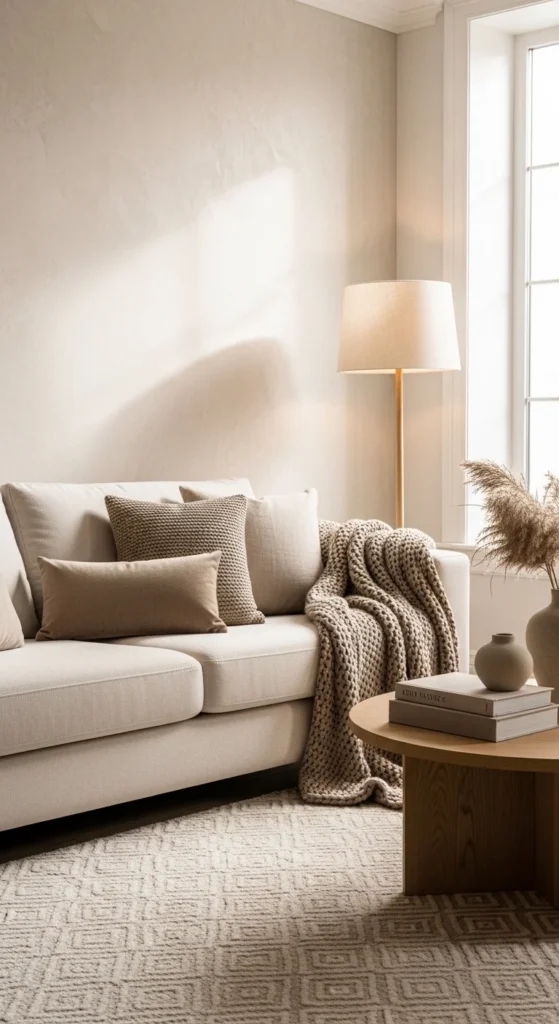
Monochrome can feel cozy when you lean into texture. Keep everything in warm neutrals cream, beige, taupe then vary the materials. Linen, knit, wool, and wood create depth without adding visual noise. This style is great if you hate clutter. It still feels warm, but it stays calm. Add a single darker accent like walnut wood or a black metal lamp to keep it from feeling washed out.
Budget tip: when everything is neutral, cheap items can look more expensive because they “match.” Focus on making fabrics look full and clean. Fluffy inserts, steamed curtains, and smooth rug edges matter.
DIY idea: create texture with simple swaps. Add a ribbed glass vase, a woven basket, or a chunky knit throw. These small pieces do a lot.
6) The Lamp-Only Evening Glow Setup
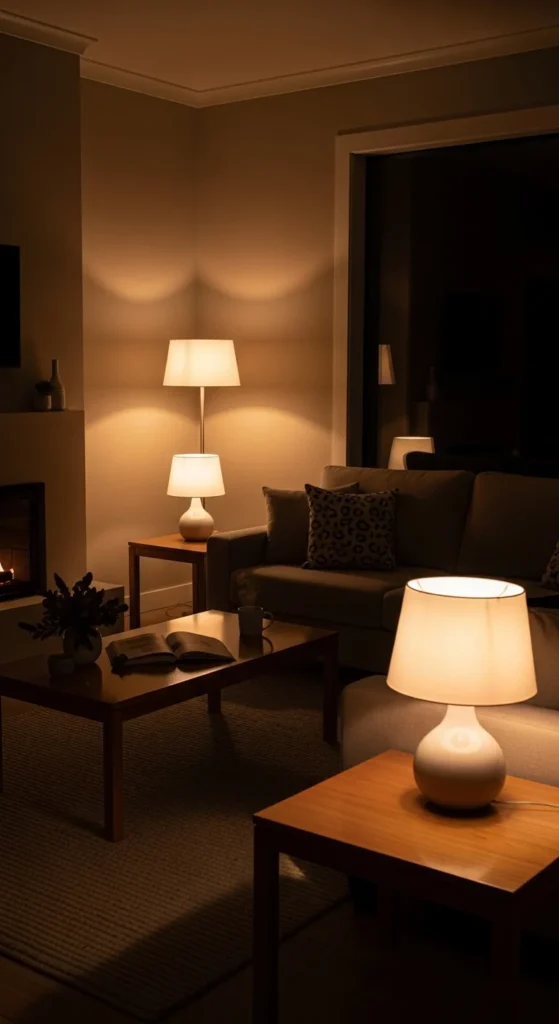
Overhead lights can ruin cozy vibes. Try a lamp-only plan for evenings. Use at least three light sources: one table lamp, one floor lamp, and one small accent light on a shelf or console. Warm bulbs (soft yellow) make the space feel calmer.
Place lamps at different heights. This creates gentle layers of light. A lamp near the sofa makes it feel like a “nest.” Another across the room helps the space feel balanced.
Budget tip: thrift lamp bases and buy matching shades. When shades match, the room feels coordinated even if bases differ.
DIY idea: add a plug-in dimmer. If you can’t, use smart bulbs and set them to warm. You can also use battery puck lights inside shelves for soft glow.
Cozy rule: avoid harsh white bulbs. Pick warm bulbs that make skin tones look natural and soft.
When you switch to lamps at night, the whole room changes. It feels quieter, warmer, and more inviting—even if nothing else changes.
7) Candle Clusters That Feel Like Instant Comfort
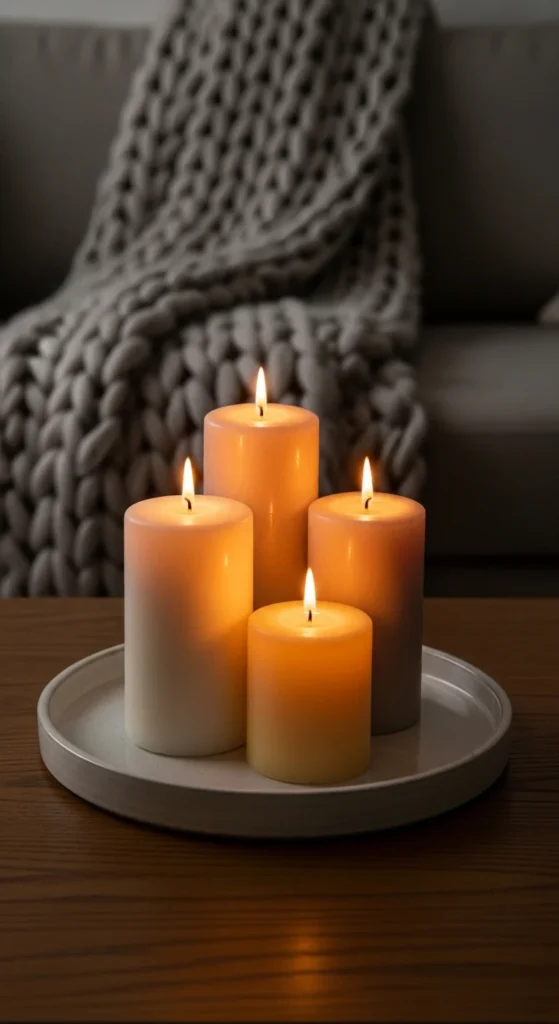
Candles make a living room feel welcoming fast. Group them in odd numbers—three is perfect. Use different heights for a natural look. Place them on a tray to keep it tidy, and add one small object like a match holder or a simple ceramic dish. If you have kids or pets, use flameless candles. The glow still works. Choose warm tones, not bright white.
Budget tip: buy candles in bulk at discount stores, then switch out holders. A simple ceramic tray and a few glass holders can make inexpensive candles look more polished.
DIY idea: create a “candle moment” on a side table. Add a small stack of books, a candle, and a tiny vase. That’s it. Keep it simple.
Pro comfort move: set candles near where you sit, not across the room. Cozy is about what you feel in your corner.
8) Slipcovered Sofas for a Relaxed, Lived-In Feel
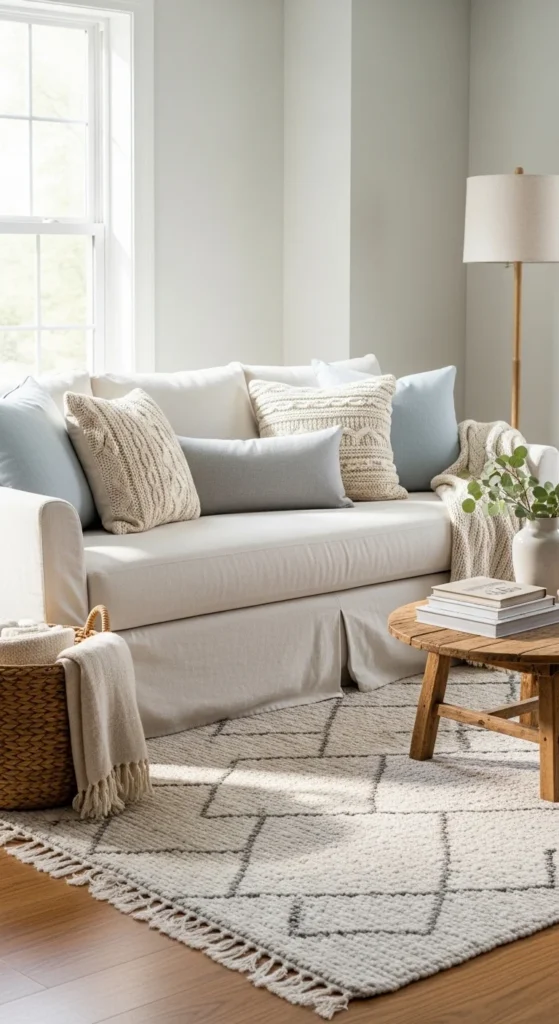
Slipcovers make a room feel casual and comfortable. They also hide wear and make cleaning easier. A soft cotton or linen slipcover in warm white or oatmeal instantly reads cozy.
If a full slipcover is expensive, start with a fitted sofa cover and style it well. Smooth it out, tuck excess fabric, and add pillows that hold their shape.
Budget tip: look for secondhand slipcovers or use washable covers from budget brands. Neutral covers last longer style-wise, so you don’t feel like you have to replace them often.
DIY idea: use a painter’s drop cloth to make a loose cover. Drape, tuck, and secure with upholstery pins. It doesn’t have to be perfect. That slightly relaxed look is part of the charm.
Cozy add-on: pair a slipcovered sofa with one chunky throw and one woven basket nearby. It signals comfort and keeps things practical.
If you want a warm, inviting room that can handle real life, slipcovers are your friend.
9) Plush Marshmallow Seating That Feels Family-Friendly
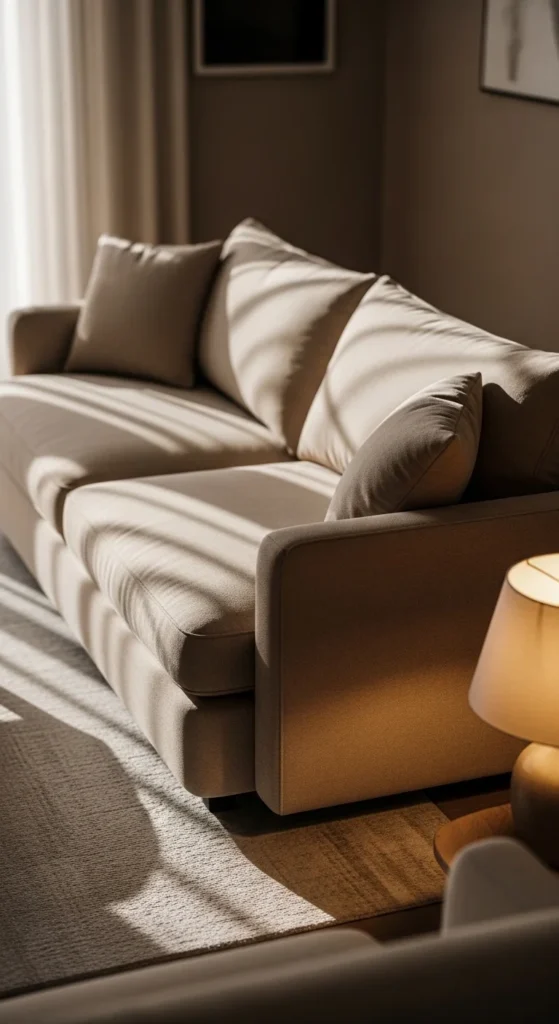
Rounded, plush furniture makes people want to sit down. Think deep seats, soft arms, and cushions that look comfortable. Even if your style is simple, plush seating adds warmth. If you can’t replace your sofa, fake the plush look with a cushion topper or thicker pillows. Add a soft throw draped along the back to make it feel less stiff.
Budget tip: shop secondhand for comfy chairs and re-cover the seat cushion. A simple neutral fabric can change the look.
DIY idea: add a bench cushion to a window seat or a sturdy ottoman. Cover it with a textured fabric and use it as a footrest. A footrest is a cozy signal.
Layout tip: don’t keep seating too far apart. Cozy rooms feel like people can talk without shouting.
10) A Reading Nook That Makes the Room Feel Personal
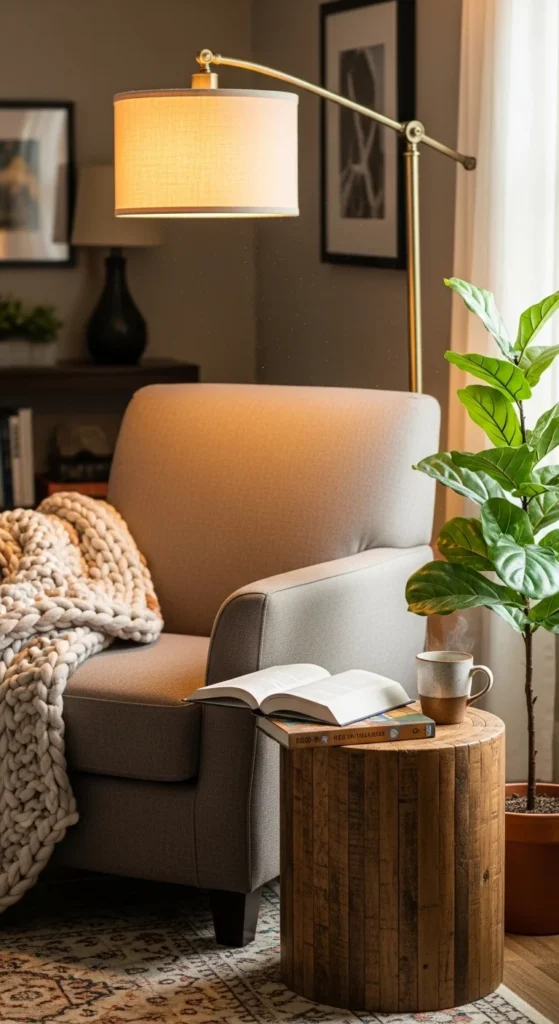
A reading nook makes a room feel warm because it tells a story. It says, “Someone relaxes here.” You only need three things: a chair, a lamp, and a small surface for a drink or book. Pick a chair that looks soft. Add a throw over the back. Place a floor lamp slightly behind the chair for warm light. Add a small side table or a stool.
Budget tip: use a thrifted chair and add a seat cushion. Even a basic chair feels cozier with a cushion and a throw.
DIY idea: create a nook in a corner with a simple rug and a small bookshelf. Stack a few favorite books and add a candle. Keep it minimal.
Comfort tip: keep the nook near a window if you can. Daytime reading feels calm, and plants do well there too.
11) Heavy Curtains That Feel Insulating and Soft
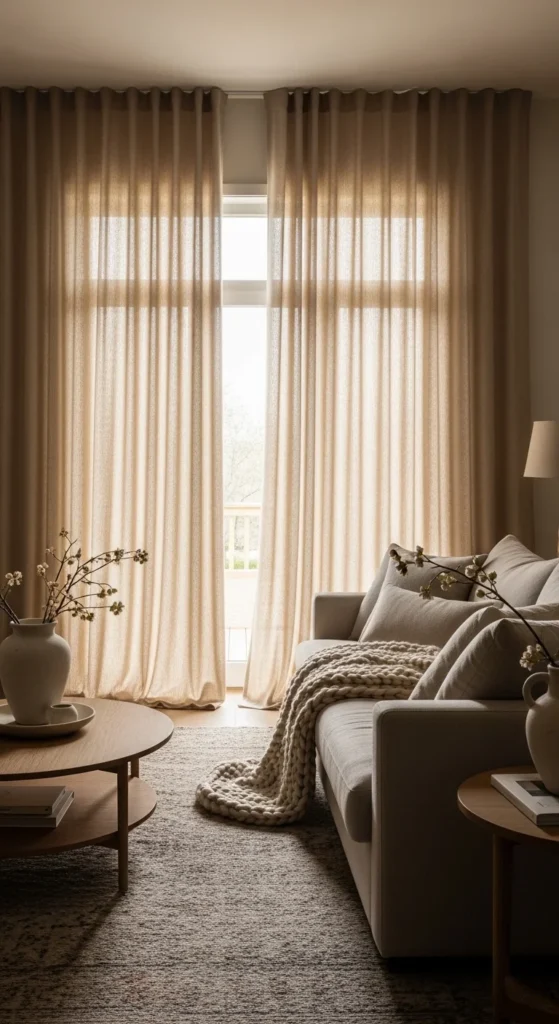
Curtains do more than cover windows. They add softness, reduce echo, and make the room feel protected. For cozy vibes, choose heavier fabric like linen blends or thick cotton. Hang curtains high, close to the ceiling, and let them reach the floor. That makes the room feel taller and more finished. If you want extra warmth, layer sheers under heavier drapes.
Budget tip: buy long curtains and hem them with iron-on tape. It’s quick and looks neat. Also upgrade the curtain rod to something simple and sturdy.
DIY idea: add curtain weights at the bottom corners so panels hang straight. Wrinkled curtains can make the room feel messy, so steaming helps a lot.
Cozy benefit: heavier curtains help block drafts in winter. Even if you don’t have drafts, they still make the space feel softer.
This is one of the best “cozy for the whole room” changes you can make.
12) Natural Wood Elements That Warm Up Everything
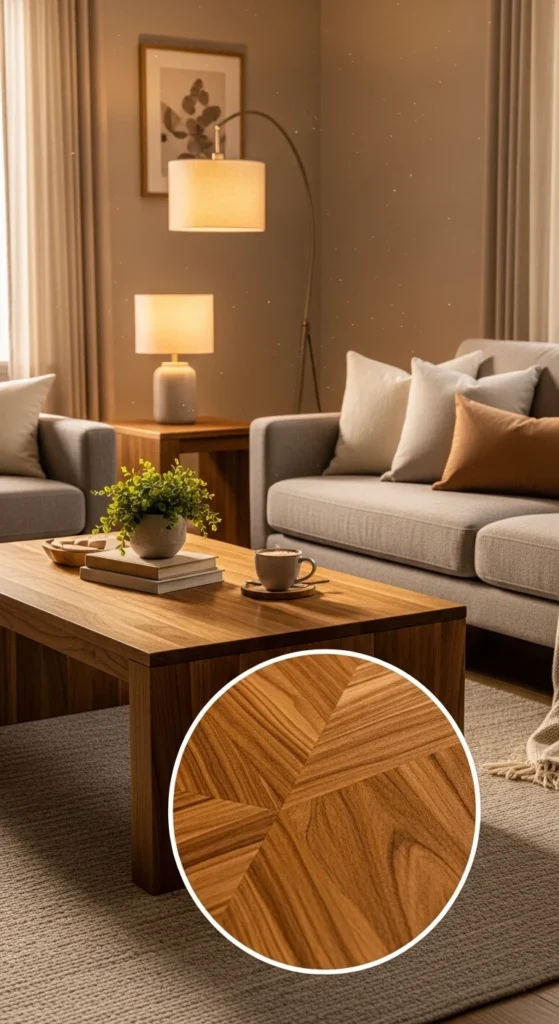
Wood makes a room feel grounded and warm. A wood coffee table, side table, or shelf adds instant comfort. Light oak feels airy. Walnut feels rich. Either can work if the rest of the room is calm.
If your room has lots of metal or glass, add wood to soften it. Even one wood piece can balance the space.
Budget tip: thrift wood furniture and refinish it. Sand lightly and seal with a matte finish. Matte looks cozy and hides wear better.
DIY idea: add wood through accessories. A wood tray, a cutting board used as decor, or a wood bowl on the coffee table can bring warmth without buying furniture.
Mixing woods is okay. Keep them in the same “warm” family. Avoid mixing a very orange wood with a very gray wood.
Wood also pairs well with plants, woven textures, and warm lighting. It’s a simple way to make the room feel more inviting without adding clutter.
13) Woven Baskets That Keep Cozy Without Mess
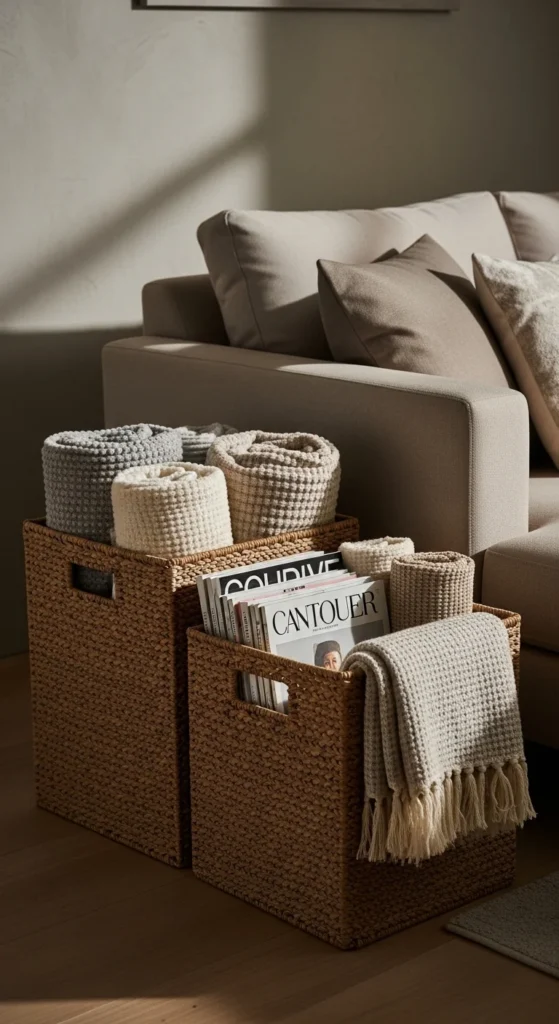
Cozy rooms can get messy fast. Baskets help you keep warmth without clutter. Place a woven basket near the sofa for blankets. Add a smaller one near a console for remotes and chargers.
Choose natural materials like seagrass or rattan. They add texture and look calm. Stick to one basket style so it feels coordinated.
Budget tip: shop secondhand or discount stores. Baskets are easy to find and usually cheaper than boxes.
DIY idea: label baskets without labels. Use the “one basket, one purpose” rule. One is only for throws. One is only for toys. One is only for magazines. You’ll stay organized without signs or tags.
If you have kids, baskets are a fast cleanup tool. Toss items in, and the room still looks warm.
Baskets are also a good way to add texture when your room feels flat. They’re practical, but they also make the space feel softer and more inviting.
14) Houseplants That Make the Room Feel Alive
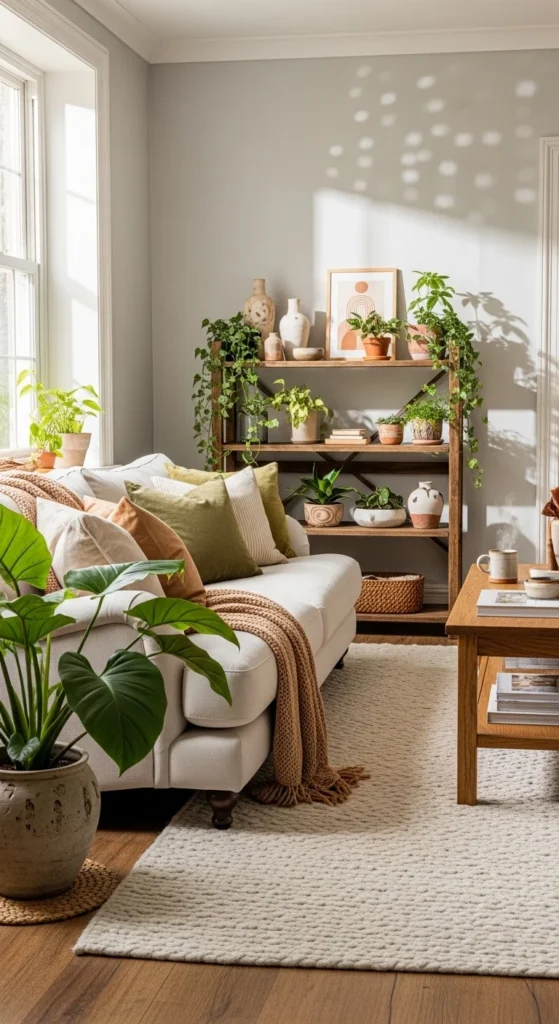
Greenery makes a room feel welcoming because it adds life. You don’t need a jungle. Two or three plants placed well can do the job.
Start with one larger plant in a corner. Then add a smaller plant on a shelf or side table. Use warm pots like clay, cream ceramic, or woven planters.
Budget tip: buy small plants and let them grow. Or propagate from cuttings. Many plants multiply easily and cost almost nothing over time.
DIY idea: group plants on a tray near a window. It looks styled and makes watering easier. You can also use a simple plant stand to vary height.
If you struggle with plant care, start with hardy options and keep it simple. The goal is visual softness, not stress.
Plants also pair well with warm lighting in the evening. Leaves catch the glow, and the room feels calm and inviting.
15) Books and Personal Objects That Tell Your Story
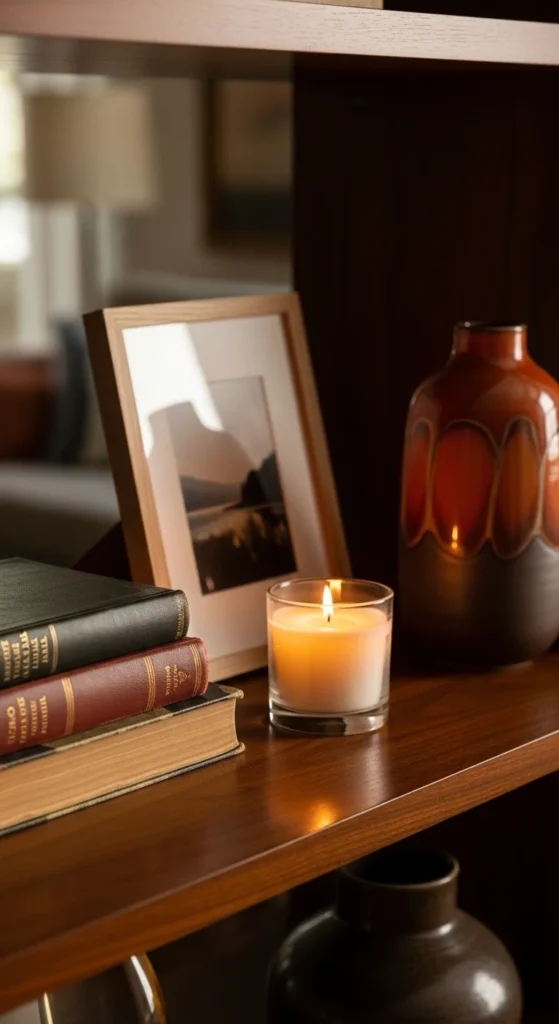
Cozy is personal. A few books, family photos, and small keepsakes make the room feel like home. The key is keeping it curated, not crowded.
Use the “three-item” method on surfaces. Stack two or three books, add one candle, and one small object. Leave empty space around it. That space makes it feel calm.
Budget tip: thrift vintage books with neutral covers. They add warmth and texture. You can also turn book spines inward if colors clash.
DIY idea: create a small memory tray. Put one photo frame, one small object, and one candle on a tray. It becomes a little story corner.
Avoid too many tiny items spread everywhere. Grouping is the secret. It looks intentional and is easier to clean.
When someone walks into a living room and sees personal touches, it feels warmer. It doesn’t feel staged. It feels inviting.
16) Warm-Toned Art That Softens Blank Walls
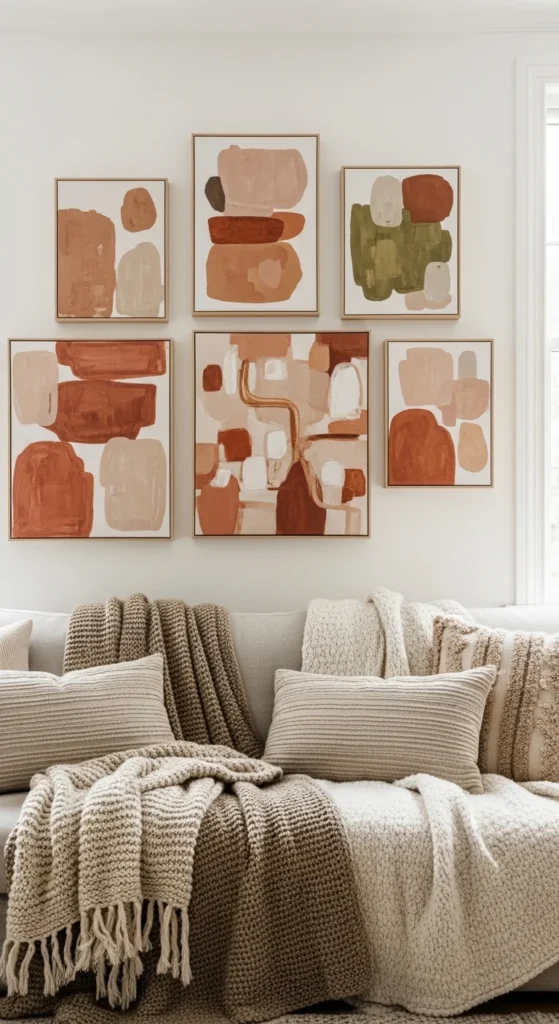
Art can warm a room without adding clutter. Choose pieces with warm colors like soft terracotta, tan, muted olive, or gentle browns. Even one large piece above the sofa can change the mood.
If your room feels cold, avoid art with icy blues and stark whites. Go for earthy tones or soft landscapes.
Budget tip: download printable art and frame it. Or buy large inexpensive canvases and add simple paint strokes in warm shades. Abstract works well because it doesn’t have to be perfect.
DIY idea: create a fabric wall hanging. Stretch linen over a frame and add a thin wood strip at the top. The texture alone adds warmth.
Hang art at a comfortable height. Too high feels distant. Keep it close to the furniture so the room feels connected.
Warm art is one of the fastest ways to make a living room feel inviting, especially if your furniture is neutral.
17) Organic Shapes That Make the Space Feel Softer
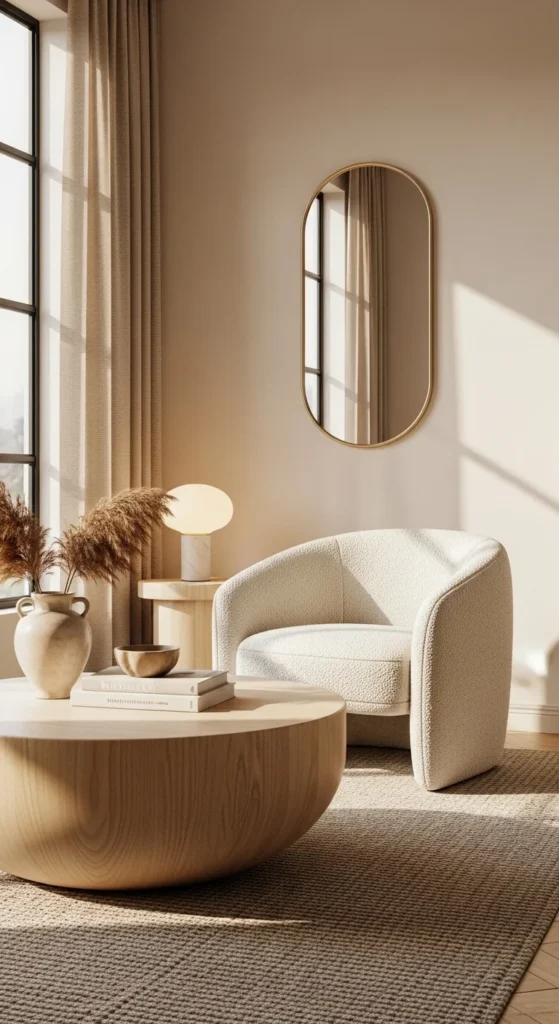
Straight lines can feel formal. Curves feel friendly. Add organic shapes like a round coffee table, an oval mirror, or a curved chair. These shapes make the room feel softer and more relaxed.
You don’t need a new sofa. One curved element is enough. A round side table or a curved floor lamp can change the look.
Budget tip: shop secondhand for round tables and mirrors. These pieces are common and often affordable.
DIY idea: swap sharp decor for rounded decor. Use round trays, round vases, and soft-edged bowls. Keep colors warm and simple.
Organic shapes also help with traffic flow. In small rooms, round tables feel easier to move around than sharp corners.
If your living room feels a little stiff, adding curves is a simple fix that brings comfort without adding more stuff.
18) A Soft Ottoman That Signals “Put Your Feet Up”
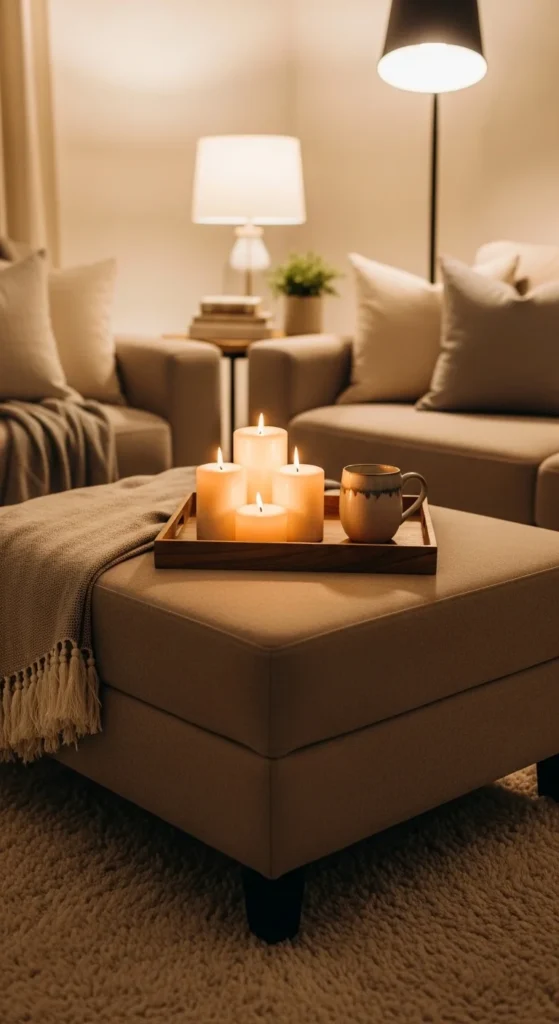
An ottoman is a cozy invitation. It says, “Relax.” Choose something soft and upholstered. A round or oversized ottoman feels extra comfortable and also looks warm.
If you already have a coffee table, try adding a small pouf beside it. It can be extra seating, a footrest, or a place to set a book.
Budget tip: buy a basic ottoman and cover it. A slipcover or a stretchy cover can change the look quickly. Neutral covers work with everything.
DIY idea: make a tray-top ottoman moment. Put a sturdy tray on top for candles or a drink, then remove it when you want to lounge. This gives you both function and comfort.
Cozy layout tip: place the ottoman close enough to actually use. If it’s too far away, it becomes decor instead of comfort.
A footrest is one of those small pieces that changes how you use the room, not just how it looks.
19) Pull the Sofa In to Make the Room Feel Closer
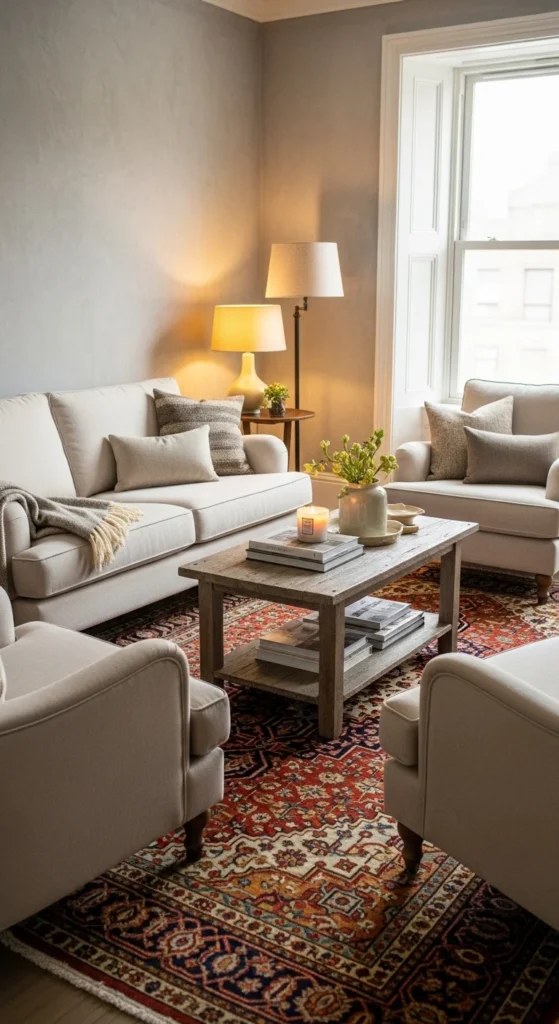
Many rooms feel cold because everything is pushed to the walls. Pulling the sofa in even 6–12 inches can make the space feel more intimate.
Try anchoring seating on a rug. Place the front legs of the sofa on the rug. Add a coffee table close enough to reach. This creates a “gathering zone” instead of furniture floating around the edges.
Budget tip: rearranging costs nothing. Start by moving one piece and see how it feels. You might be surprised how much better it works.
DIY idea: if you pull the sofa in and see cords, hide them with a basket or a slim console table behind the sofa. A behind-the-sofa table can hold a lamp, which adds warmth too.
Cozy comes from closeness. When seating faces inward and feels connected, the room feels welcoming. It feels like a place for conversation, not just a pass-through space.
20) A Conversation Circle That Makes Guests Stay Longer
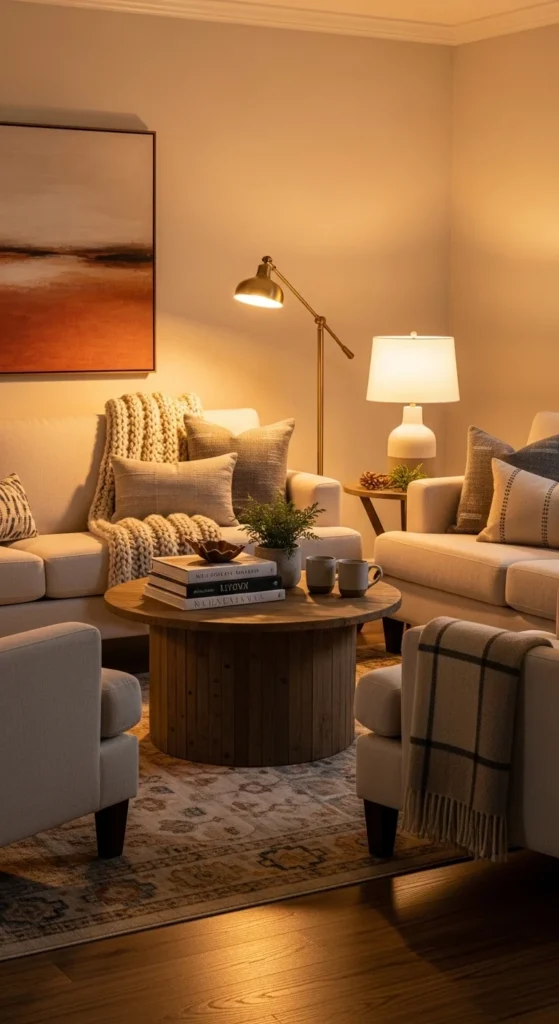
If you want a warm, inviting living room, set it up for conversation. Arrange seats so people face each other. A sofa plus two chairs angled inward works well. Even two chairs plus a loveseat can work in small spaces.
Use a round coffee table if you can. It helps the circle feel natural. Add a rug under all seating so the zone feels unified.
Budget tip: if you don’t have chairs, use poufs or ottomans as extra seats. Covered in soft fabric, they look cozy and are easy to move.
DIY idea: create “pair seating.” Put two seats together with a small table between them. Add one lamp. It becomes a mini hangout spot within the larger room.
Cozy rooms aren’t only about blankets and candles. The layout matters. When people can sit comfortably and talk without craning their necks, the room feels warm because it works.
21) A Deep Warm Accent Wall for Instant Mood
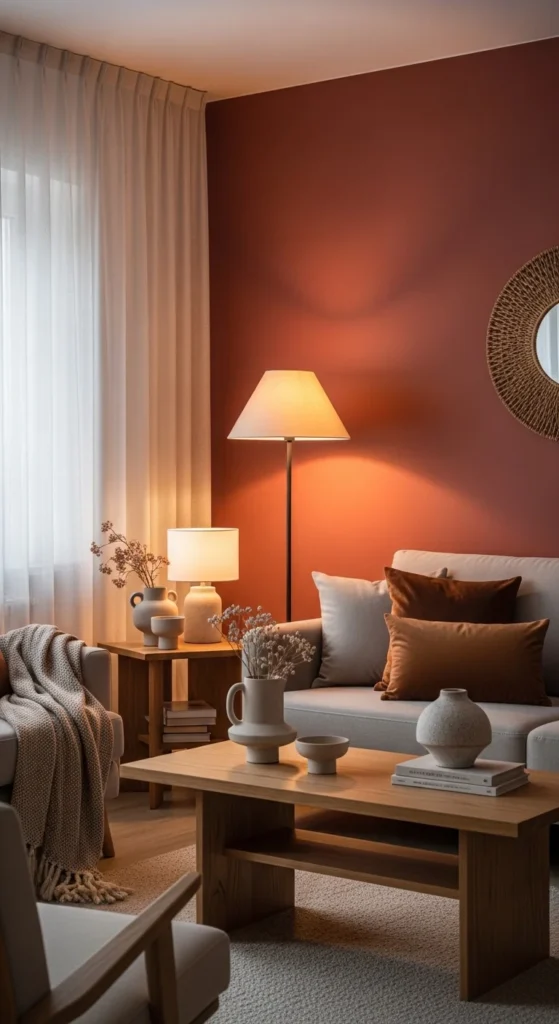
A deep warm wall can make a room feel like a cocoon. Terracotta, warm burgundy, or deep clay shades add instant warmth. Keep the rest of the room neutral so it doesn’t feel heavy.
Choose the wall behind the sofa or the TV wall. That’s the spot with the biggest visual impact. Use matte paint for a soft look.
Budget tip: paint one wall only. It’s cheaper and quicker. If you rent, use removable wallpaper in a warm solid tone or a subtle texture.
DIY idea: paint the wall and match a few accessories to it. Add one pillow or one piece of art that repeats the wall color. Repetition makes it feel intentional.
If you worry about dark colors, try a mid-tone first. Warm tones often look deeper at night, which is part of what makes them cozy.
22) Textured Wallpaper That Adds Warmth Without Extra Decor
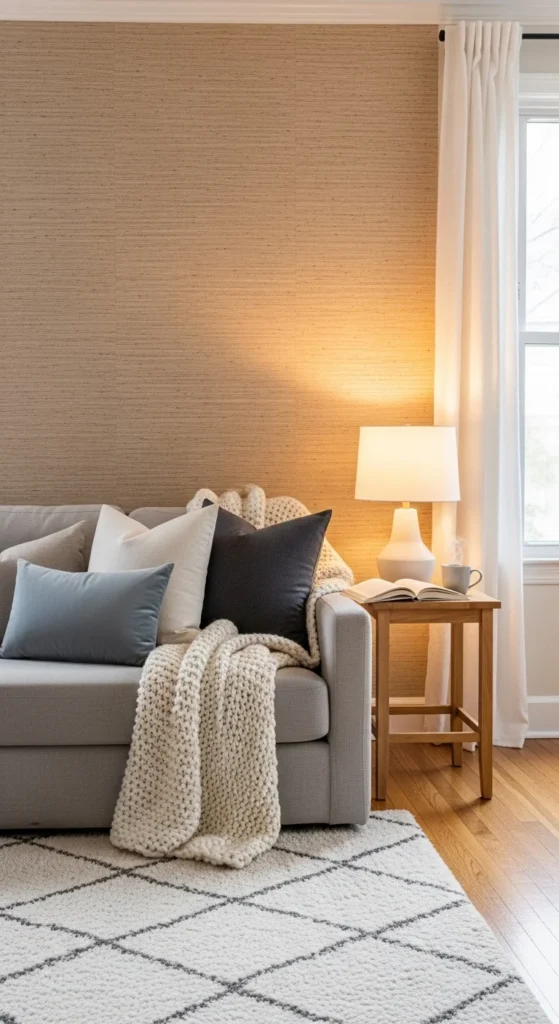
Texture on the wall can make a room feel warmer without adding more objects. A subtle grasscloth look, linen texture, or warm woven pattern adds depth. It catches light and makes the wall feel softer.
Use wallpaper on one wall or even just behind shelves. Keep it in a warm neutral so it blends with everything else.
Budget tip: peel-and-stick wallpaper is great for small areas. Use it behind a bookcase, inside cabinet backs, or on a single accent wall.
DIY idea: fake texture with paint. A simple sponge technique in two close shades can mimic a plaster look. Keep it subtle and matte.
Wall texture works especially well if your room is very neutral. It adds interest without more color. It also pairs nicely with wood and warm lighting.
If you want cozy but hate clutter, textured walls are a smart move.
23) Mid-Century Lines + Cozy Textiles
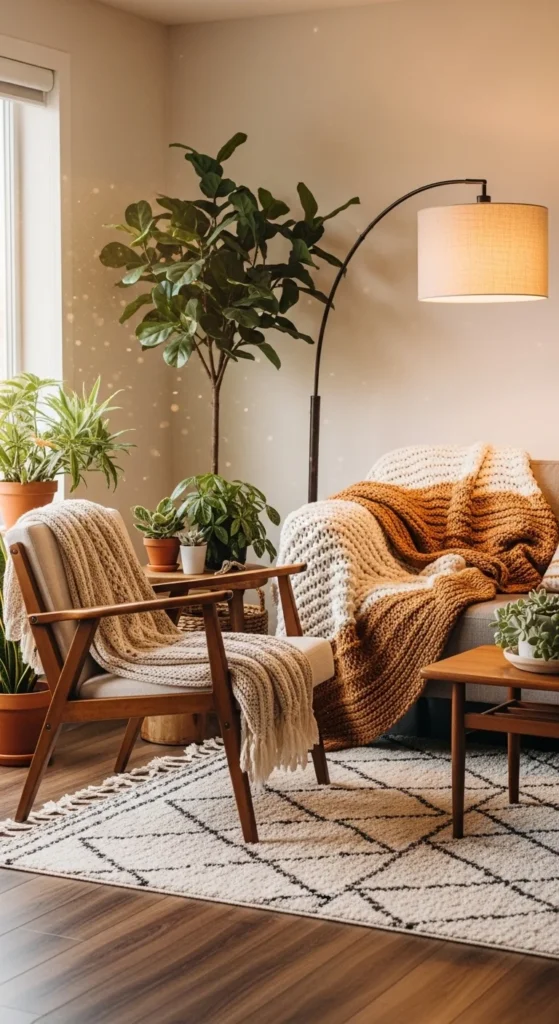
Mid-century furniture has clean lines, which can look a bit sharp on its own. The cozy trick is adding soft textiles. Think a warm rug, layered pillows, and a chunky throw.
Use one or two mid-century pieces—like a wood chair or a low console—then keep the rest soft. Warm lighting and plants help too.
Budget tip: mid-century style is easy to thrift. Look for tapered legs and simple wood frames. Add a new cushion or a throw to soften it.
DIY idea: update a basic chair with a warm seat pad. Or add a sheepskin-style throw over the seat for comfort.
The result is timeless: clean shapes with warmth. It feels inviting without feeling overly decorated.
24) Japandi Warmth: Minimal but Soft
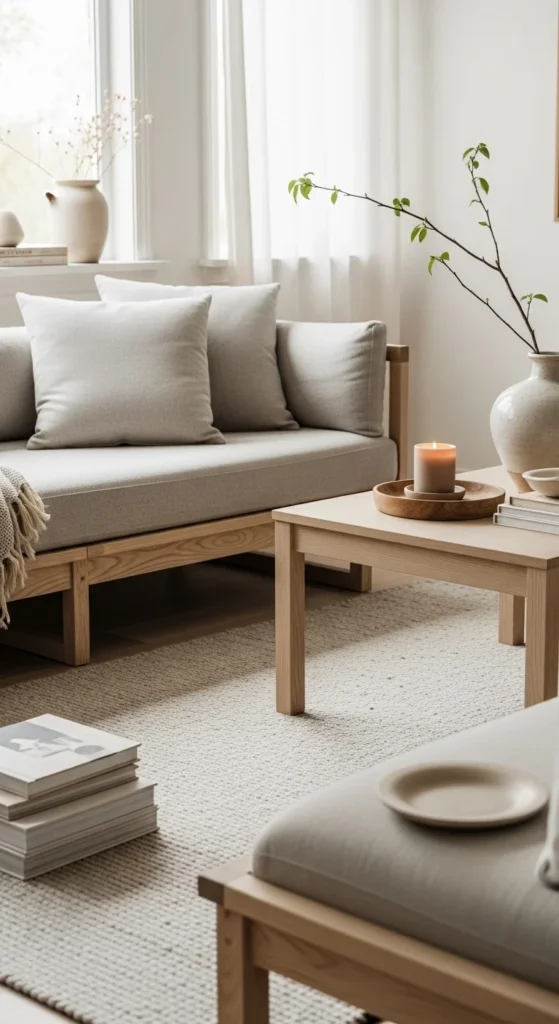
Japandi style mixes Japanese calm with Scandinavian comfort. It’s minimal, but it can still feel warm. The keys are natural wood, soft textiles, and a quiet color palette.
Choose low wood furniture. Add linen covers and a wool rug. Keep decor simple: one vase, one plant, one candle.
Budget tip: you can get this look with simple pieces. A basic wood coffee table and neutral textiles go a long way. Keep the room tidy so the calm vibe shows.
DIY idea: swap bright decor for muted ceramics. Paint a pot in warm cream. Use a wood tray instead of a shiny tray.
If your living room feels messy or overstimulating, this style can make it feel like a calm retreat while still being cozy.
25) Blue-and-Cream Accents for Soft Cottage Comfort
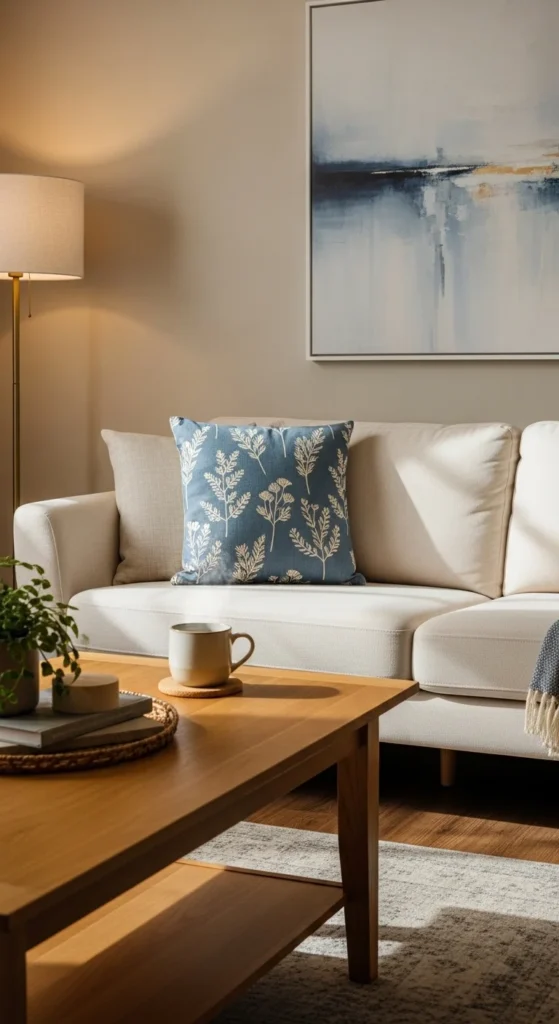
If you like a cozy cottage vibe but still want it calm, try blue-and-cream accents. Keep the base warm and neutral, then add small touches of dusty blue. A pillow, a throw, or a vase is enough.
Blue works well with beige and warm wood. It adds a gentle contrast that still feels relaxing.
Budget tip: buy one patterned pillow cover with blue and cream. Then keep the rest of the pillows neutral. One pattern is usually enough.
DIY idea: paint a small thrifted frame or vase in a muted blue. Avoid bright navy or sharp cobalt if you want cozy. Go softer.
This look works especially well in family rooms. It feels friendly and welcoming, not formal.
26) Fireplace-Style Focal Point Even Without a Fireplace
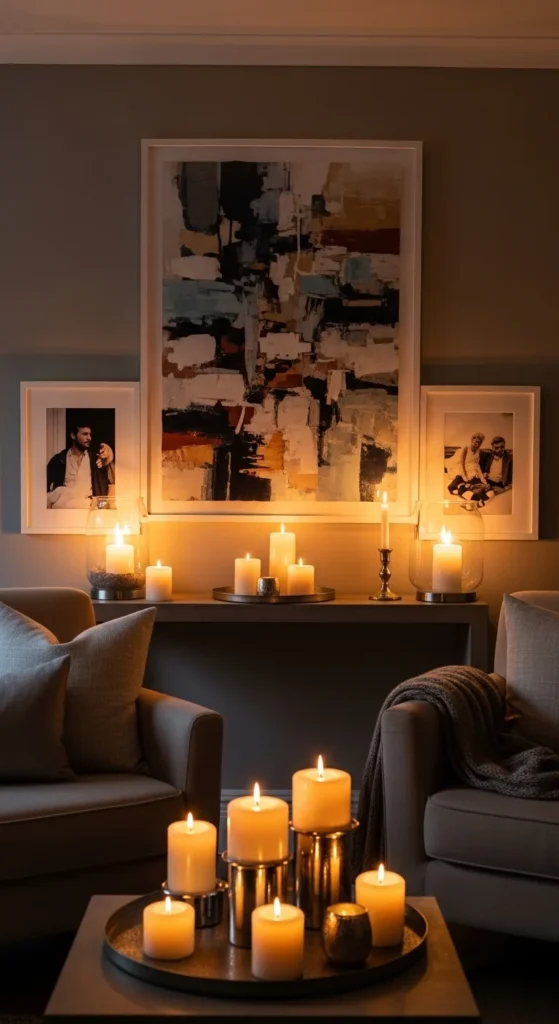
A fireplace naturally feels cozy, but you can create the same focal point without one. Use a console table or a low cabinet as a “mantel.” Hang art or a mirror above it. Add candles or a lamp on top.
Keep it simple. A few items grouped together will look better than many small items spread out.
Budget tip: thrift a console table and repaint it in a warm neutral. Add one large mirror above it and you have instant focus.
DIY idea: add a peel-and-stick tile panel behind the console to mimic a hearth look. Keep the tile in a warm tone, like soft cream or stone.
This focal point gives your living room a center. When a room has a clear focal spot, it feels calmer and more inviting.
27) A Scent Corner That Feels Like a Ritual
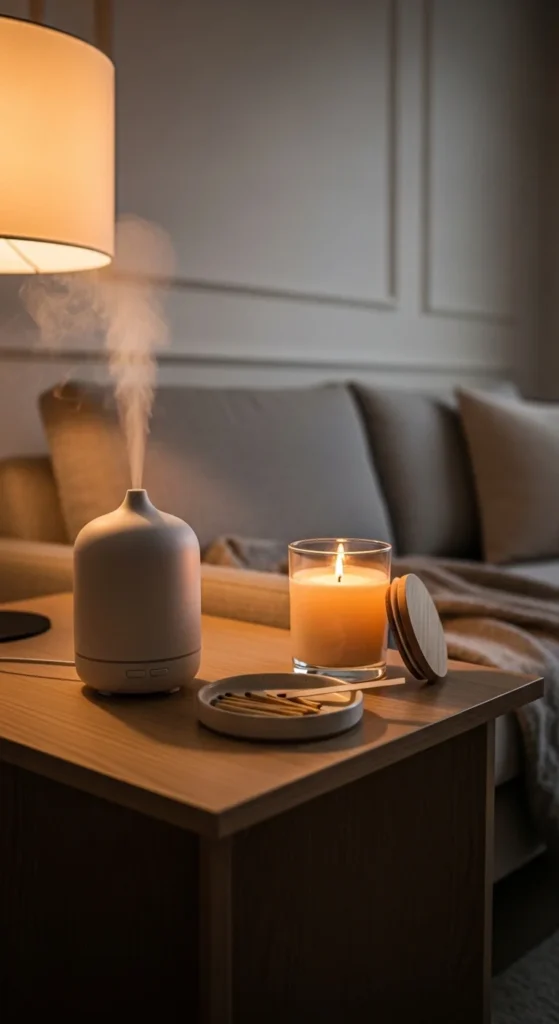
Cozy isn’t only visual. Scent matters. Create a small scent corner on a side table or console. Add a candle, a diffuser, or incense if you use it. Keep matches in a small dish so it feels intentional.
Pick warm scents like vanilla, cedar, amber, or soft spices. Keep it subtle. The goal is comfort, not overpowering fragrance.
Budget tip: use essential oil blends in a basic diffuser. Or buy one candle you love and use it often.
DIY idea: create a “scent tray.” Use a small tray, put the candle, matches, and one small object on it. It looks styled and keeps everything contained.
When you light a candle or turn on the diffuser, it becomes a habit that signals rest. That routine is part of what makes a room feel inviting.
28) A Cozy Coffee or Tea Station on a Tray
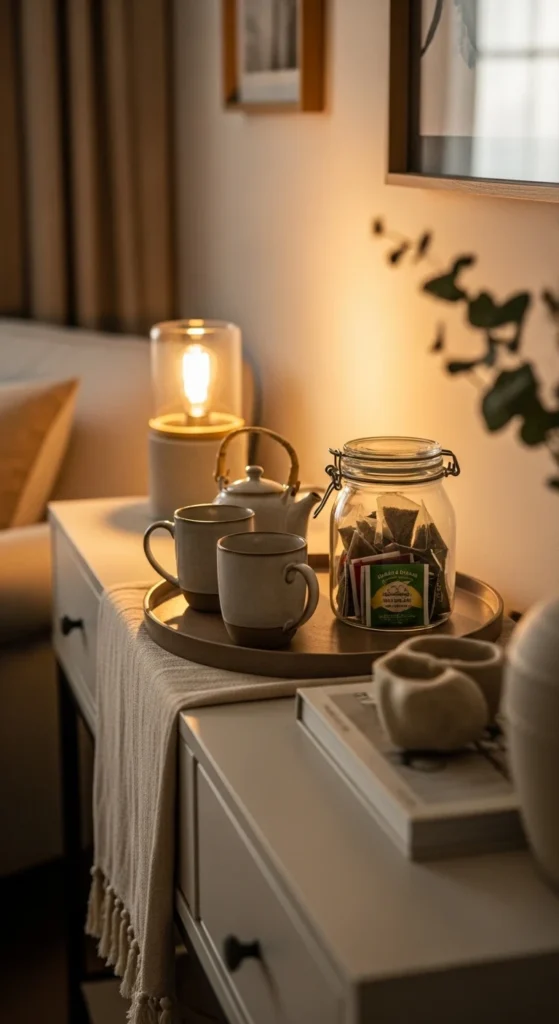
A drink station makes a living room feel welcoming, especially in the evening. Set up a small tray on a console or side table with mugs, tea bags, and a small jar of sugar or honey. Keep it neat and minimal.
This works great in family rooms too. Kids can grab hot cocoa supplies. Guests feel comfortable helping themselves.
Budget tip: use what you already have. A tray, two mugs, and a jar is enough. You can thrift a tray or use a wooden cutting board as a tray.
DIY idea: add one small basket under the tray for extra napkins or tea packets. It stays tidy but easy to access.
This idea is cozy because it supports how you actually live. It turns the living room into a place for slow moments, not only a room you walk through.
Conclusion
A warm, inviting living room comes from a few simple moves you can repeat: layer textiles (pillows, throws, rugs), lean into warm earth tones, and build warm lighting with lamps and candles instead of harsh overhead glare. Add grounding with natural wood, keep clutter down with woven baskets, and make the layout feel close by pulling seating inward for conversation. Pick just three ideas from this list to start one textile change, one lighting change, and one layout tweak. Do them in a single afternoon, then enjoy the difference that same night.