
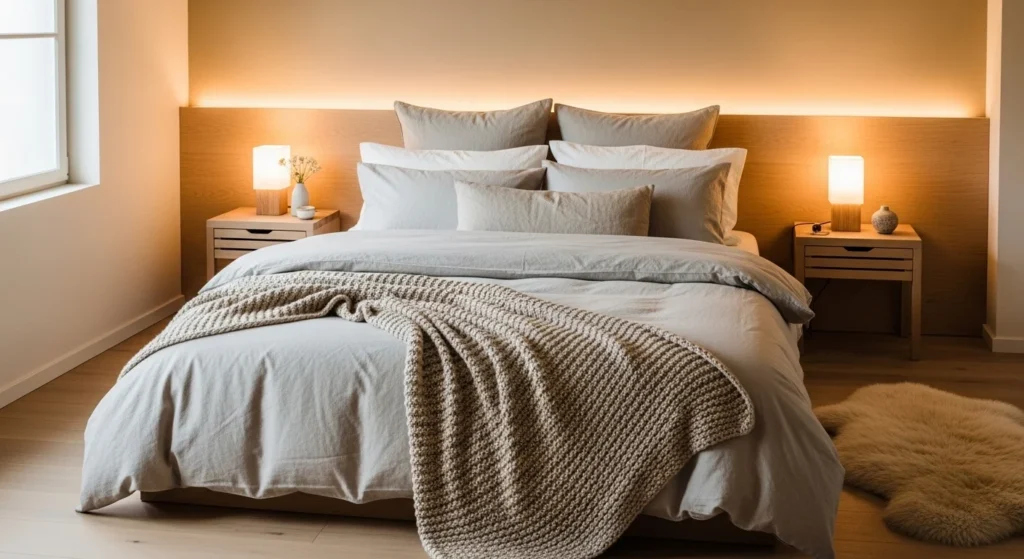
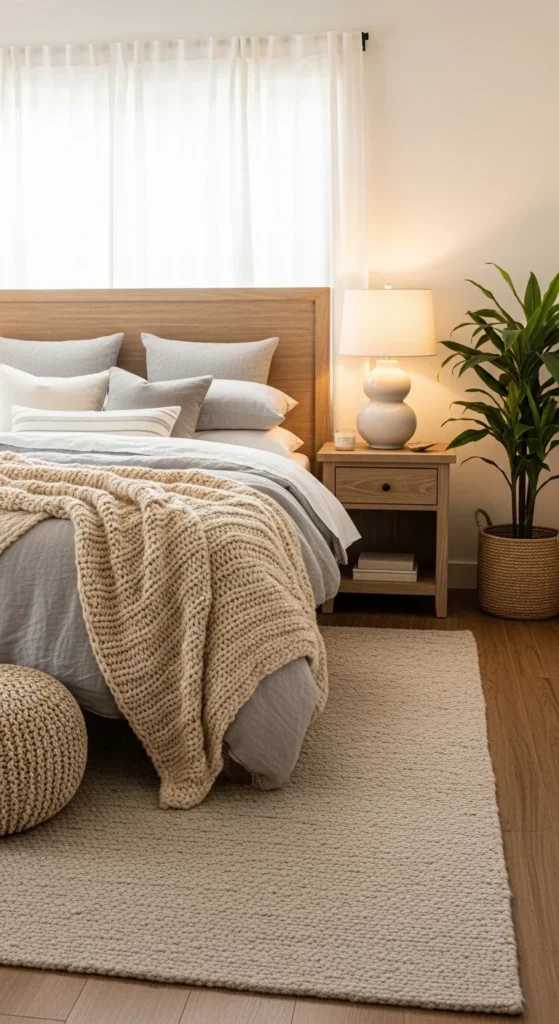
When people search for cozy bedroom decor, they are looking for comfort first. They want a space that feels safe, soft, and welcoming at the end of the day. Cozy bedrooms are built through layers, warmth, and thoughtful restraint, not expensive furniture or constant redecorating. Texture matters more than trends. Lighting matters more than color. The ideas below focus on small, affordable changes that help a bedroom feel like a personal retreat that gently wraps around you every night.
1. Layered Bedding with Soft Textures

Layered bedding is the foundation of a cozy bedroom. Start with breathable sheets, then add a duvet or quilt. Finish with a throw folded at the foot of the bed. Mixing textures like cotton, knit, and linen adds depth without clutter. You don’t need to buy everything at once. Start by adding one throw or two pillow covers. Neutral tones keep the bed calm. This setup invites rest and makes the bed feel like a place you want to sink into, not rush past.
2. Warm Neutral Color Palette
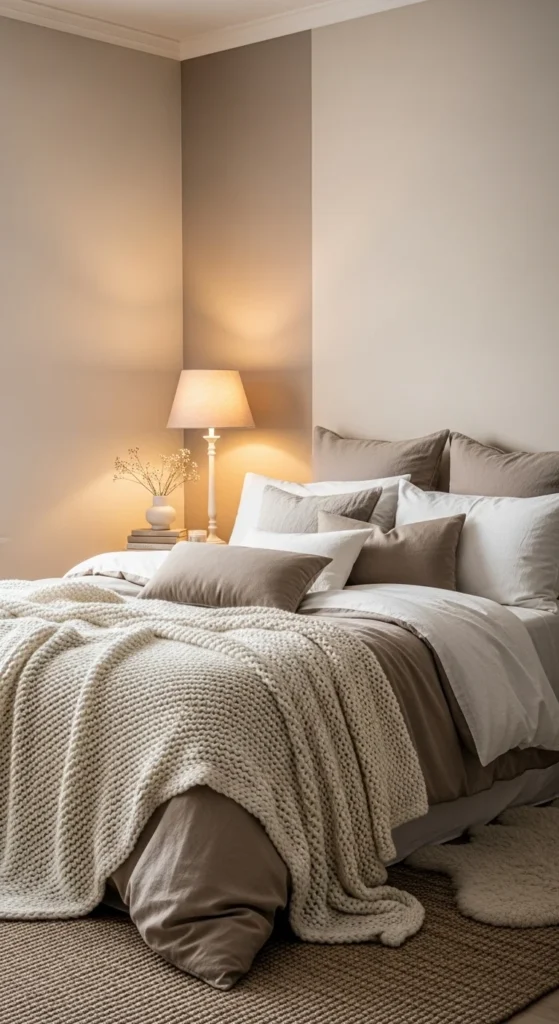
Warm neutrals help a bedroom feel grounded and safe. Shades like beige, cream, and taupe soften the room instantly. These colors reflect light gently without feeling stark. Paint is one of the most affordable changes you can make. Even repainting one wall can shift the mood. Pair warm walls with soft textiles to reinforce comfort. The room feels calmer when colors stay close together.
3. Soft Ambient Lighting
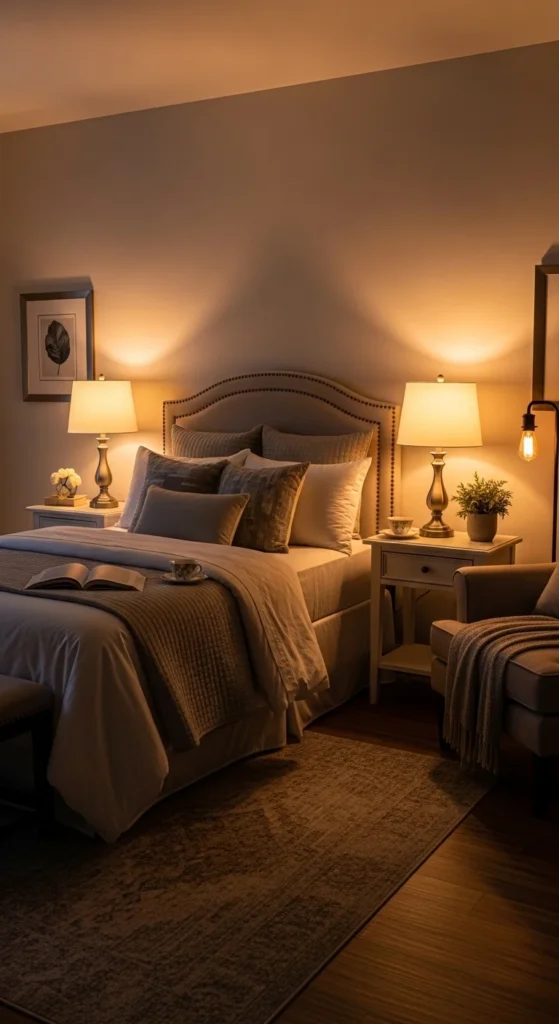
Lighting shapes how a bedroom feels at night. Avoid relying on a single ceiling light. Use table lamps, floor lamps, or wall lights instead. Warm bulbs reduce glare and soften shadows. This makes evenings feel slower and more relaxed. Lamps don’t require wiring changes, which keeps costs low. Layering light sources adds comfort without adding decor.
4. Upholstered or Padded Headboard
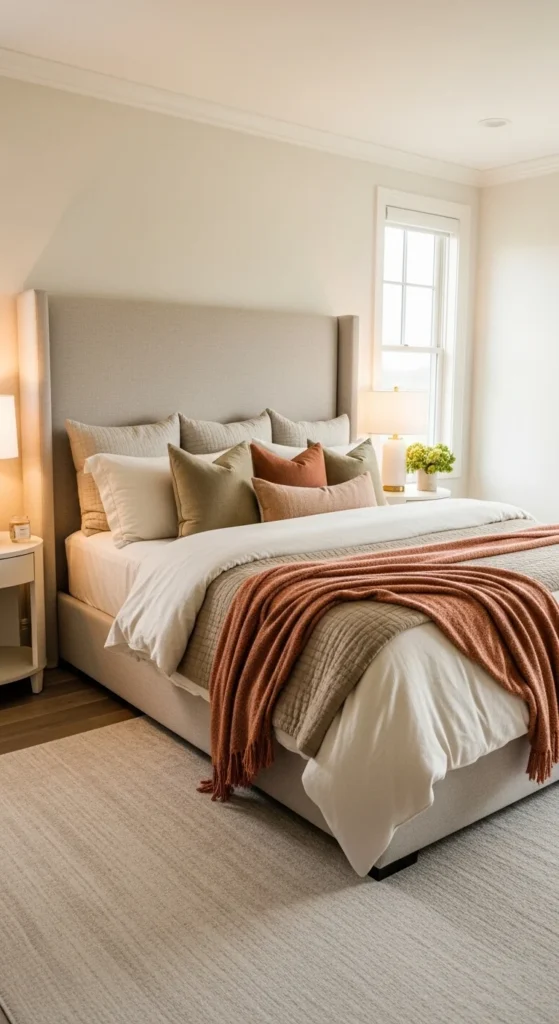
An upholstered headboard adds softness where it matters most. Fabric absorbs sound and adds visual comfort. Choose neutral fabrics so the headboard works with different bedding over time. DIY padded panels are an affordable option. Mounting them directly to the wall can save space. This one feature helps the bed feel sheltered and calm.
5. Heavy Curtains for Warmth

Curtains add both warmth and privacy. Heavier fabrics help the room feel enclosed and protected. Hang them higher than the window to add softness across the wall. You don’t need custom drapes. Ready-made panels work well. Even curtains that stay open most of the time add comfort through texture.
6. Area Rug Under the Bed
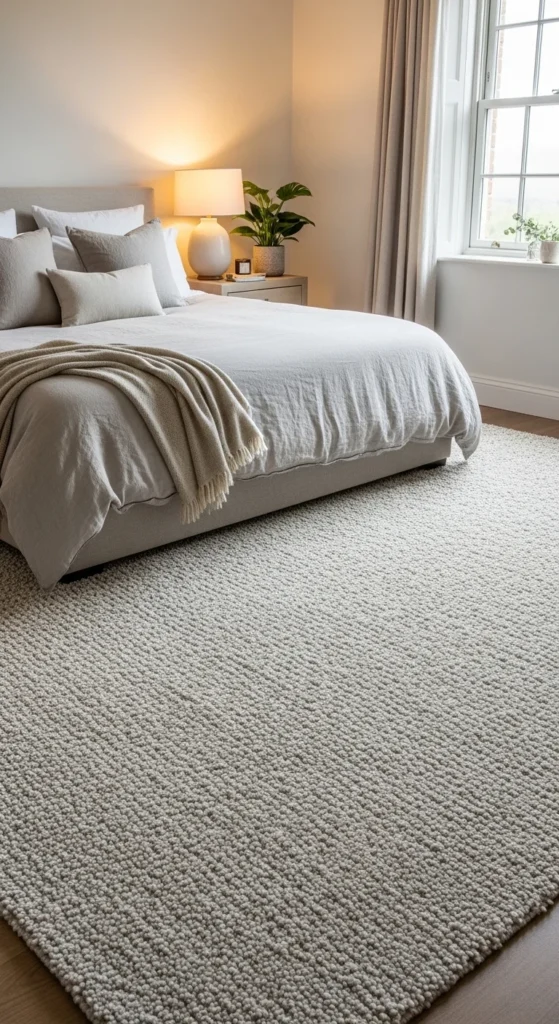
A rug adds warmth underfoot and quiets the room. Choose one large enough to extend beyond the bed. Soft textures feel best in bedrooms. Neutral colors keep the space calm. If budget is tight, layer a smaller rug on top of a basic one. Rugs help anchor the bed visually.
7. Natural Wood Accents

Wood adds warmth without effort. Even small pieces like trays or stools help. Light or medium wood tones work best for cozy spaces. Thrifted furniture can be refinished easily. Wood balances soft fabrics and adds a grounded feel.
8. Throw Blankets Within Reach

Throws make a room feel lived-in and inviting. Place them where you can reach them easily. Use different textures but similar colors. You don’t need many. One or two well-chosen throws are enough. This signals comfort without clutter.
9. Soft Bedside Lamps
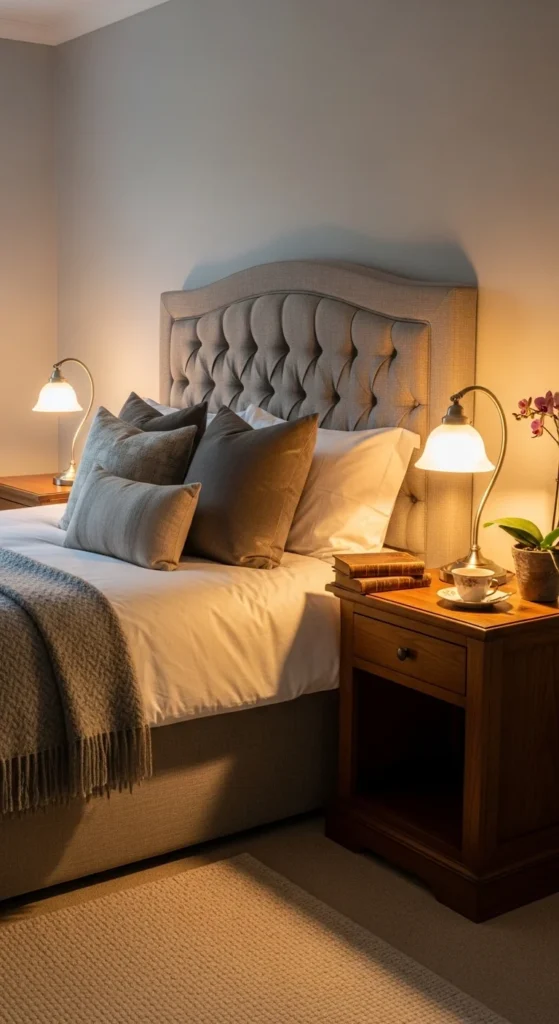
Bedside lamps create intimate light zones. Choose shades that diffuse light softly. Avoid exposed bulbs. Lamps with fabric shades work best. This keeps nighttime lighting gentle and calming.
10. Personal Books or Journals
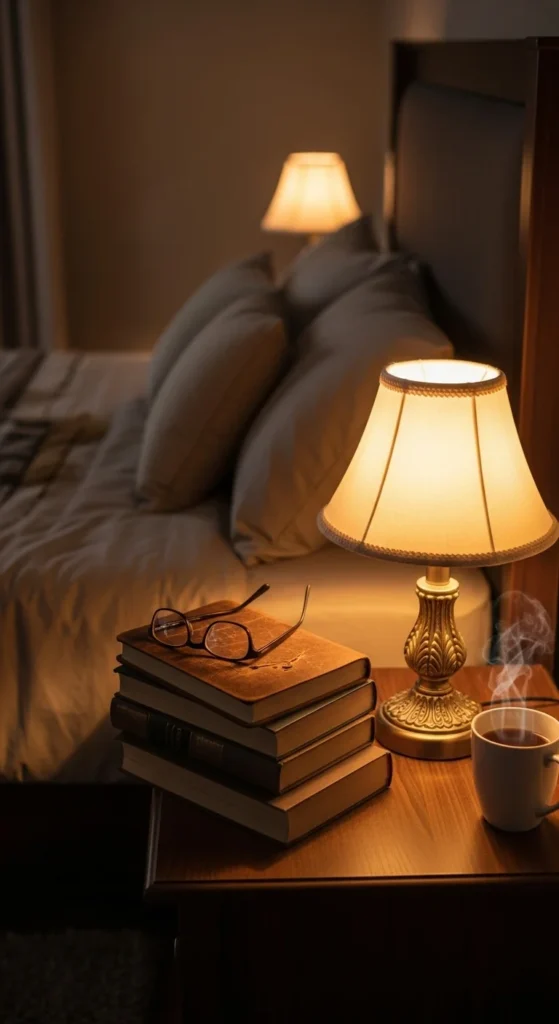
Books add personality and comfort. Keep a small stack near the bed. This encourages slower routines. Use neutral covers if visuals matter. One stack feels intentional. Too many feels busy.
11. Layered Pillows for Comfort

Pillows add depth and softness. Use sleeping pillows plus one or two decorative ones. Avoid overcrowding. Texture matters more than pattern. This creates a welcoming bed without excess.
12. Calm Wall Art

Art should support rest, not distract. Choose soft landscapes or abstract pieces. One or two pieces are enough. Keep frames simple. Calm visuals help the room feel settled.
13. Warm Flooring or Rugs
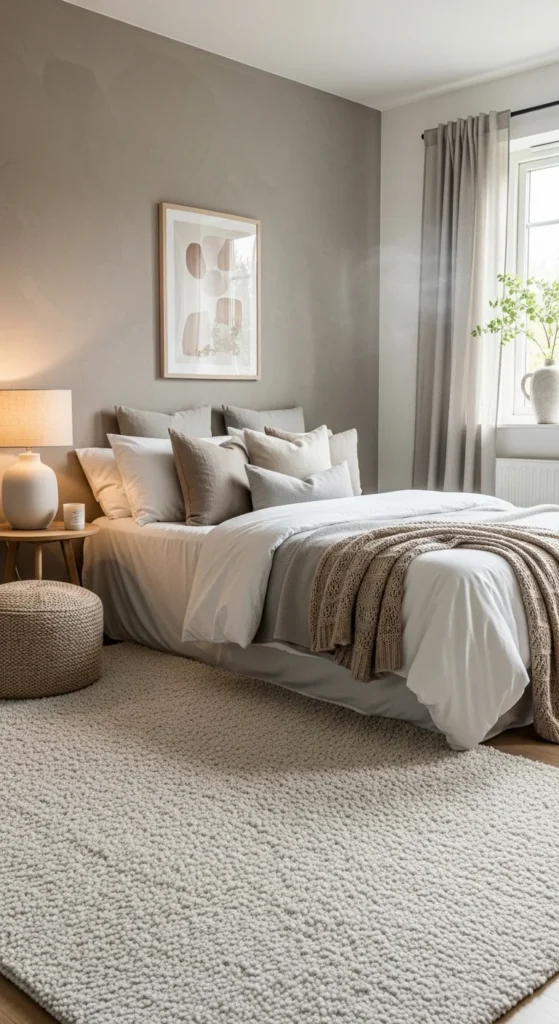
Hard floors can feel cold without texture. Rugs or runners soften the space. Choose warm tones. This improves comfort and sound.
14. Scent Through Candles or Diffusers
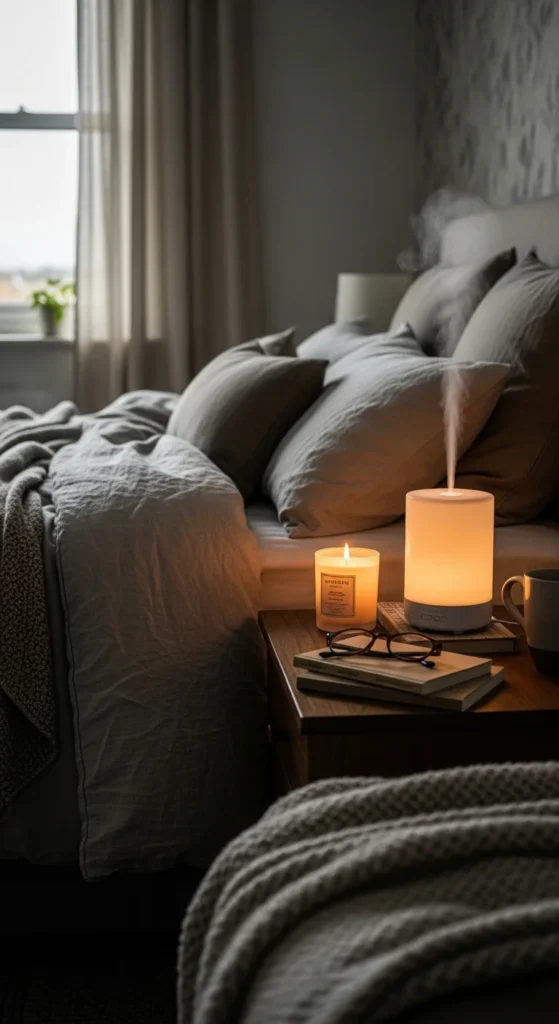
Scent adds another layer of comfort. Use candles or essential oil diffusers. Keep scents soft and familiar. One scent works better than many. This shapes mood subtly.
15. Soft Seating Corner
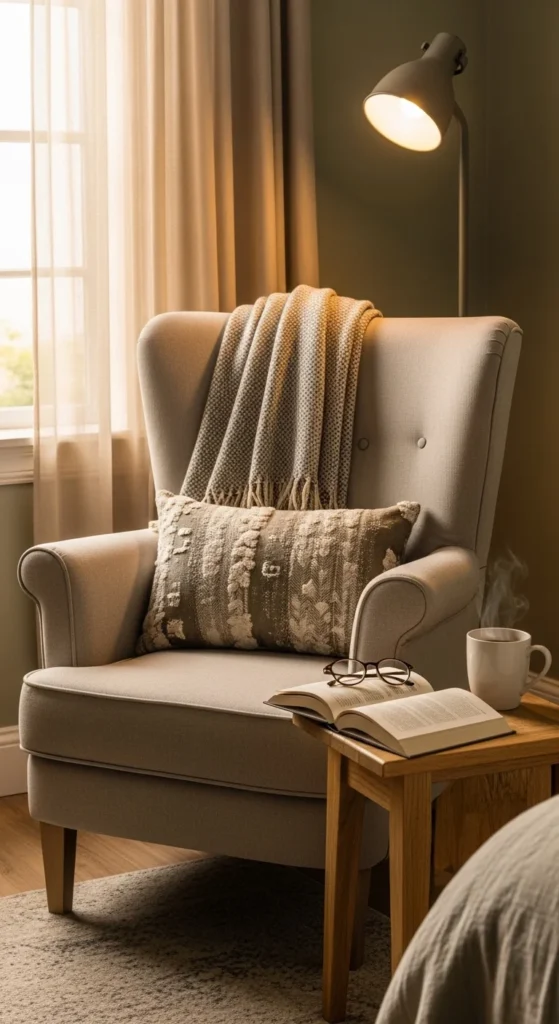
A chair adds function and comfort. It creates a place to pause. Use a throw to soften it. Thrifted chairs can be refreshed with a cushion.
16. Minimal Technology Presence
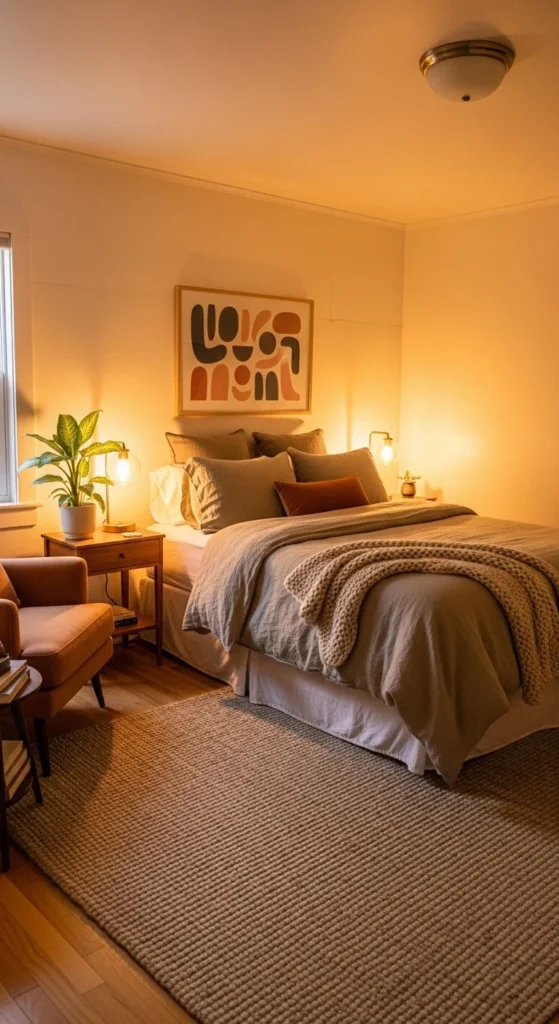
Less visible tech makes rooms feel calmer. Hide cords where possible. Keep phones off the bed. This supports rest and comfort.
17. Natural Wood Accents That Add Warmth
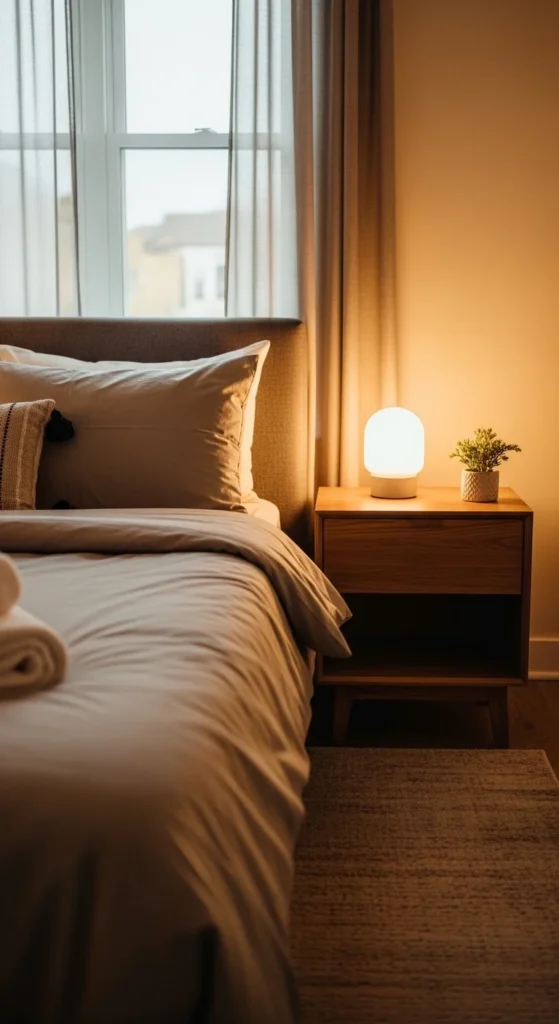
Natural wood instantly makes a bedroom feel warmer and more grounded. Even small touches help. A wood nightstand, bench, or tray adds contrast against soft fabrics. Light to medium wood tones work best for cozy spaces. They feel gentle rather than heavy. You don’t need matching sets. One or two pieces are enough. Thrifted furniture can be sanded and sealed for a simple refresh. Wood balances plush textiles and keeps the room from feeling flat. When paired with warm lighting, it creates a quiet sense of comfort that feels lived-in and personal.
18. Throw Blankets Placed for Easy Comfort
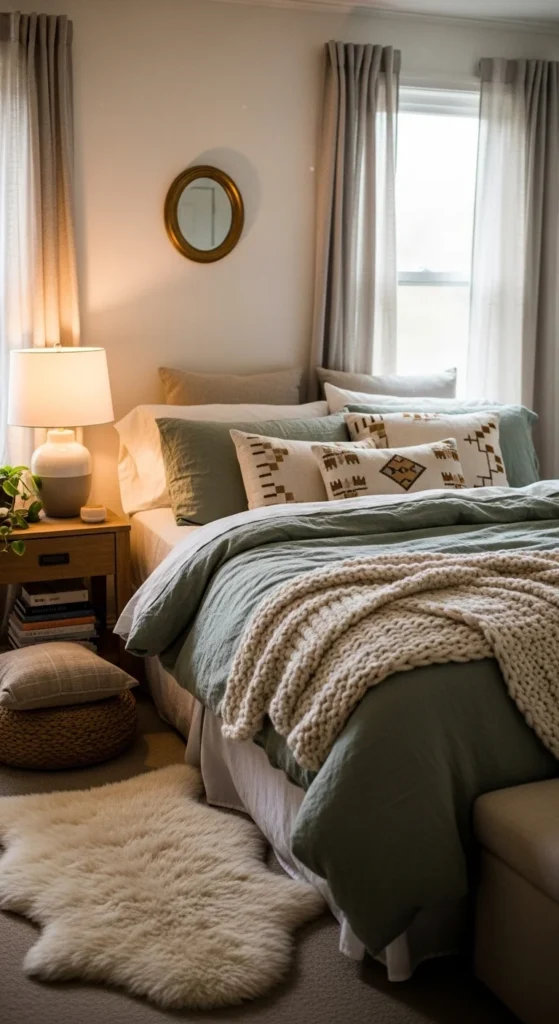
Throws make a bedroom feel welcoming the moment you walk in. Place them where you can grab them easily. A folded throw at the foot of the bed or draped over a chair works well. Stick to soft textures like knit, fleece, or brushed cotton. Keep colors close to your bedding palette so the room stays calm. You don’t need many. One or two thoughtfully chosen throws are enough. This simple layer signals comfort without clutter.
19. Soft Bedside Lamps Instead of Harsh Light

Bedside lamps shape the mood at night. Fabric shades soften light and reduce glare. This helps the room feel calm rather than sharp. Choose warm bulbs for a gentle glow. Lamps don’t require installation, which keeps costs low. Even replacing one lamp can change how the room feels in the evening. Soft lighting slows the pace of the room naturally.
20. Personal Books Within Reach

Books add quiet comfort to a bedroom. A small stack near the bed suggests rest and reflection. Choose books you enjoy, not just decorative ones. Keep the stack small so it feels intentional. Neutral covers help if visuals matter. This encourages slower evenings and adds personality without adding decor.
21. Layered Pillows That Invite Rest

Pillows add softness and depth to the bed. Use sleeping pillows plus one or two decorative ones. Texture matters more than pattern. Linen, cotton, or brushed fabrics work well. Avoid overcrowding the bed. Too many pillows feel busy. A simple arrangement feels inviting and easy to maintain.
22. Calm Wall Art That Soothes

Wall art should support rest. Choose pieces with soft colors and gentle shapes. Landscapes or abstract designs work well. One or two pieces are enough. Keep frames simple. Avoid high contrast or busy imagery. Calm visuals help the bedroom feel settled.
23. Rugs That Soften Sound and Steps
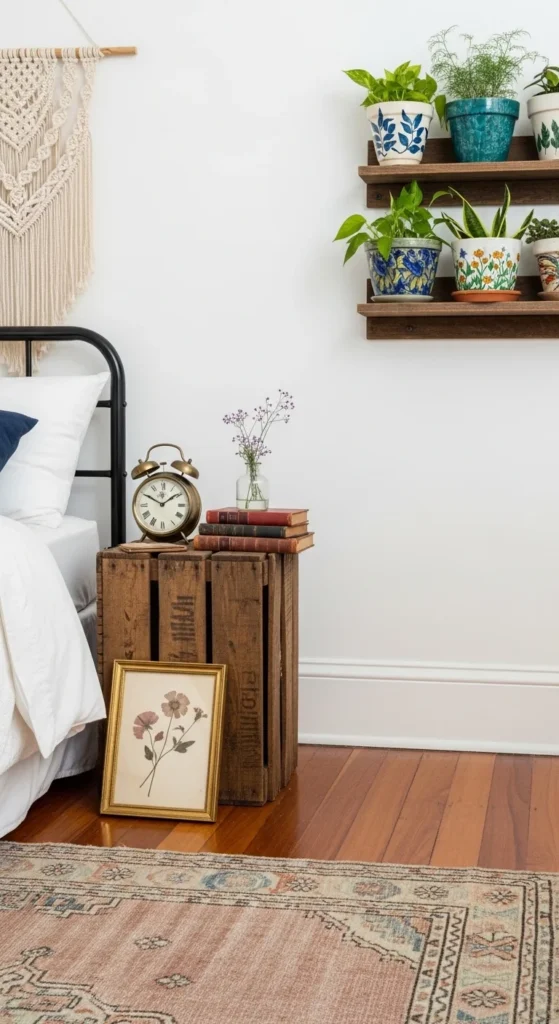
Rugs add comfort underfoot and reduce noise. Choose soft textures that feel good when you step out of bed. Neutral tones keep the space relaxed. Make sure the rug is large enough to extend beyond the bed. If budget is limited, layer a smaller rug over a basic one. This adds depth without cost overload.
24. Gentle Scents Through Candles or Oils

Scent shapes how a room feels emotionally. Candles or diffusers add warmth quietly. Stick to familiar, soft scents. One scent is better than several. Keep placement simple. This creates a comforting routine without visual clutter.
25. A Soft Seating Corner
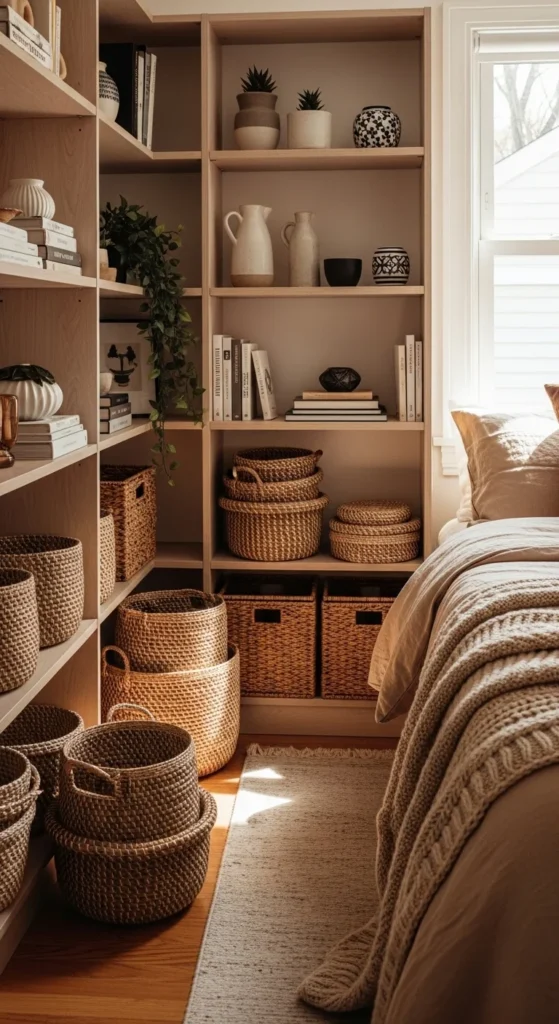
A chair creates a place to pause. It adds comfort beyond the bed. Use a throw or cushion to soften it. Thrifted chairs can be refreshed with fabric covers. Even small bedrooms can fit a compact chair. This adds warmth and function.
26. Less Visible Technology
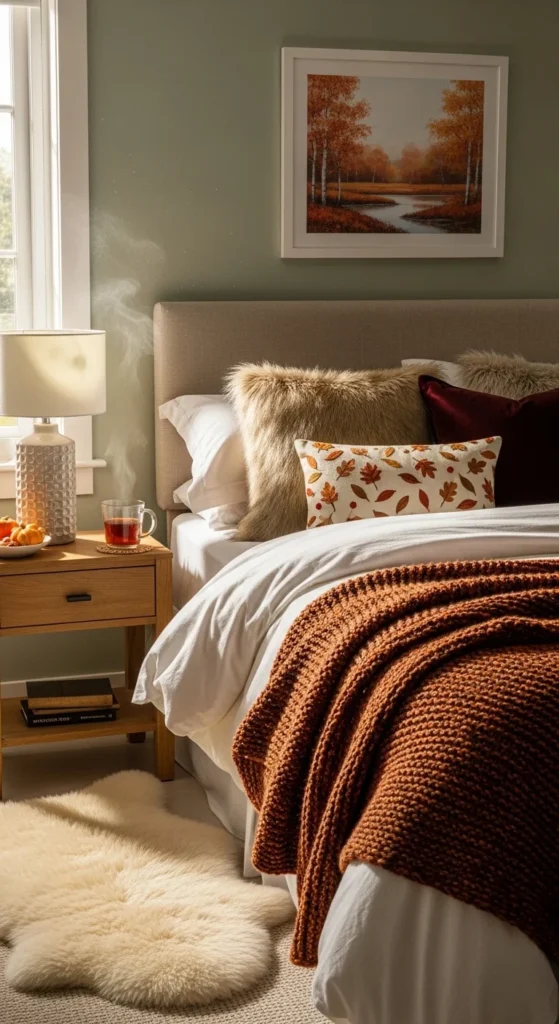
Reducing visible tech makes a bedroom feel calmer. Hide cords where possible. Keep screens off the bed. Store devices in drawers at night. This supports better rest and a quieter visual environment. Small steps make a big difference.
27. Matching Nightstands for Balance
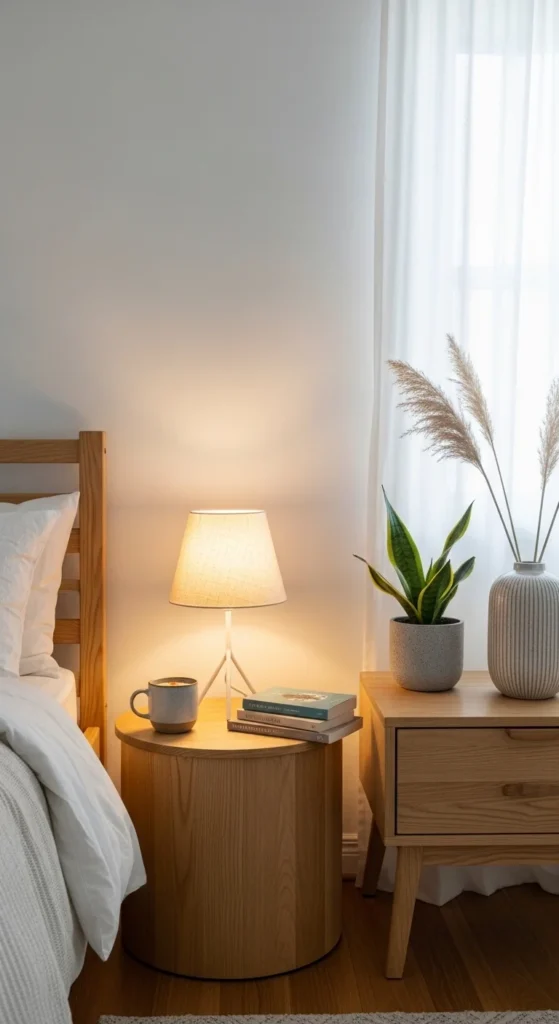
Matching nightstands create balance. They make the bed feel anchored. If you don’t have a matching set, paint or refinish mismatched pieces the same color. Balance supports comfort and order.
28. Soft Wall Paint Colors
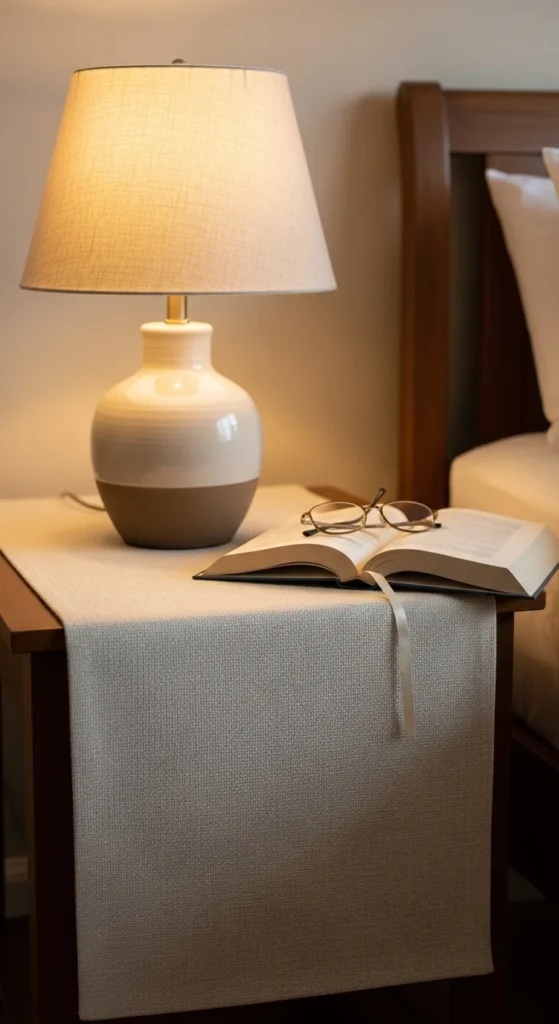
Wall color sets the emotional tone. Soft whites, warm beige, or muted tones feel comforting. Avoid stark or cool shades. Paint is one of the easiest updates. Even one wall can change the mood.
29. Upholstered Bench at the Foot of the Bed
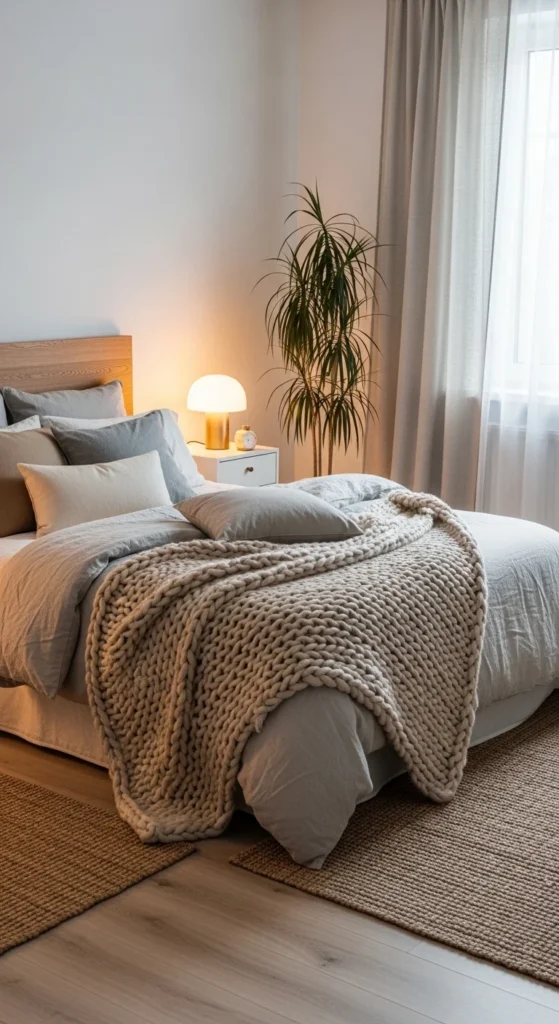
A bench adds comfort and purpose. Upholstered styles feel softer than bare wood. Use it for throws or seating. It completes the bed area visually. This small addition adds warmth quickly.
Conclusion
A cozy bedroom is built through softness, warmth, and care rather than cost. Layered textiles, gentle light, and personal touches work together to shape comfort. You don’t need to change everything at once. Start with one layer, one lamp, or one throw. Each small step helps your bedroom become a place you truly want to return to every night.