
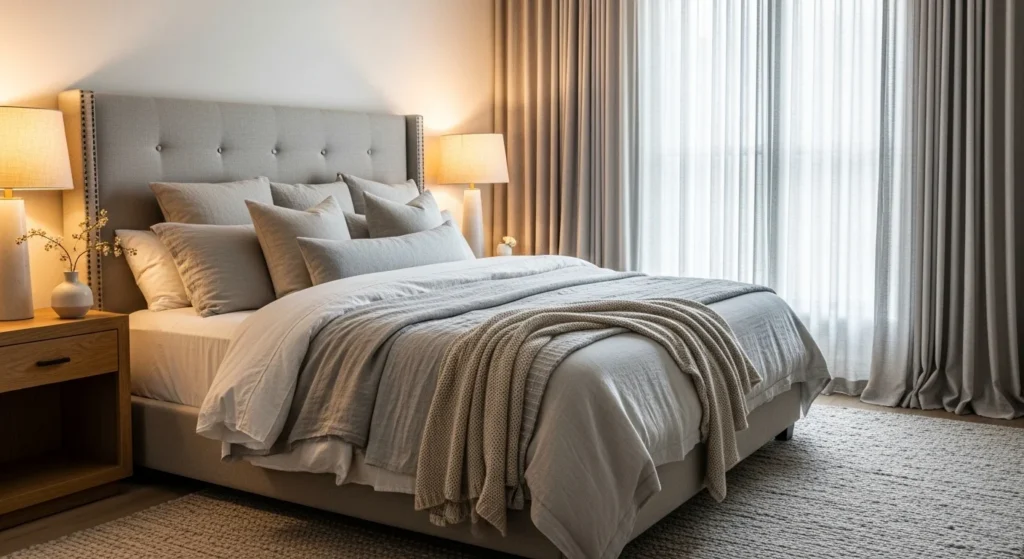
Bedroom decor searches increasingly focus on spaces that feel restful, intimate, and thoughtfully styled. People want bedrooms that resemble boutique hotels or quiet retreats rather than busy living spaces. Current trends lean toward layered textures, moody palettes, sculptural furniture, and tech-light layouts that support deeper rest. The ideas below focus on realistic changes that create a more refined bedroom atmosphere using intentional styling rather than major renovation.
1. Layered Bedding for Hotel-Style Comfort

Layered bedding instantly changes how a bedroom feels. Start with crisp sheets in a neutral tone. Add a quilt or coverlet, then finish with a throw folded at the foot of the bed. Use two sleeping pillows and two decorative pillows to keep the look full but not crowded. This approach adds softness and visual depth without buying a full new set. For a budget option, keep your existing duvet and simply upgrade pillow covers or add one textured throw. The bed becomes the visual anchor of the room, setting a calm, welcoming tone.
2. Upholstered Headboard That Feels Cocooned
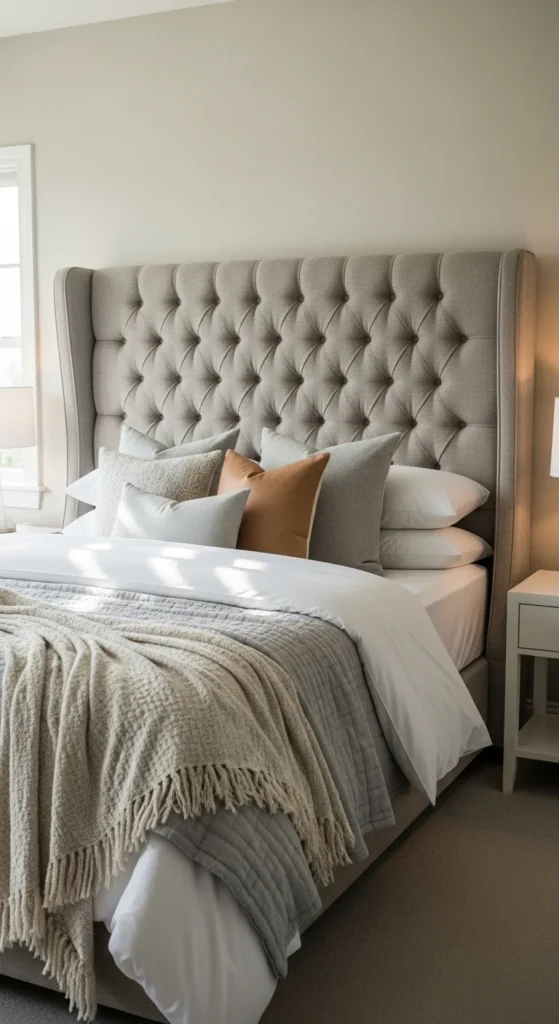
An upholstered headboard wraps the bed in softness and comfort. Fabric absorbs sound and adds warmth, which makes the room feel more restful. Choose neutral tones like beige, taupe, or muted gray for flexibility. If buying new furniture isn’t an option, a DIY padded headboard using plywood, foam, and fabric works well. Wall-mounted styles also save space. This single feature can shift the entire mood of the bedroom toward a quieter, more settled feel.
3. Color-Drenched Walls for Immersion
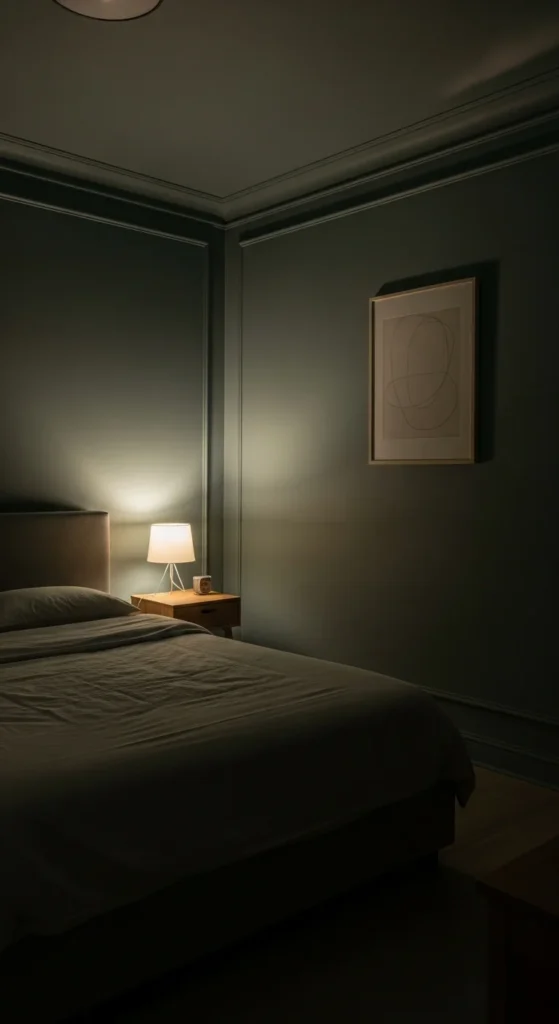
Using one color across walls and trim reduces visual breaks. This creates an immersive, enveloping effect that feels calming rather than stark. Rich shades like olive, clay, or blue-gray work especially well in bedrooms. Paint is one of the most affordable tools for transformation. If full drenching feels bold, start with one wall behind the bed and expand later.
4. Wall Sconces Instead of Table Lamps
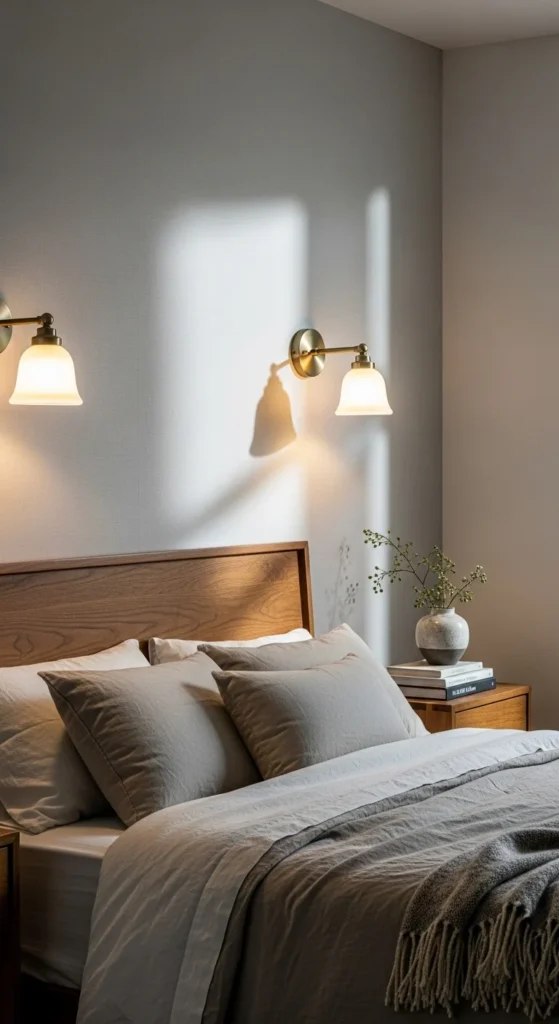
Wall sconces free up nightstand space and introduce soft, directional light. This creates a cleaner bedside setup. Plug-in sconces work well when wiring is limited. Choose simple shapes and warm bulbs for comfort. This small change makes the room feel more intentional and less cluttered.
5. Sculptural or Curved Bed Frames
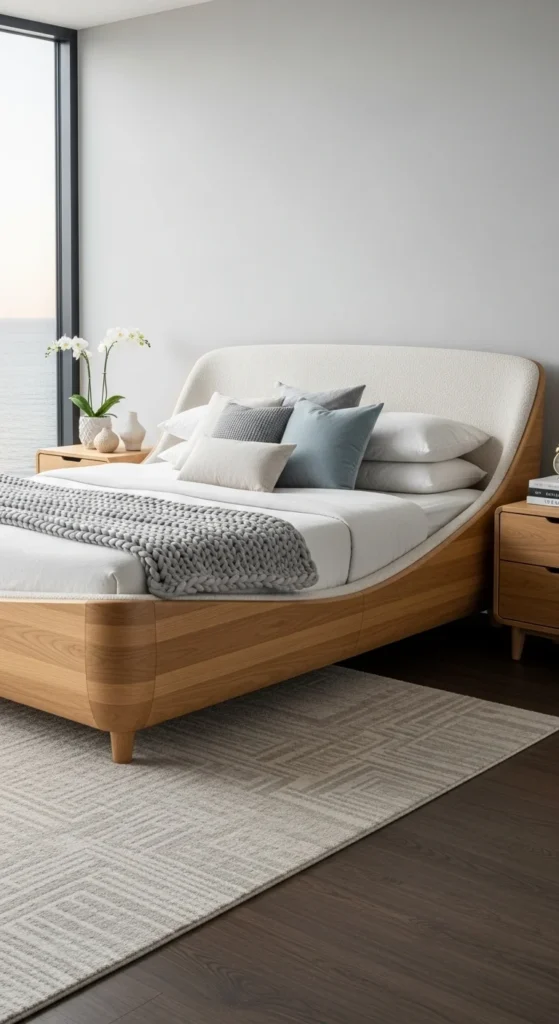
Curved bed frames soften the sharp lines common in modern rooms. Rounded edges feel more organic and relaxing. These designs stand out even in neutral palettes. If replacing a bed frame isn’t possible, soften angles with curved pillows or rounded nightstands. Shape plays a quiet but powerful role in how a room feels.
6. Dark Wood or Toned Nightstands
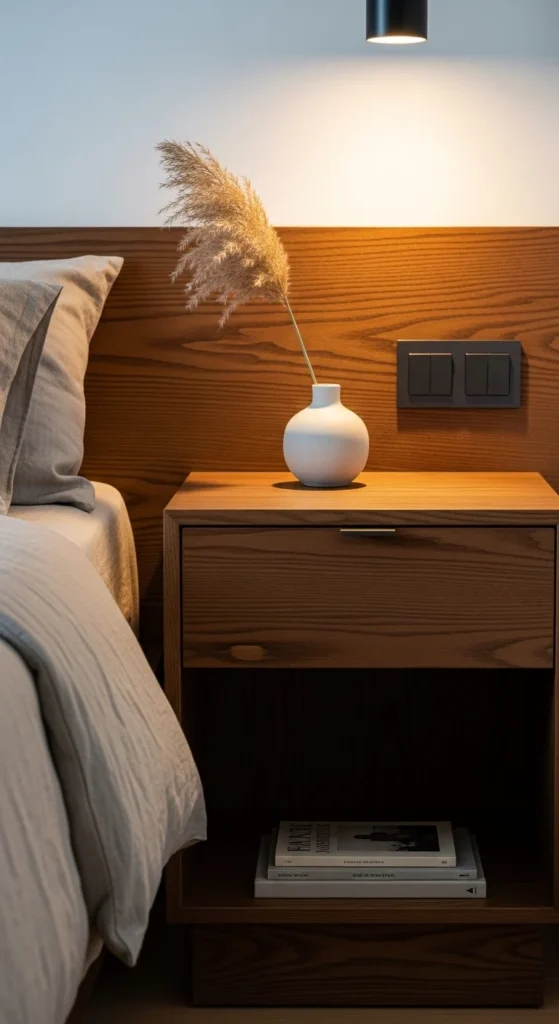
Darker nightstands ground lighter beds and walls. They add contrast without overwhelming the space. Look for simple shapes with minimal hardware. Thrifted pieces can be sanded and stained for a custom look. Keeping surfaces mostly clear maintains balance.
7. Decorative Drapes Used Beyond Windows
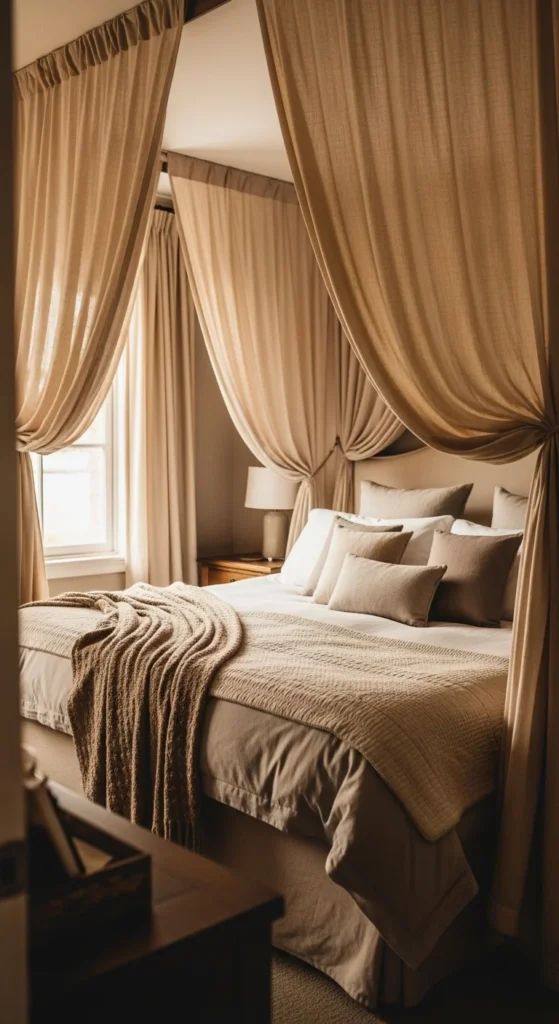
Drapes don’t have to sit on windows. Hanging fabric behind or beside the bed adds softness and intimacy. This technique works well in large or open bedrooms. Lightweight fabrics keep the look relaxed. Curtain panels are often affordable and easy to install.
8. Botanical or Organic Wall Art
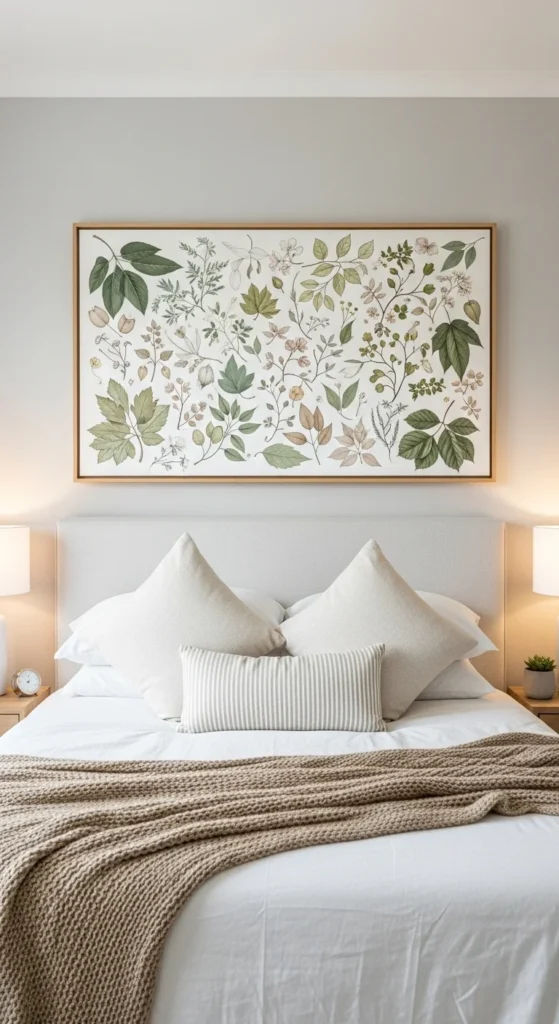
Nature-inspired art brings calm without visual noise. Choose organic shapes or muted plant motifs. One or two pieces are enough. Avoid busy frames or bright colors. This keeps the focus on rest rather than stimulation.
9. Mirrors Positioned Across from Windows
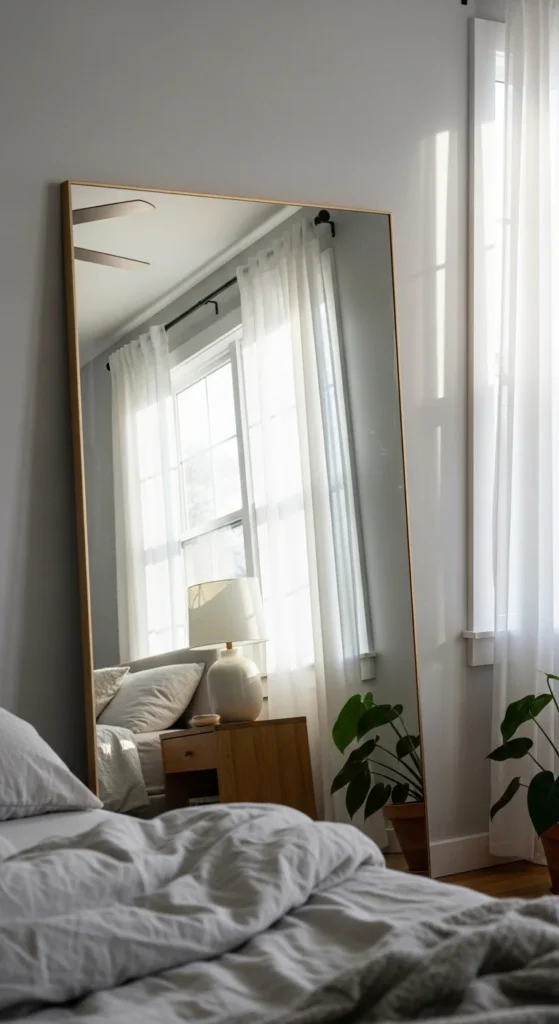
Mirrors placed opposite windows bounce light around the room. This helps darker bedrooms feel brighter and more open. Simple frames work best. Thrifted mirrors can be painted to match the room. Light reflection supports a relaxed atmosphere.
10. Textured Accent Walls
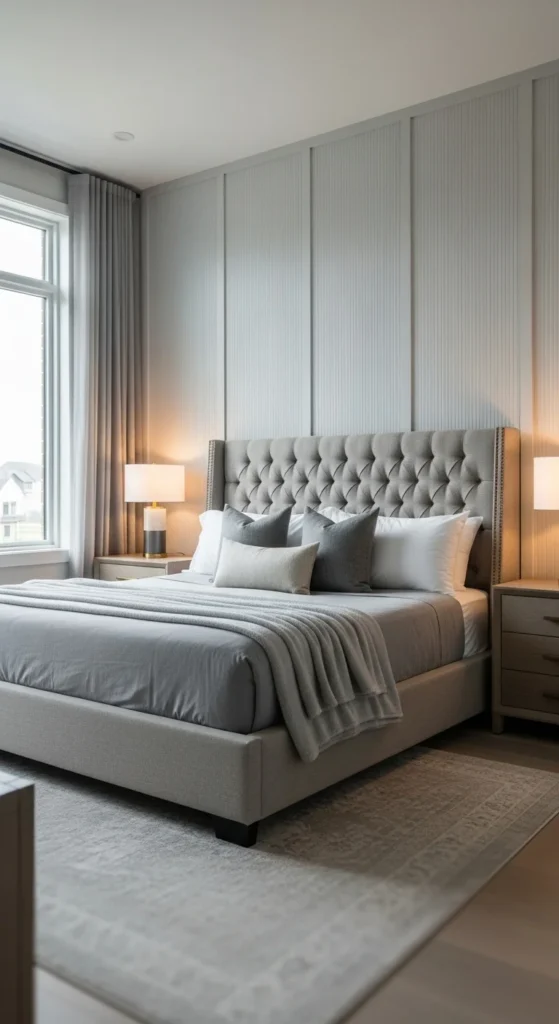
Texture adds depth without relying on color. Panels, limewash, or soft plaster finishes work well. Focus texture on the wall behind the bed to create a focal point. DIY panel kits offer an accessible option. This approach adds interest while keeping the palette calm.
11. Neutral Layered Rugs
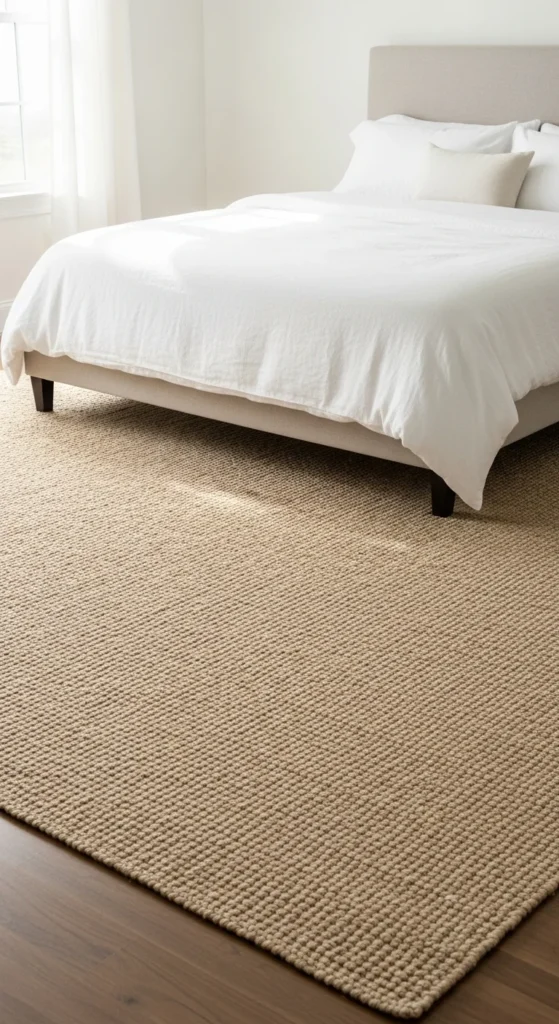
Rugs add warmth and define the sleeping area. Choose a rug large enough to extend beyond the bed on all sides. Neutral tones keep the look cohesive. Layering a smaller rug on top adds softness. This works especially well in larger rooms.
12. Plush Textiles Like Velvet or Mohair
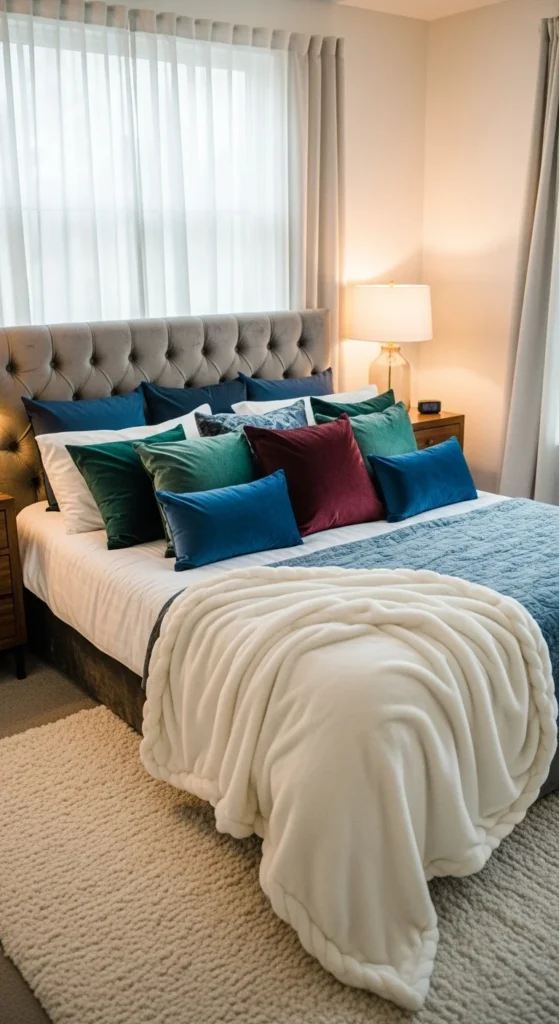
Plush fabrics invite touch and comfort. Velvet cushions or a mohair throw add depth without excess decor. Stick to one or two tactile accents. This keeps the room feeling rich but restrained. Swap covers seasonally for variety.
13. Built-In Shelving for Clean Storage
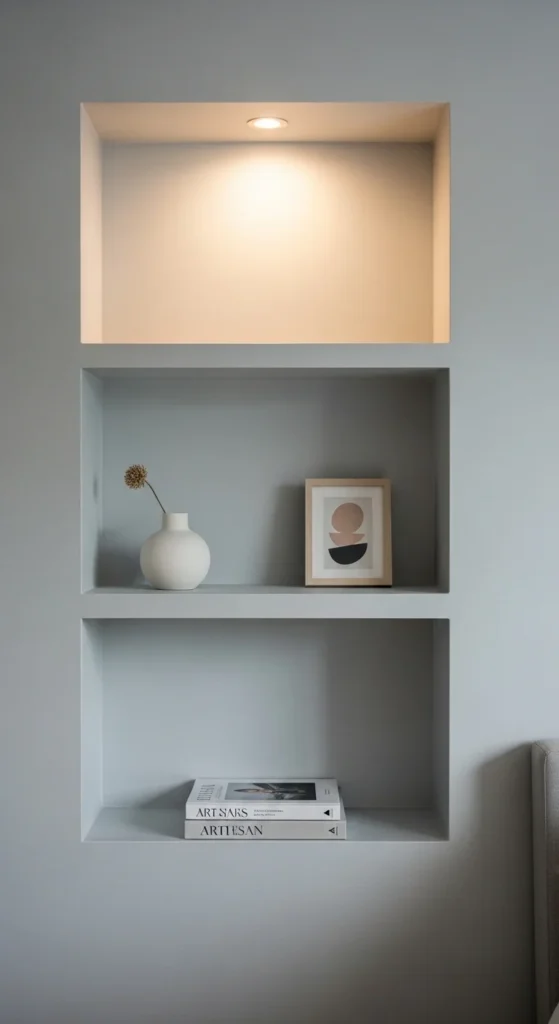
Built-ins reduce the need for extra furniture. They keep storage vertical and tidy. Use shelves for books, ceramics, or folded linens. Keep spacing generous to avoid clutter. Paint shelves the same color as walls for continuity.
14. Moody Paint with Soft Lighting
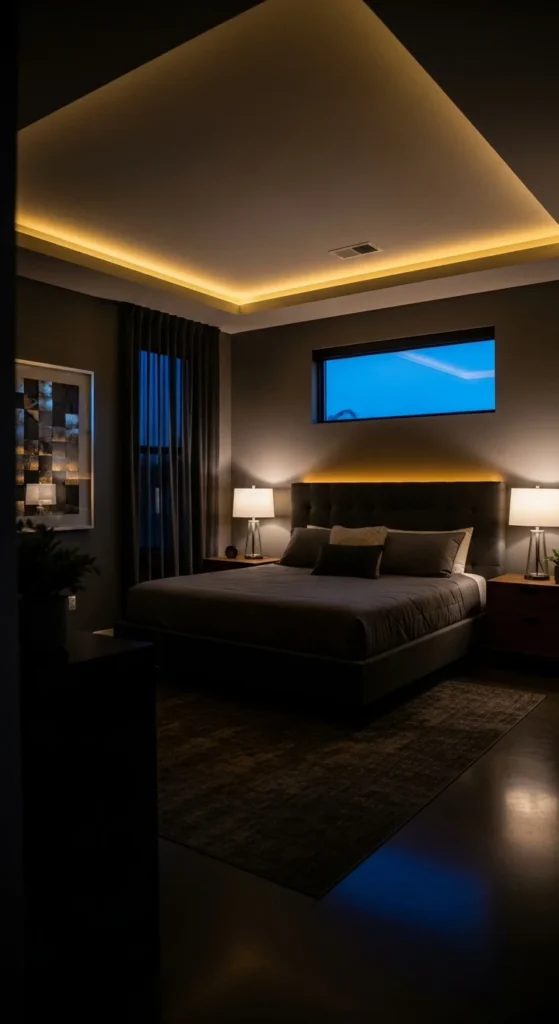
Darker paint feels soothing when paired with gentle lighting. Table lamps, sconces, and floor lamps create layers. Avoid bright overhead light at night. Warm bulbs soften shadows. This combination supports rest.
15. Symmetrical Art Sets Above the Bed
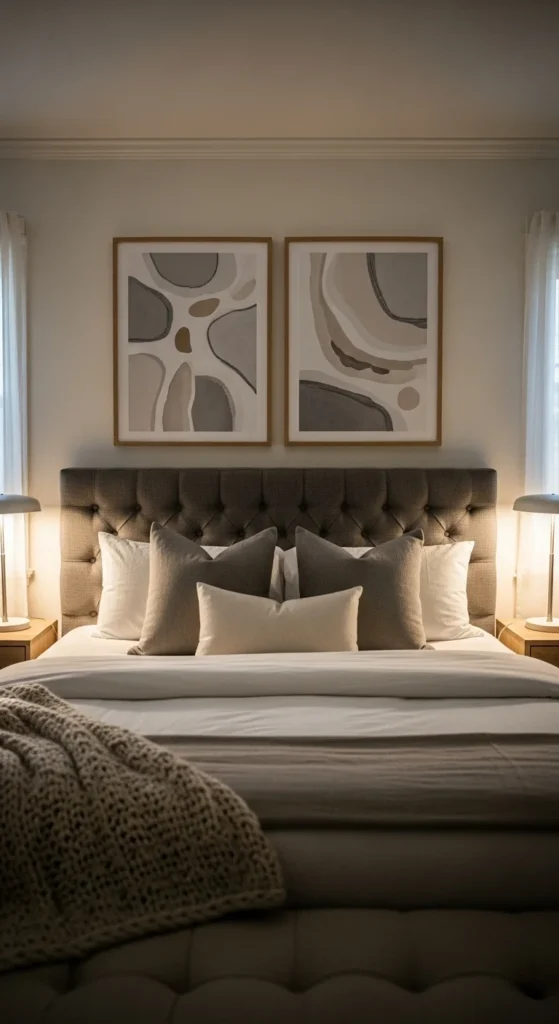
Symmetry brings visual order, which helps a bedroom feel settled and composed. Two matching art pieces above the bed create balance without adding clutter. Abstract designs work best because they don’t pull attention too strongly. Keep colors muted so the art supports rest rather than stimulation. Frames should be simple and similar in size to maintain harmony. For a budget approach, download printable art and frame it in identical frames. Thrift stores are also great sources for matching artwork sets. Hang the pieces at eye level when seated on the bed, not standing. This placement feels more natural in a sleeping space. Symmetry like this makes the bed feel anchored and intentional, giving the room a finished look with very little effort.
16. Statement Headboard as the Focal Point
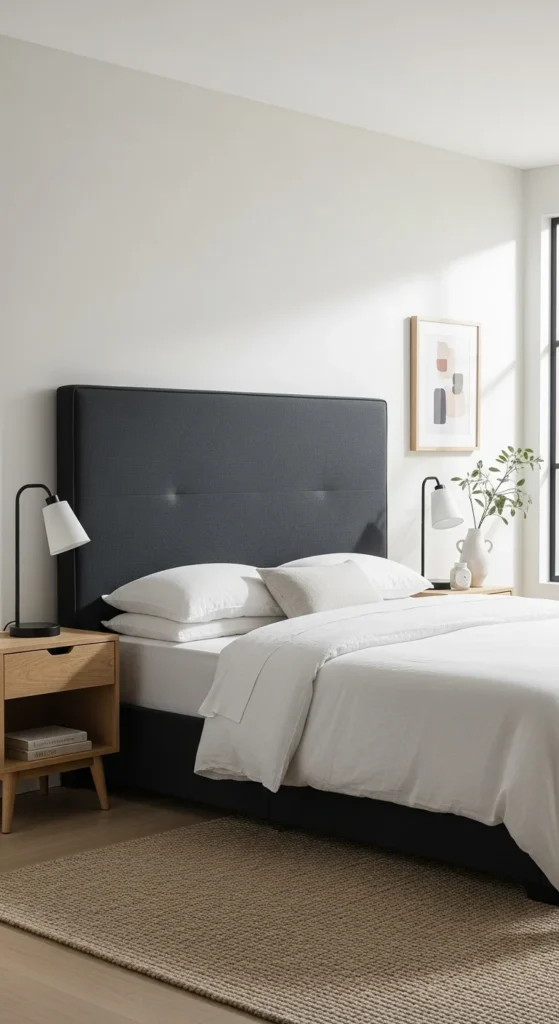
A strong headboard can carry the entire bedroom design. Upholstered or padded styles add softness and visual weight in the right place. Choose a deeper tone such as charcoal, olive, or warm brown to ground the bed. Keep bedding and walls simple so the headboard stands out naturally. If replacing furniture isn’t possible, attach a DIY upholstered panel behind the bed using plywood, foam, and fabric. Wall-mounted panels also save space. When the headboard does most of the visual work, the rest of the room can stay calm and uncluttered.
17. Floral or Leafy Murals for Soft Drama
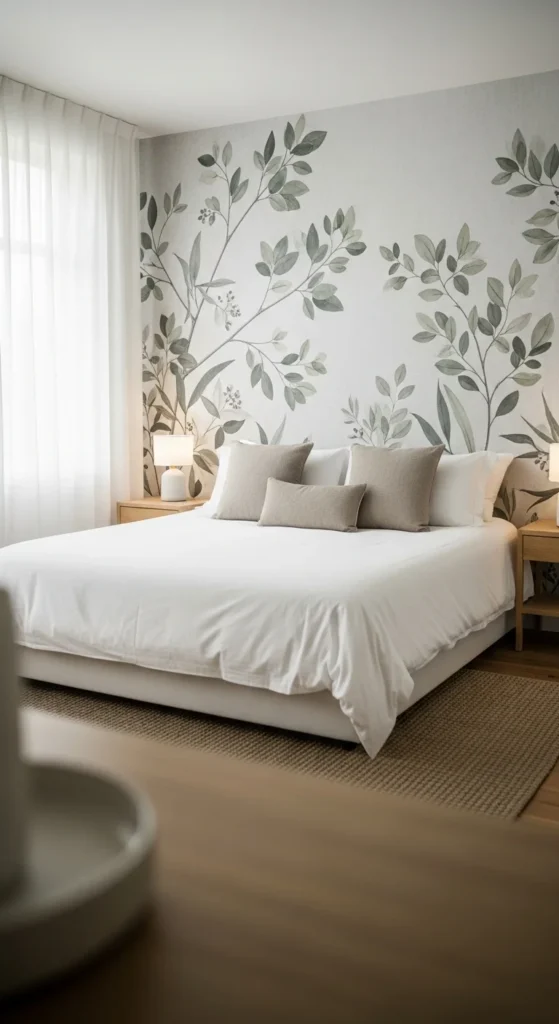
Murals bring nature indoors without adding objects. Soft floral or leafy designs feel calming when colors stay muted. Use murals on the wall behind the bed to create focus without surrounding clutter. Peel-and-stick options make this renter-friendly and affordable. Balance the mural with simple bedding and minimal furniture. Avoid busy patterns or high contrast. One large natural image often feels quieter than multiple framed pieces. This approach adds personality while keeping the room restful.
18. Area Rugs That Anchor the Bed
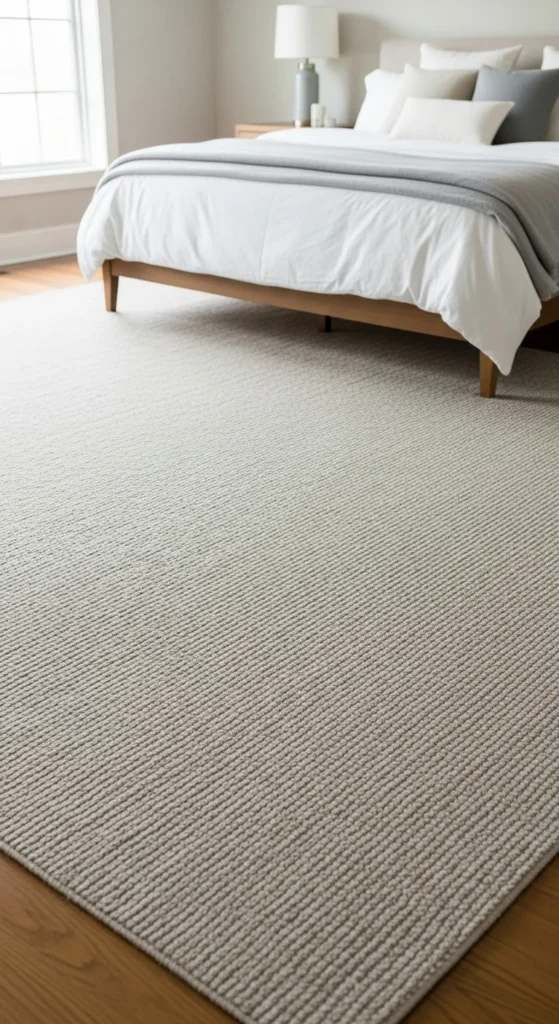
A properly sized rug grounds the bed and defines the sleeping zone. Rugs that extend beyond the bed on all sides feel intentional and comfortable underfoot. Neutral tones work best because they don’t compete with bedding. Texture matters more than pattern. Flat weaves or low piles keep the look relaxed. For savings, layer a smaller rug over a larger affordable base rug. This technique adds depth without major cost. Rugs also soften sound, making the room quieter and more comfortable.
19. Silk or Mohair Bedding Accents

Luxury in bedrooms often comes from how materials feel. Silk pillowcases or a mohair throw introduce softness without visual excess. Use one accent rather than several. This keeps the room calm and intentional. These fabrics also help absorb sound and feel gentle against skin. For a budget option, start with pillowcases rather than full bedding sets. Store them neatly when not in use. Texture like this adds comfort without adding clutter.
20. Tech-Light Bedroom Layouts
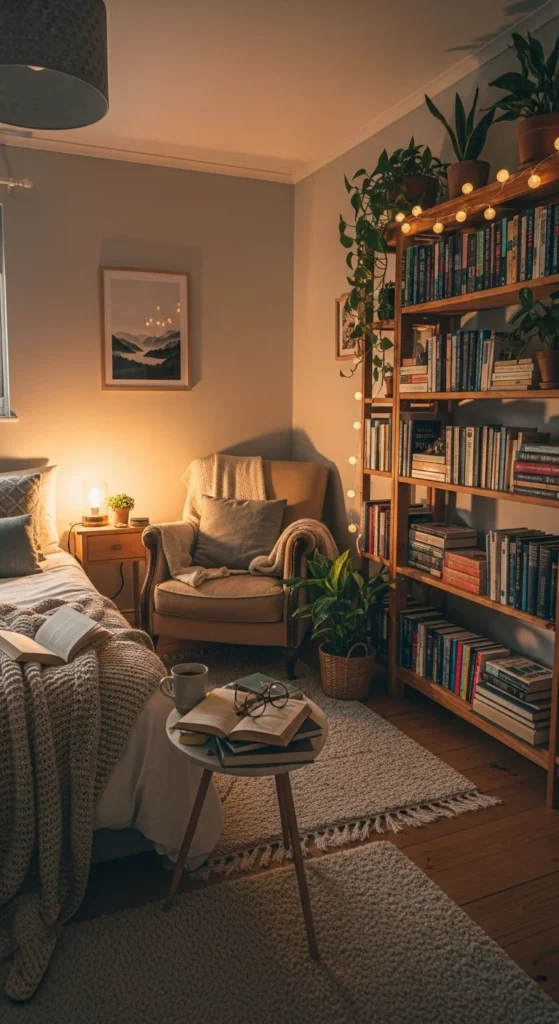
Bedrooms feel more restful when screens are less visible. Removing TVs and excess electronics reduces visual noise. Store devices in drawers or outside the room at night. Replace them with books, lamps, or artwork. This encourages slower routines before sleep. Even hiding charging cables improves the room’s feel. You don’t have to remove all tech at once. Start by clearing nightstands. The space immediately feels calmer and more intentional.
21. Tall Floor-Length Curtains
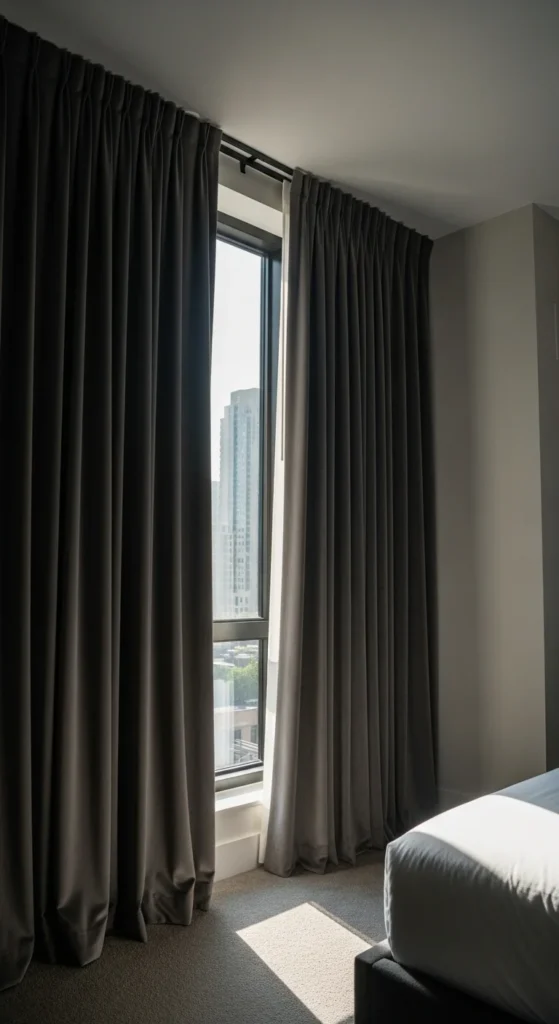
Tall curtains change how a room feels by drawing the eye upward. Hanging rods near the ceiling makes walls feel taller. Choose soft fabrics that fall straight. Neutral tones keep the look calm. Curtains don’t have to block light fully to work. Even sheer panels add softness and structure. Curtain panels are widely available and easy to install, making this a high-impact update.
22. Oversized Pendant Lighting
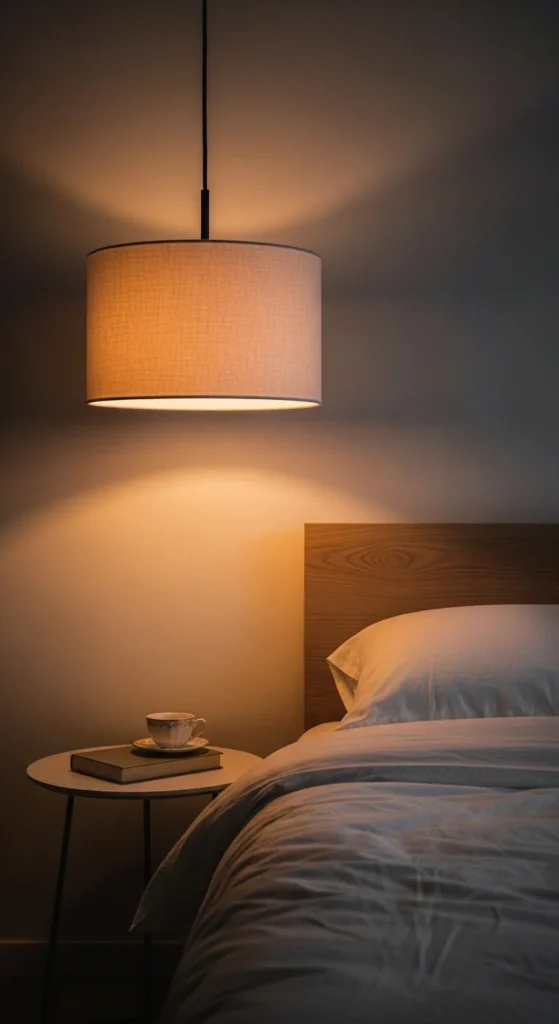
Oversized pendants replace table lamps and free nightstand space. They add sculptural interest without adding clutter. Choose simple shapes and warm bulbs. Plug-in pendants work well if ceiling wiring isn’t available. Hang them low enough to create intimacy but high enough to avoid glare. This single change adds personality while keeping surfaces clear.
23. Earthy Neutrals with Wood Accents
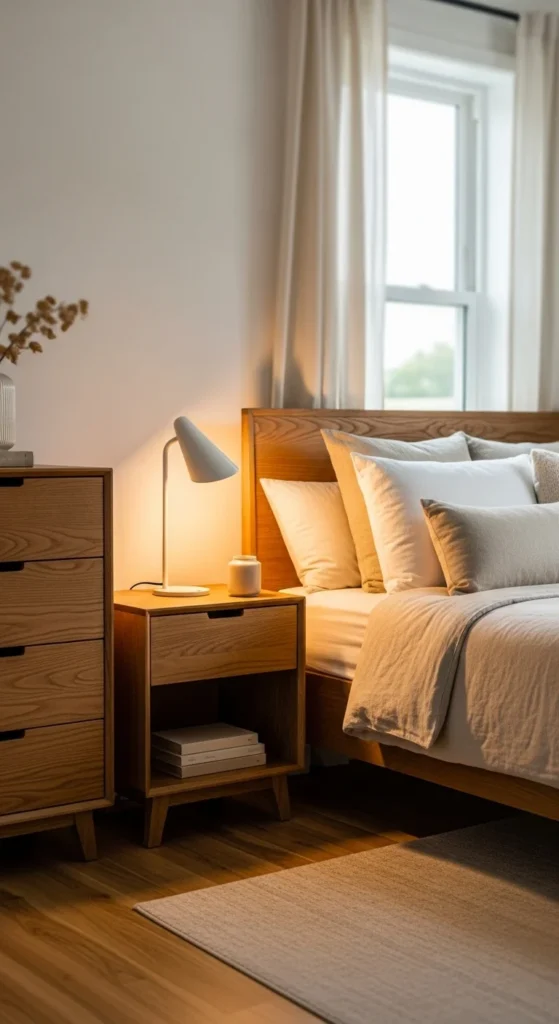
Earthy neutrals feel grounding and timeless. Wood furniture pairs naturally with soft textiles. Keep finishes matte rather than glossy. Even small wood accents like benches or trays add warmth. For a budget update, refinish existing furniture or add wood decor pieces. Balance wood with light walls to avoid heaviness. This combination supports a relaxed atmosphere.
24. Upholstered Wall Panels
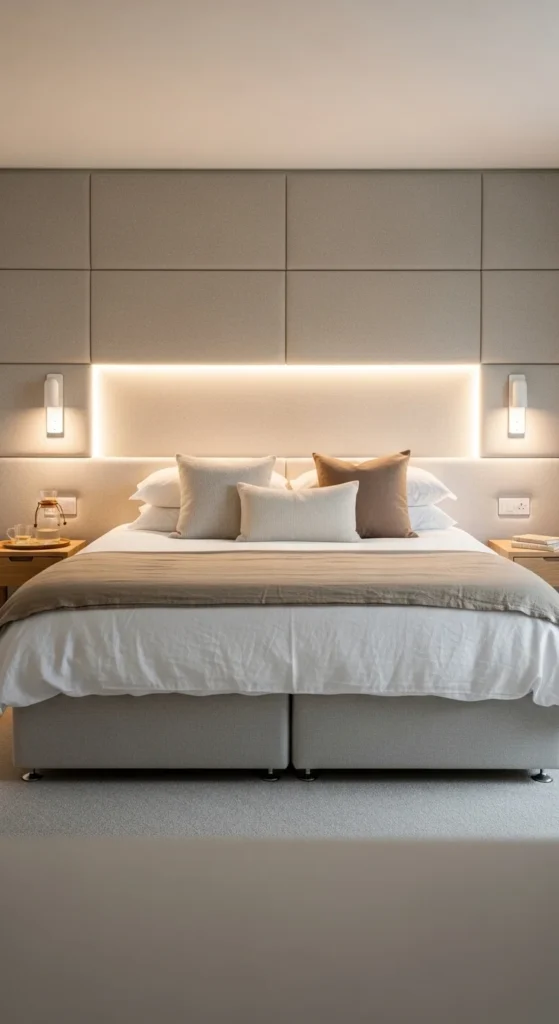
Upholstered wall panels add comfort and sound absorption. Use them only behind the bed to keep the look restrained. Neutral fabrics blend easily with most palettes. DIY panel kits or fabric-wrapped boards make this accessible. Panels help the room feel quieter and more enclosed without crowding it. This detail supports deeper rest.
25. Layered Ambient Lighting
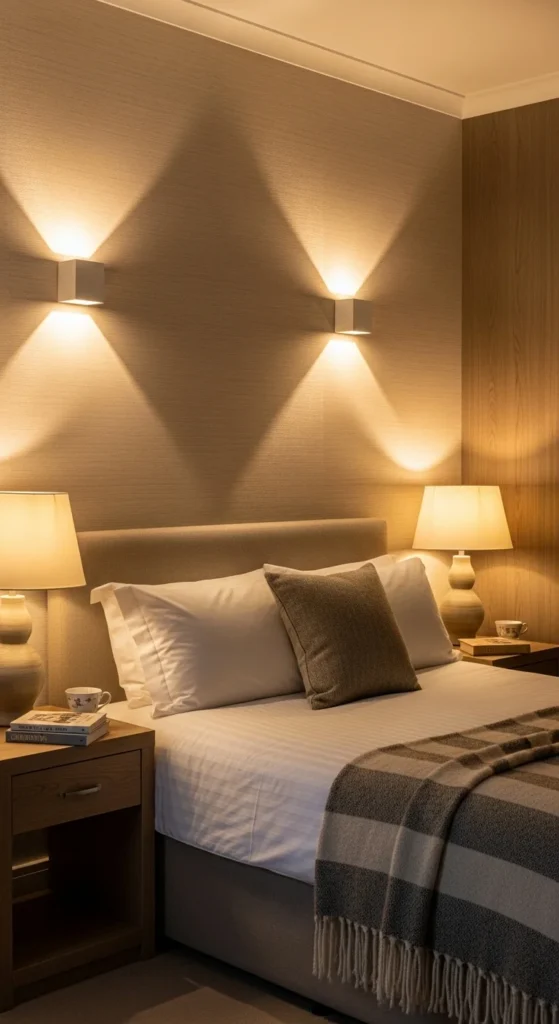
Layered lighting makes bedrooms feel gentle and adaptable. Use more than one light source at different heights. Avoid relying only on ceiling lights. Table lamps, wall lights, and floor lamps work together. Warm bulbs reduce harsh shadows. Many lighting updates require no wiring changes. Lighting layers shape mood more than decor.
26. Sculptural Seating or Bed Benches

A bench adds function without clutter. Use it for throws, books, or clothing. Sculptural shapes add interest without extra decor. Choose materials that match the room’s palette. Thrifted benches can be reupholstered easily. This completes the bed area visually and practically.
27. Calm, Intentional Styling
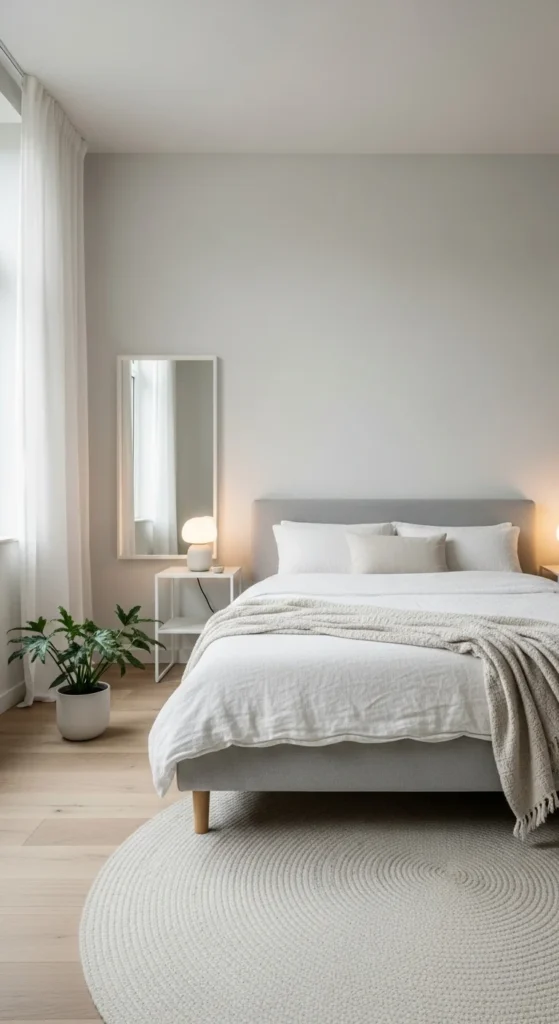
The final step is restraint. Remove anything that doesn’t serve comfort or daily use. Keep surfaces mostly clear. Choose decor slowly and with purpose. Light, texture, and layout do the work. When each item earns its place, the room feels composed and restful without effort.
Conclusion
A refined bedroom comes from texture, light, and thoughtful restraint rather than excess decor. By layering materials, choosing deeper tones, and reducing visual noise, the room becomes a true place of rest. Start with the bed, then build outward using light and texture. Each small adjustment adds up to a space that feels composed and restorative.