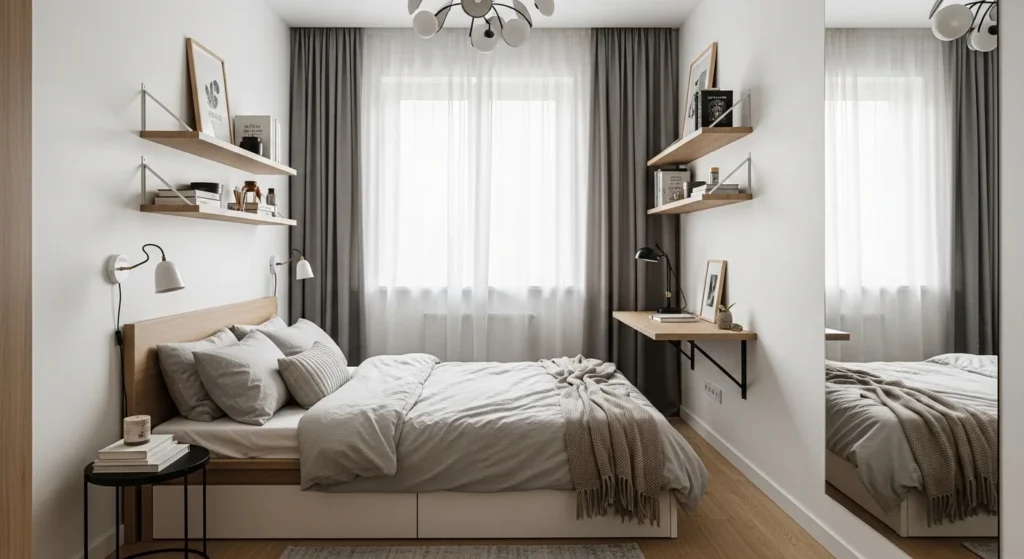
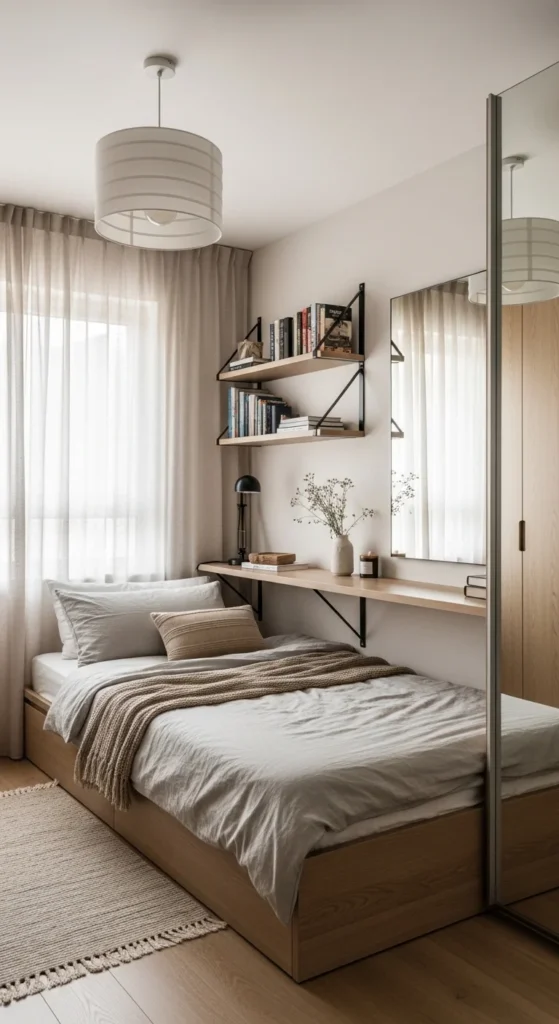
Small bedrooms can feel cramped quickly, but the right decor choices can completely change how the space feels and functions. Smart layouts, hidden storage, and light-reflecting details help maximize every inch without making the room feel crowded. You don’t need custom furniture or a big budget. A few practical swaps and simple DIY upgrades can make your bedroom feel open, calm, and easier to live in every day. These ideas focus on affordable changes that make a real difference in small homes, apartments, and rentals.
1. Go Low With a Platform Bed
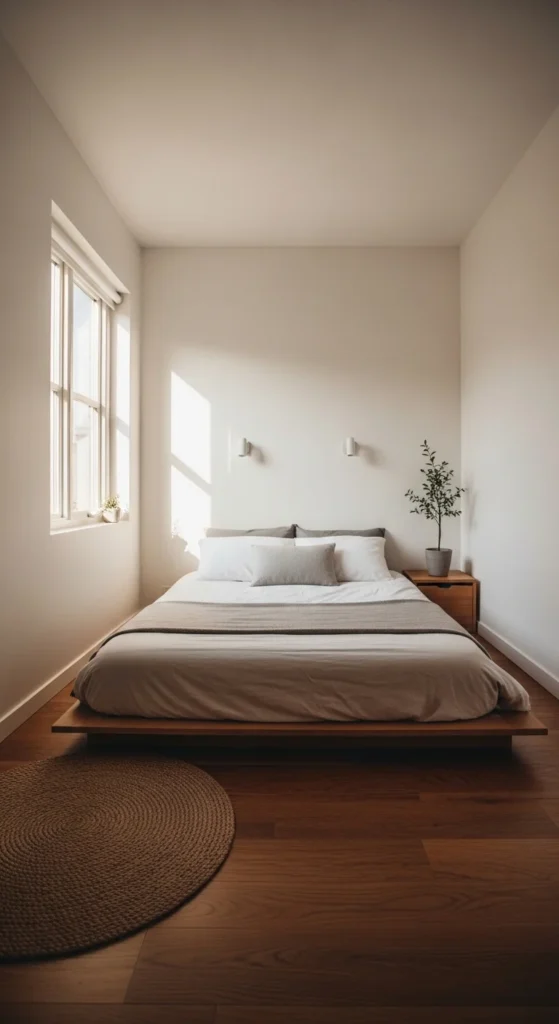
A low-profile bed changes how the entire room feels because lowering the visual weight of the bed makes the ceiling appear taller and the space more open. Skip bulky box springs and use a simple platform frame or even stacked wooden pallets for a low-cost DIY base. Sand and stain pallets for a cleaner look. Stick with light, neutral bedding to reflect light instead of absorbing it. Avoid heavy bed skirts that hide the frame and make the bed look bulky. Keep the area under the bed visible or neatly stored so the room feels lighter. Hang artwork a little lower than usual above the bed to balance proportions. This simple shift makes a small bedroom feel less boxed in without moving a single wall.
2. Use Light Scandinavian-Style Wood
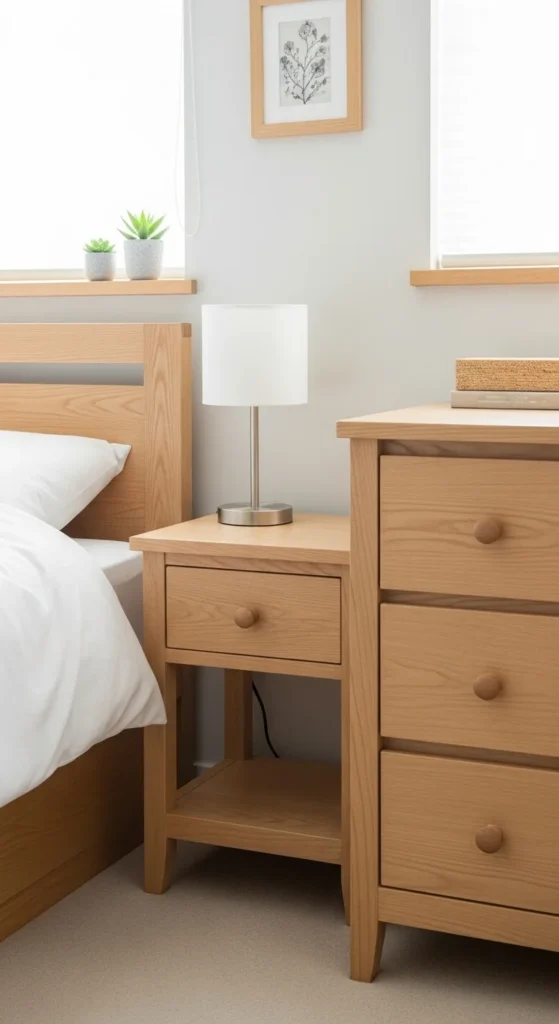
Light wood furniture helps a small bedroom feel open instead of heavy and crowded. Pale finishes like birch, pine, or light oak reflect more light than dark stains, which helps the room feel larger during the day. Choose pieces with simple shapes and slim legs so more floor is visible underneath. That extra visible floor space tricks the eye into seeing a bigger room. If new furniture isn’t in your budget, try sanding and refinishing older pieces with a lighter stain or chalk paint wash. Pair light wood tones with soft white or warm beige walls to keep the space calm. Limit the number of wood tones to two so the room doesn’t feel busy. This look works with modern, cozy, or minimal styles without overpowering the room.
3. Choose a Storage Bed With Drawers
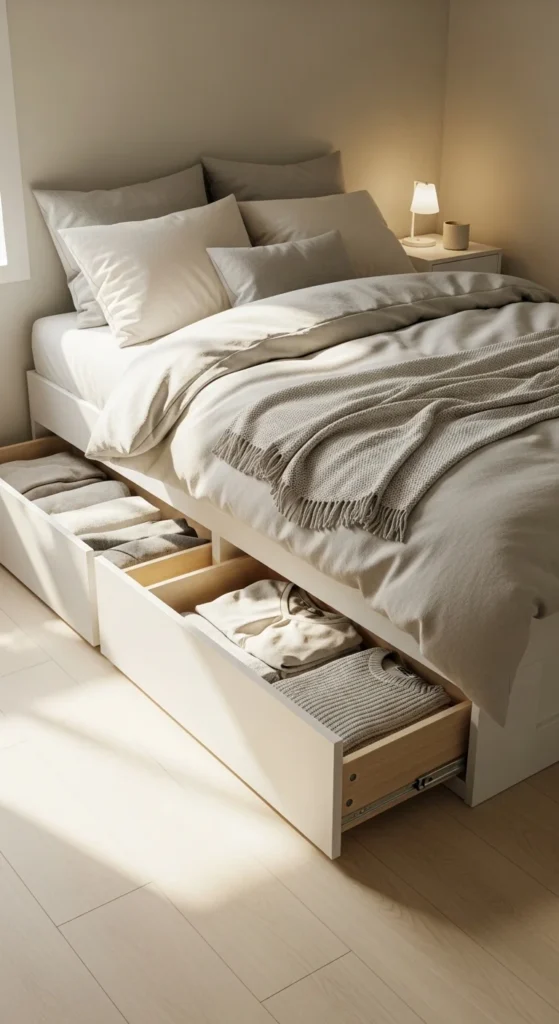
A bed already takes up the most floor space, so using one with built-in drawers turns it into hidden storage without adding extra furniture. A storage bed can hold clothing, extra bedding, or shoes, which means you might not need a bulky dresser. Use small baskets or dividers inside the drawers so items stay organized and easy to grab. Store off-season clothes here to free up closet space. If a new bed frame isn’t possible, use low rolling bins under your current bed and keep them neat. Choose flat drawer fronts instead of decorative ones to keep the look simple. This one furniture swap can clear up visual clutter fast and make the room feel more open.
4. Hide Storage With Wall-Blending Wardrobes
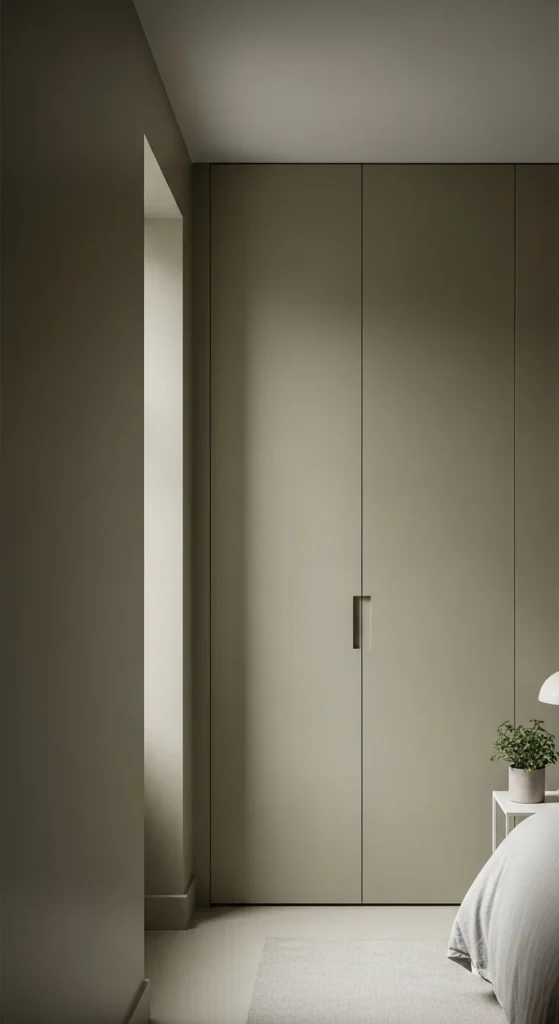
Large wardrobes can dominate a small bedroom, but painting them the same color as the walls helps them blend in instead of stand out. This trick makes storage feel like part of the architecture rather than bulky furniture. Choose simple, flat doors with push-open hardware or small knobs to keep the surface clean. Inside, add extra shelves or hanging organizers to make the most of the space you already have. If built-ins aren’t an option, use peel-and-stick paint or removable wallpaper in the same shade as your wall color on a freestanding wardrobe. Keeping the exterior visually quiet helps the room feel less crowded even if the storage is full inside.
5. Install Wall-Mounted Nightstands
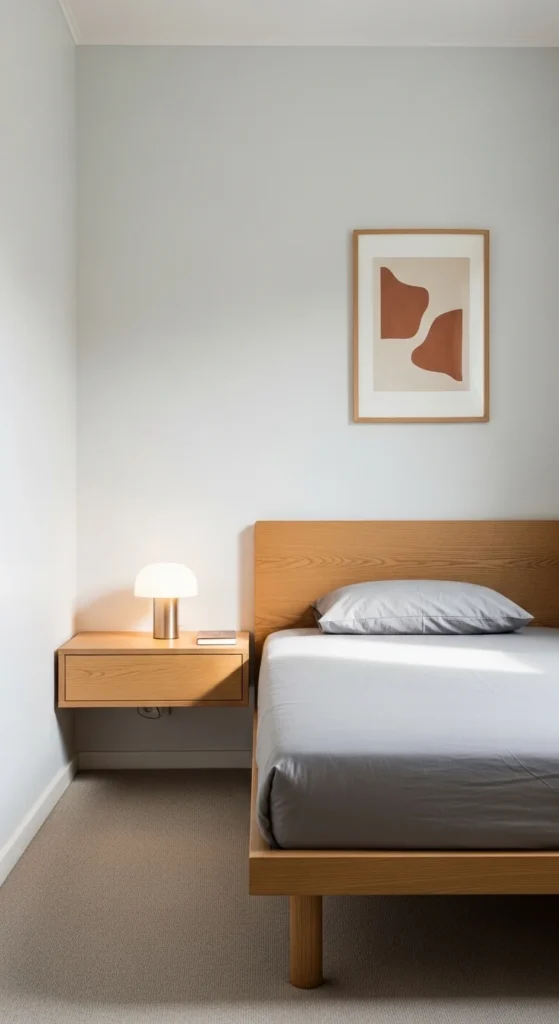
Traditional nightstands take up floor space and can make walkways feel tight. A wall-mounted nightstand keeps the surface you need while freeing up the floor underneath. That open space makes the room feel bigger and easier to move through. Choose a slim floating shelf or a small drawer unit mounted to studs for stability. Keep only essentials on top like a lamp, book, or phone. Use a wall sconce instead of a table lamp if surface space is limited. Mount the shelf at mattress height for comfort. This simple change works well in modern and minimal rooms and costs far less than replacing larger furniture pieces.
6. Try a Headboard With Built-In Shelves
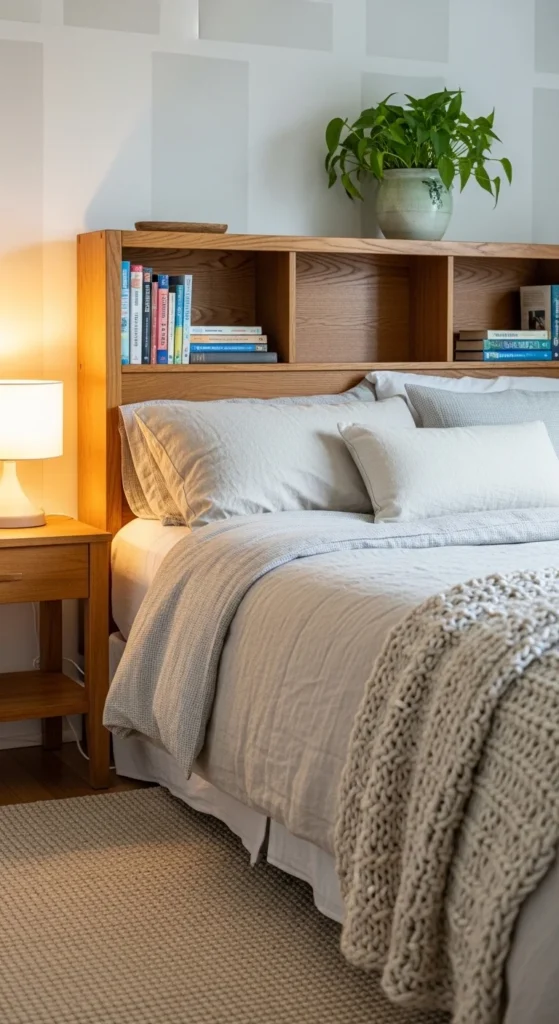
A headboard with shelving replaces the need for extra bedside tables while keeping essentials within reach. Built-in cubbies can hold books, glasses, or a small lamp without adding extra furniture. Choose a slim design so it doesn’t push the bed too far into the room. If buying new isn’t possible, mount narrow floating shelves just above the mattress line to create a similar effect. Keep styling simple with only a few items per shelf to avoid clutter. This setup works especially well in very narrow bedrooms where traditional nightstands would block walking space.
7. Stick to a Light Neutral Color Palette
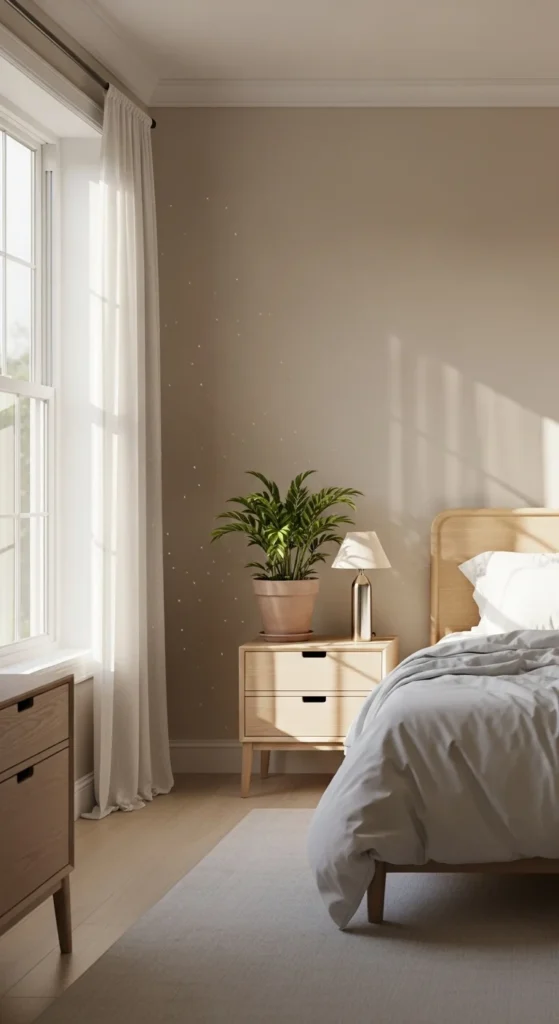
Light neutral colors help walls reflect natural light and make the room feel open instead of closed in. Shades like warm white, soft beige, pale gray, or light taupe create a calm backdrop that doesn’t crowd the eye. Paint walls, trim, and even large furniture pieces in similar tones to create a smooth flow. Add interest with texture through throws or cushions rather than bold colors. If repainting isn’t possible, use light bedding and curtains to brighten the space. This palette also makes it easier to mix different furniture pieces without the room feeling busy.
8. Use Soft Pastel Walls for Subtle Color
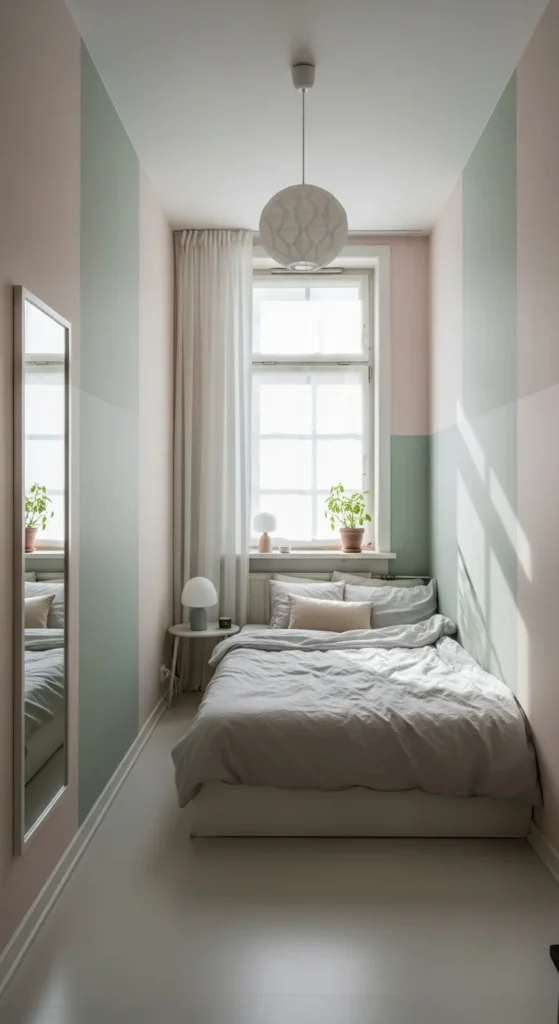
Soft pastel shades add personality without shrinking the room visually. Colors like dusty blue, muted green, or pale peach reflect light gently and keep the space feeling calm. Paint all walls in the same tone for a cocoon-like effect that still feels open. Pair pastel walls with white or light wood furniture so the color doesn’t overpower the room. If painting feels like too much work, bring in pastel tones through bedding or curtains instead. This approach adds warmth while keeping the bedroom airy.
9. Add Vertical Wall Shelving
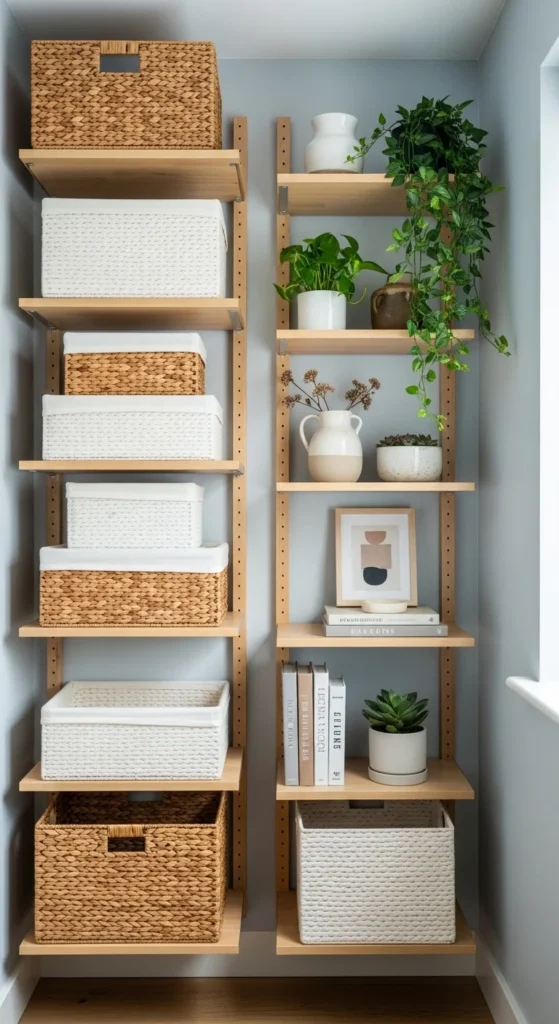
When floor space is limited, think upward. Vertical shelving uses wall height instead of valuable floor area. Install shelves higher than eye level to draw the eye up and make the ceiling feel taller. Use baskets or bins on higher shelves for items you don’t need daily. Keep lower shelves lighter and less crowded. Floating shelves are affordable and easy to install with basic tools. This solution works well above desks, dressers, or even over the bed if mounted securely.
10. Layer Soft Lighting Instead of Table Lamps
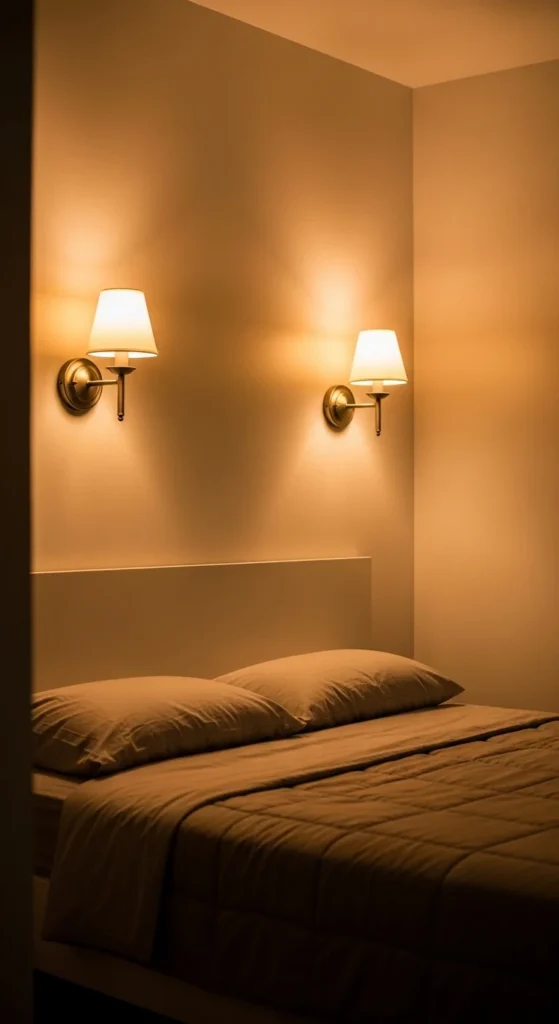
Table lamps take up precious surface space. Swap them for wall sconces or plug-in pendant lights to free up nightstands and dressers. Layer lighting with a ceiling fixture, bedside wall lights, and maybe a small LED strip behind the headboard for a soft glow. Warm light bulbs make the room feel cozy without harsh shadows. This setup gives better lighting while keeping surfaces clear.
11. Mount Hooks Instead of Using Floor Racks
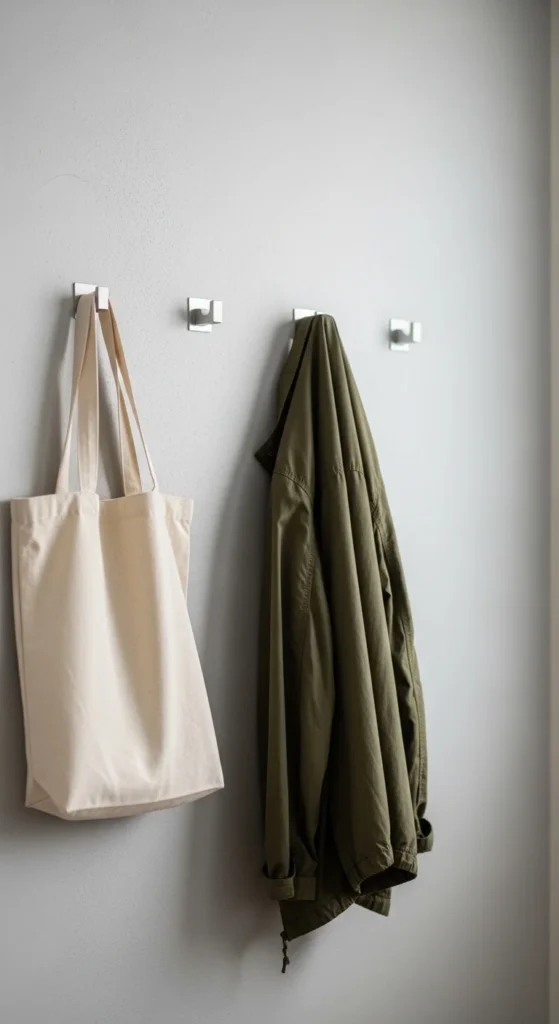
Freestanding clothing racks take up more room than most people realize, and in a tight bedroom that floor space matters. Wall hooks offer a simple fix by moving storage upward instead of outward. A small row of sturdy hooks behind the door or along an empty wall can hold bags, hoodies, hats, or tomorrow’s outfit without crowding walkways. Choose hooks in the same color as your wall if you want them to blend in visually, or use wood or matte black finishes for a subtle design touch. Limit what hangs there so the area stays tidy rather than turning into a clutter zone. You can even add a narrow shelf above the hooks for baskets or small bins. Installation is quick and low cost, especially with adhesive or screw-in options. This swap clears the floor instantly and makes the room easier to move through while still keeping everyday items within reach.
12. Use a Mirror as an Accent Wall Feature
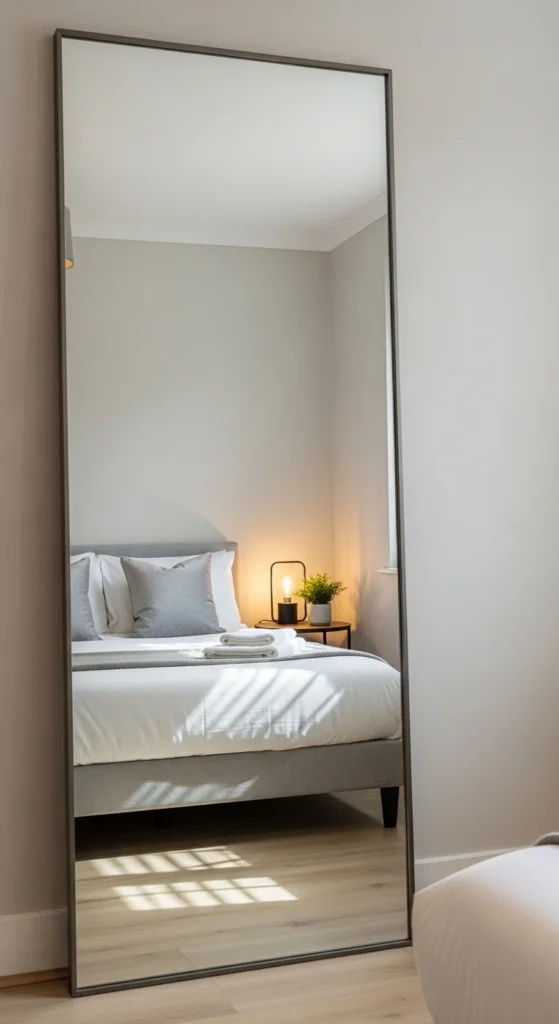
Mirrors are one of the easiest ways to make a small bedroom feel more open. A large mirror placed across from a window reflects natural light back into the room, which helps brighten darker corners and adds depth. This reflection creates an optical illusion that makes the space feel larger than it actually is. Choose a simple frame or a frameless style to keep the look clean. Leaning a tall mirror against the wall works well for renters who can’t drill, while mounted mirrors feel more permanent and polished. Avoid placing mirrors where they reflect clutter, since that doubles visual mess. Instead, angle them toward open areas or light sources. Even mirrored closet doors can have a similar effect. This one addition changes how light moves through the room and helps reduce that boxed-in feeling without adding any bulky furniture.
13. Try Tonal Patterns for Visual Depth
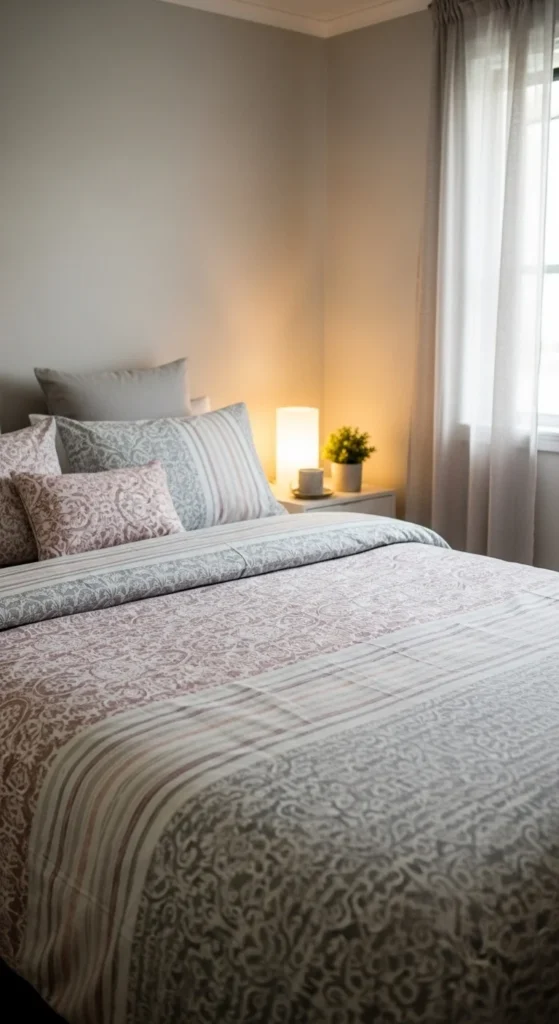
Patterns don’t have to overwhelm a small room when they stay within the same color family. Tonal patterns add quiet depth and keep the space from feeling flat while still looking calm. Think soft stripes on bedding in shades of beige, textured pillows in layers of gray, or a subtle geometric rug in warm neutrals. Because the colors stay similar, the eye sees texture rather than contrast, which keeps the room from feeling busy. This works especially well on fabrics like duvets, throws, or curtains where you want interest without heaviness. If you like wallpaper, try a low-contrast pattern that blends with your wall color. DIY stenciling in a matching shade can also create a soft feature wall on a budget. By keeping tones close together, you add personality while still helping the room feel open and restful.
14. Add Slim Wood Paneling for Texture
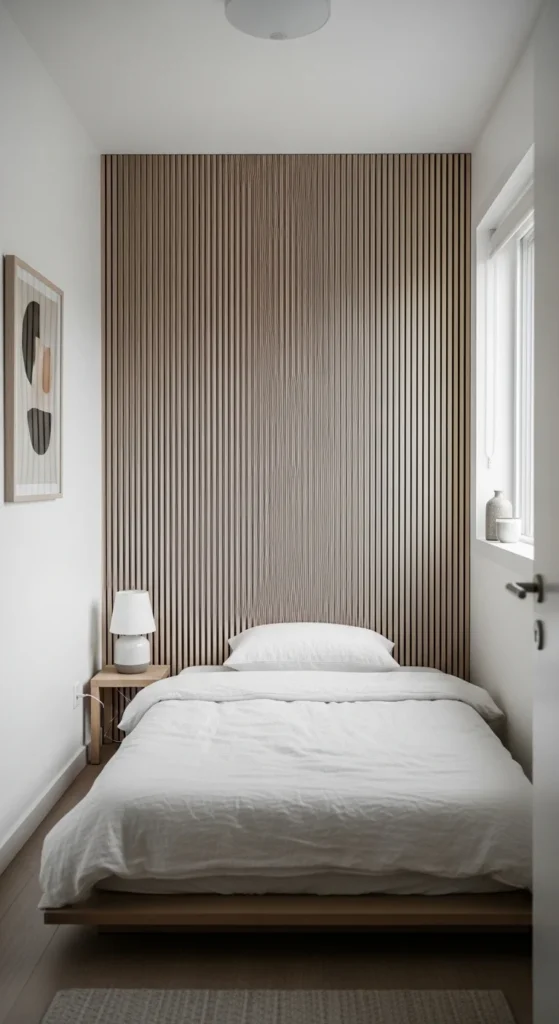
Flat walls can make a small bedroom feel plain, but heavy decor can quickly crowd it. Slim wood paneling adds texture in a way that still feels light. Vertical slats are especially helpful because they draw the eye upward, which makes ceilings appear taller. Use light wood tones or paint the slats the same color as the wall for a subtle effect. Peel-and-stick wood panels or thin MDF strips from a hardware store make this a budget-friendly DIY. Install them on one accent wall behind the bed to create a focal point without filling the room with extra furniture. Keep spacing even and lines clean for a modern look. Pair the paneling with simple bedding and minimal decor so the texture stands out without visual noise. This approach adds warmth and character while keeping the overall layout open.
15. Install a Murphy Bed for Multi-Use Rooms
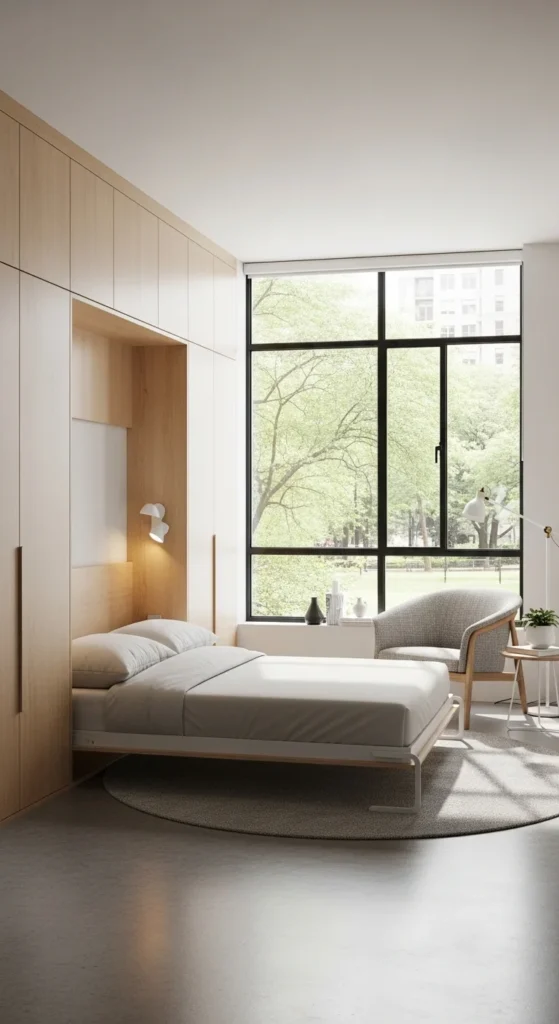
A Murphy bed folds up against the wall when not in use, freeing valuable floor space during the day. This is especially helpful in studio apartments or bedrooms that double as home offices. When the bed is upright, the room can function as a workspace, workout area, or lounge. Many modern designs include built-in shelves or desks that stay level as the bed moves, so nothing has to be cleared away. If a full Murphy system is outside your budget, look for fold-down daybeds or wall-mounted frames as simpler alternatives. Keep bedding lightweight so making the bed is quick and easy. Add wall-mounted lighting instead of table lamps to keep surrounding space clear. This setup turns one small room into a flexible area that adapts to your daily routine without feeling cramped.
16. Hang Ceiling-Height Sheer Curtains
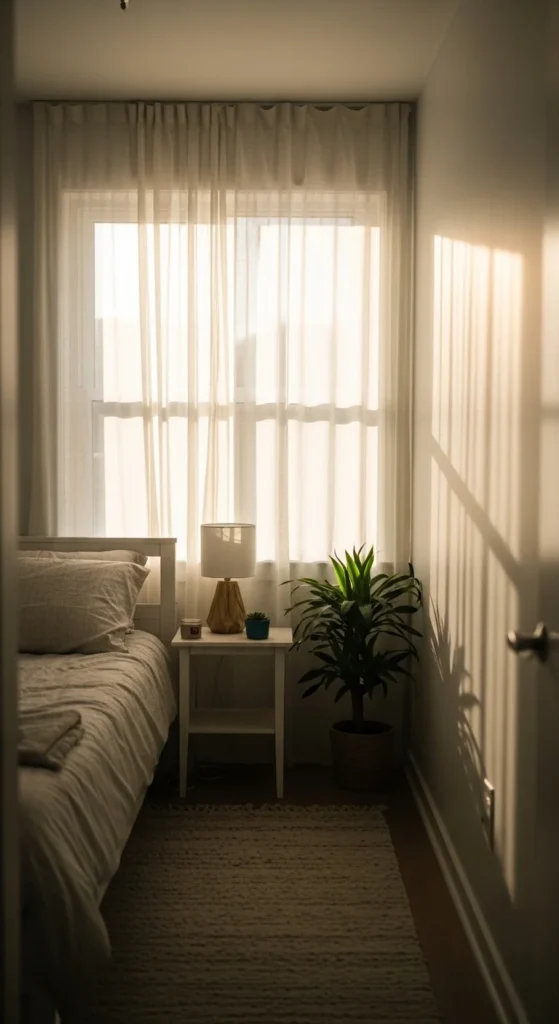
Curtain placement changes how tall a room feels. Mounting the rod close to the ceiling instead of just above the window frame draws the eye upward and makes the walls seem taller. Use long, sheer panels that reach the floor to keep the look soft and airy. Sheer fabrics allow natural light to pass through while still adding privacy. Stick with light colors like white, cream, or pale gray so the curtains don’t feel heavy. If blackout coverage is needed, add a simple roller shade underneath instead of thick drapes. This layered approach keeps the window area bright during the day while still offering darkness at night. Hanging curtains high is a small adjustment that makes windows look larger and the entire bedroom feel more open.
17. Place Rugs Under Only the Front Furniture Legs
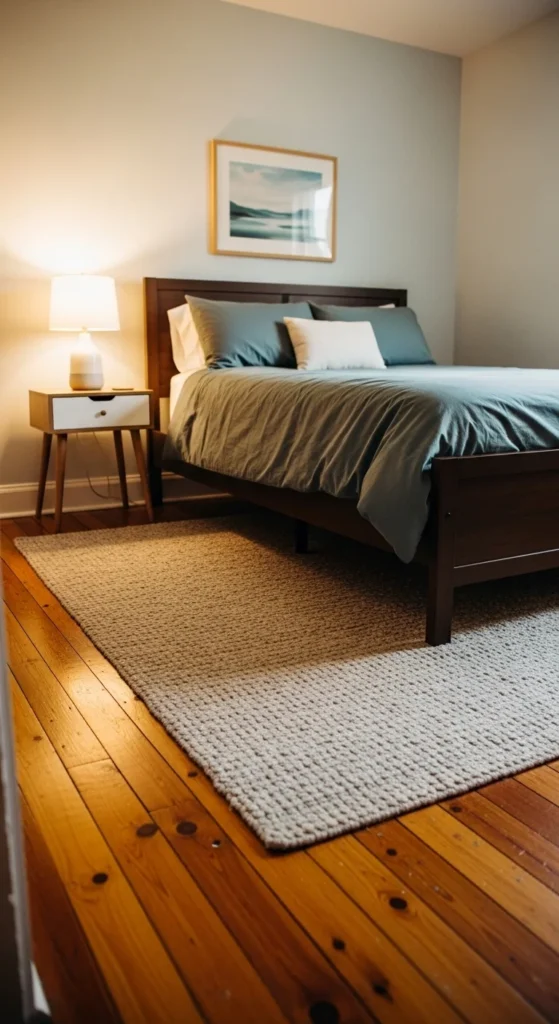
A rug that’s too small can make a room feel choppy, while one that’s too large can hide too much floor. A good middle ground is placing a rug so only the front legs of large furniture sit on it. For a bed, that means sliding the rug under the lower third so it extends out on both sides. This anchors the furniture while still leaving plenty of visible flooring around the edges. Seeing more exposed floor helps the room feel bigger. Choose light or neutral rug colors with simple patterns to keep the look calm. Flat-weave rugs are great for small rooms because they add texture without thickness. This placement trick defines the sleeping area while maintaining an open, airy feel.
18. Use a Floating Desk for Work Areas
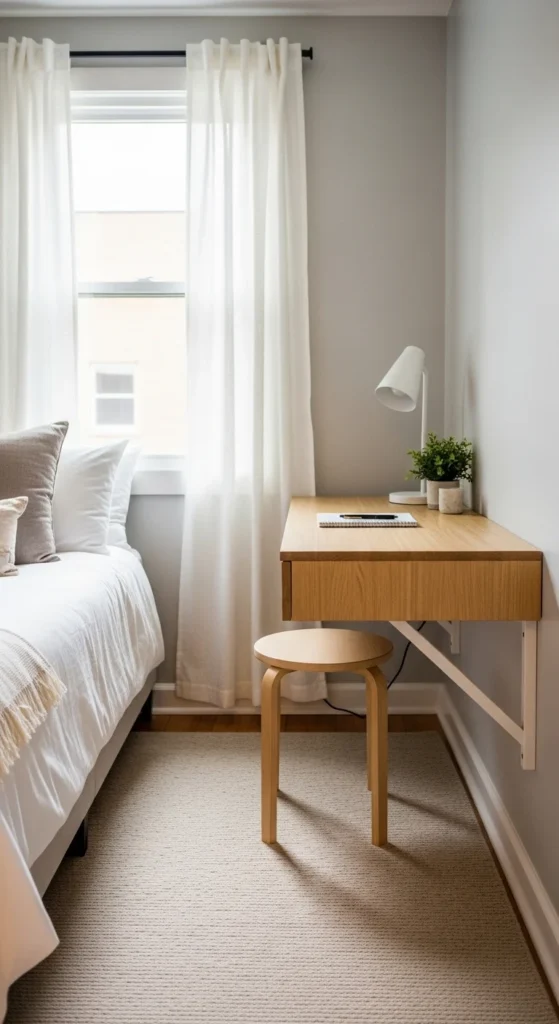
A traditional desk with drawers and legs can overwhelm a small bedroom quickly. A floating desk mounted directly to the wall provides a work surface without the bulk. Because the floor underneath stays clear, the room feels more open and easier to clean. Pair the desk with a slim stool or chair that can tuck fully underneath when not in use. Install a small shelf above for supplies instead of adding a separate filing cabinet. If drilling isn’t allowed, use a narrow console table in a similar style. Keep cords tidy with adhesive clips along the wall. This setup creates a functional workspace that doesn’t compete with the bed for space, making it ideal for hybrid rooms.
19. Add Soft Under-Bed LED Lighting
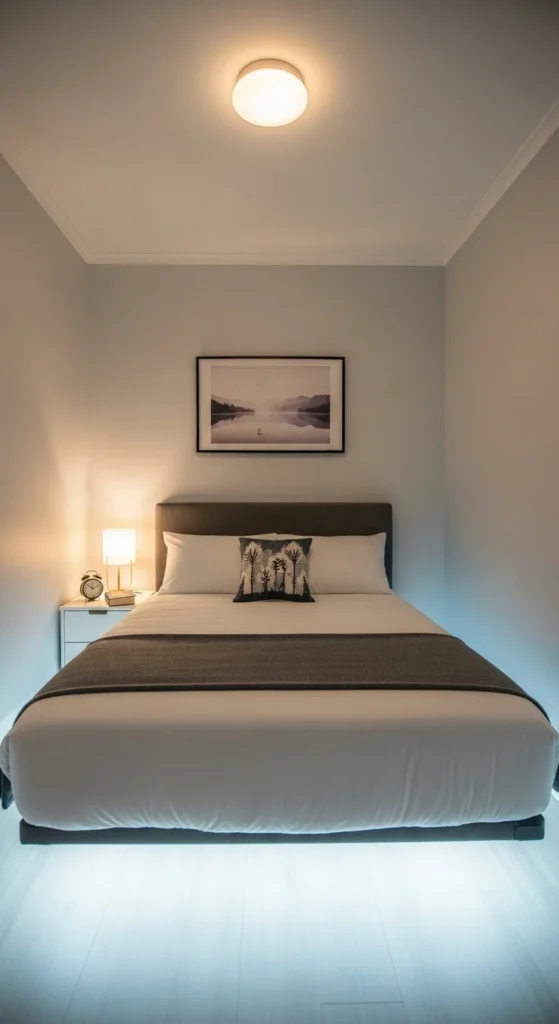
LED strip lighting under the bed frame creates a soft glow that makes the bed appear to float slightly above the floor. This visual lift reduces the heavy look that beds often have in small rooms. Choose warm white lighting for a cozy feel rather than cool blue tones. Many LED strips come with adhesive backing and plug into a standard outlet, making installation simple. Use a dimmer or remote control so the light can double as a gentle nightlight. Keep the glow subtle so it highlights the floor rather than drawing too much attention. This small addition adds atmosphere while also helping with nighttime visibility without turning on bright overhead lights.
20. Replace Swing Doors With Sliding Options
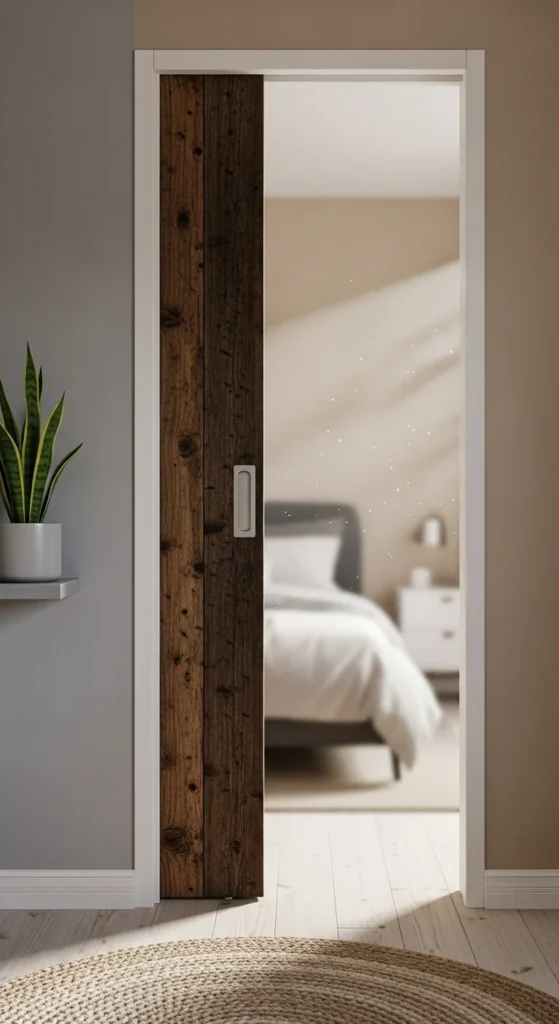
Traditional doors need clearance to swing open, which can limit furniture placement in a small bedroom. Sliding doors move along the wall instead, freeing up that floor space. Pocket doors slide into the wall for a seamless look, while barn-style doors glide along an exterior track and add character. If a full door replacement isn’t possible, even sliding closet doors can make a difference. Choose light-colored finishes so the door doesn’t feel heavy. This change allows you to place furniture closer to the doorway without blocking movement, making layout planning much easier.
21. Use a Daybed for Seating and Sleep
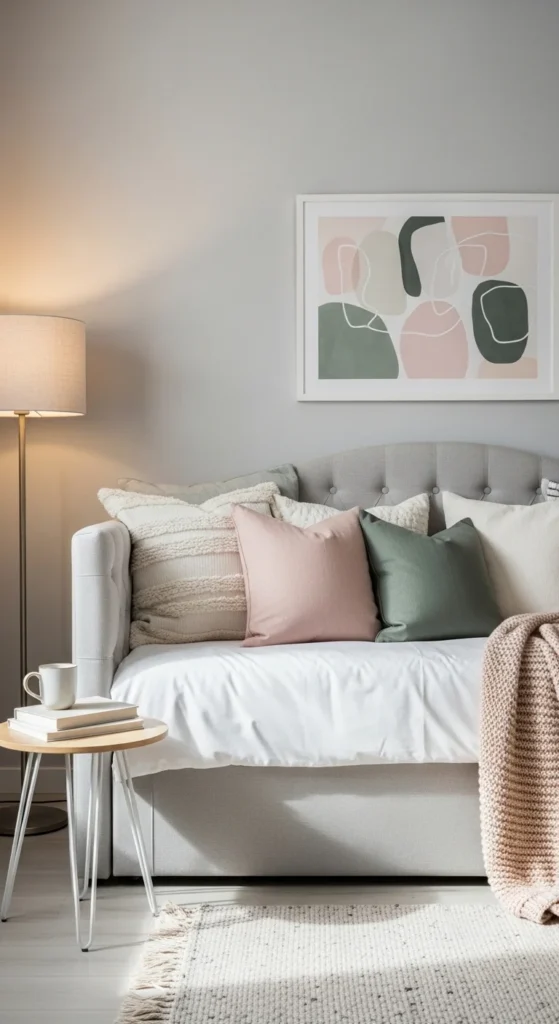
A daybed functions as both a sofa and a bed, which is helpful in tight spaces. During the day, add pillows along the back to create a lounging spot. At night, it becomes a full sleeping area. This works well in guest rooms, studio apartments, or bedrooms that double as study areas. Choose a slim frame with open sides to keep the look light. Add storage baskets underneath for extra functionality. This dual-purpose piece reduces the need for separate seating furniture, keeping the room open and flexible.
22. Add Cozy Boho Textiles in Small Doses
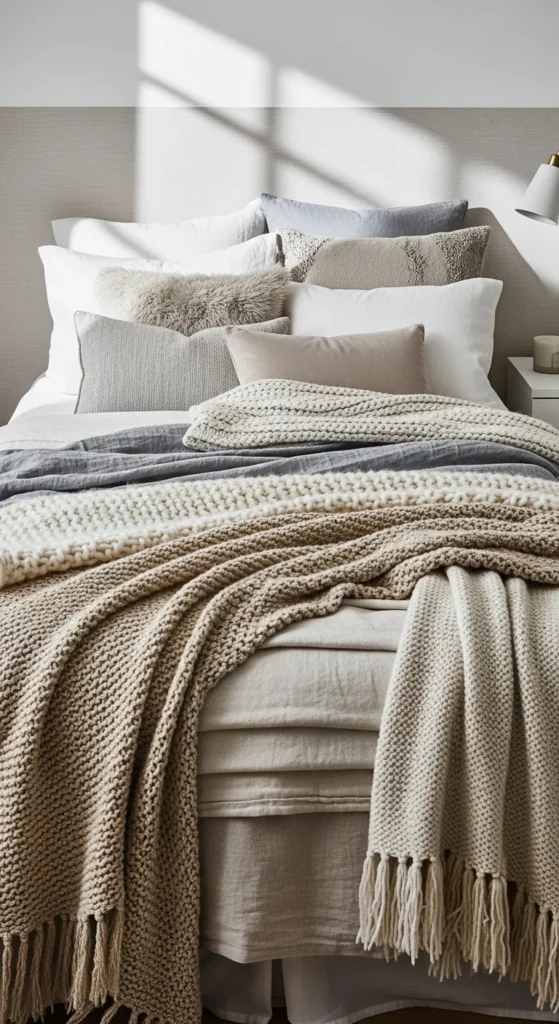
Textiles are an easy way to add warmth without taking up floor space. A textured throw, a couple of patterned cushions, or a woven wall hanging can make the room feel inviting. Stick to a limited color palette so the layers don’t overwhelm the space. Lightweight fabrics keep things soft without visual heaviness. This approach adds personality while keeping furniture minimal.
23. Place a Storage Bench at the Foot of the Bed
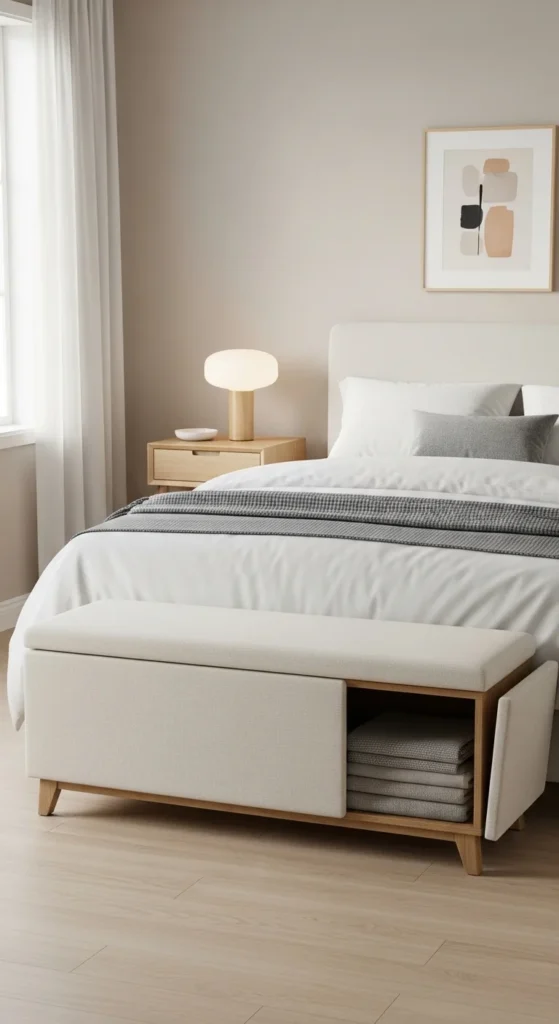
A narrow bench at the foot of the bed provides both seating and hidden storage. Use it to store extra blankets, pillows, or seasonal clothing. Choose a slim design so walkways stay clear. Upholstered tops add comfort and softness without bulk. This piece works especially well in bedrooms that lack closet space.
24. Try a Calm Japandi-Inspired Look
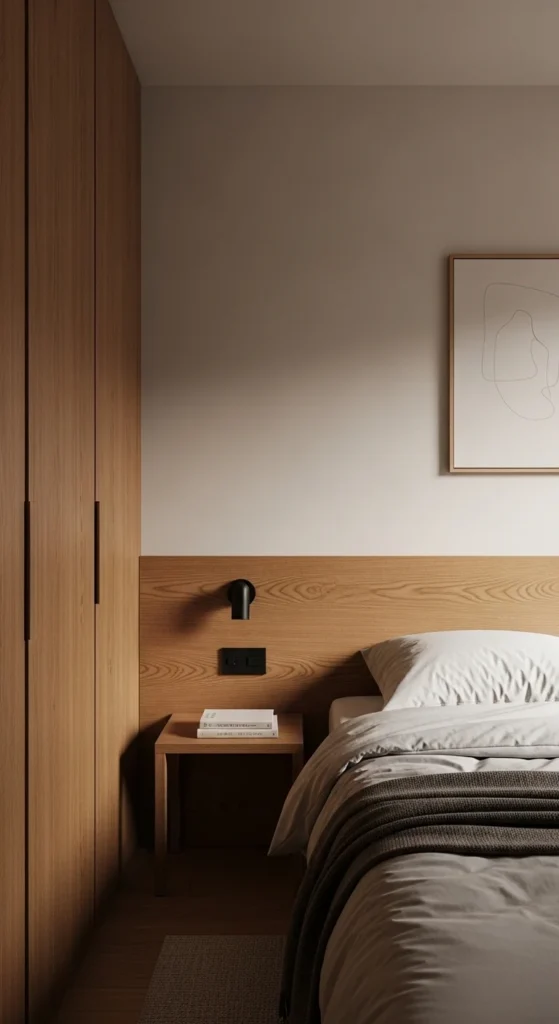
Japandi style combines simple lines with warm natural materials, making it ideal for small bedrooms. Focus on low furniture, soft neutral colors, and functional decor. Keep surfaces clear and choose a few meaningful pieces instead of many small items. Light wood, linen bedding, and subtle textures create a calm space that feels open and restful without extra clutter.
Conclusion
Small bedrooms work better when every item has a purpose and visual weight stays light. Wall-mounted pieces free the floor, mirrors expand light, and multifunctional furniture hides clutter. Low beds, soft colors, and vertical storage all help the room feel open without major renovations. Start with one or two simple changes, then build from there. Even small updates can make your bedroom feel calmer, more spacious, and easier to use every day.